Blog

  • “L.A. Law” Reunion Special?

    Word around the Hollywood Water Cooler has it that producers are eyeing a revival of the popular ’80s legal drama L.A. Law. Series stars Harry Hamlin, Jimmy Smits, Blair Underwood, and the elusive Susan Dey could soon be courted to reprise their roles in a TV special that will possibly debut in time for next year’s 25th anniversary of the NBC smash, PopEater’s Naughty or Nice Column said Tuesday.

    “It wouldn’t be a regular series, but rather a two-hour TV event similar to what they did with the ‘Dynasty’ reunion.”

    L.A. Law — which aired between 1986 and 1994 — was set in and around the fictitious Los Angeles law firm McKenzie, Brackman, Chaney and Kuzak, and shadowed the lives and work of the attorneys and various members of the support staff.

    Do we need an L.A. Law special?


  • Facebook Fails What.app Stanford Test, Twitter and iPhone Pass

    In a recent study conducted by What.app, Facebook fails in maintaining standard privacy of its users.

    WhatApp is a site that rates the privacy, security and openness of web and mobile applications as well as the various platforms they run on.

    What.app uses various analysis tools to rate apps and websites and Twitter and iPhone apps fared well with good scores whereas Facebook was slapped on the face with a score of 2. The total score was five. The results obtained are extrapolated from data obtained from individual apps running on platforms. Facebook was rated based on its apps.

    The co-founder of What.App Ryan Calo, who is also a Stanford University Law fellow says,

    I think people are upset because when you download an app, you don’t have any control over what the app developer sees on your profile,” says Calo. “There’s the perception among users that they don’t need to give away so much information to have the apps do the same thing as they are currently doing.

    There were three areas of analysis, namely privacy, security and openness. Facebook scored two in all three. This should not come as a surprise as it simply justifies Mark Zuckerberg’s earlier statement of “privacy is no longer a social norm”.

    (Via:Forbes)

    Facebook Fails What.app Stanford Test, Twitter and iPhone Pass originally appeared on Techie Buzz written by Chinmoy Kanjilal on Tuesday 20th April 2010 06:33:05 PM. Please read the Terms of Use for fair usage guidance.

    Don’t miss these Related Posts:

    Join Techie Buzz on Your Favorite Social Networking Sites


  • Splinter Cell Conviction Starter Kit


    If you’re just getting into the Splinter Cell series, or you are looking for a refresher, grab the free Splinter Cell Starter Kit PDF file.  This PDF file, which is normally only available only to press, was too good not to share. In fact, it’s kind of like a really good game manual/franchise backgrounder.

    After chatting with Ubisoft, they agreed that everyone in the community would probably like to see it and asked me to post it. Enjoy this walk down memory lane / background on Sam Fisher and company.


    Click here to download the 1.6 MB PDF


  • The World Bank Data: Open Data Access can be Beautiful

    worldbank_data.jpg
    The Worldbank, an international financial institution that provides leveraged loans to developing countries for capital programs has just released data.worldbank.org, a website that provides free, open and easy access to statistics and indicators about development. While the idea is not particularly novel (think of UNData, Google Public Data, data.gov and many others) the World Bank Data website seems unique by the combination of offering free datasets and indicators as well as a compelling visual interface for open data exploration. Many indicators are also available to developers to create new data applications and visualizations through an Application Programming Interface (API).

    The visual dashboard in particular shows a surprising level of visual sophistication and detail, and gives access to economically relevant topics like Education or CO2 emission, or country-specific statistics of countries ranging from the U.S. to Rwanda.

    The fact that the information architecture and visual style is contemporary and consistent, that even the smallest data widget offers a direct link to the actual data source, and that the interface is offered in different languages demonstrates the amount of dedication put in this project. However, the vertical axis labels seem to be missing, and the amount of space dedicated to specific data attributes that are almost always “not available” seem to be annoying oversights.

    Would you agree?

    Broader access to these data allow policymakers and advocacy groups to make better-informed decisions and measure improvements more accurately. They are also valuable tools to support research by journalists, academia and others, broadening understanding of global issues.


  • Somebody’s testing Android 2.2: Is it Froyo?

    Froyo - Next version of Android

    The guys at Android and Me noticed a few pings of Android 2.2 in their Google Analytics, meaning somebody’s testing out what’s at least labeled as a new version of our favorite mobile operating system. (And for what it’s worth, or server logs are showing hits from Android 2.2 as well.) It’s no great surprise if Google’s testing a new version of the OS, and we’re less than a month away from the Google IO conference (we’ll be there, by the way), which is where Android 2.0 first was demoed last year. Chances are we’ll see the next named version of Android — Froyo — at Google IO. And there’s a decent chance it’ll be Android 2.2. Stay tuned.

  • Google Shows Government Information and Takedown Requests

    Today, Google launched a fascinating new feature listing requests from government agencies for removal of content on Google and YouTube and for corresponding user information. Set up as a map, the Government Requests tool shows various countries around the world and lists the number of requests from that country between July and December of last year. You can learn, for example, that Brazil is the most prolific sender of content takedown requests to Google, or that Google did not comply with any requests from Pakistan.

    The information is far from complete, notably missing China, which considers any such requests a state secret. The United States also restricts disclosure of some user information requests, such as National Security Letters. Nevertheless, Google’s Government Requests tool is a tremendously important first step towards informing the public about the extent to which governments around the world seek information about them and we commend Google for creating it. Historically, much of this information was tightly held by governments and service providers, and the public had little ability to review government encroachment into their private spaces. As we push for strengthening the federal privacy law regulating government access to Internet communications and records as part of the Digital Due Process coalition, this information will be an important part of the ongoing debate.

    Moving forward, we’d love to see more detail. It would be useful to know whether the takedown was due to allegations of (for example) indecency, hate speech, lese majesty, other something else. Was the user information request seeking to identify a anonymous speaker or to gather further information about a known person? More detail for large countries like the United States would also be welcome, breaking down the countrywide number into each state or province. To have a complete picture, we’d also like to see statistics for how often Google disclosed data in response, broken down by jurisdiction.

    As we move further into an era of cloud computing in which people entrust an ever-increasing amount of their personal, even intimate, information to corporations, other internet companies should offer improved transparency to help protect against government prying. Google’s new Government Requests tool is a welcome start, an example we hope many more companies promptly follow. Indeed, the best solution for transparency and openness might be a universal tool, including all the major service providers.

  • Tuesday Afternoon Crew Chief: Best of Friends or Worst of Enemies?

    It doesn’t matter how hard race series try to equalize the performance between cars, some teams will always do better than others within the boundaries that are placed around them, i.e. the rules. Which means the only way to judge a driver’s true talent is to compare them in equal equipment. It was interesting to see how various teammates in top teams are reacting to each other in both F1 and NASCAR this past weekend.

    NASCAR first. There’s little doubt that Rick Hendrick’s organization is the best in the sport, week in and week out. But are we seeing signs that the love-fest between Jeff Gordon and teammate (and one-time protégé) Jimmie Johnson is in danger of cooling off? Both drivers were pretty outspoken after a wheel-banging incident in yesterday’s rain-delayed Texas race, which caused Johnson to pit out of sequence with a flat tire. Both drivers were disappointed with each other, they said, although Johnson really didn’t have much of an ax to grind, as he caused the incident. Despite talk of sorting things out, I wonder if the relationship has broken down irreparably: In the past three years, during which Johnson has won every NASCAR title, Gordon has won just one race—that has to hurt. It’s going to take a firm hand, probably applied by Hendrick himself, to keep the boys in line.

    In F1, it’s interesting to see how the McLaren and Mercedes teammates are shaping up against each other. Jenson Button and Lewis Hamilton appear very evenly matched, with Button’s current advantage in the points race coming down to his ability to make judgment calls on his own, rather than relying on the McLaren team’s brain trust as Hamilton does. (Speaking of the brain trust, how many millions are they making to screw up on a weekly basis?) Hamilton seems to be very stoic about his fortunes relative to Button, perhaps because he hasn’t actually been blown away by his teammate.

    Over at Mercedes, Nico Rosberg has done just that, however. In view of the blown-away driver being Michael Schumacher, that’s a bit surprising. Anyone who followed Rosberg in the junior formula series—GP2 and F3 Euroseries—knew he was super quick, in the same league as one-time karting rival Lewis Hamilton. But I think even Schuey is in shock over how quick the younger German is. How many times in Schuey’s career has he been decimated in both qualifying and races by his teammate four times in a row? (The answer is never, at least not since 1992.) He’s already making excuses about not understanding how the intermediate tires work on the new generation of cars, neatly sidestepping the fact that Rosberg and everybody else are also getting used to the changes for 2010, such as driving with a full fuel load and narrower front tires.

    In essence, it makes one wonder about how great Schuey is. Despite seven world driver’s titles, the one blot on his career is that he has avoided head-to-head competition within his team with another great driver. In 1992, Martin Brundle kept him honest at Benetton, but Schuey was a rookie and Brundle was much better than his record shows. In 11 years at Ferrari, Schumacher made sure his number two was just that: a driver who performed boring donkey work for him and was there to pick up the pieces if it all went wrong for the team leader. Other multiple title winners such as Juan Manuel Fangio, Jack Brabham, Jackie Stewart, Niki Lauda, Nelson Piquet, Ayrton Senna, and Alain Prost all had teammates at one time or another who were equally quick. Schumacher, for many years in the best car at Ferrari, shied away from real competition. Now, perhaps, we’re seeing why.

    Related posts:

    1. Tuesday Afternoon Crew Chief: NASCAR Misses the Restrictor-Plate Point
    2. Tuesday Morning Crew Chief: F1 Knives Get Sharpened
    3. Tuesday Morning Crew Chief: NASCAR’s Not-So-Great Coverup
  • Earth Day turns 40: An animated tribute

    earth day 
     
     
    2010 marks the 40th celebration of Earth Day, a
    holiday that helped spark America’s modern environmental movement when
    it was founded on April 22, 1970, by then-Senator Gaylord Nelson of
    Wisconsin.
     
    Did you know that there are actually two Earth Days? The “first” Earth Day was founded on March 21, 1970, by John McConnell, a newspaper publisher. Even though this is the date that was embraced by the United Nations, Americans celebrate Earth Day on April 22 each year. 
     
    It’s also interesting to note that the color green, which symbolizes the environmental movement, isn’t all that “green,” as in “eco-friendly.” Synthetic green dyes, paints, and pigments are made with a noxious
    cocktail of toxins and pollutants, making green an ironic symbol for the
    environmental movement.
     
    In honor of this year’s historic anniversary, Mother Nature Network is taking a
    quick look back at the last four decades of planetary appreciation.
     
    The video below is a fun way to get the whole 40-year history in under 5 minutes. Or read the transcript below to see what happened each year.


    1970: 20 million people celebrate the first
    Earth Day on April 22. A few months later, the U.S. Environmental
    Protection Agency (EPA) opens its doors for the first time.
     
    1971: Amtrak is founded, even though gas costs
    just 33 cents a gallon.
     
    1972: The EPA bans DDT, which was thinning bald
    eagles’ eggshells.
     
    1973: A Mideast oil embargo sparks a U.S. gas
    crisis.
     
    1974: Congress passes the Safe Drinking Water Act,
    shamelessly pandering to the water-drinkers lobby. 
     
    1975: Congress sets emissions and efficiency rules
    for cars, leading to the introduction of catalytic converters.
     
    1976: The EPA starts phasing out PCBs, which can
    cause cancer and other health problems.
     
    1977: The U.S. adds the first plants to its
    endangered species list — despite their disturbing lack of cuteness.
     
    1978: Congress bans CFCs in aerosol sprays after
    scientists realize CFCs can deplete the Earth’s ozone layer.
     
    1979: A partial meltdown at Pennsylvania’s
    Three Mile Island nuclear plant ruins an otherwise good day.
     
    1980: Congress creates the Superfund program to
    clean up toxic waste sites. Those expecting “super fun” sites are
    quickly disappointed.
     
    1981: Acid rain intensifies over the Northeastern
    United States and Canada. 
     
    1982: Dioxin contamination forces the U.S.
    government to buy homes in Times Beach, Missouri — not the
    last time it would have to buy up toxic assets.
     
    1983: A long failure to clean up the Chesapeake
    Bay begins.
     
    1984: 8.6 million acres of protected wilderness
    are established in 21 states. Somewhere in the distance, a coyote howls.
     
    1985: Scientists discover a giant hole in Earth’s
    ozone layer. During the next year’s NBA All-Star Game, Spud Webb dunks
    through it.
     
    1986: Congress declares the public has a right to
    know when toxic chemicals are released into the air, land, or water. The
    public breathes a sigh of relief — and a little sulfur dioxide.
     
    1987: Medical waste washes ashore in New York and New Jersey,
    forcing beaches to close. Efforts to rebrand the area don’t work out. 
     
    1988: Congress bans ocean dumping of sewage sludge
    and industrial waste, ending a cherished American tradition.
     
    1989: The Exxon Valdez spills 11 million gallons
    of crude oil into Alaska’s
    Prince William Sound, one of the worst environmental disasters in U.S.
    history.
     
    1990: The EPA’s Toxic Release Inventory tells the
    public which pollutants are being released into their communities. 
     
    1991: The U.S. government begins using products
    made from recycled content. 
     
    1992: The U.S. Energy Department and the EPA
    launch the Energy Star program to label energy-efficient products.
     
    1993: A cryptosporidium outbreak in Milwaukee
    sickens 400,000 people and kills more than 100, raising awareness of
    microbes in water supplies.
     
    1994: The first genetically modified tomatoes hit
    the U.S. market.
     
    1995: Wolves are reintroduced into Yellowstone and
    central Idaho. The
    initial awkwardness quickly fades.
     
    1996: Public drinking-water suppliers are required
    to inform customers about chemicals and microbes in their water. 
     
    1997: The U.S. joins other countries in Kyoto,
    Japan, to negotiate a global climate-change treaty it winds up
    rejecting.
     
    1998: Earth has its warmest year since record-keeping began in 1880.
     
    1999: The EPA announces new rules to improve air
    quality in national parks and wilderness areas. Somewhere in the
    distance, a coyote coughs.
     
    2000: High temperatures and low rainfall spark the
    worst U.S. wildfire season in 50 years.
     
    2001: The U.S. formally rejects the Kyoto treaty.
    The treaty suffers brief self-esteem issues before hooking up with
    Europe on the rebound.
     
    2002: The U.S. suffers its second-worst wildfire
    season in 50 years.
     
    2003: The EPA retrofits 40,000 school buses
    nationwide to cut back their tailpipe emissions.
     
    2004: The EPA requires cleaner fuels and engines
    for farm and construction equipment.
     
    2005: The 2005 Atlantic hurricane season produces a
    record number of tropical cyclones, including Hurricane Katrina, which
    devastates the Gulf Coast.
     
    2006: An Inconvenient Truth is released,
    winning Al Gore an Oscar, a Nobel Prize, and a lifetime of being
    criticized every time it snows.
     
    2007: The bald eagle is removed from the
    endangered species list.
     
    2008: The EPA releases a list of “eco-fugitives.”
    Captain Planet comes out of retirement.
     
    2009: The EPA issues a proposed finding that
    greenhouse gases may endanger public health or welfare. Congress issues a
    proposed finding that the EPA is a jerk.
     
    2010: People around the world celebrate the 40th
    Earth Day, once again dedicating a full day to the planet’s health. The
    Earth is touched, even though it creates days in the first place by
    rotating, which means “Earth Day” is a regift. But it’s the thought that
    counts.
     

    Russell McLendon is an associate editor at the Mother Nature Network, where a
    version of this post
    originally appeared.

    More from Mother Nature Network

    Check out Yahoo! Green on Twitter and Facebook.


  • The Derivatives Bill Friday’s Goldman-SEC News Overshadowed

    Last Friday, when business journalists everywhere were drooling over the SEC’s announcement of its lawsuit against Goldman Sachs, Senate Agriculture Committee Chair Blanche Lincoln (D-AR) released her aggressive bill (.pdf) to regulate the derivatives market. Leaks advertised the bill as the most serious crackdown to-date on Wall Street’s profit-center for making and trading complex securities. Its actual text includes some very controversial provisions, but the bill isn’t quite as aggressive as some early reports indicated. For example, Lincoln provides regulator flexibility in determining how aggressively to implement some of her changes.

    After the Senate Banking Committee passed its financial reform bill, Chairman Dodd (D-CT) indicated that its derivatives section was just a placeholder for a new version some of its members intended to produce. Since those Senators have yet to deliver an amended version of that section, there’s talk that Lincoln’s bill could take its place. Here are some of its more important highlights (.pdf):

    Real Time Reporting

    One of the most significant changes would require almost all derivatives trades to be reported real-time. Currently, many over-the-counter transactions are not reported to the SEC.

    Mandatory Clearing

    Lincoln wants virtually all derivative trades to go through a clearinghouse. Right now, some trades are cleared, but many are not. A clearinghouse acts as a third-party that nets trades and minimizes counterparty risk. The trades will also have to go through regulated exchanges.

    No Bailouts for Derivatives

    In an effort to prevent future bailouts, Lincoln wants to make sure derivatives deals that go bad don’t fall on the shoulders of taxpayers. As a result, she seeks to prohibit federal funds being used to pay off obligations of failed firms arising from derivatives exposures.

    Segregates Derivatives

    The new bill also seeks to separate a firm’s derivatives activity from its other business. The intention here is to create derivatives dealers who can more easily fail and won’t bring down large institutions with them if their trades go bad.

    Enforcement Authority

    The legislation would also provide regulators with enhanced enforcement authority to prosecute investors who use derivatives to hide information from the market. It also includes increased bounties paid to whistleblowers.

    While these ideas might sound good at first blush, some are very controversial and would radically change the derivatives market Wall Street knows today. More analysis on that tomorrow.


    Email this Article
    Add to digg
    Add to Reddit
    Add to Twitter
    Add to del.icio.us
    Add to StumbleUpon
    Add to Facebook


  • Build Your Own Home Theater

    Hi-fi curious? PC Perspective has posted the second of 6-part series that walks you through every detail of setting up your own ideal home theater setup, from the planning to stage to source materials to speaker configuration. Future installments will cover setting up a home media server as well. And if you need help picking out the components, bro-site Consumer Reports has an interactive home theater system buying guide that can help. DIY! It’s more fun and if you know what you’re doing, can be cheaper as well.

    Building a Home Theater [PC Perspective via HardOCP]

  • Happy 62nd, Israel!

    Today is Yom Ha’atzmaut, Israeli Independence Day, which marks the establishment of the modern state of Israel in 1948. Around the world, we celebrate this holiday on the 5th of the Hebrew month of Iyar. Below, I have compiled 62 great web resources on Israel in honor of Israel’s 62 years. There’s always more to learn about Israel, and these websites are a great place to start!

    The Reform Movement and Israel

    1. The URJ’s Israel webpage is a great place to start for all things Israel.

    2. The URJ’s Yom Ha’atzmaut page features resources for the holiday and Israel in general.

    3. ARZA is the Association of Reform Zionists of North America.

    4. Learn more about the vibrant Israel Movement for Progressive Judaism (IMPJ).

    Reform Judaism in Israel

    5. There are two Reform kibbutzim in Israel. Kibbutz Yahel is a progressive, collective community in the Arava desert.

    6. Located just south of Kibbutz Yahel, Kibbutz Lotan has a special focus on the environment and sustainability.

    7. Kol HaNeshama, in the heart of Jerusalem is one of the nearly 30 Progressive synagogues in Israel.

    8. Hebrew Union College-Jewish Institute of Religion’s Jerusalem campus is the home of the Reform Movement’s Israeli Rabbinical Program, as well as the Year-In-Israel for first year students studying in HUC’s North American rabbinical, cantorial, and Jewish education programs.

    North American Policy and Advocacy

    9. Check out all of the RAC’s Israel resources at www.rac.org/israel!

    10. Click here to fill out our action alert in support of Middle East Peace.

    11. Write a letter to President Obama, asking him consider the ongoing plight of Gilad Shalit and do everything in his power to help free the imprisoned Israeli soldier.

    12. AIPAC is “America’s Pro-Israel lobby,” based in Washington, D.C.

    13. J Street is the “political home for pro-Israel, pro-peace Americans,” based in Washington, D.C.

    14. Americans for Peace Now is the U.S. arm of the Shalom Achshav, an Israeli peace organization. APN is “working to achieve a comprehensive political settlement to the Arab-Israeli conflict.”

    15. The Interagency Taskforce on Israeli Arab Issues was founded in response to the Or Commission to help advance the goal of equality between Israeli Jews and Arabs. The URJ and the CCAR are among the IATF’s more than 80 member organizations.

    16. The Israel on Campus Coalition (ICC) is an umbrella organization “dedicated to working collaboratively to assist students in fostering support for Israel on the college campus.”

    17. Rabbis for Human Rights is an interdenominational group of clergy from all streams of Judaism. RHR “promotes discussion of human rights issues in the Jewish community by bringing speakers… into Jewish communities nation-wide, sends delegations to Israel to join our colleagues in protecting human rights in Israel, and supports the efforts of RHR to change Israeli policies that lead to human rights violations.”

    Government

    18. President Obama issued a statement in honor of Independence Day. His full remarks are available below.

    19. You can watch Secretary of State Hilary Clinton’s Independence Day Greeting to Israel here. The State Department webpage frequently features speeches and releases regarding Israel.

    20. The Israeli Embassy of Washington, D.C. is the U.S. portal into Israel’s Foreign Ministry.

    21. The Official Knesset Webpage is an excellent resource for learning about the current status of legislation in Israel and the coalitions that comprise the Knesset.

    Social Justice and Religious Pluralism in Israel

    22. The Israel Religious Action Center (IRAC) is the RAC’s sister organization in Israel. Led by Anat Hoffman, IRAC works for social justice, human rights, religious pluralism, and civic equality in Israel on behalf of Progressive Judaism.

    23. In the past several months, Israeli police have increased pressure on Women of the Wall, a progressive monthly prayer group that meets at the Western Wall. The URJ maintains a clearinghouse webpage with news, blog posts, statements, and educational resources regarding their fight for religious freedom.

    24. Hiddush is a new religious freedom organization based in Israel.

    25. The New Israel Fund is an NGO that grants funds to organizations working for social justice, human rights, civil liberties, and religious pluralism in Israel.

    26. The Association for Civil Rights in Israel (ACRI) is Israel’s oldest and largest human rights organization.

    27. Recently, North American leaders blocked legislation pending in the Knesset that would alter the Law of Return such that converts to Judaism would not be eligible for Israeli citizenship. The issue of conversion is central to equality for Progressive Judaism in Israel.

    28. Yad LaKashish (Lifeline for the Old) is a non-profit organization that provides creative work opportunities and invaluable support services to over 300 needy elderly and disabled Jerusalem residents on a daily basis.

    29. Leket Israel, Israel’s National Food Bank, works hard to address the problem of nutritional insecurity in the country.

    30. Bema’aglei Tzedek (Circles of Justice) is a social justice organization in Israel focused on food and labor justice. One of their main projects is to award the Tav Chevrati, a seal of approval granted free of charge to restaurants and other businesses that respect the legally-mandated rights of their employees and are accessible to people with disabilities.

    31. Sikkuy: The Association for the Advancement of Civic Equality in Israel is an NGO working for Jewish-Arab equality. Their academic studies are excellent resources.

    Middle East Commentary and Blogs

    32. Hanan Cidor, the URJ Youth Division Shaliach, writes an insightful blog called It’s an Israel Thing.

    33. Bitterlemons.org is a website that presents Israeli and Palestinian viewpoints on prominent issues of concern. It focuses on the Israeli-Palestinian conflict and peace process.

    34. Myths, Illusions, & Peace is a blog maintained by Middle East expert David Makovsky.

    35. The Galilee Diary: Israel Up Close and Personal is a weekly diary especially for educators and teachers in Reform congregations. It also appears weekly through Ten Minutes of Torah and on the URJ blog.

    36. The Israel Policy Forum is an advocacy think tank that “promotes active U.S. engagement to achieve a two-state solution to the Israeli-Palestinian conflict and peace and security for Israel with the Palestinians and the Arab states.”

    37. Foreign Policy’s Middle East Channel provides current news and commentary on the region.

    38. The Taub Center for Israel Studies at New York University was established in 2003 with the support of the Henry and Marilyn Taub Foundation, to advance the study of Modern Israel: its recent history, society and politics, together with the history of the Zionist movement and the Yishuv.

    39. Prospects for Peace is an insightful blog by Middle East commentator Daniel Levy.

    News Sources

    40. Haaretz is a daily newspaper published in English and Hebrew.

    41. The Jerusalem Post is a daily newspaper, also published in both languages.

    42. Yediot Ahranot is another great news source.

    43. The New York Times Israel topic page. All Israel-related articles published in the New York Times appear here.

    44. The Daily Alert is a digest compiled from a broad range of respected news sources. To all those interested in keeping abreast of the latest on Israel, Iran, and issues of importance to the world Jewish community, I recommend subscribing to the Daily Alert.

    Travel

    45. NFTY in Israel offers many opportunities for high school students to travel to Israel for a summer, or spend a semester living on a kibbutz with the Eisendrath International Exchange (EIE).

    46. With Kesher Birthright, 18-25 year olds can travel for free to Israel with other young adults from the Reform Movement

    47. MASA Israel, a project of the government of Israel, the Jewish Agency of Israel, provides young adults with funds to travel and study long term in Israel. It’s also a great resource to learn about the variety of Israel programs that exist.

    48. Egged is the main public bus provider in Israel, both inter- and intra-city. Use their webpage to map out the best way to get around and see the country!

    49. Google Maps is now fully equipped to help you navigate around Israel. Type in 13 David HaMelech, Jerusalem, Israel (the location of HUC Jerusalem) and you can use all the mapping, direction, and satellite features available in North America.

    Art, Culture, and Education

    50. Sicha Basadeh is a webpage full of interactive, experiential and creative Israel programming.

    51. The Idan Raichel Project is an internationally renowned Israeli music group.

    52. Myjewishlearning.com is an excellent resource on a broad variety of subjects, and maintains an Israel resource page.

    53. Bring the flavor of Aroma home – this Israeli coffee chain is now open in several locations in North America!

    54. If you prefer coffee to tea, Wissotsky Tea is another delicious way to enjoy a taste of Israel.

    55. Subliminal, an internationally renowned Israeli hip hop group, teamed up with the Gevatron, Israel’s oldest folk choir, to remix an old Israeli folk song in honor of Israel’s 60th birthday.

    56. Galgalatz is the top radio station in Israel. Listen online anytime – listening to music is a great way to practice Hebrew!

    57. Milon Morfix is the by far the best online Hebrew dictionary. You can translate from Hebrew to English and English to Hebrew. Zeh tov m’od!

    58. Omanoot is an excellent blog in English about current Israeli culture – arts, music, educational materials, and more.

    Coexistence, Environment

    59. Founded in 1993 by journalist John Wallach, Seeds of Peace is dedicated to empowering young leaders from regions of conflict with the leadership skills required to advance reconciliation and coexistence.

    60. The Interreligious Coordinating Council in Israel (ICCI) works to foster interreligious relationships across the many religious denominations in Israel.

    61. The Arava Institute is an environmental studies and coexistence program that brings together Israeli, Palestinian, Jordanian, and North American students to engage in the conflict through the lens of transboundary, shared environmental resources and challenges.

    62. Adam Teva v’Din, or Israel Union for Environmental Defense (IUED) is Israel’s leading environmental advocacy organization.

    What’s your favorite web resource on Israel? Email it to me or leave us a comment, and I’ll continue to update this list! Chag Ha’atzmaut Sameach, and happy 62nd, Israel!

    Statement by President Obama on Israel Independence Day

    On the 62nd Anniversary of the establishment of the State of Israel, I join the American people in congratulating the government and people of Israel on this celebration of their independence. Minutes after David Ben-Gurion declared Israel’s independence, realizing the dream of a state for the Jewish people in their historic homeland, the United States became the first country to recognize Israel. To this day, we continue to share a strong, unbreakable bond of friendship between our two nations, anchored by the United States’ enduring commitment to Israel’s security. Israel remains our important partner and key strategic ally in the Middle East, and I am confident that our special relationship will only be strengthened in the months and years to come.

    I look forward to continuing our efforts with Israel to achieve comprehensive peace and security in the region, including a two-state solution, and to working together to counter the forces that threaten Israel, the United States, and the world. On this day, we once again honor the extraordinary achievements of the people of Israel, and their deep and abiding friendship with the American people. I offer my best wishes to President Peres, Prime Minister Netanyahu, and the people of Israel as they celebrate this happy occasion.

  • Extend your desktop onto your smartphone

    In days gone by most PocketPC’s came with cradles, and extending your desktop onto your cradled PDA was pretty popular.

    3y4tdf3y4rt on YouTube reminds us that this feature still works, and works even better on a 480×800 screen that’s 4.3 inches. The software that makes it possible, Zone Screen, works best on an Windows XP computer, but can also be made to work on Windows 7.

    Read more about the software here.

    Thanks HJ200 for the tip.


  • Live in the UK? Enter a chance to win a lap of the Top Gear track with The Stig

    If you live in the UK and are a fan of Top Gear, well, you’re in luck. The team is offering a chance to win a lap around the famous Top Gear track in Surrey in the latest Nissan 370Z.

    “Spend the day learning the fastest way around the 2 mile circuit and how to get the maximum performance from the 370Z,” Top Gear says.

    Click here to get prices on the 2010 Nissan 370Z.

    Oh and we almost forgot to mention, you’ll be riding shotgun with the man in white; the world’s fastest man-machine; Top Gear’s tame racing driver: The Stig.

    – By: Kap Shah

    Source: TopGear


  • How The iPhone Is Juicing Apple’s Stellar Financial Results


    Apple iPhone Sales Q22010

    Apple (NSDQ: AAPL) released staggering results today for its second-quarter, fueled mostly by surging iPhone sales. The company’s nearly three-year old mobile-phone unit is clearly becoming one of the company’s most important staples as iPod sales decline and Mac sales grow incrementally.

    The iPhone’s contribution to the business was discussed at length during Apple’s quarterly conference call today with COO Tim Cook and CFO Peter Oppenheimer. While analysts were eager to ask about iPad demand, which Apple characterized as shocking in the U.S., they completely avoided inquiries into yesterday’s supposed next-generation iPhone leak to Gizmodo.

    Here’s a snapshot of how the iPhone contributed to Apple’s business in fiscal Q2:

    —Apple sold a record 8.75 million iPhones.
    —iPhone sales jumped by 131 percent compared to the same period a year earlier.
    —iPhone sales grew three times faster than IDC’s estimate for the overall smartphone market in the March quarter.
    —iPhone revenues totaled about $5.45 billion, or about 40 percent of the company’s overall Q2 revenues.
    —The iPhone costs an average of $600 each.

    —iPhone sales are fueled, in part, by larger distribution. Apple’s COO Tim Cook said iPhone sales in the Greater China region were up nine times year over year, and that in the first six months of the company’s fiscal year, revenues totaled $1.3 billion, which is up over 200 percent year over year.

    —Beyond the actual device, Apple has ancillary revenue-makers, like the App store. The company said it is more than breaking even on the App Store, but that it is not supposed to be a huge money-maker. The App Store to date has generated 4 billion downloads and has 185,000 apps. There’s 3,500 specific apps made for the iPad.


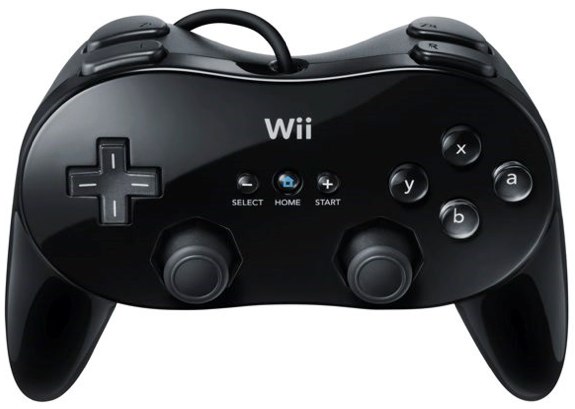
  • Wii Classic Controller Pro now shipping

    Wii Classic Controller Pro

    If the original Classic Controller was a bit too small for your meaty hands, you’ll be pleased to know that Nintendo has stayed true to their promise to ship the new, larger Classic Controller Pro by April. You can get in on the action now, as Amazon has both the black and white models in stock and ready to ship at a cost of $19.99 each.


    Tags:
    ,
    ,
    ,
    ,
    ,
    ,
    ,
    ,
    ,

    Wii Classic Controller Pro now shipping originally appeared on Playfeed on Tue, April 20, 2010 – 2:22:13


  • PENTAGON: Iran Missile could hit US by 2015

                Buried on page 11 of an unclassified report to Congress on Iran’s military power is a troubling item: “With sufficient foreign assistance, Iran could probably develop and test an intercontinental ballistic missile (ICBM) capable of reaching the United States by 2015.”

                That is the Pentagon’s best estimate, but some experts note it is difficult to be precise with secretive regimes like Iran and North Korea.

                The 2015 ballistic missile projection comes at a time when the United States is predicting it won’t be able to protect Europe with a missile defense system until 2018.

                Critics say the Obama administration has wasted valuable time.

              “They gutted the missile defense system that we had,” James Carafano from the Heritage Foundation told Fox. “If you remember correctly, the Bush administration was going to put a third site in western Europe which the administration would have said would have been in place by 2013, but which essentially would have accomplished everything this administration says is going to happen half a decade later.”

              Another expert calls Iran’s activities troubling and worrisome, but says perfecting the technology may take time for the Iranians as it has with U.S. missile defense.

            “We haven’t really seen a technology that would have been deployable prior to 2018 and the administration is hoping to have an interim capability before that date,” Michael O’Hanlon from the Brookings Institution told Fox. “ It may not be the best system we could develop of course, but the administration hoping to have the second installation of Europe-based missile defenses at about the 2015 timeline as well.”

                This report spells out how Iran is meddling in both Afghanistan and Iraq.

                In Iraq, Iran continues to provide money, weapons, and training to select Iraqi Shia militants and terrorists despite pledges by senior Iranian officials to stop such support.

                While in Afghanistan, Iran is covertly supporting insurgent and political opposition groups, and the report notes large weapons caches of Iranian manufactured weapons have been recently uncovered. Something that has gotten the attention of U.S. military commanders there.

                “This is one of those situations where any state that is supplying our enemy is not a friend to the coalition, and that needs to be addressed,” Brigadier General Steven L. Kwast, commander of the 455th Air Expeditionary Wing told Pentagon reporters. “As we fight this enemy, the enemy has weapons.  You see it.  You read about it.  They shoot at us with bullets.  They shoot at us with RPGs.  They shoot at us with all types of weapons.”

                The U.S. military has evidence suggesting many of those weapons are supplied by the regime in Tehran.

  • Apple Q2 2010 by the numbers: Best non-holiday quarter ever

    By Joe Wilcox, Betanews

    Can nothing stop Apple?

    The Cupertino, Calif.-based company’s quarterly earnings again rose high above Wall Street consensus, which already was $600 million to $1 billion above guidance. Today, after the bell, Apple reported $13.5 billion revenue and net profits of $3.07 billion, or $3.33 a share, under the new reporting method implemented last quarter. A year earlier, Apple reported revenue of $9.08 billion and $1.62 billion net quarterly profit, or $1.79 per share. Fiscal 2010 second quarter ended March 27, 2010.

    Three months ago, Apple forecast revenue between $11 billion and $11.4 billion, with earnings per share ranging between $2.06 and $2.18. Analyst estimates were much higher than Apple guidance: $12.04 billion average revenue consensus and $2.45 earnings per share. Apple blew past the Street. Again.

    In a statement, Apple CEO Steve Jobs said: “We’re thrilled to report our best non-holiday quarter ever, with revenues up 49 percent and profits up 90 percent.”

    For fiscal 2010 third quarter, Apple forecasts between $13 billion and $13.4 billion in revenue, with earnings per share ranging between $2.28 and $2.39. Gross margins are projected to be 36 percent, a substantial decline. Apple expects sales of iPad to account for about 25 percent of the gross margins decline. “Customers are loving the iPad,” Apple CFO Peter Oppenheimer said during a conference call late this afternoon. Apple expects to have iPad in nine countries by end of May.

    Tim Cook, Apple’s COO, responded to analyst concerns that either iPad volumes would be higher than expected or margins substantially less than projected. “We priced it very aggressively,” he said. “We think the market size of the iPad is very large, and we want to capitalize on our first-mover advantage.”

    My interpretation: Apple could be anticipating that iPad will cannibalize some Mac sales and/or high iPad sales volume during the back-to-school buying season. “There was nothing obvious in the iPod numbers or the Mac numbers to suggest cannibalization,” Cook said. However, he observed that iPad’s announcement in January may not have affected sales the way the released product might. “That part of the equation, we don’t know yet.”

    Q2 2010 Revenue by Product

    • Desktop: $1.53 billion, up 45 percent from $1.06 billion a year earlier.
    • Portables: $2.23 billion, up 17 percent from $1.8 billion a year earlier.
    • iPod: $1.86 billion, up 12 percent from $1.67 billion a year earlier.
    • Music: $1.33 billion, up 27 percent from $1.05 billion a year earlier.
    • iPhone: $5.5 billion, up 124 percent from $2.43 billion a year earlier.
    • Peripherals: $472 million, up 32 percent from $357 million a year earlier.
    • Software & Services: $634 million, up 1 percent from $626 million a year earlier.

    Apple shipped 2.94 million Macs during the quarter, for 33 percent year-over-year growth. Wall Street consensus was around 2.7 million.

    While Apple posted strong year-over-year results, units and revenue sequentially declined in nearly every segment — not surprising given the holiday quarter’s strong sales. However, Oppenheimer said sequential declines were smaller than is typical.

    Apple’s gross margin was 41.7 percent, up from 39.9 percent a year earlier. International sales accounted for a stunning 58 percent of revenue. Apple ended the quarter with $41.7 billion in cash, up from $39.8 billion three months earlier. Priority for cash is “preservation of capital,” Oppenheimer told financial analysts today.

    Q2 2010 Unit Shipments by Product

    • Desktop: 1.15 million units, up 40 percent from 818,000 units a year earlier.
    • Portables: 1.8 million units, up 28 percent from 1.4 million units a year earlier.
    • iPod: 10.9 million units, down 1 percent from 11 million units a year earlier.
    • iPhone: 8.75 million units, up 131 percent from 3.8 million units a year earlier.

    iPhone. Apple shipped — what company executives really mean by sold — 8.75 million iPhones worldwide during fiscal second quarter. A year earlier, Apple shipped 3.8 million iPhones. Apple shipments into the channel are usually several million units higher than numbers released by Gartner, which measures actual sales. During the quarter, iPhone was available from 151 carriers in 88 countries.

    Wall Street analyst estimates ranged from about 6 million to nearly 9 million units. Revenue rose 124 percent year over year, giving the biggest boost to Apple’s quarter. The smartphone and supporting services accounted for about 41 percent of total Apple revenue.

    Computers. Apple shipped 2.94 million Macs during the quarter, up from 2.6 million units a year earlier. Wall Street consensus ranged from about 2.78 million to 3.4 million shipments worldwide, with consensus around 2.7 million. Oppenheimer said Apple ended the quarter with about three-to-four weeks of inventory in the channel.

    Last week, Gartner and IDC released preliminary first calendar quarter PC shipment data. In the United States, Apple shipped 1.4 million computers, for 34 percent year-over-year growth, according to Gartner. However, IDC put Apple shipments lower, at 1.1 million, with growth a much lower 8.3 percent.

    Q2 2010 Revenue by Geography

    • Americas: $5 billion, up 26 percent from $3.9 billion a year earlier.
    • Europe: $4.05 billion, up 63 percent from $2.5 billion a year earlier.
    • Japan: $887 million, up 51 percent from $587 million a year earlier.
    • Asia Pacific: $1.89 billion, up 184 percent from $665 million a year earlier.
    • Retail: $1.7 billion, up 22 percent from $1.4 billion a year earlier.

    Apple ranked fifth in the United States, falling yet another place, with 8 percent market share, down 7.2 percent year over year, according to Gartner. But IDC reported that Apple’s market share declined to 6.4 percent, from 7.2 percent. Just two years ago, Apple had risen to third place in US PC shipments. However, despite all the hoopla about increasing Mac sales, Apple US ranking declined, with risk the company might fall back out of the top five in some future quarter.

    Gartner and IDC won’t tabulate Apple’s worldwide ranking until the final figures are released, and generally the information is not publicly available. But the last time I could get data, Q3 2009, Apple ranked No. 7 in worldwide PC market share, according to IDC.

    iPod. Apple shipped 10.9 million iPods during fiscal second quarter, down from 11 million a year earlier. Analyst consensus for Q2 was around 9.4 million units. While units declined, revenue rose 12 percent from a year earlier.  Oppenheimer described iPod growth as the strongest in two years.  Apple ended the quarter with about four-to-six weeks of inventory, on par with projections. The iTunes Store ended the quarter with a library of 12 million songs.

    Q2 2010 Unit Shipments by Geography

    • Americas: 971,000 units, up 20 percent from 809,000 units a year earlier.
    • Europe: 899,000 units, up 37 percent from 658,000 units a year earlier.
    • Japan: 129,000 units, up 18 percent from 109,000 units a year earlier.
    • Asia Pacific: 338,000 units, up 67 percent from 202,000 units a year earlier.
    • Retail: 606,000 units, up 38 percent from 438,000 units a year earlier.

    Retail. Revenue rose 22 percent year over year, with Apple retail stores selling 606,000 units, compared to 434,000 a year earlier. Apple opened three new stores in the quarter, for a total of 286 retail outlets worldwide. There was an average 284 stores open in the quarter, with average revenue of $5.9 million compared to $5.5 million a year earlier. Sales rose by average 8 percent per store. Apple retail stores had 47 million visitors during the quarter up 20 percent from 39.1 million a year earlier. Apple expects to open 40-50 new stores during fiscal 2010.

    Copyright Betanews, Inc. 2010


    Add to digg
    Add to Google
    Add to Slashdot
    Add to Twitter
    Add to del.icio.us
    Add to Facebook
    Add to Technorati


  • Saab 9-5 gets (another) ill-fitting nose job – at hands of China’s BAW

    Filed under: , , , ,

    Chinese carmaker BAIC paid $200 million late last year for parts from General Motors‘ parts bin for Saab: the previous generation Saab 9-5 platform and the pre-2006 Saab 9-3 platform, along with a third mystery platform, two engines and two transmissions.

    The Beijing Motor Show is upon us, and the company’s BAW division is apparently advertising what it has Photoshopped done with the 9-5 so far, called the C71 Concept. It’s almost a neat looking nose, although we aren’t sure it belongs on that particular body as opposed to, oh, a Mazda. The outgoing 9-5’s last facelift, you’ll recall, wasn’t much better. Of course, we’ll have to wait and see what they end up revealing on the show floor – who knows, this could be real progress.

    [Source: AutoSohu.com via The Tycho]

    Saab 9-5 gets (another) ill-fitting nose job – at hands of China’s BAW originally appeared on Autoblog on Tue, 20 Apr 2010 17:19:00 EST. Please see our terms for use of feeds.

    Read | Permalink | Email this | Comments

  • 2011 SMS 302 Mustang unveiled, even faster SMS 351X Mustang on the way

    SMS Supercars has unveiled their brand new 2011 SMS 302 Mustang, the second in the trio of SMS American Supercars following the 2010 SMS 570 Challenger. Both will be followed by the 2011 SMS 620 Camaro later this year.

    SMS Supercars will offer two versions of the SMS 302 Mustangs, the SMS 302 4V with the 5.0L V8 and the SMS 302 SC, which will use the patented SMS 296 Supercharger.

    Click here to get prices on the 2011 Ford Mustang.

    The 2011 SMS 302 4V Mustang is powered by a 5.0L V8 engine making over 440-hp and 400 lb-ft of torque. 0-60 mph comes in 4.5 seconds and the quarter mile in 13.5 seconds at a speed of 116 mph. The 2011 SMS 302 SC uses SMS’s patent pending 296 Supercharger System and develops over 535-hp and 450 lb-ft of torque. Mated to a 6-speed automatic or a 6-Speed TR3650 manual, the SMS 302 SC goes from 0-60 in 4.3 seconds and runs a quarter mile in 12.1 seconds at 119 mph.

    Later this year, the tuner will add the SMS 351X model. Steve says that the SMS 351X will come “with even more horsepower than the SMS 302SC, this supercharged beast will be the pinnacle performer of any production Mustang. More information on the SMS 351X will be released in the next few months.”

    2011 SMS 302 Mustang:

    Press Release:

    Corona, California. (April 16, 2010) On the day before the 46th anniversary of the debut of the Ford Mustang, which was launched on April 17, 1964, Steve Saleen, the man whose name has become synonymous with high performance Mustangs, launched his most eagerly awaited SMS Signature Series cars, the 2011 SMS 302 Mustang.

    SMS Supercars President and CEO Steve Saleen says: “Many automotive enthusiasts have embraced our SMS 570 Challenger, but I know our core fans have been waiting for the first Mustang to come from the new company, SMS Supercars. I am thrilled to be able to end the suspense today. With the new 5.0L 2011 Mustang arriving at dealerships shortly, it was appropriate for us to act swiftly and present our SMS 302 Mustang based on this early model year change. We know the 302 name will excite any Mustang fan as well”.

    After the successful launch of the 2010 SMS 570 Challenger in the Spring of 2009, the 2011 SMS 302 Mustang represents the second in the trio of SMS American Supercars, which will be followed by the introduction of the 2011 SMS 620 Camaro later this year. At first, two SMS 302 versions will be offered, the SMS 302 4V with a normally aspirated 5.0L engine, followed by the SMS 302 SC, using the patented SMS 296 Supercharger.

    Continues Steve: “Our line of SMS Mustangs will be the only Mustangs authorized to bear my name, to use the benefit of my heritage and to incorporate performance innovations derived from my over thirty years of racing and manufacturing experience. With the extensive design, development, manufacturing, certification and warranty coverage that we put into each vehicle, the government agencies all recognize SMS as the manufacturer of record for these cars”.

    Power

    The SMS 302 4V utilizes the all-new normally aspirated twin overhead cam 5.0L V8 engine with over 440 hp and 400 ft-lb of torque. This is accomplished with an all-new 4-valve head design, a high flow exhaust system, an optimized pulley drive system, premium fuel calibration and performance filtration.

    The SMS 302SC will pump out over 535 hp and 450 ft-lb of torque, thanks to the use of the SMS patent pending 296 Supercharger System with Asymmetric Multi-Lobe Screws, SMS Six-PackTM Intercooler System and SMS patent pending Duo-Path Induction. Transmission options for both are a 6-speed Automatic or a 6-Speed TR3650 Manual.

    Performance

    The 2011 SMS 302 4V will accelerate from 0-60 in under 4.5 seconds and pass the quarter mile in 13.5 seconds at a speed of 116 mph. The SMS 302SC numbers are even more impressive with a 4.3 second 0-60 and a quarter mile in 12.1 seconds at 119 mph.

    Suspension

    Both SMS 302 models come standard with the new and unique SMS S4 High Performance Suspension, comprising of S4 Specific Rate Front and Rear Springs, S4 Front Struts, S4 Rear Shocks, S4 Front and Rear Sway Bars with High Durometer Pivot Bushings and the all-new SMS unique S4 Watts Link rear suspension.

    Both models utilize Pirelli PZero High Performance 275/35ZR 20 tires on 20″ x 9″ 5-spoke alloy wheels at the front and 275/40ZR 20 tires on 20″ x 10″ 5-spoke alloy wheels at the rear. The brakes with ABS Cross Drilled Rotors, Powder Coated Calipers and High Performance Racing pads deliver impressive stopping power to match the jaw-dropping acceleration.

    Design

    The SMS 302 has a striking design that separates it from any other vehicle in the market. Chief Creative Officer of SMS, Phil Frank notes, “The SMS 302 is a dramatic, timeless and iconic visual statement that confidently leads the pack, continuing the evolution of the image of the SMS brand.” The sculpted front fascia utilizes a high volume lower radiator intake with brake ducts and an integrated front splitter with ducting for supercharged models. The striking new hood differentiates the car with its chrome trimmed heat extraction grilles. Available for either model as an option is the patented SMS Red ButterflyTM Center Ram Air Induction which debuted in 2008 on the SMS 25th Anniversary Mustang Concept. Notes Steve, “When those butterflies crack open under throttle, people stop and stare.”

    The bold side skirts echo the new Mustang’s upper spear shape in the fenders while flowing seamlessly into the deep sculpting of the vented rear fascia. The high downforce rear diffuser includes a rear Formula One-style rain light in reference to Steve’s racing pedigree. The most dramatic element of the SMS 302 is the transformation of the rear of the car through the integration of the rear fascia, rear fender caps and the trunk lid spoiler; which creates a longer silhouette and its exotic car good looks and makes the SMS 302 unmistakably a Steve Saleen product.

    Interior

    The interior with all-new Alcantara and leather SMS performance seats with the patented Signature Series chevron stripes, two-tone leather chevron door inserts, a leather-wrapped billet aluminum shift knob and leather wrapped steering wheel set the SMS 302 apart from lesser offerings. Instrumentation features a 200 mph gauge cluster and a supercharger gauge pod with boost and charge air temperature gauges for the SMS 302 SC. Standard features include a color keyed center console, a powerful Shaker 500 Stereo with SYNC® and a 276 Watt amplifier, aluminum SMS door sill plates and embroidered model designated floor mats to give the interior its finishing touch.

    Tailor Made Options

    SMS offers it’s discerning customers a wide range of SMS Tailor Made options, including a dozen unique show car paint colors such as Burnout Black, Tire Smoke White, Sour Grape Green, Plum Insane, Pineapple Express Yellow and Maliblue to name a few. Customers can further personalize their car’s interior in matching colors for the seat Signature Series chevrons and stitching if so desired.

    Authenticity

    Through the years, Steve’s cars have become collector’s items and many have held or even gained value due to their exclusivity and authenticity. After passing the extensive quality control and dynamic driving test, each SMS 302 is personally signed by Steve and then receives its matching serialized SMS VIN on the engine bay plaque, dash plaque and front bumper for authentication.

    SMS 351X

    While the SMS 302SC can win a fight with almost anything on the road, another legendary moniker is making its way back onto the road. Later this year, SMS Supercars will add the SMS 351X model. Says Steve: “with even more horsepower than the SMS 302SC, this supercharged beast will be the pinnacle performer of any production Mustang. More information on the SMS 351X will be released in the next few months”.

    2010 SMS 460 and 460X

    SMS is in the process of completing the production run of 25 Limited Edition SMS 460 and 460X Mustangs based on the 2010 model year. These unique collector’s items are powered by a supercharged 4.6L V8 engine. All of them are sold.

    About Steve Saleen’s SMS Supercars – Speed, Science and Style

    SMS Supercars, a company founded by renowned race driver and automotive icon Steve Saleen, is a manufacturer of high-end lifestyle performance vehicles, technical performance parts, lifestyle accessories and apparel. SMS Supercars designs, engineers, tests, certifies, manufactures and assembles all of its own products and vehicles. SMS Supercars vehicles include the SMS 570 and 570X Challenger and the SMS 302 4V, 302SC and 351X Mustang models. The SMS 620 and 620X Camaro models will complete the trio of SMS American Supercars in 2010.

    – By: Omar Rana


  • Food for Thought on Equal Pay Day

    Today is Equal Pay Day, marking the 110 extra days the average woman must work into 2010 to catch up to what the average man made in 2009. It is a unique holiday, one we observe by working to eliminate it, and serves as a constant reminder of the ongoing injustice of gender-based pay discrimination.

    Some facts:

    Systematic, gender-based discrimination of this sort cannot be chalked solely up to “career choices” and education, which are themselves not causes but effects of gender biases. Women lack many of the legal tools necessary to protect themselves when they are victims of discrimination. Though the Lilly Ledbetter Fair Pay Act of 2009 closed one loophole, we are still working to convince Congress to commit to strengthening civil rights legislation by passing the Paycheck Fairness Act (S. 182). You too can take action to close the wage gap by sending an email to your Senators!

    The Religious Action Center released this statement in observance of Equal Pay Day and reaffirming our commitment to pay equity:

    As we observe Equal Pay Day 2010, noting the date each year when women’s average earnings finally catch up to their male counterparts’ average earnings for the previous year, we remain acutely aware of the ongoing injustice of pay discrimination and the need to strengthen laws that protect victims.

    Decades of hostile court decisions have weakened the Equal Pay Act of 1963 and other civil rights laws, stripping women of many legal options to combat pay discrimination. Today, the wage gap means hundreds of thousands of dollars of lost wages over the course of an average woman’s career. The Lilly Ledbetter Fair Pay Act of 2009, the first bill signed into law by President Obama, closed one of these legal loopholes – but there is still more work to be done. We call on Congress to commit to pay equity and pass the Paycheck Fairness Act (S. 182), providing women with the needed tools to challenge pay discrimination in court.

    Today, the words of Leviticus remain as true as in Biblical times: “You shall not defraud your neighbor, nor rob him; the wages of he who is hired shall not remain with you all night until the morning” (Leviticus 9:13). Paycheck fairness is a moral cause, enabling American families to gain the economic security they have earned through lifetimes of hard work, and we remain committed to its achievement this year.

    For more information on Equal Pay Day or the Paycheck Fairness Act, please call me at 202.387.2800 or email me at [email protected].