Blog

  • Video: Audi R8 Spyder gets lead role in Iron Man 2

    Filed under: , , , , ,

    Audi R8 Spyder in Iron Man 2 – Click above to watch video after the jump

    We’re officially counting down the days until Iron Man 2 hits theaters on May 7. The sequel to one of our favorite superhero flicks is set to boast a serious cast, including performances by Don Cheadle and Micky Rourke. Speaking of those two, the actors will be bringing two of the best characters from the Iron Man universe to life – War Machine and Whiplash. Oh yes. It will be good.

    Of course, one of the best parts of watching Robert Downey Jr. play the part of spoiled playboy Tony Stark is drooling over the guy’s bachelor pad/garage. We would give unmentionable portions of our anatomy to have our very own holographic drafting table and pint-sized manufacturing facility stashed downstairs. You can go ahead and throw in the flathead ’32 roadster while you’re at it.

    Audi has once again teamed up with Marvel for Iron Man 2. A new ad from the company shows off the R8 Spyder as one of Stark’s main rides, which makes sense considering the car was spotted on the set not too long ago. As if we needed another reason to be jealous. Hit the jump to see the spot for yourself.

    [Source: Audi via YouTube]

    Continue reading Video: Audi R8 Spyder gets lead role in Iron Man 2

    Video: Audi R8 Spyder gets lead role in Iron Man 2 originally appeared on Autoblog on Fri, 16 Apr 2010 17:01:00 EST. Please see our terms for use of feeds.

    Permalink | Email this | Comments

  • Charlie Crist To Run as Independent?

    Will Charlie Crist run for the U.S. Senate as an Independent ?

    Rumors to that effect have been swirling around the Florida governor for weeks and although his campaign aides deny the idea vehemently, as of late Crist himself hasn’t been saying, or doing anything to kill the story. In fact he’s been doing quite the opposite.

    The incessant speculation over Crist dumping the Republican party and making a run as an Independent is a direct consequence of Marco Rubio’s recent strong polling numbers in the Florida GOP Senatorial race.

    Governor Crist repeatedly assured Chris Wallace on Fox News Sunday on March 28th he was not considering a run as an Independent. “So you are ruling out that you will file as an independent by the April 30th deadline?” Wallace asked. Crist answered, “That’s right. I’m running as a Republican.”

    But this morning when a Miami Television reporter asked Crist if he would run as an Independent, he replied “We’ll look at that later on. Not today.”

    A recent decision Crist made in his capacity as Florida Governor have many Florida politicos saying he has already given up on the Republican nomination. Thursday Crist vetoed an education bill backed by Republicans which would have linked teacher compensation and tenure to student test scores. The bill also would have made it easier to fire teachers in Florida.

    “That veto alienated a number of prominent Republicans throughout the state of Florida,” said Florida political strategist Justin Sayfie.

    In fact, Crist’s own campaign chairman and political mentor, Connie Mack, left the campaign in protest. In his letter of resignation Mack called the Governor’s veto “unsupportable and wrong.”

    In the end it may be the simple realities of the latest Florida polls that force Crist to take up the Independent mantle if he wants to be on the general election ballot.

    The Real Clear Politics polling average shows Rubio leading Crist by more than 20%, while the latest poll, a Quinnipiac survey, shows Rubio leading by 23%. However, the same Quinnipiac poll shows if Crist ran as an Independent he’s find himself in a very competitive three way race when matched up with former speaker of the Florida House Marco Rubio and Democratic Representative Kendrick Meek.

    The decision to run as an Independent could also have negative consequences for Crist . Officials at the National Republican Senatorial Committee, which had previously endorsed Crist, tell Fox News if Crist bolts the party they will immediately back Rubio and “spend whatever is needed to help him win in November.”

    Time is running out on this drama as Crist only has until April 30th to make his decision.

  • A Garden On Your Work Desk [Home Offices]

    Nicholas Todd has a garden on his work desk, a patch of lawn in which pikmins and gnomes can play while he world. I’d do the same, but I’m sure my dog would find a way to poop on it. More »


  • Sony Ericsson Improves In Q1; Hires New CFO


    Sony Ericsson Saito

    Sony (NYSE: SNE) Ericsson (NSDQ: ERIC) surprised analysts with a strong first quarter, after working for the past year to cut expenses and shift production to higher-end devices.

    The joint venture turned a profit, increased the average selling price of its phones, and substantially grew gross margins compared to the year-ago period. The restructuring is obvious when looking at the number of phones it shipped, which dropped 28 percent to 10.5 million from the year ago period. The drop is attributable to building fewer, more expensive phones, which could pay-off. The average selling price increased to $181 (Euro 134) from $162 (Euro 120) a year ago. Sony Ericsson still has work to do to increase its market share, which it estimated to have fallen by one percentage point to about 4 percent.

    The company also announced today that it appointed Bill Glaser, Jr, former Sony VP and Head of Sony Group Risk Office, to the position of CFO. Glaser will succeed Ulf Lilja, who will go back to work at Ericsson on July 31. Glaser will report directly to Sony Ericsson’s President Bert Nordberg, and will split his time between the London and Lund, Sweden offices.

    Sony Ericsson reported a profit of $28 million (Euro 21 million), compared to a year ago loss of $396 million (Euro 293 million). That clearly beat analysts’ expectations. In a Reuters poll of 27 analysts, the mean forecast called for a 157 million euro loss. However, revenues continued to decline, totaling $1.9 billion (Euro 1.4 billion) during the quarter, or 23 percent less than the year-ago period. Gross margins jumped significantly to 31 percent from 8 percent in the first quarter 2009.

    In a release, Nordberg said, “We are pleased to see the positive impact of both the launch of new products and the business transformation programme improving the company’s results.” The company started selling its first Android-based device, the Xperia X10, towards the end of the quarter. A better economy might also help Sony Ericsson, which is forecasting a slight growth in global mobile phone shipments in 2010.

    Since mid-2008, Sony Ericsson has reduced its workforce by about 3,150 people for a total of 8,450. It expects to reach its goal of cutting annual expenses by Euro 880 million in the second half of this year. During the quarter, Sony Ericsson said it raised additional funding of Euro 150 million from its parent companies, and now has a cash balance of Euro 563 million.


  • Interview: Internet coalition leader sees a way through for the Broadband Plan

    By Scott M. Fulton, III, Betanews

    Last Tuesday, in a conference that included invited members of the press including Betanews, Markham Erickson, the Executive Director of the Open Internet Coalition — which advocates for Google, Facebook, PayPal, Netflix, Skype, Sony, Twitter, Amazon, and TiVo, among others — urged the Federal Communications Commission to bounce back from its loss to Comcast last week in DC Circuit Court, by affirming its right to regulate broadband Internet services under a different section of US telecommunications law than it’s used before.

    Since that time, a surprising amount of water has passed under the bridge, including a round of Senate hearings Wednesday in which leaders suggested new legislation could solve the problem, so that the FCC would not have to declare regulatory authority under Title II of the Telecommunications Act — the part that typically applies to telephone networks. A key Senate Republican, Kay Bailey Hutchison (R – Texas), vowed to oppose any effort by the FCC to redeclare under Title II.

    Then in a public letter posted to many online political sites on Wednesday, including The Hill, Commerce Committee member and former presidential candidate Sen. John Kerry (D – Mass.) called upon ordinary citizens to act on the FCC’s behalf. In an extraordinary bit of irony, he asked interested parties to call their congressperson and urge her to not do anything…the level of inaction necessary to enable the FCC to redeclare its broadband mission, unencumbered by lawmakers.

    The details get a little technical, but it basically boils down to this: back in the Bush Administration, the FCC classified the Internet as an “information service” rather than a “communications service.” This limits what the FCC can do, which is, of course, just the way the big telecom companies want it.

    But the FCC could reclassify the service and preserve its traditional role. The telecom companies are giving it everything they’ve got to keep this from happening, and if you don’t speak up, they could win.

    A win for them would mean that the FCC couldn’t protect Net Neutrality, so the telecoms could throttle traffic as they wish — it would be at their discretion. The FCC couldn’t help disabled people access the Internet, give public officials priority access to the network in times of emergency, or implement a national broadband plan to improve the deplorable situation where the United States — the country that invented the Internet — lags far behind in our broadband infrastructure. In short, it would take away a key check on the power of phone and cable corporations to do whatever they want with our Internet.

    The telecom companies try to say that only Congress can pass a law to make this better. But having suffered through a year of record filibusters and procedural hurdles to grind the process to a halt, do you really think it’s a good idea for Congress to try and do this, when the FCC can have the authority right now?

    Look, eventually we may need to build a new legal framework for broadband service, but the Internet is moving too fast, the economy needs the innovation of the Internet too badly, to wait. Especially because we don’t have to. The FCC can act right now.

    Throwing monkey wrenches into the process since Sen. Kerry’s plea, two former FCC chairmen, in an interview with the Washington Post‘s Cecelia Kang, both advised the agency they led not to attempt reclassification, as well as to start deciding what powers of broadband regulation the FCC should not have, by definition. Under existing laws, the former chairmen agreed, the FCC could still implement the current chairman’s Broadband Plan.

    “The Broadband Plan is the first comprehensive plan for rolling out communications and media services to all Americans, the first in the history of our country,” former FCC chairman Reed Hundt told the Post. “We’ve always approached this task, for better or worse, on a piecemeal basis. Now we have a complete plan…The FCC has plenty of jurisdictional power under existing statutes to implement those plans. Exactly which one is the one that will get through the very, very difficult passageway that is always the Court of Appeals, I don’t know. That’s too hard for me, but they have plenty of powers. There’s no question about that. Congress does not need to pass a law to have the Broadband Plan to go forth and be put into place, and the same thing is true with respect to net neutrality.”

    Then as if there weren’t enough fuel for this fire, Washington-based Internet policy advocate (and former ZDNet blogger) George Ou argued that even if the FCC were to redeclare broadband a telecom service under Title II, it would still lack the ability to tell Comcast, for instance, to stop throttling its Internet traffic.

    “Up until a 2005 when the FCC reclassified wireline transport into an ‘Information Service’ under Title I, Title II Common Carrier requirements had only applied to the underlying DSL transport (the physical telephone wiring and the DSL head-end switches called DSLAMs) which were labeled as ‘Telecommunications Services,’” Ou wrote on Wednesday. “Title II classification required the Telecoms to share their DSL transport infrastructure with competing ISPs, and it gave the FCC the authority to regulate wholesale transport prices. But even before the 2005 reclassification, Title II had only applied to the transport and not the Internet Services riding on top of that transport. That means the entire discussion on Title II is irrelevant to the Comcast/BitTorrent case since that was an issue at the Internet service level and not transport.”

    Betanews discussed all these events happening in the interim with the leader of Tuesday’s press conference, Open Internet Coalition Executive Director Markham Erickson, also founding partner of the Washington law firm Holch & Erickson LLP.
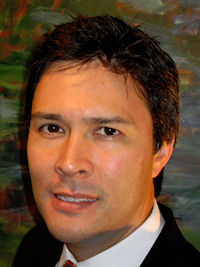
    Open Internet Coalition Executive Director Markham EricksonMARKHAM ERICKSON, OIC: I think George is right with point #1, that the DC Circuit didn’t obliterate the concept of ancillary authority; that legal theory still exists. The court just further described what they think ancillary authority means. It means that anything you’re doing under Title I has to be tied to a specific statutory mandate under Titles II, III, or VI of the Communications Act; and that what the FCC was doing in the Comcast decision — relying primarily on Section 706 and 230 of the Communications Act — neither of those sections provided a statutory mandate, and they were mere policy statements rather than statutory mandates.

    The DC Circuit then went further to talk about several other provisions of the Communications Act that they didn’t think gave the FCC enough of a statutory hook to utilize a theory of ancillary authority. So while they left open some room for ancillary authority, it’s very narrow room, and it’s not quite clear whether you’d have, under their tests, a survivable theory of ancillary authority to regulate the behavior that Comcast was engaging in.

    However, George is wrong on his second point, and that is, if you do move to reclassification, certainly the FCC would have the legal authority to draft regulations that would govern exactly the kind of behavior Comcast was engaging in. This is where George and others sometimes mistakenly create a straw man, intentionally or unintentionally. If the 2002 cable modem order — which began the process of calling Internet access services “information services” rather than telecommunications services — are revisited or reversed or modified in some way, it doesn’t mean you have to go back to the old-style regulatory approach that governed telecommunications services for so many decades. That’s a straw man, I think, that network operators and advocates on the other side like to use, and you hear the talking points that advocates on our side would like to return to old-style telephone regulations, burdensome regulations that would involve things like requiring tariffing, and wholesale provisioning of capacity for competing ISPs, and other things. It’s indeed not an either/or in that situation. Title II certainly gives, particularly under Sections 201 and 202, a model for dealing with the facilities-based access providers, for dealing with the Transport layer, and governing how the Transport layer deals with the content that flows over the Transport layer.

    So I think I would strongly disagree with George’s statement that, if you reclassify, you would have to go back to things that were done prior to the reclassification of these services from telecom, to information services. If you go back to classifying them as telecom services, it doesn’t mean you have to create all those old-style telephone regulations again. It’s just not the case.

    Next: If redeclaration is step #1, what’s step #2?…

    SCOTT FULTON, Betanews: If you don’t have to revert to old-style, 1994 telephone regulations, what does one do instead? It seems like you’re implying that reclassification is a first step, and that there are several steps thereafter.

    MARKHAM ERICKSON, Executive Director, Open Internet Coalition: Yes, I think there’s at least another step after that. First, you’d have to reclassify. You would then have to forebear from some of the Title II provisions that you wouldn’t want to see applied to today’s Internet access providers, that may have applied to old-style telephone carriers. And then you’d have to develop rules that would interpret the provisions in Title II, or use those sections of Title II, and maybe parts of Title I under ancillary authority, to address the things that are in the Broadband Plan, whether it’s network neutrality or USF reform, or the privacy issues, the truth in billing provisions, the things that [FCC] Chairman Julius Genachowski [Wednesday] in his Senate testimony talked about wanting to move forward on.

    There’s not just one way to do it; there are several options ahead of them, and I don’t want to get into those yet, because we’re still working through those, and I’m sure that Chairman Genachowski’s team is working through those. But I think the talking points you’re seeing from George Ou are really setting up a non-existent straw man.

    SCOTT FULTON: You already answered my question on Tuesday with regard to the role of Congress. Can the Commission by itself do these things that you are requesting of it, without the intervention or the oversight of Congress?

    MARKHAM ERICKSON: Well, they’ll always have the oversight of Congress. The FCC, by law, is overseen by Congress, they have oversight hearings pretty regularly — [Wednesday] was one of those. But whether you need a Congressional enactment, a new piece of legislation, no, absolutely not. You don’t need that. The FCC, when they engaged in the first place to classify Internet access as information services in 2002, it [rendered] a declaratory ruling without any Congressional intervention. And they can simply revisit that decision on their own, and reverse that decision like they did…in 2002. Now, they have to do so in a well-reasoned way, with legal and factual arguments that would be able to survive review at the DC Circuit, or whatever circuit is looking at that. I think there are facts that are handed to them that they can utilize.

    At the same time, if Congress is going to work out a piece of legislation concurrently, that can happen too. I think the point to remember is that Congress doesn’t do anything very quickly. The ’96 Act took roughly ten years from theory to final passage. So the choice really for all of us is, if the FCC had the legal authority to move forward on the National Broadband Plan, should they do that, or should they wait for Congress, which potentially takes ten years? I think the answer is, they should not wait ten years, that they should move forward, and in the meantime, work with Congress as Congress works on a piece of legislation too.

    SCOTT FULTON: Without actually signing his name to any particular way of thinking, I noticed that Sen. Rockefeller [Wednesday] said that if it should become necessary for Congress to rewrite laws, and thereby help the Commission along…then he’s happy to start that process. Should Chairman Genachowski, in your mind, say, “Thanks, Jay, but no, thanks?”

    MARKHAM ERICKSON: No, I think what you saw Chairman Rockefeller say is both. He said, they’re willing to stand at the ready to draft legislation if it’s necessary. But he also said that, in his opinion, the FCC has all the tools they need to move forward without Congress. So I think he was giving the Chairman the green light to move forward unilaterally without Congress, but saying, if you get stuck, he’ll stand ready to move legislation. I actually think that you could go forward concurrently.

    SCOTT FULTON: You mentioned there were only 68 legislative session days before this term is out [67 as of Friday]. Ranking Member Kay Bailey Hutchison drew a line in the sand, warning the Chairman against trying a redeclaration, not necessarily saying what she’ll do as repercussion, but I’ll assume even though the Republican party may be in the super-minority today, it’s likely that after the next Congressional election it will not be…Since it takes years for Congress to get anything done, the Republicans could mount a very significant counter-offensive. We’ve heard the term “net neutrality” bandied about, lifting the spirits of the proponents of the Broadband Plan; I’m imagining how that will play against “big government.”

    MARKHAM ERICKSON: The way I look at it, I think in some ways, the Comcast decision was interesting in that, under the concept of ancillary authority as proposed by the Commission — and the Comcast court pointed this out — it was hard to see what the limits of the FCC’s authority would be. If the FCC were to take a much more conservative approach, by narrowly reclassifying broadband access facilities as telecommunications services, you’re talking about a narrow segment of industry, and…we would expect to see a very light touch regulation even on those providers, just to accomplish the goals of the National Broadband Plan and network neutrality. For those who are worried about the FCC’s larger reach into other segments of the Internet, and other things, I think the Comcast decision sort of solves that issue for you. I think the reclassification issue is actually the smaller government, more narrow approach to handling issues like network neutrality.

    SCOTT FULTON: Well, when you use “net neutrality” and “light touch” in the same sentence, there are a lot of people who would say it takes a lot more than a light touch — maybe more of a fiery touch — to be able to reach in and tell an Internet service provider, for example, you may not limit the use of an application on your network in a particular fashion, or you may not employ this type of network management technique. Inevitably, someone will call out interference.

    MARKHAM ERICKSON: You know the rules, at least as proposed, would provide network operators an extraordinary amount of flexibility to manage their networks without any second-guessing, without any sort of blacklists or whitelists about things they may or may not do. And I think that’s the right approach. I want to see, and I think most stakeholders want to see, the ISPs be able to manage their networks without a lot of second-guessing and without having to look over their shoulders and secure their networks and deal with congestion, and again I think that tends to be a straw man that isn’t based on, at least, the way I read the rules and what we’re interested in seeing.

    SCOTT FULTON: If the Commission goes forth with the plan as you see it, and tries reclassification, is there hope for the Commission being able to achieve getting back on that track before the current legislative session expires?

    MARKHAM ERICKSON: Absolutely.

    Copyright Betanews, Inc. 2010


    Add to digg
    Add to Google
    Add to Slashdot
    Add to Twitter
    Add to del.icio.us
    Add to Facebook
    Add to Technorati


  • See the marvels of the sky


    Carolyn Kaster / AP file

    Click for slideshow: Matthew Hubbard looks at Jim Podpolucha’s homemade
    telescope  during a star party at Cherry Springs State Park in Pennsylvania. Click
    on the picture to see a slideshow of the 10 all-time greatest astronomical images.


    Last year was a big year for astronomy fans – so big that it was formally designated the International Year of Astronomy, in recognition of the 400th anniversary of Galileo Galilei’s groundbreaking telescope observations. But the week ahead is a big week as well, and not just because it’s been designated Astronomy Week. Here’s what you can look forward to, in the skies and on the Web:

    …(read more)

  • The iPad delay is a crock

    By Carmi Levy, Betanews

    Sorry, Apple, but your decision to delay introducing iPads internationally doesn’t wash. Your excuse — that US demand was unexpectedly high and, as a result, you had to prioritize customers stateside until production could catch up — is about as shallow and transparent as a Petri Dish full of Joost’s good ideas.

    I don’t believe Apple’s flimsy excuse and I don’t believe anyone else should, either. If you think that Apple, master of the consumer electronics zeitgeist, was unable to accurately predict epic interest in a tablet whose existence was first speculated upon prior to the Battle of Hastings, I’ve got a bridge to sell you. (It’s in Saskatoon, but it’s a nice one.) And if you think Apple was somehow precluded from filling its global supply chain with as many iPads as its magic wand could conjure, I suggest you chuck the Kool-Aid and find yourself a tall glass of juice. Prune juice, maybe.

    All the time in the world

    All right, I may be a little bitter because of the fact that I live on the wrong side of the border between Canada and iPad-ville. If I want an iPad of my own, I’ll just have to schedule a day trip. However, those who’ve already beaten me across the customs gate have reported a range of issues accessing content from iTunes and iBooks. Even in its current Wi-Fi-only form, the iPad knows enough to thwart the efforts of conspiring non-Americans who may, try as they might to flout Apple’s carefully laid plans.

    As much as the perpetual Canadian in me hates to admit it, time is clearly on Apple’s side. Despite the rush of tablet-like announcements from major vendors since the iPad was first revealed in January, it has no natural competitors just yet. And even if these other vendors like HP, Dell, Toshiba and, if the stars align and we hold our breath just so, Microsoft bring their own tablets to market before Apple’s (say it with me) “shortage” is resolved, no competitor will have anything approaching the iPad’s momentum for some time to come, if ever.

    With this in mind, it’s not as if the majority of motivated consumers will bolt the line and buy something else. Whoever wants to pay the early adopter premium for an iPad (and that’s not even taking into account the four-figure “deals” that have just mystee-e-riously sprung up on eBay) will lay that money down, regardless of how much or how long the wait. Apple’s carefully cultivated do-no-wrong aura enables it to get away with things other companies could only dream of.

    Carmi Levy Wide Angle Zoom (v.2)An unhappy double standard

    If Sony pre-announced a tablet and then failed to deliver, critics would ask for Sir Howard Stringer’s head on a plate. (That’s assuming it wasn’t already on a plate after the reported delay of 3D Blu-ray for the PS3.) If Microsoft did the same thing, the usual Steve Ballmer-bashing and Google News headline-gaming (“Microsoft Clowns Epic Tablet Fail: Bozo Ballmer Holds Earth Hostage for One Month”) would soon be eclipsed by a hearty round of indifference. For companies with less consumer cachet than Apple, delays of this nature would quickly ruin any market momentum…or stop it from accumulating in the first place.

    I don’t begrudge Apple’s decision to engage in this little bit of marketing subterfuge. The company has earned the right to subscribe to this double standard, and it’s keenly aware of how to leverage it in its strategic marketing plan.

    Unfortunately for the rest of us, Apple’s brand/product management panache and polish isn’t all it’s cracked up to be. From where I sit, Apple’s move is a somewhat cynical, and perhaps morally questionable, means of dealing with consumers outside the US. If my Kindergarten teacher were still with us, she’d advise Apple to fess up and admit this was part of its plan all along. (Then she’d offer everyone milk and cookies.)

    I’m being deliberately obtuse, of course. No one ever said global consumer electronics marketing had to be moral or nice. Nice guys often do finish last in this business (that could be the title of Gary Kildall’s life story), and Apple didn’t get to where it is today by waiting patiently in line while the Kindergarten teacher handed out the day’s ration of chocolate chip cookies. No rules have been violated here, and no one deserves to be punished. But the ease with which market-dominant companies like Apple can manipulate consumer opinion should give us pause.

    Have we become the herd?

    How is it that so many have allowed one company to dictate the agenda by which they buy their stuff? Apple firmly controls the where, the when, and the how much. Consumers who have elevated Apple on a pedestal to the exclusion of all other alternatives have allowed themselves to be herded like sheep, while it plays fast and loose with the calendar, their wallets, and to a growing extent, their livelihoods.

    Sure, international buyers can simply walk away and head over to the friendly HP kiosk (I hear the upcoming Slate will have an SD card slot, after all, and HP also sells a small selection of convertible laptops) but do they really want to spend the next couple of years explaining to their older, smarter brothers and savvier, younger bosses why the (cheaper) device they picked is better than an iPad? As much as we want to see a vibrantly competitive market for tablet-like devices and related services, for the foreseeable future, it’s The Apple Show Starring Steve Jobs. And in the absence of any serious competitor, this show is likely to go on for quite a while.

    Time wounds all heels

    In a little over a month, this episode of history will be set aside. Apple will release the floodgates, thus magically spilling a suddenly ample supply of product to a weary, parched world of have-nots. Yea, and they shall become satisfied, and in their inebrium they will forget that they were played like pawns. More ominously, the precedent will have been set. And the next time Apple, or any other potentially popular consumer-facing company, decides to juggle global availability to generate more headlines, hype, and pent-up demand, it’ll be that much easier to pull this play out of the playbook and execute it again.

    Don’t say we weren’t warned, and don’t say we didn’t allow ourselves to be put in this position. Because if consumers refused to simply accept flimsy excuses like Apple’s at face value, and would just walk away from the long, long line rather than let themselves be mesmerized like cats with multi-colored yarn dangling in front of their faces, none of this would matter.

    Carmi Levy is a Canadian-based independent technology analyst and journalist still trying to live down his past life leading help desks and managing projects for large financial services organizations. He comments extensively in a wide range of media, and works closely with clients to help them leverage technology and social media tools and processes to drive their business.

    Copyright Betanews, Inc. 2010


    Add to digg
    Add to Google
    Add to Slashdot
    Add to Twitter
    Add to del.icio.us
    Add to Facebook
    Add to Technorati


  • WePad shows off with another video demo

    WePad video demo

    I’ll be up front – WeLove the WePad. I’m all itchy in the pocket just waiting for it to hit the US shores. Today we get a glimpse of the Neofonie UI and I for one am loving it.  Big icons, widgets, and a sidebar look to be a great mix for an Android tablet.  The video shows something else to get excited over, the first half shows the WePad with a USB mouse attached.  Yes, a computer mouse on a tablet.  Maybe ports and connectors on a tablet isn’t a bad idea after all, Mr. Jobs.  Later in the video we see another prototype using the touchscreen as well.  If you’re holding out for an Android tablet, you gotta have a look.  At 450 Euros ($609.00 US) the WePad won’t be the cheapest Android tablet, but after seeing the latest video, it looks like a bargain to me.  Hit the break for the video.
    [via TechCrunch and SlashGear]

    read more

  • NHTSA talking about solution for quiet hybrids.

    Hybrids are great. They get wonderful mileage, are eco-friendly and help the weenie environmentalists feel good about themselves. They do however possess one very distinct downside that the National Highway Traffic and Safety Administration is finally going to address. What is it you ask? Well, I’ll tell you… they’re quiet, like dead quiet. Now in most cases quiet is good. It relaxes you and helps you concentrate on things like driving. This stealthiness however is really beginning to piss off some communities, namely the American Foundation for the Blind and the National Federation of the Blind.

    David Strickland, the NHTSA administrator and master of the obvious said at the SAE World Congress on Wednesday: “A quieter fleet could potentially put pedestrians at risk, especially blind pedestrians” – gee David… why do you think that is? Now maybe it’s me, but if you’re blind, I would think that everything you do and experience is resonated to the old noodle through sound. If this is the case (and I think it is) than a silent car could be very detrimental to ones health. The NHTSA is now conducting research and spending money on an issue that can be solved by using common sense. They should put out a mandate stating that hybrids must have to emit some type of audible automotive sound so pedestrians know that a vehicle is actually approaching. It’s not rocket science guys…


  • Cause of death: neglect As a former underground coal miner, I read with interest “The cost of mining coal in West Virginia” [Opinion, April 16]. There is no mystery and no question about coal-mine explosions. Coal-mine explosions are caused by one thing

    Unless policy gets back on track, unemployment train will continue

    Your recent editorial “Help the unemployed” [Opinion, April 14] criticized the GOP for resisting efforts to extend unemployment benefits. It said “helping those without work to sustain themselves until things improve is hardly a radical economic concept,” yet the position of The Times appears to be based more on misplaced empathy than the time-proven economic principles that actually get people back to work.

    The Wall Street Journal’s lead editorial of the previous day quoted President Obama’s economic adviser, Lawrence Summers: “The second way government assistance program programs contribute to long term unemployment is by providing an incentive, and the means, not to work. Each unemployed person has a ‘reservation wage’ — the minimum wage he or she insists on getting before accepting a job. Unemployment insurance and other social assistance programs increase [the] reservation wage, causing an unemployed person to remain unemployed longer.”

    Statistics show that most people will ride the unemployment assistance train to nearly the end of the line before they get serious about seeking work. Policies that encourage such behavior, on balance, benefit neither the unemployed nor the economy.

    — Bob Benze, Silverdale

  • Can’t take the wait on immigration

    Time to make legal immigration the only immigration

    I agree with Pramila Jaiyapa; we need immigration reform. [“We can’t afford to wait on immigration reform,” Opinion, April 15.] However, I do not agree with reform as she wants it — to give illegal immigrants a free pass to citizenship by legalizing millions of undocumented immigrants.

    Being an illegal immigrant is a criminal act. The United States is a generous country, but we should not reward bad choices, as we did with the company bailouts, by having to pay more of our tax dollars to reward them.

    Patience is wearing thin by law-abiding citizens who are paying for all the free benefits that illegals have been getting. My heart goes out to those facing deportation and the separation of families, but they need to face the consequences of bad choices and a gamble that Americans would just accept it as a cost of being a giving country.

    We need immigration reform by tightening our borders, deporting illegals and helping those who are here legally to become citizens. Those who are here illegally should not have a voice to force themselves upon us.

    — Larry Brickman, Bellevue

    Rights only for those made in the USA

    Who started the rumor that if you are born anywhere on Earth, you have the right to become an American citizen?

    The United States cannot accept the output of the world’s choice to overpopulate, under-educate and commit war and famine instead of peace and prosperity. Immigrants in the past came to make the United States better, not just to improve their personal lives and fortunes. This country is great because real citizens shed blood, sweat and tears over the centuries to make this country the free, prosperous nation that it is.

    The proper immigration reform would be to close our borders, send undocumented families to the adults’ country of origin and then revise the 14th Amendment to only give citizenship to babies who are born to U.S. citizens. Removing the back door “anchor baby” path to citizenship would reduce illegal border crossings, as would an improved guest-worker program.

    Citizenship is a sacred birthright, and should not be casually given away. We are not all one family. The University of Washington is for taxpaying citizens and invited attendees and American troops are not dying in the Middle East for the rights of undocumented aliens to enjoy the safety, security and benefits of the United States for free.

    — Byron Gilbert, Seattle

  • Opposition to proposed anti-aggressive-panhandling law

    Let’s poll other ‘creepers’ too

    To justify an anti-panhandling ordinance, Councilmember Tim Burgess cites surveys showing that people fear panhandlers [“Opponents assail panhandler limits,” NWThursday, April 15].

    Brilliant —Lets take some more surveys to find out what other kinds of people are feared, such as blacks, Native Americans and rowdy teenagers. Then we can further boost the economy by restricting all of them from downtown Seattle.

    — Terry Farrah, Seattle

    Safe in the city? I think not

    As a downtown resident and business owner, I encounter street disorder every day, which is both an annoyance and a serious concern.

    Aggressive panhandling and solicitation impacts the quality of life for residents, visitors, employees and small-business owners. I empathize with the homeless and others down on their luck and understand their need to ask for a handout. But at the same time, I am disturbed, threatened and embarrassed for Seattle when overzealous solicitors and common hoodlums prey on street people and the rest of us alike.

    We need the city to take immediate action on aggressive solicitation, drug dealing and general street disorder throughout downtown. I strongly support more police foot patrols and more police presence period, clear restrictions on aggressive solicitation, better coordination of outreach services and more housing with on-site support services to help those who need them.

    All of us deserve to feel safe on the streets of this wonderful city.

    — Brian Scott, Seattle

    Spare a dime, save some time

    I find that the tenor of Councilmember Tim Burgess’ panhandling amendment and The Seattle Times column supporting it [“An appropriate call for civil streets,” Opinion, April 15] threaten the city’s tenuous connection with compassion.

    The amendment’s flawed language creates a law that relies far too heavily on police interpretation, making it easy to “sweep the streets” of people deemed detrimental to business profits. At its worst, the amendment takes an unsettling step toward criminalizing poverty and runs roughshod over civil rights.

    The Times column attempts to cast this as an issue exclusively of behavior, yet it is both an issue of class and a penultimate test of how we as a city perceive and treat those who are impoverished, hungry and homeless. The Seattle Human Rights Commission, NAACP and the American Civil Liberties Union have raised concerns regarding the amendment’s broad approach that penalizes panhandlers, and oppose it.

    I urge Seattle’s council members to truly vote on the side of civility —on how we, as a society, treat all of our members —and vote no on this amendment.

    On the streets of Seattle, it should not be a crime to hold out your hand, and say, “Brother or sister, could you spare a dime?”

    — Nancy Dickeman, Seattle

  • Tea party talks taxes

    Government sipping away at my hard-earned Social Security, Medicare

    Editor, The Times:

    The Seattle Times April 15 story “Poll tells us who tea-party backers really are” [page one] concluded with a rather snide comment. Members of the tea-party movement wanted to see less spending on social programs, but were reluctant to forego their Social Security benefits, “ … could not explain the contradiction.”

    What contradiction is there in wanting less government spending and not wanting to lose retirement benefits that one has bought and paid for?

    I remind your readers that contributing to Social Security is not an option. Those who were forced to contribute over the course of their working careers had to forgo making other retirement investments.

    To suggest that someone should now be willing to give up what might be the sole source of retirement income as the only means available to control government spending is ludicrous. This is nothing more than a gratuitous attempt to ridicule tea-party members who are simply asking for a little fiscal responsibility from our government.

    If the government gives me back all the money contributed to my Social Security and Medicare accounts over the years, plus the interest I would have earned had I simply put the money in the bank, I will be happy to give up my monthly benefits.

    — Joe Stella, Friday Harbor

    Dish out the facts, tea-party members

    The tea-party protests bring us an interesting look at the sentiments running through the country.

    Most of us have some commonalities with the protesters, including the desire to keep government limited, eliminate waste and keep our liberties. However, there are contradictions in their statements that show how much misinformation and lack of education pervades our society.

    The original Boston Tea Party was a protest against a tax cut for the East India Company. The cut allowed the company to undersell American entrepreneurs, who still paid taxes, but had no representation in the British Parliament. Tea-party protesters complain about high taxes, but also complain that not enough Americans pay income taxes — though they pay payroll taxes.

    Protesters complain about government spending. Where were their voices when former President George W. Bush ran the deficit up from $5 to $12 billion? The spending now is moderate, reasonable and necessary to keep us out of a depression. Health-care problems are destroying Americans’ freedom, yet people complain that the passage of reform that uses mostly Republican principles is a “Communist” takeover.

    If we are going to debate these issues, we must debate them on facts and not on misconceptions perpetuated in our corporate-controlled media.

    — Roger Burton, Bothell

    Why no steam for Bush administration?

    My hat goes off to the tea-party members for using their First Amendment rights and engaging in our democracy.

    Fiscal conservatism is a very legitimate point of view. But here is my question: Where were these folks when the Bush administration accounted for our endeavors in Iraq outside of the normal budget process in order to make the deficit appear smaller? Why were they not up in arms over no-bid contracts in Iraq, which wasted hundreds of millions of tax dollars?

    Where were they when Congress added new, unfunded entitlements via the Prescription Drug Act? Why were these same folks not screaming about “gangster government” and “tyranny” when Tom DeLay held a 15-minute vote open for four hours in order to strong-arm votes for this bill over the objections of fiscally minded legislators —Democrat and Republican alike?

    Finally, just what exactly do these people suggest should have been done when the financial system was careening for the cliff and threatening to take down the global economy with it?

    I can relate to many tea-party concerns over the federal deficit. What I cannot relate to is its willful ignorance to how we got here.

    — Tara Van Niman, Redmond

  • Good Enough For A Pulitzer, But Not Good Enough For Apple

    Just as online content only begins to get some recognition as being Pulitzer worthy, it looks like those content creators still have a major hurdle to overcome: namely, Apple’s incredibly screwed up application approval process.  Cartoonist Mark Fiore made Internet and journalism history this week as the first online-only journalist to win a Pulitzer prize for his work over at the San Francisco Chronicle. Much more difficult? Getting his iPhone cartoon application past Apple’s application store guardians. Fiore says his application was rejected last December because, as an Apple letter phrased it, his satirical cartoons "ridicule public figures," a violation of Apple’s iPhone Developer Program License Agreement:

    "Applications may be rejected if they contain content or materials of any kind (text, graphics, images, photographs, sounds, etc.) that in Apple’s reasonable judgement may be found objectionable, for example, materials that may be considered obscene, pornographic, or defamatory. Examples of such content have been attached for your reference."

    Except the attached examples provided by Apple weren’t offensive in any way, and included such radical and supposedly-offensive things like caricatures of the couple that recently crashed a White House dinner. Of course, this is only the latest in a long list of bizarre and seemingly arbitrary Apple decisions that have kept developers from getting their wares to the application store. Luckily for Fiore, his plight resulted in some negative press for Apple, and by the end of Thursday, Apple had personally called him to say his application had miraculously and suddenly made the grade. As usual, Apple wouldn’t officially comment about how or why they had screwed up.

    You’d like to think that this would be good news for other platforms, given that developers would eventually get tired of dealing with Apple’s bizarre inconsistencies and turn their efforts elsewhere. But this never really happens, given that Apple’s application store remains the best place to gain exposure and make money — and the inconsistent approval process means many developers are never impacted. It also seems likely that the walls surrounding newer application stores (like Verizon’s) could wind up being even worse. Still the problem remains and, obviously, people wonder if Fiore would have had his rejection reversed if he wasn’t in the media spotlight for his Pulitzer win.

    Meanwhile, Dan Gillmor and outlets like the Columbia Journalism Review think it’s time for journalists to start "pushing back against Apple" and asking some hard questions. Gillmor’s general concern is whether news outlets risk having their applications rejected should they criticize Apple (though that would seemingly indicate consistency, something Apple’s apparently not good at) — and more specifically what happens when a paper like the New York Times enters such a tight iPad business arrangement with a company they cover frequently. Surely most people in the press will get right on asking Apple those kinds of hard questions — right after they stop collectively gushing and cooing over the iPad for hits.

    Permalink | Comments | Email This Story


  • Reply to article from Kirk Myers: What’s happening to the climate is unprecedented‎ by Martin Rees and Ralph J. Cicerone, Financial Times

    Article Tags: Kirk Myers, Reply To Article

    Martin Rees, president of The Royal Society, and Ralph J. Cicerone, president of the U.S. National Academy of Sciences, penned a letter last week to the Financial Post in which they regurgitated many of the favorite bromides of the global warming movement, blaming mankind for rising global temperatures and warning of a coming climate catastrophe unless there is a radical reduction in human CO2 emissions.

    Most of their assertions are either unproven or demonstrably false. Neither author was inventive enough to concoct any new anthropogenic global warming (AGW) fictions for public consumption. Everything was straight from the man-is-destroying the planet AGW template.

    Let’s analyze several of the myths rehashed by these heavyweights of science.

    Source: examiner.com

    Read in full with comments »   


  • Rex Cannon

    Rex Cannon
    Adjunct Research Assistant Professor
    Psychology

    Expertise:
    Rex Cannon can discuss issues related to the brain, including clinical neuroscience, biological psychology, self-regulation and electroencephalogram (EEG) source localization. Cannon also can discuss low resolution brain electromagnetic tomography (LORETA), neuroimaging, neurocognitive testing, psychometrics and statistical modeling.

    Expertise Categories: Psychology | Neuroscience | Brain

    Contact Information

    Email: [email protected]
    Phone: 865-300-4983
    Web:

  • Green Cars That Don’t Suck – Feature

    A sampling of cars from mild to wild that do justice to the color green.

    It’s the color of money. It’s the color of freshness. It’s the color of aphrodisiac M&Ms. But in the car world, green represents anything but allure, the inverse of interesting, the exact opposite of envy. No, when it comes to cars, “green” has always represented pragmatism, conservation, environmentalism. The color of life deserves better, we think.

    Then again, green is also symbolic of virility and growth, so it is fitting that we now witness the green-car market exploding like a tomato garden on a Miracle Grow drip. Among this bumper crop are finally some green cars that promise to be—can you believe it?—fun. Indeed, some are using green-tech know-how to make good things even better. And so we bring you eight such examples of green cars that do the color justice.

    Keep Reading: Green Cars That Don’t Suck – Feature

    Related posts:

    1. Decade in Review: Electric Cars – Feature
    2. Green and Kinda Mean: We Race in the Volkswagen Jetta TDI Cup – Sport
    3. Toyota Teases Green (Literally) Dedicated Hybrid Concept Ahead of Detroit Show
  • Aaron Robinson: From Orbit, You Can’t see America Sliding Backward into Mediocrity – Column


    We the People need occasional collective amazement as much as we need an affordable doctor.

    Mrs. Robinson and I are out 700 bucks for airfare to Orlando, several hundred dollars in hotel and Denny’s dining bills, and $88 for little blue tickets that allow us to sit on damp grass at 4:42 in the morning with thousands of shivering strangers, all of us staring dejectedly at a blank, black sky.

    Keep Reading: Aaron Robinson: From Orbit, You Can’t see America Sliding Backward into Mediocrity

    No related posts.

  • Cracking down on West Virginia mine explosion

    Cause of death: neglect

    As a former underground coal miner, I read with interest “The cost of mining coal in West Virginia” [Opinion, April 16].

    There is no mystery and no question about coal-mine explosions. Coal-mine explosions are caused by one thing and one thing only: neglect — neglect of the ventilation systems, of dust control and of the machinery safety devices.

    Coal-mine explosions are prima facie evidence of such neglect and indicate that a country is operating in Third World mode with regard to mining. How many coal-mine explosions have occurred in Britain or Germany or even Poland recently?

    Every miner and every supervisor knows this and could tell any journalist if he or she were to be asked. Sometimes the miners are reckless; often human nature urges us to cut corners to get a reputation as a productive worker. Sometimes the company is at fault. As for the ventilation plan, if it is deficient, it will be immediately apparent to everyone involved.

    Ultimately, in legal terms, it is the company’s responsibility. No new laws, regulations or emergency apparatuses are required. Simple enforcement of existing laws is the only action necessary.

    As for the workers: I understand that the mine involved was nonunion and therefore, it should have been even easier to discipline noncompliance on the workers’ part.

    — Patrick Sullivan, Shoreline

    Solution: automation

    I am surprised that the media are ignorant that the death and injury of miners can be totally eliminated by automation.

    Four years ago during the last mining accident, they showed on TV the miners at work underground. As a pioneer of automation in molecular genetics, the question immediately occurred to me why this was not automated.

    It is a simple task when compared to the automated assembly in automobile production. I called a friend in Germany to find out what the situation was in the country’s coal mines. His answer was during the last 50 years, there has been no loss of life because of automation.

    I also read that the largest coal mine in the world, in China, is completely automated; there is no need for workers below the surface. As always, Americans prefer to treat the symptoms rather than the causes.

    — Hans Noll, Seattle

  • Reply to article from Prof David Bellamy and Dr Jack Barrett: What’s happening to the climate is unprecedented‎ by Martin Rees and Ralph J. Cicerone, Financial Times

    Article Tags: David Bellamy, Reply To Article

    Sir, The letter from Martin Rees and Ralph J. Cicerone (April 9) contains one reason for serious scepticism about the Intergovernmental Panel on Climate Change predictions of future climate changes.

    Prof Rees and Dr Cicerone write that “straightforward physics tells us that this rise [in CO 2 concentrations] is warming the planet. Calculations demonstrate that this effect is very likely responsible for the gradual warming observed over the past 30 years and that global temperatures will continue to rise – superimposing a warming on all the other effects that make climate fluctuate. Uncertainties in the future rate of this rise, stemming largely from the ‘feedback’ effects on water vapour and clouds, are topics of current research”.

    The basic physics is correct, but the uncertainties referred to are largely unreported in newspapers. Using the same physics the 19 major climate models produce very different answers, the more extreme of which are usually used to drive the climate debate.

    Source: ft.com

    Read in full with comments »