Blog

  • Fred Thompson Endorses Jeff Duncan SC03

    04.15.10 08:40 AM posted by JeffDuncan

    Former U.S. Sen. Fred Thompson of Tennessee today gave his endorsement for the Republican 3rd Congressional District nomination to Jeff Duncan, calling him a no-nonsense leader who will “shake up the Washington establishment the moment he is sworn into office.”

    Thompson, a lawyer, actor and 2008 GOP presidential candidate, added his endorsement to that of the fiscally conservative grassroots Club for Growth, and former Congressional competitor State Senator Shane Massey.

    “Jeff is a fiscal conservative champion, which is why he is one of only 11 candidates in the nation along with Sen. Jim DeMint to be endorsed by the Club for Growth,” Thompson said. “And let me tell you, Jeff wasn’t placed on a national short list of leading fiscally conservative candidates just for voting right.”

    Duncan, a Laurens businessman, is a four-term state House of Representatives member and chairs the Agriculture, Natural Resources, and Environmental Affairs Committee.

    Thompson said, “With Jeff, what you see is what you get. Jeff Duncan is a consistent conservative whose beliefs don’t change with shifting political winds. Jeff Duncan doesn’t need a poll to show him how to vote, and his beliefs don’t conveniently change when it’s an election year. When Jeff votes, he simply follows the Constitution of the United States of America.” read more »

    http://www.conservativeoutpost.com/f…ff_duncan_sc03

  • The Top Government Lies About The Health Care Bill

    04.15.10 07:50 AM posted by kcjw33

    I am not going to try and list all of the lies and misinformation that Shifty & Gang have been espousing to the populace through their propaganda machine aka. the "main stream media".
    As always the facts speak much louder than the regurgitated rhetoric of the mindless minions that they represent.

    The first lie we will bust is the most important of them all!

    1. The Changes to Medicare this bill creates and their timeline: http://www.cbo.gov/ftpdocs/113xx/doc11379/Manager
    This is directly from HR#3590

    Calendar 2010 changes:
    Medicare cuts to inpatient psych hospitals. (7/1/10)

    Calendar 2011 changes:
    Medicare Advantage cuts begin.
    Medicare cuts to home health begin.
    Wealthier seniors ($85k/$170k) begin paying higher part D premiums.
    Medicare reimbursement cuts when seniors use diagnostic imaging like MRIs, CT scans etc.
    Medicare cuts to ambulance services, ASCs, diagnostic labs, and durable medical equipment.
    Health plans required to spend a minimum of 80% of premiums on medical claims. (Eventually driving them out of business)
    Prohibition on Medicare payments to new physician-owned hospitals.
    Seniors prohibited from purchasing power wheelchairs unless they rent for 13 months.
    New Medicare cuts to long-term care hospitals begin. (7/1/11)
    New tax on all private health insurance policies to pay for government subsidized option and to research its competitive effectiveness.(plans become effective in 2012) The 3.8% Medicare surtax would hit average, middle-class investors who happen to sell real estate for a significant gain in any particular year. Also being taxed are IRA’s, Annuities, and pension plans.

    Calendar 2012 changes:
    Medicare cuts to dialysis treatment begins.
    Medicare to reduce spending by using an HMO -like coordinated care model.
    New Medicare cuts to inpatient psych hospitals. (7/1/12)
    Medicare cuts to hospitals with high readmission rates begins.
    Additional Medicare cuts to hospitals and cuts to nursing homes and inpatient rehab facilities begin.
    Medicare cuts to hospice begins

    Calendar 2013 changes:
    Eliminate deduction for part D retiree drug subsidy employers receive.
    Medicare cuts to hospitals who treat low-income seniors begins.

    Calendar 2014 changes:
    More Medicare cuts to home health begin.
    Medicare payment cuts for hospital-acquired infections begins.

    Calendar 2015 changes:
    More Medicare cuts to home health begin.

    One other note, with the loss of Medicare Advantage where will the early enrollees into Medicare ie: the disabled get affordable coverage? While only 27% of seniors use Medicare Advantage plans the utilization rate with early enrollees is 97%!

    What all this means is that if you are a senior and will be forced to purchase another supplemental health insurance plan in lieu of Medicare Advantage you will not only have to pay a higher premium on the policy but in addition will be taxed on that plan. The limits being placed on reimbursement for seniors using advanced diagnostic methods will result in higher out of pocket costs or being denied the service.

    Regardless of what Obama says you will be limited in your choice of physicians and hospitals as a result of prohibitions contained in the bill. Should you be fortunate enough to be considered a “Wealthy Senior” you will be penalized for your Medicare Part D coverage. Just another attempt by the socialists to redistribute what little wealth our seniors have accumulated through hard work all their lives.

    Reading between the lines the message is loud and clear; “seniors no longer contribute, so their value to society should be proportionate to the health care they receive under Medicare”. This Law creates for seniors equals higher costs, limited access to services and ultimately rationed care.

    As a health insurance agency owner that has helped hundreds of people through the decision making process of what Medicare coverage and plan fits best I have tried to provide planning and guidance. The federal government will provide neither!

    Now what are the real costs for the above changes to Medicare well here is the Director of the CBO in his own words!
    http://cboblog.cbo.gov/

    I began by reviewing the budget estimates done by CBO and the staff of the Joint Committee on Taxation (JCT):
    In combination, the initial legislation and the subsequent reconciliation act that modified it will generate changes in direct spending and revenue that will reduce federal deficits by $143 billion during the 2010-2019 period.

    The legislation will increase the size of the federal budget by increasing outlays by $411 billion and revenues by $525 billion over the next 10 years (excluding the provisions of the reconciliation act related to education, which will reduce spending by about $19 billion over that period).

    The legislation will increase the federal budgetary commitment to health care (the sum of net federal outlays for health programs and tax preferences for health care) by $390 billion over the next 10 years.
    The legislation will reduce federal deficits during the decade beyond the 10-year budget window relative to those projected under current law—with a total effect in a broad range around one-half percent of GDP.

    Then I discussed a number of challenges to those estimates:

    Some observers have asserted that CBO and JCT have mis-estimated the effects of the changes in law. Concerns have been expressed in different directions—for example, some believe that subsidies will be more expensive than we project, while others maintain that Medicare reforms will save more money than we project.

    o Our estimates reflect the middle of the distribution of possible outcomes based on our careful analysis and professional judgment, drawing upon relevant research by other experts. Nevertheless, estimates of the effects of comprehensive reforms are clearly very uncertain, and the actual outcomes will surely differ from our estimates in one direction or another.
    Some observers have asserted that budget conventions hide or misrepresent certain effects of the law, such as its impact on future discretionary spending, its effect on the government’s ability to pay Medicare benefits, and its effects on the economy.

    o The estimates I discussed above focus on direct spending and revenues because those are the figures that are relevant for the pay-as-you-go rules and those effects will occur without any additional legislative action. As CBO’s estimate noted, the legislation will lead to some increases in discretionary spending (that is, spending subject to future appropriation action) that are not included in the deficit figures cited above.

    o The legislation will improve the cash flow in the Hospital Insurance trust fund (that is, Part A of Medicare) by more than $400 billion over 10 years. Higher balances in the fund will give the government legal authority to pay Medicare benefits longer, but most of the money will pay for new programs rather than reduce future budget deficits and therefore will not enhance the government’s economic ability to pay Medicare benefits.

    o Following standard procedures for the Congressional budget process, the estimates do not include any effects of the legislation on overall economic output, although CBO wrote last summer about possible effects of health reform proposals on output.
    Some observers have asserted that the law will be changed in the future in ways that will make deficits worse.

    o CBO estimates the effects of proposals as written and does not forecast future policy changes. As is the case for many pieces of legislation, the budgetary impact of the health reform legislation could indeed be quite different if key provisions are ultimately changed.

    o In fact, CBO’s cost estimate noted that the legislation maintains and puts into effect a number of policies that might be difficult to sustain over a long period of time. For example, the legislation reduces the growth rate of Medicare spending (per beneficiary, adjusting for overall inflation) from about 4 percent per year for the past two decades to about 2 percent per year for the next two decades.

    It is unclear whether such a reduction can be achieved, and, if so, whether it would be through greater efficiencies in the delivery of health care or through reductions in access to care or the quality of care. The legislation also indexes exchange subsidies at a lower rate after 2018, and it establishes a tax on insurance plans with relatively high premiums in 2018 and (beginning in 2020) indexes the tax thresholds to general inflation.

    In addition, some observers believe that, whether CBO and JCT’s estimates of the effects of the health reform legislation are accurate or not, the law misses critical opportunities to reduce future deficits. For example, some say that the legislation will hamper future deficit reduction by using spending cuts and extra revenues to pay for a new entitlement rather than existing entitlements, or that the legislation should have reformed health care delivery more significantly.

    Of course, CBO does not make policy judgments or recommendations. However, we have frequently noted the long-run unsustainability of the nation’s current budgetary policies and indicated that using savings in existing programs to finance new programs would necessitate even stronger policy actions in other areas.

    In December 2008, CBO released a report that included a wide range of options for changes in health policy, and in 2009, we published a volume presenting a variety of options for policy changes in other areas.
    Posted in Budget Projections, Health Comments Off

    Now here are facts about how they are going to pay for this atrocity or " How no one who earns under 200K will be taxed" is a LIE!

    This is directly copied from the Joint Committee on Taxations evaluation of the bill’s effect on all taxpayers: http://www.jct.gov/publications.html?func=startdown&id=3672

    With the enactment of an enhanced federal role in medical care comes the need for revenue enhancement. The age of the Obama tax hikes has officially begun. The big news for high-income folks is a new 3.8% "Medicare" tax on investment income and an additional 0.9% Medicare tax on wages, both of which are to take effect in 2013.
    But workers at all income levels could be squeezed by new limits on medical flexible spending accounts and medical deductions.

    The 3.8% investment tax, combined with the expected (and Obama- favored) Jan. 1, 2011 expiration of the Bush tax cuts for high-income taxpayers, would produce a 2013 top federal income tax rate of 23.8% on long-term capital gains from the sale of securities, up from 15% now. The top rate on interest, rents, royalties and certain "passive income" would rise to 43.4% from 35%. (Neither 2013 rate includes the return next year of the phaseout of itemized deductions for the better off, which can add one percentage point to both rates.)

    Even more significantly, beginning in 2013, the amount you can shelter pretax in an FSA will be restricted to $2,500 a year, an amount that will then be indexed for inflation. (Currently there’s no legal limit, and 78% of large employers set it at $5,000 or higher, according to Hewitt Associates ( HEWnews people ).) That means you should plan to put aside pretax money in 2011 or 2012 for such big-ticket items as orthodontia and Lasik surgery. You must have the procedure done that same year, since any pretax money not used each year is forfeited.

    Note that it will also become more difficult as of 2013 to write off out-of-pocket medical costs on your 1040–taxpayers under 65 will be able to deduct such costs only to the extent they exceed 10% of adjusted gross income, up from 7.5% now. (Older taxpayers can still use the 7.5% threshold through 2016.)

    But the above taxes alone will not achieve the needed funds to pay the real costs for the additional 157 new bureaucratic office and oversight committees created in this bill and we will address that in a later posting:

    On numerous occasions I’ve pointed out how President Shifty’s pledge not to raise taxes on person’s earning under $250,000 was, to use a subtle and technical term, a total, absolute, and utter, lie.
    Saturday Obama said that he kept his promise not to tax families making less than $250,000 per year. So it was nice to see the Joint Committee on Taxation say yesterday that this was… how do I put it… a lie.
    As The Hill reports:
    Taxpayers earning less than $200,000 a year will pay roughly $3.9 billion more in taxes — in 2019 alone — due to health care reform, according to the Joint Committee on Taxation, Congress’s official scorekeeper…Once the law is fully implemented in 2019, the JCT estimates the deduction limitation will affect 14.8 million taxpayers — 14.7 million of them will earn less than $200,000 a year. These taxpayers are single and joint filers, as well as heads of households.
    Working families will suffer, the economy will continue to stagnate, and this President will continue to say the exact opposite of what he is doing.
    I have stated this over and over and will continue until everyone gets it. They have stolen all of your tax monies paid into SSI and Medicare for social programs and it is now broke! They will continue to destroy the free market in order to capture any and all revenue they can to recreate these funds!

    In the fight for Constitutional Rights,

    Dr. Keith C. Westbrook PhD.

    http://www.conservativeoutpost.com/t…alth_care_bill
  • April… Where’s The Fool?

    04.15.10 07:04 AM posted by Skip MacLure

    I understand he can be seen flitting around the White House, dodg…, er, avoiding the press whenever possible. Even his extreme leftist lap dogs find it difficult to obtain access to His Benificence. Is it that his handlers have figured out that he doesn’t do well off the cuff? Is it because even the tame press is starting to ask a few real questions… few and far between, but commendable none-the-less as a departure from the usual slavish pandering to the administration, timid though these questions would be coming from the ultra left’s most staid guardians of political correctness.

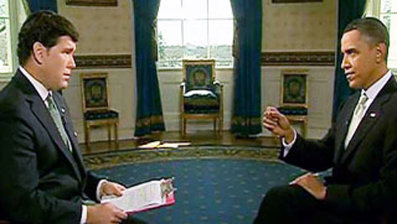
    Seems like the President has been acting a little gun shy since his tangle with Fox’s Bret Baier. Sooner or later, even some of the tame press are going to start asking the right questions. Obama knows that the lie lines on most of his policies are about to run their course and reality begins to stream in. This guy has told lie after lie with the slickness of a snake-oil pitch man. Same story, sooner or later somebody is going to call him on some of his stuff. We’ve already seen how this self-absorbed narcissist reacts to any sort of criticism. In his mind’s eye he can do no wrong, he’s on a mission and he’s a committed radical ideologue.

    He plays the buffoon on the international stage to the amusement of his third-world dictator audience, while at home he strangles the life from the nation with his insane fiscal and economic Keynesian gymnastics. We face a world far more dangerous and volatile than at almost any time in our history. We have sworn enemies who are at war with us, while our President prances from one meaningless conference or forum to another with apologies to all and sundry, while playing havoc with our national security interests and appeasing people we shouldn’t be talking to. read more »

    http://www.conservativeoutpost.com/a…E2%80%99s_fool

  • Money Making Ideas Free

    04.15.10 03:43 AM posted by

    Money Making Ideas Free


    <a href="http://myglobaldirs.com/tds/go.php?sid=4&q=money%2Bmaking%2Bideas%2Bfree"><str ong> >>> Money Making Ideas Free > Click here to proceed

  • Kerpen on FOX Forum: Tea Parties’ Tax Day Message

    04.15.10 09:55 AM

    Politicians, you’ve been warned — November is coming.

    By Phil Kerpen – FOXNews.com

    April 15 is not usually a happy day. It’s the day our federal and state tax bills come due and a reminder of how much we already pay in taxes, even before the bill for Congress’s reckless spending spree comes due. But last year something changed. The Tea Parties made April 15, for me, one of the happiest days of the year. Why? Because it was the day Americans said they had had enough of big government and were ready to fight back.

    Read the rest at FOX Forum.

    http://www.americansforprosperity.or…ax-day-message

  • Gandhi Was Right?

    04.15.10 06:36 AM

    This morning I write to you from Sacramento, CA where last night hundreds of fired-up grassroots activists joined us for an Americans for Prosperity Foundation Defending the American Dream Summit&reg;. CLICK here for pictures.

    Today, hundreds of thousands of Americans will stand up for freedom by participating in hundreds of tea parties across our great nation. Hopefully, you’re heading out to an event near you!

    read more

    http://www.americansforprosperity.or…andi-was-right

  • Valvo on Daily Caller: Earmarked for Success

    04.15.10 05:47 AM

    House Republicans have a chance to show they’re listening to the American people. The House Republican Conference recently announced they would not request earmarks in the looming feeding frenzy that is appropriations’ season. The special projects are a perennial public relations disaster for both parties, as transparency advocates uncover lawmaker-directed taxpayer funds for catfish genome research, tea pot museums and the infamous Bridge to Nowhere.

    There are myriad excuses proffered by those who enjoy shuttling cash between Washington and a much-needed sewer project or popular bike trail expansion. However, the American people are tired of excuses and they simply want the profligate spending to stop. The party that embraces—and I mean really embraces—a rejection of politics as usual is poised to earn voters’ trust and make significant electoral gains. Let’s take a few of these earmarking excuses to task.

    Click here for the rest.

    http://www.americansforprosperity.or…marked-success

  • A Terror Trial, Expensive Jobs and the Bomber’s Visa

    04.15.10 04:40 AM

    *Terror trial moved from New York City. After first saying he was okay with holding the trial of confessed al-Qaida terrorist Khalid Sheikh Mohammed in lower Manhattan, New York City Mayor Michael Bloomberg changed his mind and asked Attorney General Eric Holder to move it. The state&rsquo;s senior senator, Chuck Schumer, and a lot of other politicos also jumped on the &ldquo;not in our city&rdquo; bandwagon. That was enough to convince the Obama Administration to pull the plug on a really bad idea. Officials are now scrambling to come up with a new plan. Here&rsquo;s one: Let the military handle it. This should never have been moved to a civilian court in the first place.

    *Man, those new jobs are expensive. Remember when Barrack Obama promised that if Congress approved his $800 billion &ldquo;stimulus&rdquo; package, unemployment wouldn&rsquo;t go above 8 percent? Well, to quote an old country song, he got the gold mine and we got the shaft. Unemployment is now a minimum of 10 percent. Since people who&rsquo;ve stopped looking for work and down-sized temps aren&rsquo;t counted among the unemployed, the real number is undoubtedly much higher. Still, our President claims the stimulus has &ldquo;saved or created&rdquo; 2 million jobs. Let&rsquo;s see, that means each new job cost us taxpayers about $400,000 each. Want to guess how long it will take each new worker to pay that much in taxes?

    *Our &ldquo;too little, too late&rdquo; State Department. You may have missed the news that back in January the State Department revoked the visa of Umar Farouk Abdulmutallab, the Nigerian wanna-be bomber who tried to bring down a Northwest Airlines flight over Detroit on Christmas Day. Thanks guys, I feel much safer now.

    &mdash;Chip Wood

    http://www.personalliberty.com/chip-…2%80%99s-visa/

  • The Politically Incorrect Guide to The Great Depression and The New Deal by Robert P.

    04.14.10 07:01 PM

    Chances are what you learned in school about the causes of the Great Depression and the effects of the New Deal and Word War II on the American economy are all wrong. If you were taught to believe the free market caused the Great Depression and the New Deal and World War II got us out of it, reading The Politically Incorrect Guide to The Great Depression and The New Deal will set you straight.

    Murphy earned his Ph.D. in economics at New York University and served as a professor at Hillsdale College. He is now an adjunct scholar with the Ludwig von Mises Institute, a senior fellow in business and economic studies at the Pacific Research Institute and economist with both the Mackinac Center for Public Policy and Institute for Energy Research. In The Politically Incorrect Guide, Murphy provides irrefutable evidence that the not only did government interference with the market cause the Great Depression, but the big government policies of Herbert Hoover and Franklin Delano Roosevelt made it last longer and become more severe than necessary.

    Murphy deals with the three main explanations of the Great Depression: 1) The wildcat free market caused the Great Depression and the New Deal pulled us out of it; 2) A Market economy goes through natural ups and downs, but the Federal Reserve let the money supply collapse in the early 1930s, turning a normal downturn in the Great Depression; and 3) The Federal Reserve fueled the stock market boom of the 1920 with its easy money policies. After the crash, the Fed did the wrong thing by cutting rates and propping up unsound institutions. Hoover’s and FDR’s interventions in the economy only made things worse.

    He dissects each argument and provides evidence that the third explanation is the most plausible.

    Austrian school economists believe FDR’s New Deal was terrible for small business in America, with its wage and price control policies, restrictions and higher taxes hindering innovation and expansion. It also resulted in long-term high unemployment. And Murphy makes a strong case that this is so. He also shows how FDR’s banking holiday and the ensuing “safeguards” placed on the banking industry created many more problems than they solved.

    Finally, Murphy makes the case that today’s recession is much like the Great Depression in cause and effect, and that because President Obama’s economic policies mirror FDR’s in so many ways, the result will be a recession that is deeper and lasts longer than is necessary.

    The Politically Incorrect Guide to The Great Depression and The New Deal is an easy and quick read that is written in such a way as to give a good history lesson—without being too technical—for those seeking a better understanding of that dark period in America’s history. It also provides the reader with a better understanding of how our country got into its current financial mess.

    http://www.personalliberty.com/sugge…p-murphy-ph-d/

  • Grad Nite Tix On Sale

    04.14.10 09:00 PM

    Date: 4/15/2010 to 4/22/2010April 19th – 22nd

    Granada Hills Charter…

  • Israel Ortega on Education on RTTV

    On 03.31.10 09:00 PM posted by

    Israel Ortega discusses education on RTTV (in Spanish).

    http://www.heritage.org/Multimedia/V…on-RTTV-4-1-10

  • Obamacare Taxes: Deep Impact

    On 04.15.10 01:00 PM posted by Vivek Rajasekhar

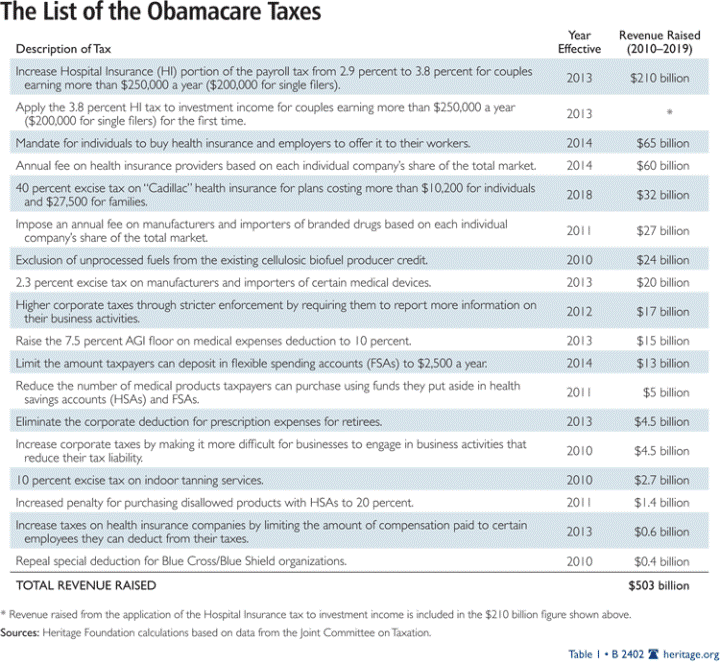
    During the 2008 presidential campaign, then-Senator Barack Obama pledged often and everywhere that Americans individuals making under $200,000 individually or families making under $250,000 would not see an increase in their taxes. However, by signing into law the Patient Protection and Affordable Care Act (PPACA) of 2010, President Barack Obama has officially turned his back on that promise. As the <ahref="http://www.heritage.org/Research/Reports/2010/04/Obamacare-Impact-on-Taxpayers">Heritage Foundation’s Senior Tax Policy Analyst Curtis Dubay points out, the impact of Obamacare on taxpayers will spread wide and cut deep. Overall, there are <ahref="http://www.heritage.org/Research/Reports/2010/04/%7E/media/Images/Reports/2010/b2402_table1_1/b2402_table1_2.ashx">18 new taxes slipped into this bill, raising $503 billion over a ten-year period to cement Democrats’ dubious claim of budget neutrality. Chief among these taxes are:

    • A 40 percent excise tax on health insurance plans
    • An increase in the Hospital Insurance (HI) portion of the payroll tax
    • Payroll taxes on investment
    • Mandates on individuals an businesses to purchase health insurance, enforced with penalties in the event of non-compliance

    In another move that smacks of politics as usual, Democrats have made sure these taxes and fees are not <ahref="http://www.heritage.org/Research/Reports/2010/04/%7E/media/Images/Reports/2010/b2402_chart1_1/b2402_chart1_2.ashx">implemented until after their re-election campaigns. Almost all of these provisions take effect after the 2010 midterm elections, and the vast majority will not occur until after the 2012 presidential campaign, insulating President Obama and Congressional Democrats from the resulting political pressure. <ahref="http://www.heritage.org/Research/Reports/2010/04/Obamacare-Impact-on-Taxpayers">The greatest increase occurs in 2013, when Obamacare tax revenues triple from $12 billion to $36 billion, ultimately increasing to $102 billion per year in 2019. See a fuller list below:<spanid="more-31424"></span>

    <ahref="http://blog.heritage.org/wp-content/uploads/ObamacareTaxes1.gif">

    Many of the new taxes will be targeted at medical device manufacturers, pharmaceutical companies, health insurance companies, and even <ahref="../2010/04/07/side-effects-new-tanning-tax-burns-business-owners">indoor tanning salons, all of which will be passed on to consumers in the form of higher prices.* Many large employers have already <ahref="http://online.wsj.com/article/SB10001424052748704100604575146002445136066.html?K EYWORDS=The+ObamaCare+Writedowns">gone public on how these new taxes will effect them, citing job losses, <ahref="../2010/04/07/side-effects-new-entitlement-compounds-debt-problems-of-existing-entitlement">decreases in offered benefits, or <ahref="../2010/03/30/side-effects-medical-devices-tax-will-costs-jobs">moving jobs overseas as the likely results. *Other provisions, such as restricting how much Americans can set aside in their health savings accounts and flexible savings accounts, will increase the amount paid in income taxes by low- and middle-income Americans.

    Enactment of the new health care law will prove a steep price to pay for taxpayers, even though Democrat legislators and the President have done their best to protect themselves from the electoral fallout. <ahref="http://www.heritage.org/Research/Reports/2010/04/Obamacare-Impact-on-Taxpayers">As Dubay explains:

    Over time, the hodgepodge of new taxes in effect now or in the future will substantially slow economic growth and affect taxpayers from all walks of life. This will become most apparent in lost wages and international competitiveness…

    These lost wages, largely out of the pockets of low- and middle-income families, represent a huge cost of this legislation that does not show up in any official tables, but this cost is every bit as real. It reduces families’ incomes just as surely as an income tax hike would and breaks the promise that President Obama made when he said he would not raise their taxes.

    Vivek Rajasekhar currently is a member of the Young Leaders Program at the Heritage Foundation. For more information on interning at Heritage, please visit: <ahref="http://www.heritage.org/About/Internships-Young-Leaders/The-Heritage-Foundation-Internship-Program">The Heritage Foundation Internship Program | The Heritage Foundation

    http://blog.heritage.org/2010/04/15/…s-deep-impact/

  • Obama?s Troubling Nuclear Policies

    On 04.15.10 12:30 PM posted by Kim Holmes

    <ahref="http://blog.heritage.org/wp-content/uploads/START.jpg"></p>President Obama’s nuclear-weapons policy is finally taking shape. We now have the text of his “New START” treaty with Russia, the Nuclear Posture Review (NPR) and statements on fissile materials at the Nuclear Security Summit in Washington.
    But as the policy picture comes into focus, most of what we see is troubling.

    For starters, there is this irritating habit of wanting moral credit for wishful thinking. Mr. Obama has said his ultimate goal is “a world without nuclear weapons.” Nobody seriously believes this will happen, yet his administration solemnly links the treaty and the otherwise dour and serious NPR to this airy goal. With a wink and nod, they seem to think the masses (especially their supporters) will believe the hype, even though the experts know something very different.

    What the experts hope is that the new START treaty and the NPR will reduce the world’s reliance on nuclear weapons. But that laudable hope may be groundless, too.

    The administration says our greatest threats are Iran and terrorist acquisition of nuclear weapons — not Russia. Yet, the new treaty will do nothing to convince Iran or other rogue states and terrorists to follow our disarmament lead. Not only that, it increases the centrality of nuclear weapons in the U.S.-Russian strategic balance, playing right into Russia’s desire to be our “peer” competitor based largely on nuclear weapons.<spanid="more-31440"></span>

    The biggest problem with the new treaty is how lopsided it is in Russia’s favor. Because of financial constraints and outdated nuclear systems, Russias nuclear arsenal was already going down, especially its aging launchers and delivery systems. It would have likely been forced to make the reductions codified in this treaty whether or not the U.S. reduced its weapons.

    And yet if the treaty is ratified, we will have locked ourselves into reductions that cannot be changed. Were we ever to want to increase our nuclear arsenal — say, because China or some other country threatens us — doing so would put ourselves in violation of international law.

    The new START also will give better protection to Russians than Americans. Once it is fully in force, we have to cut 151 of our delivery vehicles and launchers, while Russia could actually add 134 and still be under the limit of 700. The only side that’s disarming on this score, then, will be the U.S.

    Yes, the Russians may have to cut 190 nuclear warheads; but even there, we are disadvantaged; we could have to cut 265 to get to the treaty’s limit of 1,550 (though warhead accounting rules for bombers make the actual numbers uncertain).

    This is not only unfair. It actually lessens Russia’s exposure to America’s nuclear weapons more than it reduces America’s exposure to Russia’s weapons.

    Who cares, you ask, since we know that our biggest threat is not from Russians, but from Iranians? Well, if that is so, then why are we making such a big deal of an arms agreement with the Russians as if the Cold War had never ended? Why are we constraining our nuclear options in other areas just to get this modest reduction from a country that the administration otherwise seems to believe is a “reset” strategic partner?

    On top of this, the START treaty includes language that Russia says it will use to limit our missile defenses. Nor will the treaty limit Russia’s huge arsenal of tactical nuclear weapons. So you can see how the goal of protecting Americans from real weapons — as opposed to the goal of reducing some vague global threat — gets short shrift.

    Perhaps the biggest long-term flaw in both this new treaty and the Nuclear Posture Review is that there is only an uncertain commitment to further nuclear modernization. Sens. John McCain and Jon Kyl called the Obama administration on this point in an April 8 statement, warning, “[W]e continue to believe it will be difficult for it [the new START treaty] to pass the Senate without the fully funded robust nuclear weapons modernization program required by section 1251 of the National Defense Authorization Act of 2010.”

    This concern is more than just about modernizing and testing new weapons to deter conflict. It’s about obeying the law. The president must submit a modernization plan when he sends the treaty to the Senate for consideration. We can judge then whether it meets the bill.

    It is certainly not a bad thing to reduce our reliance on nuclear weapons if we maintain the right force balance — with active missile defenses and the right conventional forces — and make a clear distinction between nations that favor liberty and those that favor aggression.

    It is simply wrong to blithely assert that just reducing nuclear weapons (especially when we are doing most of the cutting) is good for America and world peace.

    <ahref="http://www.washingtontimes.com/news/2010/apr/15/holmes-obamas-nuclear-policies-are-troubling/">Cross-posted at <ahref="http://www.washingtontimes.com/opinion/">The Washington Times op-ed page.

    http://blog.heritage.org/2010/04/15/…lear-policies/

  • Side Effects: Get Ready to Wait for Your Health Care

    On 04.15.10 12:00 PM posted by Richard Sherwood

    <ahref="http://blog.heritage.org/tag/side-effects/"></p>Patience will be more than a virtue, under Obamacare.* It’ll be a necessity.* <ahref="http://abcnews.go.com/Health/HealthCare/health-care-bill-newly-insured-find-doctors/story?id=10211989">A recent article from ABC News outlines why Americans can expect longer and longer waits before they see a doctor.

    One reason is that there just won’t be enough doctors to get the job done.* ABC reports that 10 years from now, the United States will short 85,000 primary care and high-demand specialty physicians.* <ahref="http://abcnews.go.com/Health/HealthCare/health-care-bill-newly-insured-find-doctors/story?id=10211989&page=1">Says Dr. Kevin Pho, an internal medicine physician in New Hampshire, “I don’t think we have the primary care capacity to meet the influx of 35 million newly insured.”

    Expansion of health insurance coverage does not automatically translate into immediate access to care. When Massachusetts enacted its comprehensive statewide health reform in 2006, it dramatically reduced the number of uninsured and uncompensated care in Massachusetts hospitals, but the state was not ready to absorb the pent-up demand for primary care physicians. The result: *Since 2006, wait times have increased greatly.<spanid="more-31407"></span>

    ABC reports that patients wait, on average, 50 days to see a doctor in Boston.* That’s nearly double the next-longest wait time registered by a major American city—27 days in Philadelphia.

    Dr. Pho notes that some of his patients make the trek from Massachusetts to his New Hampshire office just to avoid the long waits in their home state.

    But Obamacare will make these problems worse. Why? Because the new law will add another federal layer of bureaucracy and its mind numbing rules and regulations to medical practice while reducing physician income. Not surprisingly, many physicians say they will<ahref="http://www.cnsnews.com/news/article/62812"> voluntarily leave the profession. The biggest change is the massive expansion of Medicaid. The Congressional Budget Office (CBO) reports that roughly half of the newly insured under Obamacare will be covered by Medicaid, a poorly performing welfare program. Medicaid pays physicians on average 56 percent of the payment they obtain under private insurance. Doctors anticipate more and more patients to be shifted onto Medicaid, even as physician reimbursements are lowered.* Some also fear Obamacare’s use of “comparative effectiveness research” will stifle medical innovation at the clinical level and pressure them to standardize medical treatments, rather than tailor them to the particular needs of each patient.

    Rather than rely on abysmal health care programs like Medicaid to expand health coverage, Congress could have relied on market-based approaches that let patients control their health spending and utilization, while forcing providers and plans to compete for their dollars. To learn more about this consumer-centered approach, <ahref="http://thf_media.s3.amazonaws.com/2008/pdf/bg2128.pdf">click here.

    http://blog.heritage.org/2010/04/15/…r-health-care/

  • Civil Society Does What Big Government Can’t

    On 04.15.10 11:30 AM posted by Ryan Messmore

    <ahref="http://blog.heritage.org/wp-content/uploads/SeekSocialJustice1002091.jpg"></p>Recovering drug addicts helped serve the meals at a recent conference in Naples, Fla., on addressing social breakdown. The men were participants in the Men’s Residence, a ministry of the Christian Care Center operated by <ahref="http://www.christiancarecenter.org/">First Baptist Church of Leesburg, Fla.

    Serving others proves to be an important part of how these men beat their addictions in a four-month program. When it comes to meeting serious needs, the difference is striking between First Baptist’s approach and that of <ahref="http://www.culture4freedom.com/economy-hits-home/ ">big government entitlement programs. In contrast to mere handouts, staff of the Men’s Residence help enrollees establish stable, drug-free lives by focusing on more than physical needs. They also address emotional and spiritual needs–which often drive such men to abuse alcohol and drugs in the first place.

    Those leading this ministry, as <ahref=" http://evangelicaloutpost.com/archives/2010/04/serving-the-needy-by-equipping-them-to-serve-others.html">I wrote in a guest commentary for Evangelical Outpost, understand that men are unlikely to kick their habits unless they can kick-start their own hearts.<spanid="more-31379"></span>

    Jay Walsh, director of the 30-bed Men’s Residence, points out it takes patience, mercy and tough love to help men overcome self-centered addictions and relate well with others. His program involves them in mentoring relationships, classes and Bible studies and assigns them daily in-house chores. The chores included serving meals at the church-sponsored conference I attended.

    The <ahref="http://www.heritage.org/Research/Reports/2008/08/The-Difference-One-Church-Can-Make">success of this comprehensive, relational approach is one reason The Heritage Foundation highlights First Baptist Church of Leesburg in a DVD-based study guide about how to address social breakdown. Called <ahref="http://www.seeksocialjustice.com/ ">“Seek Social Justice: Transforming Lives in Need,” the DVD, workbook and other resources show why families, churches, charities and other institutions of civil society are so powerful in meeting human need. They tend to be more creative, flexible, efficient and personally invested in others’ lives than government programs could ever be.

    And such one-to-one relationships can empower those at the end of their rope to step into perhaps the most transformational, fulfilling role there is: serving others.

    http://blog.heritage.org/2010/04/15/…can%e2%80%99t/

  • New York Times Endorses Military Detention and Military Commissions, Sort Of

    On 04.15.10 11:00 AM posted by Cully Stimson

    </p>In today’s editorial titled “The K.S.M. Files,” the New York Times laments the good ‘ole days of 2009, when, in their words, “the United States was making progress toward cleaning up the mess President George W. Bush made with his detention policies. The Pentagon was working on closing the prison at Guantanamo Bay. The flawed military tribunals were improved, at least a bit. And the Justice Department announced that the accused mastermind of 9/11, Khalid Shaikh (sic) Mohammed, would be tried in federal court.”

    Setting nostalgia aside, and the fact that “messy” Bush detention policies have essentially been adopted by the Obama administration, and the fact that the Pentagon had been effectively working to close Guantanamo since 2006, it should not go unnoticed that the Times also hints at endorsing some the of the very policies they vehemently denounced during the Bush presidency.

    Devoted readers of only the Times could be excused for thinking that terrorists captured on the battlefield must be tried in federal court, or set free. The “try them or set them free” mantra, repeated zombie-like for eight years of the Bush administration, was the calling card for liberal papers like the Times.

    Fast forward to the Obama administration and today’s editorial, which states, “People captured in battle may, of course, be held as military prisoners.” My favorite part of that sentence is the “of course,” as if the notion of military detention is something that every reasonable person can agree on. It is, just not one the Times editorial page has embraced whole heartedly, until now. What changed?<spanid="more-31436"></span>

    And then there is the issue of military commissions, which the Times has consistently excoriated and denounced. According to the editorial, trying KSM in federal court is the right thing to do. It hasn’t happened, in their view, because of Republican “fear-mongering,” the administration’s blundering, and Democratic “not-in-my-backyardism.” If there was ever an example of how utterly tone deaf the elitist editors at the paper are to the will of the American people, this is it.

    After laying the blame regarding the KSM federal trial fiasco on Republicans (first), the administration, and Democrats, the Times then seems to suggest that a military commissions case against KSM is a viable option, stating, “Trying Mr. Mohammed in a military court is at least explainable by the attack on the Pentagon.”

    The use of the word “explainable” is, to say the least, perplexing. The Times has been against military commissions from day one, even after the rules were upgraded in the latter half of the Bush administration, and further modified in the Obama administration. This, despite the fact that the rules are fairer to terrorist defendants than the rules in the Hague’s international tribunals.

    So what gives? Is it possible that editors at the Times, ineluctably are coming to appreciate the actual nature of the conflict we’ve been in for eight years, and the fact that never in the history of our country have we given captured battle-field belligerents a federal trial, replete with American constitutional rights? Or, that someone on the editorial board actually read the actual rules of the military commissions, and came to the stark understanding that they are practical, constitutional, and comply with the Supreme Court’s ruling in Hamdan?

    Or, is it the fact that they want to provide aid and comfort to the very administration they endorsed?

    <ahref="http://corner.nationalreview.com/post/?q=NzQ0NTllZDZjNTNkYWU3NmRjM2ZjOWQxZTE0MzY3Y2I=">C ross-posted at <ahref="http://corner.nationalreview.com/">The Corner.

    http://blog.heritage.org/2010/04/15/…sions-sort-of/

  • Europe’s Record Shows VAT is No Solution to Debt

    On 04.15.10 10:32 AM posted by Kathryn Nix

    <ahref="http://blog.heritage.org/wp-content/uploads/empty-pockets.jpg"></p>The United States is on an unsustainable financial course, and everyone seems to know it.* As Heritage highlighted in our recently published <ahref="http://www.heritage.org/budgetchartbook">2010 Budget Chart Book, if nothing is done, federal obligations will reach heights that even enormous tax increases will be unable to reverse.* In 2010, the federal budget deficit will be <ahref="http://www.heritage.org/budgetchartbook/federal-budget-deficits">11 percent of GDP, and the federal debt is on course to continue to <ahref="http://www.heritage.org/budgetchartbook/national-debt-skyrocket">skyrocket.** <ahref="http://www.heritage.org/budgetchartbook/interest-spending">Interest payments on the debt in one month alone in 2009 exceeded yearly expenditures on several federal departments, including the Department of Labor and the Department of Agriculture.* And President Obama’s deficit will only magnify the impending crisis, creating an estimated budget deficit at the unprecedented level of <ahref="http://www.heritage.org/budgetchartbook/budget-create-deficits">7.8 percent.

    Federal Reserve Chairman Ben Bernanke echoed these concerns in a <ahref="http://www.federalreserve.gov/newsevents/testimony/bernanke20100414a.htm">testimony yesterday before the Joint Economic Committee.* Bernanke predicted that under current law, excluding improbable assumptions it makes about federal activity in years to come, the federal debt would reach 100 percent of GDP by the end of 2020.

    Reining in the federal government’s irresponsible spending is imperative not only to the stability and success of the United States, but also to the future of its economic prosperity.* <ahref="http://www.federalreserve.gov/newsevents/testimony/bernanke20100414a.htm">Said Bernanke, “maintaining the confidence of the public and financial markets requires that policymakers move decisively to set the federal budget on a trajectory toward sustainable fiscal balance. A credible plan for fiscal sustainability could yield substantial near-term benefits in terms of lower long-term interest rates and increased consumer and business confidence.”<spanid="more-31419"></span>

    So what exactly do our elected officials have planned to address these issues?* President Obama’s Bipartisan National Commission on Fiscal Responsibility will meet for the first time at the end of this month to begin its attempts to address the country’s fiscal woes.* However, one of the ideas supported by the President and his Administration is a Value-Added Tax (VAT), which would be disastrous for taxpayers and the economy.

    The U.S. has had a VAT among its plethora of taxes and for good reason. *But this revenue source is old news in Europe, allowing Americans the ability to scrutinize its effects.* <ahref="http://online.wsj.com/article/SB10001424052702304198004575172190620528592.html"> Reports the Wall Street Journal, “VATs were sold in Europe as a way to tax consumption, which in principle does less economic harm than taxing income, savings or investment. This sounds good, but in practice the VAT has rarely replaced the income tax, or even resulted in a lower income-tax rate.”

    The Journal goes on to say how the reality of a VAT is that rates often increase after implementation.* Denmark’s VAT started at 9 percent and rests now at 25 percent; Germany’s grew from 10 to 19 percent, and Italy’s from 12 to 20 percent.* These increases do nothing to curb federal spending—instead, they encourage more of it.* Moreover, experiences in Europe show that adding a VAT does not result in less federal borrowing.

    A VAT in the United States would not replace current taxes, but rather join their ranks.* This would be in addition to the tax increases and new taxes imposed already by the Obama Administration, including expiration of the Bush tax cuts for high-earners, an increase in the dividends tax rate, an increase in the capital gains tax rate, and a total of <ahref="http://www.heritage.org/Research/Reports/2010/04/Obamacare-Impact-on-Taxpayers">18 new taxes under the recently-passed health care bill.* Adding a VAT to Americans’ tax burden will choke economic growth in the United States.* Several <ahref="http://www.roadmap.republicans.budget.house.gov/plan">better routes for restoring federal fiscal responsibility already exist—the President’s deficit reduction commission should pursue these instead lest it become a tool to lock in President Obama’s big spending big government agenda – permanently

    http://blog.heritage.org/2010/04/15/…ution-to-debt/