Google has released an interesting new feature for its real-time search, which enables users to ‘travel through time’ and see what people were saying about any topic at any point in history. Well, in a rather short history, they can only go as far back as February 2010, not exactly ancient times even by Internet standards. In the future though… (read more)
Blog
-
Google Introduces Twitter Rewind Button
-
Holder: We’re Still Working on Indefinite Detention
After confirming that the administration has determined 48 detainees at Guantanamo who are “not feasible to transfer [and] too dangerous to prosecute,” Attorney General Eric Holder conceded that the administration still doesn’t have a structure in place for handling their indefinite detention without trial. Holder told Sen. Ben Cardin (D-Md.) that the administration would not object to those detainees challenging their detention in habeas corpus proceedings before a federal judge, and for those who lose their habeas cases and remain detained, there “has to be some kind of ongoing review mechanism put in place” for determining someone is still a threat.
“We’re still working through [this issue] in the interagency and, frankly, working with Sen. Graham as well,” Holder said. “Hopefully we will have something to share, and, more importantly, put into place” in the next several months, he said, later clarifying that he believes the administration can finalize that process by the end of the year. “There is a symbolic significance to this review process,” Holder added, comparing it to the negative symbolism posed by the detention facility at Guantanamo Bay.
-
Green Goods: DuoDish for dishwashers and dish washers
From Green Right Now Reports
If you are looking to simplify your cleaning regimen, while also squeezing the phosphates and other harmful chemicals out of the products you use, watch for DuoDish, a new offering by Earth Friendly Products.
 This new entrant in the natural dishwasher category is so safe, it can be used as a hand dishwashing soap. No more need for two products.
It’s all about convenience and providing more choices for consumers, says company CEO Van Vlahakis.
DuoDish caught our eye because we’ve had accidents, promulgated by kids who don’t much use the dishwasher, in which the dishwashing soap was used when the dishWASHER soap was called for. So we know first hand that dish soap for hand washing dishes does NOT translate for the dishwasher. In fact, it results in a sudsy bath for the entire kitchen! (Or did in one memorable event.)
More importantly though, it’s nice to keep it green and clean, and Earth Friendly Products have met the EPA’s test for being environmentally safe. DuoDish is free of synthetic fragrances, phosphates, 1,4 dioxane, formaldehyde, bleach and petroleum products.
It’s also nice to simplify, and as our cleaning products step down from using overly harsh chemicals, more and more of them might have cross over uses. We already use a couple products, instead of say five or six, to clean our bathrooms. Why not aim for an easier approach in the kitchen?
We haven’t tried DuoDish yet. It was just introduced at the Natural Products Expo West in Anaheim last month. But we will. We expect it to work as well as the Earth Friendly Products we have used, such as the effective and affordable Ecos Liquid Laundry Detergent.
DuoDish retails for $3.99 for a 25 oz. bottle. It’s sold at Costco, Sams Club, Whole Foods Markets and other retailers.
- Earth Friendly Products distributes environmentally friendly cleaning supplies for households and commercial use worldwide. The cleaners are created from sustainable plant-based ingredients. The company has won “champion” level recognition from the EPA’s Design for the Environment program.
-
Audi R8 vs Porsche 911 Turbo
Curioso vídeo el que os presentamos a continuación. Se trata ni más ni menos que de un duelo entre el Audi R8 y el Porsche 911 Turbo. ¿Qué coche será el más rápido?.

Si entramos en detalle, el Audi R8 (de color rojo eléctrico en el vídeo) hace uso de un motor V10 5.2 FSI quattro con el que puede desarrollar hasta 525 CV de potencia. Por otra parte, el Porsche 911 Turbo cuenta con una potencia de 500 CV en total.
Si quereis conocer la respuesta a la pregunta que os hice al inicio de este post, sólo teneis que ver este vídeo:
Related posts:
-
What Websites Do You Like? New Twitter Tool Will Tell You
 The Website Taste Predictor is a new Twitter tool that analyzes your Twitter account in order to recommend websites you would like. The project uses Twitter’s OAuth authentication protocol to access your Twitter account so you don’t have to enter in your username and password in order to try it out. How exactly it works, we can’t say. There’s no “about” page, “FAQ” or other explanation. In fact, there’s not even a credit as to who made it, only a URL. But the URL is a big hint: it’s hosted on the MIT.edu domain underneath the subheading ~peretti. And just who is ~peretti? Only the co-founder of the Huffington Post and the viral tracker BuzzFeed, Jonah Peretti.
 Sponsor
New Twitter Tool From HuffPo and BuzzFeed Co-Founder?
Peretti is a graduate of the MIT Media Lab, has taught at NYU and the Parsons School of Design, consulted for major brands like Sony Pictures and Procter & Gamble and created several viral experiments like the Nike sweatshop email and FundRace.org. However, he’s best known for co-founding BuzzFeed, The Huffington Post, ContagiousMedia.org, and the Eyebeam Open Lab. So if this “Website Taste Predictor” is also his creation (we’ve contacted him to confirm), you know it’s not going to be your run-of-the-mill Twitter tool.
For what it’s worth, we’re nearly 100% sure about Peretti’s involvement. The tool is hosted under his account on MIT’s servers, he tweeted about it back on April 7th and he responded personally to a comment about it over on Digg (the fact that this post never hit homepage it a testament to all that is going wrong over there). However, while these clues seem to point to Peretti as the creator, you can never be too sure. We’ll wait for an official word and will update accordingly.
Website Taste Predictor in Action
So what does the Taste Predictor actually do? Well, it doesn’t just parse your Twitter history to spit back a list of links you’ve tweeted. That would be too easy.

It appears to delve deeper than that to function as a true recommendation engine. Whether it looks at keywords, follower lists or sites related to those you post links to, we can’t be sure, but we do know this: the app gets it right on the money. And I mean downright scary right.
In my case, for example, the list returned included a large group of sites I read regularly consisting mainly tech-focused blogs and mainstream media sites plus a handful of sites I’ve been known to check out less often. What I don’t know is how it figured out that I’ve been known to gaze at the occasional lolcat, fail photo, web comic or celebrity gossip post when my brain needed a break from all this tech. I certainly never tweeted about those things nor do I follow people who do. So how did it know?
More importantly, though, the tool actually pointed me to a few sites that I really should be reading more often like the image-heavy online paper Newser, the op-ed content network True/Slant and mobile app analytics site Localytics whose blog I just subscribed to.
In other words, the Website Taste Predictor is accurate and useful, or, as Peretti recently tweeted himself: “I think this is the kind of awesome new Twitter App @FredWilson was talking about!”
-
eBay Find of the Day: Great Scott! It’s a twin-engined 1982 DeLorean
Filed under: Classics, Performance, Auctions, Etc.
 Twin-engine DeLorean – click above for high-res gallery
Why is it that people feel compelled to do silly things to DeLoreans? At least this one hasn’t been totally ruined by making it another “Back To The Future” tribute car to manifest its owner’s fawning lack of originality. This particular DMC-12 doesn’t want for ingenuity, just pop the hood. No, not the rear engine hatch, where you’d expect to find an underwhelming PRV V6, but the compartment up front that used to be the trunk.
Why is there a 2.0-liter Honda engine stuck in front? Well, it teams with the 8.2-liter Cadillac engine out back, of course. The Caddy motor isn’t included in the auction, curiously, but it is available for an extra sum. Reading through the seller’s comprehensive information clearly points out that the car wasn’t a concours example before the swap, and settling for a simple restoration wasn’t going to happen. So you end up with a DeLorean with an aggregate of twelve cylinders, none in stock form. The car isn’t perfect, but hey, what do you want for a current bid price of $6,100? Thanks for the tip, flyingaero!
Gallery: Twin Engine DeLorean


[Source: eBay Motors]
eBay Find of the Day: Great Scott! It’s a twin-engined 1982 DeLorean originally appeared on Autoblog on Wed, 14 Apr 2010 10:20:00 EST. Please see our terms for use of feeds.
Read | Permalink | Email this | Comments
-
Apple’s Chief Designer, Re-Designed [Apple]

Jonathan Ive‘s the head designer for all Apple products. He looks cool, he has a sexy British accent, he gives fanboys broners and gets fangirls wet. Look at your right. That’s him today. But who’s the guy on the left? More »
-
How The Shale Gas Revolution Is Now Tapping U.S. Oil Reserves More Than Five Times Those Of Saudi Arabia (EOG, XOM)
 BACKGROUND: First there was the shale gas revolution. Thanks to technological advances in horizontal drilling, the U.S. natural gas industry has undergone a revolution whereby new techniques are expected to deliver vast amounts of cheap natural gas from U.S. underground shale-rock formations.
There was a time when this gas was once considered unfeasible at reasonable cost, and companies had planned Liquefied Natural Gas (LNG) terminals in order to accommodate U.S. natural gas imports.
Yet now major energy companies such as Exxon believe in shale gas and America faces a domestic supply gut of natural gas. LNG terminals are now discussed in terms of how much they can export.
EVENT: Now shale gas technology has set off America’s shale OIL revolution. Where there’s natural gas in shale, there tends to be oil as well. Previously, even with the new drilling technology that made shale gas cheap, producers thought that they would have to leave shale oil behind since it was too expensive to tap.
Not anymore. Now companies such as EOG Resources (EOG) believe they have the technology to not only produce cheap natural gas from U.S. shale, but to produce oil at a competitive cost as well.
IMPACT: America has potential oil shale reserves well over five times the oil reserves of Saudi Arabia and now companies have begun to tap them at a competitive cost, see how below:
How The Shale Gas Revolution Just Became America’s New Domestic Oil Revolution >
Disclaimer: The author Vincent Fernando does not own shares in EOG. This piece doesn’t say anything as to whether EOG or any shale-related company is or is not a good value at its current price. Companies or individuals the author works with may have positions in EOG or shale-related companies. The author Vincent Fernando owns shares of Chesapeake Energy (CHK), a shale gas-related company. Everyone must do their own complete due diligence.
America is about to make huge progress using shale gas tech to tap vast amounts of shale oil.

Source: EOG
Horizontal shale oil has had PLENTY of doubters and technical challenges.

Source: EOG
It has a bad reputation… Mr Burns tried to steal oil with the BURNS SLANT-DRILLING Co.

Image: Courtesy of Fox Broadcasting Company
Saddam said Kuwait was using slant drilling to steal Iraqi oil in 1990

This is how horizontal drilling works. It substantially increases the potential contact area between a well and resource-containing rock.

Source: Horizontal Drilling
Horizontal wells also offer more targeted access. This allows them to tap reserves under places we might not want to disturb, such as a town or forest.

Source: Horizontal Drilling
If you really don’t get it, here’s a video.
Source: EOG
The great news is that oil particles are small enough to be collected by the same technology used to grab natural gas from shale.

Source: EOG
Thus horizontal drilling can target the irregular pockets of oil found in shale.

Source: EOG
Importantly, horizontal technology can produce high quality oil profitably since it scales off of the same infrastructure used to get gas. It could be more competitive than oil sands or deep water drilling.

Source: EOG
EOG alone could have massive amounts of potential new economically-feasible oil thanks to new technology.

Source: EOG
For example, ‘Eagle Ford’ was not seen as a reservoir rock, until now.

Source: EOG
EOG expects massive growth for both natural gas and oil… and this is just one company.

Source: EOG
The even better news is that America has almost 3/4 of the world’s known shale oil reserves.

Most of it is still too expensive to produce… but EOG’s efforts show how America can begin to scratch the surface of oil shale potential and cut its dependence on foreign oil producers, even Saudi Arabia.

Appalachia could be the big domestic winner for now.

Conclusion: Game changer. EOG is just an early example of what’s likely to come from other companies as well. Just wait.

Source: EOG
Join the conversation about this story »
-
Maraviroc Rarely Used for Treatment-Naive Patients
 Over in Journal of Infectious Diseases, the MERIT study was recently published (with Chuck Hicks’ Journal Watch summary here), demonstrating that maraviroc is non-inferior to efavirenz — provided that the enhanced-sensitivity tropism test is used to select appropriate candidates.
(The MERIT study began in 2004-5. Don’t think I’ll ever forget that, since the investigator meeting overlapped with this memorable series. Notable event pictured.)
Despite these favorable results from the trial — and the FDA approval of the drug for treatment-naive patients — I agree with Chuck that mariviroc will get little use in this population, if only because the “preferred” alternatives (efavirenz, atazanavir/r, darunavir/r, raltegravir) are so incredibly good.
Our reader poll (right side of page) confirms how rarely the drug is prescribed as initial therapy. I suspect that some of the respondents who said they have given the drug to these patients did so within a clinical trial, which would make the response even lower.
Will maraviroc — or another CCR5 antagonist — ever have widespread use in HIV treatment?
Call me an optimist, but I envision that these drugs will be part of an aggressive eradication strategy, somehow based on the remarkable case of “cure” following bone marrow transplantation from a CCR5-negative donor.
Hey, I can dream can’t I? Red Sox fans certainly did in 2004.
-
5 Clean Diesels for 2010 that will make you smile.

1. Audi A3 TDI
Not so long ago I did a full review on the new 2010 Audi A3 TDI. I went over how it had 140 hp and 236 lbs.tq. from its 2.0 liter turbo diesel and that power was transmitted to the front wheels, as there is no Quattro system available yet. I then went on to say to how the ride is firm with a decidedly sporty feel, but is in no way uncomfortable and that acceleration was a bit lacking.
Then I praised the mileage, as this is where the clean diesel really shines and is really the only reason I would opt for this engine. How does 30 city / 42 hwy sound? Combine that with the 15 gallons fuel the A3 holds and you’re talking a minimum of 450 miles per tank in city driving. Nice right!
2. 2010 BMW 335d

The BMW 335d is another car that I’ve had the opportunity to get behind the wheel of. First off, you’d never suspect that this was a diesel powered automobile. It doesn’t sound like one, feel like one or perform like one. Mash the gas on the 335d and you’ll be rewarded with some very brisk acceleration numbers to the tune of 0-60 in a tick under 6 seconds. This is mainly due to the 425 lb.tq. that this thing pumps out at 1750 rpm. Seriously, it’s fast, and with a EPA rating of 23 mpg city and a highway figure of 36 mpg, you’ll easily be cruising for 500+ miles before you’ll need to gas up.
3. 2010 Volkswagen Jetta/Golf TDI

What we have here is the same fuel efficient 140 hp and 236 lbs.tq. 2.0-liter turbo diesel from the Audi A3 but in a brand new inexpensive wrapper. Actually, the wrapper of choice in my opinion would be the new 2010 Jetta SportWagen as opposed to the Golf, but that’s just me. Maxed out it’ll run just upwards of 30k, but for all that green you’ll get more room than the Audi A3 and in my opinion, a better looking ride while still getting 30 mpg city and 41 mpg hwy… seriously, how can you beat that? The key is finding one, as these suckers are selling like hotcakes.
4. 2010 Mercedes Benz ML350 BlueTECH

We’ve already got three good cars on the list, so I figured it was time to throw in a few SUVs. First up is the ML350 BlueTECH clean diesel from Mercedes Benz. It runs a 210 hp V6 that puts power down through a seven-speed automatic transmission. This is good, because thanks to the 400 lbs.ft of torque that the V6 puts out, that transmission helps get the big Benz to 60 mph in about 8 seconds. At just under 5000 lbs. the big M-Class is no lightweight, but thanks to that BlueTECH mill under the hood it still manages to get respectable economy with 18 mpg city and 25 mpg hwy. It also happens to be the cleanest diesel engine on the planet.
5. 2010 BMW X5 xDrive35d

Here we have the BMW X5 xDrive35d. It features the same beefy twin turbo, 265 hp 3.0-liter, inline 6-cylinder that powers the 335d. Like the above Mercedes the BMW is a bit on the chunky side weighing in at 5111 lbs, this however doesn’t stop from sprinting to 60 mph in under 7 seconds. Mileage is rate at 18 mpg city and 26 hwy. Good numbers for just big boy. The only downside to both the BMW and the Mercedes would have to be the size. Both are a bit cramped in the interior, but if you can deal the lack of space you’ll have one great SUV on your hands if you decide to go down this road.
-
HTC Incredible Revealed on Verizon Staging Site, To Be Called “Droid Incredible”

This is about as firm a leak as you can get: the HTC Incredible has been revealed on a Verizon staging site.Sadly, no further specs or pricing was revealed, but the April 29th launch date that we talked about earlier is mentioned, as is the new branding for the device: The “Droid Incredible”. Not the greatest of names, no, but I’ll give the marketers extra points for consistency.
The site (found here) was revealed by AndroidForums member Zulucap, and since the initial discovery, the site has changed to reveal the updated device name and release date, so who knows what else may spring up on the site in the future?
Update: They’ve locked the page down! Looks like that definitely wasn’t supposed to be found yet.
-
Michelle Obama, Margarita Zavala meet; discuss drug addiction treatment.
MEXICO CITY–U.S. First Lady Michelle Obama met for about 45 minutes Wednesday morning with Mexican First Lady Margarita Zavala to talk about drug treatment. This is a sensitive area, since the Mexican government blames the U.S. drug market–the customers–for fueling drug cartel wars in Mexico. The Obama administration will soon be releasing a new policy outlining specific proposals to reduce drug demand in the U.S.
East Wing statement: “The First Lady met with Mrs Margarita Zavala, First Lady of Mexico this morning at Los Pinos, the Mexican presidential residence and offices. The First Ladies discussed a series of issues of importance to young people in both the United States and Mexico, including drug addiction treatment and early prevention programs and the importance of the humane treatment of unaccompanied migrant children. Mrs Obama and Mrz Zavala underscored the importance of engaging families and communities in tackling the challenges facing young people in both countries as a key to helping build a better future for the United States and Mexico.”
-
Israel Plotting “Jersey Shore” Spinoff

Calling all Israelis: Jersey Shore, MTV’s newest reality phenomenon, has inspired plans for more than a half dozen culturally-influenced soap opera spinoffs since its debut last November — and the latest incarnation of the series is bound of Israel.
Get ready for fist-pumping in The Holy Land. Oy vey….
ZackTaylor.ca reported Tuesday: “Rumors are going around that MTV is looking to film a Jersey Shore style show in Israel – No further details have been announced, but according to our ZackTaylor.ca insider at the network, the show ‘will follow a bunch of Reform American-Jewish teenagers over a summer in Tel Aviv-Yafo….”
Israel’s beach-themed Shore could debut early next year.
-
Kerilkowske Signals ‘A New Direction in Drug Policy’
Mike’s reported on the White House’s shift away from a “war on drugs” mentality toward an increased focus on prevention and treatment. Today, National Drug Control Policy Director Gil Kerlikowske emphasized that shift in testimony to the House Oversight and Government Reform Committee’s subpanel on domestic policy.
From a press release sent along by the Office of National Drug Control Policy:
National Drug Control Policy Director Gil Kerlikowske said today “a new direction in drug policy” is required to reduce the strain on the Nation’s economy caused by drug abuse and to improve the public health and safety of our citizens.
Testifying before the Subcommittee on Domestic Policy of the House Oversight and Government Reform Committee, Director Kerlikowske outlined national drug control priorities and the Fiscal Year 2011 National Drug Control Budget, noting that the Obama Administration approach to drug policy is “grounded in common sense, sound science, and practical experience.”
With drug use accounting for tens of billions of dollars per year in healthcare costs, and drug overdoses ranking second only to motor vehicle crashes as the leading cause of accidental death, the Nation “needs to discard the idea that enforcement alone can eliminate our Nation’s drug problem,” Director Kerlikowske said. “Only through a comprehensive and balanced approach – combining tough, but fair, enforcement with robust prevention and treatment efforts – will we be successful in stemming both the demand for and supply of illegal drugs in our country.
“The forthcoming National Drug Control Strategy calls for addressing our Nation’s enormous demand for drugs by scaling up our public health policy response, integrating treatment programs into mainstream medicine, and recognizing that effective drug policy requires engagement at the community level,” Director Kerlikowske said.
He also noted that ONDCP would continue to work to “break down the silos between the prevention, treatment, and law enforcement communities– and the greatest use must be made of the finite resources at our disposal.”
The President’s $15.5 billion Fiscal Year 2011 National Drug Control Budget lays the foundation for these efforts and provides resources for five major drug control functions: substance abuse prevention; substance abuse treatment, domestic law enforcement, interdiction, and international support. The budget request specifically calls for an increase of $521.1 million over the FY 2010 enacted level, and includes a 6.5 percent increase for prevention and treatment; an increase of $73.8 million for Federal interdiction efforts; and an increase of $20.1 million for international support.
-
Bernanke: U.S. Should Press China on Yuan Policy
The U.S. should continue to press China on its foreign exchange policy, Federal Reserve Board Chairman Ben Bernanke said Wednesday, agreeing with a top Democratic senator that the level of the yuan was one of the causes of the global recession.
Bernanke agreed with Democratic Sen. Charles Schumer (D., N.Y.) that China’s currency exchange policy was a major cause of “harmful of global imbalances.”
He said China would benefit from a more flexible yuan. Combined with other steps by the Chinese government, Bernanke said a rising yuan would encourage the development of domestic consumption in China.
But Bernanke declined to agree with Schumer that Congress should pursue a legislative solution that would compel the Obama administration to take action on the matter.
Bernanke said that the U.S. relationship with China is a complicated one. He said there were a variety of “economic and political rationales” within China that led to its exchange rate policy.
-
L.A. mayor, governor to meet with German chancellor at Getty Center
Los Angeles Mayor Antonio Villaraigosa and Gov. Arnold Schwarzenegger are scheduled to meet with German Chancellor Angela Merkel at a luncheon Wednesday at the Getty Center, according to the mayor’s office.
Merkel is in Los Angeles as part of a two-day visit to California following President Obama’s nuclear arms summit in Washington, D.C.
At the luncheon, Merkel will meet with business leaders, entertainment executives and scientists. She is scheduled to address Stanford University on Thursday before heading home.
Germany is the fourth-largest source of direct foreign investment in the Los Angeles area, with German-owned and affiliated companies employing nearly 3,000 people. That amounts to about $149 million in wages paid to employees, according to Villaraigosa’s office.
Villaraigosa visited Berlin last year to sign a memorandum of understanding between the L.A. Community Redevelopment Agency and a German technology park to share best practices on the construction of clean-technology-development companies.
-
A New Crew Member for the Space Station: The “Robonaut 2″ | 80beats
 Have robots got the right stuff? We’ll soon find out, as NASA has announced that one of the last flights of the space shuttle will carry a humanoid robot, Robonaut 2, up to the International Space Station.
The two-armed ‘bot is the result of a venture by NASA and General Motors, and will help the researchers involved identify in what ways a robot could be a help to human explorers in space. Before it gets to go on its first space walk, however, it’ll be monitored to see how well it deals with weightlessness [DVICE].
The robot isn’t much more than 300 pounds of torso, head, and arms, with wheels for locomotion rather than humanoid legs. But NASA hopes it could one day work alongside human astronauts, perhaps helping them during spacewalks. While we’ve blasted plenty of unmanned explorers into space, this will be first largely humanoid robot to venture beyond our home planet.
NASA and GM first showed off Robonaut 2 (or R2) in February, and it will fly to the ISS for this test mission on board the shuttle Discovery in September. Back here on Earth, GM hopes to use R2 to help out workers building cars on factory floors.
GM and NASA have been in business together since the automaker produced lunar rovers for Apollo missions, and could see more collaboration as President Obama pushes for more collaboration between NASA and private enterprise (though the government still owns the majority share of GM).
The space agency is pushing the same kind of collaboration with Chrysler: What the three-year alliance between Chrysler and the space agency could generate are lighter-weight materials, more dexterous, even human-emulating robots and advanced batteries that ease drivers’ worries about running out of electricity on a transcontinental trip [Detroit Free Press].
Related Content:
80beats: Robonaut 2: Coming to Space Stations and Assembly Lines Near You
80beats: Obama’s NASA Plan Draws Furious Fire; The Prez Promises To Defend His Vision
80beats: Obama’s NASA Budget: So Long, Moon Missions; Hello, Private Spaceflight
80beats: NASA’s New Underwater Robot Chugs Along Indefinitely on Ocean Power
80beats: Photo Gallery: The Best Views From Spirit’s 6 Years of Mars RovingImage: General Motors/NASA
-
São Paulo terá carros elétricos da Renault-Nissan
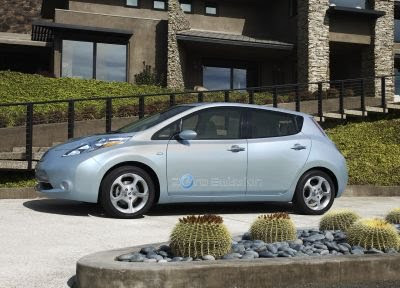 A prefeitura de São Paulo e a montadora Renault-Nissan assinaram um acordo de intenções para introdução de carros elétricos na capital paulista.O acordo vai permitir que o município utilize o carro elétrico Leaf para uso em serviço na CET.A intenção da prefeitura é reduzir os níveis de poluição e sonora da cidade, promovendo o carro elétrico. Já a Renault-Nissan quer criar um mercado local para o Nissan Leaf.
 -
Guest Contribution: Dani Rodrik on China’s Fat Trade Surplus
This morning, the International Monetary Fund advised China and other countries with big trade surpluses that they can slash those surpluses without sacrificing economic growth by adopting a toolkit of measures including revaluing their currencies, shifting policies toward domestic consumption and pursuing more sophisticated markets. The IMF report, part of its semi-annual World Economic Outlook, frequently cites the work of Harvard economist Dani Rodrik in reaching its conclusion.
Heres Mr. Rodriks thoughts, e-mailed to the Wall Street Journals Bob Davis:
The honest conclusion from this chapter, which is a useful exercise, is not that currency appreciation will not have adverse effects on growth, but that it will not necessarily have adverse effects. Furthermore, many of the findings in the chapter would be cause for concern for China: a negative growth effect is more likely the faster the initial growth, the larger the initial current account surplus, and the higher the initial saving rate. China is an outlier in all these respects.
In addition, the chapter largely overlooks another important determinant of the appreciation’s impact. The poorer the economy, the more detrimental is a real appreciation likely to be. Almost all of the comparison economies considered here were significantly richer than China at the time of their currency adjustment. The poorest economy in the case studies (Korea in 1989) was between twice and three times richer than China is at present (depending on whether you compare them in regular dollars or PPP dollars).
This matters because China still has a huge surplus of labor that needs to be absorbed into its modern, mostly tradable, sectors. As the authors document, the tradable sector tends to grow significantly less rapidly following appreciation. This is not good news for an economy at China’s level of development.
In my own work, which they cite, I actually find that the sensitivity of China’s growth to its exchange rate is quite a bit higher than for other countries at similar income levels. This is possibly because China is so huge and with so much labor still in extremely low productivity activities.
So the bottom line from this analysis should be “not full speed ahead,” but “caution is warranted.”
-
What Role Can Landscape Architects Play in Designing Wildlife Habitats?

The 2010 Dumbarton Oaks Garden and Landscape Studies Symposium will gather designers, scientists, and historians to explore the question: What role can landscape architects play in conserving or restoring wildlife diversity?Protecting wildlife habitat has never been more critical because many species face increased threats of extinction. “Whether threatened by habitat destruction or climate change, displaced by urbanization or invasive species, poisoned by industrial toxins, or hunted to extinction, many wild animals have failed to thrive in the company of people. There is growing scientific consensus, most recently reported in an Elizabeth Kolbert essay in The New Yorker, that we are in the midst of the sixth great extinction in earth history—and the first caused by human activities. By some estimates, as many as half of earth’s species will be gone by the end of this century.”
The Symposium organizers argue that ecological conservation practices can create new hope for wildlife, and landscape architects have a key role to play through “reserve design for focal species and biodiversity; sizing and spacing of habitat patches, corridors, and edge conditions; and the analysis of food webs and predator-prey dynamics.” Furthermore, the organizers believe “ecosystem services, restoration ecology, and designer-generated ecological experiments” all provide new opportunities for landscape architects in developing productive wildlife habitats.
To date, landscape architects have succeeded in integrating botanical diversity into projects, but more research is needed on how to restore or create wildlife habitat through conservation design practices. The symposium will explore a range of questions related to wildlife habitat restoration: “From niche habitats in urban parks to biosphere reserves, what role can design play in facilitating wildlife conservation at different scales? Given extinctions and habitat fragmentation, can designers become involved in reconfiguring wildlife communities in the same way they have reconfigured plant communities? What are the opportunities and dangers of designing ecosystems with incomplete species composition, including missing keystone species or disjointed food webs? Are species introductions an option? How should human inhabitance and use be managed? At one extreme, is it necessary for the survival of wildlife to exclude humans? At the other, many cities are now developing biodiversity plans: can urbanized areas be made more habitable for wildlife? How can designers address regional to global issues, including the impacts of invasive species and climate change on habitat quality and species distribution?”
The diverse set of speakers, representing many disciplines, include:
- B. Deniz Çalış, Assistant Professor & Vice Chair, Department of Architecture, Bahçeşehir University, Istanbul, Turkey, “The Wild and Wilderness in Ottoman Gardens and Landscape”
- Jane Carruthers, Professor, Department of History, University of South Africa, “Designing a Wilderness for Wildlife: The Case of Pilanesberg, South Africa”
- Joshua Ginsberg, Senior Vice President, Global Conservation Program, Wildlife Conservation Society, New York, “From Elephants to Mice: the Impact of Ecology and Spatial Scale on the Design of Conservation Strategies”
- Stuart Green, Principal, Green & Dale Associates, Melbourne, Australia, “Biodiversity of Wildlife Habitats as an Educational Resource: Two case studies, Alice Springs Desert Park and Cambodia Wildlife Sanctuary”
- Steven Handel, Professor of Ecology, Department of Ecology, Evolution, and Natural Resources, Rutgers University, “Restoring Habitats to Degraded Urban Areas: Dreams and Nightmares”
- Kristina Hill, Associate Profesor and Chair, Dept. of Landscape Architecture, University of Virginia, “Climate Change and Biodiversity in Urban Regions”
- Shepard Krech Ⅲ, Professor of Anthropology, Brown University, “That’s real meat: Birds, Native People, and Conservation”
- Nina-Marie Lister, Associate Professor, School of Urban and Regional Planning, Ryerson University, Toronto, “Adaptive Infrastructure: Network Strategies for Urban Ecology”
- Jianguo (Jack) Liu, Rachel Carson Chair in Sustainability & University Distinguished Professor, Center for Systems Integration and Sustainability, Michigan State University, “A Coupled Human and Natural Systems Approach to Research and Design: The Case of Wolong Nature Reserve for Giant Pandas”
- Shahid Naeem, Professor of Ecology and Chair, Department of Ecology, Evolution and Environmental Biology, Columbia University, “Biodiversity, Ecosystem Functioning, and Ecosystem Services: A Useful or Useless Construct for Wildlife Habitats?”
- Harriet Ritvo, Arthur J. Conner Professor of History, Massachusetts Institute of Technology, “Edging into the Wild”
- Kari Stiles, Associate, Jones and Jones Architects, Landscape Architects, Planners, Seattle, WA, “Conserving for the Future: Design Without Borders”
- Thomas Woltz, Partner, Nelson Byrd Woltz Landscape Architects, Charlottesville, VA, “Biodiversity and Farming: Defining a role for contemporary landscape architecture that encourages plant and wildlife biodiversity within the context of productive agricultural land”
- Kongjian Yu, Professor of urban and regional planning, and founder and dean of the Graduate School of Landscape Architecture, Peking University, Beijing, China, “Integration across Scales: Landscape as Infrastructure for the Protection of Biodiversity” (see an interview with Kongjian Yu)
The symposium is organized by John Beardsley, director of Garden and Landscape Studies at Dumbarton Oaks, and Alexander Felson, a joint Yale University professor in the Schools of Forestry and of Architecture.
Learn more about the Symposium held at Dumbarton Oaks in Washington, D.C. May-14-15.
If you are in D.C. in May, also check out the new exhibition at the Smithsonian American Art Museum on Christo and Jeanne-Claude’s “Running Fence” land art installation, which covered more than 20 miles of Sonoma and Marin counties in the 1970’s. Viewed as one of Christo and Jeanne-Claude’s most lyrical pieces, “this monumental temporary artwork was made of 240,000 square yards of heavy woven white nylon fabric, 90 miles of steel cable, 2,050 steel poles, 350,000 hooks, and 13,000 earth anchors. Paid for entirely by Christo and Jeanne-Claude, the completed Running Fence existed for only two weeks in September of 1976.”
Image credit: 2008 ASLA Analysis and Planning Honor Award. New Terrain for the North Lake Region of Chongming Island, Shanghai, China. SWA Group, Los Angeles, California