
Blog
-
Another blow for Nintendo: Next-gen EA games will skip the Wii U
-
Google Maps Is Reportedly About To Look Like This
Alex Chitu at Google Operating System has shared a couple of screenshots of what it says is the new Google Maps interface. It’s no small redesign:

Chitu hints that we could see the new look unveiled at Google I/O next week. Google does apparently have a three-hour keynote lined up.
It’s hard to say for certain just how authentic these screenshots are, as Chitu appears to be the only source (though he thanks a Florian K.). Chitu has a pretty credible track record of Google coverage though, and is always conscientious to point out when new Google features are simply tests. His post makes him seem pretty confident that this is the real deal. I guess we’ll find out soon enough.
Chris Velazco at TechCrunch makes a couple of good points, like for one, that the design seems to fall in line with other Google products of late – the “cards” look in particular. Also Google has had a history of recent product leaks.
According to The Atlantic, everybody hates the new look. What do you think of it?
-
Jeanne Cooper Dies; ‘The Young and the Restless’ Star Was 84
Actress Jeanne Cooper, born Wilma Jeanne Cooper, has died at the age of 84. Cooper was best known for her 40-year run as Katherine Chancellor on the U.S. soap opera The Young and the Restless.
According to a statement from Cooper’s son, actor Corbin Bernsen, Cooper died early Wednesday. According to Bernsen, she died peacefully in her sleep, with her daughter, Caren, by her side.
Bernsen’s Facebook post:
Cooper began her acting career in the early 50s in movies such as The Redhead From Wyoming and The Man From the Alamo. She went on to have roles in many network TV shows, including Perry Mason, Hawaii Five-O, and Mannix.
In 1973 Cooper was cast in the role of Katherine Chancellor in the long-running U.S. soap opera The Young and the Restless. The character has been described as the “matriarch” of soap opera television and her rivalry with Jill Foster Abbott has produced story twists for The Young and the Restless for many years.
-
There Was A ‘Glass’ Before Google Came Along, And It Was Used In Antarctica In 2001

Whether or not you think that Google Glass is something that you’d wind up using one day, you have to admit that the technology is impressive. Packed inside of the pair of specs is a computer running android, camera and all of the wireless capabilities you’d need. The idea of wearable computers is nothing new, and a team that explored Antarctica actually had their own pair of “Glass” long before it was en vogue.
In a blog post chronicling the team’s experience, Tina Sjogren fondly remembers what it was like to pull together a wearable computer running Windows 98, paired with a “finger” mouse for controls and a glass screen as its display. It sounds a lot like an early version of Google Glass, but this was truly a technological marvel, considering that it was built and used at the South Pole in 2001.
The specs of the device, which was called “South Pole Wearable,” are nothing short of amazing, including custom built software to share information and post photos. It was also solar powered, something that Google Glass could really use. It didn’t use 3G, 4G or WiFi, relying on satellites:
Finger Mouse
Wrist Keyboard
HUD (VGA Heads Up Display, Eye-trek Glasses by Olympus)
Wearable Windows 98 computers
Daylight flat panel display
Customized Technology vests
Shoulder Mounted Web Camera
Bluetooth near person network
Iridium data over satellite
Power converters
Solar cells
Control and Command voice software
CONTACT blogging software
Image editing, word processingThe entire kit weighed 15 pounds, which is almost double what the original Google Glass prototype weighed, about 8 pounds. It now weighs about as much as an average pair of sunglasses.
Tina and Tom Sjogren set forth to build something that allowed them to transfer all types of information as they skied through the snowy South Pole. Sharing this type of information in real-time was not something that many could wrap their brains around, therefore the pair didn’t get the type of attention for their device that Google is getting for Glass today. Tina says:
We wore a computer on our hips, a mouse in our pocket, and the glass was our screen. We did it not to show off but because we had no other choice.
She also sees a future for Google Glass and regular consumers: “New technology often needs time to catch on and I can see a future for Google glass today. It will come down to how sleek and useful they are. A stylish design paired with all the wonders of augmented reality – what’s not to love?”
“Cool, maybe the time has come for this tech”
Wearing Google Glass wasn’t the experience that Tina and Tom had back in 2001, as Tina refers to their display as “too bulky to wear all of the time.” The eye piece on their device had greenish text which, much like Google Glass, didn’t obstruct your view. It even had voice commands. The two even slept in their gear at nights, to keep it warm and protect it from the elements. In 2002, they became the first to broadcast live photos and sounds from the Antarctic ice cap.
The trekkers counted on Ericcson as their sponsor during the mission, and here’s a drawing they made of a “future explorer” wearing their device:
I spoke with Tina Sjogren today and she told me that the reason for building the device was based on their love of exploration: “Our specialty is to find and marry software and hardware for unique situations such as extreme expeditions, military, security and other.” The purpose of building the device was simple, yet profound: “We had a story to tell. There had never been live dispatches done from a skiing expedition on the continent before. We also helped General Dynamics with feedback on how this could work on aircraft carriers.”
Twelve years after the Sjogren team set out on their adventure, Google is trying to make the world around us equally as interesting with Glass. It’s too soon to know whether it will catch on with consumers once they’re made available to people other than developers.
If we’ve learned anything from Tina and Tom Sjogren, it’s that good ideas have this way of coming back year after year, getting better and more polished each time:
As Google Glass has gotten more publicity, Tina summarized her feelings about it succinctly, capturing the true mentality of someone who loves to see new things, explore new places and share experiences: “Cool, maybe the time has come for this tech.”
-
openSUSE Education says ‘get a Li-f-e’
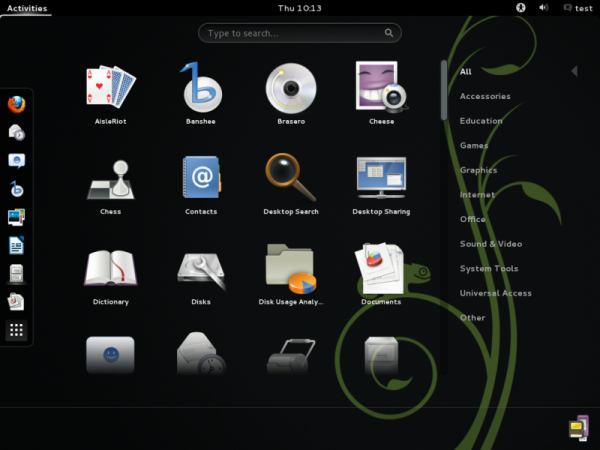
If Linux is good enough for the International Space Station, why not your school computers? The developers over at openSUSE must think so, today releasing Li-f-e (Linux for Education) 12.3-1.
I confess to not being familiar enough with Linux (go ahead, beat me with a stick — or with words in comments). But a reader complained this week about BetaNews’ rather absent coverage of the open-source operating system. He’s absolutely right about that. Reporters here tend to write about what they use, and we don’t have a Linux lover currently on staff. Please pardon my light treatment of the news, in place of someone more qualified.
Minimum hardware requirements are 1GB of RAM and 15GB storage. openSUSE doesn’t state processor. You can install from a USB stick, which should take about 40 minutes. Burning the ISO to DVD means longer installation time. I assume, and someone correct me if wrong, Li-f-e 12.3.1 should be fine on a netbook or laptop with smaller-size SSD. Breathe new life into that aging XP PC, baby. Of course, you can run the software from a virtual machine, if preferred.
“This first release is based on openSUSE 12.3 with all the official updates applied”, Lars Vogdt, openSUSE Services Team leader, says. “Li-f-e incorporates latest stable versions of all popular desktop environments such as KDE, Gnome and Cinnamon, it includes wide range of softwares catering to the needs of everyone, selection from openSUSE Education repository, multimedia from the Packman repository, development tools, KIWI-LTSP allowing normal PC or diskless thin clients to network boot from a server running Li-f-e and lot more”.
Supported software — much, but not all included with Li-f-e — includes (but there’s more):
- Chemtool –2D drawing organic molecules
- KSimus — electrical circuit simulations
- Plutimikation — math learning for kids
- QCAD — 2D CAD
- XaoS — fractal generation
You can download openSUSE Edu Li-f-e 12.3-1 from Fileforum. There also is a 64-bit version part of SUSE Studio. But the “64-bit edition has not gone through rigorous QA”, Vogdt warns.
-
Rovio updates Bad Piggies with 15 new levels, 2 new items

Rovio has been making some big moves this week, and they’re adding to them today with an update for their hit game, Bad Piggies. The update introduces 15 new levels, as well as 2 new items, including suction cup wheels and boxing glove boosts.
Here’s the full list of the new features:
- 15 new sun-drenched levels!
- Climb walls with the new suction cup gadget!
- Punch your way to victory with the new spring-loaded Boxing Glove!
- Go crazy in an all-new sandbox!
Check out the link to the app in the Play Store after the break. Enjoy!
Come comment on this article: Rovio updates Bad Piggies with 15 new levels, 2 new items
Visit TalkAndroid for Android news, Android guides, and much more! -
Apple seeks Android source code from Google in Samsung patent case

-
Open Compute Will Begin Building Network Switches

A look at some of the network cabling in a Facebook data center. Facebook will lead an effort by the Open Compute Project to develop an open top-of-rack network switch. (Photo: Facebook)
In a move that will likely accelerate the shakeup in the networking sector, the Open Compute Project said this week that it will expand its “open source hardware” initiative to include network switches. The project, which was founded by Facebook to promote standardized hardware for web-scale data centers, has led to rapid innovation in the server market and has also developed a storage offering.
The announcement is the largest step yet in extending the open source hardware movement to networking, a sector which has been dominated by a handful of large vendors offering routers and switches managed by proprietary software. It follows several years of progress in the development of software to support open networking, especially in the use of software-defined networking (SDN) that allows network equipment to be managed by external devices (typically commodity servers).
The Open Compute Project (OCP) said it has formed a team to work on a specification for an “OS-agnostic” top-of-rack switch. Najam Ahmad, who runs the network engineering team at Facebook, will lead the project, with participation from the two standards groups – the Open Networking Foundation, and OpenDaylight – as well as as well as Big Switch Networks, Broadcom, Cumulus Networks, Facebook, Intel, Netronome and VMware.
Goals: Innovation, Efficiency, Freedom
“It’s our hope that an open, disaggregated switch will enable a faster pace of innovation in the development of networking hardware; help software-defined networking continue to evolve and flourish; and ultimately provide consumers of these technologies with the freedom they need to build infrastructures that are flexible, scalable, and efficient across the entire stack,” the OCP’s Jay Hauser wrote in a blog post. “This is a new kind of undertaking for OCP — starting a project with just an idea and a clean sheet of paper, instead of building on an existing design that’s been contributed to the foundation — and we are excited to see how the project group delivers on our collective vision.”
The announcement provides a reminder of how the pace of innovation has accelerated in the data center world. It’s been less than three years since Amazon’s James Hamilton predicted huge changes in networking in a keynote at the Velocity conference. Here’s an excerpt from our coverage at the time:
“We’re very close to a fundamental change in the networking world,” said Hamilton, who said the industry is beginning to look beyond tightly integrated vendor offerings. He envisions a future in which data center operators can more easily mix and match hardware and software from disparate sources, including open source offerings. “We’ll get our Linux of the networking world,” Hamilton said.
There’s been great progress on the software side of the business. Open Compute has quickly built an ecosystem of hardware companies developing designs based on its efforts. In less than two years, the OCP has grown beyond its origins as a showcase for Facebook’s design innovations, evolving into an active community building cutting-edge server and storage hardware, disrupting the traditional IT supply chain in the process. If similar progress occurs with the OCP effort on a top-of-rack switch, the networking sector will soon get even more interesting and competitive.
-
Jodi Arias Verdict To Be Announced This Afternoon
Jodi Arias, the young woman accused of murdering her boyfriend Travis Alexander, will hear the jury’s verdict today after a painful four months in trial.
Arias claimed a masked intruder murdered her love, but after prosecutors introduced incriminating evidence she eventually admitted she killed Alexander, but only in self-defense. Alexander was found in his shower with 30 stab wounds, a gunshot to the head, and a slit throat about a week after he was killed.
Prosecutors say she killed him not out of self-defense, but rather in a murderous rage after he denied her and began seeing other women. She says he tackled her after a day spent in bed, slamming her to the floor, and that she managed to escape his grip to hide in the closet. There, she found a gun and shot him. She claims to have no memory of stabbing him, however. Arias says she moved the body and hid the gun because she was afraid her story wouldn’t be believed.
With such shaky testimony, it’s hard to say what the outcome of the trial will be. There were no witnesses and so far it has only been Jodi’s word against a dead man. Arias has, throughout the trial, painted a picture of herself as a woman deeply in love, who had sensual phone conversations with Alexander and wrote him poetry.
It looks like Arias will do jail time no matter what the jury has decided; if she’s found guilty of first degree murder, she will either receive life in prison or the death penalty. If the jury believes it wasn’t pre-meditated, she could get 10-21 years.
-
Yahoo Has Some New Search Products Coming Our Way
As it has indicated numerous times in the past, Yahoo still takes search seriously, even if it’s outsourcing its system to Microsoft these days (we’ll see how long that lasts). But in recent months, since former Googler Marissa Mayer took over at the helm, we’ve seen a renewed focus, or at least heard about one.
In January, upon releasing the company’s Q4 earnings report, Mayer said, “Overall in search, it’s a key area of investment for us. We need to invest in a lot of interface improvements. All of the innovations in search are going to happen at the user interface level moving forward and we need to invest in those features both on the desktop and on mobile and I think both ultimately will be key plays for us.”
A new report out from Bloomberg indicates that Yahoo is planning on unveiling some new search products over the coming months. While nothing specific is mentioned (other than SVP of Search, Laurie Mann, indicating that they have “some really cool things in the pipeline”), it is said that some of the new stuff is being developed “in tandem” with Microsoft, while some of it will be uniquely Yahoo’s.
It’s been quite a while since Yahoo did anything really innovative in search, but let’s not forget (as I’m sure you haven’t) Mayer’s past. She was, after all, instrumental in the evolution of the Google we know today. Bloomberg quotes Mann:
“As someone who works with Marissa literally every day, there is nothing more important to her than getting search right. She knows search better than pretty much anyone in the industry.”
Mayer has expressed disappointment with its deal with Microsoft in recent months, but this week, news came out that Microsoft has extended its revenue guarantee to Yahoo, a guarantee it hasn’t done a great job of living up to in the past.
image: An Evening with Marissa Mayer (YouTube)
-
John Boehner Comes Out Against Online Sales Tax Bill
The Marketplace Fairness Act – a bill that would require online businesses to collect sales tax for every state – made it through the Senate this week. Now it has to make its way through the House where many expect it to face some heavy resistance. House Speaker John Boehner may just be part of that resistance.
The Hill reports that Boehner, in an interview with Bloomberg Television, came out against the Marketplace Fairness Act saying it would put “a big burden on some very small businesses.” That burden, he says, is requiring small businesses to comply with 50 different sales tax codes.
Of course, the big question here is whether or not he would vote yes if the bill were to come up for a vote. He said “probably not,” but that’s by no means an outright rejection of the bill. It’s more like a rejection of the bill in its current state. That will undoubtedly change, however, as the Marketplace Fairness Act will have to make its way through the House Judiciary Committee where Chairman Bob Goodlatte has indicated he will address his concerns with the bill.
Boehner and Goodlatte are hardly the only opposition the bill faces in the House going forward. Many in and outside the House have voiced displeasure with the bill in its current state. Groups like Americans for Tax Reform have come out strongly against the bill saying that it would not only burden small businesses, but it would also tax financial transactions. They fear that it will ultimately become more expensive for people to invest thus nulling any advantages the bill has for retail stores.
With all this in mind, it’s important to remember that the Marketplace Fairness Act may never even be brought up for debate. The House is pretty busy at the moment so it’s hard to say when, or if, the bill will be brought up.
We’ll be sure to bring you all the updates if it does reach the House floor for debate. There’s bound to be some interesting arguments from both sides.
-
Oreck: Bankruptcy Filed, Buyer Sought
Oreck Corporation, the vacuum cleaner and air purifier manufacturer, has filed for chapter 11 bankruptcy. The Tennessee company announced the bankruptcy on its website, stating that it will be consolidating its assets and restructuring as a part of the move. The bankruptcy, Oreck stated, is meant to help get the company in shape for a sale in the near future. The bankruptcy will be overseen by a bankruptcy judge in Nashville, Tennessee.
Oreck emphasized in its statement that its day-to-day operations will continue as normal. Retailers can continue to sell Oreck products as usual. From the company’s statement:
Oreck will continue to operate in the ordinary course of business while the sale process takes place, with authorized and exclusive dealers and other trade customers continuing to receive product for sale to ultimate consumers. It is anticipated that following the closing of the sale that plant operations and corporate headquarters will remain in Tennessee.
Oreck was founded in 1963 by David Oreck shortly after he left electronics company RCA. The company was originally a vacuum manufacturer for U.S. hotels, and Oreck claims today that more than 50,000 hotels around the world use its vacuum cleaners. The machines gained popularity among hotels for their light weight.
-
Playlist: 6 education ideas from unlikely places

Geoffrey Canada rocked the audience at TED Talks Education with his passionate talk. Photo: Ryan Lash
Geoffrey Canada gives a very interesting analogy in today’s TED Talk: He compares the current education system in the United States to the era when banks were only open between the hours of 10am and 3pm.
 Geoffrey Canada: Our failing schools. Enough is enough!“Now, who can bank between 10 and 3?” asks Canada to a big laugh. “It went on for decades. You know why? Because they didn’t care. It wasn’t about the customers. It was about bankers … Now one day, some crazy banker had an idea. Maybe we should keep the bank open when people come home from work?”
What do “bankers’ hours” have to with education? Well, Canada says, many of the US education system’s similar ingrained habits — long summer vacations, testing at the end of the school year — go against everything we know about student learning. And yet these old habits continue. As Canada puts it: “Here’s a business plan that simply does not make any sense.” Among his ideas: Shorten vacation so kids don’t backslide academically during the long summer; and test early in the school year, when there’s still time to correct course.
To hear his passionate plea for educators to start looking at data and to think more about the customers — students — in order to curb the United States’ abysmal dropout rate, watch this powerful talk.
And here are more fascinating TED Talks that suggest ideas for education from other seemingly unrelated fields.
 Susan Cain: The power of introvertsSusan Cain: The power of introverts
Idea: Make time for solitary work, not just groupwork
From: Psychology
Susan Cain’s blockbuster talk from TED2012 focuses on the wondrous, largely ignored skills that introverts have to offer. She points out that schools are unabashedly built for extroverts, with their emphasis on group exercises and group activities — and urges classes to leave time for solitary work to capture the best of introversion. Margaret Heffernan: Dare to disagreeMargaret Heffernan: Dare to disagree
Idea: Teach kids how to debate
From: Business
In this talk from TEDGlobal 2012, Margaret Heffernan contends that conflict, challenge and openness to changing our minds are all key to progress. The problem is, we tend to avoid disagreement at all costs. How to counter that? Heffernan describes a Ph.D. program that requires students to submit five statements that they’re prepared to defend in the face of authority. “I think it’s a fantastic system, but I think leaving it to Ph.D. candidates is far too few people and way too late in life,” she says. “I think we need to be teaching these skills to kids and adults at every stage of development.” Carl Honore: In praise of slownessCarl Honoré: In praise of slowness
Idea: Ban homework (or ease up on it)
From: The Slow Movement
We’re trying to do more and more with less and less time — and Carl Honoré explains why this isn’t a good thing. “By slowing down at the right moments, people find that they do everything better: they eat better, they make love better, they exercise better, they work better, they live better,” he says. And, of course, they learn better. Kids, Honoré says, are overworked to the point of burnout. He proposes that we embrace slow education, easing up on (or even banning!) homework to allow kids time to process and relax after school. Jarrett J. Krosoczka: How a boy became an artistJarrett J. Krosoczka: How a boy became an artist
Idea: Drawing helps kids deal with emotions
From: Art
At TEDxHampshireCollege, Jarrett Krosoczka, an author and illustrator of children’s books, says it’s essential that kids get the opportunity to flex their drawing muscles through extracurricular classes. He talks about the emotional outlet that art and writing gave him as a child — even as he dealt with hard emotions surrounding his complicated parents.(Check out Krosoczka’s picks for 10 great children’s books that are destined to be classics.)And a bonus unreleased talk:
Stuart Firestein: Celebrate ignorance
Idea: Don’t just teach answers — teach questions
From: Science
In this yet-to-be-released talk from TED2013 — about the necessity of high-quality ignorance to scientific discovery — Firestein proposes a model of education based on evaluation rather than weeding out. Instead of feeding kids facts that they can then repeat, he imagines a system in which we encourage kids to ask, not answer. (Watch for the talk this fall!)
-
Open interviews and gatekeepers: The media can either open up or sources can go direct
The way the media works — digital or otherwise — hasn’t changed all that much in some respects: journalists interview people about a topic and then select the quotes they want to use. Sometimes a reporter will cherry-pick an interview in a way that the source doesn’t like, but what can they do about it? As it turns out, they can do quite a bit about it now, thanks to the democratization of publishing. And I think how media outlets choose to respond to this phenomenon says a lot about their commitment to “open journalism” or transparency.
A recent blog post from startup founder Chad Whitacre re-awakened this debate: in a post on Medium, the publishing platform started by former Twitter CEO Evan Williams, the founder of Gittip described how he responded to an interview request from TechCrunch about his company, which is building an online gift exchange. When Whitacre suggested that the reporter do an “open interview” via Google Hangouts that would be posted on YouTube, the TechCrunch writer declined.
“Me: If you’re not comfortable with streaming/posting the call, I will totally understand. In the future I’ll be sure to let journalists know up front about my open call policy. 🙂 Let me know one way or another …
TC: Yeh, good luck with that.”
Open interviews add more value

Many — including Sam Biddle at Valleywag — seemed to see the startup founder’s request as bizarre and somewhat ridiculous. But is it? We don’t see it as ridiculous when interviews are broadcast live, or when places like Reddit do the AMAs (Ask Me Anything) interviews. If anything, one could argue that they add value because everyone can see the questions and answers, and decide for themselves which parts of the interview are the most important or relevant. Fact-checking in public can be better.
In the interests of putting my money — or my ego — where my mouth is, I did my own open interview with Whitacre via Google Hangout’s “On Air” feature, which both streams the recording and automatically posts it to YouTube.
Whitacre’s proposition got me thinking about how rarely journalists include either audio recordings of their interviews with sources (as I did in a recent post based on my interview with Planet Money producer Alex Blumberg) or transcripts — even though the technology to do this is well established, and in many cases free. SoundCloud is an easy audio-hosting service, for example, and YouTube does automated transcripts, and there are many other solutions as well.
Not wanting to draw back the curtain
When I asked the question on Twitter, some journalists said they do this routinely and think it should be done more often. Others, however said they don’t think doing this is necessary unless there is some editorial debate about the context of a quote, or a source raises a stink about a story and so the outlet has to prove they were right. And many questioned whether there was any broader value in doing so.
@whit537 That's essentially what I'm getting at. I would rather my competition not be able to study my one-on-one interview methods.—
Alex Fitzpatrick (@AlexJamesFitz) May 08, 2013@mathewi 1) Journos sound stupid in interviews, stumbling, asking dumb questions (many times because they're just learning about an issue)—
Mark Coddington (@markcoddington) May 08, 2013Seeing the media sausage being made
Are media outlets reluctant to do this because they think no one will be interested in the full interview, or because (as Whitacre suggests) they don’t want to lose whatever scoop-like qualities are associated with the story? Does it stem from a fear of being criticized for focusing on specific parts of the interview? Or do they think their interview questions will seem unimpressive, and they don’t want to let readers see the journalism sausage being made? (I confess I was unusually aware of my questions and my appearance while Whitacre and I were talking).
@mathewi That old saw about seeing how the sausage is made?—
King Kaufman (@king_kaufman) May 08, 2013@mathewi @Dan_Rowinski much like sharing academic data – that's messy and hard to read too. but it's not there for the average reader—
Walt Frick (@wfrick) May 08, 2013Sources are already going direct

Here are a few things I think we do know: The life-span of a so-called “scoop” has been declining rapidly, and is probably now measured in minutes (possibly seconds) rather than hours — and all the “Breaking news!” headlines and embargoes in the world can’t change that. Meanwhile, the ability of sources like Whitacre to “go direct” and reach an audience is increasing, thanks to blogs and other forms of social media, forums like Reddit, etc. And in many cases a frustration with the way traditional media outlets handle interviews is a driving force behind that desire.
To take just a couple of examples, Gawker Media founder Nick Denton is well known for refusing many traditional interview requests, and asking instead that reporters talk with him via instant message or some other “live” medium. Billionaire media mogul Mark Cuban became notorious at one point for posting transcripts of interviews on his own blog, so that the full context of a discussion would be available for readers to make up their own minds.
@whit537 I could see questions like "why did you focus on this and not that?" from readers. Would have to back up choices more. @mathewi—
Ernie Smith (@ShortFormErnie) May 08, 2013One of the most common responses to my question was that most readers or listeners would be bored by audio or video or transcripts of full interviews — and that is definitely a risk. And as someone who often takes a long time to get to the point of a question, so is the risk of looking foolish or incompetent. But aren’t those risks that are worth taking if it increases the level of trust that “the people formerly known as the audience” have in us?
Post and thumbnail photos courtesy of Shutterstock / Luis Santos and Shutterstock / wellphoto and Shutterstock / Fengyu

Related research and analysis from GigaOM Pro:
Subscriber content. Sign up for a free trial.- How consumer media will change in 2013
- The promise of SDNs in the enterprise
- Examining the rise of crowd labor platforms in 2012


-
Messaging apps’ bold new plan: Cut deals to be preloaded onto phones

-
Fusion-io Shares Plunge After CEO Departs
Shares of flash memory specialist Fusion-io plunged more than 20 percent today after the company announced that CEO and President David Flynn and Chief Marketing Officer Rick White had departed to “pursue entrepreneurial investing activities.” Board member Shane Robison has been named Chairman, CEO and President.
Flynn’s sudden departure didn’t sit well with securities analysts, who noted that its been just two weeks since Fusion-io announced a $100 million acquisition. Analysts also fretted about whether Flynn’s exit would impact the company’s business with Facebook, which along with Apple is Fusion-io’s largest customer. Several analysts suggested Flynn had been a key player in the relationship with Facebook.
Shares of Fusion-io closed off $3.40 to $14.60, a drop of 19 percent, in trading on the New York Stock Exchange.
Robison, 59, has more than 30 years of experience in management roles with some of the world’s leading technology companies, including AT&T Labs, Cadence Design Systems and Apple. He most recently served as Executive Vice President and Chief Strategy and Technology Officer of HP from May 2002 until November 1, 2011.
-
Teradata Announces Teradata Intelligent Memory
Teradata has introduced a new database technology called Teradata Intelligent Memory, which the company says “creates the industry’s first extended memory space beyond cache that significantly increases query performance and enables organizations to leverage in-memory technologies with big, diverse data.”
In other words, Teradata says, it’s the first in-memory technology that supports big data deployments.
The product is part of the “Unified Data Architecture” strategy, which leverages Teradata, Teradata Aster, and open source Apache Hadoop. As the company notes, data in Apache Hadoop that is frequently used can be accessed through Teradata SQL-H, and based on temperature of the data, moved to Intelligent Memory to take advantage of its computing capability.
“The introduction of Teradata Intelligent Memory allows our customers to exploit the performance of memory within Teradata Platforms in a new way, and extends our leadership position as the best performing data warehouse technology at the most competitive price,” said Scott Gnau , president, Teradata Labs. “Teradata Intelligent Memory technology is built into the data warehouse and customers don’t have to buy a separate appliance. Additionally, Teradata enables its customers to configure the exact amount of in-memory capability needed for critical workloads. It can be difficult, expensive, and impractical to keep all data in memory, and Teradata’s unique approach means the right amount of memory can be applied to the right set of data for blinding performance – automatically.”
“Teradata’s new in-memory architecture is integrated with its management of data temperature,” said Richard Winter , chief executive officer, WinterCorp. “This is very significant, because the hottest data will migrate automatically to the in-memory layer – Teradata Intelligent Memory; the next hottest data will move automatically to solid state disk; and, so on. Teradata also provides the column storage and data compression that amplify the value of data in memory. The customer sees increased performance without having to make decisions about which data is placed in memory.”
Teradata Intelligent Memory is available to current Teradata workload-specific platforms running the Teradata database. It’s available as part of Teradata Database 14.10, which will be released in the second quarter.
-
A $0.99 HTC First shows that people may not like a phone built around Facebook
AT&T has a special deal going on for the HTC First, a smartphone dedicated to Facebook users. You can pick up the handset for $0.99 with a two-year contract or pay $350 for a contract-free experience. While that sounds great for consumers, I wonder what it really means for Facebook’s biggest effort to date in trying to get a foot in the door of the hardware market.
 It’s not uncommon for handsets to see reduced prices over time. After all, new models appear, making older phones a little more obsolete. Carriers, which generally buy inventory in advance, then discount the older phones to spur higher sales and the service revenues that come along for the ride. But in terms of the HTC First, there is no successor model available.
I reached out to AT&T for some thoughts and while the carrier won’t comment on individual manufacturer handset sales, I was told that it’s a promotion, which as I noted above, isn’t uncommon. There is no indication if or when the reduced prices may end.
So this could be due to sales or not. I suspect it is, mainly because I’m ruling out the other options. For starters, the phone works on AT&T’s LTE network and falls back to speedy HSPA+ service, so there’s no reason to blame the network. As far as the phone: It’s a mid-range handset made by HTC that I’d consider fairly generic.
My colleague Om reviewed it — I haven’t had a chance to use the First yet — and as someone who vastly prefers iOS to Android, his impressions were better than I expected. He mostly liked the Facebook Home software, which I have used. I think it’s actually very well done and runs nicely on my Galaxy Note 2. But I think this alludes to the key problem: The market is clamoring for a Facebook phone just as much as it is for a phone built around Twitter or another social service. Meaning: It’s not.
It’s difficult enough for a high-end flagship phone to stand out from its peers, let alone a mid-range handset. Frankly, I can’t see how Facebook Home helps the HTC First differentiate itself enough; particularly when the software is already available for download on better phones and is expected to arrive on other handsets in the future. Sorry Facebook, I don’t think the market likes your attempt at a smartphone.

Related research and analysis from GigaOM Pro:
Subscriber content. Sign up for a free trial.- Tablets wars: Apple is from Venus, Amazon is from Mars
- The future of mobile: a segment analysis by GigaOM Pro
- Mobile 2012 and beyond

-
Andrew Sullivan says it’s “unlikely” The Dish will reach its $900,000 goal
When Andrew Sullivan, founder of the popular politics blog The Dish, announced in January that he was leaving the Daily Beast and taking the blog independent, the goal was to raise $900,000 to keep business up and running in the first year. After an early influx of reader subscriptions, though, the money has been flowing in much more slowly, and Sullivan said in a blog post Tuesday that it’s “unlikely” the Dish will reach its goal.
“We’re still chugging along steadily in revenue, and we are brainstorming about new sources of income (stay tuned),” Sullivan wrote. The site had raised $680,000 as of Tuesday, up from $653,000 as of March 25.
“The most passionate readers have already joined. It gets harder after that,” Sullivan wrote. As he noted at the paidContent Live conference in New York last month (see video below), he is not taking a salary for the first year.
The Dish has already tweaked its payment model a few times. Initially, the site charged a minimum of $19.99 per year for unlimited access to premium content; in March, it lowered the meter and added a monthly payment option.

Related research and analysis from GigaOM Pro:
Subscriber content. Sign up for a free trial.- NewNet Q4: Platform mania and social commerce shakeout
- NewNet Q4: Platform mania and social commerce shakeout
- Building a better paywall: strategies for monetizing news content

-
Unroll.Me rids your inbox of unwanted subscriptions

I’ll admit, I’m a sucker for subscriptions. I subscribe to receive periodic emails with the latest discounts for tech gear, car news or any other bits of useful information (well, at least to me). Maybe there’s something nice out there that I want to know about. But because the emails keep coming in at different times of the day, going through each and every one would be a waste of time.
Cloud service Unroll.Me promises to solve the problem of subscription overload by allowing its users to wrap those emails into one big daily digest. Although the unsubscribe option is also available, the idea is to give folks the ability to actually make the best of the stuff that keeps coming in without, likely, losing track of vacation deals or the latest social updates.
At the moment, Unroll.Me is only compatible with Gmail including Google Apps for Business (uses Oauth) and Yahoo! (uses IMAP). The team behind the project, however, says that AOL and other email service integration is coming, although there is no clear ETA as to when that will happen. So how does it work?
After the user logs in, Unroll.Me goes through the inbox looking for subscriptions. Once the cloud service finds the corresponding emails, it presents the user with two options: Add to rollup (combine subscriptions into one daily digest) and Unsubscribe.
Users can choose when and how to receive the bulk emails — in the morning, afternoon or evening and in grid or list view — as well as manage the rollup and re-subscribe in case of a change of heart — still want that vacation deal? Unroll.Me can also automatically add new emails to the rollup, an option that should be enabled by default.
The cloud service will create an email folder once the first rollup arrives and allows the users to view the batch of subscriptions by category (like everything, entertainment or social).
Unroll.me is quite easy to use even for inexperienced users and features a pretty slick design. The only thing that I miss right now is email service integration with Outlook.com.


