Blog

  • Grilled Vegetables Recipe: Sweet and Healthy

    Filed under: , ,

    For a brief moment last Easter weekend, it felt like winter was over (as I write this there are flurries outside) and my friends and I got in the mood to BBQ. We grilled vidalia onions, plump and juicy sweet bell peppers and asparagus, which was cooked to mouth-watering perfection. The natural sweetness that grilling gives vegetables makes them one of the healthiest and delicious ways to indulge in outdoor cooking.

    Here are some facts on how those veggies promote vibrant health:

    Onions balance our blood sugar as they are a source of chromium, which is a mineral that helps yours cells respond to insulin. Essentially, this means onions are a great food for diabetics and anyone wanting to regulate their blood sugar, it’s a bonus they are sweet and delicious. Who can live without onions?

    Sweet bell peppers are colourful veggies packed with vitamins such as A and C and powerful antioxidants. They are also a great source of lycopene, a carotenoid correlated with reducing certain cancers such as prostate, cervical, bladder and pancreas. When it comes to choosing produce, the brighter the better as you get more antioxidants.

    Seeing asparagus in the stores is a sure sign of spring. In Canada you can locally-grown asparagus at farmers’ markets and grocery stores. Most notably, they are a source of vitamin K and folate. Folate is a heart healthy vitamin you want to eat every single day. A natural diuretic, asparagus is helpful for water retention because it’s a source of potassium.

    Recipe after the jump.

    Continue reading Grilled Vegetables Recipe: Sweet and Healthy

    Permalink | Email this | Comments

  • China Hands Over Revamped Stadium to Zimbabwe

    China hands over revamped stadium to Zimbabwe

    11 Apr 2010 02:05:38 GMT

    BEIJING, April 11 (Reuters) – China has handed over a revamped national stadium to Zimbabwe after refurbishments costing $10 million, state media said on Sunday, in a further sign of Chinese support for a government reviled in the West.

    China first built the 60,000-seat stadium in 1987, but it has been closed for renovations for the past three years, the official Xinhua news agency said.

    “The construction and refurbishment of the stadium cement the traditional friendship between our two countries,” it quoted Chinese ambassador to Zimbabwe, Xin Shunkang, as saying.

    Zimbabwe’s Vice President Joyce Mujuru “thanked China for renovating the stadium and assisting other areas of the Zimbabwean economy”, Xinhua added.

    The stadium has been “transformed into a world-class stadium that met the standards of the Confederation of African Football”, the report said.

    Hailed as a saviour by fanatical supporters and praised throughout Africa for standing up to what many see as bullying by the West, Zimbabwe President Robert Mugabe is hated in equal measure by opponents who accuse him of being a dictator.

    Mugabe denies charges of human rights abuses and insists the West has withheld aid mainly in protest over his controversial seizure of white-owned commercial farms for resettlement among blacks.

    Mugabe has tried to boost economic ties with Asian countries such as China and Malaysia.

    China’s embassy in Zimbabwe in February threw a birthday party for Mugabe.

    Beijing and Chinese companies have pledged tens of billions of dollars to Africa in loans and investments, mostly to secure raw materials for the world’s fastest-growing major economy.

    Rights groups have repeatedly criticised China for propping up dictatorial and corrupt African nations. China counters it offers no-strings aid and that its pledge not to interfere in any country’s internal affairs is welcomed by African nations. (Reporting by Ben Blanchard; Editing by Alex Richardson)

  • Whose Africa Is It Anyway?

    Whose Africa is it anyway?

    Zimbabwe Sunday Mail

    Race relations have sharply deteriorated in Southern Africa in recent years and the main reason for this is clear to any thinking person: racially skewed ownership of the means of economic production.

    Social justice teaches us that it is not poverty, per se, that pushes a long-suffering population to the brink of civil war; rather, it is inequality and exclusion that really stoke tensions in a society.

    To the down-trodden masses in this part of the world, the neo-liberal gospel of “democracy, human rights and rule of law” rings hollow. The people here are sceptical because they have not seen the dividends of globalisation — itself a euphemism for a sinister system that makes the rich richer and the poor poorer. In fact, globalisation is imperialist intrigue under a new guise.

    It has taken a while for the wretched masses in this region to speak out against imperialist exploitation, but a grassroots movement is gaining momentum from the Congo to South Africa and from Angola to Mozambique, and very soon we can expect a full-fledged revolution.

    The revolution this time is not a struggle for political independence; every country in Southern Africa has attained political independence one way or the other. The new struggle is about economic emancipation.

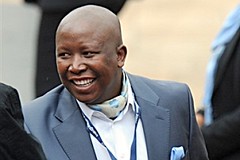
    Julius Malema, the leader of the African National Congress Youth League, was in Zimbabwe last week on a ground-breaking visit that could have far-reaching ramifications for regional politics.

    The symbolism of Malema’s trip was remarkable and its significance is yet to be fully appreciated by a Zanu-PF that has not done much in recent years to hype its liberation credentials.

    Malema’s energetic approach would have prodded the Zanu-PF Youth League into action. Every liberation movement must have a vibrant youth league. Youths are not just “the leaders of tomorrow”; they are the energy of today. No serious mass-mobilisation campaign can be conducted without the active participation of young people.

    To his credit, the ANC Youth League president made no apologies for the shared liberation ethos of Zanu-PF and the ANC. He spoke about South Africa’s experiences vis-à-vis black empowerment, land reform and economic development.

    It is gratifying that the ANC has young leaders who comprehend the imperatives of indigenous economic empowerment. South Africa is a powder keg today.

    Although political apartheid is dead and buried, economic apartheid is alive and kicking.

    Some 4,2 million South Africans live on a dollar a day or less, up from 1,9m in 1996. While poverty is clearly a national problem for that country, inequality is even more catastrophic.

    Look at the raw figures. An average of 52 people are murdered every day and there are 200 000 robberies each year, as well as 55 000 rapes and 500 000 assaults. If you think this is a tragedy, wait and see what happens in a few years’ time if the ANC fails to dismantle the economic apartheid that has firmly taken root since 1994.

    As Africa’s oldest liberation movement, the ANC has a responsibility to assist in reviving other liberation parties on the continent.

    In many a country, the party of liberation lies derelict in the dustbin of history, swept out of power by a Western-sponsored pseudo-opposition party. The Western governments know what they are doing by toppling the liberation movements. They are laying the ground for the re-colonisation of Africa. This is no idle threat.

    Opponents of Zimbabwe’s ongoing economic indigenisation drive are trying to defend Western economic interests at the expense of the dispossessed majority.

    Should we really be surprised that the capitalist masters of the universe and their disingenuous lackeys are feverishly opposed to black economic empowerment? Not at all. They have exploited the masses for too long and are now driven by a warped sense of entitlement.

    Some Western diplomats in Harare have shamelessly sought to defend the indefensible.

    If the Germans think that Zimbabweans deserve a life of perpetual servitude, then they should be told that they are free to take their “investment” elsewhere. Let them understand this.

    We have also seen some elements in the Western-sponsored media — both in Zimbabwe and abroad — passionately defending the subjugation of the black majority. They are clearly off-side and history will give them their marching orders. Everyone knows they are singing for their supper.

    Indigenisation is meant to address the wrongs of colonialism. Left to its devices, liberal capitalism will not even acknowledge the wrongs of colonialism in Africa — let alone correct them.

    Faced with the brutal reality that colonialism created a rich minority and a poor majority, are we saying the Government of Zimbabwe should sit back and do nothing about the unacceptable inequalities we see in our society today? And should we accept this injustice 30 years after our Independence? Certainly not. Black economic empowerment is an integral part of decolonisation.

    It is a matter of justice. History will vindicate this position. If Zimbabweans cannot own the Zimbabwean economy, then which economy will they ever own?

  • US Military Says It Cannot Find Tape of Atrocities in Iraq

    Thursday, April 08, 2010
    13:03 Mecca time, 10:03 GMT

    US military ‘cannot find Iraq tape’

    The US military has said it cannot find its copy of a video showing two helicopters involved in a deadly attack in Baghdad in 2007.

    The classified video footage filmed from a helicopter gunsight was released on Monday by Wikileaks, a group that publishes anonymously sourced documents on the internet, and has led to renewed questions about the attack.

    US military lawyers are also reviewing the video and, depending on their findings, could reopen an investigation into the incident, Pentagon officials told the Reuters news agency.

    The leaked footage that has been widely watched online around the world is the latest twist in a three-year saga that has raised questions about the US rules of engagement in battle and the safety of journalists covering wars.

    Two Reuters journalists were among the 12 people killed in the July 12, 2007 attack.

    Captain Jack Hanzlik, a spokesman for US Central Command, said on Tuesday that the military has not been able to locate the video within its files after being asked to authenticate the version published by Wikileaks.

    “We had no reason to hold the video at [Central Command], nor did the higher headquarters in Iraq,” he said in an e-mailed statement to The Associated Press.

    “We’re attempting to retrieve the video from the unit who did the investigation.”

    Footage reviewed

    US defence officials meanwhile said lawyers at Central Command have been reviewing the footage to see whether the rules of engagement were followed.

    “We’re looking at a reinvestigation because of a question of the rules of engagement,” an official told the Reuters news agency on condition of anonymity.

    He said lawyers would be examining whether the actions depicted in the video were in parallel with the rules of engagement in effect at the time.

    But on Wednesday Central Command said it has no immediate plans to reopen an investigation into the incident, amid appeals by rights groups for a renewed probe.

    “Central Command has no current plans to reinvestigate or review this combat action,” Rear Admiral Hal Pittman, the director of communications at Central Command, which oversees the war in Iraq, said in a statement to Reuters.

    Pentagon officials have said detailed rules of engagement are generally kept classified to avoid tipping off adversaries about US tactics on the battlefield.

    Some international law and human rights experts who have watched the video say the Apache helicopter crew in the footage may have acted illegally.

    They raised concerns about how the helicopter pilots operated, particularly in firing at a van that had apparently arrived on the scene after the initial attack to help the wounded.

    ‘Appropriate’ action

    Transparency advocates have questioned the withholding of the video from the public, even though the Reuters news agency requested a copy through the Freedom of Information Act after watching it in an off-the-record meeting with the military in 2007.

    The two Reuters employees killed in the attack were photographer Namir Nour El Deen, 22, and his assistant and driver Saeed Chmagh, 40.

    An internal US investigation concluded that the troops had acted appropriately, despite having mistaken the camera equipment for weapons.

    David Schlesinger, Reuters’ editor-in-chief, said: “I would welcome a thorough new investigation. Reuters from the start has called for transparency and an objective inquiry so that all can learn lessons from this tragedy.”

    Al Jazeera’s Patty Culhane reporting from Washington, said one of the recommendations in the military investigation report was for the tape to be kept for training purposes.

    “Technically they were supposed to keep a copy… they just can’t seem to find it right now,” she said.

    Intense debate

    Our correspondent said US television networks have also begun playing the tape, which had mostly been ignored until now, and she said that if domestic US media kept up the pressure the military may decide to reopen the case.

    The video been widely viewed online, with a version on Youtube watched 4.1 million times, and has sparked an intense debate over US forces in Iraq and the actions of the troops who opened fire.

    US military officials have said they believe the video is authentic.

    The video was taken by the tactical unit that operated the helicopters, only identified as a “1st Air Cavalry Brigade”, which reported to the Multinational Division in Baghdad.

    The video includes an audio track of the conversation between the helicopter crew, and many who have seen it have been shocked at the images and at some of the fliers’ comments.

    It includes audio of troops calling to “light ’em up!” and referring to the men as “dead bastards”.

    “Clearly, it is unflattering to the military, but that is not justification for withholding it,” Steven Aftergood, an expert on government secrecy with the Federation of American Scientists told The Associated Press.

    Source: Al Jazeera and agencies

  • Another View: Open primary really shuts door on moderates

    Re “Should state adopt an open primary? Yes: It would help third parties thrive where they now flunk” (Viewpoints, March 28): For more than three presidential cycles Ralph Nader has worked to open the political system to more voices and more choices for American voters.

    That’s why it is particularly strange that Harry Kresky, in his commentary in favor of California adopting Proposition 14 for an open primary system, would claim that by opposing the initiative, Nader is against progressive change in the electoral process or is seeking to “slam” the door shut on independents. Nothing could be further from the truth.

    Kresky misstates Nader’s position since many independents and minor parties are rightfully against Proposition 14.

    Among the many reasons to oppose Proposition 14:

    • The limited historical data provided by the only two states that have tried it, Washington and Louisiana, show that third parties virtually never make the top two candidates and are cut out of the November election, when most voters are paying attention and voting.

    • Electoral competitiveness will likely decrease as the major parties will be able to game the system by attempting to consolidate behind one primary candidate, thereby limiting voter choice even in the primary;

    • As an insult to voter choice and ballot dissent, Proposition 14 prevents write-ins from being counted in November.

    These negatives, and others, overwhelm the two alleged advantages proponents claim Proposition 14 poses: that more moderate candidates will emerge and that independents would be able to vote for whomever they choose in the primary. But there is no historical support that moderates emerge from open primaries. Moreover, independents can already vote in primaries, they just have to pick one party’s primary to participate in, rather than picking amongst all the candidates of all the parties, a privilege no other party voter receives.

    On balance, the alleged reform is a choice-minimizing “cure” worse than the problem.

    California has enough problems; Proposition 14 will limit the candidates and the new ideas and solutions they propose (and that voters are able to choose from in November), thereby diminishing competition and choice.

  • Another View: State tax credit for homebuyers will pay for itself

    Re “A giveaway at the very worst possible time” (Editorial, March 25): The homebuyer tax credit goes into effect May 1, and it’s a bipartisan measure that an overwhelming majority of state legislators understand will help get California’s fragile economy moving again.

    Portraying this legislation as a tax giveaway couldn’t be further from the truth. This is an investment in California and Californians that will get many off the fence and into the housing market. Respected economists recognize that improving the fate of the housing industry is a key to jump-starting the overall economy.

    The homebuyer tax credit will accomplish many goals, which is why Gov. Arnold Schwarzenegger signed the bill and why 96 of 99 legislators agreed. It will help clear out the inventory of existing homes, get new construction started, allow contractors and subcontractors to hire again and improve the state’s revenue picture.

    Studies show that each new home built generates three full-time jobs, and that each new homeowner immediately adds $16,000 in various tax revenues back to the state. Those are the key aspects of the tax credit. The state will get back more in return than it is putting up for the program.

    A very small minority has argued the tax credit gives $10,000 back to homebuyers who were going to purchase homes anyway. This couldn’t be further from the truth. The 2009 tax credit showed dramatic increases in home sales and traffic at sales centers, in many cases double or triple in volume, or even higher in many communities.

    The state’s Franchise Tax Board estimates the tax credit is expected to help more than 14,000 Californians get into a new home. That means 14,000 households living the American dream. That means 14,000 households helping the state dig itself out of the worst recession most of us have experienced.

    Sitting back and doing nothing is not a solution. Incentives are needed to get Californians purchasing again. The homebuyer tax credit is one of the best ways to accomplish that goal.

  • Viewpoints: Few politicians brave enough to face up to the pension crisis

    A puzzle from Philosophy 101: If a tree falls in a forest and no one hears it, does it make a sound?

    A puzzle from the prairie: If an earthquake occurs in Illinois and no one notices, is it really a seismic event?

    Gov. Pat Quinn called it a “political earthquake” when the state’s Legislature recently voted – 92-17 in the House and 48-6 in the Senate – to reform pensions for state employees. There is now a cap on the amount of earnings that can be used as the basis for calculating benefits.

    An even more important change – a harbinger of America’s future – is that most new Illinois state government employees must work until age 67 to be eligible for full retirement benefits. Those already on the state payroll can still retire at 55 with full benefits.

    The 1935 Social Security Act established 65 as the age of eligibility for payouts. But welfare state politics quickly became a bidding war, enriching the menu of benefits, so in 1956 Congress entitled women to collect benefits at 62, extending the entitlement to men in 1961.

    Today, nearly half of Social Security recipients choose to begin getting benefits at 62. This is a grotesque perversion of a program that was never intended to subsidize retirees for a third of their adult lives.

    It also reflects the decadent dependence that the welfare state encourages: Because of the displacement of responsibility from the individual to government, 48 percent of workers over 55 have total savings and investments of less than $50,000.

    Because most states’ pension plans compute their present values – and minimize required current contributions – by assuming an unrealistic 8 percent annual return, the cumulative funding gap of state pensions already may be $3 trillion and rising.

    For example, Wednesday’s New York Times contained this attention-seizing bulletin: “An independent analysis of California’s three big pension funds has found a hidden shortfall of more than half a trillion dollars, several times the amount reported by the funds and more than six times the value of the state’s outstanding bonds.”

    It is not news that California is America’s homegrown Greece, but the condition of the three funds, which serve 2.6 million current and retired public employees, is going to exacerbate the state’s decline by requiring higher taxpayer contributions.

    A recent debate on “Fox News Sunday” illustrated the differences between the few politicians who are, and the many who are not, willing to face facts. Marco Rubio, the former speaker of Florida’s House of Representatives who is challenging Gov. Charles Crist for the Republican U.S. Senate nomination, made news by stating the obvious.

    Asked how the nation might address the projected $17.5 trillion in unfunded Social Security liabilities, Rubio said we should consider two changes for people 10 or more years from retirement. One would raise the retirement age. The other would alter the calculation of benefits: indexing them to inflation rather than wage increases.

    Neither idea startles any serious person. But Crist, with the reflex of the unreflective, rejected both and said he would fix Social Security by eliminating “waste” and “fraud,” of which there is little.

    Synthetic indignation being the first refuge of political featherweights, Crist’s campaign announced that he believes Rubio’s suggestions are “cruel, unusual and unfair to seniors.” They are indeed unusual, because flinching from the facts of the coming entitlements crisis is the default position of all but a responsible few.

    What is ultimately cruel is Crist’s unserious pretense that America faces only palatable choices, and that improvident promises can be fully funded with money now lost to waste and fraud.

    Rubio’s responsible answer to a serious question gives the nation a glimpse of a rarity – a brave approach to the welfare state’s inevitable politics of gerontocracy.

  • Viewpoints: Whitman takes gender-neutral approach


    If elected this fall, the former eBay chairwoman would be the first business magnate in 150 years and the days of Leland Stanford – with all due apologies to Arnold Schwarzenegger, whose celebrity stems more from filmdom than finance – to occupy the first floor of the State Capitol. As the first governor with a home address in Silicon Valley and a résumé steeped in e-commerce, Meg Whitman also would be the first governor to embody the New Economy.

    And did I mention that, if elected, Whitman would be California’s first woman governor? That’s funny, because Whitman seemingly has no interest in promoting herself as a lower-case first lady. And that puts her in line for another distinction: the rare woman to seek a high-profile office who didn’t try to make the xx chromosome an x factor in her winning formula.

    This is not to say that the feminine mystique has completely vanished from the Whitman campaign. Early into her run, the Republican frontrunner launched a “MEGaWomen” coalition that promised to “provide an opportunity for dynamic women throughout California – Republicans, Democrats and independents – to recruit, volunteer and vote for Meg Whitman for governor.” How many women? Thirteen million of adult age, and more than 850,000 women-owned businesses, Whitman’s campaign literature suggests.

    Yet on the campaign trail, Whitman doesn’t resort to the kind of rhetoric we’ve become accustomed to from the likes of Sens. Barbara Boxer and Dianne Feinstein – no emotional appeals to crack the glass ceiling, or proving a woman’s place is in the House and the Senate.

    So far, for Whitman, it’s all about sticking to a gender-neutral script: jobs, education and a spine of steel. There’s no tugging at heartstrings – not unless you’re paying attention to another race and former Hewlett-Packard CEO Carly Fiorina, who cites her bout with breast cancer and climb from office receptionist as proof of her feistiness.

    So why would Whitman choose to cloak herself in androgynous messaging? Sure, there are the peculiarities of a conservative-tilting GOP primary. So, better Plain Jane than Jane Fonda. Moreover, and unlike Fiorina’s biography, Whitman’s led a charmed life that’s not the stuff of Lifetime dramas.

    A more salient answer might be that Whitman simply is adapting the world she now inhabits – not just Republican voters, but a grumpy nation-state. She’s no Schwarzenegger in terms of charisma and showmanship. But when fourth-fifths of the electorate believes the state’s on the wrong track, and less than three in 10 voters like the job the governator’s doing, why try to get in on his act?

    Whitman was somewhat Arnold-like during her eBay days, throwing high-energy pep rallies. She’s smart enough to realize that, in a slow economy, voters aren’t looking for a cheerleader.

    Is the gender-neutral approach working for Whitman? Judging by her gaudy lead in the Republican primary, there’s little question that Whitman has all but neutralized Insurance Commissioner Steve Poizner. And, per recent statewide polls, Whitman enjoys a narrow lead over her likely November opponent, Attorney General Jerry Brown.

    But to remain ahead come November, Whitman will have to do better among – you guessed it – women, who accounted for 51 percent of voters in the 2006 governor’s race.

    In the latest Field Poll, Whitman led Brown among women, 45 percent to 43 percent. But among men, she led 47 percent to 43 percent.

    How does that compare to the last two Republicans to be elected governor? In 2006, exit polls had Schwarzenegger winning the women’s vote, 55 percent to 41 percent. That’s double Pete Wilson’s margin in 1994, when he finished seven percentage points ahead of Kathleen Brown among California women.

    But Schwarzenegger and Wilson enjoyed something in their landslide wins that Whitman probably will not in what’s expected to be a tight race: commanding leads among male voters (a 23-point edge for Wilson; 15 points for Schwarzenegger). It’s hard to imagine Jerry Brown running a campaign as ill-conceived as his sister’s was 16 years ago, or doing something as self-destructive as calling for a tax increase, which contributed mightily to Phil Angelides’ doom four years ago.

    Facing a smart opponent who may deprive her of the advantage of a male gender gap, Whitman may find it necessary to return to that concept of “MEGaWomen.” What a refreshing conservation it could be, especially if she has the courage to craft a “post-glass ceiling” message that has little to do with resentment or victimization.

    And for California, an opportunity to see if Meg Whitman can do something no man can – to not only talk CEO to shareholder, but woman to woman.


    Bill Whalen

  • Viewpoints: U.S. must repair ties with Afghan leader

    KABUL, Afghanistan – When Afghan President Hamid Karzai was meeting with provincial governors recently, he looked at his dinner and remarked, “Maybe the foreigners put some poison in my food.”

    This story was told to me by someone who attended the event and said he thought Karzai was joking. But the Afghan leader’s remark shows how low U.S.-Afghan diplomatic relations have sunk as Karzai has repeatedly railed against foreigners and declared he won’t be anyone’s puppet.

    Recently, Karzai has rushed to Iran and China to prove he doesn’t depend solely on Washington, and rebuffed U.S. demands that he curb corruption.

    Yet before calls mount in Congress for us to quit Kabul, we should examine the dysfunctional way the Obama administration has dealt with the Karzai problem. It has made a bad situation worse.

    Despite U.S. frustration with Karzai, he’s the elected president, and there’s no alternative out there. We have to deal with the Afghan leader we’ve got.

    Yet the civilian side of the U.S. government can’t seem to figure out how to talk to the prickly Karzai. A large part of the problem lies with the unwieldy structure Secretary of State Hillary Clinton set up when she named a special representative for Afghanistan and Pakistan, Ambassador Richard Holbrooke.

    Holbrooke, renowned for his abrasive personality, alienated Karzai from the get-go. He’s chastised Karzai in public and left the Afghan leader convinced the administration wants to oust him. In a culture that prizes respect, such public rebukes, even if deserved, ensure Karzai will lash back.

    Holbrooke’s relationship with Karzai is so strained there is hardly any communication between them. What use is a special representative to Afghanistan who can’t talk with the leader in Kabul?

    Karzai’s hostility toward Holbrooke has colored his relationship with the U.S. Embassy. Afghans are uncertain who speaks for President Barack Obama – Holbrooke or U.S. Ambassador Karl Eikenberry. Adding confusion, the CIA seems to have its own policy.

    Obama hasn’t helped. Unlike then-President George W. Bush, who held monthly videoconferences with Karzai, Obama has distanced himself from the Afghan leader. He made his first visit to Kabul as president only two weeks ago, for a few hours in the middle of the night, to lecture Karzai on corruption. In a relationship in which trust has totally eroded, this fly-by-night meeting made matters worse.

    The U.S. official with the best relationship with Karzai is Gen. Stanley McChrystal, the top U.S. and NATO commander in Afghanistan. U.S. military officials have taken a different approach to Karzai from civilians, making frequent contact and ostentatiously displaying respect. The U.S. commander takes Karzai’s displays of nationalism more in stride, in the hope he’ll start acting like a national leader.

    The issue is not whether Karzai denounces foreigners, but whether he begins to take responsibility for ensuring stability in troubled areas such as Kandahar.

    The administration should designate one point person to deal with Karzai – preferably a strengthened U.S. ambassador to Kabul who has Obama’s full backing. The Afghan leader needs to hear one clear message – in private.

    The United States can’t afford an open war of words with Karzai. It is a war we can’t win, one that could destroy the central foreign-policy undertaking of Obama’s first term.

  • From the Editor: $28 billion pension gap is ours to repair

    Public employee pensions have become one of the prickliest topics The Bee covers, and our front-page story today adds some sobering numbers to the discussion.

    Here’s one: $28 billion.

    That’s the collective gap, according to The Bee’s analysis, between the amount of pension money that’s invested and the amount that’s promised to employees and retirees in California’s 80 largest city and county governments.

    McClatchy’s California newspapers teamed up on this project after reporting on ways pension obligations were adding to budget headaches in one locality after another.

    Our aim was to provide the bigger picture beyond a string of local decisions.

    Phillip Reese, a Bee investigative reporter, led the work in gathering and analyzing information from local governments. His efforts yielded the best view so far of pension funding gaps statewide.

    Graphics in our print editions tell part of the numbers story; at www.sacbee.com/investigations, you can find an interactive map with details by city and county.

    Reese worked closely with reporters from the Fresno Bee, Modesto Bee, Merced Sun-Star and San Luis Obispo Tribune, and today’s stories appear in those newspapers’ print and online editions.

    As Reese and his counterparts explain, the pension pressures didn’t pop up overnight, nor are they easily solved.

    The story isn’t identical in every city or county, but there are some repeated themes:

    • Many localities improved retirement benefits for public employees during healthier fiscal conditions early in the last decade.

    • The stock market’s declines during the recession caused investment values to drop, and a big debate about the gap hinges on future market returns.

    • Many localities increased their pension tab by raising pay for public employees, also during happier times.

    This reporting adds important context for local officials who, as stewards of public spending, make choices that affect all residents as well as employees.

    Some are considering benefits changes (mostly for future hires) to address the longer-term picture; others have taken this step already, but many are using bond money or service cuts to close the gap.

    While this report focuses on local governments, the picture that emerged mirrors state pension funding in certain ways.

    Last week, a Stanford University report kicked up dust with findings that our state’s giant pension funds, CalPERS, CalSTRS and the University of California retirement system, were understating the amount of their unfunded obligations.

    The gap, according to the report, is $500 billion. (To which an ordinary person can only say, in polite terms, holy cow!)

    The funds’ leaders promptly contested the Stanford report’s findings and its calculation methods. But the matter needs much more attention and public debate.

    The Bee’s own reporting, based on information from CalPERS and CalSTRS, has shown that government employers will have to increase their contributions in coming years to meet pension obligations.

    Government’s debt is our debt – taxpayers are the “employer” contributors to public pensions. So as stupefying as the large numbers can seem, we all have an interest in understanding them.

    Today’s stories are part of our commitment to digging into these complex matters and providing facts that can inform good decisions in the months ahead.

  • David and Goliath: In sports or politics, it may take a miracle


    Butler’s Gordon Hayward leaves the court last week in Indianapolis after his last-second shot clanged off the rim, giving Duke the NCAA men’s basketball championship. Behind Hayward, Duke players form a jubilant pile on the floor.

    If last week’s David vs. Goliath contests are any indication, Steve Poizner should hold off buying the celebratory confetti for June 8.

    First, there was Butler, the small school turned national darling, playing in its hometown for the NCAA men’s basketball title against mighty Duke. The tense, hard-fought game came down to one fateful bounce. Hoop fans the world over held their breath as Gordon Hayward’s half-court heave arced toward the basket, seemingly destined to create a real-life “Hoosiers” miracle. But the last-second shot glanced off the rim.

    The next night, Stanford tried to stop Connecticut, the juggernaut of women’s college basketball with a 77-game winning streak. After leading by 8 points at the half, Stanford and its injured senior star Jayne Appel limped to the final buzzer. The Cardinal gave UConn its two toughest games this season, but came up short.

    While monumental upsets sometimes happen in sports, thanks to guts and sheer luck, they occur less often in politics, largely because money rules.

    So Poizner might face an even tougher fight in the Republican gubernatorial primary against mega-millionaire Meg Whitman. Despite flinging any rocks he can find against the former eBay CEO, Poizner trails in several polls by 50 percentage points.

    If he has the proverbial slingshot, she seems to have an impenetrable shield and armor, the kind covered with gold.

    Whitman disclosed last week that she has thrown another $20 million of her own fortune into the campaign – a staggering total of $59 million with two months yet to go before the primary. Poizner has invested about $19 million of his own money, but his outside fundraising has all but dried up.

    If anything, Poizner may be even more of a Cinderella in his match-up than Butler and Stanford were in theirs. And like them, it would be a shocker if there is a fairy-tale ending.

    – Foon Rhee


    Stanford’s Jayne Appel drives against Connecticut’s Tina Charles on Tuesday in the NCAA women’s basketball championship game. UConn won.


    Meg Whitman and Steve Poizner are both millionaires, but Whitman has outspent Poizner in their race for the state’s Republican gubernatorial nomination. Poizner now finds himself 50 points behind in polls.

  • A quick-reference guide from the California secretary of state’s office on Proposition 16

    Requires two-thirds voter approval before local governments provide electricity service to new customers or establish a community choice electricity program using public funds or bonds.

    Fiscal impact: Unknown net impact on state and local government costs and revenue – unlikely to be significant in the short run – due to the measure’s uncertain effects on public electricity providers and on electricity rates.

    A YES vote on this measure means: Local governments would generally be required to receive two-thirds voter approval before they could start up electricity services or expand electricity service into a new territory.

    A NO vote on this measure means: Local governments generally could continue to implement proposals involving the startup or expansion of electricity service either through approval by a majority of voters or actions by governing boards.

    ARGUMENTS

    Pro: Proposition 16 is the Taxpayers Right to Vote Act. It requires two-thirds voter approval before local governments can spend or borrow public money to enter the retail electricity business. In tough economic times like these, taxpayers should have the final say in how government spends our money.

    Con: Proposition 16 does two things: First, it drastically limits your choices on who provides you with electricity. Second, it lets the for-profit utilities in California raise your electricity rates again and again, by protecting their monopoly and eliminating competition. For more choice and lower electric bills, NO on Proposition 16.

    For more information on Proposition 16, go to:

    http://voterguide.sos.ca.gov/

    www.taxpayersrighttovote.com

    www.powergrab.info

  • Prop. 16 would insulate PG&E from competition


    John Geesman served
    on the California
    Energy Commission
    from 2002 to 2008.

    Proposition 16 is an ugly distortion of the initiative process, the safety valve created nearly 100 years ago as the people’s tool to combat special interest influence in Sacramento.

    Proposition 16 is sponsored by a single corporation, PG&E, the San Francisco-based utility.

    Its sole purpose is to insulate PG&E from competition, permanently locking its business advantage into the state constitution. If passed, Proposition 16 can be changed only by another constitutional amendment approved by the voters.

    It’s paid for – that is, every single nickel in the $35 million campaign budget – with money collected from PG&E’s captive ratepayers.

    And, as a true measure of the cynicism of PG&E’s political consultants, it’s being marketed as a taxpayer protection measure that will preserve our right to vote.

    What would it really do? It would alter existing voting requirements for annexations into a municipal utility service territory from a simple majority in the area to be annexed to a two-thirds majority in the entire service territory. It would do the same for a community starting a new utility. And it would require a two-thirds majority before a municipality could explore community choice aggregation – a rarely used statutory method to procure electricity, adopted recently in Marin County and under consideration in San Francisco.

    If passed, Proposition 16 will actually result in less voting than occurs under existing law – at least that’s the strategy PG&E’s CEO, Peter Darbee, recently boasted about to Wall Street investors.

    In Darbee’s words, “the idea was to diminish, you know, rather than year after year different communities coming in as this or that and putting this up for vote and us having to spend millions and millions of shareholder dollars to defend it repeatedly, we thought that this was a way that we could sort of diminish that.”

    Because of its high rates (PG&E’s top tier residential rate is currently 49.9 cents per kwh compared with 29 cents per kwh for Southern California Edison and San Diego Gas & Electric) PG&E ratepayer revolts should come as no surprise. But exactly how will eliminating customer choices and restricting competition produce lower rates?

    Sloppy drafting of the “grandfather clause” of Proposition 16 will create some unintended consequences if the measure is passed. Service within existing municipal utility territories is supposed to be exempted from the voting requirement, but the exemption is drafted so narrowly that none of these utilities is expected to qualify.

    That means that every new hookup – every new homebuyer, every new business – in those 48 communities could trigger an election with a two-thirds majority requirement.

    Data from a Wall Street Journal survey of 2009 CEO compensation confirm that PG&E’s $10.6 million CEO was paid 74 percent above the median for major utility CEOs. That’s 8 percent more than Goldman Sachs paid its CEO last year. With rates high enough to accumulate a $35 million campaign fund, PG&E can’t be allowed to buy its way into the California Constitution.

  • Prop. 16 would protect taxpayers from power grabs


    Willie L. Brown Jr.,
    former speaker of the
    California state
    Assembly and mayor
    of San Francisco,
    is an attorney whose
    clients include Pacific
    Gas & Electric Co.

    California’s taxpayers deserve transparency when it comes to their money, especially in today’s economic environment. The state has tallied up $145 billion in debt, and an annual budget deficit of $20 billion threatens cuts to critical services and jobs on the state, county and local levels. Decisions to take on additional debt or use taxpayer money to fund big programs – such as a government takeover of electricity service – need voter input. That’s why we need to vote yes on Proposition 16 on June 8.

    Current law does not require voter approval if local leaders want to use public money to develop the complex systems necessary to provide electric service. Proposition 16 fixes this omission, giving voters a voice. This initiative requires a two-thirds majority vote before municipal leaders can incur public debt or spend public money to start up a municipal retail electricity business, using the same standard as hundreds of other special tax or bond situations.

    As a former mayor of San Francisco, I can tell you from firsthand experience that involving the people in big decisions like funding large municipal utility programs is critical. Not only will they participate in such programs by receiving utility services, but they’re paying for the development of the business itself. And if those programs fail, they are on the hook for a bailout.

    Having benefited from the input of the voters during my years as mayor, I can also tell you that California’s voters know a good plan when they see one. They can discern between a well-constructed plan that will work and one that is not well formed or that takes unnecessary risks with their money. And local leaders need the community’s input. Large public programs are always far more visionary – and far more expensive – than expected. Since the voters are paying for it, better to get their permission up front than make the decision blindly and have a mess on your hands that the taxpayer has to fix if it fails.

    Proposition 16 promotes transparency and ensures that the voters have a voice when it comes to how their money is spent. It requires that a local government that wants to run the complicated delivery system necessary to provide electricity must go to the voters to lay out its case and prove it can build a system that works. Then voters can either give their permission to spend their tax dollars or incur additional public debt, or not.

    Proposition 16 doesn’t decide on public power or no public power – it just makes sure that the question is in the hands of the voters, where it belongs.

    California’s leaders are doing their best to manage some tough economic times. With the economic climate as tough as it is, investing blindly in risky new businesses just makes it that much harder on everyone. Leaders need the input of the people they serve. If they are going to spend the taxpayers’ money or take on additional debt, they should be required to get voter approval first. Proposition 16 does just that – it’s just good sense.

  • Dan Morain: PG&E flips the switch on a ballot power play


    It was an unhappy anniversary that passed without public fanfare. But nine years ago last week, Pacific Gas & Electric Co., ravaged by the energy crisis, plunged into bankruptcy.

    Today, PG&E turns a healthy profit. And knowing that the best defense against any new assault is a strong offense, PG&E is aggressively promoting an initiative on the June ballot that would all but ensure PG&E’s future.

    By election day, the Northern California utility will have spent $35 million, maybe more, to buy its very own law, one that seeks to guarantee that PG&E would never lose an inch of turf to public utilities or whatever the next new thing is that rocks the energy world.

    PG&E has legitimate concerns. But its initiative, Proposition 16, deserves its own separate wall in the pantheon of special interest-funded and one-sided ballot measures.

    PG&E is the measure’s sole funder, $28.52 million and counting. It has hired many of California’s top and most costly political consultants, including Sacramento’s own David Townsend, who is being paid $75,000 a month.

    PG&E has spent $19 million so far to air television and radio commercials across the state, warning that government plans to take over electric service, and lamenting: “We don’t even have the right to vote on it.”

    The California Chamber of Commerce has endorsed Proposition 16. PG&E holds a seat on its board. The company has received endorsements from other political operators, including several who market themselves to the public as being pro-business and opposed to taxes.

    PG&E has paid $457,000 to appear on the operators’ slate cards, which will land in voters’ mailboxes before the June 8 election. Some are receiving $100,000 payments, or more.

    California requires a two-thirds vote before imposing most taxes, an almost insurmountable hurdle. Through Proposition 16, PG&E is seeking to create its very own constitutional amendment that would extend the two-thirds requirement to electricity-related issues in three ways:

    • A local government seeking to enter the electric business could do so only after winning a two-thirds vote.

    • An existing public utility, such as the Sacramento Municipal Utility District, would need a two-thirds vote before expanding its service area.

    • Local governments would need a two-thirds vote before creating a “community choice aggregation” program, by which customers band together to buy power wholesale from independent operators at a discount.

    The No-on-16 campaign has virtually no money, at least not yet. But PG&E’s initiative has driven a wedge between business interests that ordinarily walk arm-in-arm.

    The California Association of Realtors, almost always aligned with the California Chamber of Commerce, is opposing it.

    The initiative’s wording could be interpreted as requiring that a public utility such as SMUD would need a two-thirds vote in order to add even one new home to its system.

    Equally significant, the California Manufacturers and Technology Association opposes Proposition 16.

    Electricity rates for California industry are significantly higher than those in most other states, notes Jack Stewart, the manufacturers’ president. By law, he added, utilities such as PG&E receive a guaranteed profit of 11 percent.

    “This initiative takes that guaranteed profit to a guaranteed monopoly,” Stewart said. “We don’t think that creating a monopoly that is even more difficult to penetrate is good for ratepayers.”

    PG&E’s initiative has its roots in the California energy crisis at the start of this century when Enron and other energy bandits gamed the grid and jacked up wholesale prices to record levels.

    The crisis tore PG&E apart. Unable to pay record-high wholesale prices and blocked from passing on the costs to its customers, the company filed for bankruptcy protection on April 6, 2001.

    Having emerged from bankruptcy court in 2004, its profits now are solid, with net income of $1.22 billion in 2009.

    Operating in perhaps the most environmentally aware region in the world, PG&E has burnished its green image.

    It recently pulled out of the U.S. Chamber of Commerce over the chamber’s opposition to efforts to curb greenhouse gases. The company broke with many California businesses and sided with environmentalists by embracing Assembly Bill 32, the landmark 2006 law that seeks to force California to reduce greenhouse gas emissions.

    PG&E’s standing might seem solid. But the future is arriving fast. In its latest annual report, PG&E enumerates many risks. One threat is “the loss of customers,” which could occur in several ways.

    PG&E warns about local government entering the electric business, citing the prospect of “municipalization of the utility’s electric distribution facilities.”

    It worries about “the level of ‘direct access’ by which consumers procure electricity from alternative energy providers.”

    A third risk is the “implementation of ‘community choice aggregation,’ which permits cities and counties to purchase and sell electricity for their local residents and businesses.”

    PG&E is not paranoid. There are, in fact, people seeking to take bites out of its business.

    In 2006, PG&E spent more than $13 million to defeat an attempt by Yolo County to join the Sacramento Municipal Utility District.

    There have been three separate votes to create public power in PG&E’s corporate home of San Francisco since 2000. Each has failed. But San Francisco and Marin County now are seeking to invoke the 2002 community aggregation law to break away from PG&E without a vote.

    At the same time, government and venture capitalists are spending billions on research into alternative energy sources.

    Earlier this year, Silicon Valley’s Bloom Energy gained national attention for its “Bloom boxes,” which it installed at high-profile users such as Google and eBay, helping them generate their own power with a box of fuel cells the size of a refrigerator.

    Whether it’s Bloom boxes or not, some new technology will be to the electricity business what cell phones were to the old telephone companies, a device that in a very few years forever alters the nature of a once-stable and profitable utility.

    “The industry model is changing very quickly,” said Arlen Orchard, general counsel to SMUD. “We think the relation between utilities and their customers will change fairly dramatically. We’re not sure what it is going to look like.”

    PG&E doesn’t know what tomorrow will look like either, except that without a doubt, it will be very different from today. But California is a state where constitutional amendments can be acquired by ballot measure. The shape of that future will depend in part on how voters decide PG&E’s Proposition 16.

  • Editorial: Don’t let candidates waltz into office

    With California reeling from a deep recession and deficits that have hobbled government services, voters are understandably alarmed at the current state of the Golden State.

    In a poll last month by the Public Policy Institute of California, only 13 percent of likely voters thought California was heading in the right direction; 83 percent thought it was heading down the wrong path.

    Given those numbers, you might think that candidates for office would bring a sense of urgency to their campaigns, as we approach the June primary.

    Some are, but far too few. In both state and local races, candidates are largely going through the motions. Many are uttering the same stale platitudes, offering vague answers on specific policy choices and ignoring important issues that should be central to their platforms.

    Overall, there is a somnolent air to the current campaign season, and the race for governor is partly to blame.

    On the Democratic Party side, Jerry Brown is the presumptive nominee and, after waiting for months to make his candidacy official, has done little to engage voters.

    In the GOP primary, Meg Whitman is far ahead in the polls, and has used her vast wealth to fund what is effectively an air campaign, waged primarily through television advertisements.

    These kinds of “contests” only serve to fuel public cynicism about politics, leaving voters dispirited. Yet the gubernatorial contest is just one of many. In June, those who head to the polls will be selecting county sheriffs, tax assessors, city council members, county supervisors and school leaders. Nine candidates are vying to be attorney general, the most important law enforcement job in the state. There are also competitive races for U.S. Senate, state Assembly seats and the Board of Equalization.

    We urge you to pay close attention to these contests, and even more than that, pay attention to what the candidates are not saying.

    What issues are they avoiding? Are they clearly responding to specific questions with yes or no answers? Are they focused on issues of immediate concern, or exploiting issues in a bid to appeal to narrow constituencies? Are they willing to act independently of party machines? Is a candidate’s agenda ambitious or incremental?

    If a candidate is an incumbent, what has he or she done to contribute to the current condition of state or local finances? If the candidate is an outsider, does he or she have the experience and temperament necessary to hold public office?

    Regardless of one’s political bent, these are all concerns that Californians should share as we prepare to exercise a rare privilege – the right to vote.

    In coming weeks, The Bee will be offering its own endorsements for office, but beyond that, we will also be devoting space to issues often overlooked on the campaign trail – the Voter’s Agenda.

    Below are a selection of these issues, along with questions the candidates should be prompted to address in debates, forums and policy statements. By no means comprehensive, this checklist is a starting point for ensuring candidates don’t duck the big issues.

    STATE GOVERNMENT

    Budget shortfalls

    Barring an economic miracle, California faces multibillion-dollar budget deficits for many years into the future. The only way to close such a massive shortfall is with a mix of spending cuts and new revenue. As allies of state employee unions, Democrats must be pressed on how they would reduce payroll costs and restructure state government. Republicans who have made no-tax pledges must be pressed on how they close huge deficits through cuts alone, without undermining law enforcement, shutting down public schools or releasing thousands of prisoners.

    Creating jobs

    California has more than 100 economic development programs, and the state spends millions on these efforts, with uncertain results. On Thursday, Gov. Arnold Schwarzenegger created a Governor’s Office of Economic Development, which supporters hope will better assist prospective businesses and bring more coherence to the state’s job creation functions. Candidates need to be pressed to articulate their own strategy for the state’s economic development. What type of businesses should the state be recruiting? How can its regulations and incentives be aligned to better attract new businesses?

    Corrections crisis

    California’s prisons are overcrowded and threatened with court takeovers. They are failing to rehabilitate inmates and consume an increasing proportion of the state budget. Candidates can’t duck this issue. How would they reduce overcrowding? Build more prisons? How? With what money? Institute medical parole? Shave time off sentences for certain nonviolent offenders? Answers aren’t easy, but the status quo is unacceptable.

    Water wars

    Certain agricultural interests seek to frame the water crisis as fish vs. farmers. But California’s water challenges are more complicated than that. To avoid shortages, the state must use water more efficiently. It must create incentives for smart use of water, and penalties for waste. So when candidates talk about “more water for farmers,” voters should ask: Where does this water come from? Who pays for it? Who loses water? And does this create the right incentives?

    Graying of California

    Average life expectancy in California is expected to rise from 79 years to over 84 by 2050. Partly because we are living longer, the number of Californians 65 or older is expected to triple by 2050.

    California is unprepared for this demographic shift. In fact, state and local governments are cutting services that serve the elderly, such as transit, adult day care and in-home supportive services. Where do candidates stand? Should the state expand its role in serving a graying population? If so, how will it pay for it?

    Health care reform

    With passage of the national health care overhaul, California has an opportunity to cover uninsured residents, increase preventive care and begin the task of reducing costs. How will the state set up a health insurance exchange for small businesses and individuals not covered by their employers? How will the state prepare for Medi-Cal expansion that starts in 2014? Initially that will be paid for by the federal government, but gradually the state’s share will increase to 10 percent by 2020.

    SACRAMENTO REGION

    Pensions

    Following the lead of state government, many local bodies increased pension benefits for their employees in the early part of the last decade.

    Some retired public safety officers are now earning pensions of $100,000 to $200,000 per year. Candidates for local office must be pressed on how these payouts can be justified when services are being cut back and new employees are being laid off. Would they push to reduce benefits for new hires? If not, why?

    Public education

    All local candidates – not just those vying for school boards – must articulate a vision for our public schools. The choices are clear. Where do they stand on offering real turnaround strategies for struggling schools? Do they support holding teachers and schools accountable for student improvement from the beginning of a school year to the end? Do they support offering parents options, such as sending their children to public charter schools? Do they support a range of options in recruiting teachers, especially in hard-to-staff schools and subject areas such as math, science and special education?

    Open space

    With the downturn in the economy, the Sacramento region has a chance to plan its future landscape, reserving appropriate lands for housing, job centers, farming, open space and recreation. Yet it may have only a few years before rising land prices complicate the task of planning this future. Where do candidates stand on open space and preservation of farmland? What opportunities do they see? Do they support the SACOG Blueprint?

    Consolidations

    Across California, cities, counties and special districts offer duplicative services – solid-waste disposal, animal control, water delivery and parks maintenance, to name a few. Do candidates support consolidation? Where do they see opportunities? Are they willing to confront the fiefdoms that protect the status quo of service delivery, no matter how inefficient or redundant that system might be?

  • La semana en los blogs CCVI

    Anda uno recuperando los últimos días viejos discos de REM, aprovechando su 30 aniversario. Es de las mejores cosas de internet, los viajes en el tiempo también pueden ser inmediatos. Ahí van los enlaces de la semana en los blogs:

    • Al otro lado del mostrador y como algunos planes de ayuda pública se acaban convirtiendo en un gasto inútil.
    • “eXilio” nuevo libro de Fotógrafos Artísticos. En su blog.
    • James Gosling, el creador de Java, abandona Oracle. Lo comentan en Barrapunto, Víctor se preguntaba cuanto tiempo tardaría Google en ficharlo.
    • Sicrono: Financial Times y Foursquare, un acuerdo interesante.
    • ¿Cuál es el mejor monitor que puedes elegir si eres fotógrafo? En Xataka Foto.
    • Los límites éticos del crowdsourcing: controlando la frontera de Texas desde La Elipa. En Comunidad en red.
    • Y dicen que es fácil trabajar desde casa… por la gran Patch.
    • El patrón de actualización de los diferentes navegadores. Por aNieto2k.
    • El Índice de Digitalización (ID) y la innovación disruptiva. Por Genís Roca.
    • La imagen de perfil en Twitter cuenta, y mucho. En esTwitter.
    • 10 cosas que descubrí al tener un eBook. En Pergamino raspado.
    • Análisis del nuevo iPad de Apple de primera mano por Jose del Corral.
    • Deducción por adquisición de vivienda habitual: Presente y futuro. En Actibva.
    • Google envelopes, una muy original manera de pasar del correo electrónico al tradicional, en NfGraphics.
    • Geolocalización en las redes sociales. El estado actual en Genbeta.
    • El agua embotellada pierde fuelle. En Yorokobu.
    • El caso Gürtel: Internet y los medios (y la sociedad civil). En Nación Red.

    ¿Qué tal una versión del “Everybody hurts” en directo?….


  • US Homeland Security Secretary Due in Nigeria on April 11

    Mutallab: U.S. Homeland Security Secretary due in Abuja Sunday

    National News Apr 11, 2010
    By Kenneth Ehigiator

    U.S. Secretary for Homeland Security, Janet Napolitano, is due in Abuja today on the invitation of the federal government to assess steps taken so far to strengthen aviation security at the nation’s international airports.

    Her invitation, it was learnt, may be connected with efforts by the Nigerian government to convince its U.S. counterpart on the need to remove the country’s name from its terror watch list.

    Nigeria got on the list in the wake of last December’s terror attempt on an American airliner by a Nigerian, Farouk Mutallab, in Detroit, Michigan.

    The visit, Vanguard also gathered, is to enable her meet with officials in charge of security matters from other African countries who are converging on Abuja, alongside those of the International Civil Aviation Organisation (ICAO), to review steps already taken by African governments to ward of threats to aviation security.

    Confirming the visit in a statement, Press Secretary, Homeland Security Department, Steven Clark, said the visit, the fourth in the series, was part of efforts by the U.S. government to guide Nigeria to put in place all the infrastructure and facilities necessary to guarantee safety and security at the nation’s airports.

    The statement read: “Department of Homeland Security Secretary Janet Napolitano will travel to Abuja, Nigeria, on April 11 at the invitation of the Nigerian government to meet with her African counterparts and officials from the International Civil Aviation Organization (ICAO) to discuss ways to bolster global aviation security.

    “This will be the fourth in a series of major international meetings hosted by ICAO member states in which Secretary Napolitano will participate to build consensus on strengthening global aviation security and determining specific steps which nations can take individually and collectively to protect all passengers from threats of terrorism.”

    A source told Vanguard that the recent security breah at Margaret Ekpo International Airport in Calabar will form part of the agenda of discussions between Napolitano and Nigerian aviation and security officials.

  • Comment on British and US Imperialism in Nigerian History

    Comment on British and US Imperialism in Nigeria

    Nigeria ThisDay
    From Tokunbo Adedoja in New York and Olawale Olaleye in Lagos, 04.11.2010

    COMMENT
    Abanikonda
    04.11.2010 09:06

    The British colonized Nigeria for nearly 200 years, now it is United States\\\’s turn under the disguise of Bilateral National Agreement to colonize Nigeria again. Is this what Mr. Hussein Barack Obama up to? No need for this agreement at all, because Nigeria is a sovereign, independent Nation under the United Nations Charter.

    Nigeria is one of the largest trading partner of United States, even before Barack Obama, and Jonathan were born. Nigeria is a non _aligned independent Nation that needs no agreement with any Nation in order to survive.

    A biding agreement of this kind will put her(Nigeria) in a spot check, limiting her independence to deal with other Nations. USA and Nigeria should respect each other\\\’s sovereignty; that alone is enough. The people of Nigeria will love to see the GOVERNMENT GAZZETTE detailing word for word the skeletal nature of these bilateral agreements.

    No shady, arm twisting, backdoor agreements of any kind welcomed. I also strongly believe that these agreement have to be approved by the joint Houses of the Nigeria’s National Assembly before implementation. This agreement is a venomous antidote for Nigeria; we should not allow Barack Obama to pull a fast one on Nigeria.

    Heavens always help those who help themselves. If our leaders think the US is coming to turn their country into paradise, they better have their brains “meticulously examined”; the British never did, and US is not coming to ease their pains.

    United States went through painstaking developments on her own, so did China, Britain, India, Vietnam, Korea, Malaysia, Iran, Israel, and others. So Jonathan, don’t sell Nigeria into “SLAVERY” again, you must resist being taken to be a sucker.