Earthquake aftershocks have led officials in the Imperial Valley border town of Calexico to expand the area of the downtown business district that has been closed since Sunday’s magnitude 7.2 quake.
After a 5.5 temblor Thursday, a roof collapsed on one building and more businesses suffered broken windows and cracked walls. City officials had hoped to reopen many of the businesses this weekend but that plan is now on indefinite hold.
More buildings have been "red-tagged" until structural engineers can do inspections to see if they can be repaired or must be razed. Also, homes in the older part of the city have also been ruled off-limits.
"Things have gotten worse," said Hildy Carrillo, executive director of the Calexico Chamber of Commerce. "Roofs and walls that were hanging by a thread after Sunday are coming down."
Also, a broken sewer line is dumping sewage into the already smelly New River, which flows from Mexico into the Salton Sea. A crew is working to repair the line, estimated to cost $1.5 million. Health officials have said the spillage poses no health threat if people stay away from the river.
The city’s 30,000-plus residents have also been asked to reduce their water usage while repairs are being made to the city’s purification system.
An elementary school has been declared unsafe for staff and children. The historic De Anza Hotel, which has been converted in recent years to provide housing for low-income senior citizens, also remains closed while engineers inspect the damage.
Federal Emergency Management Administration officials are due in Calexico next week.
A parade of elected officials, including Gov. Arnold Schwarzenegger, have come to Calexico to survey the damage and promise help. The governor signed an executive order to speed the delivery of financial support for people whose homes or businesses were damaged.
Calexico has been the hardest hit section of Imperial Valley by the earthquakes whose epicenters are south of Mexicali, the sprawling Mexican city directly across the international border from Calexico.
— Tony Perry in San Diego
Photo: Merchandise is scattered throughout a Calexico shoe store after a magnitude 7.2 earthquake rocked the area. Credit: Don Bartletti / Los Angeles Times
At this year’s New York International Auto Show, green vehicles were more noticeable than ever. Some popular cars and SUVs got a green makeover with the introduction of a hybrid model. But there also were examples of squeezing more life out of plain old internal-combustion engines, as well as pure exciting news about electrics.
Here are a few notable introductions from the show:
Here comes a Hyundai Hybrid
The Sonata will be Hyundai's first hybrid model.
Among those marques sitting out hybrid mania, Hyundai has been the most noteworthy. But that’s all changing with the announcement in New York that the company would launch a version of its popular Sonata sedan. And while Hyundai may be coming late to the party, it appears to be bringing some fresh ideas.
On the battery front, Hyundai says its hybrid will use lithium polymer batteries that it contends will “leapfrog” existing nickel-metal hydride and lithium-ion technology used by its competitors. The Sonata will be powered by the new Hybrid Blue Drive architecture — a full parallel hybrid drive system that can operate on an electric motor, gasoline internal combustion engine, and a combination of the two depending on driving conditions and driver demands.
Hyundai says its proprietary architecture differs from the power split technology used by most competitors, allowing “significant efficiency advantages at higher speeds.”
The Sonata Hybrid is projected to have highway fuel economy of 39 mpg and 37 mpg in the city. It will arrive this fall.
Volkswagen’s Touareg will offer a hybrid powertrain
Volkswagen of America, Inc. unveiled the second generation Touareg, showcasing the brand’s first-ever hybrid at the 2010 New York International Auto Show. With the hybrid model, a 3.0-liter supercharged, direct injection V6 gasoline engine is paired with a special electric motor that reduces fuel consumption and CO2 emissions by about 40 percent.
An eight-speed automatic transmission – VW says it’s the first of its kind in an SUV – keeps power always available while helping the Touareg Hybrid achieve approximately 25 and 21 mpg during highway and city driving respectively. A special clutch can disengage the transmission from the engine when the engine is not powering the Touareg, allowing it to coast forward emission free to further aid in fuel savings. The electric motor can also recover kinetic energy during braking to help recharge the nickel metal-hydride battery pack. With the V6 engine and electric motor combined, a total of 375 horsepower and 428 lbs.-ft. of torque are available, allowing for full towing capacity of up to 7,700 pounds.
Volkswagen already offers a 3.0-liter, V6 TDI Clean Diesel engine, which offers improved fuel economy, reduced emissions, and greater power versus a similarly-sized gasoline engine. A seven-inch widescreen color display located between the main gauges in the dash provides the driver with the latest vehicle status information, including of the drive system in the hybrid model, turn-by-turn navigation directions, and more.
GM is ready to Cruze
GM showed-off its 2011 Chevrolet Cruze Eco, powered by an Ecotec turbocharged engine that gets an estimated 40 miles per gallon. GM boasts that the Cruze Eco has hybrid-like efficiency without the price tag.
Cruze is the first in a family of all-new Chevrolet small and compact cars designed to offer better fuel economy. Cruze models for the United States and Canada will be produced at the Lordstown, Ohio, assembly complex.
Featuring an Ecotec 1.4L turbocharged engine with variable valve timing, the Cruze Eco is designed to be the most fuel-efficient new model in the lineup. GM says the Eco achieves greater fuel economy using a number of features that enhance its aerodynamics, minimize weight and reduce rolling resistance. Details include a lower front grille air shutter that closes at higher speeds to improve aerodynamics and opens at lower speeds to optimize engine-cooling airflow,
an upper grille with more “closeouts” to improve aerodynamics, a lower front air dam extension, extensive use of underbody panels and a rear spoiler to enhance aerodynamics.
The car also has a lowered ride height to improves aerodynamics, and uses 17-inch lightweight aluminum wheels with
ultra-low rolling resistance 17-inch Goodyear tires.
The Cruze Eco will be available in the fourth quarter of 2010.
THINK to begin selling City electric car in New York
Electric car company THINK announced plans to begin selling the THINK City, one of the world’s first highway-capable electric vehicles (EVs), in New York and other select cities later this year. THINK and the U.S. Department of Energy’s local Clean Cities chapter are working together to bring the THINK City electric vehicle to customers in New York.
The THINK City will be available in New York and other select cities later this year.
New York City officials and several New York fleet operators had a chance to test drive the zero-emissions electric car during the NY Auto Show. The lithium-ion battery system that gives the car its range and reliability is made in the U.S. by New York’s own Ener1, Inc., one of the city’s leading clean technology companies.
New York was tied with Chicago in the EV Ready-City Index released by THINK in January. THINK developed the index to measure which markets are most likely to begin and benefit from the transition to electric vehicles.
THINK says the City is “a purpose-built, all-electric car designed for urban environments.” It is capable of highway speeds and can travel more than 100 miles on a single charge with zero local emissions. The car currently is in production in Finland and sold in select European markets.
The company recently announced plans to begin manufacturing the THINK City in Elkhart, Ind. beginning in early 2011.
Scion unveils new 2011 iQ microcar
The Scion iQ will be rated as an Ultra Low Emission Vehicle.
Scion announced the all-new 2011 iQ premium micro-subcompact at the New York International Auto Show.
Aimed at meeting the needs of a new generation of urban drivers, Scion executives say the micro iQ offers the functionality and comfort that drivers expect from a car twice its size. The iQ’s has a 78.7-inch wheelbase and a unique suspension design – consisting of MacPherson struts up front, and a torsion beam rear suspension – to help it deftly maneuver through city traffic. It features a compact air-conditioning unit, inverted front-mounted differential, and electronic power-steering system with a compact steering column to decrease the front-end length. In addition, the iQ is equipped with a flat gas tank housed beneath the floor that reduces rear overhang.
Scion says the iQ will come standard with 10 SRS airbags, including the world’s first rear-window curtain airbag. Other airbags include driver- and front-passenger airbags; driver- and front-passenger seat-mounted side airbags; side curtain airbags; driver- and front-passenger knee airbags; and a Scion-first driver seat-cushion airbag.
The iQ will be rated as an Ultra Low Emission Vehicle (ULEV-II), and it is expected to achieve a combined fuel economy in the high 30s. It will go on sale in early 2011.
Mazda will bring new fuel-efficient gas and diesel powertrains to the U.S.
Mazda North American Operations announced plans in New York to launch its all-new SKY Concept powertrains into the U.S. market, beginning as early as 2011. The first of the two engines to be initially introduced in the U.S. in 2011 – the Mazda SKY-G – is Mazda’s next-generation gasoline engine and will be the core powertrain in future Mazda vehicles. SKY-G is expected to boost fuel efficiency by approximately 15 percent while also increasing engine power.
“By launching our SKY technologies into the global market place, beginning in 2011, we will take a huge step toward accomplishing our stated goal of achieving a 30-percent improvement in global fuel economy by 2015,” Takashi Yamanouchi, representative director, president and CEO of Mazda Motor Corporation, said in a statement.
Yamanouchi also announced that Mazda intends to carry out the global launch of the SKY-G engine mated to the SKY-Drive transmission in the U.S. market in 2011. Following the U.S. launch, Mazda then intends to roll out this all-new powertrain to global markets. The new automatic SKY-Drive transmission is expected to improve fuel economy by an additional five percent, while achieving a direct-performance feel like that of a dual-clutch transmission.
As a follow-up to SKY-G and SKY-Drive, Yamanouchi added, “We plan to launch the SKY-D engine mated to Sky-Drive in the U.S. in 2012.” Mazda plans to incorporate the extremely fuel-efficient SKY-D engine into its next-generation mid-sized diesel car, allowing highway fuel economy of up to 43 miles per gallon – which is better than today’s mid-sized hybrids – and a 20-percent improvement in fuel efficiency over Mazda’s current 2.2-liter diesel. When launched in the U.S., SKY-D will meet Tier 2 BIN 5 regulations, one of the toughest emissions standards in the world. Because of Mazda’s proprietary catalyst technology, SKY-D does not require urea after-treatment to meet the strict North American emissions standards.
The company also said it all-new 2011 MAZDA2 will begin to arrive in U.S. showrooms in July 2010, with a starting manufacturer’s suggested retail price (MSRP) of $13,980. The 2011 MAZDA2 is powered by a 100 horsepower, 1.5-liter four-cylinder engine and is available with either a five-speed manual or four-speed automatic transmission (priced from $14,780).
Lincoln introduces MKZ as its first hybrid
Lincoln said its first hybrid – the new 2011 Lincoln MKZ Hybrid – will be the most fuel-efficient luxury sedan in America. The company said the MKZ is expected to deliver at least 41 miles per gallon in the city when it goes on sale this fall.
The new premium midsize sedan hybrid joins Ford Motor Company’s growing lineup of hybrids, including the Ford Fusion Hybrid – 2010 North American Car of the Year and America’s most fuel-efficient sedan – plus the Ford Escape Hybrid and Mercury Milan and Mariner Hybrids.
The 2011 Lincoln MKZ Hybrid uses Ford’s second-generation hybrid technology – the 2.5-liter Atkinson-cycle I-4 hybrid engine, named one of Ward’s 2010 “10 Best Engines.” The car also comes with a SmartGauge with EcoGuide, which provides real-time information to help drivers maximize fuel efficiency, and coaches drivers on how to optimize hybrid performance.
The Lincoln MKZ Hybrid also includes standard Bridge of Weir leather seats, which the company says uses a chromium-free tanning process, which makes it easier to recycle.
One reason crime statistics are continually on the decline in Hollywood is because it’s no longer necessary to steal things of value, one simply waits for the City’s leadership to give them away.
Consider, for example, the priceless Hollywood brand.
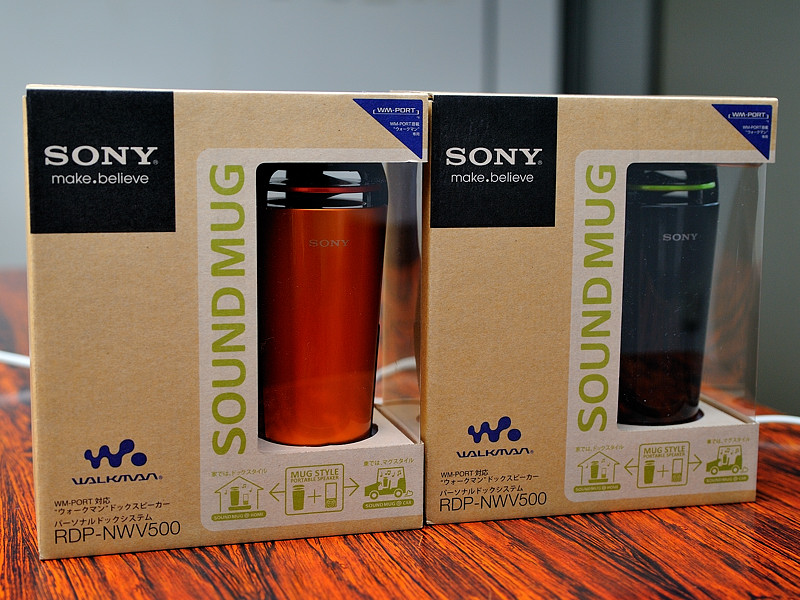
Sony Japan recently showed off a new RDP-NWV500 audio accessory, and is probably the strangest Sony product I have seen in recent memory. The NWV500 is basically a tumbler-shaped audio speaker that has WM-Port capability. Apparently the device has a digital amplifier, heavy bass and a 360-degree speaker integrated at the top. They prescribe it for the car as it should fit perfectly in your drink holder. Sony says that this is also a better alternative than FM transmitters which often are a nuisance more than anything.
However, its clear this device can’t match a dedicated media port or AUX input in a car, which many newer vehicles have these days. The NWV500, available on April 24th for Y20,000, will be available in orange or black and is scratch resistant with UV coating. We were surprised to see a 16W output, which is not bad for a device of this size. Apparently it also has 2-way bass reflex, and a 56mm woofer and 20mm tweeter. A remote control is included, and it can run either from the car’s 12V accessory socket (aka cigarette lighter).
\RDP-NWV500
<amanaDigitalLockerPhoto><downloadInfo><downloader><id>1271</id><loginId>CORESUGI</loginId></downloader><time>Mon Mar 15 11:44:42 JST 2010</time></downloadInfo></amanaDigitalLockerPhoto>
<amanaDigitalLockerPhoto><downloadInfo><downloader><id>1271</id><loginId>CORESUGI</loginId></downloader><time>Mon Mar 15 11:44:39 JST 2010</time></downloadInfo></amanaDigitalLockerPhoto>
With the salt spray in my hair and the taste of victory in the air, I ordered a full broadside against the smaller Gaulish schooner. But in my excitement I forgot that I was working with an undersized crew on a captured merchant ship. After the cannons were fired, my small crew couldn’t couldn’t keep up enough gunfire to keep the enemy ship away, and we were soon boarded. I ended up spending several years in a dirty prison camp.
While it turns out that my sailing skills aren’t all they could be, Choice of Broadsides was still an exciting ride. Choice of Broadsides is a choose-your-own-adventure type text game that puts you in command of a navy vessel from the legendary days of wooden sailing and iron cannons. The game is entirely text based, so don’t expect any flashy graphics, but it offers enough freedom to keep the most ambitious captain-to-be furling various sails and battening sundry hatches.
Choice of Broadsides is a followup to Choice of the Dragon, a similar, though not as deep, text based game built around, surprise, surprise, dragons. Unimaginative naming aside, Choice of Broadsides starts out by letting you set up a character. It can be man or woman, hero or dirt bag, personable or annoying, the choice is yours. As situations arise, you’re free to make decisions based on what you imagine your character doing, not just on what choice will yield the best outcomes, since there isn’t necessarily a right or wrong answer, merely different results. You can successfully play a selfish captain, seeking his own fortune on the bent backs of his tortured crew, or you can become a selfless hero, who’s altruistic exertions propel him from adventure to adventure. The end result is a universe of freedom seldom seen on the android platform.
Pros
Well written and engaging
Very real feeling of freedom of action
Interesting cross between a book and a game
It’s free (ad supported)
Cons
No graphics to speak of
Games only save at the beginning of each chapter
Special Notes: Based on the success of Choice of the Dragon, and how well Choice of Broadsides is doing, the publisher, Choice of Games, is almost certain to publish another game. If you enjoy the first two, keep an eye out for the next one.
Final Verdict: If you don’t hate reading, and can get past the simple look of the game, Choice of Broadsides offers a great retreat from reality, and a good way to kill a little time.
Note: This review was submitted by Adam Littell as part of our app review contest.
An increasing number of American couples are utilizing alternative therapy options in an effort to improve their chances of conceiving a child, a new study has found.
A research team from the University of California, San Francisco (UCSF), discovered that nearly one-third of California women who had difficulty getting pregnant tried acupuncture, herbal remedies or massage to complement more traditional conception strategies.
In the study, lead author James Smith and his colleagues recruited 428 couples from eight northern California reproductive clinics and followed them over a period of 18 months, according to Reuters.
At the point of follow-up, the investigators found that 29 percent of couples reported utilizing a form of complementary and alternative medicine. A total of 22 percent underwent acupuncture treatment, nearly 18 percent used herbal therapies and 5 percent employed chiropractic massage.
"We suggest that couples struggling to achieve pregnancy are more likely to seek out any treatment that offers hope," Smith told the news source. He added that in vitro fertilization therapy costs, on average, $16,550, while acupuncture treatment only costs approximately $100 per session.
Acupuncture may also be used to help alleviate symptoms associated with headaches, lower back pain and menstrual cramps.
GuestWords By Bill Boyarsky (Posted first at LAObserved.com)
Behind the big fight over power rates is the electrical workers union, determined to make sure it has command over the thousands of new jobs that will be created in the next decade in the solar-renewable energy industry.
Along with the 2011 TT, Audi has released details on a few upgrades for the new Q7 Crossover/SUV. For 2011, the Audi Q7 gets three new V6 engines and an 8-speed tiptronic transmission.
Continuing with its downsizing strategy, Audi will offer the Q7 with two version of the 3.0 TFSI supercharged V6 engine. The first version of the engine makes 272-hp allowing the Q7 to hit 62 mph in 7.9 seconds. The second version of the 3.0 TFSI supercharged V6 is straight out of the Audi S4 making 333-hp allowing the Q7 to go from 0-62 mph in 6.9 seconds. The third V6 engine is the second-generation version of the 3.0 TDI, which now makes 240-hp and helps the Q7 return an impressive fuel-economy of 32 mpg.
All 2011 Audi Q7 models will be mated to a 8-speed tiptronic, which is based on the 6-speed unit but with another friction-clutch shift element added.
All these details provided in the press release are for the Euro-spec Q7 – stay tuned for the U.S.-specs.
Hit the jump for the press release and the high-res image gallery.
2011 Audi Q7:
The Audi Q7: new engines and eight-speed transmission for power and efficiency
The Q7 is the large Audi for the sporty individualist – the high-performance SUV for sport, leisure, family and business. Now Audi has made it even more powerful and efficient, with a choice of three new V6 engines and an 8-speed tiptronic transmission.
Engines: a new range
Even more power, even higher efficiency: Audi has revised the engine lineup for the Q7. The two gasoline engines, both V6 units but with different power outputs, are new, and so is the second-generation V6 TDI. A mighty V8 diesel completes the range. All the engines for the Q7 combine two technologies: forced induction and direct fuel injection. A high-performance recuperation system that recovers energy during braking is also a standard item with all six- and eight-cylinder engines.
The new 3.0 TFSI gasoline engine embodies Audi’s downsizing strategy: replacing engine displacement with supercharging. Within the 90-degree angle formed by its cylinder blocks there is an engine-driven supercharger that compresses the intake air. Two charge-air intercoolers prevent the air temperature from rising, so that the engine draws in more oxygen for the combustion process. Vigorous thrust and spontaneous throttle response make the 3.0 TFSI engine, with its sonorous note, an ideal source of power for the large high-performance SUV from Audi.
Two versions of the supercharged V6 are available. The basic version develops 200 kW (272 hp) and has a maximum torque of 400 Nm (295.02 lb-ft) over a broad engine-speed range from 2,250 to 4,750 rpm. It accelerates the Q7 in 7.9 seconds from a standing start to 100 km/h (62.14 mph) and gives it a top speed of 222 km/h (137.94 mph), or 225 km/h (139.81 mph) with adaptive air suspension.
The more powerful version of the 3.0 TFSI delivers 245 kW (333 hp) and a torque of 440 Nm (324.53 lb-ft) between 2,900 and 5,300 rpm. 100 km/h (62.14 mph) are reached in 6.9 seconds, with powerful forward progress continuing until 243 km/h (150.99 mph) are reached; with adaptive air suspension the top speed is 245 km/h (152.24 mph). Both versions of the 3.0 TFSI are impressively efficient: in the EU fuel consumption test cycle they are content with 10.7 liters per 100 kilometers (21.98 US mpg). Compared with the previous engines, the 3.6 FSI and the 4.2 FSI, fuel consumption has been reduced by 1.4 and 2.0 l/100 km – 12 and 16 percent respectively.
The second-generation 3.0 TDI, a new development, has effectively nothing in common with its predecessor – apart from plenty of power! It has a rated output of 176 kW (240 hp) and a constant 550 Nm (405.66 lb-ft) of torque all the way from 1,750 to 2,500 rpm. This V6 diesel accelerates the Q7 from a standstill to a typical main-road speed of 100 km/h (62.1 mph) in 7.9 seconds and reaches its top speed at 215 km/h (133.59 mph) or, with adaptive air suspension, 218 km/h (135.46 mph). Its fuel consumption is impressively low, averaging 7.4 liters per 100 km (31.79 US mpg), which is equivalent to CO2 emissions of 195 grams per kilometer (313.82 g/mile). This is an improvement of 1.7 l/100 km or 19 percent.
The latest 3.0 TDI engine weighs much less than before: 198 kilograms (436.52 lb), a reduction of 20 kg (44.09 lb). A new chain-driven timing gear and a complex cylinder wall machining process have reduced internal friction. The new turbocharger is exceptionally responsive, making itself felt as rapid torque buildup. The common rail injection system has also undergone further development: it has a maximum operating pressure of 2,000 bar and can therefore inject fuel in an extremely precise spray pattern.
The crankcase and cylinder heads of the new 3.0 TDI have separate cooling water circuits connected together by valves. During the warm-up phase and when loads are not high, the coolant is not circulated in the engine block. This saves energy and raises the oil more quickly to its regular operating temperature. The new start-stop system switches off the engine when the Q7 comes to a standstill.
Audi also offers its customers a second version of the V6 TDI: the 3.0 TDI clean diesel. It already meets the exhaust emission limits laid down in the Euro 6 standard, which does not come into force until 2014, and the tough US regulations as well. Sensors in the combustion chambers, a common-rail fuel injection system with a delivery pressure of up to 2,000 bar and a high-performance exhaust gas recirculation system keep untreated exhaust emissions to a minimum. A DeNox catalytic converter in the exhaust system reduces the remaining oxides of nitrogen by means of an additive. The 3.0 TDI clean diesel also develops 176 kW (240 hp) and has an impressive 550 Nm (405.66 lb-ft) of torque between 2,000 and 2,250 rpm. It takes the Q7 from a standstill up to 100 km/h (62.14 mph) in 8.1 seconds and gives it a top speed of 215 km/h (133.59 mph), or 218 km/h (135.46 mph) with adaptive air suspension. Its average fuel consumption is 8.4 liters per 100 km (28.00 US mpg).
The Q7 4.2 TDI has also had its fuel consumption drastically reduced – from 9.9 (23.76 US mpg) to 9.2 liters per 100 km (25.57 US mpg) – by installing a 2,000-bar fuel injection system and minimizing internal friction. Yet at the same time the V8 diesel, with its unchanged power output of 250 kW (340 hp), delivers more torque than before. It now supplies a vigorous 800 Nm (590.05 lb-ft) between engine speeds of 1,750 and 2,750 rpm. The big TDI engine gives the Q7 performance figures worthy of a sports car. It accelerates from 0 to 100 km/h (62.14 mph) in 6.4 seconds and has a top speed of 242 km/h (150.37 mph).
Power transmission: eight speeds are standard
Audi has given all six- and eight-cylinder Q7 versions a new automatic transmission. The eight-speed tiptronic lowers fuel consumption by about five percent. It is based on the six-speed unit, but with another friction-clutch shift element added. Being able to shift between eight ratios keeps the jumps in engine speed low: the engine always runs close to its ideal operating point. All gear shifts are fast, flexible and take place extremely smoothly without delay.
At 7.25 to 1, the overall spread of ratios in the eight-speed tiptronic is unusually wide. In the lower ratios the Q7 accelerates powerfully; in the higher ratios it rolls along efficiently at low engine speeds.
To cut fuel consumption still further, the torque converter lockup clutch eliminates slip even at low engine speeds. Any engine vibration that could occur as a result is suppressed by the new damper in the torque converter until scarcely any trace can be detected.
Drivers can choose between the D and S programs – or make their own gear shifts at the transmission selector lever or the optional steering-wheel paddles. In combination with the 3.0 TDI the new eight-speed tiptronic achieves an exceptionally high level of efficiency. Its oil cooler is heated after a cold start by hot coolant from the engine’s cooling system. An electric oil pump makes operation of the Q7’s start-stop system possible: it maintains oil pressure in the hydraulic circuit when the engine stops, and closes the clutch for restarting.
The eight-speed tiptronic transmission transfers engine power to the quattro permanent all-wheel drive train. This splits the power in a sporty manner, with 40 percent going to the front and 60 percent to the rear wheels, but in certain on- or off-road situations, the mechanical-action center differential can direct up to 65 percent of the power to the front or up to 85 percent to the rear.
The chassis: agile and safe
The Q7 is one of those personalities who are at home wherever they may be. On the road it excels with its precise, sporty handling, and where the hardtop surface ends it demonstrates impressive offroad characteristics. The suspension uses double wishbones made of aluminum, attached to separate subframes. The wheel bearings have been optimized to reduce friction. The servotronic steering varies the degree of power assistance according to the vehicle’s speed.
The optional adaptive air suspension (standard on the Q7 4.2 TDI and Q7 V12 TDI) with electronic shock absorber control varies the ride height to suit the actual situation. On a high-speed road it lowers the body for enhanced stability and lower fuel consumption. Across rough terrain it raises the body if a button is pressed. At the standard MMI terminal the driver can choose between five operating modes: comfort, automatic, dynamic, offroad and lift. The adaptive air suspension is also available as a dynamic S line version.
The Audi Q7 has 18-inch wheels with 235/60 or 255/55 tires, depending on the chosen engine. But other wheels up to 21 inches in diameter can be selected as optional extras. Braking is looked after by large ventilated disks. With the two most powerful engines even larger disks made from lightweight carbon-fiber reinforced ceramic material are available. They are gripped firmly when the need arises by black callipers with “Audi ceramic” lettering. The ESP stabilization program includes an off-road mode as standard that gives priority to traction on a loose surface. And when the driver encounters a steep downhill slope off-road, the hill descent assist is a useful aid.
Design and body: sculpture in motion
The design of the Q7 stands for power and presence; it is the visual expression of this large SUV’s character. Flowing surfaces create a moving sculpture, with the coupé-like roofline, the low window strip and the tautly curved panel surfaces being distinctive visual features. The outlines are sporty, strong and elegant.
The Audi Q7 is 5.09 meters (16.70 ft) long, 1.98 meters (6.50 ft) wide and 1.74 meters (5.71 ft) high. Its wheelbase of 3 meters (9.84 ft) creates a luxurious amount of space inside. The front-end styling is dominated by the large singleframe grille with chromed surround, and the headlamps. As an optional extra Audi can supply a xenon plus version with LED daytime driving lights and LED flashers, and also an adaptive light version with integrated turning and cornering lights as well as the low, full and highway beams.
Standard LEDs in the rear lights create a distinctive lighting pattern. The tailgate, which wraps around the rear roof posts in an S-shaped outline, and also the hood and the front fenders are made of aluminum. Audi supplies the add-on parts in a contrasting color as standard, or, if desired, in the same color as the body. The Audi Q7 always leaves the assembly line with a high-gloss package. Optional extras are the black styling package or the aluminum-look exterior package, which consists of an all-round chrome trim strip on the bumpers, door capping strips and door handles, and gives the Q7 even greater sophistication. The optionally available S line exterior package also adds further visual emphasis to this SUV’s sporty potential.
The interior: abundant space
The Q7 sets standards for flexibility: no fewer than 27 seat configurations are possible. Depending on the wishes of the customer, Audi can supply its large SUV as a five-, six- or seven-seat version. This last version has comfortable single rear seats and a third row of seats at the back for occupants up to 1.60 meters (5.25 ft ) tall. As a standard feature, the seat backs in the second row can be folded down to provide a level cargo floor. This increases load capacity from 775 liters (27.37 cubic ft) to 2,035 liters (71.87 cubic ft) in volume.
Operation of the controls is simple and logical, and the clearly marked instruments are easy to read. For the driver and front passenger there is a choice of three seat versions: standard seats, electrically adjustable sport seats and climatized luxury seats that can be both heated and ventilated. The elegant lines of the interior, with many restrained details, communicate the typical feeling of wellbeing that the Audi driver or passenger enjoys. The ambient lighting provides subtle highlights, and many of the control elements have fine chrome trim. The workmanship is typical of Audi – quality with no compromises.
The choice of colors and materials emphasizes the distinguished character of the interior of the Q7. A variety of leather grades, headlinings and inlays are available, and for the individualist there are leather and design packages of various styles. The S line sports package uses cool black throughout the interior, with subtle accents in the trim and upholstery. Among the items it includes are sports suspension and 20-inch wheels.
Equipment and trim: the highest standards of luxury
The Audi Q7 comes with an opulent array of standard equipment features, including two-zone deluxe automatic air conditioning, high-beam assistant, an MMI radio operating system complete with audio system and eight speakers, a double load floor in the cargo area with storage compartment and a dirt tray. Roof rails are also fitted.
A standard item when the optional driver information system is chosen is the on-board computer with efficiency program. This monitors the vehicle’s energy flows and displays the requirements of the most important consumers, with hints on how to reduce consumption.
The list of optional extras includes such luxury features as the convenience key, four-zone automatic air conditioning, a dark glass panoramic roof and a cool box. Items of interest for sport and leisure include an electric tailgate mechanism, baggage retaining rails and a sliding storage box. In the program of accessories are such items as a pivot-head tow hitch – the large SUV can tow a trailer weighing up to 3.5 metric tons (7,716 lb).
In the infotainment area Audi also offers a complete modular system. The top-of-the-line version has an integral hard disk drive for navigation, music, and telephone data, a color monitor with 3D graphics, a DVD player, and voice control. It can be expanded into a luxury media center with features such as a Bluetooth telephone, TV tuner, digital radio tuner, plus rear seat entertainment. A special highlight is the Advanced Sound System from Bang & Olufsen with its 14 channels, 1,000 watts of power and 14 speakers. In the cockpit area two acoustic lenses reproduce the treble frequencies; when the system is started, they extend out of the dash panel.
The range of optional equipment is rounded off by advanced driver assistance systems. The adaptive cruise control system regulates speed and following distance by means of targeted accelerating and decelerating. If a risk is detected, the integral Audi braking guard provides a warning. Audi lane assist helps the driver to stay in lane; Audi side assist employs radar to help drivers change lanes more safely. The Audi parking system advanced assists parking by means of a rearview camera.
The Audi Q7 V12 TDI quattro: the most powerful diesel SUV in the world
The Audi Q7 V12 TDI quattro is the most powerful diesel SUV in the world. Its 6-liter twelve-cylinder TDI engine develops 368 kW (500 hp) and delivers 1,000 Nm (737.56 lb-ft) of torque between 1,750 and 3,250 rpm to the six-speed tiptronic transmission. With a time of just 5.5 seconds from zero to 100 km/h (62.14 mph) and a governed top speed of 250 km/h (155.34 mph), the Audi Q7 V12 TDI quattro matches the performance of a powerful sports car, but is content with a fuel consumption of only 11.3 liters per 100 kilometers (20.82 US mpg).
The luxurious standard equipment specification of the Audi Q7 V12 TDI quattro includes 20-inch wheels, Audi ceramic brakes, xenon plus headlights, adaptive air suspension, a Bose sound system, sport seats and many other features. This top version also has a number of striking body details that identify it immediately.
The equipment, data and prices specified in this document refer to the model range offered in Germany. Subject to change without notice; errors and omissions excepted.
First let me say, I support Controller Greuels proposal to conduct a financial audit of the DWP. However, the audit will only serve as a confirmation of DWPs current financial condition.
The tragedy at the Upper Big Branch Mine has prompted lots of folks in the national media to take a close look at Massey Energy CEO Don Blankenship for the first time, but I wrote my first post on Blankenship (”Massey Energy CEO is a really bad dude”) in 2006, and Goodell wrote about Blankenship is his 2007 book Big Coal, and so all I can say is: we told you so.
I consider myself a fair and balanced kind of journalist. I like to let both sides have their say. So in that spirit, let’s acknowledge up front that Blankenship may not, in fact, be a sociopath. Medically speaking. There’s been no clinical diagnosis.
That said … c’mon.
I mean right? If there’s anything worse than dead-eyed disregard for human life, it’s dead-eyed disregard for human life delivered from beneath an almost aggressively unpleasant mustache.
My first and still best piece on Blankenship was written for a now-deceased magazine called Old Trout. Though the magazine didn’t headline it as such, in my mind it always bore a title which I thought really captured the nuances: “Don Blankenship is an evil bastard.”
My favorite Blankenship story is the one where he was caught canoodling in Monaco with a West Virginia Supreme Court justice and some, er, younger female companions … while Massey had a case before the court. And then Massey won! Later, when the canoodling became public, the court agreed to rehear the case. Then the canoodling judge agreed to recuse himself from the case (he later lost his re-election bid). Then another judge tried to get a third judge to recuse himself over ties to Blankenship (as in $3.5 million of campaign support), but then Blankenship bullied that judge off the case. The one who took $3.5 million from Blankenship refused to leave.
Then … wait for it … the court found Massey innocent again. Shortly thereafter, in a Massey parking lot, Blankenship threatened an ABC camera man, saying, “If you’re going to start taking pictures of me, you’re liable to get shot.” I mean right?
(The U.S. Supreme Court later ruled, based on an appeal from Massey’s West Virginia case, that judges have to recuse themselves from cases in which participants are large campaign contributors. Now they’ll never be able to try Blankenship in West Virginia!)
More recently Blankenship’s megalomania has driven him to become a kind of spokesman for climate skepticism and anti-regulatory ideology. He even took the ill-advised step of publicly debating Robert F. Kennedy Jr., which was like watching the 1988 Tyson-Spinks fight, but for an hour.
And now, only four years after a mine disaster for which Massey pled guilty to 10 criminal charges, only two years after a catastrophic Massey coal-ash spill, Blankenship’s company has allowed more miners to die, through what appears to be gross negligence. Sounds like Appalachians are sick of it:
As the families of the miners waited on Tuesday, frustrations grew. State and mine officials were taking a long time to confirm the names of the dead, many of the miners said. Families also voiced frustration that they had learned about the disaster from news reports rather than from Massey officials.
Some of these tensions boiled over around 2 a.m. Tuesday when Mr. Blankenship arrived at the mine to announce the death toll to families who were gathered at the site. Escorted by at least a dozen state and other police officers, according to several witnesses, Mr. Blankenship prepared to address the crowd, but people yelled at him for caring more about profits than miners’ lives.
After another Massey official informed the crowd of the new death toll, one miner threw a chair. A father and son stormed off screaming that they were quitting mining work. And several people yelled at Mr. Blankenship that he was to blame before he was escorted from the scene.
Even most banks won’t touch Massey any more. Outside of West Virginia the company’s a pariah. But inside the state, they still dance to Blankenship’s tune, even as his lawlessness leaves more and more grieving families in its wake.
NCs, Council, Mayor Pick DWP Commissioners Report provided by Councilman Smiths office
Councilman Greig Smith introduced a package of eight motions [LINK] on Wednesday to restructure and reform the Los Angeles Department of Water and Power and establish much-needed transparency and ratepayer advocacy. Read more…
On the eve of the Tea Party’s political rally in Michigan aimed at unseating Bart Stupak, the Democratic Representative announced April 9 that he will retire from the House in November, ending his 18 year run in Congress.
The socially conservative Democrat came under fire from Tea Party members last month after cutting an 11th hour deal with the White House, virtually assuring passage of President Obama’s landmark healthcare reform bill.
In return for his vote and the votes of some of his colleagues, Stupak convinced Obama to agree to sign an executive order guaranteeing that no federal money will be used to fund abortion services. Following the signing of the legislation in late February, the nine-term congressman has been heavily criticized by liberals and conservatives alike.
Meanwhile, Stupak is claiming that his decision to retire has nothing to do with political pressure, but is rather a result of him feeling confident about his legacy.
"The Tea Party did not run me out," he told ABC News. "If you know me and my personality, I would welcome the challenge."
"I’ve fought my whole career for healthcare and thanks to Barack Obama and my colleagues, we’ve gotten it done," he added.
Shaggy dogs do it, snakes do it, and now a new breed of sheep will do it–molt, that is. A British breeder has created the country’s first self-shearing sheep, which will shed its wool once the weather gets warmer, thus saving farmers the time and bother of shearing.
The new sheep is called “Exlana,” which is Latin for “used to have wool.” It was created by crossing exotic breeds like the Barbados Blackbelly and the St. Croix.
The result was a sheep with a thin wool coat that it sheds in the spring. Breeders say it produces substantially less wool than the typical British sheep, making the process quicker: While a normal sheep produces almost 20 pounds of wool, the Exlana yields just one pound.
You might think that farmers would be opposed to a sheep that yields less wool, but the breeder behind the Exlana says the sheep will be a great boon for the many British farmers who now raise sheep only for their meat. Breeder Peter Baber told The Telegraph:
“We used to have normal, woolly sheep at the farm and had to spend hours shearing them in the spring. But the value of wool has reduced so much recently that it’s no longer economically viable to produce. Shearing has just became a necessity and, quite frankly, a nuisance.”
The thin wool coat, Baber told The Telegraph, resembles felt, and drops off in pieces over the course of a few days. Baber says that the wool falls in the fields, where it composts easily or is carried away by birds.
“I imagine that the birds on our farms must have the cosiest nests in Britain.”
Seemingly out of nowhere Vonage has just entered the Android game. Usually when a company as big as Vonage has plans of introducing a new app there is some sort of press release or even beta testing before hand. Not Vonage, today they released and Android app that is only available for T-Mobile and AT&T Android based handsets.
“We are focused on ensuring that our customers can enjoy all the benefits of their Vonage service from any location using any device that can access the Internet,” said Michael Tempora, senior vice president of product management. “We will continue to expand our offerings in 2010 to include a robust set of voice and messaging services that utilize Wi-Fi and 3G wireless networks.”
Market Description:
“Download Vonage Mobile to your AT&T/T-Mobile Android device and save on international calling! For unlimited calls to over 60 countries, get Vonage World Mobile – no PINs and no contract. Or, opt for Vonage Mobile Pay Per Use and get low international rates. U.S. Wi-Fi calls included for FREE.”
Vonage is a free app, if you have the service at home I highly recommend you add this app to your collection. And you can make Wi-Fi calls right from the app.
The myTouch Slide for T-Mobile is said to go on sale next month (May 17th) and recent leaks appear to confirm a nearly finished device. The specs started coming together early in the year, around the time the first rumored pics arrive. A recently filed FCC document lists (and shows) an HTC device with T-Mobile’ AWS support leading many to believe a production model cannot be far off. To put the rumor to bed, we superimposed the original pics from January with the FCC picture. As you can tell, the match up is perfect!
Might We Suggest…
Leaked Pic Shows myTouch Slide Headed for “The Shack” Looks like we might be ready to start talking about the myTouch Slide again. A newly leaked image from Radio Shack (The Shack) shows a T-Mobile MyTouch Slide with ‘Image Coming Soon.” We’re pretty s…
This Beijing installation is not suitable for asthmatics, to say the least. Colored fog was piped through an art gallery, causing havoc and confusion for those walking through. More »
What seemed to be a very well documented call for higher rates to preserve the credit rating of the Department of Water and Power has turned into a massive public food fight over the transparency of DWPs rates and the Mayors blatant abuse of power.
Unfortunately, DWPs finances have been abused and mismanaged by the Mayor and his political appointees. They have blatantly over committed the DWPs financial resources to renewable energy and related programs relative to the existing financial limitations on the Energy Cost Adjustment Factor. Read more…
“In 1975, as a first-term Senator from Delaware, I had the privilege of voting for the first time to confirm a nominee to serve on the United States Supreme Court. Last year, I was honored when that nominee — Justice John Paul Stevens — administered the oath of office as I was sworn in to serve as Vice President of the United States. Today, I called Justice Stevens to thank him for his service to our country, after he announced his retirement. Throughout this span of years, all Americans have benefitted from Justice Stevens‘s commitment to our core Constitutional values and to the fair and restrained application of the law to all parties before the Court. His legacy as a Justice will endure, beyond the confines of a particular judicial ideology, because it reflects the profound humanity he brought to bear to the task of judging.
“Justice Stevens’s service to our Nation began well before his elevation to our highest Court. A member of the Greatest Generation, the last still serving on the Court, he enlisted to serve our country the day before the Pearl Harbor attack. He returned after the war to attend law school, clerk on the Supreme Court, and become an expert in antitrust law in private practice, before being appointed a judge. He accumulated wisdom from this rich life experience and approached judging as much more than an academic exercise. He saw how the law shapes the lives of ordinary people in real and practical ways, and he talked about and explained the law in ways that made sense to all Americans.
“Justice Stevens is famous for his work ethic — both on the Supreme Court and the tennis court — even as he turns 90 later this month. His service to our Nation has been long, distinguished, and an inspiration to generations of Americans, and for that we are deeply grateful.”
MRS. OBAMA: Thank you, everyone. (Applause.) Thank you all so much. It’s a pleasure to be here with all of you.
Let me begin by thanking Melody for that kind introduction, that wonderful story. It’s happening in kitchens and households all over America — kids really moving for the change. I also want to thank Melody for her work in chairing the task force. She has been instrumental, and we’ve seen such significant movement under her leadership.
I’d also like to thank several members of this administration who are providing invaluable leadership on this issue. Melody introduced them, but let me take time to also thank Secretaries Duncan and Salazar, OBM Director Peter Orszag, Surgeon General Regina Benjamin, Deputy Secretary of Agriculture Kathleen Merrigan and Nancy-Ann DeParle. Is Nancy-Ann here? She is the Director of the White House Office of Health Reform and she obviously has been incredibly instrumental on this and so many efforts in this administration.
Thank you all for your leadership. This has been an administration-wide effort and I am so proud of this team. Everyone in this administration has embraced this issue with a level of fervor and commitment. That’s why we are able to be standing here today, having made so much progress in such a short period of time.
This gathering has never happened before at the White House. It’s one where we’re bringing together teachers and child advocates, doctors and nurses, business leaders, public servants, researchers and health experts to talk about one of the most serious and difficult problems facing our kids today, and that is the epidemic of childhood obesity in this country.
We’re here because we all care deeply about the health and well-being of America’s children. And we’ve gathered folks from across America and across just about every relevant field because, in the end, solving this problem is going to take every single one of us.
And that’s really at the heart of the “Let’s Move” campaign.
We launched this campaign two months ago, but the idea actually was inspired by the planting of the White House Kitchen Garden.
Last March, with the help of local students who have been so incredible, we planted the garden on the South Lawn of the White House, and it allowed us to begin a conversation about the importance not just of healthy eating — eating right, eating the good food — but also about getting exercise into our lives.
The kids during that whole year of planting and harvesting showed so much enthusiasm, so much excitement about that garden and about the potential of the topic that we realized there was an opportunity to do much more, because they were so open.
So we launched “Let’s Move.” The campaign is designed to raise awareness about the problem of childhood obesity and to focus on how we as a nation have to come together to solve it.
My husband signed a presidential memorandum creating the first-ever government-wide Task Force on Childhood Obesity, composed of representatives from key agencies across the government.
And since then, I have spoken to so many people. I’ve heard from so many people across this country.
I’ve met with mayors and governors and I’ve asked them to do their part to build healthier cities and states.
I’ve met with School Nutrition Association members — the folks who decide what’s served in schools –- and I’ve asked them to do their part to offer healthier meals and snacks to our kids at school.
I’ve met with the food manufacturers and asked them to do their part to improve the quality of the food that they provide and to do a better job of marketing nutritious food to our kids.
I’ve met with kids — met with a bunch of them the other day in my first town hall meeting, full of kids — (laughter) — and they were wonderful. And I asked them to do their part. I asked them nicely — (laughter) — but I asked them to do their part as well. What I told them is that they were the most important players in this piece because it’s up to them to make different decisions; to try to make it a little easier on their parents to try new things and to incorporate exercise.
And I’ve been meeting with parents, too, because we all need to do our parts, as well, because the fact is, is that our kids didn’t do this to themselves. They don’t decide the sugar content in soda or the advertising content of a television show. Kids don’t choose what’s served to them for lunch at school, and shouldn’t be deciding what’s served to them for dinner at home. And they don’t decide whether there’s time in the day or room in the budget to learn about healthy eating or to spend time playing outside.
We make those decisions. That’s all up to us.
And I know how hard it is. I know how hard it is as a parent when you’re bombarded by ads for junk food; when you’re hit with a barrage of conflicting stories about what’s healthy and what’s not; when you always feel like you’re failing to meet some impossible standard for working parents — or for any parents for that matter.
We also know how hard it is for schools to provide nutritious lunches with just a few dollars to make that happen. We know the budget constraints facing local governments in these tough times. And we all know how difficult this problem is when playgrounds and ballparks are competing with video games and social networking sites; and when our children are simply surrounded by many more opportunities to eat badly and to sit around than they are to eat well and move.
But we also know this — that over the past three decades, childhood obesity rates in America have tripled. That is a fact. Nearly one third of children in America now are overweight or obese. That’s a reality. And unless we act now, things are only going to get worse. That is a fact.
“Let’s Move” recognizes this reality and recognizes that there are a few things that we can do right now that can make a big difference.
First, we have to help parents and empower consumers by encouraging companies to offer healthier options and by providing more customer-friendly labels so that people can figure out what’s healthy and what isn’t.
And there are tools and resources available right now to parents and kids at our Web site, letsmove.gov.
Second, with 31 million children getting lunch through federal lunch programs, we can do so much more to provide healthy meals and snacks where our kids spend most of their days.
And I am pleased that the Senate Agriculture Committee has made a significant contribution towards the President’s goal of investing an additional $1 billion per year to ensure that the food provided to our children in schools is nutritious and healthy, and that fewer children in this country go hungry.
Third, we can do much more to make sure that all families have access to healthy and affordable food in their own communities. 23.5 million Americans, including 6.5 million children, live in communities without a supermarket. That means far fewer healthier options are available to so many families who are going to be working to try to figure this out. They won’t have access to the resources they need to do what we’re asking them to do.
So, we’re working with the private sector to reach a very ambitious goal, and that is to completely eliminate food deserts in this country.
And finally, there is much, much more that we can do to help kids stay physically active, not just in school but outside of school as well.
And if we can make real progress in these four areas, then there’s so much more else we can do. But these four areas, as a country, we can reach our ultimate goal, and the ultimate goal for “Let’s Move” is to solve the problem of childhood obesity in a generation so that children born today grow up at a healthy weight with better notions of what is healthy, with better habits, who are incorporating exercise into their lives on a more regular basis, so there are more kids like the ones that Melody described, who know what it even means to eat healthy. That’s our goal.
And to achieve this goal, we are going to need all of you. We’re going to need all of you — your insight, your experience, your guidance. And that’s why we are so excited about this gathering here today, because you all know this issue better than just about anyone. So many of you have dedicated your lives to fighting this battle, and many of you have just — are just thankful that there’s someone else shining the spotlight on what you have known for a long, long time.
This — folks in this room, all of you working together, can do more than just about anyone to help us tackle this issue. What we have done is started a national conversation. We’ve started an important national conversation. But we need your help to propel that conversation into a national response.
So today is very important. The work that you do here is really meaningful, which is why you have so many heavy-hitters here, because we need your advice and your input.
And to make that happen, we’re going to have you break into smaller sessions, led by members of the task force that will focus on these four key components of “Let’s Move.” And the information that we collect here today will be essential to construct the final report that’s going to come from the task force — a report that will serve as a very important roadmap, with goals, benchmarks, measurable outcomes, that will help us collectively tackle this challenge.
So, with that, all I have to say is let’s move. (Laughter.) Let’s get this going. Thank you all so much. Thank you for your energy, your expertise. I thank our administration. I am confident, because of the stories we hear from kids, that they’re ready for us to move. They are more than ready. Once again they’re waiting for us. So let’s get this started. And thank you so much and have a productive meeting. Thanks so much. (Applause.)




 An increasing number of American couples are utilizing alternative therapy options in an effort to improve their chances of conceiving a child, a new study has found.


 On the eve of the Tea Party’s political rally in Michigan aimed at unseating Bart Stupak, the Democratic Representative announced April 9 that he will retire from the House in November, ending his 18 year run in Congress.
 Shaggy dogs do it, snakes do it, and now a new breed of sheep will do it–molt, that is. A British breeder has created the country’s first self-shearing sheep, which will shed its wool once the weather gets warmer, thus saving farmers the time and bother of shearing.


