Blog

  • 105-Year-Old Bacon Woman Credits Tasty Meat For Her Long Life

    105-year-old bacon woman sounds like a post-modern art piece, but it actually refers to a sweet grandmother who has found the secret to life – delicious bacon.

    Pearl Cantrell is 105-years-old and she really loves bacon. In fact, she eats bacon for every meal. She is also a bacon ambassador among her family and friends encouraging them all to enjoy pork-based meat.

    It seems that her love for bacon caught the attention of Oscar Mayer. The company decided to take Cantrell’s love of meat to the next level by giving her what every bacon-loving child has ever wanted – a ride in the fabled Wienermobile. She was driven around town in the vehicle while waving to everybody.

    A ride in the Wienermobile wasn’t the only thing Cantrell received though. Oscar Mayer also gave her plenty of bacon so she could continue spreading the bacon gospel throughout her hometown of Richland Springs, Texas.

    After the events of the day, Cantrell says that she “will never, ever forget it, as long as I live.” Here’s hoping she lives for many more years so she can continue preaching the joys of bacon.

    [h/t: kxan]

  • The asocial side of social media: TED Book author Damon Brown on our “virtual shadows”

    Our-Virtual-Shadow-Q&AAre your endless tweets, status updates and Instagrams robbing you of enjoying what’s special about the moments you’re trying to share? Damon Brown fears they may. In the TED Book Our Virtual Shadow: Why We Are Obsessed With Documenting Our Lives Online, he lays out a compelling case for mindfully balancing your online presence with being present in the here and now.

    We caught up with Damon to get a better sense of why he feels that social media may have an asocial downside.

    You argue that the electronic umbilical cord that connects us to others – Facebook, Twitter, etc — may, in fact, be strangling us. But you also say that this only happens if we let it. How so?  

    Technology has always been an issue for us, whether it was a child in the 1950s watching too much TV or a prehistoric caveman playing with a new discovery called fire. Like our ancestors, what we really need to do is find a smart way to integrate our newfound technology into our lives. The only difference now is that today’s tech is being discovered or created more rapidly than before. That, to me, is still no reason for us to throw up our hands and say our lives are suddenly spiraling out of our control.

    Tech isn’t going away, either. In fact, it shouldn’t! But it should be balanced with old-school, classic ways of connecting. We shouldn’t believe that letter writing, phone calls, or even face-to-face meetings were rendered obsolete, just as email, texting, and Facebook messaging are not the ultimate ways for us to connect. I think saying technology is making us less attentive is a cop out. Now we should be focused on tech integration — not subservience.

    This isn’t a new problem, as you suggest with your caveman example. We’ve struggled with these issues for thousands of years.  

    It is definitely not a new problem. In Our Virtual Shadow, I talk about Socrates having as much trouble with then-new technologies as we do with modern tech. Culturists seem to fall into two camps: Believing tech is our devil or that tech is our savior. Both are false, just as they were in the past.

    In your book, you discuss the importance of ‘anchors of memory’, which are markers we use to remember a moment. How are those changing in our new tech-saturated age?

    Anchors of memory are symbolic items we make to help remember a special time. It could be a photo of your grandfather coming back from the war or simply a Facebook check-in saying you are at a rock concert. You make them for something you deem important enough to note. Our anchors of memory today are becoming more virtual than physical, like our Instagrams and tweets, but they are just as valid as the physical photos and letters of yesteryear.

    My concern is that we seem more and more focused on creating these anchors of memory – FourSquare check-ins, status updates, and so on. Unfortunately, the tools we use to create our modern anchors of memory, like the smartphone, require a level of multitasking that takes us away from the very experience we’re trying so hard to capture! It is the ultimate irony.

    The computer scientist and author Jaron Lanier said he feels that social media makes us all feel blandly similar. Do you agree?  

    Lanier wrote the book, You Are Not a Gadget: A Manifesto. To paraphrase, he talked about social media flattening people into one big pile of mush. How can you represent the contradictions, dimensions and ideas of any one person in a simplified social media profile? You can’t. It’s like those business commercials where they promise to not treat you like a number. In my interpretation, Lanier said that social media’s architecture and format essentially turned everyone into another number. It is rubbing all the rough edges off of everyone’s personality and making them fit into a fixed box. These varied people, then, turn into a big, non-descript pile of mush.

    In Our Virtual Shadow, I argue that Lanier’s theory not only applies to social media, but also to how we interpret and receive news on the Internet. For instance, I can tweet something right now to my couple of thousand followers and, because they trust me, they will retweet it to their followers, and so on. It could be shared to so many degrees that people don’t even know that it came from me. Is what I said true? There is no way to prove the voracity and, at a certain point, it’s not going to matter to the reader. It will just be accepted as truth because someone they trusted shared it. That “news” has been scrubbed of all its edges – and its accountability – and it just becomes something someone heard on the ‘net.

    There’s also a lot of good that social media brings us, though, on a personal and professional side.  

    There is definitely much good that comes from social media. I’m a huge Twitter fan and even cofounded my own social media app, Quote UnQuote. I think we just need to ask the same question we do with other activities: Is this affecting my quality of life? For instance, if you’re spending quality time with your family and you feel the urge to pull out your smartphone and do a Facebook post about spending quality time with your family, consider if it is really necessary at that very moment.

    Social media has the ability to make things feel more urgent than they actually are. We jump from attention-stealing activity to attention-stealing activity and, before we know it, time has flown by. The point of the book is that we use these potentially-distracting tools to capture a moment, but they are just time consuming enough to significantly pull us out of the moment. We will never again, say, watch our toddler walk for the first time or have a virgin meal at the famed The French Laundry. Facebook, Twitter, and the rest of the networks, however, will be right there waiting for us whenever we want to visit. Life disappears, social media doesn’t — though we are often operating based on the opposite assumption.

    How do we balance out the good with the bad? How do we become more present?

    The best solution is to remember that there will always be a new social media tool, a new gadget, or a new technology that will ask for our attention, but there will never be a tool that replaces our memories when we allow ourselves to be fully present. There are several recent studies that say not only can’t we multitask successfully, but that multitasking prevents us from remembering life experiences as well as we could. The next time you are having a breath-taking experience, try not to do a Pavlovian reach for the smartphone.  Researching this book made me really question my own social media habits, and, if you put the smartphone aside for a bit, I think you’d be surprised at what you recall — what you notice — and even what you feel.

    Our Virtual Shadow” is available for the KindleNook, or through the iBookstore. Or download the TED Books app for your iPad or iPhone. Read more »

  • Windows Blue Is A Reality, Public Preview Coming In June

    The most persistent rumor concerning Windows 8 is that Microsoft would be releasing an update for it later this year called Windows Blue. Those rumors were pretty much confirmed as fact when a Windows Blue preview build was leaked in March. Now Microsoft has finally come out and confirmed that Windows Blue is indeed a thing.

    Julie Larson-Green, Corporate Vice President for Windows, announced today at the Wired Business Conference that Windows Blue is the codename for the next major update hitting Windows 8 later this year. In an interview with Microsoft’s Brandon LeBlanc, Larson-Green gives us an idea of what to expect from Windows Blue:

    Windows Blue is a codename for an update that will be available later this year, building on the bold vision set forward with Windows 8 to deliver the next generation of tablets and PCs. It will deliver the latest new innovations across an increasingly broad array of form factors of all sizes, display, battery life and performance, while creating new opportunities for our ecosystem. It will provide more options for businesses, and give consumers more options for work and play. The Windows Blue update is also an opportunity for us to respond to the customer feedback that we’ve been closely listening to since the launch of Windows 8 and Windows RT. From a company-wide perspective, Windows Blue is part of a broader effort to advance our devices and services for Microsoft.

    Larson-Green’s response is incredibly vague. The preview build that was leaked in March gave us far more information, including some improvements to multitasking and the existence of Internet Explorer 11. Most importantly, the preview builds also point to the return of the Start button and the inclusion of a boot to desktop option.

    There are bound to be other improvements coming to Windows Blue that have yet to be revealed. Leaked copies of Windows Blue are incredibly early builds, and are undoubtedly missing features that will be present in the public preview.

  • Nokia investors spout off at Elop, say he’s put company on ‘the road to hell’

    Nokia CEO Elop Criticism
    It’s safe to say that Nokia CEO Stephen Elop did not enjoy his chat with investors on Tuesday. Reuters reports that shareholders at Nokia’s annual general meeting said they were losing patience with Elop’s efforts to turn around his company’s fortunes and implored him to reconsider his decision to go exclusively with Windows Phone as the official operating system of all Nokia smartphones.

    Continue reading…

  • Bill: Hillary 2016 Speculation a Waste of Time

    Though President Barack Obama easily won two presidential elections, it doesn’t mean he coasted into the White House. Perhaps his biggest political challenge came before he ran for president in 2008, when he fought Hillary Clinton for the Democratic nomination for president. Now that Obama’s time as president is coming to an end, speculation has begun that Clinton will again attempt to gain the Democratic nomination for president, which many Democrats believe she should have gotten five years ago.

    With that history in mind, it isn’t surprising that former President Bill Clinton is beginning to field questions about Hillary’s plans for 2016. It’s also not surprising that the former president is already sick of those questions.

    According to a Washington Post report, Bill rebuffed questions about Hillary’s future at a fiscal summit this week. He stated that Hillary is writing books, working with the Clinton foundation, and “having a little fun being a private citizen for the first time in 20 years.” Bill also stated that speculation about a Hillary 2016 campaign is “the worst expenditure of our time.”

    In many ways, Hillary Clinton is the shoe-in for the 2016 Democratic nomination for president. Her candidacy in 2008 was supported by nearly half of Democrats, and it’s easy to imagine the entire party falling in line behind the Clinton name once again. In addition to her experience as a Senator, Hillary now has years of diplomatic experience as U.S. Secretary of State to run on. Also, while Republicans have begun frantically searching for a party spokesperson who can connect with mainstream U.S. voters, no Democratic stars seem to have appeared to challenge current party orthodoxy, and certainly none that could beat Hillary in a Democratic primary. A PPP poll just weeks ago showed that Hillary might enjoy over two-thirds of primary votes in New Hampshire, with Vice President Joe Biden coming a distant second.

  • Ken Norton Joins Google’s Startup Lab

    Google Ventures has added Ken Norton as a partner at its Startup Lab. Norton announced the news on Twitter. The new hire also was noted on The Next Web. Norton was a group product manager at parent company Google.

    Here is a link to The Next Web post.

    The post Ken Norton Joins Google’s Startup Lab appeared first on peHUB.

  • Photos Of Kidnapped Women Amanda Berry And Gina Dejesus

    The story of the three missing girls (now women) who have been rescued after being kidnapped a decade ago, has taken the nation by storm. It’s a tragic story, without question, but it’s nice to at least see one in which the victims survived.

    Amanda Berry has been deemed the “real hero” of this whole thing by Cleveland police, after she called 911 and got the whole thing “rolling”.

    There has been a website dedicated to finding Berry, including these pictures from before the kidnapping:

    Amanda Berry Photo

    Amanda Berry

    Amanda Berry photo

    Amanda Berry photo

    Amanda Berry photo

    Amanda Berry photo

    Hat tip to EveryJoe, who also shares these photos of Gina DeJesus, one of the other kidnapped women:

    Gina Dejesus

    Gina DeJesus

    Gina Dejesus

    Gina Dejesus

    Photos of the third woman, Michelle Knight, are not circulating so much. According to Mail Online, while Berry’s and DeJesus’ cases have remained “high profile” over the past ten years, not as much is known about Knight, and according to the publication, no picture has been published of her so far.

  • Google lets iOS apps direct users to Chrome instead of Safari

    Google is not only routing iOS users from its Gmail app to its own apps, such as YouTube, Chrome and Google Maps apps, it’s now helping other third-party iOS developers send their users to Google apps too. On Tuesday the company announced a way to integrate Chrome with their iOS apps; another way of saying Google is helping other developers not use Apple’s default Safari mobile browser.

    From the official Chrome team blog:

    With Chrome’s OpenInChromeController class with x-callback, users can open a web page in Chrome and then return to your app with just one tap.

    So not only can developers opt to have their links in those apps open in Chrome, they get a nice back button that is labeled with their app’s name.

    It’s good for developers to have options. And Google — Apple’s biggest competitor — has been able to build apps that can easily replace some of the iPhone’s core services; it’s something the company has been slowly rolling out ever since Apple decided it no longer wanted to rely on Google for some of its most important default apps, such as YouTube and Google Maps, for example — last year.

    Apple doesn’t allow users to set alternate browsers as the default in iOS. But now Google is creating ways for developers to pick its browser for users. It will be interesting to see how Apple responds or how long it allows this to go on.

    Related research and analysis from GigaOM Pro:
    Subscriber content. Sign up for a free trial.


  • Microsoft’s Julie Larson-Green Says Windows RT’s Slow Start Is A Consumer Education Problem

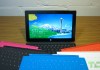
    Microsoft Surface RT with Touch Covers

    Microsoft’s Corporate VP for Windows Julie Larson-Green was at WIRED’s Business Conference today, and she was put on the spot when asked by interviewer and WIRED Senior Editor Michael V. Copeland about the apparently sluggish start for Windows RT. RT’s failure is a consumer education problem, according to Larson-Green, since it’s very different from what’s come before.

    Windows RT, for those unfamiliar or confused by the new familial breakdown of Windows following the introduction of version 8, is a lightweight version designed for ARM-powered devices (vs. x86, the architecture which full Windows OS runs on), which doesn’t offer access to the full suite of Windows software. According to our own Matt Burns, that has resulted in a big app gap, and made the Surface RT essentially a glorified web browsing tablet, which sounds like something different from a simple matter of properly framing the product.

    “I think we have some work to do on explaining it to people because it’s different,” Larson-Green said. “They’re just so used to Windows meaning backward compatibility in all the programs that you use today. I use Surface RT as my main computing device, I connect to a corporate network using my virtual smart card and VPN when I need to, Office is already on there […] it’s just a simpler experience and then the Surface Pro has the flexibility if you want to work on the details.”

    “I love my Surface RT,” was a common refrain from Larson-Green even into the Q&A, who later characterized it as a device for casual consumption mostly, especially filling a niche for “weekend” use. Even the dual nature of her defense of the Microsoft tablet shows that it still needs work at Microsoft itself in terms of fleshing out its role in the consumer ecosystem, which probably isn’t helping the company properly explain its purpose to the buying public.

    The Surface RT is estimated to have sold only around 1 million units total since its launch late in 2012, far under its reported initial estimates of 3 million or so. Other OEMs have balked at the RT line in the meantime, with Acer waiting on launching its RT slate until at least Q2 of this year.

  • Microsoft confirms Windows 8.1 preview to be available by the end of June

    Microsoft: Windows 8.1 preview release date
    Windows chief Julie Larson-Green announced at the Wired Business Conference on Tuesday that Microsoft will release a preview of Windows 8.1 — also known as Windows Blue — at the end of June, ZDNet reported. The executive said that the company will release the preview at its Build developers conference that is scheduled to take place on June 26th in San Francisco. Microsoft previously confirmed that it plans to release the next version of the Windows operating system by the holiday season. Windows Blue is very likely to incorporate a lot of user feedback from Windows 8, which has proven to be a polarizing operating system that many users have complained lacks the intuitiveness of earlier Windows versions.

  • Three Kidnapped Women Were Held At This House For 10 Years

    By now, you’re well aware that three women were found safe after being held captive in a man’s basement for 10 years in Cleveland, OH. The story (and the unlikely hero) have captured the attention of the nation, but now people are beginning to ask questions. Why couldn’t police find these women after they went missing?

    Well, the house in question may help answer that question. The house belonging to the suspect, Ariel Castro, is pretty normal from the outside. Here’s what it looks like in a Google Street view image from 2009:

    Three Kidnapped Girls Were Held At This House For 10 Years

    The house would look pretty normal to any bystander last week, but it takes on a creepier atmosphere now that the truth has come out. It’s actually a little unsettling to think that three young women were being held hostage in the house’s basement as Google’s Street View car drove by in 2009.

    Here’s an interactive Street View version for those who want to tour the neighborhood in which the women were thankfully found alive and well:


    View Larger Map

  • LG and Sprint prepping new quad-core Optimus phone

    Sprint Optimus G Pro release date
    AT&T nabbed the exclusive rights to carry the LG Optimus G Pro smartphone in the United States, however new information suggests a similar handset could debut on Sprint later this year. A User Agent Profile on Sprint’s website has revealed that the two companies are working on an Optimus smartphone with a full HD 1080p display, Android 4.2.2 Jelly Bean and an upgraded quad-core Snapdragon 800 processor. The device also carries the model number LS980, which is in line with the Optimus G Pro’s identification (E980) on AT&T. The Optimus G Pro is scheduled to arrive on AT&T on May 10th for $199 with a new two-year agreement. The smartphone is equipped with a 5.5-inch full HD 1080p display, a 1.7GHz quad-core Snapdragon 600 processor, 2GB of RAM, a micro SD slot and a 13-megapixel rear camera.

  • Fake Nuns’ Cocaine Habit Gets Them Busted

    Three women wearing nuns’ habits looked a little too nervous about being on the lovely island of San Andres recently, and when police looked closely, they could tell that the fabric the women were wearing was all wrong (did they pull a Scarlett O’Hara and yank the curtains down to make their outfits?). Also, all three of them had unsightly bulges on their thighs, owing to the four pounds of coke they all had strapped to each leg.

    During questioning, the women reportedly burst into tears and said they had agreed to smuggle the drugs on a flight from Bogota, Columbia because they were desperate for money.

  • Find Success Your Own Way


    Robert Steven Kaplan, author of What You’re Really Meant to Do, explains how to reach your unique potential.

  • Nose Leaking Brain Fluid, Not Snot, Finds Arizona Man

    Allergies can be crippling, but usually some choice drugs and patience can get even the worst allergy sufferers through allergy season. Suffering a runny nose for over a year and a half, however, is another matter entirely. An Arizona man recently found that what he thought was allergies was actually brain fluid leaking from his nose.

    According to a Fox 10 report, after suffering a leaking nose for 18 months, Joe Nagy was told by a doctor that the fluid coming from his nose was actually brain fluid. It turned out that Nagy had a hole in the membrane protecting his brain.

    Doctors told Fox 10 that such a condition can be easy to miss, since many people simply assume they have a constantly running nose. Many patients find out about the problem when the fluid becomes infected. Nagy himself developed a serious case of meningitis just before undergoing brain surgery to repair his leaking membrane.

    The surgery used cartilage from Nagy’s nose to repair the membrane. It was successful and Nagy stated he was surprised by how quickly the issue was repaired.

    “I was waiting for the dribble, you know?” said Nagy. “I was so used to it every day, I got a hanky, a cloth ready, a tissue. Nothing. And all of a sudden, it’s never come back.”

  • White House picks long-time Googler as first chief privacy officer (report)

    The Obama Administration has reportedly selected Nicole Wong for the the new job of chief privacy officer. Wong, who has worked as a senior lawyer for both Google and Twitter, has a reputation in the tech and legal community for defending online freedom.

    The appointment, which was reported by CNET and has yet to be confirmed, comes at a time of growing public concern over data collection tools that scour everything from smartphones to shopping records, and make it easy for companies and governments to collect information about individuals.

    The Obama Administration’s decision to appoint Wong may therefore represent an attempt by the government to find new ways to balance the power of data with preserving liberty and privacy.

    During her time at Google, Wong fought the governments of Turkey and Pakistan over YouTube censorship, and she has also worked with The Electronic Frontier Foundation, a respected cyber-advocacy group.

    Wong’s appointment also comes at a time when Google chairman Eric Schmidt has been calling attention to the growing threat of governments using Western technology to spy on and oppress their citizens.

    Wong, who joined Twitter last November, is the second long-time Google lawyer to be hired by the White House in recent months. The Administration recently hired former Googler Michelle Lee to head the troubled Patent Office.

    Related research and analysis from GigaOM Pro:
    Subscriber content. Sign up for a free trial.


  • Nest Acquires MyEnergy To Boost Its Home Energy Management Tools

    nest_myenergy

    Nest proved that energy monitoring can be tantalizing. And it’s about to get even better. The company just announced that it has acquired MyEnergy to further enhance its suite of monitoring tools. Terms of deal were not released.

    Originally called Earth Aid, the startup launched its online dashboard in 2009 as one of the first energy monitoring solutions. Similar to EnergySavvy, Google’s Powermeter andMicrosoft’s Hohm, Earth Aid, and now MyEnergy, provides consumers with information on how much electricity, water, and natural gas they use and how much they spend on these utilities. Simply connect your online utility accounts with the platform, and the system imports all the necessary bits and displays them on the beautiful web dashboard.

    Spend a few quick minutes on MyEnergy.com and it’s easy to see why Nest wanted MyEnergy in its corner. The system is wonderful. Just like the Nest Learning Thermostat.

    In 2011 the startup raised $4 million in Series A funding from Point Judith Capital, the Clean Energy Venture Group, and Capital-E. According to today’s announcement, MyEnergy has users in all 50 U.S. states and spans more than 1,500 utility territories.

    “Giving our customers more in-depth access and analysis of their energy usage has always been part of the Nest vision,” said Tony Fadell, Nest founder and CEO said in a released statement today. “We’ve made great strides in the past year and a half; by bringing MyEnergy into the Nest family, we can reach our goals even faster. The MyEnergy team is incredibly like-minded and we’ve already begun working with them to find ways to integrate their technology into Nest products.”

    The Nest Learning Thermostat is beautiful. But the web dashboard is lacking in depth. There is plenty of room for improvement. MyEnergy will likely not only make it look better, but dramatically enhance the tool set by giving the homeowner information from their neighborhood.

    Nest is charging forward, simultaneously building out consumer aspects and partnering with utility companies. This acquisition clearly fits within Nest’s vision. It’s unclear exactly what Nest plans to do with MyEnergy, but as a Nest user myself, I’m rather excited to see what Tony Fadell and team does with the beautiful MyEnergy platform.

  • Nest acquires MyEnergy (formerly Earth Aid), moves deeper into utility data

    Smart thermostat maker Nest has acquired energy data startup MyEnergy, formerly called Earth Aid. Nest didn’t disclose terms of the deal, but said in a release on Tuesday that the acquisition would help Nest further its goals of helping its users “understand and address” home energy consumption.

    MyEnergy is a startup that was founded back in 2007. The company was called Earth Aid for several years, and has developed algorithms that collect, analyze and provide recommendations around utility energy data. MyEnergy CEO Ben Bixby told me in an interview that MyEnergy is already hard at work stitching MyEnergy into the fabric of the Nest service, and he thinks that the union between the two services could be a “game changer” for energy data.

    Nest 2G_3-4_Dramatic_autoaway

    Unlike some startups like Opower that collect and aggregate energy data for utilities to deliver services to their customers, the MyEnergy platform aggregates utility energy data largely to deliver energy efficiency services straight to the consumer. For example, if your utility has an online account, and you gave MyEnergy permission to link that account to its system, then the site would pull your energy consumption data into its network. MyEnergy then would use that data to offer the user recommendations for how to reduce energy consumption and also create a sort of social network around energy consumption. The important part to remember is that your utility doesn’t even have to be involved in the process.

    In recent years some utilities have embraced the Department of Energy-backed Green Button program, which is supposed to make this process of collecting and managing utility energy data even easier and standardized.

    MyEnergy also has a utility-facing data product, but Bixby clarified that the utility data product isn’t white labelled (the way Opower’s is), and is branded with MyEnergy. Nest said it will also use MyEnergy to provide services for energy providers, so it clearly will be using MyEnergy for both straight to consumer data services and utility data services.

    Nest

    The acquisition move shows how Nest is increasingly working with utilities and energy service providers on energy efficiency and energy services. While Nest, founded by former Apple designers, is well known for making a chic learning thermostat, one of its under appreciated values is its ability to collect and use energy data in new ways. The move also puts Nest in closer competition with leading energy utility data companies like Opower.

    Last month Nest announced a variety of energy services that its collective thermostats can provide to energy companies and utilities. Examples of energy services include “demand response,” which is when power companies turn down power usage of a collective group during peak times (like a hot summer afternoon).

    MyEnergy doesn’t provide detailed numbers on how many users it has, and Bixby would only say that its customers are found within 1,500 utility service territories. Boston-based MyEnergy had 12 employees before the acquisition, and some of those folks will be coming out west to work with the Nest team. MyEnergy is backed by Point Judith Capital, Clean Energy Venture Group, and Conservation Services Group. Nest is backed by Venrock, Kleiner Perkins, and Google Ventures.

    Related research and analysis from GigaOM Pro:
    Subscriber content. Sign up for a free trial.


  • Here’s Amanda Berry’s 911 Call [Video]

    Three women – Amanda Berry, Gina Dejesus and Michelle Knight – disappeared over a decade ago in Cleveland, and were found today after being kidnapped and held captive.

    Cleveland police chief Ed Tomba reportedly said today, “The real hero is Amanda. She got this rolling.”

    Here’s her 911 call:

    Charles Ramsey, a guy who lives next door to the house where the girls have been held, heard the screams, and helped Berry, who also had a six-year old daughter with her. The father of the child has not been disclosed.

    The two other girls were found inside the home. Three brothers: Ariel (the owner of the house), Pedro and Onil Castro, have been arrested.

    Berry was reported missing on April 21, 2003.

  • Anne Hathaway: Blonde Ambition At Met Gala

    Anne Hathaway was rocking a platinum hairdo at the Costume Institute Gala at the Met this weekend, and says it was in honor of Blondie’s Debbie Harry.

    “I don’t know that you could tell it by looking at me, but Debbie Harry was [my inspiration],” she said. The gala’s theme was Punk: Chaos To Couture.

    Hathaway’s hair made waves last year after she debuted a super-close crop, which was done during filming for “Les Miserables”. The lighter shade makes her doe eyes pop, but it’s hard to say whether she’ll keep it for long; she may have to tint it dark again for a movie role.

    The 30-year old said she immediately loved the dress she wore to the gala, a vintage Valentino gown from 1992.

    “I couldn’t believe it when he (Valentino) sent me the picture because he asked me if I wanted to wear archive . . He said, ‘Well, have you ever done anything punk, darling?’” Hathaway said. “Princess, maybe! He sent me this one and I said, ‘Oh my god, I love it. It’s fabulous! First and only [choice] as soon as I saw it! I took the chaos thing as far as the couture would allow.”

    anne hathaway

    Image: Us Weekly