Blog

  • Nonprofits and the 2010 Census: What’s at Stake?

    With questionnaires in the mail and the 2010 Census underway, now is
    the time for nonprofits to engage constituents to ensure that their
    communities receive an accurate count.
    Nonprofits count
    The implications of an undercount are strong for nonprofit
    organizations receiving substantial funding from government sources. As
    the National Council of Nonprofits explains,
    future allocations for programs such as Head Start, SCHIP, and Section
    8 housing will all be based on the 2010 Census data. Communities
    showing a decline in population will likely see an accompanying drop in
    Federal funding. Even nonprofits that are not reliant on government
    grants could see reduced funding as grantmakers redirect funds to plug
    gaps in Federal or state allocations.

    What can nonprofits do?
    The Nonprofits Count! web site,
    a program of the Nonprofit Voter Engagement Network, provides
    information and resources for nonprofits to use in communicating the
    importance of the 2010 Census to their communities and service
    populations, including an online toolkit with:

    • fact sheets on hard-to-count population groups
    • a checklist with suggested advocacy activities for nonprofits
    • information on becoming a Census Partner organization
    • free posters to display in your office or service area
    • archived webinars on the Census and nonprofits

    NVEN also provides a Nonprofit Census Action Plan with suggested advocacy activities for organizations to undertake during 2010.

    In addition, many state nonprofit associations are providing information and resources on Census advocacy for local member organizations.

    See the following resources for more recommendations and information:

    Thanks to Stephen Sherman, Reference Librarian, Foundation Center-Atlanta, for sharing this post.

  • Drinking and driving consequences for school chief and Ballard High grad

    Second chances not gift for all, if a gift at all

    I could not help but notice your editorial on Superintendent of Public Instruction Randy Dorn’s second chance with his DUI 24-hour jail sentence [“Dorn’s second chance,” April 6] contrasted with the front-page news of the tragedy of Mike Turner’s three-fatality crash over the Easter weekend [“Crash kills 3 friends who loved muscle cars,” page one, April 5].

    However, substitute Dorn’s name in Turner’s story and think about the headlines and the public outrage. Although Dorn’s alcohol assessment confirmed his lack of a “drinking problem,” drinking under the influence of alcohol increases the chance that drivers will continue to take innocent lives through impaired judgment.

    My sympathy extends to all the families involved. Until we as a society fully comprehend the waste of lives fostered by second chances granted in DUIs, The Times will continue running front-page, tragic stories about the results of impaired behavior.

    — Mark Wilson, Seattle

    Resignation better example than fine and jail time

    School Superintendent Randy Dorn calls his DUI arrest and conviction a teachable moment — for whom? [“School chief Dorn pleads guilty to DUI charge,” NWSaturday, April 3.]

    If he really was this “stand-up guy” who chose to face the consequences of his actions instead of trying to “lawyer” himself out of it, he would do the honorable thing and resign. That would set an example for students about consequences for negative actions. An $866 fine and a suspended jail sentence does not send a strong enough message about the horrors of drunken driving.

    Resigning an elected office after failing to live up to the enormous responsibilities of that office —while far from the most damaging event that could occur while driving drunk —would still be a learning experience for him and others. If you want to serve the public, you are held to a higher and more demanding standard. If your office represents the children of this state, that bar cannot be set high enough.

    If Randy Dorn truly cares about young people in this state, he should resign. Parents, students and citizens of Washington should demand and expect nothing less.

    — Ben Stearns, Seattle

  • No podemos conducir por ti pero si recaudar, ¿por nuestra seguridad?

    Guardia_civil_a-6

    Yo cada vez que tengo que hacerme los 1.200 km de rigor al ir a Madrid y bajar a Vigo algún coche para las pruebas, además del viaje (que se me hace bastante ameno) siempre puedes ver curiosidades al volante, desde gente que confunde la A-6 con un servicio público o conductas de lo más extrañas y que en muchos casos ponen en peligro la seguridad de quienes la realizan.

    Pero esta vez me llamó la atención un despliegue de la Guardia Civil que me encontré en la A-52 a pocos kilómetros de Benavente (km 38 km). Resulta que es normal encontrarse varios radares móviles tanto en la A-52 como en la A-6, lo normal es que al menos uno en todo el recorrido lo veas, pero hay ciertas conductas que son peligrosas para los usuarios de la vía.

    Llegando a la altura que os comentaba, vemos un coche sin camuflar (un vehículo normal rotulado de la Guardia Civil) medio oculto en una incorporación, hasta ahí todo normal, si no fuera porque a unos pocos metros otra unidad de la benemérita parada en el arcén estaba parando a vehículos (me imagino que cazados por el radar móvil anterior) pero los paraba en medio del carril derecho, interrumpiendo la circulación y ya lo más sorprendente fue ver a un agente en el medio de los dos carriles dando el alto a un 4×4 que circulaba por el carril izquierdo.

    Radar_movil_A-6

    El milagro fue que no atropellaran al agente, puesto que hay veces que aun ponen conos o señalizan que hay vehículos parados en el arcén del carril derecho y que obstaculizan el paso, pero amontonar vehículos parados y aun por encima que el agente se mueva entre ellos poniéndose en medio de los dos carriles para darle el alto a otro vehículo, eso en una autovía donde la velocidad es 120 km/h es una temeridad.

    Pero lo más simpático de todo, fue que después de unos pocos kilómetros, para ser exactos en el Km 30, vemos escondido otro radar móvil en el margen derecho debajo de un puente. No es normal situar dos radares móviles en menos de 10 km en la misma vía. Y hablando de seguridad, yo no se si era un control improvisado o esperaban parar menos coches, o da la casualidad de que todos los parados tenían matricula extranjera (y claro había que pararlos in situ), pero desde luego por un camión en el arcén averiado ponen triángulos, conos incluso, y por una patrulla y tres coches parados ni una sola señalización.

    Seguro que en próximos recorridos alguna que otra anécdota más podré ver, y si esto lo veo yo que viajo dos o tres veces al mes, no quiero imaginarme lo de curiosidades que nos podría contar un camionero o cualquier persona que viaje mucho.

    Fotos | Diego G. Moreira (las fotos son de un coche de la Guardia Civil en la A-6 y de un radar móvil Citroën C5 en la A-6)


  • Children’s hospital given go-ahead to expand

    Why did approval take so long?

    Why has it taken Seattle City Council two years to finally OK Children’s hospital expansion plans? [“Children’s expansion gains OK of council,” NWTuesday, April 6].

    Citizens may not realize how many ways a specialty medical center such as Children’s benefits the whole community and beyond. Not only does Children’s provide first-class medical care to our “small people,” it is also a training arena for many professionals —medical students and residents, nursing students and advanced nursing specialties, occupational and physical therapists, speech and language specialists and others.

    Also, Children’s offers ongoing learning opportunities and professional conferences to many groups, professionals and parents. Many times, I have enjoyed and learned new skills while attending conferences on site. Lets get the new building plans moving.

    — Mary Kathryn Myers, Kent

  • Iraq firefight video

    Story misleading; war breeds culture of hatred

    “U.S. official: Iraq firefight video real,” reads the headline in The Seattle Times [News, April 6]. Could there be a more misleading way to open this story?

    Calling the incident a firefight suggests shots were fired by both sides, but readers who actually watch the video will see only a slaughter. No shots were fired by the men on the ground and it is clear most of them were unarmed —not “some” as the story claims.

    U.S. troops are still killing civilians in Iraq and Afghanistan. It does not mean all our troops are monsters; the nature of the occupation makes these killings inevitable.

    Think how we could hate a Muslim occupier who killed unarmed Americans with canon fire from the air. The hatred we are sowing in Iraq and Afghanistan cannot possibly make us safer. The only way to stop this tragedy is to bring all our troops home now.

    — Warren Jones, Seattle

  • Health-reform law

    Need for health care does not justify right to services

    Stewart Jay and Congress are missing a golden opportunity to really shape up America. [“New health-reform law is definitely constitutional,” Opinion, April 4.]

    Using the power of controlling interstate commerce, Congress should mandate that all people pay for a gym membership and diet program —Weight Watchers, Jenny Craig, etc. —but no free plans or plain, old walking. Self-help and self-responsibility are the antithesis of socialism. Of course, with proper proof, you will get a credit on your taxes. Without proof, you will be fined.

    But think how healthy people will be; medical needs, problems and expenses will drop so insurance will cost less. It is a win-win situation for everyone.

    Just because people need health care, it does not mean they have a right to it. It is amazing how our national religion is evolution and survival of the fittest, yet in our social arena, some politicians advocate freedom means you have the right to twist your neighbor’s arm to make him pay your bills.

    I pay some social taxes because I am not heartless —and because they benefit me too — but merely prepaying everyone’s medical bills through mandatory insurance does nothing to hold down costs.

    — Byron Gilbert, Seattle

    What Congress ‘wants’ not always constitutional

    UW Law Professor Stewart Jay’s commentary concerning health-reform law constitutionality raises some interesting “questions.” How does he conclude that forcing people to buy health insurance from a private company is no different from requiring people to pay taxes for Social Security or Medicare?

    He justifies requiring buying the insurance because “Congress wants people to have insurance when obtaining care in order to hold down costs for all.” If Congress really wanted to hold down medical costs, it should enact laws that force “obese” people to join Weight Watchers or the local gym. The reality is what Congress “wants” is not always constitutional.

    — Bill Hirt, Bellevue

  • An Inside Look at Building a Dodge Viper.

    Ever watch that show How It’s Made on the science channel? It’s a great program that really gives us an inside look at how things we take for granted are produced. Don’t get me wrong as I’m not saying I take the Dodge Viper for granted, hell I’d just take a Viper anyway I could get it. The above video follows the build of the ACR Viper from start to finish. Engine assembly, exterior panel fitment, electronics are all touched on here. To be honest the entire process is actually quite amazing. Earlier today I did a piece on how 2010 was going to be the last hooray for the Viper line so if you are one of the chosen few that are plunking down some hard earned greenbacks for one, at least now, you can see how your baby is made.


  • NCBI ROFL: Ants in your pants? | Discoblog

    Ant_head_closeupTranscultural sexology: formicophilia*, a newly named paraphilia in a young Buddhist male.

    *The sexual interest in being crawled upon or nibbled by small insects, such as ants

    “Children whose species-specific, juvenile sexual rehearsal play is thwarted or traumatized are at risk for developing a compensatory paraphilia. The case of a Buddhist male exemplifies the cross-cultural application of this principle. His syndrome, formicophilia, was endogenously generated without reference to or influence by commercial pornography. The complete causal explanation of paraphilia will require both a phylogenetic (phylismic) and an ontogenetic (life-history) component. The treatment of paraphilia may combine an antiandrogenic hormone with sexological counseling.”

    ants


    Image: flickr/jurvetson

    Related content:
    Discoblog: NCBI ROFL: Don’t blame necrophiliacs–they’re just devolving into amoebae.
    Discoblog: NCBI ROFL: References to the paraphilias and sexual crimes in the Bible.
    Discoblog: NCBI ROFL: Word of the day: cacodemonomania.
    Discoblog: NCBI ROFL: You put the deer tongue where?!?


  • GNOME Shell System Status Area Mockup

    The next incarnation of GNOME Desktop Environment, GNOME 3, is creating a lot of buzz everywhere. Many are already counting on GNOME Shell, that will come with GNOME 3, to revloutionize their desktop experience.

    Currently, GNOME Shell is at an active development stage and is not considered stable for normal use. The GNOME developers have come up with a amazing mockup for the System Status Area. The mockup is based on the color black, which is going to be the default color of GNOME Shell. The borders have been made grey and the icon design are simplified to make them easier to recognize.

    So, here is the mockup:

    [via rm -rf/]


    Announcement: Missing Mobile News in the Main RSS Feed? We have decided to remove the mobile content from the main feed, please subscribe to our dedicated Mobile News RSS Feed at http://feeds.techie-buzz.com/techiemobile. Thank you for your understanding.

    GNOME Shell System Status Area Mockup originally appeared on Techie Buzz written by Ricky Laishram on Wednesday 7th April 2010 02:00:02 PM. Please read the Terms of Use for fair usage guidance.

    Don’t miss these Related Posts:

    Join Techie Buzz on Your Favorite Social Networking Sites


  • NYC Startup Job Fair: How Graduates Can Get a Great Job at a Startup

    graduation mortarboard purpleAs the season turns to spring in the U.S., many soon-to-be college graduates and their soon-to-be employers turn their focus to the job market. In answer to the questions that graduates inevitably face from friends and family – “What will you do with your degree?” – one response should certainly be, “Find work with an exciting startup.”

    While some colleges are developing solid entrepreneurial programs, many graduates are still prone to believe that their best post-college employment prospects are to be found with more established companies. To change that perception, the Columbia Venture Company and the NYU Venture Company are hosting the first annual NYC Startup Job Fair.

    Sponsor

    Since there remains much that higher education can do to nurture startups and to prepare and encourage students to seek opportunities there, the class of 2010 college graduates can and should look to startups as opportunities to launch their careers. Likewise, the class of 2010 and their search for post-college employment can and should provide startups with an opportunity to recruit the best and the brightest to join their ranks.

    Just as there are many myths surrounding the risks associated with launching a startup as an entrepreneur, there are many myths associated with joining a startup as an employee – whether as a recent college graduate or as someone with more substantial work experience. However, as Chris Dixon notes, this career move may actually be less risky than one might believe. He cites the following reasons that college graduates should consider joining a startup:

  • Big companies aren’t as stable as you think.
  • Big companies aren’t loyal to employees.
  • Startups with financing pay pretty well.
  • Startups tend to be loyal to employees.
  • Joining a startup means joining a network of employees and investors – a connection that can translate into future ventures and future job opportunities.
  • While college graduates know to turn to job search websites (and there are many that match graduates with startup firms, including Startupzone.com, VentureLoop, and Startuply) in order to post their resumes and to find post-college employment, nothing can compare with the chance to interact with potential employers on a face-to-face basis. While more established companies still dominate the college campus job fair, a unique event in New York City on April 9 will provide an opportunity for recent and soon-to-be college graduate and startup companies to interact.

    The first annual NYC Startup Job Fair seeks to “bring students, young alumni and startups together to connect bright, motivated individuals with exciting and innovative New York-based companies.” Hoping to spur a grassroots awareness about startup opportunities throughout college campuses in the New York City area, the NYC Startup Job Fair has effectively sold out due to an overwhelming response from those who have RSVPed for the event.

    One of the event organizers, Alex Horn, realized the need for this sort of event as he prepared to graduate from Columbia University, noting that there was “an information gap for graduates seeking out startup job opportunities; the Career Services Center at Columbia did a great job of promoting big financial institutions but very little to show students that there were other viable options out there.” Horn hopes Friday’s event “will enhance credibility for NY startups among young qualified job-seekers, lead to some resume exchanges, and convert some would-be bankers and googlers to entrepreneurs.”

    Discuss


  • Obama sends delegates to help build cities for the future

    World Urban Forum important, but overlooked by media

    Thanks to Neal Peirce and The Times for telling us about the World Urban Forum. [“Re-engaging with the world’s cities,” Opinion, April 6.]

    I share Peirce’s surprise and regret that U.S. media have failed to report this important event and the vision it nourishes. The Obama administration’s participation in this dialogue points toward exactly what Peirce highlights: “ … the cooperative promise of building constructive relationships as a less arrogant America.”

    The positive returns could be immeasurable.

    — Martha McLaren, Seattle

  • Are All These Earthquakes Normal?

    Folks who work at the United States Geological Survey Earthquake Center in Golden, Colorado don’t just track temblors, they also answer the public’s questions via phone and email. The number one question they’ve been getting lately: “Is this the end of the world?”, according to Heidi Koontz, the center’s Public Affairs Specialist.
    News of four major quakes in as many months in Haiti, Chile, Mexico and Indonesia, has prompted a tinge of panic in some who would otherwise consider these events pure coincidence. “I received a call from a psychiatrist who is getting an influx of patients who are really concerned about the end of days”, says Koontz, “and he wanted us to pinpoint science and provide him with links to science that would help allay the fears of some of his patients. He needed some hard facts and he said that that actually helped.”
    Koontz explained to the doctor, what seismologist Harley Benz explained to Fox News. That seismically speaking, this is all pretty normal. “You can expect earthquakes in locations where we are known to have earthquakes”, explains Benz. “And in this case, in Sumatra, it’s one of the most seismically active areas in the world. Likewise Chile is one of the most seismically active areas in the world.”
    According to the USGS Earthquake Center website, earthquakes can also occur in clusters, which may explain why this year has been front loaded with so much activity. Statistically, the globe is on track, so far this year, to be relatively average in terms of the number of larger quakes that hit annually. An average year will produce 17 quakes with a magnitude 7.0 or greater.
    What is different about the last four months is the number of deaths caused by quakes. According to USGS records 223,140 have been killed worldwide from seismic activity. Almost all of those deaths occurred in Haiti when residents were crushed by poorly designed and constructed homes and structures. “Seismologists like to say, earthquakes don’t kill people, buildings do,” says Koontz. Scientists here also observed that the massive amount of destruction in Haiti made the public more aware, and therefore more afraid.
    In the last 20 years the number of seismographs around the globe has increased dramatically. Right now, four thousand monitors measure the Earth’s movements. Since the USGS scientists can track more quakes and get the information out there faster, that too can add to the perception the world has become less stable.

  • Moxier World brings local weather and webcams to Android phones

    Found under: Android, Weather, Webcams, Local, Forecast,

    Moxier World brings you the world timelocal weather in one single application. You can browse the globe using easy-to-use city search and save unlimited number of cities for quick glance. The list view shows the cities its local time and date with current weather conditions. Along with this you can view webcams from the cities you have chosen and add a widget to your home screen.Download Moxier World

    Read More

    Read more in mobile format

  • Enjoy audio and video podcasts on your Android phone

    Found under: Android, Podcast, Audio, Video, Entertainment,

    PodKast is just released android app that lets you listen to your favorite audio and video podcats on the go. The developer has managed to make a selection of the most popular podcast feeds in this app. And he promise to constantly add new podcasts on a regular basis.Download PodKast

    Read More

    Read more in mobile format

  • Treasury’s Wolin: No Carveout for Auto Dealers on Consumer Protection Rules

    Treasury Department Deputy Secretary Neal Wolin said Wednesday the administration would move to block any effort to exempt auto dealers from having to comply with new consumer protection rules. He said the administration has reiterated it would not allow consumer protection rules moving through Congress to be weakened and “a carveout for auto dealers would be a paradigmatic example of such a weakening move.”

    The House passed a bill in December that would exempt auto dealers from new consumer protection rules, but White House officials have said they would work to strip that provision out as the bill moves through the Senate.


  • Gowalla Adds Real-time Feeds and Activity Streams For Maximum Mashup Action

    Location based social network Gowalla quietly released a big new feature today: real-time PubSubHubbub feeds for check-ins by people and at locations. Hello, mashups and 3rd party apps of the future!

    In addition to being real-time and easy to access, Gowalla’s new feeds are also marked-up with the beginnings of the widely used Activity Streams format. Put all of this together and Gowalla to Google Buzz is one obvious connection, but the possibilities are endless.

    Sponsor

    For comparison, much larger competitor FourSquare offers private user-specific RSS feeds, which are slower and much more limited. It also offers powerful analytics for business owners about who checks in at their venue. The relative value of both systems for developers is debatable, but Gowalla’s new feature is clearly very nice.

    These new Atom feeds from Gowalla can be remixed by anyone, though – not just developers. For example, I plan to run the feeds from a few coffee shops down the street from my house through an alert service so I can know who’s hanging out in the neighborhood.

    I expect we’ll find out even more about what could be done with these feeds once they are officially announced. The Hub page says the feature is delivered by Superfeedr, so presumably the feeds will grow more sophisticated as Superfeedr continues to add new features as well.


    Discuss


  • Subaru introduces WRX Club Spec 10 for Australia

    Filed under: , , , , ,

    Subaru WRX Club Spec 10-click above for high-res image gallery

    There are more iterations of the Subaru WRX than there are wallabies in the bush. At least it feels that way to Australians. As the name suggests, the WRX Club Spec 10 is the 10th special edition Rex that Subaru has seen fit to grace the land down unda. We don’t actually get special WRX editions here in the States (save one STI variant), but that’s okay as Subaru seems to completely redesign their hot little rally champ every 24 months. However, if we did live in the world’s most scenic former British penal colony, here’s what we’d get.

    Starting up front you’d get the lip spoiler off the STI for enhanced aerodynamics that (supposedly) “improves stability and cornering.” Then there’s a “flexible” strut tower brace to improve stiffness steering. We think “flexible” is Australian for “adjustable” because there’s also a “flexible” lower bar (sway bar) as well as a front end chassis brace. All of this will help reduce front end floppiness and sharpen up the already famed WRX’s handling reflexes.

    WRX Club Spec 10 owners also get slightly wider 17-inch STI wheels, leather seats, sunroof and sat nav. This isn’t the very greatest WRX kit we’ve ever encountered, but Subaru of Australia is limiting the total Club Spec 10 output to just 250 units. meaning that each one is assured to be collectible. How much? $49,990 Australian dollars, or just over $46,000 in our non antipodean currency.

    [Source: Subaru]

    Subaru introduces WRX Club Spec 10 for Australia originally appeared on Autoblog on Wed, 07 Apr 2010 16:55:00 EST. Please see our terms for use of feeds.

    Permalink | Email this | Comments

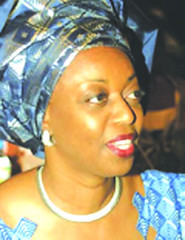
  • Diezani Allison-Madueke Appointed as Oil Minister in Nigeria


    Diezani Allison-Madueke was appointed as the Oil Minister of the recently reconstituted cabinet of the Federal Republic of Nigeria. She was assigned to the post by Acting President Goodluck Jonathan.
    Originally uploaded by Pan-African News Wire File Photos

    Female minister directs Nigeria oil overhaul

    By Tom Burgis in Lagos
    Financial Times
    April 7 2010 17:55

    Nigeria’s first female oil minister has been in her post barely 24 hours, but already the demands on her allegiances are many and conflicting.

    Diezani Allison-Madueke was the surprise choice to take the helm in sub-Saharan Africa’s biggest oil and gas exporter when Goodluck Jonathan, acting president, unveiled his cabinet on Tuesday.

    The team has 12 months to make its mark before the next election. The new minister’s principal task is to bring the long-delayed Petroleum Industry Bill – the most ambitious overhaul in the industry’s 50-year history – into law.

    At stake are tens of billions of dollars of potential investments, and reforms that could breathe new life into an industry that provides 80 per cent of the government’s income and one in eight barrels of crude that the US imports.

    Yet such is the scope for renewed lobbying from foreign companies, including Royal Dutch Shell, Exxon Mobil and Chevron, and opponents of reform that senior industry figures fear more delays.

    “The PIB is definitely unlikely to pass [through the national assembly] in its current form before the elections,” Osten Olorunsola, Shell’s regional vice-president for gas, told the Financial Times. “Not passing anything would magnify the overall level of uncertainty.”

    Shell’s competitors suggest the Anglo-Dutch group should be feeling smug. Ms Allison-Madueke is the daughter of a Shell employee and spent some 14 years working for its Nigerian joint venture, rising to become head of external relations.

    Some industry groups are said to have lobbied for her appointment, reasoning that her background would make her sympathetic to oil companies’ claims that the bill’s tougher terms would jeopardise $50bn of planned investment.

    Yet many of Ms Allison-Madueke’s advisers will argue that the country has made enough concessions to the companies already and the proposed law would simply bring Nigeria’s over-generous terms into line with those of other oil producers.

    Mr Jonathan’s cabinet changes owe much to the succession struggle sparked by the prolonged illness of Umaru Yar’Adua, who remains the nominal president despite having been incapacitated since November.

    Many Yar’Adua allies have been removed, among them the outgoing oil minister, former Opec boss Rilwanu Lukman, and Mohammed Barkindo, erstwhile head of the national oil company that reformers hope to transform from a byword for patronage to a commercially-driven profit-machine.

    Her detractors say the Cambridge-educated Ms Allison-Madueke lacks her predecessor’s clout, noting the limited impact she had in two previous ministerial posts. Critics say that she was promoted because she comes from Mr Jonathan’s home state of Bayelsa, in the heart of the delta.

    Some in the delta, where militants have long demanded a greater share of the oil revenues, expect a daughter of the region to look after her own.

    Dimieari Von Kemedi, a senior Bayelsa official, said activists would push the new minister to go ahead with a proposal to grant 10 per cent of the net profits of petroleum ventures to the delta’s communities.

    Foreign oil groups, seeking to renew leases to prime oil blocks, are locked in tough negotiations. A bidding round for oil assets is planned. Cnooc, a Chinese oil group, is seeking swathes of Nigeria’s crude. From Bayelsa to Beijing, Ms Allison-Madueke’s next moves will be closely watched.

  • Union Members Protest ICE Abuses

    Starting tomorrow, members of Services Employees International Union are protesting the U.S. Immigration and Customs Enforcement with a two-day prayer vigil outside local ICE offices around the country, including those in Los Angeles, Boston and Minneapolis. This vigil comes after reports of mismanagement of ICE — which SEIU Executive Vice President Eliseo Medina called “completely out of control” — published by The New York Times, The Washington Post and the Department of Homeland Security’s own Office of Inspector General.

    From SEIU’s press release today:

    Rather than wasting limited funds to chase hard-working, tax-paying cleaners, home-care providers and nannies, the activists will call on President Obama and Secretary Janet Napolitano to re-focus ICE enforcement on its original goals of targeting crooked employers and criminals.

    Thursday and Friday’s vigils are an effort to illustrate the ongoing, human cost of this agency’s misguided, out-of-control immigration enforcement strategy—which only serves to waste taxpayer resources, hurt hardworking people, and devastate local communities.  ICE’s “strategy” of sowing misery in workplaces and communities not only fails to tackle the underlying issue of our broken immigration system—it also contradicts efforts to improve wages and working conditions of all U.S. workers.

    While other civil rights groups have been vocal about their disapproval of ICE, this looks like the first national attempt to call attention to the agency’s abuses after these recent reports. It’s unlikely this will inspire a response of action from DHS, since these abuses have been documented many times before, but it could mean other groups might start joining the effort. We’ll have to wait and see what comes of this.

  • Birthrates drop in California, and experts blame recession

    http://latimes.image2.trb.com/lanews/media/photo/2009-12/51228700.jpg

    Birthrates in California began to drop in 2008, in what experts say is a response to the recession. The downward trend of California’s birthrate mirrored that of many other states, experts found.

    A Pew Research Center analysis released Wednesday found that the number of California babies born in 2008 dropped to 551,000, down from 566,000 babies born in the state in 2007.

    This signified a 2.8% dip in the birthrate, the third largest decline of any state other than Arizona and Mississippi.
    In the same time period, California’s per capita income decreased from $44,880 to $43,641, according to the study.

    In the previous year, the state’s housing prices decreased by more than 2%, the largest drop in the country, researchers said.
    Researchers found that the data is telling of a link between birthrates and the souring economy.

    “We wanted to see whether there was some kind of link for the most recent recession,” said D’Vera Cohn, the study’s senior writer. “We looked at the decision to get pregnant and took a look at what is going on in the economy to affect that decision.”

    Indeed, Arizona’s birthrate, which saw the largest decline in the country in 2008, reflected its weakened economic picture. The state had a decrease in income between 2006 and 2007, and housing prices that increased only 1.7% in the same time period.

    Researchers cited an October 2009 Pew Research Center survey, which found that 14% of Americans ages 18 to 34, and 8% of those ages 35 to 44 say they postponed having a child because of the recession.
    In the past, birthrates have roughly reflected the nation’s economic booms and busts, Cohn said.

    — My-Thuan Tran

    Photo: L.A. Times file