Blog

  • Damn everything but the circus!

    Just in time, on a gray Portland day with far more static than electricity in its air, comes this note from Allan Oliver, who runs Onda Gallery on Northeast Alberta Street.

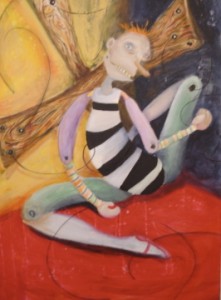
     "Show Time," acrylic on canvas, Deborah Spanton/Onda Gallery“Damn everything but the circus!” Allan advises, quoting the great, undercapitalized e.e. cummings, who wrote in full:

    Damn everything but the circus!
    . . . damn everything that is grim, dull,
    motionless, unrisking, inward turning,
    damn everything that won’t get into the
    circle, that won’t enjoy, that won’t throw
    its heart into the tension, surprise, fear
    and delight of the circus, the round
    world, the full existence . . .

    Mr. Scatter finds himself in complete agreement today, and feels a sudden compulsion to wheel his unicycle out of the garage and go cavorting with a trained elephant. Citizens of the world, we have nothing to lose but the liars, lackeys and cheats!

    Before Mr. Scatter dons his clown costume, though, he should explain why Mr. Oliver sent this most appropriate of poems. It was to announce a new, circus-themed show at the gallery of paintings and prints by Deborah Spanton (that’s her acrylic on canvas Show Time pictured) and prints by Gene Flores. The show doesn’t open until April 29 (it runs through May 25), but we simply couldn’t wait to spread the news.

    Excuse us, please. We’re off to find the hurdy gurdy man.

  • Astronomers Display the Eclipse of a Star With Amazing Thermal Images | 80beats

    This solar eclipse happens only once every 27 years, and John Monnier was there to see it.

    Epsilon Aurigae is a star system about 2,000 light years from Earth. Astronomers have been able to see it for nearly two centuries, and noticed that it dims every 27 years or so. It made sense to assume that they were dealing with a binary star system, with a larger primary star and a smaller secondary star circling around the first. But that didn’t answer all their questions. Why, for instance, did the primary star normally appear dimmer than it should? And if there is a smaller star orbiting the main star, why can’t we see it? To explain that, astronomers developed the unlikely theory that a thick disk of dust was orbiting the smaller star in the same plane as the smaller star’s orbit of the larger star [UPI].

    Monnier says he first felt there was a slim probability that this explanation—a secondary star shrouded in dust—was true. To find out for sure, Monnier and his colleagues needed to catch the eclipse when the smaller star passed in front of the larger, and capture really telling images. That’s just what they did. The astronomers used the Michigan Infra-Red Combiner instrument to combine the light entering four telescopes at the CHARA array at Georgia State University. The effect is a virtual telescope that is much larger than its four constituents [Space.com].

    The results, published in Nature, were staggering to Monnier. Despite the improbability of the explanation, there was indeed a “thin, dark, dense, but partially translucent cloud” passing in front of the star in the infrared pictures. Monnier says: “It kind of blows my mind that we could capture this. There’s no other system like this known. On top of that, it seems to be in a rare phase of stellar life. And it happens to be so close to us. It’s extremely fortuitous” [Space.com].

    Related Content:
    80beats: Breaking News on Black Holes: They “Waltz” in Pairs; Rip Stars Apart
    80beats: A Baby Neutron Star, Swaddles In a Carbon Atmosphere
    80beats: Mysterious Stellar Blast in the 1840s Was a “Supernova Imposter”
    DISCOVER: Sliced: Inside a Supernova
    DISCOVER: One Spectacular Stellar Death

    Image: John Monnier


  • Lemurs – Can Field Work be Useful for Evolutionary Psychiatry?

    As something of a hobby and in an effort to get a better grip on what evolution means, I have spent a relatively small amount of time filming primates. Indirectly my hope is that this will be helpful in better understanding the emerging discipline of evolutionary psychiatry. Evolutionary psychiatry is a theoretical branch within psychiatry that attempts to find theories of mental illness that are informed by the principles of selection (e.g natural selection). Given the complexities of mental illness it seems as though there is much to be gained from triangulating predictions from different models particularly as questions of discriminating genetic and environmental causes of different illnesses are inescapable. Along the way, the filming has been fun and getting to know a little of these creatures has been fun as well.

    The human lineage diverged from that of Lemurs some 63 million years ago. Richard Dawkins coined the term concestor for the common ancestor that we share with another species. So using this terminology our common concestor existed some 63 million years ago. The Lemurs have a fascinating history more of which can be found here. Essentially Madagascar broke off from Africa and the evidence suggests that the Lemurs traversed the sea to get to Madagascar ‘catching’ a ride on floating vegetation – referred to as rafting events. The distance is estimated to have been a minimum of 350 miles (for a dog that was found at sea riding a sheet of ice over an estimated distance of 75 miles – see here). The end result of this is that on Madagascar, the Lemurs have been able to evolve relatively ‘peacefully’ with few natural predators. Elsewhere, the Lemur has not survived and it has been suggested that they have competed unsuccessfully with higher primates.

    As an interesting aside, locals communities in Madagascar have built up different types of relationships with the various subspecies of Lemurs. Some are considered a bad omen and contact is thought to have an impact on the community. Others are protected by the local community and the Indri is also known as Babokoto (Ancestor of Man – although this translation is contentious).

    So what is there to learn from the Lemurs. No doubt, those working in the field will have a very good knowledge of a number of fundamental characteristics of different species of Lemurs but there is the possibility of generating useful hypotheses when looking from a slightly different perspective. I’ve put together the most interesting footage in this video.

    Now the game is afoot! Alas my powers of deduction are rather limited in comparison with the fictitious sleuth and so any suggestions from readers would be gratefully received.

    There are three species of Lemur in the footage: The Black and White Ruffed Lemur, the Brown Lemur and the Ring-Tailed Lemur easily recognised from their names alone in this footage. My observations were thus

    Aggressive Posturing: The Black-and-White Ruffed Lemur (BWRL) chased both the Brown and Ring-Tailed Lemurs which ran away fairly promptly. In two of the clips the chased Lemurs were eating. I’m not sure of the significance but the BWRL is rather large in comparison with the other two and size might play a role in dominance within the environment. Or the other two species might have been encroaching on the BWRL’s territory. However in one of the clips, the Brown Lemur is chased around over a large space making the territorial argument less likely. An alternative argument is that the BWRL is exerting it’s dominance in the environment with the goal of achieving a submissive response in the other two species. I didn’t notice the same response between BWRL’s (chasing) although there was a period of calling.  If the latter hypothesis is correct it suggests that the BWRL identifies the BL’s and RTL’s as targets for physically and vocally aggressive posturing perhaps on the basis of recognising them as different or from experience of prior outcomes in confrontations. There might be a combination of the two as I didn’t witness any initiation of confrontations with the BWRL from the BL or RT.

    Hands: The BWRL’s hands are incredibly flexible. While watching them, the movement registered with me as very similar to the movements of a human hand. This is further reinforced by what the BWRL’s do with their hands. While setting up the camera tripod, I was (pleasantly) ambushed by a group of BWRL’s as can be seen at the beginning of the footage. At several points the BWRL’s can be seen to hold onto the tripod with both hands. Indeed one of the most remarkable points comes at between 6.00 and 6.20 (yes, slightly pedantic I know). The Lemur uses its hands to lift the tripod off the ground. What’s remarkable is that it doesn’t drop it but rather places it gently back in position. More on this later. There is also a point at 5.16-5.23 when the Lemur stares at it’s hands before licking them in turn. This period of staring was interesting and I wondered what it was thinking (it may have been responding to the smell of it’s hand).

    Lifting up the tripod: The BWRL lifts up the tripod and replaces it. Then it pushes the tripod along the ground before ’shouldering’ it. I got the impression that it was estimating the force required to push the tripod along the ground and was adjusting its movements accordingly. Superficially at least I got the impression that this was a fairly intelligent behaviour. It looked as though the BWRL was trying to understand the physical properties of the tripod. For want of a better term, it was trying to make predictions and I have argued elsewhere that this may be a biological correlate of scientific curiosity. Such curiosity in humans is usually attributed to the prefrontal cortex and to executive abilities.

    Tapping: At 5.01 the BWRL taps the other BWRL on the shoulder. I have seen such tapping described in RTL’s but no doubt this has been described in BWRL’s also. What is interesting about this is the differentiation from chasing the BL’s and RTL’s.

    Group Behaviour: The BWRL’s act as a group. This is most noticeable when they examine the camera tripod. They act as a unit. My impression was that they demonstrated social cohesion. When they divided into two groups, the calling within the groups also suggested cohesion. There may be an element of competition – being the first to explore a novel object in the environment. The BWRL’s differentiated from each other in their persistence in examining the camera. Such differences might represent character traits or specialisation. The BWRL’s displayed periods when they chose to remain in each other’s proximity while noteably chasing away BL’s and RTL’s. Since the BWRL’s would be expected to differ in their strength in confrontations this may represent a species specific behaviour rather than one based on the predicted outcome in confrontations. This is further supported by the tapping behaviour.

    Calling: Within the group there was a low pitch growl (LPG) and high pitched call (HPC). The HPC was repeated more rapidly than the LPG and was associated with small rapid movements (whereas the LPG’s seemed to be made whilst stationary). Following the shoulder tap there was an accompanying third type of call of a more high pitched nature.  Perhaps this was to reassure the BWRL that had previously been using an LPG.  The LPG seemed to be a show of strength and the time taken to produce this may have resulted from the use of additional muscle groups compared to the HPC. The BWRL calling displays rhythmicity. Rythmicity is evident in human speech and music and musical rhythm has been identified in other primates. Perhaps some of the calling is an alternative to physical confrontation. The HPC’s also seem to be differentiated with a melodic component. It would be interesting to know if the individual vocalisations had independent meaning.

    Winner Takes All. The BWRL’s were louder, more aggressive and more exploratory than the RTL and BL during my observations. In the natural habitat if this were to persist it might mean that they would have more opportunities to experience novelties and gain resources than the other two types. This would be transmitted not just through genetics but through culture also.

    Conclusions

    Our lineages diverged some 63 million years ago. The absence of significant predators on Madagascar may have resulted in subtler adaptations to the environment and we may be seeing species that are more closely related to our concestor than we are. Still there has been a lot of time for adaptation. Nonetheless assuming conservation of successful genes and valid similarities the following hypotheses can be generated

    1. The flexibility of the hand may be an important part of human evolution possibly conserved over 63 million years and enabling a more rapid exploration of novel stimuli in the environment. A useful comparator here would be a dog or cat.

    2. The flexibility of the hand may be related to exploration and to development of executive abilities. The representation of the hands in the motor homunculus in humans is evidence of their importance. The BWRL demonstrates evidence of a very flexible adaptation which expands the way in which it can interact with objects and other BWRL’s.

    3. Social behaviour may have been an important aspect of human evolution and may have been evident 63 million years ago again if the genes were highly conserved. Acting as a group offers obvious advantages. The topic of altruism comes up in such discussions but in this footage it was pair bonding that may have produced social cohesion (e.g if the shoulder tapping may have been a reassurance to end confrontatory calling).

    4. The aggressive behaviour may over time lead one species to increase their territory and the number of challenges they are posed with consequent selective pressures. There may be a genetic tendency towards seeking out selective pressures (novelty seeking) that when paired with social bonding may move a species rapidly in a particular direction.

    5. Rhythm and pitch may be an essential aspect of human speech that serves the dual purposes of confrontation and reassurance. At least from this footage and assuming that genes have been conserved over 60 million years.

    If you have any suggestions please add them in the comments section. Many thanks to Rick Clarke who created the great music that was used in the video.

    Index: An index of the site can be found here. The page contains links to all of the articles in the blog in chronological order. Twitter: You can follow ‘The Amazing World of Psychiatry’ Twitter by clicking on this link. Podcast: You can listen to this post on Odiogo by clicking on this link (there may be a small delay between publishing of the blog article and the availability of the podcast). It is available for a limited period. TAWOP Channel: You can follow the TAWOP Channel on YouTube by clicking on this link. Responses: If you have any comments, you can leave them below or alternatively e-mail [email protected]. Disclaimer: The comments made here represent the opinions of the author and do not represent the profession or any body/organisation. The comments made here are not meant as a source of medical advice and those seeking medical advice are advised to consult with their own doctor. The author is not responsible for the contents of any external sites that are linked to in this blog.

  • Cree Modules to speed adoption of LED lighting

    creemodule

    Cree, one of the world leaders in LED-for-lighting technology, is bringing a new product to market that could help rapidly increase the adoption of LED lighting. LEDs are complicated, the drivers to control them, the optics to focus them, even the bodies to house them have to be specially designed for heat management. These are all things that the manufacturers of lighting fixtures are not used to thinking about. They just take the light, plug into into a power source, and it’s supposed to work.

    That’s why Cree is going to be producing the LRM4 line of LED modules. Everything is included, so the folks designing and manufacturing the light fixtures don’t have to be experts in semiconductors to make it work.

    The LRM4 is also the debut of Cree’s new “True White” lighting technology. By combining specially tuned red and yellow LEDs (you can actually see them in the image above) Cree is able to match the warm light from a 65 watt incandescent bulb quite well. Other advantages over fluorescent lights include longer lifespan (over 12 years before the bulb dims more than 70%) full dimming capability and even higher efficiency.

    Of course, the disadvantage is likely to be the price, which Cree wouldn’t disclose in a recent interview.

    The lights are directional, so they’re only suitable for directional lighting applications like in-ceiling lighting and desk lamps. The modules will be built into various designs by manufacturers and then those products will be available for sale “soon,” likely first at specialty lighting stores.

    Finally, I had to ask Cree about traditional bulb applications and whether this high-quality, high-brightness, surprisingly awesome technology might make it’s way into multi-directional, Edison socket formats they replied, “Those are coming. You will see those come over the course of the next year to two years”

  • As Expected, Labels Now Want To Use Privacy-Reducing Watermarks As ‘Cloud DRM’

    For quite some time now, the record labels have believed that if they couldn’t put old school copy protection on music files, the “next best thing” would be watermarks. This idea started showing up more than five years ago and when iTunes finally went DRM free, we were among those who pointed out that the files still contained identifying watermarks, in that the files themselves included info on who purchased the files. Two years ago we pointed out how these were a serious problem from a privacy perspective and it was best not to go down that road.

    Surprise, surprise. The industry didn’t listen.

    As a bunch of you are submitting, with streaming/cloud music suddenly becoming popular, apparently the record labels are demanding that companies use such watermarks as a new type of privacy-invading DRM:


    The labels, say our source, are demanding that a user can only stream music that is watermarked to their username. Change the username, or try to stream music that you’ve ripped from a CD, and those songs won’t play.

    While a bunch of people submitting this seem to think the watermarking is new, it’s not. That part of the story has been known for years. But what is new (if not surprising) is that the labels are trying to lock up streaming services by using the watermarks as a weak form of DRM. Of course, like any form of DRM it won’t work. Instead, it will annoy legitimate users who are stopped from listening to music they legally obtained the rights to. And, on top of that, it will put their privacy at risk. And for what purpose?

    New decade. Same story.

    Permalink | Comments | Email This Story


  • Cast & Crew Of “Mad Men” Perform “Bye Bye Birdie”

    At last Mad Men fans have something to drag them through those Hiatus Blues until the show returns to AMC on Sunday, July 18: Here’s a hilarious video of the show’s cast and crew singing (and lip-synching) “Bye Bye Birdie.”

    Series stars Jon Hamm, January Jones, Elizabeth Moss, and several crew members filmed the sing-a-long as a thank you video for Mad Men creator Matt Weiner, after wrapping production on the show’s third season.


  • Best iPad Comic Reader: Comic Zeal vs. Comic Reader Mobi [IPad Apps]

    The iPad should technically be perfect for comics. The large screen, the swipe gestures and the pinch-to-zoom all make digital comics that much better than it has before. But no one comic reader has gotten it completely right. More »


  • Company Turns Beetle-Plagued Dead Forests From Tragedy into Fuel

    The scale of the mountain pine beetle’s destruction of Western North American forests is almost unimaginable. Already more than half of the 5 million acres of lodgepole pine forests in Colorado have been destroyed, and 10’s of millions more acres across the Western U.S. and Canada are affected — with an estimated 40 million acres of lodgepole pine devastation in British Columbia alone.

    While this is a sad state of affairs — we could be witnessing the end of the western lodgepole pine forest as we know it — the huge amounts of dead wood left in the beetle’s path of destruction are finding a happy end as a source for renewable fuel.

    (more…)

  • US Approves Targeted Killing of American Cleric

    April 6, 2010

    U.S. Approves Targeted Killing of American Cleric

    By SCOTT SHANE
    New York Times

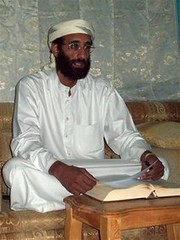
    WASHINGTON — The Obama administration has taken the extraordinary step of authorizing the targeted killing of an American citizen, the radical Muslim cleric Anwar al-Awlaki, who is believed to have shifted from encouraging attacks on the United States to directly participating in them, intelligence and counterterrorism officials said Tuesday.

    Mr. Awlaki, who was born in New Mexico and spent years in the United States as an imam, is in hiding in Yemen. He has been the focus of intense scrutiny since he was linked to Maj. Nidal Malik Hasan, the Army psychiatrist accused of killing 13 people at Fort Hood, Tex., in November, and then to Umar Farouk Abdulmutallab, the Nigerian man charged with trying to blow up a Detroit-bound airliner on Dec. 25.

    American counterterrorism officials say Mr. Awlaki is an operative of Al Qaeda in the Arabian Peninsula, the affiliate of the terror network in Yemen and Saudi Arabia. They say they believe that he has become a recruiter for the terrorist network, feeding prospects into plots aimed at the United States and at Americans abroad, the officials said.

    It is extremely rare, if not unprecedented, for an American to be approved for targeted killing, officials said. A former senior legal official in the administration of George W. Bush said he did not know of any American who was approved for targeted killing under the former president.

    But the director of national intelligence, Dennis C. Blair, told a House hearing in February that such a step was possible. “We take direct actions against terrorists in the intelligence community,” he said. “If we think that direct action will involve killing an American, we get specific permission to do that.” He did not name Mr. Awlaki as a target.

    The step taken against Mr. Awlaki, which occurred earlier this year, is a vivid illustration of his rise to prominence in the constellation of terrorist leaders. But his popularity as a cleric, whose lectures on Islamic scripture have a large following among English-speaking Muslims, means any action against him could rebound against the United States in the larger ideological campaign against Al Qaeda.

    The possibility that Mr. Awlaki might be added to the target list was reported by The Los Angeles Times in January, and Reuters reported on Tuesday that he was approved for capture or killing.

    “The danger Awlaki poses to this country is no longer confined to words,” said an American official, who like other current and former officials interviewed for this article spoke of the classified counterterrorism measures on the condition of anonymity. “He’s gotten involved in plots.”

    The official added: “The United States works, exactly as the American people expect, to overcome threats to their security, and this individual — through his own actions — has become one. Awlaki knows what he’s done, and he knows he won’t be met with handshakes and flowers. None of this should surprise anyone.”

    As a general principle, international law permits the use of lethal force against individuals and groups that pose an imminent threat to a country, and officials said that was the standard used in adding names to the list of targets. In addition, Congress approved the use of military force against Al Qaeda after the Sept. 11, 2001, terrorist attacks. People on the target list are considered to be military enemies of the United States and therefore not subject to the ban on political assassination first approved by President Gerald R. Ford.

    Both the C.I.A. and the military maintain lists of terrorists linked to Al Qaeda and its affiliates who are approved for capture or killing, former officials said. But because Mr. Awlaki is an American, his inclusion on those lists had to be approved by the National Security Council, the officials said.

    At a panel discussion in Washington on Tuesday, Representative Jane Harman, Democrat of California and chairwoman of a House subcommittee on homeland security, called Mr. Awlaki “probably the person, the terrorist, who would be terrorist No. 1 in terms of threat against us.”

  • Sony Wireless Chip Connections: No More Wires, No More Pins [Guts]

    Connecting devices can take hundreds of pins, which is a lot of real estate. That’s one reason why Sony’s new wireless chip technology is so exciting—a circuit board free of clutter could be here in just three years. More »


  • Remember Chris Hani in 2010: Waging a Relentless Struggle Against Corruption!

    Red Alert

    Remember Chris Hani in 2010: Waging a relentless struggle against corruption!

    29 March – 1 May: 34 days of activism against corruption

    Blade Nzimande, General Secretary

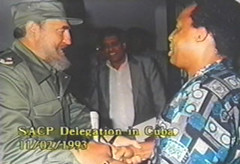
    The SACP Politburo has declared the 29 March to May Day 2010 a period within which to intensify our campaign against corruption, beginning with our highly successful seminar against corruption on 29 March 2010 in Braamfontein and culminating on 1 May 2010, the workers’ historic May Day. This is the 34 Days of Activism against corruption!

    The end of the 34 days of activism does not mark the closure of the campaign, but is only a period during which we heighten mass awareness and lay the foundations for sustained mass mobilization thereafter.

    We must carry this message of the fight against corruption into every voting district, municipal ward, workplace, community and into all corners of our country, reaching out to the workers, the poor, our youth, women, traditional leaders. Let every SACP branch, district and province ensure that we have an explosion of red forums and red cards against corruption in every locality and workplace where the workers and the poor are!

    In all this we are informed by our own analysis, and indeed by that of the alliance as a whole, that corruption currently poses one of the most serious threats to the consolidation and deepening of the national democratic revolution.

    It is against this background that we must locate the commemoration of the 17 anniversary of the assassination of our late General Secretary, Cde Martin Thembisile ‘Chris’ Hani.

    The SACP, joined by its alliance partners, will over the next of couple of weeks be holding commemorative events, starting with a gathering at the graveside, and followed by a number of other important events.

    This coming Saturday we will also be joining the Hani family in the unveiling of the tombstone of the late Nomakhwezi Hani, daughter of Cdes Chris and Limpho Hani.

    Let’s do it like Chris, let’s remain focused

    The principal challenge of the national democratic revolution in this conjuncture is to remain focused on the key strategic objectives of the revolution. Cde Chris, throughout his life, understood the different challenges facing our movement in different conjunctures, and threw in all his energies into those conjunctural challenges.

    When our movement launched the armed struggle in the early 1960s, cde Chris joined our glorious army, Umkhonto WeSizwe at a very young age and dedicated the rest of his life into this. Indeed there were many distractions in that period, including from those who were doubtful about the viability of an armed struggle in South Africa. When the movement launched the Wankie-Sipolile campaign Cde Chris was amongst the first to join.

    When we embarked on negotiations, despite some doubts from amongst many of us, including Cde Chris himself, about some of the modalities of those negotiations, he led the SACP delegation to the CODESA talks with energy and enthusiasm. At the same time during this period, he also dedicated his energies into building self-defence units and joined in the wave of mass and worker mobilization of the early 1990s. In addition he dedicated a lot of time into organizing in the rural areas, informed by the dangers of a struggle that has a predominantly urban bias.

    There are a number of things that can easily distract us during this period. Our primary task at the moment is to transform the current growth path and break the back of the colonial type economic trajectory so that we can have a new, developmental path capable of meeting the needs of millions of our people.

    Within this context we also need to mobilize the workers and the poor to be at the centre of the realization of the 5 key priorities of government. Just like during the negotiations period where mass mobilization was the necessary foundation for driving forward the negotiations process, today, government alone, without sustained mass mobilization will not be able to achieve the key priorities of the ANC-led alliance.

    The last ANC NEC meeting, preceded by an important bilateral with the SACP, took important resolutions on many issues that had the potential to derail us on our key revolutionary objectives, including public spats, insults and premature pronouncements on our forthcoming 2012 congresses. We must build on this momentum by ensuring that we mobilize to focus on the key strategic and programmatic issues facing our movement. This is a lesson from Cde Chris’ exemplary life, staying focused.

    Of late, our detractors are trying to divert our energies by claiming racial tensions in the wake of the murder of the AWB leader, Eugene Terreblanche and exaggerating the meaning of some of our liberation struggle songs.

    The SACP strongly condemns the opportunistic grandstanding by Helen Zille by trying to escalate these matters to the point of seeking an urgent meeting with the President. We wish the ANC can tell Zille where to get off and expose her opportunism, as the President has already dealt with these matters adequately. We must not allow the office of the President to be used to seek cheap political publicity from parties that have no interests of the overwhelming majority of our people.

    The SACP also wishes to reiterate its support for the ANC’s actions to challenge the High Court ruling about some of our liberation struggle songs. The courts must not allow themselves to be used in attempts to rewrite our history in favour of those who benefitted immensely from the apartheid era, including elements that were in the forefront of sustaining the criminal apartheid regime. Our songs are not just about our past, but they are also about today going into the future. These songs are about us, about our dignity, about who we are and what we want to be!

    Remember Chris Hani: Escalate the fight against corruption

    During this period of 34 days of activism against corruption we will be commemorating a number of very significant events – the 17th anniversary of the assassination of our late General Secretary, Cde Chris Hani, on 10 April 2010, our Freedom Day on 27 April 2010, a day extracted from the apartheid regime in the wake of the assassination of Cde Hani, our national day of action against corruption in KZN on 30 April, all culminating on May Day 2010.

    All the above activities are also inspired by President Zuma’s declaration of 2010 as the year of action. Let us make sure that, in line with this call, let us also make 2010 the Year of Action against Corruption.

    Cde Hani, amongst his many roles and achievements in the liberation struggle, was a principled and consistent fighter against corruption. In the early exile years he co-signed a memorandum sent to the leadership of the ANC complaining and pointing out, amongst many others, creeping corrupt practices and patronage networks within our own movement. This memorandum, amongst other things, led to the convening of the first ANC conference since its banning in 1960, the famous Morogoro Conference in Tanzania.

    Were Chris Hani alive today he would have been in the forefront in the struggle against corruption and tenderpreneurship!

    Whilst the struggle against corruption should in the current period be led by the ANC, the SACP will nevertheless be expected to play a special vanguard role in this regard. This is because the SACP is best placed to articulate the capitalist foundations of all corruption. And there is no other political formation in our country today that is best capable to articulate this reality, other than the SACP.

    The struggle against corruption cannot be separated from a struggle against capitalism and its corrupting ideology and practices. The very existence of a system which allows a small elite to exploit workers in the private accumulation of wealth, instead of societal accumulation of wealth to be shared amongst all, creates opportunities for corruption.

    Therefore a struggle against corruption must also be a struggle against capitalism and its market. This is what Cde Chris lived and died for. In his memory and in his name, the SACP will be escalating its mobilisation to fight corruption wherever it occurs, whether in the public or private sector.

    The SACP is not the only political formation, or the only organization concerned about threat posed by the scourge of corruption to the attainment of a better life for all, but that there are many citizens and organizations out there who share our outrage at the pillaging of resources and theft, thus depriving the workers and the poor of our country what is due to them. That is why we have taken the initiative to organise the widest range of forces opposed to corruption even if they may not share all of our ideological perspectives.

    The working class as the vanguard of the struggle against corruption

    The working class, by virtue of its revolutionary potential and traditions, is best placed to be at the head of the various forces fighting against corruption. It is the working class and the poor that stands to lose the most in the pillaging of public and private resources. Its own jobs and other means of livelihood are at stake.

    The working class also has a presence in both private companies, public institutions and in the state in particular. It can act as the eyes and ears of the whole population, and indeed it must act as such. Let us follow the example of unions like SATAWU, which blew a whistle on potential corruption at SAA. It is the revolutionary duty of the working class fight corruption as a necessary struggle to defend, consolidate and deepen the national democratic revolution.

    The media tends to foster the idea that corruption is more rife in the public sector than in the private sector or that corruption in the public sector is more serious than corruption in the private sector. This is of course not true!

    There is also large-scale corruption in the private sector, except that it is often ignored or be called by a respectable and seemingly innocuous description ‘white collar crime’. Crime and corruption has no colour, it is just crime.

    It is the working class that is best placed to confront corruption in both the public and private sectors simultaneously.

    In the coming May Day the SACP will be calling upon the organised working class in particular to intensify its struggles against corruption.

    The struggle against corruption must be intensified as we intensify the struggle against labour brokers and price-fixing. Corruption, on the one hand, and labour brokerage and price-fixing, on the other hand, are not two separate things, but two sides of the same coin.

    What is to be done?: 2010 the year of action against corruption

    The SACP calls upon all our people and organisations opposed to corruption to develop a mass movement to defeat the scourge. This must include the following:

    -mobilise in their own localities to expose all forms of corruption, and broaden the scope of CPF to deal with matters of corruption as well

    -Strengthen the progressive labour movement to build its capacity to fight corruption

    -Call upon all public and private institutions to develop clear anti-corruption strategies

    -Government tender processes to be more transparent through the publication of those shortlisted and awarded tenders in order to allow for public comment as well as prevention of the same culprits getting tenders all the time

    -Prevent the tenderisation of the state by ensuring that where community organisations are able to benefit directly from government programmes these should not always be turned into tenders often grabbed by ‘middlemen’, but instead to be given directly to organised communities

    -Mobilisation of the youth in particular to fight against corruption as it is targetted by tenderpreneurs, druglords and ‘get rich quick’ schemes aimed at corrupting our young people and promises of short cuts to wealth.

    Acknowledge and honour the men and women in both the public and private sectors who hate and act to expose corruption and are only interested in serving their people honestlyIn the public service in particular we can highlight and salute the role of the thousands of public servants who do their work honestly and are totally dedicated to serve our people, whatever it takes. Similarly in the private sector there are many workers and professionals who are only interested in doing an honest and good day’s work.

    We must strengthen the capacity of our entire criminal justice system, including SARS and Chapter 9 institutions to fight the scourge of corruption.

    Must call for action against those found with their fingers on the till, even if they are within our own ranks. We must protect our organisation from being refuges for the corrupt!

    Working together we can end corruption!

    The SACP says: a red card to corruption!

    Asikhulume!!
  • April 2010 Accutane Update: More Medical Evidence Follows A Large Trial Verdict For Drug Injury Victim

    New Study Finds Increased Risk Of Developing Ulcerative Colitis; New Jersey Jury Decides Accutane Caused Man’s Inflammatory Bowel Disease

    (Posted by Tom Lamb at DrugInjuryWatch.com)

    In the first quarter of 2010 there were two significant developments concerning the acme medication Accutane (isotretinoin).

    As general background, in June 2009 the drug company Roche Holding AG announced that Accutane will no longer be available to American patients.  The apparent reasons for this June 2009 Accutane recall are loss of market share and mounting personal injury lawsuits. 

    As regards what has been happening with Accutane in 2010, we start with the legal realm.

    In mid-February 2010 a New Jersey state court jury decided that Roche must pay $25.16 million in damages to Andrew McCarrell, a former user of its Accutane drug who blamed the acne medicine for his inflammatory bowel disease (IBD).  Mr. McCarrell developed his IBD after taking Accutane for acne in 1995; he needed five surgeries, including one to remove his colon.

    As some may recall, in May 2007 a New Jersey state court jury handed down a $2.619 million verdict in favor of Mr. McCarrell.  A New Jersey appeals court subsequently overturned that verdict and ordered a retrial.  It was this retrial, or second trial, in February 2010 that resulted in the $25.16 million award to McCarrell.

    We move, next, to the medical developments regarding Accutane and its active ingredient, isotretinoin.

    By means of an April 6, 2010 article, “More evidence ties acne drug to bowel disease”, we learned about a recent medical journal report about a study which found that patients on Accutane or isotretinoin were four times more likely than non-users to develop ulcerative colitis within a year.  From this April 6 Reuters Health article we get this summary:

    Reporting in the American Journal of Gastroenterology, researchers say that the risk of any one isotretinoin user developing ulcerative colitis is “likely quite small.”

    However, the findings do strengthen the evidence of a cause-and-effect relationship between the acne drug and inflammatory bowel disease (IBD) — a group of digestive disorders that includes ulcerative colitis and Crohn’s disease….

    [Roche] has maintained that there is no strong evidence that the acne drug triggers IBD. Between 1997 and 2002, 83 cases of IBD among isotretinoin users were reported to the U.S. Food and Drug Administration, but that does not prove that the drug itself is to blame.

    For the new study, Dr. Seth D. Crockett and colleagues at the University of North Carolina Chapel Hill tried to test the cause-and-effect relationship.

    Using a database of information from 87 U.S. health insurance plans, the researchers identified 8,189 people — mostly adults — who’d been diagnosed with IBD. They then compared each of those individuals with up to three other health plan members the same age and sex with no history of IBD.

    Of the nearly 8,200 IBD patients, Crockett’s team found, 24 had used isotretinoin in the year before diagnosis; and of the nearly 22,000 controls, 36 had used the acne drug over a one-year period.

    Overall, the researchers found, isotretinoin users were roughly four times more likely than non-users to have ulcerative colitis. There was no association, however, between isotretinoin use and Crohn’s disease.

    The report about this study regarding Accutane-related ulcerative colitis cases, “Isotretinoin Use and the Risk of Inflammatory Bowel Disease: A Case–Control Study”, was published online March 30, 2010 by the American Journal of Gastroenterology.

    We will continue to watch for legal and medical developments regarding serious side effects associated with the acne drug Accutane.

    ______________________________________________________________________________

    DrugInjuryLaw.com: Legal Information And News About Prescription Drug Side Effects


  • US Expands War Front Throughout the Globe

    US expands war front

    IN his latest column for the New Statesman, JOHN PILGER describes the increasing American war front across the world: from Afghanistan to Africa and Latin America. This is the Third World War in all but name, waged by the only aggressive “ism” that denies it is an ideology and threatened not by introverted tribesmen in faraway places but by the anti-war instincts of its own citizens.

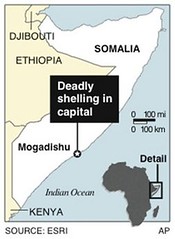
    HERE is news of the Third World War. The United States has invaded Africa. US troops have entered Somalia, extending their war front from Afghanistan and Pakistan to Yemen and now the Horn of Africa.

    In preparation for an attack on Iran, American missiles have been placed in four Persian Gulf states, and “bunker-buster” bombs are said to be arriving at the US base on the British island of Diego Garcia in the Indian Ocean.

    In Gaza, the sick and abandoned population, mostly children, is being entombed behind underground American-supplied walls in order to reinforce a criminal siege.

    In Latin America, the Obama administration has secured seven bases in Colombia, from which to wage a war of attrition against the popular democracies in Venezuela, Bolivia, Ecuador and Paraguay.

    Meanwhile, the secretary of “defence” Robert Gates complains that “the general (European) public and the political class” are so opposed to war they are an “impediment” to peace. Remember this is the month of the March Hare.

    According to an American general, the invasion and occupation of Afghanistan is not so much a real war as a “war of perception”. Thus, the recent “liberation of the city of Marja” from the Taliban’s “command and control structure” was pure Hollywood.

    Marja is not a city; there was no Taliban command and control. The heroic liberators killed the usual civilians, poorest of the poor. Otherwise, it was fake.

    A war of perception is meant to provide fake news for the folks back home, to make a failed colonial adventure seem worthwhile and patriotic, as if The Hurt Locker were real and parades of flag-wrapped coffins through the Wiltshire town of Wooten Basset were not a cynical propaganda exercise.

    “War is fun”; the helmets in Vietnam used to say with bleakest irony, meaning that if a war is revealed as having no purpose other than to justify voracious power in the cause of lucrative fanaticisms such as the weapons industry, the danger of truth beckons.

    This danger can be illustrated by the liberal perception of Tony Blair in 1997 as one “who wants to create a world (where) ideology has surrendered entirely to values” (Hugo Young, the Guardian) compared with today’s public reckoning of a liar and war criminal.

    Western war-states such as the US and Britain are not threatened by the Taliban or any other introverted tribesmen in faraway places, but by the anti-war instincts of their own citizens.

    Consider the draconian sentences handed down in London to scores of young people who protested Israel’s assault on Gaza in January last year. Following demonstrations in which paramilitary police “kettled” (corralled) thousands, first-offenders have received two and a half years in prison for minor offences that would not normally carry custodial sentences.

    On both sides of the Atlantic, serious dissent exposing illegal war has become a serious crime.Silence in other high places allows this moral travesty.

    Across the arts, literature, journalism and the law, liberal elites, having hurried away from the debris of Blair and now Obama, continue to fudge their indifference to the barbarism and aims of western state crimes by promoting retrospectively the evils of their convenient demons, like Saddam Hussein.

    With Harold Pinter gone, try compiling a list of famous writers, artists and advocates whose principles are not consumed by the “market” or neutered by their celebrity. Who among them have spoken out about the holocaust in Iraq during almost 20 years of lethal blockade and assault?

    And all of it has been deliberate. On January 22, 1991, the US Defence Intelligence Agency predicted in impressive detail how a blockade would systematically destroy Iraq’s clean water system and lead to “increased incidences, if not epidemics of disease”.

    So the US set about eliminating clean water for the Iraqi population: one of the causes, noted Unicef, of the deaths of half a million Iraqi infants under the age of five. But this extremism apparently has no name.Norman Mailer once said he believed the United States, in its endless pursuit of war and domination, had entered a “pre-fascist era”.

    Mailer seemed tentative, as if trying to warn about something even he could not quite define. “Fascism” is not right, for it invokes lazy historical precedents, conjuring yet again the iconography of German and Italian repression.

    On the other hand, American authoritarianism, as the cultural critic Henry Giroux pointed out recently, is “more nuance, less theatrical, more cunning, less concerned with repressive modes of control than with manipulative modes of consent.”

    This is Americanism, the only predatory ideology to deny that it is an ideology. The rise of tentacular corporations that are dictatorships in their own right and of a military that is now a state with the state, set behind the façade of the best democracy 35 000 Washington lobbyists can buy, and a popular culture programmed to divert and stultify, is without precedent. More nuanced perhaps, but the results are both unambiguous and familiar.

    Denis Halliday and Hans von Sponeck, the senior United Nations officials in Iraq during the American and British-led blockade, are in no doubt they witnessed genocide. They saw no gas chambers.

    Insidious, undeclared, even presented wittily as enlightenment on the march, the Third World War and its genocide proceeded, human being by human being. In the coming election campaign in Britain, the candidates will refer to this war only to laud “our boys”.

    The candidates are almost identical political mummies shrouded in the Union Jack and the Stars and Stripes.

    As Blair demonstrated a mite too eagerly, the British elite loves America because America allows it to barrack and bomb the natives and call itself a “partner”. We should interrupt their fun. — www.johnpilger.com

  • Legendary customizer George Barris kustomizes krazy Chevrolet Camaro

    Filed under: , , , , , ,

    George Barris and the 2010 Chevrolet “Spirit” Camaro – Click above for high-res image gallery

    If you happen to be in the greater Burbank area this weekend, you might want to swing by Community Chevrolet on Saturday. Legendary car customizer George Barris is scheduled to unveil his latest project – a kustomized 2010 Chevrolet Camaro 2SS RS – by driving the car straight to the dealer himself. Called the “Spirit” Camaro, the car is designed to be affordable for the working class Joe, meaning there aren’t any wild power adders under the hood.

    Instead, Barris focused on creating a unique exterior for the General Motors muscle car. The hood and front fenders all get a striking paint job in the buyer’s choice of either red or yellow, complete with pearl accents. The grille has been swapped for a new three-bar unit designed to give the car a classic feel. The look won’t be for everyone, but it could be your only chance to own an original Barris creation. You can order your very own through your local Chevrolet dealer, who will contact Community Chevrolet in turn.

    Barris made a name for himself by creating some of Hollywood’s most iconic cars and trucks. His work took center stage on shows like The Beverly Hillbillies, The Munsters and the original Batman. He even turned out the very first KITT for Knight Rider back before NBC had its way with the concept. So far, there’s no word on how many Spirit Camaros will be produced, or how much Barris will want for each one. Stay tuned.

    [Source: Barris Kustom Industries]

    Continue reading Legendary customizer George Barris kustomizes krazy Chevrolet Camaro

    Legendary customizer George Barris kustomizes krazy Chevrolet Camaro originally appeared on Autoblog on Wed, 07 Apr 2010 16:31:00 EST. Please see our terms for use of feeds.

    Permalink | Email this | Comments

  • Another fully-formed Windows Phone 7 app waiting for devices to arrive

    Lifeware Solutions is showing off its Windows Phone 7 version of their Deluxe Moon application which allows, according to Lifeware allows one to keep track of the moon and “discover amazing relationships”.

    Hopefully the company is just one of thousands of developers reading their apps for release at the same time as devices read market later this year.

    Read more about their current Windows Mobile freeware app here.


  • Another Verizon Nexus One teaser …

    Verizon Nexus One

    Sorry, don’t actually have launch information just yet for the Verizon version of the Google Nexus One, but we do have another indicator that it should be here any time now. Above is another one of those Verizon CelleBrite units with the Nexus One clearly listed. We’ll give  you more as soon as we can, but that’ll have to do it for now. Thanks, B!

  • Madigan takes slight jab at Giannoulias’ bank problems

    Posted by Rick Pearson and Kathy Bergen at 4:30 p.m.

    Powerful Democratic House Speaker Michael Madigan today had a bit of a chuckle at the expense of Democratic U.S. Senate nominee Alexi Giannoulias.

    Asked if the problems at the Giannoulias family-owned Broadway Bank would affect the candidate’s voter support in the Senate race, Madigan replied, “I’m glad I don’t have any deposits there.”

    Federal regulators
    have said the bank must be recapitalized or it could face a takeover
    this month. Giannoulias had touted his banking expertise in running for
    treasurer in 2006 in winning office and defeating a candidate in the primary who was backed by both Madigan and the Illinois Democratic Party.

    Despite the slight jab at the bank’s woes, Madigan noted he’s supporting Giannoulias in the November Senate election against Republican Mark Kirk, a five-term North Shore congressman.


    “I’m supporting all the Democratic candidates. (Giannoulias) has been a successful
    candidate in the past. You’ll recall he won a contested primary when he
    was elected as the treasurer,” said Madigan, referring to the March 2006 primary election.

    Madigan reserved harsher words for his foe Cook County Assessor James Houlihan. The speaker said the retiring assessor should “be a man” and accept responsibility for delayed property tax bills rather than accuse Madigan of political chicanery.

    Late last month, Houlihan blasted Madigan ally and Democratic assessor candidate Joe Berrios, who is currently a member of the Cook County Board of Review. Houlihan contended Berrios was slowing down work on the tax review panel to delay the delivery of property tax bills until after the Nov. 2 election so as not to anger voters seeing higher real-estate taxes.


    Higher tax bills are expected as a result of the end to a limit on property-tax assessments in the city this year. The tax cap also is being phased out in suburban Cook. The cap has have limited property-tax increases for many homeowners.


    But Madigan and Berrios have contended the delay in tax bills is due to delays in Houlihan’s own office involving property assessments.


    “I don’t believe in finger pointing. I don’t believe in that. So if there was something under my watch in the legislature that I’m responsible for, I stand up and take accountability,” Madigan said after a legislative hearing on McCormick Place. (You can read about that hearing by clicking here.


    “Mr. Houlihan ought to do what I do–he ought to look at the operations of his office,” Madigan said. “If there’s something amiss, if there’s something not being done properly, be a man, take the accountability, put the responsibility (where it belongs). He’s about 50 percent behind in the schedule in putting off assessments. I’m not responsible for that. He’s responsible for that. He ought to speak to that question.”

  • EPA wants to add chemicals to industry disclosure list

    From Green Right Now Reports

    The EPA  has proposed adding 16 chemicals that the agency considers eligible to become “reportable chemicals” to the Toxics Release Inventory (TRI) list — including some that wind up on smoked or grilled foods or in the air around incineration facilities.

    Inclusion in the toxics registry means that companies and industries using these compounds would have to disclose that they are using them, and how they are disposing of them, to the EPA, which in turn makes the information public. (See the TRI Explorer tool on the EPA website.)

    The TRI list exists to help  insure the safety of the public and the environment from needless or excessive exposure to chemicals used in industry. It was set up after industrial accidents, such as the Bhopal chemical leak of methyl isocyanate that killed thousands of people in Bhopal, India, according to the EPA history.

    The chemicals on the new list were selected for inclusion because they are likely carcinogens. Four of the 16 are polycyclic aromatic compounds (PACs), which are also known in many cases as Polycyclic Aromatic Hydrocarbons (PAHs), and include “chemicals that are persistent, bioaccumulative, toxic (PBT) and are likely to remain in the environment for a very long time,” according to the EPA.

    PACs  “are not readily destroyed and may build up or accumulate in body tissue”.

    People are exposed to these particular PACs, or PAHs, by breathing contaminated smoke or by eating grilled meats or other food with residue from smoke or incinerated coal or wood.

    The U.S. Health and Human Services Agency for Toxic Substances and Disease Registry reports that humans can be exposed these ways:

    • Breathing air containing PAHs in the workplace of coking, coal-tar, and asphalt production plants; smokehouses; and municipal trash incineration facilities.
    • Breathing air containing PAHs from cigarette smoke, wood smoke, vehicle exhausts, asphalt roads, or agricultural burn smoke.
    • Coming in contact with air, water, or soil near hazardous waste sites.
    • Eating grilled or charred meats; contaminated cereals, flour, bread, vegetables, fruits, meats; and processed or pickled foods.

    The Toxics Release Inventory includes nearly 650 chemicals at use at more than 22,000 industrial facilities in the U.S.; so this new group of chemicals would be part of a long list of potentially harmful chemicals that the federal government tracks.

    The list of 16 being proposed for inclusion on the Toxic Release Inventory will be considered during a 60-day public comment period. The proposed new chemicals are:

    1-Amino-2-4-dibromoanthraquinone

    2,2-bis(Bromethyl)-1-3-propanediol

    Furan

    Glycidol

    Isoprene

    Methyleugenol

    o-Nitroanisole

    Nitromethane

    Phenolphthalein

    Tetrafluoroethylene

    Tetranitromethane

    VinylFluoride

    1,6-Dinitropyrene

    1,8-Dinitropyrene

    6-Nitrochrysene

    4-Nitropyrene

  • Germany: A Historical Hotbead of Western Imperialism

    Germany: Hotbed of imperialism

    By Itai Muchena, in OREGON, USA
    Courtesy of the Zimbabwe Herald

    THE hodgepodge of geometric boundaries that today divide Africa into 50 plus irregular nations under Eurocentric subjugation all started in Berlin, Germany on November 15, 1884.

    The infamous Berlin Conference still remains Africa’s greatest undoing in more ways than one, where colonial powers superimposed their domains on the African continent and tore apart the social, political and economic fabric that held the continent together.

    By the time independence returned to Africa between 1956 and 1994, the African realm had acquired a colonial legacy of political fragmentation that could neither be eliminated nor made to operate wholly independent from the former colonial masters.

    Some Africans had been too much battered, some bruised, some undignified and others brainwashed so much that up to today, Africa is battling to remain united due to continued and uncalled for interference, at every opportunity, by the imperialist hawks.

    Today, the same Germany — the womb that gave birth to colonialism — is unashamedly hosting and developing AFRICOM, the United States of America superior military command formed to superintend on America’s milking of African resources, at the expense of not only Africa but other fair dealing countries of the world.

    There is no doubt that Germany is seeking re-colonisation of Africa, this time, creating space for its big brother, the United States of America.

    The giant military project is not only an affront to African democracy but an insult to African humanism as it seeks to reverse all the gains brought about by independence — from sovereignty to control of natural resources and self governance.

    Africa will not forget that in 1884 at the request of Portugal, German chancellor Otto Von Bismarck called together the major western powers of the world to negotiate questions and end confusion over the control of Africa. Africa itself was not invited because Europe believed Africans had no meaningful contribution to make towards shaping their own destiny.

    Bismarck saw an opportunity to expand Germany’s sphere of influence over Africa and desired to pitch Germany’s rivals to struggle with one another for territorial integrity. Today, current Chancellor Angela Mickel is playing exactly the same role, pitching America against other economic powers in a battle to control Africa’s strategic natural resources.

    Before the Berlin Conference 80 percent of Africa and its natural resources had remained under traditional and local leadership but thereafter the new map of the continent was superimposed over the one thousand indigenous cultures and regions of Africa. Concurrently, Africa’s wealth — as pronounced by its vast human and natural resource base — was appropriated by the colonisers.

    As a result, the new countries lacked and still lack rhyme or reason and divide coherent groups of people and merged together disparate groups that really did not get along.

    All in all, 14 countries were represented: Austria-Hungary, Belgium, Denmark, France, Germany, Great Britain, Italy, the Netherlands, Portugal, Russia, Spain, Sweden-Norway (unified from 1814-1905), Turkey, and the United States of America.

    France, Germany, Great Britain, and Portugal were the major players in the conference, controlling most of colonial Africa at the time.

    At the Berlin Conference the European colonial powers scrambled to gain control over the interior of the continent. The conference lasted until February 26, 1885 — a three-month period where colonial powers haggled over geometric boundaries in the interior of the continent, disregarding the cultural and linguistic boundaries already established by the indigenous African populace.

    By 1914, the conference participants had fully divided Africa among themselves into 50 countries.

    Great Britain targeted a Cape-to-Cairo collection of colonies and almost succeeded through its control of Egypt, Sudan (Anglo-Egyptian Sudan), Uganda, Kenya (British East Africa), South Africa, and Zambia (Southern Rhodesia), Malawi (Nyasaland), Zimbabwe (Northern Rhodesia), and Botswana. They also controlled Nigeria and Ghana (Gold Coast).

    France took much of western Africa, from Mauritania to Chad (French West Africa) and Gabon and the Republic of Congo (French Equatorial Africa).

    Belgium and King Leopold II controlled the Democratic Republic of Congo (Belgian Congo) while Portugal took Mozambique in the east and Angola in the west.

    Italy took Somalia (Italian Somaliland) and a portion of Ethiopia while Germany took Namibia (German Southwest Africa) and Tanzania (German East Africa). Spain claimed the smallest territory — Equatorial Guinea (Rio Muni).

    Today, Africa has stood firm against the hosting of AFRICOM and the same Germany has offered an alternative and will host AFRICOM until 2012, when it is envisaged the US would have found a suitable base in Africa.

    Sadc in particular and the African Union in general, have said no to this project but the Americans are not resting on their laurels. They are still working out ways of penetrating African governments in order to get a strategic African country to host AFRICOM.

    The truth, however, remains that once Africa allows the hosting of AFRICOM, it will have subcontracted all its powers to AFRICOM, to USA and its exploitative military ventures.

    After a review of numerous potential locations for the establishment of AFRICOM headquarters, US Defence Secretary Robert Gates has elected to keep the new command in Stuttgart, Germany at least for now, Pentagon officials say.

    ‘‘Secretary of Defence Gates decided to delay a decision on the permanent location of US Africa Command headquarters until early 2012,’’ said Defence Department spokeswoman Lt. Colonel Elizabeth Hibner, last week.

    Until then, AFRICOM’S headquarters will remain in Stuttgart, ‘‘the decision has been delayed until US Africa Command has more experience in working with partner nation militaries and thus a better understanding of its long-term operational requirements,’’ wrote Hibner.

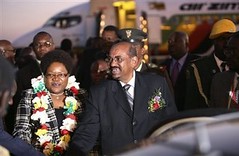
    After fierce resistance from Africa, which should continue through experienced leaders like President Mugabe, Hosni Mubarak, Omar al-Bashir, Teodoro Obiang Nguema Mbasogo and new but progressive thinking ones like Jacob Zuma, Bingu waMutharika and Rupiyah Banda, AFRICOM seems to have hit a brick wall on finding an African host.

    ‘‘We certainly looked at a number of alternatives,’’ Pentagon spokesman Bryan Whitman said in a news release. ‘‘But at the end of the day, it was determined that for now, and into the foreseeable future, the best location was for it to remain in its current headquarters.’’

    In Stuttgart, AFRICOM officials say the focus now is on building up the new command.

    Though it was officially activated on October 1, there has been a steady stream of speculation worldwide about where AFRICOM would eventually set up its headquarters. Potential sites have ranged from Charleston, SC, to Morocco and Monrovia, to other locations in Europe such at Rota, Spain.

    ‘‘It’s become a phenomenon that the discussion of AFRICOM always hinges on where it’s going. Where we’re going is here (Stuttgart). What’s important for us is to build the command,’’ said Vince Crawley, AFRICOM spokesman. ‘‘Looking for office space stateside is something that is well-intended, but something way down the road.’’

    But whether the Pentagon’s latest statement on AFRICOM will quell the speculation remains to be seen. For instance, despite repeated statements that the initial plan to place AFRICOM headquarters in Africa was shelved, reports routinely crop up asserting otherwise. The most recent case occurred a couple weeks ago with Moroccan media outlets reporting that a deal was struck for AFRICOM to locate its headquarters in the port city of Tantan.

    It will be folly for Africa to think that AFRICOM commanders have rested their case on finding a compliant African country to host them because keeping the new command in Stuttgart will allow it to gain greater operational experience and foster relationships with both African and European partners.

    Once AFRICOM moves to African soil, Africa is doomed and finished. It will have to religiously follow the American exploitation gospel and the founding fathers of the African revolution will turn and wince in their graves from anger and disappointment.

    –Itai Muchena is reading politics at Ohio State University, US. He can be reached on: [email protected]

  • Skyfire puts BlackBerry development on pause, focuses on Android

    You might want to take a seat, BlackBerry fans. Remember all those pictures and details about the BlackBerry port of the Skyfire browser that leaked way back in April of last year? Those are all you’re going to get for a while.

    Skyfire CEO Jeff Glueck has just stepped out to announce that development of the BlackBerry port has been put on an indefinite hiatus, with the Android port becoming their primary focus for now.

    “Why?! Why?!”, cry BlackBerry users everywhere.

    Here’s why: Skyfire feels like they can develop more efficiently on Android than they can on BlackBerry OS (gently calling the latter “not as favorable for cutting-edge application development”), and that Android is simply a more viable platform at the given time. Given the fact that Android is exploding onto more and more handsets each week and RIM is already working on their own browser that touts many of the same data-optimizing features that Skyfire would (save, presumably, the Flash/Silverlight/etc. support that really define Skyfire) have, we can’t say we disagree.

    All hope is not lost, however; Glueck says they’ll be keeping a watchful eye on the upcoming release BlackBerry OS 6.0 later this year, with hopes of continue developing on the platform at a later date.