<ahref="http://blog.heritage.org/wp-content/uploads/GM-dealer.jpg"> </p>Its been nearly a year since the Obama administration took the reins of General Motors, and if todays headlines are any indication, things arent looking good for the troubled Detroit auto maker.
First off, GM just isnt making money. <ahref="http://www.washingtonpost.com/wp-dyn/content/article/2010/04/07/AR2010040701922.html">It posted a $4.3 billion loss for the second half 2009 far from profitability, far from a government-led turnaround. The company claims it has a chance of achieving profitability in 2010, but keep in mind that GM is $50 billion in the hole to the American taxpayers, who paid for a bailout in 2009.
And those taxpayers cant recoup their losses until the U.S. investment in GM is sold, which wont happen until someone actually wants to buy the company. With $4.3 billion in losses, dont expect buyers to come running anytime soon.
<spanid="more-30760"></span>Theres more bad news for GM. The company is <ahref="http://www.nytimes.com/2010/04/07/business/07cars.html?ref=todayspaper">saddled with massively underfunded pension plans, and it needs to come up with $12.3 billion in payments into the plan within the next five years. According to a government report released yesterday, its uncertain whether GM will be able to make that payment. Thats not a hard conclusion to reach given todays reported $4.3 billion in losses.
More bad news for Americans. <ahref="http://www.nytimes.com/2010/04/07/business/07cars.html?ref=todayspaper">As The New York Times reports, If either companys plan must be terminated, the government would become liable for paying benefits to hundreds of thousands of retirees. Thats 650,000 GM retirees, to be exact.
But wait, theres more. Enter the United Auto Workers, <ahref="http://detnews.com/article/20100407/AUTO01/4070347/UAW-suit-says-GM-owes-$450M#ixzz0kQKZGHMT">which yesterday sued GM, claiming that the company owes a union-run health care fund $450 million.
If you add it all up, that makes for a lot of financial obligations for a company that is already well below water, to the depths of about 20,000 leagues under the sea.
So what happens if GM doesnt make a profit and all of these liabilities end of sinking the company? More from The New York Times on the government report issued Tuesday:
In the event that the companies do not return to profitability in a reasonable time frame, Treasury officials said that they will consider all commercial options for disposing of Treasurys equity, including forcing the companies into liquidation.
In other words, back to square one an unprofitable company overburdened with expenses, in need of a government bailout.
Last year, we wrote that the federal governments ownership of GM <ahref="http://www.heritage.org/Research/Reports/2009/05/General-Motors-Bankruptcy-and-Nationalization-Exit-Strategy-Needed">was the wrong approach, and that it necessitated an exit strategy for the American taxpayer. Given where GM is now, an exit strategy would have been a good idea.
In April 2009, <ahref="http://www.cbsnews.com/8301-503544_162-4979228-503544.html">President Barack Obama said, “I don’t want to run auto companies. … I’ve got more than enough to do.”
At the time, GM was broken. Under President Obama’s leadership, the American taxpayer bought it. And all indications are that its not getting fixed anytime soon. Buyers remorse, anyone?
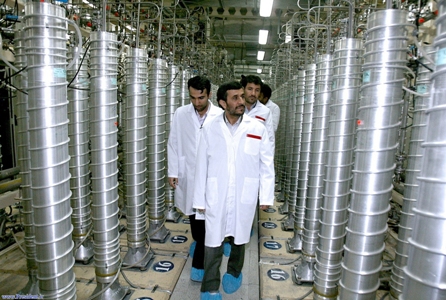 </p>In <ahref="http://article.nationalreview.com/430547/nuclear-posturing/nro-symposium">NROs symposium today, Clifford May notes that Irans leaders will view the Nuclear Posture Review as one more sign of a weakening America, and Jamie Fly argues that our self-imposed nuclear limitations will not convince Iran or North Korea to change their behavior.
 </p>In 2008, on average only 26 percent of all non-consensus <ahref="http://www.state.gov/p/io/rls/rpt/c29990.htm">votes in the U.N. General Assembly coincided with the United States’ votes. However, when the nations are categorized in terms of economic freedom, as measured by the <ahref="http://www.heritage.org/Index/">2010 Index of Economic Freedom,*a trend appears – those nations with better freedom scores cast votes that coincide with the U.S. at a higher rate.
 </p>Obamacare was sold as a way to improve benefits and expand coverage.* But it doesnt seem to be panning out that way.
 </p>The taxpayer-funded auto bailout was largely the result of a number of poor decisions made by General Motors and Chrysler. Along with the excessively high labor and legacy costs, Detroit’s dependence on big, non-fuel-efficient vehicles was its own doing and at one time, was a very profitable strategy. Detroit struggled to make competitive fuel-efficient vehicles that rivaled its Japanese counterparts. The government stepped in and took a controlling stake in General Motors and, more recently, attempted to provide more regulatory stability by mandating stricter fuel efficiency standards. The Environmental Protection Agency and National Highway Traffic Safety Administration <ahref="http://www.washingtonpost.com/wp-dyn/content/article/2010/04/01/AR2010040101412.html">announced fleet-wide requirements of 34.1 miles per gallon 2016 for all automakers in the U.S.


 With Apple due to reveal the next generation of the iPhone operating system

