Blog

  • iPad Keynote: A Better Mistress Than Wife

    I don’t give a ton of presentations, but I’m something of a presentation junky — one of my favorite web sites is Presentation Zen, where the author gives lessons on design theory. Therefore, I’ve been looking forward to iPad Keynote since Phil Schiller gave his dog and pony show.

    Keynote for the iPad is a decent companion program if you need to give light presentations or make light edits while on the road. As a sole means of creating presentations, I found it lacking.

    The Art of the Transfer

    Currently, getting files to and from your iPad is needlessly difficult. To get an already-created presentation from your computer to your iPad, you need to either sync it via iTunes, or send it to yourself via e-mail; there’s no mountable file-system or iDisk support. Also, if you make changes to the presentation, you’ll need to export and re-download it via iTunes; it will not auto-update your local copy. Also, you can only export in Keynote and PDF; you cannot export your slides as a PPT file.

    I had decent luck with transferring Keynote and PowerPoint presentations. Only one (a Keynote presentation, oddly) had any sort of problems; the others came in just fine.

    The problematic Keynote presentation I expected to have problems with. I use a lot of third-party fonts in my presentations, and since you are limited to what Apple provided, custom fonts will be substituted. Below is what the title page looks like in OS X Keynote and iPad Keynote.

    Title Slide From iPad

    Title Slide From OS X

    Those weren’t the only issues I had. About 20 of my slides were charts, and the slides were designed to transition so the pie chart was the same size and in the same place on every side. To ensure this, when I created the presentation, I just duplicated the first slide with the chart and changed the numbers. When I gave the presentation on my MacBook, it worked perfectly. Unfortunately, on the iPad that was not the case and on some slides the chart size changed ruining the effect — the other common elements displayed correctly. The iPad’s resolution is 4:3 and I built the presentation for a 16:9 widescreen display.

    I also had some odd issues with graphics. I tend to have a lot of full-frame images (where the image takes up the entire slide). On the presentation I had problems with, on some slides the graphic was pushed-up, requiring me to reposition them. Other presentations with full-frame graphics worked OK, so I might just have one Cursed Presentation.

    Bottom line, the simpler the better when transferring presentations to the iPad. If you have a graphic-intensive talk, be prepared to spend some time double-checking it. In fact, if you’re going to be using your iPad to give a talk, you are going to want to take its limitations into account when you design it.

    The Art of Giving

    With the optional VGA cable you can hook your iPad up to a projector or a display. In my limited testing (comprised of hooking it up to an LCD display) it worked very well. The iPad seemed to auto-detect the resolution and the slides displayed as well as they did on the iPad screen. However, while the auto-detection looks OK, I did notice some distortion of pie charts on the display; they were stretched horizontally (this could be due to the conversion from widescreen to 4:3, and back to widescreen again.

    The presentation tools when connected to an external source are limited. There is no presenters view or notes view. All you see is a black screen with a slide count. There is a pop-up display that will let you chose a starting point, but there’s no way to see what the next slide is. The Apple Remote also doesn’t work with it, so you’re pretty much chained to the podium and can’t move around. Could you see Steve Jobs being restricted to giving an iPad-presentation without free range of the stage?

    The lack of a presenter’s view and notes is a deal-breaker for me. Unless you have an excellent memory, use note cards, or just read your slides aloud Keynote for the iPad is of limited value for giving presentations. Also, since the only way to see your slides is on the projector, you’re going to be spending more time facing the screen than your audience.

    The Art of Making

    Again, the simpler the presentation, the easier time you will have creating presentations. The good news is, Apple provided a decent set of templates that closely mimic the templates you get in the desktop version of Keynote. The bad news is, there’s no way for the iPad to recognize your corporate templates as real templates; the closest you can come is importing the template and copying it every time you want to create new talk.

    One nice touch is when you use an Apple-supplied template and add a slide, you’ll get a pop-up of slide types to use that match your template — for example, a slide with bullet lists, or a slide with just a text box.

    I found Keynote to have a steeper-learning curve than I’m used to for Apple — I needed to read the help to learn how to add a text box. I found myself going, “OK, how the heck do you do this?” frequently. Some tasks seemed needlessly complicated. There does not appear to be an easy way to customize a wedge color; I had to use the column with the color I wanted. Also, apparently no one at Apple is color blind, because I couldn’t view color names.

    The Art of Closing

    Is it possible to use your iPad to create and give presentations? Yes.

    Is it possible to create and give amazing, TED-quality presentations on your iPad? Not, really.

    If you’re willing to trade some features and inconveniences to save carrying around a laptop, you might get a lot of use. There was a point in my testing when I “got” the potential of this tool. I was scouring the halls at work trying to find a free conference room to test out the projector. I’ve done a version of this trip before, juggling a laptop, power cables, etc.. Now I just had a computer the size of a pad of paper. Future versions of Keynote, or a competing product that address the issues I encountered could turn the iPad into a killer presentation tool.

    As it stands, Keynote for the iPad will let you give an adequate presentation. It will not let you give an amazing performance.

  • Rhapsody Now Connecting on Android

    When it comes to mobile music subscription options, there’s already quite a few — Pandora, Slacker, and Thumbplay all come to mind. And now, Rhapsody joins the club on Google Android handsets with a new beta client available in the Android Marketplace. The software is a free download, but does require a monthly fee for service. Rhapsody recently restructured its plan offerings and prices, so $9.99 a month gets you service to both computers and handsets. There’s also a free 7-day trial for new subscribers.

    For Android devices, the service offers unlimited access to over 9.5 million song tracks, but only while connected to the web. Unlike services that support offline music caching, this iteration of Rhapsody doesn’t. That’s not unlike streaming Pandora music, but Slacker does support offline playback for Android. However, a “download subscription music to your mobile device” feature is coming soon, says Rhapsody’s site. I can’t comment on the service, even though I’ve downloaded the app to my Nexus One — for some reason, I can’t create a new account because the email address I’m using is already registered with Real. And yet, when I try to have to the password reset sent to that email, it’s not an address on record. And so the beta goes…

    I’m pretty partial to Pandora, but I’m sure each service has its fans. What’s your favorite and why?

    Image courtesy of Cnet

    Related research on GigaOM Pro (sub req’d):

    Forget Syncing: Let’s Put Music In the Cloud!

  • Simon Singh has appeal! | Bad Astronomy

    Simon Singh – the journalist who has been sued for libel by the British Chiropractic Association for having the temerity to write that they happily promote bogus remedies — has won a big victory in the UK: he has the right to argue that his statement was opinion, and not a statement narrowly (and, in my opinion, incorrectly) defined by a judge.

    Rebecca has the lowdown at Skepchick (some NSFW, but totally funny, language there), as does Steve at Neurologia. While this doesn’t mean Simon has won the case, it does mean he can continue his arguments, when before he had been stopped cold by a judge.

    The BCA is looking ever-more ridiculous, mean, and venal in this case. We already know that many of the claims made by chiropractors and by the BCA specifically are totally wrong. The heat is on these guys. Now we can hope that the BCA will be handed their heads in this case… and if we really grab the brass ring, the UK’s awful libel laws will get reformed, too.

    We’re on the verge of a huge, huge win here. It hasn’t happened yet, and there is much to do. But the light is there, on the horizon.


  • Sprint Releases Their Own Branded Football App


    As some of you may already know, Sprint recently lost their title as the NFL’s official wireless service sponsor to Verizon. With the NFL draft just a few days away, many were wondering what the carrier would do to as a reaction. Sprint began rolling out text messages this week to some of their Android users advising them of a new Sprint Football Live application. Whereas previous iterations of their NFL Live apps were wrappers and portals for the official (mobile) website, this version seems to offer more unique mobile content with Sprint branding. As you can see in the pictures the app provides draft information, a mock draft, and access to exclusive blogs from around the internet.

    Please note that this only available to customers on Sprint’s network. As for now this means Hero and Moment owners are the only folks able to take advantage of the app. If you happen to be among the lucky few, point your Android browser to http://gospv.com/sfls or run the preloaded older NFL Live app for an update prompt.


    Source: AndroidCentral

    Might We Suggest…

    • Sprint NFL Mobile Live Gives You Football On the Go
      Are you an NFL fan? Are you frustrated about not being able to get the latest news and information about the games being played simply because you are away from a television? Afraid that if you went …


  • Chevrolet anuncia edição limitada da réplica do Camaro Pace Car da Indy 500

    Réplica do Pace Car da Indy 500

    Para os fãs das 500 milhas de Indianápolis e do Camaro, essa é uma boa chance de adquirir uma réplica do Pace car da Indy 500, modelo que vai ter sua edição limitada em andamento. Segundo a Chevrolet, apenas 200 unidades da réplica serão construidas e vão ser vendidas nas melhores concessionárias, segundo o relatório de vendas de 2009.

    Curiosamente, essa é a primeira vez que um modelo de Camaro originado do Pace Car da Indy 500 vai ser construído pela chevrolet. A General Motors já havia construído réplicas de pace cars em 1969, 1982 e 1993, e a versão 2010 é baseada no Camaro 2SS, com um motor V8 de 400 cv e uma transmissão automática de seis marchas.

    Entre os detalhes do carro estão rodas de alumínio polido de 20 polegadas, faixas brancas, além da arroceria e do motor serem da cor laranja e o logo do evento das 500 Milhas de Indianápolis nas portas. O seu interior possui uma decoração luxuosa. O vice presidente da Chevrolet, Jim Campbell, aposta nessa edição do veículo, direcionada para os apaixonados pelas Indy 500 nos EUA (coisa que é muito comum por lá).

    Réplica do Pace Car da Indy 500
    Réplica do Pace Car da Indy 500Réplica do Pace Car da Indy 500Réplica do Pace Car da Indy 500Réplica do Pace Car da Indy 500Réplica do Pace Car da Indy 500Réplica do Pace Car da Indy 500Réplica do Pace Car da Indy 500Réplica do Pace Car da Indy 500

    Via | Inside Line


  • Android Apps For The Home Cook, Part I

    2010_04_07-Android.jpgIn one of my previous posts about iPhone apps for home cooks, a reader commented and mentioned it would be nice to see a similar roundup of Android apps. I thought that was a great idea, so here is Round One of Android apps for the home cook!

    Read Full Post


  • iPad Etiquette: The Official FAQ [Advice]

    Etiquette on the iPad is white space on the map. It’s not a smartphone. It’s not a laptop. It’s something new. As early adopters, the opportunity to define proper etiquette is ours. More »


  • Location Strategies for Agglomeration Economies

    Published: April 7, 2010
    Paper Released: February 2010
    Authors: Juan Alcácer and Wilbur Chung

    Executive Summary:

    Locations thick with similar economic activity expose firms to pools of skilled labor, specialized suppliers, and potential inter-firm knowledge spillovers that can provide firms with opportunities for competitive advantage. While certainly attractive, the lure of these agglomeration economies varies. Some firms should be wary of aiding their competitors by co-locating with them, for example, because each “agglomeration economy” differs in how readily competitors can leverage contributions made by others. HBS professor Juan Alcácer and Wilbur Chung of the University of Maryland develop a framework to better understand how firms respond to agglomeration economies. Key concepts include:

    • Firms’ location choices balance the perceived risk of aiding competitors with a recognition that some agglomeration economies will be of limited use to others.
    • Firms, on average, place more value on pools of skilled labor and specialized suppliers than on potential knowledge inflows from competitors.
    • The priority placed on labor and suppliers persists even for industries that are more R&D intensive.
    • Economically larger firms are less attracted to industry employment, but more attracted to industry supplier activity.

    Abstract

    Geographically concentrated industry activity creates pools of skilled labor and specialized suppliers, and increases opportunities for knowledge spillovers. The strategic value of these agglomeration economies may vary by firm, depending upon the relative value of each economy, and upon firm and agglomeration economy traits. To better determine when a firm will be attracted to agglomeration economies, we develop a three-layer framework. The first layer assesses the relative importance of skilled labor, suppliers, and knowledge spillovers. The second layer considers whether firms can benefit from geographic concentration without co-locating. The final layer examines why some firms are more inclined to co-locate than others based upon firm and agglomeration economy traits. We test our framework on the U.S. location choices of new manufacturing entrants between 1985 and 1994 and find that firms are far more attracted to skilled labor and specialized suppliers than they are to potential knowledge spillovers, even in R&D intensive industries. We also find that leading firms will be more attracted to pools of labor, suppliers, and potential knowledge spillovers when their own contributions are less fungible, and cannot be easily leveraged for strategic advantage by proximate competitors.
    Keywords: agglomeration economies, location choice, firm strategy.
    38 pages.

    Paper Information

  • Fewer Babies Were Born in 2008 Because of Recession

    Fewer babies were born in 2008 than the prior year, and it appears to be linked to the recession, a new study shows.

    The number of births in 25 states where data was collected fell to 2.29 million in 2008, down from 2.33 million a year earlier, according to the Pew Research Center.

    The birth rate — the share of women between ages 15 and 44 who gave birth – also fell in 20 of the 25 states. The overall birth rate dropped 1.6% to 68.8 births per 1,000 women of childbearing age.

    The researchers relied on state level data to help parse the relationship between births and economic trends in the region. The 25 states surveyed account for 54% of all women of childbearing age in the U.S. and the same percentage of babies born annually.

    “The analysis suggests that the falloff in fertility coincides with deteriorating economic conditions,” the report says. “There is a strong association between the magnitude of fertility change in 2008 across states and key economic indicators including changes in per capita income, housing prices and share of the working-age population that is employed across states.”

    Arizona, for example, experienced the largest decline in birth rate: a 4.6% drop in 2008. Of the 25 states, it had the second largest decline in per capita income in 2007 and was listed sixth in terms of change in home prices.

    In contrast, North Dakota was one of the few states where the fertility rate rose. Its per capita income also grew the most and its foreclosure rate was the second lowest of the 25 states in 2007.

    The correlation, however, didn’t extend to fertility rates and state-level employment and unemployment rates.

    It’s not unusual for birth rates to dip during economic downturns and previous studies have shown that Americans have postponed having children because of this recession. “Over the past decade, birth rate trends roughly mirrored the nation’s economic ups and downs,” the report states. “Birth rates dipped slightly in 2001 and 2002, then began growing again in 2003 before peaking in 2007.”

    Nationally, the 2007 birth rate was the highest in nearly two decades. It began declining in 2008 and preliminary data for the first six months of 2009 indicates the trend continued last year as well.


  • Gerard: If Miners Were Union, They Could Have Refused Unsafe Work at Massey

    United Steelworkers President Leo Gerard talked to Ed Schultz last night and slammed Massey Energy and Don Blankenship for their negligence that led to the deaths of 25 miners in West Virginia.

    Gerard, whose union represents thousands of hard rock miners in the United States and Canada, said that the disaster “absolutely could have been prevented.” While Massey racked of hundreds of violations and millions in fines, Gerard said the company would rather pay the fines than care about the safety of its workers while noting that CEO Don Blankenship “promotes himself as a unionbuster.”

    “I can absolutely say that if these miners were members of a union, they would have been able to refuse unsafe work… and would not have been subjected to that kind of atrocious conditions,” said Gerard. “In some places like in Australia and Canada, this kind of negligence would result in criminal negligence [charges] being brought against the management and the CEO.”

    We can only hope.


  • Schletter to Open Facility in Windsor, Ontario

    Ontario wins again!

    The CBC reports that Schletter Inc., which manufacures solar-panel mounting systems, announced today that it is opening an office in Windsor (which, incidentally, is south of Detroit). The move allows the German company to take advantage of Ontario’s feed-in tariff, which pays about 87 cents per kilowatt hour for solar power.

    Schletter Canada General Manager Ryan Kelly cited the province’s Green Energy Act, along with its proximity to the United States as factors in putting the plant in Windsor.

    Schletter’s is the most recent in what seems like a constant stream of green energy companies opening operations in Ontario, including Enphase Energy, Bosch Solar and Samsung.

    Schletter’s 25,000-square-foot Windsor plant will make fixed aluminum racking systems for residential rooftop units and industrial installations, according to The Windsor Star.

    The company has another plant in Tucson, Ariz.

  • Standing In A Long, Really Long Line: Toilet Queue Serves Indian Village Effort to Promote Sanitation Awareness

    The Janadesar village in the arid Marwari region of India teamed up with the Jal Bhagirathi Foundation on World Toilet Day to compete for a Guinness Book of World Records’ title.

    Children from Janadesar march and chant their way to the village's newest toilet. Toilet facilities added to their school have made learning better, they say.

    Photo © Andrea Hart
    Children from Janadesar march and chant their way to the village’s newest toilet. Toilet facilities added to their school have made learning better, they say.

    By Andrea Hart
    Circle of Blue

    JODHPUR, INDIA – More than 840 people in a rural village of the water-scarce Marwari region in Northwest India joined potentially the world’s longest toilet queue late last month. Residents of the Janadesar village had marched and eventually aligned themselves in front of their newest toilet, built in time to celebrate World Toilet Day.

    Instead of using the recently constructed facility, villagers chanted and held hands to form a symbolic toilet queue to raise awareness on health and sanitation issues in the area.

    The event was hosted by the Jal Bhagirathi Foundation, an NGO based in the state of Rajasthan, India that works on water security issues in Marwar.

    “The response from the community was immense, I was not expecting so many people,” Kanupriya Harish, JBF’s project director, told Circle of Blue. “I was expecting about three to five hundred participants. And now I think they’re very proud of their village.”

    Roughly three-fifths of Rajasthan is covered by the Thar Desert–the world’s ninth largest subtropical desert–including part of Marwar. According to USAID figures, it is one of the most densely populated arid regions in the world, and has a diminishing groundwater resource and longer droughts.

    A mother and daughter who stood at the front of the line are among the first of the 845 people to sign the petition for the Guinness Book of World Records.

    Photo © Andrea Hart
    A mother and daughter who stood at the front of the line are among the first of the 845 people to sign the petition for the Guinness Book of World Records.

    Just one of eight people who live in rural areas of Rajasthan have access to toilets, according to a health survey by the Indian government in 2008. During the World Water Day conference in Nairobi, Kenya in March, the World Heath Organization and UNICEF released a study that found the scarcity of toilets in the developing world is a persistent problem despite a decade of global recognition.

    The study, Progress on Sanitation and Drinking Water: 2010 Update, revealed that while the Millennium Development Goals for access to drinking water are on target, progress has stalled with sanitation. “Among the 2.6 billion people in the world who do not use improved sanitation facilities, by far the greatest number are in Southern Asia,” according to the report.

    Janadesar is a departure from the norm and could be a model for how other rural and poor regions in Asia solve what is now considered the most important global sanitation problem. Some 80 percent of the 220 households in Janadesar meet the seven sanitation requirements established by the Jal Bhagirathi Foundation (JBF) and Wells for India, a charity based in Great Britain that works on water issues in the region. These include: the handling of drinking water, the disposal of wastewater, the disposal of human excreta, the disposal of garbage and animal excreta, home sanitation and food hygiene, personal hygiene and community sanitation.

    Of the 200 water-scarce villages JBF works with, Janadesar has emerged over the last several years as a pioneer in increasing access to sanitation facilities.

    But when JBF co-launched its health and sanitation campaign in Janadesar with Wells for India in 2008, villagers were apprehensive to mobilize and behavioral change was slow at first. “It took six months to build the first toilet,” Harish said. “People didn’t understand or accept the design. They also didn’t understand that it’d be low-cost.”

    The son of the Jal Bhagirathi Foundation's project director, Kanupriya Harish, helps lead the procession through the village to the toilet. Harish has worked on improving sanitation in Janadesar for two years.

    Photo © Andrea Hart
    The son of the Jal Bhagirathi Foundation’s project director, Kanupriya Harish, helps lead the procession through the village to the toilet. Harish has worked on improving sanitation in Janadesar for two years.

    Eventually after a series of educational campaigns and community meetings people started building. The lower castes in the villages have lead the movement’s growth, Harish said. “It is the landless, and the so-called lower castes in India, who’ve come forward and made the toilets because people who had land could go to their own land to defecate.”

    Among the 20 percent of Janadesar residents who currently do not meet sanitation standards, most are from higher castes, she added. Meanwhile the sanitation campaign has been especially empowering for women. It was a female day laborer who borrowed construction material to build the first toilet in the community. “She used to get beaten up when she went out the fields to the bathroom,” said Harish.

    Now with the increasing access to toilets, women can defecate at safer times and under safer conditions when they are menstruating or pregnant. Harish says the female role as change agents for sanitation in the villages was embodied in the World Toilet Day event.

    “For the first time in this toilet march, we had women leading–we couldn’t do this earlier. We couldn’t get women to participate so openly in functions.”

    JBF has submitted the signatures of the 845 toilet queue participants to Guinness Book of World Records officials for review.

    Circle of Blue’s daily news editor Andrea Hart spent ten days shadowing the Jal Bahgirathi Foundation in India. This is the first of a series of stories based on that research. Reach Hart at [email protected].

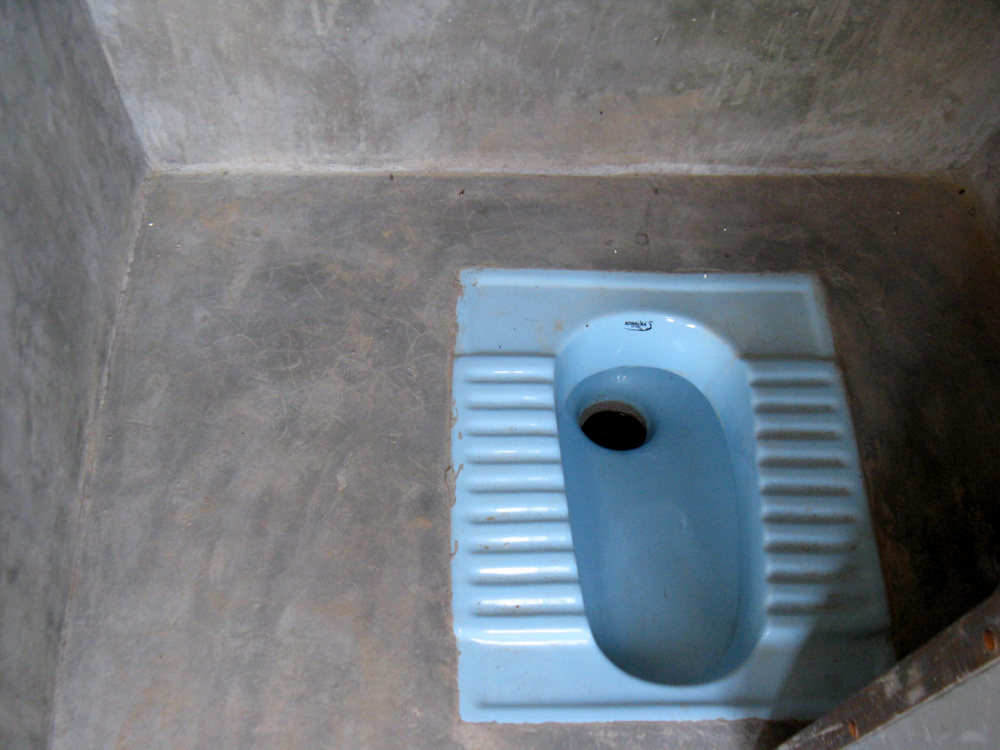
    An example of the interior of a toilet that has been in use in Janadesar. JBF hosted town meetings and launched an educational campaign to show villagers how to construct low-cost toilets.

    Photo © Andrea Hart
    An example of the interior of a toilet that has been in use in Janadesar. JBF hosted town meetings and launched an educational campaign to show villagers how to construct low-cost toilets.
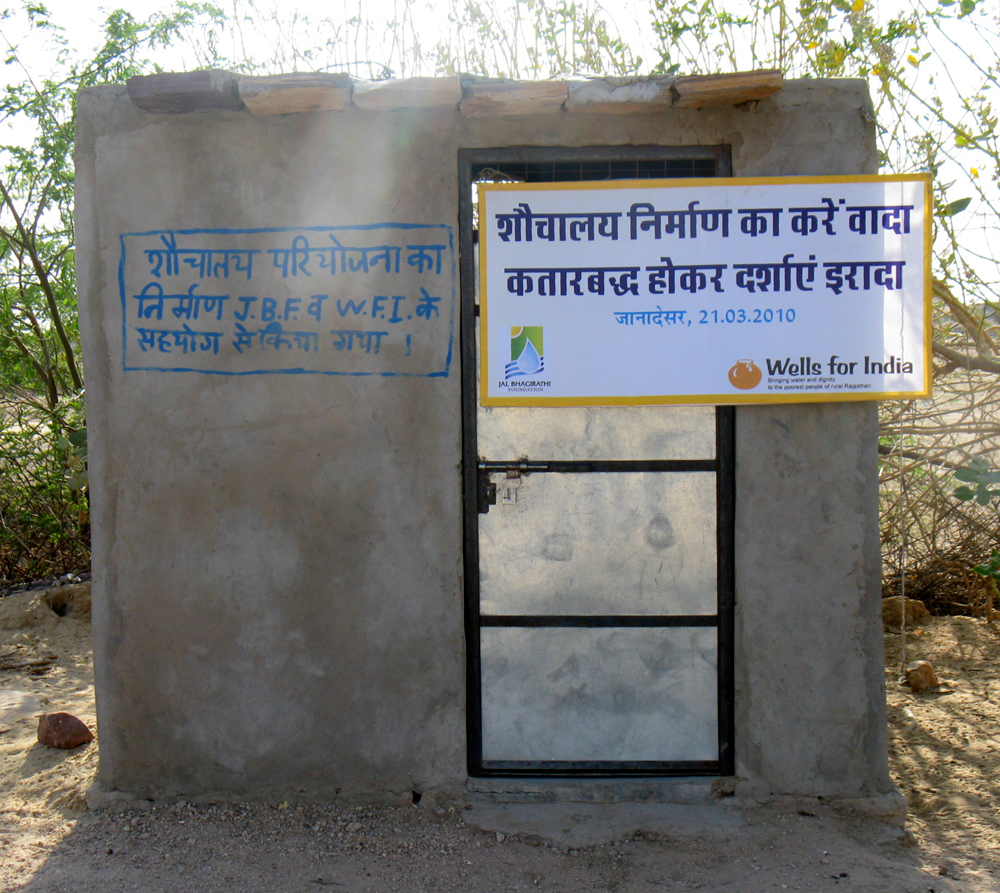
    In honor of World Toilet Day, nearly 850 Janadesar villagers aligned themselves in front of this newly constructed toilet. Eighty percent of Janadesar's households have access to a toilet, making the village a leader in sanitation issues in the region.

    Photo © Andrea Hart
    In honor of World Toilet Day, nearly 850 Janadesar villagers aligned themselves in front of this newly constructed toilet. Eighty percent of Janadesar’s households have access to a toilet, making the village a leader in sanitation issues in the region.
  • NHTSA seeking $16.4 million in fines from Toyota

    The Department of Transportation’s National Highway Traffic Safety Administration is seeking a fine of $16.4 million against Toyota Motor Corp. for failing to notify the department of a “sticky pedal” defect in its cars for at least four months.

    Under U.S. regulations, auto manufacturers are required to inform the agency within five days of determining that a safety defect exists in its vehicles.

    “We now have proof that Toyota failed to live up to its legal obligations,” said Transportation Secretary Ray LaHood. “Worse yet, they knowingly hid a dangerous defect for months from U.S. officials and did not take action to protect millions of drivers and their families. For those reasons, we are seeking the maximum penalty possible under current laws.”

    In a statement released late last night Toyota said:

    Toyota Motor Corporation (TMC) received notice from NHTSA on April 5 (in the United States) that NHTSA is seeking a civil penalty. TMC is now considering its response. Toyota has and will continue to practice its philosophy of satisfying consumers with high quality vehicles that are safe and reliable, and responding to consumer feedback with honesty and integrity.

    The NHTSA is still continuing its investigation to see of the Japanese automaker committed any additional violations that may warrant additional penalties.

    – By: Omar Rana

    Source: CNNMoney


  • Lack retro media cabinet

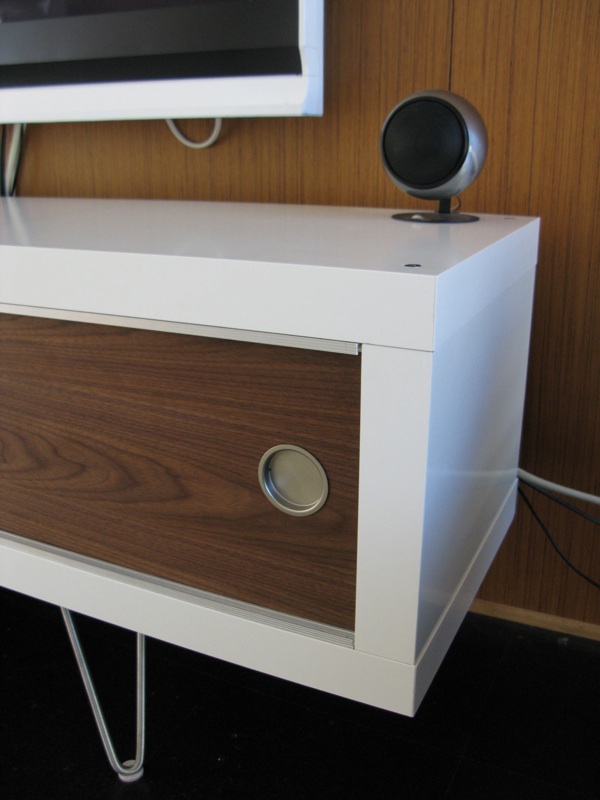
    I’m loving what Jeff in LA did with the Lack shelving unit. The sliding doors and hairpin legs are just perfect.

    He says, “After discovering your site and seeing some of the other lack media cabinet hacks, I thought I’d send some photos of my own. Yeah, I know, I need to do something to hide those wires between the TV and the cabinet.


    My materials were:
    1 white Lack shelving unit
    1 12-foot dual-channel aluminum rail guide from a local cabinet hardware store
    4 stainless hairpin 8″ legs from Ianmaclean.com
    A piece of 1/4″ scrap plywood I had laying around
    Raw walnut veneer
    Watco danish oil
    Spray adhesive
    Two 2″ brushed nickel sliding-door handles

    Tools:
    A jigsaw
    A utility knife

    It was pretty straightforward.  I cut the aluminum slider channel into two sections matching the interior length of the cabinet, and screwed them in.  I measured and cut my plywood into two long doors, then cut the walnut veneer into matching sheets, but slightly oversized.  I sprayed adhesive on the plywood and the back of the veneer, then stuck them together and trimmed the excess veneer off the edges.  I rubbed them with Watco danish oil and lightly sanded them with very fine sandpaper to give them the rich color.  Using the jigsaw, I cut 2-inch holes in the door panels and pressed in the circular handles, securing them on the backside with a glue gun (I could have used the tiny nails that came with the handles).

    Usually, the slider rails are sold as separate upper and lower guides where the upper guide is twice as deep, allowing you to make shorter doors that can be lifted up and out for removal.   But I wanted the aluminum rail to be as low-profile and invisible as possible, so I used the shallower lower guide for both top and bottom. Plus, I was a cheap bastard and this saved me from having to spend another $35 for another 12-foot aluminum track.  So these doors cannot be lifted out for removal.  I loosened the screws on the lack cabinet, fit the doors in, then re-tightened the screws.

    One snag was that my sheets of plywood were just thin enough to fit in the slider channels *before* applying the veneer, so with the veneer on they were too thick and snug to slide easily.  So I had to spend some time sanding the edges on the back side of the doors to thin them up.  In retrospect, I should have just bought some even thinner (maybe 1/8″) board.”


  • Steve Carell Tina Fey Talk “Date Night” On “TODAY” [VIDEO]

    Steve Carell and Tina Fey swung by The TODAY Show Wednesday to chat up their new comedy, Date Night!

    Visit msnbc.com for breaking news, world news, and news about the economy

    The stars of NBC’s The Office and 30 Rock, respectively, play a New York couple who try to spruce up their mundance life in suburbia with a night out on the town. Things take an unexpected turn for the worse — with hilarious results — when a white lies leads to a case of mistaken identity.

    Date Night opens April 9.


  • Forzani Group shares rise on results

    Forzani Group Ltd. shares are up close to 5% in early trading Wednesday morning after the sporting goods retailer reported solid earnings results for its fiscal 2010 fourth quarter.

    On Tuesday after market close, Forzani reported earnings per share of 75¢ on revenues of $372.9-million, versus last year’s EPS of 80¢ on sales of $380.8 million. Consensus estimates were for earnings of 73¢ per share. 

    "This was an impressive performance given that the ski, snowboard and outerwear business was challenged by an unusually warm and dry winter in much of the country," said Keith Howlett, a Desjardins Securities analyst. 

    He increased his price target to $18 from $16 and left his Buy rating unchanged. 

    Robert Gibson, an analyst at Octagon Capital, maintained his $17.50 price target and Buy recommendation, as results met his expectations. 

    He forecasted an increase in Forzani's margins over the next three years to 36% from 35.3%, and a decline in corporate store costs as a percentage of sales to 27.2% from 28.6%.

    David Pett

  • Yahoo Confirms New Yahoo Mail API and OAuth Support

    Yahoo has finally remembered to update everyone on its latest developments for Yahoo Mail. As noted yesterday, Yahoo Mail got support for the OAuth authentication protocol a couple of weeks back, but Yahoo hadn’t made any official announcement. This has been now rectified and there are even a couple of new details to make up for the lapse.

    “We’re super excited to announce that the Yahoo! Mail API now allows Read and Read+Write access to full message contents for any type of user. … (read more)

  • Secondary Sources: Yuan Revaluation, Confidence in Banks, Housing

    A roundup of economic news from around the Web.

    Yuan Revaluation: Martin Wolf of the Financial Times looks at yuan manipulation. “I conclude that the renminbi is undervalued, that this is dangerous for the durability of global recovery and that China’s actions have not, so far, provided a durable solution. I conclude, too, that rebalancing is a necessary condition for sustainable recovery, changes in competitiveness are a necessary condition for rebalancing, real renminbi appreciation is necessary for changes in competitiveness, and a rise in the currency is necessary for real appreciation, given the Chinese desire to curb inflation. The U.S. was right to give talking a chance. But talk must lead to action.”

    Confidence in Banks: Gallup has a poll that looks at Americans’ confidence in banks. “As the Senate considers financial reform legislation, a new Gallup poll shows that Americans’ confidence in banks has not returned on Main Street as it has on Wall Street. The percentage of Americans saying they have a “great deal” or “quite a lot” of confidence in U.S. banks is now 20% — not much different from the 18% of a year ago or the 22% of last summer. Four in 10 Americans currently say they have “very little” confidence in U.S. financial institutions.”

    Housing: Felix Salmon looks at Fannie Mae’s National Housing Survey and finds Americans’ attitudes toward housing hasn’t changed much. “I think what we’re seeing here is a mindset utterly conditioned by the massive, decades-long bull market in housing. Never mind that that bull market has come to an end; the syllogism is simple. House prices always go up; housing is a bargain right now because prices have ticked downwards; therefore now must be a great time to buy. I see this mindset in New Yorkers who genuinely believe that $1 million is not a lot of money to pay for a 2-bedroom apartment, even when it comes with thousands of dollars a month in maintenance costs on top of that. Of course they never would have believed such a thing 10 years ago, but the anchoring effect of the housing bubble is astonishing to behold.”

    Compiled by Phil Izzo


  • Nexus One car dock now available

    Nexus One car dock

    If you own a Nexus One or have been contemplating acquiring one, here’s some more incentive to do just that.  Yesterday, the Nexus One blog announced that the anticipated Nexus One Car Dock was available for purchase for $55 via (you guessed it!) the Google store at http://www.google.com/phone.

    The Nexus One Car Dock is similar to a dash mount for a run of the mill GPS – which makes sense because the N1 comes stock with Google Maps Navigation.  According to Google, “You can mount the dock on the windshield or dashboard, and it ships with an adhesive disc that lets you attach it to a textured surface as well. The dock comes with a charger to fit into your car’s 12V utility socket, and the holder can rotate for flexible orientation.”

    When you cradle your N1 in the dock, the Car Home app is automatically loaded, giving you quick access to maps, navigation, and other features.  The Dock also doubles as a charger for your N1.  Much like the desktop dock, the three dock pins underneath the N1 allow it to charge without the need of a micro USB cable.

    The release is below.  Whether you currently own the N1 or have been holding off, where does the Nexus One Car Dock fit into your life?  Sound off in the comments!

    From Google’s Official Nexus One Blog:
    Tuesday, April 06, 2010

    New! Nexus One Car Dock now available

    Starting today, you can purchase a Nexus One Car Dock from Google’s web store, giving you the perfect place to put your phone when you’re in the car. In addition to holding your Nexus One, the car dock also charges your phone’s battery, lets you use your phone handsfree, and provides faster access to voice and navigation apps.

    The dock’s built-in speakers and volume controls enhance the in-car music and media experience. The Car Home app, which loads automatically, makes it easy to access Maps and Navigation, Voice Search, Contacts, and Music.

    You can mount the dock on your windshield or dashboard, and it ships with an adhesive disc that lets you attach it to non-smooth surfaces. The dock comes with a charger that fits into your car’s 12V utility socket, and the holder can rotate for flexible orientation.

    The dock costs $55 and can be purchased as a separate accessory from the web store, or bundled with the purchase of a new Nexus One phone. For more information see the tech specs .

    Drive Safely!
    Be sure to follow all the local laws and exercise caution when using your phone’s features and car dock while driving.

    Via Google


  • Mitsubishi planning global compact car, will fit below Lancer

    At the 2010 New York Auto Show last week, Mitsubishi Motors North America CEO Shinichi Kurihara announced that the Japanese automaker is planning an all-new compact car that will hit markets in 2012.

    The new model will be a little smaller than the size of the European B-segment and will fit below the brand’s Lancer mode.

    The car will be launched on a global scale and will be powered by a small 1.2L or 1.3L 4-cylinder engine.

    – By: Kap Shah

    Source: AutoWeek