Blog

  • Eusing Free Registry Defrag 1.6

    Eusing Free Registry Defrag 1.6

    Over time the registry becomes larger and larger as new programs are installed, used and removed. Registry fragmentation causes overall system performance to decrease.

    Eusing Free Registry Defrag is a free registry defragmentation software. It will scan through the registry to remove gaps and wasted space, reducing the registry size and ultimately the amount of RAM the registry takes up, and improving your computer performance.

    Features:

    • Improve your Windows PC´s overall performance and stability
    • Reduce the amount of time it takes your system to boot
    • Save memory by compacting the registry
    • Prevent registry corruption by building a fresh copy of the registry
    • A simple, user-friendly interface with which you can safely compact the registry
    • 100% Spyware FREE, NOT contain any Spyware, Adware or Viruses

    What’s New in version 1.6:

    • Added six new languages;
    • Minor bug fixes;
    • Minor stability improvements.

    Homepage: http://www.eusing.com/
    Download: EFRDSetup.exe
    File Size: 1.09MB


    Related posts:


    Copyright © 2008
    Best Freeware Blog | Buy Laptop | Business Software Reviews | astaga.com lifestyle on the net

  • Leading Peak Oil Theorist Now Thinks We’re At Peak Demand, Oil Won’t Break $100

    Failed Greenpeace

    Colin Campbell, a leading peak oil theorist who is a retired geologist, has discovered the pricing mechanism.

    After record prices and an economic downturn caused oil consumers to change their behavior, and oil demand in the developed world to fall, he’s now a believer in peak demand for the developed world. We’re already past it even.

    Reuters:

    “I have changed my point of view about future prices,” said Campbell, who used to think the peak in conventional oil production, which he believes happened in 2005, would lead to a relentless price surge.

    Instead, the record rally led to a peak in demand in the developed world.

    “Peak oil drives prices up in the first place. It has its own mechanism. We’re sort of at peak demand right now,” Campbell told Reuters from his home in the village of Ballydehob, West Cork. “I think presently the price limit is about $100.”

    We frequently see peak oil believers who are highly accomplished scientists, but with little economics background. It shows how peak oil theory would make total sense if we existed in a world without economic forces, such as behavioral responses to rising or falling prices.

    The funny thing is that Mr. Campbell is now probably too bearish on oil prices with his $100 near-term limit. With oil prices at $86 as it stands, it’s pretty feasible they could break $100 if the world economy keeps growing at a decent clip. That’s only a 16% move, which from the perspective of a market participant is nothing and definitely within the realm of possibilities.

    Join the conversation about this story »

  • Part Of Civil Rights Documentary Finally Coming Out On DVD After Years Of Copyright Battling

    Back in 1988 and 1990, PBS aired the two parts of the seminal documentary Eyes on the Prize about the civil rights movement. Since then, it’s been considered one of the best ways of explaining and showing the civil rights struggle to those who did not live through it. Yet, it soon went out of print, and for years there have been fights to get it released on DVD. The problem? You guessed it: copyright. When the original documentary makers made the film they were only able to secure limited licenses for the archival footage they used, and once those licenses expired, the film was effectively dead in the water. For obvious reasons, this greatly upset some people, who started encouraging people to download copies of the film to get it seen — even if this did upset others who were (loosely) associated with the film, fearing that it would hurt the ongoing negotiations for eventual licensing.

    While it’s taken a long, long time, the good news is that part I of the documentary has finally been released on DVD, even though part II is still tied up in licensing problems. While I can understand why some have been upset in linking the issue of civil rights with copyfighting, this seemed like a perfect example of the problems of copyright law today. Allowing this DVD to go forward would, in no way, “harm” the market for the original archival footage. It was a way to get it much more attention — on an incredibly important topic that has deserved much greater awareness. To have all that content mostly locked up for nearly two decades is a real shame, and speaks to the censoring power of copyright law.

    Permalink | Comments | Email This Story


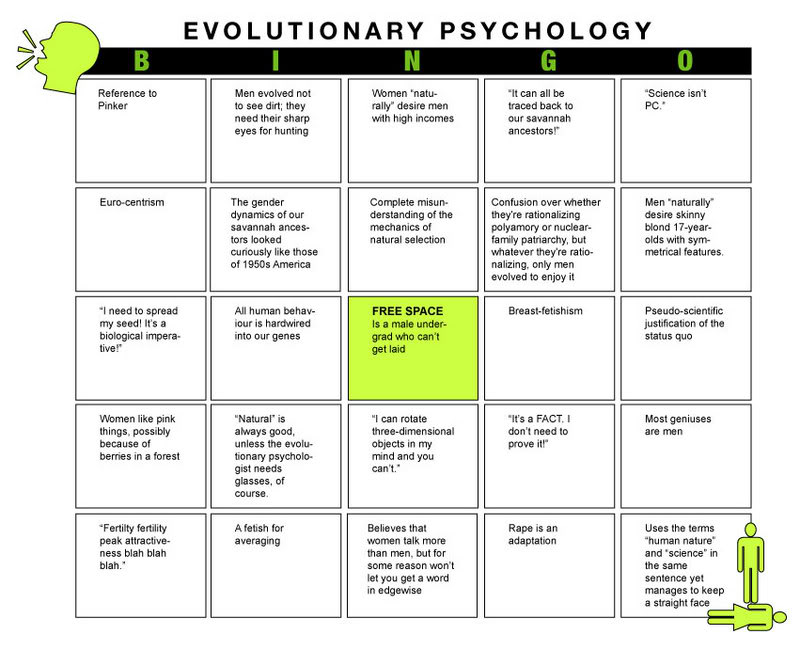
  • Evolutionary Psychology Bingo

    David Craig put a link to this on my facebook wall:


    It’s funny, but we shouldn’t forget the parallel set of male-disparaging labels: we’re uncommunicative, we’re hard of hearing, we’re unempathetic, we’re emotionally immature, we pretty much can’t see things unless they’re moving, in fact we’re practically vegetables from the neck up.

    You could make up another bingo card with labels of that sort.

  • In the Japanese city of Nara, the deer are commonplace — and hungry

    What’s more charming than a deer emulating a human’s polite bow? We’re hard-pressed to think of a thing — and a bowing deer almost seems too adorable to be true. But it’s just what visitors to Nara, Japan, are likely to see when encountering the city’s large and storied sika deer population.

    Nara, according to travel writer James Dorsey, is a place where "there seem to be as many deer as people, and they have the complete right of way. Deer, by the way, are grazers, which means they eat around the clock. The deer of Nara live to eat and are not fussy about what that may be."

    Dorsey, who recently visited Nara with his wife, explains that the animals have become a major part of the city’s commerce, with many vendors selling deer treats called shika senbei to residents and tourists. Vending machines offer shika senbei as well.

    Even a visit to a local sushi restaurant didn’t mean distance from the deer, who go where they please in Nara. Fortunately, the restaurant staff are prepared for four-legged dinner guests; they’ve provided "a stack of biscuits on every table to be used as an offering to buy a moment’s peace for people trying to eat," Dorsey writes. "I became adept at handling chopsticks with one hand and feeding the marauding deer with the other."

    The deer gobbled up everything in their path, Dorsey continues — whether or not the items they chose to snack on were, technically, edible. A purse, a camera and a set of keys are among the things the deer tried to steal from the couple. While they picnicked in a park, deer descended, making off with sandwiches and sodas.

    Replacing sandwiches and sodas stolen by a swarm of hungry deer: $12. Having those thieving deer bow to you as they depart: Priceless.

    Learn more about traveling to Nara and visiting with the city’s army of animal panhandlers in Dorsey’s recent story in The Times’ Travel section.

    — Lindsay Barnett

    Video: sbake608 via YouTube

  • Iron Man Wannabe Builds His Own J.A.R.V.I.S. For $691.98 [DIY]

    Chad Barraford has designed a “digital life assistant” who recognizes him, cooks hot dogs, and alerts his friends when he has a migraine. Unlike Tony Stark‘s J.A.R.V.I.S. though, this one only cost $691.98 to build. More »


  • All the Names of Jesus – Study 17. Omega

    Alpha and omega are the first and last letters of the Greek alphabet. God was traditionally given the title of being the first and the last, a title abbreviated by the use of A, and O. In Hebrew (Isa. 41:4; 44:6; 48:12) He was called ‘the first and the last’. Hebrew scholars explained that this came from the word for “truth” whose three Hebrew consonants are the first, middle and last letters of the Hebrew alphabet! They took the truth of God to be symbolised in His being beyond all time. In the New Testament the word omega is used in three places, all in John’s Revelation (1:8; 21:6; 22:13). Here the term is used twice of God and on the other occasion is given completely to Jesus, signifying that He shares God’s divine nature.

    The use of the term omega meant that Jesus was the complete expression of God. He was “the fullness of the blessing of the gospel” (Rom. 15:29). Christ was beyond time and place, beyond history, and beyond humanity’s concepts. Christ is the cosmic reality, the source of creation and its ultimate goal. Although John (1:3) expressed this in part, it was Paul whose keen philosophical mind made clear this reality (Col. 1:15-20). He saw Christ as the source and the goal of creation. Christ was the cohesive force in the universe. “From Him and through Him and to Him are all things” (Rom. 11:36). In Him the whole universe coheres (Col. 1:17).

    FOR TODAY

    In the centre of the great stained glass window in the Box Hill, Victoria Church of Christ is a picture of an open Bible with the letters A, and O. As a young child I had many speculations during long sermons over these letters stood for!

    It was impossible to talk of omega without referring to Teilhard de Chardin – the magnificent heretic or far-seeing prophet of our time. This Jesuit scientist, theologian and philosopher had a commitment to Christ that had a cosmic scope. He saw the end point of the processes of evolution coming into focus at what he called the omega point. This is where the whole creation meets and is renewed in the reigning lord of history. Christ is both the end of creation and its sustaining life force.

    We are all aware of centrifugal force, that force on a spinning disc which moves loose objects outwards. In a whirling world like ours things tend to fly apart. There are few forces that bring things together and hold them in cohesion. Christ is a centripetal force; in Him things come together and hold fast.

    The New Testament Christians used the philosophical terms of their day to express the theological truth without fears that the contemporary philosophy would contaminate the Christian truth. Worlds like omega, logos and Eikon were used in the Christian apologetic. We ought to have Christian philosophers today who are prepared to make a defence for the hope that is within them by filling the current philosophies with Christian content. The trouble is when they do, as with Teilhard, the Church becomes frightened and their works are banned. Christians of all people should never fear searching for ultimate truth.

    REV THE HON DR GORDON MOYES AC MLC

  • Get a greener green thumb with eco-friendly garden accessories and tools

    By Melissa Segrest
    Green Right Now

    Those tomatoes are looking good. Your compost is top-notch, you’ve added extra manure for a nitrogen boost and the aphids have been blasted away with a strong spray of water. The grass-clipping mulch has smothered any weeds, and there are no spotted leaves or blossom-end rot to be seen.

    Gardening tools and decor can be environmentally sound and still get the job done

    Gardening tools and decor can be environmentally sound and still get the job done

    You are on top of your organic gardening game.

    Unfortunately, your tools, mower, garden garb, decorative touches and composter reveal the truth — you aren’t as eco-minded as you think. All that factory-made plastic and gasoline and synthetic fabrics leave a big, ugly carbon footprint all over your marigolds.

    If you’re ready to take the next step and get completely green in your garden, we’ve shopped around and found a variety of items that are natural, fair trade, recycled or sustainable. Stroll through our selections and see how green you can get.

    Ironic that the container green gardeners use to create their all-natural fertilizer is often made from synthetic materials. A little shopping turns up a selection of compost bins made of recycled plastic. The Bio-Orb Composter (below), for example, makes it easy to mix and aerate the ingredients with a bit of rolling. It has a 36″ diameter and costs $159 from Gaiam.

    Gaiam Bio_Orb Composter

    Composters

    Other natural composters include the jumbo Tumbleweed composter, 100 percent recycled plastic, which spins vertically to keep ingredients cooking ($200) or the the Worm Factory composter, also of recycled plastic, which combines some squirmy ingredients for a rich, quick compost ($100).

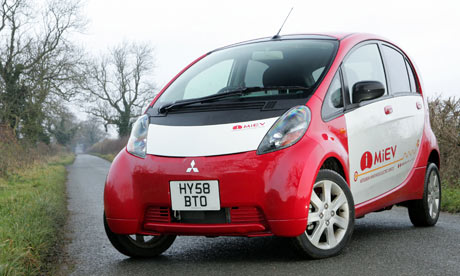
  • EVs mass market: Spain invests in electric cars TNR.v, CZX.v, LMR.v, RM.v, SQM, FMC, ROC, WLC.v, LI.v, HEV, AONE, F, NSANY, BYDDY, RNO, FCX, FXI, GOOG

    National governments will make this process even more destructive for margins: they will support by all means national automakers and once success for EVs will be apparent moves in the affordability could be very dramatic. It will be extremely positive for our Next Big Thing and development of EVs’ Value Chain as a whole, but shareholders in these companies could wait for a long time to be actually rewarded. Brands which can position itself with pricing power could be the answer: Tesla and Fisker once public could be an example, but they will not be able to achieve economy of scale on the other hand. Once initial excitement for EVs will be settled and sales and profits will matter again you will have to do a very good homework in order to separate winners from the losers.

    Spain invests in electric cars

    By Associated Press
    Tuesday, April 6, 2010

    MADRID — Spain says it will invest $790 million in promoting and developing production of electric cars over the next two years.

    Prime Minister Jose Luis Rodriguez Zapatero said Tuesday that Spain hoped to have 20,000 electrical and hybrid vehicles by 2011, 50,000 by 2012 and 250,000 in circulation by 2014.

    Automaker Renault agreed last year to make the Spain’s first electrical car in 2011 at its Valladolid plant.

  • All the Names of Jesus – Study 16. Messiah

    The Messiah was to be God’s divinely appointed deliverer and ruler of Israel. Christians saw Jesus as the Messiah, or Christ, as it is translated in the Greek. There is only one reference in the Old Testament to the word Messiah as such (Dan. 9:25-26). He was to be the prince who would come as Israel’s deliverer. The term in Hebrew meant “the anointed one”, and is a fulfilment of the concept of anointing the king as God’s representative (1 Sam. 24:4-6). One important passage is 2 Sam. 7:12-13 where the kingdom of David is promised as an eternal kingdom. This became the basis of the eternal messianic hope. The Old Testament generally regarded the kingdom in terms of land around Palestine and the Messiah as their national leader.

    The word is twice found in the New Testament. Once Andrew told his brother Peter that he had found the Messiah, and he brought Peter to Jesus (John 1:41). The other occasion is when the woman of Samaria referred to the coming of the Messiah without any reference to its fulfilment in Jesus (John 4:26).

    The New Testament Church took the messianic passages and applied them to Jesus. They saw Him fulfilling such expectations. He would be the righteous judge vindicating the meek and establishing peace (Isa. 9:2-7; 11:1-9). He would be born in Bethlehem (Mic. 5:2). After His coming the Jewish exiles would return to their home and a new age (Jer. 23:7-8). His kingdom would be unshakeable (Ps. 2). He would be a priest after the order of Melchizedek (Ps. 110) and would judge among the nations (Matt. 22:42).

    The Messiah was not identified with the Son of Man (Dan. 7) but Christians saw Jesus as both. After the resurrection Jesus explained His messiahship (Lk. 24:26-7). Peter’s confession that Jesus was the Messiah (Matt. 16:16) became the fundamental plank in the Christian platform.

    FOR TODAY

    Jesus stressed secrecy concerning His own messiahship (Matt. 16:20) because of the political implications of His day. Because of the political implications of our day we should keep the secret no longer! “Jesus is the Christ” must be proclaimed in placard and word, but more importantly, in life, in the political halls of Canberra and of every capital city throughout the world.

    Among many Jewish people there is a renewed interest in the coming Messiah. For the best part of 3000 years the Passover has required an empty chair to be ready for Him. In recent months there has been a strong “Jews for Jesus” movement in many western countries. They have taken full-page advertisements in national newspapers containing their own photographs and openly witnessing that they believe Jesus is the Jewish Messiah. Among Jewish students in Universities there is a great deal of tension at this point between the evangelism of Hebrew Christians and the resistance of orthodox Jews who regards the messianic witness as an anti-Semitic attack. Christians must both love our Jewish friends and seek to reveal to them that the one crucified in Jerusalem is also their long-awaited Messiah.

    It is no coincidence that Handel chose to call his Oratorio “The Messiah”. He wrote it while paralysed down one side from a stroke. To a stricken, paralysed man no greater thought could fill his mind than to stand and shout the news that Jesus was the Messiah.

    REV THE HON DR GORDON MOYES AC MLC

  • Westlake Village man pleads not guilty to killing Pasadena art professor

    A 54-year-old Westlake Village resident who police say shot and killed a popular Pasadena art professor at a party pleaded not guilty to murder charges Tuesday.

    Attorneys for Steven Ronald Honma, who was arraigned in a Van Nuys courtroom, said their client was defending himself during an attack at a neighbor’s party and did not intend to shoot Norman Schureman, 50, of Altadena.

    On March 20, Honma and his wife attended a Persian new year’s party in Westlake Village, hosted by Schureman’s mother-in-law. Honma felt that someone had made a crude remark about his wife, and he took her to their home two doors away from the house where the party was held, Los Angeles County Sheriff’s Lt. Liam Gallagher said.

    Honma later returned to the party with a knife and two guns. Authorities say that after a fight broke out, Honma shot Schureman in the upper torso. Schureman died the next day at Ronald Reagan UCLA Medical Center in Westwood.

    Honma’s attorneys said their client was beaten during the fight and was hospitalized with head wounds and internal injuries.

    The Los Angeles County district attorney’s office charged Honma with one count of murder and one count of possession of a firearm with a prior conviction.

    “This is not a case of murder, rather an unintended and accidental homicide which occurred during the course of a physical struggle that Mr. Honma did not initiate,” Honma’s attorneys at Kestenbaum, Eisner & Gorin said in a statement. “Friends, family and co-workers hold him in very high esteem and find the alleged conduct to be completely out of character.”

    Honma was being held on $2-million bail. If convicted, he faces a maximum sentence of life in prison.

    — Corina Knoll

  • Kate Gosselin Escapes Elimination On “Dancing” As Buzz Aldrin Is Sent Packing

    For the third week in a row, Kate Gosselin and her partner Tony Dovolani avoided the guillotine on ABC’s Dancing with the Stars. The couple survived the Bottom Two after turning in a giggle-inducing paso doble to Lady Gaga’s “Paparazzi” on last night’s show. The Bottom Three at the end of Tuesday night’s Results Show looked like this: Buzz Aldrin, former Bachelor Jake Pavelka, and Kate.

    Ultimately it was the beloved American hero who got the boot. America said goodbye to Aldrin, legendary spaceman, and his partner Ashly Costa. Aldrin, now in his early ’80s, took the news in stride, saying he was glad to have been on the show to put a focus on the space program.

    “I’m interested also in having the public be thankful for the great success we had in the Apollo program and look forward to even greater successes in our future space program,” he said. “That’s why I came on board — to take the challenge and take the risk and I thank everyone who voted for us.”


  • Santa Barbara County wants to close the door on rowdy beach party

    2009 Floatopia

    Authorities in Santa Barbara County aim to deflate Floatopia, a
    mega-party set for Saturday that has exploded over the last few years
    with the aid of social media websites.


    Officials told county supervisors Tuesday that they plan to close
    access points to popular beaches in Isla Vista, near UC Santa Barbara,
    this weekend. Last year, as many as 12,000 revelers converged on the
    narrow strip of sand in a day of what county parks director Dan
    Hernandez called "unmitigated chaos."


    Deputies handed out 78 citations for alcohol-related crimes and made 13
    arrests, Sheriff Bill Brown said. Thirty-three participants required
    hospital treatment for alcohol poisoning, heat exposure and cuts from
    broken bottles. Two of them toppled off the bluffs that border the
    beach.


    Started about five years ago with several hundred people drinking just
    offshore on rubber rafts and inner tubes, the celebration has been a
    barely planned rite of spring, with no formal sponsor, security
    measures or provisions for emergency aid. It has inspired similar
    events, most notably in San Diego.


    In Santa Barbara, the 2009 edition was bigger — and, to county
    officials, more environmentally damaging — than before: "Without
    restroom facilities, many attendees simply used the ocean, creating a
    large concentration of human waste that threatened sea life," according
    to a statement from the Sheriff’s Department.

    Read the full story here.

    –Steve Chawkins

    Photo: Santa Barbara Sheriff’s Department

  • Twitter Introduces Gizzard Distributed Datastore Framework

    twitterbird.png“Many modern web sites need fast access to an amount of information so large that it cannot be efficiently stored on a single computer,” Nick Kallen wrote on Twitter’s blog. A good way to deal with this problem is to “shard” that information; that is, store it across multiple computers instead of on just one.”

    As an alternative to sharding, Twitter has developed a framework that can be used in lieu of either custom-building data-store systems or using untested open-source alternatives and is sharing the code with the public.

    Sponsor

    From a number of data-store building experiences, Twitter has “extracted Gizzard, a Scala framework that makes it easy to create custom fault-tolerant, distributed databases.”

    As an example, Kallen provides “Rowz.”

    “To get up-and-running with Gizzard quickly, clone Rows and start customizing!”

    The full code for Gizzard is also available.

    He describes Gizzard as a middleware networking service that handles partitioning through a forwarding table, supports migration and prosecutes “eventual consistency.”

    The implication of this may be that startups and smaller companies may better be able to deal with large amounts of data quickly, and thereby better serve the needs their users with fewer resources expended.

    gizzardchart.png

    Discuss


  • Q and Data Examine the Next Generation Padd [Image Cache]

    That this was taken by an employee of Ngmoco showing off their We Rule app—but all that is irrelevant. This is John de Lancie and Brent Spiner—Q and fucking Data—playing with an iPad. Hell. Yeah. [Facebook via Fidgit] More »


  • Diana Olick: Foreclosure “Pig In The Python Is Showing Its Face”

    Diana Olick

    From Diana Olick at CNBC: Foreclosures Are Rising

    Yes, banks are ramping up loan modifications and ramping up short sales and ramping up deeds in lieu of foreclosure, but the plain fact is that as the systems are oiled, the loans are moving through faster, and the pig in the python is showing its face.

    We won’t get the [foreclosure] numbers until next week, but sources tell me they will likely be a new monthly record.

    Keep reading at Calculated Risk >

    Join the conversation about this story »

  • DR Systems Spins Off eMix to Provide Online Exchange for Medical Images

    eMix
    Ryan McBride wrote:

    Bill O’Leary, an IT specialist at a hospital in Montana, got a typical request one evening in January. A physician at another hospital, in this case a pediatric neurologist in Seattle, needed O’Leary to send the doctor a patient’s medical imaging exam. To transfer the digital image a year ago, O’Leary would have spent hours setting up a private Internet connection between his hospital and the physician’s hospital. Or, he could have copied the image onto a CD and mailed it to Seattle within two days.

    With the neurologist’s request, however, O’Leary used a third-party service called eMix that allowed him to send the imaging exam over the Web almost as easily as e-mailing the record to the hospital in Seattle. “It’s a lot faster than over-nighting a CD,” says O’Leary, of Kalispell Regional Medical Center.

    Online services like eMix are beginning to catch on because of their ability to bridge gaps in hospitals’ ability to share medical images. The company is wholly owned by San Diego-based DR Systems, a provider of radiology software that developed the eMix technology over the past couple of years.

    The eMix service addresses one part of a huge problem in healthcare: hospitals have invested big bucks in IT systems that are often unable to easily “talk” to each other or exchange data like electronic health records and digital medical images. A typical solution has been to load medical images onto CDs, which patients can carry to appointments with doctors at separate facilities. But that practice has proven to be ineffective, for example, because the images on CDs are often damaged or unable to be read on other hospital’s computers. When the records aren’t readily available, the imaging exams often need to be redone, which contributes to the estimated $3 billion to $10 billion per year the U.S. healthcare system spends on unnecessary medical imaging, according to Imaging e-Ordering Coalition, a advocacy group formed last year.

    There’s been a gold rush of sorts in recent years among healthcare software outfits develop technology that fixes this problem in sharing medical images. Hopkinton, MA-based data storage giant EMC, a major provider of data management hardware and software for hospitals and customers in other industries, is backing a Boston-area startup called LifeImage to develop a service to securely exchange medical images over the Internet. (EMC’s (NYSE:EMC) data-management technology is also used in the data center that supports the eMix service, according to Florent Saint-Clair, a program director for eMix). Seemyradiology.com, a medical image-sharing Web service from the Atlanta-based radiology software firm …Next Page »

    UNDERWRITERS AND PARTNERS


  • Where the NPR Meets in the Middle

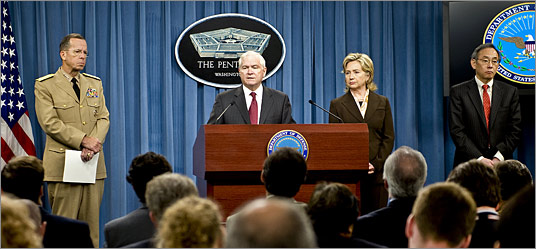
    U.S. Department of Defense photo by Cherie Cullen

    The Obama Nuclear Posture Review — and that’s what it is — is a major accomplishment. (I’ve written about it in a column to appear soon at the Bulletin. Stay tuned.) Compared to previous efforts, it takes on more issues and makes more positive changes. It also bears the imprimatur* of an array of senior officials, starting with the President.

    (*That’s Latin for “buy-in.”)

    The Obama NPR also contains some grounds for dissatisfaction. From any point of view. But before you start grumbling too much about what it doesn’t achieve, though, I’d recommend comparing it to the last one.

    The report works to reconcile certain tensions, and manages reasonably well. It reads like a tunnel dug from both ends: from this end, the nonproliferation agenda that stole the show last year in Prague, now picking up steam for the the May 2010 NPT RevCon — and from that end, the traditional set of nuclear posture issues: force types, numbers, and alert status. The latter side of the tunnel emerges into a territory within the status quo comfort zone of past years.

    Where these issue sets meet in the middle, the nonproliferation agenda largely, but not exclusively, prevails. There will be no “new” warheads or nuclear military capabilities. And there is a significantly clarified negative security assurance that breaks explicitly with the doctrine of calculated ambiguity, i.e., hinting that a chemical or biological attack might get a nuclear reply, or at least refusing to say one way or the other. That’s gone now.

    What we don’t see is a blanket statement of the sort discussed at some length at this blog, either “no first use” or “sole purpose.” Instead, we are told that

    The fundamental role of U.S. nuclear weapons, which will continue as long as nuclear weapons exist, is to deter nuclear attack on the United States, our allies, and partners.

    Which is not bad, especially in combination with the new NSA statement that

    the United States will not use or threaten to use nuclear weapons against non-nuclear weapons states that are party to the NPT and in compliance with their nuclear non-proliferation obligations.

    Why Not Go All The Way?

    The report gives us a reason:

    In the case of countries not covered by this assurance – states that possess nuclear weapons and states not in compliance with their nuclear non-proliferation obligations – there remains a narrow range of contingencies in which U.S. nuclear weapons may still play a role in deterring a conventional or CBW attack against the United States or its allies and partners.

    American conventional might and the threat to hold leaders personally accountable for their actions are deemed sufficient to deter non-nuclear weapon states in good standing within the NPT from using chemical or biological weapons, so why not also Russia, China, Iran, and North Korea? There may be logical reasons, but they aren’t spelled out.

    There may also be another reason, one not raised directly, but hinted at elsewhere. This admirably frank discussion explains what will determine the size of the U.S. strategic arsenal for the foreseeable future:

    Russia’s nuclear force will remain a significant factor in determining how much and how fast we are prepared to reduce U.S. forces. Because of our improved relations, the need for strict numerical parity between the two countries is no longer as compelling as it was during the Cold War. But large disparities in nuclear capabilities could raise concerns on both sides and among U.S. allies and partners, and may not be conducive to maintaining a stable, long-term strategic relationship, especially as nuclear forces are significantly reduced. Therefore, we will place importance on Russia joining us as we move to lower levels.

    In other words, the U.S. arsenal is scaled to the Russian arsenal. This is a tradition going back to the end of massive U.S. numerical superiority, and many people set great store by it. Not maintaining parity would “raise concerns,” although the exact nature of the concerns aren’t explained.

    For the moment, it matters not. The point is this: if we pledge never to go first against the Russians, it gets difficult to explain why our deployed strategic arsenal is the size that it is. (There’s not much satisfaction in retaliating against empty Russian launchers, is there?) So until it’s decided that numerical parity is no longer so important, we probably won’t see a “sole purpose” or “no first use” declaration, regardless of what might be said about chemical or biological weapons.

  • 2010 Murder Rates Spike In LA And NYC, And Leaders Are Blaming Police Budget Cuts

    Police Officer

    Contrary to what you might have expected, what with the bad economy and all, in 2009 violent crime was low in NYC.

    A quarter of the way through 2010, that’s changing in a big way.

    Homicide is up 20%.

    In Los Angeles the rise is less pronounced, but a still-meaningful 5%.

    If you believe leaders in both of these cities, the mystery can be explained by lower city budgets, which mean fewer cops, which means more crime. The math is simple.

    Of course, this isn’t the story everywhere. Newark’s superstar mayor Cory Booker has earned the right to brag that his city went its first murder-free month in nearly four decades during March. Also worth noting is that other violent crime in LA is actually down, so the picture isn’t black and white.

    Join the conversation about this story »

  • Rape charges filed against Westminster police officer, state corrections officer

    A Westminster police detective and a corrections officer were charged Tuesday in the alleged rape and kidnapping of a 25-year-old restaurant worker in Ontario.

    Westminster Police Det. Anthony Nicholas Orban, 30, was arrested Saturday on suspicion of kidnapping the woman at Ontario Mills Mall and raping her at gunpoint. Corrections Officer Jeff Thomas Jelinek, 30, from the Chino Institution for Men, was arrested on suspicion of carjacking and is being as an accessory to the crime.

    In a 14-page felony complaint filed Tuesday by the San Bernardino County district attorney’s office, Orban is charged with kidnapping, rape, forced oral copulation, penetration with a foreign object, forced sodomy and making criminal threats.

    Jelinek is charged with kidnapping, rape and being an accessory after the fact. While Jelinek did not rape the woman he was charged because his actions aided the crime, said Deputy Dist. Atty. Debbie Ploghaus.

    “What makes it so heinous is the fact that [Orban] is a police officer and his job is to protect people and this is what he’s doing,” Ploghaus said. “They are both law enforcement officers.”

    According to Ontario police, the woman was walking to her car in the parking lot of Ontario Mills Mall about 5 p.m. Saturday when she was confronted by the men. Orban allegedly got in her car, pointed a gun at her and forced her to drive away while Jelinek stood by and watched, police said.

    Orban then allegedly ordered the woman to drive to a commercial complex in Fontana, where he raped her. About two hours after she was kidnapped, the woman was able to get out of the car and run to a business to call police, Ploghaus said.

    Authorities connected Orban to the incident because he left his service weapon in the woman’s car after he fled and was picked up by Jelinek, police said.

    Orban has been with the Westminster Police Department for five years and is assigned to criminal investigations. Jelinek has worked for the California Department of Corrections and Rehabilitation since 2006. Both men are being held at the West Valley Detention Center in Rancho Cucamonga and have been placed on paid administrative leave pending the outcome of the investigation. If convicted, each faces a sentence of 25 years to life in prison on the rape charge.

    Both men are expected to be arraigned Wednesday at the Rancho Cucamonga courthouse. Prosecutors have asked that bail for both be raised from $1 million to $2 million.

    “We believe they’re a danger,” Ploghaus said. “Both of them are a danger to society.”

    — Paloma Esquivel in Orange County