Blog

  • Iowa 2012…and a Tea Party influence?

    10,000 Iowans.

    Just the thought of THAT bloc of folks in the state where the first presidential contest of 2012 is…is enough to make a White House wannabe drool.

    10,000 Iowans!

    And that’s the number Des Moines Tea Party founder Charlie Gruschow gives when asked what the movement’s strength is in the Hawkeye State. Gruschow notes not all 10,000 are dedicated members attending each event. But those folks have at least been to or inquired about a Tea Party event.

    Still…it’s a number that gets attention. And that’s the idea. Because of the rapid development of the Tea Party movement in the last six months…Gruschow predicts, “We will have a dramatic effect on the caucuses as well as the general election.”

    “The question,” says Drake University political science professor Arthur Sanders, “is how large an impact?”

    First, a check of the numbers. A record 350,000 people participated in 2008 Iowa Caucuses. 230,000 attended a Democratic caucus. Republicans counted 120,000 at their caucuses.

    Most observers and many G-O-P leaders believe most Tea Party folks lean Republican…because they generally follow mutual principals of smaller government and less government spending.

    “We certainly hope to get most of the Tea Party activists’ votes in November and I’m confident we will,” says Matt Strawn, the chairman of the Iowa GOP.

    If (and it’s a big if) Tea Party folks all voted Republican…10,000 would be one of every 12 Iowa GOP caucus-goers. It’s a substantial number…but alone would not cinch a victory.

    The other catch is drawing in Tea Party folks. For tax and privacy purposes…many Tea Party groups are non-partisan. They may promote stances on issues but cannot (or will not) promote a candidate or party. So…each Tea Party activist will have to measure candidates based on individual priorities…and make an individual decision. For political hands in Iowa, it’s the usual business of the old-fashioned one-at-a-time method of collecting votes.

    And then there’s the question of the nature of the Iowa Republican party. Two years ago, Mike Huckabee…a social conservative won the 2008 GOP caucuses. Tea Partiers are much more interested in fiscal conservative issues of taxes and spending.

    Plus, given their tendency of being very independent…it may ultimately mean Iowa Tea Partiers votes will be among the hardest to collect…all 10,000 of them.

  • Special Forces, Afghans in 12-Hour Battle With Insurgents

    Nuclear Posture Review stuff kept me from blogging this when the release went out during Secretary Gates’ press conference, but an initial report from the NATO command in Afghanistan describes an extraordinary effort in the northwestern Afghan province of Baghdis. Apparently about 50 insurgents ambushed a joint patrol of Afghan commandos and U.S. Special Operations Forces. A massive 12-hour battle ensued, leading to the deaths of what the NATO release calls “dozens of insurgents,” one Afghan commando and, reportedly, no Americans or Afghan civilians.

    This sort of thing doesn’t happen every day:

    In an effort to avoid civilian casualties, the combined team began clearing buildings and compounds the insurgents were firing from. During the clearing process, an intricate system of tunnels was discovered in addition to several large stockpiles of weapons,bomb-making materials and other equipment normally associated with terrorist activities.

    While the partnered force provided medical treatment and transported wounded personnel from the area, an overwhelming number of insurgents continued to fire from cave entrances, various locations within the village and from high ground surrounding the area.

    The release claims that the SOF troops got approval from local government sources, during combat, to call in airstrikes on insurgent positions. Allegedly no civilian casualties occurred.

    First reports can often be wrong. And it was just this weekend that the NATO command in Afghanistan revealed that SOF elements were involved in the deaths of five Afghan civilians, including three women, after an initial official report claimed they had only killed insurgents. But this sounds so epic that we’ll surely find out soon if anything is incorrect.

  • Energy trumps the environment, poll finds

    by Samantha Thompson

    The majority of Americans prioritize the development of energy supplies over the protection of the environment, a new Gallup poll has found, the first time this has happened in the question’s ten-year history. Conducted in early March, before President Obama’s announcement that he would open much of America’s coastlines to offshore drilling, the poll’s results are consistent with the recent historical support for environmental issues, which peaked in 2007 and has been steadily declining ever since. Looking at the complete reversal of environmental and energy priorities over just three years, it’s hard not to wonder if Obama was in tune with the shift—and if it played a role in his decision to reneg on his campaign promise to ban offshore drilling.

    Related Links:

    America’s most bike-friendly cities and big green pledges

    A firestorm of comments over LaHood’s big bike speech

    The Seattle project


  • Plate Lunch at Pono Market, Kapa’a

    Pono Market, Kapa’a

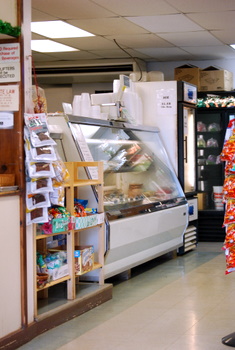
    Pono Market is one of my favorite places on Kauai. The family-owned and run market is a small storefront on the main street in Kapa’a on the west side of the island, just a few minutes north of Lihue. Inside, you’ll find a big deli counter, an espresso bar and some of the friendliest people on the island. It’s not a big restaurant, although they do have an extensive menu. This is a local’s spot that definitely caters to local palates. It is a must-stop spot if you’re interested in trying a Hawaiian plate lunch. They serve real Hawaiian food – and all of it is exceptional.

    A rare empty moment in Pono Market

    When you walk in, there will probably be a line of people (especially if you come between 10:30 and 12, when most of the locals are off of work for lunch). Jump in and check out what is in the deli case while you wait. Someone will definitely pipe up to tell you the specials. Everything is made fresh every day and most of it sells out by the early afternoon. You can choose a couple of entrees to make a plate lunch, served with a side of rice. Bear in mind that they might be sold out of their homemade lau lau and other signature items if you’re not early, but you’ll definitely find plenty of tempting things to choose from regardless. Don’t miss the ahi poke, which is not only flavorful, but is made with some of the most tender, freshest ahi you can find anywhere. My three-item plate below consists of sesame ahi poke, fried chicken (all dark meat and soaked in a flavorful marinade), kalua pork and white rice, with a side of macaroni salad.

    3-item Plate Lunch at Pono Market

    (more…)

  • Who is Don Blankenship? Massey CEO Has Much Explain in Wake of West Virginia Coal Mine Disaster

    Don Blankenship is CEO of Massey Energy, the owner of the Upper Big Branch mine that exploded yesterday, killing at least 25 miners with four still missing in the mine. Blankenship is well known as a right-wing crackpot and global warming denier, but I want to paint just a brief picture with regard to this disaster. I’ll start with Rolling Stone’s description of Don Blankenship:

    The country’s highest-paid coal executive, Blankenship is a villain ripped straight from the comic books: a jowly, mustache-sporting, union-busting coal baron who uses his fortune to bend politics to his will. He recently financed a $3.5 million campaign to oust a state Supreme Court justice who frequently ruled against his company, and he hung out on the French Riviera with another judge who was weighing an appeal by Massey. “Don Blankenship would actually be less powerful if he were in elected office,” Rep. Nick Rahall of West Virginia once observed. “He would be twice as accountable and half as feared.”

    In late 2005, Blankenship issued a memo to company employees instructing supervisers to “ignore” any directive except to “run coal,” because “coal pays the bills.” That apparently included safety measures to protect the workers who help Blankenship “pay the bills.” This amazing graph from Brad Johnson at Think Progress shows that Blankenship’s employees got the memo. Violations skyrocketed at Massey mines, but most notably at the Upper Big Branch Mine as illustrated below.

    Graph via Think Progress

    Brad Johnson gives some more context to these numbers:

    Massey is now contesting $1,128,833 in fines for safety violations at the deadly Upper Big Branch-South Mine, with a further $246,320 in delinquent fines:

    Over $2.2 million in fines have been assessed against Massey’s Upper Big Branch-South Mine since 1995, with $791,327 paid. Massey is contesting $1,128,833 in fines. Massey’s delinquent fines total $246,320. [MSHA]

    Massey is contesting $251,613 in fines for citations for Upper Big Branch-South Mine’s ventilation plan. [MSHA]

    Not that that should phase Blankenship. Mike Lillis at Washington Independent finds a 2003 quote that shows just how little Blankenship cares for his own damn employees.

    Over the two years through 2001 Massey was cited by West Virginia officials for violating regulations 501 times. Its three biggest rivals, mining twice as much coal in the state as Massey, were cited a collective 175 times. [CEO Don] Blankenship says Massey is unfairly targeted by regulators.

    “We don’t pay much attention to the violation count,” he says.

    Blankenship has a day of reckoning coming, or at least he better. As Jeff Biggers, author of several books on coal mining disasters, wrote at HuffPost this morning: All coal mining safety laws have been written in miners’ blood.” One can only hope there’s an indictment for Blankenship written in the same blood that he spilled.

    Oh, and for good measure, Attaturk finds this video that sums up the entirety of the mess that is Don Blankenship.

  • Six Ways that Human Activity is Changing the Planet


    Wired Science
    recently outlined six ways in which people are already geoengineering the earth, arguing that the world has moved from the Holocene to Anthropocene era. “From diverting a third of Earth’s available fresh water to planting and grazing two-fifths of its land surface, humankind has fiddled with the knobs of the Holocene, that 10,000-year period of climate stability that birthed civilization. The consequences of our interventions into Earth’s geophysical processes are yet to be determined, but scientists say they’re so fundamental that the Holocene no longer exists. We now live in the Anthropocene, a geological age of mankind’s making.”

    According to Wired Science, there are six forms of human-caused geoengineering already having an impact worldwide:

    Carbon Emissions 

    The human activity most widely viewed as changing the planet is the burning of fossil fuels.  In order to produce the energy that drives the world’s economy, countries rely on carbon-rich energy sources like coal, oil, and gas.  By burning these materials, 40 billion tons of carbon dioxide are added into the atmosphere each year.  Right now, atmospheric levels of carbon dioxide are higher than any time in the last 15 million years. Carbon dioxide is a heat-trapping gas, and as a result of these atmospheric changes, average temperatures on the planet are rising and global weather patterns are changing.  Some of the carbon dioxide in the atmosphere is absorbed into the oceans, and has altered the acidity of the water.  This change has had far reaching affects on oceanic ecosystems and the food chains that support underwater plant and animal life. 

    Draining Rivers

    Life depends heavily on the supply of fresh water that exists in our rivers, lakes, and aquifers. It’s estimated that one fourth of Earth’s river basins run dry before ever reaching the ocean as the result of reduced rainfall caused by deforestation and the construction of man-made dams.  Less water flowing through river basins has altered local weather patterns. 

    The Aral Sea, located on the Uzbekistan-Kazakhstan border, was once the fourth largest lake, but has now shrunk by 75 percent.  The Aral Sea was once fed by two major rivers which now, due to human activity, run dry before they reach the lake.  In the early 1960’s, the Soviet Union diverted water from the inflowing rivers to irrigate rice and cotton crops in Central Asia.  The reduced water flow caused salt concentrations to increase, making it inhabitable for the fish species that once lived there.  The Aral Sea used to absorb heat during the summer and keep the temperature mild during the winters, but now that it is drying up, the local climate is changing.  The summers are now longer and hotter and the winters are colder. 

    Black Carbon

    For centuries, humans have been engaging in activities that produce black carbon particles that are changing our planet.  Black carbon particles are released into the atmosphere in the form of smoke that is produced by cooking with solid fuels, biomass burning, and diesel exhaust.  When the black carbon particles reach the atmosphere, they form a heat-absorbing layer that causes temperatures to rise.  Raindrops tend to form around black carbon particles in the atmosphere, and when they fall to the ground, they absorb heat on the ground too, thus magnifying the warming effect.

    According to Science Daily, Scientists estimate that 25 to 35 of black carbon in the global atmosphere was emitted by China and India from the burning of wood and cow dung in household cooking and through the use of coal to heat homes (see an earlier post). Nations that rely heavily on diesel fuel for transportation also contribute large amounts. Wired Science reported that over the last century, Arctic temperatures have risen by an estimated 3.4-degree-Fahrenheit, and scientists estimate that half of this rise can be attributed to black-carbon pollution.  It is likely that it has altered weather patterns in a way that’s reduced rainfall over South Asia and West Africa.  Also, scientists believe that black carbon has played a role in causing Himalayan glaciers to melt, threatening water supplies for hundreds of millions of people.

    Farming

    As the world’s population continues to grow exponentially, so to does the amount of farmland needed to provide sufficient food.  According to the UN Food and Agriculture Organization (FAO), over 40 percent of Earth’s surface is now comprised of agricultural lands, and a large portion of these lands were once covered by forests.  Much of Europe, for example, was once covered with dense temperate forests, but over time population growth spurred deforestation to create more farm land was needed. 

    According to Oxford-based Global Canopy Programme, two billion tons of CO2 enters the atmosphere every year from deforestation. That destruction amounts to 50 million acres destroyed annually, much of which occurring in the Amazon rain forest. Here, the regional cycle of evaporation and condensation has been disrupted, raising the possibility of the remaining forest becoming a savannah.  Furthermore, because the rain forest is shrinking, its carbon-dioxide absorbing capacities are being diminished, which in turn means more of the heat-trapping gas is reaching the upper atmosphere, causing global temperatures to rise. 

    Fertilizers used in farming have also had far-reaching effects. Their use has injected vast amounts of nitrogen and phosphorous into regional ecosystems. Wired Science reports that 120 million tons of nitrogen are removed from the atmosphere each year and 20 million tons of phosphorous is mined from the ground in order to produce fertilizer to be used for farming.  These practices add a tremendous amount of nitrogen and phosphorus to the biosphere than would occur naturally.  Runoff from farmland often carries large amounts of fertilizer into rivers and streams which eventually drain into the sea.  The increase of these elements to ocean ecosystems has been detrimental and is fueling rapidly growing marine dead zones.

    Reef Destruction

    Ocean reefs make up the foundation of many marine ecosystems, and their mass extinction is disturbing the flow of nutrients and energy that support animal and plant life in our oceans.  As a result of water pollution, ocean acidification, overfishing, and climate change, experts estimate that one-quarter of global reef cover has been lost in the last 50 years and one-third of reef species are endangered.  Scientists believe that massive ocean extinction events in the past caused fluctuations in the Earth’s carbon cycle that led to changes in climate and weather.  The continued destruction of reefs and disruption of ocean food chains jeopardizes the stability of Earth’s critical regulatory systems.

    Scientists believe that the northwest Mediterranean once supported a vibrant array of plant and animal species.  Today, however, the stripped-down ecosystem is dominated by bacteria and jellyfish, which exhibit a reduced capacity to regulate flows of nutrients and energy.

    Plastic Production

    Technological development has led to the invention of new materials, such as plastics, that were previously unknown to the planet.  Many of these new materials are made up of chemical compounds that can remain active in the environment for thousands of years and have lasting impacts on the delicate regulatory cycles and ecosystems.  Today, the world produces approximately 60 billion tons of plastics each year, and traces of their existence can be found around the globe, even in areas with no human activity.  The United Nations estimates that for every square mile of ocean, there are approximately 47,000 pieces of plastic.

    At high concentrations, these chemicals can disrupt animal endocrine systems, alter reproduction patterns, and cause cancer.  Organic pollutants and plastic-derived endocrine disruptors have been discovered in low concentrations all over the world, even in areas where they’ve never been used, such as Antarctica and at the bottom of the oceans.  While the effects of low doses of there chemicals are less understood, they may act as subtle and widespread stresses that ultimately change the composition of ecosystems.

    Read the article

    Image credit: Aral Sea, ABC News

  • Homebuyer Tax Credit, Find Your New Home by April 30, 2010

    The tax credit for homebuyers will be coming to an end shortly. Here is what you need to know to get in on it:

    Deadline:

    A binding contract must be complete by April 30, 2010 and escrow must be closed by June 30, 2010. In layman’s terms, you need to have an agreed-upon purchase price in writing by April 30 and you’ll have an additional two months to go through the process of actually making the purchase official.

    Qualifications:

    First-time home buyer tax credit: The first-time homebuyer tax credit of 10 percent of the purchase price up to a maximum of $8,000 is available to those who have not owned a home in the past three years.

    Existing home buyer tax credit: The existing homebuyer tax credit of $6,500 is available to homeowners who have owned and occupied their home for five out of the past eight years.

    There are income limits for both of the tax credits so make sure to check out the IRS Web site for more information and to find out how to file for the tax credit.

    For more information on the tax credit, check out the following blog posts:

  • Kinoma Player for Palm OS Updated

    kinoma player palm osKinoma has updated their Kinoma Player EX for Palm OS devices. Kinoma Player is a popular multimedia player for the Palm Centro and Treo devices. It features excellent music and video playback capabilities as well as a built-in media guide for accessing tons of internet radio, podcasts, YouTube and many other streaming media sources. This update fixes YouTube support and is a free update for existing customers which can be obtained via the built in check for updates feature.

    Kinoma Player 4 EX v.4.5.5 for Palm OS is available now for $24.99. A free trial period is included. The software is compatible with Palm OS 5 and higher.


  • Another Craze From Japan: Custom Scooters

    Honda Forza, stock and custom

    The Japanese have a knack for building some out-there vehicles, and these scooters are no exception. Modified to the point of being unrecognizable, they’re definitely an acquired taste; then again, so are scooters in general, especially if you’re a bike guy. Love ‘em or hate ‘em, props to the builders for the amount of work spent creating these rides.

    Yamaha Majesty, stock and custom

    Honda Zoomer, stock and custom

    Suzuki Skywave, stock and custom

    Yamaha Maxam, stock and custom

    Source: DUB Daily


  • Founders & CEOs: Who Is More Expendable?

    digg_logo_apr10.jpgMonday’s sudden departure of Jay Adelson as CEO of social news aggregator Digg has raised a few eyebrows in the tech community as some rumors imply that it may have been a decision made by the company’s board. Regardless of the nature of the breakup, it got me thinking about the dichotomous relationship some startups have between founders and CEOs, and which, if either, is more expendable.

    Sponsor

    Digg was originally founded by Kevin Rose in 2004 and Adelson, who had experience as founder and CTO of a few companies in the 90s, was given the CEO role while Rose became “the face” of Digg. Many startups have used this same leadership role leaving the passionate entrepreneurial founder as a separate executive from a business-minded CEO. A similar situation has happened at Twitter, with Evan Williams becoming CEO in place of Jack Dorsey who remains as chairman of the board.

    rose_adelson_apr10.jpgThis seems to separate the single-focus CEO from a serial entrepreneur with other interests. Since founding Digg, Kevin Rose has founded Pownce and WeFollow as well as personally investing in several other companies while Jack Dorsey has used his time to found the mobile transaction platform Square.

    For the majority of startups, I would think the concept of the free-wheeling founder would be less common, and other times, founders choose to also be CEOs. But in the case of the startups that have two separate people handling founder and CEO duties, who is more vital to the company?

    In these cases, founders usually start their company and hire a CEO when things start to pick up and they can’t handle everything by themselves. While CEOs do lot of the corporate navigating, the founder, with his passion for the product, is often the forward facing driver of the company. With this argument, I think that losing a CEO over a founder is a better loss than vice versa.

    Of course, all businesses are different, and people leave for different reasons, and decisions like this should be taken on a case-by-case basis. However, VCs often talk about how they invest in founders just as much as they do ideas, so for a company to lose that passionate individual that the investors initially trusted might send bad signals about later investments.

    I’d like to hear what you think about this issue, and whether you think either a CEO or a founder is more or less likely to stay when someone needs to go. If you have personal experience with the dual relationship of CEO and founder in a startup, please share you experience in the comments below!

    Photo by Jim Merithew, Wired.com

    Discuss


  • Sad, Lonely Mars Phoenix Lander Gets One Last Chance to Call Home [Nasa]

    Wondering why we hadn’t heard from NASA’s Mars Phoenix lander in a while? Ever since the harsh Martian winter of 2008 set in, the poor guy’s been in deep freeze. This week, he’s got one last chance to make contact. More »


  • Do New Fuel Economy and Emissions Rules Treat Electric Cars Unfairly?

    After more than a year of wrangling, the new fuel economy and emissions standards that have emerged from the coordinated efforts of the US Environmental Protection Agency, the US National Highway Transportation Safety Administration, all of the major automakers, environmental organizations, and dozens of various other stakeholders are truly an amazing accomplishment. As my fellow Gas 2.0 contributor, Chris Demorro, said, it’s been a long time since we’ve made any changes to these CAFE regulations… and it’s long overdue.

    But are electric cars being treated fairly in all of this?

    (more…)

  • ThinkPad Edge 14 Review

    When you think of ThinkPad, you almost always think of a solid business notebook that is built for the enterprise. The product line has long been a mainstay at companies wanting full-featured notebooks in the hands of executives that can get the job done. The ThinkPad Edge line that Lenovo launched this year is aimed at bringing that solid reputation to the mainstream consumer. The Edge combines the solid build quality the ThinkPad is famous for with a design that is geared toward the consumer. The ThinkPad Edge 14 crosses the enterprise/ consumer divide admirably.

    The 14-inch version of the Edge is a nice size that is comfortable to use while remaining highly portable. The notebook is nice and thin and while a bit heavy at 5 pounds it is still easy to carry in a gear bag. The evaluation model has the black matte finish on the lid, a huge improvement over the glossy version that it a fingerprint magnet.

    The 14-inch screen provides ample room for a large base on the Edge, which allows Lenovo to add some welcome touches to the design. The keyboard is one of the best notebook keyboards I have used, and it has lots of room around it to make it comfortable to use for extended periods. Most welcome is the over-sized trackpad which supports multitouch. I find larger trackpads to be easier to use, especially when using two fingers to scroll up and down the screen. The Edge has a red ThinkPad trackstick like all ThinkPads, along with 3 buttons below the space bar.

    There are nice consumer touches that add functionality. The ThinkPad logo on the lid and the inside beneath the keyboard both have the “i” dotted with a red LED that indicates power status and standby mode. All ports and slot for peripherals are located on the sides and front of the notebook toward the front, making everything easily accessible whether the lid is open or closed.

    The 2 MP webcam is above the screen, centered as is most convenient. It is optimized for use in low lighting conditions, so Skype video calls always provide good video quality.

    The display on the Edge 14 is very vivid and easy to use all day. The resolution is 1366×768 and everything is nice and big for extended viewing. I wish it was slightly higher resolution, but it’s not a deal breaker by any means. It’s still a good size for taking advantage of the Windows 7 Aero drag features, such as tiling two windows side by side. This unit has a highly glossy screen which I happen to like, but if you’re one of those who don’t like them you should avoid it.

    The keyboard is simply wonderful to use; every time I use the Edge for a while and then go to another notebook I realize just how good this one really is to use. I can type as fast or faster on this keyboard than on any other, and that’s saying a lot given how many keyboards I use. It is slightly sunken from the surrounding border, making it the same level as the base while still having good key travel. I love this keyboard.

    The optical drive is very convenient to have for installing software. It is a very thin DVD recordable drive that pops out of the right side of the notebook. It is a fast dual layer drive.

    What sets the ThinkPad Edge apart from other consumer notebooks is the ThinkPad features Lenovo includes on them. The ThinkVantage suite of system tools is top-notch for keeping the system running smoothly and staying protected.

    I am getting 4.5 – 5 hours on a charge using the 6-cell standard battery. The notebook comes with the ThinkPad Power Manager which is one of the best available for controlling how power is used to best advantage. I am confident that run time can be extended with very aggressive use of the power settings using the manager.

    I really like this notebook. If I was in the market for a new notebook I would give the ThinkPad Edge serious consideration. The 14-inch model as reviewed is currently $649 with the following configuration:

    • CPU: Intel Core i3,  2.13 GHz
    • Memory: 2 GB
    • Storage: 250GB (5,400 rpm)
    • Display: 14-inch (glossy), 1366×768 resolution
    • Camera: low-light capable, 2 megapixel
    • Optical drive: DVD recordable (dual layer)
    • Battery: 6-cell
    • Communications: 802.11 b/g/n Wi-Fi
    • Ports: 3-USB 2.0, VGA out, HDMI, USB/eSATA, ExpressCard, LAN, 7-in-1 card reader slot, audio in/out combo jack
    • OS: Microsoft Windows 7 Professional
    • Dimensions: 13.5 x 9.17 x 1.29 inches; 5.1 lbs.

    Lenovo also has both a 13-inch and a 15-inch model in the ThinkPad Edge line. I have previously reviewed the 13-inch ThinkPad Edge.

    Related Content from GigaOM Pro (sub req’d)

  • Don’t Fall Asleep On A Plane; You Might Wake Up In The Hangar

    Just about anyone who has taken a long flight has fallen asleep in their seat for at least a few minutes. But most of us wake up when the plane lands. And in only the rarest situation do we wake up in an otherwise empty jet… inside the airplane hangar. But that’s exactly what a passenger on an Air Canada flight says happened to him.

    According to the passenger, a 31-year-old professor from the UK, he’d nodded off during his flight from Calgary to Vancouver and didn’t wake up until 90 minutes after the plane had landed.

    The passenger, who had begun the day in London before connecting to the Vancouver-bound flight in Calgary, says he’d been up for 24 hours when he finally fell asleep.

    “The last thing I remember was taking off from Calgary. I knew I was safely on board and there was no further destinations and it was all good,” Mr. Lines added. “Somebody would wake me up at the end.”

    He was right, but it wasn’t a fellow passenger or flight attendant. It was a mechanic who had boarded the plane after it had been towed into the hangar.

    “He said, ‘Don’t worry. You should have got off an hour-and-a-half ago,’” recalls the passenger. “If I’d been a vulnerable passenger, a young girl or elderly, it could have been a lot worse,” he added. “The other implication is that if I was a terrorist, then I’ve got an hour-and-a-half after the plane’s landed, all by myself, in a secure area on a plane.”

    According to the passenger, this is the response he received via e-mail from an Air Canada rep:

    Although there was no excuse for the incident that occurred, it appears the flight attendant on this occasion was dealing with several wheelchair passengers and co-ordinating their departure from the aircraft…

    Although the flight attendant advises he did look back into the aircraft to check for any passengers still on board, he did not walk through the aircraft cabin as he was engaged with handling the passengers in wheelchairs requiring assistance.

    I can assure you that no previous incident of this nature has occurred and that this matter has been thoroughly reviewed with the crew member concerned and other crews operating similar aircraft to ensure an incident of this type does not happen again.

    Please accept our sincere apologies for the inconvenience caused to you on this occasion.

    As a “gesture of goodwill,” the passenger was offered a one-time savings of 20% on up to four tickets for future Air Canada flights.

    Says Rip Van Winkle: “I suppose the moral is next time I fly to Canada, I’ve got to wear something a bit more reflective or glow-in-the-dark so someone can see me.”

    Air Canada passenger left on plane, wakes up in hangar [National Post]

    Thanks to Jayme for the tip!

  • Brazilian Amoritz GT DR7 Supercar teased

    Filed under: , , , , ,

    Amoritz GT DR7 Supercar – Click above for high-res image

    Brazil really does have quite a bit going for it. Aside from being the largest nation in South America and having some of the most beautiful people on the planet, the country is slowly beginning to test the supercar waters. Need proof? Look no further than the Amoritz GT DR7.

    We’ll have to forgive the GT DR7 for looking suspiciously like a very cab-forward Gallardo just because of what’s lurking in the engine bay. Armoritz has chosen to shoe-horn an ethanol-guzzling 8.4-liter V10 borrowed from none other than the Dodge Viper amidships. The company says it’s expecting north of 600 horsepower to come galloping forth from the ten-pot and we see no reason to disagree.

    The Armoritz GT DR7 is slated for an official unveil this October, at which point we’re sure the company will be happy to supply you with a set of keys for the right amount of coin. How much? It’s anyone’s guess at this point, but considering the cost of most mid-engine V10 terrors on the road these days, it won’t be cheap.

    [Source: Car Place via Motor Authority]

    Brazilian Amoritz GT DR7 Supercar teased originally appeared on Autoblog on Tue, 06 Apr 2010 15:58:00 EST. Please see our terms for use of feeds.

    Permalink | Email this | Comments

  • Xperia X10 hardware hands-on

    Sony Ericsson Xperia X10

    Sony Ericsson smartphones — Android or otherwise — generally come down to two things: above-average hardware hobbled by overreaching, underpowered software. And that trend continues with the Xperia X10. (See our previous hands-on with the X10.)

    After the break, we take a look at the X10’s better half — the hardware. The X10 sports a 1GHz Snapdragon processor, 4-inch TVT LCD touchscreen, 1GB of ROM/512MB of RAM, and an 8-megapixel camera. Oh, and one thing we didn’t bother with — testing multitouch — because the phone just won’t do it. Period. That’s not a deal-breaker, but … We’ll tackle the X10’s Achilles heel — the software — later.

    read more

  • New Survey Reveals Positive Housing Sentiment

    Wish Americans didn’t have such a negative view of the housing market? According Fannie Mae’s National Housing Survey, they don’t. Consumer sentiment, the safeness of a home as an investment and the importance of paying debts all scored relatively high marks.

    A Good Time to Buy

    Perhaps the most surprising result was the strength of consumer sentiment towards buying a home. Approximately the same number of respondents believes that now is a good a time to buy a home as did in 2003:

    fannie poll cht1 2010-04.PNG

    So should we expect a new housing boom, like the one we saw in 2004-2006? Not exactly. Just because people think it’s a good time to buy a home doesn’t mean many will do so. Consumers must also be able to buy a home. Considering the economic challenges the U.S. continues to face, fewer Americans have the income, wealth and credit needed to purchase a house now than in 2003.

    Still A Safe Investment

    Interestingly, the housing market’s collapse hasn’t deterred many people from appreciating a home’s value as a safe investment. The survey also found that the vast majority of Americans still consider a home a very safe place to invest your savings:

    fannie poll cht2 2010-04.PNG

    Perhaps they should read this post from earlier, which argues that home prices shouldn’t generally increase much.

    Strategic Default Is Unacceptable

    Another fascinating finding: few Americans likely view so-called strategic defaults favorably. Those occur when borrowers who can afford to pay for their mortgages decide to stop doing so, usually because the home is worth less than their mortgage balance. The survey found that 88% of Americans (and 70% of those delinquent) did not believe it was “acceptable” for people to stop making payments on underwater mortgages. Only 8% thought it was acceptable. But when the poll factored in financial distress, that 8% rose to 15%.

    The news wasn’t all good. Only 31% thought that the U.S. economy was on the right track, though the poll was conducted from December 12th 2009 through January 12, 2010, so sentiment has likely improved since that time.


    Email this Article
    Add to digg
    Add to Reddit
    Add to Twitter
    Add to del.icio.us
    Add to StumbleUpon
    Add to Facebook


  • Birth Rate Declines for U.S. Teens, Climbs for Moms Over 40

    birthA two-year climb in the rate for teenagers having babies ended in 2008, according to the latest government data that also confirmed the overall U.S. birth rate declined for the year.

    A report issued today by the CDC found the teen birth rate dropped 2% in 2008 and the rate for Hispanic teens hit a two-decade low. There had been declines in the birth rate for U.S. girls ages 15 to 19 between 1991 and 2005. Then increases in the birth rate among teens for the next two years had caused worry among public-health officials that the climb might be becoming permanent.

    “This is good news,” said Stephanie J. Ventura of the National Center for Health Statistics, told the Washington Post regarding the latest teen data. “It might come as a surprise because people were concerned the teen birth rate was on a different course.”

    Birth rates in 2008 also fell for women in their 20s and 30s, and the overall birth rate declined 2%. Officials said that could be linked to the economic downturn and a slowdown in immigration to the U.S. resulting from the weak job market.

    Bucking the downward trend, however, were women over 40. Those in their early 40s posted a surprising 4% rise in their birth rate last year, reaching their highest mark since 1967. The data show that the older women got, the less willing they were to postpone a birth, the report’s lead author, Brady Hamilton of the CDC’s National Center for Health Statistics, told the Associated Press.

    Image: iStockphoto


  • Adam Lambert Mentoring Contestants On Next Week’s “American Idol”

    Just one season after singing his way to stardom on American Idol, Adam Lambert is returning to the hit mentor the show’s new Top 8.

    According to Entertainment Weekly, a representative for 19 Entertainment has confirmed that the former Idol star – who finished runner-up last season – will offer advice to the contestants on next Tuesday’s program. We’re still waiting to hear what the theme of next week’s show will be. After Lambert mentors the singers, he’ll return the following night to perform his current single “Whattaya Want From Me” on the April 14 Results Show.

    Lambert — who has a new EP of remixed tracks hitting the web this week — confirmed the news on his Twitter account Tuesday, writing: “It’s true! In addition to performing on Idol April 14, I will be mentoring the Top 8 on the 13…..I feel honored to be asked.”


  • Pandora + Twitter = Dora.fm

    Mashups artists make the coolest things possible. If you like listening to music on Pandora, why not share your favorite songs with your Twitter friends as well? Dora.fm is a mashup of Pandora, Twitter and link-shortener Bit.ly built by Isaac Salier-Hellendag.

    This is just one of many mashups built using the Bit.ly Application Programming Interface, which recently saw a substantial upgrade.

    Sponsor

    Discuss