Blog

  • Optimus Prime Speakers

    If you need some speakers and like the Transformers then you found the thing for you. Here you have a speaker set build in to the head of Optimus Prime. You can move the blue helmet parts open and there are the speakers. The Speakers are USB powered and even show some LED lights for some great Transformers effects.

    Check out these special Optimus Prime Speakers

  • Stuff the Russians Need to Say About New START

    Watch this become another conservative meme against ratifying the nuclear arms reduction treaty with Russia:

    Russian Foreign Minister Sergey Lavrov said Tuesday that Russia reserves the right to withdraw from its new arms-control treaty with the U.S. if it decides the planned U.S. missile-defense shield threatens its security, the Associated Press reported. Mr. Lavrov said Russia will issue a statement outlining the terms for such a withdrawal after Messrs. Obama and Medvedev sign the treaty, AP reported.

    “Russia will have the right to opt out of the treaty if qualitative and quantitative parameters of the U.S. strategic missile defense begin to significantly effect the efficiency of Russian strategic nuclear forces,” Mr. Lavrov told the AP.

    While the text of New START hasn’t been released — the treaty must first be signed on Thursday in Prague by Presidents Obama and Medvedev — administration officials have been declarative that nothing in New START limits U.S. missile defense plans. Since the Russians consider missile defense to be aimed at them despite the administration’s assurance it’s for missile threats like the one emanating from Iran, that’s naturally going to provoke the Russians to tell their publics that missile defense can ultimately be a dealbreaker for them. They have their hawks and demagogues as well.

  • Heat Storage Leadership

    Heat storage technology has potential to significantly impact climate change.  The Dutch are seen as leaders in this space.  …

    … "Dutch are currently the leaders in the creative deployment of heat storage methods. They store heat underneath roads in the summer and then pump it out again in the winter. And in my talk I mentioned a community in Canada called Drake’s Landing, where they have a community heat storage which collects heat from solar hot water panels … " …

    Via MIT: Renewable Energy Leaders

    Reference:

    Seasonal Heat Storage.

  • West Virginia Congressman: ‘There Will Be Accountability’

    Rep. Nick Rahall (D-W.Va.), a steadfast supporter of the coal industry, responds to the tragic mine explosion yesterday that killed at least 25 people:

    West Virginia is in mourning today. Twenty-five of its hard-working, courageous miners have been lost and we are bound together with their families, friends, neighbors, and coworkers in grief, while we continue to hope and pray for survivors. I want to know why this tragedy happened; there will be a thorough investigation. We will seek answers about the cause of this disaster. We will look for inadequacies in the law and enforcement practices, and I will work to fix any we find. We will scrutinize the health and safety violations at this mine to see whether the law was circumvented and miners precious lives were willfully put at risk, and there will be accountability.

    Sen. Jay Rockefeller (D-W.Va.) also issued a statement of support for the victims and their families, and for the rescue workers.

  • Why The DMCA Is An Unconstitutional Restriction On Free Speech

    Many legal scholars have discussed the fact that copyright law and the First Amendment are, by their very natures, in conflict. Historically, the Supreme Court has gotten around this conflict by saying that things like fair use and the idea/expression dichotomy help keep things balanced — though many have questioned whether the massive expansion of copyright law over the last century should have changed that analysis. In the Eldred case, the Supreme Court mostly rejected the argument that copyright extension was a violation of free speech, though many legal scholars find that decision a bit of a head scratcher (if you want a great analysis of why that decision makes no sense under the law, the book No Law is a worthwhile read).

    But there are still other areas where changes to copyright law may be vulnerable under a First Amendment analysis. So far, the only court case (and it’s still at a low level) that has been successful in attacking the copyright on these grounds is the Golan case, which focuses on a very narrow part of copyright law.

    However, it looks like some people are finally looking at some hugely questionable parts of copyright law that seem in direct conflict with case law concerning the First Amendment. Copycense points us to a fantastic recent paper from law professor Wendy Seltzer discussing how the DMCA’s notice-and-takedown policy appear to violate the First Amendment:


    Under the DMCA, process for an accused infringer is limited. The law offers Internet service providers (ISPs) protection from copyright liability if they remove material expeditiously in response to unverified complaints of infringement. Even if the accused poster responds with counter-notification of non-infringement, DMCA requires the service provider to keep the post offline for more than a week.

    If this takedown procedure took place through the courts, it would trigger First Amendment scrutiny as a prior restraint, silencing speech before an adjudication of lawfulness. Because DMCA takedowns are privately administered through ISPs, however, they have not received such constitutional scrutiny, despite their high risk of error. I add to prior scholarly analysis of the conflict between copyright and the First Amendment by showing how the copyright notice-and-takedown regime operates in the shadow of the law, doing through private intermediaries what government could not to silence speech. In the wake of Citizens United v. FEC, why can copyright remove political videos when campaign finance law must not?

    This Article argues for greater constitutional scrutiny. The public is harmed by the loss of speech via indirect chilling effect no less than if the government had wrongly ordered removal of lawful postings directly. Indeed, because DMCA takedown costs less to copyright claimants than a federal complaint and exposes claimants to few risks, it invites more frequent abuse or error than standard copyright law. I describe several of the error cases in detail. The indirect nature of the chill on speech should not shield the legal regime from challenge.

    I’m sure that our usual copyright system defenders will pop up quickly in the comments to dismiss this as ridiculous, but it’s a really strong point. The basic nature of the notice-and-takedown — even if done by private firms — appears to be in direct violation of the First Amendment. The fact that the DMCA effectively requires companies to take this step in order to protect themselves from liability via the DMCA’s safe harbors, means that even though it’s a private company doing this, they are compelled to do so by the government. It does make you wonder if a compelling First Amendment case could be made around this particular issue.

    Permalink | Comments | Email This Story


  • The Apple iPad: Lightning Strikes Cupertino Again

    World Wide Wade
    Wade Roush wrote:

    How do you sell 300,000 of anything on the first day it’s in stores? By convincing people that it’s going to be even cooler than the last incredible thing you built. Steve Jobs and his crew pulled that off with the iPad, which has been breaking the sales records set by the iPhone in 2007. Now all of us brand-new iPad owners have to decide whether we’re still convinced.

    I’ve spent three solid days with my iPad, including one work day, and I’m still a believer. For sheer whiz-bang amazement, this machine (which I’m using right now to type this review) definitely represents the best $499 I’ve ever spent on a computer. It has its flaws and weaknesses, which I will gladly enumerate in a moment. But I think it has to be acknowledged up front that the hype about the iPad was largely justified; that the device is useful in a genuinely new way, and represents the beginning of the end of the mouse-and-keyboard era of personal computing; that for Apple, lightning can strike five times (IIe, Mac, iPod, iPhone, iPad); that if there were a Nobel Prize for product engineering, Jobs would be on his way to Stockholm.

    Apple iPadThere, I said it. I laid my fanboy credentials bare. Now let’s talk about the real question, which is, should you get one? Assuming that you’re in the market for a computer, and you aren’t one of those early adopter alpha geeks like me who has to get an iPad just to maintain his street cred, what compelling advantages does the product have over similarly priced machines—which, at the moment, means netbooks and low-end laptops?

    I think that is the operative question. I don’t see much point in the debate, taken up by Jobs himself in his January 27 iPad debut speech, about whether there is room for a “third category” of devices between netbooks and laptops. Yes, the iPad belongs to a new category, but average computer buyers don’t care about categories: they just need to get stuff done, and between projects they want to be entertained. What’s important is whether the iPad helps with those things, and does so better than an equivalently priced netbook or laptop. I believe that it does, and that it will only get better over time.

    Work

    For all the talk about the iPad being a media consumption device, it is also a pretty good information management device. The built-in apps, such as Mail and Calendar, take the tasks knowledge workers do all day long and make them more fun. I am already very fond of the Mail app, which, like most iPad apps, resembles its iPhone counterpart but has many improvements that take advantage of the iPad’s larger screen. In landscape mode, for example, Mail lists incoming messages in the left pane and shows the full text of those messages in the right pane.

    There’s nothing revolutionary about panes—until you realize that this arrangement, together with multitouch, lets you plow through your inbox and deal with each message with two-handed efficiency. With your right hand, you can …Next Page »

    UNDERWRITERS AND PARTNERS


  • The 15 Countries That Are Getting Buried By This Oil Spike

    Oil Well derrickOil prices have surged back at the sight of a global rally in trade. 

    With every leading indicator, from shipping to manufacturing data, pointing towards a global return to growth, oil inevitably follows the trend.

    Now some countries around the world are starting to shake and worry about the impact a price rise will have on their economies, many of which are far too reliant on imported oil.

    Here are those countries that will get slammed >

    Ukraine: 5.42 barrels per day per 1000 people

    Ukraine: 5.42 barrels per day per 1000 people

    The Ukraine’s relationship with Russia over oil leads to near yearly crises over exports, in which Russia holds the Ukraine to ransom over pricing.

    Source: Nationmaster.com and Reuters

    South Africa: 5.82 barrels per day per 1000 people

    South Africa: 5.82 barrels per day per 1000 people

    A new oil pipeline from Mozambique to South Africa is meant to be completed in 2011 and deliver significant supply to the Johannesburg area.

    Source: Nationmaster.com and Petroline Holdings

    Turkey: 8.39 barrels per day per 1000 people

    Turkey: 8.39 barrels per day per 1000 people

    Turkey’s geo-strategic position establishes it as a gateway for oil from the Middle East to European markets. It will shortly be tapping into that potential, with several pipeline projects meant to run through the country.

    Source: Nationmaster.com and Worldpress.org

    Thailand: 8.41 barrels per day per 1000 people

    Thailand: 8.41 barrels per day per 1000 people

    Thailand may have 290 million barrels in reserve, but imports more oil than nearly every other country in South East Asia.

    Source: Nationmaster.com and Mbendi Information Services

    Australia: 11.90 barrels per day per 1000 people

    Australia: 11.90 barrels per day per 1000 people

    Australian domestic oil production is likely to cease before 2030 as the country runs out of supplies.

    Source: Nationmaster.com and The M. King Hubbert Center

    Panama: 18.15 barrels per day per 1000 people

    Panama: 18.15 barrels per day per 1000 people

    Panama ranks 100 in the list of oil exporting countries, behind other limited producers like Puerto Rico and Austria.

    Source: Nationmaster.com and Index Mundi

    Italy: 29.09 barrels per day per 1000 people

    Italy: 29.09 barrels per day per 1000 people

    Italian spending on oil is likely to rise by 36% on the back of higher prices and the closure of some refineries.

    Source: Nationmaster.com and Bloomberg

    France: 30.50 barrels per day per 1000 people

    France: 30.50 barrels per day per 1000 people

    French energy giant Total has an interest in Iranian oil, which may be halted by expanding sanctions on Iran.

    Source: Nationmaster.com and BBC

    Germany: 31.54 barrels per day per 1000 people

    Germany: 31.54 barrels per day per 1000 people

    Germany relies on Russia for much of its energy imports including oil, a relationship which has been tightened by the announced Nord Stream natural gas pipeline.

    Source: Nationmaster.com, Wiki, and OilGasArticles

    United States: 35.17 barrels per day per 1000 people

    United States: 35.17 barrels per day per 1000 people

    The U.S. has significant oil resources untapped, particularly in Alaska where controversy has arisen over environmental issues.

    Source: Nationmaster.com, EIA, and Wiki

    Guatemala: 35.54 barrels per day per 1000 people

    Guatemala: 35.54 barrels per day per 1000 people

    Guatemala is a member of Hugo Chavez’s energy alliance and is planning on opening a refinery next year.

    Source: Nationmaster.com and Up Stream Online

    Spain: 37.18 barrels per day per 1000 people

    Spain: 37.18 barrels per day per 1000 people

    Spain demands more than 12% of developed Europe’s oil, but contributes nothing to its supply.

    Source: Nationmaster.com and Mindbranch

    Greece: 37.21 barrels per day per 1000 people

    Greece: 37.21 barrels per day per 1000 people

    Similar to Spain, Greece produces nothing in terms of European oil supply, but has 3.45% of the developed European market demand.

    Source: Nationmaster.com and MarketResearch.com

    Japan: 41.60 barrels per day per 1000 people

    Japan: 41.60 barrels per day per 1000 people

    Iran is a key oil partner of Japan and in 2009 accounted for 12% of Japan’s import supply.

    Source: Nationmaster.com and NYTimes.com

    Israel: 43.50 barrels per day per 1000 people

    Israel: 43.50 barrels per day per 1000 people

    Not surprisingly, they’re far and away the most vulnerable.

    Source: Nationmaster.com and Israel National News

    Here are the 15 oil and gas pipelines that are changing the world’s strategic map

    Here are the 15 oil and gas pipelines that are changing the world's strategic map

    Check out the pipelines here >

    Join the conversation about this story »

  • More HP Slate on Video — Looks Good

    The iPad is not the only slate that has been capturing attention lately, the HP Slate the company introduced at the CES in January has quite a few getting excited. Another video of the HP Slate has appeared that shows off the nice form and makes a case for filling the gaps left by the iPad. Those gaps are mainly Abobe Flash in the browser and having Windows onboard. It looks pretty compelling, but HP has big shoes to fill since the introduction of the iPad.

    HP will release the Slate later this year, and it is a touch-enabled tablet running Windows 7. The video demonstrates the user interface shell that HP is using to hide Windows 7 from the user, but we’ll have to see how successful this is. Microsoft tried the same approach with the Origami Experience, a touch shell for Windows that failed in the marketplace.

    What users of the Project Origami UMPCs discovered was the same shortcomings that Windows Mobile owners dealt with for years — once you get past the touch interface and have to deal with the OS underpinnings, things fall apart quickly. The user ends up getting completely frustrated, as he or she leaves the comfort zone of the touch world and enters the big, bad non-touch OS. The HP Slate looks really nice and I can’t wait to see one, but it had better nail the interface.

    Related Content from GigaOM Pro (sub req’d)

  • Conheça o Fiat 500 Conversível – Versão “Sassicaia”

    Imagens da edição limitada do Fiat 500

    A empresa italiana Aznom, especializada em criar versões modificadas dos carros com um visual mais luxuoso, realizou um belo trabalho no Fiat 500, o “Sassicaia Conversível”. O nome Sassicaia vem de um tipo de vinho italiano, e a edição limitada do 500 Conversível possui diversos itens únicos dentro e fora do carro.

    Entre eles podemos citar os retrovisores, que possuem uma capa decorada em madeira, um novo jogo de rodas e detalhes cromados nos pára-choque dianteiro e traseiro. Seu interior também é um show à parte, com muitos detalhes em madeira no painel do carro, e assentos forrados com couro de alta qualidade, e o logo Sassicaia em cada banco.

    Para finalizar os itens os clientes felizardos que adquirirem essa edição especial irão receber um conjunto de bolsas que combinam com o estilo do carro. O valor disso tudo? Ainda não foi revelado, mas a empresa disse que apenas um número limitado do Fiat 500 Sassicaia será produzido, então dá para termos uma noção, com base do preço comum desse carro.

    Imagens da edição limitada do Fiat 500
    Imagens da edição limitada do Fiat 500Imagens da edição limitada do Fiat 500Imagens da edição limitada do Fiat 500Imagens da edição limitada do Fiat 500Imagens da edição limitada do Fiat 500Imagens da edição limitada do Fiat 500Imagens da edição limitada do Fiat 500Imagens da edição limitada do Fiat 500Imagens da edição limitada do Fiat 500Imagens da edição limitada do Fiat 500Imagens da edição limitada do Fiat 500Imagens da edição limitada do Fiat 500

    Via | Carscoop


  • Canonical Introduces Support For Syncing Mobile Phones With UbuntuOne

    Canonical, the company behind the popular linux distro Ubuntu, has teamed up with Funambol to provide Mobile Phone syncing support with UbuntuOne.

    In case you do not know, UbuntuOne is an online storage and backup service owned by Canonical. It is currently available for free to everyone, although users can pay for more storage space. Funambol is an American corporation that earns revenue from its dual-licensing business model that includes commercial software and free open source mobile data synchronization software based on the Funambol core project. (from Wikipedia)

    This new service that Canonical is introducing in UbuntuOne means that UbuntuOne users will now be able to sync the contacts in their mobile phone with UbuntuOne’s Contact. The new mobile sync feature is built upon the existing Contact sync feature that UbuntuOne already has. Users need to synchronize the contact in their computer  (Evolution and Thunderbird) with UbuntuOne first, then they can synchronize it with their mobile phone.

    Since Funambol is provideing the mobile syncing functionalities, the Mobile Sync feature in UbuntuOne already supports most of the mobile handset models. For iPhone users, there will be an app available in the app-store soon.

    Right now this service is available to every UbuntuOne user for free. However, once Ubuntu 10.04 Lucid Lynx is released, this feature will become a part of the UbuntuOne paid service and will be available only for a 30-days trial to non-paying users of UbuntuOne.

    You can read more about the how to set up this service in your phone in the Ubuntu Wiki.

    [via Ubuntu One Blog]


    Announcement: Missing Mobile News in the Main RSS Feed? We have decided to remove the mobile content from the main feed, please subscribe to our dedicated Mobile News RSS Feed at http://feeds.techie-buzz.com/techiemobile. Thank you for your understanding.

    Canonical Introduces Support For Syncing Mobile Phones With UbuntuOne originally appeared on Techie Buzz written by Ricky Laishram on Tuesday 6th April 2010 10:00:31 AM. Please read the Terms of Use for fair usage guidance.

    Don’t miss these Related Posts:

    Join Techie Buzz on Your Favorite Social Networking Sites


  • Let them eat fake | Bad Astronomy

    I wish I had thought of the title of this post, but I have to give credit to the wonderful Rachel Maddow. I happened to catch a few minutes of her show while on the road the other day, and although it made my blood boil, I watched the entire segment, which is now online:

    Visit msnbc.com for breaking news, world news, and news about the economy

    In her segment, Ms. Maddow talks about the out-and-out lying being done by so many right-wing media outlets, in this case about ACORN and Climategate. As I have been saying many times, the far right in this country have been beating the pulpit to a bloody mess with their distortions and noise-making. They will do or say just about anything to distract people from the real issues. As long as people are scared to death by this noise, they won’t think about issues, they’ll react to them.

    Elizabeth Kolbert — gotta love that name — has an article in The New Yorker on a similar theme, saying how the sturm und drang over Climategate is much ado about nothing, an overtrumped, overhyped, and breathlessly hyperbolied mountain crafted entirely out of molehills. I have said exactly that myself. Twice. And as I expected when I posted those articles, there was a huge amount of noise, but the points I was making — the ones I was actually making, and not the ones denialists tried play up — still stand. The hacked emails did not show widespread conspiracy by climatologists, and in fact a parliamentary committee that convened to investigate the hacked emails cleared scientists of all wrongdoing.

    I’ll note that the far right doesn’t own the copyright on this; the far left has its share of antireality. The alternative medicine movement is a fine example of this. But the right is the one currently making the most noise. I agree with some of the basic tenets of Republicanism — I’d prefer a small government over a bloated bureaucracy, and I believe in fiscal responsibility — but the GOP as it stands now is a far cry from the roots of its party. I think the unholy (so to speak) alliance it curried with fundamental religion a few decades ago has led it to the antireality stance it has today. And either way, and from whatever direction, the noise machines are in full swing.

    We’ve seen this over and over again, and it will continue for as long as the media allow it, and we allow the media to allow it. I’m really glad Ms. Maddow and The New Yorker called them out on it. The blogosphere does what it can, but until the main stream media take this issue on, I fear that most people won’t see the man behind the curtain.

    Global warming is real. Evolution is real. Vaccines do not cause autism. Homeopathy doesn’t work. These are facts, and they don’t care whether or not denialists spin, fold, and mutilate them. Until we face up to reality, however, they will spin, fold, and mutilate us.


  • Novo video do hibrido superesportivo Porsche 918 Spyder Concept

    Não sei se foi essa a intenção da Porsche, mas com certeza ela provocou em muitos a vontade ver em breve o seu conceito hibrido superesportivo 918 Spyder na linha de produção e posteriormente nas ruas, com a divulgação de um novo vídeo do modelo que fez muito sucesso na edição desse ano do Salão do Automóvel de Genebra.

    Sua produção e comercialização ainda não foi oficializada pela Porsche, mas muitos dizem que isso é apenas questão de tempo, onde que a companhia alemã já estaria estudando não apenas a viabilidade do projeto, como também sua lista de revendedores e clientes em potencial. A vinda do superesportivo hibrido 918 Spyder também é reforçado pelas palavras de Michael Macht, um dos responsáveis pela companhia, que disse anteriormente: “Não há ninguém na Porsche que não queira construir o 918 Spyder… a resposta tem sido maravilhosa, estamos prestes a pedir aos interessados para assinar cartas de intenção de compra”, complementando que: “A Porsche nunca faz um concept car que não dê origem a um carro de produção”.

    Complementando as especulações, o modelo poderá chegar ao mercado dentro de cinco anos e com uma produção limitada de 1.000 unidades. Pelo sim ou pelo não, curtam o novo vídeo do Porsche 918 Spyder Concept, onde é revelado novos detalhes do hibrido superesportivo e de seu desenvolvimento.

    Fonte: PistonHeads


  • Nokia brings free turn-by-turn Ovi Maps navigation to the E71 and E66

    Nokia just about turned the navigation world on its dome back in January when they announced that they were making their turn-by-turn Ovi Maps navigation service completely free for anyone with a compatible handset.

    Today, two new handsets join the compatible handset roster: the Nokia E71 and E66.

    If you’re toting an E71 (bad news: not the AT&T E71x) or E66, download the latest Ovi Maps by going to http://nokia.com/maps on your PC, then use Ovi Suite to sideload it to your device. Make sure you do this before you activate the navigation, otherwise they’ll start asking you to cough up the $13 bucks a year or so the service used to cost.

    All in all, the compatibility list now reads: Nokia N97, Nokia N97 mini, Nokia 5800 XpressMusic, Nokia 5800 Navigation Edition, Nokia E52, Nokia E55, Nokia E72, Nokia 5230, Nokia 6710 Navigator, Nokia 6730 classic, Nokia X6, Nokia N86 8MP and with different functionality the Nokia E71, and Nokia E66.

    Still no word on when the Nokia N900 might get it.


  • Kitchen Tour: Stan’s Performance Space

    stankitchenlg1.jpgStan is a trained chef, working as a personal chef at the moment, so it was with great pleasure that I witnessed the creation of a frittata in his tiny, compact, New York City kitchen.

    stankitsmall.jpg

    Read Full Post


  • First Look: April 6

    Fashion entrepreneurs need not copy wild styles from Paris or Milan to make their mark. “Context, Agency, and Identity: The Indian Fashion Industry and Traditional Indian Crafts” by professor Mukti Khaire describes how early entrepreneurs and designers and entrepreneurs adapted to social, cultural, and economic conditions.

    “I show that the Indian fashion industry’s specific identity—traditional styles with heavy embellishments, rather than innovative, modern cuts and designs—was not a function only of something inherently and ineffably Indian (as opposed to a modern Western sensibility) or purely cultural,” Khaire writes. “Rather, it was the result of the actions of early entrepreneurs in the Indian fashion industry who were making decisions that made them more acceptable to customers given the particular social, cultural, and economic contexts within which they were embedded.”

    Auditors’ reputation for integrity is paramount to their success or failure, according to the working paper “Audit Quality and Auditor Reputation: Evidence from Japan” [abstract]. Douglas Skinner and HBS professor Suraj Srinivasan explain how one of Japan’s Big Four audit firms was shunned by clients after news broke that it was connected to accounting fraud at a large company.

    Among cases this week, “Pandora Radio: Fire Unprofitable Customers?” follows founder Tim Westergren as he considers a cost/benefit analysis of Pandora’s most loyal (and most expensive) users.

    — Martha Lagace

    Publications

    Managed Globalization: Doctrine, Practice, and Promise

    Authors: Rawi Abdelal and Sophie Meunier
    Publication: Journal of European Public Policy 17, no. 3 (April 2010): 349-366
    Abstract

    Two alternate visions for shaping and explaining the governance of economic globalization have been in competition for the past 20 years: an ad hoc, laissez-faire vision promoted by the United States versus a managed vision relying on multilateral rules and international organizations promoted by the European Union. Although the American vision prevailed in the past decade, the current worldwide crisis gives a new life and legitimacy to the European vision. This essay explores how this European vision, often referred to as ‘managed globalization,’ has been conceived and implemented and how the rules that Europe fashioned in trade and finance actually shaped the world economy. In doing so, we highlight the paradox that managed globalization has been a force for liberalization.

    Strategies to Fight Ad-sponsored Rivals

    Authors: Ramon Casadesus-Masanell and Feng Zhu
    Publication: Management Science (forthcoming)
    Abstract

    We analyze the optimal strategy of a high-quality incumbent that faces a low-quality ad-sponsored competitor. In addition to competing through adjustments of tactical variables such as price or the number of ads a product carries, we allow the incumbent to consider changes in its business model. We consider four alternative business models, a subscription-based model, an ad-sponsored model, a mixed model in which the incumbent offers a product that is both subscription-based and ad-sponsored, and a dual model in which the incumbent offers two products, one based on the ad-sponsored model and the other based on the mixed-business model. We show that the optimal response to an ad-sponsored rival often entails business model reconfigurations. We also find that when there is an ad-sponsored entrant, the incumbent is more likely to prefer to compete through the subscription-based or the ad-sponsored model, rather than the mixed or the dual model, because of cannibalization and endogenous vertical differentiation concerns. We discuss how our study helps improve our understanding of notions of strategy, business model, and tactics in the field of strategy.

    Context, Agency, and Identity: The Indian Fashion Industry and Traditional Indian Crafts

    Author: Mukti Khaire
    Publication: Business History Review (forthcoming)
    Abstract

    Identity is an important resource for firms, since it is a critical precursor of an important strategic resource—legitimacy. However, identities of new firms in new industries are typically inchoate, since they cannot be classified within pre-existing cognitive categories and therefore do not benefit from a pre-existing understanding or identity of an industry. Given the importance of identity, it is critical that we understand how the identity of a new industry is generated. I attempt to address this gap in our knowledge in this study of the high-end fashion industry in India from its emergence in the mid-1980s to 2005. Although prior studies have attributed the specific identity, structure, and characteristic features of fashion industries in France, Italy, and the UK to the culture of Paris, Milan, and London, respectively, I find that the identity of a new industry is in fact the result of an interaction between contexts and entrepreneurial agency. With the help of oral histories, magazine primary sources, and other databases I show that the Indian fashion industry’s specific identity—traditional styles with heavy embellishments, rather than innovative, modern cuts and designs—was not a function only of something inherently and ineffably Indian (as opposed to a modern, Western sensibility), or purely cultural. Rather, it was the result of the actions of early entrepreneurs in the Indian fashion industry, who were making decisions that made them more acceptable to customers given the particular social, cultural, and economic contexts within which they were embedded.

    Ownership Structure and the Cost of Corporate Borrowing

    Authors: Chen Lin, Yue Ma, Paul Malatesta, and Yuhai Xuan
    Publication: Journal of Financial Economics (forthcoming)
    Abstract

    It is well known that the divergence between control rights and cash-flow rights is associated with firm value. In this paper, we identify an important channel through which the divergence affects value. Using a new, hand-collected dataset on corporate ownership and control of 3,694 firms in 22 Western European and East Asian countries during the period from 1996 to 2008, we find that the cost of debt financing is significantly higher for companies with a wider divergence between the largest ultimate owner’s control rights and cash-flow rights. A one standard deviation increase in the divergence increases the average loan spread by approximately 18%, or 35 basis points. The effect of the excess control rights on the cost of bank debt is more pronounced when the borrowing firm is family-owned and the CEO of the firm is also a member of the controlling family, when the borrower has a higher degree of informational opacity, a lower credit rating, and a lower potential for being propped up, when the loan facility is subject to more credit risk, and during financial crises. The presence of collateral and loan covenants as well as strong legal rights and efficient debt enforcement mitigate the effect of excess control rights on loan spreads. Taken together, our results suggest that potential tunneling and other moral hazard activities by large shareholders are facilitated by the divergence between control rights and cash-flow rights. These activities increase the monitoring costs and the credit risk faced by banks and, in turn, raise the cost of debt for the borrower.

    Download the paper: http://people.hbs.edu/yxuan/LinMaMalatestaXuanOwnershipStructureCostOfCorporateBorrowingJFE.pdf

    Working Papers

    A New Model of Integrity: The Missing Factor of Production (PDF file of Keynote and PowerPoint Slides)

    Authors: Michael C. Jensen, Kari L. Granger, and Werner Erhard
    Abstract

    An Actionable Pathway to Dramatic Increases in Individual and Organizational Performance. Full-day workshop taught at Olin School, Washington University, St. Louis, MO.

    Download the paper: http://papers.ssrn.com/sol3/papers.cfm?abstract_id=1559827

    A Reexamination of Tunneling and Business Groups: New Data and New Methods

    Authors: Jordan I. Siegel and Prithwiraj Choudhury
    Abstract

    The last decade of corporate governance research has been focused in large part on identifying what leads to superior or deficient corporate governance in emerging economies. We propose that firms’ corporate governance and firms’ strategic business activities within an industry are interlinked. By conducting a simultaneous economic analysis of business strategy and corporate governance, scholars can better discern the quality of a firm’s governance. We look at one of the most rigorous extant methodologies for detecting “tunneling,” or efforts by firms’ controlling owner managers to take money for themselves at the expense of minority shareholders. We find that, in contrast to prior views, Indian business groups are not, on average, engaging in tunneling (expropriation), but are on average exhibiting good corporate governance, especially in light of the markedly different business strategies they typically undertake. Moreover, unlike many past conceptions of business groups from financial economics, sociology, and strategy, we find evidence for a knowledge-based “recombinative capabilities” view of business groups-that such groups have done the most to invest in R&D and other skills necessary to combine inputs in ways that lead to greater added value. Further, our finding that Indian business groups have grown larger and more diversified since liberalization and since broad-based corporate governance reforms were implemented, goes expressly against the prediction of prior schools of thought about business groups. We argue that the conventional wisdom about tunneling and business groups will need to be questioned and reformulated in light of the new data, methodology, and findings presented in this study.

    Download the paper: http://www.hbs.edu/research/pdf/10-072.pdf

    Audit Quality and Auditor Reputation: Evidence from Japan

    Authors: Douglas Skinner and Suraj Srinivasan
    Abstract

    We study events surrounding ChuoAoyama’s failed audit of Kanebo, a large Japanese cosmetics company whose management engaged in a massive accounting fraud. ChuoAoyama was PwC’s Japanese affiliate and one of Japan’s “Big Four” audit firms. In May 2006, the Japanese Financial Services Agency (FSA) suspended ChuoAoyama’s operations for two months as punishment for its role in the accounting fraud at Kanebo. This action was unprecedented, and followed a sequence of events that seriously damaged ChuoAoyama’s reputations for audit quality. We use these events to provide evidence on the importance of auditors’ reputation for audit quality in a setting where litigation plays essentially no role. We find that ChuoAoyama’s audit clients switched away from the firm as questions about its audit quality became more pronounced but before it was clear that the firm would be wound up, consistent with the importance of auditors’ reputations for delivering quality.

    Download the paper: http://ssrn.com/abstract=1557231

    Evidence on the Use of Unverifiable Estimates in Required Goodwill Impairment

    Authors: Karthik Ramanna and Ross L Watts
    Abstract

    SFAS 142 requires managers to estimate the current fair value of goodwill to determine goodwill write-offs. The current fair value of goodwill is unverifiable because it depends in part on management’s future actions (including managers’ conceptualization and implementation of firm strategy). In promulgating SFAS 142, standard setters assume managers, on average, will use the discretion in goodwill impairment rules to convey private information on future cash flows; in contrast, agency theory predicts managers, on average, will use the discretion opportunistically. We test these hypotheses in a sample of firms with market indications of goodwill impairment. Our evidence, while consistent with some agency-theory derived predictions, does not confirm the private information hypothesis.

    Download the paper: http://www.hbs.edu/research/pdf/09-106.pdf

    Cases & Course Materials

    Shurgard Self-Storage: Expansion to Europe (Abridged)

    Richard G. Hamermesh
    Harvard Business School Case 810-102

    Shurgard, a U.S.-based firm that rents storage facilities to consumers and small businesses, is considering financing options for rapid expansion of its European operations. Five years after entering Europe, Shurgard Europe has opened 17 facilities in Belgium, France, and Sweden. Along the way, Shurgard has encountered skepticism from both European consumers and investors about the unfamiliar self-storage concept and internal debates on how much to adapt the U.S. business model to European lifestyles. Wall Street analysts also do not value the impact that the European expansion could have on Shurgard’s U.S. performance as a publicly traded Real Estate Investment Trust (REIT). As an alternative, to finance this expansion, Shurgard received a proposed deal from a consortium of banks and other investors where they would provide private equity financing spaced over the next few years plus a line of credit. In return, the investors would receive a large share of Shurgard’s equity and control of its board, which could force a public offering in less than two years. The decision focuses on whether Shurgard Europe should accept the conditions and valuation of the proposed deal or seek another deal at a later point in time. Students must assess whether the self-storage business model can deliver the growth rate in Europe that the company has promised his potential investors. Involves calculating some basic estimates of the company’s value from financial exhibits (enterprise value using an EBITDA multiple). Main focus is to assess this as an entrepreneurial venture. Students do not need to be familiar with REITs.

    Purchase this case:
    http://cb.hbsp.harvard.edu/cb/product/810102-PDF-ENG

    Saginaw Parts Co. and the General Motors Corp. Credit Default Swap

    William E. Fruhan
    Harvard Business School Case 210-056

    This two-page case demonstrates how to unbundle the cost of credit extensions from product prices by observing the price of a credit default swap. It also explores how credit default swaps work, and how trade creditors are treated under U.S. bankruptcy law. Finally it provides a quick overview of the bankruptcy of General Motors Corp.

    Purchase this case:
    http://cb.hbsp.harvard.edu/cb/product/210056-PDF-ENG

    Note on Telemedicine

    Regina E. Herzlinger and Jillian Peres Copeland
    Harvard Business School Note 310-075

    This note provides background in all the modalities of telemedicine. It accompanies the cases “Medtronic: Patient Management Initiative” (A) and (B), HBS Nos. 302-005 and 309-064.

    Purchase this note:
    http://cb.hbsp.harvard.edu/cb/product/310075-PDF-ENG

    Jet Propulsion Laboratory

    Robert S. Kaplan and Anette Mikes
    Harvard Business School Case 110-031

    The case, in a non-profit project-oriented setting, introduces fundamental risk management principles and processes that are easily applicable to private sector settings. Gentry Lee, senior systems engineer and de-facto chief risk officer, is applying a new comprehensive risk management system to a $600 million high-profile Mars landing mission. The case illustrates JPL’s risk culture for high-visibility and expensive missions in the post-Challenger era with tightly constrained budgets. It introduces risk analytics, such as heat maps, and the management process and governance system centered around continuous challenge and “intellectual confrontation.” Students will consider JPL’s strategy and constraints, measurable technical risks, non-measurable external risks, and societal pressures in making a decision about whether to launch or delay the Mars mission launch. The case calls for an appreciation of the role of the chief risk officer, and of leadership in general, in risk management.

    Purchase this case:
    http://cb.hbsp.harvard.edu/cb/product/110031-PDF-ENG

    IFP, Indonesia

    Roy D. Shapiro
    Harvard Business School Case 610-052

    IFP, Ltd. is a Europe-based multinational mining and minerals company contemplating an investment to produce forest products in Indonesia. The primary case decisions are 1) how to assess political and operating risk, 2) how to integrate economic and political risk analysis in order to select among the alternative spatial and operating configurations, and 3) how to manage operations in order to minimize risk. This case is an effective vehicle for discussing the complex issues involved in operating in the difficult, uncertain political environment of a developing country.

    Purchase this case:
    http://cb.hbsp.harvard.edu/cb/product/610052-PDF-ENG

    Pandora Radio: Fire Unprofitable Customers?

    Willy C. Shih and Halle Alicia Tecco
    Harvard Business School Case 610-077

    Pandora Radio is at a crossroads. Founder Tim Westergren has just been told by a well known VC to get rid of his unprofitable customers in order to get his costs down, but Westergren is not sure that such actions are consistent with his company’s business model. Pandora Radio is the largest Internet music stream site, and its rapidly growing user base loves the free customizable music stream under an advertising supported model. Pandora has to pay royalties for every song streamed, and has other variable costs that scale linearly with hours consumed, but it has taken no steps to restrict the amount of usage among its heaviest and most loyal users. Can Pandora make its model work when a significant percentage of its users cause it to lose money?

    Purchase this case:
    http://cb.hbsp.harvard.edu/cb/product/610077-PDF-ENG

  • Moove MP3 Gesture controled Player for Symbian phone

    Found under: Symbian, Music, Player, Gesture,

    Here is new program for Symbian s60 5th edition phones which lets you control and shuffle songs without touching your phone. It is called Moove and you just need to open it and simply place your hand over the phone and let the music begin. Place your hand over the phone again to Pause. A hand gesture above the phone will skip to the next song wave again and skip to the next and to the next. Check out how it works in the video after the break.Download Moove

    Read More

    Read more in mobile format

  • Report: India’s “King of the Road” being retired due to stricter emissions regulations

    Filed under: , , , ,

    The Ford Model T, Volkswagen Beetle and Fiat 500 are all fondly remembered by the populations of the countries that spawned them as the vehicles that finally made the masses mobile. You can add the Maruti Suzuki 800 that that list as well. The little hatchback from India was first introduced in 1983, and it quickly became known as the “King of the Indian Road.” To date, over 2.5 million Maruti 800s have been sold.

    That enviable streak is reportedly set to end in very short order as India rolls out a new set of emissions standards that the old 800 is simply unable to achieve. Though it could be retrofitted to meet whatever standards are thrown its way, Maruti has said it has no plans to upgrade the car, choosing instead to slowly phase it out as newer designs take over in its place. Cars like the Tata Nano, perhaps? Time will tell.

    [Source: Wall Street Journal]

    Report: India’s “King of the Road” being retired due to stricter emissions regulations originally appeared on Autoblog on Tue, 06 Apr 2010 08:57:00 EST. Please see our terms for use of feeds.

    Read | Permalink | Email this | Comments

  • US Wants to Set Terms For Nigerian Elections

    US wants new Nigerian poll head

    The US government wants the head of Nigeria’s election commission replaced ahead of new polls due in 2011.

    Independent National Election Commission (Inec) chairman Maurice Iwu has been blamed for the flawed elections in 2007.

    US Assistant Secretary of State for African Affairs Johnnie Carson said Mr Iwu was incapable of organising a credible election.

    Nigeria is the third largest supplier of oil to the US.

    The 2007 poll overseen by Mr Iwu was widely criticised for irregularities such as ballot-stuffing and voter intimidation.

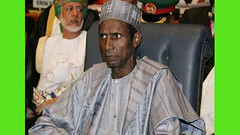
    The election was won by Umaru Yar’Adua, although legal challenges to the result lasted for months afterwards.

    Mr Iwu’s current term as Inec chairman ends in June 2010 and the Obama administration is keen that his past record be taken into account when a new chairman is appointed.

    Sick president

    The US demands came as a new US-Nigeria Binational Commission was formally inaugurated to improve co-operation between the two countries in areas such as trade, good governance and food security.

    President Yar’Adua has not been seen in public since he fell ill in November 2009.

    There was speculation that Mr Yar’Adua had in fact died.

    However, Muslim and Christian clerics who have visited him over the past week say that, although in poor health, the president is still alive.

    “We said the purpose of visiting him was to see if he actually exists,” Ibrahim Datti Ahmed, chairman of the Supreme Council for Sharia in Nigeria, told the BBC’s Focus on Africa programme last week.

    Mr Yar’Adua’s duties have been assumed by Vice-President Goodluck Jonathan.

    In March, Mr Jonathan dissolved the entire cabinet and made new nominations, most of which were accepted by Nigeria’s senate last week.

    Mr Jonathan’s new cabinet is expected to be formally inaugurated later on Tuesday.

    Story from BBC NEWS:
    http://news.bbc.co.uk/go/pr/fr/-/2/hi/africa/8604733.stm
    Published: 2010/04/06 10:26:49 GMT

  • 25 Confirmed Dead in Massey Mine Explosion

    Overnight, the explosion at the Massey Energy mine in Raleigh County, West Virginia has gone from six dead to 25 dead, making it the worst mining disaster in over two decades. With only 200 employees, one out of every eight working at the site died in the explosion. And more are feared dead.

    A huge underground explosion blamed on methane gas killed 25 coal miners in the worst U.S. mining disaster in more than two decades. Four others were missing Tuesday, their chances of survival dimming as rescuers were held back by poison gases that accumulated near the blast site, about 1.5 miles into the complex.

    Rescuers prepared to drill three shafts going down over 1,000 feet each to release methane and carbon monoxide that chased them from the mine after the blast Monday afternoon, Gov. Joe Manchin said.

    The explosion rocked Massey Energy Co.’s sprawling Upper Big Branch mine, about 30 miles south of Charleston, which has a history of violations for not properly ventilating the highly combustible methane, safety officials said.

    Yes, a history of violations. Federal regulators at the Mine Safety and Health Administration (MSHA) fined Massey Energy over $382,000 in the last year alone for violations at Upper Big Branch, including the very ventilation plan that caused this terrible accident. A look at the MSHA violation site for Upper Big Branch shows that the most recent violation was cited yesterday – yes, yesterday – and have been assessed on an almost weekly basis. Clearly the company saw the fines as part of the cost of doing business. There have been three fatalities at the mine in the past twelve years, but never anything like this.

    Massey Energy’s CEO Don Blankenship has a clear record of valuing profit over safety:

    This tragedy is the latest deadly disaster to involve coal baron Don Blankenship’s Massey Energy. In 2006, two miners died in a fire at Aracoma Mine after Blankenship personally waived company policy and told mine managers to ignore rules and “run coal.”

    Blankenship’s name also may be familiar to judicial watchers; he was involved in a case of buying a judge on the state Supreme Court to overturn a $50 million dollar ruling against his mining operation. He was seen vacationing with a Supreme Court judge in Monte Carlo before the ruling came out.

    There were a record-low 34 deaths last year from mining, but this incident is a reminder of the hazards of that work environment, and the need for penalties that change behavior on the part of the coal barons. The MSHA is a division of OSHA, where as a blogger fellow for Brave New Films I’ve been writing about the Protecting America’s Workers Act for a campaign called 16 Deaths Per Day. Yesterday’s tragic incident shows the need for real initiatives protecting worker’s health.

  • Youth Action

    Youth Action


    With all this talk about the general election and getting people out to vote if you are under 18 and can’t vote in this election you may be wondering how you can make a difference and take action on some of the big issues affecting the world including; climate change, Aid and ensuring that people everywhere get access to good quality education and healthcare.


    Well there are a number of ways for you to be involved:


    Set up a Youth Action Group in your school or college.

    Moved by the state of the world?

    Outspoken about what’s unfair?

    Excited about making a difference?


    Oxfam is looking for motivated young people like you to help trial a new project – Youth Action Groups – and get skilled up and active as campaigners on international poverty issues.


    Starting a Youth Action Group is your chance to join a movement for change. Oxfam is a vibrant global movement of dedicated people fighting poverty. Together. Doing amazing work. Together. People power drives everything we do. And we want you to join us.


    From making a video message, to designing posters, to inviting your local MP to school, working with others in a Youth Action Group won’t just help you build your skills, you’ll have a real impact raising the profile of crucial issues in your school and community too.


    Find out more about Youth Action Groups today by contacting Sophia, [email protected] 0121 634 3611


    Join the Youth Board

    We are looking for people aged 16-18 to our Midlands Youth Board.

    Determined Passionate and full of ideas, you’ll play a part in developing fun campaigning projects aimed at making a fairer world possible.

    You don’t need to know anything about campaigning already, you just need the enthusiasm to learn all about it, and the get-up-an-do to put those ideas into action. You’ll get an insiders experience of a big UK charity and the chance to sharpen your skills in communication and teamwork. For more information and to apply go to: www.oxfam.org.uk/youthboard


    QuestionTeen

    Do you live in the Leicestershire area?

    Want to Quiz some local politicians in the run up to the General Election?

    Oxfam is working with the Diocese of Leicester to bring you this special event.

    Come to Emmanuel Church, on Forest Road in Loughborough on Thursday April 22nd, and ask genuine difficult questions to genuine MP’s. Race? The environment? Hoodies? Poverty? Whatever is your burning issue – make it theirs. We’ll be joined by Conservative MP Edward Garnier, Labour MP Andy Reed, Lib Dem Peter Colley and a representative from The Green Party. Please note that this is not a Hustings.

    To register go to http://new.yp4l.com/questionteen/

    You must be over 14 to attend Question Teen. Whilst there is no upper age limit, those over 21 will not be permitted to join in the debates and questioning of MP’s.