Blog

  • Reminder: The Fed Is Meeting RIGHT NOW To Discuss A Possible Hike To The Discount Rate

    Don’t get caught with your pants down. The Fed is meeting right now to discuss a possible hike to the discount rate.

    Here’s the announcement from the Fed:

    ——–

    It is anticipated that a closed meeting of the Board of Governors of the Federal Reserve System at 11:30 a.m. on Monday, April 5, 2010, will be held under expedited procedures, as set forth in section 26lb.7 of the Board’s Rules Regarding Public Observation of Meetings, at the Board’s offices at 20th Street and C Streets, N.W., Washington, D.C. The following items of official Board business are tentatively scheduled to be considered at that meeting.

    Meeting date: April 5, 2010

    Matters to be Considered:
    1. Review and determination by the Board of Governors of the advance and discount rates to be charged by Federal Reserve Banks.

    A final announcement of matters considered under expedited procedures will be available in the Board’s Freedom of Information and Public Affairs Offices and on the Board’s Web site following the closed meeting.

    For more information please contact: Michelle Smith, Director, or Dave Skidmore, Assistant to the Board, Office of Board Members at 202-452-2955.

    Supplementary Information: You may call 202-452-3206 beginning at approximately 5 p.m. two business days before this meeting for a recorded announcement of any bank and bank holding company applications scheduled for the meeting; or you may contact the Board’s Web site at http://www.federalreserve.gov for an electronic announcement about applications and other expedited items, as well as procedural and other information about the meeting.

    Join the conversation about this story »

  • No surprise: Soda linked to diabetes, heart disease

    No surprise: Soda linked to diabetes, heart disease

    I don’t think another penny needs to be wasted studying soda… we already know this stuff is about as healthy as battery acid.

    Tastes like it too, if you ask me.

    But they’re throwing money at it anyway, and a new study shows that soda drinkers are more likely to come down with diabetes and heart disease.

    Big surprise.

    But clearly, people aren’t getting the message — because that sweetened sludge remains our national beverage of choice, with even little kids drinking a can or more a day.

    The new study, presented at the American Heart Association’s Cardiovascular Disease Epidemiology and Prevention conference, estimated that sugary drinks helped to create 130,000 new diabetes cases over the last decade.

    The researchers also said that soda caused 14,000 new cases of heart disease in that time.

    Look, I don’t know how they came up with these numbers — they could have pulled them off of bottle caps for all I know. But there’s no doubt that soda causes diabetes, heart disease and so much more — including obesity and osteoporosis, and not just some of the time.

    Drink this junk regularly, and you will get sick. It’s only a matter of time.

    Don’t think switching to diet sludge will save you. If there’s one thing worse for you than regular cola, it’s diet cola. Diet drinkers face all of the same problems as non-diet drinkers — and then some.

    As a bonus, they get to enjoy the side effects of aspartame, the toxic sweetener inside most of those beverages. This poison has been linked to seizures, coma, cancer, headaches, blindness, tinnitus, memory loss, and even death.

    If you want to know more about aspartame, read more here. You’ll never touch this stuff again.

    And as a final kick in the pants, diet soda drinkers don’t even lose weight. In fact, plenty of studies have shown that they actually get FATTER.

    Bottom line: If you want to be healthy, cut soda out completely — unless it’s plain old carbonated seltzer water.

    Naturally fizzy,

    William Campbell Douglass II, M.D.

  • Nissan Sentra SE-R: Taking Notes from Playbooks Past

    Back in the early 1990’s Nissan combined RC cars with some good old fashion rock-n-roll music to create some very cool commercials. It now looks like they’re revisiting the old playbook as their new commercial for the compact Sentra SE-R does the very same thing. This only goes to show you that some ideas, no matter how off the wall have staying power. I think it’s amazing that now, almost twenty years later these ads still seem as cutting edge as the day they were released. Hell, I wish Nissan would do all their commercials like this and by the way, did anyone notice the blacked out RC GTR camera car… simply brilliant.

    • Nissan Pathfinder

    • Nissan 300ZX


  • Privacy Reset for Google Buzz Coming Later Today

    Later today, Google will ask all Google Buzz users to reconfirm their privacy settings. Since the launch of the service, which was quickly overshadowed by a major controversy around the default privacy settings, Google has made significant changes to the Buzz start-up process and privacy settings. A lot of people started using Buzz long before these changes were rolled out, however. Starting this afternoon, all existing Buzz users will see a confirmation screen that summarizes their current settings and gives them the option to change these settings, as well as the option to turn off Buzz altogether.

    Sponsor

    The gradual roll-out of this confirmation screen will begin today and will likely take a while, so there is no need to be concerned if you don’t actually get to see this screen today.

    According to a blog post that will go up on the Gmail blog in the afternoon today, Google wants to ensure that even those users who joined Buzz long before Buzz automatically added people’s email and chat contacts to their social networks will see these changes. After all, not every Buzz users kept up with the day-to-day news about Buzz after the launch and many of these users are probably unaware of the changes Google has made since then.

    buzz_reconfirm_settings_dialog.jpg

    The confirmation screen will include a link to a video that explains how Buzz works, a list of all the people you are following and who are following you. There will also be a switch that allows you to turn off the list of people you are following on your public Google profile, as well as a link to all the your sites and services that are currently connected to Buzz. At the bottom of the page, users will then be able to either accept these settings or turn off Buzz altogether.

    Discuss


  • .Com and .Net Domain Prices To Go Up From July 1st

    .Com and .Net form a bulk of the registered and active domains on the Internet. However, if you have either a .com or .net domain or are planning to buy one after July 1st, you will have to pay an extra 7% on .com domains and extra 10% on .net domains.

    domain_names

    In a recent newsletter sent by GoDaddy, they have stated that VeriSign, the registry for .COM and .NET domains will increase the prices as stated above, this price increase will then be passed on to users by registrars like GoDaddy.

    The increase will also be applied when you renew .com or .net domains. Right now, .com domains can be purchased for around 10$, this might go up to 11$ or 12$ starting July 1st 2010.

    However, users can renew or register their domains before July 1st and continue paying the old rates. If you are a GoDaddy user, use the discount coupon "gda334c" to get a 30% discount on your new domain purchase or current domain renewal till April 25th 2010.


    Announcement: Missing Mobile News in the Main RSS Feed? We have decided to remove the mobile content from the main feed, please subscribe to our dedicated Mobile News RSS Feed at http://feeds.techie-buzz.com/techiemobile. Thank you for your understanding.

    .Com and .Net Domain Prices To Go Up From July 1st originally appeared on Techie Buzz written by Keith Dsouza on Monday 5th April 2010 01:43:38 PM. Please read the Terms of Use for fair usage guidance.

    Don’t miss these Related Posts:

    Join Techie Buzz on Your Favorite Social Networking Sites


  • Canadian Supreme Court To Hear Case Over Liability For Linking To Defamatory Information

    You may recall that a few years back, Canadian politician Wayne Crookes started suing a whole bunch of sites, including Wikipedia, Google, Yahoo and MySpace, just because of postings on those sites that Crookes felt were libelous. Whether or not the comments actually were defamatory was a big open question, but a bigger issue was why he was suing the service providers, rather than those actually responsible for the comments. Some of those lawsuits got tossed out on a jurisdictional technicality, but Crookes then also sued some others, claiming libel for just linking to a site that was potentially libelous as well. One of those sued was Jon Newton, the operator of P2Pnet.net, a site that many of you read. Newton had linked to the stories in question, but did not repeat was written in them or offer any commentary — and yet Crookes claimed that just the links were defamatory.

    Thankfully, both the district court and the appeals court said that just linking was not defamatory, but the reasoning was a bit odd, and left some potential issue open. Now, as a bunch of folks have submitted, the Canadian Supreme Court is gearing up to take on the issue. There are really two questions here: whether or not the initial link is defamation, and secondarily, whether or not it becomes defamation if you refuse to take down the link after being alerted to it being defamatory.

    In the US, Section 230 of the CDA protects website publishers in both cases. In Canada, the law is not at all clear on this issue, and there’s a very real threat of a pretty massive chilling effect if the Supreme Court decides that linking (or even refusing to take down a link) can constitute defamation. Hopefully, the Supreme Court agrees that merely linking should never be seen as defamation — and preferably, the Canadian Parliament makes this doubly clear by putting in place some basic safe harbors as well.

    Permalink | Comments | Email This Story


  • Rare Earth

    by Richard T. Stuebi

    Remember the white soul group on the Motown label, Rare Earth? If you do, sorry: this posting isn’t about them….

    Nope, it’s about the fact that rare earth metals represent a unique problem — and opportunity — in the cleantech realm.

    As PBS reported on “Newshour” a few months ago (transcript here), rare earth materials are important commodities essential to the production of many environmental technologies — from batteries to wind turbines to solar panels. Unfortunately, many of these materials are highly toxic and thus pose significant environmental hazards if mis-managed.

    Regrettably, since most of the world’s endowment of these rare earth materials is found in China, the extraction of these materials from the ground is often done with little concern for environmental protection.

    In addition, to the extent the world becomes reliant on technologies that depend upon rare earth materials, substantial geopolitical issues emerge as these elements become strategic inputs for economic activity. (In other words, replace “Saudi Arabia” with “China”, and “oil” with “rare earth metals”, and you get the idea.)

    So, cleantech innovators would do well to find economical, widely-available, and environmentally-friendly substitutes for rare earth metals — or to re-engineer cleantech widgets so that they don’t require these scarce and nsaty materials. There’s a lot of money to be made, and a lot of headaches to be saved, if we don’t become stuck over the rare earth barrel.

    Richard T. Stuebi is a founding principal of NorTech Energy Enterprise, the advanced energy initiative at NorTech, where he is on loan from The Cleveland Foundation as its Fellow of Energy and Environmental Advancement. He is also a Managing Director in charge of cleantech investment activities at Early Stage Partners, a Cleveland-based venture capital firm.

  • Filling our short-term fossil-fuel needs

    by Terry Tamminen

    Like many Americans, I battle with my waistline, watching the same twenty pounds come and go year after year. Eating everything from Tootsie Rolls to asparagus, at times the healthy fare wins over the junk food, but usually the other way around. No food is either good or bad, because consumption isn’t measured against a real plan to lose weight and get fit. It now appears that President Obama has adopted this Tootsie Roll approach to the nation’s energy needs.

    Last week the President said he would facilitate more oil drilling in U.S. coastal waters. Acknowledging critics, he said it was part of “a broader strategy that will move us from an economy that runs on fossil fuels and foreign oil to one that relies more on homegrown fuels and clean energy.” Unfortunately, the U.S. has no more chance of winning with this approach than I do of permanently losing weight with my unmeasured consumption of candy and veggies.

    In July 2008, then presidential candidate Barack Obama engaged several energy experts in a debate, asking each of us to argue against our own positions. At the time, politicians of both parties advocated for more domestic oil drilling, suggesting it could offset $4/gallon fuels that had become commonplace over the summer. Knowing that I come from California, which has repeatedly voted against it, he asked me to give him the best arguments FOR more domestic offshore oil drilling.

    First, I said, we have no right to destroy the environment, lives, and livelihoods of impoverished villagers in places like Ecuador or Nigeria, where oil for the U.S. market is extracted, while imperiously protecting our own fragile coasts, waterways, and air quality. If we want the benefits of convenient fuels, we should bear the majority of the true costs, especially those that we would never tolerate in our own backyard. Second, the carbon footprint of oil from thousands of miles away is obviously much greater than anything sourced closer to the end users.

    Finally, I argued that we need a plan to transition from fossil fuels—which are limited by Mother Nature and controlled by a few—to clean, renewable sources of energy that are both domestic and available to all of us. Once we have that clear blueprint, we should fill our short-term fossil-fuel needs from the sources closest to home to be more in control of our economic and environmental destiny.

    I stand by those three arguments today and call on the president to work with stakeholders across the nation to develop such a plan, which might be based around a two simple concepts:

    Given global competition for a dwindling oil resource, we should plan to power at least 75 percent of our vehicles with inexhaustible, clean sources of domestic energy by 2025. That target would inform policy—and a detailed blueprint to achieve the goal—on both fuels and vehicle technology.

    Given our role in creating the climate crisis, we should plan to power at least half of our electricity needs with inexhaustible, clean sources of domestic energy by 2025. That target would create a policy blueprint, both for the development of sufficient energy supplies and for making our uses of energy far more efficient than they are today.

    Mr. President, we need a real “strategy” that recognizes we will soon run out of oil and atmosphere, setting goals to sustain our economy and environment in equal measures. Within such a blueprint, we can then consider roles for all types of energy and assess the costs/benefits of each over time. Without a plan, just boosting supplies of various energy sources is no better than giving me more Tootsie Rolls and asparagus and hoping for the best.

    Related Links:

    Time for Obama to embrace another GOP energy plan

    Can we get some attention for our issues now?

    Obama was against offshore drilling before he was for it


  • Skin cancer rates rising at record pace

    Skin cancer rates rising at record pace

    Skin cancer rates are skyrocketing at a shocking pace… and the so-called experts are STILL blaming the sun for a problem manufactured right here on earth.

    New studies show that non-melanoma skin cancers hit more Americans than all other cancers combined, and five times as many people as breast or prostate cancer.

    Here’s how bad it is: Two million Medicare patients are treated for these skin cancers every year. Skin cancer cases shot up 77 percent between 1992 and 2006, and they’re still increasing by 4.2 percent annually.

    With numbers like that, you’d think even the experts might start to admit that we’ve been approaching this all wrong.

    Of course not — because those same experts are making a killing off all those procedures!

    Just listen to the researchers behind one of these studies, which you’ll find in the Archives of Dermatology. They’re urging people to spend even less time in the sun
    — and to slather on even more sunscreen if they do dare venture outdoors.

    Is anyone paying attention here?

    If the sun was REALLY causing skin cancer, and if sunscreen prevented it, we’d be cancer-free by now. We’re already spending less time outside than ever, and wasting billions of dollars a year on needless, dangerous creams and lotions.

    Meanwhile, just a couple of generations ago, we spent far more time out in the sun and ZILCH on sunscreen — and skin cancer was practically unheard of.

    One study last year spelled out what I’ve been saying all along: People with the highest levels of vitamin D have the lowest risk of skin cancer. Sure, you can get some of that from a pill… but historically, most people have gotten their D straight from the source: the sun.

    Sunscreen not only blocks the sun and stops the body from making vitamin D… but common ingredients in that gooey garbage have actually been linked to cancer, along with birth defects and sex problems.

    Forget the experts — their bad advice created this cancer explosion. Get outside more instead… just use a little common sense and head indoors when your skin starts to turn pink, and you’ll be just fine.

    William Campbell Douglass II, M.D.

  • Why Folks Are WAY Too Sanguine About The Possibility Of Bailing Out Basket Case US States

    In the new issue of the New Yorker, James Surowiecki has an article comparing the debt problems of our states to the member states of the EU.  Surowiecki points out that unlike European states, our states get “automatic fiscal stabilizers” from the federal government, which eases the problems.

    But for all that, I think he’s rather too sanguine about the fortunes of American states.  For one thing, while it’s true that the US government has greater institutional capacity to transfer money from feds to states, Europe may have a larger incentive.  If a member state defaults, the euro may well go under, causing havoc across the eurozone as their currency falls apart, and lenders start demanding currency risk premia.  If California defaults . . . well, a bunch of other states will get the fish eye from the financial market, but this probably won’t translate up to the national level.

    Perhaps more importantly, I think he dramatically underweights the risk of moral hazard:

    All this aid comes at a price, of course: it increases moral hazard, and it increases the national deficit. But the federal government is able to borrow money at exceptionally cheap rates, and, at a time like this, when the economy is still trying to find its feet, forcing states to cancel building projects and furlough teachers and policemen makes little economic sense. (Indeed, there’s a strong case to be made that more of the original stimulus package should have gone to state aid.) The European model would do more harm than good, as American history shows: in the early eighteen-forties, after the bursting of a credit bubble, many states found themselves in a debt crisis. The federal government refused to bail them out, and eight states defaulted–a move that cut off their access to credit and helped sink the economy deeper into depression. The U.S. did then what Europe is doing now, putting the interests of fiscally stronger states above the interests of the community as a whole. We seem to have learned our lesson. If Europe wants to be more than just Germany and a bunch of other countries, it should do the same.

    The moral hazard involved is no small thing.  We’ve already introduced quite a lot of it into the banking system, but at least the CEOs of those banks got the sack, and the rest have some genuine fear that regulators will get more involved in their business.  The Federal government is constitutionally prohibited from the kind of prudential regulation that would be necessary in the wake of bailouts.

    This is particularly worrisome because of the nature of the state problems.  This is not a classic sovereign debt issue, where there’s a giant overhang of high-interest bonds that can be renegotiated at a haircut, or bought down by money from outsized sources.  What the states have is a bunch of other obligations, especially to current and past employees.  I don’t see how these can be bought down, and there are substantial legal and political (not to say moral) issues with asking, say, current pensioners to “take a haircut”.

    If the feds bail out these states, they’re assuming an ongoing obligation–and encouraging other states to let their fiscal problems get as big as possible, so Uncle Sugar will have to pay off.  Leaving aside any ideological questions about robbing Peter to pay Paul, and the proper size of government,  the federal government simply cannot afford to take on all these new obligations–and if it did, its ability to borrow money would rapidly becaome unsustainable.

    Sure, there’s nothing wrong with giving states temporary assistance to keep the recession from hitting too hard–but we’re approaching the point where that’s not really what we’re talking about.  We’re talking about letting states make big promises without bothering to find sustainable sources of revenue with which to pay for them.  That’s not something the federal government can afford to encourage.

    Join the conversation about this story »

  • iPhone OS 4.0: Hopes and Predictions [IPhone]

    Bizarrely timed and impressively unleaked, iPhone OS 4.0 is coming—at least as an announcement—this Thursday. So what’s it going to change, really? Here’s what we think. And because it’s about eight times as fun, what we hope.
    More »


  • New Gallup Poll: Tea Party Less Popular than Russia, Communist China

    There’s not many surprises in the new Gallup poll about the Tea Party.

    The poll found that, surprise!, 70% of Teabaggers are conservatives, which means the 43% of the movement’s so-called “independents” are white men voters who pull the lever for the GOP, but don’t want to call themselves Republicans after George W. Bush’s pooch-screwing and with the cast of clowns currently running the party.

    What’s interesting, however, is that only 37% of Americans view Teabaggery favorably.

    Translation: the Teabaggers are really unpopular.

    By comparison, President Obama’s favorability number is nearly 20 points higher at 55% — while Russia and China come in at 47% and 42% respectively.

    The good news for the Teabaggers is they are still slightly more popular than Saudi Arabia (35%) and the Quitter (36.8%).

  • Your late night talk shows. Giff dem to me. | Bad Astronomy

    I am a big fan of The Late Late Show with Craig Ferguson, and I’m also a fan, bordering on a man crush, of the Mythbusters (Kari Byron, of course, is not a man, so my crush on her is purely — OK, mostly — platonic). Adam, of course, has been relegated to My Close Personal Friend™ status, but still.

    As it happens, Craig is a big Mythbusters fan as well. When he came up with the idea of having a robot skeleton sidekick, he turned to the one man who could realize his dream: Miles Dyson. I mean, Mythbuster Grant Imahara.

    grantimahara_rsskGrant has been working feverishly on the auto-sidekick for weeks, and tonight it will be unveiled on the show! I’m really squeeing over this, and can’t wait to see it.

    I love The Late Late Show for many reasons, but the biggest is Craig himself: he’s very funny, and extremely smart. He’s self-taught in many ways, and has had a rough life — he’ll be the first to say it was self-inflicted, but the bottom line is he’s pulled himself out of the muck and turned it all around. His humor is whip-crack fast, and he’s clearly a big fan of science, so of course I am powerless not to like him. Did you see his 5 minute rant about Copernicus (starting around the four minute mark)? I mean, seriously, Copernicus? Craig, I less-than-three you.

    And as part of his Robot Skeleton Army — as he calls his Twitter followers — I am very pleased that he’s using this occasion to raise money for Lollipop Theater, a way to get movies and TV shows to sick kids. If you see the hashtag #lollipoptheater in my own tweets today, that’s why.

    You can read more about Craig and Grant’s excellent adventure on NPR’s Monkey See blog (where I got the picture of Grant above) and in a great post by my friend Erin McCarthy at the Popular Mechanics site.

    And check your local listings for Craig’s show tonight. It’s on CBS, and is usually at 12:35 a.m. (11:35 p.m. central) though it may be delayed by basketball. And remember: it’s a great day for America everybody.

    Image credit: Grant Imahara.


  • Bill Brady: Beware of the attorney-academician Sheila Simon

    Posted by Rick Pearson at 12:30 p.m.

    Republican governor candidate Bill Brady says that in the match-up of running mates, voters should look at Democratic lieutenant governor candidate Sheila Simon and ask whether “we want another attorney-academician in politics.”

    Speaking on WGN-AM’s “Greg Jarrett Show” this morning, Brady touted his own running mate, 27-year-old Jason Plummer of Edwardsville, as someone who “understands the private sector” and the need to grow jobs. That, he said, was in contrast to the 49-year-old Simon, Democratic Gov. Pat Quinn’s running mate, who teaches in the law school at Southern Illinois University Carbondale.


    “I think it’s more the academician against a person who runs a family business—someone who’s involved in that,” Brady said.


    Plummer has faced questions about the depth of his business resume, which is largely built upon working in his father’s RP Lumber store chain and related businesses.


    “Jason Plummer knows what it’s like to meet a payroll. He knows what it’s like to risk capital to go out and invest in people and jobs,” Brady said. “Sheila Simon comes from a longstanding credible political family but she’s an academician and I think the people are looking for someone who understands the importance of jobs and keeping jobs.”


    Plummer has touted his creation and operation of a wireless Internet provider while still a college undergrad, but public records show it was his father who owned the firm and Plummer was never listed as an officer. Plummer also served one term as chairman of the Madison County Republican Party.


    Unlike Plummer, Simon has been elected to public office—a four-year stint on the Carbondale City Council which she gave up for a failed 2007 bid for mayor. Simon also served as an assistant county state’s attorney.


  • Lenovo Considers Acquisitions For Mobile Growth


    Lenovo Mobile Phones

    As computer-makers like Dell get ready to launch their first handset in the U.S., Lenovo has started considering acquisitions in order to beef up its mobile operations.

    In November, the world’s No. 4 PC brand, bought back Lenovo Mobile, a mobile handset maker it founded in 2002 and spun off in 2008. Lenovo paid $200 million in cash and shares in order to get the group back together. At the time, the company said it doesn’t intend on competing internationally, but rather will focus on China, where Lenovo Mobile primarily operates. But Lenovo’s CEO told a German newspaper over the weekend, that it’s considering further acquisitions, Reuters reports. “Let’s say, we are keeping an eye out. We will make an acquisition if a company really fits, if the price is good and if we think we will be able to integrate it into our group.”

    Names frequently dropped as likely buy-out candidates are Palm (NSDQ: PALM) and BlackBerry’s Research In Motion. But Lenovo wouldn’t necessarily have to buy a OS and handset maker in order to be more aggressive in the space. It could purchase an OEM, and then rely on open-source operating systems, like Google’s Android, Symbian, or LiMo. It could even work with Microsoft (NSDQ: MSFT), like it does on the PC side.

    Related


  • Time for Obama to embrace another GOP energy plan

    by Jesse Jenkins

    By Jesse Jenkins and Yael Borofsky

    With President Obama’s announcement Wednesday that the administration would support expanded offshore oil and gas extraction, it’s now apparent that price pressures on oil make political pressures on politicians impossible to ignore and that some expansion of offshore drilling is inevitable.

    But despite Green backlash against the Obama administration’s apparent embrace of “drill, baby, drill,” it’s actually another Republican energy plan Obama should turn to if he wants to make a real dent in America’s dependence on oil.  Embracing a GOP plan to put the hundreds of billions in potential federal revenues from new oil and gas royalties into a fund to accelerate clean technology innovation could offer Obama a bona fide opportunity to “reach across the aisle,” strengthen America’s energy security, and help make clean energy cheap.

    Don’t believe it? Here’s the breakdown…

    While much of the rhetoric used to advocate for offshore drilling deals with the threat of rising prices at the pump and our nation’s energy security, Energy Information Administration projections show that “access to the Pacific, Atlantic, and eastern Gulf [offshore] regions would not have a significant impact on domestic crude oil and natural gas production or prices before 2030.” At that point, access to the new portions of outer continental shelf (OCS) previously off-limits would cut gasoline prices at the pump by just three cents, a clearly insignificant step towards “energy independence.”

    What could have a significant impact on our energy security, however, would be to invest the hundreds of billions in potential federal revenues from oil and gas royalties to accelerate cleantech innovation and deployment, helping America develop the clean and affordable energy sources needed to truly diversify our energy mix and secure our freedom from oil.

    How much money are we talking about?

    According to EIA estimates, there are about 8 billion barrels of crude oil and 58 trillion cubic feet of natural gas (about 59.6 billion mmBTUs) potentially available in Eastern/Central Gulf of Mexico and Atlantic OCS areas previously off-limits to exploration and extraction (another 10 billion barrels of crude and 18 trillion cubic feet of gas may lie off Pacific coastal areas). That estimate does not include potentially recoverable oil and gas in the Arctic Alaska coastal areas also opened up in the president’s new proposal

    At today’s oil prices of roughly $85 per barrel, that works out to about $680 billion worth of new oil production and another $238.5 billion worth of gas at today’s relatively low natural gas prices (about $4/mmBTU).  Add in the recoverable reserves off Alaska’s North Slope and let’s call it an even trillion dollars worth of new oil and gas production (more if prices climb in the future).

    The federal Minerals Management Service (MMS) controls oil and gas leases in the OCS and collects 1/6 of the value of oil and gas produced from OCS areas. That means the MMS has the potential to collect over $165 billion in royalties from new offshore drilling. That’s far from a trivial sum of money.

    Of course, those royalties will be collected over the course of a couple decades and likely won’t start flowing until 2014 or later, but even after individual states close to drilling sites claim their share of the revenue there will still be a sizable chunk of change available that could be invested in the development of clean energy technology.

    (And there could be ways to front-load the royalty payments to get money flowing to cleantech sooner, such as a requiring a portion of the royalty value paid in advance upon signing the leases; this would have the additional benefit of helping discourage speculative efforts to lock up sites but not produce oil, accelerating production of new oil and gas).

    After all, we simply cannot drill our way to energy security. The New York Times reports that at current rates of consumption, estimates show that there could be as much as a three-year supply of oil and around a two-year supply of natural gas in the OCS areas. That’s not exactly a long-term ‘fix’ for an oil-addicted nation, which is why Obama noted Wednesday in his speech at Andrews Air Force Base that offshore drilling is meant merely to aid in the “transition to cleaner energy sources;” drilling is no alternative.

    We can, however, invest and invent our way to freedom from oil. That’s where (somewhat ironically!) the Republicans “all of the above” energy plan, aka the “American Energy Act,” has a leg up on the president—at least for now.

    Under the GOP proposal, put forth by House Republicans in June 2009, 90 percent of the federal share “of the revenues created by OCS exploration would go to a renewable energy trust fund to pay for a variety of renewable, alternative, and advanced energy programs.” This “American Renewable and Alternative Energy Trust Fund” would be dedicated to efforts accelerating the development of clean energy technologies that can truly help end America’s oil addiction.  If the federal government retained 75 percent of the royalty revenues from new OCS and Alaskan Coastal Plain production, this formula could represent an infusion of over $110 billion for critical clean energy investments over the next twenty years.

    So while the expansion of offshore drilling may seem like we’re taking a step back from a future free from oil, investing the royalty revenues in clean tech RD&D could amount to a big leap forward in the transition to a clean energy economy by securing a revenue source for clean tech that is not tied to embattled efforts to establish a carbon price—all while beginning the urgent work of securing America’s cleantech competitiveness and ensuring our energy security.

    Nearly the entire Republican caucus, not to mention a handful of Democrats, is already on record voting for this concept in the August 2008 vote on the New Energy Reform Act, introduced by the so-called Gang of 10 during the height of the oil price spikes in 2008.

    If offshore drilling is to move forward over the next few years, the Obama administration and Congressional Democrats should waste no time in embracing this clean energy investment plan. 

    Alternatively, Obama could look to pacify the deficit hawks by dedicating the royalty revenues to lower projected deficits—ignoring for a moment that it will be new industries and a growing economy that will have the largest impact on rebalancing the federal budget.  Obama could also heed the advice he’s likely to get from Beltway Green Groups who will no doubt urge the president to use the lion’s share of the funds for state revenue sharing in a (likely futile) attempt to entice votes from Southeast and Gulf Coast Senators for the troubled Kerry/Graham/Lieberman “comprehensive energy and climate” bill.  Either would represent another wasted opportunity to make a critical large-scale investment in our cleantech competitiveness and a future free from oil.

    With offshore drilling seemingly unavoidable, wouldn’t it be ironic if Republican plans for the resulting royalties wound up more supportive of cleantech investment than President Obama and the Democrats?

    Jesse Jenkins is the Director of Energy and Climate Policy at the Breakthrough Institute. Yael Borofsky is the Institute’s Staff Writer and Researcher and her writing can be found daily at the Breakthrough Blog

    Related Links:

    One more blow to the ailing Great Barrier Reef

    Filling our short-term fossil-fuel needs

    China’s global shopping spree: Is the world’s future resource map tilting East?


  • Polaris Ventures Doubling Capacity at Dogpatch Labs in Cambridge

    Dogpatch Labs
    Wade Roush wrote:

    Polaris Venture Partners of Waltham, MA, opened its first Dogpatch Labs startup incubator space in San Francisco in late 2007. A Cambridge, MA, version opened last September, followed by a New York edition in December, and together the three locations are now home to about 100 entrepreneurs, according to Polaris general partner David Barrett. But the number is about to go up: Barrett says Polaris is about to triple the amount of space it’s renting from host Allurent for the Cambridge incubator, from 2,300 square feet to more than 7,000 square feet, creating room for another 30 desks, on top of the existing 20, and twice as many startup teams.

    Right now there are 11 teams at Dogpatch Labs Cambridge, compared to 20 in San Francisco and 13 in New York. “We are trying to bring all three spaces into equity,” says Barrett. “We’re excited, because not only can we now encourage more great people to come in, but it will allow us to do a better job of hosting community events and providing space for entrepreneurs to just hang out.”

    At the same time, Polaris announced a corporate partnership program designed to give major technology companies greater access to Dogpatch entrepreneurs, and vice versa. The first partner is Microsoft, through its New England Research and Development Center, just a few blocks away in Kendall Square.

    Dogpatch Labs CambridgeBarrett says Polaris and Microsoft will plan joint events such as executive conferences and meetups for Microsoft’s BizSpark program, which is intended to help startup developers adopt Microsoft tools and platforms. “That gives entrepreneurs in the Dogpatch community access to directional guidance from Microsoft if they’re developing for platforms like .NET or Azure, or if they’re trying to build a business supported by Microsoft,” Barrett says.

    The expansion is a sign that the overall Dogpatch initiative—an example of what Polaris partners call “open source entrepreneurship“—is working more or less the way the firm hoped it would. That’s not to say that the incubators have yet produced companies that became investment home runs for Polaris. It’s far too early for that, and in any case, there’s no explicit agreement that Polaris will invest in Dogpatch companies, who tend to stay in residence for about six months, or even that it will have first crack at funding them. But the incubators do give the venture firm access to a steady stream of young, up-and-coming entrepreneurs, as well as a window on the hot technologies and platforms they’re exploring, from Facebook to Google Wave.

    “We think it’s working for everyone so far,” says Barrett. “It’s very early, and no one wants to claim victory, but we are very encouraged by what’s going on.” The main measure of the labs’ success, Barrett says, is that more than 10 Dogpatch resident or alumni startups have won …Next Page »

    UNDERWRITERS AND PARTNERS


  • Apple unveiling iPhone OS 4 on April 8th

    iPhone OS 4.0 event

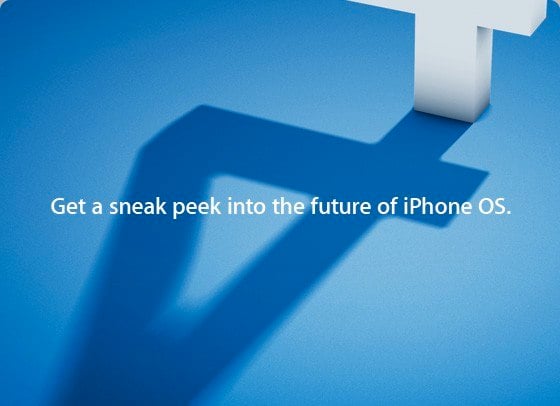
    Hot on the hells of the launch, Apple is continuing fell speed ahead, as they’ve invited a select group of media to come get a look at the unveiling of iPhone OS 4.0. As you can see in the image, the invite has a shadow of a large number “4” figure, and invites us to “Get a sneak peek into the future of iPhone OS.” The event takes place at the Cupertino campus, it’s just 3 days away, and we are excited. You?


    Tags:
    ,
    ,
    ,
    ,
    ,
    ,
    ,
    ,
    ,

    Apple unveiling iPhone OS 4 on April 8th originally appeared on Gear Live on Mon, April 05, 2010 – 9:26:35


  • Apple Store Goes On Security Lockdown When You Try To Buy A Laptop

    What would you think if this happened to you? This guy, Owen JJ Stone, says he walked into the Apple Store to get a laptop, and when he asked for a specific model, security went on lockdown. People were touching their ears, saying code words, and blocking the exits.

    What would you think if this happened to you? He doesn’t want to call it “racism”, but he definitely feels weird about it.

    We join Mr. Stone after he has just asked a male Apple store employee for a specific model Macbook:

    “The girl looks at me and she says, “Oh would you like me to show it to you?” And I said, “No, I have a Macbook, I had one, I have an iMac, I know what I want. If you could just get me one, that would be great because I’m kinda in a rush, I’d appreciate that.”

    So, the girl looks at the guy and says “forerunner.”

    […]

    When she said, “forerunner,” the gentleman touched his ear, and uh, then the security guard came up to the middle of the register, two people went and stood by the door, people were standing around me, and I’m like “Dude, do think I’m gonna steal this Macbook?”

    And he’s like, “Oh, no, no, no.”

    Here’s the link to the video where he tells the story. He’s thinking about writing a letter to Mr. Jobs. Should he? What would you do?

    Forerunner [OhDoctah] (Thanks, John!)

  • Go Get Your Zune 4.5 Update [Zune]

    The Zune 4.5 update we saw last week looked pretty good! More codec support, Smart DJ music discovery (similar to the iTunes Genius feature that’s pretty stellar with a Zune Pass), and a few other fun features. It’s available even sooner than we thought, so all you Zune owners go ahead and open up your Zune software on your computer and connect your Zune HD to get the latest and greatest. More »