Blog

  • Cloud News: Amazon Offers AWS Certification

    News from the cloud computing sector includes developments from Pengiun Computing, Software AG and Amazon:

    Amazon launches AWS certification program. Amazon (AMZN) announced the launch of the new AWS Certification Program with the first of several exams that will made available in 2013. The new AWS Certification Program helps to fill this need to recognize IT professionals that possess the skills and technical knowledge necessary for building and maintaining applications and services on the AWS Cloud. To earn an AWS Certification, individuals must demonstrate their proficiency in a particular area by passing an AWS Certification Exam. Individuals looking to prepare for an exam can attend courses through AWS Training to help gain proficiency with AWS services. “AWS Certified Solutions Architect – Associate Level” is the first exam available, which tests skills for technical professionals and solutions architects involved in the design and development of applications on AWS. “With cloud computing being quickly adopted by organizations of all sizes around the world, in-depth training programs as well as certifications for individuals who have demonstrated competence with AWS are increasingly important,” said Adam Selipsky, Vice President, Amazon Web Services. “The AWS Certification Program helps organizations identify that the employees, partners and consultants they depend on for their AWS solutions are well-versed in the best practices of building cloud applications on AWS and have the skills to help them be successful.”

    Penguin Computing Icebreaker Cloud CS storage. Penguin Computing announced the immediate availability of the Icebreaker CS storage platform for large scale-out cloud storage deployments. The Icebreaker CS is a fully integrated and pre-configured appliance that incorporates Scality’s RING Organic Storage software. It will be available directly from Penguin as well as through Scality. Based on its Icebreaker 4860 storage server the Penguin Computing Icebreaker CS offers 240TB of raw data in a 4U form factor. It is powered by an Intel Xeon E5-2600 processor and configured with 128GB of RAM. Organizations with multiple sites can achieve even higher levels of availability with Scality RING’s geo-redundancy features. “Performance, availability and scalability requirements of large scale cloud businesses cannot be met with traditional IT approaches to storage, that typically excel in one of these areas and fall short in another,” said Charles Wuischpard, CEO Penguin Computing. “To meet the demands of our customers that require storage solutions at the petabyte scale we based our large scale storage appliance Icebreaker CS on software from Scality. With its distributed no-shared architecture and its sophisticated Advanced Resilience Configuration, Scality RING offers excellent storage scalability and great availability without compromising performance.”

    Software AG acquires LongJump. Software AG announced the acquisition of the Cloud Platform vendor LongJump. LongJump’s technology is fully complementary to Software AG’s ARIS, Terracotta and webMethods, product suites extending the company’s business value both within existing enterprise customers and to SMEs. Software AG will also continue to develop and extend LongJump’s Platform-as-a-Service products for fast and flexible cloud based development and deployment of situational and case management applications. “The digital enterprise is all about real-time business insights driving fast decisions and faster reactions,” said Wolfram Jost, CTO at Software AG. “With this latest acquisition we have taken a major step in optimizing both the business knowledge and IT skills needed to develop flexible, business process driven, situational applications and deploy them rapidly wherever they are needed.”

  • People Scared Of Google Glass Call On White House To Ban The Technology

    Google Glass has some people spooked. They think that Glass turns everybody into a surveillance cyborg that constantly violates their privacy. Fittingly, a group called Stop the Cyborgs has been outspoken on the privacy implications of Glass, but now some are calling for a blanket ban.

    In a We The People petition submitted on Friday, a man from Seattle, Washington is requesting that the government “Ban Google Glass from use in the USA until clear limitations are placed to prevent indecent public surveillance.” As the title suggets, the three people who have signed it thus far are scared of the privacy implications:

    Google Glass is a new twist on technology which hasn’t had clearly stated limits on the locations in US communities where it can and cannot be used. In order to protect our communities we need limitations to prevent indecent public surveillance of our friends, children, and families.

    It is hard to prevent it because the hardware gives no notification that it is recording an individual at any given time.

    I think most can agree that hardware like Glass shouldn’t be allowed in certain places. It’s totally reasonable to ban its use at bars, strip clubs and other places that respect client confidentiality. That being said, the last sentence is totally false as Glass does notify people that it’s recording. The only thing is that it those notifications can be turned off if the hardware is rooted, but doing so will be beyond the capabilities of the average user when it launches sometime in the next year.

    Besides, most people won’t be indiscriminately monitoring you with Google Glass. They’ll be too busy taking selfies in the shower.

    [h/t: TechDirt]

  • What You Need To Know About The Liberator 3D-Printed Pistol

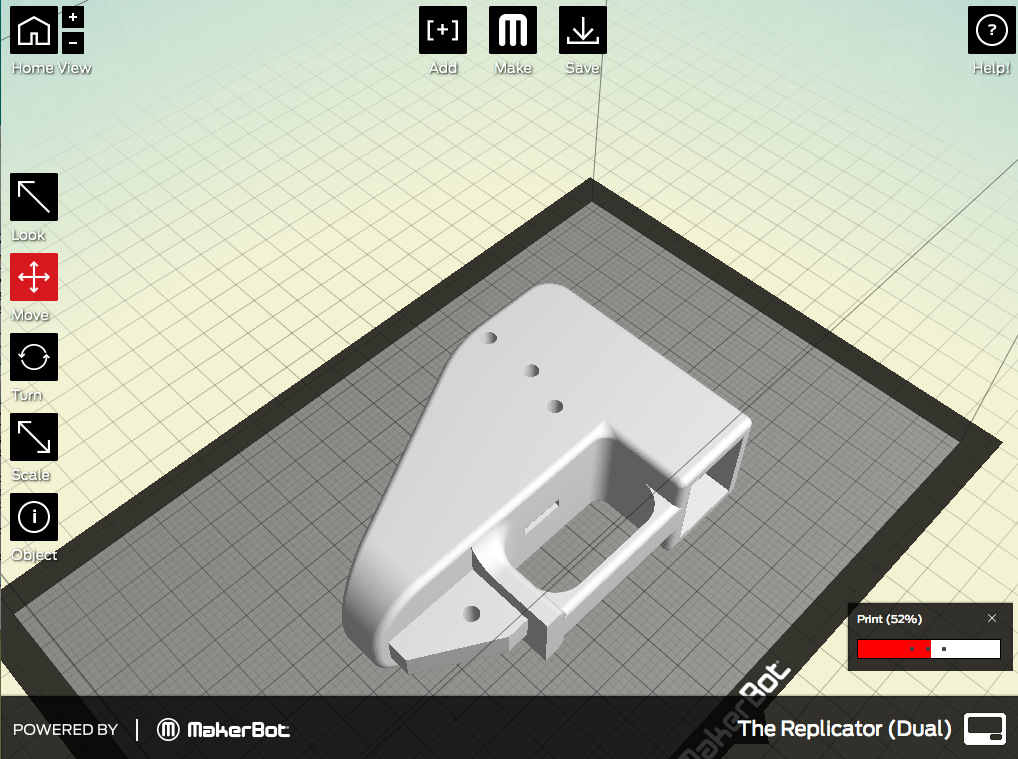
    liberator_1

    Now that we have confirmation that the Liberator 3D-printed pistol can be fired without destroying the body, let’s address what this means for 3D printed weapons and, presumably, homemade weapons in general.

    Does the pistol work? Yes, it can be fired at least once without damage to the body of the gun or the person at the trigger. Andy Greenberg at Forbes has seen the gun fire multiple times and the video above shows one shot.

    Is it a real pistol? No. This is more of a zip gun than a pistol. Zip guns were improvised firearms made of tubes, rubber bands, and nails. Kids fool-hardy enough to shoot one (this cohort included my own father who showed me how to make them) were promised a second of hair-raising and potentially deadly excitement when they made zip guns out of pipe and rubber. To fire one, you fitted the cartridge into the pipe and pulled back on the nail attached to the rubber band. If it hit the charger properly the bullet would fire. A similar thing is happening here: a spring-loaded nail is hitting a cartridge.

    The barrel of the gun is threaded but I wouldn’t expect this weapon to be very accurate. Think of this gun as a controlled explosion generator. It uses a very small .380 caliber bullet which is deadly, to be sure, but quite small.

    Could I print one? Yes. You can easily download the 3D-printable files from DEFCAD.org (here is a private mirror) and if you have a 3D printer you can easily print any of these parts.

    The creators built this gun using the Stratasys Dimension SST 3D printer, a high-resolution printer that works similarly to the Makerbot but offers a far finer and more durable print. This printer has a layer thickness of .25mm, however, which the Makerbot can easily match.

    Would I print and fire this using on my Replicator? No. I’m far too risk averse. I asked multiple 3D home printer manufactures and none would comment specifically on firearms, so there is no implicit or explicit promise of safety.

    Will someone try to print it on home equipment? Yes.

    Is this legal? Yes, but I’m no lawyer. It is a legal, homemade firearm and those have been made in basement workshops for most of this century. In most cases, a Federal Firearms License is mandatory to begin making or manufacturing weapons. For example, anyone building this gun would be a “Manufacturer of Destructive Devices, Ammunition for Destructive Devices or Armor Piercing Ammunition.” Anyone can apply for this license, thereby making the manufacture of this thing legal. For decades, however, the need to license was a minor barrier to entry into what would be a non-trivial process. The tools and materials necessary to build a real gun in your basement were expensive and it made economic sense to legally safeguard your home workshop. The manufacture of a 3D-printed weapon, however, is trivial, and can be built by anyone with an investment of $8,000 or so for a Stratasys printer or, for the less risk-averse, a home 3D printer that costs about $2,000.

    It is also designed to comply with the Undetectable Firearms Act of 1988 because it contains a small block of steel. From the print instructions:

    How to legally assemble the DD Liberator:
    -Print (ONLY) the frame sideways (the shortest dimension is the Z axis). USC18 922(p)(2)(A)*: “For the purposes of this subsection (The Undetectable Firearms Act of 1988) – the term ‘firearm’ does not include the frame or receiver of any such weapon;”
    Thus, you can legally print ONLY the frame entirely in plastic, even without 3.7 ounces of steel.-Once the frame is finished, epoxy a 1.19×1.19×0.99″ block of steel in the 1.2×1.2×1.0″ hole in front of the trigger guard. Add the bottom cover over the metal if you don’t want it to show.-Once the epoxy has tried, the steel is no longer removable, and is an integral part of the frame. Now your gun has ~6 ounces of steel and is thus considered a ‘detectable’ firearm. So now you can print all the other parts.

    It is, in short, legal to make a gun and this is a gun.

    Can this be stopped? No.

    What’s next? The cynic would say we will soon see the first murder with a 3D-printed gun. The cynic will also say that this will cast 3D printing in an entirely new, more sinister light and could affect the home printing industry dramatically. The cynic would also expect a great deal of messy legislature to come out of this that will, depending on which side of the gun debate you fall on, “get these off the streets” or “infringe on our rights.”

    A cynic would also say that the entire Defense Distributed agenda is an example of trolling that will eventually do more harm than good. The cynic would also say that a harsh government crackdown would also be equally silly.

    A nuanced approach is absolutely necessary.

    The non-cynical would find this to be more a proof of concept than a real manufactured weapon and say that it was bound to happen eventually. 3D printing has made manufacturing trivial. This is a logical evolution of an entrenched industry and a centuries-old product. Gunsmithing is not a new hobby. However, it just got much easier.

  • Iceland: Where Mixed Modular Design Meets Free Cooling

    ast-thor-modular-room

    The Avania Thor data center in Iceland features the use of both container-style data center modules (at the left, in the rear) and “modular rooms” assembled from pre-built components. Both products are supplied by AST Modular.

    The diversity of modular data center design can be seen in a single large room in Reykjavik, Iceland. That’s where the Advania Thor Datacenter has added new capacity using a “modular room” assembled from pre-built components, which sits alongside a pair of stacked container-style modules.

    Both phases of the design were created by AST Modular, and use the Barcelona company’s “natural free cooling” (NFC) technology, which harnesses Icelandic fresh air to cool servers for customers like Opera Software, the mobile browser pioneer.

    The first phase of the project was completed in 2009 as proof of concept,and comprised of one 40-foot containerized data center with 17 racks at a power density of 14 kilowatts per rack, plus a modular room with 50 racks at 7 kilowatts.  The second phase, which is currently being finalized, features one 105 square meter modular room plus a separate cooling room hosting 8 of AST’s cooling modules providing indirect free cooling.

    Air-to-Air Heat Exchanger

    This approach use an air-to-air heat exchanger that takes advantage of the cool climate without introducing outside air into the servers – an important consideration in a land where volcanic ash is a concern. By avoiding the need for chillers or refrigeration, Advania is able to achieve a Power Usage Efficiency (PUE) of 1.16, according to AST.

    “The latest expansion clearly shows that our prefabricated data center options – either containerized or modular – help customers achieve a Capex differed growth and generate savings,” said Davide Ortisi, Marketing Director at AST Modular. “On the other hand our Indirect Free Cooling NFC will minimize Advania’s Opex and guarantee security since Iceland can be an environment with high concentration of volcanic ashes and external contaminants.”

    The approach taken by Advania reflects one of the benefits that’s been advanced for modular designs -the ability to expand incrementally. AST says the additional data center space has been built with “minimal” electrical and mechanical upgrades and finalized in less than 2 months upon shipment of components from Barcelona to Iceland.

    “We have seen a tremendous increase in datacenter space demand in the last 12 months” said Ægir Rafn Magnússon, Sales Director at Advania Data Centres. “Iceland is a very competitive country for data centers. The huge availability of green and affordable geothermal power combined with low outdoor temperatures and highly skilled IT professionals allow us to go to market with a first in class service at a very low price.”

    Here’s a look at a time-lapse video showing the construction of an AST modular room at the Advania facility.

  • Every Entrepreneur’s Least Favorite Question

    It’s happened to every founding CEO. You’re in a meeting — with fellow founders, potential partners, VCs, or even just friends — and you’re asked that simple question that often feels like the hardest one:

    “How are things going?”

    “Great!” you respond

    Cue, awkward pause. Where do you go from there? As a CEO, I have to answer a lot of tough questions: What’s our 5- and 10-year vision? Where do we hire next? Should we focus on existing products, or launch our next one? But for the open-ended “How are things going?” there’s no perfect answer.

    The best response obviously depends on your audience, but I’ve found there are four different ways you can tackle this question that will most likely to lead to a productive conversation.

    Highlight two recent accomplishments. In most conversations, you want to communicate that things are going well — not abstractly “well,” but that your team has been accomplishing awesome, concrete things. To convey this, I find it’s most helpful to highlight a few (usually two) specific recent accomplishments. For example: “Things are great! We just crossed 900,000 monthly active users and brought Facebook on as a hiring partner.”

    Why two? Because if you name more, you sound like you’re listing off a memorized litany of accomplishments, and that’s annoying. And if you only name one, it comes off like you want your audience to be impressed by that one achievement. Whereas when you name two successes, they can choose which one they want to react to, and you come off less like you’re baiting them to compliment any specific aspect of your business.

    Talk about one problem you’re working on. An alternate strategy, especially useful with people who are familiar with your accomplishments, is talk about what you’re working on next. For example: “Things are great! Right now we’re building out the ability for applicants to upload a resume and cover letter to our site, so they can apply to a job without ever having to leave.”

    Bonus points: Slip in a good ask. For example, “We’re considering whether to integrate with applicant tracking systems like Resumator and JobScore. I’d love to talk to the teams over there at some point.” Here, you’ve given the other person an opportunity to be helpful, and if he recognizes a useful introduction he could make he’ll often be more than happy to offer. And don’t judge too quickly whether the person you’re talking to can help: When it comes to networking, you’ll often be surprised by who’s able to help out.

    Talk about what’s different than 3 or 6 months ago. This is a great approach for people who you haven’t seen in a while and want to catch up on your progress, and is essentially a variation on the “two recent accomplishments” approach. But instead of highlighting the great deals you closed last week, take a step back and think about how your company has evolved since you last spoke to this person.

    For example, “Things have been moving very quickly for us! When we first launched our product, we had a one-size-fits-all model, but we now have a really great tiered offering — we launched a lower-price-point ‘simple’ version aimed at small businesses, and we’re also building out a premium product designed for larger enterprise clients.” This tactic is very useful in guiding your audience to reshape their perception of you and catch up on where you’ve grown, as well as to shake off any stereotypes you suspect you and your company got pigeon-holed into earlier on.

    Ask for advice. Finally, when you’re speaking with someone who has expertise you could use, “How are things going?” is the perfect segue into asking for it. Start by sharing a relevant update, then transition to your question. “Things are great! We’ve been selling quite a bit and are growing our sales team, which is exciting. I know you guys did a fantastic job with expanding sales last year — can I actually ask your advice sometime on the best way to interview and hire sales people?”

    To avoid putting people on the spot, you can smooth the conversation by suggesting you’d like to talk “sometime” about your question. In many cases, that “sometime” will turn into now, and your conversation partner will dive into giving you advice. But, by giving her the option to say, “Sure, shoot me an email and we can talk about it,” you avoid putting anyone on the spot (and can set yourself up for a better and more in-depth conversation than you could have at the post-conference happy hour you’re standing at).

    When you run a business, summarizing “how things are going” is more or less impossible. But the secret to answering this question is realizing that your goal isn’t to summarize — it’s to set the conversation in motion along a productive path that generally relates to how you’re doing and what you’re working on. Have a couple good answers prepared (and update them regularly), and when someone asks how things are going, you’ll find yourself ready and poised to guide the conversation down the path you want it to go.

  • Google Talks Online Reviews For Ten Minutes

    As part of the “Friday 15″ series for small business owners, Google has shared a video discussing the importance of online reviews.

    It features Whitney Lemon from Google’s’ “Get Your Business Online” team and Cody Julian, the associate marketing manager at Google Fiber.

    According to a study Julian cites, seventy percent of Americans say they look at product reviews before making a purchase decision.

  • Helen Mirren, as Queen Elizabeth II, Yells at Street Drummers

    Dame Helen Mirren is known for playing characters with proper manners, but the actress this weekend used a few choice words when excoriating a group of street performers who were interrupting her performance.

    According to a Telegraph report, Mirren was dressed as Queen Elizabeth II when she took to a London street and yelled at the performers outside the Gielgud Theature in Westminster. It was reported that her language was quite strong as she demanded the troupe quiet down. She was reportedly also accompanied by Rufus Wright, who was also costumed in character as Prime Minister David Cameron, making the entire spectacle seem rather bizarre.

    Mirren and Wright are currently starring in The Audience, a play in which Mirren, playing the queen, meets with British Prime Ministers from the 50s on. The play debuted in February and Mirren last week was awarded an Olivier Award for her role as the queen. Mirren also won an Academy Award for best actress in 2006 for playing Elizabeth II in the movie The Queen.

    According to the Telegraph, the drummers were part of a parade promoting a music festival called As One in the Park.

  • Clearwire board: Sprint buyout is our best chance of survival

    Clearwire is making its case to its shareholders to approve Sprint’s $2.2 billion offer to gobble up the remaining half of the company Sprint doesn’t already own. In a letter to shareholders sent Monday, the Clearwire board said that the Sprint buyout represented the best strategic option for shareholders and painted a bleak picture of Clearwire’s future if it pursued other deals.

    Dish Network in January submitted an unsolicited counterbid for Clearwire offering an 11 percent premium over Sprint’s $2.97-a-share offer, but Clearwire made no reference to Dish’s proposal. Clearwire said it investigated several other possibilities, including proceeding as an independent mobile broadband carrier, which is what the Dish deal would entail. But Clearwire management claimed that those alternatives were either infeasible are or wouldn’t dig Clearwire out of its current financial hole.

    Clearwire tried to sell part of its treasure trove of airwaves back in 2010 and again in 2012, but it couldn’t close a deal despite consulting with 37 prospective buyers, the letter said. The letter said Clearwire also looked into additional debt and equity financing option and even investigated a financial restructuring through Chapter 11 bankruptcy, but neither assured the company’s survival, nor offered much value to shareholders.

    In order to survive independently Clearwire needs another major wholesale broadband access customer besides Sprint, the letter said, but the obvious candidates – the major mobile operators – aren’t interested. They prefer to own their spectrum and build their own network rather than lease Clearwire’s capacity. Given that situation, the Clearwire board concluded Sprint would remain Clearwire’s primary customer for the foreseeable future, so becoming fully owned and controlled by Sprint made the most sense.

    Last week, a group of Clearwire shareholders went into revolt, telling the SEC they wanted either Sprint to make a better offer or force Clearwire to consider Dish’s offer. Meanwhile Dish is playing both sides of the transaction. Not only has it submitted its bid for Dish, it is challenging Sprint’s own buyout offer from SoftBank with a $25.5 billion counterbid.


    Related research and analysis from GigaOM Pro:
    Subscriber content. Sign up for a free trial.


  • Dell snaps up Enstratius to build cloud momentum

    You have to give Michael Dell credit: his company’s still moving and shaking despite what have to be considerable distractions as he and his private equity pals take the company private. On Monday morning, Dell said it is buying Enstratius, a startup that provides tools and dashboards to manage hybrid and private clouds.

    Terms were not disclosed but here’s how Dell described its new acquisition:

    “Enstratius is available as software-as-a-service or as on-premise software that enables full control from within a customer’s data center, or via a hosted service … and complements the capability Dell recently acquired from Gale Technologies, now Active System Manager (ASM), by providing enhanced multi-cloud management and application configuration capabilities and integrates converged offerings with cloud systems management.”

    cloud stackFor the past few years, Dell has plotted a tricky course as it tried to morph from a PC and server vendor to a provider of software, cloud and managed services. Toward that end it has bought companies ranging from Wyse and Boomi to bolster its cloud credibility and Quest Software for its data center management and automation tools. Like its rivals in traditional IT — companies including HP and IBM, Dell faces growing competition for enterprise and webscale workloads from Amazon Web Services. 

    Here’s how GigaOM’s Derrick Harris described Enstratus (the company added the “i” a few months ago) when he wrote up the company’s $3.5 million Series A funding in 2011:

    “EnStratus is similar to the more widely known RightScale service, although enStratus actually supports more clouds. It currently claims support for Amazon Web Services, AT&T Synaptic Storage, Bluelock, Cloud Central, Cloud.com, CloudSigma, EMC Atmos (e emc), Eucalyptus, Google Storage, GoGrid, Nimbula, OpenStack, Rackspace, Terremark, VMware vSphere, VMware vCloud Express and Windows Azure.”

    Not surprisingly, George Reese, CTO of Minneapolis-based Enstratius, said Dell and his company align well. Enstratius runs a tight ship and has managed to stake a claim in enterprise cloud management with “just Series A financing,” Reese said via email.

    Reese added that Dell:

    “Sees cloud management as a key value point in the cloud computing stack. By acquiring us, they acquire established leadership in cloud management aimed at enterprise needs. Customers don’t want a single solution on a single stack, they want a solution that enables them to interact with many different cloud platforms, public and private. The Enstratius acquisition immediately gives Dell leadership in this area over other large technology vendors.”

    Dell ownership gives Enstratius more resources to attack that market faster, he added.
    This news comes just an hour or so after Quest competitor BMC announced plans to take itself private. Which just goes to show, if you don’t like the current IT landscape now, just wait a minute.

    Related research and analysis from GigaOM Pro:
    Subscriber content. Sign up for a free trial.


  • Carmen Electra Celebrates 41st In Vegas

    I hope I look this good when I’m 41.

    Singer and actress Carmen Electra hit up Crazy Horse III in Vegas over the weekend to celebrate her 41st birthday and was looking amazing in a skin-tight black dress. The sexy lady had something else to celebrate, as well: the release of her new single, “Bigger Dick”. Carmen danced to the track with friends at one point and was given a special birthday cake, as well as strawberries and whipped cream.

    Electra has made it a tradition to celebrate at the gentlemen’s club and gave a shout-out to the venue, saying, “I love coming here to Crazy Horse III every year to celebrate with my friends here in Las Vegas! This is the best birthday ever!”

    Electra is more well-known for her modeling and singing than for her sense of humor, but she showed off some seriously funny acting chops in 2005′s “Dirty Love”, which was written by fellow funnylady Jenny McCarthy.

    Image: FameFlyNet

  • SNL mocks Google Glass as a device for hapless dorks

    SNL Google Glass Skit
    When your product is being ridiculed on Saturday Night Live long before it actually releases, it’s safe to say that you’ve got a major potential image problem. This is the situation that Google now faces with its Google Glass headset after Saturday Night Live cast member Fred Armisen skewered Google’s new device on a Weekend Update segment. In the skit, Armisen struggled to get Glass to implement a Wi-Fi password and he jerked his head around awkwardly while sifting through assorted menus before getting busted for watching porn on Glass in public. The skit’s depiction of Glass users as hapless dorks is not a flattering one and is likely something that Google will have to work very hard to combat if it doesn’t want Glass to become the next Segway. A full video of the skit is posted below.

    Continue reading…

  • Here’s Metallica Performing The Star-Spangled Banner

    Metallica frontman/guitarist James Hetfield and guitarist Kirk Hammett played “The Star-Spangled Banner” at the Giants/Dodgers game a few days ago, in a segment that in some ways felt like it could have been the intro to a Metallica album of yesteryear (think “Fight Fire With Fire,” “Battery,” or “Blackened”).

    Unfortunately, what followed was just a baseball game and not five minutes of heavy metal thunder. Still worth a watch.

    Note, both Metallica members are wearing Giants jerseys, and have Giants logos on their guitars, as the band is from San Francisco.

    The Giants won the game 4-3.

    Oh, and here’s Lars throwing out the first pitch:

  • Fitbit’s Flex wristband goes on sale: harder to lose, easier to track

    When I started wearing Fitbit’s clip-on fitness tracker a few months ago, I loved how easy it was to hide. You can clip it to a pants pocket (or ladies can clip it to an undergarment) and no one has to know that it’s there.

    But I, like a few of my colleagues and other users, soon discovered a downside to Fitbit’s (see disclosure) discreet design — it’s so inconspicuous that you can forget about it entirely. On several occasions, it ended up in my laundry hamper, on the verge of taking a dunk in the washing machine. And many days, I’d simply forget to re-attach it to an article of clothing.

    So I was curious to check out Fitbit’s newest device, the Flex wristband, which the company debuted earlier this year at the Consumer Electronics Show and is available starting today.

    Like the Nike Fuelband and Jawbone’s UP, the Flex is a sporty band worn around the wrist. It logs steps taken, distance traveled, hours slept and active minutes – a new stat measuring the number of moderate-intensity cardio minutes experienced a day. It syncs wirelessly via Bluetooth with Fibit iOS and Android apps and also displays data through an online dashboard.

    fitbit oneI chose Fitbit’s One tracker over the Fuelband and UP precisely because I didn’t want an extra accessory on my wrist. But after wearing the Flex for a couple of days, I can see the benefits of the new design. It’s nice not rummaging through your laundry hamper to find the tracker or trying to find a suitable pocket each day on which to clip it. And while I loved the One’s sleep-tracking and alarm capabilities in theory, I rarely actually put it in the device’s nighttime wrist band so that it could do actually do its job. With the Flex, it’s easier to monitor sleep and use its wake-up feature because the tracker is already attached to your wrist (although you do need to remember to tap it into sleep mode).

    I also liked the simplicity of the Flex’s display. With the One, I was constantly fumbling under layers to check my steps or loading the app and waiting for the Bluetooth connection to show my progress. But the Flex includes LED lights that indicate how close you are to achieving your daily goal instead of an actual screen that shares stats. With a couple of taps, it shows one to four lights, with each light representing 20 percent of your daily steps. When you reach your goal, the device buzzes in acknowledgement.

    Still, despite the extra convenience I experienced with the new Flex design, I’m still not in love with its aesthetic. The band was more comfortable and unobtrusive than I expected it to be, but (like the Fuelband and UP) it’s still more of an accessory than I’d like it to be. It also took me a while to get the band to snap into place on my wrist (the company acknowledges that the clasp can be tricky but wanted to err on the side of making it more secure).

    Those who already have a Fitbit or other activity tracking device might not be in a rush to buy another. But it’s an attractive, full-featured option for those in the market for an activity tracker — and its $99.95 price tag might be more appealing than the slightly more expensive Fuelbands and UPs.

    Disclosure: Fitbit is backed by True Ventures, a venture capital firm that is an investor in the parent company of this blog, Giga Omni Media. Om Malik, founder of Giga Omni Media, is also a venture partner at True.

    Related research and analysis from GigaOM Pro:
    Subscriber content. Sign up for a free trial.


  • Anna Nicole Smith: Daughter Goes All Out For KY Derby

    Anna Nicole Smith’s daughter, Dannielynn, has made appearances on the Kentucky Derby red carpet before, but this year she outdid herself in the outfit department, and her dad played along.

    6-year old Dannielynn must have a fondness for flying nannies, because she wanted to dress as Mary Poppins for the event. But she didn’t go it alone; her dad, Larry Birkhead, dressed as Dick Van Dyke’s character from the film, Bert. The duo had their costumes custom made for the night and Dannielynn was glowing as she posed for photographers. She’s had some experience; last year, Dannielynn was chosen to be the face of Guess Kids, following in her famous mom’s footsteps.

    Image: Twitter

  • Clustrix nets $16.5M to push its database outside the box

    NewSQL database player Clustrix just netted $16.5 million in new Series C funding, bringing total investment in the 7-year-old company up to $46.5 million. Clustrix will use the cash to build out distribution on both public and private cloud environments, expanding beyond the on-premises beachhead it’s established with its Clustrix appliance.

    The round includes contributions from Clustrix’ current bakers Sequoia Capital, U.S. Venture Partners, and ATA Ventures.

    clustrix“We have successful production environments running around the world with our appliance — so now the goal is to open up distribution to developers,” CEO Robin Purohit said in an interview. Towards that end, Clustrix recently made the new version 5.0 of its proprietary database available on Amazon Web Services. It’s already available on Rackspace, GoGrid, Equinix and BlueBoxGroup infrastructure.

    Here’s how GigaOM’s  Stacey Higginbotham wrote about the initial launch in 2010:

    Clustrix [claims] that it’s built a transaction database with MySQL-like functionality and reliability that can scale to billions of entries. Clustrix plans to sell its appliance (which consists of more than a terabyte of memory and its proprietary software) to web firms that don’t want to take on the complicated task of sharding their data (replicating it across multiple databases), or moving to less robust database options like Cassandra or a key value store such as what’s provided by Twitter.

    Jesse Proudman CEO of BlueBox, one of Clustrix’s hosting partners, characterized Clustrix as a “‘fire and forget’ solution that takes care of driving scale within MySQL. Its core premise is unlimited scalability without having to build that logic into your application … [it] takes care of MySQL sharding internally.”

    Clustrix competes most directly with dbShards if a customer really cares about MySQL compatibility and with NuoDB if they don’t, according to Curt Monash, president of Monash Research.

    So when it comes to big-scale, Clustrix has a story to tell, but the market is flooded with rivals. Still, it doesn’t help that the overall cloud database category will be under the microscope given that Xeround, a  MySQL startup, is shutting down this week, as GigaOM first reported on May 1.

    Related research and analysis from GigaOM Pro:
    Subscriber content. Sign up for a free trial.


  • Google Says Glass Could Be Harmful To Some Eyes

    A lot of kids are starting to play with smartphones and tablets very early in their lives. It may not be a good idea for kids to wear Google Glass, however.

    Google itself says as much in a FAQ for the product. This is straight from the page:

    Glass isn’t for everyone. Like when wearing glasses, some people may feel eye strain or get a headache. If you’ve had Lasik surgery, ask your doctor about risks of eye impact damage before using Glass. Don’t let children under 13 use Glass as it could harm developing vision. Also, kids might break Glass or hurt themselves, and Google’s terms of service don’t permit those under 13 to register a Google account. If Glass is not for you and you wish to return it, do so before the end of the applicable refund period.

    There are only six of the so-called “frequently asked questions,” and oddly one of them is “Can I use glass while operating a jackhammer?” Google’s response is, “Use caution,” noting that it will not protect your eyes from debris, balls, sharp objects, or chemical explosions.

    So, probably not a good idea.

    [via AndroidHeadlines]

    Image: Stop the Cyborgs

  • How Cloud Computing Has Empowered The End User

    cloud-keys-dreamstime

    Until the last couple of years, organizations have been focusing technologies around corporate efficiency, growth capabilities and the ability for business continuity. Of course, these are all still important. However, with the advancements around cloud computing, WAN technologies and virtualization, a new trend has begun to emerge. Because of cloud computing and IT consumerization, there is now a distinct focus on the end user.

    Targeted data center technology is driving better performance, happier users and improved productivity. More users are bringing their own devices into the workforce. Not only has IT consumerization changed the IT playing field, more companies are conducting workforce analysis to see how they can make their employees happier and more productive. A lot of those results came back with something simple: work place technology flexibility.

    As more organizations begin to leverage cloud technologies, they will turn their focus to optimizing the end-user experience. Furthermore, they are going to try their best to optimally deliver more workloads with better resource utilization, both at the data center and at the end-user level. There are already more solutions which directly help data center administrators control users and the information that they are trying to access. Going forward, be prepared to see many more user-centric technologies start to rise up. Let’s understand why:

    • Remote users. More contractors and users are now logging in remotely. There has to be a system in place that’s capable of supporting such an environment.
    • Flexible work schedules. More employees are asking to work from home, or during their own hours. For many organizations, this isn’t an issue. However, delivering a positive user experience over the WAN to someone’s house can prove to be a challenge.
    • International user base. Technologies are allowing us to re-provision hardware and software to accommodate new time zones. This means we don’t have to have duplicate resources to support more users.
    • IT consumerization. Almost every organization is allowing their users to bring in an iPad or smartphone into an environment. These organizations are continuously tasked with allowing users to connect to corporate data.

    Cloud computing has facilitated the growth in end-user devices being brought into the corporate environment. Furthermore, more organizations are creating truly distributed platforms where users have the freedom to log in from anywhere, anytime and on virtually any device. End-user optimization and the performance of an application or desktop are vital for optimal workforce productivity. When the focus turns to the end-user, here are some technologies to keep an eye on:

    • Complete User Abstraction. Imagine being able to carry all of your settings with you at all times. I mean literally – all of them. From how your applications function, to the slightest detail in your profile – all yours. It’s happening now and will continue to grow. Organizations like AppSense are presenting the ability to abstract not only the user, but the hardware and software layer as well.
    • More ShareFile/Dropbox. Right now, companies don’t like Dropbox. However, there is a need for a secure file sharing platform. It will grow and it will enter the enterprise. Organizations can now create Dropbox-like environments and completely silo their data. That means information doesn’t have to leave a data center – or even a region.
    • Content Optimization. Not just WAN optimization. Specific QoS at the content level. Things like ICA, PCoIP, Flash, Video and Audio are all end-user centric. This type of content will be easier to manage. And, it won’t require a big hardened appliance to do so.
    • Mini-WAN Accelerators. Much like their bigger brothers, these would be given out to very remote employees. Why not optimize traffic into their home to ensure a better user experience? When the costs come down, this technology will see some big growth.
    • More Cloud APIs/Connectors. More applications are being built in the cloud space. As a result, there has been a greater emphasis around cloud connectors and APIs. The idea is to help the user connect faster to more applications around the web. Moving forward, these technologies will continue to grow and expand as more cloud-based platforms are brought up.
    • More IT Consumerization Control. Almost every organization is facing the BYOD truth. There are more users, more data and a lot more devices trying to connect into a network. Instead of blocking users, many data center administrators have switched tactics and are now trying to empower the end-user. Solutions like XenMobile or MobileIron create granular BYOD policies and controls to allow administrators to deliver more content to the end-point. Remember, the goal isn’t to block or track devices – it’s to allow users to become more efficient as well.

    Cloud computing and IT consumerization weren’t just new technological platforms. They were a new way of thinking. IT administrators are now working with a widely distributed networking infrastructure with components possibly being located all over the world. Furthermore, there is the challenge to deliver more applications, workloads and data to end-users which are not using traditional means of access.

    There are core benefits in focusing your IT efforts around the end-user. Not only will organizations create better user personality profiles, they’ll be able to align their business around end-user functionality. This means creating an environment which allows the end user to become more efficient, utilize more devices, and – very importantly – enjoy using your company’s technology platform. At the end of the day, this all translates to a happier and more productive user.

  • Celebrating and Listening to Our Nation’s Teachers

    Editor's Note: This is a cross post from the official blog of the Department of Education. You can find the original post here.

    So many of America’s teachers are amazing. Each day, they take on the extraordinary responsibility and highly complex work of moving all students forward. As I visit schools across the country and talk with teachers at the U.S. Department of Education, they astound me continually with what they accomplish every day. Not only are teachers some of the smartest, most compassionate people I know, but they do work that few of us could accomplish on our best days.

    During Teacher Appreciation Week, the people who value teachers often take time to send them a note of thanks or a token of appreciation. This is appropriate. The least we can do once a year is to push “pause” on our lives and thank them in the short term. However, what our teachers really need—and deserve—is our ongoing commitment to work with them to transform America’s schools. They need us to acknowledge them as professionals who are doing our nation’s most important work. We can begin this work by making it a priority to listen toand to celebrate teachers.

    Here are some ways we plan to listen to and to celebrate teachers at the Department of Education this week.

    Listening: On Monday, May 6, we will host a Google hangout celebrating African-American educators around the country, broadcasting from the campus of Howard University. You can view the conversation – “Celebrating African-American Teachers in our Classrooms” –live at 4 pm Eastern or check out the archived version of the Hangout afterwards at our YouTube site. You can also follow the discussion on Twitter at #AfAmTeachers. On Wednesday and Friday, our Teaching Ambassador Fellows will host roundtable discussions with teachers of children with exceptionalities and teachers of English language learners. We want to know from them what is working in their schools, what is not working, and how we can better support them.

    Celebrating: Every day this week I will be making phone calls to great teachers who are leading change from their classrooms. We will also be celebrating teachers on Twitter; please be part of that by using the hashtag #thankateacher. On Wednesday I will drop by a local Teacher Appreciation Breakfast to thank teachers for making tremendous progress closing gaps and raising achievement in their school. We are also hosting a reception at the Department for the more than 400 current and former teachers who work at the Department of Education, and talking about how we can better make use of their experiences to improve our work.

    Walking in Teachers’ Shoes: One of my favorite activities all year long is our ED Goes Back to School Day, taking place this year on Thursday, May 9. More than 65 of my senior staff and regional officers will shadow a teacher for a day or half-day, witnessing firsthand how demanding and rewarding it can be to juggle reforms, pedagogy, and practice. After the shadowing, the teachers and staff will meet with me back at ED to talk about their experiences and share lessons learned. Last year our staff benefitted tremendously from the experience, talking about what they saw for months afterward and connecting their experiences with their daily work here.

    I encourage everyone to take time this week to not only take a more active role honoring teachers, but to listen to them actively and to celebrate their great work. I hope this week will be your chance to ask a teacher, How can I support you in America’s most important work, all year long?

  • Punched Ref Dies After Time in Coma

    A Utah man died on Saturday after being punched while refereeing a soccer game one week ago. According to an Associated Press report, 46-year-old Ricardo Portillo died at a Salt Lake City hospital after spending a week in a coma.

    Portillo had been the referee at a recreational soccer match last Sunday, when he was punched on the side of the head by a 17-year-old player. Portillo had just given the youth, a goalkeeper, a yellow card for shoving another player. The referee became dizzy and then began vomiting blood, according to witnesses. He suffered brain swelling and fell into a coma after being transported to a nearby hospital.

    According to the AP report, the teen is currently in a juvenile detention center on aggravated assault charges. Authorities have indicated additional charges may be filed in the wake of Portillo’s death.

  • Virtual Reality Brings Your Public Execution To The Living Room

    The Oculus Rift is pretty awesome. Even a charming old lady thinks so as it allowed her to visit the Tuscan countryside without leaving her kitchen. It was only a matter of time, however, before somebody made something a bit more menacing, and the results are hilarious.

    Three developers in the span of a few days created a mini-game called Disunion – The Guillotine Simulator. As the name suggests, it’s a first person simulation of having your head chopped off. It only has visual and auditory feedback for now, but the demonstrators make sure to deliver a light karate chop to the neck for an added effect. As expected, the results are hilarious.

    Disunion – The guillotine simulator from André Berlemont on Vimeo.

    It will be interesting to see what developers come up with next on the Oculus Rift. Virtual reality has the potential to finally catch on this year, and short demos like this make me confident that we’ll start seeing some really unique experiences later down the road.

    [h/t: Kotaku]