
Blog
-
Warner Bros. sued for copyright infringement by Keyboard Cat, Nyan Cat creators
-
Firefox OS Simulator 3.0 Moves From Preview To Stable Release
In March, Firefox released a preview of the latest Firefox OS Simulator. Some developers may not have jumped on board for fear of it being an unstable preview build, but that fear is no longer valid as the stable build is now live.
Mozilla announced this week that Firefox OS Simulator version 3.0 is now available to all as a stable release. The original preview from March added features like push to device, rotation simulation, basic geolocation API simulation, manifest validation and more. The new stable build includes all of the above features, plus some new ones:
- Keyboard shortcut to repackage/reinstall/restart the current app – drastically improving workflow speed, especially for packaged apps
- Significantly reduced download/installation size of the Firefox OS Simulator
- Faster start time (partly due to above with smaller size)
- Much newer versions of Firefox OS and Gaia
- General bug fixes, making it more functional and reliable
- OS-standard ways in the menu to close the Simulator, with corresponding keyboard shortcuts (Alt + F4 on Windows, Cmd + Q on Mac, Ctrl + Q on Linux)
With this new release, Mozilla has also decided to revamp its Firefox OS Simulator documentation. You can take a look at that here. While you’re at it, you should also check out the Firefox OS Simulator walkthrough example for some tips and tricks.
If you have yet to start developing for Firefox OS, you can grab the latest stable build of the Simulator at the Firefox add-ons Web site.
-
Kris Jenner: New Wig Makes Her Look Like Daughters
Kris Jenner slipped on a wig during a water excursion in Greece recently, which gave her a spooky resemblance to her daughters.
The 57-year old looked laid-back while on vacation with her family and took a few spins on a jet-ski while she was there. They also spent time on a huge yacht in Mykonos before heading back to L.A. to finish filming their reality show.
Of course, since photos of the Kardashian’s mom-ager hit the web, they’ve gone viral as no one can quite figure out why she’s wearing a disguise.
Interestingly, pregnant Kim–who had joined her family initially–was summoned for by beau Kanye West and left the party early.
“Kanye sent a private jet to Greece to pick Kim up. The plane flew to Paris and now they’re spending more alone time there together,” said a source.
Images: Splash

-
Physicists from CERN team up with TED-Ed to create five lessons that make particle physics child’s play
Particle physics. To some, the words may produce anxiety. And while, yes, it is complicated — it is far from incomprehensible. Today, the European Laboratory for Particle Physics, better known as CERN, held its first TEDx event, an illuminating look at how particle physics intersects with other disciplines.
As part of TEDxCERN, physicists from the famous institution, home of the Large Hadron Collider (and birthplace of the Word Wide Web), teamed up with animators from TED-Ed to create easy-to-understand animated lessons that explain concepts like dark matter, big data and the Higgs boson in lay terms.
Below, watch all five animations and find out: How did the universe begin? What’s up with antimatter? And why is everyone so excited about the Higgs boson? Enjoyable whether you are new to these terms or have been studying them for years.
The beginning of the universe, for beginners. (Lesson by Tom Whyntie, animation by Hornet Inc.)
How did the universe begin — and how is it expanding? CERN physicist Tom Whyntie shows how cosmologists and particle physicists explore these questions by replicating the heat, energy and activity of the first few seconds of our universe, from right after the Big Bang.Exploration on the Big Data frontier. (Lesson by Tim Smith, animation by TED-Ed.)
There is a mind-boggling amount of data floating around our society. Physicists at CERN have been pondering how to store and share their data for decades – stimulating globalization of the internet along the way, while “solving” their big data problem. Tim Smith plots CERN’s involvement with big data from 50 years ago to today.Dark matter: The matter we can’t see. (Lesson by James Gillies, animation by TED-Ed.)
The Greeks had a simple and elegant formula for the universe: earth, fire, wind and water. Turns out there’s more to it than that — a lot more. Visible matter (and that goes beyond the four Greek elements) comprises only 4% of the universe. CERN scientist James Gillies tells us what accounts for the remaining 96% (dark matter and dark energy) and how we might go about detecting it.What happened to antimatter? (Lesson by Rolf Landua, animation by TED-Ed.)
Particles come in pairs, which is why there should be an equal amount of matter and antimatter in the universe. Yet scientists have not been able to detect antimatter in the visible universe. Where is this missing particle? CERN scientist Rolf Landua returns to the seconds after the Big Bang to explain the disparity that allows humans to exist today.The basics of boson. (Lesson by Dave Barney and Steven Goldfarb, animation by Jeanette Nørgaard.)
In 2012, scientists at CERN discovered evidence of the Higgs boson. The what? The Higgs boson is one of two types of fundamental particles, and it’s a particular game-changer in the field of particle physics, proving how particles gain mass. Using the Socratic method, CERN scientists Dave Barney and Steve Goldfarb explain the exciting implications of the Higgs boson.
-
AT&T releasing ‘All In One’ prepaid plan in June

Consumers seeking a commitment-free mobile service will now have another option next month when AT&T launches their ‘All In One’ prepaid brand. Plans are still tentative, but it’s probable that AT&T will offer a tiered-plan system dependent on the type of phone.
Pricing for feature phones will likely start at $35 a month, and smartphones will start at $50 a month. This type of plan will provide customers with unlimited talk, text, and a 2GB data cap. There are rumors of another plan being added on that will offer 5GB of mobile data for $70 a month.
If the above estimates hold true, this new ‘All In One’ brand will provide significant savings when compared to their current GoPhone prepaid service. It is also expected to undercut the price of T-Mobile’s prepaid plan. There is no information on hotspot capabilities right now, but AT&T would have to include some kind of package in order to compete with T-Mobile’s hotspot offering of 2.5GB of data for $60 a month. There is also the question on if these will work with LTE phones.
If these rumors become a reality, AT&T will be reeling in customers left and right who are no longer willing to deal with long-term contracts.
source: FierceWireless
Come comment on this article: AT&T releasing ‘All In One’ prepaid plan in June
Visit TalkAndroid for Android news, Android guides, and much more! -
Why Google Glass is worth doing even if it goes down as the next Segway

-
EIA Provides Updated Capital Cost Estimates for Electric Generating Plants
IER provides future levelized costs of electric generating technologies based on analyses from the Energy Information Administration (EIA) for the Annual Energy Outlook 2013 here. Levelized costs represent the present value of the total cost of building and operating …
-
If Star Wars Took Place In Australia Instead Of A Galaxy Far, Far Away
The guys at StuntBear have put together, “Aussie Star Wars: Episode IV: A New Bloke,” promising “deep SW references” throughout. Which ones can you find?
If you enjoyed that, they also have a Cantina Band rock cover on SoundCloud.
-
Facebook Settles Timelines.com Trademark Lawsuit
Facebook has settled year and a half-long litigation with Timelines.com, according to a recent filing with the SEC.
The case involved Chicago-based Timelines.com, which lets users to create interactive “timelines” based on historical events. Back in October of 2011, they sued Facebook for trademark infringement just weeks after Facebook CEO Mark Zuckerberg unveiled the new Timeline profile page at the company’s f8 conference. Soon after, Facebook countersued, saying that the word “timeline” was generic and did not deserve trademark protection. The trial was supposed to have begun on April 22nd, but was delayed at the last minute.
Here’s the pertinent bit from the filing:
We are also party to various legal proceedings and claims which arise in the ordinary course of business. Among these legal matters, in two cases, Summit 6 LLC v. Research in Motion Corporation et al. , and Timelines, Inc. v. Facebook, Inc., we have reached agreements to settle the matters. The cost of settlement in each case, which is included in the accompanying condensed consolidated financial statements for the three months ended March 31, 2013, was not material to our business, financial condition, or results of operations.
Facebook adds that they expect no adverse effect from the settlements:
Although the results of these other lawsuits, claims, government investigations, and proceedings in which we are involved cannot be predicted with certainty, we do not believe that the final outcome of these other matters will have a material adverse effect on our business, financial condition, or results of operations.
That’s all we have right now. I’ve reached out to Facebook for additional info and will update this article accordingly.
[Form 10-Q via Inside Facebook]
-
Tower Climber Falls, Dies in Seattle
A man climbing a power tower in Seattle has died, but not for lack of climbing ability.
According to an Associated Press report, the man was climbing a 200-foot power tower when he touched a high-voltage power line and was electrocuted, falling to a platform that was around 150 feet off the ground. The incident occurred around 12:30 am PDT on Friday morning.
The man remains unidentified and the Seattle fire department has not yet determined why the man was climbing the tower.
The fire department called in a helicopter to help ascertain the situation after it received reports of a fire on the tower. Witnesses had reported seing a bright flash and sparks. After finding the body, Seattle’s power company cut the power to the lines so that the fire department could recover it. The AP report stated that a “cap” and cellphone were found near the body.
-
US Department of Defense Okays BlackBerry 10 Lineup
The DoD has tested and approved The BlackBerry Z10, Q10, PlayBook 2.0 and BlackBerry Enterprise Service 10 for secure use on DoD networks. The agency is the largest employer in the world with over 2.13 servicemen and civilians.

Regarded as having some of the strictest security requirements in the world, the DoD’s approval of these products and services should pave the way for other government agencies to consider a BlackBerry 10 deployment of their own.
-
This Guy Is Unbelievable With A Remote Control Helicopter
There’s no way you’ve ever seen skills like these with a remote control helicopter.
Just nuts.
-
Researchers Bring Us Closer To The Cyborg Future With A Bionic Ear
Work on growing organs is progressing smoothly, but slowly, thanks to the help of 3D printers. That same technology has now enabled scientists to create entire external body parts, like ears.
Phys.org reports that researchers at Princeton University have created a 3D printed ear made out of biogel. The ear contains a small antenna that’s able to pick up radio waves, and hear stereo sound when two are combined. What makes this particular feat more interesting is that the researchers were able to merge the electronic antenna with the biogel tissue in a way that’s at least somewhat natural.
“In general, there are mechanical and thermal challenges with interfacing electronic materials with biological materials,” said Michael McAlpine, an assistant professor of mechanical and aerospace engineering at Princeton and the lead researcher. “Previously, researchers have suggested some strategies to tailor the electronics so that this merger is less awkward. That typically happens between a 2D sheet of electronics and a surface of the tissue. However, our work suggests a new approach — to build and grow the biology up with the electronics synergistically and in a 3D interwoven format.”
This isn’t the first time that external body parts have been made with a 3D printer. Earlier this year, we brought you the story of the two designers that made a functioning hand for a boy born without one with the use of a 3D printer.
The difference between the two is that the hand was merely a prosthetic. Princeton’s bionic ear belongs to the rising trend of smart prosthetics, or artificial body parts that can replicate the function of the original. In this case, the electronics in the ear would allow one to hear again. It could also be used to enhance hearing by allowing humans to pick up radio signals without the use of additional hardware.
If you want to read more about Princeton’s research, check out the study at Nano Letters.
[Image: Frank Wojciechowski]
-
How will we measure the internet of things?
In writing about the plethora of startups, devices and strategies that companies large and small are throwing at the internet of things, I’ve been thinking about market size. Cisco says it will generate $14.4 trillion in profits by 2022. GE says it will add $10 trillion to $15 trillion in GDP by 2030. These numbers are hard to be believed. For example the federal government only brought in $2.45 trillion in tax revenue in 2012.
But there’s also the question of how to measure the market or the value. Do we count the devices themselves? The dollars spent on platforms and services that tie connected devices together? What about subscriptions to wireless networks? In GE’s case it’s counting dollars saved by implementing better data gathering systems. But the whole idea of trying to measure what is fundamentally a technological shift as a market baffles me.
There’s no question the internet of things is going to be big, but to separate the reality from the hype its worth looking for hard data. If not at market size or potential profits, then let’s just try to see where people are in terms of interest in the products. For example, check out these numbers from a March Yankee Group survey of about 2,300 people.

That seems like a relatively small percent of the population planning on buying a new connected device in the next six months. And the numbers are somewhat odd, in that I don’t think even 5 percent of users are planning to buy a new smart meter –something utilities tend to provide. So I’m taking this data with a grain of salt, but I am looking for good ways to think about the market size and understand how rapidly people and companies are adopting connected devices into their homes and business processes.
This is a real trend, but it’s clear we’re still at the beginning of the massively hyped shift that will lead to real value creation. I just don’t know how to measure how much.

Related research and analysis from GigaOM Pro:
Subscriber content. Sign up for a free trial.- Smart Grid Apps: Six Trends That Will Shape Grid Evolution
- Analyzing the wearable computing market
- Key technologies for the smart city


-
Herocraft releases Ant Raid on the BlackBerry PlayBook
Herocraft has released Ant Raid for the BlackBerry PlayBook Tablet. The game uses interesting touch mechanics and looks like an action-packed tower defense.

Ant Raid has you command a small army of ants while larger enemies attack from all sides. Divide your forces well and get powerups to survive. Play through the game’s story mode or play survival mode for endless waves of enemies.
Click here to buy Ant Raid for PlayBook for 99 cents from BlackBerry World.
-
The Google Now dilemma: Yes, it’s kind of creepy — but it’s also incredibly useful
One of the reasons I decided to make the switch from using an iPhone to an Android phone — in addition to the freedom it allowed me from Apple’s walled garden — was that I was interested in trying out Google’s version of “augmented reality” search, namely Google Now. Although I’ve used it periodically over the past few months, the utility of it really started to hit home while I was on a recent trip to Europe and relied on my smartphone as a lifeline.
While there is something undeniably creepy about the Google Now service, I have to admit that it is also very useful — so much so that I couldn’t imagine going on a trip without it. I’m already imagining how it and other kinds of “anticipatory data” services (including Google News updates) might work through Google Glass.
Useful information when you need it
It’s not that Google Now is really all that revolutionary, in the sense of being surprising or magical or having whiz-bang special effects: it just collects a broad range of information about you and your activity from your search history, your calendar, your email, web services you are signed into, and so on, and then uses that to show you information that is relevant to what you are doing or where you happen to be (Google recently introduced it for iOS as well as Android).

In a way, that could be part of the reason Google Now is so appealing — it doesn’t try to impress you, it just works silently in the background, in more or less the way you would expect it to. That in itself is something to be grateful for.
The first time I noticed myself depending on it (or at least noticing how useful it was), came when I was getting ready for my flight to Italy: sliding upwards from the home button on the Nexus 4 showed a series of Google Now “cards,” and the first one said that my flight had been delayed by an hour. Since I was panicking at that point about how much I still had to do before leaving for the airport, that information was incredibly helpful. I could take a bit more time and relax.
Meanwhile, the second Google Now card showed the traffic on the highway and told me that I should probably give myself more time than usual to get to the airport — and when I got closer to the time of my departure, a third card showed my boarding pass information, including boarding time and the gate number (Google Now got that info from my calendar, but it also supports scannable boarding passes for a limited number of airlines).

Not revolutionary, but evolutionary
Again, none of this information was specific to Google Now, or derived magically by Google search trickery: I could have easily found out about my flight being delayed by using a service like FlightStats, or by checking the website for the airline or the airport itself — and I could have checked the traffic on any number of sites. But the point is that doing these things would take time, and I was already pressed for time. Seeing it all displayed in front of me in a simple way, without me having to do anything, was exactly the kind of thing a virtual assistant is good for.
Google Now continued to perform this kind of function while I was travelling (once I got a local SIM card, of course, so that I wouldn’t get robbed by my carrier for roaming charges). It told me that my connecting flight in Munich was on time, which allowed me to prepare for possibly not making my connection — and once I arrived in Italy, it informed me of the weather, the traffic from the airport in Rome, and also showed me photos of nearby sights that I might want to visit.
These latter aspects were also very useful for someone visiting a foreign country: I didn’t have much use for them while I was at home, but they instantly became much more important when I was travelling. Like the flight information or traffic, I could have found that content myself by doing a web search — but it was much handier to have it displayed for me automatically. And I started to imagine what it might be like to simply look at something like the Colosseum with Google Glass and have information about it appear in front of my eyes. Geeky? Yes. But also hugely useful.

The privacy tradeoff is worth it
The part that clearly disturbs some people about Google Now is the data collection that is involved in making it work: the tracking of your web searches, your calendar appointments, your location via GPS, the photos you have posted, the flights you are preparing to take, and so on. There’s no question that this is invasive — and some users will undoubtedly decide that it’s not worth the tradeoff, and choose to keep the information to themselves. I think the benefits outweigh the disadvantages.
Are there ways Google could use this information that I might not like? Of course there are. But I trust that Google is aware enough of the dangers — both legal and commercial — of engaging in that kind of behavior that they will avoid it. While some may choose to see Google’s ambitions in this area as evil, I think the company’s goal remains the same: to provide services that encourage users to spend more time on the internet and produce more data that improves Google’s search and/or advertising algorithms. And I am okay with that.
In return for providing some anonymized data and behavior patterns, I get access to a personalized assistant that is not only more unobtrusive than any human version would be, but is also faster and completely free. That’s a pretty good bargain.

Related research and analysis from GigaOM Pro:
Subscriber content. Sign up for a free trial.- Connected world: the consumer technology revolution
- What the Google-Motorola deal means for Android, Microsoft and the mobile industry
- The future of mobile: a segment analysis by GigaOM Pro

-
TED Radio Hour presents “Unstoppable Learning”
 Our minds and bodies constantly master lessons from our surroundings. In other words, we seem to have a natural inclination to learn. That is the idea behind this week’s TED Radio Hour: “Unstoppable Learning,” brought to you by NPR. This episode explores that dynamic experience of learning that begins in the womb and how recognizing this essential nature will revolutionize the way we teach.
What happens when you stick a computer in a wall, three feet off the ground, in a slum without so much as running water? “Unstoppable Learning” kicks off with TED Prize winner Sugata Mitra, who found that he had stumbled upon a new method of education — self-directed, with no adults around. He found that the children in the slum, who had little access to education, were able to teach themselves English and even biology just from a computer.
In the next segment, science writer Annie Murphy Paul asks, “When does learning begin?” She shares a startling answer: that learning begins not in preschool or kindergarten, but in the womb. Alison Gopnik then continues to examine the learning that happens during infancy — she finds that despite the drooling and baby talk, these little ones may in fact be geniuses.
Finally, teacher Rita Pierson — the star of today’s talk — expresses the value of establishing strong relationships between student and educator. This begins by being a positive presence, constantly inspiring students to look towards their potential. On Tuesday, May 7, this inspiring teacher will also appear in TED Talks Education — our first televised special — alongside Sir Ken Robinson and Geoffrey Canada. Make sure to tune in to PBS at 10/9c to see her in action.
To hear TED Radio Hour’s “Unstoppable Learning,” check your local NPR schedule to find out when the show airs today. Or listen to it via NPR’s website »
Head to iTunes, where the podcast is available now »

-
U.S. Air Force Strategic Deterrence Capabilities in the 21st Century Security Environment: A Workshop Summary
Final Book Now Available
Changes in the 21st century security environment require new analytic approaches to support strategic deterrence. Because current adversaries may be deterred from the use of nuclear weapons differently than were Cold War adversaries, the Air Force needs an analytic process and tools that can help determine those Air Force capabilities that will successfully deter or defeat these new nuclear-armed adversaries and assure U.S. allies. While some analytic tools are available, a coherent approach for their use in developing strategy and policy appears to be lacking. Without a coherent analytic approach that addresses the nuances of today’s security environment, Air Force views of its strategic deterrence needs may not be understood or accepted by the appropriate decision makers.
A coherent approach will support Air Force decisions about its strategic force priorities and needs, deter actual or potential adversaries, and assure U.S. allies. In this context, the Air Force in 2012 requested that the Air Force Studies Board of the National Research Council undertake a workshop to bring together national experts to discuss current challenges relating strategic deterrence and potential new tools and methods that the Air Force might leverage in its strategic deterrence mission.
The workshop consisted of two 3-day sessions held in Washington, DC on September 26-28, 2012 and January 29-31, 2013 and was attended by a very diverse set of participants with expertise in strategic deterrence and a range of analytic tools of potential interest to the Air Force. U.S. Air Force Strategic Deterrence Capabilities in the 21st Century Security Environment summarizes this workshop.
Topics: Conflict and Security Issues
-
Microsoft branches out, expands Windows Phone developer network
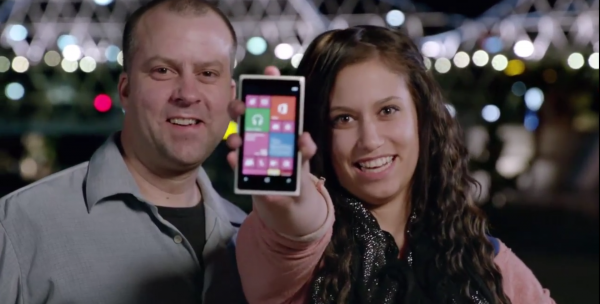
Windows Phone remains well behind its biggest competition, iPhone and Android. But Microsoft is continuously looking for ways of changing the mobile landscape. A recent ad for the platform went viral and the company’s app store continues to grow, along with new devices being released.
In fact, Microsoft’s Todd Brix claims the company is “seeing strong results for the ecosystem since the launch of Windows Phone 8 with more than a 100% increase in app downloads and nearly 140% increase in paid app revenue”.
Now Microsoft attempts to woo developers with new enticements. First it points out that the Nokia’s Lumia 720, along with the 520 and 521 phones, are shipping around the world, giving potential Windows Phone customers additional choices for form factor, capabilities and pricing.
The company also recruits developers in six new markets — Afghanistan, Iraq, Montenegro, Serbia, Timor-Leste and Ukraine. Those looking to develop for those markets will be able to submit both free and paid apps to the Windows Phone Store and reach customers across all of the 191 markets. The company even announces a simpler and more streamlined app submission process.
Brix even touts that “We have added 15 new mobile operator billing partners since August 2012, bringing the total number of supported partners to 25 in 19 markets, surpassing Google Play”.
While Windows Phone handsets continue to be top-rated devices on Amazon, Microsoft still struggles to find its place in the market. Perhaps these continued efforts can pay off in the long run. The competition is certainly a good thing for consumers.
-
When Google’s ‘I’m Feeling Lucky’ Works
One of the popular videos on reddit today comes under the headline, “I went to check out Google Palestine, entered random Arabic letter and clicked ‘I’m feeling lucky’. This is the result.”
One user comments, “Thank you so much op. I have been searching for this video for years.”
Another responds, “Same here. I’ve never seen it before though.”
Well done, Google.


