Blog

  • Sponsored post: Learn about distributed systems at Basho’s RICON East conference

    RICON East 2013 is a technical conference exclusively focused on Riak and distributed systems. RICON East will be held in New York City on May 13-14. More than 25 speakers will discuss applications, use cases and the future of distributed systems, including NoSQL solutions and cloud storage.

    A RICON East conference pass provides access to the following:

    ● Keynote presentation by Dr. Margo Seltzer from Harvard University
    ● Over 30 talks including presentations by speakers from bit.ly, Breather, Comcast, Factual, Gilt Group, the Weather Channel, Turner Broadcasting System, State Farm Insurance and OmniTI
    ● Academic talks provided by speakers from Harvard University, Massachusetts Institute of Technology and UC Berkeley
    ● Technical talks from the makers of Riak including Basho’s Chief Architect Andy Gross, Basho’s CTO Justin Sheehy, and Basho senior engineers including Sean Cribbs, Reid Draper, Matthew Von-Maszewski, Ryan Zezeski and Chris Tilt
    ● Insight into distributed systems breakthroughs under development at Basho, including multi-data-center replication, Riak integration with Solr (Project Yokozuna), performance tuning and more

    Ticket information:

    RICON East 2013 tickets are available online at ricon-east-2013.eventbrite.com.

    Basho is a distributed systems company dedicated to making software that is highly available, fault-tolerant and easy to operate at scale. Basho’s distributed NoSQL database, Riak and Basho’s cloud storage software, Riak CS, are used by fast-growing web businesses and by over 25 percent of the Fortune 50 to power their critical web, mobile and social applications and their public and private cloud platforms.


  • LG Optimus G Pro comes to AT&T

    US mobile operator AT&T has officially announced that starting tomorrow, May 3, the Optimus G Pro is available for pre-order from its online store. The smartphone, which was unveiled in mid-February, will go on sale a week after, from May 10, exclusively from AT&T.

    The price of the Optimus G Pro falls in line with that of its fierce competition. On a two-year contract LG’s Android smartphone flagship runs for $199.99, on par with Apple’s iPhone 5, BlackBerry’s Z10, HTC’s One and Samsung’s Galaxy S4. By contrast, the similarly-sized Galaxy Note II is available for $299.99 on a two-year contract.

    Customers can also bring down the price of the Optimus G Pro to $99.99, alongside the same contract length, by trading-in a “recent model smartphone” to the US mobile operator. The device must be “no more than three years old and in good, working condition”.

    Some of the highlights of the Optimus G Pro include: 5.5-inch IPS display with a resolution of 1080 by 1920 and a 440 ppi (pixels per inch) density; 1.7 GHz quad-core Qualcomm Snapdragon 600 processor; 2 GB of RAM; 3,140 mAh battery; 32 GB of internal storage; microSD card slot; 13 MP back-facing camera with dual recording and support for 1080p video recording; 2.1 MP front shooter with dual recording and 1080p video recording support; Android 4.1.2 Jelly Bean.

  • Here’s A Dope Jam Kris Kross Did For Sprite Back In The Day

    Chris Kelly, half of the famous rap duo Kris Kross, which rose to fame when Kelly (The Mac Daddy) and Chris Smith (The Daddy Mac) were just kids, has died of an apparent drug overdose.

    Those of us at the right age to have been listening to Kris Kross in the early 90s when hits like “Jump,” “Warm it Up,” and “I Missed the Bus” were getting steady airplay, are taking some time to reflect on the joy Kris Kross once brought to our lives. That includes memories of backwards clothing, the legendary “Make My Video” for Sega CD, and of course, dope beats and rhymes.

    One of Kris Kross’ forgotten classics actually comes in the form of an ad for Sprite. After all this time, I have yet to see Sprite release a better commercial.

  • Chris Kelly Dies: Kriss Kross Rapper Was 34

    Rapper Chris Kelly, who formed one half of the popular ’90s hip-hop group Kriss Kross, was found dead in his home on Wednesday night. He was 34 years old.

    Kriss Kross shot to stardom in 1991 with their debut album, “Totally Krossed Out” after being discovered by producer Jermaine Dupri while performing in an Atlanta mall. Their style, which consisted of baggy sweatshirts and jeans, was instantly transformed from the norm into a fad when they began wearing the clothes backwards.

    Though the group never really found the same success with later albums, they remained close friends and recently performed together at the So- So Def 20th Anniversary Concert, where they opened the show.

    The cause of Kelly’s death is reportedly drug related, according to authorities.

    “It appears it may have been a possible drug overdose,” said Cpl. Kay Lester, a spokeswoman for the Fulton County police; investigators are basing that judgement on evidence found at the scene.

    Kelly’s friends, family, and fans are mourning the loss of a young man who helped shape the music world for young people. His mother, Donna Kelly Pratte, released a statement regarding his death:

    “It is with deep sadness that we announce that our beloved Chris Kelly has passed away on May 1. To millions of fans worldwide, he was the trendsetting, backwards pants-wearing one-half of Kris Kross who loved making music. But to us, he was just Chris – the kind, generous and fun-loving life of the party. Though he was only with us a short time, we feel blessed to have been able to share some incredible moments with him. His legacy will live on through his music, and we will forever love him.”

    Image: Jonathan Phillips, Atlanta-Journal Constitution

  • Microsoft reportedly prepping smaller second-gen Surface tablets for June debut

    Microsoft Surface 2 Release Date
    Microsoft will reportedly unveil sequels to its first two Surface tablets at its Build developer conference, which is scheduled to run from June 26th through June 28th. Unnamed sources from Microsoft’s supply chain have told Digitimes as much, and they claim initial components for the Intel-based version of the next-generation Surface began shipping in late 2012. According to the report, the next-generation Surface tablets will be smaller than the current models, with screens measuring between 7 and 9 inches diagonally. An earlier report suggested that Microsoft is developing an “Xbox Surface” gaming tablet with a 7-inch 720p display and an ARM-based Texas Instruments processor, but it is unclear if this gaming device is one of the tablets mentioned in Digitimes’ report.

  • New Arista Switch Beefs Up Network Scale and Speed

    Arista_7500_Portfolio

    Arista Networks announced several new features to its flagship 7500 modular switching platform Wednesday. With enhancements to density, scale and speed, Arista says the 7500E is its fastest and most scalable Ethernet switch ever, and will enable cloud networks to scale to over 100,000 servers and and millions of virtual machines while delivering a network architecture that can concurrently support cloud, big data, web 2.0, and virtualization.

    “The 7500E Series is a major engineering achievement, offering the industry’s highest throughput and three times the capability of the original Arista 7500 in every dimension – performance, density and power without a chassis upgrade,” said Andreas Bechtolsheim, Arista’s Chairman and Chief Development Officer. “It enables customers to build the world’s largest switching infrastructures that handle the most demanding workloads with ease.”

    The Arista 7500E offers configurations with a choice of 152 ports supporting 10GbE, 288 ports for 40GbE or 96 100GbE wire-speed ports. Key enhancements include 3x fabric bandwidth at 30 Terabits per second, 3x packet buffer at 144 Gigabyte per switch, 3x the control plane performance, triple the power efficiency at less than 4 watts per 10GbE port, and a triple-speed 10/40/100GbE line card.

    New Line Cards, SDN Features

    Four new line cards are available for the 7500E, including the 10/40/100G line card with integrated MXP (multi-speed port) optics that can be software configured on a per port basis delivering constant price-per-bandwidth at every port speed. All line cards offer the same deep packet buffers that support 128 MBytes per 10G port,512 MBytes per 40G port and 1.5 GBytes per 100G port, large L2/L3 lookup tables, and wire-speed VXLAN processing on every port.

    The Arista 7500E together with Arista EOS, includes Software Defined Networking capabilities that support programmatic control of the switch. With a Layer-3 load-balancing architecture, a universal cloud networking infrastructure can be built to support data centers with more than 100,000 servers that deliver consistent performance for dynamically scaling workloads in public or private clouds.

    “The high density 40GbE and 100GbE interfaces, deep packet buffers, SDN features and the robustness of EOS makes the Arista 7500 an ideal spine platform for our network,” said Benjamin Nathan, Director, IT Operations and Infrastructure at Weill Medical College of Cornell University. “Arista continues to innovate on programmability with its Linux based EOS and was a key factor in deciding on the 7500E for our Big Data needs.”

    The 7500E series switches and line-card modules are generally available now.

  • Oil Shale Development in the United States and Abroad

    We all know of the shale oil boom in the United States that has produced an explosion in domestic oil production primarily on private and state lands and helped to decrease our dependence on oil imports. Hydraulic fracturing and directional …

  • Surviving Sandy: Two Views of the Superstorm

    sandy-house

    A look at some of the damage wrought by Superstom Sandy on a property adjacent to the IFF data center in Union Beach, New Jersey. (Photo: IFF)

    LAS VEGAS – For Alex Delgado, things were going from bad to worse as Superstorm Sandy slammed the Jersey Shore. It was high tide, during a full moon. There was a 13 foot storm surge, and the data center was less than a mile from the beach. Six hours into the storm, the company’s operations team in India had to be evacuated due to a cyclone.

    The staff at the International Flavors & Fragrances (IFF) data center in Union Beach, N.J. used to joke about a single telephone pole that carried “half of the Internet and half of its power.” As Sandy came ashore, that was the pole that fell. In short, had Delgado won a raffle that week, it would have been for the Hunger Games. Everything was going wrong.

    The campus was swamped with six to seven feet of water. Both its power substations were under water, as were the diesel fuel pumps. UPS batteries were nearing their end of life. Street power was out, and access to the facility was hindered by partially collapsed road.

    Different Scenarios, Different Considerations

    Delgado, the Global Operations and Data Center Manager for IFF, shared his experience this week as part of a keynote panel at Data Center World in Las Vegas. The panel showcased two stories of Sandy’s impact: one from the Jersey Shore at the heart of the damage, another from Philadelphia.

    The data center in Union Beach supports more than 50 manufacturing facilities around the world for IFF,  a chemical manufacturing company that did over $2.8 billion in revenue last year. While Delgado and his team struggled with the storm, the event had no major impact on customers, as the company didn’t lose a single order.

    The 4,500 square foot facility is a single tenant building with 30 minutes of UPS backup. Its disaster recovery site is 2 hours away at an IBM facility in Sterling Forest, New York. As the storm intensified, IFF was able to shift its critical operations to the backup facility.

    The damage in Union Beach was severe. The data hall stayed dry, as it was on the second floor of the building. But the storm surge took out power and mechanical infrastructure, and flooded the machine shop, ruining most of the facility’s power tools and spare parts. With the power out and roads closed or blocked, staff stayed in place for days. With provisions exhausted after the first 48 hours, IFF staff subsisted on vending machine food as they began the recovery effort, Delgado said.

    The data center was returned to service on Dec. 8 with new generators and infrastructure. Delgado wound up procuring 300 batteries and 3 generators.

    Delgado’s key “lesson learned ” included vendor support. ”If you don’t have a good relationship with your vendors, start shaking some hands today,” he said. He also noted that the company had moved to cloud email, which saved a ton of headaches in terms of communication.

    The View From Philly

    Donna Manley, IT Senior Director at the University of Pennsylvannia, showed a different side of the storm. While Philadelphia wasn’t nearly as impacted as much, the operational impact of the storm was great.

    The university’s data center is in a multi tenant building, with a main data center of 4,850 square feet in the University City section of Philadelphia. Manley’s story is important because it revealed a larger concern than just the data center: the city of Philadelphia’s aged infrastructure.

    A week prior to the storm, Manley and her team started the planning process. They identified teams, began tarping the windows, and put diisatser recovery provider SunGard on alert. “We started our crisis command center on the 29th, setting up a separate box.net instance just in case we lost power and were in an emergency situation,” said Manley.

    Understanding the geographic diversity of the staff was important, as some employees lived in areas where the storm hit hard. “We had very few individuals that could have been on site,” said Manley. ““We needed to make sure there was technical and management staffing.””

    Cloud Services Play a Role

    Manley leveraged online storage provider Box.net to get them through the storm. “Resourcing doesn’t just mean people,” said Manley. “One of the big things we have going on is our documentation. Up until recently, we had it in Sharepoint. We made it available on box.net, and we didn’t have to worry about servers going down and documentation not being available to us.”

    Manley’s advice is to have a data center crash kit checklist. “Because we’re an urban campus, we have a couple of unique items on there – respirator masks, subway tokens to get to disaster recovery site at Sungard)”, she said.

    She said it’s also important to read the fine print on Disaster Recovery Agreements to see whether a fee is required to put your provider on standby. There’s also food, as there’s  a chance workers will have to stay put at the data center for extended periods of time, and the local restaurants aren’t as committed to staying online as a data center.

    Both organizations said the prospect of managed services and hosting now appealed to them a little bit more than prior to the storm. Cloud services played an important role in both disaster plans, even if only to keep communications open through email.

  • In Frontier Markets, Invest for the Long (and Longer) Term

    Earlier this year, I received some lessons on what wins in frontier markets from former Coca Cola CEO Neville Isdell. “Young markets need a long investment horizon,” Neville told me. “U.S. companies, in general, don’t have the long-term view that they need. If a U.S. CEO says he or she’s building something for twenty-five years from now, an investor is likely to say ‘Oh, come on. I’m not going to invest in that. You’re wasting my money’”

    I interviewed Neville for a forthcoming book on success in Africa. He’s a firm believer that many US firms struggle in frontier markets because they’re compelled to a short term view. And Neville knows frontier markets. Raised in Zambia since the age of ten, he attended the University of Cape Town in South Africa, then returned to Zambia and joined the local Coke bottler at age twenty-three. He assumed leadership of Coca-Cola’s large South Africa operation eight years later, before taking on leadership positions worldwide and the CEO job in in 2004. In 2008 he was named by Beverage Industry magazine as the sector’s CEO of the year. Under Neville’s successor Muhtar Kent, Coke today generates 47% of volume and 33% of income from three emerging and frontier regions: Latin America, Eurasia and Africa.

    I asked Neville how he convinced shareholders to take those long term bets at Coca-Cola. “Well, having shareholders like Warren Buffet helps,” he said. “Warren looks for long-term value, so he shared this view. Also as a company we have seen this everywhere, so we expect it.”

    Not every company enjoys that long-term commitment, even in sectors where it’s most necessary to success. In the mining sector this year, multiple boards have pulled back from long term capital investment plans. They’ve often done so under pressure from investors. In describing why the $10 billion Blackrock World Mining Fund was reducing by up to a third its stake in mining industry leader BHP Billiton, one of the fund’s managers put the challenge quite plainly: “Some of their decisions are very good in terms of long-term strategy, but are you going to make money from it in the next three years, which is our investment horizon?” It’s a reasonable position, but one that compels hard discussions.

    Across sectors, shareholder investment horizons preclude some frontier market investments and require other investments to be staggered so the company can continue to return cash to investors even as it pursues those opportunities. Companies that succeed, like Coke, have the experience to make a realistic assessment of the constraints of frontier markets and the anticipated timing of returns. That’s a conversation they have with shareholders and with stakeholders in their operating countries on a continuous basis.

    Any comparison across sectors has to carry a caveat, and the distance from commodity production to beverages is about as wide as it gets. Yet, there’s irony and learning in seeing how Coke, a leader in fast moving consumer goods, socializes its shareholders and key stakeholders to success over the long term. It’s a posture reflected in the recent election to the Coke board of Helene Gayle, CEO of the non-governmental organization CARE. Ms. Gayle is a non-traditional choice, but she is widely respected among her peers for vision on challenges which can take a generation to address and which undergird growth in the frontier markets of Latin America, Asia and Africa.

    Frontier markets experience fast growth, but they’re no fast buck. As corporate boards turn to frontier markets for more growth, they will be well advised to follow Coke’s lead. From silver miners to soda bottlers, it is those companies that will prevail in young markets.

  • HTC’s posts worst-ever earnings in Q1, but One to drive Q2 rebound

    HTC Q1 2013 Earnings
    HTC on Thursday posted its audited earnings results for the first quarter of 2013 and the were in line with the company’s pre-announcement from last month. HTC managed to pull in just $2.88 in after-tax profit, down about 98% from the year-ago quarter, which had already seen profit drop 70% from Q1 2011. Revenue last quarter came in at $1.45 billion and operating margins fell to just 0.1%.

    Continue reading…

  • Former Federated Media CEO Deanna Brown joins Byliner as president

    Deanna Brown, who was the CEO of Federated Media, has joined e-singles startup Byliner as president, the company announced Thursday.

    Brown has a long history in the digital media industry. Before her time at Federated Media, she held executive roles at Scripps Networks Interactive, Yahoo and AOL. She was the CEO and cofounder of Inside.com, the founder of Gaming Industry News, and the cofounder of Condé Nast’s digital division, CondéNet, in 1995.

    Byliner, which is based in San Francisco and was founded in 2011 by former Outside Magazine editor John Tayman, sells fiction and nonfiction e-singles individually and also offers subscriptions. The site also hosts a large library of content posted elsewhere and lets users follow their favorite writers.

    “I really wanted to work with a startup again, using my experience in building and scaling promising new ventures, but I also wanted to be part of something I’m personally very passionate about,” Brown said in a statement. “I love the content business, and I hold great writers and their work in the highest esteem. I’m a huge reader and own five different digital readers. Byliner is a perfect fit — for both head and heart — and makes great sense at this point in my career.”

    Related research and analysis from GigaOM Pro:
    Subscriber content. Sign up for a free trial.


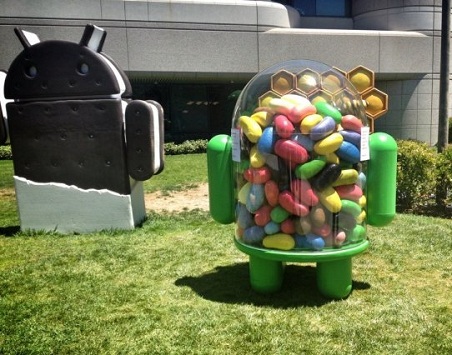
  • Is Jelly Bean more popular than Ice Cream Sandwich?

    Last month Google altered the method of collecting data for its Android distribution charts, now measuring the popularity of the operating system iterations by visits to the app store instead of check-ins to the company’s servers as before. The move significantly changed the results compared to the previous month, but is there a noticeable difference that is felt in the Android distribution charts for May?

    Based on the number of devices visiting Google Play during the 14 days ending May 1, Jelly Bean now ranks as the most popular Android sweet, after Gingerbread. With a combined distribution level of 29.4 percent, for Android 4.1 and Android 4.2, Jelly Bean surpassed Ice Cream Sandwich, which now runs on 27.5 percent of all droids.

    The Jelly Beans

    Altogether, Jelly Bean has grown by 4.4 percentage points from 25 percent distribution level, which translates into a 17.6 percent increase compared to the previous data set from April. Android 4.1 rose to 2.3 percent from 2.0 percent — 0.3 percentage points higher — while Android 4.2 displayed a 3.1 percentage points rise to 26.1 percent in May from 23 percent distribution level in April.

    Jelly Bean’s growth, as shown in the charts, appears to be influenced more by the number of devices sold with (and upgraded to) Android 4.1 rather than smartphones and tablets running Android 4.2. Alongside the likes of the the Samsung Galaxy S4 — which runs the second Jelly Bean iteration — Android 4.2 is bound to get a boost in distribution level over the upcoming months. The first Jelly Bean iteration is likely to keep its popularity crown largely intact in the upcoming period due to sales of devices still running Android 4.1, like the HTC One.

    Ice Cream Sandwich

    Android 4.0, versions 4.0.3 and 4.0.4, reached a 27.5 percent distribution level in May, a number 1.8 percentage points lower compared to the 29.3 percent distribution level from April. This translates into a 6.14 percent decrease over the course of a single month.

    Considering that new devices tend to run Android iterations from the Jelly Bean family, the fact that Android 4.0’s popularity slowly decreases each month (bar last month when Google changed the data collection method) shouldn’t come as a surprise.

    The Older Sweets

    Android 3.2 still runs on 0.1 percent of all droids, a number 0.1 percentage points lower compared to the data released in April. That’s a 50 percent decrease over the course of a single month, but normal considering the scarce popularity that Honeycomb enjoyed after it was unveiled and the number of Android tablets swarming on the market which may have swayed fondleslab owners towards newer devices.

    If you were hoping for Gingerbread to be finally surpassed by a newer sweet, you are going to be disappointed. Android 2.3 — versions 2.3 to 2.3.2. and 2.3.3 to 2.3.7 — reached a combined distribution level of 38.5 percent. 0.1 percent for the former version and 38.4 percent for the latter.

    That’s 1.3 percentage points lower from 39.8 percent in the month before, which implies a 3.26 percent decrease since April. Gingerbread’s popularity, as expected, will go down further in the upcoming months.

    Froyo, Eclair and Donut — the only Android iterations from the charts older than Gingerbread — reached a combined distribution level of 5.5 percent, 0.3 percentage points lower than the 5.8 percent in the month before. The 5.17 percent decrease is influenced by droid users switching to a newer device.

    What Comes Next?

    Google used to provide a historical dataset, but the search giant removed it when the new data collection method was implemented last month. Although we don’t have a solid enough basis for comparison purposes, it’s fair to assume that the trend depicted in May will continue over the upcoming months at least until Google releases a new Android iteration (it’s bound to happen sometime).

  • Podcast: Power to the people — and all their connected devices

    The internet of things isn’t just about the connected home, smart cities or even gathering data on the high seas. The economics are moving to a point where utilities are seriously eying the trend of home energy management as something that might affect their bottom line, especially if the adoption of electric vehicles takes off.

    Russell Shaver of Austin Energy.

    Russell Shaver of Austin Energy.

    In this week’s podcast I speak with Russell Shaver, a consulting engineer with Austin Energy, about it’s interest in the internet of things, and the changing economics driving the utility to care more about demand response. For example this week in Austin, the price of power on the spot market rose from the average $30 or $40 per watt to a whopping $900 per watt in Texas thanks to the temperature and the loss of some generation capacity. As a consumer I’m insulated against those price fluctuations, but Austin Energy has to pay. And those prices are only going to rise.

    That makes connectivity and intelligence in the home around energy consumption worth spending money on. Hence Austin Energy’s new incentive plan that gives residents $85 if they purchase one of three connected thermostats. Listen for the details of that program as what Shaver sees as the future for connected devices and the role utilities will play.

    (Download this episode)

    GigaOM Podcasts RSS feed

    iTunes

    Stitcher Radio

    Show notes:
    Host: Stacey Higginbotham
    Guest: Russell Shaver of Austin Energy

    • A bit about how Austin Energy uses demand response today.
    • The OpenADR protocol and the need for open standards and data sharing even for energy data.
    • Why electric vehicles change the game for utilities and what Austin Energy wants to see from connected cars
    • The power of the opt-out. Especially when it’s 110 degrees and you’re hosting a party.

    PREVIOUS IoT PODCASTS:

    What you really need to know before buying connected devices

    How the internet of things may make parents less worried but more neurotic

    Shark Week for the internet of things

    What the Internet of Things can learn from Minecraft and Lemmings

    Podcast: How IBM uses chaos theory, data and the internet of things to fix traffic

    Electric Imp aims to make the Internet of Things devilishly simple

    When devices can talk, will they conspire against you?

    What the internet of things can learn from Minecraft and Lemmings

    Why the internet of things is cool and how Mobiplug is helping make it happen

    Related research and analysis from GigaOM Pro:
    Subscriber content. Sign up for a free trial.


  • David Shaw of IO is AFCOM’s Data Center Manager of the Year

    LAS VEGAS – David Shaw of IO has been named the Data Center Manager of the Year Award by AFCOM, the leading association for data center managers. Shaw, the Senior Vice President of IO, was honored Wednesday night in an awards ceremony at Data Center World in Las Vegas.

    Shaw manages more than 1.5 million square feet of data center capacity for IO, which has been a pioneer in deploying modular data center designs. He oversees IO’s “Data Center as a Service” offering to deploy managed data space in IO’s factory-built modules, which also includes the company’s IO.OS data center management software.

    The other finalists were Tate Cantrell, the Chief Technology Officer at Verne Global, and Donna Manley, the Senior IT Director at the University of Pennsylvania.

    Shaw, who has been working in the industry since 1987, oversaw the opening of the world’s largest modular data center in Edison, New Jersey, and ensured that the facility remained 100 percent operational during Hurricane Sandy and in its aftermath.

    The Power of People

    In accepting the award, Shaw noted that there are six things data center managers work with – power, cooling and connectivity, and people, process and technology. Of those, he said people were the most important part of the equation. He dedicated the award to his team of 50 staff members, who work in four data centers in the U.S. across the U.S.

    Shaw also emphasized the importance of bringing “new blood” into the industry by getting the next generation of IT workers working in the field.

    Prior to joining IO, Shaw led the greenfield build and operational implementation of a 7 megawatt data center to support electronic medical records and critical patient care systems for 26 hospitals and services across five states. He was also responsible over a 10-year period for global data center management at Perot Systems.

    He received in-depth specialist data center and operations training from IBM and the UK Ministry of Defense, and is certified in ITIL service management. While serving in the Royal Air Force, he graduated in electronic engineering and studied computer-aided engineering, specializing in robotics.

    The data center manager of the year was selected in a blind test judged by three past winners. The award is named for Len Eckhaus, the founder of AFCOM.

    AFCOM was founded in 1980 to support the educational and professional development needs of data center and facilities management professionals around the globe. The association has more than 3,500 members and 40 chapters worldwide, and provides education and networking for data center managers through its Data Center World conferences, regional chapters, and Data Center Management magazine.

  • Intel banks on enterprise mobile app development again, leading $9M FeedHenry round

    The Irish mobile app development and deployment outfit FeedHenry (which was one of GigaOM’s Mobilize Launchpad finalists a couple years back) has just scored a respectable $9 million, Intel-led funding round.

    VMware was already an investor along with Kernel Capital and Enterprise Ireland, and all three have participated in the new round as well. Intel has however taken the lead this time with ACT Venture Capital also joining in.

    FeedHenry serves business customers that want to develop and deploy in-house mobile apps. In February the company partnered up with Telefonica, allowing the bundling of FeedHenry’s platform with the telco’s infrastructure-as-a-service platform, Instant Servers, for the benefit of European customers.

    According to Marcos Battisti, Intel Capital’s managing director for Western Europe and Israel, the investment will help FeedHenry expand internationally:

    “The mobile application market segment for enterprise is at a tipping point and those companies delivering a comprehensive solution that provide both an end to end mobile development strategy and a way to implement applications easily and securely will be at the forefront of the market segment.”

    FeedHenry’s rivals include firms such as Antenna Software and SAP. The Irish firm’s particular selling point is flexibility, allowing deployment of its Mobile Application Platform to public, private and hybrid clouds. Apps developed on the platform can also be built once then rolled out to iOS, Android, BlackBerry and Windows Phone devices.

    The company also provides “backend-as-a-service” functionality, with server-side code based on Node.js, as well as app management tools and analytics. There’s been considerable activity in that BaaS market with Salesforce.com and Rackspace adding mobile backend capabilities there and Facebook buying Parse just last week.

    It should be noted that this is far from the first investment Intel Capital has made in this space. Just this January, it also put $4.6 million into enterprise mobile app deployment firm Apperian. And, in February, parent company Intel bought the mobile app development tools division of AppMobi.

    Related research and analysis from GigaOM Pro:
    Subscriber content. Sign up for a free trial.


  • Google’s self-driving cars gather nearly 1GB of sensor data every second — would you trust them?

    While all the press attention is focused on Google Glass, there’s another even more life-changing invention continuing to be developed and refined at Google. The company’s self-driving cars have already driven more than 400,000 miles without an accident (there have been two crashes — in the first the Google car was rear-ended at a stop light, and in the second it was being driven by a human).

    Although they won’t likely become commonplace on our roads for another 15 to 20 years, make no mistake, driver-less cars are the future, and will have lots of benefits. Aside from reducing accidents, they’ll be able to travel much faster — no need for speed limits — and give passengers (and we’ll all be passengers) time to do other things. Forget working from home, you’ll be able to work from your car.

    Eventually it will also mean driving under the influence will be a thing of the past, as will road traffic cops.

    Of course it all depends on how well, and how quickly, our governments embrace the idea. Will we see secondary super-fast roads just for driverless cars? Will self-driving vehicles be allowed to drive on regular roads alongside human drivers (certainly that’s the goal)? And will human drivers eventually be outlawed?

    It still seems very much like a science fiction story, but it’s very real, and at the weekend Google dropped an interesting snippet of information. In order to intelligently make decisions, its self-driving cars gather some 750MB of sensor data every second.

    In a LinkedIn post today, Bill Gross, founder and CEO of Idealab shared an image of what Google’s self-driving car “sees” while it is about to make a left turn. He says:

    It is capturing every single thing that it sees moving — cars, trucks, birds, rolling balls, dropped cigarette butts, and fusing all that together to make its decisions while driving. If it sees a cigarette butt, it knows a person might be creeping out from between cars. If it sees a rolling ball it knows a child might run out from a driveway. I am truly stunned by how impressive an achievement this is. I believe that this is an UNDER-hyped revolution in the making.

    He also posted another image from the same set.

    There’s no question Bill Gross is right. This is an under-hyped revolution in the making, but is it one that drivers will embrace? Maybe in 15-20 years we’ll be so plugged in that we won’t think twice about handing over the keys to a computer chauffeur. But at the moment I think certainly outside of the real gridlocked cities, people like to drive and trust in their own abilities behind the wheel.

    If you’re in a car, and you suddenly see an accident up ahead, would you trust a computer — with all its high-tech data gathering sensors — to make the right choice to avoid it, or would you prefer to be the one taking action?

    I’d love to know your thoughts on this subject, so leave your comments below.

  • Skobbler’s online-offline ForeverMap2 app is now available on iOS

    Skobbler, the Berlin-based outfit that largely provides tools for incorporating OpenStreetMap-based functionality into other companies’ apps, has launched a major revamp of its own iOS play, ForeverMap.

    ForeverMap provides both online and offline mapping functionality, based on OpenStreetMap. The first iteration used a much older version of Skobbler’s technology and required the user to download a rather hefty 1.5GB of data covering all territories, regardless of where they intended to use the app.

    The new version, ForeverMap 2, has been available for Android since November, but is now also out there for iPhone and iPad. It aims to provide the best of both online and offline worlds – to allow proper offline search and routing, unlike Google Maps, and to allow online functionality, unlike travel apps such as CityMaps2Go. Its coverage is global, and users can choose to download offline maps on a per-country basis.

    “We know that modern users want one map that handles all of their needs, and we believe we’ve delivered this with a genuinely innovative hybrid solution based on the popular, rich and dynamic OpenStreetMap,” Skobbler CTO Philipp Kandal said in a statement.

    However, while ForeverMap2 is a consumer play, it is also a showcase of Skobbler’s GeOS SDK and NGx mapping engine. As co-founder Marcus Thielking told me, it gives the company’s prospective white label clients – who are largely in the automotive business – “a good template” for what they could build on top of the product.

    “It’s the perfect pitching tool – we just give it to them and they can see what we can do,” he said. Previously announced customers for Skobbler’s technology include the city guide app outfit Triposo.

    Related research and analysis from GigaOM Pro:
    Subscriber content. Sign up for a free trial.


  • Mozilla takes on spyware maker

    The Mozilla Foundation is accusing Gamma International, a UK-based software group, of making a false association between one of its products and the Firefox name.

    Gamma International produces FinFisher, a program used by governments to obtain data in a covert way. FinFisher is often installed by disguising itself as an update to a well known program such as Firefox. Mozilla has now sent a cease and desist letter to Gamma claiming that its Firefox trademark is being violated and that the practice must end immediately.

    Alex Fowler in charge of privacy and public policy at Mozilla says on his blog,

    As an open source project trusted by hundreds of millions of people around the world, defending Mozilla’s trademarks from this type of abuse is vital to our brand, our users and the continued success of our mission. Mozilla has a longstanding history of protecting users online and was named the Most Trusted Internet Company for Privacy in 2012 by the Ponemon Institute. We cannot abide a software company using our name to disguise online surveillance tools that can be — and in several cases actually have been — used by Gamma’s customers to violate citizens’ human rights and online privacy.

    Mozilla has acted following a report from the University of Toronto’s Citizen Lab on digital spying. The report compares a legitimate install of Firefox with what the report’s authors claim is a FinFisher install. This, they say, comes labeled with version numbers, copyright details and descriptions from a legitimate Firefox version.

    Photo credit: olly/Shutterstock

  • Salesforce finally solidifies European data center plans

    Salesforce.com will set up its first European data center in the UK next year, the enterprise software-as-a-service firm said on Thursday.

    The company has come under criticism for not having a European data center in the past, largely due to compliance issues – Salesforce is part of the EU-U.S. Safe Harbor framework, which means it’s allowed to handle European citizens’ personal data, but many customers would prefer the certainty that a locally sited data center allows. (We will be discussing such issues at our Structure:Europe conference in London on 18-19 September, by the way.)

    Salesforce said last year that it hoped to open a data center in the UK in 2013, but this appears to have been pushed back a little now. According to a statement today, the new data center – the firm’s sixth — will be completed in 2014 in partnership with NTT Communications’ local arm, NTT Europe.

    In a statement, Salesforce CEO Marc Benioff said Europe had provided the greatest revenue growth – 38 percent — for the company in the 2013 fiscal year:

    “We are doubling down on Europe with the announcement of our new data centre in the UK, which will support continued customer success in EMEA.”

    Robin Balen, NTT Europe’s wholesale data center business chief, added that the new facility would be “powered 100 percent by renewable energy sources.”

    Innovation Challenge

    Meanwhile, Salesforce has also teamed up with a group of European venture capital firms – Notion capital, Octopus Investment and MMC Ventures – to launch a €5 million ($6.6 million) Innovation Challenge for startups.

    Startups are invited to pitch their enterprise cloud apps that could run (surprise!) on Salesforce’s platform. There will be pitching events through Europe between September and November, and the winners will get seed funding. Apps will need to be at least in the beta stage, with demonstrable “traction, customer success and user adoption.”

    “This is a unique opportunity for innovative start-ups in the enterprise app market here in Europe to receive commercial support to allow them to compete on a global stage,” Octopus principal Luke Hakes said in a statement.

    Related research and analysis from GigaOM Pro:
    Subscriber content. Sign up for a free trial.


  • HarbourVest Global Private Equity Changes Directorate

    HarbourVest Global Private Equity Limited has announced the retirement of Mr. Paul Christopher as non-executive director of the company and the appointment of Mr. Alan Hodson as a non-executive director. HarbourVest Global Private Equity Limited is a Guernsey-incorporated closed-end investment company which has a dual listing on both the London Stock Exchange and Euronext Amsterdam.

    PRESS RELEASE

    HarbourVest Global Private Equity Limited (“HVPE” or the “Company”), a closed-end investment company, today announces the retirement of Mr. Paul Christopher as non-executive director of the Company and the appointment of Mr. Alan Hodson as a non-executive director effective 30 April 2013. Sir Michael Bunbury, on behalf of the Company, expressed his thanks to Mr. Christopher for his contribution to the Company since joining the Board in October 2007.

    Speaking for the Company, Sir Michael said:

    “The Board of HarbourVest Global Private Equity is very pleased that Alan Hodson has agreed to become a director. His deep experience of listed markets will be very valuable in helping to guide the future development of the Company.”

    Mr. Hodson is Chairman of Blackrock Commodities Income Investment Trust and a Director of JP Morgan Elect. He is also Chairman of Triodos New Horizons Limited and of the Board of Special Trustees of Great Ormond Street Hospital Children’s Charity. Mr. Hodson joined Rowe and Pitman (subsequently SG Warburg, SBC and UBS) in 1984 and worked in a range of roles, all related to listed equity markets. He became Global Head of Equities in April 2001 and was a member of the Executive Committee of UBS Investment Bank and of the UBS AG Group Managing Board. He retired from UBS in June 2005 and has since held positions on a variety of commercial and charity Boards.

    Enquiries:
    Anson Fund Managers Limited Tel +44 1481 722 260
    Secretary
    HarbourVest
    Stuart Howard Tel: +44 (0) 20 7399 9815 [email protected]
    Laura Thaxter Tel: +1 (617) 348 3695 [email protected]
    Fishburn Hedges
    Paul Farrow / Ben Lyons Tel: +44 (0) 20 7839 4321 [email protected]

    Notes to Editors:

    About HarbourVest Global Private Equity Limited:
    HarbourVest Global Private Equity Limited (“HVPE”) is a Guernsey-incorporated closed-end investment company which has a dual listing on both the London Stock Exchange and Euronext Amsterdam. HVPE is registered as an investment company with the Netherlands Authority for the Financial Markets (AFM). HVPE is designed to offer shareholders long-term capital appreciation by investing in a private equity portfolio diversified by geography, by stage of investment, by vintage year, and by industry. It invests in and alongside HarbourVest-managed funds which focus on primary partnership commitments, secondary investments, and direct investments in operating companies. HVPE is advised by HarbourVest Advisers L.P., an affiliate of HarbourVest Partners, LLC.

    About HarbourVest Partners, LLC:
    HarbourVest Partners, LLC (“HarbourVest”) is an independent global private equity investment firm and an SEC registered investment advisor, providing vehicles for institutional investors to invest in the venture capital and buyout markets in the U.S., Europe, and elsewhere through primary partnerships, secondary purchases, and direct investments. The HarbourVest team began investing in 1982 and has committed more than $30 billion to investments over its more than 30-year history. Across its global investment platform, HarbourVest and its affiliates have more than 230 employees in Boston, London, Hong Kong, Tokyo, Bogotá, and Beijing.

    _____________________________________________

    Join us at our next event: What’s Next… for collaboration on corporate responsibility?

    Ben Lyons

    FISHBURN HEDGES
    77 KINGSWAY
    LONDON WC2B 6SR
    t +44 (0) 20 7839 4321
    d +44 (0) 20 7544 3092
    f +44 (0) 20 7242 4202

    The post HarbourVest Global Private Equity Changes Directorate appeared first on peHUB.