Blog

  • BlackBerry Q10 Global Availability Tracker

    New BlackBerry Q10 Smartphone with BlackBerry 10

    We know you’ve been waiting for it – just a short while ago, some carriers around the globe announced that the BlackBerry Q10 was available for pre-order. Now we’re starting to see availability dates role out, starting with Canada.

    If you’ve been reading along on the Inside BlackBerry blog, you’ll know that the BlackBerry Q10 combines the power of the BlackBerry 10 platform with a physical keyboard and stunning touchscreen display. I’ve been using it for a few weeks now and I can say that it is awesome. I’ve taken my typing to the next level on this keyboard.  I don’t want to toot my own horn, but I’m a bit of a phenom when it comes to typing on the BlackBerry Q10. Don’t get me wrong, my typing skills on the BlackBerry Z10 are out of this world too. I’m just saying that you folks who love your physical keyboards are probably going to love your life.

    Pricing and Availability information for Canada:

    The BlackBerry Q10 smartphone will be available in Canada starting May 1 on Rogers Wireless, Bell Mobility and TELUS starting at $199 with a 3 year contract. It will also be available on Virgin Mobile Canada, Fido, Koodo Mobile, and Sasktel, and at The Source, Best Buy and Future Shop with more details to come.

    We know there are so many of you on Team BlackBerry that live outside of Canada, so don’t fret and be sure to stay tuned! Similar to the availability tracker for the BlackBerry Z10,we’ll have more details and we’ll update this post with availability information in other markets as we role out the new BlackBerry Q10 globally.

  • Why it’s time for Twitter to add two-factor authentication

    As it becomes clear that an errant tweet can move stock prices, perhaps it’s time for Twitter to improve security measures and add two-factor authentication for accounts.

    The Associated Press’s Twitter account was hacked this morning, sending out updates saying that explosions hit hit the White House and President Barack Obama had been injured. The AP’s account was immediately suspended and the tweets removed, but not before the Dow dropped about 200 points. It has since recovered, but that type of velocity makes it possible for someone to have made a lot of money.

    Twitter has had security issues before, most recently when it notified users that a number of passwords had been compromised in February, but now with new SEC rules allowing analysts and traders to check tweets for market-moving information, it’s more important than ever for the company to give influential users as many security tools as possible.

    Apple just added two-factor authentication to Apple IDs in March, Microsoft rolled it out last week, and Google has had it for much longer. Two-factor authentication is just one way that users can protect passwords, preventing an individual from hacking an account by requiring them to also have in their possession a second form of identification. For instance, Gmail users can set up their smartphones to work with two-factor authentication, requiring a PIN sent to their phone when they try to log in online.

    It’s quickly becoming common practice among large web companies, and as the stakes increase for Twitter, it’s time for the company to consider adding the feature. Ars Technica reported in February that Twitter had posted jobs listings seeking engineers with experience in security, including “multifactor authentication and fraudulent login detection.”

    Twitter has not yet responded to our request for comment on its current plans.

    Related research and analysis from GigaOM Pro:
    Subscriber content. Sign up for a free trial.


  • Top 5 Features of BlackBerry 10 that Stand Out

    BlackBerry10Phones

    BlackBerry 10 might not have one killer feature, other than its flagship BBM service, but it does have plenty of new and inventive features that can change the way we use smartphones. Instead of being just another smartphone, BlackBerry’s new OS offers users a brand new experience. Here are five factors that stand out in BlackBerry 10.

    1. Hub and Peek

    What task do you perform most frequently on your smartphone? Chances are it involves checking email and other messages. While there are plenty of apps and other useful features on every smartphone, messaging remains the core functionality. The problem with the current crop of smartphones is that you have to check many different apps to find all of your messages. Even your email might live in multiple locations.

    BlackBerry’s messaging feature, BlackBerry Hub, consolidates all of your messages into a single place. When you open it up you’ll see email from all addresses, instant messages, BBM, social media updates, and more. You can remove any number of these from Hub, and you can separate them into groups. When you check your messages, you have everything right there in front of you.

    The Peek option only adds to Hub. No matter what app you’re viewing, you can swipe from the left side of the screen to peek into Hub. Again, this reinforces messaging at the core of the smartphone experience. The gesture-based Peek stands about above Android and iPhone for quick messages checking and task switching.

    2. BlackBerry Balance

    For a while now BlackBerry has tried to separate business from personal, since they serve primarily business customers. They released BlackBerry Balance in the past, but with their declining sales it didn’t go over as well as it otherwise might have. Now that they’ve unveiled BlackBerry 10, though, BlackBerry balance comes back into play — in a big way.

    The nature of Balance is simple. On a work phone you have all of your work applications and messages, and chances are you also have personal information there. Given the power of modern smartphones, most people don’t need to carry around two. Companies have realized this and have started letting employees use their work phones for personal purposes. But functionality can get muddled.

    Balance keeps the two entities separate. Your personal apps don’t access information from your enterprise apps, and vice versa. It does all this while maintaining the highest level of security, so companies need not fret. It also makes employees happy, since they can get the benefit of both personal and work phones in a single device.

    3. BBM and screen sharing

    When people think of BlackBerry, they typically associate it with BlackBerry Messenger, or BBM, the company’s killer messaging app. Plenty of people stuck with BlackBerry through everything, because they couldn’t conceive of leaving BBM. Knowing that their customers love it so much, BlackBerry has greatly upgraded BBM for BlackBerry 10.

    With faster cellular networks — the BlackBerry Z10 runs on 4G LTE — users can perform more functions with their phones. Video calling has been a big feature, with Apple’s Facetime, Skype, and Google Talk leading the way. BlackBerry added a killer video chat feature to BBM, along with voice chat. This supplements the already excellent instant messaging service, which includes features such as file transfer.

    One interesting part the built onto BBM is the ability to share your screen with other BBM users. This can be used for any number of purposes, including troubleshooting. Other platforms offer this in a roundabout way, but BlackBerry 10 makes it easier than everyone else.

    4. Active Frames

    The Active Frames feature of BlackBerry 10 helps it stand out from the crowd. The icon-based navigation system has been around for over a decade — a navigation system that BlackBerry itself helped pioneer. But it’s time to move on. BlackBerry takes a step in the right direction with its Active Frames home screen.

    When you go to your home screen, you’ll see the last eight applications you’ve had open. This isn’t just the app tile, though, but a live preview of what’s running in the app. Most native BB10 apps, such as calendar and App World, have Active Frames already running. As more and more third parties create Active Frames for their apps, it will only get better.

    5. The keyboard

    In the past six years people have grown used to typing on a virtual touchscreen keyboard. It proved difficult at first, and in that regard BlackBerry maintained a competitive advantage. Not only did its devices continue employing physical keyboards, but they were also the best in the business. Later BlackBerry made attempts, with the Storm and Torch models, to create a virtual keyboard, but it wasn’t much better than the competition.

    BlackBerry 10 changes that completely. The first thing you notice when using BB10, in fact, is the responsiveness and accuracy of the virtual keyboard. It’s almost as though you have the traditional BlackBerry keyboard overlaid on the touchscreen. The default keyboard on the BlackBerry Z10 shines. It shows that BlackBerry continues to understand the importance of the keyboard on a smartphone.

    That not enough? The Q10 is due out later this spring, and it will have the traditional QWERTY keyboard. We don’t see many of those devices these days.

    The post Top 5 Features of BlackBerry 10 that Stand Out appeared first on MobileMoo.

  • Birchenough Jumps to Deutsche Bank from Credit Suisse

    Don Birchenough is joining Deutsche Bank as a Managing Director and Americas Head of Media and Telecom Mergers & Acquisitions. He joins from Credit Suisse where he was most recently Co-Head of the Technology, Media and Telecom M&A group in the Americas.

    PRESS RELEASE

    Deutsche Bank today announced that Don Birchenough will join as a Managing Director and Americas Head of Media and Telecom Mergers & Acquisitions (M&A). He joins Deutsche Bank from Credit Suisse where he was most recently Co-Head of the Technology, Media and Telecom M&A group in the Americas. Birchenough was previously Americas Head of Telecom and Media M&A at Deutsche Bank. He will be based in New York.
    The Bank also announced the formation of a global Technology, Media and Telecom (TMT) group within its Investment Banking Coverage & Advisory (IBC&A) business. Chris Colpitts and Gavin Deane have been promoted to Global Co-Heads of TMT Investment Banking Coverage. Colpitts is based in San Francisco and Deane in London.
    “The creation of a unified and coordinated TMT group is a natural step for these businesses that operate in close partnership and can offer our clients interconnected business opportunities,” said John Eydenberg, Co-Head of IBC&A, Americas.
    “These changes reflect our continued commitment to promote from within and selectively hire from the market to develop industry-leading teams,” said Tony Whittemore, Co-Head of M&A, Americas.

    The post Birchenough Jumps to Deutsche Bank from Credit Suisse appeared first on peHUB.

  • UCLA receives major federal contract to study potential new autism drugs

    UCLA has been awarded a $9 million contract by the National Institute of Mental Health for an ambitious effort to rapidly study promising new drugs that may help restore normal development and brain function in children with autism spectrum disorders.
     
    UCLA researchers will create and lead a network of U.S. academic centers that will carry out early “high risk/high reward” studies of experimental medications over a three-year period. The goal of the project, New Experimental Medicine Studies: Fast–Fail Trials in Autism Spectrum Disorders, is to determine within weeks rather than years (“fast”) if a particular pharmacological compound is working or not (“fail”).
     
    Recent progress in identifying the genes and biological components involved in autism spectrum disorders (ASD) holds great promise for the identification of life-changing treatments for individuals of all ages, said the project’s principal investigator, Dr. James McCracken, a professor of psychiatry and director of the division of child and adolescent psychiatry at the Semel Institute for Neuroscience and Human Behavior at UCLA.
     
    “Current medical treatments are commonly prescribed by physicians for ASD but only to manage difficult behaviors, like aggressiveness, hyperactivity and self-injury,” McCracken said. “Such treatments can be important and helpful, but they do not impact the core problems of the disorders.
     
    “This is definitely the most exciting time yet to be involved in treatment research for ASD,” he added. “Our basic science colleagues are generating enormous information on the likely underlying causes of this common and often disabling condition. We are well positioned to apply the basic science and find drugs that make a difference.”
     
    ASD is increasingly recognized by clinicians. The Centers for Disease Control and Prevention estimates that one in 88 children in the U.S. has been identified with ASD, which is characterized by delays in the development of effective communication and social relationships and which impacts nearly every area of child and adult functioning.
     
    Behavioral and developmental interventions, including programs developed at UCLA in the 1980s, offer significant hope of improvement for many, and behavioral and medical interventions can be helpful with behavior problems. But at present, there are no established medical treatments for the core social deficits of ASD, despite its acknowledged genetic and biological basis.
     
    “It’s a challenge,” McCracken said. “There are now so many possible experimental medicines and approaches from basic science for ASD that we find ourselves way behind. We need a new paradigm to test the many possible compounds, and we need to quickly and accurately identify which ones are really ready for ‘prime time.’”
     
    Currently, McCracken noted, large-scale studies of possible medications take years and can cost upwards of $500 million dollars before yielding an approved, marketed drug. The three-year NIMH contract will support a new approach involving multiple “fast–fail” studies, which could accelerate progress by providing an early “yes or no” assessment of various compounds.
     
    The initiative will focus on analyzing how novel molecular and clinical targets for ASD are affected by both new and repurposed compounds. The outcome is expected to lead to an enhanced understanding of the mechanisms that underlay ASD and the development of innovative pharmacological treatment approaches for the disorder.
     
    At UCLA, testing will involve scientists and clinicians from the fields of psychiatry, radiology and biostatistics. The UCLA Clinical and Translational Science Institute will use sophisticated measures of brain and behavioral responses to identify signs of successful drug action in key brain regions. Positive findings could then be followed up by other large-scale national and international studies.
     
    Ironically, the explosion of basic-science knowledge about ASD and possible drug treatments is emerging at a time when major pharmaceutical companies are canceling drug-development programs for ASD and other mental disorders, citing costs, difficulties and the recent failures of what were deemed good prospects. Many National Institutes of Health officials, research scientists and affected families are fearful that progress in medication development will slow in the face of the industry’s retreat from neuroscience drug development.
     
    Funding from the NIMH comes under contract No. HHSN-271-2012-00005-I. In addition to McCracken, UCLA collaborators will include Susan Bookheimer, Sandra Loo, Joseph O’Neill and Edythe London from the department of psychiatry; Dr. Albert Thomas from the department of radiological sciences; and Catherine Sugar from the department of biostatistics. Additional colleagues from other institutions around the country are expected to participate in the new network.
     
    The UCLA Department of Psychiatry and Biobehavioral Sciences is the home within the David Geffen School of Medicine at UCLA for faculty who are experts in the origins and treatment of disorders of complex human behavior. The department is part of the Semel Institute for Neuroscience and Human Behavior at UCLA, a world-leading interdisciplinary research and education institute devoted to the understanding of complex human behavior and the causes and consequences of neuropsychiatric disorders.
     
    For more news, visit the UCLA Newsroom and follow us on Twitter.

  • AP Hacked, Tweets About White House Explosion

    Two explosions have not rocked the White House and President Obama is not injured.

    But if you follow the Associated Press’ official Twitter account, you might have seen some disturbing news to the contrary. Earlier this afternoon, the AP’s official Twitter account, @AP, tweeted this:

    Breaking: Two Explosions in the White House and Barack Obama is injured.

    It was quickly revealed to be the work of hackers, as AP staff began to tweet that the info was false. The AP has officially confirmed the hack, saying,

    “Hackers compromised Twitter accounts of The Associated Press on Tuesday, sending out an erroneous tweet about an attack at the White House. The tweet said that there had been two explosions at the White House and President Barack Obama was injured. The attack on AP’s Twitter account and AP mobile app was preceded by a phishing attempt on AP’s corporate network.”

    Also, White House Press Secretary Jay Carney says that the President is doing just fine.

    As of 1:55 pm EST, @AP account has been suspended for further investigation.

    UPDATE: It appears that the false tweet sent the Dow plunging for a brief moment. Here’s what the activity looked like today:

    Just goes to show the power of Twitter as a breaking news source, even if that breaking news is pure BS.

  • How to Explain Your Career Transition

    Shifting careers is often hard to explain. Whether you’re moving from one department to another in your own company or starting over in an entirely different field, you’re likely to face a litany of rejoinders: Why would you want to do that? Isn’t that a little risky? Are you really qualified? Others won’t raise any outward objections, but privately, you can tell they’re skeptical.

    The most important step in getting others onboard with your career transition is crafting a compelling narrative. It’s a tool often overlooked by “professional reinventers,” but it can be a critical determinant of success in winning others’ support for your professional goals and vision for the future.

    When Toby Johnson graduated from West Point, her first job out of college was the furthest thing possible from entry-level paper-pushing: she became an Apache helicopter pilot, the only woman in a class of thirty trainees. Her performance won raves, but when she decided to leave the Army after seven years to attend business school, she knew she faced one big disadvantage compared to her classmates, many of whom entered with corporate experience: “The only big organization I’d ever worked for was the United States Army.” Her mission was to create a narrative that made the connections between her past and present obvious to others. She stressed the management experience she’d gained in the military (at 24 years old, she was in charge of eight $30 million Apache helicopters, plus the thirty people who managed them) and the rapid learning made possible by her early leadership experience. Now a fast-rising Fortune 500 executive, her effort succeeded.

    It’s also important to identify the underlying themes that connect your professional experiences, because people generally prefer narrative continuity: a story is “better” and makes more sense to them if they see it as a logical extension of the past, rather than a rupture. When public radio executive John Davidow was appointed to head online operations at his station, it may have seemed like an unusual development for a 50-something veteran of traditional media. But he embraced the change eagerly — in part because of his sense that the new online world wasn’t a break with his media past but rather, a continuation of it. “My whole career, I’ve been a bit of a nonconformist,” he says. He began his career in TV news at the start of the satellite era and “we were in many ways defining what local television news was. There still weren’t really rules of the road.”

    He sensed that same liminal potential in the online world. Even though the tools may be different (social media instead of satellite trucks), the basics of creating a powerful news experience are the same. So John isn’t a newbie digital executive with only a few years of experience. Instead, he argues he’s been doing the same thing for his entire career: telling stories and being a change agent.

    Finally, it’s important to explain your trajectory in terms of the value you bring to others. Career transitions can sometimes be viewed as a sign of narcissism or a midlife crisis, and you don’t help that perception if you frame it as all about you. “Wanting to be fulfilled” is nice, but it’s not a valid reason for others to hand you a job or give you their business. Instead, you need to make it clear it’s not about you; it’s about the value you bring.

    Libby Wagner, a poet and tenured community college professor, felt apprehensive sharing her background when she first transitioned into her new career as a management consultant. “I didn’t want anyone to know I was a poet,” she says. “I had a lot of tapes going in my head. The economists I had worked with had really talked down to me, and people in business certainly weren’t interested in what I did.” But she eventually came to realize her history wasn’t a liability, but a unique strength in her business. “The way I see the world is very language-driven,” she says. “I’m going to be listening for nuances and connections and patterns. That’s the way I look at the world and I take that to any interaction with the client, so I’ve learned to ask really good questions.” Today, Libby has consulted for Fortune 500 clients including Boeing and Nike — and she’s christened her monthly e-newsletter, The Boardroom Poet.

    The first step in getting others to understand your career transition is being able to explain it to them in a compelling fashion. If you can connect the dots between your past, present, and future; identify the underlying themes in your career trajectory; and explain the unique value you can bring to your new endeavor, you’re on your way to winning their support.

  • Groupon Puts Search “Front And Center” In Mobile Apps

    Groupon has launched updates to its iPhone and Android apps, which make search “a front-and-center experience,” as the company says.

    Here’s a look:

    Groupon Search

    Groupon Search

    Groupon has this to say about search’s importance to its business:

    Search is a critical part of Groupon’s product strategy. Most Groupon merchants now make their deals available on an ongoing basis, and search allows customers to find only the deals most relevant to them in this expanded marketplace. In iPhone v.2.5 search is prominent with a clickable icon that allows customers to navigate from anywhere in the app.

    Search is also a central element of Android v.2.4, which also includes a sleek new interface for 10-inch tablets. The Android tablet market is growing quickly, and, with support for tablets, the Groupon Android app is now a great complement to Groupon’s highly regarded iPad app.

    An increased focus on search from Groupon is long overdue. People want deals on specific things, not just the latest massage offer that they happen to email you on a given day. This is why Google’s AdWords has been so successful. Advertisers can cater to what people are actually looking for. Likewise, with Groupon, this should be a basic element of the service, and promoted as such.

  • The Internet isn’t as open as it used to be

    The Internet isn't as open as it used to be
    The Internet isn’t the outlet of freedom and prosperity it used to be. The truth of the matter is that big name companies such as Google, Apple and Microsoft control and censor what we see online. As noted by Tristan Louis at Forbes, an individual can’t reach a majority of Internet users without the approval of a large company. If Google or Apple deem an application isn’t suitable, they can keep it out of their mobile app stores — and the same can happen with a webpage if it’s unlisted on Google or even Bing.

    Continue reading…

  • AP’s Twitter account suspended after hacking incident roils markets

    Hackers published a fake tweet from the Twitter account of the Associated Press Tuesday morning, describing explosions at the White House and an injury to President Obama. The White House quickly refuted the tweet but the news briefly caused stock markets to plunge 1 percent before recovering. Here’s how the Dow looked today:

    Dow Jones screenshot

    Twitter has since suspended the account and the AP issued the following statement: “Advisory: @AP Twitter account has been hacked. Tweet about an attack at the White House is false. We will advise more as soon as possible.”

    The episode shows again, as it did during the Boston tragedy, the mischief that can occur as a result of huge number of people instantly relaying false information through false tweets. The Anonymous hacker news account, for instance, saw its reporting of the message retweeted almost 500 times:

    In the last year, Twitter has become an essential news source not only for news outlets but for the financial community. This month, Bloomberg incorporated Twitter feeds into its terminals while the SEC gave companies the green light to use it for relating market moving news.

    Update: The AP has since issued this tweet from a separate account associated with its political news outlet:

    Related research and analysis from GigaOM Pro:
    Subscriber content. Sign up for a free trial.


  • Olivia Newton-John: Sister Has Brain Cancer

    Olivia Newton-John has decided to postpone her run of Vegas shows in order to spend time with her family, after discovering her sister has brain cancer.

    “In light of this news, I have decided to postpone my forthcoming Las Vegas residency to spend time with her and our family,” Newton-John wrote in a statement. “As a cancer ‘thriver’ myself, as many people are, I am very aware of the importance of love, support and family during this journey she is about to begin.”

    The 64-year old actress and singer battled breast cancer 20 years ago and is now facing a tough road with her sister, Rona. Her Vegas residency was to begin soon at the Flamingo Hotel as a stand-in for Donny and Marie Osmond’s away dates, and though it’s believed she will eventually perform, nothing has been confirmed yet.

    Rona was famously married to her sister’s “Grease” co-star, Jeff Conaway, for five years. They have a son together, 38-year old Emerson.

  • HealthCare Impact Associates Raises $2 Million

    HealthCare Impact Associates, a Minneapolis, Mn.-based software company that helps its customers comply with requirements of the Affordable Care Act (ACA), has raised $2 million in private capital. The money will be used for the commercial rollout of its ACA management information system, called Health E(fx). The company didn’t disclose the source of its new capital.

    PRESS RELEASE:

    HealthCare Impact Associates, LLC announces that it has secured an additional $2 million in private capital. Funds will be used for commercial rollout of its Affordable Care Act (ACA) management information system, Health E(fx)™.

    The beta release in February of the cloud-based Health E(fx)™ (pronounced “Health Effects”) system is the first-to-market ACA management solution for employers. Health E(fx)™ integrates required data from multiple systems within the employer HR environment, providing ongoing data integrity validation, historical and predictive cost analytics, and automated compliance, reporting and audit capabilities that employers and their stakeholders need to meet obligations of the ACA that will go into effect January 1, 2014.

    “The beta release of Health E(fx)™ generated a remarkable response from leading companies operating in a wide range of industries, all being significantly impacted by the sweeping regulatory requirements of the ACA,” states company president Andy Brown. “This very strong response confirms the critical need for the Health E(fx)™ technology and drove the increase in funding commitment.”

    The beta participants using Health E(fx)™ are public and private companies, each with greater than twenty thousand employees and operations across most or all states.

    “Ongoing analysis and management of eligibility and affordability compliance within a diverse part-time, full-time, and seasonal employment context, including variability of state-by-state exceptions under the law, is of significant concern and common to all our beta program participants,” said Brown. “The companies we are working with have a good understanding of ACA regulations, but are seeking the analytics, compliance, reporting and audit tools that Health E(fx)™ delivers. Our solution allows them to manage medical benefits strategies, on an ongoing basis, to the best possible financial and health reform compliance outcomes for their organizations,” says Brown.

    Health E(fx)™ also makes it possible for companies to manage data interfaces with state insurance exchanges and third-party systems. And pending final direction from government on format, Health E(fx)™ automates the employer requirements under IRC USC § 6055 and § 6056 reporting and the mandated employer notice to employees of coverage options available through the exchanges.

    “Possible integration of compliance data from employers has not yet been announced by state and federal exchanges, posing what we believe will be a high risk for erroneous government subsidy grants to employees and a difficult and inefficient reconciliation process for employers. Health E(fx) ™ is designed to manage this data if and when exchange interfaces materialize, giving employers the tools to effectively automate communication with exchanges on qualified health plans, as well as provide other pertinent compliance data,” continues Brown.

    Health E(fx)™ beta customer programs will run through spring and early summer, with commercial product release planned for late June, 2013.

    About Health E(fx):

    Health E(fx)™ is a comprehensive management information solution that enables Employers, Brokers, Advisors, and HR and benefits data stakeholders to achieve clarity, control and compliance for employer medical benefits management under the Affordable Care Act regulations. For more information, please visit: www.healthefx.us.

    The post HealthCare Impact Associates Raises $2 Million appeared first on peHUB.

  • T5 Plans $800 Million Campus in Colorado Springs

    T5Colorado

    T5 Data Centers is developing a major project in Colorado Springs. Pictured are Craig McKesson of T5 Data Centers, Colorado Governor John Hickenlooper, Robert Branson of Iron Point Partners, and Vince Colarelli of T5 Data Centers. (Photo: T5 Data Centers)

    T5 Data Centers has unveiled plans for an $800 million data center campus in Colorado Springs, Colorado. The project marks a major step forward in Colorado Springs’ ambitions as a data center destination, and continues a steady expansion by Atlanta-based T5.

    Colorado Springs has been a potential data center hotspot for a while, thanks to cheap power rates and its free cooling-friendly environment – it’s part of the reason T5 Data Centers was attracted to the region for its sixth complex.

    T5@Colorado is situated on 64 acres of land, with completion of the first phase of the project expected by the first quarter of 2014. The campus will offer 100 MW of available power, with power rates of 4.4 cents per kilowatt hour and potential to use free cooling for up to 97 percent of the year, according to T5.

    “Ideal Location” for Data Centers

    “Colorado Springs is the ideal location for the next phase of our expansion,” said Peter Marin, President and CEO of T5 Data Centers. “This is a vibrant, growing area with a strong and supportive business climate, and the proximity to Denver, as well as local colleges and military installations, gives us access to terrific talent and local resources. We want this new data center campus to be groundbreaking as an eco-friendly green facility, offering our customers the best possible enterprise infrastructure and support services at competitive rates.”

    Colorado Springs is home to numerous colleges and the Air Force Academy, as well as an active community of contractors working with the military.

    T5 currently offers wholesale data center space in business-critical data center facilities in Atlanta, Los Angeles, Dallas, and Charlotte with new projects announced in Portland and Colorado.

    As part of T5’s larger strategy of leveraging free cooling, the new Colorado Springs campus will be able to take advantage of the high plains climate by using the cooler, drier external air to reduce air conditioning and operating costs. The location is also strategically placed close to the Denver Technology Center, a tech and communications hub, and will serve as a central data relay center to lower latency for business-critical enterprise applications country-wide.

    T5 executives anticipate that the new data center campus will create 400 to 600 new jobs in the area

    Bringing Data Centers to Colorado Springs

    There have been several efforts to bring data centers to Colorado Springs over the years. Benefits of the region include tax incentives, cheap power rates, a data center-friendly business atmosphere, an environment relatively free of natural disasters (though wildfires are arguably a threat) and a climate ideal for free cooling.

    In 2011, Wal-Mart and FedEx announced Colorado Springs as the home of new facilities, attracted to the region thanks to both tax incentives and the ability to build environmentally sustainable facilities.  The city of 426,000 located about 60 miles south of Denver, is also home to existing data centers for Verizon Wireless, HP, FedEx, T. Rowe Price, Progressive, HP and Intel, among others.

  • Ad Tech Startup Nanigans Raises $5.8 Million Led by Avalon Ventures

    Nanigans, a Boston-based startup that makes advertising technology software to help advertisers maximize their social and mobile advertising, has raised $5.8 million led by Avalon Ventures. The company is describing the round as “Series A.1 funding,” having raised $3.1 million in 2011, including from Avalon.

    PRESS RELEASE:

    Nanigans, the lifetime value based advertising technology company, announced today that it has closed $5.8 million in Series A.1 funding. This round of financing allows Nanigans to enhance current mobile product offerings, expand on successes in growing verticals such as retail, as well as continue hiring across its Boston, New York, San Francisco and London offices. The funding is led by Nanigans Series A lead investor, Avalon Ventures, based in Cambridge, Mass.

    CEO Ric Calvillo reflected on the accomplishments achieved by Nanigans with its 2011 Series A funding of $3.1 million – which included growth from 15 to 100 employees, 4 office openings across North America and Europe, over 200 customers, over 9-figures in annual ad spend and 6X revenue growth – by saying,

    Nanigans, which has always operated to breakeven metrics, will remain focused on developing technology that drives value for its customers, investors and employees, with Calvillo sharing that, “additional capital will not change our lean-minded approach to growth and business operations.”

    Rich Levandov, Managing Director at Avalon Ventures and who has helped advise Nanigans over the past 3 years echoed Calvillo, highlighting that,

    “Considering what Ric and the team at Nanigans has accomplished with the initial round of funding, it will be truly exciting for not only Avalon Ventures, but the entire industry to watch Nanigans scale across global hiring, product development and growing verticals with the latest round of $6 million. This team is laser focused on forever changing the way the ad-tech industry thinks about advertising at scale.”

    With the latest round of funding, Nanigans will focus on three core growth areas:

    Mobile Development: Nanigans will continue to expand its paid social offerings and will vastly ramp up mobile efforts, which have recently grown to account for one-third of the company’s revenues.
    Vertical Diversification: Nanigans has experienced strong success in rapidly growing verticals including retail, travel, gaming and online-based companies over the past 12 months and will continue to focus on vertical specific capabilities.

    Global Expansion: Hiring will be focused across Product, Engineering and Customer Success teams in North America and Europe, where Nanigans recently opened an office in London.

    About Nanigans

    Nanigans’ Ad Engine software platform helps advertisers maximize the effectiveness of their social and mobile advertising by appointing ROI (return on investment) and predictive LTV (lifetime value) based algorithms to advertising campaigns at scale. Founded in 2010 and backed by Avalon Ventures, Nanigans manages over 9-figures of annual ad spend across 200 advertisers. To learn more visit: www.nanigans.com

    The post Ad Tech Startup Nanigans Raises $5.8 Million Led by Avalon Ventures appeared first on peHUB.

  • World’s Greatest Semi Jump!

    Freightliner Tractor Jump

    Watching any manner of car, truck or motorcycle fly through the air is generally considered to be an exciting event. However when that vehicle weighs upwards of 17,000 lbs and comes in the form of a Freightliner Tractor, well then it graduates to EPIC. Scott Godfrey decided that he wanted to best the long distance record that was set by his little brother, so he decided to take a shot. How did it turn out? Click through to find out.

    Source: FB.com

  • Study Finds 87% Of Tech Startups Hiring This Year

    A report by Silicon Valley Bank finds 87% of technology startups plan to hire in 2013. The Startup Outlook report is based on a survey of more than 750 startup executives in the United States and 125 in the United Kingdom. In the U.S., hiring intentions are up 14% from four years ago, when the annual survey began.

    PRESS RELEASE

    Looking For a Job? Try a Tech Startup

    Tech Businesses Put Out a Call for Talent in Silicon Valley Bank’s Annual
    Startup Outlook Survey

    SANTA CLARA, CA and LONDON —April 23, 2013 —Eighty seven percent of technology startups plan to hire new employees in 2013, according to an interactive report by Silicon Valley Bank, financial partner to technology, life science and cleantech companies and their investors worldwide. In the US, this is up 14% from four years ago when the annual survey began. SVB’s Startup Outlook study, conducted in the US and the UK, also reveals that software companies plan to do the most hiring, with 90% planning to increase the size of their workforces this year.

    The Startup Outlook report is based on a survey of more than 750 startup executives across the US and 125 in the UK.

    See Interactive Report and additional Startup Outlook reports here.

    The interactive report details the technology sectors and geographies in the US and the UK that are looking for employees with both STEM (science, technology, engineering, math) and general business skills. Job seekers will find locations with the greatest need and job types in particularly high demand. Eighty-two percent of startups in the US, and 77% in the UK, said that they are looking for people with STEM skills.

    “Tech companies are a bright spot in the economy worldwide, which is evident from the significant number of startups in the US and the UK that expect to grow and hire this year,”said Greg Becker, president and CEO of Silicon Valley Bank. “There is a lot of opportunity to put people to work at startups, which is particularly welcome news since jobs in general are recovering slowly. Investments in STEM education and policies that support tech businesses will help people take advantage of jobs, and benefit economic growth overall.”

    Yet nine in 10 reported difficulty finding workers with the skills they need. For more detail on the hiring challenges startups face, visit Startup Outlook: The Issue of Talent.  In the US, startups in major technology hubs nationwide reported challenges finding workers with the skills they need and those numbers were highest in Texas (94%), followed by Washington (91%). In the UK, 69% of startups reported trouble finding qualified engineers.

    Silicon Valley Bank conducted its fourth annual Startup Outlook survey in the US and its first survey in the UK in December 2012. For the purposes of this study, startups are primarily defined as companies in the innovation sector with less than $100 million in annual revenue and fewer than 500 employees (US) or less than £25 million in annual revenue and fewer than 100 employees (UK). Just over 40% of the startups that are hiring in both the US and the UK had fewer than 10 employees at the time of the survey.

    Results of the survey are being released in a series of reports, which are available athttp://www.svb.com/startup-outlook-report/ or www.svb.com/uk . Follow the conversation on Twitter at @SVB_Financial and @SVB_UK #StartupOutlook.

    About Silicon Valley Bank
    Silicon Valley Bank is the premier bank for technology, life science, cleantech, venture capital, private equity and premium wine businesses. SVB provides industry knowledge and connections, financing, treasury management, corporate investment and international banking services to its clients worldwide through 28 U.S. offices and six international operations.  (Nasdaq: SIVB) www.svb.com.

    Silicon Valley Bank is registered in England and Wales at 41 Lothbury, London, EC2R 7HF, UK under No. FC029579. Silicon Valley Bank is authorised and regulated by the Financial Services Authority, FSA reference number 577295. Silicon Valley Bank is the California bank subsidiary and the commercial banking operation of SVB Financial Group. Banking services are provided by Silicon Valley Bank, a member of the FDIC and the Federal Reserve System. SVB Financial Group is also a member of the Federal Reserve System.
    ###

    The post Study Finds 87% Of Tech Startups Hiring This Year appeared first on peHUB.

  • Tumblr comes to Windows Phone 8

    The measure of a platform’s success is applications — and, contrary to Apple marketing, not how many but which ones. Windows Phone 8 gets a lift today with the addition of Tumblr, natively developed rather than homegrown like Facebook.

    I don’t have Windows Phone to test the app, but based on information Microsoft provides, all the basics are there — posting photos from the camera, for example. There is voice recognition for dictating posts and support for animated GIFs.

    Social is key to any smartphone platform’s success, and Tumblr is one Windows Phone needs. The service hosts more than 104 million blogs, has received 48.7 billion posts to date and in February had more than 26 million unique visitors, just behind Pinterest (26.97 million) and WordPress.com (27.96 million), according to comScore.

    Full feature highlights, from Tumblr staff blog:

    • Find and follow the things you love
    • Share photos, gifs, video, quotes, chats, links, and text
    • Jump between your dashboard and Explore with just one swipe
    • Display the latest images from your dashboard on your lock screen and live tile
    • GIFs play as you scroll

    Still, huge social holes remain, like Instagram. Given Microsoft’s investment in and partnership with Facebook, an official app for the social network and photo-sharing service shouldn’t be that hard to do — and yet they’re MIA. SnapChat, anyone? Not on Windows Phone.

  • Power, Network Upgrades Underway at 325 Hudson Street in NYC

    325-Hudson-Construction

    Construction is underway on upgrades to the meet-me room and power infrastructure at 325 Hudson Street in New York.

    325 Hudson in Manhattan is in the midst of an overhaul at a time when there’s a lot of movement in the New York City data center scene in the wake of Superstorm Sandy. The new owners, comprised of Amerimar Enterprises, Jamestown Properties and Hunter Newby, have commenced construction on a renovation announced back in October. They say the planned enhancements at 325 Hudson are a direct response to industry demand.

    “We have experienced increasing and specific demand for carrier-neutral colocation and interconnection options in New York City,” said Newby, a veteran of the Manhattan data center market and Joint Venture Partner at 325 Hudson Street. “Our acquisition of the building and MMR upgrades further affirm our commitment to addressing this demand and providing a stable, long-term, diverse, neutral environment for global network operators to thrive here in New York.”

    In the cards is an upgrade to the building-owned and managed Meet Me Room (MMR) to support the requirement for diversity in global carrier and enterprise 100G DWDM (Dense Wave-Division multiplexing) network deployments. Improvements will reduce network operating expenses, while adding redundancy and route diversity for customers. 325 Hudson is currently executing new MMR agreements with new and existing network operators including, submarine cable systems, carriers, content providers, broadcast, media and entertainment companies.

    The owners are also upgrading power and back-up power supplies during the construction period. These include:

    • The building’s AC 110c UPS capacity will be upgraded to 2N at 275 kVA, while the DC 48v capacity will be upgraded to 2N at 3400 amps as well as being backed by 1.5 MW diesel generator with plans for additional upgrades.
    • 16 new 4-inch conduits and 56 innerducts are being pre-built between 4 diverse manholes into the Empire City Subway system, through diverse Points of Entry and terminating directly in the Meet Me Room. This eliminates the need for any customers to perform outside or inside plant duct or conduit construction

    Several experienced players have committed to renovating the strategically located building, disclosing plans last October. 325 Hudson Street is a 10-story, 240,000-square-foot telecom building located in New York City’s Hudson Square area. The building has direct access to transatlantic cables and major metro and regional fiber providers. The first phase of the development will include cage and cabinet spaces as well as a large Meet Me Area where customers will have the opportunity to make physical interconnections with one another.

    A former industrial building, 325 Hudson was redeveloped in 1998 into a telecom center. In April the partnership of Jamestown and Amerimar bought the facility from Young Woo & Associates and the Bristol Group, with a reported sale price of $110 million. The building offers heavy floor loading capacity, 12-foot ceilings, as well as robust HVAC, power, and back-up power supply.

  • Foster a Culture of Gratitude

    In the movie Remember the Titans, Coach Herman Boone takes his high school football team to the battleground of Gettysburg. Having inherited a fractured and divided squad, Coach Boone implores the players to “take a lesson from the dead. If we don’t come together, right now on this hallowed ground, we too will be destroyed, just like they were.” Coach Boone then establishes the primacy of an important team virtue: “I don’t care if you like each other right now, but you will respect each other.”

    In every workplace and on every team, all people have the innate desire to feel appreciated and valued by others. Like Coach Boone, leaders of teams — and team members themselves — should work to foster a culture of value and appreciation.

    High performing teams have well-defined goals, systems of accountability, clear roles and responsibilities, and open communication. Just as importantly, teams that foster cohesion with a sense of appreciation and gratitude among the team members maximize performance on a number of dimensions. Jon R. Katzenbach and Douglas K. Smith, authors of the Wisdom of Teams, define a high-performing team in part by members’ strong personal commitment to the growth and success of each team member and of the team as a whole.

    Research on gratitude and appreciation demonstrates that when employees feel valued, they have high job satisfaction, are willing to work longer hours, engage in productive relationships with co-workers and supervisors, are motivated to do their best, and work towards achieving the company’s goals. Google, which sits atop many best-places-to-work lists, fosters feelings of employee value through an open culture that promotes employee input, routinely rewards and recognizes performance, and encourages personal growth. In a recent interview, CEO Larry Page stated, “My job as a leader is to make sure everybody in the company has great opportunities, and that they feel they’re having a meaningful impact and are contributing to the good of society.”

    And consider the consequences of not fostering a culture of gratitude: A study of over 1,700 employees conducted in 2012 by the American Psychological Association (APA) indicated that more than half of all employees intended to search for new jobs because they felt underappreciated and undervalued.

    Several recent articles point out the importance of saying “thank you” and giving specific praise to employees when earned in genuine, honest, and heartfelt ways. Mark Gaston’s blog on How to Give a Meaningful Thank-you is full of great advice such as sharing with employees how their contributions had personal significance for the leader and team.
    In addition to these very important gestures of thanks, recent research suggests that a leader can enhance a culture of gratitude in the following ways.

    1. Help others develop. Interestingly, the APA study indicated that 70% of employees feel valued at work when they have opportunities for growth and development. While promotion opportunities within companies may sometimes be limited, you can still invest in team members’ professional development through training, assignment to new and interesting projects, participation on task forces, and exposure to new and interesting different areas through cross-training. Employees frequently have skills that extend beyond the position for which the company hired them. Additionally, they typically grow their skills over time. Leveraging these broad skill sets can lead to greater engagement and satisfaction.
    2. Involve employees. Team members feel valued when they have an opportunity to take part in decision-making, problem-solving, and to use their skills to benefit the organization. A 2012 study by the Society of Human Resource Management (SHRM) showed the importance of employees’ opportunities to use skills and abilities, with 63% of respondents listing the ability to use their skills as the top driver of their job satisfaction.
    3. Support camaraderie and collegiality. I conducted a study many years ago on the positive benefits of friendship in the workplace. Camaraderie in the workplace can lead to greater job satisfaction and commitment to the organization and doing a job well. Leaders should foster collegiality, help to eliminate toxic and dysfunctional team behaviors, and create opportunities for team members other than on work projects. At Google, the games/toys the company provides allow for entertaining and informal interactions among colleagues. These positive and fun feelings carry over when the colleagues work on projects together. The SHRM study in 2012 found employees’ relationships with their co-workers was the second highest factor related to their connection and commitment to the organization. Team leaders may also consider using social contracts, explicit agreements on how team members interact, to help shape positive behaviors within their teams.

    Taking the time and effort to create a culture that values and appreciates the diversity and similarity within a team can reap great rewards in terms of performance and satisfaction of the entire team. At the end of the day, this principle is really very simple: we all want to feel valued and appreciated. So, in addition to overt recognition to employees, use a variety of ways to build a culture of gratitude.

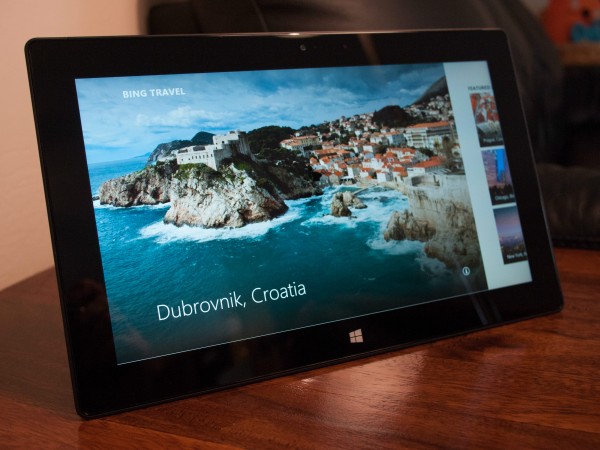
  • Surface Pro coming to the ‘rest of the world’ from next month

    If you live outside of the US and Canada, you might have been wondering when — or indeed if — Microsoft’s flagship Surface Pro tablet was going to appear in your part of the world.

    It’s been all quiet on the Surface front for a while. Microsoft announced back in February that it would be broadening the availability of the RT version of its tablet, introducing it into 13 more European countries, but since then we haven’t had any other real news. That’s all about to change though, as Microsoft has finally delivered an update regarding worldwide availability for its Windows 8 Pro powered device.

    According to the technology giant, Surface Pro will be available from May in the following territories: Australia, Austria, Belgium, Denmark, Finland, France, Germany, Hong Kong, Ireland, Italy, Luxembourg, New Zealand, the Netherlands, Norway, Portugal, Spain, Sweden, Switzerland, and the United Kingdom.

    Korea, Malaysia, Russia, Singapore, and Thailand will get the tablet a month later. It’s already available to buy in the US, Canada, and China.

    There’s no word yet on little things like retail availability (if it will just be available online or in actual shops) or pricing for that matter, but Microsoft says it will reveal all in due course closer to the actual launches. Which suggests it’s still ironing out the details. Don’t be too surprised if you can only buy it online in your part of the world though, as RT is only available from brick-and-mortar stores in very few countries.

    The RT version of the tablet is also getting expanded distribution and will launch in Malaysia on April 25th, in Mexico by the end of May, and in Korea and Thailand at some point in June.

    Announcing the news, Brian Hall, General Manager Microsoft Surface says:

    The enthusiasm for Surface has been fantastic, and we love hearing the stories of people who are making it the one device they use to work and play. This is what Surface was designed to do — simplify your life while letting you do more! In fact, one of our biggest challenges has been keeping our 128GB Surface Pro in stock. We’ve worked hard to increase availability, and most retail partners in the US and Canada as well as the Microsoft Store now have the 128 GB product consistently in stock.

    To those of you who have pressed for information — please understand that before making these announcements we make sure that we have the volume of devices in place and alignment with our retail partners to do each launch well. We value every Surface customer. We’re passionate about the products we’ve built, and we appreciate your passion for getting Surface in your market.

    So what do you think of the news? If you live outside of the US and Canada (and China for that matter) will you be snapping up a Surface Pro when it becomes available?