Blog

  • Backupify launches additional cloud-to-cloud backup tools for Google Apps

    Backupify is introducing an enhanced set of backup and recovery features designed to support its core offering for enterprise-level organizations on Google Apps. The “Spring Release for Google Apps” includes tools built to offer more efficient ways for administrators and end-users to manage their backups within larger organizations.

    The update, which builds on the Winter Release launched last December, adds the following advanced data recovery and admin controls:

    • Full Domain Export
    • Configurable Data Retention
    • Batch Import of Users
    • Restore and Export Folder Hierarchy
    • Google Sites Restore

    Backupify has also introduced unlimited storage to both its Professional and Enterprise plans.

    “Our updated Google Apps solution highlights Backupify’s focus and commitment to enterprise organizations in need of a complete backup solution that prevents loss of important business information stored on the cloud,” Rob May, CEO of Backupify explains. “Features like configurable data retention, advanced admin access control and domain export capabilities — functionality that’s critical for large companies — were all built as a result of listening to our customers’ ongoing needs”.

    Photo Credit: Andreas Weitzmann/Shutterstock

  • Cisco Strengthens Mobile Strategy With Ubiquisys Acquisition

    Cisco (CSCO) announced its intent to acquire UK-based Ubiquisys, a leading provider of intelligent 3G and long-term evolution (LTE) small-cell technologies that provide seamless connectivity across mobile networks for service providers. The $310 million acquisition strengthens its mobile strategy and business in femtocells and small cells.

    Enabling mobile users to have a faster, more consistent voice and data experience, the Ubiquisys solution delivers a signal over a shorter range. Its indoor small-cell expertise and focus on intelligent software for licensed 3G and LTE spectrum, coupled with Cisco’s mobility portfolio and Wi-Fi expertise, will enable a comprehensive small-cell solution for service providers that supports the transition to next-generation radio access networks.

    “Cisco is ‘doubling down’ on its small cell business to accelerate strong momentum and growth in the mobility market,” said Kelly Ahuja, senior vice president and general manager, Cisco Mobility Business Group. “By acquiring Ubiquisys, we are expanding on our current mobility leadership and our end-to-end product portfolio, which includes integrated, licensed and unlicensed small cell solutions that are tightly coupled with SON, backhaul, and the mobile packet core. For service providers, Ubiquisys supports cost effective coverage and capacity that delivers a differentiated customer experience.”

    Ubiquisys CTO and co-founder Will Franks spoke at the recent Mobile World Congress event about multimode LTE/WiFi/3G indoor metrocells and innovative partner applications for the Ubiquisys smart cell. Ubiquisys has partnered with Intel to develop EdgeCloud technology – an edge computing platform for smart cell applications. Intel CTO Justin Rattner discussed research about its Cloud Radio Access Network (C-RAN) at the Intel Developer Forum last fall.

    Ubiquisys employees will join the Cisco Mobility Business Group, reporting to Partho Mishra, vice president and general manager, Service Provider Small Cell Technology Group. Keeping a slightly faster pace for acquisitions compared to last year, this is Cisco’s fourth acquisition in 2013, and one of the largest European technology deals.

  • Apple Patents A Convertible MacBook Design, And Street View Navigation That Can Go Inside Buildings

    macbook-convertible

    A couple of new Apple patent applications published today (via AppleInsider) show how the company might be thinking about competing with recent innovations from other big tech companies with similar, but different designs. The first is a filing that describes a convertible MacBook design, with a touch-sensitive screen that separates from the base. The second is a method for navigating a Street View-style view of virtual maps, complete with a twist that allows it to go inside buildings, too.

    The first design for a convertible MacBook may look familiar, since it actually resembles a lot of designs available from Windows device makers, and some previous Android tablet designs. The screen detaches from the keyboard and body portion, which isn’t in itself terribly unique, but the screen in Apple’s version communicates with the brains in the base via Wi-Fi, Bluetooth and other wireless communication protocols, meaning all the serious computing work is still handled by the traditionally located GPU and CPU. The screen itself is touch-sensitive, but doesn’t act as a standalone tablet in quite the same way it does in some new Windows device designs.

    The screen also can charge wirelessly via the same kind of tech used in induction charging, drawing power from the base. What Apple describes here isn’t so much a convertible tablet, but more of a MacBook with a screen that solves the clumsy issue of how to use touch effectively on a notebook by allowing it to temporarily come off the base for more ergonomic touch-based interaction. Apple has talked about how touch doesn’t work on a traditional computer form factor in the past; this is one way around that.

    Another patent application published today could give a clue as to where Apple is headed with Maps. It describes a navigation method for a Street View-style look at the world from the perspective of someone walking the streets themselves. The difference between Apple’s patent and existing Google Street View navigation is that Apple’s is motion controlled, treating the environment as a panorama, which can be navigated based on motion detection from onboard device sensors to let a user truly experience a virtual “walk” through the streets of a city.

    There’s been little evidence to suggest Apple is deploying tech to gather its own Street View-style imagery for Apple Maps thus far, but another recent development at least makes sense given the context of this patent. Apple recently acquired indoor mapping company WiFiSlam, and this patent also describes making use of the system to map and navigated indoor environments, too, so that users could go “inside” select buildings. It was originally filed in September of 2011.

    Both these patent applications seem more like Apple hedging its bets than reflections of any immediate upcoming products, based on recent reports. But they also address issues that could become or are already competitive sore spots for the company, so there’s still a decent chance we may eventually see them make their way to shipping products.

  • Yes, you should care about Bitcoin, and here’s why

    Everybody’s talking about Bitcoin these days, which is quite remarkable given the highly technical nature of the crypto-currency. So why is it such a big deal?

    To explain why, I’m going to start with the implications of Bitcoin, then get into the technical nitty-gritty. Why that way round? Because there’s more to Bitcoin than the technical wow-factor, or indeed the crazy speculation that’s going on now. Even if Bitcoin itself fails, it’s a sign of things to come.

    All about decentralization

    Bitcoin is to state-issued currencies – often referred to as fiat money – as P2P file-sharing is to traditional broadcast media. There is no centralized source for it that can be controlled or moderated or regulated. It is difficult if not impossible to track from the outside. It is more complex to use than its better-known counterpart, but there are at least theoretical advantages to doing so.

    network

    In the case of file-sharing copyrighted content, the big advantage (apart from not paying for stuff) is the ability to ignore program scheduling or territorially-based release windows. In the case of Bitcoin — which has the added advantage of being lawful — users get to send money anywhere in the world for minimal fees, and to protect that money from the political considerations that influence central banks.

    In short, both Bitcoin and file-sharing are peer-to-peer, meaning users get to both cut out the middleman and, on an emotional level, stick it to The Man. That last factor is not trivial: Satoshi Nakamoto (the pseudonym for Bitcoin’s Keyser Söze -like initiator or initiators) seems to have had strong libertarian ideals in mind when he, she or they set the experiment in motion.

    Hang on. “Experiment”?

    Yup. People may be throwing money into Bitcoin at a scary rate (the total value of all Bitcoins passed the billion-dollar mark at the end of March, and some workers may even be opting to receive part of their salaries in Bitcoin), but it remains experimental. No one’s really sure where it will end up, because no one has really done this distributed, borderless digital currency thing for real before – yes, there are Facebook Credits and Linden dollars, but these are still centralized and controlled as such.

    However, now that the train is in motion, in a sense it doesn’t really matter if Bitcoin succeeds or fails. The original Napster failed and guess what? Unlawful file-sharing is still with us, and will remain with us for a long time. On a conceptual level, whatever happens, it’s now very difficult to see a future without Bitcoin or something like it. It may not replace fiat currencies, just as unlawful file-sharing has not killed off lawful distribution, but it may persist as a viable alternative and, by doing so, force change in the way its traditional predecessors function.

    Now’s probably a good time to look at the technical side of what we’re talking about.

    Crypto-currency

    Each Bitcoin user has a digital wallet, which can be stored on a computer or a memory stick, or in a cloud-based service, or technically even on paper. The wallet contains a list of Bitcoin addresses, which in turn contain both public and private cryptographic keys that prove the holder owns their Bitcoins and is allowed to spend them. The addresses are pseudonymous, in that there is no registry of who owns which address, so Bitcoin is great for conducting untraceable transactions.

    To receive a payment, the payee gives one of their addresses to the payer. The payer then uses that address to initiate the transaction, signing with their own private key to prove they have the funds, and the transaction then has to be certified by the network (rather than by banks, as happens with regular money).

    Mining tar sands

    Now this is where the creation of new Bitcoins also comes into play. The network is made up of computers called “miners” that are all competing with each other to solve increasingly complex computational problems. Once a miner beats the others to solving a particular problem, it gets to add the solution as a so-called “proof of work” to a block of transactions, and add that block to the “block-chain” — essentially a record of all Bitcoin transactions that have ever taken place.

    As a reward, the miner gets newly-generated Bitcoins, plus the transaction fees they have set. Apart from generating new Bitcoins, this distributed verification system also ensures that people can’t double-spend their Bitcoins.

    It is important to understand that, while fiat money is issued and controlled by governments and their laws, Bitcoin is generated and controlled by algorithm. While governments can always print more money according to their needs, there will only ever be just under 21 million Bitcoins (right now there are around 11 million), because that’s how the algorithm works.

    Every four years, the number of Bitcoins harvested with each block halves — during the first four years of Bitcoin, each block came with 50 Bitcoins, right now it’s 25, from 2017 it will be 12.5, and so on. But, even after Bitcoins cease to be produced (the current guess is that this will happen around the year 2140), miners will still want to create more blocks because of the associated transaction fees, so the network will still have the incentive to keep the economy going.

    The limit on the number of Bitcoins also makes the system inherently deflationary. As the value of Bitcoin cannot be manipulated by a central authority, as long as the Bitcoin economy continues to grow (and as people lose their Bitcoins, removing them from the system) then it follows that transactions will take place in ever-smaller fractions of a Bitcoin. However, this shouldn’t be as much of a problem as it would be with a normal currency, because Bitcoins are infinitely divisible. There is currently a limit of eight decimal places (taking us down from “bitcents” to the “satoshi”), but even smaller fractions could be enabled in the future.

    Okay, so who’s using it?

    There is some debate around whether Bitcoin is a currency or commodity. The issue there is whether people are converting fiat money into Bitcoin in order to profit off its current meteoric rise in value, or whether they intend to actually spend it.

    Golden piggy bank

    Bitcoin’s critics frequently point out how its big original user base consisted of people frequenting the Silk Road, the underground online marketplace for drugs and other illegal things. Silk Road only allows trade in Bitcoin, but in the offline world people buy a lot more drugs with dollars and euros, so frankly I fail to see the point there.

    It would certainly be a mistake to see Bitcoin’s non-Silk Road usage as widespread, but as people find out about the currency some are certainly starting to use it. You can famously use Bitcoins to buy pizza, but these days it can also be used to pay for VPN and VoIP services, music, cupcakes and, er, Linden dollars. WordPress (see disclosure) takes Bitcoin and Expensify will handle it. “Anarcho-capitalist libertarian” Jeff Berwick also wants to roll out Bitcoin ATMs.

    Does Bitcoin have rivals (apart from fiat money)?

    Yes, although none as successful. For example, there’s an interesting project called Ripple that is just getting off the ground. There have also been multiple previous attempts at creating non-digital alternative currencies, such as the Liberty Dollar, which earned its creator Bernard von NotHaus a counterfeiting conviction. Bitcoin may share the anti-statist motivation behind that wannabe currency, but it’s hard to see how it could constitute counterfeiting.

    Is it smart?

    Technically speaking, Bitcoin is very smart indeed, as it’s the first currency that removes the need for a trusted third party – usually a bank – in financial transactions.

    Business person with idea lightbulb

    That said, however, it’s crazily volatile at the moment. At the start of 2013, one Bitcoin was worth around $13. Things went nuts with the Cyprus crisis in March, and right now the price is bumping up and down around the $137 mark. It certainly looks like a bubble at this point, although the huge amount of interest Bitcoin is getting at the moment could lead to an uptick in use, which would in turn legitimize it as a viable currency. Either way, the current volatility will probably dissuade people from spending their Bitcoins right now, and make life hard for vendors setting prices in Bitcoin.

    Then, despite the supposed inviolability of the Bitcoin itself, there are multiple security issues. Before we even consider nefarious activities such as hacking, an interesting wrinkle in the Bitcoin methodology is that, if you lose your Bitcoin wallet, the money is lost forever, to everyone. If you lose your bankcard, it doesn’t wipe out the money in your account, and your bank will issue you a new one. There is no such mechanism in place here; losing Bitcoins is effectively like burning banknotes.

    Similarly, if someone steals your Bitcoin wallet by hacking into your computer, there is no heavily-insured bank to absorb the loss. You’re on your own. This happened to a user named “allinvain” back in 2011, costing him 25,000 Bitcoins. You can even get Bitcoin wallets for smartphones these days, but then you’re running a big risk if you lose your phone. As for cloud-based wallets, well, Instawallet has just suspended operations after being hacked.

    The best idea is probably to keep your Bitcoins on a device that is securely stored and not permanently connected to the internet.

    Should you get Bitcoins? I don’t know – the value against the U.S. dollar could continue to rise, or the bubble could burst. But frankly, I don’t really care. From where I’m sitting, Bitcoin is already proving its worth as a disruptor and as a test-case for how technology could divorce currency from certain external factors. If it fails, it may hurt those who bought into it big-time, but it’s not a large enough ecosystem to have wider repercussions. And if it does fail, it will have successors.

    Let’s see what happens next, because the crypto-currency genie is out of its box.

    Disclosure: Automattic, maker of WordPress.com, is backed by True Ventures, a venture capital firm that is an investor in the parent company of this blog, GigaOm. Om Malik, founder of GigaOm, is also a venture partner at True.

    Related research and analysis from GigaOM Pro:
    Subscriber content. Sign up for a free trial.

  • GE and Startup Health debut first class of consumer ‘health transformers’

    A sensor-based system for making sure doctors keep their hands clean, a cloud-based platform for the on-demand exchange of medical images and a mobile early warning system for elderly patients — if you’re not familiar with the startups behind those technologies now, GE’s hoping you will be soon.

    Three months after launching a new program for consumer health tech companies with New York-based Startup Health, the company on Thursday announced its picks for its inaugural class. The 13 selected startups, which were culled from an applicant pool of more than 400, don’t receive funding from the program, as they might from traditional startup incubators. Instead, the program, which is supported by GE’s Healthymagination Fund, chose companies that have already raised some funding and are looking for support taking their businesses to the next level.

    In exchange for giving up 2 to 10 percent equity ownership (which is split by GE and Startup Health and varies depending on the needs of the company), the companies receive three years of mentorship, training and other support from the two groups.

    Backed by former Time Warner CEO Jerry Levin, Startup Health was launched with a goal of growing 1,000 startups over the next decade. Since 2011, it’s selected two classes of health tech startups targeting consumers, enterprises and other health care stakeholders.

    For GE, the program is a way to keep a close watch on new developments in digital health and spot potentially big opportunities early on. And it comes on the heels of another corporation-backed health startup program — Nike’s TechStars-powered accelerator.

    Here are the 13 companies:

    Double HelixArpeggi – Nir Leibovich, Jason Wang, David Mittelman, PhD
    Austin, TX

    With a background in big data and analytics, Arpeggi’s founders want to make the high-speed analysis of genomic sequencing data easier and more affordable.

    Aver Informatics – Kurt Brenkus
    Green Bay, WI

    As health organizations amass more and more data, Aver aims to provide a web-based platform for gleaning valuable insights from enterprise data.

    Care at Hand – Andrey Ostrovsky, MD and Jeffrey Levy
    Boston, MA

    A graduate of health startup accelerator Rock Health, Care at Hand is a mobile system that helps non-clinical home care workers monitor and communicate the health of elderly patients.

    elderlyCaremerge – Asif Khan, Michael Davolt and Fahad Aziz
    Chicago, IL

    Targeting senior living communities, Caremerge offers a set of web and mobile apps for the communication, care coordination and workflow management.

    Cerora – Adam Simon
    Philadelphia, PA

    Cerora delivers diagnostic information related to brain health to patients, physicians and companies with a goal of helping health care workers effectively diagnose and manage concussions and Alzheimer’s disease.

    Doctor.com – Andrei Zimiles
    New York, NY

    Claiming a database of more than 2.5 million healthcare providers, Doctor.com enables patients to discover and compare providers, book appointments and leave and read doctor reviews.

    gethealthGetHealth – Chris Rooney and Liam Ryan

    Dublin, Ireland and New York, NY

    GetHealth is a mobile and web-based platform for increasing employee engagement in the workplace through fitness challenges, social support and other engagement features.

    GoGoHealth – Natasha Alexeeva and Kwaku Ampromfi
    Atlanta, GA

    GogoHealth is an online and mobile platform for enabling patients to report minor ailments to care providers and then receive guidance and prescriptions online.

    IntelligentM – Seth Freedman
    Sarasota, FL and New York, NY

    One of the companies in New York-based health accelerator Blueprint Health’s latest class, IntelligentM is a sensor-based monitoring system for making sure healthcare providers wash their hands. By maintaining clinical hygiene standards, the startup aims to drive down infection rates and improve patient outcomes and provider costs.

    itmeditMD – Halland Chen, MD
    Miami, FL

    itMD provides a cloud-based service that enables patients, doctors and imaging facilities more easily exchange medical images.

    Oxitone Medical – Leon Eisen, PhD
    Ashkelon, Israel

    Oxitone says it has developed the first wrist pulse oximeter without a fingertip probe, which enables a more comfortable way to continuously and remotely monitor a patient’s blood oxygen level, pulse rate and other cardiac activity.

    TalkSession – Melissa Thompson
    New York, NY

    TalkSession is an online platform that helps patients find mental health professionals and enables those professionals access tools for improving the quality of care.

    WalkJoy – Blain Tomlinson
    Long Beach, CA

    WalkJoy offers a device worn just below the knee that helps people with peripheral neuropathy and the elderly restore their balance and gait and reduce falls.

    Related research and analysis from GigaOM Pro:
    Subscriber content. Sign up for a free trial.

  • Sheryl Sandberg Talks Women and Leadership on The Daily Show

    Facebook COO Sheryl Sandberg dropped by The Daily Show with Jon Stewart Wednesday night to promote her new book Lean In. The conversation mostly focused on her message in Lean In of equality in the workplace and changing how we think about successful women.

    “The blunt truth: men still run the world…and I’m not sure that’s going that well,” said Sandberg of her desire to write the book.

    She goes on to discuss the barriers women still have, and the “plateau” that exists near the top.

    “We’re held back by sexism, discrimination, and terrible public policy..but we’re also held back by the stereotypes. You know, go to a playground this weekend and you’ll hear little girls called “bossy.” You won’t hear little boys called bossy, because we expect boys to be assertive. Lean In is trying to change that. Instead of calling our girls bossy we should say ‘my daughter has executive leadership skills.”

    Check out part 1:

    And part 2:

    [via The Daily Show]

  • Project Managers Should Share Their Stress

    Project managers tend to hold their cards pretty close to the vest. Sure, they may post or circulate some sort of general progress chart. But the telling, nitty-gritty details — percent complete, cost overruns, and so on — usually stay on a private little spreadsheet, safely tucked away in the PM’s files.

    Sometimes this I’m-in-control-here approach is well intentioned. PMs feel they should shield their team members from potential bad news. Other times it’s a power trip. PMs make it plain that they’re the only ones who know the full story, so naturally they get to call the shots.

    Whatever the motivation, the result is the same: acute stress. We know too many project managers with prematurely gray hair and a serious addiction to antacid pills. And no wonder. If you’re the only one responsible for results — and the only one who’s aware that the results might not be what everyone (including the customer) is hoping for — of course you’ll be stressed.

    It doesn’t need to be that way.

    Instead, try an open-book system: Every week, put key numbers for each project on a whiteboard to discuss at a regular team meeting. The idea here is to share not only percent complete but also detailed financial information about the project, such as gross profit per hour compared to budget. This will reveal problems lurking in the shadows, like technical inefficiencies that could be easily addressed if only people actually knew they existed.

    It’ll take a little while for new hires to get used to a transparent system like this. We’ve found that, at first, they’re mystified by the sea of numbers on the whiteboard. But we walk them through it, and pretty soon they acclimate. The more experienced technicians in our plant zero in on problem areas right away. They can see at a glance when a project is being delayed, because the rate of gross profit earned per hour tells the story. And they recognize immediately when costs aren’t in line with projections. In other words, they share the PM’s stress.

    Even better, they know that part of their job is to reduce that stress by coming up with ideas to fix things. On one memorable occasion at our company, a veteran member of Team B happened to take a look at Team A’s numbers, which at the time were pretty ugly but posted for all to see. He suggested that Team A change their technical approach on a tricky hydraulic problem that had stymied them for days. Members of Team A bristled at the suggestion, and a spirited discussion ensued — but the friction was productive. Soon three other techs on Team A came up with ideas of their own, and it wasn’t long before the project was back on track.

    Many eyes on a problem, many brains applied to it. That’s the chief virtue of the open-book approach. But a huge side benefit is sharing the stress, which means that the PM isn’t bearing the whole burden alone — and popping antacid pills like M&Ms.

    This is the third post in the authors’ blog series on project management. The series draws on advice from their book Project Management for Profit.

    Post #1: The Dirty Little Secret of Project Management

    Post #2: When Tracking Projects, Ignore Your Accountants

  • IBM Advances Big Data Platform, PureData System For Hadoop

    To expand on its Big Data platform, IBM has announced new technologies for data acceleration and new Hadoop System advancements, including an industry-first innovation called “BLU Acceleration,” which combines a number of techniques to dramatically improve analytical performance and simplify administration.

    “Big data is about using all data in context at the point of impact,” said Bob Picciano, general manager, IBM Information Management. “With the innovations we are delivering, now every organization can realize value quickly by leveraging existing skills as well as adopt new capabilities for speed and exploration to improve business outcomes.”

    IBM BLU Acceleration delivers key information to users faster by extending the capabilities of traditional in-memory systems – which allows data to be loaded into Random Access Memory instead of hard disks for faster performance – by providing in-memory performance even when data sets exceed the size of the memory. Innovations in BLU Acceleration include “data skipping,” which allows the ability to skip over data that doesn’t need to be analyzed, such as duplicate information; the ability to analyze data in parallel across different processors; and greater ability to analyze data transparently to the application, without the need to develop a separate layer of data modeling. Another industry-first advance in BLU Acceleration is called “actionable compression,” where data no longer has to be decompressed to be analyzed.

    Optimized for Hadoop

    IBM also announced a new IBM PureData System for Hadoop, designed to make it easier and faster to deploy Hadoop in the enterprise. The new system integrates IBM InfoSphere BigInsights, which allows companies of all sizes to cost-effectively manage and analyze data and add administrative, workflow, provisioning and security features, along with best-in-class analytical capabilities from IBM Research. Kelley Blue Book, the leading provider of new and used car information, will be evaluating the new PureData System for Hadoop to analyze click stream data created by users on its website.

    “Kelley Blue Book collects all kinds of data from various sources, so managing the efficiency of data is critical to grow our business,” said Steve Chow, vice president of technology and data intelligence for Kelley Blue Book. “We see many opportunities to leverage the IBM’s offering as a strategic platform to expand on our analytic ecosystem and tap the value of social media, text and machine data to get a better view of our consumers and customers to improve their overall experience on KBB.com.”

    Stream Computing

    Two additional big data announcements from IBM include new versions of InfoSphere and Informix.  An update to its enterprise-ready Hadoop offering, InfoSphere BigInsights make it easier to develop applications using existing SQL skills, also features compliance security and high availability features vital for enterprise applications. A new version of InfoSphere Streams, unique “stream computing” software that enables massive amounts of data in motion to be analyzed in real-time, with performance improvements, and simplified application development and deployment. A new version of Informix including TimeSeries Acceleration for operational reporting and analytics on smart meter and sensor data.

    IBM held a Big Data Summit Wednesday to announce the new innovations, and will provide a free broadcast event April 30th to dive deeper into the announced solutions.

  • New and official Nexus 4 accessories hit the Google Play Store

    Nexus_4_Wired_Headset_With_Microphone

    If you’re an accessory fiend and you really want the “official” stuff, Google has you covered. They just released three brand new accessories to go along with your Nexus 4. You can grab a wired headset with microphone for $19.99, a Micro USB cable for $9.99, or a Power Adapter for $15.99. All appear to be in stock and should arrive at your doorstep within 3 to 5 business days. More images and Play Store links after the break.

    Nexus_4_Micro USB Cable

    Nexus_4_Power_Adapter

    sources: Google Play – Wired Headset / Micro USB / Power Adapter

    Come comment on this article: New and official Nexus 4 accessories hit the Google Play Store

  • Detroit Electric Unveils The SP:01, A $135,000 Electric Sports Car With A Historic Past

    003-detroit-electric-sp01

    Nearly 100 years ago, the Anderson Carriage Company produced and sold one of the most popular electric vehicles of the time: The Detroit Electric. With production peaking at 1,000-2,000 cars in 1910, the company eventually renamed itself after its popular model and sold nearly 13,000 electric vehicles during its 32 years of production. The company never recovered from depression, producing its last EV in 1939.

    Detroit Electric is back. Meet the first car to wear the historic nameplate in over 70 years: The SP:01.

    The brand was revived in 2008 by Albert Lam, former Group CEO of the Lotus Engineering Group and Executive Director of Lotus Cars of England. Now headquartered in Detroit’s historic Fisher building, the company is set to restart Detroit Electric starting with the SP:01 electric sports car.

    The SP:01 is just the first from the Detroit startup. More family friendly vehicles are in the works, with two new models in the pipeline for 2014. The company is also setting up its production shop somewhere in the Detroit area where it expects to have a yearly production capacity of 2,500 vehicles. This facility will create 180 new jobs.

    Detroit Electric only plans on making 999 examples of the SP:01. That’s well under the 2,400 Tesla Roadsters produced during its four-year run. With a starting price of $135,000, the SP:01 also has a starting cost higher than the Roadster. But at least it’s just as fast.

    Detroit Electric claims the SP:01 is the fastest pure-electric production car on the market. And that’s true since the Roadster is no longer available. It’s claimed, although yet verified, performance numbers puts the SP:01 on the same level as the limited edition Tesla Roadster Sport. Plus, with a claimed top speed of 155 mph and 0-62 mph time of 3.7 seconds, it’s quicker than just about every other car out of Detroit including the new Corvette Stingray.

    Propulsion is provided by an air-cooled, asynchronous AC motor powered by dual 37-kWh lithium-polymer batteries. The system is good for 201 horsepower and 166 pound-feet of torque — not bad for a car that weighs just 2,403 pounds. Strangely enough, unlike the dead-simple Tesla Roadster, the SP:01 features a four-speed manual transmission or an optional two-speed automatic. Since the electric engine is either on or off, there is no need to use the clutch when stopping or starting.

    Detroit Electric claims the SP:01 has a driving range of 180 miles based on the New European Driving Cycle, but as Autoblog notes, while the official calculations haven’t been released, that likely results in about 150 miles on a U.S. cycle.

    It’s no secret that the carbon-fiber shell comes from a Lotus Exige. Interestingly enough, the Tesla Roadster is based largely on the Lotus Elise platform.

    Per Detroit Electric’s press release, it takes 4.3 hours to fully charge the SP:01 from a 240 volt outlet with 32 amps. It takes 8 hours on a 13-amp sources. But like the Chevy Volt, the SP:01 can output its electrical charge, serving as a sort of $135k electric generator in a pinch.

    Here’s hoping that Detroit Electric finds the same level of success as its forebearer. The EV market is wide open for new players. Tesla, while Detroit Electric’s main competition, has a large head start but by no means a monopoly. Fisker is dead in the water, GM and Toyota are pursuing hybrids, and Nissan is seemingly content selling low-end electric vehicles.

    The SP:01 will hit the production lines this August. The price starts at $135,000.

  • Gartner: Microsoft risks becoming irrelevant if Windows Phone, tablet efforts fail

    Microsoft Tablets Smartphones
    In case you haven’t noticed, tablet and smartphone sales have been surging lately as PC sales have started to tank. The latest research from Gartner shows that this trend won’t change anytime soon and the firm projects that PC shipments will shrink from 315 million in 2013 to 302 million in 2014, and down to just 272 million in 2017. Tablet shipments, on the other hand, are expected to explode from 197 million in 2013 to 468 million in 2017, while smartphone shipments are expected to rise from 1.9 billion in 2012 to 2.1 billion in 2013.

    Continue reading…

  • Five Essential Keys to Success When Relocating a Data Center

    Bruce Cardos is a principal consultant at Datalink, a publicly-held data center IT solutions and services provider. Bruce is a PMI-certified project management professional who specializes in data center relocations. Bruce has planned and managed nearly 100 data center openings, closing, consolidations, and relocations. His experience also includes managing several data centers, as well as positions in data center network design and implementation.

    Bruce-CardosBRUCE CARDOS
    Datalink

    A data center relocation (DCR) is not just about moving servers and plugging them in at their new locale.

    In reality, DCR can be one of a company’s most complex and challenging endeavors. With mission critical information and high-stakes money on the line, the failure of any key steps in the process can have potentially devastating repercussions. Valuable data can be lost. Expensive IT equipment can be damaged. Critical systems may remain offline for hours, days or even weeks as problems are resolved. Such issues can end up costing a company thousands–or even millions–of dollars in lost productivity and lost revenue.

    To ensure your company’s future data center relocation is successful, we offer five essential keys–all steps which occur before the first server is ever uninstalled and moved to the new location.

    Key #1: Recognize DCR Needs Special Management Skills

    Assigning a knowledgeable, experienced project manager (PM) is key to any successful data center relocation. While many companies have competent, professional project managers on staff, a data center relocation presents a different challenge. This requires a project manager with prior DCR experience. DCR project management involves identifying and pre-planning unique DCR issues that will impact creation of timelines. It involves managing associated people, budgets, and DCR risks. It also requires defining and executing the DCR’s critical macro and micro milestones while overseeing the production of key DCR planning documents.

    If you don’t have a knowledgeable and experienced PM on staff with deep expertise in data center moves, try finding a DCR partner with this skill set. Even if you appoint an internal PM (which we also highly recommend), you will want an experienced DCR professional to lead the project and transfer knowledge to your team.

    Key #2: Equate Good Planning with Good Documentation

    Complete and detailed planning is as important as the need for good quality DCR documentation. This documentation emphasis may surprise technical teams who’ve grown accustomed to having critical details ‘in their heads’. When it comes to DCR, however, this informal practice creates a guaranteed, single point of failure. While there is no cookie-cutter approach to data center relocation, certain documents are necessary for every successful data center move.

    The Big Four: Your DCR’s ‘Must-Have’ Docs

    At a minimum, DCR project information should appear in four main documents:

    • Where You Are Now: The Present Method of Operation (PMO). The PMO comprehensively documents what will be moved. It should include diagrams and detailed lists describing everything in the existing environment–from all hardware and software components to storage requirements, any logical or physical interactions, application dependencies, network connections, inventory lists and any support processes currently in use.
    • Where You Hope to Be: The Desired Future State (DFS). The DFS details the desired successful outcome of the relocation. This includes defining project attributes, success conditions, and details associated with the new placement of all moving components. As part of the DFS’ expected end state, you should include enough detail to resume various service management processes, such as change management, incident management and configuration management. The DFS should also define any anticipated updates or IT changes (i.e., virtualization, enhanced storage, technology uplift for some or all servers, network upgrades, etc.).
    • Your Roadmap to Get There: The Design Plan. The completion of the first two documents defines the end of the ‘Requirements Process’. After this process is approved, the Design Plan begins. This is the ‘roadmap’ for getting from the PMO to the DFS. It should convey a good understanding of overall processes needed to complete the relocation while defining any incremental budgets needed to acquire necessary components. Included in the design plan: Details on the various move groups, any new hardware and/or software needs, pre-requisite steps, known risks and their contingencies, a high level timeline, communication plan and the impact of client processes on the design.
    • Who Will Do What, When and Where: The Implementation Plan. The Implementation Plan is derived from the Design Plan. This includes all steps, dates, and responsible parties for the tasks to be accomplished in their proper order and with all the appropriate interactions and linkages defined. Included here is a Day of Move Plan which documents the hour-by- hour details for the move event(s) to be completed during the data center relocation. An updated project schedule is also included.

    Continue for the next keys!

  • Arthur Frommer buys travel guides back from Google to keep print editions alive

    Google acquired Frommer’s Travel Guides from Wiley in 2012 — and then, last month, reportedly decided to stop publishing them as print editions. Now Arthur Frommer, the 83-year-old founder of the brand, has bought Frommer’s back from Google and will continue publishing the travel guides in print and digital editions.

    The AP reported the news Wednesday night and quoted Frommer saying, “It’s a very happy time for me. We will be publishing the Frommer travel guides in ebook and print formats and will also be operating the travel site Frommers.com.” Google confirmed the news to Engadget, saying, “We can confirm that we have returned the Frommer’s brand to its founder and are licensing certain travel content to him.”

    The purchase price was undisclosed. Google had purchased Frommer’s from Wiley for a reported $22 million. The travel site Skift first reported that Google would stop publishing the Frommer’s guides in print.

    Frommer’s had published over 300 guidebooks since its founding in 1957.

    Related research and analysis from GigaOM Pro:
    Subscriber content. Sign up for a free trial.

  • LG’s Optimus G Pro lands in Japan at NTT DOCOMO

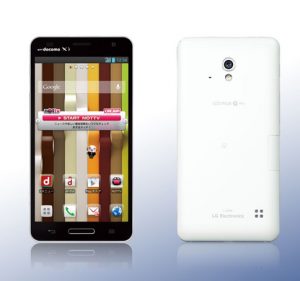
    On Thursday, LG announced that the Optimus G Pro, the company’s Android flagship smartphone, is now available at Japanese carrier NTT DOCOMO. In mid-January, NTT DOCOMO was the first to reveal the handset, a number of important specifications and its release date — April 2013.

    Unlike its international sibling which sports a 5.5-inch panel, the NTT DOCOMO variant of the Optimus G Pro comes with a smaller 5.0-inch IPS display. The resolution is the same — 1080 by 1920 but the density is higher — 440 ppi (pixels per inch). NTT DOCOMO originally revealed that the Optimus G Pro will ship with a 1.7 GHz quad-core Qualcomm Snapdragon S4 Pro processor, but today LG said that in fact the newer and faster, still Qualcomm-made, 1.7GHz quad-core Snapdragn 600 processor is used instead.

    The same processor is used in the HTC One and the Samsung Galaxy S4, albeit with a higher clock frequency for the latter. The Galaxy S4 will also be available with a Samsung-made Exynos 5 Octa processor.

    Other specs for the Optimus G Pro include 2GB of RAM; 13 MP back-facing camera; 2.1 MP front-facing camera; 32GB of internal storage; microSD card slot and a 3,000 mAh non-removable battery. The Optimus G Pro ships with Android 4.1.2 Jelly Bean. Dimensions come in at 139 x 70 x 9.9 mm.

  • Reuters – CVC Appoints Banks for Belgium Offering

    Private equity group CVC Capital Partners has appointed nine banks for its planned sale of 25 to 30 percent of Belgium’s postal service bpost on the stock market, Reuters reported. The flotation, expected in the coming months, would be the first sizeable initial public offering in Brussels since biotech firm Movetis raised 85 million euros ($109 million) at the end of 2009 and the largest since zinc smelter Nyrstar raised 1.74 billion euros in 2007.

    (Reuters) – Private equity group CVC Capital Partners has appointed nine banks for its planned sale of 25 to 30 percent of Belgium’s postal service bpost on the stock market, a source familiar with the company’s thinking said on Thursday.

    The flotation, expected in the coming months, would be the first sizeable initial public offering (IPO) in Brussels since biotech firm Movetis raised 85 million euros ($109 million) at the end of 2009 and the largest since zinc smelter Nyrstar raised 1.74 billion euros in 2007.

    In the past three years, investor uncertainty due to the euro zone crisis has made companies in Belgium reluctant to float on the stock market.

    Belgian business newspapers De Tijd and L’Echo have both said CVC could raise between 550 million and 900 million euros from the flotation.

    The source said bpost would be marketed to investors as a high-dividend stock.

    De Tijd reported on Thursday that the company would pay out a dividend of 6 percent to 8 percent of its market valuation.

    CVC has appointed JP Morgan, Nomura and BNP Paribas Fortis as joint global coordinators, and JP Morgan, Nomura, Morgan Stanley and UBS as joint international bookrunners, the source said.

    BNP Paribas Fortis, KBC and ING Belgium have been appointed joint Belgian bookrunners, the source said, while Belfius and Royal Bank of Canada have also been appointed to help with the sale.

    CVC declined to comment.

    The private equity group owns 50 percent minus one share in bpost.

    The Belgian state, which owns the rest, has said it plans to sell around 1 billion euros of assets this year to keep public sector debt below 100 percent of gross domestic product. It has declined to say what it planned to sell.

    The post Reuters – CVC Appoints Banks for Belgium Offering appeared first on peHUB.

  • URL Snooper lets you download streaming media files

    If you’d like to download a YouTube video then there are plenty of options available, from web services like KeepVid to dedicated tools like Free YouTube Download.
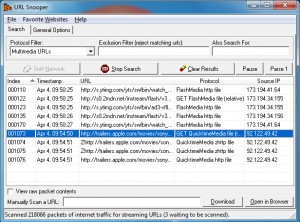
    Capturing streaming videos from other sites can be a challenge, though, as their URLs are often concealed by scripts and similar tricks. Examining the page source will sometimes give you clues, but URL Snooper could be a simpler option: the program just watches your internet activity, and displays a list of any streaming URLs it finds.

    Getting started with URL Snooper is surprisingly easy. It’s a small (3MB) download, and portable, so there’s no installation required. And while the program uses WinPcap to capture your network traffic, there’s no need to install that, either — simply launch the program and you’re ready to go.

    URL Snooper will first present a very simple interface, just an empty table. But to see it in action, open a site which streams video (not YouTube, it’s not compatible), play a clip, and any URLs detected by the program will be displayed right away.

    Does it work? Our results were a little mixed. We had no luck with Facebook, for instance, but the program detected rtmp:// URLs at Metacafe, and found addresses from simpler sites — Apple Trailers, say — without any problems at all.

    If you’re not successful immediately, though, URL Snooper does have some extra options which can help. Click File > Advanced and you’re able to filter detected URLs by protocol or keyword, for instance.

    And in particular, if you select “Show All” in the Protocol Filter box then the program displays every URL it’s detected, whether it’s related to streaming media or not (images, icons, ad servers — it even detected and displayed the URL of our antivirus tool’s streaming update file). This makes URL Snooper useful in many more situations, so we’d recommend you keep a copy to hand, just in case you ever need a better understanding of how your internet connection is being used.

    Photo Credit: Yuriy Boyko/Shutterstock

  • North Castle Partners Backs Ignite USA

    North Castle Partners has invested an undisclosed amount of growth capital into Ignite USA, a developer and marketer of reusable, environmentally friendly thermal mugs and hydration bottles.

    PRESS RELEASE

    North Castle
    Partners and its co-investors announced today that they have completed an
    investment of growth capital in Ignite USA, LLC (“Ignite”), a leading developer
    and marketer of reusable, environmentally friendly thermal mugs and hydration
    bottles. North Castle is a leading private equity firm focused on investments in
    consumer-driven companies that promote Healthy, Active and Sustainable Living.
    The terms of the investment, which is being made in partnership with CEO Sami
    El-Saden, were not disclosed.

    Through its Contigo and Avex brands, Ignite has successfully created a diverse
    portfolio of innovative products that appeal to an extremely loyal and expanding
    consumer base. Ignite has a strong global presence and currently sells its
    products in over 50 countries across club, mass, sporting goods, specialty,
    direct-to-consumer, and exclusive strategic partnerships.

    “North Castle’s mission is to invest in companies that provide high quality,
    innovative products which promote healthy and sustainable living,” said Alison
    Minter, a North Castle Managing Director. “We intend to support the
    acceleration of Ignite’s growth by leveraging our experience with
    innovation-driven product businesses, such as Cascade Sports and Octane Fitness,
    as well as companies with mass market distribution and channel expansion
    experience, including Atkins Nutritional, Enzymatic Therapy, Flatout Flatbread,
    Leiner Health Products, and Avalon Natural Brands. We are proud to welcome Sami
    and the Ignite team into the North Castle family.”

    “I am excited to partner with North Castle and to leverage North Castle’s
    expertise and resources in building consumer product businesses and brands to
    take our company to its next level,” said Sami El-Saden, CEO. “I was impressed
    by their knowledge of the industry, their values and commitment to partnership,
    and the expertise of their team in the areas of strategy and brand as we grow in
    both the mass and specialty markets.”

    “We are excited to partner with another impressive entrepreneur in the second
    investment from our NCP V fund. We look forward to working with Sami and the
    Ignite team in building a global leader in two of the fastest growing segments
    of the housewares industry,” said Chip Baird, North Castle’s Managing Partner.

    About North Castle Partners
    North Castle Partners is a leading private equity firm focused on investments in
    consumer-driven product and service businesses that promote Healthy, Active, and
    Sustainable Living. North Castle is a hands-on, value-added investor in
    high-growth, middle market companies in the (i) beauty & personal care, (ii)
    consumer health, (iii) fitness, recreation & sports, (iv) home & leisure and (v)
    nutrition sectors, among others. North Castle’s current portfolio includes such
    well-known brands as Curves International, Palladio Beauty Group, Mineral
    Fusion, Red Door Spas, Performance Bicycles, World Health, Octane Fitness, Ibex
    Outdoor Clothing, and Flatout Flatbreads. Prior portfolio company holdings
    include Atkins Nutritionals, Cascade Helmets, Bora-Bora Organic Foods,
    gloProfessional, Equinox Fitness, EAS, Enzymatic Therapy, CRC Health Group,
    Doctor’s Dermatologic Formula, Naked Juice Company, and Avalon Organics / Alba
    Botanicals. North Castle and its operating executives and advisors partner with
    management to bring a wide range of strategic and operational capabilities, as
    well as an extensive knowledge base and network to build world-class companies.
    North Castle is headquartered in Greenwich, CT. For more information, visit
    www.northcastlepartners.com.

    About Ignite
    Ignite, a company with a passion for great products, is a global leader and
    recognized innovator in two of the fastest growing segments of the housewares
    industry: reusable, environmentally friendly thermal mugs and hydration bottles.
    Through its Contigo and Avex brands, Ignite has successfully created a diverse
    portfolio of innovative products that appeal to an extremely loyal and expanding
    consumer base. Ignite has a strong global presence and currently sells its
    products in over 50 countries across club, mass, sporting goods, specialty,
    direct-to-consumer, and exclusive strategic partnerships. Ignite is
    headquartered in Chicago, Il.

    The post North Castle Partners Backs Ignite USA appeared first on peHUB.

  • Android 4.2 Jelly Bean comes to ASUS Transformer Pad Infinity

    One month after the company updated the Transformer Pad TF300 to Android 4.2, ASUS has announced that the Transformer Pad Infinity is also poised to receive the second Jelly Bean iteration.

    On its Facebook page, ASUS posted a picture which lists the Android 4.2 update as coming to the Infinity, with the roll-out started yesterday. So what do you get from the upgrade?

    The most important feature that Android 4.2 introduces is the ability to use multiple user accounts, which is currently exclusive to the tablet version of the mobile operating system.

    Other noteworthy features include lockscreen widgets, improved security, the ability to stream content, swipe input using the built-in keyboard and Daydream, among others.

  • Reuters – TPG, Madison Dearborn Finalists for National Financial Partners Deal

    Private equity firms TPG Capital and Madison Dearborn Partners are the two finalists bidding for National Financial Partners, a New York-based wealth management company with a market value of nearly $900 million, Reuters reported. NFP – run by Jessica Bibliowicz, the daughter of former Citigroup chief Sandy Weill – could be valued at around $1 billion in a deal, the people said on Wednesday, asking not to be named because details of the auction are confidential.

    (Reuters) – Private equity firms TPG Capital and Madison Dearborn Partners are the two finalists bidding for National Financial Partners (NFP.N), a New York-based wealth management company with a market value of nearly $900 million, people familiar with the matter said.

    NFP – run by Jessica Bibliowicz, the daughter of former Citigroup chief Sandy Weill – could be valued at around $1 billion in a deal, the people said on Wednesday, asking not to be named because details of the auction are confidential.

    NFP said on March 13 that the company has decided to explore a sale following indications of interest from private equity firms, confirming a Reuters report the previous day.

    Representatives for NFP, TPG and Madison Dearborn declined to comment.

    National Financial, like many independent brokerage firms, experienced difficulties during the market downturn of 2008 and at one point that year saw its stock hit a low of $1.21 per share.

    Its stock closed Wednesday at $22.25 per share.

    In February, National Financial reported fourth-quarter net income of $19.4 million, or 45 cents per share, up from $11.2 million, or 27 cents per share, in the year ago quarter.

    Total revenue for the fourth quarter grew 3.8 percent to $300.1 million from $289.2 million in the prior year’s quarter, beating analysts’ estimates.

    A sale of National Financial would come almost a year after Bibliowicz stepped down as president of the company in April 2012. The company announced at that time that she would also be stepping down as chief executive at the end of March 2013, at which point she would become non-executive chair. The firm later amended that timeline and she is now scheduled to relinquish the job of CEO in May.

    (Reporting by Jessica Toonkel and Greg Roumeliotis in New York, Editing by Soyoung Kim and Steve Orlofsky)

    The post Reuters – TPG, Madison Dearborn Finalists for National Financial Partners Deal appeared first on peHUB.

  • New Research Shows Success Doesn’t Make Women Less Likable

    A businesswoman has a conversation with her five-year-old daughter. “What if I told you that as Mommy does better at work, fewer people like me. But when Daddy does better at work, more people like him. What would you say?” She expected her child to say, “Well that’s really unfair, Mom.” But what she said instead was, “Well then, Mommy, I would be less successful at work so more people will like me.”

    In a recent interview, Facebook COO Sheryl Sandberg recounted this story to underscore the importance of a body of research that she cites in her book Lean In indicating “that success and likability are positively correlated for men and negatively correlated for women.”

    We share Sandberg’s disappointment in this young girl’s response. We too would like to see women lean in further. And we share her view that barriers, both external and self-imposed, stand in the way. But our work with leadership development and 360-degree assessments does not confirm that a likability penalty as women rise to the top is one of those barriers. While, certainly, some individual women may find themselves disliked as they move up the organization, our aggregate data show the opposite is more common — that male leaders are perceived more negatively as they rise, whereas women generally maintain their popularity throughout their entire careers.

    Here’s how we came to this conclusion. Taking items from our 360-degree feedback instrument such as “Do you stay in touch with issues and concerns of individuals in the work group?” and “How well do you balance getting results with a concern for others’ needs?” we created a likability index. (For a detailed explanation of how it was created and to take the quiz yourself, go to our website.) We then analyzed a group of 9,500 male and 5,000 female leaders who participated in our programs in the past three years. Using our scale, we compared their level in the organization with how well liked they were by their bosses, peers, and direct reports. On average, 10 people assessed each leader. Here’s what we found:

    likeabilityrev2.gif

    Both men and women took a hit in likability when they moved from first-level supervisor to middle manager. But this drop was more precipitous for men. After that, the women made up some ground, while men’s standing continued to erode, significantly widening the gap between them.

    What’s more, if you plot overall perceived leadership effectiveness against likability, you discover that the greater the perceived effectiveness of leaders — male or female — the higher their score on the likability index. Coupling this with our past studies, which show a high correlation between perceived leadership effectiveness and such critical measures of business outcomes as profitability, customer satisfaction, employee engagement, and productivity, convinces us that people like effective leaders who produce superior results, no matter what their gender.

    Just as we found likable leaders at every level, we also see some who are prickly, capricious, and arrogant. As you would suppose, they included leaders of both genders. There happen to be a higher percentage of likable women leaders than men leaders, but the difference in our data is not huge (among the least likable there are 3% more men than women; among the most liked 3% more women than men).

    Our conclusion? Likability and success actually go together remarkably well for women. Parents can accurately and unhesitatingly tell their daughters, “Aspire for positions of power and influence, and when you get promoted, it is totally your choice whether you act in a way that will have people continue to like you or not.”