Blog

  • Windows Phone users can now be puzzled by Amazing Alex

    When saying I have played Rovio’s Amazing Alex game on my Android phone for some time, I don’t mean a cheap shot at the app launching today on Windows Phone. To be truthful, it is more a challenge, and one that comes with sincere sympathy, because folks on the Microsoft mobile platform now have the opportunity to be just as baffled as me.

    The physics-based puzzle game from the Finnish company debuted for Windows Phone 8. According to Microsoft’s Michael Stroh, “The game has more than 100 levels, 35 interactive objects, and four locations to keep things interesting. But one of my favorite features of Amazing Alex is this: the game lets you design and share your own levels — and download the best fan-created levels engineered by other players”.

    Yes, that sounds about right — I would not honestly know since I became stuck on one level and have not moved since. Truth be told, I gave up trying, but am now inspired to go back and take a fresh look. Or perhaps I should simply hand the device to my son. Yes, make fun of me in the comments for my lack of gaming prowess.

    Amazing Alex is not free, but $0.99 is not a steep price to pay for your hours of entertainment, or in cases such as mine, months of frustration. First Temple Run and now this — you folks are going to be getting rather unproductive.

  • Google+ Adds Full-Size Photo Uploading From Desktop

    Google announced that it has added the ability to upload full-size photos from the desktop on Google+. This follows a similar feature previously launched on Android.

    Google’s Jon Emerson discusses the update in a Google+ post:

    Jon Emerson

    Upload and share full-size photos from your desktop

    Back in December we launched full-size backups of your Android photos (http://goo.gl/coFZ7). Today we're making it possible upload full-size photos from your desktop — whether you're updating your profile photo, creating a new album to share, or backing up pictures from a recent vacation.

    To enable full-size desktop uploads, just visit your settings at www.google.com/settings/plus, and check "Upload my photos at full size." Afterwards, any files larger than 2048px will count towards your Google storage (up to 5GB free). Photo storage at 2048px or smaller remains free and unlimited.

    p.s. With lots more full-size photos on Google+, pan and zoom is going to get a lot more fun. Check out +Dave Cohen's recent announcement for more details: http://goo.gl/cmJ7i.

    #googleplusupdate#googleplusphotos

    Given Google+’s standing appeal among many photographers (and wannabe photographers), the feature is surely a welcome one.

    [via CNET]

  • First look at Facebook Home UI

    facebook-home-drawer

    Just yesterday we saw pictures of the Facebook Phone’s hardware, but the software is what’s really exciting, right? Thanks to @evleaks and courtesy of 9to5 Google, we’ve got our first glimpse at what the custom Android skin is going to look like.

    In the first picture you can see what’s likely to be an app drawer, complete with standard Google apps. There was some speculation that Facebook might pull an Amazon and cut ties with Google completely in the software, but that’s obviously not the case. Aside from the Google apps, we have the expected Facebook, Messenger, and Instagram apps. On the top of the app drawer, there are shortcuts for posting status updates, photos, and check ins on Facebook.

    In the other screenshots, we can see a very clean look to the entire skin, and there’s still quite a bit of vanilla Android showing through. All of the icons are stock, the gallery application doesn’t appear to have been changed much, the status bar is keeping its holo theme, etc. More than anything, it’s just an extremely unique launcher for your apps with a few applications unique to the Facebook phone. Personally, I’m a fan of the less intrusive approach Facebook is taking here.

    Even though this is a pretty small peek at what the phone can actually do, we can get a pretty good idea of how the phone will function from these leaks, assuming they end up coming true tomorrow. Have these pictures changed anyone’s mind about getting a Facebook phone?

    facebook-home
    facebook-home-gallery
    facebook-home-drawer


    source: 9to5 Google

    Come comment on this article: First look at Facebook Home UI

  • Apple has to think different about China

    Apple apologies are rare. Especially ones that come from the CEO.

    Steve Jobs said sorry (sort of) when the iPhone 4 antenna backlash appeared ready to derail the launch with bad press. Tim Cook did the same when Apple Maps’ arrival was greeted last fall with mocking and scorn and threatened to overshadow the iPhone 5′s arrival. Other than that, Apple gets lambasted in the media in many countries for a variety of reasons and the company’s standard response is silence.

    But in China? Rather than the local media and government coming around to the way Apple does business, it seems to be the other way around: Apple is learning its usual playbook for success doesn’t necessarily work there.

    applestorechina

    An iPhone launch in China.

    After a two-week sustained campaign conducted by the country’s government-controlled media outlets against Apple’s repair and warranty service for iPhones that painted the company as “arrogant,” Apple took the very unusual step of having Cook apologize in an open letter to Chinese customers. He also offered a slight change in how the company handles warranties. The Chinese media stood down after Apple’s peace offering, and it does appear that for now, both sides got something good out of the deal.

    Consider the way Apple dealt with a warranty snafu in Italy. In late 2011 country’s consumer protection agency found Apple was violating a law requiring free two-year warranties for all products. Apple was offering one year (its standard policy) and selling AppleCare plans to customers if they wanted more protection. Even with plenty of media coverage, it took several rounds of fines and threats from the government to shut down Apple’s local businesses before Apple complied – over a year later.

    To recap: In China, Apple wasn’t breaking any law, yet it issued a deferential apology. In Italy, it actually ran afoul of the law, a year later fixed its policy with no apology. But whether it’s dealing with security problems, iCloud outages, or potential antitrust matters, the latter situation is far more common for Apple than the former.

    A new dynamic

    The China affair started out in typical fashion for Apple. The company initially responded to the China Central Television report on its iPhone repair policy, saying, ”Apple makes outstanding products … and offers incredible user experience. Our team is always making an effort to exceed customers’ expectations.”

    Most Western media reporters who cover Apple saw that and thought, “sounds about right:” like a lot of companies, Apple’s typical playbook in these situations involves bland statements that give away nothing. But when the People’s Daily paper couldn’t get an interview with an Apple executive, it proceeded to call Apple “arrogant” and sharpened its attacks.

    There’s nothing new or surprising about Apple executives not giving interviews. Its preferred way of interacting with the press is through occasional large, orchestrated media events that are invite-only, carefully crafted statements or background briefings.

    And the notion of Apple being called “arrogant” is also nothing new. What is new is the extremely deferent apology. “We express our sincere apologies for any concerns or misunderstandings this gives consumers,” Cook wrote. Compare that to Jobs’ response to so-called Antennagate: ”This has been blown so out of proportion that it’s incredible” and “when companies get big, people want to tear them down.”

    Tim Cook in January. He has made annual visits to China since becoming CEO. Credit: China's Ministry of Industry and Information Technology

    Tim Cook in January. He has made annual visits to China since becoming CEO. Credit: China’s Ministry of Industry and Information Technology

    But for foreign companies trying to gain a foothold in the Chinese market, the humble apology is actually something of a standard operating procedure for dealing with dissatisfied customers and a nagging Communist Party-controlled media, as Bloomberg noted. The growth potential of the Chinese market is impossible for companies to ignore; Cook believes it will become Apple’s largest market some day and on recent earnings calls has described it as “a very, very important country to us.”

    And the Chinese media clearly also can’t be ignored or asked to wait until Apple is ready to make an announcement — particularly if the outlets are deeply connected to the government that can heavily influence Apple’s fortunes in the country. (China also does not have the kind of grassroots system of support from fan sites and blogs run by the Apple faithful the way it does in the U.S. and other countries.) The situation as it played out this week sets a pretty clear precedent that for Apple to succeed, it’s going to have to get used to this dynamic — and make adjustments.

    A complicated relationship

    Apple isn’t new to China. The two have plenty of history: it provides millions of jobs to Chinese workers through its partnership with Foxconn and other manufacturing companies. So the company is experienced in dealing with industries and government agencies that are not necessarily independent of the country’s ruling party.

    Apple has learned to play the game when it comes to getting new iPhones approved by the nation’s communications authority, getting new carriers to support the iPhone, dealing with the intellectual property laws, getting stores opened, and more. And this is no easy thing to navigate; Apple rival Google has a particularly tortured relationship with China due to a history of censorship and hacking. Apple has also dealt with hacking attacks possibly emanating from the country.

    But as Apple moves to make its No. 2 market its No. 1 market, and the populous country’s citizens into customers, the road there is paved with other forces — state-run media, a government potentially treating Apple as a proxy for its disagreements with the U.S. government – that will mean it’s not just business as usual for Apple.

    Thumbnail courtesy of Flickr user LJR.MIKE via Compfight cc

    Related research and analysis from GigaOM Pro:
    Subscriber content. Sign up for a free trial.

  • At 40 years old, the cellphone has become the world’s most important consumer tech product

    Cellphone 40th Anniversary
    Like a lot of important consumer technology, the cellphone got its start as a luxury item for businesspeople who wanted the ability to take important phone calls while out of the office. But 40 years after its invention, the cellphone has become the single most important piece of consumer electronics in the world, acting not only as a communications device for voice calls but as a low-cost way for millions of people around the world to access the Internet without needing more expensive personal computers. As companies such as Samsung (005930), BlackBerry (BBRY), Nokia (NOK) and perhaps even Apple (AAPL) move more aggressively to bring low-cost smartphones to emerging markets, it’s easy to see how mobile phones have become the key to spreading Internet connectivity around the world and giving people access to vital information that had previously been much harder to come by.

    Continue reading…

  • UCLA Dentistry gets $11M from First 5 LA to expand care for children, pregnant women

    The UCLA School of Dentistry has been awarded funding of more than $11 million from the Los Angeles–based child advocacy and grant-making organization First 5 LA to expand access to dental care in Los Angeles.
     
    The funds will establish the UCLA–First 5 LA Children’s Dental Care Program (CDCP), which will support the delivery of care to children, from birth to age 5, and pregnant women over the next five years. The program will be especially beneficial to those in underserved communities, who are at high risk for dental disease, school officials said.
     
    This new award comes on the heels of the $9.23 million that First 5 LA awarded to the dental school last year, bringing the total amount the school has received from the organization to nearly $21 million over the past 12 months.
     
    “Our goal, over the next five years, is to develop an integrated health-care delivery system that will provide quality, ongoing dental care to underserved young children and pregnant women in Los Angeles communities,” said Dr. James J. Crall, project director of the CDCP. “We hope the Children’s Dental Care Program will serve as a prototype for transforming the oral health care system for young children throughout Los Angeles County and beyond.”
     
    As part of the new program, UCLA faculty members hope to gain a better understanding of the barriers that limit the use of dental care services by underserved groups in order to initiate improvements in care.
    “While focusing on dental care for young children, the program is also targeting pregnant women in an effort to provide them with the information and education they need to be able to provide a more positive and healthier approach to oral health for their developing children,” Crall said.
     
    The program will roll out four major strategies over the next five years to increase access to oral heath care and improve the quality of care for young children and pregnant women: 
    • The CDCP will expand the UCLA–First 5 LA 21st-Century Dental Homes Project, a project that established 12 community clinics in the Greater Los Angeles area as “dental home” models of care for young children, in which services are delivered in a continuously accessible and family-centered way by dentists and other health care providers. An additional 10 community clinics will be selected to receive technical assistance and resources to expand their capacity to serve as community-based dental homes, bringing the total number of clinics benefiting from First 5 LA funding and the UCLA School of Dentistry collaboration to 22.
    • Second, the CDCP will provide support for capital investments to expand and renovate two community dental clinics in Los Angeles County. One clinic, already identified for expansion, is operated by the San Fernando Community Health Center (SFCHC). The expansion will transform this small, outdated 4-chair facility into a cutting-edge 10-chair dental clinic that can accommodate more than twice the current number of patients and that will integrate oral health services with SFCHC’s newly constructed primary care medical clinic.
    • Third, the CDCP will develop and employ strategic innovations that address gaps in the current oral health care delivery system in Los Angeles County with the goal of improving system performance. These innovations include the use of health information technology to support outreach activities and risk-based interventions to improve the quality and efficiency of patient care.
    • Finally, the CDCP will expand and transform the UCLA School of Dentistry’s community-based, service-learning programs for current and future dental and oral health professionals. This includes educational programs for general dentists, pediatric dentists, primary medical care providers and community health workers. 
    “This is a major investment by First 5 LA in Los Angeles County’s oral health care delivery system,” said No-Hee Park, dean of the UCLA School of Dentistry. “This funding will impact the oral health of tens of thousands of people for the foreseeable future. Greater access to quality oral health care must be addressed. Developing these improved delivery systems in our underserved communities is the best place to start.”
     
    Crall, the CDCP project director, is a professor and chair of the division of public health and community dentistry at the UCLA School of Dentistry, a member of the UCLA Center for Healthier Children, Families and Communities, and project director for the UCLA–First 5 LA 21st-Century Dental Homes Project.
     
    First 5 LA oversees the Los Angeles County allocation of funds from Proposition 10, which added a 50-cent tax on tobacco products sold in California. Funds raised help pay for health care, education and child development programs for children from the prenatal stage to age 5 and their families. First 5 LA’s mission is to increase the number of young children who are physically and emotionally healthy, safe and ready to learn.
     
    The UCLA School of Dentistry is dedicated to improving the oral health of the people of California, the nation and the world through its teaching, research, patient care and public service initiatives. The School provides education and training programs that develop leaders in dental education, research, the profession and the community; conducts research programs that generate new knowledge, promote oral health and investigate the cause, prevention, diagnosis and treatment of oral disease in an individualized disease-prevention and management model; and delivers patient-centered oral health care to the community and the state.
     
    For more news, visit the UCLA Newsroom and follow us on Twitter.

  • Twitter plays its platform hand, and it is the one holding all the Cards

    We’ve written before about the evolution that Twitter has been trying to engineer over the past year or so — transforming itself from a network with an open ecosystem into one that is much more controlled, a change that has led to much criticism and unease. The latest step in that process came Tuesday, with the launch of new features for Twitter’s “Cards,” which allow certain services to add extra content to expanded tweets. While many developers have greeted them with open arms, the future of Cards as a platform is one in which Twitter is firmly in control, and that comes with some obvious risks.

    As my colleague Eliza Kern noted in her post on the new features, Twitter has given third-party apps the ability to add “deep links” to content inside a tweet, so that — for example — if a user includes a link to a photo from Path or Flickr and someone reading that tweet has the Path app or the Flickr app installed on their device, clicking the link launches that app and takes them directly to the content (a link to a download page for the app can also be included).

    Twitter can help with app discovery

    The benefits of these new features are clear, as Fred Wilson from Union Square Ventures (one of Twitter’s backers) and others have noted. For services like Path, one of the hardest problems is discovery — in other words, letting people know it exists, and also making it easy for users to find interesting content within the app. Twitter’s new Card features provide a potential solution for both of those problems, and since the social network has an active-user base of close to 250 million, it could give some services a substantial boost.

    The downside of this approach should also be obvious, however, especially if you notice that among Twitter’s partners for these new features there are names like Path and Flickr, but no Instagram. Why isn’t the largest photo-sharing service included? Because it is owned by Facebook, and Twitter cut off the app’s access to a key feature last year — namely, the ability for users to find Twitter friends who also use the service. The company also cut off Tumblr’s access to the same features, even though Tumblr was an early partner on Cards.

    This is the fundamental difference between Twitter’s current approach to being a platform and its previous approach. In the early days of the service, up until mid-2011, Twitter seemed happy to be at the center of a more or less open ecosystem — one which allowed virtually anyone to make use of the company’s APIs to display or make use of tweets. Many services and apps (including Instagram) grew by piggy-backing on the network in this way.

    Then came what one Twitter investor has called a “holy s*** moment”: Bill Gross — founder of what was then called Uber Media — started buying up Twitter clients (including an attempt to buy Tweetdeck, which Twitter ultimately acquired) and appeared to be preparing to launch his own network, one that would make use of tweets combined with a third-party advertising model.

    Twitter’s control is a double-edged sword

    Twitter birds fighting

    These moves by Gross and others posed a clear threat to Twitter’s ability to monetize its growing user base — something that was becoming more and more crucial given the multibillion-dollar market value the company had developed after several rounds of financing. So the company started tightening the screws around its network: restricting access to the API, changing what were display “guidelines” into “requirements,” and generally exerting much more control over who got access to the company’s data.

    Such decisions caused a firestorm of controversy in the third-party developer community, with some complaining that Twitter had “killed” their businesses. Now, the company is clearly trying to repair some of that damaged goodwill by offering third-party apps and services preferential access to the network, and features like Card deep links — replacing the open ecosystem approach with one that is more a velvet rope: only official partners allowed.

    This approach makes sense for Twitter, since it needs to generate revenue from its network, and presumably intends to collect (or is already collecting) fees from partners for the additional features they are getting with Twitter Cards, which can also include music links and other content. And as noted above, it makes sense for apps and services like Path to cut a deal in order to get more reach — but just like building integration into Facebook or Apple or any other controlled ecosystem, developers should be aware this is a double-edged sword.

    In other words, such an arrangement will likely look like a win-win so long as Twitter thinks you are beneficial to its network. The minute it sees you as competition, it will suddenly become lose-lose — and whatever you have invested in that ecosystem will vanish.

    Post and thumbnail images courtesy of Shutterstock / Ljupo Smokovski and Flickr user Rosauro Ochoa

    Related research and analysis from GigaOM Pro:
    Subscriber content. Sign up for a free trial.

  • 5 great stories with double lives as allegories

    Lawrence-Lessig-at-TED2013

    Lawrence Lessig talks about a fundamental corruption at the core of the U.S.’s political system. Photo: James Duncan Davidson

    “Once upon a time, there was a place called Lesterland,” Lawrence Lessig begins today’s talk. “Of its 311 million people, it turns out 144,000 are called Lester,” Lessig says.

    Lawrence Lessig: We the People, and the Republic we must reclaimLawrence Lessig: We the People, and the Republic we must reclaimIn Lesterland, this .05% of the population is granted extraordinary power. Each election cycle, there’s a general election, in which the people get to vote, and a Lester election, in which only the Lesters can vote. “In order to run in the general election, you must do extremely well in the Lester election,” Lessig explains. “So we have a democracy, no doubt, but it’s dependent upon the Lesters and dependent upon the people. It has a competing dependency—we could say a conflicting dependency—depending on who the Lesters are.”

    The trick: the United States is Lesterland, only instead of the Lester election, we have the “money election.” As in Lesterland, to run in the general election, you’ve got to win with the funders first. The “relevant funders” comprise .05% of the population; in fact, Lessig says, just 132 Americans, or .000042% of the country, gave 60% of the latest Super PAC funds. So holding office has become about catering to the funders rather than the general public—and sometimes the funders’ interests run counter to everyone else’s.

    Lesterland, then, provides a piercing allegory for what Lessig describes as our political system’s fundamental corruption. “The corruption I’m talking about is perfectly legal. It’s a corruption relative to the framers’ baseline for this republic,” Lessig says. “It’s a pathological, democracy-destroying corruption.”

    To hear what we can do to correct this corruption, watch Lessig’s talk or read the companion TED Book, Lesterland.

    Because we’re so moved by Lessig’s Lesterland analogy, below we’re rounded up more examples of allegories that have described — sometimes brilliantly, sometimes less so — political and societal problems.

    1. Whether or not L. Frank Baum intended for The Wonderful Wizard of Oz to be read as an allegory, it’s been interpreted as one for decades. Henry M. Littlefield wrote in 1964, “Dorothy is Baum’s Miss Everyman. She is one of us, levelheaded and human, and she has a real problem. For all the attractions of Oz, Dorothy desires only to return to the gray plains and Aunt Em and Uncle Henry … Dorothy sets out on the Yellow Brick Road wearing the Witch of the East’s magic Silver Shoes. Silver shoes walking on a golden road; henceforth Dorothy becomes the innocent agent of Baum’s ironic view of the Silver issue.” Littlefield continues dissecting the Oz storyline for its parallels to late-1800s economics and Populism, writing, “Baum created a children’s story with a symbolic allegory implicit within its story line and characterizations … The relationship and analogies outlined above are admittedly theoretical, but they are far too consistent to be coincidental.”
      .
    2. In James Cameron’s 2009 film Avatar, the Na’vi — an alien race — is threatened by invading Earthlings. It’s been analyzed as an allegory for a “surprising” range of situations, as Joshua Keating posted on Foreign Policy at the time, from the exploitation of Chinese citizens to the exploitation of an indigenous tribe in India to a justification of Obama’s Nobel Peace Prize.
      .
    3. The new documentary Room 237 argues that Stanley Kubrik’s 1980 film The Shining wasn’t just a horror film, but an intricate and meaning-laden work filled with “important and, in some cases, truly dark meanings,” per Bill Wyman on the New Yorker’s blog. What meanings, exactly? Less clear: as Wyman has it, the supposed allegories involve “the Holocaust (stemming from Nicholson’s German typewriter), the Apollo Space project, fairy tales, and more and more and more.”
      .
    4. Perhaps the paradigmatic political allegory is George Orwell’s Animal Farm, which uses, yes, a farm full of animals to depict and critique the situation in 1940s Russia. “Animal Farm was the first book in which I tried, with full consciousness of what I was doing, to fuse political purpose and artistic purpose into one whole,” Orwell later wrote.
      .
    5. Fritz Lang’s 1927 film Metropolis depicts a city of “soaring towers of glass and steel” sustained by a working class “far below, in cellars and catacombs,” as David Edelstein put it in Slate in 2002. Although the film is sometimes seen as a Marxist appeal, Edelstein argues that it’s much more nuanced than that. “Part of what makes Metropolis such a complicated allegory is Lang’s fear of the fascism of the mob,” Edelstein writes. “Lang understood why the mob would want to tear the city down. But he also believed that the technology it embodied promised a better life for people of all classes, and that only the innocent would suffer in the course of a revolt.”

  • Zappos CEO rethinks urban transportation in Vegas with 100 Tesla Model S cars

    Zappos CEO Tony Hsieh has been spending hundreds of millions of dollars revitalizing downtown Las Vegas into a tech, startup and culture hub. And now the head of the online shoe retailer is ushering in an ambitious urban transportation project called Project 100. It could make downtown Las Vegas free of personal cars, using a combination of on-demand Tesla Model S cars (100 of them), shared bikes (100 or those), shared neighborhood electric vehicles (yes, 100 of those, too) and buses (you can guess it, 100 shuttle stops).

    Sound ambitious? That’s because it is. Members of Hsieh’s Downtown Project are being asked to get rid of their personal cars and start using the Project 100 transportation mobility system app when it becomes available later this year or next. They’re starting an invite-only beta program in the coming months, and when the transportation system is fully deployed it’s supposed to hit all those 100 numbers.

    Green Overdrive: We ride a Tesla Model S Beta! thumbnail

    Here’s how it works. A Project 100 member opens the mobile app and is offered a number of choices based on their location and the location of the nearest transportation option. A member could see:

    • 1). An on-demand Tesla Model S that can be driven to you and pick you up. Like an Uber but with a subscription and a Model S.
    • 2). A bike parked near you that you can unlock and pedal to an appointment that’s several blocks away.
    • 3). A bus shuttle stop near you for longer trips.
    • 4). A neighborhood (slow and low range) electric vehicle that you can unlock and drive and park at your desired location.

    Details are scarce about how much this would cost to build or how much the monthly subscription would cost users. The customer pricing will be based on zones in Vegas and tiered plans.

    The Downtown Project calls its plan “the ultimate in collaborative consumption,” and the FAQ says that the team looked at currently available options like Uber, Zipcar, and public transportation, but wanted to build an entirely new option. That’s in keeping with the spirit of the Downtown Project, which is using the clean slate of downtown Vegas to create a new type of community and urban living system.

    Better Place Batteries Expected to Cost Almost $12K Apiece

    Project 100 is working with a startup called Local Motion, which is out of Stanford and is building the software and hardware to share the bikes and cars and manage the reservation system. Local Motion is also working with Google for fleet sharing on its campus. Originally Local Motion was developing the electric vehicles that fleets would share (in addition to the software) but it looks like the company has moved more away from that model.

    Isolated and defined communities are the optimal places to try new, outside-the-box, and just plain wacky new forms of urban transportation. San Francisco has actually been a pretty good place to launch an alternative transportation startup in recent years, due to the city’s early adopters and lack of parking and good public transportation. Scoot Networks has been building an electric scooter sharing network here, and Ridepal has been developing Google-style commuter buses for companies (both Greenstart companies).

    Better Place has focused on Israel for its electric car sharing and battery swapping network, and found mixed success (to put it politely). Masdar City has built electric public transportation pods, though I’ve also heard that not many people use these. New transportation doesn’t always catch on. Downtown Vegas and Project 100 could be an interesting option, though success will be based on how attractive the service is for the customers and how much the network ultimately costs.

    Check out our coverage of the tech revitalization of downtown Vegas:

    Related research and analysis from GigaOM Pro:
    Subscriber content. Sign up for a free trial.

  • Following the money in health tech: sensor technology and personalized medicine got a boost in March

    The $1,000 genome isn’t here quite yet, but startups are making some headway in using genetics, data and deep analysis to provide more personalized care for patients. Although it wasn’t the sector to attract the most funding in March, personalized medicine had one of its best months to date, according to Startup Health Academy’s monthly insights report.

    Overall, health technology startups received $120 million from investors in March, a 12 percent increase from the same period last year. Deal volume nearly tripled, from 13 deals last March to 36 this year.

    Here’s an at-a-glance look at activity last month:

    startuphealth_March

    • Although practice management was the dominant sector by funding amount last month (largely because of One Medical Group’s Series F round), sensor technology was a bigger winner in terms of deal volume.  In addition to the nearly $12 million raised by health-tracking wristwatch startup Basis, companies including Rock Health-backed Podimetrics, which makes an intelligent floor mat for helping diabetic patients detect foot ulcers, and Sensiotec, which develops technology that monitors heart and respiration rates without any direct patient contact, added new funding.
    • Personalized medicine got a boost last month. Five startups – from those that speed up the analysis of DNA sequence data to those that give chronic disease patients in-depth reports and analysis on their personal condition – raised funding, including Spiral Genetics, Bina Technologies and MetaMed.
    • Last month, Nike announced the 10 companies participating in the first class of its TechStars-powered accelerator for fitness-related startups. This points to a growing trend of strategic investors attempting to drive innovation around specific themes. Earlier this year, GE announced a partnership with Startup Health to invest in consumer health startups. “I think we’re going to start to see strategic partners do more of these types of programs in the future,” said Unity Stoakes, president of Startup Health.

    Related research and analysis from GigaOM Pro:
    Subscriber content. Sign up for a free trial.

  • 2013 Tesla Model S vs 1956 Citroën DS?

    Citroen DS

    Even though they’re separated by 57 years, the 2013 Tesla Model S and the 1956 Citroën DS are far more similar than one would believe. Now granted, from a mechanical standpoint the two hold almost nothing in common, however when it comes to innovation, both cars were pioneers on breaking new ground. MotorTrend’s Jonny Lieberman recently got these two together for a once in a lifetime comparison test that reveals that, regardless of age, innovation holds no boundaries.

    Source: MotorTrend.com

  • What is SignalFuse and why should we care?

    Silicon Valley is chock-full of stealthy startups — but some more interesting than others. SignalFuse, based on its pedigree, is one of the more intriguing of these mysterious companies.

    SignalFuse co-founder Karthik Rau has said nothing about its plans, but a Silicon Valley source said the San Mateo, Calif. company is building technology that takes time-series data from multiple systems, analyses it fast and puts it into trend lines. “It’s like Splunk but in real time,” the source said. The trend lines are roughly analogous to what Bloomberg does with stock data — it tracks prices and movement to show volatility over time. Those patterns can then be used to predict future problems, according to the source. If that is true and if they can execute, SignalFuse is attacking a big, important problem.

    But what really has piqued interest are the people at the top.  The resumes and reputations of Rau and his co-founder Phillip Liu are stellar. Rau, who as a 27-year old worked for VMware co-founder Diane Green during his six-year tenure at the company, is viewed as instrumental in growing it from a hypervisor vendor with $100 million in revenue into what has become a $4+ billion platform provider. He helped lead the effort to build out VMware’s infrastructure business which included vCenter, vMotion, and the tiered vSphere Virtual Infrastructure packages.

    Rau worked with Liu before that at Loudcloud, the Marc Andreessen startup which became Opsware. When HP bought Opsware, Liu became chief architect of server automation and a distinguished technologist. Then, at Facebook, Liu worked for Jonathan Heiliger, former VP of technical operations and infrastructure, as a software architect who helped design Facebook’s Amazon EC2 equivalent for the company’s data centers and built out its IaaS platform.

    That’s a pretty impressive pool of talent in two founders — it will be really interesting to see what they and their team come up with.

    Officially, here’s all that the company has to say from its nascent web site. 

    “We are a stealth-mode company led by former Facebook and VMware executives that has raised $8M in venture financing from Andreessen Horowitz. We are hiring world-class engineers who want to work on hard problems with smart peers and build software that will be used by millions of people. If you are passionate about distributed systems, data science and statistics, or simple and elegant user interfaces, we’d love to hear from you. We are based in downtown San Mateo, 2 blocks away from the Caltrain station.”

    This is one Valley startup that will be engrossing to watch unfold.

    Feature photo courtesy of Flickr user ryanmilani

    Related research and analysis from GigaOM Pro:
    Subscriber content. Sign up for a free trial.

  • The IMF’s Outlandish Claims About Energy Subsidies

    Last week the IMF released a report that called on governments around the world to stop subsidizing energy. Initially we were shocked—as proponents of letting the market determine the allocation of resources, we at IER have opposed all energy subsidies

  • Facebook’s mobile hype, eyeballs and dollars grow. Is that enough?

    Facebook is likely to announce its own interpretation of Android tomorrow, perhaps in partnership with HTC. This will be company’s first full-scale assault on the mobile business, a move that is being watched with much interest in the executives offices of Google, Apple and Twitter. But even without, the company seems to be doing quite well on the mobile — relatively, speaking.

    TimeSpent_App_vBrowserCats-resized-600

    For instance, Flurry Analytics pointed out Wednesday in a new release that in the U.S., smartphone users spend 18 percent of their time spent on smartphones on Facebook. And what’s more important, Facebook tends to keep the Facebook Mobile users inside the app, instead of sending them out to other apps or browsers. As Flurry noted:

    …it appears that mobile, once perceived as Facebook’s Achilles’ heel, has become Facebook’s biggest opportunity. Consumers are spending an average of nearly 30 minutes per day on Facebook. Add to that Facebook’s massive reach, as well as their roughly billion mobile users per month and you have a sizable mobile black hole sucking up peoples’ time. The 30 minutes a day is a worldwide average which means a large group spends even more time on Facebook (possibly hours) watching and participating in what has become the ultimate reality show in which the actors are you and your friends.

    Well, that does translate into big dollars for the company. According to market research firm eMarketer, Facebook is likely to bring in about $965 million in mobile advertising in 2013 and will see that number grow to $1.51 billion in 2014.

    Facebook, the No. 2 mobile ad publisher in the country, accounted for 9.5% of mobile ad revenues in 2012 and is expected to take 13.2% this year. In the mobile display market, however, Facebook is on top, projected to grab nearly three in 10 dollars this year. eMarketer revised Facebook’s share of US mobile display advertising ad revenue upward by several percentage points after fourth quarter results came in higher than previously expected.

    Now here is the problem: if folks are spending so much time on mobile already and all they can make is a billion dollars, how does the company start to goose up the overall revenues and justify its massive market capitalization? Any thoughts?

    Related piece: A Facebook Phone: Is this the final brick in the social network’s walled garden?

    emarketerdataforfacebook

    Related research and analysis from GigaOM Pro:
    Subscriber content. Sign up for a free trial.

  • Facebook Home revealed in leaked images

    Facebook First Smartphonw
    Recent rumors have suggested that Facebook (FB) is planning to announce brand new Android software during a press conference on Thursday, and the company has reportedly partnered with HTC to launch the first handset that will showcase the software, appropriately named the HTC First. According to leaked images published by 9to5Google, the Facebook Home software will feature a minimal user interface with full-screen Facebook photographs while also providing easy access to primary Facebook functions such as status updates, photo uploads and check-ins. Facebook’s press conference is scheduled to take place at 1:00 p.m. EDT on April 4th and BGR will be on hand reporting live.

  • Triposo’s iOS travel guides gain “opinion mining” data and faster OpenStreetMap rendering

    The travel service Triposo, which assembles its many city guide apps through the use of algorithms, has just added a raft of new social features and other improvements to its iOS apps.

    The biggest boost is the addition of what Triposo CEO Douwe Osinga described to me as “opinion mining.” The company’s founders are ex-Googlers and earlier iterations of the Triposo apps showed a very Google-like approach to judging the importance of sights – if the algorithms picked up that a lot of people were photographing a particular monument, they judged that it must be important. Now they also search texts written about the sights or facilities in question, analyzing the sentiments that previous visitors have expressed.

    “We started tracking social mentions in a number of social sites and used that to come up with a much better measure of what is the best place to have coffee in a city, for example,” Osinga told me. “If you look up what is the best place based on the star ratings of users, [it can be] influenced by naysayers more than fans. If one guy is a bit rude then their star rating won’t necessarily be high. Instead, we do text analysis of what people say about these places and correct for these things.”

    Speaking of reviews, Triposo is now also integrated with the Yelp API so users can check out star ratings from that service. Users can also now share tips and pictures with each other more easily, as well as organizing records of their own trips.

    The other big change is to do with Triposo’s maps. Despite being headed up by a bunch of ex-Googlers, the company has always used OpenStreetMap, largely because Google Maps doesn’t offer offline access – a total must for those roaming abroad – through its API. OpenStreetMap also boasts more detailed coverage than its Googlish counterpart in certain countries, such as the U.K. and Germany.

    However, Triposo previously rendered its maps using in-house technology. Now it’s opted for Skobbler’s GeOS toolkit, which has apparently resulted in faster rendering, as well as a smaller footprint for the overall app. In a way, it’s surprising that the Triposo-Skobbler tie-in took this long to materialize, as both companies are based in Berlin.

    On that note, Skobbler also claimed in a release on Wednesday that GeOS, which is still in private beta for now, is seeing “significant interest… from a number of companies, including leading brands in both the travel and automotive space.”

    Osinga said the Android versions of the guides would be updated at some point down the line. “We first spearhead our features on iOS and, when we have a good understanding and know how our users like it, we also port it for Android,” he said.

    Related research and analysis from GigaOM Pro:
    Subscriber content. Sign up for a free trial.

  • Suspicious powder incidents require the right tools for quick action

    First responders know that white powder scenarios — or suspected biological threats — require quick and decisive action. Having the right field-deployable equipment available to determine what the suspicious substance is can be complicated, challenging and expensive.

    Recently, the Department of Homeland Security’s Science and Technology Directorate and Department of Energy’s Pacific Northwest National Laboratory issued an informative report that summarizes an extensive list of commercially available, hand-portable biodetection technologies. The report — Biodetection Technologies for First Responders — helps end-users such as firefighters, police officers and HazMat workers make informed decisions about procuring the right technology for their particular need and circumstance.

    “The report serves as a product buying guide for end-users as well as procurement specialists,” says Cindy Bruckner-Lea, PNNL project manager. “It provides specifics and details on dozens of commercially available technologies. This free report will be an important and useful resource for first response teams everywhere.”

    The release of the report is one part of a larger effort at PNNL to create partnerships with first responders that provide value to all parties. Early on in the process, PNNL conducted dozens of interviews and surveys, and held a workshop at Seattle’s Joint Training Facility to better understand first responder biodetection and information needs, gaps and priorities. The exchanges helped researchers have a better grasp of the context by which first responders perform their duties. This leads to better results and the ability to get the best solution faster and more efficiently.

    PNNL is also conducting biodetection assay and instrument performance tests for both anthrax and ricin bio-threats and is investigating the impact of commonly encountered “hoax” white powders. PNNL plans to facilitate performance and ergonomic testing of the most promising technology by first responders. 

    PNNL is also working with other agencies to help refine detection system performance requirements, standardized test plans and conditions, create guidelines for use and limitations of biodetection technology, and establish training and proficiency testing procedures.

    According to law enforcement statistics, HazMat teams across the country respond to hundreds of white powder calls each year in large cities where quick decision-making is critical. 

    “Rapid biodetection is extremely important to the first responder community. In white powder response incidents where the health and safety of individuals may be in jeopardy, accurate and reliable results are needed promptly,” says Seattle Fire Department, Assistant Chief, A.D. Vickery.

    The information listed in the report is primarily provided by the vendor. However, when possible the report has been supplemented with additional information obtained from peer-reviewed publications, reports and websites that evaluate the performance of the technologies. Other findings and results will be published as the information becomes available.

    PNNL has significant expertise in studying the biodetection process and in evaluating biodetection assays. It also has established an ongoing relationship with first responders in the Pacific Northwest. In coming months, PNNL will conduct third-party testing of biodetection assay systems and instruments. Researchers will publish a report outlining performance testing in working with anthrax, ricin and commonly encountered white powders. 

    PNNL will attend the International Hazardous Materials Response Teams Conference on June 6-9 in Baltimore, MD, and will be available to discuss the report and the next phase of testing that is just getting underway.

  • A majority of the biggest newspapers in the country now have paywalls [infographic]

    Click to enlarge

    Several hundred newspapers now have paywalls of some kind, but for the most part, it’s the small and mid-size papers that have been the early adopters. Last year, for example, Gannett put all 80 of its community newspapers’ websites behind metered paywalls, while keeping its flagship paper, USA Today, free online.

    But the New York Times‘ ability to attract subscribers in the two years since its paywall went live – combined with the increasingly tough digital advertising market – seems to have caused some of the bigger newspapers to reconsider. In the last year alone, six of the biggest newspapers in the U.S. have announced plans to start charging for their digital editions: the LA Times, Washington PostChicago Tribune, Houston Chronicle, Philadelphia Inquirer, Orange County Register.

    As of now, 12 of the top-20 U.S. newspapers (by weekday circulation) have either enacted a paid scheme or plan to do so.

    Click the graphic to the left to see which of the biggest newspapers have paywalls.

    Related research and analysis from GigaOM Pro:
    Subscriber content. Sign up for a free trial.

    • Mozilla and Samsung team up to kill Chrome mobile

      Say, Google, do you feel a sharp burning sensation in your back? That’s the knife Samsung just plunged in. Ouch! The twisting motion must really hurt.

      Mozilla and Samsung are collaborating on a new mobile web browsing engine, Servo, which success would offer huge benefits to both companies. Apple and Google dominate mobile devices with their respective WebKit browsers, largely shutting out Firefox from the most important device category since the PC. Incumbency is an advantage, with browsers preinstalled on Android and iOS. Users must download rival products, and many don’t. Meanwhile the South Korean electronics giant accounted for nearly 43 percent of all Android smarthphone sales in fourth quarter, according to Gartner. The company controls the broader user experience via TouchWiz UI, but Google controls the browser.

      “Servo is an attempt to rebuild the Web browser from the ground up on modern hardware, rethinking old assumptions along the way”, Mozilla CTO Brendan Eich says. “Servo is written in Rust, a new, safe systems language developed by Mozilla along with a growing community of enthusiasts. We are now pleased to announce with Samsung that together we are bringing both the Rust programming language and Servo, the experimental web browser engine, to Android and ARM”.

      Eich describes the release as “an exciting step in the evolution of both projects that will allow us to start deeper research with Servo on mobile. Samsung has already contributed an ARM backend to Rust and the build infrastructure necessary to cross-compile to Android, along with many other improvements. You can try this now by downloading the code from Github, but it’s just the beginning”.

      Why Collaborate

      The collaboration is smart business and a win-win for both companies, depending how far the electronics giant takes Servo:

      Samsung develops ARM processors. If Mozilla really wants to create a new browsing engine, Samsung should want to make sure its Exynos chips are supported at the least. Participating in the development process could give some competitive advantages over ARM rivals.

      Google controls too much. Cumulative Android activations exceed 750 million, according to Google, since the OS launched in late 2008 — that’s 250 million more than iOS. Android browser or Chrome came preinstalled on all of them. That’s a huge barrier for Firefox, while making Samsung too beholden to Google technology, even as the South Korean company extends the user experience with TouchWiz UI.

      Digital lifestyle is key. Samsung could achieve with Servo what Amazon has with Silk, a fully integrated stack of curated products and services. The electronics giant already offers digital content via different “hubs” and sells a digital lifestyle around smartphones and tablets in conjunction with other gear — everything from digicams to refrigerators to televisions. What Samsung should want to do is unify and curate the experience, much as Amazon does on Android or Apple around its devices and services.

      Imagine Servo as default browser, and engine supporting TouchWiz UI, Samsung apps and those developed by third parties. Not just on smartphones and tablets, but on any device where Samsung puts a display and connects to the Internet. Going forward, Chrome is an impedance to a unified, curated Samsung digital lifestyle — something Amazon already remedies on Kindle Fire HD 7- and 8.9-inch tablets.

      Android isn’t secure enough. It’s not a matter of if but when a major malware attack sweeps the green robot ecosystem. The larger number of users and (presumably) low number using security software is reason enough to expect big trouble. Security is one of Servo’s design goals.

      “This means addressing the causes of security vulnerabilities while designing a platform that can fully utilize the performance of tomorrow’s massively parallel hardware to enable new and richer experiences on the Web”, Eich says.

      With the Samsung brand on more than 40 percent of smartphones sold, reliance on Google is a fool’s errand. The electronics giant should take charge by providing a safer browser.

      Who needs Whom?

      Mozilla needs Servo’s success much more than Samsung. There is the aforementioned barrier to entry, which is severe. According to Net Applications March data, Apple and Google browsers have 86 percent combined usage share on mobile phones and tablets. Firefox’s presence is too statistically small to measure. Reasons are more than just incumbency, however. Stability and speed criticisms dog Firefox mobile. So the Samsung collaboration is much bigger then.

      “In the coming year, we are racing to complete the first major revision of Rust — cleaning up, expanding and documenting the libraries, building out our tools to improve the user experience, and beefing up performance”, Eich says. “At the same time, we will be putting more resources into Servo, trying to prove that we can build a fast web browser with pervasive parallelism, and in a safe, fun language. We, along with our friends at Samsung will be increasingly looking at opportunities on mobile platforms”.

      For Google, Servo’s success — and nothing’s assured — could be devastating, because Samsung sells so many more Android devices than any other company — 7 times its closest rival in Q4, according to Gartner. Imagine if, as part of a TouchWiz update, Samsung installed Servo on all its devices. Wham. Just like that.

      Chrome is quite vulnerable, with just 2.43 percent mobile usage share in March, according to NetApps. Android Browser is 9 times greater but no longer Google’s development priority. All new versions of Android ship with Chrome.

      Can Mozilla and Samsung succeed? You tell me.

      Photo Credit:  Margaret M Stewart/Shutterstock

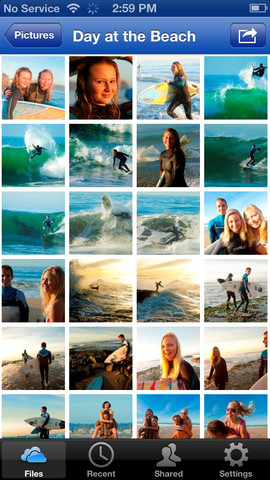
    • Microsoft releases SkyDrive 3 for iOS

      There’s certainly no shortage of cloud storage services to choose from these days and Microsoft’s SkyDrive provides a fairly generous 7GB of space free of charge. The latest version of the iOS app sees compatibility extending to include not only the iPhone 5, but also the iPad Mini, and there are also a few new features to explore.

      The latest release comes after Apple blocked updates to the app following Microsoft’s launch of a subscription model. This could be one of the reasons that it is now not possible to sign up for a SkyDrive account from within the SkyDrive app — if you have an account already you’ll be able to sign in straight away, but if you need to create one, you will have to head over to the website to do so.

      Perhaps the most obvious change, although by no means the largest, is the new icon sported by the app. This new look continues through the UI, with a darker, cleaner feel now replacing the slightly dated look of the previous version.

      There have been improvements made throughout the SkyDrive app which mean that there is now better support for not only opening the files you have stored online in different apps you may have installed, but also better support for saving files from apps to SkyDrive.

      Other changes mean that full resolution photos can be downloaded and there is the usual selection of bug fixes.

      If you have an iPhone or an iPad, you can download a free copy of the SkyDrive app and take advantage of Microsoft’s cloud storage service.