Blog

  • Apple Patents Battery-Saving Multi-Touch Displays That Don’t Need To Be Active To Work

    Screen Shot 2013-03-26 at 7.25.16 AM

    Apple was granted a patent Tuesday by the USPTO (via AppleInsider) that describes a system for implementing multi-touch in a mobile device even when there the display itself isn’t actively showing any images. It’s a neat trick, and one that could help portable gadgets save battery life by not invoking the most battery-hungry element in their construction nearly as frequently.

    The patent also notes that the screen doesn’t have to be off for these no-look commands to work; a user could do things like swipe a finger in circle to change volume or tracks, for instance, even while a display is active. That adds new control options, but also makes it possible to both remove external buttons should a design benefit from that, and also make the device easier to use when in a pocket or clipped to an armband or waist during a workout.

    While the display is inactive, the patent describes that it could use gestures that mirror the button press actions on current iPod and iPhone headphone remotes. So, a single click could play/pause, a double click could skip tracks, and a long press could call up Siri, for instance.

    In terms of recognizing when touch is and is not wanted, the patent suggests implementing a special mode that would allow it to both keep the screen dark but also receive touch inputs. This might involve a way to activate a mode between a full lock and a completely on and active device, which can be selected specifically for when a user is commuting or using the device while working out, but disabled when there’s risk of accidental touch.

    It’s an interesting patent, and one which Apple has shown off as working with its previous iPod nano design, which essentially featured a square display and little else in terms of physical buttons. The trick might be making this work in such a way that it still completely eliminates any chance of accidental input – the lock screen concept is synonymous with touchscreen devices for a reason, after all.

    Not activating the screen as much as possible is the key to prolonging device battery life, though, so it’s good to see Apple looking at ways to deal with that primary limiting factor. It’s no e-ink display built into the back of a smartphone, but it’s something.

  • Try Windows Blue for yourself using VirtualBox

    Windows Blue, the next Windows release, leaked onto the internet at the weekend. It has some interesting new features and tweaks, but because it’s such an early and buggy build it wouldn’t be advisable to replace your existing OS with it. You could of course dual boot from it, but it’s just as easy to run it in a virtual environment where any crashes or issues won’t lead to you having to reboot your PC.

    For this guide I’ll use Oracle VM VirtualBox because it’s a great free program and setting up Windows Blue is incredibly straightforward with it.

    To start you’ll obviously need a copy of the leaked image file — build 9364. It’s available on all the usual torrent sites, so just do a quick search. The file you want is 2.63GB in size. There’s only a 32-bit version available, but because we’ll be running it in a virtualized environment, it will run fine on 64-bit systems.

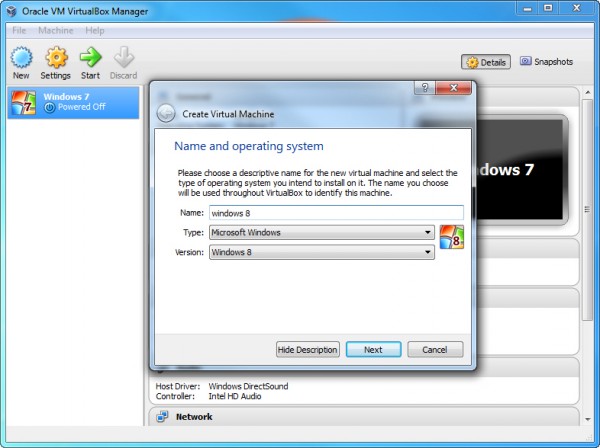
    Launch VirtualBox and click New in the Manager. In the Create Virtual Machine dialog box enter “Windows 8” as the name of the OS. VirtualBox will fill in the rest of the details for you.

    Next set the Memory Size. Accepting the recommended memory amount will likely be fine. On the next screen choose to “Create a virtual hard drive now” and click Create. Accept VDI (VirtualBox Disk Image) as the hard drive file type.

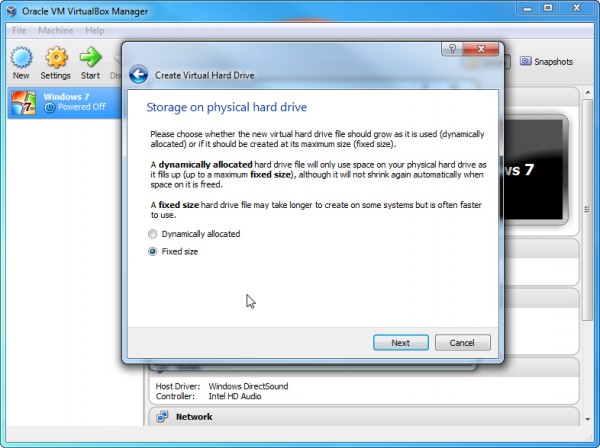
    You’ll now be asked if you want the new virtual hard drive to be dynamic (it will grow as required) or a fixed size. I always select the latter option. It takes a while to create a fixed size drive, but the operating system runs faster afterwards.

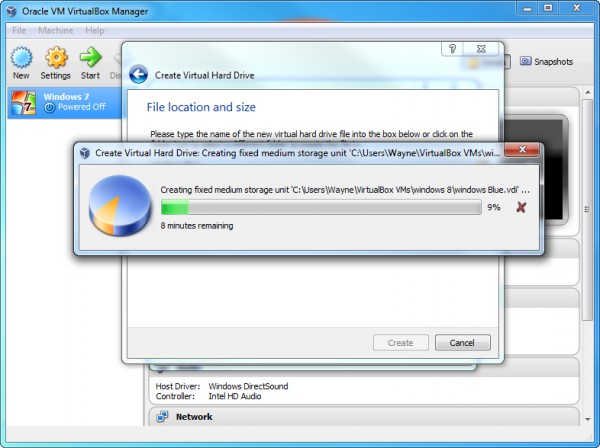
    Type in a name for the new virtual drive and choose a size for it. Again, accepting the default will likely be fine. Click Create and VirtualBox will begin building the drive. It will probably take around 10 minutes or so to do this (maybe more if like me you choose to convert some large videos at the same time).

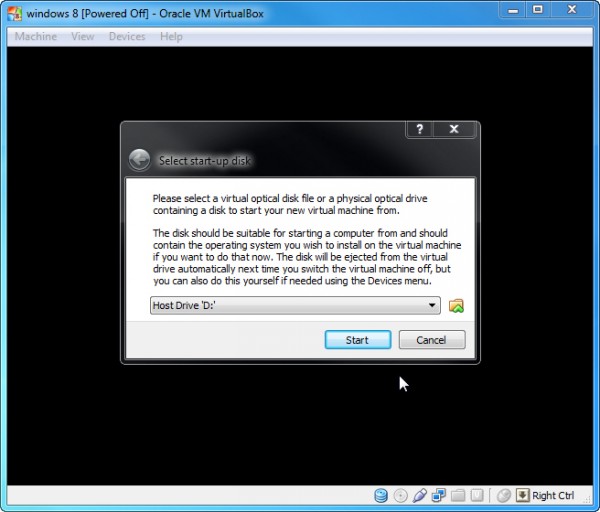
    The “Select start-up disk” window will open. If you’ve burnt the downloaded ISO file to disc you can select your drive in the drop down menu (if it’s not already selected). If you just have the file residing on your hard disk, click the folder icon and navigate to it instead.

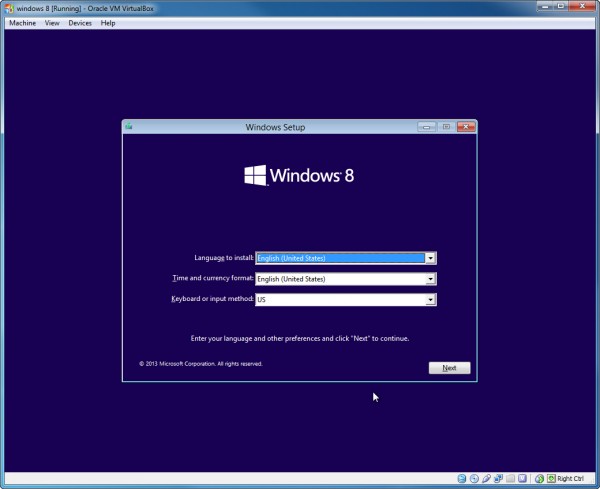
    Once selected, click Start and Windows 8 (which is what the OS is referred to throughout) will start to load. The language screen will appear first. You’ll have to accept English (United States) as this is the only option in the leaked build. On the next screen, click the “Install now” button.

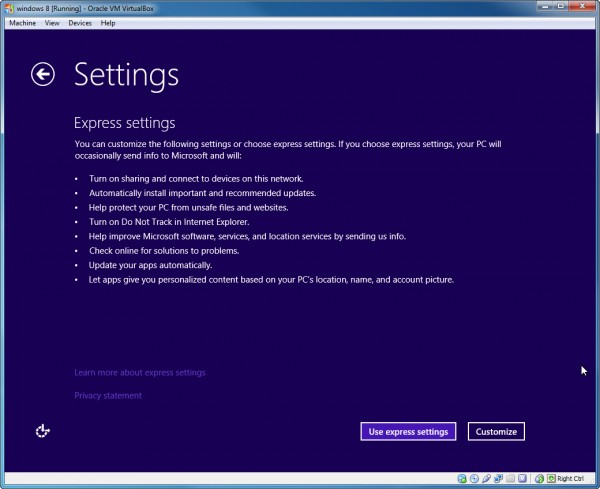
    Choose the “Custom: Install windows only (advanced)” option. It will show you the drive it’s going to be installed on. Click Next, and it will begin the installation process, rebooting when required. When that’s done, personalize the OS by picking a color and entering a PC name, and then choosing to use the express settings (which I do) or customizing things further.

    Set up a Microsoft Account if required, and then that’s it. Windows Blue will be up and running and you can begin trying it out for yourself.

  • ISO Workshop makes it easy to manage, convert and burn disc images

    Glorylogic Software has released ISO Workshop 4.0, a major update of its disc image management, conversion and burning tool. Version 4.0 broadens the tool’s ISO format support to cover six different disc types: CD, DVD, Blu-ray, Bridge, DVD video and bootable.

    The program also tweaks the existing user interface, adding new buttons to facilitate creating folders and editing files within ISO images. Other buttons have been added for loading and extracting files from ISO images.

    ISO Workshop 4.0 also comes with an updated disc-burning SDK and promises resolutions for problems opening certain image formats as well as compatibility issues with other, non-specified burning tools.

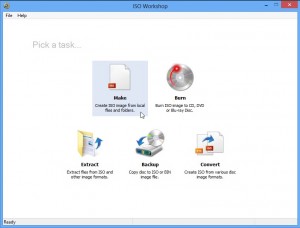
    ISO Workshop’s big selling point is its simple, unfussy interface. There are five options available — users can both create new image files from scratch and burn existing image files to disc. ISO Workshop supports all common image file formats, including ISO, BIN, NRG and MDF, and there’s an option for converting images to ISO or BIN format.

    Users can also extract individual files and folders from image files without having to burn them to disc or mount them using Windows 8’s native tool or a third-party utility such as Virtual CloneDrive. A fifth option — Backup — allows users to create image files from physical discs.

    The program promises to work with most major optical disc formats, including Blu-ray and most writable DVD formats, and claims to support all types of recordable drives. ISO Workshop 4.0 is a freeware download for PCs running Windows NT or later, including Windows 8.

    Photo Credit: AISPIX by Image Source/Shutterstock

  • Less digging and more speed: how Europe plans to get back on the broadband track

    Europe’s digital agenda chief, Neelie Kroes, may have lost all her funding for ensuring fast broadband coverage across the continent by 2020, but she’s still not giving up hope. Her latest push, unveiled on Tuesday, has two main strands: cutting some of the red tape around deploying 4G masts and antennas, and changing regulations around civil works.

    The European Commission reckons 80 percent of high-speed network deployment costs are to do with civil engineering, mostly digging up roads. For example, it may be that a road is being dug up anyway for the laying of new waterworks or electricity cables, and it would be a no-brainer to lay some fiber in there at the same time – however, in many European countries that kind of coordination is not in place, and that’s what Kroes wants to fix.

    Kroes maintains that this could take €40-60 billion ($51-77 billion) off the overall cost of deploying fiber-based broadband in Europe. She also wants rules brought in to ensure that newly-built or renovated buildings have the necessary equipment in order to receive fiber directly to the premises, and to mandate reasonably-priced open access conditions on infrastructure such as ducts and poles.

    On the mobile front, Kroes says permits for new masts and antennas should be granted or refused within six months. Her office is painting all of these changes as cuts to red tape – while this interpretation may be debatable, as some of the changes would actually involve new rules, the overall result would at least be one of more efficient bureaucracy.

    “Everyone deserves fast broadband. I want to burn the red tape that is stopping us for getting there,” Kroes said in a statement. “The European Commission wants to make it quicker and cheaper to get that broadband.”

    Kroes’s Digital Agenda office intends to see, by 2020, that everyone in Europe has access to at least 30Mbps broadband, and that half the EU is able to surf at 100Mbps or more. She recently threw €50 million in the direction of “5G” research, so that mobile can carry more of the load in meeting those goals.

    Related research and analysis from GigaOM Pro:
    Subscriber content. Sign up for a free trial.

  • Can the G8 help Kenya increase trade?

    I have lots of family in Kenya, and a few days ago, my dad received the news that a cargo of furniture and other household goods that he’d shipped over was about to arrive at the port. To my surprise, he promptly booked a plane ticket to Kenya, and explained that it was cheaper for him to fly to Kenya and back than to leave the container at the port – as he would be charged high costs for each day that he left it there.

    Before I began lamenting Kenya’s trade policy, I recalled a seminar that I’d attended a few weeks ago at the Foreign and Commonwealth Office.  The seminar was entitled “Transparency: Tackling Poverty at its Roots”, and was opened by Mark Simmonds, the Minister for Foreign and Commonwealth Affairs, and chaired by Michael Anderson, the Prime Minister’s Special Envoy for the UN Development Goals. 200 civil servants from all over Whitehall attended, and others from Moscow, Paris, Cape Town and Kinshasa dialled in.

    I had gone along to the seminar to hear more about the rationale for the UK’s plans to promote transparency by governments and companies at the G8 Summit in June this year. I wanted to know whether the panellists thought transparency could really reduce poverty in developing countries.

    During the seminar, one of the panellists Paul Collier, an economist most famous for his book The Bottom Billion (though my personal favourite is Wars, Guns and Votes) gave an unusual explanation for why he thought transparency was so critical to poverty reduction.

    He began by noting that many developing countries, particularly in Africa, impose high trade tariffs, duties and other costs at their ports. This is why my dad had to rush to Kenya. However, Collier explained that this isn’t just because the countries don’t like trade or want to protect their local industries. He said it often comes down to the fact that trade taxes are easiest to track and collect compared to other types of tax, such as income and value-added taxes. Many countries have a narrow tax base, which in turn creates an incentive to hike up trade tariffs and duties to meet their spending needs.

    The coast is clear at Kenya’s Mombasa port, credit: NazarethCollege, 2009

    Collier therefore suggested, rather than pushing such countries to reduce their tariffs, that they should be helped to raise revenues from other sources. And a key means could be more transparency by companies.

    Many large companies often have complex structures. These exist for many good management reasons but they can also be associated with tax avoidance. Though not illegal, aggressive tax avoidance indicates some effort to circumvent norms and rules put in place by countries for social benefits. Complex, opaque company structures can also be associated with wrongdoing, such as corruption and money-laundering (also known as “illicit flows”).

    Coordinated action by G8 countries to increase transparency around the ownership of companies could help reduce the potential for tax avoidance and wrongdoing. It could also help identify when companies aren’t paying enough taxes. This will mean that developing countries have the chance to collect more company taxes and develop a broader tax base. It will reduce their incentive to rely on hiking up trade costs. The UK Prime Minister argued in a speech in Davos earlier this year that this will be good for business – creating a level playing field and providing governments with more tools such as cheaper trade to enable the private sector to grow.

    My colleagues in HMT, BIS and DFID are currently considering, along with the UK’s G8 partners and other stakeholders, the best mechanism for achieving greater transparency by companies and governments – for example, how information should be gathered and to whom it should be made available. If you have any views, please set them out in the comments below!

    It’s worth also noting that over the weekend, DFID’s Secretary of State Justine Greening announced that the Global Partnership for Effective Development Cooperation will, at its first-ever Ministerial later this year, aim to build consensus beyond the G8 on actions to help developing countries raise more tax.

    In the meantime, I’m hoping my dad manages to pick up his goods at the port in Kenya soon.  And I’m hoping there will be more seminars to help me and other policy makers better understand how agreements by the G8 and Global Partnership can really make a difference to development.

  • From one extreme to another in Kinshasa

    A guest blog by Susanna Moorehead, DFID West and Southern Africa Director, about her recent visit to a center for girls living in the street in Kinshasa.

    During my recent visit to DRC, I witnessed life in the huge, vibrant but troubled capital city, Kinshasa.

    One street in the Kimbanseke commune in Kinshasa
    Picture: DFID DRC

    In the tree-lined streets of Gombe, the diplomatic quarter on the banks of the Congo River, I discussed questions of governance, the mining sector, the business environment and donor coordination with the Prime Minister. Then, I travelled to Kimbanseke, the poorest commune of Kinshasa, a sprawling settlement of slum dwellings off the airport road. There, I visited a centre for girls living on the street supported by War Child UK *. I toured the centre and met staff. The 30 or so girls who live at the centre were engaged in a lively maths class; for many of them it is the first chance they have had to access any form of education. Finally, I had the opportunity to sit with eight of the girls and talk to them about their lives, experiences and the support that the centre offers.

    Claudine’s story is typical: her mother died when she was 9 years old and her father married another woman. The family was poor and there was often not enough food. Claudine was accused of witchcraft and fled her home. She started to beg on the street. After a few days, she met an older girl, a yaya (big sister in Lingala, a Congolese language), who helped her to ‘look for money’ (initiated her into prostitution). Claudine earned between 500-1,000 Congolese Francs (US$ 0.6 – $1.2) per client and was obliged to give the money she earned to the yaya in return for food and protection. Claudine lived like this for 3 years. She was raped several times, including by soldiers based at the nearby camp. The last time she was raped, she became pregnant and fell very ill. The yaya brought her to the day centre for street children based in Matete to get medical treatment. Claudine now visits the centre most days. She has just started literacy lessons and after the birth of her baby, she hopes to start vocational training as a beautician. She dreams of being one of the country’s top beauticians and, one day, she says that she wants to use some of the money she makes to help other street girls.

    War Child’s center for girls living in the street in Kinshasa.
    Pictures: DFID DRC / War Child

    According to aggregated development statistics, Kinshasa province performs well relative to other provinces of DRC and few international aid agencies support programmes there. Yet, scratch below the surface and a very different picture emerges. Everyday life is especially difficult for women and girls in Tshangu. In this situation, many women – especially adolescent girls – resort to risky livelihood strategies such as transactional sex and commercial sex work – sometimes encouraged by their own families; sometimes after fleeing from home. Locally-collected data** reveals high and increasing numbers of girls living and working on the streets and a widespread phenomenon of “filles-mères” (girl-mothers) in the district. These vulnerable girls and young women are often excluded from school, unable to access healthcare and exposed to HIV, sexually transmitted infections, and both sexual and physical violence. There are very few services targeted at them, apart from a few day centres and vocational training centres run by local or international NGOs.

    War Child has set up a night ambulance gives support to the girls living in the street of the Tshangu district in Kinshasa
    Picture: War Child

    The project’s main activities are providing street children with support including a mobile ‘night-ambulance’ offering immediate access to medical and psychosocial support, a 24-hour drop-in centre, counselling, medical support and referral. Where possible, girls are reunified with their families or other long-term solutions are sought. Awareness-raising campaigns to promote awareness of children’s rights are being undertaken to tackle negative community attitudes towards street girls, so as to address stigmatisation and other factors preventing family reintegration, such as peer influence, behavioural difficulties, lack of income, lack of education and of employment opportunities. My experience in Kinshasa reflects some of the challenges facing both our programme and staff in DRC. On the one hand, we need to engage politically at the highest level if we are to support real change for the people of DRC. While on the other we need to have enough knowledge and understanding of how people live, and in particular, the poorest and most vulnerable, to be able to listen to their views, and respond appropriately. The Secretary of State for International Development, Justine Greening, recently announced a package of new measures to support women and girls living in poverty and has repeated her determination to step-up the UK government’s implication in front of the Commons. At the same moment, the Parliamentary Under Secretary of State, Lynne Featherstone, attended the United Nations Commission on the Status of Women in New York to make sure the UK plays a leading role in protecting women and girls rights.

    DFID DRC is exploring ways of funding innovative work, specifically in relation to catalysing better results for women and girls. The challenge then, is how to use the lessons learned from this work to influence the policy and practice of key partners, as well as tackling damaging social norms and practices that leave Claudine, and thousands like her, with no other option but to live on the streets of Kinshasa.

    Visit to the War Child center in Kimbanseke, Kinshasa
    Picture: DFID DRC

    *The project, in partnership with OSEPER (Oeuvre de Suivi, d’Encadrementet de Protection des Enfants de la Rue) is funded by Comic Relief and has been running since August 2010.
    **REJEER / Réseau des Jeunes et Enfants de la Rue – A National Street Children’s Coalition, 2006

  • Sponsored post: The essential guide to SMS-enabled numbers

    What’s the deal with SMS-enabled phone numbers? Bandwidth has prepared an ebook providing essential information for application developers and service providers interested in learning more about this growing market opportunity. You’ll learn:

    • What SMS-enabled telephone numbers are
    • How SMS-enabled numbers interoperate with wireless networks, including a graphical depiction of the wireline to wireless ecosystem
    • What to look for when you decide you need SMS for your application or service

    Today there are countless applications across platforms using telephone numbers to drive development of in-demand text applications. With a growing demographic of tech-savvy users set to establish text messaging as the dominant form of communication across the globe, now is a great time to learn more.

    Get started by downloading your complimentary ebook on the essential guide to SMS-enabled telephone numbers today.

    For more information please visit http://go.inetwork.com/2013GigaOm_SMS.html

  • Morning Advantage: Why It Pays to Pay Your Employees Well

    It’s a common strategy to cut labor costs in order to increase profit margins — plenty of companies do it routinely. But Sophie Quinton at The Atlantic points to several companies that are turning that equation on its head, proving that the decision to offer lower wages is a choice — and not a necessity. She cites the examples of low-cost retailers such as QuikTrip, Trader Joe’s and Costco Wholesale, who have found that paying their workers more actually pays off in the form of increased sales and productivity. The average American cashier makes $20,230 per year — which is below the poverty line for a family of four in a single-earner household. In contrast, entry-level employees at QuickTrip get an annual salary of around $40,000 — with benefits. And while its competitors have spent the recession floundering, QuickTrip continues to grow.

    On the flip side, underinvestment in workers can lead to operational problems in stores, which ultimately decreases sales. Quinton points to Borders and Circuit City as prime examples of what happens when you devalue your workers: “Both big-box retailers saw sales plummet after staff cutbacks, and both ultimately went bankrupt.” Instead of thinking solely of high-level employees as the talent you need to pay well in order to help grow the company, Quinton argues that paying entry-level employees a solid living wage can help the bottom line, too.

    THE NURSE WILL SEE YOU NOW

    Nurses Can Practice Without Physician Supervision in Many States (The Washington Post)

    Nursing groups around the country are pushing for legislation that would allow nurses with a master’s degree or higher to order and interpret diagnostic tests, prescribe medications and administer treatments without physician oversight. If they succeed, the number of states that allow nurses to practice without a physician would jump from 16 to 30. While physician groups are adamantly opposed to the legislation, citing concerns about patient safety and quality of care, the nurses have won the support of faith-based organizations, social workers, patients’ groups, the National Governors Association, and the National Academy of Sciences’ Institute of Medicine. Starting in 2014, insurers will be required to pay nurses the same rates that they pay doctors for the same services — which further encourages the creation of nurse-run practices. Judging from the number of comments this Washington Post article is getting, it’s a hot-button issue that’s got doctors, nurses, and patients alike up in arms.

    GETTING TO “AHA!”

    The Right Ideas in All the Wrong Places (Booz & Company)

    Booz & Company partners and strategy experts Ken Favaro and Nadim Yacteen offer this advice for companies that want to innovate more strategically: First, you need to break your strategic challenge down into distinct components. Then, you can create a matrix of proven solutions for each piece of the puzzle in your strategic challenge. Finally, link the connections between the proven solutions to help uncover your own “Eureka!” moment. Easy, right?

    BONUS BITS:

    Branching Out

    Yahoo Acquires Hipster Mobile News Reader Summly for Close to $30 Million (AllThingsD)
    What Do PAAS and Manischewitz Do the Rest of the Year? (Bloomberg Businessweek)
    Agency Sends Briefs Back to Clients as Elaborate Paper Sculptures (AdWeek)

  • Big Switch open-sources software to ease the move to commodity switches

    Hot off a new round of funding, Big Switch Networks says it now has open-source and commercial software to help companies scale out networks more easily and cheaply with commodity switches, further threatening the likes of legacy network gear sellers.

    Big Switch’s new Switch Light software implements the OpenFlow networking protocol in physical and virtual switches. It lets data center administrators automatically and centrally send out policies from one location when new switches are added to the network, instead of having to go through with a time-consuming, hands-on process.

    The open-source version of Switch Light is available for free because “we want to make sure (OpenFlow) industry standards are enabled in the data plane,” said Jason Matlof, vice president of marketing at Big Switch. The commercial version comes with technical support and is more scalable and highly available than the open-source version, Matlof said.

    Switch Light is based on existing open-source technology developed a few years ago under the name Indigo. Customers can sign up to use the Switch Light software under a licensing agreement along with Big Switch’s other software-defined networking products — the Big Switch Controller for the network’s control plane, the Big Virtual Switch and the Big Tap monitoring program.

    Consider the news another blow to Cisco, as the Big Switch software is aimed at customers that want to move away from lock-in from the legacy network hardware vendor and shift elements of their network stacks to white-label suppliers. Cisco still holds 65 percent of marketshare for Ethernet switches. Arista and Juniper play here, too.

    As I reported earlier this month, Quanta Computer is keen on selling network gear such as switches directly to companies through a newly formed subsidiary, Quanta QCT, just as it has shifted from a primarily original-design manufacturer to a direct seller of servers. Quanta and other commodity switch makers, such as Supermicro, could benefit from the Switch Light release as well.

    All eyes are on Cisco and Arista to make the next move. Meanwhile, as the Switch Light affords Big Switch a more rounded out product line, the company could again look like a good buy, just as it did last summer.

    Related research and analysis from GigaOM Pro:
    Subscriber content. Sign up for a free trial.

  • Researchers find a way to predict the date of a woman’s final menstrual period

    A new UCLA-led study suggests a way to predict when a woman will have her final menstrual period. The findings, published in the April issue of the peer-reviewed Journal of Clinical Endocrinology and Metabolism, could help women and physicians gauge the onset of menopause-related bone loss, which generally begins a year prior to the last period.

    The researchers used women’s ages, menstrual bleeding patterns and measurements of hormone levels to estimate the amount of time until they were likely to reach menopause, said the study’s lead author, Dr. Gail Greendale, professor of medicine in the division of geriatrics at the David Geffen School of Medicine at UCLA.

     
    Greendale said women who are approaching menopause often ask their health care providers when they will be done with their periods, but the information is sometimes more telling than women realize. 
     
    “Being able to estimate when the final menstrual period will take place has taken on importance beyond just helping women gauge when they will stop having periods,” she said. “We know that potentially deleterious physiological developments, such as the onset of bone loss and an increase in cardiovascular risk factors, precede the final menses by at least a year.”
    The researchers used data collected annually for up to 11 years on 554 women, including Caucasians, African Americans, Hispanics and those of Chinese and Japanese descent, participating in the multi-site, multi-ethnic Study of Women’s Health Across the Nation. At enrollment, the women were between the ages of 42 to 53, had an intact uterus and at least one ovary, were not using medications affecting ovarian function and had experienced at least one menstrual period in the prior three months.

    The researchers measured levels of estradiol (E2), a hormone produced by the ovaries, and follicle stimulating hormone (FSH), which comes from the pituitary gland and triggers the production of eggs. FSH starts increasing and E2 starts decreasing about two years prior to the final menstrual period, or about a year before bone loss and cardiovascular risk factors rise.

    The study found that the levels of the two hormones could be used to estimate whether women were within two years of beginning their final menstrual period, within one year or beyond their final period.

    The study had some limitations, including its modest sample size. In addition, hormone levels were sampled once a year and more frequent sampling might have allowed the researchers to more precisely estimate the woman’s place on the timeline.

    Study co-authors were Mei-Hua Huang and Dr. Arun Karlamangla of UCLA and Dr. Shinya Ishii of the University of Tokyo.

    The Study of Women’s Health Across the Nation was funded by the National Institutes of Health through the National Institute on Aging, the National Institute of Nursing Research, and the NIH Office of Research on Women’s Health (NR004061, NR004061, AG012505, AG012535, AG012531, AG012539, AG012546, AG012553, AG012554 and AG012495).

    The UCLA Division of Geriatrics within the department of medicine at the David Geffen School of Medicine at UCLA offers comprehensive outpatient and inpatient services at several convenient locations and works closely with other UCLA programs that strive to improve and maintain the quality of life of seniors. UCLA geriatricians are specialists in managing the overall health of people age 65 and older and treating medical disorders that frequently affect the elderly, including memory loss and dementia, falls and immobility, urinary incontinence, arthritis, arthritis, high blood pressure, heart disease, osteoporosis and diabetes. As a result of their specialized training, UCLA geriatricians can knowledgably consider and address a broad spectrum of health-related factors — including medical, psychological and social — when treating patients.

    For more news, visit the UCLA Newsroom and follow us on Twitter.

  • Survey: Tell us your thoughts on the future of the smart watch

    Wearable computing continues its trek towards the mainstream. Smart watches, in particular, are generating many a headline these days. Apple and Samsung are battling for dominance, Google is rumored to be making one, and the Pebble watch is already a hot item on the market. With that in mind, we invite GigaOM readers to fill out the questions below and share their thoughts on whether they would buy a watch, which features they want, and who will ultimately rule this space.


    Related research and analysis from GigaOM Pro:
    Subscriber content. Sign up for a free trial.

  • Your depression may be due to vitamin D deficiency

    A new study by Canadian researchers has found that some depression may be linked to a vitamin D deficiency. ”A systematic review and meta-analysis of 14 studies with a total of 31,424 participants revealed an association between vitamin D levels and depression,” said…
  • Hawaii’s genetically modified politicians strike again (opinion)

    (NaturalNews)On March 21, 2013, Hawaii had their largest hearing on a GMO lableing bill since fluoridation got defeated in 2003. Unfortunately, due to the genetic modification of our politicians, the bill got “deferred”, which is euphemism for ‘flushed down the toilet’. Here’s…

  • Lasagna gardening: A sustainable and no-till method of gardening

    Lasagna gardening is a method of gardening that requires no tilling or weeding from the gardener, yet produces rich and fluffy soil. Also called ‘sheet composting,’ lasagna gardening involves building layers and layers of organic matter in a designated area of the garden…
  • IRS used taxpayer money to film Star Trek parody; total detachment from reality

    Some members of Congress and President Obama are fond of blaming the decision to end tours of the People’s House on the sequestration (which the president has further blamed on Republicans, even though the sequester was his idea). That darned sequester has made it…
  • New York government threw man in prison for 23 years for murder he never committed

    For most Americans, being locked up behind bars for 23 years for any reason is unthinkable. Now imagine being locked up for that long – and being innocent. That’s exactly what happened to David Ranta, 58, of New York, who was wrongly convicted of killing a Hasidic…
  • Health insurance rates to double as Obamacare fully kicks in

    Writing on the blog of the Department of Health and Human Services on the third anniversary of the passage of the Affordable Care Act, more popularly known as Obamacare, HHS Secretary Kathleen Sebelius had this to say about the impact of the law on insurance rates: As…
  • Lab-made ‘Swerve’ sweetener marketed as all natural: Here’s what you need to know about it

    Perhaps you’ve seen it while strolling down the baking aisle at your local health food store — Swerve, the “all-natural sweetener” with no synthetic chemicals, no aspartame, and no genetically-modified organisms (GMOs). But is Swerve really a healthy sweetening alternative…
  • The 10 worst toxins hidden in vitamins, supplements and health foods

    I’m absolutely shocked at how many people don’t investigate what’s really in the products they swallow. When something is sold as an herb, vitamin, superfood or supplement, they think it’s automatically safe. And while the natural products industry has a truly remarkable…
  • Boost your thyroid health and shift your thyroid hormone levels with zinc

    Thyroid dysfunction is one of the most common hormone disorders in the world, but new research shows that supplementation with zinc can have dramatic benefits for those suffering from abnormal levels of thyroid hormones. The thyroid is a two-inch gland that releases…