Blog

  • Sponsored post: “Getting Mobility Right”: Box and Centrify webinar

    On March 28 Box and Centrify will be hosting a webinar where we will cover how to approach enterprise mobile management. Topics will include mobile identity and authentication, enterprise app management, enabling single sign-on to apps, as well as policy and architectural considerations for managing mobility projects across a myriad of platforms, use cases and enterprise boundaries. Learn how you can give employees the application experience and privacy they expect, while obtaining the visibility and control IT requires.

    In this webinar you’ll learn how to:

    • Implement container technology for increased security and to separate employee work spaces from personal spaces
    • Develop a mobile security strategy for your enterprise apps 
    • Understand the crucial role that centralized identity services plays to ensure both end-user productivity and IT efficiency

    This session is designed for IT managers, architects and IT security professionals responsible for implementing mobile initiatives or mobile and security operations. A “day-in-the-life” demonstration will show you how your employees should experience their personal and work mobile spaces and how you will administer it. Join this session for presentations from Jamie Perlman, Box Senior Director of Business Development, Mobile, and David McNeely, Centrify Senior Director of Product Management, Mobile.

    Click here to register today for this webinar on March 28 at 10 a.m. PST!

  • American Internet Lands $43.5 Million Credit Facility

    American Internet Services has refinanced at a great time, lowering its cost of capital due to historically low interest rates, as well as providing some capital for continued growth. Fortress Credit Corp, an affiliate of Fortress Investment Group, has provided the company a $43.5 million senior secured credit facility. Terms of the transaction were not disclosed.

    AIS was founded way back in 1989. It provides tailored data center and cloud service solutions to companies with an emphasis on security, compliance, connectivity, and customer service. AIS operates SSAE 16-compliant, SOC 1-, 2-, and 3-audited, redundant facilities in San Diego, Los Angeles and Phoenix. It has more than 600 enterprise customers worldwide, and is backed by private equity firms Seaport Capital, Viridian Investments, and DuPont Capital Management,

    “Refinancing AIS’ debt enables us to take advantage of historically low interest rates while providing resources for additional investment in new products and services, continuing our market expansion, and meeting the developing needs of our customers,” said Tim Caulfield, Chief Executive Officer at AIS. “We look forward to working with Fortress, a knowledgeable and experienced lender to the internet infrastructure sector.”

    Fortress Investment Group LLC is a global investment firm with over $53 billion in assets under management as of December 31, 2012. Founded in 1998, Fortress manages assets on behalf of over 1,400 institutional clients and private investors worldwide across a range of investment strategies – private equity, credit, liquid hedge funds and traditional fixed income.

    “This financing illustrates Fortress’s continuing support for middle market companies in the data center and cloud service sector,” said Ken Sands, a Managing Director of the Credit Funds, Fortress Investment Group. “AIS is a recognized regional leader in tailored data center and cloud service solutions and we are pleased to have arranged this financing that will support their future growth.”

    DH Capital served as advisor to AIS on the financing. DH Capital is a private investment banking partnership specializing in Internet infrastructure, telecommunications, and SaaS with a focus on M&A and capital placements.

  • GPU News: Cray Awarded $32 Million Contract

    Surrounding the GPU Technical Conference this week in San Jose – Cray, Cirrascale and Penguin Computing have GPU announcements:

    Cray awarded $32 million Swiss contract.  Cray announced that it has signed a contract with the Swiss National Supercomputing Centre (CSCS) to upgrade and expand its Cray XC30 supercomputer. When the upgrade is completed, the system nicknamed “Piz Daint” will be the first petascale supercomputer in Switzerland. Currently a 750 teraflop Cray XC30, it will be transformed to include NVIDIA K20X GPU accelerators. CSCS is the first customer to order a Cray XC supercomputer with NVIDIA GPUs. ”Piz Daint will help advance the research projects of our diverse user community by leaps and bounds,” said Thomas Schulthess, director of CSCS. “With GPU acceleration integrated into Cray’s latest generation supercomputer, the application performance and the energy efficiency of our simulations will improve significantly. We are very excited about the collaborative development of a truly general-purpose, hybrid multi-core system with Cray.” The contract is valued at more than $32 million, and the upgraded system is expected to be operational in 2014.

    Cirrascale launches GB5400 GPGPU blade server.  Cirrascale  announced the next generation of its GB5400 blade server supporting up to eight GPU cards. Utilizing a pair of the company’s proprietary 80-lane PCIe switch-enabled risers, the GB5400 supports up to eight discrete GPGPU (General-Purpose Graphics Processing Unit) cards in a single blade. ”We have redesigned the GB5400 to handle the latest cards from leading GPU providers, including NVIDIA and their wide assortment of high-end GPU cards,” said David Driggers, CEO, Cirrascale Corporation. “Our customers and licensed partners in cloud and High Performance Computing are asking for this increased density and performance, while maintaining the ability to scale the solutions they choose. We’re confident that the GB5400 meets these needs, and in fact, surpasses them.” The Cirrascale GB5400 blade server, including the entire GB series line of GPGPU solutions, as well as the Cirrascale proprietary PCIe switch-enabled riser, are immediately available to order and are shipping to customers now.

    Penguin Computing unveils Relion 2808GT. Penguin Computing announced the availability of the Relion 2808GT. The Relion 2808GT supports eight GPUs or coprocessors in two rack units and provides a higher compute density that any other server on the market. The GPUs are supported by a dual socket platform based on Intel’s Xeon E5-2600 product family. The Relion 2808GT also features an on board Dual 10GbE BASE-T controller and up to 512GB of ECC memory. “Penguin has been delivering integrated GPU computing clusters since the version 1.0 of this technology,” said CEO Charles Wuischpard. “The new Relion 2808GT platform in conjunction with the latest GPU and coprocessor technology delivers unprecedented levels of performance. The Relion 2808GT enables our HPC customers to further accelerate their research by shortening the time to result for their simulations.”

  • Minimally Invasive Devices Raises $9M

    Minimally Invasive Devices Inc. has raised $9 million in Series B financing. Canaan Partners led the round, with participation from Charter Life Science, an existing backer. As part of the round, Brent Ahrens, general partner at Canaan Partners has been appointed to the board. The company also announced that it added Jim Bobbitt as vice president of sales.

    PRESS RELEASE
    Minimally Invasive Devices,
    Inc. (MID), today announced it has completed a $9 million Series B financing
    led by Canaan Partners. Charter Life Science, an existing investor, also
    participated in the financing. Coinciding with the close of the Series B, Brent
    Ahrens, general partner at Canaan Partners has been appointed to the board of
    directors and Jim Bobbitt has been appointed vice president of sales.

    Funds from the Series B will be utilized to establish a direct sales force,
    expand manufacturing operations, develop complimentary products and generate
    additional data to support the efficacy of the FDA-approved FloShield
    laparoscopic vision system, the first device that prevents loss of vision during
    laparoscopic surgery due to obscuration of the optics.

    “Modern high definition video systems give surgeons a crystal clear view of a
    patient’s organs during laparoscopic surgery, but only when the optics are
    clean,” noted Wayne Poll, M.D., founder and CEO of MID. “Obscuration of images
    due to contaminants on the optics is a real problem that surgeons have long
    taken for granted. It’s rather like purchasing a high-end digital camera and
    being satisfied with photos taken through a dirty lens.”

    The performance of laparoscopic surgery is significantly enhanced by modern high
    definition (HD) video systems, yet fat, smoke or other contaminants can settle
    on the optics and obscure the images. Surgeons may be forced to stop their
    procedures, remove the camera from the patient, and clean the optics up to ten
    times an hour.

    MID’s FloShield laparoscopic vision system attaches to the HD camera system and
    uses an air curtain to form an invisible protective barrier over the lens. This
    system is augmented by the Flo-X lens wash, a biocompatible surfactant that will
    flush the lens inside the body if needed, so that surgeons may operate without
    loss of vision and without lens removal.

    “The problem of dirty lenses in laparoscopic surgery is taken for granted as a
    cost of using the minimally invasive procedure,” noted Brent Ahrens, General
    Partner at Canaan Partners. “FloShield is an elegant solution to this very real
    problem and has the potential to be expanded to other endoscopy platforms. MID
    is a natural investment for Canaan.”

    Jim Bobbitt brings decades of experience in medical device sales to MID. Most
    recently, he served as vice president of sales and marketing for Neomend, Inc.,
    a medical device start-up focusing on surgical sealants that was acquired by C.
    R. Bard. Prior to that, he was vice president of sales and corporate services
    for USHIFU, a privately held company developing a device to treat prostate
    cancer.

    About Minimally Invasive Devices, Inc.

    Minimally Invasive Devices, Inc. (MID) has developed and manufactures the
    FloShield laparoscopic vision system, the first device that prevents loss of
    vision during laparoscopic surgery due to obscuration of the optics.

    The post Minimally Invasive Devices Raises $9M appeared first on peHUB.

  • Who Needs Original Content? OUYA To Launch With Nintendo 64, SNES And NES Emulation Support

    Ouya_Family_1024x1024 (1)

    The OUYA Android-based gaming console is getting ready for its debut: the stated beginning shipping date for Kickstarter backers is March 28. At launch, it sill isn’t clear exactly how many software titles the console will offer, but a new report suggests that at the very least, early backers will have emulators to play with on the small, inexpensive console.

    OUYA forum admin and owner Ed Krassenstein said in a post on his site that EMUya, a NES emulator, has been submitted to OUYA for review and should definitely be available at launch, and a couple of SNES emulation options are confirmed, including the SuperGNES and the Mupen64Plus Nintendo 64 emulators. The Mupen64Plus project is also said to be available at launch, with the developer behind it posting that it has already been approved by OUYA for inclusion in the official store.

    Emulators on OUYA aren’t new in and of themselves. Back in January, footage surfaced of the developer kits of the console running Nintendo 64 games, as well as SNES titles. Emulation support appears to even be sanctioned at the top: the N64 emulator’s inclusion in the actual OUYA store proper means users shouldn’t even have to sideload the titles themselves to get access. We’ve reached out to OUYA to see if it has an official stance on emulation and its acceptability on the OUYA platform, and will update if they respond.

    Whether or not it gets the “official” nod, emulators coming to OUYA is a good thing for the upstart. A lot of the apprehension around the console’s upcoming launch centers around how much content it will be able to offer at launch, and the quality of that content. OUYA has been making a point of announcing as many software partners as possible, but it still isn’t exactly clear what the launch lineup will look like when it first becomes widely available for consumers.

    Emulators mean that at least early adopters will have a rich selection of software to choose from, even if that content isn’t exactly “legal” to use. But emulators are freely available for virtually every platform out there, including Android smartphones and media center PCs. OUYA might succeed by finally making the tech truly plug-and-play, by integrating it into a set-top device designed to be used from a couch with a gamepad. The appeal will still be limited, but it might be enough to keep user attention as OUYA ramps up for its big splashy retail and wide consumer market launch later on this year.

  • Reuters – HellermannTyton Narrows Range for Listing

    Cabling equipment maker HellermannTyton has narrowed the price range for its London listing to between 195 pence and 205 pence per share, Reuters reported Monday. The company, owned by private equity firm Doughty Hanson, had originally set a price range of 190 pence to 235 pence per share for the sale of at least a 50 percent stake. HellermannTyton has received enough orders for the shares on offer within the revised range.

    (Reuters) – Cabling equipment maker HellermannTyton has narrowed the price range for its London listing to between 195 pence and 205 pence per share, two sources close to the deal said on Monday.

    The company, owned by private equity firm Doughty Hanson, had originally set a price range of 190 pence to 235 pence per share for the sale of at least a 50 percent stake.

    HellermannTyton has received enough orders for the shares on offer within the revised range, the sources said.

    Order books on the initial public offering (IPO), which is expected to raise as much as 250 million pounds ($381 million), are due to close later on Monday and the company will make its market debut on Tuesday.

    The post Reuters – HellermannTyton Narrows Range for Listing appeared first on peHUB.

  • Comparing Cost of a Custom Data Centers

    This the third article in series on DCK Executive Guide to Custom Data Centers.

    It should be noted that a custom data center design may cost somewhat more than a standard data center. This aspect should be examined closely, a higher initial Capex alone (whether amortized or factored into a lease) should not be the deciding factor alone. It is possible that over the long run it can actually represent a lower Total Cost of Ownership (TCO) if the custom design results in lower operating costs from improved energy efficiency. Data center designs have also been evolving, particularly over the last several years to improve energy efficiency. There have been several new designs involving the use of so-called “Free Cooling”, which can greatly impact the TCO.

    Higher Power and Cooling Densities
    Most standard general purpose data center designs can accommodate 100 -150 watts per square foot (and/or an average of up to 5 kilowatts per rack). This design is typically based on the use of a raised floor as cool air delivery plenum, coupled with down-flow perimeter cooling units. This design has the inherent advantage of a proven track record with standard cooling equipment and offers the ability to easily accommodate moves, additions and changes by placing (or replacing) floor tiles to meet the heat load of the rows of racks as needed (until the maximum cooling capacity per rack limitation is reached).

    Some organizations have moved to significantly higher power density levels, ranging from 10-25 kilowatts per rack. While some data center cooling designs can accommodate more than 5 kilowatts per rack, typically it is available on a limited case by case basis. Most standard designs cannot properly cool large quantities of high density racks across the entire data center. These higher power densities requirements typically are valid candidates for a custom data center.

    Designs for Extremely High Energy Efficiency
    While good energy efficiency is important to any data center, there are two areas where some new developments are occurring that can significantly improve the energy efficiency of the major infrastructure, but may have some other limitations.

    Power Systems
    In the US market most data centers will typically use industry standard voltages within the data center; 480 volts AC for the UPS and cooling equipment, which is then stepped down to 208 or 120 volts AC for most IT equipment. However, there are some systems which are beginning to find their way into US data centers which are purported to be more energy efficient than the standard power systems. They generally fall into two categories: First the European type systems which are based on distributing 400/230 volts AC within the data center to power the IT equipment. Since this system can be implemented relatively easily and supports virtually any new IT equipment with no change, it is beginning to make some inroads in the US market.

    The second is Direct Current “DC” based systems, which generally fall into two sub-categories; one at 380 volts DC and the others at one or more lower voltages; 48 volts DC (US telephone system standard) and several other variations based on other lower DC voltages. It should be noted that while these DC based systems have been built and are in operation in a limited number of sites, however at this time they generally require specially designed and custom built or modified IT equipment. There are technical and economic pros and cons to all these DC based systems and are still actively debated, but is beyond the scope of this article to explore this in detail. However, before committing to a DC powered design be aware that a DC based system cannot easily or cheaply be retrofitted back support to US standards AC based, off-the-shelf computing equipment, if a universal DC IT equipment standard does not emerge.

    It should be noted that while older data centers had much greater losses in their electrical power chain, this was primarily due to older technology UPS systems. The newest UPS systems are far more energy efficient than their predecessors and therefore minimize the energy saving difference that the non-standard power systems offer. Consider this carefully before moving toward a non-standard power system.

    Alternate and Sustainable Energy Sources
    In most cases the data center simply purchases electricity generated by a utility. The origin of that power has become a source of public awareness and has been criticized by some sustainability organizations, even if the data center itself is a new energy efficient facility. This can impact the public image and reputation of the data center operators. In some cases this has impacted the potential location of the data center, based on the type of fuel used to generate the power, whereas previously those decisions were strictly driven by the lowest cost of power. Some new leading edge data centers have even begun to build solar and wind generation capacity to partially offset or minimize their use of less sustainable local utility generation fuel sources, such as coal. This would certainly fall under the category of a custom design and however it would also change the TCO economics, since it raises the upfront capital cost significantly.

    Cooling Systems
    Of all the factors that can impact the energy efficiency (and therefore OpEx) cooling represents the majority of facility related energy usage in the data center, outside of the actual IT load itself. The opportunity to save significant amounts of cooling energy by moderating the mechanical (compressor based) requirements and the expanded use of “free cooling” is enormous.

    One of the areas where an investment is customization can produce significant OPEX saving is the expanding use of “Free Cooling”. The traditional standard data center cooling system primarily consists of standard data center grade cooling systems (CRAC – CRAH, see part 3 “Energy Efficiency” for more information) typically placed around the perimeter of the room blowing cold air into a raised floor. This is typically a closed loop air path, there is virtually no introduction of outside fresh air. This means that mechanical cooling is the primary method that requires significant energy to operate the compressors to effect heat removal. This is the time tested and most commonly utilized design. Some systems include some form of economizers to lower the amount of annual cooling energy, but few standard systems can totally eliminate the use of mechanical cooling.

    However, more recently some data centers have been built using so called “Fresh Air Cooling”, which brings cool outside air directly into the data center and exhausts the warmed air out of the building, whenever outside conditions permit. There are many variations on this methodology and it is still being developed and refined. This method was pioneered and built mostly by Internet giants such as Facebook, Google and Yahoo and would be considered unthinkable only a few years ago for an enterprise class data center. While this is not yet a widespread commonly accepted method of cooling, it is being considered by some more mainstream operators for their own data centers. Of course, its effectiveness is greatly related to climatic conditions and therefore is not ideal for every location. (Please see part 3 “Energy Efficiency”.)

    You can download a complete PDF of this article series on DCK Executive Guide to Custom Data Centers courtesy of Digital Realty.

  • Checkpoint Systems Sells CheckView Biz to Platinum Equity

    Publicly traded Checkpoint Systems Inc. said it would sell its U.S. and Canadian CheckView business to an buyout shop Platinum Equity. The sale includes all continuing business operations and assets associated with the U.S. and Canadian CheckView business, the company said. The deal is expected to close by the end of April.

    PRESS RELEASE

    Checkpoint Systems, Inc. CKP +0.23% today announced that it has entered into a definitive agreement to sell its U.S. and Canadian CheckView business to an affiliate of Platinum Equity, a California-based private equity firm. The sale includes all continuing business operations and assets associated with the U.S. and Canadian CheckView business. The transaction is expected to close by the end of April 2013.

    The divestiture follows an extensive review of Checkpoint’s businesses in 2012 at which time the Company’s Board of Directors determined that the U.S. and Canadian CheckView business will better serve its customers as an independent, entrepreneurial and more focused organization.

    Checkpoint Systems’ President and Chief Executive Officer, George Babich, said, “We are pleased to have reached an agreement. Platinum Equity is a global investment firm with a unique focus on business operations and a strong track record helping companies reach their full potential. The firm’s financial resources and operational expertise will present the CheckView business with tremendous new opportunities. We are committed to support CheckView throughout the sale process to ensure an orderly transition with full continuity of service to customers.”

    “We are excited about the prospects for CheckView under our ownership,” said Platinum Equity Principal Jason Leach. “Platinum has an extensive track record of acquiring corporate divestitures and maximizing their potential as standalone businesses. CheckView will act as a platform acquisition and allow us to focus on the core business while pursuing organic growth initiatives and strategic add-ons in a highly fragmented space.”

    Checkpoint will continue to pursue its redefined strategy to provide solutions that improve merchandise availability in retail stores. The Company’s portfolio includes electronic article surveillance systems and services to combat theft, radio frequency identification products to improve inventory accuracy, and tickets, tags and labels for merchandising apparel.

    The U.S. and Canadian CheckView business was reported as discontinued operations in Checkpoint’s fourth quarter and full-year 2012 earnings report released on March 5, 2013 and in the Company’s 2012 Annual Report on Form 10-K.

    Checkpoint Systems, Inc.

    Checkpoint Systems is a global leader in shrink management, merchandise visibility and apparel labeling solutions. Checkpoint enables retailers and their suppliers to reduce shrink, improve shelf availability and leverage real-time data to achieve operational excellence. Checkpoint solutions are built upon more than 40 years of RF technology expertise, diverse shrink management offerings, a broad portfolio of apparel labeling solutions, market-leading RFID applications, innovative high-theft solutions and its Web-based Check-Net(R) data management platform. As a result, Checkpoint customers enjoy increased sales and profits by improving supply-chain efficiencies, by facilitating on-demand label printing and by providing a secure open-merchandising environment enhancing the consumer’s shopping experience. For more information, visit www.checkpointsystems.com.

    Platinum Equity

    Platinum Equity (www.platinumequity.com) is a global M&A&O(R) firm specializing in the merger, acquisition and operation of companies that provide services and solutions to customers in a broad range of business markets, including information technology, telecommunications, logistics, metals services, manufacturing and distribution. Since its founding in 1995 by Tom Gores, Platinum Equity has completed more than 145 acquisitions.

    Forward-Looking Statement

    This press release includes information that constitutes forward-looking statements. Forward-looking statements often address our expected future business and financial performance, and often contain words such as “expect,” “anticipate,” “intend,” “plan,” “believe,” “seek,” or “will.” By their nature, forward-looking statements address matters that are subject to risks and uncertainties. Any such forward-looking statements may involve risk and uncertainties that could cause actual results to differ materially from any future results encompassed within the forward-looking statements. Factors that could cause or contribute to such differences include: the impact upon operations of legal compliance matters or internal controls review, improvement and remediation, including the detection of wrongdoing, improper activities, or circumvention of internal controls; our ability to integrate acquisitions and to achieve our financial and operational goals for our acquisitions; changes in international business conditions; foreign currency exchange rate and interest rate fluctuations; lower than anticipated demand by retailers and other customers for our products; slower commitments of retail customers to chain-wide installations and/or source tagging adoption or expansion; possible increases in per unit product manufacturing costs due to less than full utilization of manufacturing capacity as a result of slowing economic conditions or other factors; our ability to provide and market innovative and cost-effective products; the development of new competitive technologies; our ability to maintain our intellectual property; competitive pricing pressures causing profit erosion; the availability and pricing of component parts and raw materials; possible increases in the payment time for receivables as a result of economic conditions or other market factors; changes in regulations or standards applicable to our products; the ability to successfully implement global cost reductions in operating expenses including, field service, sales, and general and administrative expense, and our manufacturing and supply chain operations without significantly impacting revenue and profits; our ability to maintain effective internal control over financial reporting; and additional matters disclosed in our Securities and Exchange Commission filings. We do not undertake to update our forward-looking statements, except as required by applicable securities laws.

    The post Checkpoint Systems Sells CheckView Biz to Platinum Equity appeared first on peHUB.

  • ShadowCopy can copy any file — even if it’s locked

    Copying files in Windows is normally as easy as a quick drag and drop — but if they’re locked, it’s a different story. An error message will warn you that the file is in use, and you’re left to resolve the situation yourself, or just try again later.
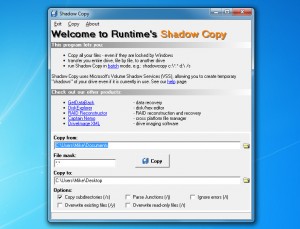
    One alternative is to run a backup program, as most can use Microsoft’s Volume Shadow Service to copy locked files. But this could seem like overkill, especially for only occasional ad-hoc copies, which is why you might prefer the simpler and more lightweight ShadowCopy.

    The program installs easily, and is very straightforward to use. At its most basic, you can just specify the source and destination folders, the files you’d like to copy (*.*, *.docx or whatever), click Copy and wait as the files are transferred.

    If you need a little more control then ShadowCopy does provide a few extra options. You can decide whether it should copy subdirectories, for instance, or overwrite existing files, just by checking a box or two.

    And if you want to do this regularly — or automatically — then the program’s support for command line switches means you can run it from a script. For example, something like “shadowcopy c:\*.* d:\ /s” will copy everything on your C:\ drive — even if it’s locked — to D:\, including all subfolders.

    This is all presented in a very basic way, and needs to be used with some care. Once you’ve initiated a copy, for instance, there’s no way to cancel it. And in our tests the program allowed you to click Copy, even if a copy is already running, which caused such confusion that it shut down almost immediately.


    If you only use ShadowCopy occasionally, though (or from a script), then this probably won’t matter too much, and on balance it’s still a quick and easy way to copy locked files.

    Photo Credit: bloomua/Shutterstock

  • Pluribus Networks Sees Backing from China Broadband Capital

    Pluribus Networks has raised $44 million in Series C financing from investors including China Broadband Capital, Menlo Ventures, New Enterprise Associates, and Mohr Davidow Ventures. The Palo Alto, Calif.-based company developers hardware-accelerated network virtualization technology for cloud datacenters.

    PRESS RELEASE
    Pluribus Networks, the leader in hardware-accelerated network virtualization for private and public cloud datacenters, today announced that China Broadband Capital (CBC) has invested in the company’s Series C funding. This brings the total amount raised to date to over $44 million from investors including Menlo Ventures, New Enterprise Associates, and Mohr Davidow Ventures. The funding will be used to meet customer demand for deploying the company’s production-ready software-defined virtualized Fabric offering in China.

    Pluribus Networks was founded in 2010 and announced in September, 2012 that it had partnered with TIBCO Software Inc. to deliver TIBCO Enterprise Message Service(TM) Appliance and TIBCO FTL® Message Switch. Network World recently recognized Pluribus as a “Top 10 SDN Startup to Watch.”

    “As the first Chinese VC that specializes in cloud computing industries, CBC Capital has fostered strong relationships with government and businesses,” said Dr. Edward Tian, Chairman of CBC. “The Pluribus Networks Server-Switch architecture is the ideal platform for offering the Network-as-a-Service to cloud computing and Big Data in China. Webscale hardware leveraged with Pluribus Networks at the top or middle of the rack can be provisioned on-the-fly as a purpose-built Hadoop appliance or general-purpose Infrastructure-as-a-Service with an integrated CloudStack controller. Chinese companies on hyper-growth trajectories have an immense appetite for cloud computing and data-driven analytics.”

    Pluribus Networks Netvisor® is a programmable, distributed network operating system that runs on Pluribus Networks’ highly-optimized Server-Switch(TM) hardware. Netvisor provides a platform for fabric-based computing that enables applications to move into the network, and to serve both physical and virtual network infrastructure. The solution is highly modular and fault tolerant with a self-healing design that enables extremely high operational flexibility and makes zero-touch provisioning of virtual machines and network services a reality.

    “Cloud computing is driving the convergence of server, storage, and network,” said Ken Yang, Co-Founder and VP of Engineering at Pluribus Networks. “The expertise of China Broadband Capital in supporting companies in cloud computing will accelerate our ability to deliver software-defined networking software and infrastructure for cloud data centers in China. We are looking forward to collaborations with the companies in their portfolio.”

    Availability

    The Pluribus Networks Netvisor® solution is currently available to select customers on the Pluribus Networks F64 Series platform.

    About Pluribus Networks

    Pluribus Networks is a leader in performance-oriented network virtualization for private and public cloud datacenters. Our systems transform how IT administrators deploy applications so they can realize productivity gains and enable new business models. Pluribus Networks delivers operational excellence by optimizing datacenter network utilization while maintaining required levels of performance, reliability, and availability. Information about Pluribus Networks can be found at http://www.pluribusnetworks.com.

    About China Broadband Capital

    China Broadband Capital (CBC) is a China-based private equity firm with focus on media and communications investment. CBC has an exceptional investment team with complementary backgrounds and experiences consisting of industry leaders and executives, private equity professionals and entrepreneurs. The unique combination of our diversified skill sets, experiences and relationships enables us to add value throughout the investment process, and places CBC in the best position to help shape the “Digital Eco-System” for China. For more information, visit http://www.cbc-capital.com.

    Pluribus Networks, the Pluribus Networks logo, Server-Switch(TM), iTOR(TM), Netvisor®, nvOS®, and vManage® are trademarks or registered trademarks of Pluribus Networks, Inc. in the United States and other countries. All other trademarks, service marks, registered marks, or registered service marks are the property of their respective owners.

    SOURCE Pluribus Networks

    The post Pluribus Networks Sees Backing from China Broadband Capital appeared first on peHUB.

  • Reuters – Rhone Capital Buys Bakery Supplies Biz from CSM

    Dutch food ingredients group CSM said on Monday it had agreed to sell its bakery supplies business for 850 million euros ($1.1 billion) to private equity firm Rhone Capital, Reuters reported. CSM put its main bakery supplies business, which makes muffins and pastries mainly for European and U.S. retailers, up for sale in May 2012, blaming weak consumer spending and high raw material prices, in order to focus on more profitable food ingredients.

    (Reuters) – Dutch food ingredients group CSM said on Monday it had agreed to sell its bakery supplies business for 850 million euros ($1.1 billion) to private equity firm Rhone Capital.

    CSM put its main bakery supplies business, which makes muffins and pastries mainly for European and U.S. retailers, up for sale in May 2012, blaming weak consumer spending and high raw material prices, in order to focus on more profitable food ingredients.

    ($1 = 0.7694 euros) (Reporting by Gilbert Kreijger)

    The post Reuters – Rhone Capital Buys Bakery Supplies Biz from CSM appeared first on peHUB.

  • Reuters – CDW Files for $500M IPO

    Technology products retailer CDW Corp. filed with U.S. regulators to raise $500 million in an initial public offering, making it the latest private equity-backed company to file to go public this year. CDW was taken private in 2007 for $7.3 billion by Madison Dearborn Partners LLC and Providence Equity Partners. The proposed IPO could raise about $750 million, Reuters reported earlier this month.

    (Reuters) – Technology products retailer CDW Corp filed with U.S. regulators to raise $500 million in an initial public offering, making it the latest private equity-backed company to file to go public this year.

    Large companies that were taken over by private equity firms during the 2005-2007 buyout heyday are starting to tap the public markets as U.S. stock markets rally to record highs.

    Warburg Pincus-backed eye care company Bausch & Lomb also filed for an IPO on Friday. That deal could raise as much as $1.5 billion, Reuters had reported.

    Other private equity-backed companies like drugmaker testing services provider Quintiles Transnational Corp and industrial distribution company HD Supply are also gearing up for IPOs this year.

    CDW was taken private in 2007 for $7.3 billion by Madison Dearborn Partners LLC and Providence Equity Partners. The proposed IPO could raise about $750 million, Reuters reported earlier this month.

    J.P. Morgan, Barclays and Goldman Sachs & Co would lead the offering, CDW said in a filing with the U.S. Securities and Exchange Commission. ()

    Founded in 1984, CDW is one of the largest computer resellers in the United States, selling products such as notebooks, tablets and printers to businesses and government organizations.

    CDW, which sells products from companies including Apple Inc , Hewlett-Packard Co and International Business Machines Corp, online and through its catalog, said it intends to list its common stock under the symbol ‘CDW’.

    The company did not disclose the number of shares it intended to sell or the exchange on which they would trade.

    The amount of money a company says it plans to raise in its first IPO filings is used to calculate registration fees. The final size of the IPO could be different.

    The post Reuters – CDW Files for $500M IPO appeared first on peHUB.

  • Reuters – Dell Confirms Buyout Offers

    Dell Inc. confirmed it had received alternative buyout offers from Blackstone Group LP and Carl Icahn, following a $24.4 billion agreement last month to be taken private by its founder and private equity firm Silver Lake. The company said its special committee has determined that “both proposals could reasonably be expected to result in superior proposals.”

    (Reuters) – Dell Inc confirmed it had received alternative buyout offers from Blackstone Group LP and Carl Icahn, following a $24.4 billion agreement last month to be taken private by its founder and private equity firm Silver Lake.

    The company said its special committee has determined that “both proposals could reasonably be expected to result in superior proposals.”

    The post Reuters – Dell Confirms Buyout Offers appeared first on peHUB.

  • Reuters – CVC Capital, RBS Exit $512M Stake in Samsonite

    Private equity firm CVC Capital Partners and Royal Bank of Scotland sold a combined $528 million stake in Hong Kong-listed luggage maker Samsonite International, according to a term sheet seen by Reuters on Monday. The 212.4 million shares were sold at HK$19.28 ($2.48) each, the terms showed. That would put the total deal at about HK$4.1 billion, with about 65 percent of the shares sold by CVC and the remainder by RBS.

    (Reuters) – Private equity firm CVC Capital Partners and Royal Bank of Scotland sold a combined $528 million stake in Hong Kong-listed luggage maker Samsonite International, according to a term sheet seen by Reuters on Monday.

    The 212.4 million shares were sold at HK$19.28 ($2.48) each, the terms showed. That would put the total deal at about HK$4.1 billion, with about 65 percent of the shares sold by CVC and the remainder by RBS.

    Luxembourg-based Samsonite listed in Hong Kong in 2011 in a $1.25 billion initial public offering, with CVC and RBS jointly raising about $821 million by selling into the IPO.

    With the latest sale, CVC and RBS exited completely their holdings in the company.

    Goldman Sachs was the sole underwriter on the selldown. ($1 = 7.7628 Hong Kong dollars) (Reporting by Elzio Barreto and Clement Tan; editing by Miral Fahmy)

    The post Reuters – CVC Capital, RBS Exit $512M Stake in Samsonite appeared first on peHUB.

  • HTC Will Start Being More Vocal About Its Brilliance, Confirms Camera Supply Is Behind HTC One Delay

    HTC-ONE-M7-Noir-Blanc

    HTC has revealed that it will finally drop the frankly stupid “Quietly Brilliant” tagline it has been using for the past few years, the WSJ reports, with company marketing chief Benjamin Ho saying they “haven’t been loud enough” with marketing to date. The first fruits of that change in strategy are already apparent, with HTC handing out snacks at the Galaxy S4 launch event in NYC, and the use of the hashtag #theNextBigFlop to directly take down the S4 on Twitter.

    Ho also explained in an interview with the Wall Street Journal that supply shortage, specifically involving camera components (which are unique to the HTC One and use a new “Ultrapixel” layered sensor technology), is what’s behind the continued delay in launching the HTC One in the U.S. That’s acting as a choke point preventing the speedy ramp up of production, Ho told the WSJ.

    While HTC is being more vocal in terms of both being aggressive with the competition and its products, and with informing the public about the real reason behind its slow global rollout of the flagship HTC One device, it has a lot of ground to make up. Q4 sales were down 41 percent year over year, and recently, HTC CEO Peter Chou said recently he’ll resign if the One fails to succeed with consumers.

    The Taiwanese company will also be dumping funds into marketing, meaning that this change from the “Quiet” company of old isn’t just about optics. Ho said in the WSJ interview that it will be increasing its digital marketing spend by 250 percent this year compared with last, and that print and traditional media ads will get a 100 percent budget bump in 2013.

    It’s unclear how much of that budget will be dedicated to smack talk, but HTC is already actively banging that drum. In addition to the Twitter campaign mentioned above, there’s also recent comments made by HTC North America President Mike Woodward, who told Business Insider that his company was “pleased to see no innovation in the design itself” with the S4, noting that he thought “Samsung is trying to overwhelm us with money and marketing.” In the interview he noted that while HTC couldn’t match the Samsung marketing giant in terms of available cash, it will amp up its efforts.

    HTC doesn’t need to spend a lot of money, but it does need to stop pretending that making good hardware and then sitting back and being mostly quiet about it is the way to compete in the smartphone game. Luckily, it looks like the company has finally realized that too. Now it just needs to ship.

  • How Criticizing in Private Undermines Your Team

    You are holding your weekly team leadership meeting. You are discussing with your direct reports how to handle the project delays that have caused the team to miss its quarterly numbers. You know that Ted — one of your direct reports — contributed to missing the numbers by missing two key deadlines. You’ve seen this kind of behavior before from Ted, and you’ve seen the team’s frustration with Ted. You decide to not say anything to Ted in the meeting, but afterward you privately tell him that how he’s letting you and the team down.

    If you’re like most leaders, you believe in the adage “praise in public and criticize in private.” So when a team member does something that negatively affects the team, you usually talk to the team member in private. But this can be a dangerous adage to follow because it significantly reduces accountability, the quality of team decisions, and your team’s ability to manage itself. As Richard Hackman said reflecting on his research, “[T]he most powerful thing a leader can do to foster effective collaboration is to create conditions that help members competently manage themselves.” Here’s why criticizing in private undermines your team, and what you can do to build a smarter team starting today.

    Is your leadership team a real team — one in which members are interdependent with each other for meeting team goals? If so, they should also be accountable to each other for working together to achieve those goals, including how they rely on, work with, and make decisions together. Yet when you “criticize in private” for behavior that occurred in a team meeting or affects the team, you undermine team members’ accountability to each other. You send the message that team members are accountable only to you, not to the team. You also send the entire team the message that they don’t need to hold each other accountable — you’ll do it for them. In short, you shift accountability from the team to you.

    You also make it more difficult to solve the problem. If you tell Ted his missing deadlines contributed to the team missing its goals, you and Ted may reach an agreement on how he will change his behavior, and that may inadvertently create new problems for other team members. Or Ted may tell you that other team members made it difficult for him to meet his deadlines, that it’s not his fault; at that point, you’re likely to become a human ping-pong ball, shuttling back and forth between Ted and other team members trying to understand the problem. The information to solve this problem lies with Ted and the other team members.

    Why do leaders unwittingly shift team accountability to themselves? First, they’ve been taught correctly that they’re ultimately responsible for the team. Yet they misconstrue this ultimate responsibility and adopt a “one-leader-in-the-room” mindset; they believe that they are primarily, if not solely, accountable for how the team functions, including providing negative feedback to their direct reports. Second, research by Chris Argyris and Don Schön and my 30 years working with leadership teams shows that in challenging situations almost all leaders try to minimize the expression of negative feelings: If it’s difficult for you to give negative feedback, you prefer to do it in private than in the team setting.

    Leadership isn’t about being comfortable; it’s about being effective, even when you’re uncomfortable. Smart leaders address ineffective team member behavior in the team setting when it occurs, or when the behavior affects the team. In the team: that’s where the information, solution, and accountability are.

    In the case of Ted, you could start by saying something like, “I’m noticing two patterns in our meetings. First, Ted, this looks like the third time in a month where you haven’t met a deadline for the team. Am I off? [Assuming Ted agrees, you continue.] The second pattern is that each time Ted says he hasn’t met a deadline, I notice the rest of you — Fran, Alex, and Sheryl — sigh or shake your head, but you don’t say anything to Ted. Am I on target? [Assuming people agree, you continue.] Since these meetings are the place for solving problems and the team can’t meet its deadlines if Ted doesn’t meet his, I’m curious, what leads you not to say something to Ted in the meetings?

    If you want to create a more effective team, you and your direct reports will need to change how you handle accountability. Here’s what you can do, starting today:

    1. Tell your team you’ve been unintentionally shifting accountability for the team from the team to you. Explain how you see it affecting the team’s results and working relationships. Give some specific examples and ask team members how they see it.
    2. State that you want a team in which members can openly and constructively give each other feedback in the team. Explain how this will help the team. Ask team members for their reactions.
    3. Ask your team members what they need to hold each other accountable for how the team is working together. They may need team members to share more information about their parts of the business. They may need to learn how to discuss each other’s behavior in the team in a way that’s productive and doesn’t contribute to defensive reactions. They may need to change their mindset so they see themselves accountable to the team, not just you. They may want some assurances from other team members or you.
    4. Take a few minutes at the end of each meeting to discuss how team members are holding each other accountable and how to improve it. Making this shift isn’t easy. Investing a few minutes discussing what worked well and how the team wants to improve next time will increase the chance that the team creates more accountability in the future. And that will save time and get better team decisions.

  • Ultra HD TV might get off to stronger than expected start

    Ultra HD TV Sales 2013
    Ultra HD TVs with 4K resolution were the talk of the Consumer Electronics Show this year, but not even the director of industry analysis at the group that organizes CES each year was convinced Ultra HD TV would see meaningful adoption in 2013. According to a recent report, however, HDTVs with Ultra HD resolution might get off to a stronger than expected start. Digitimes claims its unnamed market observer sources expect display panels destined for Ultra HD TVs to account for as much as 20% of HDTV panel shipments in 2013. China-based TV vendors are expected to account for much of the early demand, and Innolux and AUO are named as the main suppliers of 4K display panels. Digitimes notes that pricing is still a barrier for widespread adoption, as Ultra HD panels cost about twice as much as comparable 1080p displays.

  • Juniper Networks Backs iStreamPlanet

    Juniper Networks has completed an investment in iStreamPlanet‘s Series A funding, which was led by Intel Capital. The investment will be funded by Juniper Networks’ Junos Innovation Fund. iStreamPlanet plans to use the proceeds from its financing to accelerate the development of its live video streaming solutions.

    PRESS RELEASE

    iStreamPlanet, the leader in live streaming video solutions, announced today that Juniper Networks has completed a strategic investment in iStreamPlanet’s Series A funding, which was led by Intel® Capital. The investment will be funded by Juniper Networks’ Junos® Innovation Fund. iStreamPlanet plans to use the proceeds from its Series A financing to accelerate the development of its live video streaming solutions, including Aventus®, a cloud-based, live video workflow platform designed to address the challenges of streaming live events and live linear channels online to multiple platforms and devices. One of the key advantages of Aventus is its ability to move the live video workflow from today’s hardware-dependent infrastructure to a software- and cloud-based infrastructure.
    The relationship combines iStreamPlanet’s innovations and experience in providing scalable and cost-effective live video workflow solutions with Juniper’s industry-leading networking and caching technology to provide a reliable, secure, and high-performance platform for content providers. The two companies have worked closely in the past to deliver complex, live video workflows for major live events, including the 2012 London Games.
    “We are developing and bringing to market a next-generation automated video workflow platform, which will help content holders and distributors keep pace with the growing demand for live streaming video and accelerate new business opportunities for broadcasters of all sizes,” said Mio Babic, CEO of iStreamPlanet. “Juniper Networks’ commitment to innovation in networking and caching in the cloud closely aligns with our vision and customer demand, and we are excited to be working with them and leveraging their expertise in this area.”
    “Live streaming media is one of the most demanding networking and caching scenarios, and one of the fastest areas of growth and opportunity,” said Robert Krohn, vice president and general manager, Edge Software Business Unit, Juniper Networks. “Keeping up with customer demand will require solutions with new levels of scalability and automation, and iStreamPlanet and Juniper Networks are now on a fast track to bring this type of solution to market.”
    The Junos Innovation Fund is a venture capital fund, launched in 2010 and backed solely by Juniper Networks, that invests in leading early- and growth-stage technology companies that expand and enhance the Junos ecosystem.
    About iStreamPlanet
    iStreamPlanet is a premier, multiplatform video-workflow solutions provider committed to bringing high-quality streaming video experiences to connected audiences around the world. With more than a decade of live streaming video experience, iStreamPlanet has built a comprehensive offering of cloud-based video-workflow products and services for live event and live linear streaming channels. iStreamPlanet’s innovative approach has been chosen by the world’s leading sports, entertainment, and technology brands including NBC, Turner Broadcasting, Notre Dame Athletics, AT&T, Pac-12 and Microsoft. Founded in 2000, the privately held company is headquartered in Las Vegas with offices in Redmond, Wash., and London.

    All trademarks and registered trademarks mentioned herein are the property of their respective owners.
    Contact Information
    iStreamPlanet Contact:
    Robin Cole
    VP, Product and Services
    Tel: +1 702 492 5955
    Email: [email protected]

    Agency Contact:
    Peggy Blaze
    Wall Street Communications
    Tel: +1 818 357 3693
    Email: [email protected]

    The post Juniper Networks Backs iStreamPlanet appeared first on peHUB.

  • Is it time for Microsoft to make big changes to Windows 8?

    So a very early build of the next version of Windows has leaked online. Codenamed Windows Blue it includes features such as additional Snap Views and changes to the Charms. There’s nothing to get too excited about here, not yet at least.
    But I’ve been wondering lately, if it isn’t time for Microsoft to change course and steer away a little from the direction it set with Windows 8. There’s no sign of that happening in the Windows Blue leak, but that doesn’t mean we won’t see more fundamental changes added to the new version as development progresses.

    Although we still don’t know how well Windows 8 is selling, we do know it’s not exactly setting the world on fire. Microsoft told us it had sold 60 million licenses, but no one outside of the software giant knows how many users that equates to. But we do know PC sales are dire, and Windows 8 hasn’t just failed to boost numbers, it’s at least partially responsible for their decline.

    It seems clear at this point that Microsoft has two options. It can stay the course and hope sales and adoption pick up. That tablets running the operating system really take off, and people and businesses embrace the brave new world that is Windows 8 and RT. Or it can tweak the OS to make it more appealing to the masses who still use PCs and spend most of their time on the desktop.

    The problem is Microsoft really is between a rock and a hard place here. It needs people to accept apps and the modern UI as the future — this is what links every device, from PCs and tablets to the Windows Phone, after all. People bemoan the fact that you have to go through the Modern UI to get to the desktop, and there’s a thriving market of companies producing software designed to bypass the Start screen, but Microsoft knew from the word go that it couldn’t bake in a simple skip option itself. It needs users to get used to the new front end, to encourage them to download and use apps, which wouldn’t happen if everyone was skipping the Modern UI. App use leads to app creation, leads to app use.

    But maybe this restriction is what’s holding Windows 8 back. If Microsoft gives in a little and provides direct access to the desktop in Windows Blue, maybe the reinvented operating system won’t be such a turn off for PC users. After all, Windows 8 is a lot more than a touch friendly, app centric interface. Beneath that divisive veneer lurks a damn fine operating system.

    The other issue Windows 8 has is the lack of official apps. And that’s partly down to the fact that it isn’t seeing the level of adoption that would make it a must develop-for platform. For a lot of firms, like Google, Facebook and the BBC, there’s no reason to make apps for Windows 8, there’s no benefit. Lack of OS adoption leads to lack of app creation, leads to lack of OS adoption.

    So my question is should Microsoft accept its bold vision is a little too bold, and make concessions to the operating system to encourage people to get on board, or should it stick to its guns and just focus on making the best OS it can — entirely on its own terms?

    Personally I’ve pretty much come full circle with Windows 8. When I first used the Developer Preview I quite liked it. The more I used the OS (the subsequent previews and the actual release), the less I liked it. Then I accepted it, and finally I sort of quite like it again. It’s just very different from previous versions of Windows, and when you’re used to working one way, having to learn to do things differently is an inconvenience.

    Still, I know Windows 8 is a topic that BetaNews readers have strong viewpoints on, so I’d like to know what you think Microsoft should do. Comments below please.

    Photo Credit: Eray KULA/Shutterstock

  • SMPlayer adds automatic update checker and other tweaks

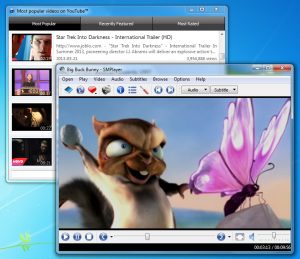
    Ricardo Villalba has updated SMPlayer, his open source media player and front end for MPlayer, to 0.8.4.

    And if you’re a fan of the program then the good news is that you’ll no longer have to manually check for updates: this build now does so automatically, and alerts you whenever a new version is available.

    Subtitle handling is enhanced with new support for encoding ISO-8859-16.

    There’s also a new option to define the frames per second for external subtitles (right-click, select Subtitles > Frames Per Second, and choose from Default, 23.976, 24, 25, 29.970, 30).

    Apparently the video equalizer dialog has been rewritten. Whether this is just an interface issue, or might help people who’ve had problems getting the equalizer working, isn’t clear, but if you’ve had issues with that area of SMPlayer before then you should try this build.

    Elsewhere, there are new Thai and Hebrew translations, along with some undefined “bug fixes”. And if you’re interested in the technicalities, the SVN log has now been moved to assembla.

    This isn’t the most significant of updates, then, but the automatic update checker is worth having. And if you’ve not upgraded in a while, it’s also worth remembering that the previous edition had an important fix for YouTube playback. Either way, SMPlayer remains a likeable media player with lots of features: go check it out.