Blog

  • Data Darwinism: reactions & reflections

    When I was writing Uber, Data Darwinism and the future of work, I was essentially penning what had been on my mind for awhile, though a series of news events helped coalesce the arguments and the narrative. But at no point when flying from San Francisco to New York did I realize that it would strike a chord with so many people. Many of you wrote publicly, a few hundred of you responded via tweets or retweets. Others wrote private notes. Many agreed with my thesis, but some disagreed.

    Nevertheless, what amazed me was that there was such amazing conversation about the topic on the web. In a way, this is what blogging was and is always about — discussion. I am aggregating a few responses just to highlight what people were thinking.

    Ariel Seidman, founder of Gigwalk, pointed out that not all data is created equal.

     As an Uber driver optimizing to maintain a 5-star rating, which job would you rather do? Drive four drunk and angry customers to a club at 1 a.m., or drive a kind and generous venture capitalist from downtown Palo Alto to Sand Hill Road at 2 p.m.? Uber has no idea that your customers were drunk and nasty. All they know is that you got a 1-star rating.

    Nick Brisbourne drew the parallels between the dilemmas faced by the workforce and the privacy debates:

    The same point can be made about the current battle raging between privacy advocates and big online advertising companies like Google and Facebook. As a society we need to figure out what constitutes acceptable practice for the harvesting and use of personal data for advertising purposes. In both these debates there is much to be gained from getting it right and much to lost by getting it wrong.

    My favorite response came from Fred Wilson, who is co-founder of big-time venture capital firm Union Square Ventures. He writes on his blog:

    This redrawing of societal expectations is likely to be the political battle of our time. Om goes on to talk about this in the context of the labor issues that Uber is having in San Francisco. That is a good example of what happens when networks and the data they produce reshape a market that has been operating in a traditional framework. We are at the start of this battle between incumbents, be they black car drivers or cable companies or government itself, and the network-driven upstarts. And we have many of those upstarts in our portfolio.

    P.S.: If you don’t have time to read the article, here is a tl:dr version of it. Damn, this is one useful service.

    Related research and analysis from GigaOM Pro:
    Subscriber content. Sign up for a free trial.

  • Google Re-Indexes Digg After Spam Removal Screwup

    Wednesday afternoon, Digg disappeared from Google. Vanished. Gone. It was clear that Google had de-indexed Digg, but why? To what end?

    Was it because Digg had just announced plans to build a Google Reader clone to satisfy angry users when Google kills the product on July 1st? Was Google just being a dick?

    No, conspiracy theories were put to rest when Google released a statement, saying that it was all just a big screwup.

    We’re sorry about the inconvenience this morning to people trying to search for Digg. In the process of removing a spammy link on Digg.com, we inadvertently applied the webspam action to the whole site. We’re correcting this, and the fix should be deployed shortly.

    And fixed it they have. Digg is back up in Google:

    Digg back indexed in google

    It’s not like being de-indexed in Google was really a killer for Digg, considering the majority of their traffic is direct. But for Digg, you’d at least want digg.com to show up in a search. Thankfully, Google has fixed the screwup and everyone can carry on.

  • Microsoft offering Windows Phone 8X, Lumia 920 and 820 for free

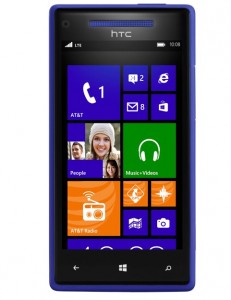
    If you are in the market for a Windows Phone 8 smartphone in the US, then the Microsoft Store should be your first stop. Why? Because the software giant is currently offering a number of devices running the mobile operating system for free on a two-year contract.

    The list of devices on offer includes the 8GB HTC Windows Phone 8X (in California Blue and Lime), the Nokia Lumia 920 (in Black, Red and Yellow) and the Lumia 820 on AT&T. And those savings are not to be sniffed at. When purchased from AT&T, the 8GB Windows Phone 8X and Lumia 820 both go for $49.99, while the Lumia 920 runs for $99.99.

    The Nokia Lumia 810, which runs on T-Mobile, is also free from both the Microsoft Store and the US carrier. The offer does not extend to other devices, however, which are currently available on both the software giant’s online store, as well as carriers for a similar price.

  • Google Fiber set to expand to Olathe, Kansas

    Google_Fiber


    Well the inevitable has happened folks: Google has expanded its Fiber service to the other side of the Kansas City area. From this week, residents in Olathe, Kansas were the lucky recipients of an approval from the City Council which allows for the construction of the hyper-fast network to be used by residents and businesses. Google saw this as a prime opportunity to expand especially since Olathe has become one of the fastest-growing cities in Kansas, has attracted an influx of new businesses and residents— while also creating the golden opportunity to bring in new jobs, grow local and businesses.

    Naturally the planning and engineering of the infrastructure still needs to be done, but the hope is that construction will get underway and folks out in Olathe will be able to get in on the pre-registration for the service soon.

    source: Google Fiber Blog

    Come comment on this article: Google Fiber set to expand to Olathe, Kansas

  • ProfitBricks Raises $19.5 Million For Its Muscular Cloud

    Profitbricks CEO Achim Weiss in front of a diagram of the company's Infiniband data center network. (Images: Profitbricks)

    Profitbricks CEO Achim Weiss in front of a diagram of the company’s data center network. (Images: Profitbricks)

    Profitbricks has raised a $19.5 million investment from the company’s founders and from United Internet AG, a European Internet services provider. United Internet is the parent company of mass market hosting giant 1&1 (you might have seen their commercials) so it’s starting to look like quite the web power play in Germany. The founders of ProfitBricks, Achim Weiss and Andreas Gauger, were also the founders of 1&1.

    Profitbricks has now raised $38.3 million since its founding in 2010. The funding will go towards development of ProfitBricks’ “virtual data center” offering, as well as helping the company expand into new industries.

    Profitbricks seeks to differentiate itself through the ability to provide both vertical and horizontal scale, flexibility in the network, and a data center design tool with an interface that makes building a virtual data center a fairly easy and straightforward endeavor. The ability to perform live vertical scale, that is to run applications on a large server rather than many servers, combined with the infiniband network it uses, sets the company apart. ProfitBricks calls itself the “second generation of cloud infrastructure,” and it has been growing at a quick clip since launching.

    Check out a recent profile on the company here.

  • 1,200BHP Nissan Skyline GT-R R32 – XCAR

    R32 Nissan GT-R

    If you’re an automotive enthusiast here in the United States then you probably know there were earlier versions of the Nissan GT-R before the current model. In fact the Nissan GT-R has been around in one form or another since 1969. The R32, or third Gen GT-R, was produced from 1989-1994 and never sold here in the States. It’s also regarded by some to be one of the most collectible GT-R’s out there. Endless, a tuner shop in Japan, has managed to get a whopping 1,200 hp out of the R32 and done so in a manner that not only keeps the car streetable, but reliable as well.

    Source: XCar.com

  • T-Mobile, MetroPCS get full regulatory approval for merger

    T-Mobile MetroPCS Merger
    T-Mobile and MetroPCS (PCS) on Thursday announced that they’ve passed through every regulatory hurdle for their proposed merger and now must only get approval from shareholders to finalize the deal. The final regulatory domino fell on Wednesday when the Committee on Foreign Investment in the United States told T-Mobile parent company Deutsche Telekom that it didn’t have any objections to the proposed merger. Now that the two wireless carriers have passed the muster with regulators, they have to convince MetroPCS shareholders to approve the merger during a special meeting on April 12th. This could be easier said than done, however, because some shareholders last year filed a lawsuit to block the merger while accusing the companies of “cheating shareholders” by “drastically” undervaluing MetroPCS’ worth. Deutsche Telekom’s full press release is posted below.

    Continue reading…

  • Check out broadband at the library – literally!

    libraryI love this story! I saw it posted on WebJunction

    Providence Community Library initially purchased two Mobile Beacon hotspots (at $100 each device plus $120/year for the service). They placed the hotspots into circulation at a library branch that serves a neighborhood with low rates of home broadband service. The hotspots were promoted through their website, newsletter, Facebook page, and posters. The response was immediate. The hotspots are so popular, Providence Community Library is purchasing one additional device for the pilot branch and three devices for an additional branch. They intend to keep records of the success of the offering so as to request grant funds for additional devices.

    Providence Community Library has posted the lending guidelines for their hotspots. They do have additional borrowing requirements including a signed user agreement, similar to loaning out a technology device. Providence Community Library can shut down the internet service to the device and they make this fact known.

    This is a great idea. Unfortunately right now the service serves mainly urban locations…

    Mobile Beacon’s offerings are similar to Mobile Citizen, also a Clear reseller available to non-profit, education and government. Both Mobile Beacon and Mobile Citizen sell unlimited access for $120/year. They were both created by nonprofit organizations. The service area of both is limited to Clear’s coverage map which is mostly urban.

    I know that PCs for People had been working with a similar service, in fact I think it was Clear in the Twin Cities, and they found that many of the recipients of their donated computers were interested and able to sign up for the $120 annual service. While Clear is primarily an urban provider, it sure seems like the kind of project that could be replicated in rural areas using different providers.

    For folks who aren’t sure they want to make the investment checking out a connection at the library provides a great trial run, which is important especially as reports continue to indicate that one of the main reasons people don’t go online is that they don’t see the value. No better way to experience the value than have it at home for a week. It might be nice to find a way to pair the connection with a device (laptop, tablet, whatever) too for folks who have nothing at home.

  • Canon Unveils World’s Smallest DSLR, The SL1, Along With Barely Updated T5i Entry-Level Rebel

    20130321_thumbL_eossl1_toplens

    Canon has indeed introduced a new, very small DSLR as rumored earlier in the week. The SL1 (as it’s known in the U.S.) is “world’s smallest and lightest DSLR camera,” the company says, with a body that’s around 25 percent smaller and 28 percent lighter than the Rebel T4i. It packs a new 18 megapixel APS-C sensor, Digic 5 processor, and 9-point AF system with a single center cross-type.

    The AF system also boasts a brand new Hybrid CMOS AF II sensor, which makes the focus area wider for shooting in Live View with either still photos or video, and what Canon advertises as improved AF speed vs. existing EOS cameras when tracking moving subjects. The SL1 is available in a kit with a new EF-S 18-55mm f/3.5-5.6 IS STM lens, which has a smoother, quieter onboard AF motor designed specifically for video shooters.

    On the back there’s a 3-inch touchscreen display, which doesn’t articulate the way the one built into the T4i does, but still people have been very impressed by Canon’s implementation of touch screens on cameras and multi-touch support. The SL1 has a native ISO range of 100-12800 for stills, and 100-6400 for video, and can shoot continuously at up to four frames per second.

    The SL1 will live or die on its size and weight, however, all other specs aside. Canon is clearly marketing it as an option for consumers looking for something more portable to bring with them on vacation or on sightseeing excursions. The problem is, that’s a market neatly addressed by competitor mirrorless camera lines, like the Olympus OM series and Sony’s NEX shooters. Canon’s own EOS M was criticized for flaws like AF performance, and this seems to be an attempt to make up for that deficiency.

    The Canon SL1 will ship sometime in April, with a price tag of $649 for body only, or $799 for body and lens kit.


    Canon also unveiled an update to its entry-level regular-sized Rebel with the T5i. The T5i has an 18 megapixel sensor, as well as a Digic 5 processor. It has a 9-point AF system, but with all cross-type points, 5 frames per second continuous shooting rate, and a Hybrid CMOS AF system, (though not the new one that’s in the SL1, judging by the release). It’s available in a kit with the new 18-55 STM lens, too, just like the SL1.

    The new T5i is in virtually all ways the same as its predecessor the T4i, at least on paper. It also features a vari-angle 3-inch touchscreen display, and in fact any changes look to be in the design of the casing and slight changes to dials. Canon’s “iteration” this time around seems to not really be one at all, so if you’re a current T4i owner you’d be best to stay clear. If you can’t find a T4i for less, at least you’re still getting a great (if apparently unimproved) camera with the T5i.

    The Canon T5i retails for $749 for body-only, and $899 bundles with the new 18-55mm STM kit lens. It’s also said to be shipping sometime in April.


  • Angel Tompkins Nude Pic Shows Up In Google Knowledge Graph

    When you search for “Angel Tompkins” on Google, Google presents a Knowledge Graph result. That makes sense, she’s a Golden Globe-nominated actress. What is interesting about Google’s listing, however, is that the image it displays is photo of Tompkins topless – not the kind of material you would expect the search engine to display to users as the main thing you see on a results page.

    Search Engine Land was tipped about the result on Twitter, and as Barry Schwartz notes, this is probably not the ideal web presence for the now 70-year old woman, who is reportedly married with two children (it should be noted that Google’s Knowledge Graph has gotten marriages wrong in the past).

    Here’s what it looks like censored. You can go to the SERP to see the real thing if you like (though Google will likely pull it soon).

    Angela Tompkins Nude Pic

    Google will often display a set of images from Image Search in the Knowledge Panel for a given query. Here’s what Clint Eastwood’s looks like, for example:

    Clint Eastwood

    It’s unclear how exactly Google chooses which pictures to display, or when to include the Eastwood-like set of images in the Knowledge Panel. The first Eastwood picture in the panel is not the first one that shows up in an image search, nor is the topless photo of Tompkins the first one in an image search for her. So why is Google selecting this one? To make things even more complicated, Schwartz notes that the nude image appears to be coming from a spam blog – something Google rigorously tries to keep out of its search results. Now we’re seeing one being highlighted in Google’s prized Knowledge Graph?

    The whole thing is even more interesting, considering that Google has recently gone out of its way to make adult-oriented imagery harder to access.

    It is worth noting that Tompkins has been described as a “Sexploitation Siren,” so users wanting nude pictures of her isn’t that far out of the realm of possibility.

  • Children’s ebook iPad app Bookboard adds publishers, subscription model

    Bookboard, the iPad app from former Adobe executives that offers streaming access to a library of children’s ebooks, announced Thursday that it’s added new publishers to its lineup. The service, which has been free in public beta until now, also rolled out new pricing plans.

    Bookboard announced new publishing partnerships with Peachtree Press and Open Road — which means that titles like the Berenstain Bears and the Boxcar Children are now available. Bookboard was already working with Charlesbridge, Orca, Twin Sisters, Illumination Arts and Bubblegum Books.

    The company also announced pricing. A six-month subscription is $29.94, which works out to $4.99 per month, and includes access to all Bookboard’s content for up to four readers per iPad. A month-by-month subscription is also available for $8.99 per month.

    As I wrote in January, publishers receive royalties based on number of pages read and on how well their content does within the platform. Some publishers are also receiving advances, and the licensing agreements appear to vary by publisher.

    Bookboard competes with other paid children’s ebook apps like Ruckus Reader, Scholastic’s Storia and Amazon’s Kindle FreeTime Unlimited.

    Related research and analysis from GigaOM Pro:
    Subscriber content. Sign up for a free trial.

  • Twitter Turns 7, Boasts 400M Tweets Per Day

    Join me in wishing a very happy birthday to Twitter, who turns 7 years old today. Yes, if you were wondering, you can sing the Happy Birthday song in less than 140 characters.

    Twitter, which first began with a tweet from co-founder Jack Dorsey back in March of 2006, now boasts over 200 million monthly active users. Today, they’re also announcing that tweets per day has hit an impressive 400 million.

    Here’s where it all started:

    “As we’ve grown, Twitter has become a true global town square — a public place to hear the latest news, exchange ideas and connect with people all in real time. This is where you come to connect with the world at large. Get on your soapbox to critique elected officials, or go sotto voce to the neighbor next to you. And as in other gathering places, commerce happens too (and jokes and art-making and debating, and — you get the idea),” says Twitter in a blog post.

    Last March, when Twitter turned 6, they announced 140 million active users. Today, on their 7th birthday, they can boast well over 200 million active users. Twitter says that it’s a steep trajectory that they could have “only dreamed about back in 2006.”

    Take a look at Twitter’s video below, which takes you from Jack Dorsey’s first tweet in 2006, the the first use of the hashtag in 2007, to a funny exchange between Oprah and Shaq.

  • Kinvey adds an Enterprise Edition to its Backend as a Service platform

    Kinvey, a Backend as a Service (BaaS) company that helps developers set up and operate scalable cloud backends for mobile, tablet and web apps, is branching out with a new Enterprise Edition.

    According to the firm, the new platform integrates with various enterprise backend systems including Oracle, Salesforce CRM, LDAP and Active Directory, and will allow developers to easily create their own enterprise-grade mobile applications.

    The Enterprise Edition combines Kinvey’s Data Links technology (which the company says was designed to “mobilize” data from virtually any source to any device, on any platform) with Authentication Links to enable businesses to rapidly prototype, publish and maintain their apps, while adhering to strict security and authentication protocols. The platform also comes with an enterprise-grade Service Level Agreement.

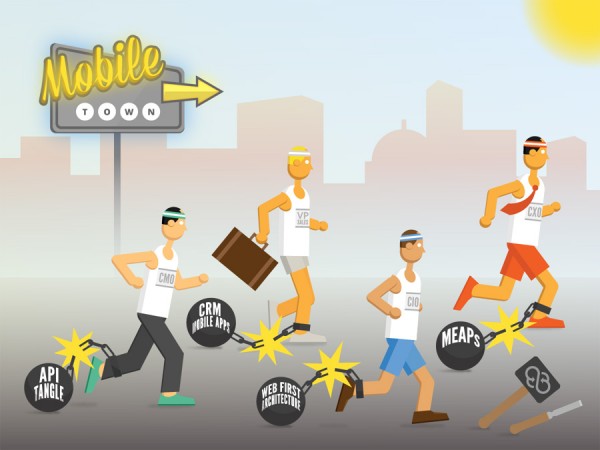
    With the new Enterprise Edition Kinvey is intending to position itself against Mobile Enterprise Application Platforms (MEAPs). Sravish Sridhar, founder and CEO of Kinvey, explains: “Historically, enterprise app developers have been forced to make an unfortunate choice: agility or security. Those who’ve selected a MEAP have forfeited agility. We expect to see MEAPs begin to roll out on-prem BaaS solutions, requiring yet another false choice. Enterprise app developers and architects demand the flexibility of private or public cloud options”.

    Pricing for the new platform will be based on the number of integrations to databases and authentication systems required.

  • Chrome and Android to remain separate products, but expect more overlap

    Chrome_Android_overlap

    There has always been rumors that Google and Chrome could become one, and last week’s announcement of Andy Rubin leaving the Android team added a little fuel to that fire. The fact that Sundar Pichai, who is also the Senior Vice President for Chrome, will now lead Android, really made people wonder. Well wonder no more because Executive Chairman Eric Schmidt said they will remain separate products, but they would probably overlap a little more.

    These comments took place in India, which is just one stop in a multi-country Asian tour promoting Internet access. Schmidt was also asked if he plans on leaving Google and selling his 42 percent stake. His response was, “Google is my home,” and later said he has no plans to take on a job in government.

    source: Reuters


    Come comment on this article: Chrome and Android to remain separate products, but expect more overlap

  • Windows Blue Name-Dropped In Leaked Microsoft Video

    Windows Blue is all but confirmed to be the next version of Microsoft’s operating system after showing up in multiple job listings. If you’re still unconvinced, a leaked video may just convince you that Windows Blue is indeed real.

    MSFTKitchen got its hands on a video of a demo that was shown internally during Microsoft’s annual TechFest. The team behind Fresh Paint, Microsoft’s touch friendly paint application for Windows 8, showed off their latest version for an operating system called – you guessed it – Windows Blue.

    The Fresh Paint demo reveals that the team will be adding watercolor in Windows Blue. The team is also adding the ability to import photos from external sources. It’s not exactly groundbreaking innovation, but it does show that Microsoft is working on updating its applications for Windows Blue. It will be interesting to see what updates Microsoft brings to other applications.

  • 12-Year-Old Arrested For Shooting Prank Call

    With the fears of school shootings at their highest since the Columbine shootings in 1999, authorities and parents are in no mood to suffer pranksters who would test those fears.

    The Associated Press is reporting that a 12-year-old boy has been arrested for making a prank call to 911 about a school shooting in a small Minnesota town.

    The student reportedly made the prank call at around 8 am, telling dispatchers that there was a shooter in New Prague Middle School. The boy is alleged to have said the make-believe shooter was carrying an AK-47.

    The call resulted in the middle school and other schools in the area being cleared out, and students were eventually given the day off.

  • Joyent, Cloudant Launch Database Service Atop SmartOS

    The database as a service market is heating up, as cloud providers look to court application developers with promising offerings. The latest such move is the result of a deepening partnership between Joyent and Cloudant.

    Cloudant is now available on the Joyent high-performance cloud platform, and the two today came out today with a multi-tenant Cloudant cluster running in Joyent’s Jubilee data center in Ashburn, Virginia. Dedicated Cloudant clusters running on Joyent will be available this month and can be hosted in any Joyent data center.

    Cloudant initially partnered back with in April of 2012. That partnership made Cloudant’s NoSQL DBaaS available on Joyent’s infrastructure.

    Joyent has always been tuned towards application developers. “We built Joyent to power real-time web, social and mobile applications, so it makes sense to have a DBaaS partner like Cloudant that’s geared toward operational application data,” said Steve Tuck, SVP and general manager at Joyent Cloud. “Giving Cloudant the ability to quickly deploy throughout the global environment of our public cloud service aligns with our focus on scalability and performance. That’s what our customers care about most: low cost, real-time systems that are easy to use and support their apps.”

    Joyent’s cloud was built with and runs on SmartOS, an open-source distribution of the OpenSolaris fork illumos, which is optimized to support high-scalability apps for cloud computing. Another differentiator for it is DTrace, a dynamic tracing framework with real-time troubleshooting which provides insight into global system performance. DTrace allows both Cloudant and Joyent to deliver increased application performance.

    “Collaborating with Joyent to run Cloudant on SmartOS is just another example of how we efficiently improve service,” said Alan Hoffman, co-founder and chief product officer at Cloudant. “Making sure operational data scales flawlessly with application code is challenging, which is why when we see technology that helps our customers, we start integrating it. Now, with SmartOS, we’re able to quickly provision Cloudant accounts across the global network of Joyent data centers.”

    One interesting feature of Joyent is it allows a customer to conceptually build a stack on its website. The company has been partnering with companies throughout the platform, application, data, infrastructure, and services layers.

    Cloudant recently received strategic investment from Samsung Venture Investment Corporation.

  • A New Type of Philanthropy: Donating Data

    We all recognize that without support from the private sector, many of the public programs in the arts, health and education — which we take for granted — would not exist. That same spirit should extend to Big Data. At the height of the global financial crisis in 2009, the Global Pulse initiative (where I serve as director) was set up by the UN Secretary-General as an R&D lab to find out whether Big Data and real-time analytics could help make policymaking more agile and effective. The evidence is growing that it can.

    For example, in developing countries, mobile network operators can estimate household income of their subscribers from how much and how often they purchase airtime. Online chatter on blogs and forums can foreshadow imminent unemployment spikes. The volume of tweets mentioning food prices tends to rise and fall with inflation rates, and calling patterns through mobile phone networks shift in response to the prices of specific commodities. Such research has changed the debate from whether Big Data can have social impact to how. For the UN, this ability to glean real-time information could transform our work to protect development gains among the world’s most vulnerable populations.

    Big Data also has serious implications for public health. Twitter has become a useful source of data for tracking everything from earthquake impacts to disease outbreaks to misuse of prescription drugs. Major institutions in the U.S. and Australia are already rolling out their own real-time Twitter monitoring tools. After the devastating earthquake in Haiti, researchers from Columbia University and Sweden’s Karolinska Institute worked with mobile carrier Digicel to use phone towers to show where people from areas hard-hit by cholera were moving and taking the contagious bacteria with them. Society as a whole benefits from applications like these.

    But the public sector cannot fully exploit Big Data without leadership from the private sector. What we need is action that goes beyond corporate social responsibility. We need Big Data to be treated as a public good.

    The technology required for real-time analysis of Big Data is so new that even the private sector is struggling to learn how to use it effectively to bolster profits. And while they deserve the opportunity to focus their talent and research on realizing benefits for their shareholders, it would be a massive oversight if the public sector got left behind.

    Even experts operating in the private sector assert that for the true potential of Big Data to be realized, different streams of information would need to be combined. Social media data combined with mobile phone data combined with retail data might be necessary to provide a fuller picture of what’s needed after a global crisis, such as a natural disaster or another economic downturn. This type of analysis might require that various private sector companies share potentially sensitive information. It is not reasonable to expect them to take this risk unless they are convinced of the public benefit.

    At Global Pulse our strategy has been to form strategic partnerships with leading organizations that have the data, technology, and human expertise to learn how to do this analysis. We have been approaching companies with thought leadership on what we call data philanthropy, the idea that the private sector “holders” of Big Data can make this valuable resource available to the public.

    Ultimately, we envision a world in which the private sector contributes to a real-time data commons. Yet we recognize that they will only do so on their own terms, and in the end, doing so must make good business sense. We believe they can share different types of real-time data in ways that don’t compromise their market competitiveness, and that fully protect privacy in the process. It will take courage, imagination, new regulatory frameworks, innovative policies, and fresh thinking about how public-private sector partnerships can be structured — but we must bring about this new reality.

    Debates in the private sector have devolved into an existential struggle between two camps: one which believes that privacy is dead and profit is king, and one which fears that any reuse of data beyond the original purpose for which it was collected is a potential threat to privacy and civil liberties. Our goal is to insert a third pole into this discussion: Big Data is a raw public good, and we must work together to find ways to harness it for massive social impact, both safely and responsibly. For this to happen, data philanthropy has to become a private sector priority.

    This post is part of an online debate about How Big Data Can Have a Social Impact, which we’re hosting in partnership with the Skoll World Forum on Social Entrepreneurship. You can view the entire debate here.

  • Google’s Schmidt Says Chrome & Android Will Remain Separate – But Don’t Be Fooled: Two Years Ago He Confirmed They Will Merge

    eric-schmidt

    Google’s Eric Schmidt has said Mountain View will keep its two OSes, Android and Chrome, separate after all, according to a Reuters report. Schmidt, who is in India attending an IT event called Big Tent Activate Summit, said the two operating systems will remain separate products but apparently also said there could be more “commonality” between them.

    A conference attendee, @scepticgeek, also tweeted Schmidt saying Android and Chrome would be “separate & independent for a long time”:

    TechCrunch contacted Google and asked it to confirm whether it plans to keep Chrome and Android separate but Google declined to comment.

    What’s most interesting about Schmidt’s comments today is that his words, as reported, seem to contradict comments he made back in February 2011, when he told delegates at the Mobile World Congress tradeshow that Chrome and Android would absolutely converge.

    We’re working overtime to get [Chrome & Android] merged in the right way

    “We’re working overtime to get those technologies merged in the right way,” he said at the time, but added: “I learned a long time ago, don’t force technology to merge when it’s not ready, wait for the technology to mature to the point when it can be merged.”

    In other words: a Chrome-Android merger is inevitable, but also won’t be rushed. So his comments today — about increasing commonality between Chrome and Android — suggest Google is still building a gradual path towards convergence (as Schmidt said it was in 2011).

    Rumours that Google’s quasi-desktop OS Chrome and its touch-based mobile OS Android might be about to merge were sparked earlier this month when head of Android, Andy Rubin, was shuffled out to another role within Google — with Sundar Pichai, head of Chrome and apps, taking over. Pichai did not leave his existing duties but rather added the Android brief to his Chrome and apps portfolio, suggesting a unifying impetus for the job changes.

    Chrome and Android ‘remaining separate and independent for a long time’ has much the same emphasis as Schmidt’s comments from two years ago — when he said they would merge, ultimately. Exactly what he meant by trying to ensure they are “merged in the right way” is up for debate — whatever it means, two years of Google working overtime still apparently hasn’t created those sought after, clement conditions. (It’s likely Google needs to wait for the market to mesh with its mobile centric vision — so growing the Android platform and expanding its reach is one way Mountain View may have been “working overtime”.)

    Make no mistake though: the ultimate merger of Chrome and Android is inevitably since the differences between hardware categories are being eroded. Chrome OS was announced in mid 2009 — at a time when netbooks were riding high. Remember them? The launch of the iPad in 2010 created the tablet category afresh and tablets quickly pulled the rug out from under mini laptops, and started eroding the desktop computing market too — putting the emphasis squarely on touch and mobile computing. And from there it’s but a short hop to gestures and wearables.

    All of which underlines that ultimately having two separate OSes — one mobile and one quasi-mobile — makes no sense for Google in the long run. It’s not a question of if Chrome and Android will merge — the big question is how soon it can be made to happen.

  • YouTube Now Serves a Billion+ Unique Users a Month

    YouTube has just announced a huge milestone, one that shows just how powerful the world of online video really is.

    The Google property and most popular video site on the internet has just hit a billion unique users every month.

    “In the last eight years you’ve come to YouTube to watch, share and fall in love with videos from all over the world. Tens of thousands of partners have created channels that have found and built businesses for passionate, engaged audiences,” says YouTube.

    “From the aspiring filmmaker in his basement and the next great pop musician, to the fans all around the world who tune in, subscribe and share their favorite videos with the planet, thank you for making YouTube what it is today. You have truly created something special.”

    The only other comparable network would be Facebook, which has over a billion monthly active users.

    When you think about a billion uniques in a month, the number itself is simply staggering. In just one month, about 10 Super Bowl-sized audiences watch at least one video on YouTube. If YouTube’s monthly unique audience were a country, it was be the third biggest country in the world (behind China and India).

    Almost half of all people on the internet watches a video on YouTube each month.

    Considering that there are about 6.9 billion people on Earth, 1 billion would represent about 14.5% of the entire world.

    And the mind-blowing comparisons could go on and on. The point is simply this: YouTube is hands down one of the most ubiquitous presences in our lives.

    In other YouTube-related billion view milestones, last December, viral smash “Gangnam Style” became the first video to ever break the 1 billion view milestone.

    [Image via jm3, Flickr]