Blog

  • The Email Cockroach Lives Another Day

    After cleansing myself of multiple generations of email list subscriptions over the years, I’m surprised at how happy I now am to receive automated alerts every morning from services like Groupon, RueLaLa and Travelzoo. Maybe offer-based newsletters are just more relevant than they used to be; maybe they’ve figured out the right time to get me. In any event, not only am I not upset to see the emails in my inbox, but I actually open many of them.

    If you believed prognosticators, you might have thought email was well on its way to death by irrelevance with an assist by spam. But now, as of today, email will also be the primary way Facebook applications correspond with users. That’s because, in an effort to give application makers more responsibility and control of their communications, Facebook will now allow apps to require an email address (or an anonymized Facebook proxy). In the short term, it could mean a lot more clutter in your inbox, as apps notify you of receipts for things you’ve purchased, remind you to come back and visit them, and tell you about new feature launches. But eventually, that should normalize as you uninstall the ones that abuse their email privileges.

    What application makers used to do was tell you of such happenings via Facebook notifications, which are being phased out. Facebook is actually weakening its own platform status by pulling itself out as a middleman and encouraging apps to correspond directly with their users. In the past, social web platforms were much more controlling of their users. Not to knock on Ning (though it can probably take it), but I remember a few years ago trying to contact the members of a group I ran there. The only way to do so was via a mass email to every member, written in a tiny form field on Ning’s site that continually timed out and deleted my message when I tried to send it. Ning has certainly fixed the bug by now, but in a broader sense the tide has clearly shifted.

    So much so that some application developers are concerned that emailing users will be less effective than contacting them through channels on Facebook.

    Further reading:

    Please see the disclosure about Facebook in my bio.

  • Recall: Dorel Asia Cribs, Strangulation and Suffocation Hazard


    More than 600,000 infant cribs sold at popular stores, like Wal-Mart, Sears and K-mart have been recalled following the recent death of a 6-month old baby. Click here to get more detail on the recall or to see all recalled models.

  • Haiti Telethon Will Stretch Across Platforms, Countries; Paste Tries Different Approach


    George Clooney

    Tuesday night, CNN raised more than $7 million for Haitian relief during an quickly planned telethon on Larry King Live. That was small compared to the massive effort led by George Clooney and MTV Networks (NYSE: VIA) will reach across the world. Star-studded telethon Help for Haiti Now will air live for two hours from LA, New York, London, and Haiti Friday night at 8 p.m. ET across more than a dozen sites, at least 30 U.S. networks (including all four major broadcasters), several Canadian networks, multiple mobile carriers and several international networks.

    The global telethon, which even is supposed to air live on MTV in China, features some of the biggest names in music: Bruce Springsteen, Coldplay, Bono, The Edge, Mary J. Blige, Alicia Keys, and more, with performances selling on iTunes for 99 cents starting Saturday. All proceeds from the telethon will be split equally between the Clinton Bush Haiti Fund; United Nations World Food Programme (WFP); Oxfam America; Partners in Health; the Red Cross; UNICEF; and Yele Haiti Foundation.

    The online outlets taking part include YouTube; Hulu; MySpace; Fancast; AOL; (NYSE: AOL) MSN.com; Yahoo; (NSDQ: YHOO) Bing.com; BET.com; CNN.com; MTV.com; VH1.com; TV.com; and Rhapsody. Mobile streaming includes Alltel (NYSE: AT), AT&T (NYSE: T), Sprint (NYSE: S), and Verizon. It’s not clear if that includes video. More details in the release and at MTV.com. [Update: Gigya will power live chat across the sites; Facebook and Twitter are official social media partners.]

    Paste magazine: Paste is trying to use music to raise fuins on a smaller scale. The music mag has set up Songs for Haiti, unreleased songs from Ludacris, Of Montreal and more than 200 other artists available as MP3s for anyone who donates money through the site—or says they have donated through other sites. Paste says it will donate 100 percent of the proceeds equally between Doctors Without Borders, The Red Cross, and Wyclef Jean’s Yele Haiti Earthquake Fund, but cautions that donations there are not tax deductible.

    Update (Jan 20): Micropayment-centric social games site Zynga says 300,000 Zynga players have bought $1.5 million in virtual goods for the WFP effort. The funds came from FarmVille, FishVille, Mafia Wars and Zynga Poker. Farmville players alone raised $1 million and 100 percent of money raised went to the WFP.

    Related


  • US Airways Saves Flight From Dangerous Xbox 360 Threat [Idiots]

    Adam was flying out of Boston on US Airways, and he checked his Xbox 360 with his luggage. When he got home, he found a ziploc bag full of little metal components on top of a newly broken Xbox 360.

    He is understandably pissed off, and US Airways has essentially told him to piss off because it was done for security reasons. Of course! We all know that if an Xbox 360 is checked, it could be used by the pilots, which would be distracting and dangerous. Only by rendering it inoperable was US Airways able to keep our skies safe. Thanks, you wonderful, sensible airline! [Consumerist]


  • Study: SaaS Pricing Is Still Opaque And Freemium Is Rare

    guest_freemium.0110.jpg

    If you are building a SaaS (Software as a Service) venture, you should be thinking hard about your pricing strategy. It may be the single most critical decision you make. Pricing impacts your marketing, financial and organizational strategy. Are you selling an expensive, complex enterprise solution? Or a simple impulse purchase that an individual can make with a credit card? Will you offer a free, a.k.a.freemium, option?

    You cannot fudge these decisions, you have to tell customers how much it will cost before they can commit. To provide input into this decision, it is good to learn what your peers are doing. So I researched 103 SaaS vendors to see how they handled pricing.

    Sponsor

    This guest post was written by Bernard Lunn, a serial entrepreneur. In 2010 he is focusing on how the Internet is disrupting the capital markets after the financial meltdown, and also on what is happening as SaaS crosses the chasm to the mainstream. In 2009 Lunn was the COO of ReadWriteWeb. In earlier times he has built ventures at the intersection of software, media and outsourcing. Comfortable with globalization, he has built ventures in Europe, America and Asia. You can follow him on Twitter.

    The Sample Set: 103 SaaS Ventures

    How many SaaS ventures are there today? Nobody knows. I can see all of the public ones, and most of the ones that get serious VC money, and those that break through to some level of success. I found 103 of them. But I know that for every one I find, there are probably 100 more. But I think that I found 103 pretty important SaaS ventures and that 103 is a reasonable sample size. You can find the full list here. Here is how I categorize them by funding stage:

    1. VC (institutional round)= 62%
    2. Bootstrapped (maybe angel, but no investors on the record)= 16%
    3. Publicly traded= 22%

    Only 30% Really Want You To Call Them

    I looked at all 103 to see how many have an 800 number right there on the front page with a big invitation to “call us right now”. That is a sign that they have invested in an inside sales team that can take an inquiry and convert it to an action.

    The answer is only 30%. That was lower than I expected.

    Note: Some companies have an 800 number on their Contact Us page. I did not count those. Most will go to a switchboard or voice mail. If the number goes to a sales team that is hungry for leads, you will want that number as prominent as possible.

    I expected more to use inside sales to convert to action. There may be three reasons for this.

    1. They are selling at such a low price point that it is not economical to have a human salesperson in the loop. I saw a few companies in this category. This is what might be called the Google strategy: The sales person only gets into the loop after a large company has already gone far down the adoption road.
    2. They prefer to have prospects fill in a form so that a sales person can call them. As most do not show their pricing online (see next section) this seems a likely explanation. It is the traditional enterprise way. But I question if this way works in the SaaS model, and in an online world where site visitors want instant gratification and are nervous about getting spammed if they give out their information.
    3. They don’t have the money to build an inside sales team. This seems unlikely given that our sample set was larger SaaS ventures.

    Only 24% Show Pricing Transparently

    I looked on the front page for a link about pricing and I dug down a level to find it there. Only 24% display pricing in the transparent manner that I think as the norm for SaaS (usually with multiple tiers). That is being generous; in our interpretation of “transparent” I included some who have one price with a line saying “pricing starts at x-dollars” that is really a come-on to get somebody to call.

    I notice that Salesforce, the bellwether of the SaaS industry, has both transparent pricing (and a big 800 number invitation to call them). Other leaders with pricing transparency include Zoho, 37 Signals, Constant Contact, Xero and Timebridge.

    Only 6% Have a Freemium Plan

    That was the big surprise. Freemium is being discussed almost as the de-facto pricing strategy for SaaS. Note: I did not include a free trial as freemium. Most vendors have a free trial. Freemium means free forever, albeit with limitations.

    guest_lincolnmurphyhead_0110.jpg

    Some experts are questioning this freemium orthodoxy. In particular I like the work being done by Lincoln Murphy (right), an SaaS expert at Sixteen Ventures. You can find his paper entitled The Reality of freemium in SaaS here. It is a good primer on freemium but once he explains the basic rationale, he goes on to suggest caution. His best advice is that you need to really understand what value you are getting back from your free users. He makes it clear that a no-think freemium tactic (“put it out there for free and figure out conversion later”) is often a disaster.

    However, if freemium is the orthodoxy I expected more companies to offer a free option. The 6% freemium rate can be explained by either A: the vendors figured out what Murphy is saying and so don’t offer freemium, or B: the vendors are locked into old enterprise styles of selling and marketing. They may be SaaS-modern on the delivery side, but they are legacy on the sales and marketing side.

    It is probably a mix of the two. The lack of pricing transparency indicates that B is more likely in most cases.

    CAC Ratio: Where This All Comes Together

    CAC (customer acquisition cost) is one number you should obsess about if you run a SaaS venture. Bruce Cleveland, the SaaS-focused partner at InterWest Ventures (see the ReadWriteWeb interview here) has a good post that outlines his definition of CAC. There are different ways to look at CAC, but I think Cleveland’s makes the most sense in the real world. Here is how he calculates the CAC Ratio: ($ Total Sales + $ Total Marketing)/$ First Year Contract Value.

    He goes onto say, “The objective is to make the CAC ratio less than 1, which implies a customer acquisition payback of a year or less.”

    That is controversial. Some would allow ROI over the years of Lifetime Value (LTV). Read his post why that is a bad idea operationally. (Cleveland was one of the original members of the Siebel executive team, so he talks from operational experience not MBA textbooks).

    However, whether you measure CAC over one year or multiple years, the CAC ratio is how your investors will measure you. It will determine your capital efficiency, which determines how many times you need to go back to investors for more money.

    I believe that vendors that don’t offer a clear path to revenue online (through transparent pricing and, for higher priced products, an inside sales) will struggle to have a best-of-breed CAC ratio.

    What Is Your Experience?

    Is a CAC Ratio below one feasible? What freemium strategies are working? Is it viable to hide pricing behind a lead generation form?

    Freemium photo credit: ReadWriteWeb
    Discuss


  • James Cameron Wins PETA Proggy Award

    The animal rights zealots at People for the Ethical Treatment of Animals have honored critically-acclaimed director James Cameron with their annial Proggy Award for Outstanding Feature Film for his work in the sci-fi blockbuster Avatar.

    PETA granted Cameron the Proggy — short for progress — after falling in love with Avatar’s message about “the importance of treating all living beings, no matter how ’strange’ or ‘alien,’ with respect and dignity.”

    “We hope viewers will come away from ‘Avatar’ with a new way of looking at the world around them and the way we treat our fellow earthlings,” PETA Senior Vice President Lisa Lange said in a statement. “For helping animals with the positive message of this film, James Cameron is PETA’s ‘King of the World.’”

    “Viewers will recognize how the plight of Avatar’s catlike Na’vi people, who are faced with being driven off their land by a greedy corporation, closely echoes the real-life plight of animals on earth, many of whom continue to be torn away from their homes and families and locked up in cages in zoos, circuses, and laboratories,” organization president Ingrid Newkirk added. “PETA also applauds the movie’s stunning special effects, which beautifully illustrate how unnecessary it is to subject animals to the stress of a film production.”

    Avatar has grossed more than $1.6 billion worldwide.


  • Why You Should Take Vitamins for Hair Loss

    Are vitamins for hair loss essential in preventing the condition? There has been a lot of talk lately about it. Some sources cite that vitamins for hair loss do not have much of an impact on the real causes of the condition. The truth is that vitamins may play a very crucial role in hair loss management.

    Hair Loss

    Hormones and Genes – It is true that most hair loss cases in both men and women are caused by genes and hormones. A person who is genetically predisposed to hair loss or baldness in men will eventually become sensitive to the hormonal actions that may bring about the condition. This genetic predisposition is formed as soon as your parent’s cells meet in your mother’s womb. At a certain time, the hormone DHT which causes hair loss will begin to bind to your follicle receptors which will lead to hair loss.

    With this scenario in mind, anyone would think that no vitamins for hair loss can counter what is meant to be. It is a fact though that vitamin deficiency can lead to worse cases of hair loss. Studies do show that people who are deficient in certain vitamins and minerals do tend to shed their hair strands faster than normal.

    Vitamin Intake

    Right Food and Diet – Since we were little kids, we have often been taught that the best way to get healthy is to eat the right kinds of food packed with essential vitamins and minerals. It is true that the best source of great vitamins is our food. The same goes for vitamins for hair loss. You can easily get lots of vitamins for hair loss by filling your daily diet with fruits, vegetables and whole grains.

    The problem though is that these days, it is not so simple and easy to get the right vitamins for hair loss in every meal. Our difficult and fast-paced personal and work schedules make it difficult for us to eat full meals every time.

    Furthermore, varied cooking and food storing methods also do not always guarantee the perfect preservation of vitamins for hair loss. The solution therefore would be to ensure that one always gets vitamin supplementation. In this way, one is always assured of getting the right supply of essential nutrients everyday.

    Vitamin B6

    B6 is one of the best and the most enduring member of the vitamins for hair loss group. It is a water soluble vitamin. This vitamin is critical for blood metabolism. Being deficient in it would normally lead to some form of anemia. Others may also become at risk of diabetes. Incidentally, both anemia and diabetes are conditions that have been cited as possible causes of non genetic hair loss. No wonder studies show that vitamin B6 deficiency may lead to hair loss. Now if you are already a genetic candidate for hair loss, you don’t want to make your condition even worse by being vitamin deficient.

    Hair Quality and Color – Taking B6 vitamins for hair loss is supposed to enhance the quality and color of your hair. Moreover, vitamin B6 is also important for circulatory and immune health. Good blood flow and a fully functional internal defense system are of course necessary to promote hair health.

    Avoid hair loss with the best vitamins for hair loss. Check out the best vitamins for hair loss in women.

    Possibly related posts: (automatically generated)

  • TIGRE – Reconstrucción y Ensanche Ruta Prov. 27

    Aquí comparto fotos de la tan ansiada y siempre postergada prolongación de la Ruta Provincial 27.

    Esta ruta une Rincón de Milberg con Benavidez y con el auge de los Barrios Privados de la zona del Nuevo Tigre claramente quedaba chica y entorpecía el tránsito vecinal. Asimismo, es un complemento para el Camino de los Remeros que es la virtual prolongación del acceso Norte.

    Si bien la ruta es Provincial, las obras son costeadas por la Municipalidad de Tigre, quien complementa la ampliación con el tendido de agua potable de la nueva planta Parana de las Palmas en Maschwitz (obra costeada por la Nación con fondos del BM). De esta manera al sinergizarse los esfuerzos se rompe todo una sola vez (esperemos). Se ponen primero los pluviales, los caños de agua corriente y por ultimo se tapa y se hormigona.

    El tramo en reconstrucción y ensanche es entre el Camino de los Remeros y la Av. de los Constituyentes en Benavidez (la vieja Ruta 9). el proyecto contempla la demolición de la vieja calzada de asfalto, la elevación del terreno y la construcción en Hormigón de ambas calzadas divididas por un separador central.

    Status de las obras: Inicio abril 2009

    Tramo 1: Camino de Remeros (Rincón de M)- Acceso Sta Maria de Tigre
    Calzada este íntegramente reconstruida en Hormigón. Calzada oeste ocupada por obras de caños maestros de agua (pluviales ya instalados)

    Tramo 2: Acceso Sta Maria – Acceso Nordelta
    Calzada este íntegramente reconstruida en Hormigón. Calzada oeste ocupada por obras de caños maestros de agua (pluviales ya instalados). En la zona frente al club empleados de comercio están avanzando con las obras pluviales y de agua, pero la estrechez del terreno impiden realizar la nueva calzada con las maquinas trabajando

    Tramo 3: Acceso Nordelta – Acceso a Villa la Ñata
    Recién se encuentran trabajando con los caños de agua y no se ha avanzado aún en la calzada.

    Tramo 4: Acceso a Villa la Ñata – Av de los Constituyentes (Benavidez)
    Todavía no se ha iniciado.

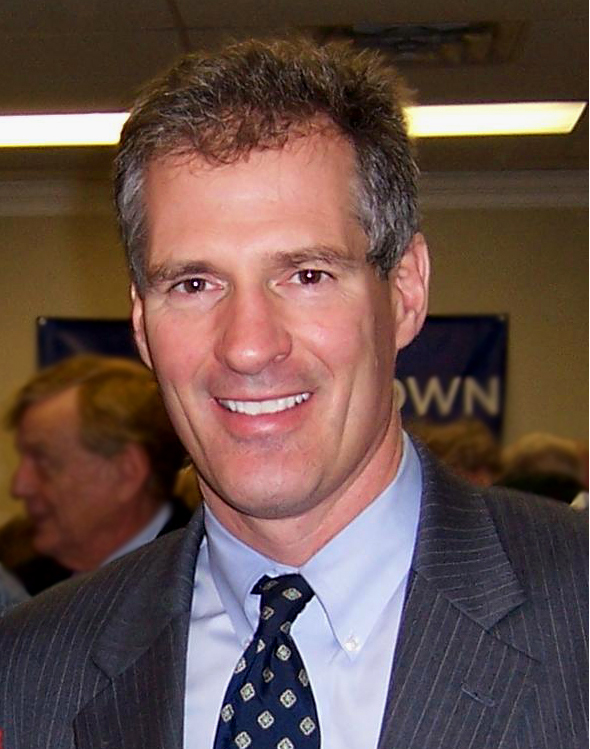
  • Scott Brown Election Dims Prospect for Climate Change Legislation

    Senator-elect Scott Brown (R-Mass.)

    Is climate change legislation dead? Not quite, but it does face a new and unexpected hurdle called Senator-elect Scott Brown (R- Mass.).

    Staffers on Capitol Hill suggested to GER that last night’s stunning reversal is a game changer. “It is certainly going to be an uphill climb to get a strong climate change bill passed,” one staffer with the Senate’s Committee on Energy and Natural Resources tells us. “Democrats are moving forward with their agenda, but Brown’s election is complicating things,” adds another Democrat Hill staffer.

    For starters, Brown’s win over Martha Coakley destroys the Democrat’s filibuster-proof majority. That could sink climate change legislation — or at least one with a cap-and-trade provision — into never ending Republican-led filibusters.

    As it stands, last summer the House passed the Waxman-Markey bill with its cap-and-trade provision. On the Senate side, three separate energy and climate change bills are being considered. Two (the Kerry-Lieberman-Graham proposal and the Cantwell-Collins CLEAR bill) have some form of cap-and-trade system. One, authored by Senator Jeff Bingaman (D-N.M.), is an energy bill that seeks to spur investments in cleantech. That bill does not have a cap-and-trade provision.

    Senator John Kerry (D-Mass.) remains optimistic (officially) on getting the Senate to vote and pass some form of climate change legislation this year. He says the issue transcends politics and should get Republicans to cross the aisle. One already has, Senator Lindsey Graham (R-S.C.).

    In a statement emailed to GER by his staff, Senator Kerry says:

    There’s overwhelming public support and this can be a bi-partisan issue. It doesn’t have to be polarized. Just listen to a conservative like Senator Graham or business leaders from across the ideological spectrum.  This is the single best opportunity to create jobs, reduce pollution, and stop sending billions overseas for foreign oil from countries that would do us harm. Sell those arguments and you’ve got a winning issue.

    Will Senator Graham be the only Republican willing to make climate change (and cap-and-trade) a “winning issue?” Things don’t look good considering that the bi-partisanship invoked by Kerry has been none-existent since President Barack Obama’s swearing-in, just a year ago today.  The reality is that despite Graham’s support, Republicans are hesitant to back a climate change bill or anything that seeks to cut or price CO2.

    Just yesterday, Senator Lisa Murkowski (R-Alaska) said that she would introduce a Congressional Disapproval Resolution that would block enforcement of the Clean Air Act for greenhouse gases. She introduced a similar amendment in September that failed.

    As we wrote yesterday, this would in effect prevent the Environmental Protection Agency (EPA) from regulating and cutting down emissions of CO2 and other greenhouse gases, a step EPA Administrator Lisa Jackson recently said the agency was willing and able to take.

    Ironically, the threat of a tighter and stricter regulatory regime led by EPA, a prospect that’s been described as a “bureaucratic nightmare,” could actually convince some Republicans to come around in support of the more flexible and compromise-friendly legislative route.

    Will cap-and-trade make it into climate change legislation supported by Senate Republicans? Maybe, but then expect carbon-dependent industries to get lots of free emissions permits. More importantly, can we even expect a Senate vote this year?

    “The ball is in Majority Leader Harry Reid’s (D-Nev.) court,” says the Energy and Natural Resources staffer, who points out that Reid controls the agenda. It remains to be seen whether he will feel he has the votes to present the bill for a full Senate vote.

    Photo Credit: Wikimedia

  • Haiti’s curse is France

    In 1825, in return for recognising Haitian independence, France demanded indemnity on a staggering scale: 150 million gold francs, five times the country’s annual export revenue. The Royal Ordinance was backed up by 12 French warships with 150 cannon.

    The terms were non-negotiable. The fledgeling nation acceded, since it had little choice. Haiti must pay for its freedom, and pay it did, through the nose, for the next 122 years.

    Historical accountancy is an inexact business, but the scale of French usury was astonishing. Even when the total indemnity was reduced to 90 million francs, Haiti remained crippled by debt. The country took out loans from US, German and French banks at extortionate rates. To put the cost into perspective, in 1803 France agreed to sell the Louisiana Territory, an area 74 times the size of Haiti, to the US, for 60 million francs.

    Weighed down by this financial burden, Haiti was born almost bankrupt. In 1900 some 80 per cent of the national budget was still being swallowed up by debt repayments. Money that might have been spent on building a stable economy went to foreign bankers. To keep workers on the land and extract maximum crop yields to pay the indemnity, Haiti brought in the Rural Code, instituting a division between town and country, between a light-skinned elite and the dark-skinned majority, that still persists.

    The debt was not finally paid off until 1947. By then, Haiti’s economy was hopelessly distorted, its land deforested, mired in poverty, politically and economically unstable, prey equally to the caprice of nature and the depredations of autocrats. Seven year ago, the Haitian Government demanded restitution from Paris to the tune of nearly $22 billion (including interest) for the gunboat diplomacy that had helped to make it the poorest country in the western hemisphere.

    In the wake of last week’s earthquake, the effect of which has been so brutally magnified by Haiti’s economic fragility, there have been renewed calls for France to honour its moral debt. There is no chance that it will do so. The view from the Élysée is that the case was closed in 1885. In 2004 Jacques Chirac set up a Commission of Reflection under the left-wing philosopher Régis Debray to examine France’s historical relations with Haiti: it concluded blandly that the demand for restitution was “non-pertinent in both legal and historical terms”.

    As Haiti faces social breakdown, government paralysis and death on a shattering scale, the French finance minister has called for a speeding up of the cancellation of Haiti’s debt. This is grim irony: if France had not saddled the country with debt almost from its inception, Haiti would have been far better equipped to cope with nature’s spite.

    Bernard Kouchner, the French Foreign Minister, is calling for a “reconstruction and development” conference. “It is a chance to get Haiti once and for all out of the curse it seems to have been stuck with for such a long time,” President Sarkozy said.

    This seems uncomfortably close to Mr Robertson’s insulting suggestion that Haitian slaves made a “pact with the Devil” to free themselves from Napoleon’s grip. The original curse was economic, not religious, and laid on Haiti by imperial France.

    Haiti does not need more words, conferences or commissions of reflection. It needs money, urgently. So far, official donations from France are less than half of those from Britain.

    The legacy of colonialism worldwide is a bitter one, but in few countries is there a more direct link between the sins of the past and the horrors of the present. Merely a French acknowledgement that the unfolding catastrophe is partly the consequence of history, and not merely blind fate, would go some way to salving Haiti’s wounds.

    France does not pay for its history. But imagine what the reaction might be if, the next time you receive an outrageous bill in a French restaurant, you declare that payment is non-pertinent, set up a commission of reflection and walk out.

  • Biofuel Production Could Boost Economy, Clean the Bay – Southern Maryland Online

    Biofuel Production Could Boost Economy, Clean the BaySouthern Maryland OnlineThe commission's Biofuel Advisory Panel believes biomass production, if managed correctly, could significantly reduce nutrient and sediment loads into the …Report: Biofu…


  • WALL STREET JOURNAL: Buffett Says Cadbury Deal Leaves Bad Taste

    By ILAN BRAT

    JANUARY 20, 2010, 5:39 P.M. ET

    CNBC VIDEO: Becky Quick One-On-One with Warren Buffett -21/01/10

    Warren Buffett, whose Berkshire Hathaway Inc. is Kraft Foods Inc.’s biggest shareholder, on Wednesday said the maker of Oreo cookies paid too much to clinch a deal for Cadbury PLC.

    Mr. Buffett, on the CNBC cable channel, expressed confidence in Kraft Chief Executive Irene Rosenfeld but said, “I’ve got a lot of doubts about the deal….If I had a chance to vote on this, I’d vote no.”

    Mr. Buffett’s comments came a day after Cadbury’s board recommended that the British candy maker’s shareholders sell the company to Kraft Foods after it increased the value of its original offer to $19.1 billion, or about 850 pence a share, from about 745 pence. About 60% of the offer is cash, the rest in Kraft stock.

    “We respect Buffett’s opinion,” a spokesman for Kraft said in a statement. “We think this is a good deal for us. It transforms our portfolio for better long term growth.”

    Kraft faced a Tuesday deadline to raise its offer for Cadbury. Hershey Co. had been planning to top Kraft’s original offer, and the Pennsylvania chocolate maker’s board last week authorized a bid of as much as 825 pence, with 40% in cash, according to several people familiar with the matter.

    In the first days of January, Kraft said it would sell its fast-growing pizza business to Nestlé SA for about $3.7 billion and use some of the proceeds for a sweetened bid.

    Mr. Buffettsaid Kraft sold the business at too low a price and also said that while Kraft shares are undervalued, they aren’t as valuable without the pizza business.

    He indicated that he believes Kraft executives became too wrapped up in winning Cadbury to carefully consider the prices at which they would be buying Cadbury and selling the pizza business.

    “There’s a deal momentum that gets created in any transaction,” he said. Kraft executives “want the deal. If you really want the deal, you’ll have all the people who work for you telling you, ‘Do it.’ “

    Warren Buffett on the brink of doing what he said he’d never do — a stock split. Berkshire Hathaway Inc. is expected to approve a 50-to-1 share split of its Class B shares on Wednesday, a move tied to its planned purchase of the railroad giant Burlington Northern Santa Fe Corp.

    When asked whether he plans to sell his nearly 10% stake in Kraft, Mr. Buffett paused a moment, then said, “That gets expensive.” He added: “If I don’t like what’s going on in government, it doesn’t mean I have to leave the country.”

    Share Investor Links

    Share Investor Blog – Stockmarket & Business commentary
    Share Investor New Zealand Business News– Get more business news
    Discuss this topic @ Share Investor ForumRegister free
    Share Investor’s Daily Forex Updates

    Recommended Amazon Reading

    The Snowball: Warren Buffett and the Business of Life The Snowball: Warren Buffett and the Business of Life by Alice Schroeder
    Buy new: $13.60 / Used from: $11.85
    Usually ships in 24 hours
    The Intelligent Investor: The Definitive Book on Value Investing. A Book of Practical Counsel (Revised Edition) The Intelligent Investor: The Definitive Book on Value Investing. A Book of Practical Counsel (Revised Edition) by Benjamin Graham
    Buy new: $14.95 / Used from: $10.44
    Usually ships in 24 hours


    Bookmark and Share


  • Teeth gnashing and hand wringing over health care reform

    (Update — bold emphasis added because it seems it takes a sledgehammer to make a fiscal point right now.)

    I’m sure there’s a lot of both going on behind the Democratic Party scenes. There’s a lot of both going on publicly along with plenty of finger pointing, blaming and dissembling among the left blogosphere. The simple fact is health care reform in its current Congressional form has not, and almost certainly will not, pass because of Democratic ham-fisted policy making. But the GOP is behaving shamefully and shamelessly as an opposition party with no alternative ideas and zero compromise on a very necessary evil.

    Yes, health care reform is a very necessary evil. Honest libertarians can be excused from the argument, but fiscal conservatives are lying to themselves or everyone else when they deny health care reform must occur at some point in the near future. Health care as a percentage of income is becoming unmanageable and health insurance costs are killing businesses both large and small.

    Without reform health care in the United States will continue to bankrupt people at higher and higher levels of income, and cause untold suffering and early death for the uninsured. And at a point in time looming very soon it will simply bankrupt the entire nation. I’m no fan of too much government influence anywhere, but after looking over the arguments (and sorting through the hyperventilated crap from both the left and the right) I am convinced reform at the federal level is now a necessary evil. Any fiscal conservative who looks at the numbers honestly will come to the same conclusion.

    Some funny (interesting, not hah hah) facts about the situation on the ground now that Brown has taken over Ted Kennedy’s Senate seat: the oft pointed out irony that Kennedy’s old seat will end his signature legislation; the fact the Massachusetts electorate already has a state run plan along the lines of federal health care reform so scuttling the current reform efforts causes them no significant pain; that the new GOP senator voted for the Massachusetts plan, but has declared opposition to essentially the same plan on the federal level; the heaviest opposition to health care reform is found amongst voters who either are already in, or soon will be, the massive federal subsidy of Medicare or Medicaid and basically fear their benefits being harmed in some way. Talk about wanting to selfishly eat your children. No health care reform equals a potentially very bleak future for everyone middle aged on down.

  • Grassley Asks Hospitals About Problems With Health IT Systems

    GrassleyChuck Grassley, a Republican senator and a prolific author of letters, has written to more than 30 hospitals to ask about their experiences — including “complications,” “errors” and “problems” — with health IT systems.

    The letters follow a barrage Grassley sent out last fall to some of the companies that sell electronic systems to hospitals and doctors, asking some similar questions.

    Health IT is a big deal at the moment, of course, because of the tens of billions of dollars included in last year’s stimulus bill to encourage doctors and hospitals to buy and use electronic systems.

    Many of the questions in the hospital letters echo those in the letters to companies. In both sets of letters, Grassley asks whether “‘gag orders’” in contracts with health IT vendors prevent hospitals from sharing information about problems with their systems with other facilities.

    And he asks about whether contracts deal with liability. In the letters to the hospitals, he says that one company told him “it is not liable when harm or loss results from the client’s use of the product in diagnosing and/or treating patients.”

    Both liability issues and non-disclosure clauses were discussed in this JAMA essay last year.

    Last fall, a spokeswoman for Cerner (one of the companies that got a Grassley letter) had this to say about the inquiry: “Our industry focuses every day on saving lives and taxpayer money … We are confident that all of the companies that received a letter will work with Senator Grassley to validate the safety and efficiency … [of] their products.”

    We couldn’t find this week’s hospital letters online anywhere, so we asked Grassley’s office to send us the text. Here it is. (Warning: It’s long.)

    Update: For a list of hospitals that received the letter, scroll down to the bottom of the post.

    January 19, 2010

    Dear __________:

    As Ranking Member of the Senate Committee on Finance, which has jurisdiction over the Medicare and Medicaid programs, I have a special responsibility to protect the health of the programs’ more than 100 million beneficiaries as well as the congressionally authorized tax dollars used to fund these programs. This includes ensuring the effective and efficient use of taxpayer money by the health care industry in implementing Health Information Technology (HIT), such as Computerized Physician Order Entry systems and Electronic Health Records.

    In recent legislation, approximately $19 billion in taxpayer funds was appropriated to encourage development and implementation of HIT systems, which further emphasizes the importance of responsible use and thorough oversight. Over the past several months, however, I have been made increasingly aware of difficulties and challenges associated with HIT implementation. The reported problems appear to be associated with administrative complications in implementation, formatting and usability issues, and actual computer errors stemming from the programs themselves, as well as, interoperability between programs. For example, I have heard from health care providers regarding faulty software that produced incorrect medication dosages because it miscalculated body weights by interchanging kilograms and pounds.

    In addition, I have heard from health care providers around the country that when they report such problems to their facilities and/or the product vendors, their concerns are sometimes ignored or dismissed. Some sources recount difficulties in approaching the HIT vendor with problems and the lack of venue to discuss these issues either with the vendor or peer organizations. Often this is attributed to alleged “gag orders” or non-disclosure clauses in the HIT contract that prohibit health care providers and their facilities from sharing information outside of their facilities regarding product defects and other HIT product-related concerns.

    Some HIT products, I understand, are medical devices regulated by the Food and Drug Administration (FDA). Therefore, the manufacturers of these devices are required to meet specific reporting requirements, such as the reporting of adverse events to FDA’s Manufacturer and User Facility Experience database. However, for HIT products that may not fall under FDA regulation, there appears to be a lack of a national system for reporting product errors or failures and adverse events associated with the use of such products. Thus, problems with these products may go without remedy thereby inhibiting the ability of the health care professional to provide quality care and potentially impacting patient safety. Furthermore, contractual restrictions on the sharing of experiences and information related to specific vendor products limit a health care facility’s ability to make informed decisions about HIT adoption and implementation.

    American taxpayers and health care facilities across the country will be investing substantially in the HIT industry, and it is important that their monies are appropriately spent on effective and interoperable HIT systems. In October 2009, I wrote to ten major HIT companies regarding similar issues and concerns. The purpose of today’s letter is to gather information from hospitals regarding their perspective and experiences with HIT. Accordingly, I would appreciate your response to the following questions and requests for information regarding the HIT products being implemented at your facility and any issues or concerns that have been raised by your health care providers. Unless otherwise noted, the requests cover the period of January 1, 2007 through December 31, 2009. In responding to this letter, please repeat the enumerated question and follow with the appropriate response and documentation.

    1. Please describe in detail your facility’s process for identifying HIT products for purchase and choosing an HIT vendor(s).

    a. What is the personnel structure of those involved in the purchase?

    b. To what extent do physicians and other health care providers within your facility provide input regarding the specific HIT items to be implemented within your facility?

    c. Who or what department within your facility is responsible for making HIT purchase decisions?

    2. Three of the companies that I wrote to in October 2009 informed me that they do not manufacture HIT software or hardware, but instead assist their health care clients, such as hospitals, with the implementation and management of HIT systems. To what extent do you contract with such entities to assist with the purchase, implementation and/or management of HIT products in your facility?

    3. Please describe the training process implemented in your facility to familiarize employees with new technology systems.

    a. How does your facility budget for HIT training?

    b. What are the vendors’ roles in helping your facility train in the use of their products?

    4. Does your facility have any policies or processes governing the reporting of problems or concerns by your health care employees related to the HIT products or systems implemented in your facility? If so, please provide a description of the policies or processes. If not, please explain why not.

    5. When patient care and/or safety problems related to HIT systems arise, how are these problems reported within the facility and what is the process or mechanism for addressing them?

    a. Are these problems also reported to the HIT vendor, and if so, what is the process for reporting them?

    b. If patient care and/or safety problems related to HIT systems are not routinely reported to the HIT vendors, please explain how your facility decides which problems or issues are reported to a vendor and/or addressed by a vendor and which problems are addressed internally by the facility.

    6. Please describe in detail any system your facility has in place to document, track, catalogue, and maintain complaints, concerns or issues related to HIT products that may directly or indirectly involve or impact the delivery of care or patient safety.

    7. Please provide a list of HIT problems or complaints that have been identified by or reported to your facility since January 2008 that directly or indirectly impacted patient safety or the delivery of care, including any complications or adverse events that have occurred as a result of HIT product design and/or usability. Please describe whether and how each of those problems or complaints was resolved and whether these issues have resulted in a change in policy to prevent the problem in the future.

    8. Does your facility have policies regarding the discussion of problems in your HIT systems with other health care facilities or with government officials or any individuals or entities outside your facility? If so, please describe those policies. To what extent are these policies driven by contractual agreements with the HIT vendors, and to what extent do they stem from internal processes? Please provide examples of contracts with HIT vendors that include non-disclosure clauses.

    9. Some of the HIT vendors stated specifically in their responses to me that they do not include language that would hold them harmless for failures of their products or for the company’s own negligence or recklessness. However, they may include provisions that spell out the vendor’s and the health care client’s respective legal responsibilities and obligations in the use of the product. For example, one vendor stated that it is accountable for the performance of its product as long as the client uses the product appropriately. Another vendor stated that it is not liable when harm or loss results from the client’s use of the product in diagnosing and/or treating patients.

    a. Do any of the HIT vendors include language in their contracts with your facility that could be considered “hold harmless” provisions, i.e., the transferring of liability associated with the services or products provided to your facility, or otherwise limit their liability? If so, please provide a copy of sample contracts containing such provisions.

    10. What is the relationship between your facility and any HIT vendors?

    a. HIT vendors that manufacture software, hardware and/or other products purchased by health care facilities have stated in their responses to me that they do not offer any financial incentives for purchasing their products, such as shares in the company or financial interests in a particular product. At least one vendor stated, however, that it does offer financial incentives in the form of discounts based on purchase size. Another vendor said that health care clients may receive royalty payments when the clients collaborate with the vendor to develop a product. What financial interest, if any, does your facility have in HIT vendors and/or their products?

    b. Do the vendors offer your facility and/or any of your health care providers any financial incentives for purchasing the vendors’ products? If so, please describe the types and value of the incentives.

    11. Did your staff, health care providers and/or facility receive any payments, product discounts, or other items of value from any vendor for discussing and/or promoting that vendor’s HIT products? If so, please list the different types of payments and discounts and their value.

    I look forward to your cooperation and assistance on this important matter. Please provide your response to the questions and requests set forth in this letter by no later than February 16, 2010.

    Sincerely,

    Charles E. Grassley

    United States Senator

    Ranking Member

    Update: Here’s the list of hospitals that received the letter: Banner Health, Brigham & Women’s Hospital Case Western Reserve University Hospital Health System, Catholic Healthcare West, Cedars Sinai Children’s National Medical Center, Geisinger Medical Center, Hackensack Hospital, HCA TriStar, Intermountain Healthcare, Indiana University Hospital, Jefferson Regional Medical Center, Kaiser Permanente System, Marshfield Clinic, Massachusetts General Hospital, Mayo Clinics, Memorial Hermann Healthcare System, Methodist Hospital of Indiana, North Shore-Long Island Jewish Health System, Palo Alto Medical Foundation, Rainbow Babies and Children’s Hospital, Saint Mary Mercy Hospital, Seattle Children’s Hospital, Stony Brook University Medical Center, Trinity Hospital System Tufts Medical Center, University of California San Francisco Medical Center, University of Pennsylvania Health System, University of Pittsburgh Medical Center, University of Virginia Medical Center, and Vanderbilt University Hospital.


  • More help to Haiti | Bad Astronomy

    As you may know, Haiti got hit with a magnitude 6+ aftershock today, so the bad news there continues. If you want to give money to help, here are some good charities:

    Non-believers Giving Aid

    Doctors Without Borders

    International Red Cross

    International Medical Corps

    I’m sure there are many more, but these are good places to give your money. We’ve seen a lot of truly awful groups using tragedies to do useless things, so please make sure the money you send goes directly to help the Haitians by assisting them with medical supplies and doctors.


  • Cindy McCain Same-Sex Marriage Ad NOH8 Campaign

    Cindy McCain is taking part in the NOH8 campaign for marriage equality.

    The beer heiress and wife of former presidential candidate Sen. John McCain joins the dozens of celebrities lending their star power to the campaign protesting California’s Proposition 8 ban against same-sex marriage. Ashlee Simpson-Wentz, The Kardashians, Kim Zolciak, Lala Vazquez, and the McCains’ soft-Republican daughter Meghan are among the stars who have posed for NOH8.

    “Although we had worked with [Cindy and John’s daughter] Meghan McCain before and were aware of her own position, we’d never really thought the cause might be something her mother would get behind,” a statement on the NOH8 website reads. “We have a huge amount of respect for both of these women for being brave enough to make it known they support equal marriage rights for all Americans.”


  • ¿Es cierto que se está construyendo una central térmica en Puente Vallecas?

    He leído en Internet que en pleno Puente de Vallecas se está construyendo una central térmica. Cuando lo leí me quedé alucinando. 😮 Creo que todo se debe a la necesidad de Gallardón de hacer caja como sea, pero sinceramente me parece una burrada llevar una central termica al centro de una ciudad. ¿Es cierta la noticia?¿Siguen adelante las obras a pesar de las reclamaciones de la ciudadanía? ¿Los políticos en España, vienen a servir o a servirse? :ohno:
    Y no quiero hacer ni que se haga política, pero la noticia es de las que hacen daño a los ojos al leerla.
  • THE STREET.COM: Berkshire Hathaway Volume Spikes

    By Eric Rosenbaum 01/20/10 – 05:01 PM EST

    OMAHA, Neb. (TheStreet) — Berkshire Hathaway(BRK.B Quote) was up more than 4.3% on Wednesday afternoon, on close to 7 times its average level of daily trading — with 233,000 shares traded versus an average of 34,000.

    On Tuesday, Berkshire traded at a level of 100,000 shares, which was itself the highest trading level in the Warren Buffett stock since November.

    Why all the fuss? It wasn’t that Warren Buffett was on CNBC saying one of his investments, Kraft (KFT Quote), had made a bad deal for Cadbury(CBY Quote). Or that Buffett berated President Obama for the bank tax.

    No, the real reason: Berkshire Hathaway shares are going to $66 on Thursday.

    Shareholders of Warren Buffett’s investment company approved on Wednesday a plan to split Berkshire’s B shares 50-to-1, bringing the share value down from near $3,300 to the S&P 500-worthy level of $66.

    While S&P has not commented on the potential addition of Berkshire to the famed index, analysts who cover Berkshire stock believe it is likely. What’s more, economists that track S&P 500 additions have noted that a stock like Berkshire Hathaway can receive a big bump from inclusion in the index.

    The 4.3% spike in Berkshire Hathaway’s share price on Wednesday was equal to $144, raising the share’s value to $3,476.

    Other than the one day in November — Nov. 4 — when Berkshire traded above 100,000 shares, Warren Buffet’s stock hasn’t seen a level of activity above 100,000 shares in one day since last March. Two days in a row with elevated trading, and two consecutive days during which trading has more than doubled, is notable for Berkshire Hathaway stock.

    Maybe investors are preparing for the S&P 500 bump.

    — Reported by Eric Rosenbaum in New York.

    Share Investor Links

    Share Investor Blog – Stockmarket & Business commentary
    Share Investor New Zealand Business News– Get more business news
    Discuss this topic @ Share Investor ForumRegister free
    Share Investor’s Daily Forex Updates

    Recommended Amazon Reading

    The Snowball: Warren Buffett and the Business of Life The Snowball: Warren Buffett and the Business of Life by Alice Schroeder
    Buy new: $13.60 / Used from: $11.85
    Usually ships in 24 hours
    The Intelligent Investor: The Definitive Book on Value Investing. A Book of Practical Counsel (Revised Edition) The Intelligent Investor: The Definitive Book on Value Investing. A Book of Practical Counsel (Revised Edition) by Benjamin Graham
    Buy new: $14.95 / Used from: $10.44
    Usually ships in 24 hours


    Bookmark and Share


  • McMath-Pierce Solar Telescope

    Pima County, Arizona | Subterranean Sites

    The McMath-Pierce Solar Telescope, atop Kitt Peak in Arizona, is the world’s largest instrument dedicated to studying the Sun. Designed by Bruce Graham of the prolific Skidmore, Owings, and Merrill architectural firm, the telescope commands an awe-inspiring view with its distinctive 110-foot-tall tower and 200-foot-long diagonal shaft.

    Completed in 1962, the building’s main instrument is a heliostat, which tracks the Sun through the sky and focuses its light down through the diagonal shaft. This shaft continues about 50 vertical meters underground to a 1.6-meter primary mirror, forming the largest unobstructed-aperture of any optical telescope system. From here, the light travels back up a portion of the shaft to a flat mirror, which then reflects an 85-centimeter wide image of the Sun downward to a subterranean laboratory.

    In addition to being the largest solar telescope in the world, the McMath-Pierce is also unique because it is sensitive enough to observe bright stars at night. The telescope also boasts a low-cost (which translates from astronomical terms to less than $25,000) adaptive optics system. This setup utilizes a rapidly deformable mirror to correct for distortions introduced by the turbulent atmosphere. Using sensors to measure the degree of image distortion, the adaptive optics system adjusts the mirror’s shape accordingly and thus turns a blurry image into a clear one.

    One major area of study at the observatory is the structure of sunspots, which are relatively cold, dark spots on the Sun’s surface created by intense magnetic activity. Some of the more important discoveries made at McMath-Pierce, however, include the detection of water vapor in the Sun, the measurement of kilogauss magnetic fields (thousands of times stronger than the Earth’s) outside of sunspots, and the detection of a natural maser (like a laser, but with microwaves instead of visible light) in the Martian atmosphere.