Blog

  • Team finds gene mutation that increases risk of schizophrenia, learning impairment

    A collaborative team of researchers including scientists from UCLA has uncovered evidence that a specific genetic alteration appears to contribute to disorders of brain development, including schizophrenia. They also found that schizophrenia shares a common biological pathway with Fragile X mental retardation syndrome, a disorder associated with both intellectual impairment and autism.
     
    A disruption of the gene known as TOP3B was associated with an increased risk of schizophrenia as well as impairment in intellectual function, the researchers said, and TOP3B’s interaction with a protein called FMRP was found to be responsible for Fragile X syndrome.
     
    The findings, published Aug. 4 in the online edition of the journal Nature Neuroscience, suggest a previously unsuspected link between the two disorders.
     
    Although the past two decades have revealed a wealth of information about the genetics of disease, little is known about the biology behind schizophrenia, said Dr. Nelson Freimer, a UCLA professor of psychiatry and a senior author of the research.
     
    “This collaborative effort has uncovered a promising biological pathway that appears to underlie schizophrenia and may contribute to the cognitive impairment that is an important component of the disorder,” he said.
     
    For the study, the researchers drew from a database that facilitates research on the genetically unique population of northeast Finland, where people have lived in relative isolation for several centuries. This population has three times the frequency of schizophrenia of the rest of Finland and a higher rate of intellectual impairment. The team used the database to sift through genomic data for genetic deletions or mutations that are relatively common in this region but are rare elsewhere in the world.
     
    They discovered a rare genetic deletion affecting TOP3B that increases a person’s susceptibility to schizophrenia; they also found that this deletion was associated with an increased frequency of other disorders of brain development, including intellectual impairment.
     
    Having identified a link between TOP3B and schizophrenia, the researchers sought to understand why disrupting this gene might increase susceptibility to disease. For this, they investigated the function of the protein that TOP3B encodes. They found that the protein encoded by TOP3B interacts with another protein known as FMRP. The deactivation or disruption of FMRP is responsible for Fragile X syndrome, which is associated with autism and learning difficulties, primarily in men.
     
    Within the northern Finnish population, the team identified four people who did not have a functioning copy of the TOP3B gene. All four were diagnosed as having cognitive impairments and/or schizophrenia, solidifying the evidence that this gene is important in these brain disorders and that they are biologically linked.
     
    “Although schizophrenia and Fragile X may seem drastically different, cognitive impairment is frequently associated with both conditions,” said Freimer, who directs the UCLA Center for Neurobehavioral Genetics. “So it is not unexpected that they could share some of the same biological processes.
     
    “What is interesting about this study is that through investigations in an isolated corner of Finland, we are contributing to concerted international efforts that are beginning to unravel the genetic root of schizophrenia, a debilitating disorder that affects so many people throughout the world. Potentially, this may someday lead to new drug targets against these disorders.”
     
    There were multiple authors and institutions involved in the study, and multiple funding organizations. Please see the published paper for details.
     
    The UCLA Department of Psychiatry and Biobehavioral Sciences is the home within the David Geffen School of Medicine at UCLA for faculty who are experts in the origins and treatment of disorders of complex human behavior. The department is part of the Semel Institute for Neuroscience and Human Behavior at UCLA, a world-leading interdisciplinary research and education institute devoted to the understanding of complex human behavior and the causes and consequences of neuropsychiatric disorders.
     
    For more news, visit the UCLA Newsroom and follow us on Twitter.

  • Meet the translator: Katja Tongucer, who translates TED Talks into German

    KatjaTED Talks are available in 102 languages, from Albanian to Vietnamese, thanks to the tireless work of our volunteer translators. So far, more than 10,000 volunteers have created upwards of 44,000 talk translations — and today, the TED Blog brings you a Q&A with one of them. Here, meet German translator Katja Tongucer.

    1. Where do you live? And what do you do by day?

    I am German, but have been living with my husband and my two daughters in Moscow, Russia, for almost four years now. We moved here for my husband’s job. Before I came to Moscow, I was working as a translator and translation coordinator for a small company in Germany. But after moving, I stopped working and focused on helping my children get familiar with the new environment. It was, and still is, a challenge.

    2. What drew you to TED?

    I first heard about TED on a German TV show in January of 2010 — they were presenting a bunch of interesting websites. After that, I visited TED.com and was simply fascinated. When I learned about the Open Translation Project, I immediately applied to be part of it. As a professional translator, it gave me the opportunity to further develop my language skills, to get familiar with subtitling and to do something useful at the same time. It is a win-win situation for me. I support the spreading of ideas with my skills and, through the Open Translation Project, I became part of a wonderful group of people who have become such a part of my life.

    3. What was the first talk you translated and how did you pick it?

    Erin McKean: The joy of lexicographyErin McKean: The joy of lexicographyI think the first talk that I translated was Erin McKean’s The joy of lexicography. As far as I remember, I had watched it because I am especially interested in languages and linguistics. When I saw that it was available for translation, I picked it.

    4. What have been your favorite talks to translate? Why?

    There are so many talks that I really enjoyed translating. In fact, through the translation of TED Talks, I rediscovered the joy of my profession. Translating is a very creative process, but it also requires accuracy. You have to research expressions and you learn a lot. It is always a good feeling to work on a translation that you feel represents the best of the original version.

    If I have to choose one translation that I enjoyed most, Chimamanda Ngozi Adichie: The danger of a single storyChimamanda Ngozi Adichie: The danger of a single story I’d pick Chimamanda Adichie’s The danger of a single story. I loved the way she used language to tell her story, and it is still one of my favorite TED Talks. I am very happy that I had the honor to translate it.

    5. Which talk was the most difficult for you to translate and why?

    Every talk is a challenge. Every speaker has a different style — sometimes there many specialized terms, sometimes the subtitles are very long and appear only for a short time, so you have to find a way to keep the translation short and readable. That’s difficult because a German translation is usually longer than the English original. But the biggest challenge is translating poems. I had the pleasure of translating C.K. Williams’ Poetry of youth and age. I hope my translation reflects the spirit of the original.

    6. What’s a phrase in your language that you wish would catch on globally?

    That’s vey difficult to answer! I can’t think of one. But I do want to say that I wish German speakers would take more care of their own language. We tend to use more and more English expressions and don’t care about the correct use of phrases. Orthography is becoming less important, and we’re forgetting about the beauty of our own language.

  • The upside of losing an argument and/or being wrong

    How the movie "Pacific Rim" reminded the writer of the deep-seated need to win arguments.

    How the movie “Pacific Rim” reminded the writer of the deep-seated need to win arguments.

    My last fight came after, of all things, the movie Pacific Rim.  As my moviegoing companion and I walked out of the theater, he said of Guillermo del Toro’s latest, “That was awesome.” I, on the other hand, thought it was just okay, managing to slightly elevate its robots-versus-aliens premise.

    At first, we slightly disagreed. But within 15 minutes, my companion was declaring the movie a sparkling beacon in the tide of summer-movie sludge, a brilliant takedown of the destruction movie genre. I, on the other hand, was calling it everything that’s wrong with cinema today — too much action, too much testosterone and far too high a body count. Wait, but you had fun watching the movie, I thought, even as I railed against it.

    As our discussion crossed the 60-minute mark, and my cheeks were fully flushed, I realized that I was no longer simply stating my opinion. I was positioning myself to win an argument, dismissing my companion’s points no matter whether I agreed or not. I was in this fight to be crowned the person most in the right. And it didn’t feel good.

    This silly argument left me thinking: What is it about human beings that leaves us needing to be right, needing to get the last word in no matter what? Luckily, two fascinating TED Talks — one posted today and one classic from 2011– speak to the strong desire … and give insights on how we can break through it.

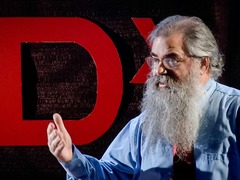
    Philosopher Dan Cohen has spent decades perfecting the art of arguing. And yet in today’s talk, given at TEDxColbyCollege, he reveals that he now loses intellectual debates more than ever.

    Daniel H. Cohen: For argument’s sakeDaniel H. Cohen: For argument’s sakeWhy? Because he has stopped subscribing to the dominant metaphor that surrounds debates — that they are a war with vicious battles fought and with a clear winner and a clear loser at the end.

    “When we talk about arguments, we talk in very militaristic language. We want strong arguments. Arguments that have a lot of punch. Arguments that are right on target … The killer argument,” says Cohen, dissecting how we argue. “[But] if argument is war, then there’s an implicit equation of learning with losing.”

    In this talk, Cohen unpacks why the argument-as-war metaphor is so limiting — because it creates an adversarial relationship. It puts the focus on tactics (knock down your opponent’s argument) rather than real thought (do they have a point?), and shuts off the possibility of negotiation, compromise or collaboration. Because after all, who is the real winner in an argument? According to Cohen, it’s whoever has their worldview expanded. There’s no reason that needs to be limited to one person. In the ideal situation, everyone in a debate could come out with a greater understanding.

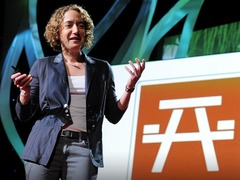
    Kathryn Schulz: On being wrongKathryn Schulz: On being wrongCohen’s talk reminds me of Kathryn Shulz’s classic, On Being Wrong. At TED2011, Schulz pointed out a related paradox — that while we all know that human beings are fallible, we are loath to admit when we ourselves are wrong. “So effectively, we all kind of wind up traveling through life trapped in this little bubble of feeling very right about everything,” says Schulz.

    In a brilliant moment in the talk, she asks: what does it feel like to be wrong? While first instinct might tell us that it feels terrible, she points that’s actually only what happens when we realize that we are wrong. Until that moment, being wrong feels exactly like being right. So often, clues pop up that could reveal to us our error — and yet, we often put up blinders to them. This is fine when it comes to a misunderstood song lyric. But it can be disastrous when it comes to bigger convictions that affect the health and well-being of others — or our planet.

    But beyond that, explains Schulz, the need to be right simply keeps us from growing.

    “What’s most baffling and most tragic about this is that it misses the whole point of being human,” she says. “If you really want to rediscover wonder, you need to step outside of that tiny, terrified space of rightness and look around at each other and the vastness and complexity of the universe and be able to say, ‘Wow, I don’t know. Maybe I’m wrong.’”

    And with that, I am willing to admit: I could maybe, possibly be wrong about Pacific Rim.

  • The best argument I ever had: A short Q&A with Daniel H. Cohen

    Daniel H. Cohen talks about the subtleties of arguing at TEDxColbyCollege.

    TEDxColbyCollege speaker Daniel H. Cohen talks about the subtleties of arguing — and how we shouldn’t think of it as a war.

    Daniel H. Cohen argues for a good argument.

    Daniel H. Cohen: For argument’s sakeDaniel H. Cohen: For argument’s sakeIn today’s talk, given at TEDxColbyCollege, Cohen asks us to set aside our goal of winning arguments in favor of gaining a greater appreciation for the legitimate points being made by the other person.

    In an effort to gain more appreciation for that argument, we asked Cohen if he would answer a few of our questions over email. Read his answers below and, please, feel free to argue with them in the comments.

    What is the best argument you’ve ever had?

    There are quite a few that stand out — beginning with one late-night argument with a couple of other philosophy majors when I was an undergraduate on the nature of reality, focusing on Spinoza’s monism versus pluralistic and atomistic approaches. What made it so remarkable was that, over the course of the argument — which lasted several hours — all of our positions evolved to the point that I think everyone involved managed to occupy and defend each position at some point. The result: no clear winner, but we all came away with a much greater understanding and appreciation for all of these philosophies.

    I should also mention an ongoing realism/anti-realism argument that I’ve been having with a poet … for the last 30 years! I’m not sure how much progress we’ve made towards any real resolution, but it’s convinced me that progress and resolution are not the most important measures of argumentation.

    What defines an argument? Does this come close: Before an argument, two or more people have a set of incompatible beliefs and, over the course of the argument, some of those beliefs are refined to form compatible beliefs.

    As you might expect, I’m not keen on overly adversarial conceptions of argument, nor on exclusively epistemic accounts of what arguments are about. There can be other things at stake besides beliefs. We can argue about what to do, what attitudes to take, how to understand things, etc. It is true that we can always shoehorn differences into questions about beliefs, but that’s a Procrustean Bed that fits some arguments better than others. Ideally, there will be cognitive changes resulting from arguments, but there are more cognitive achievements than acquiring, jettisoning or changing beliefs.

    In your talk, you’re discussing theoretical arguments. Is there a fundamental difference between practical arguments about taking action (like who should take out the trash, or whether to bomb another country) and arguments about abstract concepts?

    There are many differences — many of which are both very large and very important. But I’m not sure I have a good, short answer, except to say that a good arguer will argue differently when the goal is simply getting her way than when the goal is to convince someone of something. As Michael Gilbert likes to point out, if an argument about the empty gas tank in the car that one friend lent to another threatens to destroy their 20-year friendship, you know that the argument isn’t really about the empty gas tank. And I would add that any friends who would allow an argument about an empty gas tank to undermine their friendship aren’t very good arguers — and probably weren’t really very good friends.

    Should arguments always have conclusions?

    Heavens, no! If that 30-year argument I’ve been having with the poet ever ended, I’d miss it terribly. Arguing can be a very positive form of connection and communication, but it requires good arguers to keep it that way.

  • Four PNNL staff selected for state academy membership

    Four scientists at the Department of Energy’s Pacific Northwest National Laboratory have been selected to join the Washington State Academy of Sciences.

    Steven Ashby, Ted Bowyer, Allison Campbell and Ruby Leung will join other scientists and engineers from across the state being recognized for outstanding scientific achievement and leadership. Academy members provide expert scientific and engineering analysis to inform public policy-making, and work to increase the role and visibility of science in Washington state.

    The academy was created in 2005 and consists of more than 180 members from diverse academic disciplines and industries, including aerospace, agriculture, computer, science, energy, engineering, ecology and transportation. PNNL now has eight current staff members in the academy, including the four new inductees. Additionally, current academy president-elect Subhash Singhal is a retired PNNL engineer who now serves as an independent consultant to the laboratory.

    The new members will be honored at the academy’s annual meeting in Seattle in September.

    Steven Ashby
    Ashby is PNNL’s deputy director for Science and Technology, overseeing integration of PNNL’s science and technology capabilities to address critical challenges in science, energy, the environment and national security. The academy recognized him for both his research accomplishments, and his scientific leadership in computational science. His research achievements include developing scalable numerical methods and software for the modeling of real-world challenges-such as groundwater contamination-on parallel computing systems. He has been an advocate for computational science through various professional society activities, including organizing a now-biannual technical conference and founding the Center for Applied Scientific Computing at Lawrence Livermore National Laboratory.

    Ted Bowyer
    Bowyer is a PNNL Laboratory Fellow and manager of the laboratory’s Nuclear Explosion Monitoring and Policy program. He is recognized internationally for his groundbreaking research and development of new methods and systems to detect the signatures of nuclear weapons material production and nuclear detonations. He has served as a scientific advisor on issues related to the Comprehensive Nuclear-Test-Ban Treaty Organization; and as an advisor to the International Atomic Energy Agency, the U.S. State Department, the National Academy of Sciences and at the Conference on Disarmament.

    Allison Campbell
    Campbell is the director of EMSL, DOE’s Environmental Molecular Sciences Laboratory, a national scientific user facility located at PNNL. EMSL provides integrated experimental and computational resources to more than 700 scientists from around the world each year for discovery and technological innovation in the environmental molecular sciences. This includes support for advancements in terrestrial ecosystem science, energy materials and processes, biosystem design and aerosol science. She is nationally recognized for her individual research efforts in the field of biomaterials, including co-inventing a process for producing biologically-compatible coatings for the surface of artificial joint implants that reduce the risk of rejection and extend the life of the implant.

    Ruby Leung
    Leung is a PNNL Laboratory Fellow and an internationally recognized leader in regional climate modeling. Her innovative research on modeling regional climate change and its impacts guides national policy makers on decisions relating to water, agriculture, energy, public health and national security. She has organized key workshops sponsored by environmental agencies, served on panels that define future priorities in climate modeling and hydroclimate research, and has developed regional climate models that are used globally.

  • Crowdsourcing Disasters and Social Engagement Multiplied

    Ed Note: This is a cross post from fema.gov. You can find the original post here.

    Crowdsourcing disasters. New social media sites. Centralized places to get info. Our digital team at FEMA has been busy launching a number of new tools to help the public and our partners to prepare for, respond to and recover from disasters. Here’s a quick rundown of the new resources:

    How does this help you be a part of the emergency management team? Watch this demo from Administrator Fugate as he walks through all the new tools and resources you can take advantage of:

    Before a disaster, you can download the FEMA App and use the interactive emergency kit checklist and learn what to do during specific hazards. And if you find yourself in a situation, where you need a refresher, you can still pull up the safety info in the app, even if you don’t have a cellular or wifi connection.

    After a disaster, if you’re not placing yourself in harm’s way, you can use the Disaster Reporter feature in the FEMA App and take a photo of the disaster area and upload it to us (just make sure the GPS function is turned on). This includes all types of disasters, not just Federal disasters.

    We’ll review the photo submissions to ensure: (1) it is disaster-related, (2) not spam, and (3) there are no privacy issues. And then all approved content is posted on a public map. It’s pretty simple.

    read more

  • Seeding jobs and growth in Somalia

    When I think of fragile and conflict affected states such as Afghanistan, Somalia or the Congo, in the development context, I think of humanitarian projects or perhaps peace building initiatives. These are generally short-term programmes aimed at dealing with emergencies rather than focusing on long-term economic growth. Of course these types of programmes are essential, but with 21 out of 28 of DFID’s priority countries classed as “fragile” we need to give some serious thought to how we do economic development work in fragile and conflict affected states, especially as economic development becomes an increasing focus in DFID.

    The argument for increased work in the space is there; private sector development can play a key role in fragile and conflict-affected states, reducing poverty, promoting immediate stabilisation and sustained recovery, and, where economic factors contribute to conflict, addressing the causes of conflict.

    Jewellery crafted from camel bones. Picture: FAO

    In the private sector department we’ve been thinking about how DFID runs private sector development programmes in fragile and conflict affected states and what the additional challenges are to operating in such environments. It seems like there’s quite a lot of information out there on working in fragile states and a small, but increasing body of evidence on private sector development. However, there is very little on the specifics of private sector development in fragile states. There is some really good work going on from organisations such as the Donor Committee for Enterprise Development who have a specific webpage on the topic. The Overseas Development Institute have written some interesting papers amongst other organisations. However, there is still very little established best practice in the field and evidence on what works.

    Swizzer Mohamed holds a finished pack of soap made from camel bones. Picture: FAO

    Questions such as “at what stage should you start an economic development programme?” or “how can you manage a programme when you can’t access the beneficiaries due to security reasons?” do not have simple answers, but through talking to advisors in country I am beginning to get a feel for the innovative ways DFID is operating in these difficult contexts.

    One of the examples of this is the Sustainable Employment and Economic Development (SEED) programme in Somalia.

    SEED is a 4 year programme with 2 components – one on market development and the second on developing the investment climate targeting markets including agriculture, fisheries and livelihoods.

    The market development activities involve targeted skills training and increasing the supply of contested resources (e.g. fertile land and water). The aim is to fix market failures and engage the poor; thus offering immediate and tangible benefits by reducing the pressure on contested resources and providing other stability dividends for the youth and women beneficiaries. The investment climate activities underpin stability at a macroeconomic level and lay the groundwork for investment and broad based economic growth.

    There is an excellent case study on one of the beneficiaries from the programme who underwent training and is now making a living from by-products from the meat industry: camel bones. As a long-term veggie my first thought was “that’s a bit grisly!”, but very quickly I realised this was an incredibly innovative way of generating sustainable employment through making use of by-products that would have normally gone to waste.

    A Somali man carries a large sailfish on his head as he transports it to Mogadishu’s fish market in the Xamar Weyne district of the Somali capital. Picture: African Union/UN IST.

    What the case study doesn’t reveal is the challenges of operating in a country post conflict in the North but still in conflict in the South Central region. Visits are limited due to security concerns, there is no effective government and weak infrastructure severely limits trading potential. Such programmes require careful planning, a conflict sensitive approach (to ensure that the programme isn’t inadvertently negatively contributing to the conflict), and choosing the right partners to be your eyes and ears and the ground.

    Now in phase two the SEED programme has already seen great results; SEED has generated 154,127 jobs, of which 56,904 are long term, in the regions of Somaliland, Puntland and South Central Somalia.

    5,700 beneficiaries have received demand-driven technical training; 70% are employed or self-employed; Hargeisa livestock and Boroma (Somaliland) meat and Garowe (Puntland) fish markets have been constructed and are managed under public-private partnership, all attributable to the SEED programme. The SEED programme has demonstrated that it is possible to run private sector development programmes in fragile states. Hopefully SEED, along with events and initiatives such as the Somalia Conference, will encourage other donors and private sector actors to invest in the country as well as in private sector development programmes in fragile states as a whole.

    If you’re interested in finding out more about DFID’s work on private sector development check out our Economic Development policy pages and follow us on twitter @DFID_PSD.

  • Ask President Obama Your Questions About Housing

    Watch this video on YouTube

    President Obama is traveling to Phoenix, Arizona on Tuesday to lay out his plan to continue helping responsible homeowners and those who seek to own their own homes as the next cornerstone of a strong middle class in America. The day after the speech, the President is sitting down to answer your questions about his plan during a live online event hosted by Zillow, the online real estate market place, with media partner Yahoo!. 

    read more

  • Do You Need a Résumé in the LinkedIn Era?

    Now that LinkedIn has become the standard place to present your professional history and credentials — not to mention the fastest way to check somebody else’s — the humble résumé has lost its once-hallowed position as the canonical version of your professional identity. Your LinkedIn profile should be the most-viewed and most current version of your professional life. That has many people asking: Do I even need an old-fashioned résumé anymore?

    The answer is a highly qualified “yes”.

    The Value of LinkedIn

    In the past, résumés have served several functions:

    1. Applying for a job: When you’re applying for an advertised position, you almost certainly need to submit a résumé as part of the application process.
    2. Job hunting: Even if you’re not applying for a specific job, you may still use a résumé as part of your search process, as a way of introducing yourself to people who may be interested in your skills.
    3. Professional credentialing: Résumés act as a way of establishing your professional credentials in many circumstances, like grant applications, requests for proposals, and conference or speaker submissions.
    4. Professional memory: Your résumé is your own professional memory. Keeping it up-to-date is a way of ensuring you don’t forget the professional accomplishments or qualifications you may want to highlight during your next job hunt.

    In the world of LinkedIn, blogs, and professional landing pages (a.k.a. “nameplate” sites), however, most of these functions can be better accomplished through your online presence. If you are job hunting, send people to your LinkedIn page instead of sending a PDF of your résumé. (Unlike a résumé, a solid LinkedIn profile includes not only your self-proclaimed qualifications, but testimonials from colleagues, clients, and employers.) If you need to establish your professional credentials, sending someone a link to your LinkedIn page will often be the most efficient way to convey your relevant experience. And for maintaining a professional memory, LinkedIn is unbeatable, precisely because it’s easy to update, and because you’re likely visiting the site on a regular basis.

    To serve any of these purposes, however, your LinkedIn presence must be well-crafted and up-to-date. Even if you aren’t sending people to your LinkedIn page, it is likely to be one of the first results for anyone who Googles you to find out about your professional qualifications and experience. That’s why you need to ensure it’s accurate, compelling, and current; unless you’re updating your LinkedIn profile monthly or at least quarterly, you’re not putting your best foot forward. Setting up a memorable short URL for your LinkedIn profile, and including that URL in your email signature line, is a good way to remind yourself that this is something people are going to look at regularly.

    Blogs, Websites, and Landing Pages

    For all its merit, LinkedIn has limitations: you have to fit your career story into its structure, and you have only minimal control over formatting. That’s why many professionals use their own blog, personal website, or professional landing page to craft a more strategic online presence. For many professionals, the best bet is to maintain several presences, customized to different purposes, so that you can point people to the presence that is relevant to each specific scenario. For example, you might maintain:

    A speaking profile: Professionals who do a lot of speaking or conference submissions would do well to create a specialized presence on a speaker directory like ExpertFile (formerly Speakerfile), a nameplate site like about.me, or even on Slideshare.
    A services profile: If you offer services as a independent contractor, whether that’s as a web developer, a designer, a coach or an accountant, setting up a landing page for your contract work can be an efficient place to point potential clients.
    An author profile: If you have a book, blog, or publication file, you will want to profile yourself for readers or future writing assignments with an author page on Amazon, a writing marketplace like MediaBistro, or a web presence for your book.

    Why You Still Need a Resume

    When you are actually applying for a job, however, neither LinkedIn nor a professional landing page can replace the résumé. A strong résumé is still the gateway to an interview, and with more and more employers relying on Applicant Tracking Systems (ATS) — software that screens résumés to determine which applications warrant human review — you need a résumé that you can upload to those systems. Nor can it be the same résumé for every application; since an ATS typically screens for specific qualifications and keywords, you need to customize your résumé for each job (or type of job) that you apply for, and optimize it for ATS screenings.

    Even when you are reduced to creating a résumé that is an old-fashioned printable document, LinkedIn can still make your life easier. LinkedIn offers a free résumé builder that converts your profile into a draft résumé which you can format, tweak, and even download as a PDF. Don’t rely on the résumé builder to do the work of résumé creation on its own, however. When I compared LinkedIn’s automatically-generated résumé with the latest version I authored myself, the handcrafted version got an A+ from the résumé evaluation service RezScore, while the LinkedIn version only got a B-. And that was after I gave up on the PDF, and turned it into a more scannable Word document that I then cleaned up.

    While it can’t eliminate the job of editing and formatting your résumé for specific job searches, LinkedIn and its résumé builder can and should change the way you think about and maintain that résumé. The standard wisdom — treat your résumé as a living document that you update anytime you have a new accomplishment to record — now applies to LinkedIn, not to your résumé itself.

    Keep your LinkedIn profile up-to-date, along with any professional landing pages or blogs you choose to maintain, and most of the purposes of your résumé will be well-supported. And at the moment that you’re actually applying for a job and need an old-fashioned résumé, LinkedIn’s résumé builder will give you a strong head start.

  • Germany’s Grim Nuclear Phase Out

    In 2000, Germany committed to cut its carbon dioxide emissions by 40 percent from 1990 levels by 2020. To achieve this ambitious goal, Germany planned to increase its use of renewable power sources and to take advantage of the country’s …

  • Avoiding the Schizophrenic IT Organization

    A pharmaceuticals company we’ve been studying decided to deploy more than 20,000 iPads and other mobile devices to the global sales force to improve its engagement with doctors in emerging and developed markets. Over the next two years, this change in how sales people interact with customers will redefine what the product content will be, how the sales staff will use a new CRM platform to record visits online, and how new insights will be derived from these interactions across sales, marketing, and brand management — ultimately driving decisions.

    The impact on the company’s IT organization has been significant. It has never before rolled out something at this speed. Welcome to the new world of IT.

    Increasingly, business leaders are driving transformation projects in areas like digital marketing, multi-channel sales, and product-content and customer-information management, pushing the CIO and IT organization to respond in new, faster, and different ways. The timetable for implementing these projects is often months, not years.

    For CIOs, the good news is that they’re now finding themselves at the center of business change with the opportunity to directly impact front-line business results. The bad news (if it is bad) is business managers’ expectations of the CIO and the IT organization are soaring; they have a “no excuses” view of IT responsiveness.

    This is giving rise to a schizophrenic IT organization. One side is focused on running global-infrastructure and implementing big-system-application programs over three to five years, where the emphasis is on compliance, security, reliability, and effective 24/7 operations. The other side is focused on “making IT happen” rapidly without the complex plans and multi-year rollouts that have been institutionalized in large IT organizations.

    The challenge for C-suite executives, including CIOs, is to avoid an either/or view of IT-enabled business change and to have the maturity to embrace both sides of the challenge at the same time. The logical response might seem to be to restructure and reskill the IT organization (again!) to accommodate the new demands — in particular, to acquire the skills to deploy emerging technologies like mobile, social media, analytics, and big data. This, we contend, is unlikely to achieve much. What is required is a fresh perspective and novel thinking.

    The perspective we are advocating is shaped by shifting focus away from portraying the challenge as nailing the design, competencies and skills of a separate organizational unit. The fact is, IT use is pervasive right across the organization; so any response should reflect this. Executives must consider IT less from the standpoint of a factory (the current mind-set) and more from the perspective of how people are managed.

    Just think about it: As a manager, you are intimately involved in hiring and managing your staff and appraising their performance; it is not something that you would ever consider delegating to the HR department. Your HR colleagues do have a role to play, but it’s an advisory, coordination, and compliance role. They may, for example, liaise with recruiters in identifying potential candidates, help in positioning any advertisements, and work with you to develop talent. Given that you are likely to be critically dependent on information and IT in the performance of your job, why is information and IT treated so differently?

    Based on our research, we think organizations should embrace three interdependent roles for managing information and IT: orchestrator, broker, and value realizer.

    The orchestrator role involves coordinating how information will be used across the organization, determining where enabling investments will be made, defining the architectural standards needed for integration and process standardization, balancing agility and stability, and determining policies regarding the protection of information. The role also incorporates oversight function.

    The broker role revolves around the supply of IT, applications, and services. These may be brokered from in-house resources, although it is increasingly likely that they will be provisioned from external sources. Even if all applications and services are come from the cloud, this must be done within a framework that takes into account both risk and architectural integrity. The role also entails continually assessing the economics and performance of supply to ensure that the organization continues to get the most bang for its buck.

    The value realizer role is to ensure that the full value from IT investments is achieved. For new investments this is about managing organizational change and driving use of information. This change enabled by technology must then be sustained over the lifecycle of the investment for all the expected value to be delivered.

    While the details of these roles may not be new, how each role will manifest itself in an organization most definitely will be. We don’t see these roles necessarily aligning to a particular individual (e.g., the CIO); rather you should treat them as a set of connected behaviors, obligations, beliefs and norms that will affect a broad range of managers and staff in an organization. (For example, this thinking will accommodate Gartner’s suggestion that the chief marketing officer will spend more on IT than the CIO by 2017.)

    Nor are these roles likely to reside in a single organizational unit (i.e., the IT function). The challenge is to reconfigure resources and accountabilities across the organization to meet the remit of these roles. This is where the shift in mind-set provides the foundation. This will not be easy, but it’s the challenge business leaders face if they are to avoid the schizophrenic IT organization.

  • New Insight on Vulnerability of Public-Supply Wells to Contamination

    Key factors have been identified that help determine the vulnerability of public-supply wells to contamination. A new USGS report describes these factors, providing insight into which contaminants in an aquifer might reach a well and when, how and at what concentration they might arrive.

    About one-third of the U.S. population gets their drinking water from public-supply wells.

    “Improving the understanding of the vulnerability of public-supply wells to contamination is needed to safeguard public health and prevent future contamination,” said Suzette Kimball, acting USGS Director. “By examining ten different aquifers across the nation, we have a more thorough and robust understanding of the complexities and factors affecting water quality in our public supplies.”

    The study explored factors affecting public-supply-well vulnerability to contamination in ten study areas across the Nation. The study areas include Modesto, Calif., Woodbury, Conn., near Tampa, Fla., York, Nebr., near Carson City and Sparks, Nev., Glassboro, N. J., Albuquerque, N. Mex., Dayton, Ohio, San Antonio, Tex., and Salt Lake City, Utah.

    Measures that are crucial for understanding public-supply-well vulnerability include: 1) the sources of the water and contaminants in the water that infiltrate the ground and are drawn into a well; 2) the geochemical conditions encountered by the groundwater; and 3) the range of ages of the groundwater that enters a well.

     “Common sense might say that wells located near known contaminant sources would be the most vulnerable, but this study found that even where contaminant sources are similar, there are differences in public-supply-well vulnerability to contamination,” said Sandra Eberts, the study team leader.

    The study found that conditions in some aquifers enable contaminants to remain in the groundwater longer or travel more rapidly to wells than conditions in other aquifers. Direct pathways, such as fractures in rock aquifers or wellbores of non-pumping wells, frequently affect groundwater and contaminant movement, making it difficult to identify which areas at land surface are the most important to protect from contamination. An unexpected finding is that human-induced changes in recharge and groundwater flow caused by irrigation and high-volume pumping for public supply changed aquifer geochemical conditions in numerous study areas. Changes in geochemical conditions often release naturally occurring drinking-water contaminants such as arsenic and uranium into the groundwater, increasing concentrations in public-supply wells.

    Knowledge of how human activities change aquifer conditions that control which contaminants are released to groundwater and how persistent those contaminants are once in the groundwater can be used by water managers to anticipate future water quality and associated treatment costs.

    The quality of drinking water from the Nation’s public water systems is regulated by the U.S. Environmental Protection Agency under the Safe Drinking Water Act.  The USGS studies are intended to complement drinking water monitoring required by federal, state and local programs.

    This new report, Factors affecting public-supply-well vulnerability to contamination: understanding observed water quality and anticipating future water quality, was done by the USGS National Water-Quality Assessment Program. NAWQA conducts regional and national assessments of the Nation’s water quality to provide an understanding of water-quality conditions, where conditions are getting better or worse over time, and how natural features and human activities affect those conditions.

    Learn more about the transport of contaminants to public-supply wells:

  • Univision’s Ratings Win Underlines the Power of Hispanic Marketing

    It’s been a good summer so far for Univision. The Spanish-language network hit the number-one spot in the sought-after demographic of television viewers aged 18 to 49 in July. It beat out channels like Fox, NBC, and CBS. It’s the third summer in a row the network has bested its English-language counterparts.

    Univision’s success comes as little surprise. The Hispanic market continues to grow in importance to the future of American businesses — especially in the domains of advertising and marketing. A compilation of the latest findings we prepared at Smartling shows that the Hispanic population currently accounts for 16.7% of the U.S. population, or 52 million people, and will have $1.5 trillion in purchasing power by 2015.

    Plus, the Hispanic market is young. The “youth demographic” is desirable across platforms and brands and generally represents the next generation of customers. By 2050, Hispanics will account for at least 30 percent of the total U.S. population — even if there are sharp declines in immigration.

    Advertisers continue to take note. Many companies are changing their strategies to remain competitive and better reflect the ethnic and linguistic realities of this evolving consumer base. Target recently launched a popular bilingual television ad, featuring a version of the song, “If You’re Happy and You Know It” in both English and Spanish. Kraft Foods now has an entire Spanish-language site designed specifically for the tastes of Latinos, featuring a noted Latino chef, a range of recipes with familiar ingredients from home, and party planning tips for quinceañeras (birthday celebrations for 15-year-old girls).

    Marketers don’t necessarily need Spanish to reach all Hispanics — many, especially children of immigrants in the U.S. — are English-dominant. However, most brands prefer to build brand loyalty with Hispanics early — in their home countries and among first-generation immigrants. With that in mind, providing content in Spanish has become a best practice.

    The Hispanic advertising industry is now worth more than $5 billion, and is outpacing all other sectors of advertising, with four times the amount of growth. As of June 2012, ad spend growth rates had increased by 20.7% for the Hispanic market compared to just 1.7% in the non-Hispanic market. Companies like Procter & Gamble, McDonald’s, AT&T, Verizon, Toyota, General Mills, and General Motors spend tens to hundreds of millions of dollars each year in Hispanic advertising. Savvy advertisers are able to build two-for-one brand loyalty, reaching both customers living in Latin America and Latinos who reside in the United States.

    mediaadspending2.gif

    The landscape is changing fast on this issue and there are a few new trends worth watching:

    The upscale Hispanic market is booming. Makers of luxury products are beginning to turn their attention to the Hispanic market. Nearly one quarter of all U.S. Hispanic consumers are now defined as “upscale consumers,” with an annual income of $75,000 or more. By 2015, their buying power is estimated to be worth $680 billion.

    The Hispanic market also matters for marketing to business buyers. B2B advertisers are beginning to turn their attention to the rising number of businesses owned by Hispanics in the U.S. In 2007, Hispanic-owned businesses generated $350.7 billion in sales, a trend that stands to grow with time.

    Hispanics are more mobile-savvy than other segments of U.S. consumers. Hispanics are 28% more likely to own a smartphone than non-Hispanic whites. One study showed that 47% of Hispanics used a handheld device to go online, compared to just 28% of non-Hispanic whites.

    Every business needs to understand its customers well. As these trends show, it may no longer be a viable option to put off a strategy for marketing to Hispanics until mañana.

  • Women Overestimate Their Willingness to Confront Harassment

    In experiment, 83% of women said they would confront a job interviewer who asked such sexually harassing questions as “Do you have a boyfriend?” And the more confrontation they predicted for themselves, the greater their contempt for women who didn’t protest. Yet past research shows that most candidates who face such harassment do nothing to protest, says a team led by Kristina A. Diekmann of the University of Utah. People underestimate the costs of confrontation, such as impaired reputation and social status, if they don’t experience the harassment themselves.

  • Build a Career Worth Having

    We live in a time of chronic dissatisfaction in the workplace. Gallup’s 2013 State of the American Workplace study found that as many as 70% of working Americans were unfulfilled with their jobs, 18% to such an extent that they are actively undermining their co-workers. This is a marked increase in workplace dissatisfaction from 2010, when Conference Board found that 55% of Americans were dissatisfied with their jobs.

    How can we explain this? Certainly factors like the sluggish economic recovery and stuck wages play a role, but I think the real answer is even more straightforward: It’s not clear how one designs a satisfying career in today’s professional culture, especially if lasting fulfillment (as opposed to salary maximization) is the goal.

    At my company, ReWork, we connect talented professionals to meaningful work opportunities at companies that are making substantive social, environmental, and cultural progress. Based on our conversations with over 12,000 professionals and hundreds of hiring managers, we’ve gained insights into what’s lacking in the traditional approach to career planning, and how professionals can create careers with an ongoing sense of purpose. Here’s my advice:

    1. See your career as a series of stepping stones, not a linear trajectory.

    There’s an implicit view that careers are still linear. Sure, many people accept that the career ladder is broken, but most still attempt to somehow increase the “slope” of their career trajectory.

    They wait until they are unhappy, look around for opportunities that seem better than their current job, apply for a few, cross their fingers, and take the best option that they can get. Then, they toil away until they are unhappy again, and the cycle repeats. Though this approach can increase your salary over time, studies show that, once you make more than $75,000, more money doesn’t correlate to happiness or emotional wellbeing.

    Most people end up with a career path of somewhat arbitrary events that, at best, is a gradually improving wandering path, and, at worst, is just a series of unfulfilling jobs

    The solution to this dismal cycle? Let go of the idea that careers are linear. These days, they are much more like a field of stepping stones that extends in all directions. Each stone is a job or project that is available to you, and you can move in any direction that you like. The trick is simply to move to stones that take you closer and closer to what is meaningful to you. There is no single path — but rather, an infinite number of options that will lead to the sweet spot of fulfillment.

    2. Seek legacy, mastery, and freedom — in that order.

    Research from authors such as Daniel Pink (Drive), Cal Newport (So Good They Can’t Ignore You), Ben Casnocha and Reid Hoffman (Startup of You), and Tony Hsieh (Delivering Happiness) shows that there are three primary attributes of fulfilling work:

    • Legacy. A higher purpose, a mission, a cause. This means knowing that in some way — large or small — the world will be a better place after you’ve done your work.
    • Mastery. This refers to the art of getting better and better at skills and talents that you enjoy using, to the extent that they become intertwined with your identity. Picture a Jedi, or a Samurai, or a master blacksmith.
    • Freedom. The ability to choose who you work with, what projects you work on, where and when you work each day, and getting paid enough to responsibly support the lifestyle that you want.

    The order is important. People are fulfilled most quickly when they first prioritize the impact that they want to have (legacy), then understand which skills and talents they need to have that impact (mastery), and finally “exchange” those skills for higher pay and flexibility (freedom) as they develop and advance.

    People don’t typically have just one purpose. The things you’re passionate about — women’s health, early childhood education, organic food, or renewable energy — are likely to evolve over time. And it’s important to develop a high degree of freedom so that you’re able to hunt down your purpose again when it floats onto the next thing. This means being able to do things like volunteer on the side, go months at a time without getting a paycheck, or invest in unusual professional development opportunities.

    3. Treat your career like a grand experiment.

    In my experience, people who are successful in finding — and maintaining — meaningful work approach their careers like a grand experiment.

    All of the things you think you know about what you want to be doing, what you’re good at, what people want to hire you to do (and at what salary), how different organizations operate, etc. are hypotheses that can be validated or invalidated with evidence — either from the first-hand experience of trying something (including bite-sized projects), or second-hand from asking the right questions of the right people.

    The faster and cheaper that you’re able to validate your career hypotheses, the sooner you’ll find fulfillment. You don’t have to take a job in a new industry to realize it’s not for you. You can learn a ton about potential lines of work from reading online, having conversations, taking on side projects, and volunteering.

    And a bonus — by doing your homework on what’s actually a good fit for you, you won’t waste your time applying to jobs that you aren’t competitive for. And like any good scientist, you’ll achieve a healthy detachment from your incorrect hypotheses — they are just par for the course, after all.

    I use the word “grand” to describe this experiment because the reality is that your career is not just a way to earn a living. It’s your chance to discover what you’re here for and what you love. It’s your best shot at improving the world in a way that is important to you. It’s a sizeable component of your human experience, in a very real way. As such, it should be an adventure, with a healthy bit of magic and mystery along the way.

    So if you’re one of the many who find themselves on the path to meaningful work — remember to enjoy the journey, don’t give up, and don’t settle.

  • USGS Science at the Ecological Society of America

    From Fire Science to Climate Change and Invasive Rodents

    About 4,000 people are expected to attend the annual meeting of the Ecological Society of America in Minneapolis from Aug. 4 to 9, 2013. The theme of this year’s conference is Sustainable Pathways: Learning from the Past and Shaping the Future.

    Forest Drought Stress in Southwest May Exceed Most Severe Droughts in Last Thousand Years: Severe wildfires and drought-induced tree deaths have increased greatly over the past two decades in the southwestern United States. Historical ecological sources about Southwest fire regimes and forest patterns over the past 10,000 years provide context for recent fire and vegetation trends. Specifically, these sources show that regional forest landscapes are greatly affected by interactive changes among human land management, climate and disturbances. Such linkages are further emphasized through the newly developed  forest drought-stress index (FDSI) for the Southwest, which uses extremely robust relationships among historical tree-ring growth, warm-season temperature and cold-season precipitation  to reconstruct the FDSI back to AD 1000 from a massive archive of tree-ring growth data. This research by USGS, Los Alamos National Laboratory, University of Arizona, and other university partners shows very strong relationships between FDSI and regional forest productivity, tree mortality, bark-beetle outbreaks and wildfire. Moving forward, if temperatures increase as projected, background levels of southwestern forest drought-stress by the 2050s will exceed that of the most severe droughts in the past 1,000 years, which almost certainly means imminent changes in forest structure and composition.  Overall, interactions among climate, land-use history and disturbance processes are driving the current pulse of major forest transitions in the Southwest. In the face of such rapid changes, it is imperative to explore adaptation strategies to foster ecosystem resilience. This work is addressed in two presentations:   1) Land cover change in the Southwest: wildfire risk, drought-induced tree mortality, and the convergence of climate, land management, and disturbance trends in regional forests and woodlands, will be in room 101c on Aug. 9 at 8:40 a.m.  Contact Craig Allen, [email protected], 505-795-1571; and 2)  A forest is not a pan of water: temperature and vapor-pressure deficit as potent drivers of regional forest drought stress, will be in room 101A on Aug. 6 at 9:50 a.m. Contact Park Williams, [email protected], 505-667-6551.

    Response of North American Desert Plants to Climate Change: Forecasts for Management and Planning: Forecasted climate warming and changes in precipitation patterns in North American deserts can have a strong impact on plant species already stressed by low water availability. Accurate forecasts of climate-induced changes to desert plant assemblages are needed by managers because dryland ecosystems are prone to abrupt and potentially irreversible degradation and reductions in productivity. To help managers mitigate and adapt to climate change impacts, USGS researchers have synthesized over a century (1906-2012) of climate and vegetation monitoring results from more than 1,500 vegetation plots across the Colorado Plateau, and the Sonoran, Chihuahuan and Mojave deserts. In all of these deserts, dominant plant species and plant diversity responded to drought and elevated temperature.

    On the Colorado Plateau, large declines of cool-season perennial bunchgrasses occurred, primarily driven by high temperatures. In the Sonoran Desert, increases in cacti occurred with hotter temperatures, and decreases in warm-season perennial grasses and sub-shrubs occurred with less annual precipitation. Tree and shrub species in the Sonoran Desert were less responsive to changing climatic conditions than other species, but some woody species were sensitive to warmer temperatures and less winter precipitation, especially on south-facing slopes. In the Chihuahuan Desert, many grasses and forbs had large responses to summer precipitation, whereas most woody vegetation showed small responses to winter precipitation. In the Mojave Desert, winter drought was related to declines of shrubs at some sites. USGS research also highlights “climate pivot points” that mark important shifts from increases to decreases in plant abundance along climatic gradients. These results are being used to assist with management decisions, improve monitoring protocols and inform climate change vulnerability assessments for land managers. This presentation (OOS 16-4), Regional signatures of plant response to climate across North American deserts: Forecasts for management and planning, will take place in room 101B on Aug. 7 at 9 a.m. Contact Seth Munson, [email protected], work cell, 303-810-4896.

    ​Large, Invasive Rodents: Are They Heading Your Way? The nutria  is a large, prolific and water-loving invasive rodent that has become established in many parts of the world after being introduced for the fur industry,  including in the Southeast and the Pacific Northwest regions of the United States. In the Southeast and elsewhere, they wreak havoc in coastal marshes and bald cypress swamps by feeding on the tender roots of plants, seedlings and saplings, completely stripping vegetation in areas where the animals are concentrated. Historically nutria ranges have expanded regionally  northward following milder winters and contracted southward following more severe winters. This USGS study examined the current and potential distribution of nutria in the Pacific Northwest. Due to a string of relatively mild winters nutria populations have been expanding northward in the United States, suggesting that nutria populations could extend their range substantially both in the Pacific Northwest, the Mississippi Valley and the Eastern Seaboard in the future since  climate change models predict milder winter temperatures though the USA. Large-scale management of the species requires knowledge of its current and potential distribution. This presentation, Using a combined hydrologic network-climate model of the invasive nutria (Myocastor coypus) to understand current distributions and range expansion potential under climate change scenarios, will be in room 101H on Aug. 9 at 10:50 a.m.  Contact Catherine Jarnevich, [email protected], 970-226-9439.

    In a related study, USGS scientists investigated  the activity patterns of urban nutria populations in Lafayette, La., and Portland, Ore., since little is known about this subject. The study found that daily as well as seasonal activity patterns differed in the two geographic areas, leading to current efforts to explore the role that alternative factors might play in the differing activity patterns. This presentation, Comparison of activity patterns of nutria (Myocastor coypus) between urban pond complexes in Lafayette, Louisiana, USA and Portland, Oregon, USA, will be in Room L100B on Aug. 5 at 1:30 p.m.  Contact Jacoby Carter, [email protected], 337-266-8620. 

    People, Cameras, and Action! Teaming Up to Better Understand Phenology: The implications and impacts of climate change on the earth’s phenology – the timing of plant and animal life-cycle events – are increasingly well documented.  Two continental-scale observation networks, PhenoCam and the USA National Phenology Network, which is managed by the USGS, are collaborating with the National Ecological Observatory Network (NEON) to develop more refined phenological monitoring processes and to explore new opportunities for collaborative research. While PhenoCam  quantifies plant phenology by using high-frequency camera monitoring of plant canopies, the USA-NPN contributes ground-based plant and animal data through its crowd-sourcing phenology program, Nature’s Notebook. Both organizations are collaborating with NEON, a continental-scale ecological observing system, to enhance and codify best practices for phenological data collection and to collect and integrate phenological data across multiple spatial scales. The joint efforts of these programs will bridge major knowledge gaps in the field of phenology: not only will cameras provide new techniques for validating satellite-derived land-surface phenology products, but multi-faceted phenology datasets will aid in investigations of the feedback between ecosystem phenology and carbon/water/energy fluxes between the biosphere and atmosphere. This presentation, Integrating Phenocam and USA National Phenology Network continental-scale approaches into NEON phenology data products, will be in room L100I on Aug. 6 at 4:30 p.m. Contact Jake Weltzin, [email protected] (cell: 703-485-5138) or the lead author Michael Toomey, [email protected], 860-986-3804.

    Crowd-Sourcing Needed to Take the Pulse of Our Planet: The USA National Phenology Network serves science and society by collecting and organizing valuable data on plant and animal activity across the United States, and by setting global standards for integrated monitoring of plant and animal seasonal activity to understand impacts of climate change on ecological systems.  Most data entered into the Network’s national database are submitted by citizen scientists through the national-scale, multi-taxa phenology observation program, Nature’s Notebook. With 2,500 active participants and more than 2.3 million contributions since the program went live in 2008, volunteers and professional scientists work side by side to observe and record the important phases in the annual life cycles of plants and animals.  This presentation will provide a broad overview of the Network and its partners and participants, but will focus on recent successes embodied in local- to national-scale projects including detection of invasive species, recent and historical trends in phenology, and potential future changes in phenology in the eastern deciduous forest. This presentation, The National Phenology Database: A multi-taxa, continental-scale dataset for scientific inquiry, will be in room LL101 on Aug. 8 at 4 p.m. Contact Jake Weltzin, [email protected], 703-485-5138.

    Climate Science Centers: Sparking Collaboration through Research & Resource Management: This special session will introduce participants to the Department of Interior Climate Science Centers (CSCs) and their unique position to unite researchers with cultural and natural resource managers to facilitate a full-cycle approach to the use of research in support of management decisions. A panel composed of leaders from the CSCs, members of the University Consortia and Landscape Conservation Cooperatives, and other collaborators/clients will provide an overview of the approaches used to support the CSC mission: to serve the scientific needs of managers of fish, wildlife, habitats, and ecosystems as they plan for a changing climate by providing scientific support for climate-adaptation identification and implementation of climate-adaptation strategies  across a full range of natural and cultural resources. Participants will benefit from an overview of the CSC support capacities, research solicitation and funding processes with hopes to spark future collaborations. This presentation, Climate Science Centers: now supporting resource management with science at a location near you!, will be in room 101A on Aug. 5 at 10:15 a.m. Contact Stephen Gray ([email protected]), 907-301-7830.

    Actionable Climate Change Science Strategically Tying Research to Management and Policy Needs: Prompt access to climate adaptation science for policymakers and managers is vital to effectively plan for climate change in a timely manner.  Up until this point, the scientific community has employed a largely ineffective “conveyor-belt” approach to this process, in which managers both define scientific needs and assign projects to scientists. To streamline this process, the Department of the Interior Climate Science Centers have designed a new approach in which this procedure is executed in a more integrated and promptly actionable method. Using strategic decision-based approaches, the CSCs are creating a series of pilot projects that will focus on developing science outcomes that are tied to strategic management decisions.  Unlike previous models, these teams, consisting of scientists, managers, decision-makers and stakeholders, will work collaboratively throughout the project to assure science outputs are consistent with management needs. These CSC pilot projects will form the basis for a national science agenda that will support climate adaptation decision-making processes. This presentation, Actionable science in an era of rapid climate change, tying observations and predictions to policies and action, will be in Auditorium room 3 on Aug. 8 at 4:10 p.m. Contact Doug Beard,[email protected], 571-265-4623

    Bridging the Gap between Science and Decisions:  Climate-science researchers and resource-management decision-makers inhabit different professional worlds, but those worlds must come together to ensure scientifically informed management decisions.   Effective cooperation and interaction between these groups are essential, yet hampered by professional and institutional barriers.  Despite these disconnects, numerous case studies exist in which research has been applied effectively to climate-change management decisions.  These case studies provide a foundation for identifying best practices for both researchers and decision-makers.  These best practices include patient, persistent engagement among relevant parties.  If climate-change research is to be used effectively in decision-making, researchers will need to step outside traditional comfort zones, listen carefully to decision-makers, and maintain continuing dialogue.  New professional models must be encouraged, in which effective engagement and actionable science become part of the professional reward structure in research institutions. This presentation, Seeking Leopold’s Quadrant: how do we foster research that addresses needs of resource-management decision-makers?, will be in room 101C on Aug. 9 at 9:50 a.m. Contact Stephen T. Jackson, [email protected], 307-760- 0750.

    U.S. Engagement in the Global Shift in Biodiversity and Ecosystem Services: The Intergovernmental Platform on Biodiversity and Ecosystem Services is in full swing with  109 member countries; its  first IPBES plenary conference took place in Bonn, Germany (also the site of its Secretariat), in January 2013. The United States scientific community should be engaged as full participants in the IPDS  process. The session speakers will discuss the changing landscape in global environmental science initiatives, present the latest updates in the IPBES process, share current and future opportunities for input, and discuss ways to broadly engage the U.S scientific community and other stakeholders in preparation for the December 2013 second IPBES plenary. This presentation, Biodiversity and ecosystem services on the global stage: IPBES and you, will be in room L100F on Aug. 7 at 8:00 p.m. Contact Doug Beard, [email protected], 571-265-4623.

  • News story: Letter to Dr Rouhani from the Prime Minister

    In his letter, the Prime Minister made clear that he hopes the election of Dr Rouhani presents an opportunity for Iran to take a different course for the future and to improve the UK’s bilateral relationship with Iran on a step-by-step and reciprocal basis, saying:

    On the occasion of your inauguration, I wanted to write to express the hope that your election will present an opportunity to improve relations between our countries.

    Improving bilateral relations will be a gradual process and several issues will need to be addressed.

    The Prime Minister also called for Iran to engage constructively and seriously with the international community on its nuclear programme and to support a peaceful resolution to the crisis in Syria.

  • Happy 52nd Birthday, President Obama

    President Obama celebrates his 52nd birthday today. In honor of the occasion, we’re sharing 52 of our favorite photos of the President taken in the last year.

    Check out the slideshow.


    Earlier this week, a group visiting the White House sang the President Happy Birthday. Watch below.

  • Weekly Address: Securing a Better Bargain for the Middle Class

    In this week’s address, President Obama tells the American people that his plan for creating a better bargain for the middle class builds on the progress we’ve made, fighting our way back from the worst economic recession of our lifetimes. 

    Transcript | Download mp4 | Download mp3

  • Strengthening American Manufacturing

    This week, Senators Sherrod Brown (D-OH) and Roy Blunt (R-MO) and Representatives Tom Reed (R-NY) and Joe Kennedy (D-MA) took action that’ll bolster the manufacturing sector, strengthen the economy, and help create a better bargain for middle class families. The bipartisan Revitalize American Manufacturing and Innovation Act of 2013, introduced yesterday in the Senate and today in the House, calls for the creation of a Network for Manufacturing Innovation, expanding our ability to compete for advanced manufacturing jobs by investing in manufacturing technologies and capabilities.

    The Act calls for resources to create a network of manufacturing innovation institutes, based on the pilot institute in Youngstown, Ohio launched by President Obama last year, and the efforts under way by the Administration to launch three new institutes this year. The Act builds on the President’s past and current proposals for a National Network for Manufacturing Innovation with a goal of up to 45 institutes over the next decade. These institutes bring together companies and universities, supported by Federal agencies, to co-invest in world-leading manufacturing technologies and workforce capabilities, giving our workers and firms the tools they need to compete.

    read more