Blog

  • VOICES: Too little, too late for Haiti?

    The following is another dispatch from Bill Quigley, long-time advocate for human rights in Haiti, as well as a leading advocate in New Orleans in the wake of Hurricane Katrina. Facing South published Quigley’s earlier piece yesterday, “10 Things the U.S. Can and Should do for Haiti.”

    bill quigley.jpgTOO LITTLE, TOO LATE FOR HAITI?

    By Bill Quigley

    Point One: $100 Million – Are You Kidding Me?

    President Obama promised $100 million in aid to Haiti on January 14, 2009. A Kentucky couple won $128 million in a Powerball lottery on December 24, 2009. The richest nation in the history of the world is giving powerball money to a neighbor with tens of thousands of deaths already?


    Bookmark and Share

    Point Two: Have You Ever Been Without Water?

    Hundreds of thousands of people in Haiti have had no access to clean water since the quake hit. Have you ever been in a place that has no water? Have you ever felt the raw fear in the gut when you are not sure where your next drink of water is going to come from?

    People can live without food for a long time. Without water? A very short time. In hot conditions people can become dehydrated in an hour. Lack of water puts you into shock and starts breaking down the body right away. People can die within hours if they are exposed to heat without water.

    Point Three: Half the People in Haiti are Kids and They Were Hungry Before the Quake.

    Over half the
    population of Haiti is 15 years old or younger. And they were hungry
    before the quake. A great friend, Pere Jean-Juste, explained to me that most of the people of Haiti wake every day not knowing how they will eat dinner that day. So there are no reserves, no soup kitchens, no pantries, nothing for most. Hunger started immediately.

    Point Four. A Toxic Stew of Death is Brewing.

    Take hundreds of thousands of people. Shock them with a major earthquake and dozens of aftershocks. Take away their homes and put them out in the open. Take away all water and food and medical care. Sit them out in the open for
    days with scorching temperatures. Surround them with tens of thousands
    of decaying bodies.

    People have to drink. So they are drinking bad
    water. They are getting sick. There is no place to go. What happens
    next?

    Point Five. Aid is Sitting at the Airport.

    While millions suffer, humanitarian aid is sitting at the Port au Prince airport. Why? People are afraid to give it out for fear of provoking riots. Which is worse?

    Point Six. Haiti is Facing A Crisis Beyond Our Worst Nightmares.

    “I think it is going to be worse than anyone still understands.” Richard Dubin, vice president of Haiti shipping lines told the New York Times.

    He is so right. Unless there is a major urgent change in the global response, the world may look back and envy those tens of thousands who died in the quake.

    Wake up, world!

    Photo: A boy in Cite Soleil carries away a hard-won bucket of water from a broken water pipe where many Haitians struggled for their share. The shanty town of Cite Soleil has been left with severely diminished water resources after a powerful earthquake rocked the area on 12 January. UN Photo/Logan Abassi

    Bill Quigley is legal director at the Center for Constitutional Rights and a law professor at Loyola University New Orleans. A longtime contributor to Facing South, Quigley is a Katrina survivor who has been active in human rights work for years with the Institute for Justice and Democracy in Haiti.

    To help step up relief efforts, donate to Haiti relief groups through the Institute’s NC Haiti Action campaign — the Institute will match all gifts up to $1,000 made through this campaign!

  • Windows Mobile 7 Coming at MWC After All

    Found under: Windows Mobile 7, MWC, Microsoft, ,

    We have talked earlier about Symbian4 and iPhone OS 4.0 so we cant ignore Windows Mobile 7. Rumored to be launched this year Microsofts OS was said not to arrive at MWC 2010. Now according to some inside information it would seem that MWC 2010 will feature Windows Mobile 7 after all. People say that the new OS is going to feature gesture control exactly like the Xbox 360 will later this year thanks to Project Natal technology. Unfortunately other OS particularities havent been m

    Read More

    Read more in mobile format

  • HTC HD2 Capacitive Stylus Now Shipping

    Found under: HTC, HD2, Capacitive, Stylus, ,

    Do you happen to own a HTC HD2 Would you like a special stylus for it Well luckily for you it looks like HTC is thinking similar thoughts. Although most smartphones out there rely solely on fingers a stylus could be good addition to some phones. Sure we might lose them all the time and have to get replacements but they will always be more refined when it comes to pressing that touch-friendly screen than our bulky fingers. The HD2-dedicated stylus has started to appear in vario

    Read More

    Read more in mobile format

  • Dennis Hopper Divorce

    A deathbed divorce for Dennis Hopper? The cancer-stricken actor has filed for divorce from his wife of nearly 14 years.

    The 73-year-old Easy Rider actor filed for divorce from his fifth wife, Victoria Hopper, in Los Angeles on Thursday. Hopper cites irreconcilable differences as the reason for the split. The date of separation was listed as January 12, 2010. Hopper, who was diagnosed with advanced prostate cancer in October, requests that both parties pay attorneys fees. However, the Crash star asks that spousal support be awarded to Victoria.

    A family friend told The Huffington Post that Hopper is mentally incapacitated from the various medications he’s taking to ease the pain of his cancer.

    “It’s truly a tragedy, and sadly it’s all about the money and who inherits what,” a source revealed to The National Enquirer this week. “This is about getting Victoria out of the will, nothing more, nothing less.”

    Dennis married Victoria on April 12, 1996. They have a six-year-old daughter named Galen. Dennis is asking that the couple share joint custody


  • iPhone OS 4.0 Release Imminent?

    Found under: iPhone, OS, Apple, tablet, ,

    While Windows Mobile 7 is yet to appear officially it looks like the competitors are getting ready for an imminent release of iPhone OS 4.0. Not confirmed by Cupertino yet iPhone OS 4.0 has been mentioned by app developers which have apparently started to make apps capable of running on the new mobile OS.And we also have an explanation as to why Apple hasnt launched any iPhone OS updates anymore. It seems that version 4.0 contains various references to the upcoming tablet. Apple sure

    Read More

    Read more in mobile format

  • Friday Podcast Parade! Google & China, Told By Folks Who Know

    Welcome to the weekend, readers!

    Your primary focus at this very moment might be your Friday night drink-ups, but we’ve got a new feature to help you maintain your mental clarity and conversational arsenal throughout the weekend – all while keeping you at a safe distance from your computer and allowing you to roam freely through the real world.

    We’re happy to present the Friday Podcast Parade! Load up your iPod with this curation of experts on audio, and give these chats a listen while walking your dogs, working out or running errands. You’ll be smarter for it, we promise!

    Sponsor

    This week’s topic was, next to the Haitian earthquake, the biggest story in tech news since Google made its controversial announcement on Tuesday afternoon.

    Put briefly, the search giant has threatened to pull out of China entirely, shuttering its Google.cn portal and closing its offices due to a string of attacks carried out on Gmail accounts from what are presumed to be agents of the Chinese government – not to mention China’s longstanding censorship of search keywords and websites, which Google stated has long made the company uncomfortable.

    First up, we have commentary from NPR’s All Things Considered. Although NPR’s reporter Laura Sydell said the attacks couldn’t be pinned directly on the Chinese government just yet, she did get to speak directly to Google’s SVP David Drummond, who makes an appearance in this podcast. Sydell also spoke to Gregory Nojeim of the Center for Democracy and Technology and Jonathan Zittrain of the Berkman Center for Internet and Society at Harvard, who discuss the involvement of authoritarian governments in online activities.
    Download here or listen here. Running time: 3:42

    In our second offering, Adam Segal, Ira A. Lipman Senior Fellow for Counterterrorism and National Security Studies for the Council for Foreign Relations, is interviewed about the situation and makes several interesting points.

    As we’re all likely aware, this move on Google’s part comes at a tense moment in the U.S.-China relationship. “The Google decision also feeds into a broader sense of China as spoiler… I would suspect the next six months is going to be very bumpy,” he said.

    Segal also sees the move as an indicator that the “world-wide” Web is breaking apart. With various tools widely used in some parts of the world and abandoned in others (e.g., Orkut in Brazil or Friendster in Southeast Asia), can we really argue with him? But Segal sees further fragmentation of the Internet into almost entirely separate entities, one based in the Western world and one in the East.

    Download here or listen here. Running time: 9:27

    Finally, from The World, we have this double-whammy tech podcast, the first half of which is a discussion of affairs in Haiti and the second half of which focuses on the topic of this week’s parade. If you skip to the 10:33 mark, you’ll hear Clark Boyd recapping the news and an in-depth report from veteran East Asia correspondent Mary Kay Magistad, who has covered news in this region for almost six years. She states that surfing the web right now in Beijing is like being in a different world now that Google has unblocked search terms and content, leaving China’s censors scrambling to keep up. The rest of her report is a fascinating mosaic of interviews and insight – a must-listen for those who would be informed and sound intelligent on the Google-China debacle.

    Download here or listen here. Running time: 19:06

    To subscribe to the Podcast Parade, check out our Huffduffer page and feed, or just use this link to subscribe through iTunes. You can also check out other podcasts on this topic from our friends at CNET’s Buzz Out Loud and The Next Web, who told us their audio commentary will be published shortly on their blog.

    We hope you’ll enjoy this new weekly feature! Please let us know what you think of our Podcast Parade in the comments, and if you have a recommendation for future installments, send us an email.

    Discuss


  • CENTRO COMERCIAL 361 GRADOS DISTRITO EL ESPINO | San Salvador | Mall & Centro Corporativo

    Estimados foristas,

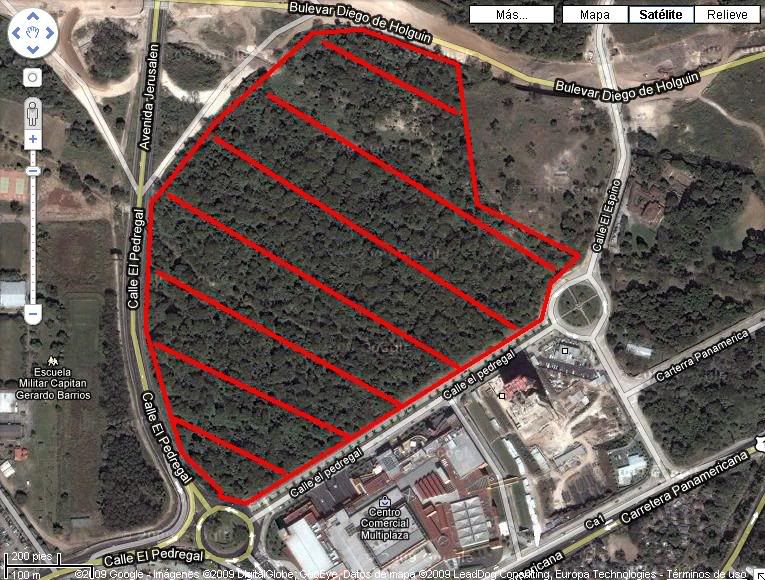
    No se si este thread ira aca, pero les comento de un nuevo proyecto que comenzará probablemente durante el 2011, es un centro comercial tipo GRAN VIA y zona de esparcimiento llamado CENTRO COMERCIAL 361 GRADOS DISTRITO EL ESPINO ubicado justo al frente de Multiplaza.

    La inversión es de la familia Dueñas. Aun no han siquiera sacado los permisos ambientales, solo han inscrito la marca por lo que deberá pasar un tiempo antes que se vean renders y planos.

    El plano de ubicación se adjunta.

  • Symbian 4 Launching in 2011?

    Found under: Symbian 4, Nokia, OS, ,

    Like Microsoft Nokia also needs to make a fast return to the smartphone business. Like Microsoft Nokia needs a better mobile OS one thats capable to be matched against the iPhone or the Android and BlackBerry phones. And just like Microsoft Nokia has its own mobile OS Symbian.Symbian 4 or Symbian4 has been revealed by the Finnish company and it looks like the OS is scheduled to arrive next year. The OS is supposed to be the follower of the yet unannounced Symbian3 but we alread

    Read More

    Read more in mobile format

  • Tremble Island

    British Columbia, Canada | Watery Wonders

    Strong currents surge through the narrow entrance to Seymour Inlet.

    In the middle stands the small Tremble Island (also called Turret Rock), so called because it’s said to shake at peak tides when the current races past at an overpowering 16-20 knots.

    One story tells how an early land surveyor chose to stay on Tremble Island during a strong tide but the island vibrated so violently that he lay face down, clinging to the roots of small bushes, stuffing grass into his ears to block out the noise.

    The islands trees are covered in numerous signs, left by crews of ships that are trying to get in and out and had to wait for the tides. Some of the signs date back over 100 years.

  • Official Laptop Search Documents Reveal Sloppy Data Handling [Privacy]

    The Freedom of Information Act allowed the ACLU to view documents concerning the Customs and Border Protection‘s searches of laptops and other electronic devices at the United States’ international borders. They discovered that third parties view and copy some data.

    The ACLU was quite thorough and analyzed the documents—which detailed searches of not just laptops, but digital cameras, thumb drives, hard drives, and even DVDs as well—to produce some easy to digest spreadsheets. Based on a glance at those spreadsheets, the CBP seemed to take advantage of the fact that “under the current policy, they were not required to justify a single one of these searches.”

    It’s explained that those searches are generally done due to “individualized suspicion of wrongdoing, but CBP’s policy allows officials to exercise their power arbitrarily.” You know what? This may sound insane, but I think that I can deal with somewhat unjustified searches like that. It’s alright, I’ve got time to waste when traveling and there doesn’t seem to be any harm in it, except when I get to this part:

    Between July 2008 and June 2009, CBP transferred electronic files found on travelers’ devices to third-party agencies almost 300 times. Over half the time, these unknown agencies asserted independent bases for retaining or seizing the transferred files. More than 80 percent of the transfers involved the CBP making copies of travelers’ files.

    So who exactly is getting to see my occasionally inappropriate vacation pictures and what do they do after taking a peek? That’s the part which troubles me. If I somehow prompt a search, I’m fine with it. Look at my browsing history, ebook collection, odd music library, whatever you want, but give me assurance that my data is safe.

    I’ll be reserving my full-on whining tantrum until I finish reading the whole 863 page batch of documents, but so far I’m not exactly a happy camper. Did you catch anything that particularly freaked you out in there? [ACLU]


  • As Developing Countries Gain More Power In Diplomatic Discussions, Will They Push Back On IP?

    A few folks sent in Andy Oram’s recent blog post that noted how countries like India, China and Brazil were gaining more power on the international diplomatic stage, and that could mean a pushback against more draconian intellectual property attempts. Brazil, China and India have all realized that, as developing nations, they often benefit greatly from reduced intellectual property regimes:


    As I understand the argument, the institutions responsible for passing new rules respond to the most powerful countries. The US and Europe are on the decline in these organizations. All the countries that benefit from looser IP regimes–China, India, Brazil–are growing in economic strength and are finding themselves in more and more seats at the tables of the world’s closed economic institutions. For just one concrete example, look at the shift of responsibility in recent years from the G-7 to the G-20. The G-7 is a familiar set of countries that were powerful from the 1950s through the 1970s. The G-20 is truly diverse, bringing in strong economies from around the world (but still just the ones with some international economic clout).

    I’ll believe it when I see it. While it is true that those other countries have a seat at the table, it’s still the lobbyists from the US and Europe that seem to be dictating the agenda. In recent years, we’ve definitely pushed increasingly draconian IP laws on those countries. So until we see more serious pushback (and Brazil is really the only major country I can remember that has been proactive on that front — India and China have appeared more willing to claim that they’ll move toward US-style IP rules) it’s difficult to believe this is really happening just yet.

    Permalink | Comments | Email This Story


  • Tiger Woods Planning To Assist In Haitian Earthquake Relief Efforts

    The “Busiest Penis In Sports Today” wants to help the victims of the Haitian earthquake. The Associated Press reports that 34-year-old PGA champ Tiger Woods plans to lend his help to the relief efforts.

    The president of the Tiger Woods Foundation, Greg McLaughlin, tells the newswire that the golfer’s staff is currently evaluating the best way to help the Haitian people, devastated by a 7.0 earthquake on Tuesday.
    The billionaire has been out of the spotlight since news of his sex scandal surfaced in December.

    Rumors that Tiger would be aiding in the relief efforts surfaced after hip-hop mogul Russell Simmons Tweeted Thursday the golfer could spend upward of $3 million “sending a mobile hospital with 50 EMTs to go set up a triage.”

    According to RadarOnline.com the sex-addicted ace golfer Tiger Woods is getting treatment at a top sex addiction program in Hattiesburg, Mississippi.


  • What the Net Neutrality Filings Say

    The Federal Communications Commission has received 23,137 filings and more than 100,000 comments on its proposed net neutrality rules, which would prohibit both wired and wireless Internet service providers from discriminating against the content flowing across their respective pipes. They range from “form filings” that were solicited by the Free Press’ Save The Internet campaign, to a 255-page tome submitted by AT&T.

    Free Press has done a nice job of excerpting out sections from filings that meet the pro-net neutrality stance of its organization, and Om has profiled what Skype has to say, so I thought it might be worthwhile to offer our readers a feel for what else has been submitted on the topic.

    Over the next few days I’ll dig through more comments, assimilate information and come up with more articles, but for now here’s a quick snapshot. I’m acutely disappointed that what was supposed to be a “data-driven” process has produced so little data, and instead churned out hundred of pages of philosophical and legal arguments.

    From AT&T:

    The NPRM proposes all this new regulation, moreover, without any credible data-driven evidence of any market failure amid this robust competition. Instead, it bases its hyper- regulatory proposals solely on the basis of speculation that a market failure might arise someday in the future. This speculation rests on three deeply flawed premises: (1) that the Internet has always been a collection of “dumb pipes” that cannot distinguish among packets based on their associated applications or content; (2) that “[a]s a platform for commerce,” the Internet therefore “does not distinguish between a budding entrepreneur in a dorm room and a Fortune 500 company”; and (3) that only recently have new “[t]ools” emerged “that enable network operators to prioritize” particular data and that somehow threaten the Internet’s historic openness and “neutrality.” This threat, the NPRM posits, demands immediate, preemptive intervention.

    From the National Cable and Telecommunications Association:

    To minimize the damage to the continued growth and potential of the Internet, the Commission should limit any enforceable obligations to the four principles set forth in the Policy Statement, along with the proviso that permits reasonable network management – a proviso that, as proposed in the Notice, should be construed much less restrictively than in the Comcast decision. The addition of enforceable nondiscrimination and transparency principles would, unless very carefully tailored, seriously impair consumer welfare in the development of Internet services.

    From Comcast:

    First, if the Commission decides to adopt formal Internet regulations, it should limit such regulation to the first three principles of the Internet Policy Statement. This would address all of the hypothetical concerns that have been raised by various proponents of regulation, [ed. note: I find it awesome that Comcast is calling these threats hypothetical after it blocked P2P filings] with minimal disruption of the status quo. The Commission, however, should not adopt the fourth principle as a rule. It is a laudable goal to state that a broadband ISP “may not deprive . . . users of the user’s entitlement to competition among network providers, application providers, service providers, and content providers,” but the concept is too vague and is ill-suited as an enforceable regulatory standard. Rather, this principle should be retained as an overarching, aspirational policy goal for the entire Internet ecosystem.

    From Google:

    While regulatory oversight targeted to last-mile broadband providers is consistent with regulatory precedent and the Commission’s statutory mandates, the FCC’s authority does not extend to most web overlay applications and services. These software-derived offerings are not associated with either the network provider’s transmission functions or the source of potential FCC concerns, i.e., affecting the facilities of communications by wire or radio. 254 The FCC has broad authority to regulate communications in the public interest, but the Supreme Court has made clear that its jurisdiction is not unlimited.

    From the Free Press:

    In markets where technological change is relatively swift and competition is healthy, firms have a strong incentive to invest in order to keep up with or get ahead of their competitors. The current high-speed ISP market is characterized by swift technological change, but the overall level of competition is sub-optimal. The latter factor means that regulators must be vigilant to ensure that the lack of competition and presence of market power do not spill over from the ISP market into the adjacent content and applications markets. If ISPs are allowed to discriminate against content and applications, it will create incentives for them to profit from artificial scarcity by delaying or avoiding network investments — and it will reduce investment in the content and applications sector.

    Image courtesy of Flickr user Let Ideas Compete

  • Life After Fisker: What’s Next for EnerDel?

    Not too long ago, EnerDel seemed mighty close to winning the contract to supply batteries for Fisker Automotive’s upcoming plug-in hybrid Karma. After several months of talks between the companies, EnerDel told us it had entered the in-vehicle testing phase, or what it described as “just another step to getting electric vehicles on the road […]


  • Who Else Wants To Join Dream Routine?

    [Editor’s Note: Today’s guest post is from Andrew Kuo, the founder of Dream Routine. He’s put together a financial program that aims to motivate you to get into good financial condition. In that sense, it’s not too far from this week’s earlier post, Get Paid for Getting in Shape. I haven’t had a chance to review Dream Routine yet, but I am intrigued by the concept when he was explaining it to me.]

    Many of you will find that this applies to you. Listen carefully because it may change your life. Dream Routine is not a quick fix, but rather it drills down to the core of your money problems to solve them the right way. I’m talking about completely getting rid of your debt and applying fundamental money principles by clearing away all the crap and finding and solving what’s really stopping you from managing your money correctly.

    Instead of trying to convince you, in the next 7 days, I will show you several concepts from Dream Routine that will completely change the way you approach your money problems. On the 7th day, you will get a rare chance to join Dream Routine for free. So why don’t we get started immediately? Watch the video below to learn how to motivate yourself the right way to take maximum action and get optimum results.

    Managing money is a complex candle problem. Every single one of us has our own unique problems to money management. There is not one universal answer to all our problems, and hence we all are trying to solve our very own complex candle problem. What we have learned from the video is that we must motivate ourselves through autonomy, mastery, and purpose in order to get the best results. Don’t manage your money so you can buy that fancy car, or so you can go on that cruise. You may be harming yourself by doing so. Instead, do it for yourself; make it a challenge so that one day you can live your dreams in harmony!

    Visit Dream Routine for more great concepts and principles.

    Related posts:

    1. The Power of The Dream “I’m the assistant to the traveling secretary. I’m going…
    2. Personal Finance Review – “Living the Dream” Edition I was talking with a friend the other day and…
    3. The Price of Injustice? I’m not usually one to write with such emotion as…
    4. Time Alone is Time Well Spent [The following is a guest post from Matt Wolfe. He…
    5. Comments on the State of the Economy Since I’ve moved to the west coast, watching CNBC has…


  • Yeehaw..

    Got my download kit in the mail today. So i can download my meters.

    Keep in mind my previous meter only kept the last 30 days 🙁 and i really never used it… That whole denial thing 😀

    Here is the downloads from both meters… Still got some highs but doing well i think…. Considering.. Been a crazy ride and i paid for two turns so i know am in for more fun 😀

    File is here

  • A Penny-Shooting Business Card Probably Won’t Win Anyone Over [DIY]

    Yes, a business card that shoots a magazine of 10 pennies with rubber band power will get you noticed—but it probably won’t be the kind of attention you hoped for.

    Then again, load that thing up with Krugerrands and you will definitely score yourself some allies despite the painful welts. Hit the following link iIf you want to try your hand at making one of these yourself. [Thingverse via Make]


  • “””* ARQUITECTURA MILENARIA EN LOS ANDES CENTRALES *”””

    Caral

    La ciudad de las pirámides

    Caral es hasta ahora la ciudad más antigua del Perú y sede de la primera civilización andina que forjó las bases de una organización social propia y singular, que junto a Mesopotamia, Egipto, india, China y Mesoamérica son los focos originarios de cultura en el mundo.

    Esta antigua ciudad de pirámides fue levantada en la margen izquierda del río Supe sobre una gran terraza que está a 350 metros sobre el nivel del mar. Este sitio ocupa un área de alrededor de 65 hectáreas. El valle de Supe es una estrecha quebrada fértil que en éste lugar tiene un ancho máximo de 1.5 kilómetros y alberga a lo largo de su recorrido un gran número de otros sitios con pirámides contemporáneos con Caral como: Era de Pando, Lurinhuasi, Miraya, Allpacoto, Aspero, Chupacigarro, entre otros.

    Las pirámides de Caral son las más antiguas encontradas hasta la fecha en los Andes: datan de hace 5000 años (3000 a.C. aproximadamente). Construir estructuras de este tipo necesitó de un alto grado de tecnología y organización social para afrontar los problemas de su construcción y el elevado gasto de materiales y energía.

    En Caral destacan 7 grandes pirámides rodeadas de otras varias pequeñas, sumando 32 montículos en total. Sus constructores organizaron esta ciudad en 2 sectores: uno alto (al norte) y otro bajo (al sur). Un antiguo cause seco divide a ambas partes.

    En el sector alto se ubican 6 pirámides principales rodeando un espacio vacío. En el sector bajo destaca la Pirámide del Anfiteatro y varios edificios menores alineados con ésta. La zona residencial es un conjunto de casas donde habitaron los pobladores de Caral. Dichos conjuntos de casas están formados por muchas habitaciones interconectadas entre sí. Sus muros son muy angosto y están hechos con cañas entrelazadas recubiertas con barro (técnica llamada quincha). En algunas de estas habitaciones se han encontrado evidencias de que fueron usadas como talleres para la producción artesanal (Shady 2004).

    ***