Blog

  • Reuters – Cinven Reaches Target for Buyout Fund

    European private equity firm Cinven has reached its 5 billion euro ($6.5 billion) target for its latest buyout fund, writes Reuters. Cinven counts cable operator Ziggo and aircraft leasing company Avolon among its investments.

    Reuters – European private equity firm Cinven has reached its 5 billion euro ($6.5 billion) target for its latest buyout fund, a source familiar with the fundraising said.

    Cinven, which counts cable operator Ziggo and aircraft leasing company Avolon among its investments, has been asking investors to put money into its fifth fund amid a tough fundraising climate for private equity firms.

    Cinven declined to comment.

    The post Reuters – Cinven Reaches Target for Buyout Fund appeared first on peHUB.

  • SafeRoad CEO Resigns

    Jon Erik Engeset, president and CEO of SafeRoad, has resigned. Saferoad is a Nordic Capital portfolio company. Engeset will leave SafeRoad with effect from July 1st 2013.

    PRESS RELEASE

    SafeRoad has over the last years made several add-on acquisitions abroad, which have led to a subsequent build-up of head office functions in Oslo. Following this, Jon Erik Engeset, the President and CEO of SafeRoad, has had to commute between Ørsta and Oslo on a weekly basis. For private reasons, he has now decided to seek new opportunities closer to his home.
    Engeset was appointed CEO of Ørsta Group in 2002, which was merged with Euroskilt Group and renamed SafeRoad in 2007. Under his management, the group has experienced strong growth and organizational development, and SafeRoad is today the leading company in Europe within its field.
    Jon Erik Engeset will leave SafeRoad with effect from July 1st 2013. A process to recruit his successor has been initiated.
    “On behalf of the Board I thank Jon Erik for his efforts and contributions over the last 11 years and wish him all the best for the future”, says Johan Ek, Chairman of the Board, SafeRoad Group
    For further information, please contact:
    Johan Ek
    Chairman of the Board, SafeRoad Group
    tel: +46-70-515 94 77
    e-mail:[email protected]

    The post SafeRoad CEO Resigns appeared first on peHUB.

  • Morning Advantage: The Job Interview You Don’t Know You’re Having

    A San Francisco start-up called Gild has created a program that evaluates and scores software developers on the work they’ve publicly released on the web, Technology Review reports. It’s happening unbeknownst to the programmers and without their permission. This is a boon to recruiters, clearly, who can see if top-tier degrees and LinkedIn recommendations jibe with this Guild score. Or, they can perhaps find some résumé-less college student who’s been building apps since she was 16.

    Of course, how useful the score is depends on how accurately the algorithm works and how easily it can be gamed. That question looms large as Gild CEO Sheeroy Dasai envisions developing similar tests for other professionals whose work appears online — like, say, a teacher’s online courses, a scientist’s research, or a journalist’s articles.

    WHATEVER

    How Moods Shape Your Moral Reasoning (Scientific American)

    Would you throw a man under a bus to keep it from mowing down five pedestrians directly in its path? Clever research sheds new light on how mood affects your response to this classic moral conundrum. Subjects induced through music into a good or a bad mood and confronted with this Hobson’s choice were asked either “Do you think it is appropriate to be active and push the man?” or “Do you think it is appropriate to be passive and not push the man?” Turns out the mellow people tended to answer “yes” while the sour people tended to answer “no,” no matter which option was presented. In other words, the researchers suggest, your mood makes you feel better or worse about the choice at hand, rather than affecting your view of what choice to make.

    WORTH THE BIG BUCKS

    Should Solar Roads Be the Future of Transportation? (Fast Company)

    Rather than driverless cars, Glen Hiemstra suggests, we should be paying more attention to the roads themselves, if we want to think expansively about the future of transportation. It’s not that hard to seal solar cells between layers of glass and construct a roadway that can turn sunlight into power while it’s just sitting there all day long. The tricky part is developing a glass clear enough to allow sunlight, opaque enough not to create too much glare, and durable enough to last for years. But the payoff would be enormous: Operating at just 15% efficiency, such a U.S. road system would generate all the electricity the whole world currently uses. Companies like Solar Roadways are on the case; the Idaho-based startup plans plan to test its first road panels in a parking lot this spring.

    BONUS BITS:

    Unintended Consequences

    Is the Running Industry Slowing Marathoners Down? (The Guardian)
    America’s Dirtiest Air Is Not Where You Think (Smithsonian)

    Why Google Is Wooing Small Businesses in India (Business Today)

  • Blackbird Ventures Australian Internet Fund

    Blackbird Ventures has reached a first close of its $30 million venture capital fund. The fund will invest in Australian Internet startups. Blackbird brings together Startmate, Southern Cross Venture Partners, and prominent founders of highly successful local companies including Atlassian, Campaign Monitor and Aconex.

    PRESS RELEASE

    Blackbird Ventures today announced the formation and first close of its $30 million venture capital fund. The fund will invest in Australian Internet startups and help them succeed on a global stage. Blackbird brings together Startmate, Southern Cross Venture Partners, and prominent founders of highly successful local companies including Atlassian, Campaign Monitor and Aconex.
    The majority of the Fund’s capital has been raised in a first close focused on industry insiders, including over 35 successful Australian tech founders and Silicon Valley venture capitalists like Bill Tai and Dave McClure, all of whom are investing not only their money but also their time to help Australian startups succeed. Other investors will have the opportunity to participate before the Fund’s final close later in the year.
    Blending experience and a passion for entrepreneurship, the local management team consists of Niki Scevak, founder of Australian accelerator Startmate; Rick Baker who ran venture investing at MLC and Bill Bartee, co-founder of Southern Cross Venture Partners. They are assisted in Silicon Valley by Southern Cross partner, John Scull, who sits on the Investment Committee.
    Blackbird co-founder Niki Scevak said “The essential ingredients of Blackbird are successful founders helping the next wave of Australian startups. We’re bringing the same experience we have seen work at Startmate in the initial months of a startup’s life to more developed companies at the next stage.”
    “Today is a huge day for the Australian technology industry and I’m excited to be involved with Blackbird because it represents a truly founder-led effort in helping startups,” said Mike Cannon-Brookes, co-founder of Atlassian. Cannon-Brookes, while also being a major investor in the fund, will join as a venture partner and advise the firm and investee companies.
    “Being an investor in the Blackbird fund gives me an opportunity to support and be an active participant in the Australian technology industry,” said Bardia Housman, whose last company, Business Catalyst, sold to Adobe. “It’s made up of a wide array of successful industry people and entrepreneurs spanning both Australia and Silicon Valley. We will be able to add tremendous value to aspiring Australian entrepreneurs who want to build global businesses,”
    Blackbird also has strong links to Silicon Valley. “We have a strong focus on businesses that we can help inject into the Silicon Valley ecosystem to connect them with expertise, customers and sources of finance,” said Rick Baker, co- founder of Blackbird. “The combination of our partnership with Sydney-Palo Alto based Southern Cross Ventures and our strong network of Silicon Valley advisors and venture capitalists means we’re in an excellent position to do this.”
    Well known Silicon Valley investor, Bill Tai, a partner at CRV and angel investor said, “Blackbird Ventures has placed itself in the vortex of the tech scene in Australia through its founder community, LPs and startup network from past investments. As more capital looks to fuel the growing number of world class startups from Australia, Blackbird is positioned to be the trusted investment partner for the US VC ecosystem as they have become for me.”
    Blackbird co-founder and partner at Southern Cross Venture Partners, Bill Bartee, said, “Southern Cross is thrilled to be teaming up to form Blackbird Ventures, which is set up specifically to invest in fast growing, capital light models in the Internet, software and mobile spaces”. The management team believes there is a real gap in the Australian venture capital market: while there is funding for small angel rounds, there are very few professional investors focussing on the next stage where Blackbird will predominately play.
    Blackbird’s first investments include Canva and Ninja Blocks. It expects to make around 25 investments from the fund.
    For more information contact:
    Rick Baker Niki Scevak Bill Bartee
    [email protected] [email protected] [email protected]
    0408 662 422 0400 321 551 0405 136 866

    The post Blackbird Ventures Australian Internet Fund appeared first on peHUB.

  • Twitter launches an official app for Windows 8 and RT

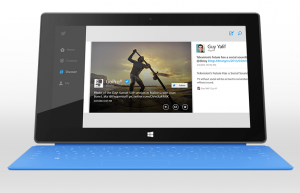
    The lack of official apps for Windows 8 led to me describing the Windows Store as being like a Bangkok night market — full of cheap knock offs. Well today Microsoft’s new OS got at least one big official app, with Twitter arriving for Windows 8 and RT.

    It’s similar in design to Twitter’s web interface, and easy to use with Home, Connect, Discover, and Me tabs down the left hand side. Photos appear nice and large, and you can swipe to view multiple pictures. As you’d expect the app has a live tile, so you can see who’s replied to you, as well as view notifications for replies and direct messages.

    It integrates quite smartly with Windows, allowing you to use also use the Search charm to find Twitter users to follow, and hashtags of interest, and you can share photos or content from another app (such as Internet Explorer) on Twitter via the Share charm.

    If you like to keep an eye on Twitter while getting on with something else, you can snap the app to either the left or right hand side of the screen.

    It’s all nicely done, even if it did take nearly five months to arrive…

  • 3 hurdles for Japan’s gas “discovery”

    Japan has just successfully mined natural gas from the sea, according to a New York Times report. While this might seem to be important news, it is neither new nor all that important. The availability of methane hydrates as a hydrocarbon resource has been known for centuries.

    And for just about as long, people have dreamed of mining them. But dreaming and doing are far apart, and the Japanese research project is only a tiny step towards the economical and safe exploitation of methane hydrates. Before that reality, a number of very significant advances have to be made:

    1). Environmental containment: Methane hydrates are ice crystals with a few molecules of methane trapped inside. But the crystals aren’t blocks of ice like what is in your freezer. They are lattice-like frames that crumble very easily. Thus any disturbance to a methane hydrate bed can lead to a cascade of collapsing crystals, followed by one big belch of methane gas from the seabed.

    This is bad for two reasons. The gas you want to mine can get out of your grasp, and the bubble of valuable hydrocarbons now enters the atmosphere, where it collects heat at nearly twenty times the rate of carbon dioxide. Some even speculate that methane burps from the seabed caused ancient global warming incidents.

    How do you stick a drill-pipe into a sediment that has a consistency of cobwebs, without disturbing it? There’s probably an answer out there waiting to be discovered — but nobody knows how to do it today. And there’s no sign that the Japanese drilling experiment is successfully doing so.

    2). Economics: Most methane hydrate deposits exist underneath dozens or hundreds of feet of mud and gravel. Where the mud stops and the methane starts is a very blurry line. Thus the fluid that’s brought to the surface will include an enormous amount of extraneous material. That’s a problem that can be solved relatively easily, but not cheaply.

    Separating the methane from everything else will be an enormously expensive task that far exceeds the separation requirements of current “tight” natural gas resources (such as coal-seam methane and shale gas). There’s no simple way around that cost, which means the extraction costs of seabed methane will always be higher than any other gas deposits. At current natural gas prices of $3.64 per MMBTU, there’s no reason for anyone to invest in methane hydrate projects.

    3). Infrastructure: There is no industrial infrastructure currently built to mine, process and deliver methane from seabed deposits. Unlike traditional underground formations that are highly concentrated, seabed methane beds are spread out over extremely large areas.

    To eventually extract that methane will probably require specialized floating infrastructure that can follow the resource. While certainly not a deal-killer, the creation of an entirely new infrastructure to gather the hydrates and turn them into usable fuel is a good reason to not spend a few tens of billions of dollars on all-new, untested equipment.

    While some of the breathless reports about the Japanese “discovery” (there’s really nothing special about the Japanese project, several other Japanese and Canadian experiments have successfully brought up methane from hydrate beds) claim that a brand new fossil fuel resource has been stumbled upon, the facts are a little less fantastical.

    Yes, there is an enormous amount of methane laying on the world’s seabeds. And yes, there are probably some ways to get it to the surface. But the chances are that most of it will continue to sit there for centuries to come.

    This article originally appeared on the blog of Pike Research. Pike Research, a part of Navigant Consulting’s global Energy Practice, is a market research and consulting team that provides in-depth analysis of global clean technology markets. Pike Research is also a partner of GigaOM Pro, GigaOM’s premium research service.

    Image courtesy of shunkoh, Flickr Creative commons.

    Related research and analysis from GigaOM Pro:
    Subscriber content. Sign up for a free trial.

  • Google Reader lived on borrowed time: creator Chris Wetherell reflects

    You would think that Chris Wetherell, an early creator of Google Reader (and part of the team that eventually made it happen) would be feeling sorry for himself — after all Google had decided to euthanize a product he (and others) had spent countless months spent building.

    And yet, he was in good sprits, focusing instead on good things that were happening in his life – his new startup, Avocado (an intimacy application much like Pair and Couple) finally has a new office and is growing like weed on the Android platform. He has ample money from investors such as General Catalyst and Lightspeed Venture Partners. So perhaps it that is why he doesn’t want to dwell on the past.

    Wetherell who spent four years on the product left Google and later joined Twitter, co-started Thing Labs and worked on Brizzly before arriving at his new idea.

    IMG_5552When I asked the Beaverton, Oregon native about his emotional state, he quietly pointed out that he has had years to prepare for today.

    As we dug into steaming plates of vegetarian (and super spicy) Chinese food at Henry’s Hunan, a block away from his and my office, Wetherell joked that he had lost his innocence about the business world a long time ago and had developed a thick skin. “I have seen a lot worse decisions than this,” he quipped, in between sips of piping hot soup.

    A slow lingering death

    “When they replaced sharing with +1 on Google Reader, it was clear that this day was going to come,” he said. Wetherell, 43, is amazed that Reader has lasted this long. Even before the project saw the light of the day, Google executives were unsure about the service and it was through sheer perseverance that it squeaked out into the market. At one point, the management team threatened to cancel the project even before it saw the light of the day, if there was a delay.

    1. fusion the earliest - home page

    “We had a sign that said, ‘days since cancellation‘ and it was there from the very beginning,” added a very sanguine Wetherell. My translation: Google never really believed in the project. Google Reader started in 2005 at what was really the golden age of RSS, blogging systems and a new content ecosystem. The big kahuna at that time was Bloglines (acquired by Ask.com) and Google Reader was an upstart.

    And it entered the market with big ideas and a clear, clean slate and captured the imagination of early adopters, despite some glitches. The Google Reader team which included Chris (who was the Senior Software Engineer) worked hard to keep pushing the product forward. Among the folks who worked on the project included backend guru Ben Darnell, Mihai Parparita and Jason Shellen.

    Missed opportunities

    I wonder, if the company (Google) and the ecosystem at large misread the tea leaves? Did the world at large see an RSS/reader market when in reality the actual market opportunity was in data and sentiment analysis? Wetherell agreed. “Reader market never went past the experimental phase and no was iterating on the business model,” he said. “Monetization abilities were never tried.”

    “There was so much data we had and so much information about the affinity Readers had with certain content, that we always felt there was monetization opportunity,” he said. Dick Costolo (CEO, Twitter) who worked for Google at the time (having sold Google his company, Feedburner) and came up with many monetization ideas but they fell on deaf ears. Costolo, of course is working hard to mine those affinity-and-context connections for Twitter, and is succeeding.

    In a November 2011 blog post, he pointed out:

    Reader exhibits the best unpaid representation I’ve yet seen of a consumer’s relationship to a content producer. You pay for HBO? That’s a strong signal. Consuming free stuff? Reader’s model was a dream. Even better than Netflix. You get affinity (which has clear monetary value) for free, and a tracked pattern of behavior for the act of iterating over differently sourced items – and a mechanism for distributing that quickly to an ostensible audience which didn’t include social guilt or gameification – along with an extensible, scalable platform available via commonly used web technologies – all of which would be an amazing opportunity for the right product visionary. Reader is (was?) for information junkies; not just tech nerds. This market totally exists and is weirdly under-served (and is possibly affluent).

    If there were things that went wrong, then there is a lot of positive things that came from Google Reader, Wetherell said. He believed that one of the main reasons why Google Reader could exist was because companies and entities with completely conflicting agendas came together, supported RSS and other standards. Google, MoveableType, Blogger, WordPress, Flickr and several other web-apps believed in creating RSS feeds for easy consumption. “In the end it helped the average users,” said Wetherell.

    But all that is behind us and we might not see similar altruism again, Wetherell theorized. I agree with him.  If in the early 2000s, Web 2.0 companies were building platforms that wanted to work with each other, today, we have platforms that are closed.  We live in the world of silos now. Twitter and Instagram have broken up. Facebook is the Soviet Union of the modern web. The new systems don’t offer RSS or feeds.”There is no common language of sharing,” he bemoans. And rightfully so!  And unless we have web giants speaking the same language of sharing, there seems to be no future of aggregation.

    Built at Google Scale 

    Google data centerMarco Arment says it is good Google Reader is shutting down, because “We’re finally likely to see substantial innovation and competition in RSS desktop apps and sync platforms for the first time in almost a decade.” It won’t be easy or trivial. As we finished up our dinner, Wetherell said that it took a lot to make Google Reader work.

    For instance, it was Google Crawler that gave the system ability to make lightening fast connections and also bring up recommendations. It is one of the main reasons it cannot be open sourced. The systems is too intertwined with Google’s search and other infrastructure to be sold as well.

    In addition, Google had a separate recommendations team fine tuning Google Reader and those people don’t come in cheap. And let’s not forget that it was Google’s infrastructure that allowed millions of accounts to be hosted and many billions of items – photos, videos, text objects to be saved for people to consume them at their leisure.

    It wasn’t and it still isn’t a cheap exercise, said Wetherell, rationalizing why he somewhat understands Google’s predicament. ”This is and will always be a Google level problem, especially if you are building a service for more than a few people,” he said.

    End of the Reader Era

    So if a company like Google which has the infrastructure and a monetization machine in place to profit from the reader market is throwing in the towel, what hope others have? Most importantly, what if readers are not even necessary. Dave Winer writes:

    I didn’t think the mailbox approach to news was right. Who cares how many unread items there are. I like the river of news approach and I have a very fine set of rivers that keep me well supplied with news and podcasts.

    After a roller coaster of emotions — shock, disappointment and anger — had run their gut wrenching course, I asked myself the question: has the world has changed so much that don’t really need something like Google Reader. Is it time to think about something else, something brand new. Something that is more in sync with a world where information flows through the social webs and is consumed on devices in our pockets. Something like Prismatic, perhaps? Something that automagically surfaces what we want or what we should want to read. I know — it is a painful thought to think at this moment, but technology brings change – and change we must. Chris puts it well when he writes:

    Reader will be an interesting footnote in tech history. That’s neat and that’s enough for me; wasn’t it fun that we were able to test if it worked?

    2. fusion prototype - home page

    Related research and analysis from GigaOM Pro:
    Subscriber content. Sign up for a free trial.

  • New Relic moves ahead with mobile-app performance monitoring

    Application performance management player New Relic, running on a recent $80-million round of funding and aiming for a 2014 public offering, is adding support for native Android and iOS mobile apps, showing further evidence of the importance of mobile devices for business.

    In a statement, New Relic called its new native mobile app monitoring capability the first service of its kind. Alongside visualizations of desktop performance, the Software as a Service (SaaS) shows developers in real time what consumers see on their mobile devices. The approach differs from the application performance management for mobile devices available from Compuware and Hewlett-Packard, as “they’re generating fake mobile loads in order to tell you how a fake mobile app is doing,” said Jim Gochee, senior vice president of product at New Relic.

    With its mobile monitoring abilities, New Relic also differentiates itself from fellow application performance management vendor AppDynamics, which has been on a capital-raising spree of its own.

    New Relic’s new mobile app support highlights the importance of smartphones and tablets in the cloud computing revolution, for consumer and enterprise applications alike. And the trend will likely persist. Forrester Research projects sales of mobile devices will keep growing. A 2012 Pew Research Center survey found that 25 percent of kids aged 12-17 use their phones — as opposed to PCs — as their primary means of accessing the internet. That figure is 15 percent for adults. In other words, mobile apps could become the main route for customers to communicate with businesses. That’s why providing better monitoring for them is a smart move.

    Related research and analysis from GigaOM Pro:
    Subscriber content. Sign up for a free trial.

  • Why graphene speakers could become the audio industry’s new gold standard

    Graphene Audio Speaker
    We’ve heard a lot about graphene being a “wonder material” that could be used for smartphone casings and antennas, but now it seems that some engineers have found a way to incorporate it into audio speakers and headphones as well. Technology Review reports that University of California Berkeley researchers Qin Zhou and Alex Zettl have found that graphene is the perfect material for constructing speaker diaphragms, which typically work best when made from a thin material that reduces the need to conduct expensive and energy-consuming “damping engineering.”

    Continue reading…

  • Kim Dotcom claims he will never end up in a U.S. prison

    Kim Dotcom Trial Jail
    Despite significant victories by the United States, accused piracy kingpin Kim Dotcom claims he will never be locked up in the United States. The founder of file-sharing service Mega, and formerly Megaupload, appeared at the South By Southwest conference in Austin this week by way of Skype to talk about his ongoing legal battles with the U.S. government, TorrentFreak reported. Dotcom said that he is confident about his upcoming trial and noted that serving jail-time in the U.S. is not going to happen.

    Continue reading…

  • Latest ‘Value Pack’ for Optimus G Pro Adds Eye-tracking Software and More

    LG_Optimus_G_Pro_125

    LG is allegedly planning to release a new “Value Pack” (VP) for their Optimus G Pro handset. The new VP brings with it a slew of updates, to include Smart Video and a Dual Camera feature. Smart Video, is eye-tracking software that will:

    • Pause video playback when the phone recognizes that the user is no longer focused on the screen.
    • Resumes video playback the moment it recognizes the user is paying attention again.

    Dual camera is an extension of the Dual Recording feature LG recently debuted, and will:

    • Allow the user to take simultaneous pictures from the front and rear cameras.

    These are the two big features coming down the pipe, but there are a few more that might catch your eye, they include:

    • Improvements to the QRemote app: Increasing functionality in controlling TVs.
    • An update to the home button LED to: More granular control of its flashing.
    • A new video camera feature: Will let user stop/start video but save to one continuous file.

    The VP may be poised to release on other LG handsets, but they didn’t release any information to indicate which at this time. What we do know is that Optimus G Pro owners will be receiving this dose of awesome sometime next month.

    EYE RECOGNITION TO BRING NEW LEVEL OF ENTERTAINMENT CONVENIENCE TO LG SMARTPHONE

    Technology to Debut in Smart Video Feature in Optimus G Pro

    SEOUL, Mar. 14, 2013 — Smart Video, a new multimedia UX feature from LG Electronics (LG), will be unveiled for the first time in the Optimus G Pro. Smart Video takes viewing videos on mobile devices to a whole new level of convenience with eye recognition that eliminates the need to manually control playback during the viewing experience.

    Through the implementation of advanced eye recognition technology, Smart Video recognizes the position of the viewer’s eyes and automatically plays or stops the video without any manual input from the user. When the viewer’s eyes are no longer focused on the smartphone display, the front camera recognizes this and immediately pauses the video automatically. Once the user’s gaze returns to the smartphone, the video resumes playback from the point last viewed.

    In addition to the Smart Video feature, Optimus G Pro will also be equipped with the world’s first Dual Camera function. The Dual Camera feature is an extension of the Dual Recording feature which debuted on the Optimus G Pro introduced in the Korean market last month. Dual Camera simultaneously captures photographs using both the front and back cameras for a picture-in-picture composition. Users can now be a part of the story, not just observers.

    “LG is continuously innovating to offer creative ways to offer a user experience that adds value to our customers,” said Dr. Jong-seok Park, president and CEO of LG Elec-tronics Mobile Communications Company. “It’s the positive UX that will differentiate smartphones in 2013 and beyond, not only cutting-edge hardware specs.”
    The Smart Video and Dual Camera features will be introduced as a part of the Value Pack upgrade which will be offered for the Optimus G Pro in the Korean market next month. These features will also be made available for some LG premium smartphones in the future.

    Other features in the Value Pack upgrade include:

    • Magic Remote Pad and Text Keypad via the QRemote function. These new options for QRemote work specifically with LG
    Smart TVs to enhance convenience when using Optimus G Pro as a remote control for LG Smart TVs.
    • The Smart LED Lighting outlining the home button of the Optimus G Pro will be upgraded so users can customize the colors
    to correspond to their favorite contacts. The flashing of the LED in different colors will allow users to identify the source of
    incoming calls, missed calls, unread messages and emails.
    • Video Pause/Resume allows the user to stop and start in record mode for one continuous video file.
    • The first Color Emoticons in an Android smartphone for more personalized text messages.

    Come comment on this article: Latest ‘Value Pack’ for Optimus G Pro Adds Eye-tracking Software and More

  • Andy Rubin says it’s the right time to start a new chapter within Google

    andy-rubin-android

    Though he is stepping down from his position as head of Google’s Android Mobile Operating System, Andy Rubin, has something to say about his future with the company.  Andy stated in a letter to Android Partners that he is “an entrepreneur at heart and now is the right time for me to start a new chapter within Google.”

    Earlier today Larry Page used the term “moonshots” in his post announcing Andy’s departure from the Android team, which could only mean he is heading to Google X Lab (GXL). Lets hope Andy is hinting that “new chapter” is indeed GXL.

    Hit the break for the entire letter.

    He wrote:

    Dear friends,

    In November of 2007 we announced the Open Handset Alliance with 34 founding members. Today, I’m grateful to the over 85 OHA members who have helped us build Android and drive innovation at such an incredible pace. The Android ecosystem has seen tremendous growth since the launch of the very first Android device in October 2008. The volume and variety of Android devices exceeds even my most optimistic expectations – over 750 million compatible devices and counting!

    At its core, Android has always been about openness – the idea that a thousand brains are better than one. Just as the ecosystem has grown, so has our team at Google. I am incredibly proud of the phenomenal group of people that spend their days (and nights) building the Android platform and services. Just look at last year…a lean yet incredibly ambitious team released Jellybean with Google Now, launched Google Play in many languages and countries and collaborated with several partners to build three new Nexus devices to help drive innovation in the ecosystem.

    Today, the success of Android combined with the strength of our management team, gives me the confidence to step away from Android and hand over the reins. Going forward, Sundar Pichai will lead Android, in addition to his existing work with Chrome and Apps. Hiroshi Lockheimer – who many of you already know well – plus the rest of the Android leadership team will work closely with all of our partners to advance Android and prepare the platform for new products and services yet to be imagined.

    As for me, I am an entrepreneur at heart and now is the right time for me to start a new chapter within Google. I am amazed by what we have accomplished from those early days (not so long ago!), and remain passionate about the power of a simple idea and a shared goal – an open source platform freely available to everyone – to transform computing for people everywhere.

    Thank you for your support,

    – andy

    This is an exciting time for GXL, and having Andy, and his innovative mind, on the team is going to take them to new heights for sure.

    For those of you that don’t know, GXL is where products are rigorously tested.  Most of the products being tested are kept secret and on a strict “need to know” level.  Some great projects that have come out of GXL are Project Glass and self driving cars.  The latest innovation, announced by the division head, Astro Teller, is an upcoming “moonshot” product that will be release at an unspecified time in the near future.  You can read more about it here.

    Fingers crossed that the hints Larry and Andy are throwing around inherently lead to Andy’s addition to team GXL!

    Source: The Wall Street Journal

    Come comment on this article: Andy Rubin says it’s the right time to start a new chapter within Google

  • Oh what a surprise: Apple’s Phil Shiller thinks Android phones are inferior to the iPhone

    Apple_phil_schiller_iPhone_5

    So what do you do when your the Apple marketing chief and it’s the eve of the Samsung Galaxy S IV announcement? You do a little trash talking, but in this case Phil Shiller didn’t really go after Samsung, but instead went after Android as a whole. Where do we begin? He started off by saying that products that run the Android software are inferior to Apple’s iPhone. He went down the fragmentation path as he said that a lot of Android users are running old operating systems. In his defense, that is absolutely correct. Only about 15% of Android users are actually running Jelly Bean. In Android’s defense, I will say that most consumers aren’t all that concerned with that.

    He continued with, “Android is often given as a free replacement for a feature phone and the experience isn’t as good as an iPhone.” Overall, Shiller thinks Android’s weakness is a result of many manufacturers making phones whereas Apple is in complete control of the hardware. Again a very true statement and is definitely the reason for fragmentation, but unfortunately Android as a whole is still the better OS. The consumer is the judge of that. According to Gartner, the iPhone represented 19.1% of the global market share while Android had 66.4% in 2012. Of course Mr. Shiller will give you a different story as their research suggests that four times as many iPhone users switched from an Android phone than to an Android phone in the fourth quarter 2012. He also downplayed market share estimates by saying, “I’m not sure that the estimates and the modeling accurately gives an accurate picture of it all.”

    This outburst was obviously out of anger as Android has astounded even myself with the amount of growth it has achieved in the last couple of years. At the same time, Samsung is now a force to be reckoned with. Samsung is now the face of Android and they will announce a new phone tomorrow that will prove to be yet another thorn in Apple’s side. Shiller makes some valid points, but talking isn’t what sells phones. It’s innovation and something Apple has lacked for a while now.

    source: WSJ

    Come comment on this article: Oh what a surprise: Apple’s Phil Shiller thinks Android phones are inferior to the iPhone

  • Veronica Mars movie hits $2M Kickstarter goal in 10 hours

    Veronica Mars fans got one step closer towards seeing bringing their favorite teen detective back on the screen – the big screen, that is: A Kickstarter project to raise funds for a Veronica Mars movie that show creator Rob Thomas launched hit its funding goal of $2 million less than 10 hours after going live on the crowdsourcing site.

    The project is remarkable for a number of reasons:

    • It’s the fastest growing Kickstarter ever, hitting $1 million in just over four hours. Of course, these kinds of records are a bit in flux: The previous record holder Torment: Tides of Numenera, a Kickstarter for an RPG, reached its $1M just a week ago.
    • Veronica Mars gives Kickstarter some Hollywood star power. The project comes with the blessing and active support of Veronica Mars star Kristen Bell, who wrote Wednesday:

    “You have banded together like the sassy little honey badgers you are and made this possibility happen. i promise if we hit our goal, we will make the sleuthiest, snarkiest, it’s-all-fun-and-games-‘til-one-of-you-gets-my-foot-up-your-ass movie we possibly can.”

    • The fundraising campaign isn’t just another indie movie – it comes with the blessing of Warner Bros. Here’s how Thomas put it:

    “Kristen and I met with the Warner Bros. brass, and they agreed to allow us to take this shot. They were extremely cool about it, as a matter of fact. Their reaction was, if you can show there’s enough fan interest to warrant a movie, we’re on board. So this is it. This is our shot.”

    Of course, even the $2 M funding doesn’t mean that the plan for the movie can’t still derail. Thomas acknowledged himself that there are still numerous challenges ahead, including the schedule of everyone involved – something that was the biggest challenge for Netflix’s upcoming Arrested Development revival.

    But the mere fact that fans took this project this far, this quick is going to have an impact on Hollywood – and possibly give a number of previously abandoned TV shows a second shot.

    Related research and analysis from GigaOM Pro:
    Subscriber content. Sign up for a free trial.

  • Google plans to execute Reader, among other apps

    I can live with iGoogle going away — I never use the service anymore. But this one really hurts, though perhaps more to those of us who write about technology than those who read about it. However, statistics show that many of you also use the RSS feed to easily track your favorite sites. That is why today’s execution notice from Google hits below the belt.

    Reader, along with several others, have been rounded up, tried and found guilty of not being productive enough to warrant continued life. Reader will die July 1. Other Google services have varying dates — some sooner, while others get a stay.

    Others included in this roundup were Apps Script, CalDAV API, Google Building Maker, Google Cloud Connect, Google Voice App for Blackberry, Search API for Shopping and Snapseed Desktop for Macintosh and Windows. I would say that none are of consequence compared to Reader, but I would hear from fans of each and, since I understand the hard feelings at this time, I will be kind.

    The announcement comes from Urs Hölzle, the SVP of Technical Infrastructure at Google, who tries to console readers by telling us: “These changes are never easy. But by focusing our efforts, we can concentrate on building great products that really help in their lives”.

    There are still alternatives out there, at least for RSS, but it is a diminishing market. For now you have a varying amounts of time to replace the app you can’t live without, but all are on their final leg. I suppose you can petition Google, but its unlikely the company will change its mind.

    Photo Credit: Ryan Jorgensen – Jorgo/Shutterstock

  • Predicting hotspots for future flu outbreaks

    This year’s unusually long and rocky flu season would be nothing compared to the pandemic that could occur if bird flu became highly contagious among humans, which is why UCLA researchers and their colleagues are creating new ways to predict where an outbreak could emerge.
     
    “Using surveillance of influenza cases in humans and birds, we’ve come up with a technique to predict sites where these viruses could mix and generate a future pandemic,” said lead author Trevon Fuller, a UCLA postdoctoral research fellow at the Institute of the Environment and Sustainability’s Center for Tropical Research.
     
    The researchers’ models revealed that coastal and central China and Egypt’s Nile Delta are danger zones where bird flu could combine with human flu to create a virulent kind of super-flu. Governments can prioritize these zones — and use the researchers’ models to identify other hotspots — for increased monitoring of flu in humans, livestock, poultry and wild birds. That could help detect a novel flu virus before it spreads worldwide, the researchers said.
     
    The research paper, “Predicting Hotspots for Influenza Virus Reassortment,” was published March 13 in the peer-reviewed public health journal Emerging Infectious Diseases.
     
    Previous pandemics, such as the 1957 and 1968 influenzas that each killed more than a million people or the 2009 H1N1 swine flu outbreak that killed 280,000 worldwide, developed when viruses from humans and animals exchanged genes to create a new virus in a process called reassortment. Recent research using mice confirms that genes from bird flu and human flu can combine to create dangerous new flu strains. Swine, which are susceptible to both bird and human flu, could serve as a mixing vessel for reassortment between the two viruses.
     
    “The mixing of genetic material between the seasonal human flu virus and bird flu can create novel virus strains that are more lethal than either of the original viruses,” said senior author Thomas Smith, director of the Center for Tropical Research and a professor at UCLA’s Institute of the Environment and Sustainability and the UCLA Department of Ecology and Evolutionary Biology.
     
    “These findings predicting potential outbreak sites can help decision-makers prioritize the most important areas where people, poultry and livestock should be vaccinated and animals should be monitored for novel viruses, which could help predict and prevent the next pandemic,” he said.
     
    The researchers looked for locations where bird flu outbreaks, human flu outbreaks and swine populations overlapped to predict hotspots where reassortment is more likely, using a $1.3 million grant from the Fogarty International Center at the National Institutes of Health.
     
    The research focused on two flu strains that studies in mice have shown can combine with lethal results: the seasonal H3N2 human flu, and the H5N1 strain of bird flu that has occasionally crossed over into humans. Currently, H5N1 has a 60 percent mortality rate in humans but is not known to spread between humans frequently.
     
    While the World Health Organization has identified six countries as hosts to ongoing, widespread bird flu infections in poultry in 2011 — China, Egypt, India, Vietnam, Indonesia and Bangladesh — the UCLA researchers and their colleagues had limited data to work with. Not all flu outbreaks, whether bird or human, are tracked. The scientists had to identify indicators of flu outbreaks, such as dense poultry populations, or rain and temperatures that encourage flu transmission.
     
    “For each type of flu, we identified variables that were predictive of the various virus strains,” Fuller said. “We wanted a map of predictions continuously across the whole country, including locations where we didn’t have data on flu outbreaks.”
     
    Although the researchers had bird flu data for parts of both China and Egypt, other countries, such as Indonesia, don’t have full reporting systems in place. Even in China and Egypt, accurate reporting is hampered by farmers who may conceal flu outbreaks in order to sell their livestock.
     
    “If we provide incentives for better reporting, we could more precisely predict future outbreaks,” Fuller said.
     
    Fuller and Smith also worked with Kevin Njabo, the Africa director at UCLA’s Center for Tropical Research, and scientists from the Université Libre de Bruxelles, the Food and Agriculture Organization of the United Nations, the Centre de Cooperation International en Recherche Agronomique pour le Developpement, EcoHealth Alliance, the National Laboratory for Quality Control on Poultry Production in Egypt, and the University of Oklahoma.
     
    The UCLA Institute of the Environment and Sustainability is an educational and research institute that unites disciplines: physical, life and social sciences; business and economics; public policy and urban planning; engineering and technology; and medicine and public health. The institute includes multiple cross-disciplinary research centers, and its environmental science undergraduate degree program is one of the fastest growing majors at UCLA. The institute also advises businesses and policymakers on sustainability and the environment and informs and encourages community discussion about critical environmental issues.
     
    For more news, visit the UCLA Newsroom and follow us on Twitter.

  • Verizon to use cable company spectrum to boost LTE network by late 2013

    Verizon LTE Network AWS Spectrum
    Verizon (VZ) plans to use the AWS spectrum it acquired from a consortium of cable companies in the second half of 2013. The company’s CTO, Nicola Palmer, revealed in an interview with Fierce Wireless that the carrier will complete its LTE rollout on the 700MHz spectrum by mid-year, and plans to expand its LTE coverage with 5,000 new sites in 2013, with more to follow in 2014. The current generation of Verizon LTE devices won’t be able to utilize the network, however, and Verizon plans to offer AWS-compatible devices before July. The executive also reiterated the company’s plans to launch its VoLTE service by the end of this year or early next year.

  • Twitter appoints Adam Messinger as company’s new CTO

    Twitter has appointed Adam Messinger, formerly the company’s VP of application development, as the new Twitter CTO, according to his Twitter profile and as reported by AllThingsD.

    The company has been shaking up its leadership recently and making new appointments, having made Ali Rowghani the new chief operating officer and named Mike Gupta to chief financial officer position back in December.

    Twitter has not yet responded with a comment on Messinger’s new role.

    Messinger was previously Twitter’s VP for application development, and before that he was vice president for development at Oracle. Twitter has had a decent run lately on the infrastructure side with its uptime, but is rolling out a number of new product features as it gears up for stronger monetization efforts and a potential upcoming IPO

    Related research and analysis from GigaOM Pro:
    Subscriber content. Sign up for a free trial.

  • Egyptology News for 12th and 13th March 2013

    From Twitter @egyptologynews.  
    Where on earth is this year going??  I cannot believe that it is mid-March already.

    End of the season post from the Temple of Mut team, from their dig diary, with loads of great photos. Brooklyn Museum http://bit.ly/YnmbPr

    Further to my previous, keep an eye on the #Save_antinoupolis hashtag if you want to follow this story.

    More much-needed publicity about the damage inflicted by looters upon Antinoupolis and other sites. Worldcrunch http://bit.ly/ZIZjZY

    Conferencia: Religión y prácticas mágicas. El poder de los amuletos y hechizos contra los poderes maléficos. Ushebtis http://bit.ly/XJrA4I

    Book Review: S.Ruzicka, Trouble in the West: Egypt and the Persian Empire, 525-332 BCE. Oxford Univ Press 2012. BMCR http://bit.ly/10H62op

    Video: The biggest exhibition of Egyptian artifacts to be taken around this country will be displayed in Bristol. ITV http://itv.co/WlleHM

    Curator’s Diary 13/3/13: Early Photographs of a Prince’s Journey in Egypt. Egypt at the Manchester Museum. http://bit.ly/12Ptq8l

    Via Rene Nieuwenhuizen ‏@ReneNieuw
    Shape-Shifting Jesus Described in Ancient Egyptian Text – http://po.st/Eg5xGK

    Cemetery Holds Proof of Hard Labor. Akhenaten’s capital was no paradise for many adults, children. National Geographic http://bit.ly/YnqIS5

    QR codes and “Tales of Things” at the Petrie Museum by Andie Byrnes. @PetrieMuseEgypt UCL Museums + Collections Blog. http://bit.ly/Y9l46T

    New Book: Wadi Sura, Cave of Beasts, A rock art site in the Gilf Kebir (SW Egypt). R. Kuper. Heinrich Barth Institut http://bit.ly/YamjQc

    RT @eloquentpeasant All objects in the Ancient Egypt gallery in National Museums Scotland are now available online http://bit.ly/13SJjKt

    RT @NealSpencer_BM A beautiful, little known, granite statue of Ramses II has gone on display Room4 @britishmuseum. http://twitpic.com/cat7w0

    Worrying article about prospects for geo-tourism in NewValley (oases). Fails to consider the damage already inflicted http://bit.ly/Y9q88e

    Em Hotep Digest vol. 02 no. 09: Pharaoh Snefru’s Pyramids. http://bit.ly/W9Fayq

    UNESCO visits Cairo to discuss threats to archaeo sites and the possibility of a regional centre for World Heritage. http://bit.ly/W7m0sY

    Pharaon Magazine (in French) is now available in PDF format for 5 € per issue. http://pharaon-magazine.fr/catalog/ebooks/pdf-pharaon

    New Book: Djekhy and Son. Ordinary businessmen from ancient Egypt. By Caryll Faraldi, AUC.Egyptian Gazette http://bit.ly/ZwG5FE

    Via Dan Snow ‏@thehistoryguy
    If you watched the Syria programme, here’s my article about the threat to the precious heritage of the country: http://www.bbc.co.uk/news/magazine-21702546

    The latest Museum Books catalogue is out now, in PDF: http://www.museumbooks.demon.co.uk/lists/list36.pdf

  • Google acquires neural network startup to improve speech and image recognition software

    Google Speech Recognition
    Google (GOOG) has acquired a startup from the University of Toronto’s computer science department. The “ground-breaking” startup called DNNresearch Inc was founded by University professor Geoffrey Hinton and two of his graduate students in 2012. Google was interested in the company’s research on deep neural networks, which will assist the company in improving its speech and image recognition software. Professor Hinton will now split his time between his work at the University and continuing his research with Google. Financial terms of the deal were not disclosed. The University of Toronto’s press release follows below.

    Continue reading…