Blog

  • How To Tag Any Building With Your iPhone [Graffiti]

    You know what that building across the street from you needs? A graffiti tag, from your iPhone. Here’s how you do it.

    F.A.T figured out the trick, which involves little more than custom Fat Tag software, AV cables, and a projector. Detailed instructions can be found here. It’s (obviously) just a projected image, so for better or worse you won’t do any permanent damage to your neighbor’s property. But it’ll be fun to see how long it takes Old Man Dithersbottom to realize that. [F.A.T. via Academic Bulimia


  • The Street: Features can’t sway Apple customers’ trust

    Filed under: , , ,

    Jason Schwarz over at TheStreet has written an article analyzing Apple’s current position in the marketplace and what Apple’s competition needs to do in order to catch up.

    The article focuses mostly on Apple’s iPhone/iPod + iTunes ecosystem, which isn’t surprising. Though Mac sales bring in a fair amount of cash to the company, Apple’s handheld market is the company’s most current success story, and everyone from Microsoft to Palm to Google has spent the past several years trying (and failing) to duplicate that success.

    Schwarz notes that Steve Jobs’s recent claim that, “We see no signs of the competition catching up anytime soon,” doesn’t necessarily apply to the feature set of the iPhone or its integration with iTunes, but rather Apple’s financial success and brand impression. He has a point. Recent ads have been trying to sell the Droid on its feature set, telling us all the things that Sega does that Nintendon’t – er, I mean, all the things Droid does that the iPhone doesn’t, but trying to sell the Droid on features hasn’t exactly toppled the iPhone’s dominance quite yet, and all indications are that the Nexus One isn’t likely to take a big chunk out of Apple’s smartphone sales, either.

    Schwarz argues that more and/or better features don’t mean a thing if the public has a poor impression of your product. For supporting evidence, look no farther than Windows Vista. Vista may or may not have deserved all the rabid criticism it received, but even if it had been the best thing to ever come out of Redmond, the damage to its reputation sealed its fate in consumers’ minds. Meanwhile, Schwarz writes that “Apple currently holds a monopoly on brand trust,” a claim borne out in numerous consumer satisfaction surveys. Google’s phones may not have a Vista-esque reputation, but they definitely have a very long way to go before they can approach the success of the iPhone in either marketshare or mindshare.

    All of that having been said, even though Apple finds itself at the top of the music player market and within spitting distance of the top of the smartphone market (not to mention atop a gargantuan heap of cash), all it takes is one botched product to tarnish a formerly sterling reputation. That’s why I feel a slight trepidation about Apple’s supposedly forthcoming iSlate. Pundits the world over have been hyping this product and claiming it’ll be the Next Big Thing, that it’ll revolutionize the industry the same way the iPod and iPhone did for their respective markets. For Apple’s sake, I hope they’re right, because if the iSlate bombs, there’s every chance Apple could experience the inverse of the vaunted “halo effect” that brought increased Mac sales thanks to positive impressions of the iPod.

    Brand loyalty is indeed crucial to Apple’s success. It is for any company, of course, but in Apple’s case, where it sells its entire product line as a tightly integrated ecosystem of products, it becomes even more critical. It seems highly unlikely that any of Apple’s competitors will catch up to or surpass Apple’s success in the near term on their own merits, in which case Apple’s only real threat to continued prosperity is Apple itself. It’s had a spectacular run over the past decade, but if Apple stumbles now, the company has no one but itself to blame.

    TUAWThe Street: Features can’t sway Apple customers’ trust originally appeared on The Unofficial Apple Weblog (TUAW) on Mon, 11 Jan 2010 20:00:00 EST. Please see our terms for use of feeds.

    Read | Permalink | Email this | Comments

    Buy This Item: [Click here to buy this item]

    Read Original Article

  • Always Be Testing: 8 Services For Usability Feedback

    testing_lead_jan10.jpgOver the weekend we had a chance to highlight Graphic.ly – a company that opted to release early (and imperfectly) in exchange for valuable user feedback. As companies look to their peers and audiences to help define product features, there’s a greater need for scalable testing platforms. Here’s a summary of 8 useful services that will help put you on the path to product greatness.

    Sponsor

    uservoice_logo_jan10.jpg1. UserVoice: In 2008 we wrote an article entitled, Why We Love UserVoice in praise of the Digg-like customer feedback platform. Rather than hiring an on-site focus group, UserVoice gives test participants 10 votes to use as they see fit. From here, audience members vote on priority features while the finite number of votes for each person limits the influence of the vocal minority. The service is priced depending on the number of voters you’d like to engage and offers a 15-day free trial for all premium services.

    silverback_logo_jan10.jpg2. Silverback: Silverback is a usability testing software that allows startups to record both the screen as well as the test participant’s facial reactions and voice. Startups follow a subject’s eyes and cursor movements while also controlling the service via an Apple remote. Once a subject’s session is over, the startup can export the recording to a basic Quicktime video. The service offers a 30 day trial and costs $50 dollars flat rate after that. While it’s primarily meant to test site design, it can also double as a great screen capture software for quick demos.

    feedbackarmy_logo_jan10.jpg3. Feedback Army: Feedback Army rallies its own community of testers to do your bidding. For $10 dollars you get 10 people to browse your site and offer feedback. The service offers quick turnaround on your projects and received favorable reviews on Hacker News.

    usertesting_logo_jan10.jpg4. UserTesting: UserTesting offers on-demand testers priced at $29 dollars per person. For each test session you receive a recorded video of your tester’s actions as well as a list of detailed notes. Some of the companies who’ve tested with UserTesting include Twitter and CNN Money.

    ideascale_crowdsound_jan10.jpg5 & 6. IdeaScale and Crowdsound: Both IdeaScale and Crowdsound offer a Digg-style interface for voting where users decide their favorite features and what they’d like to see happen with your site. Crowdsound is priced at $10 per month for customizable widgets, iPhone interface and private suggestions. IdeaScale is priced at $15 per month and includes Twitter/email integration.

    getsatisfaction_logo_jan10.jpg7.GetSatisfaction: Similar to IdeaScale and Crowdsound, GetSatisfaction offers a Digg-style interface for product ideas, issues and solutions. Companies tend to moderate questions and feedback themselves and users vote up and down the answers. This community has received praise from a number of media outlets and costs as little as $19 dollars per month. Earlier this year ReadWriteWeb named GetSatisfaction the leading idea aggregator.

    utest_logo_jan10.jpg8. UTest: UTest offers testing on a subscription and package basis. With packages, clients purchase a set number of test cycles in exchange for a dedicated project manager and feedback from 20-30 professional software testers. The company works with clients on mobile, web, gaming and desktop applications and the idea is that for about $1500 per month or for a set package of test cycles, you get to outsource your entire testing department.

    Photo Credit: Dean Shareski

    Discuss


    Buy This Item: [Click here to buy this item]

    Read Original Article

  • MONTEVIDEO | Edificio Mixed Use | Pro

    Torre Mixed Use


    Les cuento que encontré estos renders pero no creo que sea un proyecto muy firme…por otra parte es en el puertito del buceo.

  • Detroit 2010: Cadillac CTS-V Coupe might just be our best-of-show

    Filed under: , , , ,

    2011 Cadillac CTS-V Coupe – Click above for high-res image gallery

    Yup, we just saw the 2010 Cadillac CTS-V Coupe in the flesh and… do want. Let’s make that double do want. Why? We think it’s glorious looking, and with the possible exception of the Pontiac Solstice, the CTS Coupe is among the best looking American cars in a very long time. That said, while the “base” coupe is a stunner, it’s the V-job that really gets our juices flowing.

    If you don’t know, the V-Series gets the same 556-horsepower, 6.2-liter V8 as the sedan with sir’s choice of a quick-witted six-speed automatic or manual gearbox, magnetic ride control suspension and honkin’ Brembo brakes. General Motors has declined to get specific about how much lighter the CTS-V Coupe will be compared to its more family-minded stablemate, but officials have confirmed that it will be marginally lighter on the scales (we’re guessing less than 100 pounds).

    Changes from the sedan? Well, aside the obvious lack of rear doors, a B-pillar-ectomy and much faster windshield and backlight angles, not too much. Okay, so there’s a slightly wider rear track and an available Saffron interior color (a coupe exclusive), but that’s about it. All that is fine by us, because the CTS-V Coupe is all kinds of muscular, angular gorgeousness. Besides, amidst the Detroit Auto Show and its burgeoning sea of feel-good treehugging solutions, the CTS-V stands alone as a beacon of tire-smokin’ glory.

    Live photos by Drew Phillips / Copyright (C)2010 Weblogs, Inc.

    [Source: Cadillac]

    Continue reading Detroit 2010: Cadillac CTS-V Coupe might just be our best-of-show

    Detroit 2010: Cadillac CTS-V Coupe might just be our best-of-show originally appeared on Autoblog on Mon, 11 Jan 2010 19:28:00 EST. Please see our terms for use of feeds.

    Permalink | Email this | Comments


    Buy This Item: [Click here to buy this item]

    Read Original Article

  • Detroit 2010: Mini Beachcomber Concept leaves the doors behind

    Filed under: , , , , ,

    2010 Mini Beachcomber Concept – Click above for high-res image gallery

    The roof, too. That’s right folks, Mini rolled out a concept of a concept. The Beachcomber (see above) is based on the Mini Crossover. However, the Crossover is no longer just a concept, as it will be making its way to production soon. And it’s not alone, as Mini has also green lit the Coupe and Roadster. All three will be produced at Mini’s Oxford, UK plant.

    Speaking of Mini, their sales were down six percent last year. Or should we say only six percent, as 2009 basically sucked as far as car sales go. In the U.S., however, Mini sales were down 16 percent, but the segment (small premium cars) was off a disheartening 40 percent. Nevertheless, the U.S. remains Mini’s largest market with currently 90 dealers and the brand is looking to increase that number with an additional 17 dealers over the next 18 months.

    As far as this here Beachcomber Concept goes, let’s just say there’s an emphasis on concept. While it does in some ways evoke the original Mini Moke – especially the slotted grille – the Beachcomber has as much a chance at seeing production as a Lamborghini subcompact. Maybe less. That said, the Beachcomber does feature all-wheel drive. And if there’s anything we like more than suicide doors, it’s no doors at all. No top either for that matter. What if you should get caught in a freak Malibu hailstorm? Mini says a soft roof and lightweight doors are included. So there you go.

    Live photos by Drew Phillips / Copyright (C)2010 Weblogs, Inc.

    [Source: Mini]

    Detroit 2010: Mini Beachcomber Concept leaves the doors behind originally appeared on Autoblog on Mon, 11 Jan 2010 19:01:00 EST. Please see our terms for use of feeds.

    Permalink | Email this | Comments


    Buy This Item: [Click here to buy this item]

    Read Original Article

  • “Spiderman 4″ Scrapped; Franchise Loses Tobey Maguire, Kirsten Dunst

    Universal Studios Spiderman is getting a facelift — and that isn’t exactly a good thing.

    After a rumored script dispute pushed the blockbuster off the May 2011 calender, the movie franchise’s long-awaited fourth installment has unraveled all together. Spiderman 4 was cut from Columbia’s production schedule on Monday, E! Online reports. While later Spidey installments are in the work, they won’t feature series stars Tobey Maguire and Kirsten Dunst, Columbia Pictures and Marvel Studios announced on Monday.

    Franchise producers will re-make the series once the concept is re-worked, moving the Spiderman movie saga to a teenage Peter Parker’s high-school days. Spiderman 1-3 director Sam Raimi is also out of a job, execs announced. Raimi said working on the movies was the “experience of a lifetime” and that he thinks studios will do a “terrific job” on the new films.

    Spiderman is set to re-launch in summer 2012.


  • Google’s Approach to Social for 2010

    Though Google’s social strategy has been catch-up at best to date, the company does have a master plan — at least according to engineering director David Glazer, whom I spoke with last week at Google HQ. He said across a variety of products, Google wants to make it valuable and easy to harness social information.

    In 2010, Google plans to expose and elicit more of the social network built into the tools that many of us already use — Gmail, Google Talk, etc. If you use Google products, the company already knows who your most important contacts are, what your core interests are, and where your default locations are. Glazer said to expect many product and feature launches that start to connect that information in useful ways.

    “Everything is better when it knows who I am,” said Glazer, who is responsible for working on developer platforms that include social aspects — a more distributed role than he had at Google in the past, Glazer said, when he was working on social exclusively. That’s an improvement, he said, since social products are no longer siloed within the company.

    What does “social” mean to Google? “Who I am, who do I know, what do I do,” said Glazer.

    One of the early examples of this approach is Google Social Search, launched as a labs product last October. When a user opts into the feature, you see on the search results page (way way down at the bottom) results from people in what Google considers your “social circle.” That’s people you’re connected to on services you’ve listed publicly, like Twitter and FriendFeed; people in your Gmail or Google Talk chat list; and people you’ve placed in contact groups on Gmail.

    Another example of a social layer is Google Latitude, where you can see your participating friends’ location on a real-time map.

    The other main pillar of Google’s social strategy is to support interoperable, open community-driven standards. So while OpenSocial and Friend Connect may not be beating out their rivals Facebook Platform and Facebook Connect, Glazer can say it’s all part of the master plan — to have a “distributed, open social ubiquitous web,” not to be the one company who owns people’s online identities. To that end, Google has this month brought on strategists Joseph Smarr and Chris Messina, both widely known for their advocacy of the open social web.

    Glazer reeled off a family of Google-supported technical standards that “are just about done”: OpenID, OAuth, OAuth WRAP, PoCo (portable contacts), Activity Streams, OpenSocial for Gadgets, OpenSocial wire protocols, PubSubHubBub, Salmon (to “let comments swim upstream”), WebFinger (see a person’s public feed of information) and the Social Graph API.

    That’s a pretty geeky and theoretical list, and one that will surely take more than a year to permeate the experiences of normal web users. It’ll be good to see when Google drops down into the present day to make the product launches Glazer is promising. It’s one thing to take the long view on social, but the present-day web is moving more quickly than that.

    Related GigaOM Pro Research: Why Google Should Fear the Social Web

  • Tavares loses points for low blow, Lentz said he did it on purpose

    You
    know you’re at an MMA fight when a woman in the crowd is catcalling a
    fighter who is writhing in pain on the ground. Nik Lentz was on the
    receiving end of two vicious boots to the groin but there wasn’t much
    mercy from the angry woman or Thiago Tavares. The Brazilian was super
    aggressive down the stretch blasting away at Lentz. It was all for
    naught because he had a point taken away on the second low blow. It
    costs him the fight, scored a majority draw, 28-28, 28-28 and 27-29. 

    Lentz
    said in the cage he thought Tavares kicked him in the groin on purpose.
    The second low blow left Lentz prone on the ground for three minutes at
    the start of the third round. That’s when the lovely lady seated just
    behind the media section began ripping Lentz.

    "The second time it was a full blown thai kick right to the nuts. It wouldn’t have been that bad but if you can break a steel cup?" said
    Lentz. "I have a crack down the middle of it. He did it on purpose. It was ridiculous. I would fight him
    again but I know he wouldn’t do it."

    Lentz also mentioned some first round numbness in his hand, saying he might have fractured the hand.  

    STORY DOWNS LENNOX IN FIGHT OF THE NIGHT CANDIDATE

    Jesse Lennox is one tough dude. He took a beating at the hands Rick Story.
    Story was the crisper striker throughout and worked effectively on the
    ground in the second nearly locking on a kimura. Lennox was competitive
    throughout but judge Eric Colon saw a different fight giving him "The Ox"
    the nod 29-28. The other two judges had it 30-27, awarding Story a split
    decision victory.

    "I was surprised. I was expecting him to go for more takedowns. I was a little bit taller than him and I had a little bit more reach. It’s the way I wanted it to go."

    Story (9-3, 2-1 UFC) was effective throughout with body kicks.  

  • Video: Dante’s Inferno "fraud developer diary"

    Electronic Arts has once again released another developer diary of Dante’s Inferno, the highly controversial videogame adaptation of the Divine Comedy. In the latest video installment, the developer’s opens up the eight circle of hell, “fraud”. Watch

  • Achates Power Raises $19.2M for Efficient Engines

    Achates Power has raised $19.2 million in a second round of financing and brought in a new investor, Triangle Peak Partners, the company announced in recent days. The San Diego, Calif.-based startup, whose investors include Sequoia Capital, Rockport Capital Partners and other venture firms, is working on two-stroke diesel engine tech that it says will […]


  • Boy George Lady Gaga Opening Act O2 Arena London

    Lady Gaga will be sharing the stage with a very special guest when she kicks off the U.K. leg of her Fame Monster Tour in London later this month — her childhood musical idol Boy George!

    91123A1_LADY_GAGA_B-GR_05

    The “Poker Face” hitmaker has hired the ’80s pop icon to support her on tour in Britain next month. The former Culture Club singer will perform alongside the Gaga during her dates at the O2 Arena, the songstress said Monday.

    “I didn’t fit in at high school, I wanted to be like Boy George and I felt like a freak. So now I like to create this atmosphere for my fans where they feel like they have a freak in me to hang out with, and they don’t feel alone.” Gaga explained of her admiration for the crooner last year.

    The trouble-prone star is currently on probation after being imprisoned last year for holding a male escort hostage in his flat. He must seek permission from the court before accepting any job offers, and was recently banned from starring in the last season the UK reality show Celebrity Big Brother.


  • 88 years ago today,insulin was first used successfully in the treatment of diabetes.

    On 11 January 1922 insulin was first used successfully in the treatment of diabetes.

    Children dying from diabetic ketoacidosis were kept in large wards, often with 50 or more patients in a ward, mostly comatose. Grieving family members were often in attendance, awaiting the (until then, inevitable) death.

    In one of medicine’s more dramatic moments Banting, Best, and Collip went from bed to bed, injecting an entire ward with the new purified extract. Before they had reached the last dying child, the first few were awakening from their coma, to the joyous exclamations of their families.

  • Google Stops Hosting AP News

    Peter Friedman points us to the news that Google has apparently quietly stopped hosting AP content on its site. You may recall that a little over two years ago (after much back and forth), Google began hosting AP content. This was licensed content that Google had paid for — but that deal came about after the AP made some noise suggesting that Google’s linking to content (with headlines and snippets) could be infringing. Rather than stand up to that (surprisingly, since it had a strong case), Google just did a licensing deal. What amazed me, at the time (and since), is that this didn’t piss off AP members. Before this deal, Google would link directly to AP member websites who posted versions of AP stories, driving more traffic to those newspapers sites. After this deal, however, Google sent most of that traffic directly to its own site, and paid the AP directly for the license. The end result? The “members” of the AP got less traffic and fewer ad impressions. If I were an AP member I would be incredibly pissed off that the AP was directly competing with me and basically getting paid by Google to block traffic to my site.

    So why has Google stopped posting new AP stories? Some think it may be Google calling the AP’s bluff. That’s because, despite having a deal that gives the AP lots of money for the right to post its content, the AP continues to make ridiculous claims that Google is somehow “stealing” its content. So, some suggest that Google pulled the content to show the AP what life is like without Google. There may be a more reasonable explanation, however. The original AP/Google deal expires towards the end of this month, and the original deal (stupidly, annoyingly, and against basic web accepted best practices) only allowed Google to host content for 30 days. After that, it disappears and people searching for that old content or following old links are simply told its gone (think of how much ad revenue the AP has lost because of that…). With the deal running out, Google knew it would then need to take down all AP content immediately, and it probably did not want to have content posted for less than 30 days — so when it hit the 30 day mark, it just stopped posting content to avoid having stories that would go up and be taken down too rapidly.

    Still, it makes you wonder how AP member papers are faring — since they may now be getting more traffic from Google, because those AP stories showing up online from AP member papers will now get listed, once again, instead of just being hosted on Google itself.

    Permalink | Comments | Email This Story


  • Jon Rubinstein sits down with Kara Swisher at CES

    A few months ago we were laughing at/with Palm investor Roger McNamee after his All Things D interview with Kara Swisher and Walt Mossberg. And this year at CES, Palm saw fit to send just CEO Jon Rubinstein into the gauntlet, and even in the face of what some may call some rather nonsensical and unnecessarily combative and prying questioning from Swisher alone, he held up well. Sure, Swisher wanted to know what’s coming next, but Rubinstein would have nothing of it and refused to divulge any new details. That said, there were still some interesting things to take away from the interview, like Rubinstein’s admission of having never used an iPhone.

    read more

  • The Professors’ Letter Against the Prorogation of Parliament

    Have a read of the original letter by University of Montreal Prof. Daniel Weinstock “Against the Prorogation of Parliament” (site contains full list of 175+ cosigners (political scientists, legal scholars, and university philosophers) and the French version).

    For the record, I have copied and pasted the professors’ letter and added some emphasis and comments not in the original letter.

    [HT Maclean’s for linking to the original full letter]

    More reports from Ottawa Citizen (with full letter)CBC (with video interview with Prof. Weinstock), Maclean’sCanada.com (include phone interview with Weinstock).

    ***

    Against the Prorogation of Parliament

    As Canadian university professors dedicated to educating students about democratic institutions, we are deeply concerned by Prime Minister Stephen Harper’s decision to use his power to prorogue Parliament for a second year in a row in circumstances that allow him to evade democratic accountability. The Prime Minister is not only making cavalier use of the discretionary powers entrusted to him in our Parliamentary system, but in so doing he is undermining our system of democratic government. [k-note: “evade democratic accountability” and “undermining our system of democratic government”]

    It has been noted by many observers that the Prime Minister did nothing technically wrong by requesting that Parliament be prorogued and in fixing the date for a Throne Speech after the Vancouver Olympics.

    The Prime Minister does have the sole responsibility to request prorogation from the Governor-General (although the custom is to request it in person, out of respect for the office of the Queen’s representative, and that was not done in this case). But it is highly unusual – and improper – to request it in circumstances like these.

    What, precisely, did the Prime Minister do wrong in proroguing Parliament?

    Our parliamentary and constitutional institutions are grounded not just in explicit rules but also in the spirit of those rules.

    Think of the idea of a “loyal opposition” so central to our practice of responsible government. The role of the opposition parties is to hold the government to a high standard of justification. The opposition parties can neglect their responsibilities by being servile and pliant. They can also misuse their powers for narrowly partisan purposes.

    We expect them to avoid both these pitfalls. We expect them to be vigorous. And, while an element of partisanship is inevitable in democratic systems of government, we expect that it will be moderated by public-spiritedness and a shared concern for the country’s common good. If it isn’t, then the opposition has failed to do its job.

    What is true of opposition parties is true in spades of the office of the Prime Minister, given the very great powers that are concentrated there in our system of responsible government. We expect that the Prime Minister will do his part to ensure that this system works, and that MPs can fulfill the role we elect them to do. Part of what that means is to exercise self-restraint, and not use the powers that he possesses to shut down the mechanisms of accountability to Parliament and the Canadian people.

    The use of the ability to prorogue by the present Prime Minister clearly displays no such self-restraint. It was nakedly partisan when it was invoked to save his government from defeat in a confidence motion in December 2008, and it is nakedly partisan now, when it is being used to short-circuit the work of the Parliamentary Committee looking into the Afghan detainees question and evade Parliament’s request that the government turn over documents pertaining to that question.

    The normal way in which a government secures a break in a parliamentary session is through adjournment. That permits the institutions of government to continue. Committees can do their work. Legislation that is in the system can be picked up and advanced once the adjournment is over. In prorogation, all the business of Parliament ceases. Any laws that are in process, with the exception of private members’ bills, have to be introduced again, at the very first step of the process.

    The government’s post-election legislative agenda is nowhere near having been fulfilled. The Prime Minister cannot, therefore, credibly invoke the purpose that the power to prorogue properly serves, which is to provide the government with space outside the cut and thrust of Parliamentary sessions in which to submit a new legislative agenda to Parliament.

    Given the short-term, tactical, and partisan purposes served by prorogation, and given the absence of any plausible public purpose served by it, we conclude that the Prime Minister has violated the trust of Parliament and of the Canadian people. We emphasize moreover that the violation of this trust strikes at the heart of our system of government, which relies upon the use of discretionary powers for the public good rather than merely for partisan purposes. How do we make sure it serves the public good? By requiring our governments to face Parliament and justify their actions, in the face of vigorous questioning.

    [*****] The Prime Minister’s actions risk setting a precedent that weakens an important condition of democratic government – the ability of the people, acting through their elected representatives, to hold the government accountable for its actions. [*****]

    *****

    Postscript:

    Quoting Canada.com,

    Weinstock, in a telephone interview Monday, said that he had intended to simply submit the letter under his own name. But before doing that, he asked two friends to review it and they asked if they could attach their names to it. Eventually it began to circulate among academics involved in politics, philosophy and the law and now has 175 signatories.

    I want to personally thank Prof. Weinstock taking time to write the letter and other cosigners for supporting it. When Canadian democracy is under attack, it is nice to see people willing to speak up for Canada and be counted.

    Posted in Calgary, Canada, Democracy, Law, people, politics, World

  • BAKU | Amburan Marriott Beach Resort | U/C

    Amburan Marriott Beach Resort

    This is a 5 star international branded hotel and beach resort development. In addition to the standard hotel amenities, the development will include: Yacht Club with slips for 20 vessels; the largest children entertainment center in Azerbaijan; SPA and wellness therapy center; indoor and outdoor sport facilities and bowling alleys.

  • Webinar: Socialgraphics Provides a Customer-Centric Approach to Social Strategy.

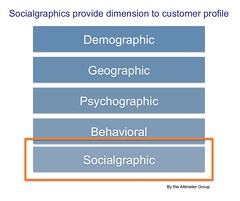
    Good For BusinessLeft: In the past, marketers have relied on tried and true demographics to understand customers. Now, as consumers adopt social technologies, marketers must measure socialgraphics, which indicates how they interact with each other.

    Update: Get the slides and watch the webinar: Thanks for attending, with over 800 registered, we’ve now made the Slides and Recorded Webinar available.

    Beware of plans or proposals that start with “Twitter Strategy” or “Facebook Strategy” Instead, they should have a “Customer Strategy” that focuses in on how customers behave –not on the ever-changing toolset. As a result, companies should first understand how their customers use social technologies before they choose the tools. Socialgraphics is how to measure how customers use social technologies, where they are online, and how it influence them in the context of the customer lifecylce.

    This upcoming free webinar, suited for corporations who want to develop plans in social with confidence, will answer how to apply socialgraphics. Like demographics or psychographics, companies must now understand socialgraphics, which answers five key questions:

    Socialgraphics answers five key questions:

    1. Where are your customers online? First, find out where your customers are online, knowing which websites they are particiating at, this will reduce guessing.How to make this data actionable: Don’t aimlessly approach social networks without knowing if they are there, if they are in Hyves, Mixii, or Facebook, go there. Fish where the fish are.
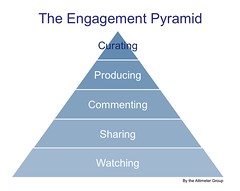
    2. What are your customers’ social behaviors online? How do they use social technologies? Do they share? Comment? Create their own content?How to make this data actionable: Which social features should you deploy. Example: if they frequently like to comment on websites, allow them to leave their comments.
    3. What social information or people do your customers rely on? How to make this data actionable: If they rely on their friends, facilitate a marketing program that encourages customers to share with friends, this data helps with determining resource allocation on advocacy programs.
    4. What is your customers’ social influence? Who trusts them?How to make this data actionable: If your customers are trusted by others, highlight your customers in front of their community. For example, teens may share information with each other, spreading their influence to others.  Example: Walmart’s 11 Moms blogger program is a platform for customer voices.
    5. How do customers use social in context of your products? How do customers use social technologies to learn, make decisions, and support your products and services? How to make this data actionable: Be confident in your resource allocation by understanding when customers rely on social tools or their peers in pre-sales, awareness, decision making, implementation, or support of a product.

    When properly deployed, Socialgraphics, helps companies, their agency partners, and business units be more effective in their planning and deployment –reducing risk from deploying without having knowledge.

    In the spirit of open research, we will make this webinar, the slides, and the overall methodology available for the public to use, under creative commons license. We hope you’ll join us.  Stay tuned as we have other webinars coming soon.


    Socialgraphics: The Engagement Pyramid Offers An Understanding of Customer Behaviors

    Above: The Engagement Pyramid makes it easy to understand the specific behaviors of socialgraphics, making it simple to decide which technologies to deploy. Having customer understanding makes go-to-market strategy more effective.


  • 2010 is the year of electro-mobility: Mercedes-Benz Cars expands its model range to three electric vehicles TNR.v, CZX.v, WLC.v, LI.v, RM.v, DAI

    Mercedes is up to its promise and rumping up production of Electric Cars. It is the auto brand to follow in a lot of markets and its technology reputation will provide further comfort to EVs’ market.

    Electric Cars will be the important part of the economic and social solution of the dire economic situation. With every marketing dollar spent by GM and Nissan on promotion of Electric Cars our EVs mass market is closer. It is time for market education and Detroit will bring spotlight to the Green Mobility.”
    WEBWIRE – Monday, January 11, 2010
    Stuttgart, This year will see the renowned Stuttgart company enter the era of emission free-electric mobility with three series production models – the latest of which is the Mercedes-Benz A-Class E-CELL. As of October this year, it will join the Mercedes-Benz Cars line up of electric drive vehicles. The range already includes the smart fortwo electric drive, the pioneering battery-electric vehicle that has been in production since November 2009. Series production has also commenced on the fuel cell-powered Mercedes-Benz B-Class F-CELL. With these three electric vehicles, the inventor of the automobile is setting decisively the scene for the era of electric mobility and redefining individual mobility.
    “We are convinced that electric cars can make an important contribution to sustainable mobility, which is why we are bringing to market our first series production vehicles with electric drive. It is our objective to fulfil all our customers’ mobility demands by offering tailor-made vehicle concepts in the field of electric mobility, too,” says Dr. Thomas Weber, Member of the Board of Management of Daimler AG, responsible for Group Research and Development Mercedes-Benz Cars.
    A-Class with electric drive
    The portfolio of electric vehicles from Mercedes-Benz Cars already encompasses the smart fortwo electric drive and the Mercedes-Benz B-Class F-CELL. Series production of both cars began in 2009. These will be followed in October 2010 with the start of series production of the A-Class E-CELL in Rastatt. Initial plans are for low-volume production of more than 500 vehicles that will be rented to selected customers for a period of four years (or 60,000 kilometres).
    The new A-Class E-CELL is based on the five-door version of the current A-Class. Exterior indications of the new electric drive version include amongst others the absence of an exhaust pipe and exhaust cut-out in the bodyshell, a fine, uni-colour paint finish in cirrus white and the “E-CELL” badge in silver script on the rear hatch.
    Across the board, the new A-Class E-CELL will be delivered in the high-quality avant garde equipment level and offers the following additional highlights as standard: Bi-Xenon headlamps, COMAND APS, an active park assistant, THERMOTRONIC automatic climate control, window bags, side airbags in the rear and a sophisticated seating and lighting package.
    Adequate propulsion is secured by up to70 kW output and 290 Nm of torque. The state-of-the-art lithium-ion battery enables a range of up to around 200 kilometres. Because the batteries are located in the vehicle’s innovative sandwich floor, room in the A-Class for passengers and luggage is for the benefit of the customer completely unaffected.
    A sensible addition to the smart fortwo electric drive and B-Class F-CELL
    The new A-Class E-CELL makes a sensible addition to the Mercedes-Benz Cars line up of electric vehicles. Like all battery-electric vehicles, it is primarily suited to use in city traffic. As a full-blooded five-seater, with no restrictions to interior and useable space, it is the perfect complement to the smart fortwo electric drive, which is the pioneer in its field and is already in its second generation.
    The new A-Class E-CELL is, like the smart fortwo electric drive and the B-Class F-CELL, also equipped with a highly efficient lithium-ion battery. While the smart already achieves an impressive range of 135 kilometres, the A-Class also reaches a best-in-class of 200 km. The Mercedes-Benz B-Class F-CELL with fuel cell and electric drive carries its fuel on board and, with a range of around 400 km, is suited not only to zero-emissions driving in city traffic, but also to greater distances cross-country. Its tanks can be filled up with gaseous hydrogen via a worldwide standardized pump nozzle in just around three minutes.
    The smart fortwo electric drive is currently being manufactured in the French city of Hambach in a production run of 1,000 vehicles. The two-seater is initially being delivered to selected customers in six European countries, the U.S. and Canada within a leasing-style rental program.
    High-volume production of the smart electric drive will begin in 2012, when it will be available to all prospective buyers through the dealership network. Low-volume production of the Mercedes-Benz B-Class F-CELL began in 2009. The first of the production run of around 200 vehicles will be delivered in 2010 to customers in Europe and the U.S.”