The British federated cloud company OnApp has launched CDN.net, a new brand for selling pay-as-you-go content delivery network (CDN) services directly to companies around the world.
OnApp started out selling cloud orchestration software to hosting providers that wanted to get into the public cloud business. Over time, the firm built a sizeable federation of service provider customers, giving them the ability to use each others’ spare capacity – federated CDN launched in 2011; then came distributed storage; and federated compute capacity is next on the horizon.
However, until now OnApp’s game has been all about helping service providers make the most of their spare resources within the federation – one provider may lack a point of presence (PoP) in a certain location but be able to use that of a fellow federation member, for example. CDN.net is OnApp’s first attempt at selling that federated capacity directly to end users, in this case companies that want to boost the performance of their websites in various locations around the globe.
CDN.net offers access to over 150 PoPs, which is not as extensive a network as those offered by Akamai and Limelight, but way bigger than those from smaller players such as Yottaa, MaxCDN and CacheFly — it’s even slightly more wide-ranging than CDNetworks’ network. However, according to CDN.net marketing manager James Fletcher, the real selling point is CDN.net’s flexibility and pay-by-usage pricing:
“It allows the end user to be in control of what they are purchasing … We saw in the marketplace that you can buy CDN and get a one-size-fits all solution, but that doesn’t work for everyone. The end result is you pay for resources and locations you don’t use. The CDN.net vision allows you to spin up on the fly and provision and customize as you need to.”
At launch, CDN.net will only include 30 PoPs with a focus on Europe, North America and Asia-Pacific. However, OnApp is working to add locations in emerging markets and users will be able to add locations based on demand. “If the customer comes along and wants somewhere in South Africa, we can work with the service provider network to get one up and running,” Fletcher explained. Livestreaming capabilities will also go live soon.
Ultimately, OnApp is trying to “help line the pockets of the service providers”, as Fletcher put it, but it’s also quietly becoming one of Europe’s most significant cloud players, perhaps the most significant. Others have talked about or even attempted this kind of federated model, but no-one has achieved the sort of scale that OnApp can boast – scale that it achieved by stealth, but that it’s now starting to exploit in earnest.

Related research and analysis from GigaOM Pro:
Subscriber content. Sign up for a free trial.
- Report: Delivering Content in the Cloud
- Infrastructure Q1: Cloud and big data woo enterprises
- Federated clouds: for when one cloud isn’t good enough

 |
 |

 Intel Open Source Technology Center has released an Android 4.2.2 Jelly Bean developer preview build of “pre-alpha quality”, which is also “buggy and not highly optimized”, albeit one that has a major trick up its sleeve. Unlike the common version of the green droid operating system, which mostly runs solely on the ARM architecture, the aforementioned developer preview build — dubbed Android-IA — is designed to work on Intel’s x86 processor architecture used on Windows-compatible devices.
 File-sharing Dropbox has updated its desktop client for Windows, Mac and Linux with the release of
 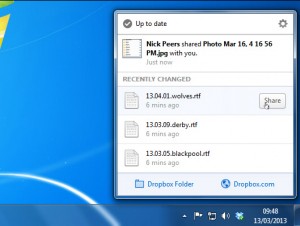 Features displayed on the old menu bar — including how much space is left in a user’s account as well as the current sync progress — have been relegated to a new settings button. The update also fixes a bug where discrete graphics would be enabled on OS X laptops along with other small, unspecified bug fixes. Support for Brazilian Portuguese has also been added with this release.
 Aimed at the Android developer and modding community, Taiwanese company HTC has introduced a new iteration of the One smartphone that was