Blog

  • Qualcomm’s Brew Platform Gains Speed With Commitments From AT&T And Sprint


    Qualcomm's CEO Paul Jacobs At AT&T's Press Conference

    Qualcomm (NSDQ: QCOM) is becoming a major software supplier in mobile for mid-range devices in the U.S., but rather than make money on the platform, it hopes to sell more phones with its chipsets inside.

    Up until now, Verizon Wireless was the largest customer of Qualcomm’s Brew Mobile platform, but at CES this week, AT&T (NYSE: T) committed to it for all of its mid-range devices starting by the second half of year, and Sprint (NYSE: S) confirmed to mocoNews that it was also planning to use it. Sprint’s President Steve Elfman: “I am comfortable with it becoming a standard…We’ll definitely be using Brew Mobile platform.”

    By having the three largest carriers in the U.S. using the platform, Qualcomm becomes a significant middleman in the delivery of applications and other mobile content. If developers didn’t consider building their applications on Brew before, they most likely will now. The platform is free to carriers, developers and the handset makers; Qualcomm will make money by selling chipsets inside the phone. But that wasn’t always Qualcomm’s business model. Previously, Qualcomm charged everyone in the Brew ecosystem, including developers, who had to have their applications certified. Qualcomm’s CEO Paul Jacobs said during AT&T’s keynote: “It’s an open platform now. It’s free to OEMs and operators. This is as open of a platform we know how to make.”

    As part of AT&T’s announcement, it said that Pantech, LG (SEO: 066570) and Samsung have committed to using the Brew platform. HTC was also named, despite the company only previously making smartphones using the Windows Mobile and Google (NSDQ: GOOG) Android platforms. By adding Brew, HTC opens itself up to a much bigger market that includes lower cost phones. HTC said its Brew phones will carry the name “HTC Smart,” and will come with its Sense user-interface overlay that’s found on some of its Windows Mobile and Android devices. Generally speaking, these mid-range devices are fairly functional, and commonly have full Qwerty keyboards or touchscreens and have access to email and a browser. But typically, they have cheaper hardware components and are given away for free. Subscribers may not have to pay for an unlimited data plan either, like you do on the iPhone and other devices. AT&T calls the category “quick messaging” and said by the end of 2011, 90 percent will be running Brew.

    One of the potential outcomes of both AT&T and Sprint choosing Brew will be less fragmentation in mobile—or at least that’s AT&T’s hope. Currently, mid-range devices run a plethora of systems, from Java to Flash and to homegrown proprietary ones built by handset makers. The idea is for all Brew applications in existence today to be able to work across a larger footprint. Qualcomm’s Jacobs: “It’s backwards compatible to other Brew apps, and supports Java and Flash.”

    As part of adopting Qualcomm’s Brew platform, AT&T said it will launch a new app store called AppCenter. AT&T said developers will be able to keep 70 percent of the revenues and AT&T will take 30 percent, which is the same formula Apple (NSDQ: AAPL) uses. John Zehr, the SVP and GM of mobile, said he was very excited about the announcement. “With all the fragmentation going on, it will make it easier. We are encouraged by it,” he said. ESPN (NYSE: DIS) already has a number of applications built on the Brew platform with the help of UIEvolution, a mobile-application shop.

    Related


  • The Switch From iPhone To Android, And Why Your First Impression Is Wrong

    Earlier this week we saw the launch of the Google Nexus One, the second very high profile Android launch in as many months. And, as should be expected, the phone is drawing numerous comparisons to the iPhone — it seems you can’t find a related review, blog post, or tweet that isn’t gauging the device based on how it compares to Apple’s juggernaut. That’s as it should be. But for anyone considering making the jump to Android, you need to keep one thing in mind: many of these early adopters have been using their iPhones non-stop for years. And it takes days, if not weeks, to unlearn your iPhone habits and judge Android on its own merits.

    Imagine if you took a longtime Windows user and sat them in front of a Mac for a couple days. They’d probably complain about superficial things like the change in mouse acceleration and the “unintuitive” button placement (the Close button is on the opposite side of the window). It’s not until a week or two after you start using a Mac as your primary computer that you overcome these issues and begin to fully grasp some of the benefits it offers. No, it may not be for you, but there’s really no way you can tell for sure without taking the plunge and using one as your primary computer. It’s the same way with Android.

    I know, because I had the same experience when I made the leap from the iPhone to Android a few months ago. When I got my Droid, I was initially very pleased with it: the screen is amazing and the device flies. But as the luster wore off, I began to have my doubts. I couldn’t figure out how to access options that should have been readily visible. Menus weren’t where they should have been. All in all, Android made me feel stupid, because much of what I had learned about using the iPhone — habits that had become nearly instinct — no longer applied.

    A week or so later, it clicked. When I want an option that isn’t already visible, I hit the dedicated ‘Menu’ button just beneath the screen. Need to jump to a previous screen in an app or the web browser? Hit the dedicated ‘Back’ button. In some ways, these are actually better than the soft buttons located in iPhone apps, because they’re always in the same place. It also saves some screen real estate. Using them has become totally second nature to me. But they aren’t the reason why I’ve decided I prefer Android over the iPhone.

    Which brings me to the things that have turned me into a full-time Android user. Gmail on Android kicks the pants off of the iPhone’s Email client — something that I’m not the only person to notice. As someone who does a lot of Emailing, that makes a huge difference to me. Google Voice integration is fantastic. The ability to run multiple applications at the same time is a breath of fresh air. Those three things were enough to seal the deal.

    Had I only used an Android device for a few days, these aforementioned pros may have been overshadowed by the fact that the phone felt so unfamiliar. Or I may have been turned off by one of the things Android gets wrong, like that there’s no way to update multiple applications at the same time and the default music player is remarkably ugly. But when it comes to using the phone in real life on a day-to-day basis, those problems aren’t enough to outweigh the productivity benefits Android offers me.

    And, really, that’s my point. Many of these iPhone users who are testing out Android for the first time tend to get hung up on things that feel unfamiliar, or are griping about issues that will only affect them once in a blue moon. No, Android isn’t as pretty as the iPhone, and there are plenty of things it doesn’t do as well as it could. But until you’ve taken the plunge to see what lies beneath its less-polished exterior, you haven’t really seen what it has to offer.

    Crunch Network: CrunchBase the free database of technology companies, people, and investors


    Buy This Item: [Click here to buy this item]

    Read Original Article

  • CES: Destinator 9 GPS Navigation app to be released worldwide

    Press release: Continuing the global expansion of Destinator GPS navigation software across geographic markets, smartphone application stores, and mobile handset makers, Intrinsyc Software International, Inc., a leading provider of software solutions for mobile devices, announced today the expansion of its Windows Mobile applications into the UK, Australia and Western Europe – which are available immediately for download through Destinator NavStore (www.destinatornavstore.com).  From the company that has powered the GPS solutions of the biggest mobile brands and navigated millions of people worldwide on mobile devices, Destinator 9 is the newest and brightest turn-by-turn app for your smartphone. Destinator 9 goes beyond navigation and brings a fresh GPS experience across the hottest mobile platforms across the globe.

    Destinator Delivers Beyond Navigation

    At its core, Destinator 9 is a solid and reliable turn-by-turn navigation application with the highest quality on board maps and a routing engine that exceeds performance benchmarks. In addition to a host of new features designed to get people to their destinations easily, quickly and safely, Destinator 9 takes the navigation experience to a new level with added functionality to make navigating the application and the road ahead more enjoyable and less stressful.

    * More features. Destinator delivers the biggest and best set of features on the market. Here’s a few to highlight – Google Local Search. Real-Time Traffic Updates. StickyPOIs. NavStrip™. NAVTEQ maps. Destinator makes it easier to find what you need and get there with less effort and stress.

    * More social. Destinator taps into the new wave of social mapping. What’s better than a feature to send your location or your favorite POI to a friend? It’s the beginning of a social mapping revolution and Destinator is at the leading edge.

    * More integrated. Destinator’s secret ingredient is the ability to work better with your phone. Destinator seamlessly blends with your smartphone functions allowing you to simply route right from your existing contacts or your messages.

    * More…for free. A first among on board turn-by-turn application providers, you can experience Destinator 9 first-hand courtesy of a free trial. The 14-day trial of the full application will allow users to see the unique features and functionally that make Destinator the best choice for navigation and location based services on their mobile device.

    A GPS App that Packs a Punch

    Destinator 9 delivers an unmatched navigation experience with a host of exclusive, next-generation features. The intuitive NavStrip™ delivers one-click access to key navigation functions such as address entry, route, and search. This provides the quickest path to navigation with the fewest taps while displaying the map. Users can browse maps in 2D or 3D views. The 3D display includes a horizon display that automatically updates based on weather conditions. Destinator 9’s weather feature provides a 3 day forecast for the user’s current location or destination. Users can navigate to any map location using the TapNGo™ feature by simply using a long press on any point on the map and then tapping “Go” for voice-guided turn-by-turn navigation. TapNGo also features other actions such as “Call”, “Save” location, and “Add to Trip Planner”.

    “We have developed and delivered a navigation app that is both reliable and exciting at the same time. Destinator 9 is a premier GPS app with a fresh set of features that makes your travels easier and less stressful while also delivering an element of fun and usability,” said Souheil Gallouzi, Senior Vice President and General Manager of Mobile Products Development, Intrinsyc. “Destinator has a heritage of providing exceptional, reliable turn-by-turn navigation solutions and we are proud to bring the latest generation of our application to the hottest mobile platforms around the globe. We are confident that our customer base will continue to appreciate the Destinator Experience.”

    Windows Mobile users will now be able to enjoy reliable, true turn-by-turn voice guided navigation that not only works in areas of limited mobile coverage but also takes advantage of the phone’s data connection. This seamless connectivity enables integrated online search powered by Google and weather forecasts as well as the sending of locations with rich map content and easy-to-use interface.

    With Destinator, users can also enjoy multi-destination routing by setting multiple trips with various stops to help plan a day’s drive to different locations – all with the fewest clicks possible and an easy-to-use interface. A one-click widget brings up a Google Map view of the current location, when available on a device with a data connection. Destinator’s revolutionary StickyPOI™ feature allows users to quickly display popular Points of Interest (POI) categories with a just a couple of screen taps. Tapping on a category, such as hotels or restaurants, automatically displays the nearby POI on the map. In addition to turn-by-turn navigation, drivers and pedestrians can view a direction list or route summary by a simple tap or two. Destinator delivers voice-guided, turn-by-turn directions with complete visual dashboard information in portrait mode and on the Side Bar in landscape mode. Users can set destinations by browsing a location on a map or entering an address, street, city, intersection, or postcode, keyword search of POI, history, favorites, and SMS. All these features are delivered with a crisp, clear and rich map view in 2D or 3D that can switch automatically to day or night view mode depending on GPS or system time.

    Intrinsyc is a 2009 winner of the Microsoft Windows Embedded Excellence Award. Read more at www.intrinsyc.com.

    Share/Bookmark

  • CES 2010: iHome+Sleep iPhone App coming soon with iHome Speaker Integration

    ihome3 200x300 CES 2010: iHome+Sleep iPhone App coming soon with iHome Speaker IntegrationI was lucky enough to get a hands-on peak at iHome’s new iPhone/iPod App which will be free for everybody. The integration into their iA5 and iA100 alarm clock speakers was outstanding. Seriously. The app, iHome+Sleep, is positioned as a beefed up alarm clock with a phenomenal user interface. Before I get to the application I will explain the integration. When iPhone is plugged into the dock of either speaker sets you can adjust their settings. You can change the time (or sync it to your iPhone time), change the display/brightness, and adjust EQ settings. On to the application (which I got pretty excited about)…it is optimized to work with the iA5 and iA100, but it is by no means any less usable without the devices.

    The home screen of the application is a large clock and a graphical view of weather. Also there is a small status box of your alarms and schedule. Alarms are extremely customizable. You can set up a variety of rules. Wake up to some loud rock music on Monday at 8am and wake up to some relaxing indy music on Saturday at 10am. You can set iTunes playlists to play directly from the app. There is also a gentle wake alarm that will gradually get louder. If you want to listen to some music before you go to sleep you can easily set a sleep timer. Don’t worry about going to sleep with the volume on low, because you can set the alarm volume to always be loud. iHome+Sleep will log when you go to sleep (you must set this) and when you wake up. It keeps a running log of your sleeping behaviors, logging hours slept per night and per week, average number of snoozes, favorite music to fall asleep to and more. If you’re just waking up, press a button and view all the news you missed while you were sleeping.

    ihome1 200x300 CES 2010: iHome+Sleep iPhone App coming soon with iHome Speaker Integration

    If you can’t incorporate social media into your life enough while you’re awake, then try it out while you’re sleeping—share wakeup and bedtime status updates automatically (although if I’m following your feed I would kind of prefer you to not do this). So that is iHome+Sleep wrapped up in a nutshell. Currently the app is mid-approval process so we should be seeing it shortly.

    The iA5 had some pretty good audio, it sounded better than a bunch of iPod speakers I’ve heard this week at CES. It will be priced at $99 and should be available relatively soon. The iA100 is the premium model and will be released at a later date. iA100 incorporates Bluetooth which means the iPhone does not need to be docked to play music and wake up to music alarms. Also you can use the iA100 as a Bluetooth speakerphone to make and receive phone calls (phone keypad included). It even has a backup system where it saves your alarm settings. If your iPhone cannot be found via Bluetooth it will still wake you up, but with a generic alarm. iA100 plays AM/FM radio and can be used as an alarm too. I did not get to hear the iA100, but I know it includes their Bongiovi Power Station real-time DSP (Wednesdays acronym-of-the-day: Digital Signal Processing), which scans audio and restores details lost through compression. This was a very impressive feature and made music sound better even to those lacking the audiophile ear. This will be priced at $199 with no word on when. We’re crossing our fingers at Chip Chick that we’ll get to demo one of these products soon!

    ihome4 300x218 CES 2010: iHome+Sleep iPhone App coming soon with iHome Speaker Integrationihome2 300x169 CES 2010: iHome+Sleep iPhone App coming soon with iHome Speaker Integration


     CES 2010: iHome+Sleep iPhone App coming soon with iHome Speaker Integration


  • Superphone vs Smartphone: Who Will Win? [Cartoon]

    Google calls Nexus One a superphone, thinking that we’re all a bunch of imbeciles who would think it’s better that the rest of the smartphones. After all, “Superphone” beats “Smartphone”, right? Tell that to Batman. [JoyofTech—Thanks Robert Grossman]


  • Metroid Prime Trilogy No Longer Being Shipped

    <a href="http://www.1up.com/do/media?cId=3171099&sec=IMAGES" Metroid Prime Trilogy

    If you haven’t purchased Metroid Prime Trilogy but still plan to eventually, your window of opportunity is closing fast. Coffee with Games reports (via Kotaku) that Nintendo has confirmed the game is “no longer being shipped,” meaning if your local game retailers are all out of their new copies, you’re likely stuck looking in the used section.

    “Unfortunately, Metroid Prime Trilogy is no longer being shipped. Having said that, you may be able to find what you seek through the secondhand video game market,” read a response from Nintendo about the status of Metroid Prime Trilogy. A later response added a bit more information, if not any more clarification: “When first introduced, it was announced that there would be limited availability. However, a reason for this was not announced.”

    The end result is a compellation that was only at retail for about four months — a fairly unusual situation. This also marks the first New Play Control! title (adding Wii motion controls to the first two Metroid Prime games) to be discontinued, but Nintendo did make clear the other New Play Control! games (Pikmin, Mario Power Tennis, and Donkey Kong Jungle Beat) “are still being shipped.”

    Buy This Item: [Click here to buy this item]

    Read Original Article

  • El Revenge Verde Supercar, el último diseño de Revenge Design

    verde_supercar_teaser.jpg

    Para los memoriosos, a fines del 2008 dábamos cuenta de que una ignota firma de diseño norteamericana, Revenge Design, iba a presentar en el NAIAS del año pasado un “super-deportivo” de diseño propio, con motor de 650 caballos.

    Este año, Revenge vuelve a la carga y nos muestra el primer teaser, previo al salón de Detroit, de un curioso concepto llamado Verde Supercar. Se trata de un híbrido V8/eléctrico de unos 400 caballos y que da una economía de combustible bastante buena, a pesar de ser tildado de super-car: 2,14 litros a los 100 kilómetros.

    Los deseos de Revenge no se quedarán esta vez en la presentación del modelo y en las fotos de rigor. Hay planes de comenzar a comercializarlo a partir del mes de julio, con un precio final de unos 180.000 dólares para el mercado norteamericano.

    El Revenge Verde será presentado el próximo lunes en el NAIAS, mientras publica sus renders en el último número de duPont Registry, para ver si así atrae las miradas de los millonarios.

    Vía | World Car Fans


  • Blogger’s Day 2010 at Ancestry.com

    Nine bloggers spent the day at the Ancestry.com facilities on Friday. Most of those in attendance had visited Ancestry.com in January 2009. However, I didn’t because I was just getting back into blogging at that time, after having lost my blog for a few months. So the experience this year was all new to me.

    ancestrycom We met at the Little America Hotel in downtown SLC and first went to the data center, which is located in Salt Lake. Needless to say, I was impressed. There we saw row upon row of servers, all feeding data to over a million Ancestry.com members.
    The group then traveled to the Ancestry.com Corporate offices in Provo where we spent the day touring the facility, and attending power-point presentations, each given by by the the Ancestry.com VPs and directors.

    Ancestry.com CEO Tim Sullivan joined us for lunch, and spent an hour asking questions and looking for input from the bloggers. That evening we went to dinner at the Market Street Grill, and spent a couple more hours getting to know the Ancestry.com executives a bit better. PR Manager, Anastasia Tyler, coordinated the whole thing and made all of us feel very welcome.

    On the way to the restaurant last evening, Myrt asked me what I was most impressed with at Ancestry.com. Without hesitation, I replied that I found the Membership Services operations to be the most revealing. Prior to the visit, I imagined that Membership Services was probably where you called if you wanted to cancel your subscription or find out why your Family Tree Maker 2010 wouldn’t work on your old computer (or visa versa). Boy, oh, boy – did I have that wrong. Sure – they do those things, but they now also do little things like making a call to all new members on day 4 or 5 after someone signs up, asking what they can do to help. They have 160 employees who answer the phones, and emails, taking about 110,000 calls per month, as well as answering 40 to 50 thousand monthly emails from Ancestry.com members. Every email is to be answered within 24 hours. Many of the membership services employees are skilled genealogists, who actually have the capability of helping members with their genealogy problems. They can not only help members with getting the most out of Ancestry.com, but can help with their research. Ancestry.com currently has 1,066,000 paying subscribers, and they figure that the best way to keep those members – and get many more – is to do everything in their power to make sure that their members have success in their hobby. To have that success, content is still king, but a great membership services program is right up there alongside it. I agree.

    Ancestry.com has changed a lot – just in the last year of so. Not only is it a public company, but this emphasis on customer success and satisfaction is a marked change over the “old” Ancestry. I, like many other bloggers, have made negative comments about the company’s past seeming ineptitude when it came to doing dumb things that just ticked folks off. The management being human, I’m sure that at some point in the future, they’ll do something once again that all of us can pile onto. But, saying that, I’m willing to bet that it won’t happen often, since I firmly believe that they’re doing the right things.

    This blog is just the first of a number that I plan to make, based on my time spent at Ancestry.com, as well as my own use of the Internet site. And yes, there’s some pretty exciting stuff to blog – much dealing with new data at Ancestry.com, as well as new indexes and ways to view data… There’s a lot to tell.

    TEASERS FOR 2010…

    • The 1920 U.S. Federal Census (all 2.2 million images) will see improved & enhanced images posted online.
    • Ancestry.com will be KEYING THE FIELDS found within the 1790 through 1840 censuses (all 91,000 images). Previously only the heads-of-household were keyed and indexed.
    • The Deaf, Dumb, and Defective (DDDs) U.S. Census Schedules for CA, SC, NY, IL, NJ, WA, NE, KS, MA, IA, ME, VA, and TX (all 30,000 images with 146,000 names) will be indexed and posted.
    • A 1950 Census Substitute, made up of 2500 – 1946 though 1960 City Directories will be posted.
    • and maybe most exciting of all! U.S. land ownership maps 1860-1920 (plat maps) will be posted complete with indexes for the seven million names found thereon. Over 100,000 images will be involved.

    Bloggers attending the Bloggers’ Day 2010 event were:
    Dick Eastman – Eastman’s Online Genealogy Newsletter
    Thomas MacEntee – Geneabloggers.com
    Leland K. Meitzler – GenealogyBlog.com
    The unknown blogger – The Ancestry Insider
    Craig Manson – Geneablogie.com
    Diane Haddad – The Genealogy Insider
    Lisa Cooke – Genealogy Gems Podcast
    Pat Richley-Erickson – DearMyrtle.com
    Kimberly Powell – About.com Genealogy

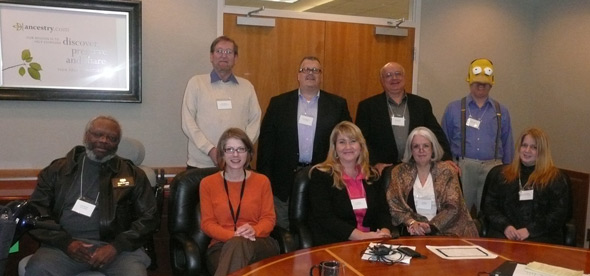
    Following is a group photo taken near the end of the day in Provo. The bloggers are in the same order as I’ve listed them above. Starting with Dick in the upper left hand corner (back row) and going left to right.
    Ancestry.com Bloggers Day 2010 group

    In order to keep the FCC happy, I need to state that Ancestry.com paid for the bloggers’ transportation to SLC, hotels, and our meals. They even offered to pay my airfare. However, I declined, as the flight from Bountiful to SLC would have only been about 5 miles, and I don’t believe that Salt Lake International accepts private aircraft.

  • Hair Loss Remedies and Causes

    Most women dream about having beautiful shining hair. They use a wide variety of hair care products like shampoos, conditioners and oils to take good care of their hair. But little do they know that some of the hair care products may have harmful affects on their hair because of the presence of some chemicals in the products. It is due to the indiscriminate use of hair care products that most women today are in search of some hair care remedies to restore natural hair growth.

    Aloe vera (aloe barbadensis) is a natural hair care remedy, which can be used for treating alopecia. It contains aloenin, a potent stimulant which promotes rapid hair growth without any irritation in the scalp.

    Rosemary (rosmarinus officinalis) is a medicinal herb used for treating various hair ailments. It is also used as a natural hair conditioner, especially for dark hair. It is also used as a treatment for dandruff. Rosemary oil stimulates the growth of hair. The main constituent of this hair care oil is caffeic acid and its derivative rosmarinic acid has antioxidant effects that help in providing shine to hair.

    Natural hair loss treatments are believed by many to yield a lot of benefits. These are also the safest methods. You would also cut back on the cost of hair loss products. Healthy natural treatments may include proper diet, exercise, proper hair care habits and herbal remedies. Many of these natural remedies have shown wonderful effects in preventing, reducing or yes, even reducing hair loss.

    Some herbs can be eaten or can be taken as a drink, while there are also other herbs that you can use externally. Try using aloe vera as a hair rinse. Not only that this will keep your scalp healthy, but will also stimulate your hair follicles to grow hair. Another natural treatment is aromatherapy. It has been found that the oils used in aromatherapy will be able to stimulate your hair follicles and encourage growth. Not only that, you need to remember that aromatherapy can help you get rid of stress, which is also one of the main causes of hair loss.

    Causes of hair loss:

    Genetics: The most common cause of hair loss is rooted in your genes also known as androgenetic alopecia, hereditary hair loss can begin any time after puberty, but usually sets in before the age of forty and may accelerate around the time you reach menopause.

    Severe illnesses and infections can put great stress on the body thus triggering the hair into a resting phase which result hair shedding. Often the body recovers naturally within 3 to 9 months and the hair begins to regrow until it almost resembles its original condition.

    Pregnancy: A large amount of oestrogen is produced during pregnancy causing the hair follicles to go into their growth phase. Once the birth is over the hormonal balance is restored and the opposite happens with the hair follicles going into a hair loss phase.

    Rough combing and brushing of the hair and vigorous rubbing with a towel after shampooing can cause it to break, adding further to the problem of Hair loss in women. Wide toothed combs and brushes with smooth tips are recommended to minimize hair breakage.

    Read about Find Tips, and also read about Causes of Bed Wetting and Vaginitis

  • Evertune keeps your guitar tuned forever

    IMG_0035
    At the Startup Debut event earlier on at CES, we got to check out this great, and practical, new guitar component called Evertune. It’s a bridge that keeps your guitar tuned at whatever you put it at, but not using freaky electronics. I thought it had to involve microservos and such, but no:

    The EverTune bridge feeds your guitar strings into an adaptive spring-tensioner inside the guitar body. As each string or tuner posts loosens, the springs compensate, maintaining exactly the tension you set the first time you tuned the guitar, no matter how hard or how often you play.

    inside-detail3-170Good for those of us who take an hour to tune our guitars because we don’t know what we’re doing at all. I am a little suspicious, however: if it’s such a simple principle and essentially has no downside, can it really have not occurred to anyone yet to create it? I mean, it is self-evident that no one has, but I wonder if there’s a dark side to the product they’re not telling us about.

    Their FAQ is pretty comprehensive, though, and assures the reader that there will be no real change in tone and you can bend it like you would any other guitar. They’ve also got better pictures of the guts; I accidentally set my camera to EV-2 so they came out a little dark.

    And just for kicks, here’s Greg rocking out:

    greg2


    Buy This Item: [Click here to buy this item]

    Read Original Article

  • CES so far

    CES always seems shorter than it really is. We’ve been here in Vegas since Tuesday, reporting live on almost everything of any importance, and we’re all goofy and tired. I usually hate CES. It’s a long slog through endless halls and repetitive meetings that go over what has already been gone over. But this year was different.

    This year’s CES was strangely subdued yet refreshing. CE companies have stopped the genitalia-waving associated with speeds, sizes, and megapixels and have started producing products with considerably more finesse. The devices we saw were well-designed and featured a number of clever UI tricks that can turn an average iPod dock into a thoughtful device designed for a specific purpose and person.

    Manufacturers have figured out that numbers on products don’t sell. Features sell, and I’m talking about top-line features, not the details. Consumers have been bombarded with speeds and feeds for so long that they’re now noise. TV manufacturers, for example, have stopped fighting about screen size and have started focusing on how to convince millions of viewers to switch to a 3D-ready Blu-Ray/TV combo. That’s going to be a tough fight and it won’t behoove them to mention very much about HDMI interoperability and refresh rate. Instead, they are creating compelling reasons to upgrade including on-screen, open widget and streaming systems as well as cool new energy saving techniques.

    The products this year are touchy feelie. Say what you want about cynical manufacturers “going green” but there is a focus on design and durability over high tech. Perhaps its a reaction to the economy – there’s no R&D budget – or maybe it’s a reaction to a skittish consumer who doesn’t want throwaway tech. Regardless, I like where this is going.


    Buy This Item: [Click here to buy this item]

    Read Original Article

  • Razer announces Chimaera gaming headset for Xbox360

    Rzr_Xbox Headset_01_BlkBrgThankfully, Razer is finally getting into the console market. In addition to the Onza controller we told you about yesterday, Razer is also launching a wireless gaming headset to use with your Xbox 360.

    The Chimaera definitely brings something to the table, it’s wireless of course, and supports full 5.1 sound just like your Xbox. Since this is considered to be a professional level headset, it also will allow you to daisy-chain several headsets together at one time so your entire team at the lan party can maintain communication. MSRP is $129.99, and they will be available worldwide. The one we saw at CES was a mock-up though, so I wouldn’t expect it soon.

    From the press release:

    Razer Chimaera Professional Gaming Headset for Xbox 360
    The Razer Chimaera Professional Gaming Headset for Xbox 360 is designed to provide sharp sound quality that optimizes the gaming experience with crisp, roaring sound from a 5.1 Channel Virtual Surround Sound system. Although the majority of games are encoded with the full 5.1 surround sound, most gaming headsets are only equipped to offer stereo-grade sound, while the Razer Chimaera offers the full range of sound, enhancing the entire Xbox experience. A Daisy-Chain solution allows multiple Razer base stations to be connected to create a direct, private communication channel for in-game team conversations. The circumaural design of the headset allows for optimum noise isolation for long-hours of comfortable gameplay without any outside interruptions.

    Razer Chimaera Professional Gaming Headset for Xbox 360
    COST: US $129.99; Europe €109.99


    Buy This Item: [Click here to buy this item]

    Read Original Article

  • Billionaire Investor Grows Deeply Concerned About China

    Billionaire Investor Grows Deeply Concerned About China
    Published: Friday, 8 Jan 2010 | 6:08 PM ET Text Size
    By: Lee Brodie
    Producer

    A widely followed billionaire investor is raising serious concerns about China and it appears more people are taking notice.

    In Friday’s New York Times the paper reiterated something billionaire hedge fund manager Jim Chanos first told the Fast Money desk, on the December 15th Halftime Report – that China has the potential to be as much of a watershed event for world markets as subprime was a few years back.

    A celebrated short-seller, Chanos isn’t the first person to turn bearish on China, but his commentary is widely followed because he has a knack for spotting looming problems, including Enron, Tyco, and the housing crisis.

    And speaking of housing, Chanos thinks China’s troubles will stem from a real estate crisis – much like our own troubles did.

    ”(China) is a surging real estate sector buoyed by a flood of speculative capital,” he says. “It looks like Dubai times 1,000 — or worse!”

    And to make matters that much more ominous, he feels Americans are investing in China without really grasping how the government works.

    “We just don’t believe the GDP numbers. We think they’re massively inflated by under-depreciating a very shaky capital-asset base.”

    All these elements have the trappings of a bubble, Chanos says, and one which may soon burst. If and when that happens, Chanos expects companies will fail. As a result he’s actively shorting China.

    "I’m looking for plays on the China investment boom, which we think will burst at some point,” he said in the middle of December. “Demand in China is over-inflated, that is clear."

    http://www.cnbc.com/id/34767468

  • Alder Rival Wins FDA Approval

    Luke Timmerman wrote:

    [Correction: 1/11/10, 9:15 am Pacific, with distinction between IL-6 and IL-6 receptor.] Genentech, the U.S.-based unit of Swiss pharmaceutical giant Roche, said the FDA has granted clearance to start selling a new drug for rheumatoid arthritis. The treatment, tocilizumab (Actemra), is the first approved antibody engineered to block the receptor for an inflammatory protein called IL-6, that is overactive in patients with rheumatoid arthritis. Bothell, WA-based Alder Biopharmaceuticals is attempting to block the IL-6 protein with a “fast-follower” antibody called ALD518, which is being co-developed with Bristol-Myers Squibb.


  • 2010 Detroit Auto Show: Live coverage starts Jan. 11

    2010 Detroit Auto Show Live Coverage

    Tomorrow morning, two of the egmCarTech editors will be driving a 2010 GMC Acadia (we’ll tell you more about that during our drive tomorrow) to Michigan for the 2010 Detroit Auto Show. We’ll be kicking off live coverage on Monday, rolling into Tuesday.

    Besides Transportation secretary Ray LaHood, Speaker of the House Nancy Pelosi, we’ll see over 50- new vehicle premieres. Here is a list of what you can expect to see next week in Detroit.

    If you need quick access to all the 2010 Detroit Auto Show news, click the shortcut in the sidebar under the Breaking and Featured Headlines – or you can just visit the 2010 Detroit Auto Show Tag directly.

    Check out the complete list after the jump.

    2010 Detroit Auto Show Debuts:

    2011 Audi A8
    2011 BMW 740i / 740Li
    BMW Concept ActiveE
    2011 BMW Z4 sDrive35is
    Buick Regal GS Concept
    2011 Cadillac CTS-V Coupe
    Cadillac XTS Concept
    Chevrolet Aveo RS Concept
    Chrysler sedan derived from a Lancia
    Fiat 500 electric Concept
    2011 Ferrari 458 Italia
    2011 Ford Focus
    2011 Ford Mustang GT
    2011 GMC Acadia Denali
    GMC Urban Utility Concept
    2011 Honda CR-Z
    Hyundai BLUE-Will Concept
    2011 Lincoln MKX
    2011 Maserati GranTurismo Convertible
    2011 Mercedes-Benz E-Class Cabriolet
    Mini Beachcomber Concept
    Toyota Dedicated Hybrid Concept
    Volvo C30 BEV
    2011 Volkswagen Touareg Hybrid

    …and much more.


  • Encapsulated Islets and the Cure

    The two main problems with efforts to cure the blood sugar abnormalities of type 1 diabetes are that there can never be enough human pancreatic material for transplant to cure more than a tiny percentage of type 1 diabetics, and all transplants require extremely toxic immunosuppression for the life of the graft.

    The logcial way around both problems is to transplant into diabetics pancreatic beta cells from pigs — which could be made available in unlimited amounts — and then protect them from the immune system by encapsulating them in a membrane which would keep out the immunologically active cells but still allow nutritional substances to enter and insulin to escape. This was first accomplished by Dr. Valdes working in Mexico in 1996.

    The problem is that while the membrane protects the encapsulated cells, it does not permit a normal nutrition supply to reach the cells, which only receive their nourishment by mechanical diffusion across the membrane, rather than normally through the vascular system. This means that the toxic by-products of metabolism build up and insufficient oxygen and other nutrients reach the cells, so they function poorly and die off quickly. One study found that encapsulated pig islet transplants produced only a 30% reduction in the insulin dose the recipients required and lasted for only 49 weeks, after which the pre-transplant status returned.

    While it is theoretically possible simply to transplant diabetics again and again with encapsulated islets every time they wear out, one company working on this treatment estimates each islet cell insertion operation will cost about $100,000, which could mean diabetics would have to pay about $50,000 a year for their entire life to maintain normal blood sugar levels — assuming the transplant can be made to work more effectively. Also, with repeated surgery, the abdomen will form scar tissue and may become unavailable to receive further implants. There is also a theoretical danger of massive peritonitis from repeated insertion of capsules into the abdomen, or from degraded cellular material leaking out of the pores of the differentially permeable capsule membrane.

    Another danger of concern to regulators is that the pig islets may contain novel viruses which have not yet jumped to humans, and that if this happens, there may be a lethal epidemic in the human population from sudden exposure to a virus for which humanity has no immunity. Also, hybrid viruses may form from mixing porcine and human viral strains in the same body, and the abdomen is the perfect petri dish for growing new infective agents.

    This seems unlikely, however, since millions of humans since 1931 have already been treated with fresh cell implants from various animals to boost the functional capacity of diseased organs, and the feared viral transmission from animals to humans generating a lethal pandemic has not yet occurred. However, various governments are now saying that any diabetics receiving encapsulated pig cells will have to agree never to have children afterwards, to report to local government health officials whenever they travel to a new jurisdiction, and never to donate blood. They also insist that only pigs raised in a sterile environment be used, which vastly increases the costs, even though fresh cell therapy has been allowed to operate in Europe for the past 80 years with no such restrictions.

    Sources: R. Elliott, et al, "Live encapsulated porcine islets from a type 1 diabetic patient 9.5 years after xenotransplantation," XENOTRANSPLANTATION, vol. 14, no. 2, p. 157 (2007); J. Isaac, et al, "Transplantation of neonatal porcine islets and sertoli cells," TRANSPLANTATION PROCEEDINGS, vol. 37, no. 1, p. 48 (2005)

  • Google VP of Engineering Andy Rubin: We’re Building a Nexus One for Enterprise [Digital Daily]

    Andy Rubin

    Once an Apple (AAPL) engineer, Andy Rubin went on to co-found mobile computing outfits Danger Inc. and Android, Inc. He sold the former to Microsoft (MSFT) and the latter to Google (GOOG), where he is now now vice president of engineering. He’s also the guy quarterbacking development of the company’s Android mobile operating system and the Nexus One–the smartphone with which Google hopes to fundamentally change the way people buy cellphones.

    In conversation with All Things Digital’s Walt Mossberg today, Rubin talked about the mobile space, Google’s plan for an enterprise version of the Nexus One and its vision for the way phones should be bought and sold.

    Walt and Andy talk about the genesis of the Nexus One phone.

    Walt starts off by asking Rubin about just how involved Google was in the development of Nexus One.

    Rubin replies, “We threw out crazy ideas to our partners at HTC and they were pretty good about plucking the good ones out of the air and building them into the device.”

    Walt asks about the new business model Google’s launched in concert with Nexus One. Was this something the company planned all along?

    “This is the next phase of Android–taking the newest versions of the product, placing them online and allowing consumers to purchase them directly,” says Rubin. “What we’ve learned is that there are more efficient ways of connecting consumers with the phones they’d like to purchase…easier ways.” Purchasing a Nexus One through Google, says Rubin, is a casual process. “No one’s breathing down your neck,” he says. “No one’s trying to upsell you.”

    Nexus One is aimed at consumers who love their Google services and live in the “Google world,” Walt notes. Yet, Google is encouraging developers to build new apps for Android and Nexus One. How do you reconcile that? Isn’t there something contradictory to saying “we’re an app platform, we’re open,” and then turning around and saying “we’re really a platform for people who love Google?”

    Rubin obviously doesn’t think so. He stresses that an OS can’t be successful unless people are developing for it. “It reminds me of the accessory business,” he says. “The most successful phones have the most earbuds, car chargers, etc.”

    Walt wonders if Rubin is at all surprised by the size of the apps revolution, by the fact that there are 100,000-plus apps in the iTunes Apps Store.

    The Google App Store is ranked number two behind Apple's App Store

    “I’m not surprised by it at all. This is what happens when you drop the barriers to entry,” he says, recalling how difficult it once was for developers to distribute their apps and how easy it is today.

    This new purchasing model Google has created for the Nexus One puts the company at the center of the experience. People who purchase the Nexus One think of themselves as Google customers. Rubin says, “What we’ve done here is to offer a mobile platform where people don’t have to worry about the plumbing.”

    Walt notes reports today about people unhappy the customer service Google is providing for the Nexus One; there is only e-mail customer service, and no phone support. Rubin concedes that there is no phone support and that there is sometimes a 3-day delay in response time. “We have to get better at customer service,” he says, adding that for launch, they are doing great.

    Moving on to the issue now of 3G network performance, which is been a very real issue at CES, especially for AT&T. Rubin says Moore’s Law applies to bandwidth — 4G is on its way, and after that 5G. Walt suggests that the addition of new phones like the Nexus One and the host of other superphones going to exacerbate the problem. Rubin says that doesn’t have to happen; if carriers were more on point and did what was necessary to maintain and upgrade their networks dropped calls etc. would be as much of an issue as they are for some carriers today.

    In his interview with Kara Swisher earlier, Palm CEO Jon Rubinstein–a former Apple engineer–said, “I don’t have an iPhone. I’ve never even used one.” In contrast, for those who may be wondering, Andy Rubin says he does use an iPhone. “What do you expect? I’m a gadget guy.”

    More Posts and Articles from CES

    Andy Rubin Interview Photos

    Buy This Item: [Click here to buy this item]

    Read Original Article