Blog

  • CES 2010: Vivienne Tam and Monster Collaborate on New Headphones

    monstervivienne1 300x196 CES 2010: Vivienne Tam and Monster Collaborate on New HeadphonesVivienne Tam joins the ranks of Lady Gaga, Dr. Dre, and now P Diddy with her new collaboration with Monster on a new headphones project. Tam is no stranger to fashion meets technology as we all know she has been the face behind the HP Digital Clutch Netbook from HP. We are super excited to see what this creative collaboration means. Will we see headphones with butterflies that match her spring collection? Who’s to say but we’ll certainly welcome it.

     CES 2010: Vivienne Tam and Monster Collaborate on New Headphones


  • Brittany Murphy 911 Call Released

    A 911 call released Friday reveals the frantic efforts by Brittany Murphy’s mother and husband to save the actress’ life on the morning she died.

    Click Here To Listen To The Emotional Audio….

    Murphy’s mother, Sharon, is heard crying and telling a fire dispatcher that the actress wasn’t breathing.

    “My daughter is passed out…please get here quickly…please hurry!” Sharon frantically told a 911 operator.

    The dispatcher then asks if Brittany is breathing, to which Sharon screams, “No, no!”

    The operator instructs the actress’ mother to begin CPR. Sharon explains that her daughter vomited, saying, “She just threw up tons of stuff, tons and tons of water.”

    Sharon and the actress’ husband, Simon Monjack, can be heard attempting to check if the 32-year-old actress is breathing. Monjack is then heard performing CPR while Sharon stays on the phone with the 911 operator.

    The distraught mom can also be heard pleading with Brittany to “please come back.”

  • CES 2010: Sony explains 3D gaming and more

    At their recent CES press conference in Las Vegas, Sony announced that an upcoming firmware update for the PlayStation 3 will allow the hardware to support 3D gaming. Now we know you’re still on a limbo on

  • L.A. Computing In The Future: Intel sees computers everywhere in your life

    At LA PC Fixer we also try to stay on top of coming developments in the IT industry that is just beginning to radically change our ways of doing business and interacting with one another.

    Toward that end, we’ve been following developments at the annual Consumer Electronics Show in Las Vegas to report back to our Los Angeles audience on the latest trends in computing (and computer repair issues!)  One of the interesting notes struck this week was by Intel’s CEO who sees a profound coming revolution in computing that is more personal and intimate to the average user: it’s going to go with you EVERYWHERE in the near future. (That might be a good thing, as looking for instant info on Brentwood restaurants while I’m driving through West L.A. can be really useful). Apparently, Computer repair in Los Angeles is won’t just be about responding to calls for service- we’ll have to be more mobile than ever  because computer users will be also.

    Intel Chief Executive Paul Otellini sees personal computing being integrated in nearly every aspect of people’s lives, and he wants Intel processors to be the center of all that technology.

    During his Thursday keynote at the Consumer Electronics Show in Las Vegas, Nev., Otellini demonstrated advances in mobile device applications, 3D content, smartphones and areas not usually thought of in personal computing, namely home energy management and digital signage.

    “Computing is no longer confined to your computer — it’s everywhere,” Otellini said.

    Full Story

  • GMAC to post $10B loss after U.S. govt takes the wheel?

    Filed under:

    No one likes to bandy on with clichés, but in some cases avoiding a cliché is to ignore a long history of facts and experience that brought it into existence. The cliché we speak is the one about hurling good money after bad. After the government hosed down GMAC with another $3 billion, Uncle Sam’s stake in GM and Chrysler‘s official lender is anywhere from 56 percent to 70 percent depending on the kind of shares the government holds.

    The money IV, though, hasn’t come close to stemming the losses at GMAC – specifically its Residential Capital unit that was a subprime lending fiend not so long ago. The parent company looks to report a $10B loss for 2009 – its largest yearly loss ever – due to a fourth quarter loss of $5B, which also sets a company record for one quarter.

    As to the wisdom of combining good money and bad, the government doesn’t have a lot of choice: other bailed-out banks’ lending practices would make Scrooge say, “Wow, that’s stingy,” and if GMAC goes under then a lot of GM and Chrysler dealers take fatal hits. Nevertheless, don’t expect this year to bring better results: delinquencies will peak next year while home prices bottom out, and the government’s subsidies for mortgage-holders will probably end this year. All of that probably equals a prognosis that could come from the Book of Cataclysm: “Let there be pain.”

    [Source: Business Week | Image: Craig Jones/Getty]

    GMAC to post $10B loss after U.S. govt takes the wheel? originally appeared on Autoblog on Fri, 08 Jan 2010 18:01:00 EST. Please see our terms for use of feeds.

    Read | Permalink | Email this | Comments

  • CES 2010: Philips’ Activa Portable Audio Player

    Activa AngledHave you ever been in in the gym hitting a really good workout and suddenly a sad slow song comes on and kills your buzz? Philips’ Activa Portable Audio Player has a good solution to this problem. The designers put this together with the intention of optimizing your workout in every way. It helps provide motivation by arranging your music by energy levels. It also provides real time vocal feedback on how your doing. If you slow down it will encourage you vocally. If you speed up it will select a song with a faster tempo.

    Of course this will take an initial set up process of analyzing your music and selecting songs that motivate you, but that is sure better then trying to do that on your own in the middle of a workout. If you’d rather avoid that whole process though, you can just use the presets right out of the box and get started. Vocal feedback is also a plus because you don’t have to look down and fidget with a device to monitor your progress, you just listen. The unit itself is designed for action with  sport headphones with ear hooks, clip-on design, protective pouch, and cable clip management. Will be available in April for about $130. See Philips for more information soon.

     CES 2010: Philips Activa Portable Audio Player


  • Temp Hiring Provides Bright Spot in Otherwise Dreary Report

    The hiring of temporary workers is a leading indicator of future job growth, and new employment numbers suggest the U.S. economy may be on the road to recovery.

    Last month, temporary employment rose 2.5%, seasonally adjusted, according to the Labor Department’s employment report. “As employers feel more secure, they bring back furloughed workers, lengthen the hours for existing workers and then bring on temporary staffers,” says Richard Wahlquist, president and chief executive officer of the Alexandria, Va.-based American Staffing Association. “These are the classic early stage of recovery.” Interim job creation typically precedes standard job growth by three to six months, says Mr. Wahlquist.

    It’s also common for employers to convert temporary hires into staff employees, says Brett Good, district president of Robert Half International, a staffing company based in Menlo Park, Calif.

    “Six to nine months ago, the jobs available were truly temporary,” Mr. Good says. “Now people are being brought in on a project basis, and employers are indicating that these positions will be rolled over into permanent payroll once the economy stabilizes.”

    After cutting so deeply into infrastructure during the recession, companies are at a breaking point, adds Mr. Good. They simply can’t increase productivity without adding to the head count, he says.

    Growing sectors include financial services, manufacturing and information technology, says William Grubbs, executive vice president and chief operating officer of Spherion, a staffing firm based in Fort Lauderdale, Fl. “Moving forward, we’re also going to see even more growth in the more high-end professional sectors,” he adds.

    Meanwhile, with 15 million people out of work, competition for even temporary positions will be stiff, warns Mr. Wahlquist. “Companies will see talent pools as deep and rich as they’ve ever been,” he says. “But the job market will continue to seem brutal.”


  • Once Again, Cold Weather Doesn’t Disprove Global Warming | 80beats

    snowstormWhen the Copenhagen climate summit ended in disappointment and finger-pointing, we saw again just how difficult it would be to get the world’s nations on board for an agreement to lower greenhouse emissions and slow global warming. This week brings another reminder of how far away we are from meaningful action: We can’t even get past the difference between weather and climate.

    It’s bitter cold this week, even for January. Beijing had its coldest morning in almost 40 years and its biggest snowfall since 1951. Britain is suffering through its longest cold snap since 1981 [AP]. The southern United States is in the grip of freezing weather; the Midwest has seen dangerously cold wind chills far below zero. Trying to stave off the inevitable “where’s your global warming now” chants, the AP and other news sources rushed to run pieces trying to get across—one more time—that weather isn’t climate. The chants came, inevitably. But despite pundits and columnists who try to conflate the two to take the same old swings at global warming, a single bout of cold weather—or hot, for that matter—doesn’t actually say diddly squat about long-term climate patterns.

    However, if one can set aside for a moment climate politics as usual and this weather-is-climate misunderstanding, the short-term weather patterns at play in our current spell of frigidity are pretty interesting. Whatever happened to this year’s El Niño, for instance? Shorter-term, naturally variable patterns such as El Niño account for seasonal differences — making one winter warmer or colder than another. But it takes a strong El Niño to dominate the pattern of a U.S. winter with unusually warm and dry conditions across the northern tier of the country, and cooler and wetter weather across the south, and the current El Niño is not strong [Discovery News].

    In addition, there’s the curious case of the current Arctic Oscillation, which is rather out of sorts. Essentially, air pressure is measured at various places across the Arctic and at the middle latitudes of the Northern Hemisphere – about 45 degrees north, roughly the latitude of Milan, Montreal or Vladivostok. The difference between the average readings for the two latitudes gives the state of the Arctic Oscillation index [BBC News]. A positive reading means high pressure in the mid-latitudes and low pressure at the pole; a negative reading means it’s the opposite. And what we see right now is an “extraordinary negative plunge” to levels not seen since at least 1950, Andy Revkin shows at his New York Times blog. What these conditions mean is that cold air spills out of the Arctic down to mid-latitudes, which this time round includes much of Europe, tracts of the US and China [BBC News].

    As you can see in the historical chart of the Arctic Oscillation, it’s a pretty scattershot phenomenon. But it’s an important one, which could help to explain why it’s frigid in the continental United States but unseasonably nice in some far northern locales. In 2001, after analyzing its impact on Northern Hemisphere winters, University of Washington researchers suggested that effects of the Arctic Oscillation on weather patterns “appear to be as far-reaching as those triggered by El Niño in the South Pacific” [Discovery News]. Jack Williams has more about this.

    Related Content:
    80beats: The New Murder-Mystery Game: Who Killed Copenhagen?
    The Intersection: Fox News Presents a Classic “He Said, She Said” on Climate Science
    The Intersection: Sounds Familiar
    The Intersection: How the Global Warming Story Changed, Disastrously, Due to “ClimateGate”
    DISCOVER: The Next Ice Age

    Image: flickr / bsabarnowl


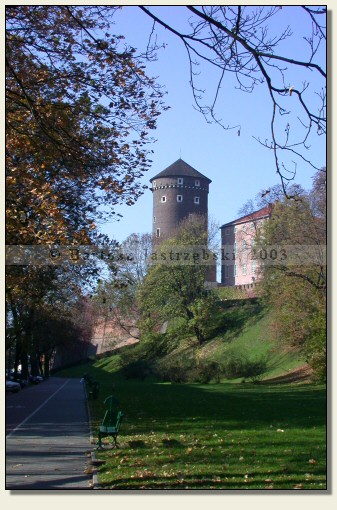
  • [Kraków]Osie i otwarcia widokowe

    Wrocław ma świetny wątek http://www.skyscrapercity.com/showthread.php?t=959614 i pomyślałem, że w mieście Krakowie, o którym mówi się, że z wielką pieczołowitością traktuje ten temat i ma w tym ogromne tradycje takie widoki mogą zapierać dech w piersiach. Myślę, że jeśli wątek się rozkręci, to nie tylko mnie uda się poznać miejsca i widoczki, o których nigdy nie miałem pojęcia.

    Może na wklejanie swoich zdjęć skusi się również Paweł Krzan, a wtedy dostarczone nam mogą być wrażenia na najwyższym poziomie.

    Pozwolicie, że wątek będzie obejmował cały Kraków, a nie tylko Stare Miasto i nikt mam nadzieję, nie będzie krzywił się, jeśli kiedyś pokażę tutaj kominy łęgu lub "akademikobloki" czy nawet zwykłe bloki zamykające perspektywę?

    Tak na początek wyszukane w googlach:

    http://zamki.net.pl/mapa-foto.php?p=900

  • Man OK After Getting Penis Stuck In Pipe

    Sometimes there simply are no words: A British man is resting in a UK hospital after he got his penis stuck in a metal pipe and had to have it freed by an industrial metal grinder.

    According to The Metro, the 40-year-old unidentified man showed up at Southampton General Hospital in the UK where doctors were unable to remove the pipe. The Hampshire Fire and Rescue Service had to be called in to safely cut the pipe off using a grinder in what a spokesman said was a “delicate operation.”

    The penis in queston was left bruised and swollen, but is expected to heal.

  • CES 2010: iLuv iMM190 iPod Dock Speakers

    Picture 6This is a unique new table side alarm clock that also doubles an iPod dock. Turn the speaker anyway you choose and the clock will rotate over for you. Up close and personal the sound is amazing and when it launches soon it will be available in silver with other colors to follow. Check out iLuv for more info soon.

     CES 2010: iLuv iMM190 iPod Dock Speakers


  • Clean Energy Business Zones: A tool for economic growth

    by Josh Freed

    Whether it was steel, the railroad, the automobile, or the Internet,
    America’s leadership in technological innovation has made it the
    world’s economic power for the last 100 years. Today, we’re on the
    brink of the next revolution with the transition to clean energy. Of
    course, new technologies inevitably push old ones aside—personal
    computers, for example, killed typewriter industry in the 1980s.

    The transition to clean energy will inevitably have the same effect.
    While many communities will immediately prosper from new solar and wind
    plants or advanced battery production, others will initially lose jobs
    and even businesses or industries. Yet these same communities that
    might suffer during the transition, particularly those in the
    industrial Northeast and Midwest and rural South and Plains, could
    capitalize on clean energy. They just don’t have access to the economic
    tools to do it on their own. That is why Third Way worked with Rep. Dan
    Maffei (D-N.Y.) to develop Clean Energy Business Zones (CBiZ).

    CBiZ recognizes that the private sector and particularly small
    businesses—not government—are in the best position to create new
    jobs. It creates specific incentives for these businesses to locate in
    areas that have skilled workers or a modern infrastructure but have
    lost jobs or been economically disadvantaged by the change from
    conventional to clean energy. This will help spur growth in areas that
    too often in the past missed the economic benefits of innovation.

    Make no mistake, this is not just about creating the next Microsoft or
    securing a massive wind turbine factory. In places like Rep. Maffei’s
    Syracuse-area Congressional District it could also mean the difference
    for a contractor who wants to expand his building efficiency business
    or allow a researcher to hire the staff she needs to manufacture a new
    type of LED lighting.

    This program would be modeled on the successful Empowerment Zone
    program, but would be distinct and would focus specifically on helping
    communities take advantage of clean energy. The zones would provide
    businesses substantial financial incentives to build such sectors
    including employment tax credits, increased business expense
    deductions, and favored capital gains treatment.

    America has led virtually every technological revolution of the past
    century. We’ll do it again with clean energy. But we have the
    opportunity to make sure that communities that missed out on the
    economic booms of past transformations don’t miss out yet again. The
    CBiZ program is one important tool we can use to help American business
    grow where growth is needed most.

    Related Links:

    Community-Owned Clean Energy

    The policy and politics of Obama’s $2.3 billion in clean energy tax credits

    How do I find a green job?


  • How Blogging and Tweeting Leaders Build Better Teams

    blogging_leadership_jan10.jpgIn 2007, Wired Magazine published an article entitled the See-Through CEO where Redfin founder Glenn Kelman gained the public’s sympathy and a slew of new members by blogging his corporate woes. Lately we’ve been looking inward at how companies can improve their employee recruitment strategy through social media. Great candidates research you before accepting an offer, and here is what your social media profile reveals to them.

    Sponsor

    LEARNING: A few months ago Bessemer Associate Sarah Tavel wrote an article entitled Venture Capital’s Freemium Model. Tavel explains that her firm gives away free advice via blogs, tweets and white papers. The point of all this is to display their knowledge to potential portfolio companies and make startups understand the value of Bessemer’s advice. By this same reasoning we can assume that CEOs who blog establish themselves as thought leaders and attract better employees.

    twits_beer_jan10.jpgTRANSPARENCY: Flybridge Capital Partners’ Jeff Bussgang gives transparency and accessibility as reasons for his blogging. Says Bussgang, “The VC business can be an intimidating business to many.  I am an iconoclast at heart.  As a former entrepreneur, I particularly enjoy breaking down barriers and making the VC business more accessible and transparent for others.” Make your business accessible to both employees and potential hires. Rather than waiting for scheduled meetings to celebrate your successes or public partnerships, give others the option of reading about developments as they happen. You might even get some useful feedback in the comments.

    HAPPINESS: Zappos CEO Tony Hsieh once wrote that Twitter made him “a better and happier person.” He asks, “What would you do differently if there were a permanent public record of what you do or say?” Hsieh argues that Twitter adds a public broadcast element that reminds him to be more positive, thankful and empathetic. He writes that those same values trickle down to the corporate culture of Zappos. As a company voted one of Fortune Magazine’s Top 100 Companies to Work for in 2009, Hsieh makes a great case for using social media as a recruitment tool.

    Discuss


  • Video: Justify Your Gadget, Geneva Audio [Ces2010]

    We give them 10 seconds; they give us the best pitch they can huck.


  • CES: Samsung Omnia 2 to act as Wii-like controller for Samsung’s Smart HDTV

    [See post to watch Flash video]

    Samsung has been demonstrating their smart HDTV which comes with its own applications store. In the above video the TV is shown interacting with a Samsung Omnia 2 over WIFI.

    Samsung will be releasing the first batch of TV apps in the spring free of charge, while premium apps will be available for purchase via the platform’s transactional interface in the summer of 2010. Consumers, for example, would be able to play Texas Hold ‘em poker with friends where the TV screen shows the table and the phone serves as the controller, while showing cards in your hand like a real poker game.

    Read more about Samsung’s connected TV’s at Engadget here.

    Share/Bookmark

  • Some Thoughts on Joining the GigaOM Family

    After four years of watching from afar as my friend Om has built a blogging empire, I’ve finally caught up with him. As many of you may already know from reading his post about the news, I’m joining the GigaOM family as a senior writer.

    If you’re wondering who I am and why you should care, you can find out more about me on my blog, on my Facebook page, through my LinkedIn profile or by following me on Twitter. For the past 15 years or so, I’ve been a writer and editor with the Globe and Mail, a daily national newspaper (and web site) based in Toronto, most recently as its first “Communities Editor.”

    I’ve been a fan of Om’s ever since I discovered his blog while he was still working for Business 2.0, and came to like him even more when we had him at our very first mesh conference in Toronto in 2006. He doesn’t hesitate to shoot down popular perceptions, and when he speaks his mind it is always worth paying attention to, even if (and in fact especially when) you disagree with him.

    Over the past few years, Om and his stellar team of writers and editors have put together what I think is one of the world’s premier technology blog networks, one that has a well-justified reputation for smart reporting and analysis. Adding video and GigaOM Pro to the mix has made it even more of a dominant force when it comes to solid technology perspective and context.

    I’m honoured to have been asked to join this great company, and to get a chance to work with all of the terrific writers here. It feels like the first day of school and I get to sit with the cool kids 🙂

    As the web has filled up with fast-food-style news hits and me-too blog posts, each more shallow than the last, I think the kind of intelligent and insightful coverage GigaOM specializes in has become even more important now, and I hope to be able to contribute to that. Thanks again to Om for the opportunity.

    If you need to reach me, you can get me at [email protected] or [email protected], or through one of the social networks mentioned above. Onward!

  • You May Think You Need A Blepharoplasty When You Really Need A Browlift

    A lot of people go into a cosmetic surgeon‘s office and request an eyelid lift procedure to correct an excess of skin that they have in their upper eyelids. Many times the actually problem lies within their brow and a brow lift is the answer. In these patients, the brow itself has actually fallen and has resulted in a “bunching” of upper eyelid skin. With an aggressive removal of skin during an eyelid lift, typically the brow will be pulled further down which will just make the issue even worse and can sometimes create a tired or weary appearance.

  • Hands On Casio’s EX-FH100 High Speed Exilim Camera: Slow Mo Tech is Maturing [Cameras]

    I love Casio slow motion cameras, even if their stills are generally not all that great. The new EX-FH100 is pocketsized, has a 10x zoom and a new 120frame per second mode that doesn’t have low light issues. Love it.

    Older cameras would be impossible to use at 300FPS indoors, because the grain and exposure would become an issue. A quick test on the floor of CES showed that even zoomed in, the 120FPS mode, benefiting from the highly light sensitive backlit CMOS, did really well. And truthfully, 120FPS is better for sports, etc than 300FPS, in my opinion. The 120FPS mode also has another benefit — 640 x 480 pixel res, which is more usable than the old 300FPS mode’s 512 x 384 res. It has modes up to 1000FPS, though.

    I’m getting one of these, without a doubt.


  • Warning on poisonous gas in African lake

    Warning on poisonous gas in African lake

    Trapped methane and carbon dioxide could be set loose by a quake or landslide, say scientists
    More than two million people living on the banks of Lake Kivu in central Africa are at risk of being asphyxiated by gases building up beneath its surface, scientists have warned.
    It is estimated that the lake, which straddles the borders of the Democratic Republic of Congo and Rwanda, now contains 300 cubic kilometres of carbon dioxide and 60 cubic kilometres of methane that have bubbled into the Kivu from volcanic vents. The gases are trapped in layers 80 metres below the lake’s surface by the intense water pressures there. However, researchers have warned that geological or volcanic events could disturb these waters and release the gases.
    The impact would be devastating, as was demonstrated on 21 August 1986 at Lake Nyos in Cameroon, in West Africa. Its waters were saturated with carbon dioxide and a major disturbance – most probably a landslide – caused a huge cloud of carbon dioxide to bubble up from its depths and to pour down the valleys that lead from the crater lake.
    Carbon dioxide is denser than air, so that the 50mph cloud hugged the ground and smothered everything in its path. Some 1,700 people were suffocated.
    “The lake was essentially like a bottle of beer that had been shaken up,” said Professor George Kling, of the department of ecology and evolutionary biology at Michigan University. “When you opened it, carbon dioxide bubbled up, and the beer frothed over. A glassful is OK. A lakeful is deadly.”
    Kling has since turned his attention to Lake Kivu, which is more than 3,000 times the size of Nyos and contains more than 350 times as much gas. More worrying is the fact that the shores of Kivu are much more heavily populated. About two million people live there, including the 250,000 citizens of the city of Goma.
    Mount Nyiragongo, near Goma, erupted in 2002 and lava streamed from it into Lake Kivu for several days. On this occasion there was no disturbance of the lake’s deep layers of gas and no deadly outpouring of carbon dioxide or methane. However, Kling has warned – in the journal Nature this month – that in the event of another eruption the region may not be so lucky again.
    Indeed, the impact would dwarf the disaster that struck Nyos. “Kivu is basically the nasty big brother of Nyos,” Kling told Nature.
    The source of Kivu’s problems stems from carbon dioxide that has bubbled up through the lake bed from molten rocks below. The region – in Africa’s Great Rift Valley – is a centre of volcanic activity. In addition, some of this carbon dioxide has been converted by bacteria in the lake into methane. Hence the accumulation of both gases.
    According to studies by researchers at the Swiss Federal Institute of Aquatic Science and Technology, there was a 10% rise in carbon dioxide concentration, and a 15-20% increase in methane concentration in Kivu between 1974 and 2004. At the same time, plankton fossils on the lake’s bed have revealed several massive bouts of biological extinctions in Kivu over thousands of years. However, it is impossible to say if a new one is imminent, researchers told Nature.
    At the same time, engineers are trying to tap Kivu’s rich supplies of methane – by lowering pipes from floating platforms down to its holding layers and siphoning off the gas. This could then be burnt and used as a source of industrial and domestic energy.
    Several projects have been established, though only one is currently generating electricity – albeit sporadically – for the Rwandan grid. Another platform sank last year shortly before it was scheduled to begin production.
    Tapping Kivu’s methane could, theoretically, reduce the risk of a deadly eruption, say engineers. However, scientists have also warned that tampering with the lake’s gases also carries a risk of triggering a disaster.

    Brunei News