Here are some photos I toke on a tour provided by Bus Eiréann to Connemara and Kylemore Abbey on September 2008.


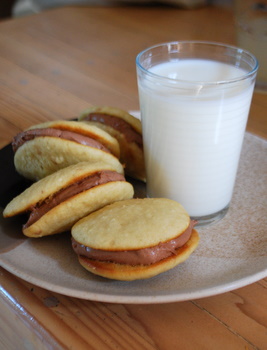
Whoopie pies are a classic snack cake – despite the name that makes it sound like some sort of practical joke (like a whoopie cushion). They’re two soft cookies sandwiched together with a creamy filling. The standard whoopie pie has a chocolate cookie and a vanilla cream center. As good as this combination is, there is no harm in switching things up a little, right?
These are reverse whoopie pies, made with a vanilla cookie and a chocolate cream filling. The chocolate filling makes them seem a little bit richer than the classic pies. The cookies are very soft and cake-like, so eating the whoopie pie is almost like eating a cupcake where the frosting is in the center.
The pies are easy to make. Simply dollop the batter onto a baking sheet, as you would with regular cookies, then allow them to cool completely before making the chocolate cream filling. Try to get every cookie to be about the same size, so that it is easy to match them up in pairs for the sandwiches. Otherwise, you can make them any size you like.
Filed under: Chicago Auto Show, Sedan, Performance, BMW

BMW has stated several times that it has no plans to do an official M version of the current F01 7 Series, but that doesn’t mean it won’t offer a hotter version of its flagship sedan courtesy of Alpina.
At next month’s Chicago Auto Show, BMW will be reviving the Alpina B7, and while the sweet 4.4-liter twin turbocharged V8 remains under the hood, the dial has been turned up from the stock 400 horsepower to a full 500 hp, along with 516 pound-feet of twist. That should be enough to catapult the big sedan to 60 mph in just 4.5 seconds.
By itself, big power is useless unless spend all your time at the drag strip and the 7 Series is capable of so much more. Handling has long been a BMW hallmark and the 21-inch, 20-spoke Alpina wheels wrapped in Michelin PS2 rubber should provide plenty of grip for directional changes and positive and negative acceleration. A deeper front air dam and a rear decklid spoiler help keep the car glued to the pavement at autobahn level velocities, while inside the B7 coddles its occupants in upgraded leather and wood trim.
The B7 goes on sale this spring in both standard and long wheelbase formats, although pricing has yet to be announced. Make the jump for all the details.
Gallery: 2011 Alpina B7


[Source: BMW]
Continue reading BMW Alpina B7 brought back for 2011
BMW Alpina B7 brought back for 2011 originally appeared on Autoblog on Fri, 08 Jan 2010 16:27:00 EST. Please see our terms for use of feeds.
Kate Gosselin’s new long hair made headlines this week, but the price of beauty doesn’t come cheap. The reality Octomom’s crop of blonde hair extensions are worth almost $7,000, according to stylist Ted Gibson.
“My haircuts are $950,” Ted told RadarOnline.com. “The color would have been about $500, and the extensions, which were great length extensions, would probably cost about $5000.”
Kate spent a day Gibson’s chair having her spikey ‘do transformed into a longer sleeker look that the stylist calls “Clean Slate Kate.” It took Gibson, who has worked on A-list stars like Angelina Jolie and Anne Hathaway, approximately 20 hours to add hundreds of extensions to Kate’s signature short hair. The former star of Jon & Kate Plus 8 star premiered her long locks on the cover of PEOPLE this week.
“The idea was to take her from being kind of ordinary with that spiked in the back and that long. She was kind of hiding behind that piece in the front. So what i wanted to do, instead of making it so it was shorter to longer, I wanted to make it shorter in the front, a little sexiness around the eyes with the bang,” Gibson explained. “We made her sexy. We actually changed the way she felt about herself and I think the way that the public will view her, as well.”
If you have recently gone through dramatic weight loss and still seem to have troubles getting rid of the fat in certain problem areas of your body then there is a procedure that is perfect for you.
Liposuction is a procedure that aspirates the fat from your body by using a hollow instrument called a cannula that is connected to a negative pressure machine or a syringe.
Liposuction is very safe when done by an experienced plastic surgeon and it often goes very well with other procedures like abdominoplasty, facelift surgery, body lifts, arm lifts or Breast Reduction and breast lift surgeries.
For anyone looking to learn more about this procedure here is a page I found that should be very useful in teaching more about Liposuction.


NVIDIA unveiled the next generation of its Tegra mobile processor at CES yesterday, promising to deliver tablets, smartbooks and smartphones with a blazing web browsing experience, HD video, Flash 10 support and multi-day battery life. Rather than go on and on, we will simply let the Tegra 250 specs speak for themselves:
This second iteration of the Tegra mobile chipset is in the production stage with a development kit ready and waiting for eager programmers to build applications for this next generation in mobile computing. While you wait for those drool-worthy mobile devices to emerge, you can check out a 3D gaming demo showcasing the prowess of the Tegra 250 chipset. And oh yeah, remember that the video blow is from a mobile device, not an Xbox 360.

Buy This Item: [Click here to buy this item]
I took a whirlwind tour through the Microsoft booth and they had a display of some nice notebooks all in one place. I snapped pics to share:


 Google’s mobile page has undergone a minor change. Below the search bar, you can now toggle a menu, called “near me now” to populate a list of nearby businesses, ATMs, restaurants, cafes, etc., based on your current location. Not quite a Yelp killer yet, but it’s something. Available for iPhone 3.x and Android 2.x phones. [Google Mobile]
Economia
Paranaíba localiza-se estrategicamente numa região de integração das economias do Brasil(Mato Grosso do Sul, São Paulo, Minas Gerais e Goiás)situação que começa a ser explorada mais intensivamente com a construção do gasoduto e o fortalecimento das relações comerciais dentro do Mercosul.
O município de Paranaíba situa-se no entroncamento de três macro-eixos de desenvolvimento econômico de Mato Grosso do Sul:
* Está ao lado do eixo aquaviário leste,formando pelo Rio Paraná,rota de ligação fluvial com o mercosul;
*É o ponto de partida do eixo Nordeste,que corta um para Costa Rica e segue a linha da Ferronorte,unindo-se e integrando-se aos demais Estados do Centro-Oeste e outras regiões;
*Insere-se dentro do raio de influência do eixo Leste-Oeste,basicamente determinado pela rota traçada pelo gasoduto no trecho Corumbá-Campo Grande-Três Lagoas.
Características geográficas
Área 5.402,778 km²
População 40.259 hab. est. IBGE/2009 [2]
Densidade 7,16 hab./km²
Altitude 374 m
Clima Tropical de altitude Cwa
Fuso horário UTC-4
Indicadores
IDH 0,772 médio PNUD/2000 [3]
PIB R$ 400.041.000,00 (MS: 11º) – IBGE/2007[4]
PIB per capita R$ 10.266,00 IBGE/2007 [4]
Br – 158 Liga Cassilândia a Paranaíba


Br – 158 – Chegando de Aparecida do Taboado

Praça da República


Igreja Matriz


Forúm, Vara e Paço Municipal


Antiga Santa Casa – atualmente funciona um outro hospital nesse local

Biblioteca

UEMS


UFMS

FIPAR

Escola Aracilda – maior escola da cidade

Escola José Garcia Leal – no centro

Rodoviária

Centro


Arena no Parque de Exposições

Hotel Fazenda Santa Maria e um Rancho no Rio Paranaíba


Complexo Poli Esportivo


Praças em alguns bairros da cidade


Os dois prédios de Paranaíba


Ponte do Porto Alencastro – Divisa MS/MG


Avenida Durval Rodrigues Lopes


Lago em Frente a UEMS – não tenho fotos recentes!


Avenida Getúlio Vargas


Algumas Avenidas


Aéreas


Paranaíba Moto Show

Inicio da Serra entre Paranaíba e Cassilandia

Carnaíba


Inverno em Paranaíba – 2009


Tenho mais fotos! Vou colocar quando tiver mais tempo!

Bruce V. Bigelow wrote:
When San Diego tech firm Verari Systems abruptly laid off nearly all of its employees last month, senior vice president Dan Gatti maintained that the doors remained open, a few executives were staying on, and the company was restructuring its business. In a Dec. 14 statement posted on Verari’s website, the company said it had initiated a process to protect “our customer investment and benefit our creditors as we restructure the business…There are several options that are being considered to provide solutions to our customers.”
Several former employees denounced the company’s line in e-mails to me and in comments posted beneath our story, saying all 200 employees were terminated Dec. 11 and Verari, which specializes in data storage hardware and green data storage centers, has no business left to restructure.
It now appears that Verari has indeed ceased operations. An advertisement on its website is soliciting offers for an asset sale, saying, “All assets will be sold by CMA (Credit Management Association) as assignee for the benefit of creditors.” Such language reflects a well-established tool that is an alternative to bankruptcy for insolvent companies that cannot continue to operate. A rough translation is that Verari pledged its blade-based computers and other equipment to secure a bank loan—and the banker is selling the assets to recoup the debt. The deadline for submitting bids was 5 p.m. yesterday.
The CMA representative handling Verari’s asset sale did not return my call. The Burbank, CA-based company explains on its website that secured creditors view the process known as a “general assignment for the benefit of creditors” as useful “because the secured creditor is relieved of the legal costs and risks associated with the foreclosure and sale of its collateral.”
It seems likely that Verari’s insistence on characterizing its shutdown as a restructuring was intended to assuage customers that have installed Verari’s data storage equipment and who might reasonably expect some level of continued technical support. Those customers include Akamai, Microsoft, Qualcomm, Petrobas, Harris, and Lockheed-Martin.
The Federal Reserve just released consumer credit data for November. The moral of the story: consumers are paying off some of their debt and/or not getting much new credit from banks. You might remember all of the demands that Congress put on banks to increase lending during the bailouts. In theory, if they had, then credit outstanding should have increased over that period. Well, I thought it might be fun to see just how effective (or ineffective) that pressure was.
According to the data, banks must not have been too ambitious in providing more consumer credit. In fact, since September 2008, consumer credit outstanding has declined. Here’s a chart:

This shows a decline of 4.4% in total consumer credit outstanding over the period from September 2008 through November 2009. Revolving and non-revolving credit decreased by 10.4% and 0.8%, respectively.
So who’s to blame? Let’s look at how the debt holders have changed the amount of credit they have outstanding to consumers from the third quarter of 2008 to November 2009:

I find this chart rather fascinating.
Observation 1: Wow Federal Government. Your consumer debt outstanding has increased by 72% in less than five quarters! That’s the kind of lending growth that only Uncle Sam can provide.
Observation 2: Finance companies saw a sharp decline. That makes sense, considering so few finance companies are left and how cash poor they are. Think about the struggles of CIT and GMAC. At least banks have deposits. Finance companies have likely had far more trouble securing financing to originate more loans.
Observation 3: Securitization is also way down. Remember, this even includes the Federal Reserve’s programs to prop up the securitization market. Once the Fed withdraws that support, securitization will likely be even slower, meaning that consumers will have a much harder time getting credit.
Observation 4: Commercial banks, credit unions and savings institutions have largely kept their consumer credit portfolios constant in size. So they didn’t do a whole lot of new lending since the bailouts, or at least they didn’t grow the amount of consumer credit on their balance sheets. Any lending they did merely replaced what was paid off or what was written off.


 With a fragile economic rebound under way, distressed asset investors and corporate restructuring specialists will discuss the new rules shaping business transactions at the 2010 Distressed Investing Conference, sponsored by the Turnaround Management Association, Jan. 27-29, at Bellagio, Las Vegas.
A case study session analyzing factors that led to electronics retailer Circuit City’s eventual liquidation opens the educational program at 8:30 a.m. on Jan. 28.
Professionals with direct connections to the case will serve on the panel.
Restructuring, investment and legal experts will talk about post-recession moneymaking opportunities and potential pitfalls in other presentations that include:
Thursday, Jan. 28
Friday, Jan. 29
Details about the conference schedule and speakers are available at turnaround.org.
About Turnaround Management Association
The Chicago-based Turnaround Management Association has more than 9,000 members in 46 regional chapters who comprise a professional community of turnaround practitioners, attorneys, accountants, investors, lenders, venture capitalists, appraisers, liquidators, executive recruiters and consultants.
Most efforts at a cure focus on normalizing blood sugar levels, but since type 1 diabetes is an autoimmune disease, some scientists wonder why repairing the first symptom it causes — abnormal blood sugar — should also cure the disease itself. Curing a disease of the immune system by tinkering with the metabolism seems counterintuitive.
The approach which has attracted the most funding over the years has been the artificial, implantable pancreas, a device which would store and release just the right amount of insulin needed for current blood sugar requirements. The fact that scientists have been working on this continuously for about 40 years now without success suggests it may never be workable.
The problems are that since the blood sugar levels in different parts of the body are naturally different, it is difficult to know where the level should be measured to produce an accurate feedback system. Also, any probe in contact with the blood to measure sugar levels will become coated with antibodies, which will then render the probe ineffective. The body normally releases insulin from the innermost core of the body at the pancreas, where it is metabolized by the liver before going into general circulation, so unless the artificial pancreas could be positioned there, the instant response of insulin output to metabolic requirements can never be achieved. But the pancreas is extremely difficult to access surgically, and there is no prospect of ever being able to perform such major surgery on any significant number of type 1 patients so as to cure the disease for the whole population with this intervention. Finally, evolution has recognized that insulin overdose is an extremely dangerous risk, so it releases insulin from tens of thousands of beta cells, each of which senses the right amount to release, with the result that if one or more beta cells misfunction, the others can put out more or less insulin to correct for this. But with any artificial pancreas it would be economically impossible to replicate the tens of thousands of functional units the body has, so the danger of a sudden, massive release of stored insulin as a result of mechanical malfunction would be high, and this would cause the rapid death of the patient.
I would guess at this point that the artificial pancreas will never represent a practical solution to treating diabetes, even if we assume the now contested hypothesis that the complications of diabetes are caused solely by the blood sugar abnormalities, which are themselves only the first side-effect of an autoimmune disease which never stops attacking the body. Unfortunately, the JDRF continues to funnel huge amounts of money into this dead-end, while neglecting other, more promising prospects for a cure.


A good wife always forgives her husband when she’s wrong.
Let’s hope that anyone in mortgage banking doesn’t think that they were wrong for going into this profession. What am I hearing from the origination trenches out there? Well, for the most part it mixed, but I won’t sugarcoat things. I receive a fair share of e-mails saying, “Hey, Rob, I really like your newsletter, but I am leaving the business. Can you keep me on your list? Just change my e-mail from ‘[email protected]‘ to ‘[email protected]‘. Or else, “Hey, Rob, I really like your newsletter, but I am changing companies. Can you keep me on your list? Just change my e-mail from ‘[email protected]‘ to ‘[email protected]‘.
One agent recently wrote to me and said, “I think most brokers are just starting to wake up to the realization that things are going to be different in 2010. But, they’ve not yet managed to figure out just how different, and how it will affect them. Bankers are in the same boat, but in addition trying to make sure that we implement it all to make sure everyone’s complying and no one gets in trouble.”
Another wrote and mentioned, “Brokers are in shell shock over the new RESPA and GFE and the fear that human error is going to cost them big if they misquote a fee. And then with the DRE national registry and new NMLS&R about to pull originator’s credit over the next year, there is another level of panic on whether personal financial issues are going to result in licenses being pulled. Does the medical profession require that a doctor be of great health for the last year in order to practice medicine?”
Many argue that we are in the midst of “irrational regulation, when it is the mission of seemingly every state and federal legislator to do something to make sure a credit crisis like this never happens again. Certainly originators, especially multi-state, anticipate an increase in cost of doing business, whether it is in upfront compliance or in buybacks continuing for years, that will have the unintended consequence of higher rates and fees to the consumer.
Confused about Yield Spread Premium? Join the crowd, but it seems that going forward brokers cannot simply receive YSP. It is generally agreed that brokers have to show the origination fee on the GFE, and then show that using some/all of YSP the broker “offset” that origination fee in addition to any processing, underwriting, and other miscellaneous broker fees. If there is more YSP then total broker origination fee, a portion of the YSP goes back to the borrower and cannot simply go to the broker. Check out http://www.hud.gov/offices/hsg/ramh/res/respa_hm.cfm

If you’ve been following Ford’s projects that were revealed at the 2010 Consumer Electronics Show, it is pretty clear that the Dearborn automaker is trying to bring smartphone-like technology to its vehicles. One of the many features that will be available to SYNC users in the future will be the ability to download SYNC-enabled versions of existing mobile apps along with new apps. The move also opens the doors for developers to introduce automotive related apps for the SYNC system.
Ford initially turned to six students from the University of Michigan-Dearborn campus to help it convert 100,000 active apps from the iPhone App Store down to those that would be relevant for use in vehicles. But when it came time to modify them to work with SYNC using vehicle buttons, displays and voice-commands, legal restrictions put up a road block to their progress.
Eventually, the students decided to scrap the initial plan to modify an existing app, and instead collaborate to create their own from scratch. To gain access to the SYNC API in development, the students were required to sign a SYNC Developers’ License, which made them the only six licensed SYNC developers in the world. With the help of Ford developers, who had already been working on an API known as the “SYNCLink,” the students are now on track to help Ford offer an open API to trusted app developers around the world.
Hit the jump for the press release.
Press Release:
SIX STUDENTS, THREE MONTHS, 100,000 APPS: FORD EMBRACES OPEN INNOVATION IN SYNC API DEVELOPMENT
* While developing a SYNC® application programming interface (API), Ford enlisted the help of students from the University of Michigan-Dearborn to identify automotive-relevant mobile apps and beta test the first set of SYNC APIs
* Six students were granted use of Ford’s Developers’ License, becoming the world’s first SYNC mobile app developers
* Open API facilitates development of SYNC-enabled versions of existing mobile apps plus introduces new pathway for developers in creation of unique automotive apps
* Beta testing and further development expected to lead to developer community release next year
DEARBORN, Mich. – When Ford Motor Company began exploring the development of an application programming interface for its popular SYNC® voice-activated in-car communications system, the company headed for the same place millions of SYNC users visit every day: the iPhone App Store.
With more than 100,000 applications created in just two years, mostly by individual programmers within the open source community, the spirit of “open innovation” has made the App Store an unprecedented success. Ford realized the open community model was also what the company needed to embrace to take SYNC to the next level.
“When we started planning for mobile app functionality on SYNC, we knew we had to think and act with the ‘start-up’ mentality,” said K. Venkatesh Prasad, technical leader, Ford research and advanced engineering. “The explosive growth in apps comes from community-created development, software geeks chatting about code on social media sites, open collaboration. That’s the genesis of app innovation, and that’s the spirit we wanted to capture for SYNC.”
Back to school
To gain outside perspective on the app marketplace, Ford turned to the nearby University of Michigan-Dearborn campus. There the company enlisted the help of six computer science students, working with their professors to devise an extracurricular project that would net the young programmers invaluable real-world experience.
The initial task: winnowing the roughly 100,000 active App Store apps down to those that would be relevant for in-car use. The young developers would then be asked to modify the software to work with SYNC, using the vehicle buttons, displays and voice prompts to control the mobile app. And they had three months during which to work.
To gain access to the SYNC API in development, the students were required to sign the first SYNC Developers’ License, in effect making them the only six licensed SYNC developers in the world. Not only were the agreements drafted in a remarkably short time, but they marked an unprecedented release of proprietary technology by an automaker into the open source community.
“Basically, Ford knew that to provide the most value for its SYNC users and customers, the company had to let go of the reins a little bit,” explains Prasad. “If you give the open source community the opportunity, they’ll almost always do the right thing. For us to do the right thing, we had to trust this open development model in a way that’s not easy for a large company to do.”
Research, rewriting and restarting
Once the students had narrowed down the available apps to those useful to drivers, the next hurdle was gaining access to the source code behind the apps. Legal restrictions, extensive developer agreements and the short timeline soon forced a reality check: None of the readily available open-source software was applicable to the in-vehicle scenario. So the students decided to scrap the initial plan to modify an existing app, and instead collaborate on their own applications for SYNC – built from scratch.
Ford developers had already been working on an API, internally referred to as “SYNCLink,” allowing connectivity between mobile device applications and the vehicle interface. This API permitted access to the automotive interface – buttons, voice prompts and vehicle displays – that would be needed to make the software work.
The students sorted through more than 100 different concepts with the Ford API team, finally narrowing their focus to two areas; audio infotainment (internet music, news and talk show streaming sites) and navigation. The resulting apps included a mash-up of infotainment features called RadioSYNC that lets users “tweet” a location or a music track currently being played, and a navigation application called FollowMe that allows two or more friends to follow the leader to a location.
“These students also took the initiative to research automotive safety standards through the National Highway Traffic Safety Administration and the Department of Transportation,” said Prasad. “Completely on their own, they recognized their apps needed to consider the unique requirements of the in-car telematics environment.”
Next steps
The work done through Ford’s University of Michigan-Dearborn collaboration has helped advance Ford’s SYNC API strategy, progressing toward a planned 2010 release of the full open API first to trusted developer partners.
By working initially with trusted partners, Ford will be able to ensure any SYNC-enabled apps conform to vehicle telematics standards for safety and security. At the same time, an open API strategy will help add the creativity and excitement present in the open development arena.
“By embracing the open innovation community, we’re able to let creativity guide us,” said Prasad. “We can pursue the apps that lead to the most value for our customers and, since anything approved for SYNC will have to meet our telematics standards and design rules, we can help ensure safety and usability goals are met.”
Ford is joining millions of its customers in embracing the app marketplace. Studies show what was a nonexistent niche just three years ago is expected to blossom into a $4 billion industry by 2012. The App Store, run by Apple, is one of dozens of application marketplaces, and already boasts more than 100,000 mobile apps and over 2 billion downloads. Similar sites serving other mobile operating systems, like Android and BlackBerry, have experienced the same explosive growth. Ford and SYNC will answer the consumer demand by offering the only platform available for drivers to safely manage their mobile applications.
“Imagine being able to access your favorite Internet radio services in your vehicle, all by voice command,” said Doug VanDagens, Ford director of Connected Services. “Think about how excited young drivers will be when they can access their most recent social networking messages and have them read to them by our text-to-voice capability.
“Ford and SYNC are finding more ways to affordably connect users to the devices, services, content, data and now, the applications they want and use. The result will further blur the line between consumers’ vehicles and their mobile devices as Ford moves toward its goal of seamless in-vehicle communications integration
Localiza-se na mesorregião do Sul Amazonense e na microrregião do Madeira. Possui uma população de 40.365 hab. de acordo com as estimativas do IBGE/2009.
Humaitá é muito conhecido por sua grandíssima concentração de migrantes sulistas, principalmente gaúchos
Dados Históricos do Municipio
Os primeiros habitantes do lugar foram os índios que viviam em economia de subsistência. Suas principais atividades eram a caça, a pesca, o extrativismo e a agricultura familiar. As principais etnias viviam às margens do Rio Maici (Torá) Rio Marmelo (Tenharim) e Rio Madeira (Parintintin, Pama, Arara e Mura).
Com a chegada do colonizador os índios foram perseguidos, alguns massacrados e outros escravizados. Poucos sobreviveram.
Em 1723, militares e missionários religiosos, já exploravam a região, utilizando a mão de obra indígena na coleta das drogas do sertão (cacau, andiroba, copaíba, escama de pirarucu, banha de tartaruga, castanha, etc.).
Em 1785, os índios Torá reagiram à chegada dos colonizadores e foram exterminados covardemente por militares enviados de Belém, pelo governo.
Atualmente habitam o município os Parintintin, os Tenharim e os Mura, que em suas aldeias conseguiram muitas conquistas, inclusive a da terra que foi demarcada pela FUNAI, e transformada em Reservas Indígenas e a do resgate de muitos dos seus costumes.
2 – O Crato:
Era um pequeno entreposto de apoio às pessoas que viajavam pelo Rio Madeira, desde os primeiros tempos de colonização. O lugar, logo abaixo da cidade, não se desenvolveu porque era considerado doentio e acabou sendo transformado em presídio para ladrões, criminosos e seringueiros fugitivos. Conta a lenda que havia um buraco com ferros pontiagudos no fundo onde os condenados eram jogados e por isso o lugar ficou mal assombrado.
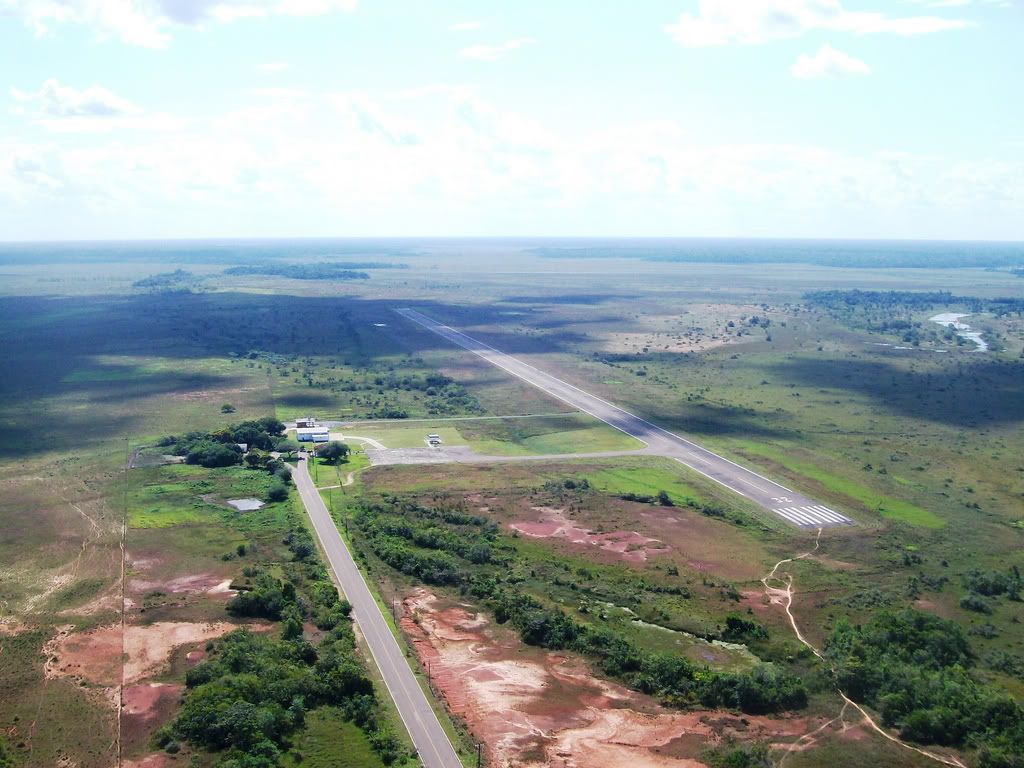
01) Pista do Aeroporto de Humaitá
02)

03)

04)

05)

06)

07)

08)Francisco Monteiro é considerado o fundador de Humaitá.
Em 1890 foi criado o Município de Humaitá (decreto º 31 de 04 de fevereiro de 1890), com terras desmembradas do município de Manicoré.
De acordo com o Decreto nº 95-A de 10 de abril de 1891, assinado pelo Governador Eduardo Ribeiro, foi criada a Comarca de Humaitá.
Em outubro de 1894, pela Lei nº 90, Humaitá é elevada à categoria de cidade.
O nome Humaitá significa pedra preta.

09)

10)

11)

12) O Fundador:
O comerciante José Francisco Monteiro foi um dos primeiros colonizadores que em busca de riquezas, se interessou em ficar definitivamente na região. Ele chegou em 15 de maio de 1869 e instalou-se num lugar chamado Pasto Grande onde era a Sede da Freguesia de São Francisco, no Rio Preto, próximo à atual cidade, mas devido a ataques constantes dos índios, em 1888, a sede da Freguesia foi transferida, pelo comendador (lei nº 790 de 13 de novembro de 1888), para o lugar onde hoje está a cidade de Humaitá, com o nome Freguesia de Nossa Senhora da Conceição do Beem de Humaitá.

13)

14) O Rio Madeira passando em frente a cidade de Humaitá

15)

16)

17)

18)

19) Entrada no 54º Batalhão de Infantaria de Selva de Humaitá (AM)

20) 54º Batalhaõ de Infantaria de selva

Outras Imagens de Humaitá
21) " Recreio " Embarcação comum no Amazonas indo em direção a Humaitá

For the companies behind more than 180 greentech equipment factories around the country, today brings a couple billion reasons to celebrate: The Obama administration has just announced $2.3 billion in tax credits worth up to 30 percent of the costs for 183 manufacturing projects in 43 states. But several hundred other applicants didn’t win credits […]

During a press briefing at CES on Thursday, Intel CEO Paul Otellini revealed the LG GW990, a Moorestown-powered smartphone that runs Intel’s Linux-based Moblin operating system. The product is expected to arrive on the market in the second half of this year.
When Intel lifted the curtain on Moorestown last year, the company contended that it would finally make it possible to bring the x86 architecture to smartphones. The claim seemed somewhat fantastical, but now Intel and LG could potentially deliver on that promise. Moorestown is said to be considerably more energy efficient than Intel’s previous Atom offerings, but it’s still unclear what kind of battery life we can expect to get from devices like the GW990.

Buy This Item: [Click here to buy this item]
Citi's Panic Euphoria model always looks like it was built for a 1990's stock market, given that the old super-bubble of sentiment makes most future years appear as 'panic'. Still, as with all of these black box models, they're at least one useful source of perspective when compared against themselves -- what is their model reading relative to the peaks and troughs of their model's output in the past.
Thus this should be a bit worrisome -- the model is now in 'Neutral' territory, which in Panic-Euphoria lingo we feel means moderately bullish.
Citi: Our Panic/Euphoria model moved back into neutral territory. Last week’s Panic/Euphoria reading was -0.14; the prior week’s number was revised to -0.19.
Citi's less-broken-appearing 'Cyclical Expectations' sentiment model validates this conclusion, even taking it a step further -- sentiment appears to be looking toppy:
In the near-term, it seems that sentiment has farther to fall than rise given how much it's improved lately.
(Via Citi Investment Research, The Pulse Monitor, Tobias Levkovich, 8 January 2010)
Join the conversation about this story »
See Also:


