Blog

  • HTC One to have limited supply thanks to production restraints regarding UltraPixel camera

    HTC_ultrapixels-sensor

    HTC just can’t catch a break. They build some of the nicest phones in the world, but when things are bad, things get worse. KGI Securities just slashed its HTC One shipment estimates for the first half of 2013. They originally expected 15 million units, but now they are thinking more like 10.5 million. This drop isn’t because of demand, it’s because of “low yield rates” of some of its components, namely the compact camera module (CCM) on its UltraPixel camera as well as the phone’s voice coil motor (VCM). ”We believe the production restraints that UltraPixel faces will severely limit HTC One shipments,” said KGI analyst Kuo Ming-chi.

    Earlier this week, HTC reported sales of NT$11.4 billion for February, which was a 3-year low. HTC has a lot riding on the One, so this shortage is obviously bad news especially with the Galaxy S IV ready to make a huge splash next week.

    source: Focus Taiwan
    via: PhoneArena

    Come comment on this article: HTC One to have limited supply thanks to production restraints regarding UltraPixel camera

  • Microsoft Thinks The Future Of Information Technology Lies In Intelligent Technology

    IT, or Information Technology, according to Webster’s is “the technology involving the development, maintenance, and the use of computer systems, software, and networks for the processing and distribution of data.” We’ve been using this term to describe computer technology since the 70s, but Microsoft wants to change that.

    In a blog post on Microsoft’s technet blog, the company said that its annual TechForum, which was hosted at Microsoft’s HQ this week, was focused on the move from information technology to intelligent technology. What this means is that computers will no longer play a passive role in our everyday lives as an input tool, but rather take part in our lives in a meaningful way. Machines, such as your smartphone or tablet, will learn just as much from you as you learn from it.

    The TechForum event was focused on the three ways that Microsoft is helping lead the charge into a future of intelligent technology:

  • The Arrival of Big Data: The massive explosion of data from machines, sensors and people—along with the broad availability of affordable cloud services at scale—are bringing us powerful new tools that turn data into insight.
  • Systems That Learn: 21st-century computers aren’t just told what to do—they learn. Dramatic improvements in machine learning are leading to systems that can absorb the vast amounts of data we are collecting, discern knowledge, and project futures.
  • More “Human” Natural User Interfaces (or NUI): This is a topic we’ve covered a great deal here on NEXT—and a trend that includes speech, gesture, and touch to interact with computing systems. Yet NUI is much more than simply those input modalities. It enables a world where technology understands what we are doing and what we need or want. As a result, our interactions with computing systems will be more like working with an expert helper with human-like senses.
  • All three of these technologies will become more important over the years as our relationship with computers grows deeper. More technologies will also undoubtedly emerge over the next few years that will make us rethink our relationship with computers yet again. All of this leads us to the idea that technology is not merely something that humanity creates, but rather its a living, breathing creation that evolves alongside mankind. Moving to rename information technology to intelligent technology is the first step to realizing our intertwined future with machines.

    [Image: Microsoft]

  • Take our survey and give us your feedback — you could win a Jawbone Jambox

    PaidContent launched more than a decade ago, at a time when digital media was still new: Many in the media business were skeptical that the move to the web had staying power, and most consumers just ignored the digital tools of the day or were befuddled by them.

    Now, of course, we live in a thoroughly digital media world, and users can’t get enough of their Netflix and Twitter, their iPads and Kindles, their Tumblr and Instagram.

    As digital media has evolved, so have we. There’s a lot of stasis in the media business, and we try to ignore that. In the last year, we’ve made a concerted effort to focus on the experimentation. We cover new platforms, new content creation tools, new distribution strategies, new business models and the new class of star content creators. Wherever the innovation is happening in digital publishing, that’s where we want to be.

    As you probably know, about a year ago, paidContent was acquired by GigaOM Media. GigaOM is all about emerging technology, and the paidContent of today aims to be very much in keeping with that mission. We try to cover the most disruptive forces in new media, to look across the entire digital content ecosystem — from ebooks, apps and tablets, to curation tools, social media and streaming video — and report on the most interesting shifts in the way people and companies produce, distribute and consume media. Then we try to bring those storylines to life with lively and authoritative posts.

    Please take a minute to take our survey and tell us how you think we’re doing, and what you would like to see more of from us. A few lucky winners will even get a Jawbone Jambox, or a free ticket to our event next month, paidContent Live.

    Meantime, let me introduce you — or hopefully reintroduce you –to the paidContent/GigaOM media team:

    Mathew Ingram (@mathewi)

    Mathew writes about the evolution of print media in all its forms, with particular attention to the ways that traditional players are evolving and adapting (or not evolving and adapting) to the digital world. He also writes about the challenges facing new players and the media ambitions of existing web companies like Twitter and Facebook.

    Laura Hazard Owen (@laurahazardowen)

    Laura covers the book publishing industry and the ways that digital reading of all types is changing. That includes areas like pricing and consumption trends, new lengths and formats, and self-publishing.

    Janko Roettgers (@jank0)

    Janko writes about the rise of online video, including premium content, the engagement gap between TV and online, and the dilemma facing content owners over whether to provide a true over-the-top experience for consumers or keep the traditional bundled programming model intact.

    Jeff Roberts (@jeffjohnroberts)

    Jeff writes about new media and tech companies that are emerging as dominant sources of news and culture. He is also a lawyer who explains how court conflicts symbolize a clash between new and old media business models.

    Related research and analysis from GigaOM Pro:
    Subscriber content. Sign up for a free trial.

    • Hulk Rumors: No New Hulk Movie in the Works

      It’s been hard for Marvel to found a stable Hulk franchise in recent years. A decade ago, Eric Bana filled Bruce Banner’s shoes in Ang Lee’s Hulk, which received mixed reviews. More recently, Edward Norton took a stab at becoming the Hulk, but abandoned the role soon after.

      Mark Ruffalo signed on to star as Bruce Banner in last year’s blockbuster The Avengers, and it seems that the actor might be in for the long haul. Unfortunately, that may not mean that Ruffalo will star as the Hulk in an individual movie franchise.

      Yesterday Ruffalo revealed through his Twitter feed that there are no current plans for a new Hulk movie, and that the next time he will appear as the character will be in the sequel to The Avengers.

      Ruffalo later reemphasized that his statement doesn’t mean there will never be another Hulk movie:

      Ruffalo’s tweets back up a comment made by Avengers director Joss Whedon in a recent interview with IGN. Whedon shot down rumors that the next Avengers movie would focus on the Hulk.

    • Bloomberg: BlackBerry Z10 to have a March 22 launch on AT&T

      U.S. customers waiting to buy a BlackBerry Z10 handset shouldn’t have much longer to wait. On Friday, Bloomberg reported that AT&T will have the phones in hand to sell on March 22. The news outlet says two people familiar with the plan are its sources and that AT&T wouldn’t officially comment.

      It’s not too difficult to believe the phone’s upcoming availability on AT&T, however; in fact, it reads like a planned leak to me, in order to build up more buzz for the new BlackBerry platform and phone.

      When the new Z10 debuted in January, BlackBerry officials didn’t provide U.S. availability dates — that’s for the carriers to do — but offered expectations of a March time frame  Indeed, T-Mobile has said prior that it plans a mid-March launch. Verizon has yet to make any availability announcements while Sprint is passing on the Z10; it is opting for the Q10 handset with hardware keyboard.

      Regardless of the exact launch dates, I’m keenly interested in how well the Z10 sells in the U.S. Currently available in Canada and a few overseas countries, there’s a bit of a debate on actual sales. Some analysts are reporting poor sell-through rates while others suggest sales are great. We have already seen some price cuts on the Z10 from one major U.K. outlet, which tells me there may be too much unsold inventory in certain areas.

      Another reason U.S. sales are of interest: Apple’s iPhone and Google Android phones make up a massive 90.1 percent of smartphone ownership here. My usage of the Z10 didn’t show me reasons for many smartphone owners to switch away from the current incumbents, yet some reports indicate that 30 to 50 percent of sales are to “switchers.” That sounds high to me —  and is still unconfirmed — but perhaps U.S. sales of the Z10 to current iPhone and Android handset owners will prove me wrong.

      Related research and analysis from GigaOM Pro:
      Subscriber content. Sign up for a free trial.

    • What’s behind Nokia’s odd refusal to reveal the length of its Windows licensing deal?

      Nokia Microsoft Licensing Agreement
      Nokia (NOK) this week revealed that it will end up paying €500 million — about $650 million — in net Windows Phone licensing fees to Microsoft (MSFT) over the remaining contract period. At the moment, the platform support fees Microsoft pays to Nokia are larger than the licensing fees that flow to the opposite direction. This will soon reverse and by the time the Nokia-Microsoft contract expires, Nokia will end up paying $650 million to Microsoft. This raises two questions: What is the remaining contract period and what happens after that?

      Continue reading…

    • Boston ARMing Developers With ARM-as-a-Service Cloud

      Boston-Ltd-Purp

      Boston Limited’s Viridis server will power a new “ARM-as-a-Service” cloud offering powered by ARM technology from Calxeda. (Photo: Boston Limited)

      Boston Limited wants to help developers future proof their applications for an upcoming ARM-based world. The low-cost, power-efficient processors have been drawing a lot of attention, and now comes a commercially available cloud for developer needs.

      The Boston ARM-as-a-Service (AaaS) cloud was unveiled at CeBIT 2013. It was built specifically to assist in migrating and porting applications from x86 to ARM, providing developers with tools and services required to port and migrate software. “The Boston cloud is the ultimate resource for application and software developers looking to port their software on to ARM,” said David Power, Boston’s Head of HPC. “Our platform provides all the tools to facilitate porting software to ARM in one easy to use cloud offering.”

      The Boston AaaS is based on Calxeda’s EnergyCore ARM-based processor as well as Breeze technology. Breeze is used for tracing programs as they run in order to monitor file dependencies and environment settings. It shows the inner workings of complex scripted flows such as those used in semiconductor design or complex software builds. ARM also uses Breeze to profile and troubleshoot applications on their own HPC cluster.

      “We understand the hardware constraints that many software developers will face in trying to enter the ARM environment,” said Dr. Rosemary Francis, Managing Director of Ellexus, “and Boston’s cloud offering provides a fantastic opportunity for those wanting to future-proof their applications as more and more users move over to ARM technology.”

      Boston’s ARM-as-a-Service delivers dedicated physical quad-core nodes, as opposed to virtual CPUs typically seen with cloud offerings. Users will be able to develop on single nodes or test scaling capabilities of applications across multiple nodes within the cluster. Users will be able to choose from varying levels of software and professional services to assist in their migration.

      “There is tremendous demand for easy access to ARM server technology, so the time is ripe for AaaS,”says Karl Freund, VP Marketing, Calxeda, Inc. “We are thrilled to see Boston and Ellexus stand up this service to provide cloud-based access to engineers to build and optimize their server codes for ARM.”

      There is also an ARM OpenStack test-bed available at TryStack for short-term testing.

    • Company Wellness Programs Don’t Really Save Money

      If you run a large organization or its human resources department, you are probably starting to wonder if your financial commitment to wellness programs makes sense. Your consultants and vendors assure you that they save lots of money. Yet you still have plenty of obese workers, and recent academic literature overwhelmingly reports no savings from the programs.

      The answer matters, because these programs constitute an expensive combination of surveys, screens, and additional doctor visits and tests (all on company time) — plus incentives to encourage participation that now average $521 per employee.

      Just asking your benefits consultants three simple questions will solve this conundrum.

      1. We are spending a lot of money to improve the cardiac health of our employees, which saves us money only if we reduce heart attacks and related events. How are cardiac events trending?

      A wellness program can reduce health spending only by avoiding wellness-sensitive medical events such as heart attacks. So knowing the company-wide rate of and spending on these events before and after program implementation is both basic and critical.

      However, even though your company may be spending close to $1,000 per employee to avoid these events, don’t be surprised if nobody knows how they are trending or how much you shell out for them.

      Instead, you’ll hear that the overall cost of medical claims has been falling, and even though there’s no tracking of these events, the wellness program must be responsible. It’s not just your team thinking this; the Affordable Care Act’s so-called “Safeway Amendment” to promote wellness was inspired by Safeway’s zero health-care-cost trend, which Safeway attributed to wellness. Besides being overly broad, that attribution was wrong: Safeway’s zero trend predated its wellness program by three years, the trend started rising again after the program was implemented, and its wellness-sensitive events didn’t decline significantly relative to the U.S. average.

      2. If health risk assessments (online questionnaires about personal health) are so worthwhile, why do we have to pay people to take them?

      A store that paid its customers $521 apiece to eat kelp would “sell” a lot of it — mostly to people who would go throw it away. By comparison, some employees see health risk assessments (HRAs) as such an invasion of privacy that they refuse to complete them even when offered incentives. And there are serious questions about how many people who do take them answer the questions honestly. Many people lie to their own doctors. So why wouldn’t they lie to you? (Of course, you don’t read these responses. They are anonymous and even if they weren’t, privacy laws would probably prohibit you from looking at them. But your employees don’t know that. After all, you can read their private emails.)

      Then there’s the issue of whether HRAs really do offer much insight. If you take one, you’ll learn that you need to stop smoking, lose weight…and buckle up! A “prevention-oriented” HRA like the one I took will also recommend about $500 of tests, exams, and vaccines (including one to prevent meningitis, which is not recommended for most adults). Males may also be instructed like I was to get a PSA test, a screen that the U.S. Preventative Services Task Force no longer recommends. And if like me you accidentally check off “seven or more” prescription drugs despite reporting no diseases, you’ll be relieved that your HRA report does not recommend reviewing your drug regimen with your doctor.

      3. What is the ROI in reduced health spending?

      You might wonder how paying employees to fill out — and sometimes lie on — forms that recommend more, sometimes obviously inappropriate, spending on health care in the short term without tracking the declines in the specific events that are supposed to decline could yield a positive ROI. However, vendors will show you a high ROI simply by (1) comparing the cost trend from the motivated participants to the cost trend for the unmotivated non-participants and (2) counting only people whose risk factors declined while ignoring employees whose risk factors increased. They also credit wellness for all cost declines, even those unrelated to wellness.

      If this seems like a flawed way to measure ROI, it is. But wellness vendors are inveterate optimists. They have to be, since there is often zero medical or economic justification for their claims.

    • Denver “Thong Bandit” Still on the Loose

      How can you tell if a neighborhood has a low crime rate? The police will be mobilizing officers to search for an exhibitionist.

      The NBC affiliate in Denver is reporting that police in the Sloan Lake neighborhood in Denver will soon begin searching for a man they’ve dubbed the “thong bandit.” The man has been “terrorizing” northwest Denver with his nakedness since last summer, but wasn’t active during the winter. Now that the weather in Colorado is turning nice again, police have received new reports of the flasher.

      Police say the man will start out fully clothed before ducking into an alley and stripping down to a thong. He then proceeds to “expose himself further” in front of women. The man is reportedly white or hispanic, in his 20s or 30s, and has an “athletic build.” Reports show that he has switched from a pink thong to a black or dark thong in the past.

      According to NBC 9, the Denver police are sending teams of officers out to Northwest Denver to search for the flasher. They have a sketch of what the man might look like and have asked citizens to call 911 immediately when they encounter him.

    • International Women’s Day Celebrated With Google Doodle

      International Women’s Day is a day to celebrate the many achievements women have made over the years in various fields. The day is being appropriately celebrated with a Google Doodle made up of the faces of women from all over the world.

      International Women’s Day started out as International Working Women’s Day. The original event was heavily political and focused on what women attributed to the workplace. The day has lost some of its political meaning in some countries, but many others still keep the political overtones of women’s rights strong, including the U.N.

      International Women’s Day has been a designated event in the U.N. and the organization sets a theme for each year to bring attention to a women’s rights issue. This year’s theme is “A Promise is a Promise: Time fo Action to End Violence Against Women.” Past themes included “Equal Rights, Equal Opportunities: Progress For All” and “Empower Rural Women, End Poverty and Hunger.”

      The hundredth anniversary of the day is coming up soon in 2017. In that year, there are plans for reenactments of the original protests in St. Petersburg that started the movement.

    • Emerging Policy-”Full stop” in Poland but a start in Mexico?

      An action-packed week for emerging monetary policy.

      First we had Poland stunning markets with a half-point rate cut when only 25 bps was priced. Governor Marek Belka said the double-cut marked a “full stop”  after several cuts.  Then came Brazil which kept rates on hold at 7.25 but turned hawkish after spending over 18 months in dovish mode. (Rates stayed on hold in Indonesia and Malaysia).

      In Brazil, it was high time. Inflation and inflation expectations have been rising for a while, the yield curve has been steepening and anxiety has grown, not only about the central bank”s commitment to controlling inflation but also about its independence.  Whether the central bank will actually start a hiking cycle anytime soon is another matter. Barclays reckon it will, predicting three consecutive 50 bps rate hikes starting from April. But analysts at Societe Generale are among those who are betting on flat rates for now. They point out that since the meeting, the Brazilian yield curve has moved to its flattest in a year and the 2017 inflation breakevens (the difference between the yields on fixed-rate and inflation-linked bonds of similar maturity) have fallen more than 50bps:

      This implies that simply by showing a small amount of vigilance, a great deal of structural inflation concerns seem to have dissipated.

      Second, the real has appreciated almost 5 percent this year on rate hike expectations and inflation. A rate rise at a time when most other central banks are lowering rates, will draw more inflows to the real, something the government is unlikely to be happy about.

      Mexico’s policy meeting later on Friday could be very interesting. The Banxico has kept interest rates on hold at 4.50 percent for four years but could finally opt for a cut. Five of the 21 analysts polled by Reuters predict a 50 bps cut to a record low 4 percent.

      Governor Agustin Carstens warned however that lower interest rates are not a “done deal”, warning of an inflation uptick through April.

      But many reckon this is the time to cut.  ING Bank analysts say that while inflation is indeed above the Banxico’s 3 percent target, it will rise further and easing will therefore be a harder prospect in coming months. Second, ING estimates that Mexico has received around $73 billion of net portfolio inflows over the last 12 months,  mainly into local debt and that makes a cut desirable at this stage. Analysts at the bank write:

      A 50-75 bps rate cut would help reduce carry and the aggressive build-up of positions in Mexican assets – positions which could quickly become a source of financial instability were U.S. rates start to rise.

    • The Employment Situation in February

      While more work remains to be done, today’s employment report provides evidence that the recovery that began in mid-2009 is gaining traction. Today’s report from the Bureau of Labor Statistics (BLS) shows that private sector businesses added 246,000 jobs in February. Total non-farm payroll employment rose by 236,000 jobs last month. The economy has now added private sector jobs every month for three straight years, and a total of 6.35 million jobs have been added over that period.

      The household survey showed that the unemployment rate fell from 7.9 percent in January to 7.7 percent in February, the lowest since December 2008. The labor force participation rate edged down 0.1 percentage point to 63.5 percent in February.

      It is important to bear in mind that the reference period for today’s surveys was the week of February 10-16 for the household survey and the pay period containing February 12th for the establishment survey, both of which were before sequestration began.  The Administration continues to urge Congress to move toward a sustainable Federal budget in a responsible way that balances tax loophole closing, entitlement reform, and sensible spending cuts, while making critical investments in the economy that promote growth and job creation and protecting our most vulnerable citizens.

      read more

    • BlackBerry Z10 coming to AT&T on March 22nd

      BlackBerry Z10 AT&T
      It’s been an annoyingly long wait for American BlackBerry (BBRY) fans, but it looks like they’ll soon be able to upgrade to the BlackBerry Z10. Unnamed sources have told Bloomberg that AT&T (T) will start selling the newest BlackBerry flagship phone on March 22nd, or one week later than earlier rumors had indicated. It’s unclear whether AT&T will be the first American carrier to offer the Z10 since T-Mobile has said that it would start offering the device sometime in mid-March and we haven’t yet heard when Verizon (VZ) will start selling it. Sprint (S) is the only major American carrier to announce that it won’t be selling the Z10 and will instead only sell the QWERTY keyboard-enabled Q10.

    • Updated LinkedIn and Twitter apps come to BlackBerry 10

      BlackBerry Z10 owners rejoice! Updated LinkedIn and Twitter apps for BB 10 are now available, touting new features and improvements over previous iterations. The update promises to improve the social experience on BlackBerry’s latest mobile operating system with “an enhanced tweeting experience and helpful business tools”, according to the Canadian device maker.

      Let’s take them one by one. The LinkedIn app, which has seen the least number of improvements and new features of the two, now allows users to view LinkedIn profiles in full screen mode, search, view and save recommended jobs, chat with connections through LinkedIn Messages and filter news by industries through LinkedIn Today.

      Twitter went through a more significant overhaul compared to LinkedIn. Users now have access to an improved compose tweet screen that comes with location support, a shortcut for the “@” sign and provides the ability to add pics either by snapping a new one or choosing an existing one.

      Users can send direct messages from the “Me” tab, edit the profile picture, header and details, view a complete conversation history after tapping on a tweet and delete their own tweets. Other features include the ability to block and report other users as spam, display full screen images, quote tweets after selecting “Retweet” and open the tweet’s details page.

      LinkedIn and Twitter are available to download from the BlackBerry World store.

    • Listary makes file searching less of a chore

      Bopsoft has released Listary 4.0 and Listary Portable 4.0, the latest builds of its lightweight, ultra-compact search add-on for Windows users. The new release has been rewritten from scratch, and simplifies browsing and searching for files from a number of locations, including Windows Explorer, Open/Save dialog boxes and various third-party tools.

      Version 4.0 includes a number of major new features, including disk and sub-folder search, fuzzy navigation, History, Actions and Projects. It also comes with a number of notable improvements, including enhanced search performance and ranking.

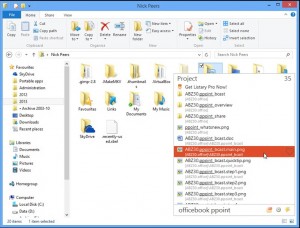
      Listary is triggered from Windows Explorer, application open/save dialog boxes and other supported programs simply by typing keywords — for example, browse to a folder and start typing to see a list of files and folders containing the letters or phrase typed.

      Version 4.0 adds a number of major new features. By adding the ‘>’ prefix to an item, Listary will switch on the new Disk Search mode to search across your entire hard drive for the file or folder name entered as opposed to the currently selected folder. Note that Disk Search only works with NTFS-formatted drives.

      Projects, Actions and Fuzzy Navigation support are all billed as new Pro features, but will work without restriction in the free version, with the occasional nag screen and reminder to upgrade whenever they’re used. Projects allows users to create shortcuts to frequently accessed folders that can be searched directly from the Listary dialog simply by entering the folder’s name or pre-defined shortcut. Browse to the folder and type proj to set it up.

      A new Actions feature provides users with access to commands from the Windows Explorer context menu from Listary by selecting the target file and pressing the right cursor key. Also added is Fuzzy Navigation, which allows users to drill down to favorite files without knowing their exact name or location by typing what you do remember – such as a mixture of the parent folder name and the file itself.

      Also added to version 4.0 is the ability to exclude items from the Recent list by drive, folder or user-defined filter — this feature is managed manually via the History tab of Listary’s Options dialog. Toolbars and menus can also now be customized via the Menu tab. A tutorial is also provided to give users a head start into using the program — this launches automatically on first-run, and can be repeated via the program’s Taskbar Notification Area icon at any time.

      Support for many third-party file explorer tools has been updated to support the latest versions and add new tools, such as FreeCommander XE, XnView and Clover. The program now also checks for updates automatically — a timely addition as both skin and custom action support for Pro users is planned for version 4.1.

      Listary 4.0 is rounded off by a number of improvements, including better search ranking and performance, better support for changing the portable folder’s user-data location and an enhanced auto-expanding folder option.

      Listary 4.0 and Listary Portable 4.0 are both available as a free-for-personal use downloads for Windows XP or later. The commercial version — Listary Pro — can be unlocked within the program and costs $19.95 for a three-computer license and lifetime of free updates.

      Photo credit: olly/Shutterstock

    • The Vatican Library Goes Digital

      EMC Provides 2.8 Petabytes to Store Digitized Versions of Rare Sacred Texts

      vatican-library

      EMC is providing storage systems to help the Vatican Apostolic Library (pictured above) digitize and store rare manuscripts. (Photo by Michal Osmenda via Flickr.)

      As the cardinals of the Roman Catholic church gather to elect a new pope, there’s also major change underway in another part of the Vatican.

      As one of the oldest libraries in the world, the Vatican Apostolic Library holds many of the rarest and most valuable documents in existence, including the 42 line Latin Bible of Gutenberg. EMC announced that it is providing 2.8 petabytes of storage to support the Vatican Library digitize its catalogue of 80,000 historic manuscripts and 8,900 “incunabula” (a book printed before 1501).

      EMC will help the Vatican  preserve delicate texts in an ISO-certifiable digital format to protect these manuscripts from deterioration and decay from repeated handling. This process will result in 40 million pages preserved in digital reproductions. Working with its systems integrator partner Dedagroup, EMC will provide 2.8 petabytes of storage capacity across its various storage solutions over the first phase of the nine-year project, which is expected to take three years.

      “The Apostolic Library contains some of the oldest texts in the world that represent a priceless legacy of history and culture,” said Monsignor Cesare Pasini, Prefect of the Vatican Apostolic Library. “It’s very important that these documents are protected, and at the same time made available to scholars around the world. Thanks to the generosity and expertise of supporters such as EMC we are able to meet these goals, preserving a treasure-trove of rare and unique texts in a format that will not suffer from the passage of time.”

      EMC’s sponsorship forms part of its ‘Information Heritage Initiative’, which works to protect and preserve the world’s information for future generations and make it globally accessible in digital form for research and education purposes.

      “To manage and protect information is part of our mission,” said Michele Liberato, President, EMC Italy. “The Apostolic Library is one of the oldest libraries in the world and we have a duty to ensure that the knowledge and beauty of the manuscripts in it are available to all in the future. This project will help to preserve and make available a unique heritage of knowledge.”

    • Osbourne Seizure: Kelly Osbourne Faints on Set

      On afternoon of Thursday, March 7 TMZ reported that Kelly Osbourne had a seizure on the set of her E! Network show Fashion Police. Shortly after, an ambulance arrived and took Osbourne to a nearby L.A. hospital.

      Osbourne was reportedly shooting the TV show with a live studio audience at the time of the seizure. The TMZ report states that she told Melissa Rivers that, “I don’t feel good,” before falling to the ground, shaking. Though she regained consciousness soon after, she was still taken to the hospital as a precaution.

      Osbourne confirmed late last night through her Twitter feed that she did, indeed have a seizure. Doctors are currently trying to pin down the cause of the emergency.

      Osbourne is currently engaged to Matthew Mosshart and the two are planning to marry this summer. Last December Osbourne spoke about her recent 50-pound weight loss, saying, “I made a life change, and the weight loss was an amazing perk.”

    • Developers Have Until March 28 To Make Their Game Part Of Ouya’s Launch

      Ouya, the little game console that could, is about to be shipped out to all the early adopters that supported the console during its Kickstarter phase. To make sure it has plenty of games before it gets into the hands of gamers, developers are now free to start uploading their creations to Ouya.

      Developers who want to be part of the Ouya launch have until March 28 to get their game onto the console. Those who submit before March 28 will have their game featured on the console right from the start. It’s assumed that those who submit afterwards will have to wait a bit, but the team says that they try to get games through the submission process as quickly as they can.

      Here’s what you need to do to get your game published on Ouya:

    • You submit your game on http://devs.ouya.tv
    • We will review submissions (as quickly as we can!). See our Content and Review Guidelines on the dev portal — that’s what we’ll be checking it up against. Don’t worry, it’s a pretty brisk read.
    • You will be notified by email when your game is ready to go live, or if there are any issues.
    • After you go live, Ouya allows you to update your game, as often as you like, at no cost to you.
    • Besides being on the store right at launch, the Ouya team has another incentive for developers to get their games up before March 28. The team will create mini-documentaries about the top three games, as measured by total playtime in the first six weeks of availability, and the teams behind them. The short videos will help promote Ouya and your game when Ouya goes on sale in stores in June.

      A lot of developers, big and small, have pledged support for Ouya so you’ll want to get your game in as soon as possible. Competition might be as fierce as it is on the App Store and Google Play. If so, you’re going to want to get your hooks into players as early as possible.

    • Innovating Around a Bureaucracy

      What do you do if you’re a leader in a large, successful organization with an entrenched bureaucracy, and you see the need for innovation? Can you change the way a large organization — such as the federal government — does its work, when all the forces are arrayed for stability and conservatism?

      Consider the story of the Business Transformation Agency of the Department of Defense, which was founded in 2005 under Defense Secretary Rumsfeld, and “disestablished” in 2011 by Defense Secretary Gates. The Business Transformation Agency was populated by people brought in from the commercial sector. They were bold and brash and injected fresh new ideas that challenged existing policy and practice in many quarters of the Department of Defense administration (such as finance, human resources, procurement, and supply chain processes). They ran into many of the familiar challenges of making changes in the federal government: the difficulty of firing; the complexity of hiring at many levels of management; the need for contracts to be put out for competitive bidding; multiple stakeholders including civil servants, appointees, contractors, regulators; and Congress to be considered in almost all decisions. Unlike at commercial companies, there was no senior leader who could mandate changes. The Deputy Secretary of Defense that originally sponsored the agency under Rumsfeld left, and the new leader was less enthusiastic, ultimately leading to the agency’s demise. The entrenched culture of the Department of Defense defeated attempts to change it.

      The Internal Revenue Service (IRS), however, was successful in transforming its bureaucracy. The IRS had two advantages: Congress provided a strong mandate for change (the U.S. IRS Reform and Restructuring Act of 1998); and an outstanding, senior executive from the private sector, Charles Rossotti, was appointed for a five-year term to drive the changes. Under Rossotti’s guidance, the IRS reorganized from a geographic structure to four new customer-oriented operating divisions. IT also upgraded old technology and processes, achieving significant improvements in service and compliance. For example, it implemented an Internet service that answers the question “Where’s my refund?” that has had over one billion hits and freed up 800 customer service representatives to handle more complex issues.

      So, what makes the difference between success and failure? Based on long experience working with government agencies and with large organizations of all stripes, I have seen that big changes to the way work is done require:

      • a team of insiders and outsiders to come up with new ideas
      • a clear external motivation to do something
      • strong leaders who believe in the ideas and push the bureaucracy to implement them consistently over a number of years

      Sometimes (but not often) bureaucracies do make incremental changes to the way they do work, but they are usually not sufficient to meet citizen-customer needs. An innovation team composed of the “best and brightest” (like the “bold and brash” Business Transformation Agency) can identify bigger changes, but those cannot be implemented inside a strong bureaucracy without a strong and clear motivation to change. Now, in a competitive free-market environment, a for-profit company can be motivated by threats to its survival, or by declining market share and profitability. The big challenge for a government agency, however, is that the motivation needs to be a congressional or administration mandate. I’d like to tell you there’s another way to motivate change in case you don’t have such a mandate, but in the extreme environment of an entrenched bureaucracy, I haven’t seen it. Thus, needed process changes within bureaucracies should always be built into such initiatives. Probably most important, though, as in the example of the IRS, a senior leader is absolutely essential to drive the change and sharpen the organization’s focus on citizen-customers — to overcome the natural tendency of bureaucracies to focus internally. And as the IRS and Department of Defense stories illustrate, the bureaucratic ship won’t turn on a dime — leaders need to sustain focus on the changes over the long term, likely for five years or more.

      Leaders of big bureaucracies need to get — and keep — everyone enthused, create and communicate a future vision, assure support during the transition, insist on excellence, create demands on managers, and convince everyone of top management’s conviction and commitment to change. These leadership challenges may seem familiar, but in a bureaucracy they are, if anything, magnified. To sustain momentum in this special context, leaders may need to adopt the behaviors of a fanatic — as Winston Churchill said, “A fanatic is one who can’t change his mind and won’t change the subject.”

      Of course, the federal government provides an extreme example of entrenched bureaucracy with an established way of doing things. But it offers lessons to any organization that is mature, successful, and set in its ways, yet recognizes the need to transform itself.

    • Sponsored post: High-tech industries of all shapes and sizes are flourishing in the U.K.

      High-tech industries of all shapes and sizes are flourishing in the U.K. It is the most important market in Europe for mobile content, with a higher percentage of smartphones than any other nation. The U.K. is also the largest market for ecommerce and m-commerce in Europe.

      Small wonder then that the U.K. is the No. 1 spot for international technology companies coming into the European Union (EU). It is home to all the major firms driving the technology industry worldwide, as well as an ever-increasing number of startups, supported by the U.K.’s generous tax breaks for R&D and innovation.

      Whether multinational or SME, these firms have a world-class talent pool on which to draw. The U.K. has three of the top five technology universities in the EU, and it attracts top industry talent from across the globe thanks to its status as the best place in Europe to start a business.

      The U.K. also has lots to offer from a cultural point of view, with a vibrant and stimulating multicultural environment and an ethnically diverse, forward-thinking population that is keen to embrace the latest technologies. Nowhere better epitomizes this than London, one of the world’s most important creative and technology hubs and home to Tech City, the fastest-growing cluster of technology startups in the EU. It really is an amazing and inspirational place to be.

      –Tony Hughes, U.K. Trade & Investment’s business sector specialist

      Find out how UK Trade & Investment can help you grow your business.