Blog

  • After Graduating, Keep Community First

    Community is the heart of university. Students mix with other similarly aged people in an environment ripe with social activity, friendship, ideation, and discussion. It’s the most powerful element of college or graduate school — and also the most jarring to leave behind.

    Social isolation often follows graduation. I know firsthand. After college, I moved to Washington, D.C., and ended up living in the suburbs near work for a year, struggling to connect with others in a new city where few friends lived nearby. And after graduate school, I moved to Atlanta, but had to commute for one year back and forth to Boston where my wife was finishing grad school — a schedule that made it nearly impossible to get involved with friends or organizations in the city I called home. During those times, I found myself unfulfilled, lonely, and restless — struggling to rediscover the community and connection I’d taken for granted the year before.

    My experience is reasonably typical. The New York Times recently lamented the difficulties in making new friends as a person enters their 30s (the age at which many are leaving graduate school), largely because the three essential ingredients to forging friendship are lacking or harder to find post-university — “proximity; repeated, unplanned interactions; and a setting that encourages people to let their guard down and confide in each other.” And this is exacerbated when young professionals take jobs that find them on the road three to four days per week. I’ve heard this time and again from my friends who are working hard but finding it difficult to forge new friendships or romantic partnerships, connect with old friends or the families they have, and give back to the communities in which they live.

    This is tragic because community is so important — perhaps even more important than career. Numerous studies have shown the link between health and community or friendship — prolonging life, promoting brain health, and even influencing your weight. One study even found that only smoking is as deleterious to men’s heart health as lack of social support. Research has also shown that friendship and community are key elements to happiness. And the importance of these friendships only increases with age. Family relationships are similarly important. Researchers have found a much stronger relationship between happiness and family relationships over time than between happiness and income; and 75 percent of adults consider their families to be the most important and satisfying element of their lives. Voluteering and community service also lead to happier individuals and communities alike. But all of these — family, friendship, community service — are connected to our ability to limit our working schedules and firmly plant ourselves in a place for a period of time.

    So why do so many of us so consistently deprioritize these things after graduation? We simply fail to focus on it. Career success is visible and easy to define. We can measure it in raises and promotions. And it has urgency because it’s what allows us to pay our bills. Community, meanwhile, is something soft and seemingly without urgency — we tell ourselves there will always be time for friendship, family, and community service just after we’ve mounted the next hill of career success. But this skewed prioritization — done with the best of intentions — can lead us to sadly kick important relationships, civic service, and our own happiness and well-being further and further down the road.

    Author Bronnie Ware spent many years as a nurse caring for others in the last few weeks of their lives. Based on that experience, she wrote a now famous essay (and book) on her dying patients’ top five regrets. All are worth a read, but two relate directly to community. Bronnie’s dying patients claimed, “I wish I hadn’t worked so hard” — expressing a longing to have spent more time with their spouses and children. And they coupled that with the desire to have “stayed in touch with my friends.” Their sentiments were summed up perhaps even more concisely in the conclusions of a study started in 1938 which followed 267 Harvard graduates, many of whom were ambitious and professionally successful (including future president John F. Kennedy), for seventy years after college. The primary conclusion of that study? “Happiness is love. Full stop.” Career is important. But community conquers all.

    So, for all the new graduates out there, I won’t spend time reciting the ways in which to make community — through romantic partnerships, involvement in religious or civic organizations, dedication to existing friends or carving out time to make new ones. At some level, we social human beings all know how to do those things. I’ll simply offer this advice: Remember that the most powerful part of your educational experience was social. And use that knowledge to build a life after graduation that’s happy, balanced, and fulfilled.

  • Dad Who Drowned Sons Sentenced To Death

    A 34-year old man who drowned his two young sons in order to get back at their mother for leaving him has been sentenced to die in Texas.

    Naim Rasoon Muhammad abducted his sons, 5-year old Naim and 3-year old Elijah, while they were on their way to school and drowned them in a creek. He forced their mother, Kametra Sampson, to go along but she escaped and sought help; Muhammad killed the boys before police could find them. Muhammad’s attorney says he grew up in a violent household and was sexually abused, and that was how he learned to interact with people. But the argument didn’t hold with the jurors, who took only three and a half hours to come to the death penalty sentence.

    The father said he killed the boys because he wanted to be a father and he thought that would be taken from him.

    “It was the ultimate textbook family violence power and control play — ‘If I can’t get you to do what I want you to do through violence, I will go to your very heartstrings,’” a prosecutor said of the murders.

    “I apologize for bringing any pain and hurt on anybody for the actions that I have caused to you all,” Muhammad said after the sentence was announced.

    Muhammad reportedly told the boys to act like they were swimming as he held them under and, obedient to the end, they did just that.

    View more videos at: http://nbcdfw.com.

  • Behold: How Amazon wins the sales tax wars even when it loses

    FORTUNE - Amazon CoverTaxes aren’t a sexy story. And the story of Amazon’s long war against collecting sales tax tends to be reported in dribs and drabs, with coverage generally focusing on battles in individual states, which can make it even more boring to keep up with the issue (or maybe that’s just me). Peter Elkind’s cover story in this week’s issue of Fortune magazine, however, focuses on the entire saga.

    Maneuvering to get around taxes isn’t unique to Amazon — note Apple’s own practice of keeping billions of dollars of profits offshore. The Fortune story makes it clear, though, that Amazon’s greatest advantage in the fight over collecting sales taxes has been its ability to adapt quickly to changes in the law — even if it’s simultaneously fighting those changes aggressively. When things don’t go its way, Elkind notes, “Amazon has shrewdly and successfully maneuvered to turn each development, good or bad, to its own advantage.” Part of this strategy simply means “going to extreme lengths — demanding, wheedling, suing, threatening, and negotiating — to avoid collecting for as long as possible, in as many states as possible.”

    When Amazon is forced into collecting sales tax, though, it has been able to turn that into an advantage by “maneuvering to combine its needs (more warehouses) with its wants (preserving tax-free shopping for as long as possible).”

    For instance, forced into collecting sales tax in South Carolina in 2010, Amazon “offered a compromise: It would start capturing sales tax in January 2016—almost five years later.” The South Carolina House rejected the compromise, and Amazon said it would leave the state and its “half-built warehouse.” Paul Misener, Amazon’s VP of global public policy, stated at a press conference, “The 1,200 jobs and nearly $100 million in capital investment that were coming to the state — aren’t.”

    The House changed its mind three weeks later and Amazon will not collect sales tax in South Carolina until 2016. More recently, the retailer enacted a similar strategy in Texas, but there it was also able to secure a write-off of its own state tax bill. In addition, it will benefit from a “rebate” on the sales taxes collected in the suburbs where its warehouses are located. “This bonanza,” Elkind notes, “would run well into the millions.”

    By 2016, Amazon will actually be collecting taxes from 17 states, representing about half the U.S. population, and it’s agreed to collect sales taxes in every state where it has a warehouse. And the Marketplace Fairness Act, which would force large online merchants to collect sales tax on behalf of other states, recently passed the Senate. Amazon, which has long said it supports a federal solution for online taxes, supports the Marketplace Fairness Act.

    Amazon also argues that its insistence on a federal solution is a matter of principle. Misener testified in Congress last year that “far from an e-commerce loophole, the constitutional limitation on states’ authority to collect sales tax is at the core of our nation’s founding principles.” He told Fortune, “We feel very good about our position because it’s a constitutional right.”

    The full Fortune article is only available online to paying subscribers, meaning you may have to pick up a print copy. It’s well worth a read over the long weekend.

    Related research and analysis from GigaOM Pro:
    Subscriber content. Sign up for a free trial.


  • Morgan Freeman Talks Theoretical Physics on the Daily Show

    Morgan Freeman stopped by The Daily Show with Jon Stewart Thursday night, and luckily he stayed alert and attentive. Though there to promote his new film, Now You See Me, the conversation turned to theoretical physics. That’s not of bad thing, of course.

    “I don’t understand things like string theory, but multiple universes? I fully understand it – you understand it.” said Freeman when asked about how much knowledge he has on the topic.

    Check out the full convo below, which dives into the singularity of the universe.

    As host of the documentary series Through the Wormhole, Mr. Freeman should have this sort of interest, right? Right. He also recently hosted the Fundamental Physics Prize gala in Geneva, where he had the chance to spend a little time with Stephen Hawking.

    “He doesn’t talk a lot,” said Freeman.

  • Fortress Buys arvato to Boost Modular Capabilities

    Fortress International Group consults on data center design, which is rapidly evolving, particularly in regards to modular architecture. This is part of the impetus behind the data center consulting and engineering specialist’s acquisition of the data center integration services business from arvato digital services for $1.5 million.

    This acquisition expands Fortress’ capabilities so it can perform a full range of services both to the rack, and inside the rack. The acquisition is expected to generate over $10 million of annualized revenue and be accretive to Fortress International Group’s results in the second half of 2013.

    “We are very excited to expand our data center services offerings to include integration services of IT equipment,” said Anthony Angelini, CEO of Fortress, which is perhaps best known for its Total Site Solutions brand. “This acquisition is strategically significant and will be financially accretive to our business.  Strategically, the acquired integration business is an ideal complement to our current offerings in both the traditional and modular data center markets.  As the company evolves, our ability to perform a full range of services for data center customers both to the rack, and now inside the rack, will enhance the value proposition that our customers gain by trusting their data center requirements to us.”

    About arvato

    arvato provides custom rack layout design and configuration for large enterprise IT solutions consisting of large banks of computer servers, digital information storage and networking equipment, with custom cabling, power and cooling within data center racks and mobile or containerized data centers.

    The business also includes testing and deployment, including onsite installation and network set-up of completed data center racks and mobile or containerized data centers. Additionally, the business provides configuration services including the configuration of IT equipment, which consists of loading applications or systems software, customizing memory or storage capacities, adding peripherals, and testing (including hardware power-up testing, diagnostics and software boot testing).

    “Modular data center services represent an important and growing business for us, and, with this acquisition, we now offer an unmatched set of capabilities to the overall data center market and particularly the modular data center space,” said Angelini. “The transaction represents a key step along our strategic roadmap, and we are very excited about the team of people joining us as a result of the acquisition. We anticipate a number of synergies in both business development and cost savings as we integrate our sales teams, existing customers and management teams. The transaction further provides an enhanced end to end solution to both existing and potential customers.”

    Fortress (FIGI) also said this week that it had secured a new credit facility through Bridge Bank to support the company’s growth strategy and provide financial flexibility. The facility provides a line of credit up to $6 million over the next two years.

  • If Google isn’t trying to snatch Waze away from Facebook, it really should be

    The plot has thickened around the potential acquisition of Waze, the Israel-based social-mapping service, with news from Bloomberg late Thursday night that Google is considering a bid for the company, which is already reportedly evaluating a $1-billion-plus offer from Facebook. While other sources have poured cold water on the Google news — and some speculate that it is just a gambit designed to draw a higher price from Facebook — there are some pretty compelling reasons for Google to acquire the company.

    News of the Facebook bid emerged earlier this month via reports in the Israeli media, which said that the social network had offered up to $1 billion to acquire Waze, which adds a real-time social element to traffic maps and claims to have close to 50 million active users. More recently, however, the Facebook talks have apparently bogged down over issues involving whether Waze will have transfer most of its staff from Israel to Facebook’s home base in California.

    Waze-NewYork

    As with many such reports, the Bloomberg news is couched in all sorts of qualified terms, quoting anonymous sources “familiar with the matter” who say the company “may be considering” an offer, and it’s not uncommon for companies to float such rumors when they are looking for more money — or when they want to convince their acquirer to drop certain conditions, such as the requirement that Waze move its operations to San Francisco.

    Some Israeli news outlets have also reported that Facebook has locked down its offer with a clause that prevents Waze from negotiating with other companies. And Google may have decided that making a bid for Waze simply isn’t worth the hassle that it might generate from antitrust authorities, who are already said to be looking at the company on other matters.

    Google needs Waze more than Facebook does

    waze

    All that said, however, there are some compelling reasons for Google to make a bid for Waze, as I tried to outline in a recent post. While it would make sense for Facebook to acquire the company — if only because it would help cement the social network’s move into mobile, and broaden the range of behavior and location data it could use to target users — it makes far more sense for Google.

    Google Maps is one of the core offerings the company has when it comes to mobile, arguably almost as important as search and email. And it’s clear that Google cares about evolving the service, since it continues to pour resources into redesigns and added features like the ones that Om wrote about recently. There’s also no question that the social data provided by users is a crucial element of maps — and that is what Waze specializes in, and has managed to build right under Google’s nose.

    I would argue that Google can’t afford to let Facebook (or Apple, although it reportedly isn’t part of the current negotiations) get its hands on Waze — in much the same way that Facebook CEO Mark Zuckerberg came to the swift conclusion that he couldn’t afford to let Twitter acquire Instagram, and made a surprise $1-billion offer without even consulting his board of directors. If Google hasn’t already made a bid for Waze, I think it needs to get busy working on one.

    Post and thumbnail photos courtesy of Flickr user Dunechaser and Eva Blue

    Related research and analysis from GigaOM Pro:
    Subscriber content. Sign up for a free trial.


  • Facebook phone not coming to Europe

    European operators have been asked not to go ahead with the launch of the HTC First planned for this summer. The phone comes with Facebook Home which replaces the standard Android screens with its own social media interface.

    Home has been available for download to other Android devices too but hasn’t proved popular with users. UK mobile operator EE has issued a statement making it clear that Facebook is behind the decision not to launch saying, “Following customer feedback, Facebook has decided to focus on adding new customisation features to Facebook Home over the coming months. While they are working to make a better Facebook Home experience, they have recommended holding off launching the HTC First in the UK.” Orange in France has made a similar statement.

    Facebook confirmed the news saying, “While we focus on making Home better, we are going to limit supporting new devices and think it makes a lot of sense for EE and Orange to hold off deploying the HTC First in Europe.”

    Pre-orders for the phone will be cancelled whilst Facebook returns to the drawing board. EE has said it will contact customers who have shown an interest in the device. The decision is bad news for the social network which has seen its usage rates dropping in the UK and which needs to boost its mobile presence to gain advertising revenue.

  • Samsung to provide OLED screens for consumer version of Google Glass

    samsung_logo_120

    Good news for Samsung today because Google has agreed to use their OLED screens for the consumer version of Google Glass. Samsung has been going toe to toe with LG lately, but LG has been leading the way.

    “Samsung will supply its high-end OLED screens for Google Glass. This is a really big thing because its means that Google shares confidential data with Samsung on its futuristic projects,” said an executive at one of Samsung Display’s local parts suppliers.

    This deal will no doubt strengthen Samsung’s OLED business. Samsung Display CEO Kim Ki-nam said, “OLED on silicon may be used for glasses-type, augmented-reality devices much like the Google Glass. The wearable market will be a major beneficiary of the free-form factor advantage of flexible OLEDs. Smartphone-linked wearable accessory products such as watches and health bands will use ultra-thin flexible OLEDs embedded with various sensors.”

    Of course the next generation of OLEDs will be flexible and unbreakable, but LG seems to have a leg up in that department.

    source: Korea Times

    Come comment on this article: Samsung to provide OLED screens for consumer version of Google Glass

  • Nokia looks to ban HTC One sales with new patent suit

    Nokia HTC Patent Dispute
    Nokia on Thursday filed a second patent infringement complaint against HTC with the International Trade Commission. The company has alleged that HTC’s products, including its flagship HTC One smartphone, infringe upon its protected technologies. In a statement to ZDNet, Nokia accused HTC of not taking action to prevent infringement and said the company has instead “tried to shift responsibility to its suppliers.” Nokia had previously filed a suit against HTC in the U.S. District Court for the Southern District of California San Diego, claiming 10 of the company’s products, including the HTC One and HTC First, infringe three of its patents. In its new complaint, Nokia has asked the ITC to ban sales of the HTC One in the United States.

  • This Video Shows How Silly You Look Taking Pictures With Google Glass

    Google Glass could be the future of computing or it could be something we’re all sitting around laughing back on years from now. Actually, a lot of people are already laughing about it, and some are making videos ridiculing the device and those who wear it.

    This one doesn’t seem to be done in a mean-spirited way, but it does show you how silly you could look while taking pictures with Glass – one of things it’s supposed to be great for.

    [via Gizmodo]

  • Changes ahead: more details on how iOS 7 will look

    As the calendar ticks down to Apple’s first public event since October 2012, more details are starting to emerge regarding what the company will present. It’s fairly clear WWDC 2013 will primarily be about software, for both iOS and Mac OS X. And a new report contains some hints about the coming visual overhaul to iOS.

    9to5Mac, which earlier reported that iOS 7 would get a new look with “very, very flat design” and see some default iOS apps get a refresh, has a report with far more detail about the coming changes. The sources are anonymous and obviously final decisions are still yet to be made. Still, the report is a good indication that we’re not going to get the same old iOS this year.

    It’s a long piece filled with many details, but a few of the more interesting slated changes include:

    • User interface functions, like the slide-to-unlock bar, the textured background of the drop-down Notifications menu, and the tappable app icons will all be subtly upgraded visually.
    • Basic Apple apps, like Calendar, Notes, GameCenter, Mail will get a unified black and white look and be differentiated mostly by a third color.
    • The Weather app is getting an upgrade with more features.
    • Over-the-top real-world animations, like the shredder that animates when a Passbook ticket is deleted, will go away.

    In all, it’s about what we’ve been expecting. Nothing too drastic, but a thorough refresh that will be the first major visual upgrade to the operating system in its six years of existence.

    It’s also been reported that in order to do this, the iOS team has been scrambling to finish the project and has pulled members of the OS X software team over to help it meet its deadline. It’s not clear what effect that may have on the timely release of the desktop OS, which is expected to be released later this summer or fall.

    Related research and analysis from GigaOM Pro:
    Subscriber content. Sign up for a free trial.


  • Used Xbox One Games Will Be Sold At Retail, Publishers Get A Cut This Time Around [Report]

    After Tuesday’s Xbox One reveal, reports came forward that Microsoft would block used games, or at least charge those playing used games a fee. Microsoft finally came out with an official statement that didn’t clear much up, but a report out today offers more details.

    MCV reports that Microsoft will be taking command of the pre-owned market with a system that gives publishers and itself a cut of every used game sale. In fact, the new system detailed today would give retailers about the same cut as it gets from selling used games.

    As you already know, each Xbox One game will tie itself to a single Xbox Live account when installed on the system. In essence, you are buying a license to use that software.

    Now, this is where things get interesting. Those who sell their game to a retailer will have that game’s license removed from their system. This will all be done through Microsoft’s Azure cloud platform – the same platform that will power Xbox Live on the new console.

    Once the game is in the hands of the retailer, they can sell it for whatever price they like. Unfortunately, that price may be higher than usual thanks to Microsoft and publishers now getting a cut of every pre-owned sale. In fact, unconfirmed reports are saying that retailers will only get to pocket 10 percent of pre-owned sales. The current pre-owned market allows retailers to pocket all of the money from sales.

    While this may be good for publishers and Microsof, I find it hard to believe that retailers would accept these terms. Retailers like GameStop can only survive thanks to the used game market. Taking that revenue away from them makes many, including myself, think that GameStop and others will refuse to sell pre-owned Xbox One titles.

    It should be noted that these are unconfirmed reports for now. It wouldn’t surprise me, however, to see Microsoft working with publishers to take back the profits from the pre-owned market. It may be good for them in the short run, but I can only see it blowing up in their faces further down the road.

  • Sony’s upcoming Xperia Tablet Z launch delayed by a week

    zperia-tablet

    For those of you excited to get your hands on the Sony Xperia Tablet Z tomorrow, it looks like you’ll have to wait just a little bit longer. According to the official Sony Store and Newegg the new launch date is May 29th. B&H is expecting to have it on June 4th and Amazon lists it as “temporarily out of stock.” Anyone out there planning on picking this gorgeous tablet up?

    Source: Xperia Blog

    Come comment on this article: Sony’s upcoming Xperia Tablet Z launch delayed by a week

  • Catherine Zeta-Jones is Home After Bipolar Treatment

    Last month, actress Catherine Zeta-Jones announced that she would be receiving treatment for her bipolar disorder. Earlier this week her husband, Michael Douglas, revealed that the Traffic Actress should be done with treatment this week.

    Now it appears that Zeta-Jones has returned to normal life. According to a People magazine report, the actress was spotted driving her car in New York City on Tuesday.

    Zeta-Jones came forward about her struggle with bipolar back in December 2012. She stated at the time that it’s “not easy” to deal with, but reassured fellow sufferers that it can be controlled. When entering treatment earlier this year she also stated that “millions” of people suffer just as she does, but that they should not be ashamed to seek help.

    Bipolar disorder, once known as manic depression, is a mood disorder characterized by extremely intense mood swings. When experiencing a mania, symptoms can include insomnia, grandiosity, delusions, paranoia, racing thoughts, and inappropriate behavior. Sufferers have described the feeling as thoughts racing through their head too fast to fully comprehend, and seemingly without end. Following a manic episode, bipolar sufferers can fall into a deep depression, often intensified by guilt or embarrassment over their actions while manic.

    (Image courtesy David Shankbone/Wikimedia Commons)

  • HTC offering “One Phone, One Weekend, Premium Upgrade” promotion for Canadian mobile users

    HTC_One_Front_Main_TA


    As part of its sudden momentum, HTC has announced a special promotion to try and entice Canadian mobile users to jump ship and use the One smartphone instead. The new promotion is appropriated called “One Phone, One Weekend, Premium Upgrade” and invites mobile users to trade in their existing handsets for the One instead and HTC will give a sweet $100 to $300 credit that goes towards the purchase of the HTC One. All prospective customers will need to do is simply buy a new HTC One, register the device with the promo code of HTC100 and finally mail in “yesterday’s technology”. Not a bad deal, right?

    The promotion will begin today and run through this Monday, May 27th for those of you who might be interested.

    source: Mobile Syrup

    Come comment on this article: HTC offering “One Phone, One Weekend, Premium Upgrade” promotion for Canadian mobile users

  • News story: Former cabinet secretaries talk about their time in office

    The films, which are part of the Cabinet Confidential series, contain interviews with Robert Armstrong, Robin Butler, Richard Wilson, Andrew Turnbull and Gus O’Donnell. They all talk about what happened behind the scenes whilst working as the Prime Minister’s most senior civil servant.

    “Cabinet secretaries are among the rarest of rare breeds” explains contemporary British historian Lord Hennessy, who carried out the interviews along with political historian Anthony Seldon. “They have discretion built into the calcium of their bones. So a chance to talk to them on the record across the whole range of their special calling is an occasion to be savoured”.

    All of the films were produced by Queen Mary, University of London in partnership with Number 10.

    Film launch event

    The first two films were launched at an event at Downing Street, with Lord Armstrong and Lord Butler.

    In the first film, Lord Armstrong recalls events during his time working with Lady Thatcher.

    Lord Armstrong on Margaret Thatcher

    In his interview, Lord Butler talks about the bombing of the Grand Hotel, Brighton in 1984 and the IRA mortar attack on Downing Street in 1991.

    Lord Butler: Government under attack

    The launch of the films coincides with the publication of the National Archives’ first tranche of Cabinet Secretary papers (1936-1951) .

    Further films will be published on 10 Downing Street YouTube channel in the coming months.

  • Frances Bean Cobain Calls Jenner Out On Twitter

    Frances Bean Cobain, daughter of Courtney Love and Kurt Cobain, doesn’t take kindly to people who can’t see past the end of their own nose. And when she thinks you’re one of those people, you’d better hope she doesn’t find you on Twitter.

    Cobain recently blasted Kendall Jenner on the social media network after Jenner tweeted that she “wished things could be easier sometimes”.

    “Oh shh. There are kids on earth abandoned&homeless who forcibly drink contaminated water because clean water isn’t accessible,” Cobain tweeted back. “Oh ya, not to mention, CANCER, famine, poverty, draught, disease, natural disasters, Death. Fuck, Humans are so self involved.”

    She then tweeted:

    Jenner’s only response has been a quote from Frank Ocean: “Sorry, but I don’t need any part time people in my life. You’re either with me or you’re not. You can’t just come and go as you please.”

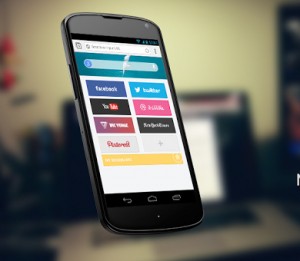
  • On your marks, get set… GO Launch Dev Team releases Android Next browser

    The Android web browser market is a packed one, and users are almost spoiled for choice. If you’re a fan of Firefox, Chrome or Opera on your main computer, there’s an accompanying mobile version for you to work with, and there are plenty of others as well.

    The GO Launcher Dev Team is best known — it should go without saying — for the Android launcher GO Launcher EX, but it has now branched out and is bringing its stylish looks to a web browser — Next Browser.

    Like many of the other apps from the same team, Next Browser has a clean, Holo look but it is the features that are going to make or break it. The app borrows ideas from many of its existing competitors, including tabbed browsing, a speed dial screen, a combined search and URL bar, and bookmark syncing.

    Support for plugins means that the browser’s feature set can be further extended and this is something that is sure to make Next Browser extremely popular, especially as more and more add-ons are released.

    Voice searching is available, but this is not the only means of interacting with the browser. There is good use of gesture support in the app. Swipe down to close a tab, swipe left to access extensions, and swipe right to access Next View. This handy page provides a quick overview of headlines and stories from various websites.

    Could this be the browser to rule them all? Maybe not, but it’s a decent alternative to the big names and shows great signs of promise.

    Next Browser is available free of charge from Google Play.

  • Call of Juarez: Gunslinger Review (PC)

    The Call of Juarez series from Techland has seen some major ups and downs throughout its history, as it started off rather well, with the original and the Bound in Blood iteration, which were set in the Wild West, but then moved to the present day, with the lackluster The Cartel.

    Now, the studio is back with Call of Juarez: Gunslinger, a new Wild We… (read more)

  • Optimizing Infrastructure for the Big Data V’s – Volume, Velocity and Variety

    Patrick Lastennet is director of marketing & business development, financial services segment for Interxion.

    Patrick-Lastennet-tnPATRICK LASTENNET
    Interxion

    The use of big data, in general, is still in its early stages for many industries, but the financial services industry has been dealing with big data for years. In fact, it’s already been managed and embedded into core financial processes. What used to be done in hours can now be done in minutes thanks to advanced data processing capabilities being applied to everything from capital market portfolio management applications to financial risk management. Prior to such advancements, data from previous days or weeks was analyzed to help re-strategize market approaches for the next day’s trading. But now, with more complex data analytics capabilities, financial firms are able to shorten that window for data processing and create more up-to-date strategies and trading adjustments in real time.

    However, it’s not just the increasing volume of data sets that is of concern to financial firms. There’s also the velocity and variety of the data to consider. When pulling clusters of diverse databases together for both structured and unstructured data analysis, financial firms rely on having powerful processing speeds, especially as real-time insight is increasingly a key strategic factor in market analysis and trading strategies. But are financial institutions equipped with the proper infrastructure to effectively handle the three V’s of Big Data – volume, velocity and variety – and benefit from real-time data analysis?

    Increasing the Value of Real-Time Operations

    With real-time data analysis, financial institutions are better able to manage risk and alert customers to real-time issues. If a firm is able to manage risk in real time, that not only translates into better trading performance, but also ensures regulatory compliance. Such improvements can be seen in consumer instances with enhanced credit card transaction monitoring and fraud protection and prevention measures. But, on a larger scale, the most recognizable incident that would have benefited from better data analysis may have been the collapse of Lehman Brothers.

    When Lehman Brothers went down, it was called the Pearl Harbor moment of the U.S. financial crisis. Yet, it took the industry days to fully understand how they were exposed to that kind of devastating risk. For every transaction made, it’s imperative that the financial firms understand the impact, or, as an extreme scenario, risk another “Lehman-esque” collapse. Today, with advancements in big data analysis and data processing, whenever any trader makes a trade, financial firms know what’s going to happen in real time through the risk management department–that is, if they have the right infrastructure.

    Optimizing Current Infrastructure

    The crux of handling the volume, velocity and variety of big data in the financial sector lies within the underlying infrastructure. Many financial institutions’ critical systems are still dependent on legacy infrastructure. Yet to handle increasingly real-time operations, firms need to find a way to wean off of legacy systems and be more competitive and receptive to their own big data needs.

    To address this issue, many financial institutions have implemented software-as-a-service (SaaS) applications that are accessible via the Internet. With such solutions, firms can collect data through a remote service and without the need to worry about overloading their existing infrastructure. Beyond SaaS apps, other financial companies have addressed their infrastructure concerns by using open source software that allows them to simply plug their algorithms and trading policies into the system, leaving it to handle their increasingly demanding processing and data analysis tasks.

    In reality, migrating off legacy infrastructure is a painful process. The time and expense required to handle such a process means the value of the switch must far outweigh the risks. Having a worthwhile business case is, therefore, key to instigating any massive infrastructure migration. Today, however, more and more financial firms are finding that big data analysis is impetus enough to make a strong business case and are using solutions like SaaS applications and open source software as stepping stones for complete migrations to ultimately leave their legacy infrastructure behind.

    Integrating Social Data

    While the velocity and variety of big data volumes from everyday trading transactions and market fluctuations may be enough of a catalyst for infrastructure migrations and optimization, now that social data is creeping into the mix, the business case becomes even more compelling.