Blog

  • Snooki Dating Reality Show “Snookin’ For Love”

    This Jersey Shore Girl is “Snookin’ For Love.”

    Breakout MTV reality star Nicole “Snooki” Polizzi — a 21-year-old aspiring vet tech who has gained acclaim as a overtanned drunkard on the controversial new show Jersey Shore — is hoping to continue riding the wave of unscripted success by appearing on a network dating show.

    Well hello there, Flavor Flav!

    “I want a dating show — Snookin’ For Love,” Snooki says. “I want to find my prince. I’d have 27 guys: guidos and juice heads. That’d be heaven. Every time I’d pick a guy, I’d give them a pickle and we’d eat the pickles at the end.”


  • Mophie To Launch Their Own iPhone Credit Card Reader

    image005

    Between CES and Google’s press event, next week is bound to be a torrential mess of press releases. Looking to sneak onto the radar before every tech writer in the lands is pulled into cranking out post after post on the latest and great from the industry’s big guns, iPhone accessory maker Mophie has gone ahead and put their upcoming wares on the table.

    Known primarily for their battery packs and cases, Mophie is about to jump into a whole new ball pit: credit card readers for the iPhone.

    Considering that Mophie has thus far stuck solely to the hardware end of the iPhone add-on game, this seems like an odd market for them to dive into. So much so, in fact, that I initially thought they were just releasing the credit card reader (pictured above) as an alternative to typing your credit card into various applications by hand or, perhaps, as a more aesthetically pleasing piece of hardware for Jack Dorsey’s Square.

    With a bit more reading, however, it looks Mophie might be prepping to square off (had to do it) against Dorsey’s service with a software solution of their own. Here’s what Mophie said on the matter:

    Marking its first combination hardware and private label iPhone application device, mophie is launching its innovative new credit card reader, empowering users to complete financial transactions on the go.

    The wording of that was just vague enough that it left things a bit unclear; they are indeed bringing their own software – but what was it for? Under that definition, this could still be little more than an easier (if a bit silly) way for consumers to input credit card numbers whilst ordering online. We prodded for more info – here’s the response:

    The credit card reader works with an iPhone application and is meant for small business owners to conduct transactions easier.

    So there we have it folks – Mophie’s getting into the transaction business. Whether or not they’ll be handling the payment processing themselves (as Square is) or simply acting as a middle-man for a service like Paypal or Authorize.net is still unclear. Look for more details to emerge during CES next week.

    Crunch Network: CrunchBoard because it’s time for you to find a new Job2.0


  • Nokia vs. Apple, Round 3: Finnish Giant Files Complaint With ITC, Covers More Than Just Phones


    Apple Versus Nokia

    This is one slugfest sure to carry on into 2010. Nokia yesterday requested an investigation against Apple with U.S. regulator the International Trade Commission. This is the biggest complaint yet in a legal dispute between the two companies, which started when the two failed to reach agreement in mobile licensing negotiations earlier this year and has resulted in both sides filing suits against each other in U.S. Courts.

    In this latest filing with ITC, Nokia (NYSE: NOK) alleges that “Apple (NSDQ: AAPL) infringes Nokia patents in virtually all of its mobile phones, portable music players, and computers.”

    “While our litigation in Delaware is about Apple’s attempt to free-ride on the back of Nokia investment in wireless standards, the ITC case…is about Apple’s practice of building its business on Nokia’s proprietary innovation,” said Paul Melin, general manager, patent licensing at Nokia, in a statement.

    The ITC complaint is wide-ranging, covering key areas including user interface, camera, antenna and battery life technologies. In all, it refers to seven separate Nokia patents.

    Nokia has had some success with ITC patent complaints in the past. The ITC ruled in favor of Nokia in the case of a long-running dispute with chipmaker Qualcomm (NSDQ: QCOM), which was eventually settled in 2008.

    Still, while Apple is moving full-speed ahead in its path through the consumer electronics market, Nokia’s device strategy appears somewhat all over the map. This ITC complaint shows Nokia is clearly trying to protect its business, but there are other reports that imply the company might even go so far as to sell off its handset division to focus on services in the longer term.

    A link to Nokia’s press release on the Apple ITC complaint is here.

    Related


  • Soybeans threaten Amazon rainforest

    by Lester Brown

    Photo courtesy Kanko* via FlickrSome 3,000 years ago, farmers in eastern China domesticated the soybean. In 1765, the first soybeans were planted in North America. Today the soybean occupies more U.S. cropland than wheat. And in Brazil, where it spread even more rapidly, the soybean is invading the Amazon rainforest.

    For close to two centuries after its introduction into the United States the soybean languished as a curiosity crop. Then during the 1950s, as Europe and Japan recovered from the war and as economic growth gathered momentum in the United States, the demand for meat, milk, and eggs climbed. But with little new grassland to support the expanding beef and dairy herds, farmers turned to grain to produce not only more beef and milk but also more pork, poultry, and eggs. World consumption of meat at 44 million tons in 1950 had already started the climb that would take it to 280 million tons in 2009, a sixfold rise.

    This rise was partly dependent on the discovery by animal nutritionists that combining one part soybean meal with four parts grain would dramatically boost the efficiency with which livestock and poultry converted grain into animal protein. This generated a fast-growing market for soybeans from the mid-twentieth century onward. It was the soybean’s ticket to agricultural prominence, enabling soybeans to join wheat, rice, and corn as one of the world’s leading crops.

    U.S. production of the soybean exploded after World War II. By 1960 it was close to triple that in China. By 1970 the United States was producing three fourths of the world’s soybeans and accounting for virtually all exports. And by 1995 the fast-expanding U.S. land area planted to soybeans had eclipsed that in wheat. 

    When world grain and soybean prices climbed in the mid-1970s, the United States—in an effort to curb domestic food price inflation—embargoed soybean exports. Japan, then the world’s leading importer, was soon looking for another supplier. And Brazil was looking for new crops to export. The rest is history. In 2009, the area in Brazil planted to soybeans exceeded that in all grains combined.

    At about the same time the soybean gained a foothold in Argentina, where it staged the most spectacular takeover of all. Today more than twice as much land in Argentina produces soybeans as produces grain. Rarely does a single crop so dominate a country’s agriculture as the soybean does Argentina’s. Together, the United States, Brazil, and Argentina produce easily four fifths of the world’s soybean crop and account for 90 percent of the exports.

    During the closing decades of the last century, Japan was the leading soybean importer, at nearly 5 million tons per year. As recently as 1995, China was essentially self-sufficient in soybeans, producing and consuming roughly 13 million tons of soybeans a year. Then the dam broke as rising incomes enabled many of China’s 1.3 billion people to move up the food chain, consuming more meat, milk, eggs, and farmed fish. By 2009 China was consuming 55 million tons of soybeans, of which 41 million tons were imported, accounting for 75 percent of its soaring consumption.

    Today, half of all soybean exports go to China, the country that gave the world the soybean. Soybean meal mixed with grain for animal feed made it possible for Chinese meat consumption to grow to double that in the United States.

    Since 1950 the world soybean harvest has climbed from 17 million tons to 250 million tons, a gain of more than 14-fold. This contrasts with growth in the world grain harvest of less than fourfold. Soybeans are the second-ranking U.S. crop after corn, and they totally dominate agriculture in both Brazil and Argentina.

    Where does the 250-million-ton world soybean crop go? One tenth or so is consumed directly as food—tofu, meat substitutes, soy sauce, and other products. Nearly one fifth is extracted as oil, making it a leading table oil. The remainder, roughly 70 percent of the harvest, ends up as soybean meal to be consumed by livestock and poultry.

    So although the soybean is everywhere, it is virtually invisible, embedded in livestock and poultry products. Most of the world harvest ends up in refrigerators in such products as milk, eggs, cheese, chicken, ham, beef, and ice cream.

    Satisfying the global demand for soybeans, growing at nearly 6 million tons per year, poses a challenge. The soybean is a legume, fixing atmospheric nitrogen in the soil, which means it is not as fertilizer-responsive as, say, corn, which has a ravenous appetite for nitrogen. But because the soy plant uses a substantial fraction of its metabolic energy to fix nitrogen, it has less energy to devote to producing seed. This makes raising yields more difficult.

    In contrast to the impressive gains in grain yields, scientists have had comparatively little success in raising soybean yields. Since 1950, U.S. corn yields have quadrupled while those of soybeans have barely doubled. Although the U.S. area in corn has remained essentially unchanged since 1950, the area in soybeans has expanded fivefold. Farmers get more soybeans largely by planting more soybeans. Herein lies the dilemma: how to satisfy the continually expanding demand for soybeans without clearing so much of the Amazon rainforest that it dries out and becomes vulnerable to fire.

    Amazon deforestation. Photo courtesy leoffreitas via Flickr The Amazon is being cleared both by soybean growers and by ranchers, who are expanding Brazil’s national herd of beef cattle. Oftentimes, soybean growers buy land from cattlemen, who have cleared the land and grazed it for a few years, pushing them ever deeper into the Amazon rainforest.

    The Amazon rainforest sustains one of the richest concentrations of plant and animal biological diversity in the world. It also recycles rainfall from the coastal regions to the continental interior, ensuring an adequate water supply for Brazil’s inland agriculture. And it is an enormous storehouse of carbon. Each of these three contributions is obviously of great importance. But it is the release of carbon, as deforestation progresses, that most directly affects the entire world. Continuing destruction of the Brazilian rainforest will release massive quantities of carbon into the atmosphere, helping to drive climate change.

    Brazil has discussed reducing deforestation 80 percent by 2020 as part of its contribution to lowering global carbon emissions. Unfortunately, if soybean consumption continues to climb, the economic pressures to clear more land could make this difficult.

    Although the deforestation is occurring within Brazil, it is the worldwide growth in demand for meat, milk, and eggs that is driving it. Put simply, saving the Amazon rainforest now depends on curbing the growth in demand for soybeans by stabilizing population worldwide as soon as possible. And for the world’s affluent population, it means moving down the food chain, eating less meat and thus lessening the growth in demand for soybeans. With food, as with energy, achieving an acceptable balance between supply and demand now means curbing growth in demand rather than just expanding supply.


    For more information and resources, please visit http://www.earthpolicy.org/index.php?/plan_b_updates/2009/update86

    Related Links:

    U.S. car fleet shrank by four million in 2009

    Ice Melting Faster Everywhere

    Stabilizing Climate: Beyond International Agreements


  • Ion-Based Netbooks Compared — Which One Wins?

    It seems as if we’ve been waiting forever for netbooks equipped with Nvidia’s ION chips to hit the shelves. The ION kit should make for a better platform for netbooks, especially in the graphics department. Netbook diva Joanna Stern of Engadget has put four ION-based netbooks to the test, and has published her findings. As cheap as netbooks can be, it is important to realize that the four netbooks Joanna has tested range in price from $475 to $650, a healthy range for cheap notebooks.

    The evaluation covers units from Lenovo, HP, Samsung and ASUS, all in the 11.6 or 12.1-inch form. Interestingly, while the ION promises better performance than the cheaper Atom, Engadget felt that these netbooks were more laggy than the Atom variety. I suspect that has to do with the higher screen resolution, but it’s something to consider when shelling out more money than for the typical Atom-based netbook.

    Check out the review for the overall winner, but with each of the four winning in one or more categories, they seem to be pretty evenly matched. That means cheapest wins in my book.


  • The Green Collar Economy: How One Solution Can Fix Our Two Biggest Problems (Hardcover) tagged “green” 23 times

    The Green Collar Economy: How One Solution Can Fix Our Two Biggest Problems

    The Green Collar Economy: How One Solution Can Fix Our Two Biggest Problems (Hardcover)
    By Van Jones

    Buy new: $17.15
    115 used and new from $2.57
    Customer Rating: 4.0

    Customer tags: green(23), sustainability(21), economics(15), environmentalism(15), public policy(13), climate change(12), sustainable business(11), social justice(10), economic(5), green jobs(5), green economy(3), change


  • Cradle to Cradle: Remaking the Way We Make Things (Paperback) tagged “green” 28 times

    Cradle to Cradle: Remaking the Way We Make Things

    Cradle to Cradle: Remaking the Way We Make Things (Paperback)
    By William McDonough

    Buy new: $18.15
    143 used and new from $10.98
    Customer Rating: 4.0

    Customer tags: sustainability(64), environmentalism(50), green design(45), industrial design(31), green(28), architecture(21), green 3(20), design(18), worldchanging(16), recycling(9), william mcdonough(9), business(3)


  • Rumor: New Audi concept coming to the 2010 Detroit Auto Show

    2011 Audi A8 Sketch

    According to a report (or rumor) by Fortitude, joining the 2011 Audi A8 sedan at the 2010 Detroit Auto Show will be a new concept.

    Quote by Fortitude:

    A rumor internally pointed to a second reveal – a concept car that is a showcase for technology… hybrid? electric? hydrogen fuel cell? flux capacitor??? No one would say. They’re still not really saying but a statement coming out of Ingolstadt today giving satellite feed details for their press conference says the following: “Showcar underscores Vorsprung durch Technik, New Audi A8 makes its show premiere”

    Click here for more news on the Audi A8.

    Refresher: Power for the 2011 Audi A8 comes from a 4.2L FSI direct-injection V8 that mages 372-hp and a maximum torque of 328 lb-ft. Mated to an 8-speed tiptronic automatic transmission, the 2011 A8 will go from 0-62 mph in 5.6 seconds with a top speed of 155 mph.

    2011 Audi A8:

    2011 Audi A8 2011 Audi A8 2011 Audi A8 2011 Audi A8

    – By: Kap Shah

    Source: Fortitude


  • Top 5 Web Trends of 2009: Internet of Things

    This week ReadWriteWeb is running a series of posts analyzing the 5 biggest Web trends of 2009. So far we’ve explored these trends: Structured Data, The Real-Time Web, Personalization, Mobile Web / Augmented Reality. The fifth and final part of our series is about the Internet of Things, when real world objects (such as fridges, lights and toasters) get connected to the Internet. In 2009, this trend has ramped up and is adding a significant amount of new data to the Web.

    In this post we’ll see how companies as big as IBM and as small as Pachube are building up this new world of Internet data and services.

    Sponsor

    redux_150x150.png

    Editor’s note: This story is part of a series we call Redux, where we’ll re-publish some of our best posts of 2009. As we look back at the year – and ahead to what next year holds – we think these are the stories that deserve a second glance. It’s not just a best-of list, it’s also a collection of posts that examine the fundamental issues that continue to shape the Web. We hope you enjoy reading them again and we look forward to bringing you more Web products and trends analysis in 2010. Happy holidays from Team ReadWriteWeb!

    What is The Internet of Things?

    The Internet of Things is a network of Internet-enabled objects, together with web services that interact with these objects. Underlying the Internet of Things are technologies such as RFID (radio frequency identification), sensors, and smartphones.

    The Internet fridge is probably the most oft-quoted example of what the Internet of Things will enable. Imagine a refrigerator that monitors the food inside it and notifies you when you’re low on milk. It also perhaps monitors all of the best food websites, gathering recipes for your dinners and adding the ingredients automatically to your shopping list. This fridge knows what kinds of foods you like to eat, based on the ratings you have given to your dinners. Indeed the fridge helps you take care of your health, because it knows which foods are good for you.

    However, we’re not quite at that level of sophistication yet in the Internet of Things. As we discovered in our Internet Fridges State of the Market in July, current Internet fridges are more about entertainment than utility.

    IBM and The Internet of Things

    One of the leading big companies in Internet of Things is IBM, which offers a range of RFID and sensor technology solutions. IBM has been busy working with various manufacturers and goods suppliers in recent months, to introduce those solutions to the world.

    For example IBM announced a deal at the end of June with Danish transportation company Container Centralen. By February 2010, Container Centralen undertakes to use IBM sensor technology "to allow participants in the horticultural supply chain to track the progress of shipments as they move from growers to wholesalers and retailers across 40 countries in Europe." Specifically this refers to transportation of things like flowers and pot plants, which are very sensitive to the environment they travel in. Having sensors as part of the entire travel chain will allow participants to monitor conditions and climate during travel. Essentially it makes the travel process very transparent.

    Pachube: Building a Platform for Internet-Enabled Environments

    IBM is a leading bigco active in the Internet of Things. At the other end of the spectrum is a small UK startup which has impressed us a lot this year: Pachube. It was one of 5 Internet of Things services that we profiled in February and we followed up with an in-depth look at the service in May.

    Pachube, (pronounced “PATCH-bay”) lets you tag and share real time sensor data from objects, devices, buildings and environments both physical and virtual. In a blog post by Tish Shute, Pachube founder Usman Haque explained that Pachube is about “environments” moreso than “sensors.” In other words, Pachube aims to be responsive to and influence your environment – for example your home.

    Conclusion

    What’s the point of all this new object data from the Internet of Things? As well as the new types of functionalities it will enable, such as health monitoring by Internet fridges, the sheer amount of new data about an object should lead to better quality goods and better decision-making by consumers. For example when you buy a loaf of bread from the grocery store, it will have its own RFID tag – which theoretically can tell you when it was produced, when it was packaged, how long it traveled to get to the store, whether the temperature during its travel was optimal, the pricing history of the product, what the precise ingredients are and associated health benefits (or dangers), and much more information.

    That ends our look at the 5 biggest trends of the Web in 2009. First thing next week we will post a round-up, along with a downloadable presentation.

    ReadWriteWeb’s Top 5 Web Trends of 2009:

    1. Structured Data
    2. The Real-Time Web
    3. Personalization
    4. Mobile Web & Augmented Reality
    5. Internet of Things

    Discuss


  • Lady Gaga Hit In Head With Bouquet Of Flowers [VIDEO]

    A floral arrangement smacked Lady Gaga right in her “Poker Face” during a live performance in Atlanta Tuesday night. Gaga, 23, was performing her hit single “Poker Face” when an overzealous fan threw a bouquet of flowers onstage and accidentally smacked the singer in the head!

    Like a true professional, the Grammy-nominated hitmaker continued her performance without a hitch.


  • Back in the Ooze

    We’re nearly done with with the decade and we never decided what to call it. The oughts never took on. It makes us sound like Grandpa Simpson, you know. I myself will call them the 00s, pronounced “Ooze,” as in, “remember the ooze?” and “I spent most of the ooze in Minneapolis.”

    So the end of a decade means two things. One, an increasing number of reflexive lists, enummerating the best of this and the most memorable of that. Two, an increasingly uninteresting debate about whether or not the 0 year is part of a new or the last decade. I’ve decided to resist doing either, but feel compelled to recap the last ten years.

    It was a pretty good stretch for me, personally — houses bought, wives married, books published, cats adopted, and some 3653 days met head on and made through. It’s true that some of my auld acquaintances seas between us braid hae, but new ones have gies mine a hand to tak  a right gude-willy waught, as some drunk Scottish guy once shouted in my ear.

    The world had it rough, so I keep my gloating to a minimum. The falling of the World Trade Center, the flood in New Orleans, the boxing day tsunami, various pandemics, and the global recession are likely to dominate the chapter on this period in history books. The first African American  U.S. president, the Harry Potter craze, and the rise of the LOL Cat added a silver lining of sorts, but it’s still a pretty gray cloud. Or a grayish ooze, if you will.

    I’ll be my pint-stowp yet, in the wish that the next 10 years are as good to everyone as the last 10 were to me. And at least we don’t have to wonder what to call them.

  • Hello, May I Introduce Myself

    Hi, I Was Diagnosed With Type 2 Diabetes About 3 Months Ago. Found Out I Had It Because I Could Not Get Rid Of A Yeast Infection. May Have Had It Before Now Because When I Had My Son 5yrs Ago, I Had Gestastional Diabetes. Soon As I Was Told, Took Action. At This Time My Bp Is Very Good, No Protein In Urine, Keeping Readings Between 100 To 140, Sometimes Lower. Cholesterol Is Up But Trying To Manage It And A1c Is 7.5. I’ve Lost About 25 Pounds, Could Lose More If Exercise More. Take 5mg Of Glipizide, 500mg Metformin, 81mg Of Aspirin, And Just Started Taking Lisinopril All Once A Day.
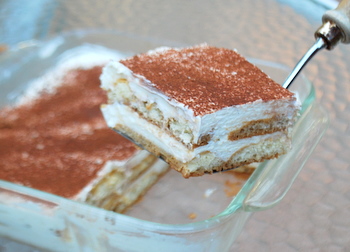
  • Baileys and Vanilla Tiramisu

    Baileys and Vanilla Tiramisu

    It’s become an unofficial tradition for me to make tiramisu for New Year’s Eve. I’m not sure how it came about, but it’s definitely not a bad thing. Tiramisu has always struck me as a kind of elegant dessert, with its layers of ladyfingers and mascarpone cream. That said, it is also very easy to put together and can be made well in advance – huge plusses for just about every dessert. It also uses a bit of alcohol, which makes it fit in nicely with the usual festivities of a New Year’s Eve gathering (or even just a nice dinner), and a bit of coffee, which might give you an edge in staying up until midnight.

    It’s pretty easy to vary the flavors of a tiramisu by using different liquors. Rum and marsala wine are often featured in it. For this version, I used Baileys Irish Cream with coffee to dip the ladyfingers and I infused a vanilla bean into the cream I used to make the mascarpone cream layers. Because it is easier, I included instructions for using both vanilla extract and vanilla-infused cream with this recipe. It is also worth noting the the size of ladyfingers varies by brand, so don’t be concerned if you need more or less than I’ve called for here, as long as your dish is fully covered as you construct the dessert.

    The finished dish is delicious. It is ultra creamy and very light. I really liked the hint of Baileys in with the coffee, too. It’s easy to eat a big piece, but since it is rich it is best served in slightly smaller portions.

    (more…)

  • Did We Mate With Neanderthals, or Did We Murder Them?

    Aiming his crossbow, Steven Churchill leaves no more than a two-inch gap between the freshly killed pig and the tip of his spear. His weapon of choice is a bamboo rod attached to a sharpened stone, modeled after the killing tools wielded by early modern humans some 50,000 years ago, when they cohabited in Eurasia with their large-boned relatives, the Neanderthals. Churchill, an evolutionary anthropologist at Duke University, is doing an experiment to see if a spear thrown by an early modern human might have killed Shanidar 3, a roughly 40-year-old Neanderthal male whose remains were uncovered in the 1950s in Shanidar Cave in northeastern Iraq. Anthropologists have long debated about a penetrating wound seen in Shanidar 3’s rib cage: Was he injured by another Neanderthal in a fight—or was it an early modern human who went after him?

    “Anyone who works on the ribs of Shanidar 3 wonders about this,” Churchill says.

    The possibility that early humans attacked, killed, and drove small bands of Neanderthals to extinction has intrigued anthropologists and fascinated the public ever since Neanderthal bones were first studied in the mid-19th century. At first naturalists were not sure what to make of the funny-looking humanlike bones. But with publication of Darwin’s On the Origin of Species, the idea that the bones were from a species closely related to us began to make sense. Eventually scientists recognized that Neanderthals were an extinct species that shared a common ancestor (probably Homo heidel bergensis) with Homo sapiens. For thousands of years, Neanderthals were the only hominids living in Europe and parts of Asia. Then, around 50,000 years ago, early modern humans migrated into Europe from Africa. By 28,000 to 30,000 years ago, the Neanderthals had disappeared.

  • Mitsubishi releases updated JDM Outlander Roadest with unique look

    Filed under: , , ,

    JDM Mitsubishi Outlander and Roadest

    2010 Mitsubishi Outlander Roadest – click for high-res gallery

    Normally when an automaker updates a model, even if it’s just a quick cosmetic change, the earlier version is treated like cheek meat – nobody wants it unless it’s a real good deal, and the dealers just want them gone. Mitsubishi evidently thinks its home-market will be kinder to the compact crossover-ute-thing we know and love as the Outlander.

    While a new Evo-esque beak has been grafted onto our Outlander for 2010, the softer, older version will continue to be offered to JDM buyers alongside a more cosmetically aggressive model. To avoid confusion, a country-specific rhinoplasty-enhanced model will be branded Outlander Roadest (note that the fascia and, grille and foglamps are all distinct from the U.S. model), while the older bodywork model will continue on as just plain “Outlander.” Regardless of the looks, both iterations will get a new 2.0-liter four-cylinder engine as standard, good for 148PS (about 146 horsepower). The offal-likeness is in play with pricing as well, with the new-old Outlander selling for just ¥1,995,000 (about $22,000) while the Roadest will command ¥2,475,900 ($27,100).

    [Source: Mitsubishi]

    Mitsubishi releases updated JDM Outlander Roadest with unique look originally appeared on Autoblog on Wed, 30 Dec 2009 16:55:00 EST. Please see our terms for use of feeds.

    Read | Permalink | Email this | Comments

  • Mojo SDK & webOS Doctor Get Upgraded To 1.3.5, Too

    Pray For MojoIt’s all in the headline, baby: both Palm’s Mojo SDK and oh-so-useful webOS Doctor repair tool (for Sprint users, at least) have now been upgraded to the latest webOS version 1.3.5. What’s new in the SDK? Here, have some bullet points:

    • Apps are now installed on the media partition, allowing available space to be used for apps
    • The emulator enables keyboard shortcuts to simulate device orientation changes and shake events
    • Palm has released an API to request high-frequency accelerometer events
    • Numerous developer-reported issues have been addressed

    Point 3 is especially interesting, given that one of the bigger complaints about webOS development was the low frequency of accelerometer polling, essential for some high-performance apps. Full release notes for the SDK after the break. Or are they? Much like Schrodinger’s famous feline, you’ll only know once you look inside the box…


  • Ask The Readers – What To Spend My Gift Card Cash On?

    This Christmas the Amazon.com Gift Card was a popular gift – a gift I gave and one I received as well.  So I thought rather than do an impulse purchase I’d ask everyone what they think we should spend our Amazon dollars on so they will stop burning a hole in our virtual pocket.


    What do you think?  Tell me what you’d purchase for yourself or what you think I should purchase for myself.


  • Kia Borrego won’t be updated for 2010, future looking uncertain

    2009 Kia Borrego

    The new Kia Borrego SUV will not see any upgrades for the 2010 model year. A Kia spokesman tells TheCarConnection that the Borrego “won’t be sold as a 2010 model” and that “the company could not rule out a future return–leaving its fate ‘TBD.’”

    The Kia Borrego, which arrived in the U.S. market in 2008, was expected to sell up to 20,000 units annually. However, high gas-prices and the financial crisis have hurt sales. Through the first 11 months of 2009, Kia sold a total of 9,510 Borrego units in the United States. In November 2009, Kia sold 825 units of the SUV.

    Prices for the 2009 Kia Borrego start at $26,245. It is available with two engine choices including a 3.8L V6 making 276-hp and a 4.6L V8 making 337-hp.

    – By: Kap Shah

    Source: TCC


  • Show #345: Last show of 2009


    Host: Larry Hryb, Xbox LIVE’s Major Nelson (Xbox LIVE ) (Twitter)  
    Co-host : e (Xbox LIVE ) (Twitter)  
    Co-host : lollip0p (Xbox LIVE) (Twitter)
    Co-Host: Stepto (Xbox LIVE) (Twitter


    In this last show for 2009, we reflect on the games that kept our attention for the past year. Plus, find out why you do not want to play Left 4 Dead 2 with Stepto

    Name The Game
    Xbox 101
    And a little more…

     
    Note: I’ve added the above show notes to the
    ID3 Lyrics data field. If your device supports displaying lyrics, you’ll find this useful 

    Show Details:

    Duration (approx):

    1:09:11

    File size (approx) :

    31.6 MB

    Format: MP3

    Listen now:

    Click the player below to stream this show to your browser: 


    Subscribe:

    Subscribe directly using your preferred podcasting tool:

    [iTunes] Subscribe to the Podcast directly in iTunes (MP3) Listen in iTunes? Submit a review
    [Zune] Subscribe to the Podcast directly in Zune


    Or, copy and paste this URL into a podcasting tool: http://feeds.feedburner.com/MajorNelsonblogcast


    Download Latest Episode:

    Download the latest episode to your computer or preferred device


  • Canadian Government Shuts Down Yet Another Yes Men Parody… Takes Down 4,500 Innocent Sites

    Famous politico-pranksters The Yes Men have a long history of putting forth convincing parody websites that get those they parody to rush around to get the websites offline. Back in 2007, there was the fake ExxonMobil site that got pulled. Earlier this year it was the fake Chamber of Commerce site that the real Chamber issued a DMCA takedown over. The latest prank is based up in Canada, with the Yes Men setting up some parody sites of Canadian government organizations, promising massive greenhouse emissions reductions. This greatly upset the Canadian government who ordered the websites’ service provider to pull them down. However, as Michael Geist points out, in the rush to pull down the sites, the ISP also took down 4,500 other websites. Seems like quite a bit of unnecessary collateral damage. Of course, this is exactly what the Yes Men want. For every takedown, they get another burst of publicity.

    Permalink | Comments | Email This Story