Blog

  • Internet Explorer 10 Stable (for Windows 7) – Review

    The stable build for Internet Explorer 10 for Windows 7 has been released this week after spending a few months as a preview for developers.

    The new browser from Microsoft is offered through Automatic Updates system to users with local administrator accounts, being automatically downloaded and installed without any notification.

    Non-administrat… (read more)

  • Evernote is hacked, claims user data ‘should’ be safe

    I am sure I am not alone when I say that Evernote is one of my favorite services. It makes life so much easier — I can write a note on my PC and then see it on my phone when I am out. I can add an item to a shopping list and it appears on my wife’s phone while she is in the store. There are all sorts of cool possibilities. But, if you visit the service today then you may be in for a bit of a surprise.

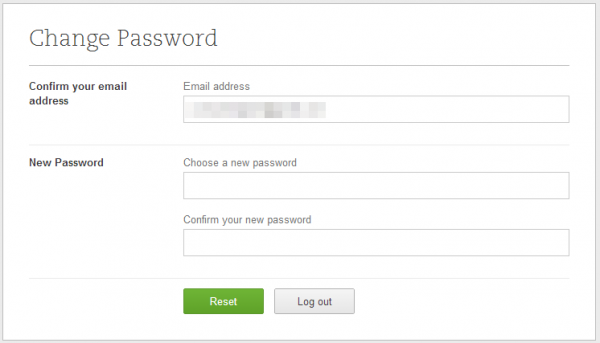
    When you try to log into the site you will be taken to a prompt that asks you to please change your password — no you did not enter your login credentials wrong. The service announced this morning that it was hacked. Dave Engberg of Evernote posted the bad news, while also trying to reassure customers that there is really nothing to worry about and that the password change is simply precautionary.

    “Evernote’s Operations & Security team has discovered and blocked suspicious activity on the Evernote network that appears to have been a coordinated attempt to access secure areas of the Evernote Service”.

    Engberg goes on to assure “in our security investigation, we have found no evidence that any of the content you store in Evernote was accessed, changed or lost. We also have no evidence that any payment information for Evernote Premium or Evernote Business customers was accessed”.

    However, the company did find that the attackers were able to gain access to Evernote user information, which includes usernames, email addresses associated with accounts and also encrypted passwords. Engberg continues to resassure: “Even though this information was accessed, the passwords stored by Evernote are protected by one-way encryption”. The company claims that it is only forcing users to change current passwords as a measure of extra security.

    The announcement wraps up with the usual plea to users about secure passwords — do not use dictionary words, never use the same password on multiple sites, and the other warnings generally associated with these events.

    Upon hearing this news, I immediately visited my own account and, sure enough, was prompted to change my password. I store nothing of importance there — the hackers are welcome to my family’s grocery list. I would ask them only to buy some of it for us if, for some reason, they did gain access.

  • Nokia CEO Stephen Elop on Windows Phone 8: ‘It can be the biggest operating system in the world’

    Nokia_Windows_Phone_8_Lumia_820

    CEO of Nokia, Stephen Elop, was interviewed at this year’s Mobile World Congress in Barcelona with topics ranging from Nokia’s goal in an emerging market to the reason behind Windows Phone 8 on Nokia flagship devices. When asked about Nokia’s outlook on emerging markets, Elop says that opportunities in an emerging market come from offering innovative technology at low price points especially for first time smartphone users.

    When it came to the topic of using Windows Phone 8 in their devices as opposed to Android, Elop noted that the reason for choosing Windows Phone 8 was to stand out amongst the competition who are utilizing other platforms. Elop said that Windows Phone 8 “can be the biggest operating system in the world,” but also said that “we have a lot of work to do with Microsoft to make that happen.” As far as sales go, he said, “Demand has exceed supply in some of our markets.” For the full interview with Bloomberg, click the source at the bottom and let us know your thoughts on Elop’s interview in the comments section below.

    Source: Bloomberg

    Come comment on this article: Nokia CEO Stephen Elop on Windows Phone 8: ‘It can be the biggest operating system in the world’

  • Can Guy Kawasaki save Google from Samsung?

    Google is a hardware company now, something that is too often overlooked. Last week, the search and information company launched its first computer, Chromebook Pixel, which I reviewed overnight yesterday. In August 2011, Google bought Motorola, one of the most iconic American brands and inventor of the cell phone, for $12.5 billion; the deal closed in May 2012. Moto makes handsets and tablets, among other things.

    But Motorola is a brand in decline, and one Google should want to reinvigorate if the plan is to release more-compelling, more-innovative Androids. Why should ASUS, LG and Samsung manufacture Nexus devices when Google has a huge hardware subsidiary? Meanwhile, one of the three is a partner out of control. Samsung threatens to fracture the broader Android ecosystem — a problem I sternly warned about in April 2012 post “Google has lost control of Android“. A resurgent Motorola could bring unity back to the Force, as the saying goes. Google bets that Guy Kawasaki can help make that happen.

    What a Guy

    Kawasaki joined Moto this week, as a consultant/evangelist. In BetaNews group chat yesterday I described him as: “Smart. Articulate. Friendly. And your worst nightmare if marketing against you”. I know him, as many long-time journalists do, as a kind of devil incarnate. During Apple’s worst days, he joined as an evangelist. I summed up his role to colleagues yesterday: “Kawasaki is the reason Mac enthusiasts are crazy online. He organized the first attack squads, nurtured that whole culture of guerrilla evangelism”.

    When Apple was a runt company, Kawasaki’s Mac attack squads clobbered people writing anything even slightly critical of Apple. Any long-time journalist knows the drill. You write X story about Apple and the innuendo-carting cultists swarm in accusing you of Windows bias and shilling for Microsoft. Or in this decade, Google. The accusations whack the writer’s credibility often with no substance (e.g., facts) to support them. The attack evangelism culture Kawasaki nurtured at Apple lives on long past his influence.

    In this decade, Kawasaki is an Android convert — and quite vocal about it. He explains:

    Every time I tell people that I don’t use any iOS products, people go a little nuts when they figure out I’m a pure Android guy. This is a list of my top ten reasons why I like Android more than iOS.

    1. Selecting default applications to open files.
    2. Making Chrome my default browser.
    3. Viewing apps, no matter what folder they’re in, in an alphabetical list.
    4. Installing different keyboards—for example, Swype.
    5. Viewing windows containing live feed of appointments or emails (‘widgets’).
    6. Using any micro-USB cable to charge an Android phone or tablet.
    7. Receiving utomatic, unattended updates to the operating system and applications.
    8. Making multiple aliases for apps, not simply moving apps around.
    9. Using Google Now.
    10. Viewing summaries of notification messages—for example, ’25 new messages’ instead of 25 individual notices.

    Kawasaki is a good fit for Motorola. Colleague Alan Buckingham expressed in BN group chat yesterday: “I loved my Droid X, but I am certainly not a Motorola fanboy”. To which I responded: “Spend an hour with Guy and you would be”. Mihaita Bamburic chimed in: “Kawasaki is a genius. He’s incredibly skillful when it comes to speeches, I’ve seen him a couple of times on YouTube and he got me hooked”. I added: “He’s more effective, more believable than Steve Jobs, but just as charismatic”.

    Android’s Motorola Debt

    Google doesn’t just own Motorola, it owes something to the cellular technology pioneer — and also to Verizon. The carrier launched the Motorola Droid brand, backed by $100 million marketing budget, in autumn 2009. The move invigorated Android global growth, by lifting it in, at the time, the largest region adopting smartphones. Increased visibility, even more than sales, helped Android sales jump a stunning 888.8 percent in 2010, according to Gartner. Moto’s fortunes have since declined, but Verizon remains firmly committed to the Droid brand, even after getting iPhone in February 2011.

    Globally, Motorola’s sales share has collapsed, just 1.7 percent in fourth quarter — that’s tenth place — according to Gartner. Remember Razr, which seemingly everyone who was anyone owned in the mid-Noughties? The original shipped in third quarter 2004, with shipments reaching 50 million less than two years later. Moto is a ghost of former glory, yet with solid engineering culture, enormous patent portfolio and Google’s backing.

    Moto also has a core cult-like following of users devotedly committed to the brand. They remind me of Apple circa 1996, when closure looked likely but a small group remained loyal and vocal about the products. Kawasaki is among them: “I made the switch from iPhone to RAZR more than a year ago”. Verizon brought back to brand, combined with Droid, to smartphones, in October 2011 (sales started the next month).

    A Galaxy Far, Far Away

    Kawasaki’s enthusiasm for a Motorola smartphone is more significant than his Android embrace. The evangelist’s real mission, whether or not acknowledged, is to save Google from Samsung. The South Korean electronics giant is largely responsible for Android’s enormous market share gains, but in process inflicts great pains on the broader ecosystem.

    Based on sales to end users, not shipments to carriers and dealers, Android captured 69.7 percent global smartphone share in fourth quarter, according to Gartner. Samsung, the world’s leader for all handsets and smartphones, accounted for a stunning 42.5 percent of all Androids sold. The next closest vendor: 6 percent. Samsung’s success is mixed for Android as a platform. The electronics company, and not Google, largely controls customers’ experience via TouchWiz UI and other features. Meanwhile, Android updates lag Samsung phones by many months. At least Samsung adopts the newest Android eventually, but TouchWiz skinned.

    Eleven months ago, Forrester Research analyst Frank Gillette predicted that companies adapting Google’s open-source OS would “cause proprietary Android share to surpass the installed base of Google’s Android ecosystem in 2015. This further fragmentation will challenge Android developers, customers, and especially enterprises, and hamper the creation of a shared ecosystem”. Samsung, which is No. 2 to Apple on tablets, is front and center leading to a fractured — not fragmented — Android ecosystem.

    Samsung’s priorities aren’t necessarily Google’s or to the benefit of a the broader Android ecosystem. The Galaxy brand is hugely successful, and a second gravity well pulling brand attention, and even app developers and content partners, to customized Android. Then there is the power that comes with success — massive dominance over the entire market of Android sales. Samsung is a partner Google obviously wants to keep, but also should keep from getting too powerful.

    Nexus RAZR

    Enter Guy Kawasaki and his task evangelizing and revitalizing the Motorola brand, which needs more commitment from Google. As slow as Samsung is sometimes to update Android, Moto often takes longer or leaves customers hanging with nothing. Google must also get behind the subsidiary and get it picking up the pace — in every way. The search and information giant is agile and quick to update products. Motorola is slow moving, like an abandoned ship. There needs to be good captain and crew to support Kawasaki’s efforts.

    If he can succeed in them, and Google supports him, there’s no reason why a new class of Nexus devices — even Chromebooks — shouldn’t come from Motorola. Evangelism is a great starting point. This week, Kawasaki set up the Mobile Devices community on Google+. Discussion is excellent beginning.

    Samsung isn’t a bad Android partner, but the company needs some serious competition. Google and Motorola can give it. Nexus devices show that the Android Army wants pure Android, without the fancy clothes draped over the green robot. Imagine something like Nexus RAZR. Competition can keep Samsung on course with Android, rather than diverting destinations. Otherwise, soon the company will have none — that’s the problem, the future.

    I’d like to congratulate Guy Kawasaki on his new role and wish him well. That sentiment isn’t easily given from someone battling Mac guerrilla evangelists since the 1990s.

    Photo Source: Guy Kawasaki’s Google+ Profile

  • Our innovation economy won’t grow until we fix the broken IPO market

    It’s been 12 years since the internet bubble burst, and in the ensuing fallout, it has become apparent that the IPO market has been fundamentally damaged. Thanks to a lack of national confidence and lingering fears and confusion about the potential risks of IPOs, far too many good companies – ones that could supply much needed jobs to the U.S. economy – are unnecessarily paying the price. While addressing the fouled IPO market certainly  isn’t a cure-all for our ailing economy, there’s no doubt that some of America’s missing growth and lost jobs over the past decade are certainly to be found locked away in this hidden treasure chest.

    Breaking the IPO market

    We can look back now and see that permanent structural changes that were prompted as a result of the dot-bomb crisis– many initially subtle and gradual – shifted our markets so that we frogs didn’t realize that our cold-water world was slowly coming to a boil. And we got cooked.

    In fact, a host of factors have contributed to the process. Electronic trading, decimalization, consolidation of the ‘Four Horsemen’ boutique banks into the bulge bracket banks, and the dominance of hedge funds — all these factors helped transform our investment focused public markets into a high-velocity, high-volume trading world. And that has choked the ability of young companies to get the long-term growth support they need to create more jobs for the rest of us.

    New regulations to control the underlying corrupt financial practices that helped create and burst the bubble also hindered the growth of legitimate companies with IPO potential. Sarbanes Oxley and analyst regulations added costs while removing critical support. The result has been that the number of years to IPO has been shifted from an average of under five years, to over 10 today. These structural changes in the financial markets have stunted capital formation and in essence broken the IPO process.

    Accepting and promoting our new economy

    President Obama stated in his recent State of the Union Address that America’s future will come from rebuilding a strong middle class. However, the belief that the solution to moving forward is to resort to the old manufacturing economy is wrong. If we look back over the past 20 years to where the greatest number of jobs have come from, the answer is new-economy companies like Apple, Google, Amazon and Starbucks, which each employ about 300,000 people.

    We are now in an “innovation economy” growth phase cycle, and because it is specifically dependent on IPOs – with 92 percent of job growth for companies occurring post-IPO– one can easily connect the lack of growth and jobs over the past decade right back to when IPOs became blocked.

    To deliver middle class jobs in the U.S., Mr. Obama needs to focus on creating more tech jobs – which, according to Moretti’s multiplier of five, spawn three middle-class jobs and two professional jobs each.

    Preparing CEOs for today’s market realities

    What is most wrong with the system is that it is skewed to incentivize short-term focus. Today’s high frequency trading benefits from volatility and in effect creates pump-and-dump scenarios. For IPOs, that translates to often wild price fluctuations, with from 300 to 500 percent of IPO allocations usually trading within the first 48 hours of a company’s offering.

    The solution is for company CEOs to take back the reins and factor in aftermarket trading. Managing your shareholder base composition is a basic investor relations function that companies need to begin developing years prior to IPO, including inviting key shareholders into late-stage private rounds. A good rule of thumb is to aim for 60 to 70percent long-term holding base for stability, and 30 to 40 percent short-term holders for liquidity. This yin-yang balance will support a perception that matches reality (fundamental performance).

    Without a core of growing companies (that are appropriately valued), the economy will simply keep generating more uncertainty and distrust, further limiting good, young companies’ ability to hire and grow.

    Mona DeFrawi is founder and CEO of Equidity, a firm that matches investors with private companies. Follow her on Twitter @MonaDeFrawi.

    Have an idea for a post you’d like to contribute to GigaOm? Click here for our guidelines and contact info.

    Photo courtesy Everett Collection/Shutterstock.com.

    Related research and analysis from GigaOM Pro:
    Subscriber content. Sign up for a free trial.

  • US writers on the take: how demand for more media content leads to more corruption

    Conservative opinion writers at prominent publications like the Huffington Post, National Review and Red State all received money from the government of Malaysia as part of a sophisticated propaganda plan to smear an opposition leader. Details of the scheme were reported on Friday by BuzzFeed and include a regulatory filing that discloses the names of the columnists.

    The plan in which 10 columnists received $2,000 to $36,000 each to write about Malaysia was carried out by Joshua Trevino, an opinion writer and the operation’s bagman. Trevino himself, who was a columnist for the Guardian until the paper dropped him in 2012 over conflict-of-interest issues, received $389,724 from the government of Malaysia.

    The Malaysian government’s goal was to discredit Anwar Ibrahim, an opposition leader and the target of a politically charged sodomy trial that was decried by human rights groups.

    The upshot is that prominent American media outlets printed propaganda from a semi-totalitarian foreign government. While the scheme is disturbing, it is not entirely new; nasty regimes have long used Washington PR firms to spread disinformation.

    What is new, however, is how much easier it’s become to place such propaganda thanks to online journalism’s insatiable appetite for content. Today, publications of every stripe are eagerly sucking up outside contributions to fill their websites. The contributions are tarted up with a variety of names — such as “expert opinions” or “guest voices” — but they amount to the same thing: additional content that is often free.

    But in their rush to pump up their content, sites may be dropping their screening standards. Unlike like the New York Times, which has long had strict systems to prevent conflicts of interest, many online publications may not have the time or the energy to rigorously watch for bad apples.

    In response to an email query, the Huffington Post offered the following statement: ”This is a clear violation of HuffPost’s blogging policy that requires disclosure of payments and conflicts of interest. As soon as we learned of this conflict, we removed the posts from our site. In addition to a very clear policy, we have a team of blog editors who are trained to spot potential conflicts as they review each blog that gets submitted. Posts are routinely declined.”

    Jack Fowler, the publisher of National Review, did not have an immediate on Friday; I will update if I hear back.

    While after-the-fact measures may mitigate the damage, it doesn’t change the fact that, in this wild-west clamor for content, it’s become easier for the likes of Malaysia’s leaders to ooze their voice into American media. (Likewise, some companies have succumbed to the temptation of hiring sock-puppet journalists to shill for their side.)

    Overall, it’s perhaps inevitable that more content has brought more corruption to the media. The good news, however, is that the growth of online media outlets also affords the opportunity for more whistle blowers; my colleague, Mathew Ingram, in the case of social media sites like Twitter, likens the process to a self-cleaning oven.

    The Malaysia episode also reflects an other example of how BuzzFeed, best known for cat photos and titillating viral fare, is rapidly climbing the serious media firmament.

    (Disclosure: the Guardian News & Media is an investor in paidContent’s owner, Giga Omni Media).

    (Image by Straight 8 Photography via Shutterstock)

    Related research and analysis from GigaOM Pro:
    Subscriber content. Sign up for a free trial.

  • You’re Doing it Wrong: Boat Salvage Fail

    Boat Haul Fail

    Isn’t it amazing the lengths that some people will go through to accomplish a job even if it’s done incorrectly? I mean there has to be a time when one simply says, “Enough is enough…”, admits failure and goes about their merry way. What we have here is a simple case of ego vs common sense, where unfortunately the ego took control and ended up costing this boat hauling company not only a truck, but quite a bit of cash as well.

    Source: Youtube.com

  • Photoshop Touch for iPhone: Impressive features on a small screen

    It was, frankly, a little bit surreal to be loading Photoshop on my iPhone this week. PS Touch ($4.99) was released for the iPhone and iPod touch (fifth-generation), and I’m still trying to decide if this is a fantastic design accomplishment, or something of a novelty. The answer, I suspect, lies in the middle.

    Powerful editing tools on small-screen devices still to me seem an odd pairing. While I appreciate the ability to make more than cursory edits to a photo on my iPhone, it’s unlikely I’m going to delve too deeply into PS Touch’s feature set on my iPhone. The screen, even on the iPhone 5, it still too small to make editing photos a joy. There aren’t many times I’ve looked at a Samsung Galaxy S screen with envy, but testing out PS Touch was one of them.

    While taking a look at PS Touch, I scanned my iPhone’s Camera Roll. It appears I take a lot of pictures of my cat. Hardly the sort of photo that requires a the full might and power of PS Touch. The cat, after all, is pretty much naturally cute. Looking through my Photo Stream, it’s still a lot of pictures of cats, guitars, my friends and my favorite fishing spot. Again, hardly photos I’d want to spend significant time editing. I’m not going to assume my uses are yours, but I think most people’s iPhone photos are more of a photo diary of their life than pictures that need significant rework.

    What is has, what it’s missing

    Now that I’m done grousing about my Camera Roll, PS Touch for the iPhone does have an impressive feature set. You can create layers, use a variety of selection tools, including magic wand, and apply a host of effects and filters. I had a lot of fun with the filters, especially the charcoal one.

    What you can’t do, that I can see, is create masks. I don’t think this is a huge deal on the small screen since I can’t imagine creating masks on the iPhone would be at all fun.What it’s really missing, though, is content-aware healing. Given the fast and loose nature of iPhone photography, being able to remove the guy mooning the camera from a lovely beach shot would be very handy.

    crump-iphonetouch-IMG_0280

    Photoshop Touch at times isn’t a very intuitive program. It took me a few times to get how adjusting the tolerance on the magic wand worked, for example. I thought once I had made a selection, I could use the tolerance tool to expand the selection on the screen, but instead it looks like I had to reapply the wand. After playing around with it for a few hours, I had the feeling that there were likely additional features or tools I hadn’t stumbled across. The help area seems to exist largely to check off “create help file” on the project plan.

    Once nice feature is you can use Adobe’s Creative Cloud to work on images between your Mac, iPad and iPhone. Again, I can’t see myself doing heavy edits on a photo on my iPhone, but it’s nice to have an easy way of getting images between the three platforms.

    PS Touch ran well on my iPhone 5. While it has an impressive feature set, it almost feels like overkill on my iPhone. On my iPad, with the extra screen real estate, a version of Photoshop makes more sense. Some people might complain that it’s not a universal app, but I don’t mind. I think there’s likely enough challenges creating the separate versions to warrant a $4.99 iPhone price, with the iPad version being $9.99. And, hey, a Photoshop for $15 for both platforms seems almost like a deal with strings attached.

    Related research and analysis from GigaOM Pro:
    Subscriber content. Sign up for a free trial.

  • Google shows off ‘How Search Works’

    We all use it everyday. Be it Google, Bing or another alternative, we search for things without even really thinking about it. Google, however, wants to show you a little bit about what all goes into this seemingly simple activity. Friday, the company unveiled a new web site called ‘How Search Works‘ that gives a rather in-depth look behind the scenes.

    Google has, for sometime now, run an “Inside Search” blog that provides a bit of information on updates to the company’s core service, but this one really lifts the curtain, though you still will not find any real trade secrets revealed — though there is a 43-page document explaining how Google evaluates results. It is an interesting look at what really goes on when you type that innocent “funny cat videos” term into the little box. Yesterday Jake Hubert, a Google Product Manager, took to that blog to announce the new web site.

    “Ask a question, get an answer. But what happens in between? Last year we released an animated site that illustrates an email’s journey to friends and family around the world. Today, we’re releasing a similar website called How Search Works”.

    There is information about crawling and indexing, algorithms, combating spam and Google policies — “We want to organize the world’s information. But what about malware? What about credit card numbers? There are many tricky issues we think about on a daily basis. Here you’ll find a list of policies organized around particular topic areas. We’re starting with policies related primarily to content removals, but this is a living document and we plan to update over time”.

    There is a very helpful section called “tips and tricks” that aims to point all of the useful information that can be found on Google with simple searches — recipes, movie times, currency conversion, weather and more.

    Finally, there is a rather cool “Playground” page that tells you about the famous Google Doodles, A Google a Day, Search Globe and other fun information.

    Google loads up the information and, while much of it is geared towards the average consumer, there are also useful topics for webmasters looking to optimize their sites and boost traffic. Again, you will not find the secrets of SEO, but you will learn some tips that may just help you out — in both search and design.

  • Three e-reading tools I wish existed

    The past couple years have seen a flood of e-reading apps and tools, but as far as I know, these ones don’t exist yet. I wish they did. I hope you’ll add your own wishlist in the comments.

    Book group iPad app that supports Kindle

    A bunch of my girlfriends and I are about to start a virtual book club to read Sheryl Sandberg’s new book Lean In: Women, Work and the Will to Lead. We’ll be reading it on our respective devices and then talking about it together on a private message board.

    Most of us will be buying the Kindle version of the book, and I wish there were an iPad app that let us open the Kindle file within it and then create our own private conversation around the book — highlights, notes and so on. There are already plenty of social reading iPad apps — Readmill, Subtext, Copia — but they either don’t support Kindle books and/or don’t let users create a private discussion.

    If you’re wondering why it has to be Kindle, by the way: It’s the device/format that all of my friends already use. That’s going to be true for a lot of book groups, and so it seems as if any book club app is going to have to support books bought on Kindle.

    Interim solution: We’ll be reading the book on respective devices or in print, and then we’ll talk about it together on a private message board.

    E-ink mode for iPad

    I like to read ebooks on my iPad before I go to bed, but I worry that the back-lit screen messes with my eyes and sleep patterns. I wish there were an e-ink mode or a filter app that changed the type of light coming from the iPad screen — not just a dimmer but something that actually made it look more similar to an e-ink screen, with no glare. Apple actually has a patent on this type of hybrid display, so it might be a feature we see on an iPad one day.

    Interim solution: The app F.lux changes a screen’s brightness and tint based on the time of day.

    A Web-based Calibre

    Calibre is free ebook management software: You can use it to store your ebook collection, convert ebooks to other formats, send ebooks to e-readers, download content from news sites and turn it into an ebook, and so on. There are also a number of third-party plugins that add new features to the service. For example, there are Calibre plugins that break the DRM on an ebook. That means that, for example, you can buy an ebook from Barnes & Noble, break the DRM on it, convert it to a *.mobi file and read it on your Kindle. (That isn’t what publishers or retailers want you to do, but with Calibre third-party plugins it’s possible.)

    Calibre is downloadable software, but I’d love to see a web version that lets readers store all their ebooks in the cloud, convert them directly within a web browser and then email them straight to a device. That way, users could access their files from anywhere.

    Interim solution: With a couple hacks, you can sync Calibre with Dropbox. That’ll let you access all your ebooks where you have Dropbox installed, but you won’t be able to convert them to other formats. Also, be warned that it looks as if Dropbox has cracked down on this in at least a few cases.

    Photo courtesy of Shutterstock / Borys Shevchuk 

    Related research and analysis from GigaOM Pro:
    Subscriber content. Sign up for a free trial.

  • TED Weekends reimagines education

    ted2013_0035945_d41_4606

    At TED2013, Sugata Mitra accepted the TED Prize for 2013 with a striking talk. Sugata Mitra: Build a School in the CloudSugata Mitra: Build a School in the CloudHis wish: for children to learn about any variety of subjects through self-organized learning. While this bold project will take form with a “School in the Cloud” in India, Mitra encourages members of our community to help with a global paradigm change by creating their own self-organized learning environments and fostering a sense of wonder in children.

    A special edition of TED Weekends presents essays inspired by Mitra’s talk. On Wednesday, we shared five of these great essays. Below, find four more.

    Tom Healy: Seeing Fire in the Clouds

    Last night, as I listened to Dr. Sugata Mitra, TED’s 2013 Wish Prize winner, discuss the experiments in education that led to the invention of the SOLE, his self-organizing learning environment, I thought about the impossible.

    Dr. Mitra has talked in the past about how difficult it is to get good teachers to go, paradoxically, where they are needed the most: low-income and/or rural areas where, simply, people are too poor and the areas are too dangerous, too out of the way to attract the necessary educators. It’s not only difficult, it’s usually impossible. Dr. Mitra is fond of quoting the science fiction writer Arthur C. Clarke: “If children have interest, then education happens.” There’s no fiction in that. Just truth and common sense — that Dr. Mitra has backed with serious science. Read the full essay »

    John McWhorter: Back to the Future

    Sugata Mitra’s inspiration offers promise in returning learning to what humans are programmed for.

    And that is not what we today think of as “school.” The books-and-blackboards model of education will always be most productively engaged by students of two sorts.

    One is the middle-class child from a quiet, book-lined home, in which concentration in solitude is drunk in from toddlerhood.

    The other is the child of driven immigrant families, uniquely dedicated to their children’s making the most of the new circumstances. Read the full essay »

    Jessie Woolley-Wilson: Student-centered, Student-driven

    In order to unlock the human potential of a child, we must first unlock their learning potential. For those of us in the Next Generation Learning community who hope to create a paradigm of learning that is at once student centered and student driven, very engaging and highly effective, Sugata Mitra’s Self Organized Learning Environment (SOLE) is a provocative vision for the future. As an education innovator, optimist, and dreamer, I am captivated by the young children featured in Mitra’s “Hole in the Wall” videos who seem genuinely delighted and undaunted by the perplexing challenges they are asked to solve on their own. I admire the daring experimentation of Mitra’s model and his wish to build a school in the cloud — one that has the potential to serve millions of undeserved children around the globe.

    This is a wish about access. This is a wish about high expectations. This is a wish about hope — about seeing around impediments to the infinite possibilities. Read the full essay »

  • Looking Back at the White House Hackathon

    On February 22nd, we welcomed twenty one programmers and tech experts to the White House and invited them to spend the day working alongside seven members of our own development team. Their goal was simple: to build tools using the new API for We the People, the White House petitions system, and contribute example code to a software development kit (SDK). For nine hours, these two groups clustered around each other's laptops, solving problems, sharing ideas, sharing code, and asking questions. 

    This was the first White House Open Data Day Hackathon. 

    read more

  • Android this week: HP’s me-too Slate7; Tablets as phones; Android on Chromebook Pixel

    This week saw the Mobile World Congress event wrap up in Barcelona, with a few new Android devices to look forward to. One confirmed an earlier rumor that HP was getting back in on the tablet market as the company introduced its Slate7 running on Android. The most appealing aspect of the product may be the $169 price tag because there’s not much to make this “me-too” tablet stand out from the crowd.

    HP Slate7The Slate7 is another 7-inch tablet, competing against Google’s Nexus 7, the new Asus FonePad, Amazon’s Kindle Fire, Samsung’s Galaxy Tab 2 and others in this space. I can see why HP opted for a small slate as their comeback product: Some recent data indicates that smaller tablets will outsell larger ones in 2013.

    HP used a fairly standard set of hardware in the Slate7. A 1.6 GHz dual-core chip powers the Android 4.1 device, which includes 1 GB of memory. The 7-inch touchscreen uses a 1024 x 600 resolution panel; the same res as my original Galaxy Tab back in 2010. Storage capacity is 8 GB of flash memory that can be expanded with a microSD card. A pair of cameras complete the product with the rear one offering a meager 3 megapixels. In short, this a low-priced product with old specs competing against similarly priced products with better specs. As I said when HP was rumored to re-enter the tablet market: good luck with that.

    Also out of MWC are tablets that include cellular voice capabilities: The aforementioned Asus FonePad and new Samsung Galaxy Note 8.0 are two examples. I’ve said for some time that I think small tablets will replace smartphones, but I think we’re very early in that trend for two reasons.

    Consumers can’t conceive of carrying a 7- or 8-inch tablet everywhere because the device is not as pocketable as a traditional smartphone. I certainly understand that situation. Yet, I carry a small tablet everywhere; in a pocket when I can and in the hand when I can’t. As I said on this week’s podcast, I think this is a situation that has to be experienced; not simply written off because it sounds like a bad idea.

    Galaxy Note 8.0The other issue, at least in the US, is how carriers control what devices actually connect to the cellular networks. My Samsung Galaxy Tab actually had voice capability in 2010, but US carriers stripped the functionality out of the device. In contract, international versions of the Tab worked just fine for voice calls. I’m not yet convinced that US carriers will support voice features in these new Android slates, but I hope I’m wrong.

    Finally, I’ll be spending some time using Android on a completely different device this coming week: Google’s Chromebook Pixel. I’m finding that besides a superb web experience thanks to the high resolution display paired with an Intel Core i5 processor, the Pixel is a versatile laptop as well.

    I’m already running a simultaneous instance of Linux alongside Chrome OS and thanks to the Android-x86 port, I can run Android on the Pixel as well. The touchscreen isn’t yet supported, so I’ll have to use the Pixel’s touchpad; not a big deal as it’s one of the best I’ve used on a laptop, rivaling that of my old MacBook Air.

    Related research and analysis from GigaOM Pro:
    Subscriber content. Sign up for a free trial.

  • 10,000 Data Center Articles in the DCK Archives

    dck-ten-thousand-logo

    This week I posted our 10,000th article since Data Center Knowledge was launched in 2005. As the industry has grown, the pace of the news has picked up as well. In 2012 alone DCK brought you more than 1,800 stories about the data center industry. There’s much more to come, as we continue to expand our coverage to track the data center’s central role in the Internet economy.

    These 10,000 news stories provide a thorough history of the data center industry over the past seven years. It’s all accessible through our search box at the top right corner of every page. If you need to research a company, trend or market, you’ll likely find a reference in our archives.

    You can also stay current on our latest headlines by subscribing to our new and improved daily e-mail updates or by RSS. Here are some other resources that might be of interest:

    You can also follow DCK on Twitter (@datacenter), our Facebook page, on Google+ or connect on LinkedIn.

  • Top 5 Data Center Stories: Week of March 2

    clouds-data-dreamstime

    For your weekend reading, here’s a recap of five noteworthy stories that appeared on Data Center Knowledge this past week. Enjoy!

    Intel Enters the Hadoop Software Market – The market for Hadoop software continues to attract new players. Intel (INTC) announced the availability of its Distribution for Apache Hadoop, including new management tools. More than 20 partners announced support for Intel’s Hadoop offering, including Cisco, Red Hat, Cray and Supermicro.

    Windows Azure Cloud Crashed by Expired SSL Certificate – So how did an expired SSL certificate crash the Windows Azure storage cloud computing platform Friday and Saturday? It’s an expensive question for Microsoft, which will be offering customer credits for the outage.

    GM Plans $258 Million Data Center in Michigan – General Motors is hoping to build a $258 million data center at a research facility it owns in Milford, Michigan. The company is seeking tax abatements for the project at the Milford Proving Ground, which would feature a 100,000 square foot data center and employ about 20 workers.

    Equinix to Sell $1.5 Billion in Notes to Fund Construction, Acquisitions – Colocation provider Equinix plans to sell up to $1.5 billion in senior notes, and will use some of the money to build new data centers and fund acquisitions, the company said Thursday. The offering shows that the data center industry’s strongest players continue to use their financial strength to enter new markets and boost their competitive position.

    Vantage Lines Up 1 Megawatt Lease in Santa Clara – Vantage Data Centers has signed a new long-term customer lease for a 1 megawatt data hall on its campus in Santa Clara, California, the company said this week. The deal continues the busy pace of leasing in Santa Clara, the hub of data center activity in Silicon Valley.

    Stay current on Data Center Knowledge’s data center news by subscribing to our RSS feed and daily e-mail updates, or by following us on Twitter or Facebook or join our LinkedIn Group – Data Center Knowledge.

  • Italian Muscle / Iso Grifo: PetroliciousCo

    Iso Grifo

    The first time I spied an Iso Grifo was on 6th Avenue and Houston Street in lower Manhattan. It was parked on the corner and even though I knew nothing about it at the time, I knew it was special. The Iso Grifo is one of those rare marriages of Italian design and American muscle where everything just worked. The cars lines are stunning, and thanks to a wonderfully simple old school V8 power plant and transmission, maintenance on this old beauty is a snap. The guys at Petrolicious.com have been bringing us some wonderful automotive content as of late. They’re production quality, story lines and visuals are wonderful and we can’t thank them enough for that. Well done guys!

    Source: PetroliciousCo

  • When advertising becomes content, who wins — advertisers or publishers, or both?

    Andrew Sullivan, the former Daily Beast writer who recently launched his own standalone publishing venture, has made it pretty clear that he doesn’t like advertising, which is why his site is supported entirely by reader subscriptions. And he also made it clear in a recent series of posts that he doesn’t like the growing trend of sites like BuzzFeed using what they call “sponsored content” as a replacement for traditional advertising — something he suggested was ethically questionable for media entities of all kinds.

    Like it or not, however, this phenomenon is becoming more and more commonplace — and not just at new-media ventures like BuzzFeed but also at traditional publishers like The Atlantic. Is it the savior of online media, or just another mirage in the advertising desert? This is a question we are going to discussing at length at paidContent Live in New York on April 17, including a panel entitled “The future of native advertising: Blurring ads and content.”

    If it’s useful, does it matter if it’s sponsored?

    The principle behind what some call sponsored content and others refer to as “native advertising” (and newspapers and magazines called “advertorial”) is that marketing messages and other forms of advertising are more successful when they look and feel just like the other content that surrounds them, rather than an annoying and/or irrelevant interruption. If you can make your message useful, the theory goes, then users are more likely to click or remember.

    Twitter good and evil

    The most obvious example of this is the kind of advertising that both Twitter and Facebook offer: namely, features like “promoted tweets” and “sponsored stories.” They appear in a user’s stream just like any other status update or message, but they are advertising that is based on — and in some cases even includes — the activity of a user around specific topics (although Facebook’s version has caused some controversy over the inclusion of status updates).

    BuzzFeed, whose president Jon Steinberg will be on our paidContent Live panel, is one of the leading proponents of this concept: co-founder Jonah Peretti has talked about how the startup decided from the beginning not to use traditional banner ads and other forms of advertising, but to pin its hopes on sponsored content. But critics like Sullivan have complained that the sponsored content is too hard to distinguish from the regular content at BuzzFeed.

    Another form of native advertising is the kind that Forbes magazine specializes in, with its BrandVoice program. In a nutshell, the magazine provides marketers and advertisers with a platform that is indistinguishable — apart from the brand names and disclaimers that are posted on their pages — from the content that appears elsewhere on the magazine’s website.

    Advertising is just another form of media

    Advertising, b&W ad

    Forbes‘ chief product officer Lewis D’Vorkin, who will also be on our panel at paidContent Live, has written about the idea behind this platform, and the idea is that branded or marketing-related content should be given a status that is equal to that of the magazine’s traditional content, and that it should succeed or fail based on whether it is actually useful to readers or not. So the blog written by someone who works for a brand or corporate sponsor looks and functions almost exactly the same as any other blog written by a Forbes staffer.

    A whole separate category of sponsored content or native advertising is what some marketers like to call “brand journalism,” and Kyle Monson of Knock Twice — a former journalist who used to run the “brand journalism” practice at JWT in New York — is going to be on our paidContent Live panel talking about that. This approach sees brands like Coca-Cola and Qualcomm and Intel creating their own content or journalism around topics that are of interest to their customers, without making it explicitly an advertising message.

    So with brands becoming publishers and producing “brand journalism,” where does that leave traditional media companies? And are the blurring lines between sponsored content and traditional media a problem, or are critics like Andrew Sullivan just reluctant to embrace this new way of doing things online? Those are just some of the questions we will be tackling at paidContent Live on April 17, so I hope you can join us to continue the debate.

    paidContent Live: April 17, 2013, New York City. Register Now

    Image courtesy of Shutterstock / Gl0ck and The Everett Collection

    Related research and analysis from GigaOM Pro:
    Subscriber content. Sign up for a free trial.

  • Weekly Address: Congress Must Compromise to Stop the Impact of the Sequester

    In his weekly address, President Obama tells the American people that a series of harmful budget cuts—called the sequester—have taken effect because Congress failed to act. Because Republicans in Congress refused to compromise to close tax loopholes for the wealthiest Americans, hundreds of thousands of Americans will lose their jobs or see their paycheck reduced, and middle class families will be hurt. Congress must join the President now to replace these cuts with a balanced approach that reduces our deficit while also making smart investments in areas that help our economy grow. 

    read more

  • 7 stories for the weekend

    After a relatively long break, the weekend newsletter returns. I was traveling — a lot and as a result was having a tough time trying to find and read stuff on the web. Those international data rates are a killer. Here is an assortment of links that I find worth reading. Hopefully you will like them as well.

    Fauja Singh, the 101-year-old marathoner: He started running marathons at the age of 89. And at 101 he is the oldest marathoner. His amazing story told by ESPN’s Outside the Lines. If possible, read this on a big screen.

    Why does the U.S. gets weather forecasts wrong? Every time I travel outside of the U.S., I realize that the weather forecasts are very accurate, so much so that I am surprised. After all, I live in the U.S., where weather people are rarely right. It wasn’t up until I read this piece by Dan Satterfield that I understood the accuracy disparity.

    How Manhattan’s area code was influenced by the rotary dial. Yes kids, there was this thing called the rotary dial. Read and find out.

    India’s rice revolution: No genetic modifications, no herbicides. Just plain old ingenuity and India’s poorest state, Bihar, is turning into a rice mine. I am being serious. Don’t believe me, read this.

    The Rape of Petty Officer BlumerRolling Stone looks at the military’s culture of sexual abuse, denial and coverup. The New York Times James Risen writes about Virginia Messick who decided to speak up about what happened to her when she was a young Air Force recruit.

    The rise and fall of Alex Rodriguez: The man with the one of the richest contracts in baseball is living up to his tabloid name: A-Fraud. What went wrong? Joe Posnanski postulates.

    His saving grace: The amazing story of Chef Curtis Duffy and his battle to escape his demons. Also, worth reading on a big screen or on your tablet.

    Also, if you are a fan of the Om Says newsletter, check out the GigaOM Reader, a weekend column that looks back at some of the top stories in tech with my take and also curates some of the best tech writing from around the web. I try and showcase indie writers, mostly because their work needs our love.

  • Rogers begins taking HTC One preorders

    HTC_One_Sense_5

    The HTC One, officially available March 15th on a huge assortment of carriers, is now up for preorder on Rogers in Canada. New and existing customers can reserve the device for launch day for $149.99 on a three-year contract. And anyone that preorders before March 22nd will be entered in a drawing to win a free Sharp HDTV, complete with an HTC Media Link accessory. Unfortunately, that probably means the One won’t be available on Rogers before the 22nd, but we’ll just have to wait and see.

    source: Rogers

    Come comment on this article: Rogers begins taking HTC One preorders