Blog

  • 4-axis CNC milling-drilling machine

    Customers throughout the world know that the company TBT Tiefbohrtechnik stands for dependable quality, precision and close relationship to customers. All this since more than 35 years.

    The company was founded in 1966 in Dettingen on the river Ems and has specialised right from the beginning in deep hole drilling production technology. Always with the goal of offering machines, tools and services competently from a single source. The rise of the company to market leader status confirms that our customers acknowledge this corporate policy. The company TBT combines flexibility, dedication and customer-orientation as a slim middle class enterprise with global presence. There is hardly any important country in the world without a subsidiary company or experienced representatives of our group. Your deep hole drilling task is in the best hands with our highly qualified and dedicated employees.

    Machine design: BW200

    for cubic parts (max. drilling diameter: 25 mm)
    Strokes:
    X-axis 800 mm
    Y-axis 600 mm
    W-axis 400 mm
    Z-axis 1100 mm

    Machining:
    Deep hole drilling ELB
    Diameter min. / max. 4 / 25 mm
    Drilling depth max. 800 mm mit 1 Lünette
    Milling 130 ccm/min
    Twist drilling ø 25 mm
    Boring ø 30 mm
    Tapping M 24 x 3

    Clamping table:
    Rotary table:
    Clamping table with W axis
    Loading
    800 x 600 mm
    1500 daN

    Drilling unit:
    Number of spindles 1
    Spindle drive infinitely
    (C axis)
    0 – 10000 1/min
    Drive output 16 kW
    Feed force 10 kN
    Tool carrier deep hole drilling 25VDI 3208
    Tool carrier conv. HSK 50 (others upon inquiry)

    Coolant system:
    Tank volume 800
    High-pressure pump infinitely variable
    Max. flow rate 90 l/min
    Drive output 7,5 kW

  • Orbital Welding Carriage Increases Production

    Gullco PIPE KAT® Automated Pipe Welding System with integrated wire feeder unit incorporates 40 IPM welding carriage design with quick action mounting for ease of installation. The carriage is equipped with a high speed return feature for faster repositioning of the carriage. The PIPE KAT® also comes equipped with a linear oscillator with adjustable weave width and weld joint centerline adjustment and all electronic motorized functions incorporate jog settings. The system comes with a main control box with 25 ft (7620 mm) umbilical, wire feed spool capacity of 10 lbs (4.5 kgs), with a maximum wire speed of 35-633 IPM (89-226 cm/min) and a wire size range of 0.8 to 2 mm. The welding torch uses standard consumables.

    www.gullco.com

  • The Christmas Cafe

    Today, Ms. Beyer’s, Vicki’s long term sub, elementary class of the Kingikmiut School ran The Christmas Café. They are passing standards for the 2nd, 3rd, 4th and 5th levels in math, career skills, life skills, technology, and writing. I personally had to say it was cute. The service was sort of slow, but the food was great.

    Ernest, our host, seated Herman, Lloyd and me at a three-seated – table, gave us a small bag of play money and a menu. Janice, my waitress, only served me because she was shy of the boys I was seated with. Well as we walked in, they had everything fixed like a little restaurant with tables, food, drinks, and employees.

    There was a miscalculation in our checks, but we straightened them out.  Fred and Archie were the cashiers that we paid as we left The Christmas Café.

    Other workers not mentioned were: the food preparers- Michael, Jr, and Rebecca; waitresses- Tia and Sherrie; and bus-person- Shawna.  Choices of food were brownies, special cookies, cake, jello with whipped topping, juice, coffee, hot tea, and hot cocoa.  They plan to serve elders, parents and other community members in the next two days.

    by:Helena Oxereok and Ms Judy Standafer
    Janice taking Helena's order
    Food and workers

  • Patent exchange to launch in 2010

    The Chicago-based Intellectual Property Exchange International — the first financial exchange to sell patent licensing rights — is poised to launch early next year. In return for a share of the revenues, the exchange will promote the patent and sell the license rights in individual units issued like stocks. The exchange also will enforce its protections with litigation, when necessary, and publish sales and price data online. “It’s like an initial public offering for a patent,” explains Jim Malackowski, chief executive of Ocean Tomo, the Chicago-based merchant bank backing the exchange. The exchange has soft commitments from four or five companies and expects to have 10 to 15 “industry leaders” pledged by February, according to Gerard Pannekoek, CEO of the patent exchange and former president of the Chicago Climate Exchange.

    Some in the patent industry worry that transactions on the exchange will generate ripples of litigation as it pursues profits from its accumulated portfolio. “Whenever anybody aggregates patents, there’s always that suspicion,” says Patrick Thomas, principal at 1790 Capital, a hedge fund that invests in companies based on their IP. However, Ocean Tomo’s current business based on valuing companies’ patent assets lends credence to the new venture, Thomas adds. And the exchange could provide insight into the often murky world of patent valuation. “Any time that you are in a bilateral agreement with another party you never know whether you got a great deal,” Pannekoek says. “An exchange will offer that price transparency to the market and ultimately establish the real value of a patent.” The exchange may be most useful for small companies or universities without the means to promote or enforce patents on their own. “It’s really a very interesting and creative model,” says Ron Laurie, managing director of Inflexion Point, an IP-oriented investment bank in Palo Alto, CA.

    Source: CNN Money


  • Web-based tool brings searchable access to more than 6,000 license agreements

    Through a new partnership with ktMINE, 2Market Information, parent company of Tech Transfer E-News, is offering hands-on access to an incredibly rich source of royalty rate data, full-text license agreements, and detailed agreement summaries. ktMINE is an online, interactive IP database that allows you to quickly find true market comparables from a goldmine of license agreements and documents. Pain-stakingly mined from publicly available sources, this powerful database tool will help you:

    Centralize IP agreement search and analysis. This data repository houses over 6,000 public documents and contains license agreements, services contracts, referral agreements, and more. Users can run unlimited searches and see unlimited results, including all royalty rates and full text agreements.

    Refine your search to find true market comparables. Before an agreement is added to the database, ktMINE analysts review each using a 30+ checkpoint process. During the review process, analysts perform additional research to account for and identify any discrepancies or gaps within agreements. This consistent procedure ensures that all key licensing terms are accurately captured and categorized. Your ktMINE search will uncover the most relevant IP agreements without any “noise” or raw data to slow down or skew results.

    Summarize key agreement details to quickly analyze results. View the context of full agreements immediately with in-depth summaries that list key licensing terms and agreement details. To further enhance your analysis, you’ll also find charts and tables that quickly reveal big picture context and trends for an entire set of agreements.

    Access is made available through affordable 2-day and 5-day passes, which can be activated at the user’s convenience and include unlimited usage during that period. For complete details or to order, CLICK HERE.

  • Case Western grants option to start-up Thermalin Diabetes

    Case Western Reserve University has granted an 18-month, exclusive option to Cleveland, OH, start-up Thermalin Diabetes, Inc., for a portfolio of insulin analogs. The company must reach certain milestones to exercise its option to obtain an exclusive license on therapies designed to help patients with diabetes. The potential to improve the treatment of Type 1 and Type 2 diabetes results from the work of Michael Weiss, PhD, who chairs the biochemistry department at Case Western Reserve’s School of Medicine. His insulin analogs are faster-acting with fewer side effects, stable without refrigeration, and long-acting with lower potential cancer risks than conventional treatment, according to a university release. The insulin analogs will offer attractive alternatives for patients and may revolutionize the use of insulin pumps, according to Joseph Jankowski, Case Western Reserve’s associate vice president for technology management in the university’s TTO. “This is one of the coolest technologies that we’ve seen because of the potential to serve mankind,” Jankowski says. Thermalin Diabetes has closed more than $275,000 in seed financing from individual investors and received a $254,000 Phase I Small Business Technology Transfer Grant from the National Institute of Diabetes and Digestive and Kidney Diseases to support the development of one of the insulin analogs through large animal testing.

    Source: PhysOrg.com

  • Peter Gray Discusses Copenhagen & US Climate Change Legislation on Fox Business Network

    During a December 15 interview with Fox Business Network, Peter Gray discusses what has been happening in Copenhagen and how the talks there could change the way companies do business in the US.

    To watch the interview, please visit: http://video.mww.com/ftpupload/FTPinbox/15/FoxBiz-Gray-12-15-09.wmv.

  • Novel mouthwash formulation protects against tooth decay

    A research team at the University of Nebraska Medical Center in Omaha has developed a mouthwash formulation that may provide long-term protection against tooth decay. Led by Dong Wang, PhD, associate professor of pharmaceutical science in the UNMC College of Pharmacy, the team developed a drug delivery system to carry antimicrobial agents directly to teeth. A major contributing factor to dental cavities is overpopulation of acid-producing bacteria in biofilm present on the tooth surface, eventually causing dental decay. Wang’s formulation would bind to the tooth surface and gradually release antimicrobials against cavity-forming bacteria such as Streptococcus mutans. “The beauty of this design is the simplicity,” he says. “All one may have to do is their routine oral hygiene procedure and then rinse with the formulation that we have developed. It could protect the teeth over a long period of time.” A study demonstrating the formulation was published in Antimicrobial Agents and Chemotherapy.

    Such a product also could have far-reaching implications for older adults in nursing homes who don’t have good access to dental care and for those at increased risk of heart disease. A Patent Cooperation Treaty (PCT) patent application has been filed on the technology through UNeMed, the technology transfer arm of UNMC. Wang and colleagues are seeking funds to support a clinical trial and a cGMP (current Good Manufacturing Practice) facility to manufacture the formulation.

    Source: Health News Digest


  • Verizon Begins webOS Employee Training

    verizon webos palm training
    PhoneArena has published a screen grab reportedly showing an online training session for Palm and webOS for Verizon. According to the tipster this is one element of Verizon’s campaign to get its employes up to speed on Palm’s latest operating system. Combined with all the previous rumors, fcc docs and executive statements, this adds another bit of concrete info to Verizon’s plan to offer a webOS device next year.

    The leaked screenshot shows what appears to be the intro slide to a 20 minute online training session. Entitled “Why Palm? What is webOS?” the course aims to “re-introduce Palm and describes the new webOS platform.” The training dates are listed as 12/15/09 through 1/4/2010.


  • Apollo Alliance Praises President’s Decision to Expand Tax Credits for Clean Energy Manufacturers

    SAN FRANCISCO – Phil Angelides, chairman of the Apollo Alliance, today released the following statement praising President Obama’s decision to expand the Advanced Energy Manufacturing Tax Credit by $5 billion, a move the administration expects will support an additional $15 billion in total capital investment in domestic clean energy manufacturing:

    “The president’s decision to boost domestic job growth by expanding tax incentives for clean energy manufacturing facilities is another welcome sign that this administration is committed to making America a leader in the global clean energy economy.

    “The Advanced Energy Manufacturing Tax Credit program, which supports the building and equipping of factories to make the products of the green economy, has been wildly successful since its inception. This much-needed influx of funds will help maximize private sector investment in clean energy production facilities while generating tens of thousands of new jobs in construction and manufacturing.

    “Given that 70 percent of America’s clean energy components and systems are currently manufactured abroad – which means valuable, well-paying jobs that should be filled by American workers are instead going overseas – we need to seize every opportunity to enhance our ability to make the products of the clean energy economy in America and bring those jobs back home.

    “We also encourage the president and Congress to make a long-term commitment to the country’s clean energy manufacturing sector by including the provisions of U.S. Senator Sherrod Brown’s Investments for Manufacturing Progress and Clean Technology Act in any jobs creation package. By doing so, we can ensure that America’s manufacturers have the funds they need to become more energy efficient and expand into the global clean energy marketplace.”

    In early December, the Apollo Alliance released a clean energy investment plan that, if enacted, would create up to 1.2 million domestic jobs while increasing U.S. energy security and climate stability. The 5-point plan, meant for inclusion in a larger Congressional and administration strategy to spur economic recovery and create jobs, focused on several areas the president has identified as key to short-term job creation, including transportation infrastructure, energy efficiency and renewables, and domestic clean energy manufacturing.

    For more information, visit ApolloAlliance.org.

    ###

    The Apollo Alliance is a coalition of labor, business, environmental and community leaders working to catalyze a clean energy revolution that will put millions of Americans to work in a new generation of high-quality, green-collar jobs.

  • Random observation of the day

    The quality of tools at your disposal can dictate how well you perform
    a task. Case in point: I’ve been wrapping presents and started out
    with a really crappy pair of scissors because it happened to be in the
    box of gift wrapping paraphernalia I had from last year. Most of the
    paper cut with that crappy pair of scissors are more haphazard and a
    bit sloppily cut (though the wrapped presents are overall still fairly
    neat). I switched to a much nicer, smoother pair of scissors and the
    paper for the remaining unwrapped presents is cut much neater, and I’m
    enjoying the task more.

    Same could go for photography, tasks done at work, etc. I know this is
    not a very profound observation, but I still felt like blogging it.
    Feel free to use this argument if you’re trying to get some better
    tools at work or for home use. “But Honey, I’ll do a much better job
    at getting through the fix-it jobs you gave me if I had better
    tools!” :)

  • U-Montana research could lead to legitimate meth windfall

    Dave Poulsen, PhD, research associate professor, and his employer, the University of Montana in Missoula, hope to make a lot of money on meth. You read that right. Poulsen’s methamphetamine application, co-developed with Nick Chandler, MD, a former Missoula neurosurgeon, could generate millions in royalty payments for the university while extending and improving the quality of life for stroke victims and those who suffer traumatic brain injuries. Pharmaceutical-grade meth — not the kind cooked up from household cleaning products by addicts or street dealers — is a U.S. Food and Drug Administration-approved drug that has been used for decades to treat ailments such as narcolepsy, attention deficit disorder, and obesity. Poulsen, who is licensed to use the compound for research, discovered the meth is something of a miracle drug for rats that have suffered strokes, effectively protecting brain cells from dying off and returning the animals to near-normal function. Poulsen believes the same could be true for humans, and FDA-approved human clinical trials based on his findings begin early next year. Poulsen is so confident about his research that “if I ever had a stroke or traumatic brain injury, I’d want to be treated with this stuff,” he says.

    Source: MATR News

  • Kristin Adams introduces the LG eXpo

    Despite AT&T’s low key approach to the LG eXpo LG is pushing out the boat on its launch, recruiting television personality Kristin Adams to promote the smartphone.

    Above is her short review, and apparently she will be wandering around with the pico-projector permanently in place.

    Hopefully we will see a lot more of Kristin and the LG eXpo over the next few weeks.

    Share/Bookmark

  • Get familiar with new terrain to capitalize on opportunities in Asia

    Markets may be down in the U.S., but TTOs can find ample licensing opportunities abroad. A case in point: Roswell Park Cancer Institute (RPCI), in Buffalo, NY, recently licensed its photodynamic therapy (PDT) technology to pharmaceutical companies in India and China. “We’ve found that, overall, the capacity for risk tolerance is higher in Asia than in the U.S. or Europe,” says Richard Matner, PhD, MBA, director of technology transfer & commercial development at RPCI. “Assets or free capital move projects forward, and there’ a higher level in China and India. Right now China’s got $2 trillion in the bank and a straightforward mission from the Premier to bring various therapeutics into China. We’ve been a little ahead of the curve in that we’ve been negotiating in Asia for some time.”

    Tapping into this new terrain for licensing deals requires an entirely different approach than what’s used in the U.S. or Europe. Even in India, Matner explains, the licensing environment is not much different than the norm, but not so in China and other Asian countries. India, he says, “is more like the U.S. in terms of commercial thinking. We’ve found that companies in India are full of ex-patriots. They have a really good handle on the FDA process there. But because of that, you don’t get as good a deal as you might in China.”

    Making the right connections is the key to securing international licensing deals, he adds, and in China personal contact and relationship-building is perhaps even more critical than anywhere else on the planet. One connected individual on the ground can be more effective than hundreds of calls, e-mails, and other marketing efforts. “Our contact essentially makes all the [subsequent] contacts for us in China, which gives us a quick [path to licensees]. Essentially, then we could go directly into China and meet with the right people immediately. It’s not like Europe; in China, it’s all about a personal relationship. That’s the way they do business. A contract on paper is one thing, but it’s more important to have a personal relationship and face-to-face meetings.” A detailed article on tapping into Asian licensing markets appears in the November issue of Technology Transfer Tactics. For subscription information, CLICK HERE.

  • Stanford scientists coat paper with nanotubes to create instant battery

    Scientists at Stanford University are harnessing nanotechnology to produce ultra-lightweight, bendable batteries and supercapacitors in the form of everyday paper. Coating a sheet of paper with ink made of carbon nanotubes and silver nanowires makes a highly conductive storage device, according to Yi Cui, PhD, assistant professor of materials science and engineering. “These nanomaterials are special,” Cui explains. “They’re a one-dimensional structure with very small diameters.” The small diameter helps the nanomaterial ink stick to the fibrous paper, making the battery and supercapacitor very durable. The paper supercapacitor may last through 40,000 charge-discharge cycles — at least an order of magnitude more than lithium batteries. The nanomaterials also make ideal conductors because they move electricity more efficiently than ordinary conductors, Cui maintains.

    Cui previously created nanomaterial energy storage devices using plastics. His research shows that a paper battery is more durable because the ink adheres better to paper. Crumpling or folding the paper battery — even soaking it in acidic or basic solutions — does not degrade its performance, allowing for many clever applications. “This technology has the potential to be commercialized within a short time,” says Peidong Yang, professor of chemistry at the University of California-Berkeley. “I don’t think it will be limited to just energy storage devices.” Cui’s work was reported online in Proceedings of the National Academy of Sciences.

    Source: Science Daily


  • Healthcare Stocks On Fire As Investors Wake Up And Realize Healthcare “Reform” Is A Giant Sellout (IHF)

    Howard Dean said on CNBC this morning that it would be a good move for investors to buy health insurance stocks if the so-called “reform” passes, implying the whole thing was becoming a gigantic giveaway to entrenches business.

    Well, too late.

    Investors picked up on that awhile ago.

    Bespoke points out that several healthcare-related ETFs have been on fire. Here’s just one, the Health Care Providers (IHF) ETF.

    healthcareETF


    Just think, there were some people who sold their shares, say, in late September and early October, because they actually thought that our government would turn the screws to huge, private companies. Ha!

    See more charts at Bespoke >>

    Join the conversation about this story »

    See Also:

  • Cornell researcher’s efficient transistor could someday power laptops, cars

    A Cornell University researcher has created an efficient transistor from a material that may soon replace silicon as king of semiconductors for power applications. Junxia Shi, a graduate student in the laboratory of Lester Eastman, PhD, the John Given Foundation professor of engineering, developed the patent-pending device, which could form the basis for the circuitry in products from laptops to hybrid vehicles to windmills and other power electronic systems. The basic electrical switch is constructed from the compound gallium nitride, a material with unique electrical properties that Eastman and colleagues have been studying for more than a decade. The transistor’s on-resistance — or measure of resistance to electric current — is 10 to 20 times lower than today’s silicon-based power devices. It also has a high breakdown voltage — a measure of how much voltage can be applied across a material before it fails. Research on the device was published in Applied Physics Letters.

    At the heart of improving electronics is the ability to make devices that can switch electricity from high voltage to high current while minimizing power loss, according to Eastman. “Power has to go from A to B in a machine with a high voltage transmission line to minimize power loss,” he says. “Before now, there were no electronic devices that could handle both high current and the high voltage, but our device can do it.” The transistors might one day power everything from hybrid electric vehicles to Navy destroyers. In fact, the U.S. Navy first funded Cornell’s research into gallium nitride transistors more than 10 years ago and is a major funder of Eastman’s research today. Shi and Eastman have a provisional patent on their device. The New Jersey-based company Velox and Motorola spinoff Freescale helped fund the research with the hope of producing the devices on an industrial scale.

    Source: Innovations Report


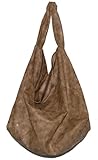
  • “The Vked” Sexy, Slouchy Vegan Handbag. Available in 9 Sensational Colors!


    Product DescriptionThe VKed is truly a WICKED bag!
    Clean and simple with practically no hardware create a slouchy and super light bag that packs some serious weight!
    The 9 colors available offer an almost endless array of colors and styles.
    Our favorites which will give you great individual style are the 3 colors of “Khun” bags. Khun is a traditional Indian fabric which has been used in clothing for Indian women from Maharashtra for centuries.
    The strap is hand braided by villagers. . . More >>
    “The Vked” Sexy, Slouchy Vegan Handbag. Available in 9 Sensational Colors!

    “The Vked” Sexy, Slouchy Vegan Handbag. Available in 9 Sensational Colors! is a post from the Vegetarian Vitamins Guide blog where you can find suggestions and advice from vegetarians and vegans on vegetarian diets, supplements, vitamins and overall nutrition.

    Related Vegetarian Vitamins Posts:

    1. Onion Bhaji – Indian Recipes Vegetarian – Indian Food Recipes Onion Bhaji video recipe by VideoJug. Indian Food Recipes Vegetarian-…
    2. 4 Common Pitfalls Of Arm Exercises For Women At one point in my life, I was hell bent…
    3. Quick And Easy Vegetarian Indian Recipes For Dinner ? this is my daughters account but im using it lol….
    4. The Vegan Collection Unisex Brown Pleather Belt , Large Product DescriptionThis durable vegan belt is built to last!…
    5. “The Vked” Sexy, Slouchy Vegan Handbag. Available in 9 Sensational Colors! Product DescriptionThe VKed is truly a WICKED bag! Clean…
  • New gunsight improves marksmanship with intuitive aim

    A University of Alabama at Birmingham (UAB) investigator who is an expert marksman has found a more intuitive way to aim a pistol. Timothy Kraft, PhD, associate professor in UAB’s Vision Science Research Center, has developed a gunsight design that relies on subconscious ability. Opti-sight, a UAB-protected innovation, updates a pistol-aiming device that has remained unchanged for more than a century. The innovation promises to reduce the time law enforcement, professional, and amateur shooters need for target practice to improve marksmanship. Opti-sight is a precision-milled half-triangle shape that replaces the traditional pistol gunsight. The design relies on subjective contours — an optics principle that explains how the subconscious mind fills in the blanks when the eye sees half of a familiar shape like a circle, square, or triangle.

    The rear opti-sight notch looks like an incomplete triangle sitting atop the gun barrel. When a shooter peers through the notch, the brain tells the eye where the missing triangle apex should appear, and that apex is the precise point of aim, Kraft explains. “This triangular shape that I’ve created allows the brain to visualize concentric triangles whose imaginary apexes focus the shooter’s attention on the exact target bulls-eye,” he says. “Opti-sight makes shooting intuitive by allowing gunsight alignment to become subconscious.” Kraft worked with members of the U.S. Olympic pistol team to test the Opti-sight design.

    Source: Newswise


  • Lawmaker, Convicted Of Raping Foster Kids, Claims Name Is Copyrighted So You Can’t Report It

    A bunch of folks have sent in this story of former South Dakota state Rep. Ted Alvin Klaudt, who was convicted of raping his two foster daughters a couple years ago, and who is now claiming that his name is covered by copyright, so no one can report on it. More specifically, he’s trying to claim a “common law copyright.” Unfortunately for Mr. Klaudt, except in extremely limited circumstances, the US does not recognize “common law copyright.” He’s demanding written permission to use his name in a news report, and has apparently demanded anywhere from $500,000 to $2 million for each “unauthorized” use. Apparently Klaudt, despite having been a former lawmaker, is unfamiliar with the basics of the law. Perhaps he can use his time in prison — where he will most likely be for quite some time — to study up.

    Permalink | Comments | Email This Story