Blog

  • Online Payments Startup Plastiq Raises Fresh $6M

    Plastiq, a Boston-based online payments company, has raised $6 million in financing. The round was led by Atlas Venture and Flybridge Capital Partners and also included investors in an earlier, $2.3 million financing sewn up last spring. Those other investors include NextView Ventures, Greenoaks Capital Management and individual investors such as Harvey Golub, the former chairman and CEO of American Express.

    PRESS RELEASE:

    Plastiq, an online payments solution provider based in Boston, Massachusetts with offices in Toronto, Canada has closed a $6M round of Series A financing. The round was jointly led by venture capital firms Atlas Venture and Flybridge Capital Partners. Investors from the previous round, NextView Ventures and Greenoaks Capital Management LLC, also participated alongside angel investors including Harvey Golub, former Chairman and CEO of American Express.

    “I first met Dan Choi and Eliot Buchanan at Harvard’s i-lab when they were undergraduates and watched them develop their concept to reality,” said Jeff Bussgang, general partner at Flybridge Capital Partners. “The early traction the company has achieved is amazing. With its innovative vision, state-of-the-art product, and strategic partnerships, Plastiq is well positioned to transform the payments industry.”

    Ryan Moore, partner at Atlas Venture commented, “The team of people Eliot has assembled is unparalleled in their expertise and equally motivated to build a truly game-changing payments platform.”

    Both Mr. Moore and Mr. Bussgang serve on the Board of Directors of Plastiq.

    Plastiq is advancing innovative payment solutions across North America. The Plastiq online platform allows consumers to use their credit cards for payments in situations when they previously could not. Plastiq charges consumers a nominal fee for each transaction, historically charged to the merchant, for the added flexibility to strategically use their preferred credit cards. The Plastiq platform allows consumers and merchants to transact from anywhere in the world at any time from any internet-enabled device.

    Dan Choi, COO and Co-Founder stated, “Last year’s initiatives demonstrated consistent demand for our service, and I’m excited to see continued growth in 2013.“ Through the relationships Plastiq has made with credit card associations, financial services providers, and merchants, the company is defining a new, convenient way for users to make payments when they were not able to do so previously.

    “This round of funding is a testament to our value proposition and customer demand across North America,” said Eliot Buchanan, CEO and Co-Founder. “We’re extremely pleased that these investors share our vision for Plastiq.”

    About Plastiq Inc.
    Plastiq is an online payment provider based in Boston, Massachusetts. Founded to provide convenient, flexible, and secure payment options, the company is advancing innovative payment solutions across North America. For more information, please visit www.plastiq.com.

    The post Online Payments Startup Plastiq Raises Fresh $6M appeared first on peHUB.

  • Which BlackBerry Pointer Interface is your Favorite?

    BlackBerry Pointer Interface

    After using my BlackBerry Z10 in public for almost a month, I can’t help but think about how far BlackBerry smartphones have come. It’s the little things I remember about my old smartphones. In fact, I like to think of them now as “wise” phones. Wise phones paved the way, making it possible to put devices like the BlackBerry 10 smartphones in the hands of loyal users.

    I wax nostalgic thinking of how BlackBerry smartphones perfected the track wheel navigation mechanic prior to developing the scroll/track ball. Alas, with touch interfaces and the new UI and design paradigm in BlackBerry 10 the need for this type of navigation is reduced. Even things like selecting text or moving the curser are all handled nicely on the touch based BlackBerry 10 smartphones.

    While I’m reminiscing about the track wheel, tell us: what was your favorite pointer interface? Are you a fan of the track wheel like I am? How about the scroll ball? Or are you a fan of the optical trackpad, or touchscreen features of today’s models? Also, if you could develop your own retro app for the BlackBerry World storefront that simulated an old-school way of navigating on your new BlackBerry 10 device, what would you choose?

    Let us know your thoughts in the comments below!

  • Dell, Riverbed Announce Virtual Desktop Solutions

    Dell and Riverbed announce Virtual Desktop Infrastructure (VDI) solutions with VMware, as the VMware Partner Exchange conference took place this week in Las Vegas.

    Dell and VMware optimize solution for desktop virtualization. Dell and VMware announced Dell DVS Enterprise – Active System 800, a pre-integrated system specifically designed for VMware-based VDI workloads.  Dell’s Active System serves as the foundation for its Desktop Virtualiztaion Solutions (DVS) portfolio for provisioning DVI workloads. DVS Enterprise – Active System 800 with VMware Horizon View 5.2 combines Dell server, storage, networking, thin clients and infrastructure management software into a pre-integrated system to provide general purpose virtualized resource pools for virtual desktops. In addition, a full suite of consulting, deployment and support services are available to ease integration and ensure robust operation of the system once deployed.

    “Dell and VMware have intensified our strategic partnership for end-to-end computing,” said Maryam Alexandrian, executive director of worldwide sales, channels and field marketing, Dell Cloud Client Computing. “Together we are deepening our engagement with our channel partners, accelerating our joint engineering and solution collaboration, and investing in go-to-market initiatives to address opportunities in the mid-market.”

    Riverbed strengthens VMware alliance.

    Riverbed (RVBD) announced the availability of solutions developed in collaboration with VMware that can provide a reliable and consistent desktop virtualization end user experience in those organizations that deploy VMware Horizon View 5.2. Riverbed Granite has achieved VMware Ready status, to help organizations to overcome the challenges of wide area networks (WAN)s, such as limited bandwidth, latency, and unforeseeable outages when delivering virtual desktops to remote locations. A new Stingray Traffic Manager gives a fine-grained application-level control and high availability for end-users that require constant access to desktops, applications and data from any device or location.

    “By deepening our partnership with VMware, we give enterprises the ability to provide end users a seamless experience when accessing their desktop, applications and data regardless of location,” said Venugopal Pai, vice president, Global Alliances and Business Development at Riverbed. ”Simultaneously, we are enabling enterprises to benefit from greater control and flexibility in distributed organizations.”

  • Promises, promises — more stores will sell Microsoft Surface

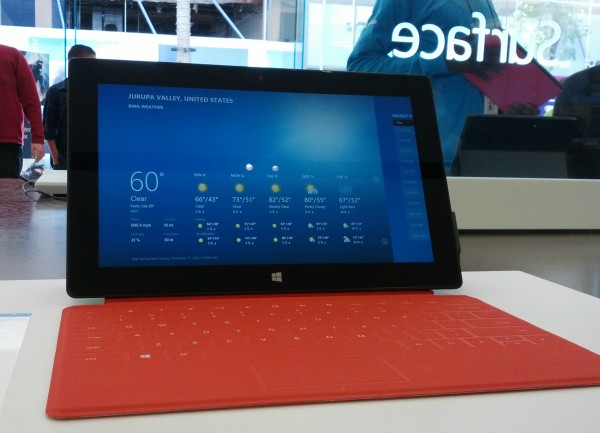
    The biggest problem with Microsoft Surface is you probably can’t buy it. The model running Windows RT is available in just 20 countries, and Pro even fewer (say, how do you like them Canada and United States). Today, Microsoft promised expansion into new geographies starting in late March, and, get this, taking several months. I can’t imagine why tell us all now, other than perhaps to remind everyone that Surface exists and to keep those wanting one hanging on instead of buying something else.

    Surface RT is currently available online or in stores: Australia, Austria, Belgium, Canada, China, Denmark, Finland, France, Germany, Hong Kong, Ireland, Italy, Luxembourg, the Netherlands, Norway, Portugal, Spain, Sweden and Switzerland, United Kingdom and United States. Microsoft added 13 on February 14. The months long expansion will bring the tablet to Japan, Mexico, New Zealand, Russia, Singapore and Taiwan.

    Microsoft also promises to offer Surface Pro more places, but be prepared to wait. In a blog statement: “We are focused on meeting demand in current markets for Surface Pro and are working super hard to get new inventory into retail but recognize demand exists in other countries as well. We are committed to working with our retail partners to ensure we are delivering a great experience in the above mentioned countries for our customers”.

    The software giant struggles to meet demand for Surface Pro 128GB, which is once again sold out at Microsoft Store. Best Buy has units, at least according to the online ordering section of the website.

    Microsoft promises: “We are happy to be able to tell you that Surface Pro will be heading to Australia, China, France, Germany, Hong Kong, New Zealand and the United Kingdom in the coming months. We will follow-up with another blog post with more details”.

    But — there’s too often a but — Surface RT and Pro are only available from brick-and-mortar stores in just a few countries, and that situation won’t change soon. In most countries, buyers will initially have Microsoft’s online store as their only option — so expansion is even slower than today’s declaration of intent suggests.

    I quite like Surface Pro and perhaps you would, too, if you could buy it. Please check out my review. Some readers express great satisfaction, if you’re wondering whether waiting for availability in your country is a good idea.

    Jesse Livermore:

    The surface pro is a wonderful device. I have been married to my beautiful iPad 4 but since I bought the Pro, it has become my new mistress. The Surface is, indeed, a very well built device. Its build quality is on par with the iPad. It feels like the proverbial bank vault.The surface Pro is unbelievably fast — faster than my HP laptop.

    It is also very fluid, unlike Android, and is rock steady reliable. It is so beautiful and powerful and since it is a full-blown computer, it has actually replaced my laptop. Unless I need a large screen, in which case I’ll use my new Dell One 27 Win 8 desktop, the Surface Pro has become my computer of choice. There is really not too much to complain about as I feel the Pro is nearly perfect. It would replace my iPad if it had a 4G connection. The Pro is a true computer replacement in the form of a stunning tablet.

    Reader rcadams “just got my new Surface Pro” two weeks ago, “and I’m totally in love. Talk about a usable tablet. BTW, I’ve had iPad, iPhone, android tablets. Probably upgrade way to often, but finally I’ve found something that is more then a toy. Something solid, has power. Battery isn’t an issue at all. Would I like more sure why not. But what I really wish they would have done is make a place for the pen to slide into. I can see me losing the pens”.

    Photo Credit: Joe Wilcox

  • Judge who slammed Apple during patent trial hired by Samsung

    Samsung Hires Robin Jacob
    A former judge in the United Kingdom known most recently for forcing Apple (AAPL) to issue a public apology after calling Samsung’s (005930) Galaxy Tab an iPad copy, has reportedly been hired by Samsung to join its legal team. Judge Robin Jacob had retired in 2011, but as FOSS Patents explains, ex-judges can still be invited to sit on the bench in the UK, and he presided over the case that ended up in a decision favoring Samsung. The South Korean company seemingly appreciated the decision — and it likely also took notice when the judge slammed Apple for having a “lack of integrity” — so Samsung has now hired Jacob to assist with its various patent battles.

  • “The Lion King” Inspires “American Idol” Contestant

    There are many factors that go into the success of a contestant on “American Idol”; not only does one have to find a way to let their personality shine amongst a sea of hopefuls, they also have to choose their wardrobe very carefully and not let the show’s stylists stray too far from who they really are. And, of course, the song choice is super important. Apparently.

    One contestant learned last night that straying from the norm doesn’t always have to be a bad thing, especially with this year’s lineup of judges; they all seem to dig what Zoanette Johnson does, and this week was no exception. Johnson made it through a tough round–in which five ladies were cut–with her rendition of “The Circle Of Life” from “The Lion King”.

    Her less-than-traditional song choice was met with some confusion and snark on Twitter today, however, as some fans of the show are wondering why she got to stay on over contestants with more vocal abilities.

  • Battlefield 3 End Game DLC Trailer Released

    Back in December 2012, Dice and EA teased Battlefield 3 fans with a peek at the upcoming “End Game” DLC. That content still isn’t out, but its March release date is finally close.

    Today, EA released another trailer showing off all the new maps included in the add-on. The four new maps included in the DLC are “Operation Riverside,” “Nebandan Flats,” “Kiasar Railroad,” and Sabalan Pipeline. As shown prominently in the trailer, dirt bikes will also be introduced in “End Game,” as well as a capture the flag game mode, new assignments, new dog tags, and a new dropship that can perform vehicle drops.

    Unfortunately, the tailer does not include any actual gameplay, instead opting to show off the new maps and dirt bikes with frozen panorama shots.

  • YouTube For iOS Gets “Send To TV” Feature

    YouTube just pushed an update to its iOS app adding the “send to TV” feature, which lets users pair their mobile phones with connected TVs.

    The feature was launched on Android in November, and at CES, the company announced it would be coming to more devices.

    YouTube announced the iOS update on Google+ this afternoon:

    YouTube

    Have an iPhone or iPad and a Google TV? You can now play and control videos from your YouTube app for iOS on your TV, like a remote control for YouTube. Anyone on the same WiFi can join in to control the video or add videos to a playlist (Harlem Shake marathon anyone?). This automatic pairing feature is also available on the YouTube app for Android, and it’s coming to more TVs this year from LG, Sony, Panasonic and others. Check out youtube.com/yt/sendtotv to see how it works.

    The “send to TV” feature is now available for iOS and Android, and on select connected TVs. The PS3 and Xbox have manual paring options. The feature is also coming to devices from Bang & Olufsen, LG, Panasonic and Sony, as well as Philips, Samsung, Sharp, Toshiba, Vizio, Western Digital and others later this year. YouTube is currently available on over 400 million devices. Over 25% of video viewing on YouTube comes from mobile devices.

  • Kinect Brings My Worst Nightmare To Life

    It’s been well established that I’m scared of a lot of things. Dolls, E.T. and the eventual robot uprising all leave me wide awake at night. The good news is that my greatest fear has yet to be brought to life. The bad news is that Japan is working on it.

    A store in Japan had to ensure that I get no sleep tonight by creating this interactive store display that combines Microsoft’s Kinect for Windows and display window mannequins for a shopping experience straight out of hell.

    I thought Japan couldn’t get any scarier, but holy sh*t, this is terrifying.

    [h/t: Next at Microsoft]

  • Taking Action: Creating Model Emergency Management Plans for Schools, Institutions of Higher Education and Houses of Worship

    Secretary Duncan at High-Quality Emergency Management Event

    Education Secretary Arne Duncan takes part in “Taking Action: Creating Model Emergency Management Plans for Schools, Institutions of Higher Education, and Houses of Worship”, in the Eisenhower Executive Office Building South Court Auditorium, Feb. 27, 2013. The meeting was held as part of the President’s plan to protect our children and communities by reducing gun violence. Answering questions were, from left: John McDonald, Executive Director of Security and Emergency Management, Jefferson County Public Schools; Marleen Wong, Associate Dean, University of Southern California School of Social Work; Secretary of Education Arne Duncan; Major Ian A. Moffett, Miami Police Department; Robert Fein, Forensic and National Security Psychologist; and Natalie Hammond, Teacher, Sandy Hook Elementary School.

    Yesterday, over 100 leaders from across the country came to the White House to join Secretary of Education Arne Duncan and Secretary of Homeland Security Janet Napolitano for a discussion about how to make our schools, institutions of higher education, and houses of worship safer through the creation of high-quality emergency management plans.

    Secretary Duncan noted that, “Some tough lessons we’ve learned over time, some inspiring lessons as well, but if we can all learn from each other, learn together, and go back home to our communities, it makes me hopeful about where we can go despite the tremendous challenges we face.”

    On January 16th, President Obama, through an executive action, directed the Departments of Education, Homeland Security, Justice, and Health and Human Services to work together to create model emergency management plans for these communities. Yesterday’s event helped inform the agencies’ work to implement that executive action. The President’s plan to reduce gun violence includes a total of 23 executive actions, as well as specific proposals that he has called on Congress to act on right away.

    read more

  • Matt Cutts Talks Location And ccTLDs

    In Google’s latest Webmaster Help video, Matt Cutts discusses location and ccTLDs. Specifically, he responds to the following user-submitted question:

    We have a vanity domain (http://ran.ge) that unfortunately isn’t one of the generic TLDs, which means we can’t set our geographic target in Webmaster Tools. Is there any way to still target our proper location?

    “We’ve seen this trend – as the domain name space gets a little more exhausted in .com, people get creative, and so Matt Mullenweg at WordPress grabbed ma.tt, for example, which is a really creative URL, but something that people don’t think about is: what is .tt? Or what is .ge?” says Cutts. “It’s Georgia, you know, there’s a lot of startups that have been using .io, which is the TLD for the Indian Ocean, I believe. So you have to think hard about is it the case that this is going to be known as an international area? If your’e just using .es because you can find some cool word that ends in .es, most people using that domain are targeting Spain. So that is our assumption – that you’re targeting Spain.”

    He says that some people want .li to be associated with Long Island, but it’s really associated with Lichtenstein, and that’s how Google views it.

    “In some sense, it comes down to a little bit of a call about when a domain becomes truly generic. When it becomes appropriate for the entire world. So .co, which used to be, I think, Columbia, might be more generic now, where everybody’s using it as if it is another .com, but some domains, I would put some thought into. Just because it’s a cool URL, a lot of the times we’re going to be looking at it and thinking, ‘Hmm, this is actually related more to Lichtenstein that it is to Long Island, and so even though people want to do a Long Island business, we’re more likely to think that it’s in Lichtenstein.”

    He goes on to suggest that you post on Webmaster forums and “rally your case,” and do a blog post that says, “.iO is mostly startups, and this should not be related to this country…” Still, he says, Google has to look at the data and look at the domains that are in use, and make a judgment call.

  • PYLE: Sequestration Crisis Presents Energy Opportunity

    WASHINGTON D.C. — IER President Thomas Pyle published an opinion editorial in U.S. News and World Report today arguing that the real concern about the coming sequester is not about the size of the cuts to take effect, but rather about the way Washington bureaucrats will use it to advance a political agenda. By contrast, the administration could use the opportunity of mandatory budget cuts to adopt a new policy for energy development on federal lands. The result: as much as $80 billion in annual revenues to the federal treasury.


    Obama can turn sequestration crisis into energy opportunity
    By Thomas Pyle
    Feb. 28, 2013

    Some Washington policymakers are quivering over the fact that the sequester is scheduled to take effect on Friday, though the most disconcerting thing about the coming spending cuts has little to do with the size of the cuts themselves. In truth, the coming sequester doesn’t cut spending. It only keeps spending increases down to $15 billion more than last year.

    No, the real concern about the sequester has more to do with the way the administration will use it—and we all know how the White House hates to waste a crisis to advance its political agenda. Outgoing Interior Secretary Ken Salazar, for instance, is warning that the sequester will delay oil and natural gas permitting on federal lands and waters.

    What Secretary Salazar doesn’t want you to know is that under his leadership the administration has already pursued a policy of slow-walking drilling permits, with results borne out in record high gas prices and lost job creation everywhere. In 2005, it took the federal government 154 days to process a permit to drill for oil or gas on federal lands. By 2012, it took 307 days on average for Interior to process a permit to drill—nearly twice as long. By comparison, it takes merely 10 days to receive a permit to drill in North Dakota and 27 days in Colorado.

    The numbers speak for themselves. In North Dakota, economic prosperity has followed sensible regulatory policies. Unemployment is at 3.2 percent, the lowest in the nation, and the state is growing at a breakneck pace. Colorado ranks seventh in the nation in overall energy production, thanks in large part to the oil shale boom. Like other resource-rich states, North Dakota and Colorado understand their unique geography better than regulators in Washington. This allows the states to create a regulatory framework that protects its environment and also allows for robust energy development. In contrast, Americans dealing with Secretary Salazar’s Interior Department are met with roadblocks, red tape, and the run-around.

    If sequestration is as bad as Obama administration officials predict, it makes sense to expedite, not further delay, oil and gas permitting on federal lands. Every dollar Interior spends administering the onshore oil and gas program on federal lands generates $66 in revenue to the federal government, according to the Western Energy Alliance. That’s a remarkable return on investment.

    Expanding oil and natural gas exploration on federal lands makes good economic sense. A recent study by Dr. Joseph Mason of Louisiana State University estimates that opening up federal lands to oil and gas production would create 500,000 jobs a year and generate $30 billion a year in revenue for the next seven years and 2 million jobs a year and $80 billion a year in revenue over the next 30 years.

    During his the State of the Union address last month, Obama vowed to “keep cutting red tape and speeding up new oil and gas permits.” He said this, of course, in full knowledge of the pending sequester. Perhaps Ken Salazar didn’t get the memo.

    As sequestration draws near, the White House has an opportunity to dispense with the politics of fear and make good on its promise to produce more reliable, affordable energy. A good place to start would be expediting, not road-blocking, energy development on federal lands and waters.

    ###

  • T-Mobile’s spectacularly weird pricing strategy

    T-Mobile Pricing Strategy Analysis
    Another quarter, another half a million contract subscribers gone. T-Mobile USA’s contract customer losses and revenue decline that make good headlines, but the really interesting number in the latest T-Mobile report is the big drop in prepaid customer additions. A year ago, T-Mobile added 220,000 prepaid customers. This past Christmas quarter, that number dropped to 166,000. It is not hard to find the major reason for that decline: T-Mobile’s branded prepaid ARPU sky-rocketed by 11% in one year. Let’s examine the situation. T-Mobile continues bleeding contract customers… so it opts to focus on premium prepaid service pricing, which in turn damages prepaid customer adds and increases churn. And now T-Mobile has both a contract and a prepaid crisis in its hands. How does this make a lick of sense?

    Continue reading…

  • Wolf in sheep’s clothing: Uncovering how deadly bacteria trick the immune system

    An outbreak of tuberculosis in the skid row area of downtown Los Angeles may have exposed up to 4,500 individuals to the bacterium that causes the deadly disease and has left federal officials scrambling to intervene. 
     
    The outbreak is occurring during winter, when homeless individuals are driven to crowded shelters, when influenza is peaking and when people’s vitamin D levels, typically boosted by sunlight exposure, are low. A new UCLA study offers critical insight into how various bacteria may manipulate such factors to their advantage.
     
    In a study published online Feb. 28 in the journal Science, UCLA researchers demonstrate that certain cunning bacteria — including the type that causes tuberculosis — can pretend to be viruses when infecting humans, allowing them to hijack the body’s immune response so that they can hide out, unhindered, inside our cells. The findings may also help explain how viral infections like the flu make us more susceptible to subsequent bacterial infections such as pneumonia.
     
    The study is particularly relevant to tuberculosis, which kills 1.4 million people worldwide each year. In the case of the recent Los Angeles outbreak, the findings could provide clues as to how the flu and a lack of vitamin D may have given the tuberculosis bacterium an edge.
     
    “With 8.7 million in the world falling ill with tuberculosis each year, a better understanding of how these bacteria avoid our immune system could lead to new ways to fight them and to better, more targeted treatments,” said senior author Dr. Robert L. Modlin, chief of dermatology at the David Geffen School of Medicine at UCLA and a professor of microbiology, immunology and molecular genetics in the UCLA Division of Life Sciences.
     
    The protection our immune system provides against bacteria-based diseases and infections depends on the critical response of T cells — white blood cells that play a central role in fighting infections — and in particular on the release of a protein called interferon-gamma. Interferon-gamma utilizes the vitamin D hormone to alert and activate cells to destroy invading bacteria.
     
    The research team found that bacteria can pretend to be viruses, triggering the immune system to launch an attack with a different protein, called interferon-beta, which is designed to fight viruses, not bacteria. Not only is interferon-beta ineffective against bacteria, but it can also block the action of interferon-gamma, to the advantage of bacteria. Further, if a real virus were to infect the body, triggering interferon-beta, it would divert the attention of the immune response, preventing an attack on the bacterial invader. The researchers say this may explain why the flu can lead to a more serious bacteria-based infection like pneumonia.
     
    “Like a wolf in sheep’s clothing, the bacteria can fool the immune system into launching an attack against the wrong type of infection, thus weakening the response against the bacteria,” said first author Rosane M. B. Teles, a researcher in the dermatology division at the Geffen School of Medicine.  
     
    For the study, the team examined the mechanisms by which the virus-fighting interferon-beta protein suppresses the interferon-gamma defense response to bacterial infections, tricking the immune system into make the wrong defense choices.
     
    The researchers studied leprosy as a model and then applied what they learned to understand tuberculosis, given that leprosy and tuberculosis are caused by related bacteria. Modlin noted that leprosy is an outstanding model for studying immune mechanisms in host defense since it presents as a clinical spectrum that correlates with the level and type of immune response of the pathogen.
     
    The scientists first compared the genetic expression of the virus-fighting interferon-beta protein and the bacteria-fighting interferon-gamma protein in skin lesions from leprosy patients. They found that interferon-gamma was expressed in patients with the milder form of the disease and that interferon-beta was significantly increased in those with the more serious, progressive form of leprosy.
     
    The researchers then compared the genes triggered by interferon-beta in these leprosy skin lesions with those found by two other groups of investigators in the blood of tuberculosis patients. Remarkably, there was a significant overlap. The interferon-beta genes were more frequent in both the skin lesions of leprosy patients with extensive disease and the blood of tuberculosis patients with more severe disease. 
     
    “We found this common interferon-beta gene pattern correlated with the greater extent of disease in both leprosy and tuberculosis, which are two very distinct diseases,” Teles said.  
     
    Previous work by the UCLA team demonstrated that the interferon-gamma defense pathway relies on a specific mechanism involving vitamin D, a natural hormone that plays an essential role in the body’s fight against infections. The current study found that interferon-beta suppressed elements involved in the interferon-gamma–triggered vitamin D pathway, preventing the immune system from killing the bacteria.
     
    “The study raises the possibility that a decrease or increase of one of these two interferon proteins could shift the balance from mild to more serious disease,” Modlin said. “We may find that therapeutic interventions to block or enhance specific interferon responses may be an effective strategy to alter the balance in favor of protection against bacterial diseases.”
     
    The new findings may indicate why, in winter, Los Angeles skid row residents are at an added disadvantage in dealing with tuberculosis — for at least three reasons. First, because of colder weather at night, indigent homeless people tend to stay in shelters, where they live in close proximity with others, facilitating the spread of the infection. Second, due to the seasonal rise in influenza, the body’s immune system could be diverted by the flu virus to produce interferon-beta, blocking an effective immune response to the tuberculosis bacteria. And finally, the drop in vitamin D levels associated with a decrease in exposure to sunlight during the winter months could diminish the ability of individuals’ immune systems to kill the tuberculosis bacteria.
     
    “With TB on the rise, this scenario could play out not only in cities in the United States but all over the world,” Modlin said. “We hope that our findings may provide insight into harnessing new methods to combat TB and other bacterial infections as well.”
     
    Modlin noted that 8.7 million people become ill with tuberculosis each year and 1.4 million die from the disease. He said that an increase or decrease in one of the two interferon proteins could help explain why some people may be more resilient against, or susceptible to, the infection or have a more serious course of the disease.
     
    The next step, according to Teles, is to further understand the mechanisms that bacterial pathogens use to activate interferon-beta and how bacteria can manipulate the immune system to block the potent interferon-gamma host antimicrobial responses in human infections.
     
    The study was funded by the National Institute of Arthritis and Musculoskeletal Skin Diseases, part of the National Institutes of Health (NIH P50; ARO63020; RO1s AI022553, AR040312 and AI047868; and CTSA Grant UL1TR000124).
     
    Additional authors are listed in the manuscript.
     
    For more news, visit the UCLA Newsroom and follow us on Twitter.

  • Taking it to the home turf: YouTube adds AirPlay competitor to its iOS app

    YouTube just released an update to its iOS app that adds the ability to send videos directly from an (iPad or iPhone) to Google TV devices. The AirPlay-like feature was first rolled out as part of YouTube’s Android app in November, but YouTube has long said that it wants to bring the technology to additional platforms to allow frictionless sharing of content in the living room.

    An announcement on Google+ read in part:

    “Anyone on the same WiFi can join in to control the video or add videos to a playlist (Harlem Shake marathon anyone?). This feature is also available on the YouTube app for Android, and it’s coming to more TVs this year from LG, Sony, Panasonic and others.”

    The updated YouTube app allows users to browse for videos and then initiate playback on the TV screen. A key part of this is discovery: The app automatically finds compatible devices within the same network – something that’s similar to the ease-of-use of Apple’s AirPlay. Of course, the big difference is that AirPlay limits video playback to the Apple TV, whereas YouTube wants to bring remote playback to as many devices as possible.

    YouTube’s remote playback technology is in part based on DIAL, an open framework for second screen functionalities that YouTube has been developing in cooperation with Netflix. Google product manager Timbo Drayson told me in November that YouTube’s ultimate goal was “to move the whole industry forward” with this kind of technology.

    Related research and analysis from GigaOM Pro:
    Subscriber content. Sign up for a free trial.

  • Fujitsu’s Future Phones And Tablets Could Skip The Physical Keyboard And Watch Your Fingers Instead

    fujitsu-keyboard2

    For better or worse, the advent of smartphones and tablets mean that we’re rapidly moving away from the more tactile user experiences that were the hallmark of a bygone era in computing. As it turns out, the folks at Fujitsu are eager to close the book on the days of the physical keyboard if what they were showing off here at MWC was any indication.

    Tucked away in a corner of Fujitsu’s booth here in Barcelona’s Fira Gran Via was a gentleman typing out words onto a tablet via a keyboard for anyone who would watch him. It sounds like a completely mundane occurrence, except the keyboard he was typing on wasn’t actually there.

    Here’s the idea: thanks to some clever software and the front-facing camera on a tablet, Fujitsu has worked up a way for users to type on just about any flat surface. The software is purely a prototype at this point, but it doesn’t need anything in the way of exotic gadgetry to work properly — it appeared to be running just fine on a generic Fujitsu Windows 8 tablet, albeit with a lamp of sorts to keep the user’s hands nice and bright.

    Using the gesture keyboard seems so simple when you’re watching it live — a person calmly tapping on the surface of a table is actually typing out sentences — but the underlying tech is nothing to sneeze at. There’s some serious machine learning going on here, as the system gets a feel for the features and movements of a user’s hands to determine their placement on a keyboard that really isn’t there.

    Sadly, that means there’s a fair amount of optimization that needs to happen before someone could actually start using it. The Japanese gentleman pecking out missives on top of a table was kind enough to let me try it anyway, and while the camera clearly noticed my hand it wouldn’t track any of my finger inputs.

    Apparently, the software is capable of using skin color to figure who it should actually be accepting input from — at that moment the system was setup to only track his alabaster hands, so my brown mitts were promptly ignored. Certainly a bummer for me, but a still useful feature, especially since one can never tell how many alien hands they’ll encounter as they try to get some work done on the go.

    Fujitsu is considering turning this into a working product for inclusion on some of its tablets and smartphones and has been at it for a while now — company researchers published a paper on the concept back in 2011. Still, the gesture keyboard strikes me as one of those things that may be too clever for its own good in that it’s a very neat solution to a problem that doesn’t really exist. Trying to get some work done on a tray table on a plane? There’s plenty of room for a physical keyboard. Stuck slaving away in close quarters? Just pound out some text on the touchscreen.

    The gesture keyboard is clearly very cool (it hearkens back to those neat laser keyboards) and I’d certainly love to a take it for a long-term spin, but I doubt that Fujitsu’s keyboard-less keyboard approach is one that will take the world by storm — for now. Its value as a standalone typing solution is questionable, but if Fujitsu baked it into a tablet or a phone as a novel alternative? Or better yet, if Fujitsu found some willing, ambitious OEM to license it to? Sign me up.

  • McLaren MP4-12C: New Car Detailing Tips

    AMMO NYC McLaren Detail

    One of the most common questions I receive is about new car deliveries. What you should ask the salesman to NOT do, how to fully inspect the paint for dings, dents, dust nibs, scratches, and possible re-painted areas without using expensive tools. New car polishing and paint sealant tips for protecting your investment. – Larry K. AmmoNYC

    Source: AMMONYC.com

  • Ignyta Secures Loan Facility from SVB

    Ignyta, a personalized medicine company has secured a $1 million capital term loan facility from Silicon Valley Bank. Last year, the company closed a $5.5 million Series B financing led by City Hill Ventures and Colt Ventures and a $500,000 capital term loan from Silicon Valley Bank.

    PRESS RELEASE

    Ignyta, Inc., the personalized medicine company dedicated to improving the diagnosis and treatment of patients with rheumatoid arthritis (RA), lupus and other autoimmune diseases, announced today that Silicon Valley Bank (SVB) has expanded its support of Ignyta through an additional $1M capital term loan facility. The new facility is incremental to the previous $500K facility entered into between Ignyta and SVB in June 2012.

    “We appreciate the continuous support from Ignyta’s equity and venture debt investors and the shared vision for Ignyta’s efforts to bring better diagnostic products to patients suffering from autoimmune disease,” said Jonathan Lim, M.D., CEO and co-founder of Ignyta. “Ignyta is well-capitalized to execute our ambition of developing an objective biomarker based test to help detect rheumatoid arthritis in its earliest stages.”

    “Ignyta has made substantial progress since we first formalized our funding relationship last year,” said Mike White, senior relationship manager at Silicon Valley Bank. “We are pleased to be able to support innovative life sciences companies seeking to make a meaningful difference in the lives of patients.”

    About Ignyta, Inc.

    Ignyta, Inc., located in San Diego, California, is a personalized medicine company developing revolutionary new products and services to customize diagnosis and treatment of patients with rheumatoid arthritis, lupus and other autoimmune diseases.

    The company was launched in August 2011 by Jonathan E. Lim, M.D., former president, CEO, and board director of Halozyme Therapeutics, Inc., and Gary S. Firestein, M.D., director of the Clinical and Translational Research Institute and Dean and Associate Vice Chancellor of Translational Medicine at UC San Diego. Ignyta is a trailblazer in the application of “omics” technologies integrated with bioinformatics to the development and commercialization of novel biomarkers and tests for diagnostic and therapeutic applications in autoimmune diseases.

    The scientific discoveries that fueled the founding of Ignyta were published in July 2012 in the Annals of the Rheumatic Diseases (http://bit.ly/QOZ8Zr). In 2012, the company successfully closed a $5.5 million Series B financing led by City Hill Ventures, LLC and Colt Ventures and a $500,000 capital term loan from Silicon Valley Bank. About Silicon Valley Bank

    Silicon Valley Bank is the premier bank for technology, life science, cleantech, venture capital, private equity and premium wine businesses. SVB provides industry knowledge and connections, financing, treasury management, corporate investment and international banking services to its clients worldwide through 28 U.S. offices and six international operations. Silicon Valley Bank is the California bank subsidiary and the commercial banking operation of SVB Financial Group. Banking services are provided by Silicon Valley Bank, a member of the FDIC and the Federal Reserve System. SVB Financial Group is also a member of the Federal Reserve System

    http://cts.businesswire.com/ct/CT?id=bwnews&sty=20130228005344r1&sid=cmtx4&distro=nx

    SOURCE: Ignyta, Inc.

    Ignyta Media and Investor Contact:
    Zachary Hornby
    [email protected]
    858-369-5732

    The post Ignyta Secures Loan Facility from SVB appeared first on peHUB.

  • Apple Has Sold Over 8M iPads Direct To Education Worldwide, With More Than 1B iTunes U Downloads

    ipad-itunes-u

    Apple announced a new milestone for its iTunes U online digital education outlet, which has just crossed the 1 billion download mark. Alongside the announcement, Apple has also informed us exclusively that the company has so far sold more than 8 million iPads directly into educational institution worldwide. iTunes U became a standalone app, complete with its own course marketplace and catalog in June 2012.

    At the time, iTunes U had served up over 700 million downloads. The additional 300 million downloads mean that the pace of engagement for iTunes U is growing rapidly. iTunes U was introduced in May 2007, meaning that it took the educational product a full five years to rack up just a little over twice that amount. The rapid growth over the last nine months has likely been the result of a combination of factors, including the introduction of the standalone app and an increase in the adoption of iPads in educational settings.

    AllThingsD reported earlier that to date, Apple has sold more than 4.5 million iPads to U.S.-based educational institutions, a figure which Apple confirmed to us as correct. Thanks to some clever calculation on the part of 9to5Mac’s Jordan Kahn based on publicly available information, it looks like the vast majority of that number was sold recently, over the past year in fact. Apple CEO Tim Cook has repeatedly stressed how important the education market is in the context of the iPad, and the fact that it’s doing so well with institutional sales both at home and abroad backs that up.

    Apple also shared some details about school participation in iTunes U today, noting that more than 1,200 universities and colleges, and over 1,200 K-12 schools host over 2,500 public courses on iTunes U, along with thousands more private courses available only to enrolled students. Some big institutions are embracing iTunes U with particular vigor, Apple notes, including Standford and The Open University, both of which have racked up over 60 million content downloads alone. Some of the more popular individual courses have around 250,000 students enrolled, Apple noted.

    Greg noted in a recent article that online education is fast replacing physical colleges, with startups like Coursera reaping many of the benefits. Apple has the advantage of being a very early player in this space, and the ubiquity of its iPad tablet is clearly helping the company add a lot more momentum to its efforts to help institutions embrace online learning.

  • Former Apple CEO: Apple needs another ‘creative leap’

    Apple Sculley Interview
    As Apple’s (AAPL) share price wavers following its tumble from the record-high hit last September, pundits and industry watchers happily continue to offer their takes on why Apple has fallen from grace amid soured investor sentiment. The latest explanation of Apple’s current predicament comes from a familiar face: John Sculley. The former Apple CEO, who is most widely known for being recruited by Steve Jobs and then firing Jobs two years later following a power struggle, says Apple’s woes have been brought on by a period of slowed creativity in the consumer electronics industry where followers are beginning to outpace leaders.

    Continue reading…