Blog

  • Yow! One In Seven Homeowners With Mortgages Are In Trouble

    foreclosure

    The Mortgage Bankers Association released a grim report today revealing that nearly one in seven households with mortgages is behind on payments or already in foreclosure.

    Last year, only one in 10 were behind. Two years ago, the number was just 7.3%.

    We’re now in what is clearly the second leg downward of the mortgage mess. While the early days of the mortgage crisis were driven largely by people saddled with complex mortgages they couldn’t afford to pay, now even homeowners with relatively sane mortgages are running into trouble as unemployment soars into the double digits.

    In a rising housing market, joblessness doesn’t necessarily trigger defaults. In those situations, jobless homeowners can sell their homes and pay off the mortgage. But with the home market still ailing and prices still falling in many areas, jobless homeowners are forced into short-sales and defaults.

    Join the conversation about this story »

    See Also:

  • Sony Ericsson XPERIA X10 aims high at $879, available Q1 2010

    Sony Ericsson has us scratching our heads just one day after we spent some time with its new XPERIA X10 smartphone. During our lunch meet-up, SE told us it was hoping to work with U.S. carriers in getting the X10 into the pockets of Americans on the cheap. We’re still hoping that SE will make this happen, but a new rumor would see the X10 retail for a whopping $879 when it hits the market during the first quarter of 2010. We know that SE is hoping to get back on the relevance map and turn a profit while it’s at it, but a sky-high price tag on a device that failed to knock our socks off probably isn’t going to cut it with consumers.

    Read

  • Technology Transfer Tactics, November 2009 Issue

    The following is a list of the articles that appear in the November 2009 issue of Technology Transfer Tactics monthly newsletter. If you are already a current subscriber click here to log in and access your issue. Not a subscriber already? Subscribe now and get access to this issue as well as access to our online archive of back issues, industry research reports, sample MTAs, legal opinions, sample forms and contracts, government documents and more!

    Technology Transfer Tactics,
    Vol. 3, No. 11 (pp 161-176) November 2009

    • Recipients of ARRA funds grapple with onerous reporting requirements. Research institutions that went into overdrive to get a piece of the government’s unprecedented, $787 billion stimulus package, approved in February, are now grappling with onerous reporting requirements they must comply with or risk losing the funds
    • Firms springing up to fund patent infringement litigation. Patent holders — including technology transfer offices — don’t have to make the difficult judgment call about whether to spend often-scarce resources on defending their assets in infringement cases. A new option has emerged in which a third-party essentially foots the bill for that litigation, in exchange for a cut of the proceeds
    • Measuring economic impact of tech transfer more art than science. What’s the best way to assess the performance of a technology transfer operation? The answer really depends on who wants the information
    • Get familiar with new terrain to capitalize on international opportunities. Markets may be down in the U.S., but TTOs can find ample licensing opportunities abroad
    • Heard in the Hallways: Last month in San Francisco, more than 1,000 LES members convened for the organization’s annual meeting, and TTT was on-site. Here are some observations and ideas gleaned in both sessions and hallway conversations
    • Boot camp plays central role in shaping entrepreneurial culture. When it comes to promoting an environment that’s conducive to research commercialization and innovation, some schools stand out as exemplary in taking an aggressive, active role in shaping an entire culture of entrepreneurialism. The University of Maryland is one of those schools, and its Technology Start-Up Boot Camp plays a critical role in shaping that culture
    • Guest Commentary: Consider the strategic implications of trade secrets
  • Maveron Casting for Consumer Investments in SF

    Though there’s no lack of venture capitalists in Silicon Valley, you can count one more. Maveron this week announced it is opening a San Francisco office, headed by partner Amy Errett, the former CEO of Olivia.com who joined Maveron as an entrepreneur in residence two years ago.

    Errett (a fly-fishing enthusiast, as pictured) told us that Maveron differentiates itself because it will only fund consumer-focused businesses, and it spans the range of seed to late-stage investments. With portfolio companies such as kids’ browser KidZui, language education site Livemocha and online college enabler Altius Education, Errett said her two main areas of focus are “web-enabled consumer services — classically things consumers did offline — and online education.”

    Some areas she’d like to invest in: social shopping (where Maveron is already incubating a company), virtual goods and currency, disintermediation of markets (Errett was formerly an executive at Etrade), real estate, autos, classifieds — basically, any business usually conducted offline that can become more efficient online. How does that thesis apply to the venture business? Errett said she expects venture to become more efficient, too, but that Maveron’s close relationships with its companies through all the stages of their business will pull it through.


  • RIM talks about security threat of DDOS attacks on carriers

    Scott Totzke, RIM’s vice-president of BlackBerry security, recently spoke with the press about the potential of the DDOS attack by hackers using BlackBerry devices to target wireless networks. The thought is that because the BlackBerry is essentially a smaller PC, it could be used in a similar manner to overload networks.

    But is this really a big concern? I have to agree with Ronen at BerryReview, that someone stealing personal data with an application seems like a bigger concern. All you have to do is build an application that accesses user data, and sends it back to the company’s servers. If they wanted to, a company could use the data on your BlackBerry for malicious purposes.

    It seems like only a matter of time until someone in Nigeria figures out how to submit a malicious app into Mobihand. While App World might have a vetting process that looks at what the app is accessing, I can guarantee you the Mobihand network isn’t diligent enough to catch something like this.

    Remember, Mobihand are the same people who sell NetworkACC, a bogus application that claims to speed up your mobile network. Not only is the app bogus and a waste of money, but I bet you eMobiStudio are gaming the review system because their app is filled with 5 star reviews. Mobihand have such a weak review system that anyone can write a hundred positive reviews about their app.

    We can only hope that if a malicious app shows itself, the good people at BlackBerry Cool, BerryReview, CrackBerry, etc. will find out and spread the word not to download it.

    © Kyle for BlackBerry Cool, 2009


  • Intel Lawyers Again Go Too Far In Trademark Bullying

    Chip giant Intel has a bit of a reputation for being a trademark bully at times, threatening or suing many companies just for having “intel” in their name somewhere — including a travel agency and a jeans company. Now, before anyone brings it up, yes, as a trademark holder the law requires you to enforce your trademark against infringement, lest it become considered “generic” (such as xerox machines, kleenex tissues, aspirin and other brand names that became generic). But, the key in all of those generic situations was that the use was applied to things that directly competed with the original brand’s products. People referred to other tissues as “kleenex” and it stuck. Intel’s lawyers seem to go out of their way to find potential infringement where there obviously is none at all.

    Paul Alan Levy alerts us to the latest such case, where Intel has sued the operators of the Mexico Watch newsletter, because its domain is LatinIntel.com. Of course, the reason for that is that it is using the commonly accepted abbreviation of “intel” as short for “intelligence.” It’s common shorthand, especially within government circles, to refer to gathered intelligence as simply “intel.” The owners of the site explained this to Intel, and in return were given a boilerplate explanation about trademark law, insisting that since Intel’s trademark is so valuable, it still has to stop others from using it — even if they’re in a totally different business, which is an interesting interpretation of trademark law, and one not supported by the courts in most cases.

    More importantly, no one is going to look at LatinIntel.com and confuse it for the world’s largest computer chip maker. No one is going to look at that site and wonder how come they can’t order a Centrino processor. There’s simply no confusion at all. Even worse, it appears that Intel’s lawyers dragged out this situation far too long. They first contacted the site back in 2007, and the site’s owner responded with a clear explanation of why the name was not infringing. Since then, there have been periodic bursts of contact from different Intel lawyers (it apparently seems to change each time), followed by months of silence, before a new group of lawyers starts pestering the site again. Finally, after more than two years of this back and forth, Intel sued Mexico Watch, even though it’s not even close to competitive and any “moron in a hurry” (as the popular trademark test notes) would clearly know the difference between a site about Mexican politics and a company selling microprocessors.

    Permalink | Comments | Email This Story


  • Microsoft “dedicated to keeping a lot higher market share than Android”, trying to win Nokia over

    ballmer-ap-photo Microsoft is having a tough time in the mobile OS sphere at present, and wherever Steve Ballmer turns he is reminded of this.

    He was most recently confronted about his mobile strategy at Microsoft’s shareholder conference, where he was asked why he does not team up with Nokia to fend of Android.

    Steve Ballmer answered in full:

    Small and important fact, we have greater market share than Google’s android. I remain dedicated to keeping higher market share, in fact quite a lot higher market share than Google’s Android, its a brand new product.

    Of the smartphone market, which is the way these things would normally be computed, we would be 10-12%, Google would be 3%, Apple would be about 20% or so, Blackberry would be about 25%, Nokia would be some place  around 45%, just to give relevant share.

    And certainly our objective is to have the leading position amongst these players in the long term. It is a competitive game, we have just recently launched a new generation of Windows phones with new software.  We are going to keep investing, I think we have a lot of opportunity to improve our product and our market position. I think we are early in the game.

    I think we are on the right strategy, which is to focus in on the software that goes into phones, as apposed to building phones.  I think that will allow us to offer a diversity of windows phones, just as there is a diversity of Windows PCs which is superior to anything you see from RIM with the Blackberry or with Apple.

    We hope to, over time, to see what we can do with Nokia, we have a limited partnership with them,to start we are working together on office mobility, we spent a lot of time with them very much focussed on that, that aspect, but not at the Windows level, there is more work to do there, but undoubtedly we have our work cut out for us.

    We are very focussed, we’ve really injected a ton of additional talent in Microsoft employees, very good thinkers, very good innovators, into that area, and we’ve got our heads down to do the best.

    While staying above the Android’s current 3.5% may seem like a pretty unambitious target, Google’s Mobile OS is predicted by many to become the number 2 mobile operating system in the next 5 years, so Microsoft certainly need to do much to regain the hearts and minds of the world’s mobile phone consumers.

    Via Techflash.com.

    Share/Bookmark

  • MENC Makes the Case for Music Education at CFC Fairs

    This fall, MENC is reaching out to federal employees to solicit their support for music education through the 2009 Combined Federal Campaign (CFC). The CFC is an annual fund-raising drive conducted by federal employees and military personnel to raise millions of dollars to benefit non-profit organizations.

    MENC staff have attended a number of CFC "fairs," events at federal agencies during which employees can ask questions and learn more about the organizations seeking support.

    At the United States Postal Service’s headquarters in Washington, DC on November 12, MENC Fundraising Director Jane Balek (at right, in the MENC "Music! Just Imagine…" shirt) discusses the importance of music education with (from left) Local Federal Coordinating Committee Chair Linda Washington, Postmaster General John Potter, and USPS CFC Campaign Manager Toni Cook. (Photo courtesy of CFC.)

    MENC members can help support this initiative by encouraging family and friends employed by the federal government to choose MENC as the recipient for their donations. MENC is listed in the 2009 donor brochure as number 11770, Music Education Matters, MENC. This year’s campaign (the time period during which employees can sign up to donate) is September 1 to December 15. For more information, visit Combined Federal Campaign.

    Elizabeth Lasko, November 19, 2009. © MENC: The National Association for Music Education
     

  • FFXIII scans: Sorry girls, Cactuar’s taken

    The guys at Final Fantasy XIII.net got another scan from Shonen Jump, showing landscapes here and monster enemies there. It’s getting a bit old, rea…

  • Kane & Lynch 2: Dog Days now official, first details

    IO Interactive and Square Enix Europe (formerly Eidos) have confirmed the existence of the Kane & Lynch sequel, Kane & Lynch 2: Dog Days. Deta…

  • UK Alert: Stop the Pirate-Finder General!

    In the UK, the Labour administration’s impatience to pass its “Digital Economy” agenda risks throwing balanced, deliberate reform of copyright law utterly out of the window. With no warning or consultation, the draft Digital Economy bill now includes a provision granting the Secretary of State — currently Lord Peter Mandelson — the power to make statutory instruments that can re-write Britain’s Copyright, Design and Patents Act with almost no Parliamentary debate.

    Once the Digital Economy Bill is passed by Parliament, the Secretary of State could use sweeping powers to effect wide-ranging changes to the copyright system to swiftly meet the needs of one set of interest holders:

    The Secretary of State may by order amend Part 1 [of the Copyright, Designs and Patents Act] or this Part for the purpose of preventing or reducing the infringement of copyright by means of the internet, if it appears to the Secretary of State appropriate to do so having regard to technological developments that have occurred or are likely to occur.

    This would allow those who lobby for more draconian copyright enforcement the ability to bypass the normal democratic process, and grant them an effective veto on new Internet technologies that concerns them.

    The only way to stop constant ratcheting up of punishments and restrictions on innovation is to ensure that such broad powers are never granted. Call your MP now, and tell him or her that no Secretary of State should be able to rewrite copyright law on a whim.

    Suggested message to your MP

    All MPs can be contacted via the House of Commons switchboard at:
    +44 (0)20 7219 3000

    “I’m calling to state my opposition to Lord Mandelson’s proposals to change our copyright law to benefit a few industries, and his attempts to make wide-ranging changes through secondary legislation. Please make it clear to the government that in its current form, its Digital Economy bill and any related statutory instruments affecting copyright law will damage the digital economy, not build it.” (Add your own comments.)

    After your call, let the UK’s Open Rights Group know what your MP said here.

    For more information:

    EFF Deeplinks: A Pirate Finder General for the UK?

  • A Pirate-Finder General for the UK?

    Copyright law involves a delicate balance, made all the more fragile by the number of people who now find their every day actions affected by it. Some people benefit, others find ordinary behaviors made illegal. Reforming copyright in the face of new technology is a vital process, but it needs to be performed carefully, with all affected parties considered in the debate.

    In the UK, the Labour administration’s impatience to pass its “Digital Economy” agenda, risks throwing that balance utterly out the window.

    In less than 12 hours’ time, the draft Digital Economy Bill will be released. It will apparently include a provision granting the Secretary of State &mdash currently Lord Peter Mandelson &mdash the power to make statutory instruments that can re-write Britain’s Copyright, Designs and Patents Act with the minimum of Parliamentary debate,.

    Secondary legislation has been used in a sweeping manner before in the UK. After the UK’s RIPA surveillance act was passed with promises that it would only be used for serious crime, secondary legislation was subsequently proposed that expanded its snooping powers to dozens of government bodies, including the Post Office and the Food Standards Agency.

    Using secondary legislation as part of the Digital Economy Bill is far more dangerous. This bill would grant the Secretary of State sweeping powers to mess with the very fundamentals of the UK copyright system law, ignoring the voices of UK citizens to meet the needs of one set of interest holders:

    In a letter to Harriet Harman, the committee leader who would be responsible for granting such powers, Mandelson says he is “writing to seek your urgent agreement” to changes to the 1988 Copyright, Designs and Patents Act “for the purposes of facilitating prevention or reduction of online copyright infringement”.

    Once the Digital Economy Bill is passed by Parliament, the Secretary of State could effect wide-ranging changes to the copyright system very swiftly. To give an example of why Mandelson feels it necessary to arbitrarily transform the law, in this same letter, he expressed his concern over the recent emergence of “cyberlockers” as a threat to the media industries.

    “Cyberlocker” is the entertainment industry’s name for services like Amazon’s S3, Dropbox, Apple’s MobileMe iDisk, Ubuntu One, or YouSendIt that allow you to easily upload, synchronise and share files with friends. Businesses and individuals use these services every day to collaborate with colleagues and pass on files like family photos or large work documents. In Britain, this entire large, useful Net market innovation could be regulated out of existence without even a vote. And if you think that is not likely to happen, consider that the entertainment industry successfully lobbied the US Trade Representative to include an obligation on the South Korean government to target the same sector (“webhard services”) in the US-Korea Free Trade Agreement (see the third side letter).

    If Mandelson is specifically seeking the power to capriciously wipe out entire fledgling industries that depend on our current copyright law, imagine what other instruments from the grab-bag of recent rightsholder demands might also be candidates for statutory instrument action. Throttling or blocking P2P? Creating joint investigation teams of police and IP owners? Filtering all Net traffic through music-infringement-filters? All of these are entertainment industry promoted proposals which judges or politicians have previously considered.

    Once granted this power for these reasons the meddling would never stop. After all, this is the government that said:

    If [illegal filesharing] is a massive problem we could turn on a fast, powerful response… If there is a little problem we can be more proportionate. How draconian we are will be a matter for the secretary of state to decide at the time.”

    The only way to stop constant ratcheting up of punishments and restrictions on innovation is to ensure that such broad powers are never granted. If you’re in the UK, call your MP now and tell him or her that no Secretary of State should be able to rewrite copyright law on a whim.

  • Move Over Microsoft, Google Chrome OS Is Here

    Google has just unveiled its hugely anticipated, web-based operating system, Google Chrome OS. As expected, Google hasn’t actually launched the operating system, but it has released the source code in its current state for developers to have a chance to start working on it. From now on, the code will remain open for third-party developers to build and modify. Google wants the actual operating system and the accompanying hardware to be ready for launch in time for the holiday season next year.

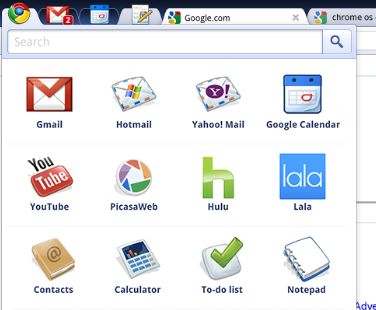
    As Google stated when it first revealed that it was working on its very own OS, Chrome OS will be completely web-based. There will be no native apps for it, even the tools that will be built by Google and bundled with the OS will be web apps. In a simplified view, Chrome OS is just a specialized version of its browser Chrome running on top of an optimized Linux kernel.

    There have been a number of modifications done to Chrome in order to make it function as a full-blown operating system. One of the things Google has introduced consists of persistent application tabs, which will always be available to the user and are fully customizable. Apps can also be run in a “panel” that is a persistent light-weight window, which sits on top of the browser designed for apps like instant messengers. One example of use is a notepad tool that comes with the operating system and that… (read more)

  • Google Chrome OS: speed, simplicity, security

    Screen shot 2009-11-19 at 1.31.58 PM

    Well kids, Google has just released some serious information about the much anticipated Chrome OS at today’s webcast, so grab some popcorn and buckle up, ’cause here we go. Google Chrome OS has a radically different approach to computing, and assumes that most of what you want to do on your computer involves your web browser and internet connectivity — and when we think about it, are they so wrong? Those of you who were expecting an Android type interface are going to be sorely disappointed, as the Chrome browser, in a nutshell, is Chrome OS. So let’s just get this out there right now: this isn’t going to be an OS designed for video editing, Photoshopping, or 3D modeling. This is a lightweight conduit for access to online information and utilities. No doubt all of this has piqued your interest, so hit the jump to check out the full story.

    Main UI

    Google has said flat out they designed the Chrome OS with three things in mind: speed, simplicity, and security, so we are going break down some of the finer points they touched upon under these pretenses.

    Speed

    Several times Google engineers stated that turning on your Chrome OS powered netbook should be like turning on a television; hit the power button and within a couple seconds you should be browsing. They have been focusing on this and working hard to improve upon it. Currently Chrome OS’ cold boot time is 7 seconds to the login window, with an additional 3 seconds for user login making for a total boot time of 10 seconds. Not bad. Google is hoping to have that time shaved down even further by the time they are ready for release.

    Simplicity

    Your information is stored in the cloud. No user bits are going to be stored on the modest solid state hard drive that all Chrome OS netbooks are going to come with. While this may be a terrifying prospect to some, it does afford Google some flexibility to rework the traditional computing work flow. There are no application updates to be installed, no backup solutions needed, and no maintenance operations to perform. When you login to the could you can be sure that your Chrome OS netbook is up to date, patched, and ready to go. The main interface, to the shagrin of many we’re sure, is also very simple in that it’s a Chrome browser window. You can customize shortcuts and favorites, but the foundation UI isn’t going to blow anyone’s socks off with eye candy.

    Security

    This was really getting hammered upon. Security is accomplished in two main ways: architecture setup and the cloud. First and foremost there are three partitions setup on the Chrome OS’ SSD drive, a root partition (which is read-only and holds the OS), a user partition (which by default is encrypted), and a swap partition. When you boot Chrome OS it checks the integrity of the OS and if it finds that your OS has somehow been corrupted or compromised by maleware, it simply re-downloads a fresh copy of the OS from the intertubes. All on its own. Again, your information is in the cloud and the system is technically stateless, so the OS can be restored at point in time without any detriment to user data.

    We know that a lot of you have some burning questions and want to see the UI in action, so have a couple videos queued up. Go ahead, we know you’re curious.

  • SharePoint Mobile for Windows Mobile reviewed

    sharepoint-mobile-review-3 sharepoint-mobile-review-4

    One of the important updates to Office Mobile 2010 was Sharepoint Mobile.  Unfortunately Sharepoint is a technology that is really only used in a corporate context, so most Windows Mobile users have no idea what it does.

    Wikipedia says:

    Microsoft SharePoint, also known as Microsoft SharePoint Products and Technologies, is a collection of products and software elements that includes, among a growing selection of components, web browser based collaboration functions, process management modules, search modules and a document-management platform. SharePoint can be used to host web sites that access shared workspaces, information stores and documents, as well as host defined applications such as wikis and blogs. All users can manipulate proprietary controls called "web parts" or interact with pieces of content such as lists and document libraries.

    MSMobiles have published a review of the Windows Mobile client, and seemed to have some difficulty getting it up and running.  They persevered however and  in the end had this to say about it:

    It looks like SharePoint Mobile can be a differentiator that will make purchase of Windows Mobile phones worthwhile! – a reason why to buy Windows Mobile phone rather than Android or iPhone.

    … at last Windows Mobile 6.5 has a unique selling point not available at other platforms: Microsoft’s own SharePoint client! If you use SharePoint in your organization/company/enterprise then you should get Windows Mobile 6.5 phone!

    Read their full review here.

    Share/Bookmark

  • Chrome OS Unveiled, Focused on Netbooks, the Cloud

    Chrome OS is a natural evolution of the work that’s been done on the Chrome browser, Sundar Pichai, VP of product management, and Chrome OS engineering director Matthew Papakipos said when they unveiled it at Google’s Mountain View campus on Thursday. The operating system is designed to imbue web applications with the “full functionality of desktop applications.” As for the reasons behind the development of the new platform, they pointed to rapid growth in the netbook market — where Chrome OS is aimed — and cloud computing.

    Goals

    With Chrome OS, Google had three goals, according to Pichai: speed, simplicity and security. ”Chrome on Chrome OS will be even faster than Chrome [the existing browser],” he noted. “In Chrome OS, every application is a web application. Users don’t have to install applications. All data in Chrome OS is in the cloud. If a user loses a Chrome OS machine, the user should be able to log back into the cloud and retrieve cached data.” Pichai also demonstrated that Chrome OS loads in only a few seconds.

    The demonstrations made clear that the OS relies heavily on “panels,” pop-up windows housing web-based applications that are similar to multiple open windows in a browser.  Papakipos, meanwhile, characterized the security model in Chrome OS as very much like the one in the Chrome browser, and unlike the one in standard operating systems: If malware is detected, all cached data is saved; Chrome OS is subsequently re-downloaded, then freshly imaged on a machine. If an application crashes in a tab, only that tab goes down.

    Coming to Devices Next Year

    The target date for delivery of Chrome OS machines is the end of next year. Google is working with hardware partners to bring Chrome OS to market, Pichai said, and doing so in unusual ways. Chrome OS is not aimed at hard disk-enabled machines, for example, but rather at systems with solid-state drives. Google is also working with hardware vendors on what Pichai described as “slightly larger netbooks,” with full-sized keyboards and large displays. All the open source code is available today, as are all the design documents, said Papakipos.  You can find the source code for the OS and other links here.

    So does Chrome OS have a fighting chance in the hot netbook market that it’s squarely aimed at, given that it won’t make its debut on devices until late next year? Chrome OS will run on both x86 and ARM processors, which as jkOnTheRun has noted, will give it a broad spectrum of coverage on devices, and could make it a significant player in the emerging ARM-based smartbook hardware category. Still, the OS will significantly trail the arrival of Microsoft’s Windows 7, which is also squarely aimed at netbooks.

    Even though netbooks have already been exploring new low-priced territory for portable computers, Chrome OS-based netbooks could also take prices much lower. Google CEO Eric Schmidt said in July that “we do not plan to charge for it, in an open source form,” but that “there may be other ways we can make money from it.” He added that:

    “The rough argument is we do things that are strategic because they get people to ultimately use the Internet in a clever and new way. We know that if they use the Internet more, they search more, watch more on YouTube, and we then know that our advertising [will reach them]. We do not require each and every project to be completely profitable or not profitable — we look at them in a strategic context: are they making the web a better place?”

    Could Google subsidize Chrome OS-based netbooks in an effort to attract users with low prices and feed them into its search-and-advertising ecosysytem? As is true for most of Google’s projects, feeding that lucrative ecosystem tends to be a high priority for the company. It will no doubt be one as Chrome OS makes its way into devices next year.


  • Mandelson Wants Gov’t To Have Sweeping Powers To Protect Copyright Holders

    As pretty much everyone who reads Techdirt has been submitting today, Lord Peter Mandelson over in the UK — the guy who just discovered copyright law after a resort vacation dinner with entertainment industry mogul David Geffen — wants to go even further in changing copyright law against consumers’ rights. We already know that he was the major force behind getting the UK to move forward with a plan to kick file sharers off the internet based on a “three strikes” plan that involves accusations, not convictions. This was despite a study by the government which had already concluded that three strikes was a bad idea.

    However, the latest plan seems even more ridiculous. Not only would it include a new offense for those who download unauthorized material, it would allow the government to give powers to “any person as may be specified” to do whatever is necessary to try to stop online infringement. In other words, it would allow the government to basically deputize anyone they wanted (such as record labels…) with near complete power and little oversight to do whatever they thought necessary to fight online infringement. And this includes changing copyright law at will through “secondary legislation” that involves no Parliamentary oversight or debate. Talk about a broad, sweeping and totally ridiculous change to copyright law.


    Part of the reasoning, supposedly, is to be able to force online digital lockers like YouSendIt, which are quite useful for legally sharing all sorts of things, to get rid of privacy, so that any infringing works sent via those tools can be revealed. The whole thing is an incredible overreach of power, well beyond anything that is necessary. Mandelson doesn’t even hide the fact that this is done purely in support of copyright holders and against consumers’ rights:


    “These can be used entirely legitimately, but recently rights holders have pointed to them as being used for illegal use,”

    Because if rights holders don’t like it, it must be stopped? He admits in the letter that consumer groups will oppose this proposal, but he doesn’t seem concerned. Consumers, after all, don’t take him out to dinner at expensive resorts.

    Permalink | Comments | Email This Story


  • Watch: The 3D Dot Game Heroes US launch trailer

    Atlus has released a launch trailer for 3D Dot Game Heroes, From Software’s digital ode to old-school 8-bit gaming. Check it out and get to know the K…

  • PlayStation 2 now officially launched in Brazil, seriously

    That’s not a typo on the title, you read that right. “New” and “PS2” can still be used in the same sentence, without being a smart-ass. The PS3 has …

  • HTC Touch Diamond 2/MDA Compact V Windows Mobile 6.5 update for T-Mobile UK now available

    t-mobile-mda-compact-v-smartphone Its a bit late, but the Windows Mobile 6.5 update for T-Mobile version of the HTC Touch Diamond 2 has finally become available for UK subscribers.

    The update can be downloaded  here and brings the usual HTC Sense update also.

    Via Coolsmartphone.com

    Share/Bookmark