Blog

  • “Survivor” Engagement News: Country Singer To Wed

    “Survivor” contestant and country singer Whitney Duncan is all set to marry Keith Tollefson, whom she met on the show.

    Duncan was actually married when she appeared on the show, to KingBilly singer Donny Fallgatter; however, the two had allegedly kept their vows a secret, and when she met Tollefson and fell for him, it was the beginning of the end for her prior relationship. Their divorce was finalized at the end of 2011, freeing her up to marry Tollefson. The singer shared a picture of her engagement ring on Twitter recently and received well-wishes from fans and friends alike; she also spoke a bit about her relationship with Fallgatter.

    Duncan also acknowledged on Twitter the news that her cousin, Holly Bobo, has still not been found after reportedly being abducted by a man wearing camo; a witness said he saw her being led into the woods from her home in April of 2011 and the case is still open. Holly disappeared from Decatur County, Tennessee; a reward is being offered for her safe return. She is five foot, three inches tall and weighs 110 pounds, with blue eyes and shoulder-length blonde hair. She was last seen wearing a pink shirt, blue jeans and black flip flops.

    Lead image: Wikimedia commons

    Image: Twitter/Instagram

    survivor engagement

  • Pale Moon 19 is first major update since version 15

    Moonchild Productions has launched Pale Moon 19.0 and Pale Moon x64 19.0 for Windows. Pale Moon is a customised build of popular web browser Firefox, with the developer making no attempt to keep pace with Mozilla’s six-weekly development cycle in favour of applying security updates and concentrating on delivering improved performance.

    This release marks the first major update since Pale Moon 15.0 — based on Firefox 15 — was released last August, but while Pale Moon 19 utilizes the brand new Gecko 19 engine found in the latest version of Firefox, don’t expect to see all the functionality in Firefox 19 making an appearance here.

    With the underlying Gecko update, Pale Moon 19.0’s HTML5 implementation is more complete than the previous build. Javascript performance has also been improved thanks to the shift to the IonMonkey engine, which first appeared in Firefox 18. Also improved in Gecko 19 are the layout and rendering engines, but one side-effect is that users may have to update both add-ons and themes to retain compatibility with Pale Moon 19.

    While the overall layout of the browser hasn’t changed, there are subtle changes to the main browser controls and padlock icon.

    Moonchild has – in accordance with its desire to produce a faster browser than Firefox – also applied specific tweaks to the rendering engine to improve performance, which it claims is noticeable both in general user and via certain unspecified benchmarks. These changes should help prevent browser stalls or high CPU usage on certain web pages.

    Pale Moon 19.0 also abandons PGO (Profile Guided Optimization) in favour of global speed optimizations, which should give better smoothness regardless of which PC is using the browser.

    As this is a custom build, don’t expect all of the functionality of Firefox 19 in this release. There are fewer developer tools, for example, while Moonchild has publicly stated the social API introduced in Firefox 17 won’t be appearing in Pale Moon.

    The inline PDF viewer is also apparently missing in this release, but that’s because it’s been switched off by default. Switch it on by typing about:config into the browser Address bar, then search for pdfjs — verify that pdfjs.firstRun is set to true, then double-click pdfjs.disabled so it’s set to false. Once done, you’ll be prompted each time you click on a PDF whether or not you want to preview it in Pale Moon. To make it the default choice, open Pale Moon >Options > Applications tab and change the Portable Document Format (PDF) entry to Preview in Pale Moon. Job done.

    Pale Moon 19.0 and Pale Moon x64 19.0 are both available as freeware downloads for PCs running Windows XP SP3 or later, as are portable builds Pale Moon 19.0 Portable and Pale Moon x64 19.0 Portable.

    Photo Credit: Michal Ninger/Shutterstock

  • The end of unlimited BBM could erode BlackBerry’s standing in emerging markets

    BlackBerry Unlimited BBM
    South Africa has been one of BlackBerry’s (BBRY) key markets globally and the Canadian vendor has held more than 50% of the smartphone market there for years. As the BlackBerry Z10 now rolls out in South Africa, the country will be a key testing ground for a potentially controversial development. Local mobile operators will no longer offer unlimited BlackBerry Messenger service after May 31st, just three months after the Z10 debuts in South Africa.

    Continue reading…

  • Scroogled Petition Has 79K Signatures, Many Seem To Be Signing The Wrong Thing

    Microsoft keeps on keeping on with this Scroogled thing. We’ve been alerted that there’s now an infographic to go along with it.

    The company says its Scroogled petition has reached 78,000 signatures (It’s actually at over 79K). It’s unclear how many of those signatures are actually related to the “issue” at hand. I don’t have time to browse through that many signatures, but it didn’t take long to find quite a few that seem to be completely off topic.

    The last time I checked, this campaign was about Gmail’s ads and privacy. Many of those who have lent their signatures seem to think it has something to do with animals – specifically elephants. Here are a few of the signatures that had comments that we found in a brief scan:

    I care we shall care, long live the ancient beatiful smart Elephants and wild life.

    A truly abhorrent and despicable act by an evil, person not fit to breath the same air as this beautiful animal who was treated in this way. My heart goes out to those who shared their lives with whiskey. Animals were given the gift if life by god and as such have just as much right to life. My prayers are with you , rest in peace Whiskey xx

    We are animal lovers and issues of this kind should happen and the law should change their ancient rules and make these people liable for their actions

    Animals are spirits, just as you and I. We are animals as well but what makes us beast are acts like this, independent of justice or not. Justice being granted or not depicts as if you are a beast or not. As a spirit of life, respect one another and serve justice for the life taken.

    This is disgraceful. All animals have as much right to live safely as humans. Stop this now.

    I beg you! listen to me and to many people, which is against killing animals! We are all plačim for them and pray that this was not!

    Please help to the elephant, its terrible her situacion…

    Please, treat this elephan with dignitiy, take it to a sanctuary to a worth living place. Thank you.

    Some also appear to think it’s about something even completely different than that. Here’s another one:

    IF THERE IS SUCH A THING AS JUSTICE! FREE HIM…

    Oh yeah, here’s that infographic:

    Scroogled Infograhpic

    Note that they actually went so far as to illustrate “the creepy line”.

    They’ve also rehashed that Eric Schmidt quote that we debunked here again with a new shortened video focusing on that specifically:

  • UCLA researchers further refine ‘NanoVelcro’ device to grab single cancer cells from blood

    Researchers at UCLA report that they have refined a method they previously developed for capturing and analyzing cancer cells that break away from patients’ tumors and circulate in the blood. With the improvements to their device, which uses a Velcro-like nanoscale technology, they can now detect and isolate single cancer cells from patient blood samples for analysis.
     
    Circulating tumor cells, or CTCs, play a crucial role in cancer metastasis, spreading from tumors to other parts of the body, where they form new tumors. When these cells are isolated from the blood early on, they can provide doctors with critical information about the type of cancer a patient has, the characteristics of the individual cancer and the potential progression of the disease. Doctors can also tell from these cells how to tailor a personalized treatment to a specific patient.
     
    In recent years, a UCLA research team led by Hsian-Rong Tseng, an associate professor of molecular and medical pharmacology at the Crump Institute for Molecular Imaging and a member of both the California NanoSystems Institute at UCLA and UCLA’s Jonsson Comprehensive Cancer Center, has developed a “NanoVelcro” chip. When blood is passed through the chip, extremely small “hairs” — nanoscale wires or fibers coated with protein antibodies that match proteins on the surface of cancer cells — act like Velcro, traping CTCs and isolating them for analysis.
     
    CTCs trapped by the chip also act as a “liquid biopsy” of the tumor, providing convenient access to tumor cells and earlier information about potentially fatal metastases.
     
    Histopathology — the study of the microscopic structure of biopsy samples — is currently considered the gold standard for determining tumor status, but in the early stages of metastasis, it is often difficult to identify a biopsy site. By being able to extract viable CTCs from the blood with the NanoVelcro chip, however, doctors can perform a detailed analysis of the cancer type and the various genetic characteristics of a patient’s specific cancer.
     
    Improving the NanoVelcro device
     
    Tseng’s team now reports that they have improved the NanoVelcro chip by replacing its original non-transparent silicon nanowire substrate inside with a new type of transparent polymer nanofiber-deposited substrate, allowing the device’s nanowires to better “grab” cancer cells as blood passes by them.
     
    Tseng and his colleagues were able to pick single CTCs immobilized on the new transparent substrate by using a miniaturized laser beam knife, a technique called laser micro-dissection, or LMD.
     
    The researchers’ paper on their improvement to the chip was published online Feb. 22 in the peer-reviewed journal Angewandte Chemie and is featured on the cover of the journal’s March 2013 print issue.
     
    “This paper summarizes a major milestone in the continuous development of NanoVelcro assays pioneered by our research group,” Tseng said. “We now can not only capture cancer cells from blood with high efficiency but also hand-pick single CTCs for in-depth characterization to provide crucial information that helps doctors make better decisions.”
     
    Testing the improvements on melanoma
     
    Using the new assay on patients’ blood containing circulating melanoma cells (CMCs), Tseng’s team was able to isolate and preserve single CMCs. Melanoma is a deadly type of skin cancer that is prone to spreading quickly throughout the body. The ability to capture and preserve single CMCs allows doctors to analyze melanoma cells’ DNA structure, determine the genetic characteristics of the patient’s cancer and confirm that the circulating cells remain genetically similar to the tumor they came from.
     
    The preservation of single captured CMCs in this proof-of-concept study also allowed researchers to conduct an analysis — called single-cell genotyping — to find within the cell a specific target (BRAF V600E) for a drug called vemurafenib. BRAF V600E is a mutation in the BRAF protein that appears in approximately 60 percent of melanoma cases. Drugs that inhibit BRAF are able to slow and often reverse the growth of melanoma tumors.
     
    “With this technology, we are getting closer to the goal of a widely clinically applicable liquid biopsy, where we can sample cancer cells by a simple blood draw and understand the genes that allow them to grow,” said Dr. Antoni Ribas, a professor of medicine in the division of hematology–oncology, a Jonsson Cancer Center member and one of Tseng’s key collaborators. “With the NanoVelcro chips, we will be able to better personalize treatments to patients by giving the right treatment to stop what makes that particular cancer grow.”
     
    Dr. Roger Lo, another key Tseng collaborator and an assistant professor in UCLA’s department of medicine, division of dermatology, and department of molecular and medical pharmacology, was also optimistic about the new method.
     
    “This scientific advancement — being able to capture the melanoma cells in transit in the blood and then perform genetic analysis on them — will in principle allow us to track the genomic evolution of melanoma under BRAF-inhibitor therapy and understand better the development of drug resistance,” said Lo, who is also a member of the Jonsson Cancer Center.
     
    UCLA’s Jonsson Comprehensive Cancer Center has more than 240 researchers and clinicians engaged in disease research, prevention, detection, control, treatment and education. One of the nation’s largest comprehensive cancer centers, the Jonsson Center is dedicated to promoting research and translating basic science into leading-edge clinical studies. In July 2012, the Jonsson Cancer Center was once again named among the nation’s top 10 cancer centers by U.S. News & World Report, a ranking it has held for 12 of the last 13 years.
     
    For more news, visit the UCLA Newsroom and follow us on Twitter.

  • Apple investor wins bid to block shareholder vote

    The battle over Proposal No. 2 on Apple’s proxy statement may be “a silly sideshow” to CEO Tim Cook, but Apple has been defeated anyway. On Friday, a federal judge granted an injunction that will block an Apple shareholder vote scheduled for Wednesday, the Wall Street Journal reported.

    The proposal included three amendments to the company’s charter, concerning language describing directors’ terms of office, eliminating Apple’s ability to issue “blank check” preferred stock, and setting par value company stock. The judge granted Greenlight Capital CEO David Einhorn’s request on a technicality: the proposal “impermissibly bundles ‘separate matters’ for shareholder consideration.” But the preferred stock issue is the one Einhorn is after.

    Apple did not immediately respond to a request for comment.

    As a quick refresher of how we got here: Einhorn, whose firm owns more than a million shares of Apple stock, two weeks ago went public with a conversation he’d been having with Apple’s executives since last year. He had pressed them on a scheme for offering preferred stock as a way of boosting investor confidence in Apple and as a way to keep its cash from piling up even more rapidly. When Apple proposed eliminating its ability to issue preferred stock, he sued the company.

    The ruling comes a day after Einhorn garnered a bunch of publicity for what he’s really after: that Apple issue a new class of preferred stock he’s dubbed “iPrefs” that would pay a 50 cent quarterly dividend forever. Apple has yet to publicly respond to the specifics of the proposal other than a promise to consider it.

    The company’s annual shareholder meeting is scheduled for Feb. 27.

    Upcoming: paidContent Live, Apr. 17, 2013, New York, Save $100, Register by 3/22 More upcoming conferences.

    Related research and analysis from GigaOM Pro:
    Subscriber content. Sign up for a free trial.

  • Weekly Wrap Up: “Fulfilling Our Obligations”

    Watch the West Wing Week here.

    Sequester Looming: On Tuesday, with just days left until a set of deep, across-the-board budget cuts are set to take effect, President Obama discussed what’s at stake for our country’s economy, security and future and pushed lawmakers to work out a deal for the American people.

    “So these cuts are not smart. They are not fair. They will hurt our economy. They will add hundreds of thousands of Americans to the unemployment rolls,” said President Obama, as emergency respondents stood behind him. “This is not an abstraction — people will lose their jobs. The unemployment rate might tick up again.”

    The President called for “a balanced approach to deficit reduction,” which ends tax loopholes and deductions for the wealthy, while targeting wasteful spending in the process.

    Giving Every Child a Chance: Last Friday, President Obama headed home to Chicago to promote his proposals from the State of the Union address and emphasized the importance of protecting our children from gun violence, illustrating the importance of family in our communities.

    “And so that means that this is not just a gun issue. It’s also an issue of the kinds of communities that we’re building. And for that, we all share a responsibility, as citizens, to fix it.”

    read more

  • NASA Report Explains Satellite Launch Failure

    NASA this week released an eight-page report detailing all its engineers have learned about a failed satellite launch that took place on March 4, 2011.

    The launch of a Taurus XL T9 rocket, designed by Orbital Science Corporation, was meant to carry the Glory climate change monitoring satellite into orbit. The rocket instead failed to reach orbit, costing the agency around $388 million.

    A “mishap investigation board” put together by NASA in the aftermath of the failure determined that the rocket’s fairing system failed to open fully, causing the destruction of the rocket and its payload.

    Fairings are clamshell-shaped nosecone devices that surround satellites on their way to orbit. Normally, fairings are jettisoned soon after launch when friction heat from the Earth’s atmosphere is no longer a concern. When Glory’s fairing failed to open, the fairing’s mass altered the rocket’s trajectory. NASA states in its report that the launch vehicle “likely broke up or burned up, or both, because of reentry loads and aerodynamic heating.”

    Though the fairing was determined to be the cause of the failure, the NASA board was unable to figure out exactly why the fairing had not opened. The board, though, did narrow down the possibilities to some sort of failure with the frangible joint components of the fairing’s side rail system. Both NASA and Orbital are continuing to investigate the fairing system, and will be making improvements to future designs based on their findings.

    (Image courtesy NASA)

  • Facebook Rolling Out Fixes To Page Insights Reporting

    Insights are a huge part of the Facebook developer’s life. As such, the social network has been consistently improving the product with new features and fixes. The latest fixes are coming after an extensive engineering audit.

    Facebook announced today that it has discovered a number of bugs that impacted Page Insights impression and reach reporting. Facebook is now in the process of fixing these bugs, but wants developers to know that the impact of said bugs will be different for every page. To see the results of the fixes and the impact the bugs had, Facebook recommends you check your page Insights on Monday after a weekend of bug fixing.

    So, what should you be looking for? Facebook says that most Pages will see the following changes on Monday following the bug fixes:

  • Total reach to stay the same or increase for most Pages
  • An increase in paid reach if you ran News Feed ads
  • An increase or decrease in organic reach, depending on many factors such as the composition of your fan base, when and how often you post and your spending patterns
  • A change in metrics computed from reach and impressions, such as engagement rate and virality
  • We know that accurate data is fundamental to building and improving your Facebook presence. We are taking this very seriously. We have already put a number of additional quality and verification measures in place to prevent future bugs and resolve them quickly if they arise.
  • Unfortunately, Facebook says that it won’t “be able to backfill Page Insights with historical data” as a result of the bugs mucking with its logging systems. Everything else should be working fine once the bugs are all fixed by Monday morning though.

  • Check Out This Guy Playing Music With Fruit And Vegetables

    Here’s a guy playing music with fruits and vegetables. Okay, there are some keyboards and other gadgetry involved, but still…

    [via Make]

  • Aerize WiFiX Version 2 Gives You Control of What Networks Your Apps Use on Legacy BlackBerry Devices

    Aerize WiFix version 2 has just been released for the legacy BlackBerry OSes versions 4.5 and above. WiFiX allows users to bypass your apps’ need to connect through specific protocols giving you much more options for apps that have strict connectivity requirements.

    Route cellular network connections over WiFi, or WiFi connections over cellular, even WAP connections to and from TCP, BIS, and BES. Lots of BlackBerry apps have strict connectivity requirements, this app allows you to break those rules.

    These apps are just some of the examples that the WiFiX is useful for: Berryweather, Beyond411, BlackBerry Maps, Bloomberg, Dictionary.com, Facebook, Flixster, Freerange, Garmin Mobile, GMail, Google Maps, Google Mobile App, IM+ Lite, MSN, MySpace, OpenBeak, Opera Mini, Pocket Express, Poynt, Sports Illustrated, TiggitMail, TuneWiki, Ubertwitter, Viigo, WeatherEye, WhatsApp, Yahoo Finance, Yahoo! Go, and Yelp.

    Click here to buy WiFiX for legacy BlackBerry devices for $2.50 from the Aerize store.


  • Microsoft to reportedly unveil next Xbox at April event

    Xbox 720 Launch Date
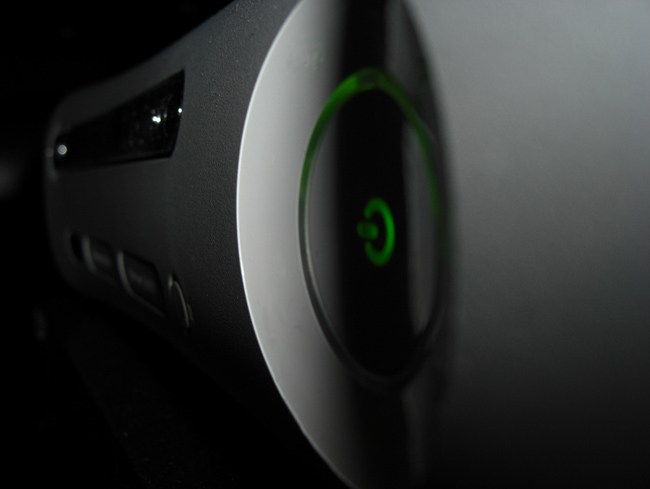
    The debut of Sony’s (SNE) PlayStation 4 is now behind us, so Microsoft (MSFT) is next in line to take a crack at grabbing gamers’ attention with its next-generation console. The Redmond, Washington-based company has worked its way to the top with its current-generation Xbox 360, which just recorded its twenty-fifth consecutive month as the best-selling console in the U.S. Now, according to a new report from Computer and Video Games, unnamed “developers and other industry professionals” including multiple Sony employees say Microsoft’s next Xbox will be unveiled at a press conference in April. No other details were provided, but the next Xbox is expected to feature an eight-core 1.6GHz CPU, 8GB of RAM and a 50GB 6x Blu-ray Disc drive.

  • BlackBerry Story Maker: Top 5 things you should know

    story-maker

    Whether you already own a BlackBerry 10 device or are still waiting for the platform to become available in your region, I want to make sure you have a solid understanding of the BlackBerry Story Maker experience. Check out this video for a quick overview of the Time-Shift camera in BlackBerry 10 and how you can use Story Maker to bring your photos together.

    [ YouTube link for mobile viewing ]

    Story Maker is new software that was rolled out with BlackBerry 10. It enables BlackBerry users to create seemingly professional movies in just a few simple steps. Before you get started with Story Maker, I wanted to share few key pieces of information about the software:

    1. It’s designed for mobile. That means you can create stories on the go. You don’t have to connect to a computer or tablet to create stories; you can do it right on your BlackBerry 10 smartphone.
    2. Create multimedia content. Story Makers allows you to combine music, video and picture files into one single video story.
    3. Edit in seconds. You don’t need an editing background to use Story Maker. You can change the theme, remove an item from the story or change the order of story items in just a couple of swipes.
    4. Add a professional touch. After adding content and choosing music, you can add a title page and credits to indicate where and when a story was filmed and who was responsible for filming it. You can also choose from a variety of filters to add professional-looking effects.
    5. Sharing is intuitive. It’s extremely easy to share finished videos with social networks. After you save a video on your BlackBerry 10 smartphone, you are immediately given the option to share with a few clicks.

    Sounds pretty cool, right? For more details, check out the winning Story Maker video from the BlackBerry 10 launch event that was held in New York City on January 30th. What stories from your life are you going to recreate and share with Story Maker?

  • Facebook uncovers bug that caused misreporting on Page Insights

    Facebook has uncovered an engineering bug in Page Insights that affected the reporting of analytics on those pages, potentially giving Page managers inaccurate information on how many users were viewing and interacting with their posts and how wide an audience Pages have gathered on the platform.  Engineers are working to fix the Page Insights bug by Monday.

    The news is concerning for Facebook, which is making a serious push to get marketers and advertisers to invest in the Facebook platform as a place to reach fans and customers, which Facebook emphasized in its most recent earnings call. The company will be discussing some of the engineering challenges it faces at our upcoming Structure Data conference in New York in March.

    Page Insights allow managers to check how many people are viewing or liking their Page and the content that’s associated with or published to that Page. Facebook wrote that Ad Insights (the reports and feedback users recieve after buying an ad or promotion to run on Facebook) were not affected by the same engineering bug that caused misreporting.

    The company wrote on its engineering blog Friday that Page managers should continue checking their stats to look for changes, and by next week those numbers should be more accurate. Facebook emphasizes that the bug did not affect actual delivery of information, just the feedback that Page managers might have seen so far:

    “As part of our ongoing investment in Page Insights, we recently completed a comprehensive engineering audit of the product. During this audit we uncovered bugs that impacted impression and reach reporting. We have confirmed that these issues impacted reporting only and not delivery. Ad Insights were not impacted by these bugs.

    The actual impact of the bugs will vary from Page to Page and day to day based on a number of factors such as when and how frequently you post. To see the overall impact, if any, on your individual Pages, we recommend looking at your organic, paid and viral reach and impressions for your Page and for your posts over the next few weeks, starting on Monday, February 25. Because these bugs impacted our logging systems we won’t be able to backfill Page Insights with historical data.”

    Facebook wrote that once the stats are corrected, Page managers could see their total reach stay the same or increase, paid reach increase, and organic reach increase or decrease. That is quite a variety of possible outcomes once the stats are fixed, and is likely to annoy those who are responsible for managing their organization’s Facebook presence.

    facebook page insights

    Upcoming: paidContent Live, Apr. 17, 2013, New York, Save $100, Register by 3/22 More upcoming conferences.

    Related research and analysis from GigaOM Pro:
    Subscriber content. Sign up for a free trial.

  • VCs pour money into data startups during 2012

    Venture capitalists made more big data investments in 2012 than in any previous year, according to a report released Thursday from CB Insights and law firm Orrick.

    “As evidenced by financing and deal activity, Big Data is gaining steam,” the report stated. The number of big data venture deals in 2012 rose by nearly 20 percent as compared with the previous year, going from 132 deals to 164. In the fourth quarter of 2012 alone, there were 49 venture deals for big data plays.

    Among them are Basho, ClearStory Data, Continuuity, Drawn to Scale, Mortar Data and WibiData.

    Despite the bump in number of deals, the total amount of money VCs threw at big data startups in 2012 — $1.39 billion — was down by nearly 7 percent year over year. The median deal size decreased slightly, from $6 million to $5.7 million.

    The recipients of the biggest big data investments of 2012 were, in descending order, Cloudera ($65 million), Palantir Technologies ($56.1 million), Rocket Fuel ($50 milion), 10gen ($42 million) and Nimble Storage ($40.7 million).

    Which VC firms closed the most big data deals last year? SV Angel, which invested in 14 companies. Sequoia Capital and IA Ventures tied for third, with 13 deals each, followed by New Enterprise Associates with 12 and First Round Capital with 10.

    The percentage of deals for big data infrastructure in relation to all big data funding continued to fall, while big data analytics has risen to a high of 48 percent of all deals. (The other category listed in the report is big data applications.)

    By far, California has been the leading state for big data venture deals in the past five years, with 230 in 2008-2012. New York, with 67 in that same time window, and Massachusetts, with 57, lag far behind.

    Assuming the trend lines continue, then, you would be most likely to get funded if you run a big data analytics company in California.

    As for 2013, the report cites a few big data investments VCs have already made so far: Sailthru and Nomi.

    Others include Ayasdi and Think Big Analytics, whose founder and CEO, Ron Bodkin, will speak at GigaOM’s Structure:Data conference in New York in a few weeks.

    In addition to Bodkin, entrepreneurs from other venture-backed big data startups who will speak at the conference include Justin Sheehy, chief technology officer at Basho; Jonathan Gray, Continuuity’s founder; Bradford Stephens, Drawn to Scale’s CEO; and Doug Daniels, chief technology officer of Mortar Data.

    Feature image courtesy of Shutterstock user extradeda.

    Related research and analysis from GigaOM Pro:
    Subscriber content. Sign up for a free trial.

  • How can health tech get beyond early adopters to reduce care disparities among the masses?

    If you keep company with early adopter tech types, it might seem commonplace to book doctors’ appointments online or track activity with any of several new wearable sensors. But while digital health is gaining ground, it still has a ways to go before its most innovative applications hit mass adoption. And as bleeding edge individuals and companies embrace new ways of receiving and delivering healthcare, it’s critical to consider how new health technology can reach people in all communities – not just the country’s elite pockets.

    That point was driven home yesterday during a Social Media Week panel I moderated on How Behavior and Patients Can Fix Health Care.  I was chatting with three health tech entrepreneurs, Dr. Jay Parkinson, co-founder of Sherpaa; Unity Stoakes, co-founder of Startup Health; and Derek Flanzraich, founder of Greatist, about how they and their organizations are changing health care, when one of the audience members commented that the conversation felt too “self-referential” and asked how to close the behavior gap in health technology. (You can see the whole discussion here.)

    It was an entirely fair question – and one that I hope all health technologists ask themselves regularly. While technology, especially mobile devices, is more ubiquitous than ever, there are still disparities in broadband access, availability of digital tools and information about new services. The Pew Internet & American Life Project, for example, reports that Latinos (55 percent) and African-Americans (58 percent) are less likely than Whites (75 percent) to have a home Internet connection. Not surprisingly, Pew also says that those with more education and higher incomes are also more likely to go online for health care information – 78 percent of those who earn more than $75,000 vs. 45 percent of those who earn less than $30,000.

    Keep early adopters happy, let them help spread the word

    On the panel, Dr. Parkinson said that Sherpaa, which works through employers to provide 24/7 access to doctors via email and phone, targets companies like Tumblr and General Assembly because “you have to start with people that get it.”

    “If Facebook or the iPhone started marketing to my parents first they wouldn’t have taken off,” he said. The economics of healthcare is slow (especially relative to the pace of technology) because it’s defined by the government, but by keeping early adopters happy and buzzing about their experiences with Sherpaa, he said he hopes they can gradually educate more and change the system.

    Another way to bring the masses into the new health movement is by making it more accessible and relatable through trusted brands, said Flanzraich. In the last year, Greatist, a health and fitness content site that’s part Buzzfeed, part fitness magazine and part health journal, has nearly doubled traffic to just under two million unique visitors. And he said those users, who are mostly from outside early adopter hubs New York and San Francisco, are drawn in because the site connects important health news to pop culture and other topics people already want to read about.

    I also added that employers play an important role in bringing health technology to a wider audience. Using Fitbits and Nike Fuelbands that track activity and calories burned may seem like naval-gazing to non-techies, but they could start to mean more if employers reward people for activities logged on those devices, for example, with health insurance discounts or FSA (flexible spending account) credits. At first, it may be the more tech-forward employers that see the value in programs like this. But if companies like employee wellness startup Keas can show employers cost savings, devices that motivate behavior change could matter to even more populations.

    Report: Better data collection could pinpoint and address disparities

    As technology proliferates, innovation is also spreading organically into different corners of the world, noted Stoakes who cited  SMS-based efforts that enabled drug authentication in Africa and boosted immunization rates in India.

    However, in the U.S., even though early adopter patients and doctors will lead the way, health innovators and policymakers can do more to bridge knowledge and behavior gaps. (At GigaOM’s Structure:Data conference in March, I’ll be speaking with Aetna’s head of innovation about how big data can improve patient care and lower costs.) A report  presented at a White House Summit on “ehealth equity” this week outlines a few ways to do that. Written by consumer groups The Asian & Pacific Islander American Health Forum, California Pan-Ethnic Health Network, the Consumer Union and the National Council of La Raza, it offers several recommendations on how health information technology could reduce imbalances in care, particularly in communities of color, limited English proficient groups and immigrants and mixed-status families.

    For example, it suggests capitalizing on mobile technology, designing web sites that consider differences in culture and health literacy and developing outreach strategies specifically targeting the underserved.

    One area in health IT that could lead to particularly positive improvements is data collection and analysis, the report says.  Although it emphasized security to prevent the misuse of data, the report says better demographic information could help identify disparities and lead to services that more appropriately consider linguistic or other cultural needs.

    Related research and analysis from GigaOM Pro:
    Subscriber content. Sign up for a free trial.

  • President Obama Meets with Prime Minister Abe of Japan

    President Barack Obama and Prime Minister Shinzo Abe of Japan deliver press statements

    President Barack Obama and Prime Minister Shinzo Abe of Japan deliver press statements and take questions following their bilateral meeting in the Oval Office, Feb. 22, 2013.

    (Official White House Photo by Lawrence Jackson)

    Today, President Obama held a bilateral meeting with Prime Minister Shinzo Abe of Japan. "The U.S.-Japan alliance is the central foundation for our regional security and so much of what we do in the Pacific region," President Obama said.

    In the meeting, the two leaders discussed a range of security issues in the Asia Pacific region, and over lunch, talked about the close economic cooperation between our two countries. 

    "I know that Prime Minister Abe and I both agree that our number-one priority has to be making sure that we are increasing growth and making sure that people have the opportunity to prosper if they're willing to work hard in both our countries."

    Read the full remarks here.

  • TED Live: All that’s new with our online subscription community

    Can’t make it to the TED2013 conference next week? Join an online community of TEDsters from around the world who will tune in to watch live from their homes, schools or offices. What’s new with a TED Live membership?

    We have a new home

    TED-Live-site

    As an online community, TED Live members have a great new place to engage and interact all in one place. Even if you just need more information on how to subscribe to TED Live, the new website is worth checking out.

    We’ve gone mobile

    TED-Live-ipad-2When you’re logged in as a registered TED Live member, you can stream the conference from any mobile device and take TED with you all day.

    We’re on Instagram

    TED-Live-Instagram-2We love to see how TED Live members watch — and we love to show you insider-only photos from backstage at TED and TEDActive. Follow us @TEDLiveHQ and check out our interactive community! Hashtag #TEDLiveHQ at any time, and you’ll be pulled into our live feed.

    The archive page

    TED-Live-archiveIf you’re a first-time user or a TED Live veteran, you will be able to access all of the TED talks from any conference you’ve been registered to, as long as you’re logged in. That’s a whole lot of TED!

    As TED Live watches TED2013 in style, we urge you to check out our updates. Plus, there’s a new giveaway: Anyone registered for TED Live before TED2013 (February 25, 2013) will be automatically entered to win one more Live membership, free!

    For more information on how to get involved, visit us at the TED Live website »

  • Google I/O registration date set for March 13th

    Google I/O Registration Date
    It looks as though Google (GOOG) is almost ready to start taking registration applications for its 2013 Google I/O conference. The company’s official I/O website on Friday posted a notice that registration for this year’s I/O will start March 13th and 10:00 a.m. EST, or just over two months before the conference is slated to kick off in San Francisco on May 15th. The announcement also urges prospective attendees to set up both Google+ and Google Wallet accounts, although it’s not clear if signing up for both of these services is a requirement for attending.

  • The Console Wars, Begun They Have: Microsoft May Announce New Xbox At April Event

    Image (1) xbox1.jpg for post 105504

    A number of solid reports, including a new domain name, XboxEvent.com registered to Microsoft, are pointing to an Xbox event in April. While most console reveals happen at E3, as evidenced by Sony’s mystery-filled conference, Microsoft will probably announce specs and some launch titles and leave the money shot for Los Angeles in June.

    Computer & Video Games reported the rumor today and VG247 corroborated it. Considering the timing of Sony’s PS4 announcement, it makes perfect sense for Microsoft to join in the hoopla surrounding next-gen consoles.

    The next Xbox, code-named Durango, will require an improved, included Kinect sensor to play and will support game “sections” that allow you to play one portion of the game while the rest loads or downloads. It will support 1080p 3D video and run on 8GB of RAM.