Blog

  • The Burning Agenda

    The panel at the event

    Me with the panel

    Last week I participated in a panel discussion which was part of a premiere launch of the movie ‘The Burning Agenda’. This is a film, produced by Dr Owen Day from the Buccoo Reef Trust and supported by the UK government as part of their Equity campaign, to strengthen the voice of vulnerable countries like the Caribbean on the impacts of climate change they face. The film was also launched in Trinidad and Guyana last week and I am told it is now being picked up by the regional television networks, which is great. It makes an important contribution to raising public awareness here about the issue but will also do this internationally when it is shown at the upcoming Commonwealth heads meeting in Trinidad and at the Copenhagen side event that the Caribbean will host next month.

    It was a great turnout and the auditorium was full. Having been part of the initial planning discussions it was a thrill now to see the final product. I sat next to Owen who was a little anxious as you can expect – hoping it was well received and that all the technical systems would run smoothly. He need not have worried. It had us all captivated from the beginning and represented the region’s perspective very well – from all levels – with views from President Jagdeo and Prime Minster Manning to those of a nutmeg farmer in Grenada and rice farmer in Guyana who have suffered tremendous losses due to recent disasters but could also share what current climate change issues they face. Comments from BP’s executive director, on the role of the private sector, was also encouraging.

    Two featured speakers in the movie were on the panel – Dr Ulric Trotz, who is the Scientific adviser for Caribbean Community Climate Change Centre and Dr Leonard Nurse, local noble prize laureate and member of the scientific team of the IPCC. I felt very humbled to be in their company. They make such a valuable contribution and speak very well. Time for discussion was not long enough to deal with a complex subject like this – but a good range of questions were shared nevertheless.

    One person told me that the most interesting quote for the evening for them was the comparison of the carbon footprint of a vegetarian in a small car to a meat eater walking to work. This was given by the member of the audience after reading the BBC interview with Lord Stern on the high methane contribution of cattle to greenhouse gas emissions.

    Questions also covered the region’s hopes for Copenhagen and how critical the US was to a meaningful agreement – to the inspiring voice of a young 11 year old boy asking us what he can do to help – to changes that can be made at the policy level to encourage those who are keen to do their part like install energy efficient devices in a home but are finding it expensive to do so. This obviously only scratched the surface of the debate but I really hope it continues whenever it can and everywhere. I must congratulate the British High Commission staff in Bridgetown for an excellent event.

    Life guard hut

    Life guard hut – complete with solar panel

    In grabbing a much needed juice afterwards, I was chatting to the general manager of the National Conservation Commission, Keith Neblett who told me about the solar panel that had just been installed at Rockley beach on the lifeguard hut to run their PA system which proved to be an easy but very practical solution to power issues they have at the beach. I thought I must check it out and have inserted a picture for you here as there cannot be too many of them around the world.  I am really enjoying finding out more about the adaptation challenges but also the opportunities a climate smart and low carbon and energy efficient development pathway provides. As I investigate these oppportunities further it is like an invisible gate has opened and I am discovering things in the most unusual ways…but more about that next time.

  • Pelosi Says House Will Pass Health Bill; Measure Gains AARP, AMA Backing

    House Speaker Nancy Pelosi, D-Calif., says she will have enough votes to pass Democratic health care legislation by Saturday. “The statement, however, is a tacit acknowledgement that she doesn’t have them yet,” The Hill reports. “‘We will,’ Pelosi said, when asked if she had the 218 votes needed to pass the $1.055 trillion bill. … Obama will make a final push before the vote by traveling to Capitol Hill on Friday for a meeting with House Democrats, according to a White House aide” (Soraghan, 11/5).

    Minority Leader Steny Hoyer also predicts the bill will pass Saturday, The Associated Press reports. “The Maryland Democrat said in an interview with wire service reporters Thursday that House leaders will have the 218 votes needed to pass the sweeping bill, presuming a couple final issues are resolved. He acknowledged that the vote will be close. Hoyer said language on abortion and illegal immigrants was still being worked out but predicted those issues could be solved in time for Saturday’s debate and vote on the legislation that President Barack Obama has made his top domestic priority” (11/5).

    Bloomberg: “‘It’s going to be close,’ Hoyer said in an interview with news service reporters today. ‘This is a huge undertaking; there are legitimate concerns.’ Hoyer said he expected the House to vote Nov. 7. With no Republican support expected, Democrats need 218 votes to pass the measure. ‘We are probably right at about 218 right now,’ Hoyer said. That total includes some who want assurance the legislation sufficiently restricts government financing of abortions or subsidies for undocumented workers, he said” (Rowley, 11/5).

    In a second article, The Hill reports that “Pelosi said during her weekly press conference that she and other Democratic leaders have not decided whether or not to allow changes submitted by Rep. Brad Ellsworth (D-Ind.) to clarify language on federal funding for abortions … 40-some pro-life Democrats, led by Rep. Bart Stupak (D-Mich.), have threatened to oppose the bill over concerns about the strength of provisions in the bill barring federal funds for pregnancy termination. House leaders have maintained throughout the healthcare debate, though, that the bill does not and will not allow such funding” (O’Brien, 11/5).

    Meanwhile, “AARP, the powerful lobbying group for older Americans, endorsed the U.S. House of Representatives healthcare reform bill on Thursday, bolstering support for the measure as it heads toward a close floor vote on Saturday,” Reuters reports. “The group said the bill would help older Americans pay for their prescription drug coverage and strengthen Medicare, the government-run health program for the elderly” (Smith, 11/5).

    The Washington Post: “The AARP, the nation’s largest and most influential association of older Americans, endorsed the House health-care bill Thursday morning and vowed to lobby House members in advance of Saturday’s historic vote.” AARP Vice President Nancy A LeaMond said the House Democrat’s measure met the organization’s top goals for reform, including strengthening Medicare. “‘This gives the bill a very important boost,’ said Rep. Chris Van Hollen (D-Md.), a member of the House leadership. ‘Some of our members are very nervous about how this bill has been received by seniors. For AARP to endorse it provides important validation’” (Montgomery, 11/5).  

    The Cleveland Plain Dealer: The American Medical Association also today announced it will support the health reform bill, “providing an important boost to Democrats hoping for passage this Saturday.” But AMA President Dr. J. James Rohack also urged Congress “to simultaneously pass a companion bill to fix Medicare’s payment system” and added that both steps “‘are essential’ to achieving meaningful reform this year” (Koff, 11/5). 

    CNN Political Ticker: In offering the AMA’s endorsement of the House Democratic bill, Rohack said the measure was “‘not a perfect representation of our views,’ but is close enough to warrant the support of the organization.”

    Boston Globe’s Political Intelligence: “President Obama, in a surprise appearance during the regular press briefing, bragged this afternoon about the support for the Democratic health care bill by the AARP and the American Medical Association, saying the endorsements bring reform closer than ever.” He said the AARP’s backing was “no small endorsement” and that it should “rebut criticism that the proposals would hurt seniors.” Similarly, he said the AMA’s support was important because “the doctors of America know what needs to be fixed with our health care system” (Rhee, 11/5).

  • When It Comes to Job Creation Startups Are More Fertile

    Startups may have a high failure rate, but they also are a leading driver of job creation in the U.S., according to a report put out by The Kauffman Foundation this morning. As part of a deeper look at what small business means for the U.S. economy, the study found that 1- to 5-year-old companies create the highest average number of jobs, at roughly four jobs per year. From the report:

    The dynamics of firm age, moreover, point us away from a discussion on the existing distribution of employment and toward a focus on the annual changes in jobs. Let’s ask not where people work, but where each additional increment in net job creation occurs. This approach immediately forces one to recognize that companies in a given size class are not necessarily homogenous: a company with fifteen employees that is twenty-five years old will behave differently than one that is only two years old (differences that will multiply if we classify firms according to economic sector).

    First the report points out that, while companies with more than 500 people make up about half of the nation’s employment and payroll, a business’s size is not a good indicator of where new jobs come from. Dane Stangler and Robert E. Litan, who wrote the report, offer up this graph to show that without startups overall job creation in the U.S. would have been negative in most of the years since 1977.

    jobcreation

    There’s also discussion, but no data, about how M&A at large companies — through which they typically acquire smaller, younger firms — accounts for the job growth at larger companies. The report offers a ton of data about economic sectors, and acknowledges that relying on startups for job creation is both messy and hard to track. It’s all very well to say at a macro level that young companies create jobs even though they have a high likelihood of failure, but at the individual level, relying on an uncertain startup for employment can create enormous personal risk.

    The report recommends that to foster job creation, young companies need help. The authors think credit should be made more accessible to businesses as well as banks, and note efforts happening in these area today. They also suggest a payroll tax holiday for new and young businesses, while noting that such a move could add to the deficit.

    I would suggest rather, that the government consider some level of universal health care that would reduce costs for a young company, as well as offset the difficulties faced by employees who have to navigate the turbulent nature of working at a startup. Overall, it’s an interesting report, although I’m not sure big business should be written off so easily. They may not be engines of job growth, but in many cases they are engines for startup growth as they buy services, equipment or even ads from them.

  • Dragon Quest IX tops global software sales, Madden gets huge boost in US

    The powers and resources of the NPD, Enterbrain, and GfK Chart-Track have all come together and the results are in – Dragon Quest IX dominated the gl…

  • Oh Look: Hollywood Doesn’t Need To Break Your TV To Release PPV Movies Early

    For a while now, the MPAA and the major movie studios have been asking the FCC for permission to break your TV and DVR by enabling “selectable output control,” which would block the recording of certain movies. The MPAA’s claim for why they needed this is to add another “window” for releasing movies as video on demand prior to them being released on DVD. But that makes no sense. As we pointed out, when they first made this claim, there is absolutely nothing stopping them from releasing these movies earlier for VOD. There’s nothing to stop them from doing so — and it’s not like SOC would actually block the movies from being online. Every movie ends up online around the same time (usually before) it gets into the theaters, so these movies would all be available for file sharing prior to the VOD release anyway. The MPAA keeps saying that it simply can’t release the movies earlier without this form of DRM, but it appears that the studios own actions prove that we were right, and the MPAA was lying. Public Knowledge is pointing out that Warner Bros. has released two recent movies for VOD prior to DVD, even as the MPAA is still insisting that it’s simply impossible. Oops.

    Permalink | Comments | Email This Story


  • UBoard desk shelf features three-port USB hub, cup holder

    UB01

    Cup holder, eh? I like cups. Who doesn’t? If you constantly find yourself in need of a 22 inch wide glass shelf with a built-in three-port USB hub and cup holder attachment, then today is your lucky day.

    UB03

    The $50 UBoard is pitched as a “USB Multiboard For Your Keyboard & Office Life.” I don’t know about you, but I like to keep my keyboard life and my office life separate. It’s hard to do, but it’s important to me.

    The tempered glass shelf can hold up to 33 pounds, but the product page recommends that you should not sit or stand on it. I agree, in principle.

    UBoard – USB Multiboard for your Keyboard & Office Life [Pyramid Distribution]


  • Netflix PS3 streaming discs shipping out

    Movie-loving PS3 owners who took advantage of the recent PS3 support announcement from Netflix should go check their emails right now. Netflix has sen…

  • Verizon announces the BlackBerry Curve 8530

    vzw-bb-curve-8530

    We’re sure that most of you are sick and tired of all of this Verizon news (how do you think we feel having to write about it?), but they’re on a tear. Today Verizon announced that it will be carrying the BlackBerry Curve 8530 starting November 20th. To go for $99.99 on contract after a $100 mail-in rebate, the new Curve offers the following: full-QWERTY keypad, optical trackpad, 2 megapixel camera, GPS, dedicated multimedia keys, 3.5mm headphone jack, 256MB of app memory, 528MHz processor, EV-DO connectivity and last but not least, Wi-Fi! Yes, indeedy, Verizon is definitely looking like the front runner in the smartphone arms race of the 2009 Holiday Season.Read

  • AT&T gearing up to launch $99 8GB iPhone 3GS?

    Definitely not confirmed, but rather interesting nonetheless. We’ve heard now from two sources that AT&T, and we guess Apple, are contemplating launching an 8GB iPhone 3GS at the $99 price point before Christmas. One source said this was AT&T’s way of combating the DROID madness.

    275x100 (Logo)

  • Silly study looks at iPhone users’ dating habits. Yeah.

    There’s a silly study, conducted by Retrevo, making the rounds that purports to analyze how iPhone users fare in the dating world. I know, right? One stat to whet your beak: one in three iPhone owners have admitted to breaking up with their significant other via text message. Amazing.


  • Sick and stunning – the Modern Warfare 2 launch trailer

    Now this is how a game should be. I dunno if Modern Warfare 2 will indeed be the biggest entertainment release of all time, but damn, they sure know h…

  • Art or Virus? Symantec Villifies Spoof Apple “Trojan”

    loseloseSecurity firm Symantec is warning computer users about a new Mac-specific Trojan that deletes files on the user’s hard drive, according to Techworld.com. It has dubbed the piece of malware “OSX.Loosemaque,” and uploaded a YouTube video of how it goes about its nefarious purpose.

    Basically, it’s a Space Invader clone wherein when you kill an alien, a file in your home folder is deleted. It looks like it’s evil — and designed to perform such a task without the knowledge of the Mac owner on which the program resides. But it isn’t. It’s an art project that clearly advertises its purpose and nature to all who would wish to use it.

    The game, dubbed Lose/Lose, is the brainchild of Zach Gage, who created the program as part of an online art installation and released it for public download in September. It’s intended purpose is not to dupe unsuspecting gamers, but to pose questions about the relationship between killing in video games and real-life moral issues. Gage says as much in a statement on his web site:

    By way of exploring what it means to kill in a video-game, Lose/Lose broaches bigger questions. As technology grows, our understanding of it diminishes, yet, at the same time, it becomes increasingly important in our lives.

    Even if a user were to download the game from a different, less well-intentioned place, the game itself warns users right when it opens, stating that “Killing in Lose/Lose will likely result in files on your hard drive being deleted. You have been warned.” Of course, that doesn’t mean that an intelligent programmer couldn’t remove or change said message, and redistribute the game themselves with the intent of causing harm.

    That’s what Symantec’s worried about, and why the firm decided to issue its warning about the so-called Trojan. Of course, the company took the opportunity to recommend installing security software as a means to protect against this kind of dangerous artistic expression, seeing as that’s the business it’s in.

    Should you worry about this game or threats derived from it? Not unless you are one of the slim few whose retro Mac gaming addiction is so acute that you feel the need to hunt around the digital frontier in suspicious and shady locations looking for independent games of questionable quality and without any sort of legit distribution channels. Or if you happen to be a devoted patron of the arts, and therefore can’t resist the urge to download software you know full well will harm your computer and destroy your files, all for the sake of the artistic effect it has. In either case, anti-virus software won’t help.

  • Could America default on its debt? And what the past tells us about the future

    In Monday’s Washington Post, under an Op-Ed headed ‘Could America Go Broke?’ columnist Robert Samuelson raises the prospect of the U.S. or another major economy defaulting on its national debt. Says Samuelson: “It’s still a very, very long shot, but it’s no longer entirely unimaginable. Governments of rich countries are borrowing so much that it’s conceivable that one day the twin assumptions underlying their burgeoning debt (that lenders will continue to lend and that governments will continue to pay) might collapse… The question is so unfamiliar that the past provides few clues to the future.”

    Well, this raises the question of whether the past tells us anything about the future, and if so what? There’s a common wisdom attributed to Mark Twain (why is it that aphorisms are always attributed to Twain or Winston Churchill?) that goes: “History doesn’t repeat itself, but it often rhymes,” and this is the position that most educated future-thinkers would hold.

    So what would the ‘rhyme’ be? From cases such as Argentina, Russia, South Africa, and many developing world countries over the past 50 years: lenders loose confidence in a country’s ability to repay on its national bonds and stop lending; the country is faced with a choice of drastic spending cuts (great social and humanitarian cost) or major tax increases (pointless, because it stifles business, therefore lowers tax revenue) or default. Going broke, into national “Chapter 11,” suing for time and ‘debt restructuring’ becomes the best among the bad options event though it pretty much ensures a deep and dark recession.
    .
    Thinking the unthinkable

    Could this be the future of America? As I’ve written before here and other places, after the ‘unimaginable’ Credit Crunch was ignored due to its ‘low probability,’ it’s a relief to know that remote but plausible outcomes with serious consequences are getting attention, at least in the Washington Post.

    Clearly major economies are in a more precarious situation than they were 5 years ago. Too much debt is always precarious, for the smallest household or the biggest country alike. On the other hand, an economy’s size and enduring wealth counts too. As Samuelson observes, it created the unexpected effect in Japan’s case where debt at 200% of GDP (America’s is currently about 40%) should have raised the cost of its debt (lower confidence of repayment) but this hasn’t happened because domestic Japanese households and businesses rather than foreigners have easily (and confidently) bought the debt — and this may well hold true for the U.S. too. In other words, the rhyme may go this way.

    The ‘more likely’ future is incremental raising of taxes and lowering of public service provision as Western economies incrementally claw their way back to stability. But at least this default wild card on the margins of plausibility has the oxygen of some attention and this is no bad thing. As with all good foresight work, it predicts nothing, but it does allow us to think through the roadmap to the outcome, and press for the right decisions now, in plenty of time and in a measured way.

    .

    Post to Twitter Tweet This Post

  • Jake & Micah Giveaway Winner

    Jake & Micah Winner

    Congratulation to Jen (comment #135), your kitties will get to enjoy a trio of delicious treats from Jake & Micah! Try not to eat them all at once!


  • Video: Wil Wheaton’s Star Trek cameo


    Did you know that Wil Wheaton was in JJ’s Star Trek? He just went public with the secret cameo voice overs and details the entire experience on his personal blog. If you’re even the slightest Star Trek fan, click over and read the whole thing. It’s awesome to me that he was so honored and humbled to do just voice over work in the new movie even though he played such a major part in introducing Star Trek to a new audience. The clip after the jump is apparently the only one in the film that’s his unaltered voice.


  • How RIM can avoid a premature endgame for BlackBerry

    By Carmi Levy, Betanews

    Once not so long ago, if you wanted bulletproof e-mail on a mobile device, you bought a BlackBerry. Research In Motion, the company that practically defined wireless messaging a decade ago, has done quite nicely for itself since then, garnering over 56% of the market for smartphones in the US and about 20% of the overall wireless handset market that includes smartphones as well as conventional feature phones. Its end-to-end encryption and still-unique service paradigm that routes messaging traffic through secure Network Operations Centers further endeared the platform to enterprise buyers, even as the company was successfully pushing the franchise into the consumer space.

    Unfortunately for RIM, nothing stays the same in the increasingly competitive wireless market. The BlackBerry is no longer a market of one, and many of the features that defined the platform — including push e-mail and enterprise-class security — are no longer unique. Worse, the critical feature set for a modern smartphone has expanded to include rich Web access, broad application availability, and an integrated, Web services-aware operating system. It’s no secret that the BlackBerry platform lags in all of these areas with its fine-for-the-1990s browser, relatively paltry app ecosystem, and an OS that despite regular incremental updates still betrays its decade-old roots.

    As investors push RIM’s share price down, and the drumbeats grow louder to aggressively address these shortcomings, the company finds itself at a crossroads. Either it radically changes the strategy that’s driven its growth to-date or it risks becoming an also-ran in the US market. Nokia, whose devices once accounted for over 35% of all US sales, lost the script when it misread Americans’ growing taste for affordable, feature-packed, and well-integrated smartphones. Today it’s American market share languishes at barely 7%.

    Carmi Levy: Wide Angle Zoom (200 px)It’s a lesson that RIM would do well to learn, because at this critical inflection point in its history, a stay-the-course mentality could doom RIM to a Nokia-like fate.
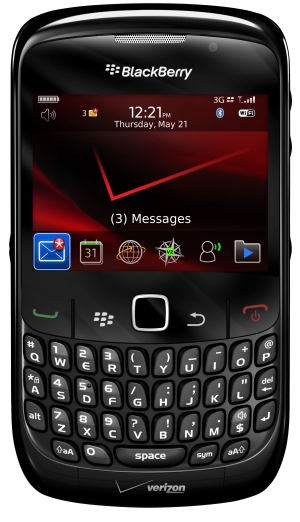
    To maintain leadership in a market that grows more competitive by the day thanks to continued strength from Apple’s iPhone and a rapidly building frontal assault by Google’s Android, RIM needs to focus on some fundamental changes, including:

    • Simplify the product lineup. The almost overflowing BlackBerry product tree stands in stark contrast to the singular focus of Apple’s iPhone hardware. RIM sells dozens of devices through countless carriers, often so subtly differentiated that even hard-core fans can’t keep track. Sure, most BlackBerry aficionados know that a device number that ends in 30 has built-in GPS, while one that ends in 20 includes Wi-Fi. But the finely sliced marketing messages demanded by such a broad product line tend to dilute the branding effort. As beneficial as multiple devices and form factors have been in terms of appealing to consumers (and carriers) with different needs, they’ve also dimmed how the BlackBerry is perceived in the minds of potential buyers.
    • Get serious about courting developers. Application developers care about two things: development effort and profit potential. As it stands now, RIM loses on both fronts. The tools to develop software on the BlackBerry platform are too cumbersome to use, which extends development time and effort. And since the BlackBerry app market itself is just a fraction of the size of its major rivals, there’s less opportunity to drive revenue. Compared to iPhone and, increasingly, Android (which already has well over 10,000 apps to RIM’s 3,000 or so) it’s a no-brainer: BlackBerry development loses every time. RIM has had ample time to bring a streamlined SDK to market along with easily accessible training and support resources for developers. It’s also had lots of time to go for Apple’s jugular and point-for-point pick off the things about iPhone development that tick developers off (I’m looking at you, opaque approval process). And to be fair, it’s making progress. Just not as fast as it should.
    • RIM BlackBerry Curve 8530 from Verizon Wireless

    • Fix the browser. You can’t write a product review of any BlackBerry without calling out its lame browser. While competitors have moved on to multitouch-capable interfaces that closely mimic the conventional desktop Web, RIM’s offering hasn’t changed much since it was first introduced. The result is a stripped down, slow, often frustrating online experience. In fairness to RIM, it’s doing something about it. This summer, it acquired Torch Mobile, which makes the WebKit-based multiplatform Iris browser — a deal that’s expected to bring a new standard browser to the BlackBerry sometime in 2010. It can’t come a moment too soon.
    • Find a new differentiator. Rock solid, enterprise-class, push-based e-mail is yesterday’s news. And even if it wasn’t, consumers don’t much care about it anyway. Apple’s got the application ecosystem to end all application ecosystems. Google has tight Web services integration. Palm has an innovative UI that blurs the line between local apps and the cloud. What’s RIM’s unique story going to be? The company isn’t saying, but unless it comes up with something to differentiate itself, its good-enough strategy that matches competitors feature for feature will guarantee a long, less-than-comfortable decline as newer, more unique solutions hit the market. Motorola’s Droid may hold some lessons here, as it illustrates how a hardware vendor can come back from the dead with an offering that moves the mobility bar solidly beyond basic e-mail and Web browsing.
    • Learn from the Storm. RIM’s first touchscreen device, rushed to market to capture holiday shoppers’ interest, was by all accounts a botch. Yes, it ultimately sold well, but its rocky launch tarnished the formerly invincible brand and illustrated the perils of timing product releases to unrealistic seasonal buying patterns. If the engineering isn’t fully baked, no product should ever see the light of day. Similarly, devices without Wi-Fi have no place in today’s market. While RIM avoided ticking Verizon off by deleting the feature from the first generation Storm, it alienated consumers who simply expect this in anything they buy today. RIM repeated the no-Wi-Fi mistake with the Tour, and one hopes it won’t happen again.

    While the BlackBerry franchise doesn’t face an immediate risk of extinction, its long-term success — and the success of the company that spawned it — could be compromised…unless RIM drops the overly conservative mentality, and starts swinging for the fences. Nothing short of a radical re-think will keep the BlackBerry as dominant in the future as it has been in the recent past.

    Carmi Levy is a Canadian-based independent technology analyst and journalist still trying to live down his past life leading help desks and managing projects for large financial services organizations. He comments extensively in a wide range of media, and works closely with clients to help them leverage technology and social media tools and processes to drive their business.

    Copyright Betanews, Inc. 2009


    Add to digg
    Add to Google
    Add to Slashdot
    Add to Twitter
    Add to del.icio.us
    Add to Facebook
    Add to Technorati


  • Battlefield: Bad Company 2 “exclusive” PS3 beta confirmed

    Good news, PS3 owners. DICE and Electronic Arts have officially set a date for Battlefield: Bad Company 2’s PS3 beta: November 19. PC gamers, on the o…

  • Dear RIAA: It’s Not ‘Working Together As A Team’ When It’s Under Threat Of Regulation

    I’ve been trying not to respond to every RIAA blog post these days, but it’s hard to let certain things go when they so rarely make any sense. For example, RIAA President Cary Sherman recently talked up the new regulations that force colleges and universities to “take proactive steps” to stop file sharing. He goes on to make it sound like universities decided to do this in the spirit of “teamwork” with the RIAA, rather than because they risked serious financial consequences under the law for not complying. He also leaves out the fact that tons of colleges and universities are pissed off and complaining about how much time, effort and money they’re wasting on this just because Sherman and his friends still don’t seem able to embrace modern music business models. Colleges and universities have enough to worry about without the government forcing them to act as the RIAA’s police force. If it were truly about teamwork, Cary, you wouldn’t have had to spend so much time getting Congress to pass a law to force them to do this.

    Permalink | Comments | Email This Story


  • Watch, Discuss, Engage at 4:45: Jared Bernstein and Sen. Sherrod Brown Talk Health Reform

    At 4:45 EST today the White House and Deputy Assistant to the President on Economic Policy Jared Bernstein welcome Senator Sherrod Brown of Ohio for a live video chat. They’ll be answering the questions the Senator gets most from Ohioans on health insurance reform, as well as questions taken live from our Facebook chat application.

    Watch the chat via WhiteHouse.gov/live 
    Watch, discuss, and engage via Facebook