Blog

  • USPS Clothing Line to be Sold Next Year

    The U.S. Postal Service (USPS) has announced a new partnership with Cleveland apparel manufacturer Wahconah Group. The companies will create the “Rain Heat & Snow” line of apparel and “accessory products.”

    The clothes will be designed around the unofficial USPS creed, “Neither snow nor rain nor heat nor gloom of night stays these couriers from the swift completion of their appointed rounds.” The clothing will feature USPS branding and could include some sort of “smart apparel” electronic devices.

    “This agreement will put the Postal Service on the cutting edge of functional fashion,” said Steven Mills, USPS Corporate Licensing Manager. “The main focus will be to produce Rain Heat & Snow apparel and accessories using technology to create ‘smart apparel’ – also known as wearable electronics.”

    This announcement comes soon after the USPS announced a net loss of $1.3 billion during the first quarter of its 2013 fiscal year. As a result of that announcement, the company has planned to use a congressional loophole to end Saturday mail delivery on August 5. USPS estimates that cutting Saturday mail delivery could save as much as $2 billion each year. Though that may be enough to help the Postal Service limp through another year of declining First-Class Mail volume and government-mandated pre-funding of retiree health benefits, it seems that the company is now looking for outside-the-box solutions (such as fashion) to its money woes.

  • Harlem Confirms You’re Not Really Doing the Harlem Shake

    “They look like they just smoked some dust”

    “They’re dry-humping air.”

    “This is an absolute mockery of what it was.”

    These are actual quotes from actual residents of Harlem, said after watching Harlem Shake videos on the internet. You can keep doing your 30-second videos and throwing them up on YouTube, sure, but remember: you’re not really doing the Harlem Shake.

    [Schlepp Films]

  • Foxconn reportedly freezes hiring as Apple cuts iPhone 5 orders [updated]

    iPhone 5 Demand
    Original device manufacturer Foxconn has reportedly put a hold on hiring new workers after Apple (AAPL), its largest client, cut iPhone 5 production. The Financial Times relayed the report on Wednesday, citing statements made in internal notices circulated at Foxconn. “Currently, none of the plants in mainland China have hiring plans,” a Foxconn spokesperson told FT, and hiring will reportedly be on hold until “at least the end of March.” It is unclear if the reduced iPhone 5 orders were planned or if production was trimmed recently in response to declining demand.

    Continue reading…

  • New From NAP 2013-02-20 08:45:02

    Prepublication Now Available

    The U.S. government supports programs to combat global HIV/AIDS through an initiative that is known as the President’s Emergency Plan for AIDS Relief (PEPFAR). This initiative was originally authorized in the U.S. Leadership Against HIV/AIDS, Tuberculosis, and Malaria Act of 2003 and focused on an emergency response to the HIV/AIDS pandemic to deliver lifesaving care and treatment in low- and middle-income countries (LMICs) with the highest burdens of disease. It was subsequently reauthorized in the Tom Lantos and Henry J. Hyde U.S. Global Leadership Against HIV/AIDS, Tuberculosis, and Malaria Reauthorization Act of 2008 (the Lantos-Hyde Act).

    Evaluation of PEPFAR makes recommendations for improving the U.S. government’s bilateral programs as part of the U.S. response to global HIV/AIDS. The overall aim of this evaluation is a forward-looking approach to track and anticipate the evolution of the U.S. response to global HIV to be positioned to inform the ability of the U.S. government to address key issues under consideration at the time of the report release.

    [Read the full report]

    Topics: Health and Medicine

  • Interxion Continues European Expansion

    Entranceway of Interxion's Amsterdam Five (AMS 5)  data center.

    Entrance of an Interxion data center.

    Interxion (INXN) announced the construction of its second data centre in Stockholm (STO 2) and expansions to its Frankfurt 6 data centre (FRA 6.3) and Copenhagen 1 data centre (CPH1).

    STO 2 is being completed in two phases, each providing 500 square metres of equipped space. Phase 1 will have 2MW of power, and is set to be operational in the second quarter of 2013. The Copenhagen expansion will provide 300 square meters of equipped space and is also targeted for completion in the second quarter.  These two investments combined will total €17 million ($22.7 million).

    “As a leader in the Scandinavian market, Interxion is expanding its capacity to meet the needs of the marketplace,” said David Ruberg, Interxion’s Chief Executive Officer. “Interxion has seen strong growth in the Stockholm market, primarily driven by our communities of interest.  We have expanded our Stockholm data centre twice in the past 18 months and continue to see strong demand in Stockholm.  STO 2 will provide critical equipped space to meet our customers’ expansion requirements.”

    Interxion announced a €5 million ($6.7 million) expansion of its FRA 6 data centre by 600 square metres of equipped space. The expansion is scheduled to be operational in the first quarter of 2013.

    “Demand for Interxion’s Frankfurt campus, the best-connected data center campus in Europe, remains strong,” said Ruberg.  ”Fill rates for Frankfurt 7 have met our expectations and FRA 6.3 will provide additional equipped space to meet the demands we see in the marketplace.”

    Interxion also noted that 400 square meters were opened in its London LON2 data center, 600 square meters in Madrid MAD 2 are set to open in the first quarter of this year, and the remaining 2,500 square meters in Paris PAR7 are scheduled to open by the end of the first quarter of 2013.

  • Meet the Future of Data Center Rack Technologies

    Raejeanne Skillern is Intel’s director of marketing for cloud computing. Follow her on Twitter @RaejeanneS

    Raejeanne_Skillern, intelRAEJEANNE
    SKILLERN
    Intel

    The Open Compute Summit just keeps getting bigger and better. By the numbers, the two-day event held in Santa Clara in mid-January this year drew three times the crowd of the 2012 gathering – amounting to more than 1,500 attendees! I could barely get a hotel room in the area due to the large number of people coming in for this event.

    The summit is a meeting place for the people and organizations that support the Open Compute Project, an initiative announced by Facebook in April 2011 to openly share data center designs across the industry.  And with the growth of this summit, it was clear that end users and vendors alike are getting involved and sharing ideas to make this a reality.

    At the event, Intel (a founding member of the Open Compute Project) announced our collaboration with Facebook where we are defining next-generation rack technologies and how we will enable these technologies through Open Compute. As part of this collaboration, our two companies unveiled a mechanical prototype, built by Quanta Computer, that includes Intel’s new and innovative photonic rack architecture. This prototype showed the cost, design and reliability improvement potential of a disaggregated rack environment using Intel processors and SoCs, distributed switching with Intel switch silicon, and interconnects based on Intel silicon photonics technologies (green cables in photo below).

    rack prototype

    This rack prototype was unveiled at Open Compute Summit. Intel’s photonic rack architecture, and the underlying Intel silicon photonics technologies, will be used for interconnecting the various computing resources within the rack. (Photo by Intel.)

    That’s the big picture—and the big news. Let’s now drill down into some of all-important details that shed light on what this announcement means in terms of the future of data center rack technologies.

    What is Rack Disaggregation and Why is It Important?

    Rack disaggregation refers to the separation of resources that currently exist in a rack, including compute, storage, networking and power distribution, into discrete modules. Traditionally, a server within a rack would each have its own group of resources. When disaggregated, resource types can then be grouped together, distributed throughout the rack, and upgraded on their own cadence without being coupled to the others. This provides increased lifespan for each resource and enables IT managers to replace individual resources instead of the entire system. This increased serviceability and flexibility drives improved total cost for infrastructure investments as well as higher levels of resiliency. There are also thermal efficiency opportunities by allowing more optimal component placement within a rack.

    Intel’s photonic rack architecture, and the underlying Intel silicon photonics technologies, will be used for interconnecting the various computing resources within the rack. We expect these innovations to be a key enabler of rack disaggregation.

    Why Design a New Connector?

    Today’s optical interconnects typically use an optical connector called MTP. The MTP connector was designed in the mid-1980s for telecommunications and not optimized for data communications applications. At the time, it was designed with state-of-the-art materials manufacturing techniques and know-how. However, it includes many parts, is expensive, and is prone to contamination from dust.

    The industry has seen significant changes over the last 25 years in terms of manufacturing and materials science. Building on these advances, Intel teamed up with Corning, a leader in optical fiber and cables, to design a totally new connector that includes state-of-the-art manufacturing techniques and abilities; a telescoping lens feature to make dust contamination much less likely; with up to 64 fibers in a smaller form factor; fewer parts – all at less cost.

    What Specific Innovations Were Unveiled?

    The mechanical prototype includes not only Intel silicon photonics technology, but also distributed input/output (I/O) using Intel Ethernet switch silicon, and supports Intel Xeon processor and next-generation system-on-chip Intel Atom processors code named “Avoton.”

    These innovations are also aligned to Open Compute projects underway.  The Avoton SOC/memory module was designed in concert with the writing of the CPU/memory “group hug” module specification that Facebook proposed to the OCP board work group at the summit. The existing OCP Windmill board specification (that supports the 2S Xeon processors) will be modified to show that the power and signal delivery to the board was modified to interface with the OCP Open Rack v1.0 specification (for power delivery through 12V bus bars) and for networking (to interface with a tray-level mid-plane board that holds the switch mezzanine module. Intel will also contribute a design for enabling a photonic receptacle to the Open Compute Project (OCP) and will work with Facebook*, Corning*, and others over time to standardize the design.

    What About Other Innovations?

    Intel has already delivered several innovations to the Open Compute Project and its working groups to enable future designs based on Intel Architecture. These innovations span board, system, rack, and storage technologies.

    Here’s an example of how Open Compute Project investments are driving new technologies and products available on Intel Architecture.

    Motherboards, storage, racks and management technologies are all running on Intel architecture, with multiple vendors.

    Motherboards, storage, racks and management technologies are all running on Intel architecture, with multiple vendors.

    In particular, Intel has been working with the OCP community to finalize the Decathlete board specification for a general-purpose, large-memory-footprint, dual-CPU motherboard for enterprise adoption.  We expect that in 2013 several end users will be purchasing products from OEMs (Quanta &  ZT Systems today) based on Decathlete. Intel also supported Wiwynn’s design efforts using the current Intel SoC roadmap to enable Knox Cold Storage (Centerton today, Avoton in the future).

    Intel has been working with the OCP community to finalize the Decathlete board specification for a general-purpose, large-memory-footprint, dual-CPU motherboard for enterprise adoption.

    Intel has been working with the OCP community to finalize the Decathlete board specification for a general-purpose, large-memory-footprint, dual-CPU motherboard for enterprise adoption.

    Want to Dive Even Deeper?

    To learn more about silicon photonics, see Intel’s video, “How Silicon Photonics Works” and to hear more about silicon photonics potential impact on the data center, see Data Center Knowledge’s story and video with Jeff Demain of Intel Labs, “Silicon Photonics: The Data Center at Light Speed.” For a look at innovations driven by all the contributors to the Open Compute Project, visit the Specs & Designs section of the Open Compute Project website.

    Industry Perspectives is a content channel at Data Center Knowledge highlighting thought leadership in the data center arena. See our guidelines and submission process for information on participating. View previously published Industry Perspectives in our Knowledge Library.

  • PE Firms Buy Biz From HYCOR Biomedical

    HYCOR Biomedical Inc., a maker of in vitro diagnostic products, has sold its urinalysis business to an affiliate of One Rock Capital Partners, Laurel Crown Partners, and StoneCreek Capital. Terms of the deal were not released. HYCOR is a portfolio company of Linden Capital Partners.

    PRESS RELEASE

    HYCOR Biomedical, Inc. (“HYCOR”), a leading manufacturer and marketer of in vitro diagnostic products for the global allergy and autoimmune markets, today announced that it has sold its urinalysis business to an affiliate of One Rock Capital Partners, Laurel Crown Partners, and StoneCreek Capital. The sale includes the KOVA® system of urinalysis products. HYCOR is a portfolio company of Linden Capital Partners (“Linden”).”The divestiture of the urinalysis business represents an important step in our growth strategy for HYCOR and allows us to focus exclusively on the growing, global allergy and autoimmune sectors of in vitro diagnostics,” said Richard Novak, Chairman of HYCOR’s Board of Directors, and Operating Partner at Linden.The urinalysis business will be named Kova International, Inc. and will continue to operate out of its Garden Grove, California manufacturing facility under the leadership of Vance Mitchell, who has more than 25 years of experience with the Kova urinalysis business. “With this action we are better positioned to grow our pipeline of allergy and autoimmune diagnostic products to serve the needs of our customers, whether they are leading clinical laboratories or integrated health networks,” said Dick Aderman, President and CEO of HYCOR. “Healthcare providers are increasingly looking to innovations in in vitro diagnostics to provide accurate diagnosis of these prevalent and costly conditions.”Allergies represent the fifth leading chronic disease in the United States, with an estimated 60 million Americans suffering from one or more allergy types. Moreover, it is estimated that 30-40% of the world population is now affected by one or more allergic conditions. The symptoms of allergy can appear in the nose, ears, lungs, skin, digestive system or other parts of the body. Early diagnosis and treatment of allergy have been shown to modify the course of the disease and help prevent subsequent development of other more serious conditions. An autoimmune disorder is a condition that occurs when the immune system mistakenly attacks and destroys healthy body tissue. There are more than 80 different types of autoimmune disorders and diagnosis is a complex process. Focusing on the allergy and autoimmune markets provides important synergies as the diagnostics for these disease categories share commonalities such as platform, assay development and manufacturing, and also target the same end user and areas of the laboratory.The transaction includes the transfer of urinalysis assets and employees. Financial terms of the transaction were not disclosed. Houlihan Lokey served as exclusive financial advisor to HYCOR and Kirkland & Ellis LLP provided legal advice to HYCOR for the transaction.About HYCOR Biomedical, Inc.
    Founded in 1981, HYCOR is a global manufacturer and marketer of in vitro diagnostics products. Since its founding, HYCOR has expanded its presence in allergy and autoimmune products used in clinical laboratories, hospitals and doctors’ offices worldwide. Among its products, HYCOR markets the HYTEC™ and AUTOSTAT™ brands. The company is focused on delivering products that provide the highest value to clinicians through innovation, reliability and customer service. For more information, please visit www.hycorbiomedical.com.About Linden Capital Partners
    Linden Capital Partners is a Chicago-based private equity firm focused exclusively on leveraged buyouts in the healthcare and life science industries. Linden’s strategy is based upon three elements: i) healthcare and life science industry specialization, ii) integrated private equity and operating expertise, and iii) strategic relationships with large corporations. Linden currently has investments in middle market platforms in the products, distribution, and services segments of healthcare.

    The post PE Firms Buy Biz From HYCOR Biomedical appeared first on peHUB.

  • Google Finally Shows Off Google Glass UI, Announces #ifihadglass Purchase Campaign

    google glass

    Google is slowly pulling down Google Glass’ veil of secrecy. With each announcement, the company reveals a bit more of its secrets. This time around, the video above shows Google Glass’ UI in real world situations — you know, real world as in jumping from a plane and swinging on a trapeze. Forget about the wide-eyed concept videos; this is the real deal.

    Get ready for even more Glasshole sightings, Google is ready to hand out Google Glass units to non-developer types. But you have to apply. And still pay the Glass Explorer Edition’s $1,500 price tag. But Google Glass!

    Using the hashtag #ifihadglass, take to Twitter or Google + and with 50 words or less, explain how you would use Google Glass. Photos and videos can be included as well. The deadline is February 27, and Google didn’t state how many Glass units will be handed out through this program, but the competition will be fierce.

    The UI shown in the video is radically more subdued than in the original concept video. Gone are the little circles and VH1 Pop-Up Video-ish notifications. Instead, users interact with Google Glass through a single pane in the top right. Everything from Google searches to notifications to hangouts seemingly happen in this one space — rather than dancing around the field of vision like in earlier Google Glass videos.

    The world seen through Google’s omnipresent eye but where are the ads?

    Google has yet to announce when general consumers will be able to buy Google Glass. But that’s smart.

    Google is slowly rolling out units to die-hard fans that can likely help the development and deal with first-gen bugs. Frankly, at this point, Google Glass isn’t ready for mass consumption. It
    will be released when it’s ready and until then, lowly consumers like most of us will have to sit on the sidelines and enjoy the future vicariously through YouTube demo videos.


  • Craigslist still has no official app, but here’s a pretty good one from the team behind Path

    Craigslist gets over 50 billion page views and over 60 million U.S. visitors every month — yet the classified site’s design and mobile strategy appear stuck in the year 2000 (when it first expanded beyond San Francisco). Craigslist offers a barebones mobile view, and it’s recently rolled out some mobile-friendly features like a map view and an image-heavy grid view. But it’s never released its own smartphone or tablet app, and its API is closed.

    Mokriya craigslist app 2Plenty of companies have stepped in to try to fill the void, and the most recent of those is Mokriya, the development company behind apps like Path and Hipster. Mokriya’s new Craigslist app for iPhone and Android, which launches Wednesday morning, and is called Mokriya Craigslist, joins third-party Craigslist apps like Craigslist Mobile and c•Mobile. What sets Mokriya Craigslist apart, the company says, is its easily navigable “two-tap” interface and the fact that it’s officially licensing data from Craigslist. The basic version is free; a premium version that allows posting and other features is $0.99.

    When you launch the Mokriya Craigslist app, you choose category and city. Listings are then presented in an image-heavy interface. “Browsing Craigslist should be as pleasurable as using Pinterest,” Mokriya founder Sunil Kanderi told me.

    Mokriya Craigslist app 1To choose a new category, post a listing of your own or ‘favorite’ a listing; all you have to do is tap at the top of the screen. “We built this to solve the problem of having to browse through multiple categories,” Kanderi said. Users can also create alerts so that they’re notified when, say, an apartment that fits their criteria is listed. And the app can use GPS to identify listings near a user’s location. Posting is also streamlined: A user writes a headline and description, chooses photos from his or her camera roll, adds price and category, and that’s it. Browsing listings is free, but to post listings, ‘favorite’ listings or set alerts, you’ll have to pay $0.99 for a premium version. I found a test version of the app smooth and nice to use — which sets it apart from some other unofficial Craigslist apps I’ve tried.

    Mokriya officially licensed data from Craigslist prior to building its app. That should help it avoid legal hurdles: In the past, apps that have used Craigslist data without permission have gotten in trouble. This past summer, for example, Craigslist sued apartment search app PadMapper for using its data without a license. Craigslist didn’t answer my question about how many apps it’s licensed its data to (in fact, it didn’t respond to any of my questions for this story), but I imagine that many third-party apps besides Mokriya do have licenses or they’d have gotten cease-and-desist letters by now. (c•Mobile, for instance, notes on its iTunes page that it’s officially licensed.)

    Craigslist is also making a little money off Mokriya’s app: “As part of the licensing agreement, Craigslist does get a small revenue cut,” Kanderi told me. “But mostly the licensing agreement ensures that we are in compliance with Craigslist’s terms of use.”

    Related research and analysis from GigaOM Pro:
    Subscriber content. Sign up for a free trial.

  • First ARM-based servers in production support Baidu’s cloud storage

    Chinese search engine giant Baidu is using ARM-based servers from Marvell making it the first company to depend on servers using the cell-phone chip in a production environment. Baidu is using the new ARM servers in its cloud storage application named Baidu Pan.

    ARM, which licenses its IP to a variety of chip makers, had stated its intentions to enter the data center market back in 2010, as worries about energy efficiency increased and the needs of webscale computing customers changed. While less powerful than their Intel counterparts, a cluster of lower-power ARM chips is more power efficient on a performance per watt basis and some workloads don’t even need the performance characteristics of a big Intel core.

    The combination of these two trends has led to a plethora of vendors from big names like Marvell and AMD to startups such as Calxeda to license ARM’s cores with an eye toward making servers. Holding ARM back so far has been the delay in building out 64-bit capable cores (they are expected later this year) as well as a lack of enterprise software running on the ARM platform.

    But given the economics of these so-called wimpy cores and the limits of using ARM cores in the enterprise server market today, the use of ARM-based servers in the storage arena is not surprising. Storage usage scenarios are perfect in many ways because they don’t need a lot of raw performance, nor do they require 64-bit capable cores.

    Thus, Baidu using ARM for storage makes sense. It’s also an area where Calxeda expects to see its first production deployments sometime this year, according to a conversation I had with Karl Freund, the VP of marketing of Calxeda last December. As for the Baidu deployment, it’s using the quad-core Armada CPU, Marvell’s storage controller, and a 10Gb Ethernet switch all integrated on a single system on a chip.

    Marvell’s release says the chip firm customized the ARM servers specifically for Baidu’s cloud storage requirements, taking the concept of server customization common in webscale deployments to the chip level. Marvell says the platform is designed to increase the amount of storage for conventional 2U chassis up to 96 TB, and to lower the total cost of ownership by 25 percent, compared with previous x86-based server solutions. The end result should cut Baidu’s power in its data center by half according to the release.

    Related research and analysis from GigaOM Pro:
    Subscriber content. Sign up for a free trial.

  • What Social Entrepreneurs Can Teach Your Company’s Future Leaders

    As the business environment becomes increasingly complex and interconnected, few leaders express confidence in their companies’ ability to adapt. A 2010 IBM survey found that 79% of global chief executives foresaw “high or very high complexity” over the next five years, but only 49% felt their organization was prepared to handle it. This striking gap signals an opportunity for companies: Secure a competitive advantage by building your employees’ ability to succeed in the increasingly complicated labyrinths of today’s — and tomorrow’s — markets.

    The question is how to equip employees with the skills to handle complexities such as creating innovative solutions to emergent problems, understanding new markets, and pushing back on the “status quo.” In our experience, social entrepreneurs can be extraordinary role models in this regard. They too have struggled to operate in complex environments, and have developed the skills and expertise to overcome these challenges. However, the core skills they need are different. Access to finance, designing operational processes and systems, and building strong, talented management teams are just a few obstacles that many cite.

    We’ve worked with a growing number of companies to pair future leaders with social entrepreneurs so they can teach each other the skills they’ve honed.

    Take Allianz, a German financial services company. In 2009, Allianz built Social OPEX, a unique leadership development program, which utilizes Allianz’s process-based methodologies (a refined Six Sigma process improvement approach for a financial services company known as Operational Excellence, or OPEX) and their employee’s business skills to help social entrepreneurs tackle critical issues related to scale. Allianz employees are paired with social entrepreneurs for a five-day intensive workshop following a mandatory training session that prepares employees for their assigned projects.

    Juergen Weber, the vice president of Allianz4Good, the central hub of the company’s sustainable development activities, says that the program pushes Allianz managers to be more entrepreneurial as they are directly exposed to change and innovation. Achieving the project goal within five days requires them to balance results and trust. “The program helps to prepare our employees for complex challenges in the future,” he says.

    In the past three years, over 120 Allianz employees have partnered with social entrepreneurs on 45 projects around the globe. The program has enabled the entrepreneurs to access new funding sources, solve complex process-based issues, apply Allianz’s expertise to other internal challenges, and explore new business-building initiatives with the company.

    “Through our partnership with Allianz we were able to access £150,000 of funding to carry on with our social franchise model. The funders had increased confidence because of our involvement with Allianz ” says Lily Lapenna, Founder of MyBnk.

    Allianz Group is now rolling out Social OPEX to a range of operational entities, including those in the UK and Asia. As testimony to its success, the program has received a net promoter score of 87%, which is well above the 75% threshold for companies garnering world-class loyalty.

    If you want to pair your managers with social entrepreneurs, here are a few things to consider:

    Prepare: Invest in preparing your participants in advance. Allianz’s mandatory pre-training program highlights the unique dynamics of the social sector — which are different than those of the business market they are used to.

    Integrate: Don’t put the sole responsibility of the program into the hands of your Corporate Responsibility team. Make sure the program has a senior sponsor and is integrated across the company, ideally in the corporate university or leadership development departments. At Allianz, the program was initiated and supported by the company CFO. Program management is split between the corporate university, the OPEX internal consulting team and the Corporate Responsibility department.

    Recognize: Reward employees for their participation by recognizing the skills and capabilities they’re building. At Allianz, participants receive a certification in the Social OPEX methodology. Employee demand is growing for this type of program and participation has many non-financial benefits to the employee including enhanced motivation, personal fulfillment, and skill development.

    Monitor quality: Don’t assume everything will run smoothly. Allianz assigns an OPEX coach to each team for quality control. This helps mitigate any issues related to the project, the methodologies, and team dynamics before and during the workshop.

    Empower: Support employees that want to continue a relationship with the social entrepreneur beyond the formal training period. Explore how you might build on the skills and experiences learned and apply them back into the business.

    Building the right relationship between these two entities, with different personalities and cultures, requires upfront management. Establishing the right relationship parameters (i.e. identifying key project outcomes), and ensuring each party understands the challenges and skills the other party has to offer is critical. When it works, and it almost always does, it can address the key skill gaps these groups face and ignite a strong and lasting relationship between the two organizations.

    Follow the Scaling Social Impact insight center on Twitter @ScalingSocial and register to stay informed and give us feedback.

  • OTG Lays The Foundation For A Connected Airport That Speaks Your Language, Whatever That Language May Be

    iPad GUI PSD

    OTG, the restaurateur that made waves when it installed free access iPads in some of the world’s busiest international airport hubs last year, is improving its existing system with the deployment of a translation system that will allow it to provide translation of its restaurant menus in 13 different languages. The system is already live in test deployments at locations like Toronto’s Pearson airport, and CEO Rick Blatstein tells me it’s already having a positive impact on sales at OTG-run restaurants.

    But the effort, which will soon encompass 20 languages and see wider deployment in more of the airports where OTG is already operating in North America, including LaGuardia and Minneapolis-St. Paul. Blatstein said that his company quickly saw the value in offering multi-lingual support after realizing that at Pearson, for example, English is the first language of only around 40 percent of travelers at any given time on average.

    “We have all of our menus and everything translated and tested ahead of time so that when you push the flag of your language, it automatically translates that for you,” Blatstein said. The idea is to make travelers feel more at ease, since they’re able to communicate in their own language. Ordering can happen right from the iPad kiosks, meaning there’s no chance of encountering language barrier problems between travelers and serving staff.

    OTG’s iPad deployment also provides travelers with access to Facebook, Twitter, flight status information, and more without charging them, with the aim of making air passengers feel less like a captive audience and more like a treasured guest when spending time in the airports that many frequent travelers likely know all too well. The translation service, applied at launch to restaurant offerings, is a first step according to Blatstein, and one that will eventually make its way to the company’s offerings outside of its restaurateur endeavors, too. Customers could soon order commercial goods from iPads in the language of their choice, Blatstein suggests, or set up accommodations or ground transit at their destination ahead of time.

    Airports can maintain multi-lingual staff, and cater to the most common languages spoken at their hubs, but you can’t cater to all the various people from every neck of the woods at every location all of the time. But with an iPad-supplemented customer service model with built-in translation services, you actually might be able to be everything to everyone. OTG isn’t quite there yet, but it’s making big steps in that direction, and that could make air travel (or at least the parts in between) much more pleasant for all involved.

  • Judge says Apple likely violated SEC rules

    Apple Greenlight Lawsuit
    Major Apple (AAPL) shareholder Greenlight Capital, headed by billionaire hedge-fund manager David Einhorn, recently sued the consumer electronics giant in an effort to limit the company’s ability to offer preferred stock. At the heart of its claims, Greenlight is arguing that combining three separate items into one proposition — one of which would change the way Apple’s board issues preferred stock — is a violation of SEC rules against “bundling.” On Tuesday evening, the judge presiding over the case said that he is inclined to agree.

    Continue reading…

  • Instantly block inappropriate websites with DNS Angel

    Parental controls software is normally bulky, complex, and the kind of application which can take some considerable time to configure. There may be lots of files to install, resident components which must always be running in the background, user profiles to create, content filters to customize, and the list goes on.
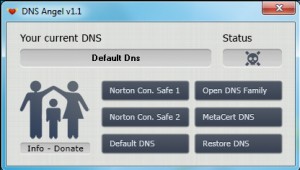
    If your child protection needs are simple, though, you may not have to worry about any of this, as DNS Angel can provide a reasonable amount of protection with a single click.

    The program is a tiny download (506KB), free, portable and extremely easy to use. Just launch DNS Angel and it will present you with buttons for the more family-friendly DNS servers it supports (Norton, OpenDNS and MetaCert). Click one of these — we’d start with MetaCert if you’re unsure — and immediately the server will block any attempt to reach an inappropriate website (porn, phishing sites, known malware sources and more) and any browser or other internet tool which you might have installed.

    This worked well for us. MetaCert, for instance, has rated hundreds of millions of web pages for family safety. The web moves quickly and it may still be possible to access some dubious sites, but everything we tried was blocked, while regular sites remained unaffected.

    But if you do have any problems then clicking “Restore DNS” will restore your original DNS settings, while choosing “Default DNS” tells Windows to obtain your settings automatically (they might be assigned by your router, say).

    There are also some problems here. You don’t get an option to configure the type of protection you get, for instance. The same sites will be blocked, whether your child is 6 or 16.

    And, of course, if a user of the PC has any technical knowledge then the DNS change is very easy to do. If you leave your copy of DNS Angel lying around, say, they could reverse its effects with a click. Or they could do this anyway via the standard Windows network settings.

    Still, if you just want to protect a single, very young child, DNS Angel and the whole DNS-based approach to site blocking could work well. Although you may also want to take additional measures, such as having them log in via a limited user account, to further control exactly what they can and can’t do.

    Photo Credit: wavebreakmedia/Shutterstock

  • Meet SwiftKey 4 — a top keyboard for Android

    I have to be completely honest — I am not a fan of the default Android keyboard. For people like me who write in languages other than English on a day-to-day basis, it misses the mark entirely, and does not adapt to my writing style either. Ever since I bought my Galaxy Nexus only one Android keyboard has lived up to my expectations — SwiftKey. And now there’s a new version, and it’s even better than ever.

    On Wednesday, after a couple beta versions, SwiftKey 4 made its way onto Google’s Play Store in both smartphone and tablet form. The popular third-party keyboard introduces a plethora of new features, including support for swipe input through Flow and revamped predictions.

    SwiftKey 4 also adds “Flow Through Space”, a feature that allows users to “gesture multiple words without lifting a finger”, improved learning of language and typing style by adapting to the Facebook, Gmail, Twitter, RSS feed and SMS writing style. With Flow enabled, however, SwiftKey 4 does not allow the user to swipe backwards to delete the word or swipe down to hide the keyboard.

    When it comes to predictions, the keyboard touts an enhanced language engine as well as predictions in a higher number of text fields. There is also support for 60 languages, with new entries such as Albanian, Bosnian, Japanese, Sundanese, Thai and Vietnamese, as well as easier corrections.

    SwiftKey 4 now touts the ability to tap anywhere on a word in order to choose a suitable alternative. A new theme, dubbed Berry, is available for a total of nine options. In landscape mode SwiftKey 4 can now be used in split layout mode.

    SwiftKey 4 is available to download from Google Play for smartphones and tablets.

  • OnApp’s federated cloud storage platform hits production

    OnApp is one of the most interesting European cloud players, as it offers traditional hosting providers a way to fight Amazon by federating the spare capacity in their data centers — it also has more than 500 of these providers as customers around the world, so this is a serious endeavor. Now the company has launched version 3 of the OnApp Cloud platform, taking its distributed storage piece out of beta, improving its content delivery network offering and adding support for VMware hypervisors.

    The VMware support is a big deal for OnApp as it helps the company’s service-provider customers better target the enterprise (OnApp already supported Xen and KVM hypervisors, and still intends to support Hyper-V). A new feature called Cloud Boot was introduced to automate the deployment of hypervisors, and there’s a new support console for cloud administrators and end users too.

    OnApp CCO Kosten MetreweliBut it’s the OnApp Storage piece that is particularly critical for the company, Kosten Metreweli, OnApp’s chief commercial officer, told me. This is partly because it solves performance problems for providers, but also because it lays the foundation for OnApp’s upcoming federated compute play.

    There are two advantages to this kind of federated storage: it utilizes spare capacity in providers’ data centers, pooling it then slicing up the aggregate into virtual disks, and it also removes the typical bottleneck found in the SAN controller. According to Metreweli, OnApp’s unified approach makes for speedier I/O as well:

    “Other distributed storage platforms that have tried to this have required high network bandwidth to work, so we have introduced a clever piece of tech called VM-aware. Because we know where the workloads sit, and we control where the storage sits, we can say at any one point in time we can ensure there’s at least one copy of the data that you’re storing on your virtual disk sitting on the same hypervisor as the compute that’s using it.

    “You take away any of the network requirements from a read perspective. You’re getting 95 percent of raw disk performance on what is effectively an enterprise-class SAN, which is pretty unheard-of.”

    The content delivery network (CDN) boost is also significant: OnApp’s year-old federated CDN was previously limited to static content and non-real-time “pseudostreaming” — think YouTube – but it now also has a livestreaming capacility.

    “We feel that over the last 12 months we’ve validated the concept and proved that this federated CDN capability can work,” Metreweli said.

    “We just finished a project with Europe’s largest dance music festival using our distributed CDN to distribute content on a global basis, so now we feel we can take the next step into pushing higher capacity traffic across that CDN. Members of our CDN federation will be able to make more money out of their infrastructure, because there will be more content going over the CDN.”

    Others such as VMware and the OpenStack players are also working on the federated cloud idea, and OnApp’s CDN capabilities clearly take on the likes of Akamai, but it’s tricky to identify a direct rival for the sum of what OnApp is doing. Its entrenched network of service provider customers puts it in a good place.

    Related research and analysis from GigaOM Pro:
    Subscriber content. Sign up for a free trial.

  • iPhone Brand Outshines Samsung’s Galaxy As iPhone 5 Becomes Best-Selling Smartphone Globally In Q4, iPhone 4S 2nd — Analyst

    iphone5

    Apple’s iPhone 5 became the best selling smartphone globally in Q4, pushing past Samsung’s flagship Galaxy SIII, according to research by Strategy Analytics. The data comes from its Handset Country Share Tracker service. It’s the first time the iPhone 5 sales have topped Galaxy SIII shipments. According to the analyst, a “rich touchscreen, extensive distribution and generous operator subsidies have propelled the iPhone 5 to the top spot”.

    Strategy Analytics estimates that 27.4 million iPhone 5 smartphones shipped worldwide during Q4, versus 15.4 million Galaxy SIII units. The iPhone 5′s share of the total global smartphone shipments was 13 per cent in Q4, according to the analyst, while Samsung’s handset captured an estimated seven per cent share.

    Comparing the performance of Apple and Samsung’s respective flagships does have drawbacks. The different launch dates of the respective handsets make a direct sales cycle comparison a little unfair, since Apples iPhone 5 launched last September, positioned to fully capitalise on holiday sales, while Samsung’s Galaxy SIII is considerable older, launching back in May. The hype around its successor, the Galaxy SIV, is already cranking up, potentially dampening sales as consumers may be opting to wait for the next generation device — with a launch rumoured as soon as next month.

    That said, Apple’s iPhone 4S launched in October 2011 – yet still managed to out-ship Samsung’s 2012 flagship in Q4. Apple shipped an estimated 17.4 million iPhone 4S handsets — two million more than Samsung’s Galaxy SIII shipments for the quarter — making the 4S the second most popular global smartphone model in Q4, with an eight per cent share (the Galaxy SIII was third).

    Apple’s iPhone 5 and iPhone 4S together accounted for one in five of all smartphones shipped worldwide in the quarter, according to Strategy Analytics’ data. It described this as ”an impressive performance, given the iPhone portfolio’s premium pricing”, adding that the Galaxy SIII’s global popularity “appears to have peaked”.

    Apple’s premium pricing strategy is matched by the use of premium materials in the construction of its handsets — with metal and glass the materials of choice for the iPhone 5 and 4S, rather than the plastic used in the Galaxy SIII. Apple is also able to deliver OS updates over the air, bypassing carrier testing requirements, which frequently impede Android updates — meaning some Android fans may choose to opt for a newer model of smartphone in order to get the latest version of the OS.

  • iTunes update adds new Composer view, boosts sync performance

    Apple has released iTunes 11.0.2 for Mac and Windows. The new build, also available for Windows 64-bit machines as iTunes 11.0.2 64-bit, adds a Composer viewing option to the Music section, plus promises greater responsiveness when syncing large playlists.

    The update, which also includes performance and stability improvements, plus one notable bug fix, comes hot on the heels of a Java update released by Apple to prevent hackers accessing the computers of its employees.

    The new Composers view for music doesn’t appear by default in iTunes 11.0.2; instead users need to first open the Preferences menu and tick the new “Show Composers” option on the General tab. Once done, Composers appears as another viewing option alongside existing entries such as Songs, Albums and Artists.

    Unfortunately the new view does reveal the inconsistent way composers’ names are recorded in iTunes, which leads to multiple entries for co-authors, and no option to consolidate the view to show all music by a composer, whether co-authored or composed individually.

    Apple also promises that the update improves iTunes’ responsiveness when syncing playlists containing a large number of songs. The only documented fix applied is one that resolves issues whereby some users’ libraries weren’t showing their purchases from the iTunes store.
    The 11.0.2 update is rounded off by a number of non-specified improvements to iTunes’ performance and stability.

    The update follows on from the 11.0.1 release two months ago, which restored the option for displaying all duplicate library options as well as resolving issues with a disappearing AirPlay button and iCloud items not appearing in the user’s library.

    Users will be prompted to install both iTunes on launching iTunes or checking Software Update in OS X (where the Java update will also be offered). Alternatively, iTunes 11.0.2 for Windows and Mac and iTunes 11.0.2 for Windows 64-bit are both available as freeware downloads.

    Photo Credit: Poprotskiy Alexey/Shutterstock

  • Morning Advantage: Why Working Families Are Stuck

    In a lengthy, research-packed opinion piece for The New York Times, family history professor Stephanie Coontz lays out the conundrum working families face in the United States. One of the major structural problems employees are up against, she argues, begins with the amount of time we’re required to put into our jobs: “As of 2000, the average dual-earner couple worked a combined 82 hours a week,” she writes, “while almost 15% of married couples had a joint workweek of 100 hours or more.” And for lower-income workers, two or more jobs, often with unpredictable hours, can be the norm. Also among the new normal is the fact that 70% of children live in a household where both parents are employed.

    While this set of data is unmanageable enough, things become that much more complicated when the “political gets really personal.” Women still earn less than men across the board, and face more hostility when asking for flexibility in the workplace. Men often say they want an egalitarian system of working and raising children, but tend to fall back on traditional roles if faced with exiting the workforce. So when a man works 50-plus hours a week, for more money, his wife or partner is twice as likely to quit her job; if he works 60-plus hours, she’s three times more likely to stay home. When a sociologist interviewed women who had made this decision, she realized it wasn’t a decision at all — it was actually a compromise of last resort. And when women are faced with the realization that they have to contradict their very basic ideals, marriages and home life can become tense. Couples are forced create a family narrative about who does what and why based on roles no one really wanted in the first place. And only policy changes, says Coontz, can make these choices-that-aren’t-choices irrelevant for everyone.

    MY COMPANY’S MONEY WENT TO LUXEMBOURG AND ALL I GOT WAS THIS BLOG POST

    Four Charts That Show U.S. Companies Hiding Profits Abroad (Quartz)

    Tax season is upon us. And while you’re in your apartment, organizing W-2s and awkwardly navigating free online software (OK, maybe I’m projecting here), many big U.S. companies (or at least their money) are in a much more interesting places. Like Bermuda! Or Switzerland! This handy, anger-inducing blog post from Tim Fernholz uses Congressional Research Service data to systematically dismantle the notion that American companies are simply successful in global markets, arguing instead that they’re financially engineering profits abroad to avoid U.S. corporate income taxes. After walking you through the evidence, Fernholz puts the numbers into perspective: in 2008, the U.S. lost between $57 and $90 billion due to this type of tax avoidance. The amount of money set to be cut from the budget, per the sequester, is $110 billion.

    BUT IT WORKED FOR ODYSSEUS

    Old-Fashioned Personnel Assessments Are Demotivating and Unhelpful (Washington Post On Leadership)

    Medtronic has ditched the old-fashioned performance review, eliminating the dreaded numerical rankings as well as a mountain of paperwork, writes Bob Staake for The Washington Post. Instead, the company has instituted a quarterly “performance acceleration” process that focuses on forward-looking goals. The result: The average merit increase for the company’s truly exceptional performers has doubled. But are managers still making the tough calls about terminating people? Yes: People still get fired, and at the same rate as before. A former chief talent officer for the company says most traditional performance reviews are the equivalent of poking employees in the eye with a sharp stick. — Andy O’Connell

    BONUS BITS:

    Cheers

    Sam Adams Founder’s Quest for the Perfect Can (Boston Globe)
    A Fine Wine: Do Labels Make a Difference? (Stanford Graduate School of Business)
    A Mesmerizing Trip with Half a Million Gallons of Orange Juice (Fast Company)

  • BBC Sport launches a dedicated Android app

    When the BBC launched a dedicated sports app for iOS devices a month ago, it said it was working on an Android version and expected to release it in a matter of weeks. Well the good news for sport-loving Android owners is that day has finally arrived.

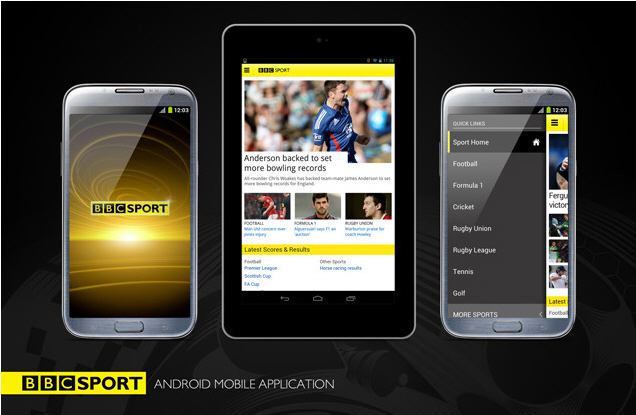
    The new BBC Sport app is compatible with devices running Android 2.2 (Froyo) and above, and has been optimized for screens up to 7-inches so should display perfectly on devices such as Google’s Nexus 7.

    Like the iOS version, the app displays top stories from the BBC Sport website, and offers live and on demand video and audio, as well as live text commentaries of major sporting events. There are pages for football (soccer for American readers), formula 1, cricket, rugby union, rugby league, tennis, and golf.

    The football coverage is naturally the most detailed, with live scores, match statistics, text commentaries, a season’s worth of fixtures, tables, and pages for teams and leagues.

    According to Keith Mitchell, Technical Lead for BBC Sport’s mobile services, planned future improvements to the app include “customizable quick links for the main navigation, team customization and home screen widgets”.

    The app is available from Google Play now and will also be made available through the Amazon App Store — good news for Kindle Fire HD owners.