Blog

  • Google No Longer Lets You Create Your Own Search Stories

    Google no longer supports its Search Stories Video Creator. A Googler broke the news in a Google Groups thread (via Search Engine Roundtable) when a user inquired about issues with the offering.

    “It is with a heavy heart that I have to announce that after three years, our engineers are no longer supporting the Search Stories Video Creator tool and it will not be returning,” says Google’s Courtney H. “As a former teacher, I used the tool in my classroom and also just for fun in my personal life. For the last few weeks, I’ve tried my best to get this feature up and running again. Unfortunately, we only have so many engineering resources and those working on this tool have been allocated elsewhere.”

    “I’ve looked around online a bit and found a few resources that can help you create videos,” she added. “They don’t serve the exact same purpose, but hopefully they can help you if you decide to create a video in the future.”

    She links to this “Create Videos” page on YouTube and an article at Free Technology for Teachers from last year, titled, “10 Ways to Create Videos Without Installing Software“.

    The Search Stories Creator service has apparently been broken for at least a couple months.

  • Leonardo DiCaprio’s Asian Market Jim Beam Ad

    Well, this exists. As a native Kentuckian, I’m happy to see Leo shilling bourbon. But as a native Kentuckian, I wish that Leo would shill better bourbon. #Kentuckyproblems.

    [via BuzzFeed]

  • Source Claims To Have Leaked ‘iPhone 5S’ Motherboard Images

    Every so often, we see sources indicating that they have leaked images of Apple’s new devices, and the iPhone 5S (or iPhone 6, or whatever you want to call it at this point) is no different. Obviously, they’re not always legit, so a grain of salt is always required.

    Recently, some assembly line photos showed an alleged look at the device, but were later reported to be “likely an iPhone 5 clone”.

    Now, iOSDoc claims to have received some new photos from a “very reliable source,” showing an A7 quad-core CPU and GPU, and 2GB of RAM.

    Alleged leaked motherboard photo

    iOSDoc says:

    The iPhone 5S will come with a new quad-core Apple A7 processor, clocked at 1.2Ghz and iOS 7. The phone’s design will probably be very much similar to the iPhone 5, getting only hardware and software improvements. iOS 7 will also come with a highly improved Siri, able to “do a lot of new cool stuff.” Unfortunately our source didn’t want to speak very much about this aspect.

    The new A7 SoC was to be expected, but we didn’t anything until now about the amount of cores or clock rate. It should be much faster than Apple’s dual-core A6, which is clocked at 1.3Ghz. A7 will also feature the PowerVR quad-core SGX554MP4 graphics processor, also featured in the 4th generation iPad. This amount of power will definitely be able to widen the possibilities of gaming, but should get us worried about battery life.

    Obviously we can can’t confirm the legitimacy of the image, so take it as you will.

  • Jerry Buss Dies: Lakers Owner Was 80 Years Old

    Jerry Buss, the self-made millionaire who owned a generous stake in the L.A. Lakers, has died of complications from cancer. He was 80 years old.

    Buss struggled with health problems in recent years and hadn’t made many public appearances after having surgery to repair blood clot damage in his legs in 2011.

    After being born into near-poverty in the ’30s, Buss eventually found his way to college, where he earned a doctorate in chemistry. From there, he moved on to real estate, and bought up several properties over the years which included residential and business buildings. Keeping the overhead low was key to his success, and he and his partner Frank Mariani did many of the repairs and upkeep themselves.

    An opportunity came in 1979 when Buss and his partners had the chance to seize a floundering basketball team. The NBA had begun to fall off by that time after seeing some success in the ’60s and early ’70s, but when Buss looked at the Lakers, he saw a diamond in the rough. Sure enough, the team shot to the forefront of the game and enjoyed success which made big names of its stars, such as Kareem Abdul-Jabbar, Magic Johnson, and Kobe Bryant.

    Of the team, Buss said, “I really tried to create a Laker image, a distinct identity. I mean, the Lakers are pretty damn Hollywood.”

    Kobe Bryant had just spoken fondly of Buss in an interview on Friday, saying, “He means everything to me. He took a chance on a 17-year-old kid coming out of Philadelphia when nobody really saw that potential. He believed in me the entire way.”

  • LGT Capital Partners Closes on CGS III at $2bn

    LGT Capital Partners has closed Crown Global Secondaries III, its third global private equity secondary fund, reaching a total of $2 billion. The program’s investor base consists of more than 80 institutions and includes sovereign wealth funds, government pension funds, corporate pension funds, insurance companies, endowments and foundations.

    PRESS RELEASE

    LGT Capital Partners is pleased to announce the final close of Crown Global Secondaries III plc (CGS III), its third global private equity secondary fund, with total subscriptions of USD 2.0 billion. The program’s investor base consists of more than 80 institutions and includes sovereign wealth funds, government pension funds, corporate pension funds, insurance companies, endowments and foundations. 50% of the investors are based in continental Europe, 19% in the Asia-Pacific region, 14% in North America, 12% in the UK and 5% in the Middle East.
    Tycho Sneyers, Managing Partner at LGT Capital Partners, comments: “Given the differentiated strategy of the predecessor fund, there was very strong demand for the offering, both from existing and new investors. We capped the fund at USD 2.0 billion, and it ended up significantly oversubscribed.”
    Ivan Vercoutere, Managing Partner at LGT Capital Partners, adds: “In an increasingly challenging and competitive market, we remain focused on building the highest quality portfolios for our investors, and continuously strive for our secondaries platform to be recognized as a most thoughtful and valuable franchise within the private equity industry. CGS III has already completed several unique transactions, continuing the successful investment strategy of our predecessor fund raised in 2009.”

    ENDS

    About LGT Capital Partners
    LGT Capital Partners is a leading alternative investment specialist with over USD 25 billion in assets under management and more than 300 institutional clients. A large, international team is responsible for managing a wide range of investment programs focusing on private markets, liquid alternatives and multi-asset class solutions. Headquartered in Pfaeffikon (SZ), Switzerland, the firm has offices in North America, Europe and Asia.
    Press contact
    Raphael Paglia
    Tel: +41 55 415 9600
    E-mail: [email protected]

    The post LGT Capital Partners Closes on CGS III at $2bn appeared first on peHUB.

  • The Obama Administration Has an Awesome New Brain-Mapping Project in the Pipeline

    In the same way that the Human Genome Project has helped improve our understanding of human genetics, the White House is hoping that a new project could help us unlock the mysteries of the human brain.

    According to a report from the New York Times, the Obama administration is set to unveil a major scientific project inside next month’s budget proposal. Called the Brain Activity Map project, the proposed venture would seek to build a vast and comprehensive map of the human brain, to better understand its processess.

    Apparently, the project would fall under the guidance of the Office of Science and Technology Policy, and could cost billions. Of course, there are no details yet about how the financing would be distributed.

    The plans, which may be announced in March, involve multiple federal agencies, private companies, and a host of neuroscientists.

    The project could kick off with the help of some high-profile tech companies. The NYT includes this little tidbit in the report:

    A meeting held on Jan. 17 at the California Institute of Technology was attended by the three government agencies, as well as neuroscientists, nanoscientists and representatives from Google, Microsoft and Qualcomm. According to a summary of the meeting, it was held to determine whether computing facilities existed to capture and analyze the vast amounts of data that would come from the project. The scientists and technologists concluded that they did.

    Of course, a project like this has implications for any number of fields including artificial intelligence, medicine (brain diseases), and more. It also has the ability to spur job growth in the scientific sector.

    Remember this part of President Obama’s State of the Union speech?

    “Every dollar we invested to map the human genome returned $140 to our economy…every dollar. Today our scientists are mapping the human brain to unlock the answers to Alzheimer’s. They’re developing drugs to regenerate damaged organs, devising new materials to make batteries 10 times more powerful. Now is not the time to gut these job-creating investments in science and innovation.”

    Maybe an early tip to the upcoming Brain Activity Map? Projects like this can take a while to get going after they’re announced and worked into the budget. Plus, it’s being referred to as a “decade-long” project. So let’s get on with it. Yeah, Science.

  • The Inside Story on Theodore Roosevelt’s Official Portrait

    For Presidents Day, we thought we'd do a bit of catching up with Bill Allman, the White House curator. He took us to the East Room of the White House and gave us the story on Theodore Roosevelt's official portrait.

    President Roosevelt served in the White House from 1901 to 1909, and even in keeping with the standard for activity for commanders in chief, our 26th president was famously busy. That made finding time to sit down so that John Singer Sargent could do his work difficult.

    Hear how this portrait came about:

  • This Smart Trash Can Makes Sure You Never Miss A Basket Again

    There’s something inherently fun about trying to throw wads of paper into a trash can from across the room. As kids, we held impromptu trash basketball tournaments to see who was the true master of trashketball. Now one Japanese inventor wants to take all the skill and challenge out of the revered “sport.”

    At the most recent Japan Media Arts Festival, one inventor walked away with an Excellence Award for his smart trash can. It’s basically a trash can on wheels that communicates with a PC connected to Microsoft’s Kinect. The Kinect detects where the trash is, and moves the trash can to catch the object before it hits the ground.

    This technology is being used in trash cans for now, but it has the potential to be used in other applications as well. There’s an increasing need for autonomous objects that can move and react to the world around them. The smart trash can is just one application made possible by the creation of autonomous objects.

    Unfortunately, trash basketball may never be the same again if this takes off around the world. I weep for a generation that doesn’t know the shame of losing a game of trash basketball, and having to pick up all the trash from the floor as punishment.

  • Downton Abbey: Carson Wants To Marry Mrs. Hughes

    Downton Abbey fans in the U.S. got to see the season finale of the show on Sunday night. Today, PBS Masterpiece is sharing a video of the cast talking about the episode.

    While it may or may not happen, it’s worth noting that Jim Carter, who plays Carson on the show, says he believes that Carson should marry Mrs. Hughes. I’m sure a number of fans would enjoy that sentiment.

    “I love the scenes when Carson and Mrs. Hughes get together,” he says. “You don’t often see behind the mask with Mr. Carson, and just occasionally the mask slips, and you just get a little glimpse of the interior life, and you get that with when he’s with Mrs. Hughes. Everybody wants Carson and Mrs. Hughes (quietly) to get together. Even if they were married, he’d still call her Mrs. Hughes wouldn’t he?”

    “Carson has to marry Mrs. Hughes,” he adds. “Write to [show creator] Julian Fellowes. It’s got to happen.”

    Watch Downton Abbey: The Cast on Season 3 Episode 7 on PBS. See more from Masterpiece.

    Now check out comedian Patton Oswalt’s twitter recap of the latest episode.

  • PlayStation Vita Price Drops in Japan

    For the handheld console market, price is everything. Both the games and the portable consoles themselves cost less than their living-room counterparts.

    Both the Nintendo 3DS and the PlayStation Vita were considered overpriced when they launched, and both consoles failed to sell the way Sony or Nintendo would have wanted. Nintendo promptly dropped the price of the 3DS last year, leading to increased sales and making the 3DS the most popular console in Japan. Sony, on the other had, had maintained that their price was fair for the Vita’s powerful on-the-go gaming.

    Today, though, Sony has finally capitulated to the demand of the portable console market and the pressure from Nintendo. The company has announced that it is dropping the price of the PS Vita in Japan from ¥ 29,980 (around $323) to ¥19,980 (around $215).

    This pricing announcement comes just days before Sony is expected to announce its newest PlayStation console at an event in New York on Wednesday, February 20. The hype for that event is immense, and a Vita price drop for the U.S. and Europe can now be added to the list of possible announcements for the 20th.

    Even if a worldwide price drop is imminent, U.S. gamers shouldn’t expect a $100 price drop for the Vita. The console is already relatively less expensive in the U.S. than in Japan. A $50 price drop is more likely, which would put the Wi-Fi model of the console at around $200 – the same price as Nintendo’s 3DS XL.

  • Doing the Right Thing or Making a Profit – Which Comes First?

    If a company “does the right thing” when it comes to environmentalism, social justice, or some other public issue, does the motivation matter?

    There has been much talk about creating social or shared value in recent years. Harvard Business School professors Michael Porter and Rosabeth Moss Kanter are among those who have asserted that companies should care about their impact on employees, communities, and the planet as they pursue profit. Other voices such as Eric Lowitt, author of The Future of Value, have outlined how companies can create value by pursuing sustainability.

    The deeper question for leaders is which is the cart and which the horse? Does one pursue social responsibility because it is profitable, or does one endeavor to be profitable with a business model that explicitly incorporates some version of social responsibility? Does it matter?

    In my own work, I have come across many businesses that embarked on their journey toward social responsibility because it was a way to save money or increase revenues. I have advised people to fit the sustainability to the culture of the organization: in a growth-oriented firm, highlight the market-expanding opportunities; in a cost-conscious company, talk about saving money. This is a basic tenet of persuasiveness.

    The question of motive was posed by Mitch Tyson, a serial high-tech CEO I met at a meeting of the Boston Area Sustainability Group. Tyson was provocative. He said that there was a time when he did not care about why. His particular passion was clean energy, and he was happy so long as it got greater traction. Over time, however, he changed his mind. He came to realize that why is an essential part of the equation for long-term success and impact.

    Profit or cost-savings as the primary motive has an obvious weakness: as soon as it becomes more profitable or less costly to do something that is not socially responsible, one would expect the company to pursue that path. A central tenet of those who advocate for shareholder capitalism is that profit should be the only goal of a business: a firm’s only obligation is to generate returns for its shareholders. Under this logic, the only reason to pursue a social goal is the belief that there will be a positive financial return associated with that activity.

    That evening, Tyson put this question in the context of providing health insurance to employees — a topic much in the news. Tyson said that he could have decided to provide health insurance for his employees because insured workers tend to be healthier, and healthy workers perform better and are absent less often. Instead, he did it because he felt it was simply the right thing to do.

    Tyson said that he thought about what he would say to his own family if asked about why his company insured its workers. If it was for purely selfish reasons, that would send one message. If it was because it was the right thing to do, that would send a very different message.

    He thought about the ripple effect of that message on his family and the families of his employees. He understood that for clean energy to someday become the norm, enough people would have to be willing to look at various alternatives, weigh both value and values, and opt for the one that was the right thing to do.

    I see this debate as part of the most critical job of leaders: to establish clarity about purpose, values, and the business model. Purpose is about articulating what it is you are trying to build. Values define how you will pursue that purpose. The business model spells out how the organization will remain financially viable, delivering sufficient short-term returns to investors while establishing a platform for long-term success. Broadly speaking, for-profit leaders tend to put the greatest emphasis on the numbers; nonprofit leaders at defining purpose, or mission. Clarity about all three — purpose, values, and the business model — is essential for every organization if its leaders and followers alike are to know what is the right thing to do.

  • Tech startups are the luckiest startups: A view from outside the bubble

    In Silicon Valley and the tech world, building a startup is almost seen as a rite of passage. Working at a startup is commonplace, and not just acceptable but venerated. That culture has brought a lot of innovation and perhaps a few silly ideas to the world, but sometimes it’s worth it to step outside that bubble to see what can be learned from cultures in other entrepreneurial enclaves.

    I had <such an opportunity at the Toy Fair in New York last week during its Launchpad section. It featured roughly two dozen entrepreneurs who built a prototype toy, a website and paid $1,900 for a 6-foot long table at the show. Several people showed off board games, figurines, including the above pictured Obos and a variety of other items waited for a distributor or a buyer to discover them.

    While talking to about eight of the assembled entrepreneurs I realized something: Tech entrepreneurs have it almost easy.

    Yes, starting any company is hard. It requires a leap of faith on the part of the entrepreneur and his or her family. But outside of the tech world, the networks are harder to find, the capital networks are less geared toward potential failure and the exit environment is very different. For example, at the Toy Fair, only a quarter of the people I spoke with had quit their day jobs to work full time on their toy. Most funded their efforts out of savings or their own pockets. Venture capital and angels didn’t really come into play in this world, and only a few had bank loans.

    Sarah Lee, the creator of AppPalz, said that she and her husband had decided to keep their cars around a bit longer so she could spend the roughly $20,000 developing her product. Unfortunately, the shipment of AppPalz got stuck in customs and didn’t make it with her to the show. Lee had only two prototypes, but said she already had garnered some interest for the $13 toy.

    An AppPalz in action.

    An AppPalz in action.

    Catherine King, the creator of a book and stuffed reindeer concept called Santa’s Glee, said the book was created after her husband lost his job (he’s since found another). Amin Swessi, who developed a $14 pencil-shaped stylus for touch screens, is an art teacher who built this product after watching his students struggle to control their finger-drawings on iPads. He’s not planning on leaving his day job anytime soon.

    A reality in the business appears to be that a successful product doesn’t mean a successful company — or even provide you with the notion that you might be able to quit your day job. While most of the people I spoke to hoped their toys would become hits or attract attention, they weren’t thinking of an IPO. Mostly, they wanted to put their ideas out in the world, and if they could make a living doing it, they would be ecstatic.

    The No. 2 Stylus.

    The No. 2 Stylus.

    An entrepreneur in toys still has things in common with her tech brethren.

    Yet even if the money wasn’t quite as available on the financing side or the exit side, two qualities inherent to these folks stuck out as similar to the best entrepreneurs I know from any industry: their passion and willingness to band together to help a fellow entrepreneur out. Lee told me she didn’t mind spending a full Saturday (she has a day job) creating a promotional video because it “didn’t feel like work when you are doing it for yourself.”

    Others have similar tales, such as William Walker, who brought his board game to the show because he wanted to help kids learn how to eat healthier after a lifetime in medical sales noticing the increase in childhood obesity. And for the most part these entrepreneurs were green. Walker said he was thrilled to be at the show even if no one picked up the game because he was able to connect with his fellow inventors.

    Flip2BFit board game.

    Flip2BFit board game.

    Others said the same thing. Every single person I spoke with there mentioned how awesome it was to find like-minded people so they could share advice and camaraderie — something entrepreneurs in the Bay Area and even other tech-heavy locales may take for granted. Heather Parsi, the CEO of Flip2BFit, a board game designed to promote exercise, had quit her day job as an outsourced manufacturing consultant to pursue her game. She had already scored a distribution deal at the show, but was thrilled to be helping out the others at the launchpad with tips related to getting their products into production.

    Between their passion, their hunger for peers and my experience with friends outside the tech startup world, I realized that what Silicon Valley and the tech set often take for granted is what makes the community so successful.

    It’s not that it’s not hard to be an entrepreneur in tech; but it’s a much easier journey to undertake when so many around you have done it and you can rely on a supportive community of press, investors and peers to help you out.

    Photos taken by Rani Molla.

    Related research and analysis from GigaOM Pro:
    Subscriber content. Sign up for a free trial.

  • Downton Abbey Makes Patton Oswalt Want To Set An Arby’s On Fire

    There are a lot of people talking about Downton Abbey on Twitter today, now that PBS has run the season finale here in the U.S. While many had already seen the episode, a lot of American fans only got the opportunity to do so on Sunday. While I won’t spoil it here, suffice it to say, something big happened.

    Comedian Patton Oswalt tweeted his way through the episode on Sunday night. Below is the majority of his recap, which ends with him drinking, crying, wanting to set an Arby’s on Fire and watching the movie Battleship. Beware of spoilers and language if you’re easily offended.

    From there, Oswalt proceeded to tweet his way through Battleship. Do yourself a favor and view his timeline.

  • Cardinals Barred from Twitter Use as They Select the New Pope

    Twitter-using Cardinals are going to have to shutter their devices when they all convene to select a new Pope to replace the outgoing Benedict XVI.

    The 117 Cardinals who will participate in the upcoming Papal Conclave will be barred from tweeting the moment they sit down to make the decision. Like a sequestered jury, the Cardinals will be prohibited from have access with the outside world – and this of course includes Twitter.

    According to the Catholic News Service, only 9 of the 117 “red-vested princes of the church who are eligible to vote for a new pope” operate Twitter accounts. They range in influence from small to large (in terms of followers). For instance, Spanish Cardinal Lluis Martinez Sistach of Barcelona has just over 2,000 followers.

    On the other hand Cardinal Timothy Dolan, who was named Archbishop of New York by Pope Benedict,has over 81,000 followers and is an very active Twitter presence.

    Twitter hit the Vatican in a big way in December, as Pope Benedict himself began tweeting his daily messages to millions of followers.

    Some Cardinals have already been tweeting about the situation and the upcoming vote.

    It looks like Cardinal Mahony and a few others will have to silence their Twitter-thumbs for at least a few days (maybe) in March.

    [Catholic News Service]

  • Russian companies next stop for Euroclear

    The excitement continues over Russian assets becoming Euroclearable.   Euroclear’s head confirmed last week to journalists in Moscow that corporate debt would be the next step, potentially becoming eligible for settlement within a month. Russian equities are set to follow from July 1, 2014.

    What that means is foreign investors buying Russian domestic rouble bonds will be able to process them through the Belgium-based clearing house, which transfers securities from the seller’s securities account to the securities account of the buyer, while transferring cash from the account of the buyer to the account of the seller.

    The Euroclear effect in terms of foreign inflows to Russian bonds could be as much $40 billion in the 2013-2014 period, analysts at Barclays estimated earlier this month.  Yields on Russian government OFZ bonds should compress a further 50-80 basis points this year, says Vladimir Pantyushin, the bank’s chief economist in Moscow, adding to the 130 bps rally in 2012. Foreigners’ share of the market should double to 25-30 percent Pantyushin says, putting Russia in line with the emerging markets average.

    The next round will be the story of corporate bonds,  he reckons.

    A roughly 100 billion-rouble ($3,3 billion) market where foreigners own less than 10 percent, Russian corporate bonds stayed flat last year even amid the roaring rally on government bonds. That blew out their yield spreads over the OFZ curve to 150-200 bps compared to 60-100 bps before the Euroclear-linked rally took off. Pantyushin expects that spread to compress back to the norm, first driven by Russian banks searching for yield, and second, when foreigners surge in.

    The significance could be broader, however. With so much demand for local rouble paper, Russia could decide to issue less dollar debt this year (it has already said a planned $7 billion bond is unlikely to come in the next three months). Second, Russian companies will benefit if their borrowing costs fall.  Pantyushin says:

    Our estimate is that foreign demand can substitute $10-$12 billion a year and potentially up to $20 billion, which local banks can direct into lending and corporate bonds. Last year for the first time consumer lending was on par with corporate lending.

    Ed Conroy, a fund manager at HSBC Global Asset Management, reckons that Russian stocks, in general unpopular with foreign investors, may start benefiting as well.  Currently a lot of foreigners balk at buying Moscow-listed stocks because in the absence of a central depositary, they must bear the credit risk.  Once stocks become Euroclearable in 2014, the 20 most liquid Moscow-listed companies will be tradable on what is known as “T + 2″ basis, meaning the deal must be settled within two days of the transaction taking place.  If more foreign investors buy locally, it should in turn allow the privatisation agency to float state-run companies in Moscow rather than London. But even before that happens, there could be a spill over from bonds’ euroclearability, Conroy said:

    Allowing more people to buy government debt will cut the cost of capital and will push down the cost of equity as well. The cost of equity is between 11-16 percent, that’s a very big risk premium.

  • Halo Creators Unveil Their New Game, Destiny

    When Bungie abandoned the Halo franchise, gamers worried that the future of the series would be in jeopardy. Luckily, Halo landed in the capable hands of 343 studios, and the legend of Master Chief will continue for years to come.

    What could possibly entice Bungie into giving up Halo, its baby and one of the most successful game series ever? This week the studio finally revealed what it has been working on for these past few years.

    Destiny is the next title from the studio, which released a short video documentary filled with concept art, story teasers, and a very few second-long snippets of gameplay.

    Destiny will be a first-person shooter and feature science fiction elements such as space ships, aliens, and future technology. It will take place on a post-apocalyptic Earth in which humans live in one city that was saved and is protected by a giant sphere called “The Traveler.”

    Though the world-building stuff sounds similar to Halo, the gameplay will not put characters into the shoes of “The One.” Players will instead take on the role of a guardian of the human city. Three different character classes are available, the Titan, the Hunter, and the Warlock. Warlocks will use “magic” derived from the power of The Traveler.

    The game will be always-online and feature multiplayer gameplay that shares qualities with MMO gaming and Borderlands-style co-op. Players will group up to take on dungeons such as derelict space ships and moon bases. Bungie expects players to be playing Destiny, or its sequels or updates, for at least the next ten years.

  • Pistorius Cricket Bat: Rumors Of Bloody Evidence Abound

    Oscar Pistorius is facing some serious charges after the death of his girlfriend Reeva Steenkamp last week, despite initial reports that the Olympics star accidentally shot her thinking she was an intruder.

    Details of that night are sketchy at best because police don’t want to say anything while the case is open, but rumors are flying from those who claim to have police “sources” and say that a cricket bat covered in blood was found at the scene. There have also been reports that Steenkamp was found with her skull crushed, but most reports agree that she was apparently shot through a bathroom door.

    As with any high-profile case, the stories don’t seem to match up just yet. Reports are being printed without aid from the local police, so for now there aren’t many solid facts to go on. Unfortunately for the athlete, it appears that early stories about the shooting being an accident don’t hold up.

    “The sources agreed that the state had a ‘rock-solid’ case against the popular athlete,” South African news source City Press said.

    If Pistorius pleads guilty to the charges of murder brought against him, he could face at least 20 years in prison.

  • Microsoft Confirms Windows Blue Via Job Posting

    Soon after Windows 8 came out, it was rumored that Microsoft would move the operating system to an annual release cycle called Windows Blue. It was to be a cheap, inexpensive option that would see Windows becoming more like Apple’s OS X. Nothing was confirmed, however, and we were left waiting for official confirmation. Now MIcrosoft themselves have confirmed the new OS in the most unlikely of places.

    The Verge reports that Microsoft recently put up two job postings that explicitly referred to Windows Blue. The postings were looking for software development engineers that would work to bring Windows Blue to life later this year. The job postings have now been taken down, but The Verge managed to grab a snippet from one of the job descriptions:

    We’re looking for an excellent, experienced SDET to join the Core Experience team in Windows Sustained Engineering (WinSE). The Core Experience features are the centerpiece of the new Windows UI, representing most of what customers touch and see in the OS, including: the start screen; application lifecycle; windowing; and personalization. Windows Blue promises to build and improve upon these aspects of the OS, enhancing ease of use and the overall user experience on devices and PCs worldwide.

    The other job posting confirms that Windows Blue will be moving well beyond the desktop experience. Microsoft was looking for a senior development lead to work on building apps for Windows Phone Blue. It’s reported that the move to Windows Phone Blue essentially confirms that Windows Blue will be moving across all of Microsoft’s software and services. It wouldn’t be surprising to see Windows Blue also come to the next Xbox if rumors of it running Windows 8 are to be believed.

    Still, we have no idea what Windows Blue exactly is, or when we’ll be seeing it. The last rumor pegged it for a mid-2013 release, and that still seems like the most plausible. It’s still unknown, however, if Microsoft will offer the cheap upgrades to current Windows 8 owners, or if it will offer a cheap upgrade to Windows 8 for those on Windows Vista and 7 in a bid to increase Windows 8′s marketshare.

  • The Bridge Review (PC)

    Great puzzle games with personality and charm are quite rare, as many prefer just to turn themselves into platformers and offer only the most basic of challenges.
    The Bridge, however, isn’t such a title, as the downloadable game made by independent developers Ty Taylor and Mario Castañeda consists of a series of puzzles that start out relatively easy and th… (read more)

  • Who’s the guy in the new Apple ad? Meet Mathieu Lehanneur

    It’s alive.

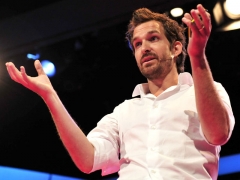
    The new Apple iPad ad, titled “Alive,” debuted last night and features a gorgeous glimpse of the recently updated TED mobile app. The spot also highlights TED speaker Mathieu Lehanneur, a designer who looks to science and nature for inspiration for problem-solving objects. Lehanneur is the man behind the living air purifier Andrea– a space age terrarium that uses plants to metabolize toxins in the air — and Local River, a mash-up of an aquarium and herb garden for locavores. His designs marry the living and the synthetic in order to tackle environmental problems.

    Mathieu Lehanneur demos science-inspired designMathieu Lehanneur demos science-inspired design

    In his talk from TEDGlobal 2009, Lehanneur demoed a handful of his most fascinating creations — like a rolling ball that neutralizes noise pollution and a week-long antibiotic course all in one layered pill. But what has Lehanneur been working on since? According to his website, his latest invention is Isaac & Graham (named to honor Sir Isaac Newton and Alexander Graham Bell), an emergency phone for hikers that generates power by the dropping of a weight. In addition to a solo show at the Grand Hornu Museum in Belgium, Lehanneur has also designed a WikiBar for The Lab Store in Paris and Take Time!, a creation that is halfway between a pocket watch and a pendulum.