Blog

  • Cruise Ship Bus Breaks Down: The Nightmare Won’t End

    For thousands of passengers on the Carnival cruise line that had to be towed to shore this week, a vacation turned into a miserable, stinky experience that ended after five long days when the ship made it to shore in Mobile, Alabama.

    But for some, the horrible week just won’t end. Passengers from the ship were given the option to either board a bus to be ferried to New Orleans or Houston–where they could find a hotel room if necessary–or to be put up in a hotel in Mobile to wait for friends or family to come pick them up. Those who chose to go to Houston were not happy early this morning when their bus broke down on the side of the road for nearly an hour.

    “My son Jacob and I, when we pulled over and realized the bus was broken, we just started laughing,” passenger Clark Jones said. “People were giggling. Other people were not happy at all. I don’t know what you can do about that. Buses break down all the time, probably more often than ships do.”

    Jones also tweeted a photo from aboard the miserable bus.

    cruise ship bus breaks down
    Twitter

    The ordeal was over after a new bus came along to pick up the stranded passengers, but for most, it couldn’t have come soon enough. Carnival has reportedly reimbursed each passenger for their trip and handed out free vouchers for another cruise, although it’s doubtful many will take them up on the offer.

    Image: Rian Tipton/People

  • Australian Private Equity & Venture Capital Returns Advance

    A key private equity and venture capital index measuring returns in Australia rose by 2.90% in the third quarter of 2012, according to a report from the Australian Private Equity and Venture Capital Association. For the 12 months ending September, the index rose by 6.44%, but trailed the S&P/ASX 300 Index’s gain of 14.46%.

    PRESS RELEASE

    Australian Private Equity Continues to Post Steady Returns in Q3 2012

    BOSTON, MA and SYDNEY, AUSTRALIA–(Marketwire – February 06, 2013) – The Cambridge Associates LLC Australia Private Equity and Venture Capital Index (C|A Australia Index) rose by 2.90% in the third quarter of 2012, according to the latest quarterly report released by The Australian Private Equity and Venture Capital Association Ltd (AVCAL) today.

    For the 12 months ending 30 September 2012, the C|A Australia Index rose by 6.44%. Over the same period, the S&P/ASX 300 Index surged to record a return of 14.46%.

    However, over the longer 3- and 5-year horizons the C|A Australia Index outperformed the public equities index, rising by 8.33% and 2.97% respectively on an annualised, net of fees basis compared to the S&P/ASX 300 Index’s 1.69% and -3.61% annualised returns over the same horizons.

    In the twelve months leading to 30 September 2012, a total of AU$2.2B was distributed back to LPs while $2.3B was drawn down.

    Australian Private Equity & Venture Capital Association (AVCAL) CEO Dr Katherine Woodthorpe said, “The Index continues to demonstrate how private equity as a whole has consistently generated stable returns over the long term compared to the more volatile listed markets, on an after-fee basis.”

    Eugene Snyman, Managing Director at Cambridge Associates’ office in Sydney, Australia, said: “While the strong performance of both public and private indices in the third quarter is good news to investors overall, we continue to see Australian private equity and venture capital offering greater stability long term.”

    The report is published on the AVCAL website www.avcal.com.au.
    Cambridge Associates LLC Australia/AVCAL Index Returns for the period ending 30 September 2012

    —————————————————————————-
    Index (A$)          1-Quarter  YTD   1-Year  3-Year  5-Year  10-Year
    —————————————————————————-
    Cambridge Associates LLC
    Australia Private Equity
    & Venture Capital Index
    (A$)(1)                      2.90     4.12   6.44    8.33    2.97    7.06
    —————————————————————————-
    Cambridge Associates LLC
    Australia Private Equity
    & Venture Capital Index
    (US$)(1)                     4.34     5.51  14.00   14.23    7.14    12.90
    —————————————————————————-
    S&P/ASX 300 Index             8.75    16.52  14.46    1.69   -3.61    8.57
    —————————————————————————-
    S&P/ASX Small Ordinaries
    Index                        7.25     5.97   3.83   -0.91   -7.50    7.84
    —————————————————————————-
    UBS Australia Bank Bill
    Index                        0.90     4.15   4.34    4.55    5.12    5.40
    —————————————————————————-
    UBS Australian Composite
    Bond Index                   1.98    10.09   9.55    8.64    8.28    6.60
    —————————————————————————-

    The Cambridge Associates LLC indices are an end-to-end calculation based on data compiled from 61Australia private equity and 22 Australia venture capital funds, including fully liquidated partnerships, formed between 1997 and 2012. 
(1) Pooled end-to-end return, net of fees, expenses, and carried interest.
Sources: Cambridge Associates LLC, Bloomberg L.P., Standard & Poor’s, Thomson Reuters Datastream, UBS AG and UBS Global Asset Management.

    About Cambridge Associates

    Founded in 1973, Cambridge Associates is a provider of independent investment advice and research to institutional investors and private clients worldwide. Today the firm serves over 900 global investors and delivers a range of services, including investment consulting, outsourced portfolio solutions, research services and tools (Research Navigator(sm) and Benchmark Calculator), and performance monitoring, across all asset classes. The firm compiles the performance results for over 5,000 private partnerships and their more than 65,000 portfolio company investments to publish its proprietary private investments benchmarks, of which the Cambridge Associates LLC U.S. Venture Capital Index® and Cambridge Associates LLC U.S. Private Equity Index® are widely considered to be among the standard benchmark statistics for these asset classes. Cambridge Associates has more than 1,000 employees serving its client base globally and maintains offices in Arlington, VA; Boston; Dallas; Menlo Park, CA; London; Singapore; Sydney; and Beijing. Cambridge Associates consists of five global investment consulting affiliates that are all under common ownership and control. For more information about Cambridge Associates, please visitwww.cambridgeassociates.com.

    About AVCAL

    AVCAL is the voice of venture capital (VC) and private equity (PE) in Australia. Our membership includes 54 domestic and international VC and PE managers active in Australia as well as pension/super funds, service providers and other stakeholders. AVCAL is active in communicating, researching and advocating the significant contribution that VC and PE makes to the broader Australian economy. Australian VC and PE firms manage over $29bn in funds under management. They provide capital and expertise to companies in a range of business life-cycles: start-ups, SMEs and large organisations. AVCAL VC and PE members focus on enhancing innovation, productivity, entrepreneurial activity and sustainability in the companies they invest in. Australian VC and PE firms back more than 500 companies which employ over 100,000 full-time equivalent jobs. Since records began in the late 1990s, the industry has distributed around AU$16 billion to its limited partner investors which include pension/super funds, institutions and governments.
www.avcal.com.au www.twitter.com/avcal1 www.linkedin.com/in/avcal

    The post Australian Private Equity & Venture Capital Returns Advance appeared first on peHUB.

  • Microsoft takes heat for ‘draconian, obtuse’ Office 2013 license terms

    Microsoft Office Criticism
    If you buy a license for Microsoft Office 2013, be warned: You may only be allowed to use it on one machine, no matter the circumstances. Both InfoWorld’s Woody Leonhard and The Age’s Adam Turner have done good jobs of combing through the details of Microsoft’s (MSFT) latest Office licensing terms and have found that Office users can get “a perpetual license for the Office 2013 programs” that only covers one computer. This means that if your PC breaks and you have to buy a new one, you may not be able to transfer your Office 2013 license to your new machine and may have to pay for it all over again.

    Continue reading…

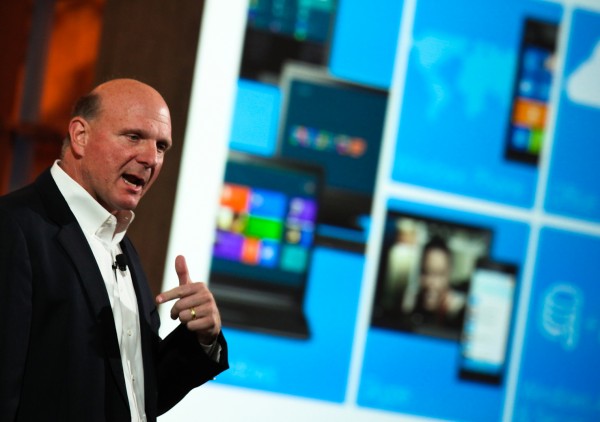
  • Steve Ballmer should step up, or ship out

    Fifteen days using Surface Pro as my primary PC, I must say that I really, really like the tablet. Windows 8, the same. Ditto for Bing and Internet Explorer. I’m no stranger to using Microsoft products or services. But I am new to them being presented and consumed the way the company intends. The experience is refreshing and exhilarating, yet depressing. Who will know, with so much attention going to Android and iOS devices, or nimbler competitors offering more compelling products or services at faster pace?

    Microsoft’s problems aren’t new, and that is the problem. This morning I reread my December 2009 post: “Microsoft isn’t losing its consumer edge, it was game over long ago“. I’m disturbed how little has changed, so much that, except for the lead paragraph, I could repost with new headline and the content would still be relevant. I will lift some parts here, as I offer, for the umpteenth time, remedies to Microsoft’s woes.

    Microsoft in Context

    I sympathize with Microsoft CEO Steve Ballmer’s plight. He assumed duties during two antitrust investigations, ran operations during two major recessions and had the misfortune of inheriting a company at the pinnacle of dominance, when the major business was reselling to existing customers rather than rapidly expanding. During his tenure, Microsoft tried to open new categories, like HailStorm web services or Tablet PC early in the century, only to fail but see competitors like Apple and Google succeed.

    Meanwhile the stock is stuck at 2000 levels and there is perception that Microsoft is a has-been incapable of competing in the so-called post-PC era. Perception can be fixed by marketing, and post-PC is a lie — a fiction created by analysts, Apple and Apple apologists. We are at the start of the contextual cloud computing era. Rather than be the central hub, the PC becomes one of many devices connected to the cloud. The PC doesn’t disappear.

    Microsoft execs and product managers understand context very well. For example, the company made defining work and home usage a product development and marketing priority more than a decade ago. How you use the tech changes based on context and role.

    Something is lost in all the PC Armageddon chatter: Microsoft is still one of the most-profitable companies in the world, and products like Azure, hosted server software and Office 365 are rightly primed for delivering meaningful contextual and cloud solutions. Microsoft’s big problem is mobile, where competing operating systems rack up share and cut out the company’s platform. Ballmer should never have let it come to this. He needs to stop living in La La Land and act, or step aside and find someone who will. I still believe in him.

    Sadly, much of the advice that follows, I’ve offered before. Many times. Will someone finally pay attention?

    Microsoft Must…

    1. Make influencing standards top priority. Microsoft has abandoned the fundamental principles that made it the most successful software company of the last two decades and ensured its software would be the most widely used everywhere. The company established Windows as a technology platform that became the standard around which developers and other partners supported products. In the early days, the approach was one of necessity: Maintaining standards compatibility with the IBM PC.

    Microsoft cofounder Bill Gates understood early on the importance of controlling standards and also file formats. In the early 1980s, Gates put Charles Simonyi in charge of productivity applications development. Early work done by the father of Microsoft Office achieved two important goals by the mid 1990s:

    • Established format standards that resolved problems sharing documents created by disparate products
    • Ensured that Microsoft file formats would become the adopted desktop productivity standards

    Format lock-in helped drive Office sales throughout the late 1990s and early 2000s — and Windows along with it. Businesses needed Office to share documents and to maintain backwards compatibility with a growing amount of their valuable information being stored in Microsoft file formats.

    In a surprisingly short span of time, Microsoft has lost control of standards and formats outside the enterprise. The company has reached a critical juncture that executives seem unable to comprehend. Under Ballmer, standards aren’t high-enough priority. Microsoft has lost leverage, while rivals like Google dictate web standards that favor its products and services.

    2. Become THE middleware company. Microsoft should shift some, even a large amount of its focus, from platforms to glue — products and services that bind any platform to its server and datacenter software and services and major applications, principally from Office System. That’s how Microsoft solves the mobile problem.

    Middleware dominance can help preserve Microsoft products that are adopted standards and establish new ones. The company should start by ramping up mobile app development for competing platforms — meeting Google feature for feature and go beyond. Google successfully pursues such strategy now, and with tight integration across products. The best mobile apps on Android or iOS should be from Microsoft, not Apple or Google, and leverage the established enterprise stack. Microsoft already offers some existing excellent mobile apps. They need to be exceptional, like those for Windows 8 Modern UI, on Android and iOS.

    At the same time, Microsoft should seek to make its software the defacto standard for managing BYOD. The company already owns the enterprise. Leverage that by providing the best applications and tools for managing devices, like smartphones and tablets, that employees bring to work or IT deploys. If Microsoft doesn’t, competitors will. Google’s decision to stop licensing Exchange ActiveSync is all about influencing synchronization standards and inserting its services into BYOD middleware management.

    3. Redefine search. Microsoft’s failure in search should be a CEO-sacking offense. The Yahoo deal didn’t dent Google’s overwhelming search share lead. Now that a Googler runs Yahoo, early termination of the Microsoft agreement is nearly certain. Divorce will cut Bing’s effective search share nearly in half. Ballmer and team must act to preserve Yahoo or go beyond it.

    Engage Bing search deals everywhere, and pay to get them. Wherever Google goes, like Firefox or iOS, Bing should be instead. The Facebook relationship is hugely important. Bing should be the glue for all search on the social network.

    Meanwhile, Microsoft, which was a pioneer in so-called New User Interface technologies, let Google leap ahead. Google Now and voice search are killer apps. Microsoft has talked about search as answers to questions for a decade, but Google gives them instead and where they are needed most — mobile. Microsoft needs a “Bing Me” service pronto that is available for all operating systems, using NUI.

    4. Cut deal with Apple for Office, but cut out Google. Microsoft and Apple have a long history. Word started out on Macintosh, for example. Office 2013/14 — or optimized-Office 365 — for iPad is a must. But not for Android. Microsoft should get something in return: Bing replacing Google as iOS search engine.

    Apple needs Office to get iPad into the enterprise, so there is mutual need to make search part of the deal. Microsoft is better off with iPad encroachment than Android tablets. Google has fierce enterprise ambitions, while Apple is more ambivalent (interest is more selling devices). Office app and/or cloud would give more enterprises reason to choose iOS over Android, acting as floodgate to adoption of the latter.

    5. Encourage internal startups. Microsoft product development cycles are too long and they feel even longer with Google cranking out new stuff every day. Look how far and fast Android, Chrome and Chrome OS have come since Windows 7 started beta testing four years ago. Meanwhile Apple and Google create new categories, while Microsoft has none.

    But look back. Many of Microsoft’s best, mid- to-late-Noughties products or services came from incubation projects. Some are mainstream today, like SkyDrive. But Microsoft killed off most internal startups following the September 2008 stock market crash.

    Microsoft must bring them back and focused on mobile and the cloud. Incubation groups should operate like mini-startups, free to develop unfettered by any requirement to connect any of their work to any other Microsoft product, particularly Office or Windows. Let them run free, run wild, wildly innovate. Reward innovation, with pay incentives and other goodies. Appoint a chief startup officer, to whom employees can submit their projects, getting them outside stifling bureaucracy and mid-managers’ self-preserving priorities. Empowered employees will produce. Microsoft just needs to let them.

    Microsoft needs someone internally responsible for encouraging internal incubation projects and bringing them to market — outside the normal management structure.

    There needs to be a fairly free-flowing process allowing employees to bring ideas to the CSO and get funding for proof of concepts, at the least. The CSO, answering to Ballmer, should have authority to spin-off new product groups as well. But more immediately he or she needs authority to create small product groups within Microsoft, focused on getting new innovations to market faster and without obligatory ties to core products like Office or Windows.

    However, Microsoft should encourage, and reward, innovative middleware projects that make existing applications stack, cloud, datacenter and server software more valuable and those that are contextually relevant.

  • Facebook Throws Its Weight Behind LGBT Tax Equity Legislation in California

    Facebook is throwing its weight behind a proposed California law that would provide tax equity for the state’s LGBT couples.

    AB 362, proposed by Democratic Assemblymember Philip Ting (San Francisco), would provide tax relief for employees who receive reimbursement from their employer for federal taxes they paid on healthcare benefits provided to their same-sex partner and dependents.

    The law would apply to those who work for public entities or participating private companies who currently choose to reimburse for federal taxes paid on benefits received for their partners – those like Google and Facebook.

    And it’s Facebook that’s the first to public suppor the measure.

    “Facebook today announced its support of legislation introduced by California State Assemblymember Phil Ting that would provide tax relief for employees who receive reimbursement from their employer for federal taxes they paid on healthcare benefits provided to their same-sex partner and dependents. Facebook Director of Compensation & Benefits Tudor Havriliuc joined Assemblymember Ting and San Francisco Supervisor Mark Farrell at a press conference to unveil the legislation. Parity in healthcare coverage is among a host of equitable benefits Facebook provides all of its employees,” said Facebook in a post on its LGBT@Facebook page.

    “At the heart of this issue is a question of fairness for same-sex couples,” said Ting. “The federal policy to tax their benefits is discriminatory, and the last thing the state of California should do is make it harder to remedy the injustice by taxing the reimbursement of these costs,” he added.

    Facebook, as you probably know, is one of the most pro-LGBT companies in tech. Google could also claim that title, as well.

  • Harrison Ford Rumor: He’ll Play Han Solo Again

    Harrison Ford, who famously played Han Solo in the original “Star Wars” series, is set to reprise the role for the new movies according to several sources.

    The rumors appear to have started with a blurb about the new films on Latino Review, where it was reported almost casually that Ford will be in the new movie Disney has planned, “Star Wars: Episode 7″. And while nothing is official yet, fans of the films are insanely excited about the possibility of seeing Solo once again.

    Mark Hamill, who played Luke Skywalker, said in an interview last year that he and Carrie Fisher had met with George Lucas regarding the new films, but didn’t go into detail as to whether or not they would be playing older versions of Luke and Leia. The news came after Lucas made the announcement that he’d sold Lucasfilm to Disney for the whopping sum of $4 billion.

    About the sale, Lucas said, “For the past 35 years, one of my greatest pleasures has been to see Star Wars passed from one generation to the next. It’s now time for me to pass Star Wars on to a new generation of filmmakers. I’ve always believed that Star Wars could live beyond me, and I thought it was important to set up the transition during my lifetime. I’m confident that with Lucasfilm under the leadership of Kathleen Kennedy, and having a new home within the Disney organization, Star Wars will certainly live on and flourish for many generations to come. Disney’s reach and experience give Lucasfilm the opportunity to blaze new trails in film, television, interactive media, theme parks, live entertainment, and consumer products.”

    Of course, nothing is definite, and with Ford famously having said he wanted to see Solo get killed off in “The Empire Strikes Back”, it’s hard to say whether he’s really down with taking up the role again.

  • Ubuntu preview (finally) arriving on February 21st

    Ubuntu_Developer_Preview_Available_Feb_21st


    If you’re like me and a lifelong Linux user— then you were probably stoked to hear that Ubuntu was coming to Android devices soon… very soon. As exciting as the news was– many of us were on edge because we didn’t have an exact idea of when the coveted port would arrive on select Android devices. Fortunately— the Ubuntu team has officially come out and given up the details of what we have been eager to hear about: the Ubuntu preview will be available from next week, February 21st. The developers behind the Android port are making all the files which includes the full images and source code available through their internal site— giving select users a chance to dabble and fool around with the cool OS before the masses can. As exciting as this is— the port is only limited to two devices as of this time: the Galaxy Nexus and venerable Nexus 4 smartphones— so if you don’t own either phone, you’re outta luck at this time. Here’s hoping other devices will eventually get to be treated to some of that GUI Linux goodness as well sooner than later.

    Hit the break to check out the full press release and try to contain yourselves in the meantime.

    Touch Developer Preview of Ubuntu to be published on 21 February 2013

    Touch Developer Preview of Ubuntu for Galaxy Nexus and Nexus 4 will be available
    Daily update mechanism to follow progress in Ubuntu
    Canonical will flash phones at MWC for industry, developers and enthusiasts
    Preview SDK and App Design Guides already available for developers building touch apps for Ubuntu

    London, 14th February 2013: Images and open source code for the Touch Developer Preview of Ubuntu will be published on Thursday 21st February, supporting the Galaxy Nexus and Nexus 4 smartphones.

    They are intended for enthusiasts and developers, to familiarise themselves with Ubuntu’s smartphone experience and develop applications on spare handsets. Tools that manage the flashing of the phone will be available on the same day in the Ubuntu archives, making it easy to keep a device up to date with the latest version of the Touch Developer Preview.

    Attendees of Mobile World Congress (MWC) in Barcelona, 25th – 28th February can have their phones flashed to Ubuntu by Canonical team members at the Ubuntu stand, booth number 81D30, App Planet Hall 8.1, where Ubuntu will be shown on a range of devices.

    The code release is a milestone in the development program for Ubuntu’s phone experience, and enables developers to port the platform to other devices. “Our platform supports a wide range of screen sizes and resolutions. Developers who have experience bringing up phone environments will find it relatively easy to port Ubuntu to current handsets” said Pat McGowan, who leads the integration effort that produced the images being released. “We look forward to adding support for additional devices for everyday testing and experimentation.”

    The install process and supported device list are maintained at wiki.ubuntu.com/TouchInstallProcess and will be updated as new devices are added.

    The release also marks the start of a new era for Ubuntu, with true convergence between devices. When complete, the same Ubuntu code will deliver a mobile, tablet, desktop or TV experiences depending on the device it is installed on, or where it is docked. Ubuntu 13.10 (due in October) will include a complete entry-level smartphone experience.

    Canonical has published a Preview SDK and App Design Guides to allow developers to create applications for the full range of Ubuntu platforms. The toolkit provides a range of documented templates to enable native applications to be created quickly and easily. The App Design Guides explain how these templates can be used to design and build beautiful and usable apps. Blackberry Touch developers will be familiar with the Qt/QML environment, which supports rich native touch apps. Developers will not need to cross-compile or package applications differently for phone, tablet, PC and TV. One platform serves all four, a single application binary can do the same.

    On Ubuntu, native and web or HTML5 applications sit as equal citizens and so those developers already developing HTML5 applications will easily gain support for Ubuntu.
    “This release marks the threshold of wider engagement – both with industry and community.” says Mark Shuttleworth, founder of Ubuntu. “For developers, contributors and partners, there is now a coherent experience that warrants attention. The cleanest, most stylish mobile interface around.”

    Availability:
    Go to wiki.ubuntu.com/TouchInstallProcess to download Touch Developer Preview of Ubuntu from Thursday 21st February.
    Go to developer.ubuntu.com to download the SDK to develop applications for Ubuntu.
    Go to http://design.ubuntu.com/apps to read the Apps Design Guide giving advice about designing and building beautiful and usable apps for Ubuntu on the phone.
    Visit Canonical at Mobile World Congress: Booth Number: 81D30, App Planet Hall 8.1.
    About Canonical & Ubuntu

    Canonical is the company behind Ubuntu and the leading provider of services for Ubuntu deployments in the enterprise. With global teams of developers, support staff and engineering centres, Canonical is uniquely positioned to help partners and customers make the most of Ubuntu. It also operates Ubuntu One, a cross-platform personal cloud service for consumers. Canonical is a privately held company.

    Ubuntu is a free, open-source platform for client, server and cloud computing. It is the most widely used Linux on the top 1000 websites by traffic, the reference platform for OpenStack deployments, the most popular guest OS on public clouds, and ships on PCs from Dell, Lenovo, HP and other brands. Since its launch in 2004, it has become the preferred choice for open desktop and scale-out computing, from Fortune 500 companies to hardware makers, content providers, software developers and consumers.


    source: Engadget
    via: Droid Life

    Come comment on this article: Ubuntu preview (finally) arriving on February 21st

  • Cohera Medical Brings Series D To $17M

    Cohera Medical, Inc. said it added to its Series D financing by raising another $7.3 million. The company had raised $9.7 million in 2012 with the round now totaling $17 million. No investors were named in a press release, however one backer of the company is Kern Whelan Capital.

    PRESS RELEASE

    Cohera Medical, Inc.® Raises $17 Million in Series D Round

    Major milestones and industry accolades fuels investor confidence

    PITTSBURGH, Feb. 15, 2013 /PRNewswire/ — Cohera Medical, Inc.®, a leading innovator and developer of absorbable surgical adhesives and sealants, announced today that it has secured $17 million towards Series D financing through private investors. The milestone comes from raising an additional $7.3 million in the Company’s latest offering, in addition to the $9.7 million raised in 2012.

    The Company will use the funds to expand adoption in Germany and additional European markets for its TissuGlu® Surgical Adhesive, an internal surgical adhesive for large flap surgeries that eliminates or reduces fluid accumulation and the need for post surgical drains allowing for more natural healing and potentially faster recovery.

    Additionally, the funds raised will support the first No-Drain Clinical Study for TissuGlu in the United States, which was approved by the FDA late last year. Cohera also plans to begin human clinical trials in Europe for its Sylys™ Surgical Sealant, designed to help surgeons performing colorectal procedures reduce anastomotic leakage. Such leakage is considered the most serious complication of bowel repair, causing one third of mortalities occurring after colorectal surgery.

    “Cohera Medical has assembled world-class plastic and reconstructive surgeons who are using TissuGlu on their patients for more natural healing and faster recovery. The innovative technology that has made TissuGlu so successful illustrates the potential impact that its Sylys product will have in the investor community, another first-of-its-kind product in a billion dollar industry,” John C. Kern, Founder and General Partner of Kern Whelan Capital, LLC, and Manager of Kern Medical IV.

    “This funding milestone is instrumental, as we begin the No Drain Clinical Trial for TissuGlu in the United States and start human clinical trials of our Sylys product,” said Patrick Daly, President and CEO of Cohera Medical. “Our products have the potential to revolutionize how patients recover from many types of large flap procedures. From abdominoplasties and mastectomies to lymph node dissection in cancer patients and bowel procedures, our adhesive and sealant technologies will transform patient experiences.”

    Currently, most patients who undergo abdominoplasty procedures and other large flap procedures require the insertion of drains to remove fluids that accumulate under the skin at the surgical site. In some cases, drainage is inadequate and the excess fluid accumulation (seroma) requires additional procedures for removal. The drains are often painful for the patient and can lead to infection and impact the recovery process.

    TissuGlu adheres the tissue flap created during the procedure to the underlying tissue, helping to reduce the fluid that can accumulate in the space during healing and ultimately reducing the need for postoperative drains to remove the fluid. The ability to perform the procedure without drains would lead to a more comfortable recovery and a quicker return to normal activity for patients.

    Cohera Medical received CE Marking approval for TissuGlu and began selling product to hospitals and surgeons in Germany in September 2011. An earlier no-drain study of 30 patients was successfully completed in Germany in July 2012. In the U.S., Cohera recently completed enrollment of a clinical trial for TissuGlu. TissuGlu has been used successfully in over 600 various surgical procedures by leading surgeons.

    About Cohera Medical

    Cohera Medical, Inc.® is a leading innovator and developer of absorbable surgical adhesives and sealants. The Company’s first product, TissuGlu® Surgical Adhesive, is an internal surgical adhesive for large flap surgeries, such as abdominoplasty (tummy tuck), that eliminates or reduces fluid accumulation and the need for post surgical drains. TissuGlu’s chemical composition is resorbable, non-toxic, forms a strong bond between tissue layers and allows for natural healing, which ultimately may enable faster recovery. TissuGlu has received CE Marking approval to be sold in the European Union (EU). Cohera Medical is also developing a unique and proprietary bowel sealant, and a strong adhesive for mesh fixation. Outside of the EU, TissuGlu and the other Cohera products are currently indicated for investigational use only and have not yet been approved for medical use by the Food and Drug Administration (FDA) in the U.S. or in any other market. For more information, visit www.coheramed.com.

    Certain statements made throughout this press release that are not historical facts contain forward-looking statements regarding the Company’s future plans, objectives and expected performance. Any such forward-looking statements are based on assumptions that the Company believes are reasonable, but are subject to a wide range of risks and uncertainties and, therefore, there can be no assurance that actual results may not differ materially from those expressed or implied by such forward-looking statements.


    The post Cohera Medical Brings Series D To $17M appeared first on peHUB.

  • Data challenges the APB on BPA

    A controversial component of plastic bottles and canned food linings that have helped make the world’s food supply safer has recently come under attack: bisphenol A. Widely known as BPA, it has the potential to mimic the sex hormone estrogen if blood and tissue levels are high enough. Now, an analysis of almost 150 BPA exposure studies shows that in the general population, people’s exposure may be many times too low for BPA to effectively mimic estrogen in the human body.

    The analysis, presented at the American Association for the Advancement of Science’s annual meeting by toxicologist Justin Teeguarden of the Department of Energy’s Pacific Northwest National Laboratory, Richland, Wash., shows that BPA in the blood of the general population is many times lower than blood levels that consistently cause toxicity in animals. The result suggests that animal studies might not reflect the human BPA experience appropriately.

    “Looking at all the studies together reveals a remarkably consistent picture of human exposure to BPA with implications for how the risk of human exposure is interpreted,” said Teeguarden. “At these exposure levels, exposure to BPA can’t be compared to giving a baby the massive dose of estrogens found in a birth control pill, a comparison made by others.”  

    In addition to evaluating the likelihood of BPA mimicking estrogen in humans, Teeguarden also analyzed another set of BPA studies that looked at the chemical’s toxicity in animals and cells in the lab. These 130 studies are significant as a group because they refer to the exposures as “low dose,” implying they are very relevant to human exposures.

    According to his analysis, however, the “low doses” actually span an immense range of concentrations, a billion-fold. In addition, only a small fraction of the exposures in these self-described “low dose” studies are in the range of human exposures, from 0.8 percent to 7 percent depending on the study.

    “The term low-dose cannot be understood to mean either relevant to human exposures or in the range of human exposures. However, this is in fact what it has come to mean to the public, as well as many in the media,” said Teeguarden.

    Analysis of 150 Exposure Studies

    The first analysis covered 30,000 individuals, including women and infants, in 19 countries. Human blood concentrations were calculated multiple ways using many kinds of exposure data.

    Teeguarden looked to see if BPA concentrations were sufficiently high to be a significant source of estrogen-like activity in the blood. Researchers have long known that BPA can bind to the same proteins that estrogen does — called estrogen receptors — when estrogen is doing its job in the body. However, in most cases, BPA does so much more weakly than estrogen. To trigger biological effects through receptors, BPA concentrations have to be high enough in the blood to overcome that weakness.

    “Systematically testing the estrogenicity, or the bioactivity of BPA at the part per trillion concentrations we expect in human blood would seem the most scientific way to substantiate or refute this conclusion,” said Teeguarden.

    Teeguarden analyzed the data in these studies using multiple independent approaches applied systematically to the data from thousands of individuals. The results showed that human blood levels of BPA are expected to be too far below levels required for significant binding to four of the five key estrogen receptors to cause biological effects.

    Teeguarden’s analysis also confirmed the findings of many academic and government scientists that biologically active BPA is at such low concentrations in the blood that it is beneath toxicologists’ current ability to detect it, raising questions about the role of sample contamination in studies reporting high levels of BPA.

    Analysis of 130 Toxicity Studies

    In this analysis, Teeguarden compiled all the BPA studies that included the term “low dose” as it referred to human exposure by using such terms as “low-concentration,” “environmentally relevant,” or “human exposure.” From the 130 studies found, he and PNNL biologist Sesha Hanson-Drury compiled all the doses that were actually used in the studies.

    The results showed that a small fraction of the “low doses” used in these studies are within the range of human exposures, with the vast majority being at least 10 to thousands of times higher than what humans are exposed to daily. In addition, the range of concentrations spans from upwards of 10 grams per kilogram of weight per day down to 100 picograms per kilogram of weight per day (a picogram is one millionth of a gram).

    “Unfortunately, the low dose moniker has been used by some to promote the importance of selected toxicity studies, for example, in arguments to ban BPA,” said Teeguarden. “For BPA and all chemicals, we need more accurate language to present these findings so the public and scientists in other disciplines can understand how human exposures compare to exposures in laboratory studies reporting toxicity.”

    Justin Teeguarden, Ph.D., is a senior scientist in the Systems Toxicology and Exposure Science group at the Pacific Northwest National Laboratory.  This work was entirely supported by the United States Environmental Protection Agency under the Science to Achieve Results (STAR) program.


    Reference: Justin Teeguarden, Estrogen Receptor Activation Potential of Internal Concentrations of BPA in Humans, Feb. 16, 1:30 p.m.-4:30 p.m., Room 302, Hynes Convention Center. http://aaas.confex.com/aaas/2013/webprogram/Paper8720.html

  • President Obama Presents the 2012 Presidential Citizens Medal

    Today, President Obama recognized the recipients of the 2012 Presidential Citizens Medal — which we award to Americans who have "performed exemplary deeds of service for their country or their fellow citizens." It is one of the highest honors a civilian can receive.

    At a ceremony in the East Room, the President described the importance of our common citizenship.

    "In America, we have the benefit of living in this big and diverse nation," he said. "We’re home to 315 million people who come from every background, who worship every faith, who hold every single point of view. But what binds us together, what unites us is a single sacred word: citizen."

    Twelve individuals and their families were on hand this morning. You can read more about them here. But the President also recognized and honored six educators from Sandy Hook Elementary — who died trying to protect their students.

    "[When] Dawn Hochsprung, and Mary Sherlach, Vicki Soto, Lauren Rousseau, Rachel D’Avino, Anne Marie Murphy…showed up for work at Sandy Hook Elementary on December 14th of last year, they expected a day like any other — doing what was right for their kids; spent a chilly morning readying classrooms and welcoming young students — they had no idea that evil was about to strike," he said. "And when it did, they could have taken shelter by themselves. They could have focused on their own safety, on their own wellbeing. But they didn’t. They gave their lives to protect the precious children in their care. They gave all they had for the most innocent and helpless among us."

    Read the full remarks here. Or watch the video here:

    Additional information

  • Free Crib To Babies Born In 9 Months, IKEA Says

    IKEA Australia is getting a lot of attention today after they announced on Valentine’s Day that they would give away a free crib to any parents whose child is born nine months from now, on November 14th.

    The company has garnered a lot of talk on social media forums particularly, where many are praising the furniture makers for a cute, attention-grabbing ad…even if a baby conceived on Valentine’s Day won’t necessarily be born on November 14th.

  • Green Gateway Fund Takes Stake In The Mobility House

    The Green Gateway Fund, also known as the Europe-Tatarstan Cleantech Fund and which is managed by Wermuth Asset Management, made its first investment by taking a minority stake in The Mobility House. The company is focused on home charging systems market for electric cars. No terms were disclosed.

    Green Gateway Fund also named two senior partners: Russell Pullan and Benjamin Wilkening.

    PRESS RELEASE

    Wermuth Asset Management’s Green Gateway Fund Acquires Stake in The Mobility House

    Frankfurt am Main, 15 February 2013 – The Green Gateway Fund, to which sustainable investment specialist Wermuth Asset Management GmbH (“WAM”) is the exclusive advisor, today announced that it has acquired a minority stake in The Mobility House (“TMH”).

    TMH is a fast growing e-mobility solutions provider with operations in Austria, Switzerland, Germany and Scandinavia. The company enables automotive manufacturers to enter the market for electric mobility and to establish a product portfolio for their customers.  TMH is focused on home charging equipment installations and services around charging (including public charging reservation and green certificates), as well as energy management services.  Using its unique packages, companies and individuals can easily enter the electric mobility area, thereby walking away from fossil fuel consuming solutions from the past.

    Commenting on the investment, Green Gateway Fund Partner Casper Heijsteeg said: “We have been extremely impressed with TMH in terms of the quality of business, the vision of the management team and the company’s high growth prospects.  We see this investment not only as a financial investment but also as a strategic partnership as we collectively seek opportunities to develop TMH further into a leading global business.”

    TMH CEO Thomas Raffeiner said: “We are delighted that Green Gateway Fund has decided to come onboard and to support our future growth as a company.  We are closely aligned in our strategic vision for the business, as well as having complementary sector and geographic expertise.  I am confident that this partnership will help to create significant and sustainable value for TMH.”

    —–

    Wermuth Asset Management Appoints New Partners to the Green Gateway Fund

    Frankfurt am Main, 15 February 2013 – Wermuth Asset Management GmbH (“WAM”), the exclusive investment adviser to the Green Gateway Fund, is pleased to announce the appointment of Russell Pullan and Benjamin Wilkening as Senior Partners.

    The aim of the Green Gateway Fund is to invest in international best-in-class energy and resource efficiency growth companies, helping portfolio companies access the high-growth Russian and Commonwealth of Independent States (“CIS”) markets through the gateway of Tatarstan.

    Commenting on the appointments, Wermuth Asset Management founder and CIO Jochen Wermuth said:

    “Russell and Benjamin further strengthen our energy and resource efficiency team and bring a wealth of relevant experience to the Fund.

    “Russell is one of the pioneers in clean energy investing, with 25 years of international experience in the energy and resource efficiency sector.  Among his career highlights are helping Saudi Aramco to structure a $500m corporate venture fund for renewable energy production and industrial efficiency. Before that he established and directed the global private equity clean energy and new technology fund for Nomura, the leading Japanese investment bank. He began working in private equity as head of venture capital for Carbon Trust in 2003, and first worked in Tatarstan and Russia twenty years ago.

    “Benjamin, former McKinsey consultant, has 20 years of experience in private equity and strategic consulting, including most recently seven years as a Partner at Mint Capital, where he co-managed a $130m Moscow-based Scandinavian private equity fund providing growth capital to small and mid-sized entrepreneurial companies.”

    Russell and Benjamin will join forces with current Senior Partners Casper Heijsteeg, Michael Ludwig, Jochen Wermuth and the existing team of Principals Polina Burnos, Jeroen Meinders and Roman Samsonov.

    The Green Gateway Fund has made its first two investments and is in advanced stages of negotiations with one other, which it intends to close in Q1 2013. The Fund has a rich pipeline of expansion-stage Western European companies that are interested in expanding their business into the high-growth markets of Russia and the CIS.

    About the Green Gateway Fund
    The Green Gateway Fund was launched in the presence of Germany’s Chancellor Angela Merkel and Russia’s then President Dmitry Medvedev as the Europe Tatarstan Cleantech Fund (“ETCF LP”).The aim of the Green Gateway Fund is to invest in international best-in-class energy and resource efficiency growth companies, with an additional unique selling point of actively helping portfolio companies to access the fast-growing Russian and CIS markets through the gateway of Tatarstan, where fund advisor Wermuth Asset Management has more than a decade of successful experience investing and doing business. The fund is operational, has hard commitments of €110m and is targeting a final closing size of €250m.

    About WAM
    Wermuth Asset Management GmbH, founded in the late 1990’s, is a German family investment firm that acts as an adviser on alternative and sustainable investments in Europe. WAM headquarters are located in Mainz, Germany with additional offices in Amsterdam, Moscow and Wiesbaden. WAM is the exclusive investment adviser to several funds and SPVs whose investors include high net worth individuals, family offices, funds of funds, banks, pension funds, endowments and sovereign wealth funds. WAM has attracted over $1bn into the Russian economy since it began operating in the region.   www.wermutham.com

    About TMH
    The Mobility House is an expanding e-mobility provider and promotes various solutions for its application in everyday life. Its services comprise electric vehicles, charging infrastructure, green energy as well as battery and energy management services. TMH offers customized solutions for the automotive industry, ensuring that electric vehicles can be charged safely, powered with environmentally friendly energy and optimized for storing energy.
    ElectroDrive Europe is the retail brand by TMH.

    The post Green Gateway Fund Takes Stake In The Mobility House appeared first on peHUB.

  • Version One Leads Seed Financing of GroupTalent

    GroupTalent Inc., a talent-as-a-service platform that focuses on hard-to-fill software design and development roles, has secured US$1 million in a seed-stage financing round from a mix of Canadian and US investors. The Seattle, Washington-based GroupTalent, founded in 2011, was backed in a deal led by Vancouver, British Columbia’s Version One Ventures, an early-stage venture capital firm launched last year, alongside Founders’ Co-op., Menlo Ventures and a number of angel investors.

    PRESS RELEASE

    Announcing our latest investment: GroupTalent

    February 13, 2013

    There’s a talent drain facing the tech industry today. We frequently hear about companies that can’t find enough skilled developers and positions are left unfilled for months. That’s why I’m particularly excited to announce Version One’s investment in GroupTalent, a talent-as-a-service platform that focuses on hard-to-fill software design and development roles.

    GroupTalent matches companies with technical team members on demand. A hiring or project manager can fill a highly-technical role within 48 hours…which can make a huge difference to a company struggling to meet a product milestone or ramp up quickly. GroupTalent offers a pool of more than 4,000 curated developers and designers and already has a loyal following of early customers including Timbuk2, Crowdstrike, and 1-800-Junk.

    Version One led the seed round alongside our friends at Founders’ Co-op. Menlo Ventures and angel investors also participated.

    This is an exciting investment because GroupTalent offers a unique marketplace solution that capitalizes on two key trends. First, more and more highly talented technical people are monetizing their talents outside of the traditional full-time career track. And second, companies need quicker and more efficient access to technical talent in order to keep up with the pace of innovation.

    Tomorrow’s economy is going to be fueled by a more fluid and often project-based workforce. GroupTalent’s platform helps make this contract economy work for both the talent and hiring companies.

    For more information about GroupTalent, visit the company’s website.

    Photo courtesy of Shutterstock.


    The post Version One Leads Seed Financing of GroupTalent appeared first on peHUB.

  • Gamestick console now available for $79 preorder

     Gamestick_Available_PreOrder


    Android gaming has been growing in popularity since the inception of the platform in 2008. Currently, the only drawback to Android gaming is the fact gaming is generally limited for use on Android smartphones and tablets at this time. Fortunately, a kickstarter project called the Gamestick was introduced which allows for Android gaming to be brought to your TV set via a small console and controller in one, giving Android a more traditional method of playing various Android games. Now the wait is almost over as preorder sales have finally begun, a full month ahead of their global retail launch. Preorders for the device are $79 which is amazing considering that for the same price, you can only buy a major or new released title of any current generation gaming console. Check out the press release below and let us know if you plan on buying one of the new Gamestick consoles.

    “GameStick launches pre-order service ahead of global retail launch.

    Santa Clara, CA, Las Vegas, NV and London. UK – Friday 15th February, 2013.
    Hot off the back of its recent Kickstarter success, PlayJam, the company behind
    GameStick – the world’s most portable TV games console – today launched a pre-
    order service via its website www.gamestick.tv.

    Powered by Amazon, the service enables anyone who missed out on the opportunity
    to get their hands on a GameStick during the Kickstarter campaign to jump the
    queue ahead of a global retail launch in a few months time. Pre-ordered devices
    will ship immediately after fulfillment of the initial Kickstarter run in April and will
    maintain the $79 price point.

    “January was a pivotal month for GameStick with the success of the campaign
    ensuring that we could bring the device to life.” Said Anthony Johnson, CMO
    PlayJam, “Since the campaign closed, we have received thousands of e-mails from
    individuals keen to ensure they remain one of the first to receive the product. By
    continuing to offer GameStick on pre-order, we will be able to maintain momentum
    ahead of our planned retail activity”.

    The standard GameStick bundle is listed at $79 with a case and dock supporting a
    wide range of peripheral devices are listed at $9.99 and $24.99 respectively.”

    Come comment on this article: Gamestick console now available for $79 preorder

  • Apple Stores are prospering, but the SVP of Retail slot seems to be a tough sell

    It’s hard to go anywhere but down when you’ve been a senior executive at the world’s largest and most valuable consumer company, but former Apple retail VP John Browett seems to have done pretty well, considering the circumstances: he’s just landed the CEO job at Monsoon Accessorize, a U.K.-based purveyor of inexpensive jewelry and handbags. He moved from overseeing Apple’s 401 stores in 14 countries to 1,000 stores in 74 countries. Meanwhile, his appointment reminds us, the world’s most lucrative retail stores still have no official leader. How can that be?

    Well, to begin with, they’re not really hurting as a result. At least that’s what CEO Tim Cook explained during a Q&A session at Goldman Sachs’ analyst conference this week. Cook was effusive in his description of the stores, calling the in-store experience “Prozac” for him when he’s having a bad day.

    And it’s not hard to see why they make him so happy. The average stores pulls in $50 million in yearly revenue, he said Tuesday. And the stores make about $6,000 per square foot of retail space — twice what next-closest retailer, Tiffany & Co. does.

    And, as this chart from Horace Dediu at Asymco shows below, Apple Stores are more popular than ever:

    Apple Stores visitors 2013 Asymco

    Cook said there were 370 million people that walked through the doors of Apple stores during 2012 — the most ever. Besides just being a place where shoppers can pick up an iPhone or MacBook, the stores function as showrooms for the Apple experience, customer service centers, and places to educate new iPhone or Mac users.

    It’s been almost four months since Browett’s exit, and there’s still no SVP of Retail. Cook has been overseeing the group, while Apple is said to be still actively looking for Browett’s replacement. It needs someone who knows retail, understands the value of Apple’s brand, and has international experience, since that’s where most of Apple’s sales growth is coming from. Apple’s at the top of its game in retail in these respects, but apparently the SVP slot remains an extraordinarily hard position to fill. Apple doesn’t appear to be looking inward: longtime VP of Retail Jerry McDougal recently left the company after presumably being passed over for the position. It appears instead to be looking outside the company again, despite the bad experience last time.

    In all, the toughest thing about Apple retail is, as we learned from the Browett episode, that it’s extremely high profile with almost no leeway to make significant change. Whoever Cook brings in will likely have to accept simply managing the model that’s already in place; which for the ambitious type Apple usually hires, is probably a tough sell.

    Related research and analysis from GigaOM Pro:
    Subscriber content. Sign up for a free trial.

  • Office 365 raises flag over the Lone Star State

    In a stunning win for Microsoft, Texas will deploy Office 365 to more than 100,000 state employees.

    Today’s news comes on the heels of a recent win by the company when it nabbed the government of the city of Chicago. Now, in a joint statement, the two entities wanted to proclaim love for one another.

    “No other solution provides the rich capabilities of Office 365, including webconferencing, real-time collaboration, and document and calendar sharing,” stated Todd Kimbriel, who is the director of E-Government for the Texas Department of Information Resources.

    Michael Donlan, vice president for Microsoft’s State and Local Government business adds that “The familiarity of Office backed by deep investments in cloud security, privacy and compliance play an important role in how Microsoft is enabling city, state and federal agencies to move to the cloud”.

    According to the “Devices and Services” company, the installation will cover the “Health and Human Services System, Department of Transportation, Department of Motor Vehicles, Department of Information Resources, and Department of Insurance, with the Department of Criminal Justice and Alcoholic Beverage Commission coming on board soon”.

    This will be the largest single deployment of Office 365 services in the United States and also puts another feather in Microsoft’s cap. As for real details, like when this migration will take place or the length of the contract, that information has not yet been provided.

    Photo Credit: Ufuk ZIVANA/Shutterstock

  • FCC Report Shows ISPs Are Mostly Delivering What You Pay For

    Once a year, with no specific schedule in mind, the FCC offers up a report on broadband quality in America. It’s part of the Commission’s National Broadband Plan that seeks to study broadband growth in the U.S. and ways to expand cheap, fast Internet across the country. This month’s report shows that ISPs haven’t really improved much since the last report in July.

    Let’s get the most important part of this report out of the way. Are ISPs not delivering advertised speeds? Some aren’t, but the majority of them are, at least during peak periods. The study found that in September of last year, ISPs delivered 97 percent of advertised speeds with some even going above and beyond the call of duty by offering over 100 percent of their advertised speeds.

    Of course, there are some ISPs that are still not delivered anywhere near their advertised speeds. Some of these ISPs include AT&T, Qwest, Windstream and Lexington’s own Insight. All of which are offering anywhere between 80 and 90 percent of the advertised speeds.

    Which ISPs are going above and beyond what they promise? Cablevision, Verizon Fiber and ViaSat are all offering more than 100 percent of their advertised speeds. Amazingly, ViaSat is offering almost 140 percent more than what they currently advertise in download streams.

    ISPs Delivering What You pay For

    Moving on, the FCC report reveals that consumers are continuing to migrate to faster Internet speeds. This is only a good thing as it’s once again proving wrong the concept that most Internet consumers don’t want faster speeds. In even further good news, 46 percent of consumers on 0 to 1 Mbps speed Internet moved up to a faster speed tier between April and September of last year. Unfortunately, the study doesn’t say to which tier these folks moved to, but it was enough to raise the average speed of the Internet in the U.S. to 15.6 Mbps. The FCC notes that this is an annualized increase of 20 percent.

    U.S. ISPs Delivering what you pay for

    Finally, the report found that satellite Internet is making huge leaps and bounds in terms of advertised speeds versus actual speeds. You already saw before that ViaSat was offering 140 percent of its advertised speeds, and that carries over to the actual charts which shows that satellite Internet providers on average offer 137 percent of their advertised speeds. Coming in second place is Fiber, which offers 115 percent of its advertised speeds. Cable is second with 98.5 percent, and DSL is last with 85.3 percent.

    The FCC points out, however, that satellite Internet, which is largely offered as an alternative to rural homes that can’t access to terrestrial lines, still has issues with latency. That is the time it takes to connect and transfer information is still very slow compared to land lines. That being said, satellite Internet companies are improving their technology every year which has led to this year’s massive jump over its traditionally advertised speeds.

    US ISPs still delivering what you pay for

    So, what can we take away from this report? It’s good that ISPs are still mostly delivering what they advertise, and that people are still upgrading to higher speeds. What the FCC report doesn’t take into account, however, is the prohibitive prices and refusal to expand that keep most consumers away from high speed Internet. Those issues need to be addressed before we start seeing truly remarkable results from these reports.

    It seems that the FCC will be focusing on this more in the future. In a statement to The Hill, FCC Chairman Julius Genachowski said that “we most continue to see increases in broadband speed and capacity” to “unleash innovation and realize broadband’s full potential.” Let’s hope the Commission will actually do something about that this year.

  • Everything You Need to Know about President Obama’s Plan to Ensure Hard Work Leads to a Decent Living

    "America is not a place where the chance of birth or circumstance should decide our destiny.  And that’s why we need to build new ladders of opportunity into the middle class for all who are willing to climb them." President Barack Obama, State of the Union, February 12, 2013

    In his State of the Union Address, President Obama laid out a plan to build on the progress we’ve made over the last four years to expand opportunity for every American and every community willing to do the work to lift themselves up. But there is no one-size-fits-all solution to the challenges we face. It will take a collaborative effort—between business and federal, state, and local officials; faith-based and non-profit organizations; kids and parents—to ensure that hard work leads to a decent living for every American. Read more about his plan below.

    Reward hard work by raising the minimum wage

    The President believes that no one who works full time should have to raise their family in poverty. But right now, a full-time minimum wage worker makes $14,500 a year – which leaves too many families struggling to make ends meet. A family of four supported by a minimum wage worker still living below the poverty line, even counting tax credits for working families.  That’s why the President is calling on Congress to raise the Federal minimum wage to $9.00 and index it to inflation thereafter, so that working families can keep up with rising costs.

    Raising the minimum wage to $9 would directly boost the wages of about 15 million workers by the end of 2015, and a range of economic studies show that raising the minimum wage increases earnings and reduces poverty without jeopardizing employment. For a working family earning $20,000 – $30,000, the extra $3,500 per year from raising the minimum wage would cover:

    • The family’s spending on groceries for a year
    • The family’s spending on utilities for a year
    • The family’s spending on gasoline and clothing for a year
    • Six months of housing

    Read more about President Obama's plan to raise the minimum wage here.

    read more

  • Rare Tiger Born at San Francisco Zoo

    The San Francisco Zoo this week announced that a rare sumatran tiger cub was born on Sunday, February 10.

    The cub hasn’t been named yet and even its gender won’t be known for some time. It is currently spending time bonding with its mother, Leanne, at the Lion House in the Zoo. The cub’s father, Larry, is continuing to live a normal zoo tiger’s life.

    The Lion House has been closed “until further notice,” and it will be a while before the cub will be on display for the public.

    The announcement of the birth came via the San Francisco Zoo’s Twitter and Facebook pages.

    A San Francisco Chronicle report on the event quoted a San Francisco Zoo zookeeper as saying that Leanne is “responding very well to motherhood” and grooming the cub.

    Sumatran Tigers are considered “critically endangered” by the International Union for Conservation of Nature. The worldwide population of the species is estimated by the group to be less than 700 tigers, total. That minimal population is still declining due to the loss of the tigers’ habitat in Sumatra, a western Indonesian island.

    (Image courtesy the San Francisco Zoo)

  • eBay listing shows Nexus 7 bundle which includes earbuds and Visa gift card for $259.00

    eBay_Nexus_7_bundle_deal


    Let’s face it— we know that there’s more than a few of you who still haven’t gotten the awesome Nexus 7 tablet— but there’s a deal out there right now that’s really itching to grab your attention. There’s a eBay listing out there from user buydig that highlights a sweet little Nexus 7 bundle which includes the powerhouse tablet, some earphones, a $30 gift card and a $30 Visa gift card— all for $259 bucks. Oh and to top it all off— buydig is even going to toss in free shipping for those of you who want to save an extra buck or two. Pretty sweet, right?

    There are limited quantities of the bundle left, so interested parties will want to head on down to the source link and grab one for themselves ASAP.

    source: eBay
    via: Droid Life

    Come comment on this article: eBay listing shows Nexus 7 bundle which includes earbuds and Visa gift card for $259.00