Blog

  • Gameloft Prepares 11 Games For BlackBerry 10

    BlackBerry 10, especially the Z10, is RIM’s BlackBerry’s best chance of getting back the average consumer. Of course, any good smartphone needs apps and BlackBerry 10 will launch with 70,000 of them. Joining those apps will be a number of games from Gameloft’s portfolio.

    Gameloft, developer of popular mobile titles like Ice Age Village and My Little Pony, announced today that it will be supporting the launch of BlackBerry 10 with 11 titles. None of these are new titles, but rather ports of the developer’s most popular titles on iOS and Android. The titles coming at the launch of BlackBerry 10 and the weeks after include:

  • UNO
  • N.O.V.A. 3: Near Orbit Vanguard Alliance
  • Shark Dash
  • Oregon Trail American Settler
  • Ice Age Village
  • Real Soccer 2013
  • The Amazing Spider-Man
  • Six Guns
  • Modern Combat 4: Zero Hour
  • The Dark Knight Rises
  • Let’s Golf! 3
  • “We’re thrilled to continue supporting BlackBerry customers and to offer a selection of our most popular games for BlackBerry 10 smartphones,” states Ludovic Blondel, Vice President, OEM Division, at Gameloft. “With its native development kit and powerful hardware, we’ll be able to highlight our unique development approach and allow users to enjoy a fully immersive experience in the world of our games.”

    Gameloft says that Shark Dash, N.O.V.A. 3, Asphalt 7, and UNO will all be available around the launch of the BlackBerry App World on BlackBerry 10. Everything else will launch in the weeks following the launch of the handsets.

  • Team Win Recovery Project releases TWRP 2.4

    Little more than four months ago, Team Win Recovery Project introduced the last major iteration of the popular Android custom recovery TWRP. Now there is a new version available that packs features as well as bug fixes.

    After switching from libtar instead of busybox’s implementation, TWRP 2.4 can now create TAR files larger than 2GB. The popular custom recovery also introduces support for memory cards formatted as exFAT as well as support for decrypting internal and external storage on Samsung devices sporting a TouchWiz encryption.

    Before enabling ADB Sideload to install apps, custom distributions or mods from another device, TWRP 2.4 now allows the user to choose whether to wipe cache and dalvik cache. There are also improvements to OpenRecoveryScript, which can now display the correct GUI (Graphical User Interface) while the script runs, and for building TWRP in CyanogenMod 10.1.

    Other noteworthy changes include replacing a number of system calls with counterparts written in the C programming language, bug fixes in the file manager feature which will now display lists correctly, fixed AOSP recovery commands as to run properly on decrypted devices.

    TWRP 2.4 is available to download from the Team Win Recovery Project site.

  • God of War: Ascension PS3 Bundle Announced

    With sales of current-generation consoles slowing and the promise of next-generation consoles just months away, Microsoft and Sony are going to be heavily marketing the PlayStation 3 and Xbox 360 this spring. Their efforts will target those gamers who own only one of these consoles, encouraging them to buy the other. Sony’s latest PlayStation 3 bundle does just that.

    Sony today announced the new God of War: Ascencion “Legacy Bundle.” The console bundle will include a “garnet red” PlayStation 3 slim console with 500GB of storage. It also comes with a copy of the upcoming God of War: Ascension and a copy of God of War: Saga. The requisite 30-days of PlayStation Plus membership are also thrown in with the deal.

    Saga includes all five previous God of War games, including God of War, God of War II, God of War III, and God of War: Origins, which itself includes God of War: Chains of Olympus and God of War: Ghost of Sparta. That’s all six God of War games in one package.

    Sony’s statement on the bundle states that the products is the “ultimate collectors’ item for God of War fans” and that it allows fans to “relive nostalgic memories of their first God of War adventure.” That’s not who the product is really aimed at, however. Sony wants Xbox 360 owners who are burnt out on Xbox LIVE and who haven’t ever played the God of War series.

    Unfortunately, the number of games in the bundle has raised its price. The God of War bundle will cost $349, almost $50 more than other big-title launch bundles, such as those for Uncharted 3 and Assassin’s Creed III.

  • FAST AS HELL. Porsche 911 GT3 RS 4.0

    Porsche 911 RS 4.0

    For some people the idea of running over 100 mph is a crazy thing. For guys like me and the friends I track cars with, it’s simply common place. There are those however who have the ability to take cars to a different level and do things with them that most never thought possible. This is Timo Kluck, and watching him pilot this Porsche 911 GT3 RS 4.0 around the Nordschleife is nothing short of a sublime experience. His skill behind the wheel, throttle control and handling of the car is on a level that few people will ever achieve. In short, he’s simply amazing to watch.

    Source: Youtube.com

  • Amazon Studios announces kids’ pilots from Jim Henson Company, Blue’s Clues creator

    About a month after it revealed its first six comedy pilots, Amazon Studios announced Tuesday that it’s approved five pilots for children’s shows. Some big names are attached: Angela Santomero, the creator of Super Why! and Blue’s Clues, is behind one of the pilots, while the Jim Henson Company is producing another.

    The kids’ pilots, along with the six comedy pilots, will be posted on Amazon Instant Video, Prime Instant Video, Lovefilm UK and Lovefilm Germany, where customers can watch them for free and help determine which go into production.

    It’s all part of Amazon’s initiative to remove the middleman from streaming TV. The shows’ creators get $10,000 when their show is optioned and $55,000 if it’s chosen for production, as well as a share of licensing fees and other royalties. Amazon says it’s now optioned a total of 25 projects, and it’s looking for more children’s and comedy shows.

    Here are the first five children’s pilots:

    Creative Galaxy

    Creative Galaxy is an animated interactive art adventure series, designed to inspire kids’ creative thinking through crafts, story, music and dance. The series was created by Angela Santomero, creator of Super Why!, the Emmy-nominated literacy series, Blue’s Clues and Daniel Tiger’s Neighborhood.

    Oz Adventures

    In this innovative problem solving series, Dot, Dorothy’s daughter, goes off to Oz everyday with the children of the beloved characters from L. Frank Baum’s classic book, The Wizard of Oz. In each episode, the yellow brick road leads Dot to a new magical location where she solves problems alongside her Oz friends.

    Teeny Tiny Dogs

    Produced by The Jim Henson Company (Sid the Science Kid, Dinosaur Train) and created by Howard Baker (Rugrats)Teeny Tiny Dogs follows Butch, Butterfly, Dinky and Polly as they help one another navigate the big world despite their teeny, tiny, small size. This series promotes happiness through friendship, learning, growing and developing a strong sense of self as seen through the eyes of canine friends.

    Tumbleaf

    Tumbleaf was created by Drew Hodges and Bix Pix Studios, an award-winning stop motion studio. The series, aimed at preschoolers, is set in a whimsical land where a small blue fox named Fig plays each day and discovers adventure, friendship and love around every bend in the path. Children will be enriched by narratives that promote play through exploration and cognitive reasoning.

    The Untitled J.J. Johnson Project

    The Untitled J.J. Johnson Project revolves around Anne, a young scientist, who creates three robot helpers to assist her scientific experiments in the back of her dad’s junkyard. This science-based series from creator J.J. Johnson (Dino Dan, This is Emily Yeung) aims to introduce kids to science and technology in a fun, new way.

    Related research and analysis from GigaOM Pro:
    Subscriber content. Sign up for a free trial.

  • Facebook Launches the Facebook Card, a Reusable Gift Card for Gift Cards

    Starting soon, you’ll be able to give and receive an all-purpose, reusable Facebook Gift Card through Facebook’s Gifts platform. This physical gift card will be able to store gift amounts from various businesses, including Target, Jamba Juice, Olive Garden, and Sephora.

    This “new type of gift card” is simply called the Facebook Card. It’s an actual gift card that you’ll get in the mail, pre-loaded with an amount from one of the retailers mentioned above.

    The Facebook Card is part of Facebook Gifts, and that’s where you head if you want to give it to one of your friends. Once you open up Facebook Gifts, simply choose the “Gift Cards & Digital” category. Up until now, that category only offered iTunes gift cards and then various types of digital subscriptions – Hulu, Rdio, magazines, etc. When the ability to send a Facebook Card gift rolls out to you, you’ll see the aforementioned retailers listed in the category.

    Once you select a gift card amount, let’s say $50 to Target, that amount will be loaded onto the Facebook Card and shipped to the recipient.

    “Facebook Cards are reusable. After you’ve received a card, the next time you get a Facebook Card gift, it will instantly be added to your existing card. Your card can hold multiple gift balances, and each balance is dedicated to the retailer associated with the gift. For example, you might have gift balances of $100 at Sephora, $75 at Target, $50 at Olive Garden, and $8.25 at Jamba Juice,” says Facebook.

    So the Facebook Card is like a giant, overarching gift card for your gift cards. At least, that’s what it could become once Facebook gets more retail partners. Let’s say you wanted to give someone a $25 gift card to Sephora for their birthday. Instead of going to the mall and picking up a specific Sephora gift card, all you’d have to do is give them the $25 gift via Facebook Gifts and it will pop up as an available balance on their Facebook Card.

    Once this feature rolls out, users with Facebook Cards will be able to check their balances at various retailers in their Facebook account settings. You can also receive notifications whenever the balance on your Facebook Card changes.

  • Apple Reportedly Discontinuing Mac Pro Sales In Europe Starting In March [Update: Confirmed]

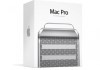
    Image (1) MacPro_3D_Box_34Whit49c4ea2009c5a-620x465.jpg for post 169301

    Apple’s Mac Pro has been on the chopping block for a long time according to many industry watchers and pundits, and as of March it will actually get the axe in Europe. But the Pro’s debatable market appeal isn’t what’s causing the termination of sales in that region: the existing models simply don’t comply with Europe’s new regulatory standards for consumer electronics, according to 9to5Mac.

    Those revised standards go into effect March 1st, and any products that don’t comply will have to be removed from sale. That doesn’t apply to existing stock, so Mac Pros that are already in store inventory could continue to rattle around sales channels for a while and go out to consumers.

    The change in regulations doesn’t prevent Apple from selling a new Mac Pro in Europe, however. Apple made some changes to its Mac Pro last year, but those tweaks were far from extensive, and in fact looked likely to have had more to do with maximizing supply chain value than with improving the lineup. Apple’s Tim Cook has said that a new Mac Pro will be unveiled later in 2013, so there’s a chance Europe will have to go without for at least a little while.

    An inability to sell the existing design in Europe could light a fire under Apple’s product development cycle for a new machine, but with Mac sales down considerably last quarter, it’s unlikely that the Pro, one of the most specialized and niche Macs in the lineup, is a top priority for Apple at this point regardless of these changes to European regulations.

    Update: Apple has confirmed to The Loop that sales of the Mac Pro will indeed stop on March 1.

  • 7 talks on ideas for life without water

    The glittering skyline of Doha, the capital of Qatar, has become famous in recent years. But as Fahad Al-Attiya points out in today’s talk, the ability for any city to grow in Qatar is surprising. After all, this is a country without any water.

    Al-Attiya, the chair of Qatar’s National Food Security Programme, reveals that in the 1940s only about 11,000 people lived in Qatar — and there was no water or electricity. But in 1939, oil was discovered in the country and, after World War II, extraction of it began. Today, 1.7 million people live in Qatar and consume 430 liters of water per capita a year — one of the highest rates in the world.

    But still, Qatar gets very little rainfall and no bodies of fresh water. Pointing at an image of desalination plant at work, Al-Attiya says, “That is our lake, that is our river … This is the best technology this region could have.”

    Qatar has only two days worth of water reserve and imports 90 percent of its food, shares Al-Attiya. And this, of course, presents many risks. To hear how the nation is approaching these challenges — by putting to use the fact that they get 300 days of sunlight a year — listen to Al Attiya’s talk.

    And below, six more talks on innovations for areas where water is a scarce resource.

    Anupam Mishra: The ancient ingenuity of water harvesting Anupam Mishra: The ancient ingenuity of water harvesting Anupam Mishra: The ancient ingenuity of water harvesting
    India’s Golden Desert receives very little precipitation — just 9 inches a year — and its groundwater is 300 feet deep. As Anupam Mishra shares, this one case where old methods simply work better than newer technology. At TEDIndia 2009, he reveals the ingenious feats of engineering that were created centuries ago and are still in use today.
    Michael Pritchard: How to make filthy water drinkableMichael Pritchard: How to make filthy water drinkableMichael Pritchard: How to make filthy water drinkable
    Many, many people in the world get their water from unclean sources, making them highly susceptible to illness. Michael Pritchard has come up with a solution — a portable water-filtering bottle that can make highly contaminated water safe to drink. In this demo from TEDGlobal 2009, he has TED curator Chris Anderson test it out.
    Ludwick Marishane: A bath without waterLudwick Marishane: A bath without waterLudwicke Marishane: Bath without water
    In the small towns of Limpopo, South Africa, the water supply is as unpredictable as the weather. In this talk from TED@Johannesburg, young entrepreneur Ludwick Marishane tells the funny story of how he created DryBath, a cheap and convenient soap that doesn’t require water. Fun fact: He did the formula research and wrote his 40-page business plan all on his cell phone.
    Damian Palin: Mining minerals from seawaterDamian Palin: Mining minerals from seawaterDamian Palin: Mining minerals from seawater
    Access to clean drinking water is a huge problem around the globe — and one of the most common solutions is desalination. But can we do anything with the salty material left behind in this process? In this talk from TED2012, Damian Palin shows how bacteria can interact with it and create minerals. His idea: biologically “mine” this desalination brine.
    Rob Harmon: How the market can keep streams flowingRob Harmon: How the market can keep streams flowingRob Harmon: How the market can keep streams flowing
    The United States may not seem like a place where water is scarce but, as Ron Harmon shares at TEDxRainer, streams and creeks are drying up because of over-usage. In this talk, he shares the story of Prickly Pear Creek, where beer makers — who use a ton of water in producing a single glass — and farmers are given incentives to turn back the damage.
    Sonaar Luthra: Meet the Water Canary Sonaar Luthra: Meet the Water Canary Sonaar Luthra: Meet the Water Canary
    After a disaster, it is far too hard to tell if the water is safe to drink, and thousands die as a result. TED Fellow Sonaar Luthra has createed a simple tool which can help, by testing water safety in seconds. At TEDGlobal 2011, he shares how this amazing Water Canary works.


  • Surface sales suck

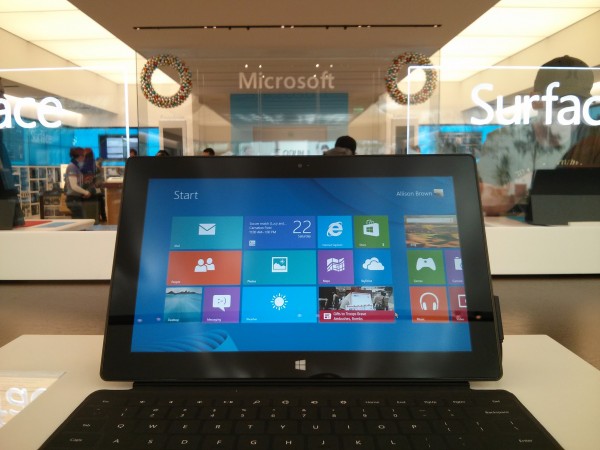
    Or do they? If you listen to some analysts, Surface, and other slates running Windows 8 or RT, started slow out of the gate. Considering how much tablets sapped PC shipments in Q4, slow forebodes trouble ahead. Or does it?

    “There is no question that Microsoft is in this tablet race to compete for the long haul”, Ryan Reith, IDC program manager, says. “However, devices based upon its new Windows 8 and Windows RT operating systems failed to gain much ground during their launch quarter, and reaction to the company’s Surface with Windows RT tablet was muted at best”. He estimates that Microsoft shipped just 900,000 Surfaces during fourth quarter, which means to stores and not actual sales to customers.

    That number sure looks low compared to any manufacturer in the top 5. Even lowly ASUS shipped 3.1 million units. But sell-through matters more. Except for about 10 days of the quarter, at retail, Surface sold exclusively through 66 retail shops in Canada and the United States. Apple offered iPad through an average 390 shops — 150 outside the United States. Accounting for online sales and doing some best guesstimates, I get 14,680 iPads sold per Apple Store and (assuming 600,000 units) 9,090 Surfaces per Microsoft shop.

    However, when adjusting for actual sales days (Microsoft’s slate was available for only about two-thirds of the quarter), Surface-sell through averages out a little higher than iPad on a per-store basis. Meaning: Given limited distribution, Microsoft’s tablet sells better than IDC shipments suggest.

    Size Matters

    Microsoft’s problem is something else: Size. “We believe that Microsoft and its partners need to quickly adjust to the market realities of smaller screens and lower prices”, Reith emphasizes. That’s a polite way of saying Surface RT costs too much at $499 and Pro, for sale starting February 9, is already overpriced. But are they? Really?

    According to NPD DisplaySearch, market demand shifts towards smaller, and lower-cost models. The firm forecasts that slates with 7-7.9-inch displays will account for 45 percent of shipments this year. By contrast, 9.7-inchers will fall to 17 percent — that’s the size of iPad, the category leader. But Apple offers the 7.9-inch iPad mini, whereas Microsoft and its partners offer nothing in this rapidly exploding size segment.

    Apple tablets are pricey, too. Starting February 5, one iPad 4 will sell for $929. But fruit-logo pricing starts lower, at $329 for 16GB iPad with WiFi. Microsoft is locked lowest at $499 with a 10.6-inch slate. What the company needs more is a broader range of sizes and prices, the strategy competitors like Apple, ASUS and Samsung pursue. That would preserve current Surface pricing.

    Such an approach doesn’t easily fit Microsoft’s current tablet strategy, which is all about making a traditional desktop operating system available on more form factors. But that’s not what the market wants today, when tablets displace some computer sales rather than replace PCs altogether.

    Reith warns: “In the long run, consumers may grow to believe that high-end computing tablets with desktop operating systems are worth a higher premium than other tablets, but until then ASPs on Windows 8 and Windows RT devices need to come down to drive higher volumes”.

    Give a Little

    Simply stated: Working with partners, Microsoft must make gaining market share the top priority. Tablet shipments grew about 75 percent year over year and quarter on quarter to 52.5 million in Q4. Laptops lead the PC category, but NPD DislaySearch predicts that tablet shipments will exceed notebooks this year. Again, that’s not so much slates replacing PCs as displacing new sales, as capabilities overlap. Microsoft doesn’t want to be left behind Android and iOS slates. This is a platform war that nobody wants to lose.

    ASUS tablet shipments grew 402.3 percent year over year and Samsung’s by 263 percent, according to IDC. These are phenomenal gains, and both companies offer models running Windows 8 or RT alongside Android. Something else: They also sell what Microsoft doesn’t — smaller slates with screens 7-7.9 inches. Short term, Microsoft’s options are limited with Surface. But working with partners, Microsoft could bring Windows RT to smaller screens. Such a strategy would preserve Surface pricing and Microsoft’s strategy around bringing desktop Windows to new devices.

    But there’s a wrinkle. Android costs ASUS and Samsung nothing, and Apple realizes the cost of iOS through research and development. Whereas, Microsoft partners pay to license Windows RT. I wouldn’t recommend that Microsoft give tablet OEMs Windows for free, but co-marketing contributions and other incentives could temporarily make the fees essentially zero — on smaller slates.

    Already Apple feels the pinch. In Q4, iPad shipment share fell to 43.6 percent from 51.7 percent a year earlier, even as volumes increased (22.9 million from 15.1 million), according to IDC. However, for the second quarter in a row, iPad share declined.

    Apple’s falling tablet fortunes show just how dynamic is the segment, and that competitors can and will gain share. But for which platform? Android or Windows RT? Microsoft can answer the question, even in part, by adjusting its tablet strategy.

    Photo Credit: Joe Wilcox

  • The Posse Foundation Selects First Cohort of Veterans for College Success Program

    Battle buddies aren’t just for the Army. For the past quarter century, The Posse Foundation has been identifying talented students from large urban public school systems and sending them in teams (Posses) to some of the top colleges and universities in the nation. Since 1989, close to 5,000 students have received $500,000,000 in scholarships from Posse’s 44 partner colleges and universities. These young people are graduating at a rate of 90 percent.

    In an effort to increase the college-going and graduation rates of veterans at highly selective colleges and universities across the country, The Posse Foundation, in partnership with Vassar College joined forces to announce its Veterans Posse Program, a new college success initiative. Posse plans to expand this initiative to other colleges and other cities over the next several years. 

    By adapting the Posse model to serve U.S. Veterans, Posse believes that it can exponentially increase the college-going rates and success of veterans on elite college campuses. Vassar College has committed to adopting the program on its campus and will supplement GI Bill and Yellow Ribbon funding to guarantee full tuition for each admitted veteran. Posse, using its unique recruitment method, will each year identify, recruit and train the veterans. The Veterans Posse will attend college together and receive support from both Posse and Vassar through to graduation.   

    This year’s recipients have demonstrated exceptional leadership and remind us of the immense value that veterans can bring to selective institutions of higher education and to the workforce.

    read more

  • Time Warner Cable Increases Speeds Near Kansas City, Could Be In Response To Google Fiber

    Back when Google Fiber first launched, Time Warner Cable, the incumbent ISP in the area, went into panic mode. The ISP even began offering cash rewards to anybody who had information on Google Fiber’s activities. It was all a little seedy, and made it look like TWC was more concerned with crushing Google Fiber in any other way besides directly competing.

    Well, it seems that TWC has finally realized that the only way to beat them is to compete with them, and is now reportedly offering faster speeds at lower prices to its subscribers in and near Kansas City. The Consumerist is reporting that one such subscriber recently received news from TWC that his monthly bill was being cut while getting a 50 percent speed increase. Here’s a portion of the letter:

    I’m a Time Warner cable internet subscriber in the KC area, and I got two(!) good pieces of news from them recently.

    No. 1. A few weeks ago, they emailed me to tell me that my “Basic Rate” internet service was being upgraded by 50% from 10Mbps to 15Mbps, effective at the next restart of my cable modem. I haven’t tested this — that only occurred to me in retrospect — but it sounds great.

    No. 2. My latest cable bill was ~30% lower than the previous month. $29.99 vs. $44.94, for a savings — by their calculation — “of $23.96 this month.” My calculation is slightly different, I get a savings of $14.95, but lower is better. The line item has the note: “Enjoy your savings of $23.96 by subscribing to this package. (Offer expires 11/29/2014)” It doesn’t say anything about me having to do anything to get this rate, and the “package” they mention is the one I assumed I was using already. But the bill says $29.99, so that’s what I’m putting on the check.

    Of course, it should be noted that this particular subscriber doesn’t live in one of the fiberhoods getting Google Fiber as he lives across the state line. He states, however, that he can see one of the fiberhoods in Kansas City from his kitchen window. His close proximity to Google Fiber may have spurred the change. As for other theories, he says that he has also recently received an advertisement for wireless 4G home service that would only cost $34.99 a month.

    Regardless of which scenario is correct, it illustrates the point that I’ve been making all along. Introduce competition into an area with an incumbent ISP and you’ll start to see them bending over backwards to retain subscribers.

    We’ll start to see more stories like this pop up as faster and cheaper Internet begins to spread across the nation. The FCC has already challenged states to have at least one gigabit network each by 2015, and private companies are beginning to build out fiber networks in mid-to-large size cities like Seattle. It won’t be long before we start to see ISPs either competing for the first time in their existence or being left behind because they refused to innovate and compete with new technologies.

  • Square Finds Its Way Into Verizon Stores & Angie’s List

    Verizon Wireless announced today that the Square Card Reader is now available in its stores across the U.S. The card reader works on Android and iOS, and sells for $9.97. It also comes with a $10 credit to a Square account.

    Additionally, Square announced on Wednesday that it is now working with Angie’s List so that merchants can enable mobile payments as part of Angie’s List’s Business Center mobile app.

    “Working with Square will help provide happier transactions for our members and service companies,” said Angie’s List Founder Angie Hicks. “We’re excited to work with Square because they understand what small businesses need to succeed.”

    “Whether on site or at a customer’s home, people will now have a fast, reliable way to accept payments. With Square, Angie’s List businesses can focus their time and energy on what really matters—doing great work,” said Square co-founder and CEO Jack Dorsey. “We’re proud to work with Angie’s List to make life easier for businesses of all sizes.”

    The Business Center app is currently only available on iOS.

  • Dan Marino Love Child: “I Take Full Responsibility”

    Dan Marino has openly admitted to fathering a “love child” with Donna Savattere–a former CBS Sports employee–in 2005 and says he’s taken full responsibility for her ever since, despite the fact that his marriage to wife Claire is as solid as ever.

    “This is a personal and private matter. I take full responsibility both personally and financially for my actions now as I did then. We mutually agreed to keep our arrangement private to protect all parties involved. My wife and I have been married for almost 30 years and have six children together. And we continue to be a strong and loving family,” he said in a statement.

    Marino made the statement after The New York Post broke the news. The admission comes just days ahead of the Super Bowl, where Marino will be broadcasting. Savattere has been quiet about the affair, but Marino has reportedly paid dearly to keep his daughter a secret, with figures ranging in the millions of dollars.

    “They had an affair, and she had a baby,” said a source. “Everything was on the down-low and secretive.”

    dan marino love child

    Image: Adriel Reboh/Patrick McMullan.com

  • Data for dummies: 6 data-analysis tools anyone can use

    If you care only about the cutting edge of machine learning and how to manage petabytes of big data, you might want to quit reading now and just come to our Structure:Data conference in March. But if you’re a normal person dealing with mere normal data, you’ll probably want to stick around. Although your data might not be that big or complex, that doesn’t mean it isn’t worth looking at in a new light.

    With that in mind, here are six of the best free tools I’ve come across for helping we mere mortals analyze our data without having to know too much about, well, anything (I’d keep an eye on the still-under-wraps Datahero, too). I’ve gathered some personal data and tracked down some interesting public data sets to help demonstrate what a novice can do with them. Someone with more skills can certainly do a lot more, and larger datasets will provide greater statistical significance.

    BigML

    BigML is to machine learning what Blue Moon is to Belgian ales: a simple approach to something generally more complex — but also rather accessible and good enough to do the job in a pinch. I explained the service more thoroughly in recent post about it being used to generate predictions of Kickstarter success, but here’s how it works, in a nutshell: Users upload and format data (which is actually pretty easy), BigML discovers the myriad relationships between the variables and creates a predictive model, and users enter hypothetical data and receive a prediction.

    I’m pretty bad when it comes to entering my data into Fitbit (see disclosure), but I was relatively good for a month this summer as I prepped for the Warrior Dash, and that’s the data I used to demonstrate BigML. This prediction of how many calories I can expect to burn in a day would work a lot better if I had a bigger sample size and hadn’t occasionally forgotten to log calories and hours slept, but you get the point. The first image is the model the service generated; the second is the prediction interface.

    cals bigmlpredict

    Google Fusion Tables

    The user interface for Google Fusion Tables  isn’t what I’d call pretty (“sparse” is probably a better description), but the still-in-experimental-mode visualization tool sure is easy if your data is nicely formatted. I created this interactive map simply by uploading a publicly available dataset about gun violence and clicking the button to create a map:

    fusion

    For this simple comparison of gun ownership and gun homicide rates, I just checked the countries by which I wanted to filter the chart. Easy.:

    gunscomp

    Infogram

    If you have really simple data — like a few columns and a handful of rows — Infogram might be the easiest to use of the bunch. The company launched last year with a variety of infographic templates, but it has since expanded to include a large number of charts and graphs, too (including line, pie, pictorial, treemap and bubble). Furthermore, it gives sample data, which you can use as an example to enter your own or format the table you want to upload, and the interactive charts embed nicely into web pages (ours, at least).

    Here are the top 10 things I ate during the time I was logging food via Fitbit, excluding copious amounts of beer, water, coffee and Diet Pepsi that I didn’t record.

    What I ate | Create infographics

    In July, I made this chart with Infogram comparing infrastructure spending trends among internet companies.

    Who spent what on infrastructure | Create infographics

    And here’s a sample of the simplest chart in the world.

    I am this far through my to-do list | Create infographics

    Many Eyes

    Many Eyes is a free web service run by IBM that includes a wide variety of visualizations ranging from maps to pie charts to scatter plots. But what makes it stand apart from the others is the suite of text-analysis tools it offers — not only are they fairly novel, but all they require users to do is paste a page of plain text into the web interface and press a button to visualize it. I used it to analyze the last 15 posts I’ve written for GigaOM.

    What did I find? For starters, I use the words “data,” “Facebook” and “users” a lot.

    words 1

    When it comes to two-word combinations, “big data,” “data centers” and “hard drives” are among the biggies.

    words 2

    This one is particularly interesting, showing how I tend to form phrases around certain words with common conjunctions, or just a space, in between.

    data

    Apparently, out of 10,013 words, I only used “cloud” 20 times. I usually followed it up with “provider,” “servers,” “computing,” “-based” and “providers.”

    cloud2

    For fun, I also made a word cloud based on couple month’s worth of Fitbit food logs. It turns out, you can take the boy out of Wisconsin, but …

    wordcloud

    Statwing

    Statwing might be my favorite of the bunch, if only because it’s so simple yet actually tries to teach users about statistics. You upload data, check the variables you’re concerned with, and it plots their relationship. (It also can describe the variables by highlighting the sample size, minimum, maximum, mean, median and standard deviation.) Graphs are accompanied by explanations as to how strong the correlation is based on various statistical metrics, as well as the results of a linear regression model.

    To demonstrate Statwing, I went back to the Fitbit data. Of the variables that Fitbit tracks, some correlations are easy to predict (e.g., steps and calories burned), but I was kind of surprised to see that the 86 minutes a day I spent being fairly active really weren’t that good of an expenditure of my time.

    statwing

    Tableau Public

    Tableau Public, the only free version of the popular business-intelligence software, was clearly designed with business users in mind. It expects a lot of structure in the data, and although you can edit almost every aspect of it within the application to get it into usable shape, the service doesn’t allow much guidance if you don’t speak the language of BI (it also requires Windows). But the software is very good at deciphering the characteristics of different variables, the drag-and-drop operation makes it kind of easy to experiment and the wide array of visualizations look really nice.

    Using my Fitbit data (and here’s where you see how lax I am at data entry), I created a line graph comparing the calories I ate each day with the calories I burned. Assuming I didn’t go crazy eating on the days I forgot to make entries, the good news is I never ate more calories than I burned. (Note: Although these are static images, Tableau Public actually lets you embed interactive charts, which I’ve used in the past on several occasions, but they don’t always fit well within our pages.)

    cal tabHere’s one I played around with a while back charting Amazon’s “Other” revenue againt the number of objects stored in Amazon S3.

    aws objrevFinally, here is my first-ever (I think) Tableau chart, which uses the raw data on government takedown requests that Google provided along with its Transparency Report in October 2011. You can read that post and play with the interactive version here.

    goog trans


    There is, however, one disclaimer that applies to all of these tools: I didn’t get into cleaning and formatting data, which can be a somewhat arduous process. Many tools expect some sort of structure to the data — the X axis to be in columns and the Y axis in rows, measurements without units (e.g., grams), etc. — that just isn’t present if you’re downloading an Excel or CSV file rather than creating it yourself. Sometimes, with comprehensive datasets like your Fitbit Premium data, you’ll have to separate or combine the relevant data into new spreadsheet tables before uploading it to a service. But once you have the data ready to go, these tools can help you analyze it, visualize it and hopefully glean some insights from it.

    Disclosure: Fitbit is backed by True Ventures, a venture capital firm that is an investor in the parent company of this blog, Giga Omni Media. Om Malik, founder of Giga Omni Media, is also a venture partner at True.

    Related research and analysis from GigaOM Pro:
    Subscriber content. Sign up for a free trial.

  • The Unfair Stigmatization of Digital Notetaking

    My last blog post argued that colleagues who come to a meeting with a paper notebook instead of a digital device are wasting their own time and that of their colleagues. That argument met with a small uproar here and on Twitter, where many readers were outraged by the idea of prescribing or proscribing a particular approach to note-taking, even if there were also those who welcomed my assault on paper.

    “Why not consider the fact that people process information differently and have respect for the fact that not everyone operates in a single fashion?” asked one not-atypical comment. As Becki True put it, “[l]et’s judge people’s effectiveness on their results, and not on their methods.” Or as Scott Berkun wrote on his own blog, “[i]t’s only after I see what people produce that I’d consider commentary on the means they used.”

    Yet in meeting rooms, committees and workshops across the U.S. and around the world, people have their working styles dictated all the time. Not by colleagues who would prod them into the brave new world of digital notebooks, but by managers and meeting chairs who forbid them from using their core work tools: laptops, smartphones, tablets and even specific kinds of applications (like social media tools)

    If we’re outraged at the idea of stigmatizing paper, shouldn’t we be at least as outraged by rules like these? After all, the tech-banners aren’t simply asking us to bring paper in addition to our digital tools; they’re trying to keep laptops, smartphones and tablets out of the meeting room altogether. In an effort to patrol technology use in meetings, classes and conferences, we get recommendations and policies like:

    And these documented anti-tech policies are just the tip of the iceberg. Who hasn’t been in a meeting or workshop where you’re asked to keep your laptop or phone in your briefcase? More common still are the many workplaces where colleagues look askance at the laptop on the boardroom table, even if it’s there to record next actions in a meeting that is more planning session than brainstorm.

    If we see banning or stigmatizing laptops and smartphones as fundamentally different (and more acceptable) than banning paper, it’s for one of three reasons: we still see paper as the norm and digital as the invader; we see handwriting as superior and worry that digital tools are making us forgetful or stupid; or we suspect that tech-laden colleagues are multitasking instead of engaging in a meeting with the attention it’s due. To advance either of the first two arguments we have to abandon the principle of “to each their own” that found such ardent defenders last week; to advance the third, we must abandon that principle and instead embrace the idea that as colleagues, we are accountable to one another for the quality of work we do in a meeting and the tools that help or inhibit that work.

    My own view is that in any meeting where notes are taken — that is, any meeting to which someone might bring a notebook or laptop rather than walk in empty-handed for an unencumbered conversation — digital tools are essential (even if they are used in addition to, rather than instead of, paper).

    If we want to agree that each and every one of us should be free to choose our own best way of working and our best tools for doing that work, I’ll stifle my critique of the colleague who shows up to a meeting carrying only a paper notebook. But I hope that when I or any other digital note-taker gets told to put away their laptop or smartphone, our ability to choose our own work tools will get a defense that’s every bit as passionate as the arguments that have unfolded here.

  • Report: Big Data Market May Hit $23 Billion

    International Data Corporation (IDC) released a new report on Big Data Technology, forecasting that the worldwide market for big data technology and services will reach $23.8 billion in 2016. A key finding from the report shows that a shortage of analytics and Big Data technology skills will drive a growing number of buyers toward cloud solutions and appliances. The IDC study segments the Big Data market into server, storage, networking, software, and services.

    In other Big Data news:

    Teradata big analytics for Communication providers

    Teradata (TDC) announced the availability of an integrated CSP (Communication Service Provider) framework to provide a 360-degree view of customers, leveraging both conventional transaction data and granular, detailed interaction data.  The CSP framework delivers useful new big data analytic insights into customer behavior and product preferences through visibility to ALL data interaction. It takes advantage of partner capabilities such as Guavus’ SevenFlow, its marketing decisioning application, which provides deep insight into subscriber behavior and data usage. Teradata’s Unified Data Architecture embraces Hadoop and Aster’sSQLMapReduce platforms for quick analysis of multi-structured data. Guavus recently announced a $30 million funding round.

    Additionally, CSPs can leverage new capabilities from Teradata’s Communications Logical Data Model (cLDM), which serves as a map to a CSP organization’s information. The  map would organize data pertaining to social media/networks, multi-structured data, set top box analytics (where relevant), multimedia, geospatial, advertisement, ecommerce and web intelligence.

    “Revenue generation and customer loyalty are driving the market for big data,” said Patrick Kelly, an analyst from Analysys Mason. “CSPs should understand the business outcomes in specific areas of their business before investing in big data and analytics. For example, they could increase net profit margins by 12 percent with cross-marketing and sales promotions; improve customer retention by 0.2 percent via loyalty campaigns; and defer capital investments in the RAN* without degrading service, yielding hundreds of millions in savings in capital spending.”

    “The combination of Guavus products and Teradata data warehouse technology enables CSPs to analyze mobile data traffic at very granular levels with long retention periods for extremely large number of subscribers,” said Scott Sobers, Director, Communications Industry Marketing & Strategy, Teradata. “No one else in the industry can provide this kind of insight and actionable information. This will be the standard for CSPs to create new revenue streams and deliver the best possible service for customers.”

    EMC updates Greenplum appliance

    EMC announced that it has enhanced its first appliance-based unified Big Data analytics offering, the EMC Greenplum Data Computing Appliance (DCA).  The new EMC Greenplum DCA Unified Analytics Platform (UAP) Edition analytics appliance enables analysis of both structured and unstructured data together within a single integrated appliance. It integrates Greenplum Databases for analytics-optimized SQL, Greenplum HD for Hadoop-based processing and Greenplum partner business intelligence, ETL, and analtyics applications. The new DCA  UAP edition delivers 70 percent performance gains over the prior generation for data loading and scanning, and 100 percent performance increases for concurrent query workloads.

    “Enterprises looking to make strategic investments in a Big Data platform need to consider the breadth of capabilities required of a complete solution—high speed data ingestion, support for structured and unstructured data, interfaces for data scientists as well as business intelligence users, and the ability to scale horizontally as data volumes grow.  Customers can take advantage of the new DCA to increase the performance of Greenplum Database for best-in-class SQL processing and data loading, and also leverage the innovative capabilities of Greenplum’s Hadoop distribution (GPHD). With the release of the DCA Unified Analytics Platform Edition, we are continuing our history of innovation—with improved options for Hadoop deployments leveraging EMC Isilon’s scale-out NAS storage, enhanced partner ecosystem support including such partners as SAS and Informatica.”

  • 500 Startups announces spring accelerator application opening

    Accelerator program 500 Startups plans to announce the official application opening for its spring accelerator program on Thursday. Beginning with this class of startups, the program will accept applications from companies on AngelList rather than through referrals, opening the doors wider to interested founders.

    Startups interested in participating in 500 Startups can apply through the program’s AngelList page beginning January 31, 2013. Previously, companies had to get an introduction through the program’s alumni network to apply, although beginning with the most recent class they began experimenting with open applications on AngelList.

    “We feel like as more people know about 500 and we try to expand more into other markets, our network is still, compared to the rest of the community, not that big,” said Christine Tsai, 500 Startups partner. The program has always had an international focus and has welcomed founders from outside the United States, so widening the application process even further makes sense. Although Tsai noted that by nature, an open process means plenty more mediocre applications, but the diversity is worth it in the long run.

    “That’s just how it is,” she said. “We’re still going to rely a lot on referrals.”

    The application process will stay open until March 1, although company applications will be evaluated on a rolling basis. The program’s fall accelerator batch will have its demo days in Mountain View and San Francisco next week.

    Related research and analysis from GigaOM Pro:
    Subscriber content. Sign up for a free trial.

  • Bill Gates Talks Steve Jobs and More on Colbert Report

    So, Bill Gates was on The Colbert Report for the first time Wednesday night, presumably to promote the works of his massive philanthropic organization the Bill & Melinda Gates Foundation, and the recent release of his annual status letter. Colbert asked him if he was still the richest guy in the world (he’s not), why he’s not focusing his attention on ‘murica first (he is, with education), and whether or not he misses the day-to-day activities at Microsoft.

    He also ended the interview asking Gates about Steve Jobs.

    “I was lucky enough to meet Steve Jobs a few times,” said Colbert. “People always say ‘what a cool guy’ Steve Jobs was. And you’re out there saving the world, and yet, you don’t have the cool factor.”

    “He was always cooler than me,” said Gates.

    “Maybe saving the world will get cool,” said Colbert.

    “It’s okay,” said Gates. “He was brilliant, he had his own style, he had his own approach. And mine is just a little geekier than his was.”

    Check out the full interview below:

  • UCLA conference explores new trends and career opportunities in integrative medicine

    WHAT:  
    Integrative medicine, which incorporates traditional healing techniques from the East with Western medicine, is helping to transform health care, and millions of Americans are now uisng alternative and complementary therapies to meet their health needs. 
     
    This daylong UCLA conference will highlight future trends and introduce participants to the many career paths available in integrative medicine and related fields. The event will feature lectures, panel discussions and demonstrations by experienced practitioners and researchers. Topics will include clinical careers in integrative medicine, creative arts therapies, research and health care policy.
     
    Undergraduates from the UCLA student group NCAM (Nutrition, Complementary, and Alternative Medicine) organized the conference with support from the UCLA Center for East–West Medicine.  
     
    For more program information, parking and directions please visit the conference website.  
     
    WHO:  
    Featured speakers include:
     
    John Weeks (keynote)
    Writer and executive director of the Integrator Blog
     
    Ka-Kit Hui, M.D., (keynote)
    Founder and director of the UCLA Center for East–West Medicine
     
    Ryan Abbott, M.D.
    Southwestern Law School
     
    Robert Carroll, M.D.
    Past vice president of the National Association for Poetry Therapy
     
    Erica Curtis
    Licensed marriage and family therapist with clinical art therapy training
     
    Pamela Dunne
    Founding director of the Drama Therapy Institute of Los Angeles
     
    Michael Goldstein, Ph.D.
    UCLA Fielding School of Public Health
     
    Mary Hardy, M.D.
    UCLA Simms/Mann Center for Integrative Oncology
     
    Ping Ho
    Founding director, UCLArts and Healing
     
    Edward Hui, M.D.
    UCLA Center for East–West Medicine, general internal medicine
     
    Suzie Kline, Ph.D.
    Huntington Memorial Hospital
     
    Bruce Naliboff, Ph.D.
    UCLA Gail and Gerald Oppenheimer Family Center for Neurobiology of Stress
     
    Judith Pinkerton
    Founder and president of Music 4 Life
     
    Sonya Pritzker, Ph.D.
    UCLA Center for East–West Medicine
     
    Myles Spar, M.D.
    Director of integrative medicine at the Venice Family Clinic
     
    Lawrence Taw, M.D.
    UCLA Center for East–West Medicine
     
    Lora Wilson Mau
    President of the California Chapter of the American Dance Therapy Association
     
     
    WHEN:
    9 a.m. to 3 p.m. on Saturday, Feb. 2 
     
    WHERE: 
    UCLA Neuroscience Research Building auditorium
    635 Charles Young Dr. South, Los Angeles 90095 (map)
     
    MEDIA CONTACTS:
    Rachel Champeau | UCLA Health Sciences Media Relations | 310-794-0777
    Sue Fan | UCLA Center for East–West Medicine | 310-794-0712
     
    PARKING:
    Visit the parking kiosk on Westwood Boulevard after entering the UCLA campus from the south.

  • Experiencing Heavy Server Load? Just Slow Down Time

    ccp-asakai_1

    A screen shot of the Battle of Asakai in the EVE Online unvierse, in which more than 2,700 gamers waged a resource-intensive battle on a single server. Admins managed the server load by altering the time continuum in the game. (Image: CCP Games)

    When demand on a server spikes dramatically, sometimes you need to improvise to keep things online. An interesting example is provided by CCP Games, which operates EVE Online, a science fiction gaming universe in which faction of players battle with fleets of space ships.

    When an enormous battle recently broke out on a node with limited resources, the engineers at EVE Online managed extraordinary server loads by using “time dilation” – altering time within the game universe to effectively throttle activity to match system resources.

    EVE Online is unusual in that it functions as a single game environment, with a single copy of its universe on a massive cluster of servers. Resources for specific solar systems are supported by a particular server, with players and spaceships able to move between solar systems. That means that a burst of activity in a particular sector of the EVE Online universe can create scalability problems. Administrators can shift load by moving activity to other servers, but that interrupts the player experience, and so is not ideal when large space battles break out.

    One Bad Click Tests Capacity

    A single misclick would test the system. On Jan. 27 a player accidentally “warped” an extremely valuable Titan spaceship into the midst of a large enemy fleet (more details at  Penny Arcade and PC Gamer). Both sides called in reinforcements, and in short order more than 2,750 players were waging a hectic battle on a server that doesn’t normally see anywhere near that level of activity.

    The customer service duders (GMs) keep an eye out for gigantic fights like this,” recounted CCP Veritas, an engineer at CCP. “We’ve got a cluster status webpage that shows big red numbers when a node gets overloaded like it was by this fight, so it’s pretty easy to see what’s up.”

    Admins isolated the battle by quickly moving non-combatants to other servers.  That’s where time dilation comes in.

    “A large majority of the load in large engagements is tied to the clock – modules, physics, travel, warp-outs, all of these things happen over a time period, so spacing out time will lower their load impact proportionally,” writes CCP Veritas. “So, the idea here is to slow down the game clock enough to maintain a very small queue of waiting tasklets, then when the load clears, raise time back up to normal as we can handle it.  This will be done dynamically and in very fine increments; there’s no reason we can’t run at 98% time if we’re just slightly overloaded.”

    The Jan. 27 event, known in EVE as the Battle of Asakai, tested that approach, but kept the game functioning until the battle was completed. ”Even though Time Dilation was pushed to its configured limit of 10%, it still allowed a more graceful degradation than the unpredictable battles of old,” CCP Veritas shared. “We’re pretty sure that without the recent efforts on the software and hardware front, such a fight of this scale would simply not have been possible.”