Blog

  • Vacaville, California, the voltage town with the highest number of EV chargers

    charging-station.jpg
    Ever heard of a town called Voltageville? The map of the United States probably won’t have it, and no, this isn’t a modern day rendition of Atlantis, the city below the sea. Voltageville, is what Vacaville, California, has been nicknamed, and yes, you guessed that right, it has something to do with electricity. And why the electric nickname? Simply because this small town, halfway between Bay Area and Sacramento, has the maximum number of electric car charging stations per capita than any other city in the country. Vacaville now has a gas station sized quick charging station of 50-kilowatts for electric vehicles. The charging station can charge up a 16 kilowatt-hour battery pack of the all-electric Mitsubishi i-MiEV in just half an hour. Installed by Pacific Gas & Electric, this is the first fast DC charger in the country. Perhaps we need a lot more Voltagevilles around.

    Source

  • New BMW 5 Series Clears Brake Intervention Crash Test

    BMW is thinking more seriously about the safety of its cars and the passengers in cases of a collision, hence why they have resorted to anticipatory assistance systems.

    BMW 5 Series accident

    Once such technology is preventive brake intervention and the German premium automobile manufacturer has successfully crash tested this system on the new 5 series (530d) model in collaboration with DEKRA. The intervention of this technology helps a 64km/h impact reduce to 40km/h as the automobile senses danger and applies automatic brakes not waiting for the driver to respond in such cases. The car’s advanced sensors first sense a probable collision and issue a warning to the driver and then the automatic brakes kick in. This may impress NCAP but what is ironical is that NCAP crash tests cars without applying the brakes.

  • Sanyo’s HIT solar cells to power largest solar plant in Italy

    hit solar cells sanyo_1

    Eco Factor: Solar power plant to generate up to 7.6MW of renewable electrical power.

    Japan’s Sanyo Electric Company has announced that the company’s HIT solar cells will be powering the largest solar power plant, using the type of solar panels, in Italy. The project will be carried on by a consortium led by Deutsche Bank.

    hit solar cells sanyo_2

    The power plant will make use of 32,202 HIT solar cells and will be able to generate up to 7.6MW of clean electrical power. The plant is expected to be completed by September this year.

    hit solar cells sanyo_3

    hit solar cells sanyo_4

    hit solar cells sanyo_5

    Via: International Business Times

  • Illuminated tiles for your yard using LEDs powered by solar energy

    solar_tile.jpg
    Walking on lighted tiles was last seen in the Wizard of Oz. well, you can have some of these in your own yard now. Walk across your yard on solar powered illuminated tiles for that light walk. These illuminated pathway tiles soak in the suns energy to convert it into electricity. A solar panel, the size of a matchbox is integrated on each tile. This is juiced up by solar energy, and powers up the four LEDs inlaid in the tile, at night. The LEDs glow with a bright diffused light. Measuring 11 1/2″ sq, these tiles are made out of four planks of PVC and are designed to look like hardwood. That’s not all. These tiles interlock with each other on every side, allowing customizable setups.

    And if you’re worried about the rains and similar weather conditions, fear not. These tiles are 100% water proof, and do not fade or rot, unlike wood. The LEDs work efficiently for 20,000 hours. These are sure to grab the attention of passersby. Buy them here for $100.

  • The first of its kind, electric superbike race in California, North America

    ebike-race.jpg
    You’ve probably watched a superbike race before with those awesome chiseled bikes roaring across the racetrack to the finish line. Well, the TTXGP North America Round 1 that took place at the Infineon Raceway in California was a slightly different event, taken that the two-wheeled machines used in this one were silent, clean and green. This was the first electric superbike race to ever take place in the continent. Shawn Higbee mounted on a ZeroAgni bike crossed the checkered flag first, facing stiff competition from Michael Barnes, riding for Lightning Motorcycles, who unfortunately had to cycle through a reboot, though yet placing second. The third place spot was filled in by Michael Hannas of ElectricRacebikes.com. Motorcycle racing has never been a cleaner affair before. No smoky burnouts at this race.

    Source

  • Flooring made from recycled whiskey barrels

    whiskyflooring.jpg
    Judging whiskey by its age has been an old practice. But a floor smelling of whiskey is unusual, unless you’ve dropped some from your glass while trying to negotiate the carpet. Whiskeys like Balvenie’s Doublewood for instance spend long part of their life in Whiskey Oak cases. This helps mellow the spirit while maturing. It also contributes to the vanilla spiciness, after which the whiskey is transferred to a Sherry Oak case. These cases in turn impart the whiskey’s fruity and honeyed depths. Well, after the whiskey’s out and ready to drink, the cases and barrels need disposing. So a U.K.-based firm, McKay Flooring Limited, came up with the idea of using this wood for flooring. This sure is a great way to recycle the wood. Just make sure visitors to your home don’t go sniffing at your floor though.

    Source

  • Devotec Industries unveil Solar Sound 2 Bluetooth speaker

    solar sound 2

    Eco Factor: Bluetooth speaker powered by solar energy.

    After making waves with the Solar Sound, the world’s first solar-powered wireless Bluetooth stereo speaker, Devotec Industries has unveiled the Solar Sound 2, which is an improved version of its predecessor. The device might look identical to the original version, but the company claims that the device has been redesigned right from the ground up.

    The Solar Sound 2 comes with improved speaker cones, silver-plated oxygen free copper speaker cabling alongside an energy-efficient power circuit. The battery now offers you anywhere from 5 to 10 hours of use. The onboard solar panel can charge the device in anywhere between a dozen to 24 hours.

    Via: UberGizmo

  • Cornell research group harnesses vibrations from wind to generate renewable energy

    vibration energy

    Eco Factor: Researcher group working on a low-cost, efficient method to convert wind vibrations to electricity.

    Instead of harvesting wind energy using wind turbines, a research group at Cornell University is trying to harvest vibrations caused in materials on a gusty day. The Vibro-Wind Research Group at the university is working on an efficient, low-cost method of converting vibrations from wind energy to electricity.

    While traditional wind turbines are expensive and not much liked by the inhabitants of that area, the vibration system isn’t an eyesore and can generate energy without emitting much noise. The team has tested a prototype consisting of a panel mounted with oscillators made out of pieces of foam.

    The actual conversion from mechanical to electrical energy was done using a piezoelectric transducer, which is a device made of a ceramic or polymer that emits electrons when stressed. The team is also searching for alternatives to the piezoelectric transducer and is checking the feasibility of electromagnetic coils instead.

    Via: Physorg

  • American Idol Winner Lee DeWyze and Simon Cowell’s Goodbye

    Lee DeWyze is crowned as the Ninth American Idol winner. When he was asked why he thought he would be the next winner, “Because there’s a time and place for everything, and this is my time and my place,” answered the mild-mannered salesman from Mount Prospect, Illinois.  “I’m just happy, man. I’ve never been happier in my life. I appreciate everything everybody has done,” said the 24-year-old American Idol. He beated Crystal Bowersox of Elliston, Ohio. Both contestants auditioned in Chicago. DeWyze sang “Hallelujah”, “The Boxer” and “Beautiful Day” last May 25. He won the majority of the viewer’s votes with less than two percent of the votes separating them.


    The finale was like no other as it is also Simon Cowell’s last appearance as a judge on American Idol. Paula Abdul took Cowell’s hand and led him on stage. “I didn’t think I was going to be this emotional,” said Cowell. “I just want to thank you from the bottom of my heart for the support, the fun and your sense of humor. The truth is, everyone asks who’s going to replace me as the next judge. The truth is, you guys are the judges of this show, and you’ve done an incredible job over the years.

    Related posts:

    1. Paula Abdul Will Be a Lead Judge in the New CBS Show: Got to Dance
    2. Michael McDonald is in American Idol’s Finale
    3. Ellen DeGeneres Could Not Fit into the Shoes of Paula Abdul!

  • International Ban on US Milk: 20% Still Contains rBGH

    milk.jpg
    The rest of the world does not want our milk and hasn’t for over ten years! In 1999 over concerns of growth hormones used in US dairy production, the United Nations Food Safety Agency did not endorse rBGH essentially banning US milk. Despite international concerns, 20 percent of US milk still contains the hormone. Healthy Child Healthy World reports:

    About 20 percent of our milk is genetically engineered, technically known as rBGH (recombinant Bovine Growth Hormone), which contains high levels of a natural growth factor known as IGF-1 (Insulin-like Growth Factor one). This survives digestion and is readily absorbed from the small intestine into the blood. Increased levels of IGF-1 have been shown to increase risks of breast cancer in 19 scientific publications, risks of colon cancer in 10 publications, and prostate cancer in seven publications. Of further concern, increased IGF-1 levels block natural defense mechanisms against early microscopic cancers, known as apoptosis.

    Image: Muffet


  • New iPhone app ‘Safe Driver’ ready to inform parents about your driving habits!

    iPhone 3GSSoftware company Dangerous Decisions now offers Safe Driver — an iPhone app that enables owners to keep tabs on its employees who drive around in company vehicles.

    This program uses the iPhone’s GPS transponder and accelerometer to measure and record vehicle acceleration, braking, cornering, and speed. Parameters can be set up by booting up the software, driving with the iPhone in the car, and saving the results. Parents, managers, and other persons in authority immediately get an e-mail or a text message if the driver exceeds any of the saved parameters. Detailed reports indicating the route driven, top speed, and other violations, will also be sent through email. Dangerous Decisions has designed the program to encourage safe driving. When drivers reach 95% of any preset limit, they are warned by a flashing amber light and an audible tone. As soon as they break the parameter, the application will flash red and will emit a different tone. The basic Safe Driver application can be downloaded for free, but the Pro version, which costs $24.99, enables the administrator to customize parameters for various vehicles. Dangerous Decisions recommends that the iPhone be placed on a cradle or dock to prevent it from falsely recording excessive movement.

    [via automobilemag]

    Source: Car news, Car reviews, Spy shots

  • Touch Screen UI Goodness for Whole Home Audio Video Home Automation

    When checking out new houses, I usually notice the whole house audio integration they build-in, albeit I was never a big fan of mounting speakers into the walls everywhere. Similarly, there are pretty neat home automation controls that use touch screen interfaces to control the various devices in your house. I always wanted something similar in my house, yet never saw the point in spending thousands of dollars on it. Now with computers becoming significantly more affordable I figured there’s got to be a way to set up a system with a nice touch interface. There are monitors available that provide a touch interface that start at a little less than $400. However, I wanted a system that I can mount to the wall with as little wiring as possible.

     NOTE:  This is a guest post by Thomas, a fellow HTPC enthusiast.  Thomas has an interesting setup and his talk of a touchscreen HTPC client caught my eye.

    While looking around, I came across the Shuttle X50, which is pretty much a 15.6 inch touch screen monitor with a built-in computer. It sports an Intel Atom 330 processor (1.6 GHz, dual core), built-in WiFi and sound, Intel GMA 3150, and an integrated webcam. Shuttle sells this as a full system or as a barebone. However, the barebone is considerably cheaper so I went for that. As a barebone it still needs the memory and hard drive to be installed. Specific information about this system is rather scarce, even on Shuttle’s own web site and the documentation that comes with it does not provide any more details. At the store, we actually had to take it apart to figure out what kind of hard drive and memory it needs. To save everybody from going through the same hassle, it actually needs notebook-style DDR2 memory and a 2.5 inch hard drive. So I got 2GB of memory and a 160GB hard drive for it. The computer is a little tricky in terms of taking it apart to install the memory and hard drive as you have to disassemble pretty much the whole backside of it, including any shielding and mounting material. In my case, the friendly guys at Microcenter put it all together as we had to open it up to find out for sure what type of memory and hard drive it requires anyway. All in all, I ended up spending slightly over $500 on the system (I still had a Windows 7 license lying around that I was able to use for this system).

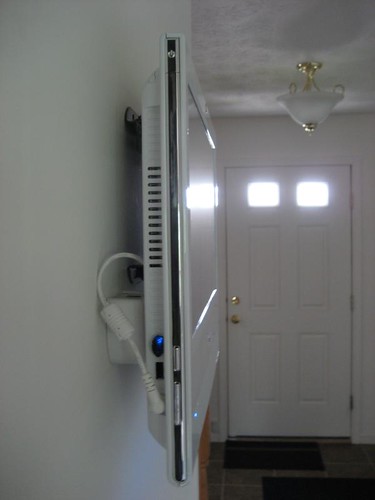
    The Shuttle X50 comes with a little stand in the back that is mounted to the main case via a standard VESA wall mount. Hence, once this stand is removed any standard wall mount can be used. I then got the cheapest wall mount I could find in the local stores that allowed me to mount the system as flush to the wall as possible. In order to power the system, I drilled a whole into the wall located in such a way that it was covered by the computer later. In my case, the staircase to the basement is located on the other side of the wall. So I simply drilled another hole on that side, installed a power outlet in the staircase, and ran the power cable through the wall to plug into the new outlet. This way, there is no noticeable wiring around the touch screen computer and the white case of the computer blends in nicely with the wall. The following image shows the wall-mounted computer from the side. The white cable supplies power to the computer.

    IMG_0448

    Touch-Screen Security Monitor

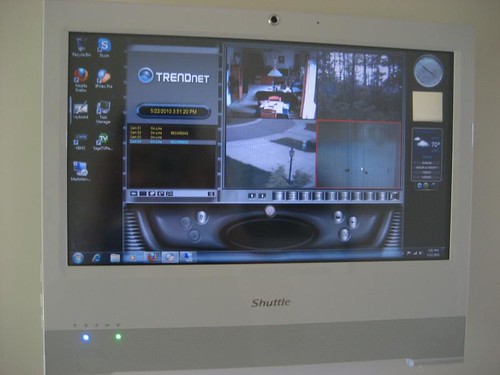
    The main purpose of this system that I originally had in mind was to use it as a home security and whole house audio interface. So I installed the software that came with my Trendnet IP cameras which allows the computer to record from up to sixteen cameras. The dual core Atom processor is even fast enough to process the video feeds to only record when there is motion detected. I have four cameras hooked up and with hyper threading and the two cores there is basically one “processor” available for each camera to process the video feed and detect motion. The next photo shows the security camera software running on the touch screen computer.

    IMG_0449

    A Touch-Screen HTPC

    In order to use the system as a whole house audio system, I tried several different audio players, including Windows Media Center, xbmc, and winamp. None of them really worked too well for me with just a touch screen. The touch interface emulates a mouse in a sense that wherever you touch the screen, a mouse click occurs. On the downside, this means that there basically is no support for any “mouse over” events. At some point, some of these audio players required some key press or the sorting of the audio files seemed too cumbersome to work with (all my audio files are arranged in folders and I like to browse them that way). Since I use SageTV throughout the entire house, I gave that a shot on this system as well. I tried both, the SageClient and the SageTV placeshifter. While the SageClient works on the system, it is struggling with 1080i video content where it does tend to studder once in a while. For a secondary system this is OK, even fine when used for 720p or lower resolution videos. The placeshifter works just fine as the server transcodes the videos first to a lower resolution, which this system can handle very well. Since SageTV can be controlled via a mouse, the touch interface works very well with it. Since all menu entries basically resemble buttons, they can be selected by just tapping onto them on the touch screen. When using the latest version of SageTV, v7, you will have to enable “focus follows mouse movement” (at least in the first beta version) in order for it to work properly or otherwise selecting menu items may open up the wrong sub-menus. Both, the client as well as the placeshifter work perfectly fine for just audio files and the fact that I was already quite familiar with its interface made it appear even more appealing. Selecting audio files to play and generate a play list is very easy and intuitive with the touch interface as you can essentially just tap on the audio file to add to the queue. Similarly, you can move the scroll bars around to browse through the list of audio files by just tapping on the arrows at the ends, on the scroll bar itself, or drag it up or down. Overall, this makes for a very intuitive user interface.

    Whole Home Audio Controlled by Touch Screen

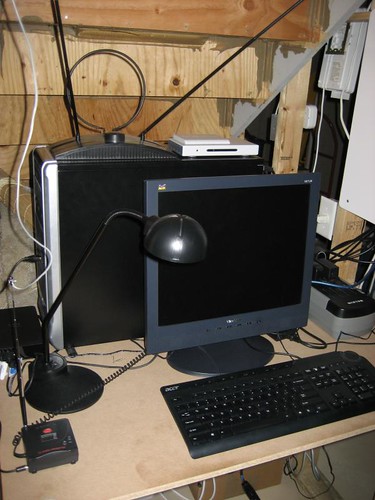
    In order to achieve the whole house audio system I was looking for with this computer as the main touch-based user interface, I ended up going a slightly different route, though. This was mainly to reduce the amount of wiring in my house and to the system so that I only had to hide the main power cable going to the computer. The audio signal in my setup gets transmitted via an FM transmitter. I went for the C. Crane FMT Digital FM Transmitter as this model seems to be one of the better ones that actually can transmit throughout an entire home in stereo. The initial attempt was not overly satisfying as the distance it was able to transmit to was not that great. After searching through the internet, I found a couple of posts that tell you how to crank it up a notch (there is a potentiometer at the top inside the device that controls the output). These posts also recommended increasing the length of the antenna to the full 52 inches. So I just attached some copper cable I had lying around in the garage to get to that length. After these modifications, I was able to receive the signal properly everywhere in my house even with the transmitter being connected to my SageTV server in the basement. The FM transmitter can run on batteries but also comes with a power supply to deliver the necessary 5V. Just to get rid of yet another power supply for my setup I soldered together a USB power cable for it real quick so that the FM transmitter now is powered off of one of the USB connectors on my server. The following image depicts the SaveTV server in the basement with the FM transmitter in the lower left corner. The gray cable on the left is the antenna extension, whereas the black cable is the USB cable powering the FM transmitter.

    IMG_0450

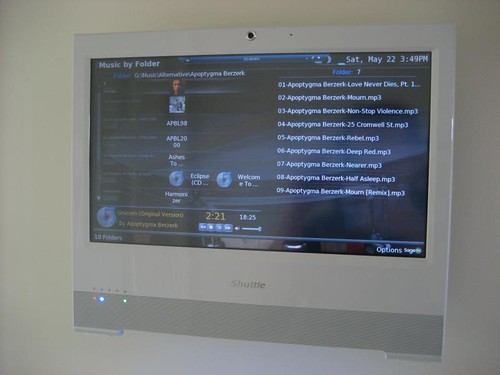
    Since the FM transmitter is connected to the sound card on the server, I now had to get the server to play the audio files instead of the touch screen computer. Of course, I still wanted to use the touch interface to select which audio files to play. The simplest solution for that was to just connect to the server via a remote desktop connection. The credential manager in Windows 7 can store the necessary username and password combination for this connection so that I was able to just put a remote desktop configuration file with all the necessary settings (mainly to make sure that the server still plays the audio instead of rerouting it to the touch screen computer) onto the desktop that establishes the RDP connection without any additional user input. On the server, I created a separate account designated to this RDP connection that just always runs the SageTV client. This way, I can still use the main account on the server for maintenance without disturbing the audio playback capabilities too much. The RDP connection is by no means fast enough to play video properly; but for selecting audio files it is still fast enough even with animations enabled in SageTV. This next picture shows the SageTV music interface running as a remote desktop session on the touch screen computer.

    IMG_0447

    All in all, this setup works very well for me and provides a very nice user interface to my house. As described earlier, it lets me select any of my music files available on the central server in the basement. In addition, it shows all the camera feeds of the security cameras so that I know what is going on around my house if need be (and it records everything in case something happens while I am out of the house). Since it is a regular computer, you can essential install anything you would want this computer to do. For example, I installed a weather gadget to always have the current weather displayed on the main screen. There is usually also a web browser running all the time which can be used to check up on something real quick. The web browser also allows me to connect to the home automation web server in my house that controls light and other devices in the house via the X10 protocol using a firecracker module. Overall, this small touch screen computer makes for a nice and intuitive user interface that can more than compete with many (significantly more expensive) commercial home automation and whole house audio systems. On top of that, it can serve many additional purposes, such as quick web browsing etc. As usual, your imagination is the limit in what you use something like this for.

    About the author: Thomas is an Assistant Professor for Computer Science and Engineering at Wright State University. He is an enthusiastic user of HTPCs for over six years. Starting with a simple setup using myHTPC and GotTV, he quickly moved on to SageTV to establish a whole house media solution.


  • The “China Story” is Not Dead Yet

    The city of Harbin lies on the banks of the Songhua River in the northeast of China, in what was Manchuria. This 10th largest city in China is a good place to see how some of the best opportunities in the next phase of China’s expansion come together. In particular, there are huge profits sitting out there in the expansion of China’s rail and subway systems.

    But first, a little context…

    Located near Siberia, Harbin is the most Russian of all Chinese cities. The skyline’s onion domes and spires evoke St. Petersburg or Moscow. At one time, Harbin was home to the largest Russian enclave outside of Moscow.

    Today, it is a key rail hub and inland port like Chicago or Kansas City in the US. Harbin is the largest inland port in the northeast. Five major railways also converge here. They carry crops farmed from the black earth of Harbin and the surrounding countryside. The soil here is among the best in China, nutrient rich and fertile.

    Harbin is also an industrial city making all kinds of things. It may be best known for its power equipment. Harbin alone has cranked out about one-third of all the installed capacity of hydro and thermal power in China.

    It’s this confluence of rail, light industry and agriculture that makes Harbin emblematic of some of the most exciting and promising new opportunities in China. Let’s look at the rail network.

    Trains, like cars or aircraft, need lots of parts. They need a whole mess of stuff from motors to signaling equipment. China’s market for rail components is booming. That’s because the Chinese are laying track at a pace that would’ve made Cornelius Vanderbilt proud. The Financial Times reports that there are plans to lay nearly 19,000 miles of track over the next five years.

    At that pace, China will overtake Russia as the world’s second largest rail infrastructure. Only the US will be bigger. These railroads will creak and groan under the weight of rail cars loaded with grains as well as coal from China’s hinterlands and Mongolia. Harbin is in the middle of it all.

    China’s market for rail components will grow fivefold in the next three years, to more than $50 billion, according to estimates by McKinsey. In 2010, more than half of all the money spent on rail equipment in the world will be spent in China.

    It’s not just railroads; China’s subway market is already the largest in the world, too. There are currently 10 cities that run 31 subway lines of more than 500 miles. In December, the Chinese government approved 22 new subway lines that will cost at least $129 billion to build.

    The growth in this sector is simply staggering. By the end of 2010 alone, China will have 53 subway lines totaling more than 1,000 miles in length and requiring over 6,000 cars. In the next five years, China will add another 600-plus miles to the system, bringing the total number of systems to nearly 90.

    So the opportunity for the makers of rail components is obvious. There is an added wrinkle here, though. The Chinese government mandates that 70% of the components have to be produced by Chinese companies. Therefore, the biggest beneficiaries will be you-know-who.

    The Chinese rail outfitters are already tough international competitors. They are the low-cost providers. They are also becoming world-renowned for their rail exploits. The Chinese, after all, finally conquered the great permafrost on the road to Lhasa, Tibet.

    China’s companies are also competing effectively abroad, bidding on work in South America and the Middle East. The main constraint is capacity. Their home market is giving them everything they can handle. It should stay hot for the next few years, at least.

    In any event, the best way to get a piece of the action is to buy a Chinese company that makes the stuff the railroads and subways need.

    Hearing the phrase “buying a Chinese company,” an investor might wince. Investing in China sounds risky, but I wonder how risky it really is and compared with what. The US, for instance, is hardly a safe haven anymore. The line that separates the US and Europe from emerging markets like China may be less than is supposed, at least from an investor’s viewpoint.

    All this is to say don’t let your prejudices blind you to opportunities in so-called emerging markets. Most people still have little idea of just how big the so-called emerging markets have become.

    Marko Dimitrijevic, who runs Everest Capital, pointed out in a recent Barron’s interview: “The BRIC countries [Brazil, Russia, India and China] are larger than developed Europe. But strikingly to us, the other emerging markets, the non-BRICs, are now larger than US or developed Europe.”

    Even though emerging markets have been growing fast for years, these facts seem to have snuck up on us. A good analogy might be the old bit about the lily pads on a pond that double their population every day. One day, the pond is half full of lilies. The very next day, lilies cover the whole pond.

    The biggest emerging market of all is China. I liked what Eric Kraus, the astute observer and Moscow-based money manager writes about China in his latest letter. He says he is “now almost embarrassed to go on about the secular rise of China – we would not bother were this not the single greatest economic and geopolitical shift of our lifetimes…”

    Admittedly, China has its own problems, and it will have dramatic ups and downs. But China in 2010 is something like the US in 1910. It has lots of room to grow.

    Some of the cheapest stocks in today’s market are the US-listed securities of China-based companies. It’s here you can pick up stocks in good companies, with strong balance sheets and owner-operators, growing 25%-plus a year for less than 10 times earnings.

    I recently alerted the subscribers of Capital & Crisis to a Chinese company that has the inside track on those metro trains and freight cars. In fact, it’s the only Chinese company to have met international standards – and at half of the cost of imports from the competition. It is in prime position to be the vendor of choice in China. In fact, its equipment is so good, it is the only Chinese company exporting to blue chip US companies.

    This world-class company is just one example of a “China Story” that is just getting started. But please bear in mind that the investment road ahead in China will not be smooth. Chinese stocks will certainly subject investors to gut-wrenching volatility. But that’s just the price of admission to the “single greatest economic and geopolitical shift of our lifetimes.”

    Chris Mayer
    for The Daily Reckoning Australia

    Similar Posts:

  • Phoenix Mars Lander succumbs to Martian winter

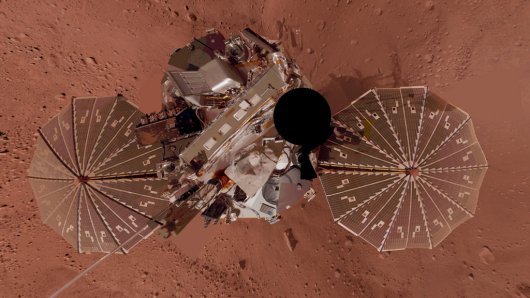
    Phoenix Lander self portrait - a vertical projection combining hundreds of exposures taken...

    Almost two years to the day after it landed on the red planet NASA has announced its Phoenix Mars Lander has officially ended operations after repeated attempts to contact the spacecraft were unsuccessful. Phoenix was not built to survive the dark, cold, icy winter on Mars and a new image transmitted by NASA’s Mars Reconnaissance Orbiter shows signs of severe ice damage to the lander’s solar panels. ..
    Continue Reading Phoenix Mars Lander succumbs to Martian winter

    Tags: ,
    ,

    Related Articles:


  • Double Dip Recession

    “Call it a nightmare,” says Dave Rosenberg.

    Markets all over the world went down again yesterday. The Dow dropped below 10,000 in the morning trading…then came back to give up a modest 22 points by the closing bell.

    The Wall Street Journal says it’s time to start worrying about a “double dip recession.”

    We suspect that output will dip below zero again – giving us, technically, a ‘double dip’ recession. But calling it a recession misses the point. It’s not just a pause. It’s a change…a Great Correction.

    There’s something else going on…something much more important and much harder to deal with than an ordinary recession. The feds have thrown everything into the battle to stop this downturn. No matter how you look at it, the ammunition spent in this fight has been spectacular.

    And it hasn’t worked. Unemployment has actually gotten worse. Private sector credit has declined. And what’s this? “Falling home prices raise fears of new bottom,” says a headline.

    People talk of ‘recovery,’ but it’s now three years after the crisis began and there is no recovery. Instead, there’s another crisis on the horizon.

    And now the trouble is, the feds don’t have much ammunition left. Interest rates are already at zero; they can’t go lower. And the federal deficit is already as much as 10% of GDP.

    Besides, it’s becoming clear that all that ammunition fired off so far was wasted! It got us nothing but more debt.

    The problem was never a recession. It was too much debt in the private sector. But the feds misunderstood it. They thought it was a regular recession that they could ‘cure’ with more credit and more spending. So, they added trillions of new debt in the public sector!

    They claimed to have spared the world economy a worse disaster. But now that worst disaster is happening anyway. The bad dream has turned into a nightmare. Because it’s not just the private sector going broke; governments are going broke too.

    Not that we have any new information on the subject. And we wait to be proven wrong. But we can add and subtract. And when we add up the debt totals in the developed world – the US, Europe, and Japan – what we get are some pretty big numbers. Government debt alone is $32 trillion. That’s for a combined economy of about $34 trillion.

    Right now, with the lowest interest rates in 30 years, it’s still possible for most ‘western’ governments to pay the interest and finance their deficits. But Europe has already run into trouble. Every government in Europe is scrambling to come up with a credible plan for budget cuts. David Cameron announced his plan just yesterday.

    “Austerity plans multiply in Europe,” says the headline in yesterday’s Figaro. And those poor French bureaucrats! They’re supposed to cut expenses by 10% next year.

    In Japan and America, on the other hand, deficit spending still looks easy. Aside from a few cranks, clairvoyants and Daily Reckoning readers, everyone seems to think things will be all right forever. There is no serious pressure to cut budgets – except at the state level. The Pentagon still has a blank check – it just fills in the amount each year. Health care expenses still grow like weeds without winter.

    Few people realize that America’s finances are already no better than those of Greece. Fewer still care.

    But heck, we’re not going to go around with a long face about it. Nope. So what if the stock market begins the terminal phase of its long bear market – the one that began ten years ago? So what if the real estate market takes the next stairway down towards more foreclosures and lower prices? So what if the feds go broke?

    We’re not going to sweat it. Instead, we’re going to enjoy it.

    But how? Ah… Well, first, we’re going to stay out of US stocks in the short run. Then, we’re going to get out of US bonds and the US dollar…too. We’re going to stay in cash and gold…

    And maybe we’ll learn to speak Chinese…

    And more thoughts…

    Deep Do-Do Horizon…

    Well, Rand Paul, Ron’s son, has already put his foot in his mouth.

    He’s quoted in the news telling the media to back off and give BP a break. “Everybody makes mistakes…” he says.

    Of course, Rand is right. Even huge oil companies err. And anyone who tries to drill a hole in the earth’s crust a mile below the surface of the water, is bound to have a few ‘uh oh’ moments.

    The size of the ‘uh oh’ in this case could be breathtaking. Who knows? On the one hand, the oil company acts like our son, Edward, 16, when he drops a glass or forgets to do his homework. “It’s no big deal… Don’t get all excited about it…” he says. On the other, there are ‘experts’ predicting an EE – an ‘extinction event.’ If enough black goo oozes out of the hole, they say, it could poison all the oceans…and make the planet uninhabitable! The continental US will be a land crowned with brotherhood from slick to shining slick.

    We don’t know what to think. So we don’t think anything at all. Besides, the newspaper tells us that Kevin Costner has invented a new technology for cleaning up the ocean – called “ocean therapy.” No kidding.

    But the media is on BP’s case. And the politicians too. Nobody likes a big oil company. And Rand Paul’s comment – according to the press – just proves the man is not fit to sit in the US Congress. The press wants someone who knows how to fake outrage when the moment calls for it.

    We don’t know Rand Paul; we only know his father. Pere Paul is the kind of politician the country needs but won’t accept. He offers real ‘change.’ That is to say, if he had the power to do so, he would unwind the welfare/warfare state. He would more-or-less, let people alone to get on with their own lives again.

    But that is not what Americans want…neither Republicans, Democrats, nor Tea Party members. Nor is it what voters want. What the man on the street seems to want is cheaper gasoline, free health care, food stamps, Social Security, wars and boondoggles. At least, that’s what the evidence suggests. He wants protection from everything and a free lunch too.

    We don’t know about Rand.

    But as for Ron…the country doesn’t deserve him.

    Regards,

    Bill Bonner

    for The Daily Reckoning Australia

    Similar Posts:

  • Microsoft Update Kills Custom Menus in Media Center

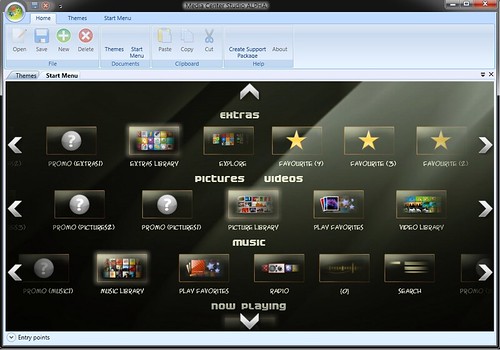
    A recent auto-update from Microsoft inadvertently (presumably) caused any custom menu changes to Microsoft MediaCenter to break.  This includes the popular Media Center Studio, a free 3rd party add-on to Microsoft Media center that enables you to customize menus of Media Center in Windows 7 and Vista Media Center.

    The update included MSN Video Player for those overseas, but somehow killed off any custom menu changes created by users hacks including changes made using the Media Center Studio.

    MCStudio

    Hopefully Microsoft will offer up a solution eventually, but there is no guarantee since any changes to the menus were unsupported by Microsoft.

    More at GreenButton Forums

    via theDigitalLifestyle


  • Speed tests: How fast is Sprint 4G with the HTC EVO?

    Disclaimer: Please do not take these results as the end-all, be-all when it comes to Sprint 4G performance. I’m one person testing in one state. Your experiences will likely differ based on a number of factors. Note this post only pertains to data speeds. Battery performance is another test coming soon.

    How fast is Sprint 4G? We already previewed the Overdrive mobile hotspot, but what about the new HTC EVO 4G?

    Sprint claims customers should experience download speeds that are “10x faster than 3G” and they base that on a download speed comparison of 600 Kbps for 3G and 6 Mbps for their 4G. Sprint anticipates customers who have the EVO will consume more data and they are charging a mandatory $10 premium data add-on for whatever plan you pick.

    Since this is the first 4G handset in North America and one of the most important launches in Android’s history, we felt compelled to do some detailed speed tests and compare them with several other 3G networks. For this round of tests we used a HTC EVO to test Sprint 4G and 3G, a Droid Incredible to test Verizon 3G, and a Nexus One to test T-Mobile 3G.

    I wanted to see how the networks performed during peak traffic and off-peak hours so half of the tests were performed in the day during rush hour (4-6 PM) and the rest were performed late at night (1-3 AM).

    To measure the download and upload speeds, I used the Android app Speedtest.net. I’ve seen some people complain about the app, but it produces the most reliable results from any test I have used. Speedtest.net is also the app that Sprint chose to demonstrate 4G speeds when they showed off the EVO at CTIA and during the recent NYC pre-launch party.

    4G testing

    2 days. 3 phones. 4 networks. 200 tests.

    All test were performed in Corpus Christi, TX – which was one of the early markets to receive the Sprint 4G WiMAX network. At each location and on each network, I ran the speed test five times. I tossed out the high and low results, then took the average of the other three.

    Peak traffic: Daytime testing


    Download: During daytime testing, the Sprint EVO on 4G produced the fastest download speeds at the most locations (3). However, the 4G download speeds topped out around 2 Mbps and fell short of the advertised 3-6 Mbps. Surprisingly, the fastest download speeds of the day were achieved over Sprint 3G at my final location, where I was able to hit an average of 2.14 Mbps.

    Upload: The Sprint EVO on 4G also produced the fastest upload speeds at the most locations (3). Sprint has capped 4G uploads at 1 Mbps and that is exactly what we found during our testing.

    Ping: I’m not sure how important latency is to the average smartphone owner, but we included the results anyways. Sprint 4G offered the highest ping times of any network we tested during the daytime. Sprint 3G had faster ping times at every location I checked.

    Daytime conclusion: Overall, the Sprint EVO on 4G offered the fastest download and upload speeds at the most locations. It was not quite as fast as I had hoped for, but Sprint 4G still came out on top

    Off-peak hours: Nighttime testing


    Download: Nighttime produced some interesting results. I was able to achieve 1-2 Mbps with Sprint 4G, but Sprint 3G was surprisingly faster at three different locations. I assume the Sprint 3G tested faster because the network was less congested, but I’m a little disappointed in the 4G results.

    At one location I had three bars when connected to Sprint 4G, but I was unable to gain an internet connection. I tried rebooting the phone and turning the 4G radio on and off, but nothing fixed the issue. When I went over to Sprint 3G at this location, I instantly had internet again.

    Upload: Once again, the Sprint EVO over 4G provided the fastest upload speeds at the most locations. I was able to get close to the 1 Mbps cap during most of my tests.

    Ping: I measured about the same ping times at night as I did during the day – between 160-190 ms.

    Nighttime conclusion: Download and Upload speeds remained about the same during day and night. For downloads, I topped out around 2 Mbps and uploads were at 1 Mbps.

    Carrier notes

    Sprint 4G: The HTC EVO on 4G generated the fastest and most consistent results. Downloads rarely dropped below 1 Mbps, but they never broke 3 Mbps either.

    I’ve seen Sprint 4G do over 5 Mbps with the Overdrive when we tested it in Austin, so my expectations were high. I only did detailed testing in Corpus Christi, but I also used my EVO in Austin and San Antonio. The top download speeds in each city were around 2 Mbps.

    Sprint 3G: This was probably the biggest surprise of all my testing. I had no idea Sprint 3G could produce actual download speeds over 2 Mbps. The speeds dropped dramatically during the day, so it looks like Sprint 3G is pretty congested in my city.

    T-Mobile: My city has been upgraded to T-Mobile’s HSPA 7.2, but I have seen no difference in download speeds. Only a single location (at night) was able to break 1 Mbps for downloads.

    Verizon: For what it’s worth, Verizon had the best latency during day and night. Download speeds were around 1 Mbps down and 1 Mbps up, which is good. At nighttime, I was even able to break 2 Mbps at one location.

    Final thoughts

    Sprint 4G is fast, but it didn’t live up to my expectations when tested in multiple Texas cities. As you saw from the results, the download speeds maxed out around 2 Mbps, but we were also able to get those results on Sprint 3G.

    Having said that, I still see how certain people can benefit by having 4G on their phone. It provides a reliable internet connection that is as fast as DSL. Sprint 4G also performed well during the daytime, when many other networks were bogged down with traffic.

    I’ve seen people asking how Sprint 4G performed while moving and in-doors, so I tested that as well. I did not see any noticeable drop-off when using 4G in my apartment and I was still able to achieve the same 2 Mbps that I saw in all my outside testing. I was also able to measure download speeds of 2 Mbps while in a car doing 70 mph.

    As I finish writing this post, I’m still questioning how important mobile speeds are to the average customer. I have been with T-Mobile the last two years (which was one of the slower networks in my city) and I have no complaints in my day-to-day use of my Android phone. Even when I was limited to 2G Edge, my Android phone still performed as I would expect it.

    Do you think 4G data is worth the mandatory $10 a month? If you are a person who wants to upload a lot of video or share the internet connection with other devices, then yes. Owning a Sprint EVO 4G is like carrying around a a high-speed internet connection (DSL like) in your pocket.

    To end on a positive note, other users have been able to achieve greater download speeds in other states. Our friend Dylan Anderson measured an impressive download speed of 4.3 Mbps when testing in California.

    Keep in mind this phone has not even shipped yet and speeds could improve over time. Carriers routinely update these phones over the air with new firmware and radio images, which enhance performance.

    Related Posts

  • Rockstar aims to resolve Red Dead Redemption stock supply this weekend

    Red Dead Redemption is running low on supply in the UK. This fact shouldn’t come as a surprise considering how it currently sits at number 1 in the UK charts. Rockstar Games, fortunately, is on top of