 As we approach a new decade, it’s business as usual in China.
A Chinese court on Friday sentenced one of the country’s most prominent prisoners to 11 years in prison for “inciting subversion of state power.”
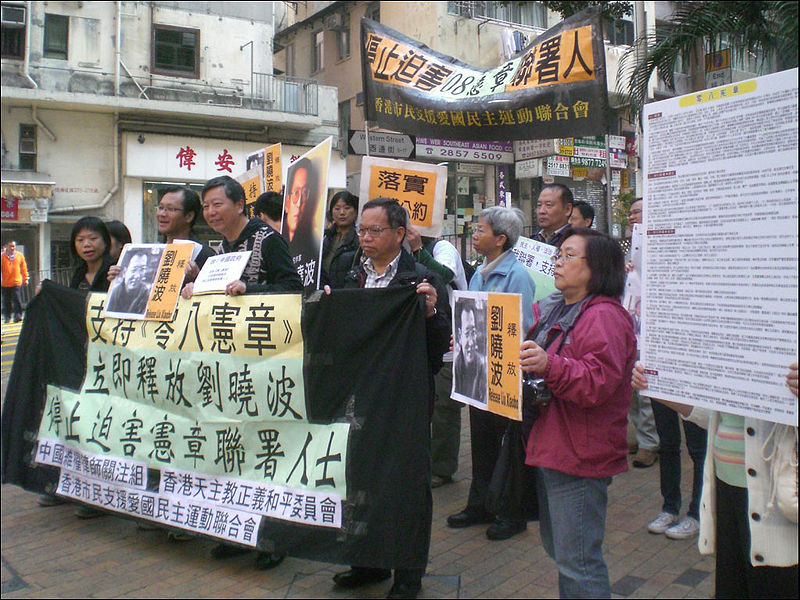
Liu Xiaobo has publicly pushed for sweeping reforms in China since the 1980s and participated in the 1989 Tiananmen Square protests. He was arrested a year ago for his involvement in the pro-democracy manifesto Charter 08 and held at a secret prison for six months before he formally faced the charges.
Liu’s work is groundbreaking and critically important to the evolution of human rights inside China, but this long sentence is a sign that China will still stop at nothing to stifle dissent. The Obama administration has repeatedly called for an expansion of human rights in China — and specificially for Liu’s release — but nothing will come of this pleading until our requests have teeth.
Liu is also past president of the Independent Chinese PEN Center (ICPC), a center of the international writers’ organization that advocates for the right to freedom of expression inside of China. I wrote about him earlier this month on the anniversary of his arrest, and pointed to the PEN Center’s petition for his immediate release. PEN President Kwame Anthony Appiah expressed outrage Friday at the sentence — and its timing:
“The show trial of Liu Xiaobo by the Chinese authorities is a scandal. It denies him his rights under international human rights law and basic morality. It makes a mockery of the promises of freedom in the Chinese Constitution. And it confirms that, for all the superficial changes of recent years, China still has a profoundly totalitarian regime. I especially deplore the cynicism of the decision to announce this sentence when so many people around the world are celebrating a season of peace and goodwill,” Appiah said.
If you haven’t done so yet, send an email to the Chinese government calling for Liu’s freedom.
In other China-human-rights-abuse news, British citizen Akmal Shaikh could be shot to death tomorrow in a Chinese prison, and he may not know yet that his time has come. Shaikh’s route to China’s death row is a long, twisted one, but international human rights organizations are worried that he suffers from mental illness. If he is executed, he would be the first EU national executed in China in more than 50 years.
Chinese law says a defendant’s mental state should be taken into consideration if they are accused of serious crimes, but the Chinese authorities have refused repeated requests for Shaikh to be evaluated by a doctor.