
 In part 1 I talked about the value of offal and in part 2 about the value of fat.
In both cases these often discarded treasures are much healthier from animals that have lived a happy life; and although organic, free-range meat costs more, eating rather than discarding these parts can compensate for the additional expense.
In part 3, I am going to tell you about the value of bones. There are three opportunities: making soup from leftover bones, eating what’s inside the bones (marrow) and eating the bones themselves.
Soup
This applies to smaller animals that can be roasted in the oven. Theoretically I suppose it applies to any animal but since we lack the facilities to spit roast entire hogs, I have no experience with using bigger carcasses in this way. For us, it applies to duck, chicken, rabbit and other poultry such as pheasant or partridge.
At the end of the meal, even the most determined carnivore cannot strip the bones of every morsel of goodness. Believe me I have tried – Mrs M sometimes finds me hunched over the dessicated remains of a roast chicken, mouth and lips surrounded by meat and grease, speculatively gnawing in search of some overlooked morsel of meat.
Here’s what we do. After we’ve used all the easily available meat, we take what’s left – usually a collection of bones or a semi-dismantled carcass – and cook it for several hours. I also include the leftover bones from our plates. This may seem unhygienic given we have been chewing on our respective bones – but they are going to be blitzed for hours, so it really isn’t.
We break up into smaller parts any pieces that can be, then put them into the slow cooker. The idea is to add just enough water so that the pieces are covered and will remain covered as the water evaporates. We find an extra inch of water is usually enough when we cook overnight.
You can also simmer the pieces in a pan on the stove – but Mrs M was always nervous about leaving a pan on the stove overnight so using this approach we rarely cooked the bones for more than a few hours before bed. This is not really long enough to fully loosen the meat and (as we will see later) soften the bones. With the slow cooker it is easier to set the heat low enough to make overnight cooking appropriate; and it allays Mrs M’s fears because slow cookers are self-contained and designed to be left in this way.
To make the soup you could simply sieve the hot liquid and make the soup from that – but you’d lose a lot of the good stuff, in my view. Instead, we first let the contents of the pan cool. Then I methodically remove the bones and gristle with my hands, ensuring we get all the little pieces of meat not already separated by stirring. This can be fiddly, but ultimately it’s rewarding. You usually get a few crunchy bits and pieces in the last two spoonfuls of soup, but that’s okay.
Here are some photos taken when we made soup from rabbit bones. This was the cooked rabbit: 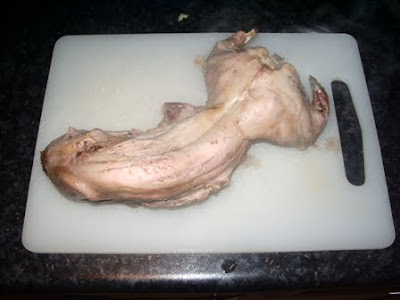 . After the meal, these were the bits left to slow cook
 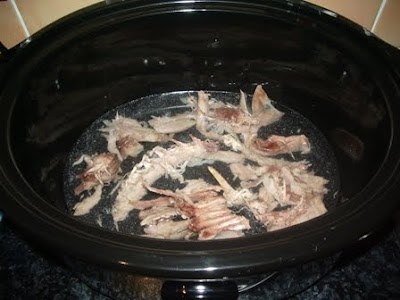 , and this was the result after several hours of slow cooking with some stirring to separate the meat from the bones:
 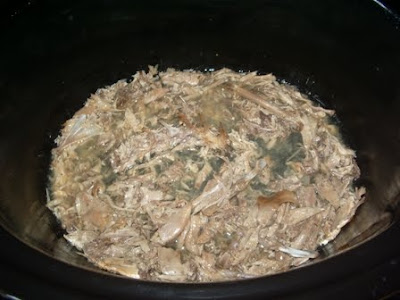 . These were the bones I picked out
 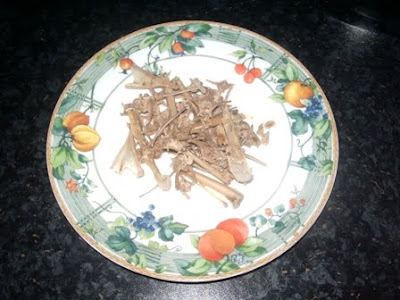 and this was what was left
 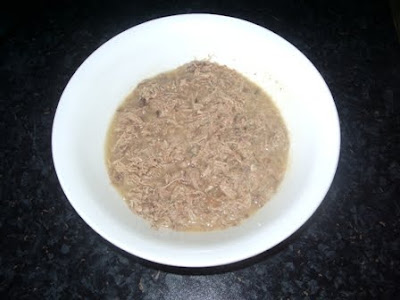 . Finally, after some additional ingredients, the soup:
 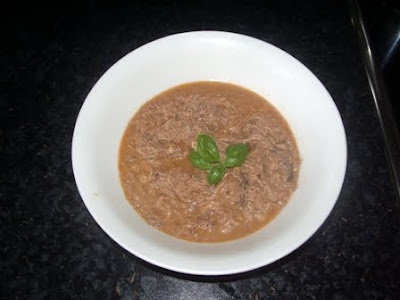 . This is how those ingredients are added:
First, I steam some vegetables. Typically this is celery, onion, mushroom, carrot, parsnip or a combination. Once softened, they are added and blended into the mixture. As well as adding flavour, the vegetables thicken the soup – this is particularly important since thin soups are somehow not satisfying, yet the normal thickening agents like corn flour are not on the menu.
Next I add one or more of the following:
- Coconut water (if I’ve just opened one)
- Coconut cream (from a tin)
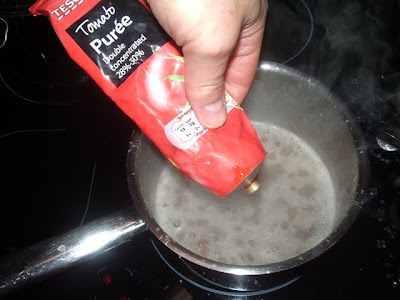
- Unsalted tomato puree (we almost always add at least some – it’s a good salt substitute)
- Lime/lemon/orange juice (squeezed from the fresh fruit)
You can see some of this in action with these photos from a wild duck we ate last year. This was the duck after roasting 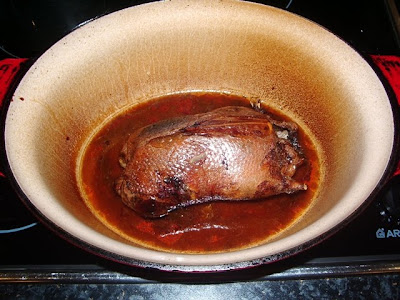 and this was the meal it made
 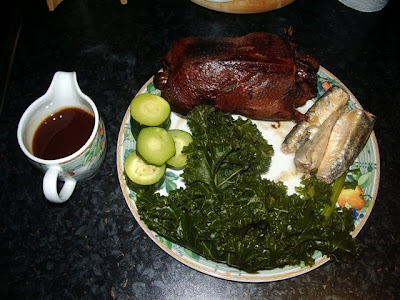 . This was the leftover carcass
 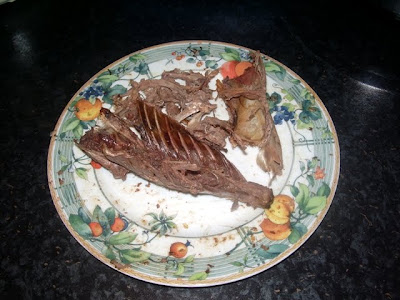 and these are were broken up pieces in the slow cooker
 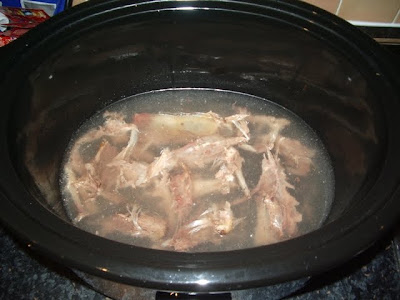 . After slow cooking and manual bone removal, these were the separate components:
 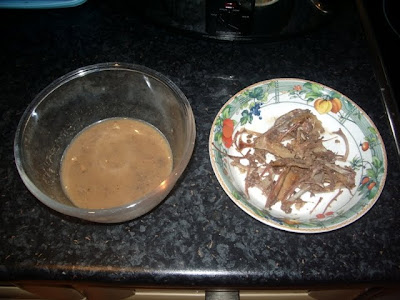 . The contents of the bowl went into a pan and while that heated up an onion was chopped, steamed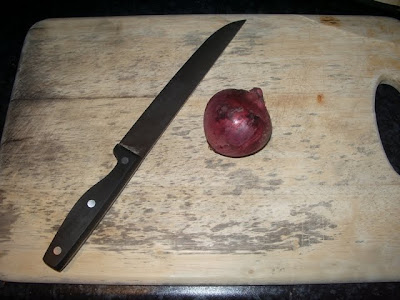
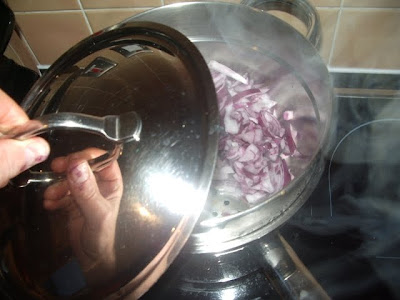 and added
 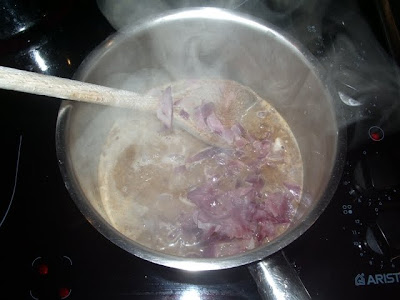 . This was blended and some tomato puree added
  . In this case, I added the coconut cream cold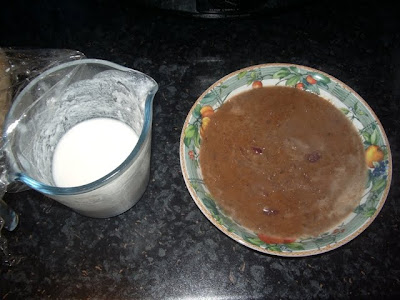
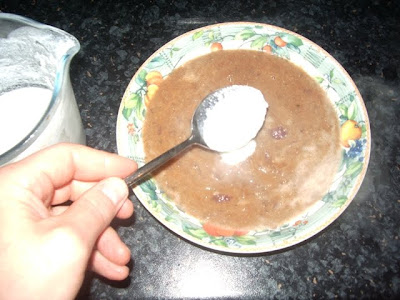 , threw on a basil leaf, and it was ready to serve:
 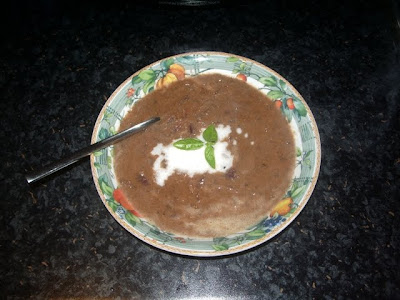 .
.
When we roasted a chicken last year 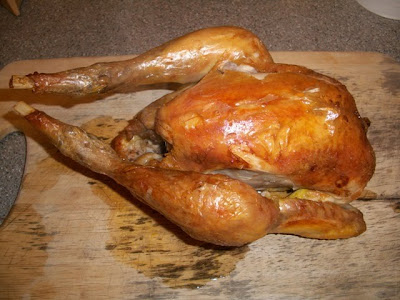 , creating this fine meal
 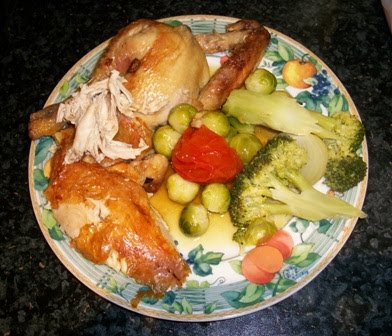 , there was this leftover carcass
 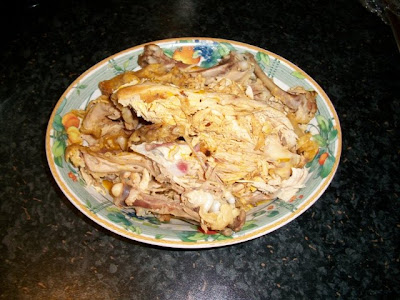 which went into the slow cooker like this
 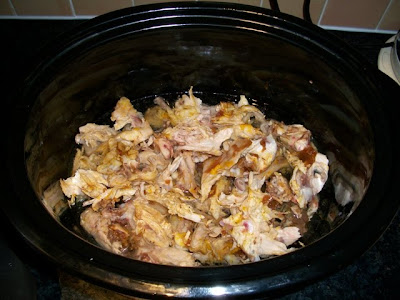 , came out like this
 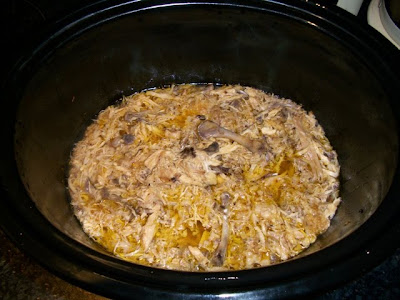 , and ended up making a couple of bowls of this:
 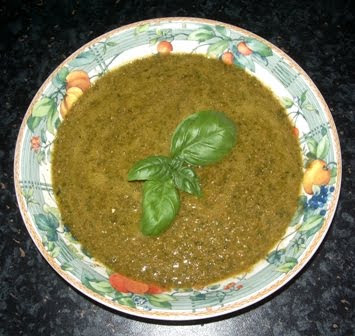 . I think we actually used spinach in that case.
It’s usually me who makes these soups, and as I often remind you, I’m no chef. So the choice of ingredients is usually fairly arbitrary and simplistic. I know duck and orange go together, chicken and mushroom is a familiar combo so these usually get paired. Often it depends on what we have in the fridge at the time.
The strange thing is that Mrs M always likes the result. Maybe we are easy to please, and obviously our palates are pretty sensitive when we are eating strictly Paleo; but I am convinced that tomato puree and coconut cream, in the right proportions, are a great, simple base for this kind of soup.
Finally, let’s not forget our old friend, crab soup. Last year I ate a lot of fresh crabs, making soup from the leftover shell pieces. Here is a photo of the pieces in the slow cooker: 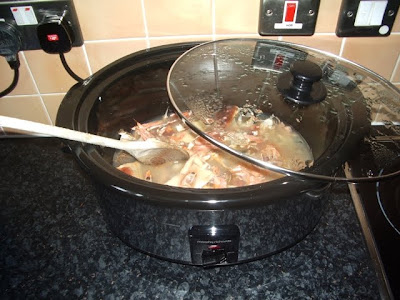 . The fiddly step where you take out the bits from the slow cooked mixture is especially fiddly for crab shell; but crab soup with bits of crab meat included is much nicer than crab soup without, so again, it’s worth the effort.
Eat the Marrow
I have read that bone marrow was prized by hunter gatherers, is high in fat and protein and is extremely good for you. However, I have not been able to unearth any of the links… so please add anything you have to the comments.
Either way, it’s also very tasty, and often gets overlooked. I have only eaten bone marrow from two sources. First, from lamb leg bones – usually this can be accessed by using a thin fork handle to poke inside the bone, followed by a lot of undignified sucking and banging.
Here are some photos taken last night. We roasted this leg of lamb 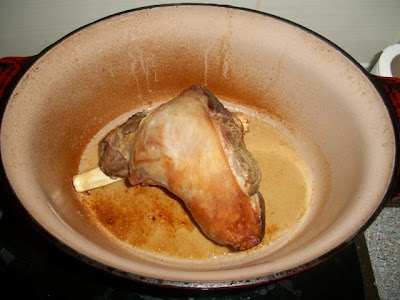 to make this meal
 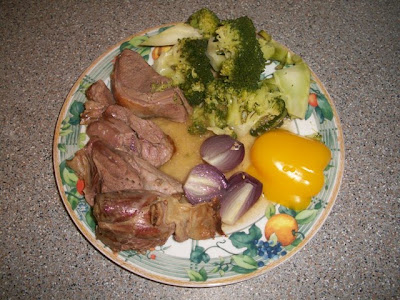 , after which I set about the bone to eat any remaining meat
 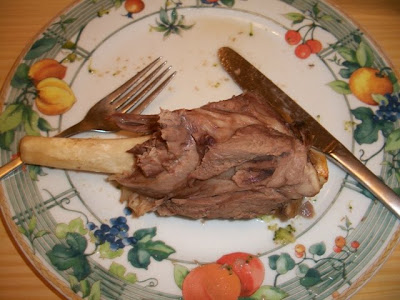 . You can see the marrow in this shot
 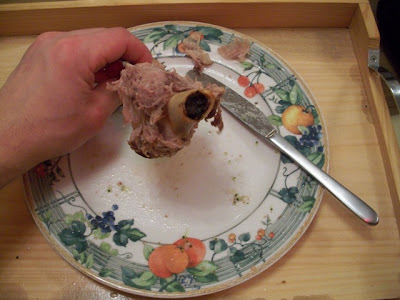 , then here
 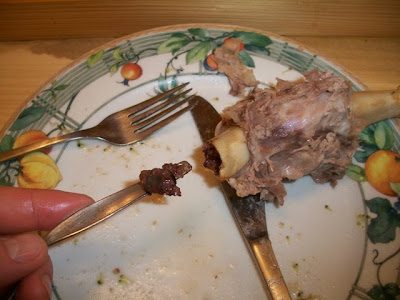 how I managed to scoop it out with the handle of a spoon. I then spend a while sucking and banging the other end, from which eventually I managed to get the rest of the marrow out.
Definitely not one for the restaurant; but worth the effort when you’re at home.
Second, from chicken leg bones. Having boiled chicken bones to make soup and separated the bone out 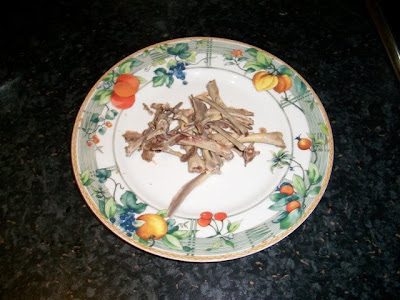 , I once wondered whether I could increase the nutritional value of the soup by breaking open the bones and squeezing out the marrow into the soup mixture. This I did with the help of some pliers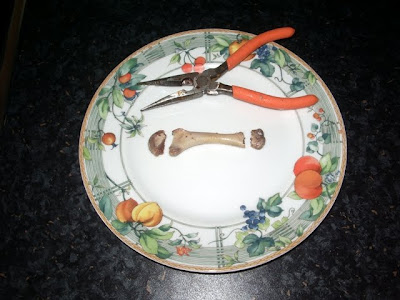
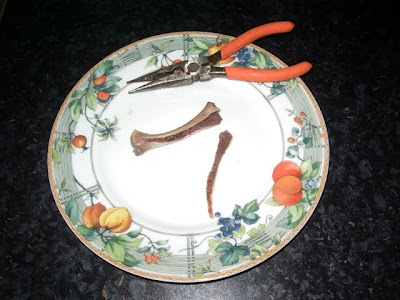
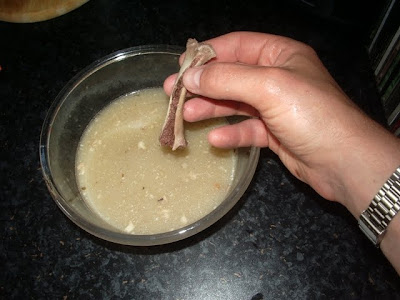 . It was quite an effort.
Later, I realised this was not necessary because instead I could simply…
…Eat the Bones
The arrival of the slow cooker meant we were cooking the bones for 8 hours or more. I noticed that when I was removing bits of meat from the bones with my hands, the bones would sometimes crumble. So I tried eating one – and lo, it was good. The texture was crumbly – rather like the bones in tinned salmon or sardines. It felt fine to eat them.
Here are a couple of fine, recent meals I made of complete slow-cooked chicken carcasses 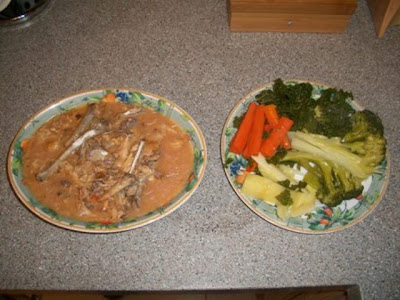
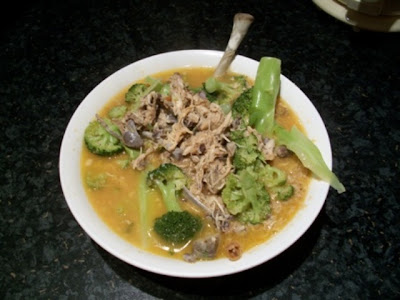 . There was nothing left at the end. The middle parts of the larger bones were a little harder to chew, but this only applied to one or two.
I’ve only ever eaten chicken bones. It may be equally possible with the other animals we roast but I’ve not tried yet.
Anyway, you won’t be surprised to learn this is a step too far for Mrs M. However, recently I introduced bones to her diet by stealth, by making…
…Soup and Bones Together
When the bones are this soft, you can throw them into the blender. The result is a soup that requires no thickening. With the standard coconut cream and tomato puree base it makes pretty good eating. Depending on your tolerance for crunchy bits, you may wish to do more blending than me. I was happy with a 60-second blast but Mrs M was driven to return hers to the blender for a further three 60-second blasts and was still not entirely happy.
Feathers?

I am convinced feathers are coming into fashion any day now. I just need to convince my boss and my social circle of this, then I can truly make the most of poultry 😉
See Also:
Making the Most of Animals: Part 1 – Wonderful Offal
Making the Most of Animals: Part 2 – Glorious Fat
